

Implications of climate change on the distribution of the tick vector Ixodes scapularis and risk for Lyme disease in the Texas-Mexico transboundary region
Open accessThe DOI matches its Crossref record; 119 of the 121 references it cites were found in a registry or an index.
Abstract
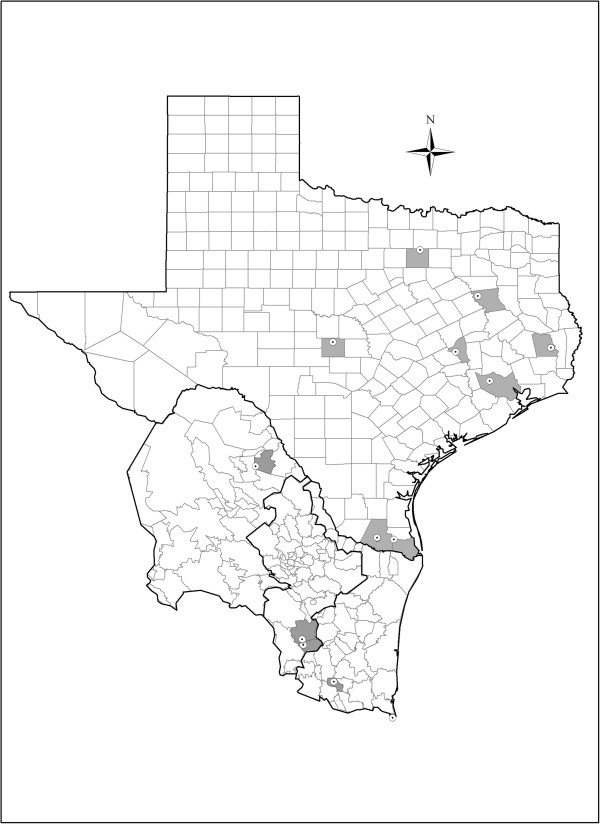
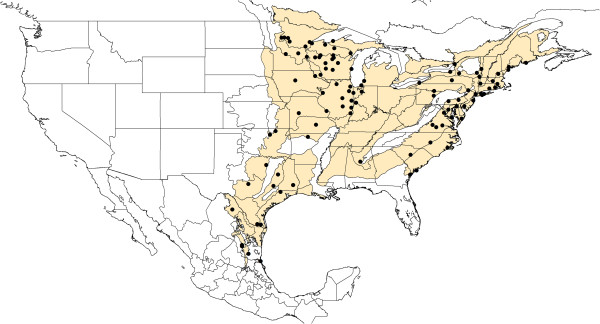
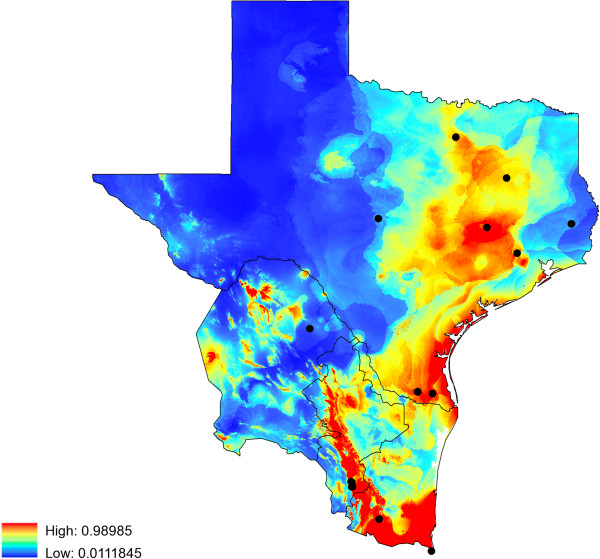
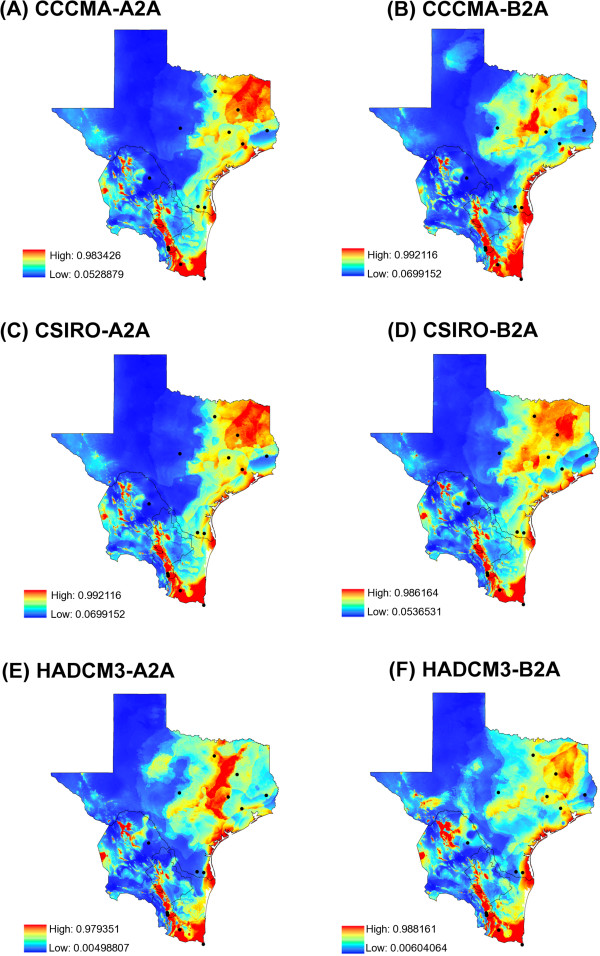
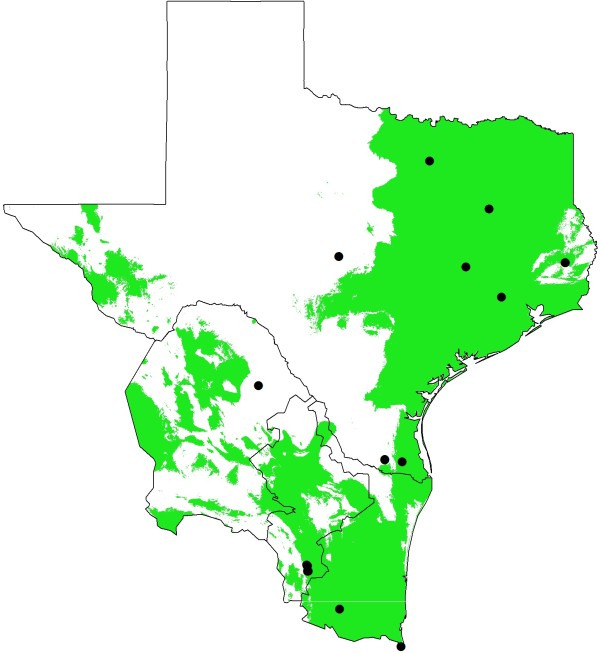
BACKGROUND: Disease risk maps are important tools that help ascertain the likelihood of exposure to specific infectious agents. Understanding how climate change may affect the suitability of habitats for ticks will improve the accuracy of risk maps of tick-borne pathogen transmission in humans and domestic animal populations. Lyme disease (LD) is the most prevalent arthropod borne disease in the US and Europe. The bacterium Borrelia burgdorferi causes LD and it is transmitted to humans and other mammalian hosts through the bite of infected Ixodes ticks. LD risk maps in the transboundary region between the U.S. and Mexico are lacking. Moreover, none of the published studies that evaluated the effect of climate change in the spatial and temporal distribution of I. scapularis have focused on this region. METHODS: The area of study included Texas and a portion of northeast Mexico. This area is referred herein as the Texas-Mexico transboundary region. Tick samples were obtained from various vertebrate hosts in the region under study. Ticks identified as I. scapularis were processed to obtain DNA and to determine if they were infected with B. burgdorferi using PCR. A maximum entropy approach (MAXENT) was used to forecast the present and future (2050) distribution of B. burgdorferi-infected I. scapularis in the Texas-Mexico transboundary region by correlating geographic data with climatic variables. RESULTS: Of the 1235 tick samples collected, 109 were identified as I. scapularis. Infection with B. burgdorferi was detected in 45% of the I. scapularis ticks collected. The model presented here indicates a wide distribution for I. scapularis, with higher probability of occurrence along the Gulf of Mexico coast. Results of the modeling approach applied predict that habitat suitable for the distribution of I. scapularis in the Texas-Mexico transboundary region will remain relatively stable until 2050. CONCLUSIONS: The Texas-Mexico transboundary region appears to be part of a continuum in the pathogenic landscape of LD. Forecasting based on climate trends provides a tool to adapt strategies in the near future to mitigate the impact of LD related to its distribution and risk for transmission to human populations in the Mexico-US transboundary region.
Overview
The claims and statistics of this paper haven’t been checked yet.
Free: it reads the open-access text and checks the first 5 claims that cite a source we can check. Create a free account to check every claim.
Integrity signals
Registry
Cites
Statistics
Figures
Verification
Claims the paper makes
The claims and statistics of this paper haven’t been checked yet.
Free: it reads the open-access text and checks the first 5 claims that cite a source we can check. Create a free account to check every claim.
Self-check
Percentages, sums and reported differences re-computed from the paper’s own numbers.
The self-check needs the paper’s full text.
Citations
Cites
Climate change 2007: the physical science basis
Solomon, S., Qin, D., Manning, M., Marquis, M. C., Averyt, K. B., Tignor, M., Miller, H. L., & Chen, Z. (2007) · Cited by 24,695
Maximum entropy modeling of species geographic distributions
Phillips, S. J., Anderson, R. P., & Schapire, R. E. (2006) · Ecological Modelling · doi:10.1016/j.ecolmodel.2005.03.026 · Cited by 15,396 · cited 2×
“edu/~schapire/maxent/) with the default modeling parameters (convergence threshold = 10(5), maximum iterations = 500, regularization value β = auto) following conditions standardized elsewhere [86].”
BackgroundMethodUpdated world map of the Köppen-Geiger climate classification
(2007) · doi:10.5194/hess-11-1633-2007 · Cited by 13,640
Updated world map of the Köppen-Geiger climate classification
Peel, M. C., Finlayson, B. L., & McMahon, T. A. (2007) · doi:10.5194/hessd-4-439-2007 · Cited by 13,640
World map of the Köppen-Geiger climate classification updated
Kottek, M., Grieser, J., Beck, C., Rudolf, B., & Rubel, F. (2006) · Meteorologische Zeitschrift · doi:10.1127/0941-2948/2006/0130 · Cited by 11,456
Barker, T. J., Bashmakov, I., Bernstein, L., Bogner, J. R., Bosch, P. C., Dave, R., Davidson, O., Fisher, B. S., Grubb, M. J., Gupta, S. K., et al. (2007) · Socio-Environmental Systems Modeling · Cited by 9,160
Terrestrial ecoregions of the world: a new map of life on Earth
Olson, D. M., Dinerstein, E., Wikramanayake, E. D., Burgess, N. D., Powell, G. V. N., Underwood, E. C., D'amico, J. A., Itoua, I., Strand, H. E., Morrison, J. C., et al. (2001) · BioScience · doi:10.1641/0006-3568(2001)051[0933:teotwa]2.0.co;2 · Cited by 8,488
A review of methods for the assessment of prediction errors in conservation presence/absence models
FIELDING, A. H., & BELL, J. F. (1997) · Environmental Conservation · doi:10.1017/s0376892997000088 · Cited by 6,956
A statistical explanation of MaxEnt for ecologists
Elith, J., Phillips, S. J., Hastie, T., Dudík, M., Chee, Y. E., & Yates, C. J. (2011) · Diversity and Distributions · doi:10.1111/j.1472-4642.2010.00725.x · Cited by 6,699 · cited 1×
“Present and projected future potential distributions for the target species were computed using these presence records for the species (longitude/latitude) and using climatic parameters as exploratory variables, using a maximum entropy algorithm (MaxEnt) [66,83-85].”
Method
Research works printed but not linked: 6
- Gordillo-Pérez G Vargas-Sandoval M Sosa-Gutierrez C Minero-Gonzalez E Schoeder-Lima E Parra-Montiel G Guzmán-Cornejo C Sánchez-Cordero V Torres J Prevalencia de Infección de Borrelia burgdorferi y Ehrlichia spp en garrapatas y roedores provenientes de tres parques nacionales del Centro de la República Mexicana Acarologia Latinoamerica 2012 1 291 295
- Gordillo-Pérez MG Solórzano-Santos F Enfermedad de Lyme: experiencia en niños mexicanos Boletin Médico del Hospital Infantil de México 2010 67 164 176
- CONABIO Datos estadísticos del 2010 dINdEyGI Actividades económicas en México por municipio, 2010’, escala: 1:250000. Comisión Nacional para el Conocimiento y Uso de la Biodiversidad 2012 México D.F
- United States. Animal and Plant Health Inspection Service. Veterinary Services Strickland RK Diamant G Ticks of veterinary importance 1976 Washington: Animal and Plant Health Inspection Service, U.S. Dept. of Agriculture: for sale by the Supt. of Docs., U.S. Govt. Print. Off
- Vargas M Gordillo-Pérez G Solórzano S Rivera A Polaco O Muñoz O Torres J Evidences of Borrelia burgdorferi in ticks of the Northeast of Mexico Entomologia Mexicana 2007 6 830 835
- Salinas-Melendez JA Zarate-Ramos JJ Avalos-Ramirez R Hernandez-Escareno JJ Guzman-Acosta G Riojas-Valdes VM Segura-Correa JC Prevalence of Antibodies Against Borrelia burgdorferi in Dogs from Monterrey, Mexico J Anim Vet Adv 2011 10 20 2720 2723
Cited by
Eisen, R. J., Eisen, L., & Beard, C. B. (2016) · Journal of Medical Entomology · doi:10.1093/jme/tjv237 · Cited by 414
Climate change, biodiversity, ticks and tick-borne diseases: The butterfly effect
Dantas-Torres, F. (2015) · International Journal for Parasitology: Parasites and Wildlife · doi:10.1016/j.ijppaw.2015.07.001 · Cited by 324
“For instance, Feria-Arroyo et al. (2014) used a maximum entropy approach to forecast the present and future distribution of B. burgdorferi-infected I. scapularis in the TexaseMexico transboundary region by correlating geographic data with climatic variables.”
MethodArsnoe, I. M., Hickling, G. J., Ginsberg, H. S., McElreath, R., & Tsao, J. I. (2015) · PLOS ONE · doi:10.1371/journal.pone.0127450 · Cited by 159
“These include geographic variation in large-scale predictors such as climatic variables [26 – 29], biodiversity [10, 11, 19, 20, 30], and tick genetics [31, 32], which are known and/or believed to influence the abundance of questing infected nymphs.”
Extensive Diversity of RNA Viruses in Australian Ticks
Harvey, E., Rose, K. A., Eden, J., Lo, N., Abeyasuriya, T., Shī, M., Doggett, S. L., & Holmes, E. C. (2018) · Journal of Virology · doi:10.1128/jvi.01358-18 · Cited by 161
“Importantly, none of the COX1 sequences identified in the 11 transcriptomes showed strong sequence similarity to Ixodes ricinus, the main tick species that acts as a vector of B. burgdorferi s.l. in western Europe, nor to Ixodes scapularius, Ixodes persulcatus or Ixodes pacificus.”
BackgroundInfluentialBrave New Worlds: The Expanding Universe of Lyme Disease
Stone, B. L., Tourand, Y., & Brissette, C. A. (2017) · Vector-Borne and Zoonotic Diseases · doi:10.1089/vbz.2017.2127 · Cited by 166
“Eastern Texas provides suitable habitat for I. scapularis , but remains a low risk area for acquisition of Lyme disease (Feria-Arroyo et al. 2014, Szonyi et al. 2015).”
Levi, M., Kjellstrom, T., & Baldasseroni, A. (2018) · La Medicina del Lavoro · doi:10.23749/mdl.v109i3.6851 · Cited by 119
Environmental filtering improves ecological niche models across multiple scales
Castellanos, A. A., Huntley, J. W., Voelker, G., & Lawing, A. M. (2019) · Methods in Ecology and Evolution · doi:10.1111/2041-210x.13142 · Cited by 118
Eisen, L., & Eisen, R. J. (2023) · Ticks and Tick-borne Diseases · doi:10.1016/j.ttbdis.2023.102233 · Cited by 134
Health risks of warming of 1.5 °C, 2 °C, and higher, above pre-industrial temperatures
Ebi, K. L., Hasegawa, T., Hayes, K., Monaghan, A., Paz, S., & Berry, P. (2018) · Environmental Research Letters · doi:10.1088/1748-9326/aac4bd · Cited by 102
“…range or shift the seasonality of Lyme and other tick-borne diseases inparts of North America and Europe (see SM tables S7 and S8) (Dhingra et al 2013, Feria-Arroyo et al 2014, Levi et al 2015, Monaghan et al 2015, Ogden et al 2014b, Porretta et al 2013, Simon et al 2014, Williams et al 2015).”
BackgroundRubel, F., Brugger, K., Walter, M., Vogelgesang, J. R., Didyk, Y. M., Fu, S., & Kahl, O. (2018) · Ticks and Tick-borne Diseases · doi:10.1016/j.ttbdis.2018.04.002 · Cited by 101
Lieber, M., Chin-Hong, P. V., Whittle, H. J., Hogg, R. S., & Weiser, S. D. (2021) · AIDS and Behavior · doi:10.1007/s10461-020-03155-y · Cited by 103
Evaluation of the impacts of climate change on disease vectors through ecological niche modelling
de Carvalho, B. M., Rangel, E. F., & Vale, M. M. (2016) · Bulletin of Entomological Research · doi:10.1017/s0007485316001097 · Cited by 90
“The inclusion of this type of data improves the biologicalmeaning ofmodels, but they require solid empirical knowledge about the vectors’ physiology, which makes parameterization a challenge (Kearney & Porter, 2009; Dormann et al., 2012; Fischer et al., 2014).”
BackgroundBorreliae Part 1: Borrelia Lyme Group and Echidna-Reptile Group
Trevisan, G., Cinco, M., Trevisini, S., di Meo, N., Chersi, K., Ruscio, M., Forgione, P., & Bonin, S. (2021) · Biology · doi:10.3390/biology10101036 · Cited by 99
Pathogenic Landscape of Transboundary Zoonotic Diseases in the Mexico–US Border Along the Rio Grande
Esteve‐Gasent, M. D., de León, A. A. P., Salas, D. R., Feria-Arroyo, T. P., Patino, R., Castro-Arellano, I., Gordillo-Pérez, G., Auclair, A. N. D., Goolsby, J. A., Rodríguez‐Vivas, R. I., et al. (2014) · Frontiers in Public Health · doi:10.3389/fpubh.2014.00177 · Cited by 86
Tick-borne rickettsial pathogens in questing ticks, removed from humans and animals in Mexico
Sosa-Gutierrez, C. G., Vargas‐Sandoval, M., Torres, J., & Gordillo-Pérez, G. (2016) · Journal of Veterinary Science · doi:10.4142/jvs.2016.17.3.353 · Cited by 61
“Various proposed explanations include global warming, the impact of land use, and a role of wild fauna in tick dispersion [5,13].”
BackgroundResultInfluentialA Scoping Review of Species Distribution Modeling Methods for Tick Vectors
Kopsco, H. L., Smith, R. L., & Halsey, S. J. (2022) · Frontiers in Ecology and Evolution · doi:10.3389/fevo.2022.893016 · Cited by 61
Raghavan, R. K., Goodin, D. G., Hanzlicek, G., Zolnerowich, G., Dryden, M. W., Anderson, G. A., & Ganta, R. R. (2016) · Vector-Borne and Zoonotic Diseases · doi:10.1089/vbz.2015.1837 · Cited by 59
“Some studies have shown MaxEnt to produce consistently robust species distribution estimates among presence-only methods (Tsoar et al. 2007, Elith et al. 2009, Feria-Arroyo et al. 2014).”
The ecological niche of Dermacentor marginatus in Germany
Walter, M., Brugger, K., & Rubel, F. (2016) · Parasitology Research · doi:10.1007/s00436-016-4958-9 · Cited by 44
“…MaxEnt (Phillips and Dudı́k M 2008), which can be assigned to the machine learning models, is the latest developmental stage of these models and presently most often applied to estimate the potential distribution of ticks, for example by Estrada-Peña et al. (2013) and Feria-Arroyo et al. (2014).”
BackgroundEsteve‐Gasent, M. D., Castro-Arellano, I., Feria-Arroyo, T. P., Patino, R., Li, A. Y., Medina, R. F., de León, A. Á. P., & Rodríguez‐Vivas, R. I. (2016) · Archives of Insect Biochemistry and Physiology · doi:10.1002/arch.21327 · Cited by 42
“The distribution of I. scapularis was modeled using a maximum entropy approach in the southern extreme of its known distribution range in the US (Feria-Arroyo et al., 2014).”
BackgroundMethodIntegrating Agriculture and Ecosystems to Find Suitable Adaptations to Climate Change
Thayer, A. W., Vargas, A. M., Castellanos, A. A., Lafon, C. W., McCarl, B. A., Roelke, D. L., Winemiller, K. O., & Lacher, T. E. (2020) · Climate · doi:10.3390/cli8010010 · Cited by 51
“Diseases, invasive species, and pests are expected to change their distribution with ecological consequences, with, for example, tick vectors shifting and likely bringing diseases into new regions, impacting both humans and wildlife [70,71].”
Background(IPCC), I. P. O. C. C. (2023) · Cambridge University Press eBooks · doi:10.1017/9781009325844.016 · Cited by 76
Lyme disease and relapsing fever in Mexico: An overview of human and wildlife infections
Colunga‐Salas, P., Sánchez‐Montes, S., Volkow, P., Ruiz‐Remigio, A., & Becker, I. (2020) · PLoS ONE · doi:10.1371/journal.pone.0238496 · Cited by 40
“More animal species were screened for Borrelia DNA and veterinarians started to perform epidemiological surveys in domestic and wild animals [89, 90].”
BackgroundYuasa, Y., Tsai, Y., Chang, C., Hsu, T.-H., & Chou, C. (2017) · Journal of Veterinary Medical Science · doi:10.1292/jvms.17-0224 · Cited by 33
“scapularis has shifted southward because of recent climate change [11].”
BackgroundSpatial ecology, landscapes, and the geography of vector-borne disease: A multi-disciplinary review
Jamison, A., Tuttle, E. M., Jensen, R. R., Bierly, G., & Gonser, R. A. (2015) · Applied Geography · doi:10.1016/j.apgeog.2015.08.001 · Cited by 38
Potential distribution of Amblyomma mixtum (Koch, 1844) in climate change scenarios in the Americas
Aguilar‐Domínguez, M., Moo-Llanes, D. A., Sánchez‐Montes, S., Becker, I., Feria-Arroyo, T. P., de León, A. Á. P., & Salas, D. R. (2021) · Ticks and Tick-borne Diseases · doi:10.1016/j.ttbdis.2021.101812 · Cited by 32
Tietjen, M., Esteve‐Gasent, M. D., Li, A. Y., & Medina, R. F. (2020) · Parasitology · doi:10.1017/s003118202000147x · Cited by 43
“…southwestern states although B. burgdorferi has been found in I. scapularis and vertebrate hosts in the south (i.e. states south of 37°N latitude and east of 100°W longitude) (Teltow et al., 1991; Kocan et al., 1992; Oliver et al., 1993a, 1995; Williamson et al., 2010; Feria-Arroyo et al., 2014).”
Epstein, A., Nagata, J. M., Ganson, K. T., Nash, D., Saberi, P., Tsai, A. C., Charlebois, E. D., & Weiser, S. D. (2022) · AIDS and Behavior · doi:10.1007/s10461-022-03820-4 · Cited by 33
Ecological Niche Models of Four Hard Tick Genera (Ixodidae) in Mexico
Clarke-Crespo, E., Moreno-Arzate, C. N., & González, C. A. L. (2020) · Animals · doi:10.3390/ani10040649 · Cited by 32
“The geographic distribution of a species is determined by a set of complex ecological, geological, and evolutionary processes of each taxon, so the correct geographic location of a record to a species is crucial for the generation of successful models [18,88,94,95].”
Self, S. C. W., Liu, Y., Nordone, S. K., Yabsley, M. J., Walden, H. S., Lund, R., Bowman, D. D., Carpenter, C. F., McMahan, C. S., & Gettings, J. R. (2019) · Animal Health Research Reviews · doi:10.1017/s1466252319000045 · Cited by 29
Models of spatial analysis for vector-borne diseases studies: A systematic review
Molina-Guzmán, L. P., Gutiérrez-Builes, L. A., & Ríos-Osório, L. A. (2022) · Veterinary World · doi:10.14202/vetworld.2022.1975-1989 · Cited by 35
“Future projections point toward stabilization of the population’s range of distribution by 2050 [107].”
BackgroundMaxEnt Modeling of Dermacentor marginatus (Acari: Ixodidae) Distribution in Xinjiang, China
Huercha, Song, R., Ma, Y., Hu, Z., Li, Y., Li, M., Wu, L., Li, C., Dao, E., Fan, X., et al. (2020) · Journal of Medical Entomology · doi:10.1093/jme/tjaa063 · Cited by 24
Olafson, P. U., Buckmeier, B. G., May, M. A., & Thomas, D. B. (2020) · International Journal for Parasitology Parasites and Wildlife · doi:10.1016/j.ijppaw.2020.11.002 · Cited by 23
“253 McIntosh (Corn et al., 2016; Feria-Arroyo et al., 2014; Olafson et al., 2018; Sanders et al., 2011), but molecular surveillance for parasites is limited.”
BackgroundInfluentialBorrelia burgdorferi modulates the physical forces and immunity signaling in endothelial cells
Aparicio-Yuste, R., Muenkel, M., Axarlis, K., Gómez‐Benito, M. J., Reuss, A., Blacker, G., Tal, M. C., Kraiczy, P., & Bastounis, E. E. (2022) · iScience · doi:10.1016/j.isci.2022.104793 · Cited by 25
Tick-Borne Rickettsial Pathogens in Rodents from Mexico
Sosa-Gutierrez, C. G., Vargas‐Sandoval, M., Torres, J., & Gordillo-Pérez, G. (2014) · Journal of Biomedical Science and Engineering · doi:10.4236/jbise.2014.711087 · Cited by 22
Beristain-Ruiz, D. M., Garza-Hernández, J. A., Millán, J. V. F., Lira-Amaya, J. J., Quezada‐Casasola, A., Ordoñez-López, S., Laredo-Tiscareño, S. V., Robles, B. A., Castillo-Luna, O. R., Floriano-López, A., et al. (2022) · Pathogens · doi:10.3390/pathogens11050552 · Cited by 21
“Lyme disease is one of the most important zoonoses in the US, with a presentation of around 300,000 cases per year in humans [59], and was also described in dogs and ticks at the US–Mexico border [27,60–62].”
Tracking seasonal activity of the western blacklegged tick across California
MacDonald, A. J., O’Neill, C. A., Yoshimizu, M. H., Padgett, K. A., & Larsen, A. (2019) · Journal of Applied Ecology · doi:10.1111/1365-2664.13490 · Cited by 21
Prevalence of protozoan parasites in small and medium mammals in Texas, USA
Modarelli, J. J., Westrich, B. J., Milholland, M. T., Tietjen, M., Castro-Arellano, I., Medina, R. F., & Esteve‐Gasent, M. D. (2020) · International Journal for Parasitology Parasites and Wildlife · doi:10.1016/j.ijppaw.2020.02.005 · Cited by 21
“scapularis tick vector of interest (Feria-Arroyo et al., 2014).”
BackgroundAcheson, E. S., Plowright, A., & Kerr, J. T. (2015) · Malaria Journal · doi:10.1186/s12936-015-0841-x · Cited by 23
Solís-Hernández, A., Rodríguez‐Vivas, R. I., Esteve‐Gasent, M. D., & Villegas-Pérez, S. L. (2017) · Revista de Biología Tropical · doi:10.15517/rbt.v66i1.27776 · Cited by 24
Vogt, N. A., Sargeant, J. M., MacKinnon, M. C., & Versluis, A. M. (2019) · Journal of Veterinary Internal Medicine · doi:10.1111/jvim.15344 · Cited by 16
“Mexico was excluded because it is uncertain whether Lyme disease is endemic in this region.(15,16) For the intervention, studies that reported the use of a canine B.”
BackgroundTietjen, M., Esteve‐Gasent, M. D., & Medina, R. F. (2018) · Journal of Medical Entomology · doi:10.1093/jme/tjy157 · Cited by 16
Solís-Hernández, A., Rodríguez‐Vivas, R. I., Esteve‐Gasent, M. D., & Villegas-Pérez, S. L. (2016) · Biomédica · doi:10.7705/biomedica.v36i3.3139 · Cited by 15
Norris, S. J., Barbour, A. G., Fish, D., & Diuk‐Wasser, M. A. (2014) · Parasites & Vectors · doi:10.1186/s13071-014-0467-9 · Cited by 14
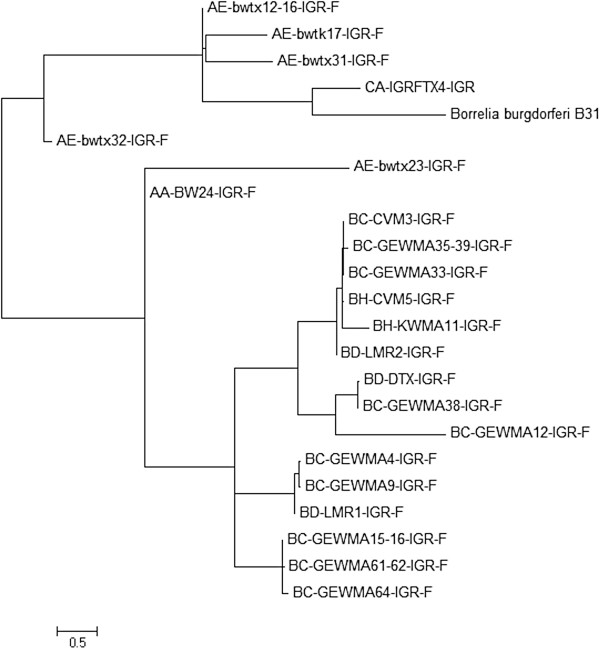
“burgdorferi IGS sequences, which served as the basis for phylogenetic analysis (Figure three of the article [1]).”
BackgroundResultInfluentialValdez‐Espinoza, U. M., Santiago‐Alarcón, D., Villalobos, F., Marques, R., Quintanilla, R. E. L., & Lira‐Noriega, A. (2025) · Medical and Veterinary Entomology · doi:10.1111/mve.12820 · Cited by 13
Alasmari, S., Tu, C., Khan, M., Javed, B., Liaqat, I., Bahadar, S., Altwaim, S. A., Chen, C., Vaz, I. D. S., & Ali, A. (2025) · Revista Brasileira de Parasitologia Veterinária/Brazilian Journal of Veterinary Parasitology · doi:10.1590/s1984-29612025062 · Cited by 21
Lee, S. H., Healy, J. E., & Lambert, J. S. (2019) · International Journal of Environmental Research and Public Health · doi:10.3390/ijerph16101779 · Cited by 16
“The validity of the results of studying borrelia distribution in Ixodes scapularis ticks using PCR and DNA sequencing without supportive sequencing electropherograms [36] has been questioned because the DNA sequences claimed to have been detected were questionable [37].”
BackgroundBorrelia in neotropical bats: Detection of two new phylogenetic lineages
Colunga‐Salas, P., Sánchez‐Montes, S., León‐Paniagua, L., & Becker, I. (2020) · Ticks and Tick-borne Diseases · doi:10.1016/j.ttbdis.2020.101642 · Cited by 11
Gago, H., Ruiz‐Fons, F., Drechsler, R. M., Alambiaga, I., & Monrós, J. S. (2022) · Ticks and Tick-borne Diseases · doi:10.1016/j.ttbdis.2022.102048 · Cited by 10
Arafa, W. M., Klafke, G., Tidwell, J. P., de León, A. Á. P., & Esteve-Gassent, M. (2020) · Ticks and Tick-borne Diseases · doi:10.1016/j.ttbdis.2020.101488 · Cited by 12
Maxwell, S. P., McNeely, C. L., Thomas, K. C., & Brooks, C. (2021) · Healthcare · doi:10.3390/healthcare9060771 · Cited by 11
“scapularis in the Texas-Mexico transboundary region will remain relatively stable until 2050” [14].”
BackgroundCourtier, A., Potheret, D., & Giannoni, P. (2022) · Life Sciences · doi:10.1016/j.lfs.2022.120689 · Cited by 11
Moon, K. L., Banks, S. C., & Fraser, C. I. (2015) · PLoS ONE · doi:10.1371/journal.pone.0128514 · Cited by 16
“There are two main Little Blue Penguin clades in New Zealand [32], both of which are present at the Oamaru site [21].”
BackgroundSharma, Y., Laison, E. K. E., Philippsen, T., Ma, J., Kong, J. D., Ghaemi, M. S., Liu, J., Hu, F., & Nasri, B. (2024) · The Lancet Regional Health - Americas · doi:10.1016/j.lana.2024.100706 · Cited by 15
“Further edits and revisions were carried out by TP, YS, and EL following review and feedback from BN, SG, JM, JL, JK, and FH.”
BackgroundMethodSupervised Resistance Exercise for Patients with Persistent Symptoms of Lyme Disease
D’Adamo, C. R., MCMILLIN, C. R., Chen, K. W., LUCAS, E. K., & Berman, B. M. (2015) · Medicine & Science in Sports & Exercise · doi:10.1249/mss.0000000000000683 · Cited by 9
Braks, M. A. H., Mulder, A. C., Swart, A., & Wint, W. (2016) · Wageningen Academic Publishers eBooks · doi:10.3920/978-90-8686-838-4_25 · Cited by 9
Serological and Molecular Evidence of Patients Infected with Anaplasma phagocytophilum in Mexico
Sosa-Gutierrez, C. G., Cervantes-Castillo, M. A., Laguna-Gonzalez, R., Lopez-Echeverria, L. Y., Ojeda-Ramírez, D., & Oyervides, M. (2021) · Diseases · doi:10.3390/diseases9020037 · Cited by 11
“chaffeensis in a patient from central Mexico [15,24,26].”
BackgroundAcheson, E. S., & Kerr, J. T. (2015) · Vector-Borne and Zoonotic Diseases · doi:10.1089/vbz.2014.1742 · Cited by 8
Rubel, F., & Kahl, O. (2023) · Experimental and Applied Acarology · doi:10.1007/s10493-023-00797-0 · Cited by 8
“Global maps of the Köppen–Geiger climate classification have been used to characterize the suitable climate for Ixodes scapularis (Feria-Arroyo et al. 2014), Argas miniatus and Argas persicus (Muñoz-Leal et al.”
MethodNorris, S. J., Barbour, A. G., Fish, D., & Diuk‐Wasser, M. A. (2015) · Parasites & Vectors · doi:10.1186/s13071-015-0899-x · Cited by 8
“[1] concluded that 45 % of Ixodes scapularis ticks collected in Texas and Mexico were infected with Borrelia burgdorferi.”
BackgroundMethodResultInfluentialGap Analysis of the Habitat Interface of Ticks and Wildlife in Mexico
González, C. A. L., Hernández‐Camacho, N., Aguilar‐Tipacamú, G., Zamora-Ledesma, S., Olvera-Ramírez, A. M., & Jones, R. W. (2021) · Pathogens · doi:10.3390/pathogens10121541 · Cited by 9
Skinner‐Taylor, C. M., Flores, M. S., Salinas, J. A., Arévalo‐Niño, K., Galán-Wong, L. J., Maldonado, G., & Garza‐Elizondo, M. A. (2016) · Reumatologia/Rheumatology · doi:10.5114/reum.2016.61208 · Cited by 7
Burn, L., Fletcher, M. A., Montiel, J., Ghia, C. J., Dantas, A. C. S., Kelly, P. H., & Stark, J. H. (2025) · Vector-Borne and Zoonotic Diseases · doi:10.1177/15303667251364142 · Cited by 6
Fei, S.-W., Zhao, H.-Q., Yin, J.-X., Sun, Z., Xue, J.-B., Lv, S., Feng, X., Guo, X., Zhou, X., & Kassegne, K. (2024) · Science in One Health · doi:10.1016/j.soh.2024.100068 · Cited by 7
Smalley, R., Zafar, H., Land, J., Samour, A., Hance, D., & Brennan, R. E. (2022) · Vector-Borne and Zoonotic Diseases · doi:10.1089/vbz.2021.0057 · Cited by 7
“Multiple studies have demonstrated the presence of B. burgdorferi in Texas at low prevalence rates (Rawlings and Teltow 1994, Feria-Arroyo et al. 2014, Mitchell et al. 2016).”
Facultad de Ciencias, U., Guzmán‐Cornejo, C., Mares, A. H., Laboratorio de Ecología de Enfermedades y Una Salud, D. D. E., Paredes-León, R., Colección Nacional de Ácaros, I. D. B., García‐Prieto, L., & Colección Nacional de Helmintos, I. D. B. (2023) · Dugesiana · doi:10.32870/dugesiana.v30i2.7303 · Cited by 6
Fedoniuk, L. Y., Pryvrotska, I. B., & Podobivskiy, S. S. (2020) · Ukrainian Journal of Ecology · doi:10.15421/2020_288 · Cited by 4
“According to WHO, Lyme borreliosis is the most common zoonosis in the northern hemisphere (Feria-Arroyo et al., 2014).”
BackgroundPanteleienko, O. V., Makovska, I. F., & Tsarenko, T. M. (2022) · Regulatory Mechanisms in Biosystems · doi:10.15421/022257 · Cited by 9
Texas Occurrence of Lyme Disease and Its Neurological Manifestations
Dandashi, J. A., & Nizamutdinov, D. (2016) · Journal of Neuroinfectious Diseases · doi:10.4172/2314-7326.1000217 · Cited by 5
“scapularis habitability over extended periods of time and even potentially expanding towards the central Texas region [14].”
BackgroundMethodImmuno‐molecular prospecting for vector‐borne diseases in central Mexico
Aguilar‐Tipacamú, G., Carvajal-Gamez, B. I., Garcia-Rejon, J. E., Machain‐Willians, C., & Mosqueda, J. (2020) · Transboundary and Emerging Diseases · doi:10.1111/tbed.13504 · Cited by 6
Prevalence of Borrelia burgdorferi-infected ticks from wildlife hosts, a response to Norris et al.
Esteve‐Gasent, M. D., Grover, A., Feria-Arroyo, T. P., Castro-Arellano, I., Medina, R. F., Gordillo-Pérez, G., & de León, A. Á. P. (2015) · Parasites & Vectors · doi:10.1186/s13071-015-0739-z · Cited by 5
Galan, A. P., Hamer, S. A., Folmar, H. A., Campbell, T. A., & Light, J. E. (2022) · Western North American Naturalist · doi:10.3398/064.082.0204 · Cited by 4
Risky business: human-related data is lacking from Lyme disease risk models
Fellin, E., Varin, M., & Millien, V. (2023) · Frontiers in Public Health · doi:10.3389/fpubh.2023.1113024 · Cited by 5
Seroprevalence of Borrelia burgdorferi antibodies in white-tailed deer from Texas
Adetunji, S. A., Krecek, R. C., Castellanos, G., Morrill, J. C., Blue-McLendon, A., Cook, W. E., & Esteve‐Gasent, M. D. (2016) · International Journal for Parasitology Parasites and Wildlife · doi:10.1016/j.ijppaw.2016.06.002 · Cited by 4
“burgdorferi in Texas (Feria-Arroyo et al., 2014), and the growing population of WTD nationwide (Rawinski and Square, 2008; McShea, 2012; Raizman et al.”
BackgroundWilliams, A. K., Peterman, W. E., & Pesapane, R. R. (2024) · Journal of Medical Entomology · doi:10.1093/jme/tjae052 · Cited by 3
Enfermedades transmitidas por vectores y cambio climático
Ochoa, S. A., Chacón-Vargas, K. F., Rivera-Chavira, B. E., & Torres, L. E. S. (2017) · Investigación y Ciencia de la Universidad Autónoma de Aguascalientes · doi:10.33064/iycuaa201772229 · Cited by 15
Merino, O., la Cruz, N. D., Galvan, G., de León, A. A. P., & Martı́nez-Burnes, J. (2019) · Arquivo Brasileiro de Medicina Veterinária e Zootecnia · doi:10.1590/1678-4162-9987 · Cited by 3
Genetic diversity of Borrelia burgdorferi sensu stricto: Novel strains from Mexican wild rodents
Colunga‐Salas, P., Hernández‐Canchola, G., Sánchez‐Montes, S., Lozano-Sardaneta, Y. N., & Becker, I. (2020) · Transboundary and Emerging Diseases · doi:10.1111/tbed.13780 · Cited by 3
Ratushny, V., & Smith, G. P. (2015) · Journal of Investigative Dermatology · doi:10.1038/jid.2015.93 · Cited by 3
“As climate change alters the distribution of the Lyme disease vector, the black-legged tick (Feria-Arroyo et al., 2014; Ogden et al., 2014) or the host of the tick, the white-footed mouse, Peromyscus leucopus, (Roy-Dufresne et al., 2013) cases of Lyme disease are spreading to new locales (Robinson…”
BackgroundIm, C., Curtis, A. J., Song, D., & Kim, O. S. (2024) · Transboundary and Emerging Diseases · doi:10.1155/2024/8824971 · Cited by 2
“In areas where diseases spread across borders of traditionally con fl icting powers, often the only way to predict how they will spread is to use computer models that can extrapolate outcomes from limited input data [8, 9].”
Montalvo, V., Sáenz‐Bolaños, C., Cruz, J. C., & Carrillo, E. (2018) · Revista de Ciencias Ambientales · doi:10.15359/rca.53-1.6 · Cited by 2
Rickettsioses and Other Tick-Borne Diseases Across the Border: Regional Focus in Chihuahua
Maynez-Prieto, C., Rodríguez-Alarcón, C. A., Garza-Hernández, J. A., Laredo-Tiscareño, S. V., Espino-Solís, G. P., & Adame-Gallegos, J. R. (2021) · Southwestern Entomologist · doi:10.3958/059.046.0116 · Cited by 2
Assessment of the potential establishment of Lyme endemic cycles in Mexico
González‐Salazar, C., Stephens, C. R., & Meneses-Mosquera, A. K. (2021) · Journal of Vector Ecology · doi:10.52707/1081-1710-46.2.207 · Cited by 3
“Beta-regression is a suitable approach for beta-distributed data (e.g., percentages), where the variable of interest is continuous and restricted to the interval (0, 1) (Ferrari and Cribari-Neto 2004, Zeileis et al. 2021).”
MethodLack of host‐associated differentiation in Ixodes scapularis using population genetics
Tietjen, M., Esteve‐Gasent, M. D., Castro-Arellano, I., Li, A. Y., & Medina, R. F. (2024) · Entomologia Experimentalis et Applicata · doi:10.1111/eea.13533 · Cited by 1
Andrade-Ponce, G. P., Giles, B. G., Newman, B. C., López‐Pérez, A. M., & Eversole, C. B. (2025) · International Journal for Parasitology Parasites and Wildlife · doi:10.1016/j.ijppaw.2025.101054 · Cited by 2
Global Epidemiology of Borrelia burgdorferi Infections
Mead, P. S. (2025) · CABI eBooks · doi:10.1079/9781800626225.0003 · Cited by 1
Maikis, T. J. (2014) · Cited by 1
Climate Change and Human Health in Mexico: Public Health Trends and Government Strategies
Ibarrarán, M. E., Pérez-Castresana, G., Saldaña‐Vázquez, R. A., & Pérez-García, T. (2023) · Global perspectives on health geography · doi:10.1007/978-3-031-38878-1_25 · Cited by 2
Climate Change and Meningoencephalitis in the Americas: A Brewing Storm
Dionne, E., Roman, F. M., & Farhadian, S. (2024) · Current Infectious Disease Reports · doi:10.1007/s11908-024-00843-x · Cited by 2
“S. trans boundary also appears susceptible to the pathogenic landscape of Lyme Disease, with models showing maintenance of suitable areas for I. scapualris similar to those currently existing to expand towards central Texas [54].”
Dong, R., Fang, R., Yang, X., Sun, Y., Zhang, Y., & Li, S. (2024) · Zoonoses and Public Health · doi:10.1111/zph.13176 · Cited by 1
Detection of Borrelia and Ehrlichia in Rhipicephalus sanguineus
Vasquez-Espinoza, R., & Beck, D. L. (2015) · Fine Focus · doi:10.33043/ff.1.2.109-120 · Cited by 1
Afección cardíaca de la enfermedad de Lyme: ¿Por qué México debe de prestar atención a este tema?
Sánchez-Vázquez, D. R., Márquez, M. F., & Baranchuk, A. M. (2018) · Archivos de cardiología de México · doi:10.1016/j.acmx.2018.04.002 · Cited by 1
Exploring the drivers of malaria elimination in Europe
Zhao, X. (2015) · Cited by 1
Acheson, E. S. (2015) · uO Research (University of Ottawa) · doi:10.20381/ruor-4163 · Cited by 2
“…mosquitoes (e.g., Foley et al. 2010; Kulkarni et al. 2010; Rochlin et al. 2013; Mughini-Gras et al. 2014), ticks (e.g., Porretta et al. 2013; Feria-Arroyo et al. 2014; Giles et al. 2014), tsetse flies (e.g., Matawa et al. 2013; Bouyer et al. 2014; Dicko et al. 2014) and sandflies (e.g.,…”
BackgroundWhat You May Not Know about Lyme Disease
Practitioners, T. N. (2014)
Response to: Lyme Neuroborreliosis in Mexico
Gordillo-Pérez, G., Solórzano‐Santos, F., & Torres, J. (2019) · Archives of Medical Research · doi:10.1016/j.arcmed.2019.03.006
Advanced AV-block: Is it time to consider Lyme carditis as a differential diagnosis in Mexico?
Carrizales‐Sepúlveda, E. F., Jiménez‐Castillo, R. A., & Vera‐Pineda, R. (2020) · Journal of Electrocardiology · doi:10.1016/j.jelectrocard.2020.02.018
Babesia microti Studies in México
(2023) · International Journal of Agriculture and Biosciences · doi:10.47278/book.oht/2023.68
Araújo, I. M., Martins, T. F., do Nascimento, K. K. G., Barbieri, A. R. M., Guimarães, R. J. D. P. S. E., de Oliveira, A. C. M., Labruna, M. B., & Abel, Í. (2023) · Research Square · doi:10.21203/rs.3.rs-3283458/v1
Biology of the Lyme Disease Agents: a Selective Survey of Clinical and Epidemiologic Relevance
Barbour, A. G. (2025) · CABI eBooks · doi:10.1079/9781800626225.0001
Tamez-González, R., Torres-Rodríguez, L., de la Cruz-Hernández, N. I., Pavón-Rocha, A. J., Salas, J. A. G., & Almazán, C. (2025) · Southwestern Entomologist · doi:10.3958/059.050.0401
Metadata
- Authors
- Feria-Arroyo, T. P., Castro-Arellano, I., Gordillo-Perez, G., Cavazos, A. L., Vargas-Sandoval, M., Grover, A., Torres, J., Medina, R. F., de León, A. A. P., & Esteve-Gassent, M. D.
- Affiliations
- The University of Texas System (US)
- Texas A&M University (US)
- Mexican Social Security Institute (MX)
- ORCID
- Torres, Javier
- Venue
- Parasites & Vectors
- Published
- 2014-04-25
- Volume
- 7
- Issue
- 1
- Pages
- 199-199
- ISSN
- 1756-3305 (ISSN-L)
- PMC
- PMC4022269
- OpenAlex
- W2110216400
- Cited by
- 102
- References
- 121
- Citations by year
- 2026: 1 · 2025: 8 · 2024: 7 · 2023: 8 · 2022: 10 · 2021: 8 · 2020: 13 · 2019: 6 · 2018: 8 · 2017: 4 · 2016: 11 · 2015: 13 · 2014: 5
- FWCI
- 8.01
- Type
- journal article
- Language
- en
- Open access
- gold
- doi.org
- Licence
- cc-by
- Locations
- Parasites & Vectors (publishedVersion, cc-by)
- Europe PMC (PubMed Central) (publishedVersion, cc-by)
- PubMed Central (publishedVersion, cc-by)
- PubMed (publishedVersion)
- ScholarWorks @ UTRGV (The University of Texas Rio Grande Valley) (submittedVersion, cc-by)
- DOAJ (DOAJ: Directory of Open Access Journals) (submittedVersion)
- OakTrust (Texas A&M University Libraries) (submittedVersion)
- Funders
- U.S. Department of Agriculture
- Texas Parks and Wildlife Department
- Texas Veterinary Medical Diagnostic Laboratory
- Texas State University
- Consejo Nacional de Ciencia y Tecnología (1999-30694)
- Instituto Mexicano del Seguro Social
- Topics
- Life Sciences › Immunology and Microbiology › Parasitology › Vector-borne infectious diseases
- Physical Sciences › Environmental Science › Health, Toxicology and Mutagenesis › Climate Change and Health Impacts
- Physical Sciences › Environmental Science › Ecological Modeling › Species Distribution and Climate Change
- Keywords
- Ixodes scapularis, Lyme disease, Borrelia burgdorferi, climate change, tick distribution, disease risk mapping, transboundary disease, Texas-Mexico border, tick-borne pathogens, habitat suitability, Gulf Coast
- MeSH terms
- Animals, Arthropod Vectors, DNA, Bacterial, Lyme Disease, Mexico, Phylogeny, Risk Factors, Texas, Ixodes, Borrelia burgdorferi, Climate Change, Animal Distribution
About these checks
Registry, retraction, Cites and statistics results are computed, not judged, with one exception: a printed reference that no index lists is read once by a model before it counts as a citation error. Claims are extracted by a model and kept only when their quote appears verbatim in the text; each cited source is then checked, with a model’s help, for whether it says what the claim relies on. Those verdicts can be wrong — read the claim’s quote and the cited source before relying on one.
Statistics and arithmetic are recomputed, not judged.
Confidence bands are shown only for fields calibrated on our annotated test set. None is calibrated yet, so no band is shown.
What counts as a claim ›How we measure confidence ›How we check this ›
Are you an author, or do you see a problem with this page? Request a review
Data sources
Bibliographic data: Semantic Scholar, OpenAlex, Crossref.
Contains information from the Semantic Scholar Academic Graph Datasets, made available under the ODC Attribution License (ODC-BY 1.0).
Semantic Scholar’s data is described in: Kinney, R., et al. (2023). The Semantic Scholar Open Data Platform. arXiv:2301.10140.
