

The DOI matches its Crossref record; 31 of the 31 references it cites were found in a registry or an index.
A randomized, double-blind, placebo-controlled pilot study of a probiotic in emotional symptoms of chronic fatigue syndrome
Open accessAbstract
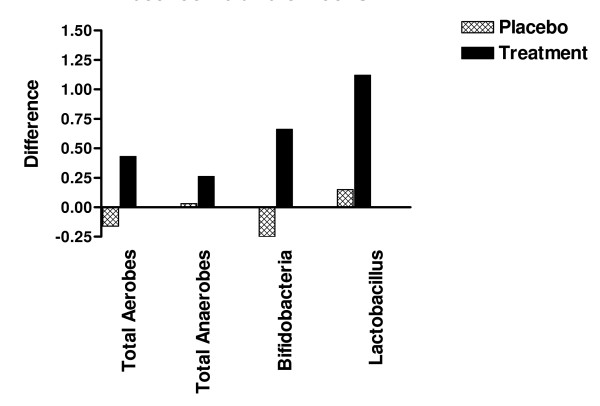
Chronic fatigue syndrome (CFS) is complex illness of unknown etiology. Among the broad range of symptoms, many patients report disturbances in the emotional realm, the most frequent of which is anxiety. Research shows that patients with CFS and other so-called functional somatic disorders have alterations in the intestinal microbial flora. Emerging studies have suggested that pathogenic and non-pathogenic gut bacteria might influence mood-related symptoms and even behavior in animals and humans. In this pilot study, 39 CFS patients were randomized to receive either 24 billion colony forming units of Lactobacillus casei strain Shirota (LcS) or a placebo daily for two months. Patients provided stool samples and completed the Beck Depression and Beck Anxiety Inventories before and after the intervention. We found a significant rise in both Lactobacillus and Bifidobacteria in those taking the LcS, and there was also a significant decrease in anxiety symptoms among those taking the probiotic vs controls (p = 0.01). These results lend further support to the presence of a gut-brain interface, one that may be mediated by microbes that reside or pass through the intestinal tract.
Overview
The claims and statistics of this paper haven’t been checked yet.
Run the check — free, no account needed. It reads the open-access text and checks the sources it cites.
Integrity signals
Registry
Cites
Statistics
Figures
Verification
Claims the paper makes
The claims and statistics of this paper haven’t been checked yet.
Run the check — free, no account needed. It reads the open-access text and checks the sources it cites.
Claims other papers make about this one
Each is checked against this paper’s own text: does it say what the citing paper says it does?
In the citing paper
“Furthermore, L. casei strain significantly reduced anxiety symptoms in patients with chronic fatigue syndrome (Rao et al. 2009)”
From Therapeutic effect of GLP-1 engineered strain on mice model of Alzheimer’s disease and Parkinson’s disease (2020) · cites this paper as Rao et al. 2009
In the citing paper
“Additionally, there is now preliminary evidence for reduced subjective feelings of anxiety and improved aspects of well-being after probiotic intake (Rao et al. 2009; Messaoudi et al. 2011).”
From Prebiotic intake reduces the waking cortisol response and alters emotional bias in healthy volunteers (2015) · cites this paper as Rao et al. 2009
In the citing paper
“The current results also differ from previous findings that indicate subjective anxiolytic effects of probiotics (Rao et al. 2009; Messaoudi et al. 2011) as we found no effects of prebiotics on subjective measures of subclinical anxiety or perceived stress.”
From Prebiotic intake reduces the waking cortisol response and alters emotional bias in healthy volunteers (2015) · cites this paper as Rao et al. 2009
In the citing paper
“A study by Rao et al. [277], reported that 8 weeks of 8 × 10⁷ CFU of L. casei given to individuals with chronic fatigue syndrome reduced anxiety symptoms.”
From International Society of Sports Nutrition Position Stand: Probiotics (2019) · cites this paper as [277]
In the citing paper
“There was no effect on depression, but those receiving the probiotic demonstrated significant improvement on the Beck Anxiety Inventory compared with the placebo group.131”
From The Gut Microbiome and the Brain (2014) · cites this paper as [131]
Self-check
Percentages, sums and reported differences re-computed from the paper’s own numbers.
The self-check needs the paper’s full text.
Citations
Cites
Carruthers, B. M., Jain, A. K., De Meirleir, K. L., Peterson, D. L., Klimas, N. G., Lerner, A. M., Bested, A. C., Flor-Henry, P., Joshi, P., Powles, A. C. P., et al. (2003) · Journal of Chronic Fatigue Syndrome · doi:10.1300/j092v11n01_02 · Cited by 1,180
Self-citationWhitehead, W. E., Palsson, O., & Jones, K. R. (2002) · Gastroenterology · doi:10.1053/gast.2002.32392 · Cited by 1,116 · cited 5×
“It is also true that LcS has been shown to reduce small intestinal bacterial overgrowth and the subjective reporting of the passage of gas in patients with IBS [29].”
BackgroundInfluentialDesbonnet, L., Garrett, L., Clarke, G., Bienenstock, J., & Dinan, T. G. (2008) · Journal of Psychiatric Research · doi:10.1016/j.jpsychires.2008.03.009 · Cited by 952
Parracho, H. M., Bingham, M. O., Gibson, G. R., & McCartney, A. L. (2005) · Journal of Medical Microbiology · doi:10.1099/jmm.0.46101-0 · Cited by 784
Aaron, L. A., Burke, M. M., & Buchwald, D. (2000) · Archives of Internal Medicine · doi:10.1001/archinte.160.2.221 · Cited by 607
Impact of consuming a milk drink containing a probiotic on mood and cognition
Benton, D., Williams, C., & Brown, A. (2007) · European Journal of Clinical Nutrition · doi:10.1038/sj.ejcn.1602546 · Cited by 554
Gut microflora as a target for energy and metabolic homeostasis
Cani, P. D., & Delzenne, N. M. (2007) · Current Opinion in Clinical Nutrition and Metabolic Care · doi:10.1097/mco.0b013e3282efdebb · Cited by 332
MITSUOKA, T. (2009) · Nutrition Reviews · doi:10.1111/j.1753-4887.1992.tb02499.x · Cited by 296
Koebnick, C., Wagner, I., Leitzmann, P., Stern, U., & Zunft, H. F. (2003) · Canadian Journal of Gastroenterology · doi:10.1155/2003/654907 · Cited by 288 · cited 1×
“Indeed LcS has been shown to regulate bowel function and decrease constipation in a controlled trial [28].”
BackgroundMajor depressive disorder: probiotics may be an adjuvant therapy.
Logan, A., & Katzman, M. (2005) · Medical Hypotheses · doi:10.1016/j.mehy.2004.08.019 · Cited by 277
Self-citation
Cited by
Sorted by citations
Cryan, J. F., O'Riordan, K. J., Cowan, C. S. M., Sandhu, K. V., Bastiaanssen, T. F. S., Boehme, M., Codagnone, M. G., Cussotto, S., Fulling, C., Golubeva, A. V., et al. (2019) · Physiological Reviews · doi:10.1152/physrev.00018.2018 · Cited by 5,286
Bravo, J. A., Forsythe, P., Chew, M. V., Escaravage, E., Savignac, H. M., Dinan, T. G., Bienenstock, J., & Cryan, J. F. (2011) · Proceedings of the National Academy of Sciences · doi:10.1073/pnas.1102999108 · Cited by 3,888
Hsiao, E. Y., McBride, S. W., Hsien, S., Sharon, G., Hyde, E. R., McCue, T., Codelli, J. A., Chow, J., Reisman, S. E., Petrosino, J. F., et al. (2013) · Cell · doi:10.1016/j.cell.2013.11.024 · Cited by 3,283
Gut–brain axis: How the microbiome influences anxiety and depression
Foster, J. A., & McVey Neufeld, K.-A. (2013) · Trends in Neurosciences · doi:10.1016/j.tins.2013.01.005 · Cited by 2,460
Messaoudi, M., Lalonde, R., Violle, N., Javelot, H., Desor, D., Nejdi, A., Bisson, J.-F., Rougeot, C., Pichelin, M., Cazaubiel, M., et al. (2011) · British Journal of Nutrition · doi:10.1017/s0007114510004319 · Cited by 1,324
Metadata
- Authors
- Rao, A. V., Bested, A. C., Beaulne, T. M., Katzman, M. A., Iorio, C., Berardi, J. M., & Logan, A. C.
- Affiliations
- University of Toronto (CA)
- Women's College Hospital (CA)
- START Clinic (CA)
- Corresponding author
- Logan, Alan C
- Venue
- Gut Pathogens
- Published
- 2009-03-19
- Volume
- 1
- Issue
- 1
- Pages
- 6-6
- ISSN
- 1757-4749 (ISSN-L)
- PMC
- PMC2664325
- OpenAlex
- W2024392981
- Cited by
- 577
- References
- 31
- Citations by year
- 2026: 12 · 2025: 43 · 2024: 23 · 2023: 38 · 2022: 46 · 2021: 42 · 2020: 53 · 2019: 48 · 2018: 48 · 2017: 48 · 2016: 50 · 2015: 46 · 2014: 31 · 2013: 21 · 2012: 9
- FWCI
- 14.84
- Type
- journal article
- Language
- en
- Open access
- gold
- doi.org
- Licence
- cc-by
- Locations
- Gut Pathogens (publishedVersion, cc-by)
- Europe PMC (PubMed Central) (publishedVersion, cc-by)
- PubMed Central (publishedVersion, cc-by)
- PubMed (publishedVersion)
- TSpace (University of Toronto) (submittedVersion)
- DOAJ (DOAJ: Directory of Open Access Journals) (submittedVersion, cc-by-sa)
- Topics
- Life Sciences › Agricultural and Biological Sciences › Food Science › Probiotics and Fermented Foods
- Life Sciences › Biochemistry, Genetics and Molecular Biology › Molecular Biology › Gut microbiota and health
- Health Sciences › Medicine › Gastroenterology › Gastrointestinal motility and disorders
- Keywords
- chronic fatigue syndrome, probiotics, Lactobacillus casei Shirota, anxiety, depression, gut microbiota, gut-brain axis, Bifidobacterium, functional somatic syndromes, mood symptoms
About these checks
Registry, retraction, Cites and statistics results are computed, not judged, with one exception: a printed reference that no index lists is read once by a model before it counts as a citation error. Claims are extracted by a model and kept only when their quote appears verbatim in the text; each cited source is then checked, with a model’s help, for whether it says what the claim relies on. Those verdicts can be wrong — read the claim’s quote and the cited source before relying on one.
Statistics and arithmetic are recomputed, not judged.
Confidence bands are shown only for fields calibrated on our annotated test set. None is calibrated yet, so no band is shown.
What counts as a claim ›How we measure confidence ›How we check this ›
Are you an author, or do you see a problem with this page? Request a review
