

Common genetic variants, acting additively, are a major source of risk for autism
Open accessThe DOI matches its Crossref record; 71 of the 72 references it cites were found in a registry or an index.
Abstract
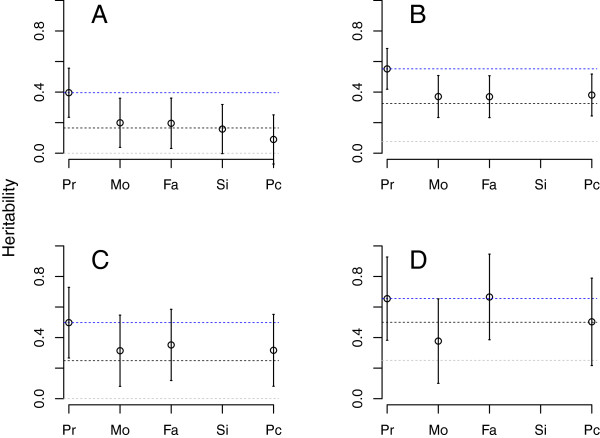
Background: Autism spectrum disorders (ASD) are early onset neurodevelopmental syndromes typified by impairments in reciprocal social interaction and communication, accompanied by restricted and repetitive behaviors. While rare and especially de novo genetic variation are known to affect liability, whether common genetic polymorphism plays a substantial role is an open question and the relative contribution of genes and environment is contentious. It is probable that the relative contributions of rare and common variation, as well as environment, differs between ASD families having only a single affected individual (simplex) versus multiplex families who have two or more affected individuals. Methods: By using quantitative genetics techniques and the contrast of ASD subjects to controls, we estimate what portion of liability can be explained by additive genetic effects, known as narrow-sense heritability. We evaluate relatives of ASD subjects using the same methods to evaluate the assumptions of the additive model and partition families by simplex/multiplex status to determine how heritability changes with status. Results: By analyzing common variation throughout the genome, we show that common genetic polymorphism exerts substantial additive genetic effects on ASD liability and that simplex/multiplex family status has an impact on the identified composition of that risk. As a fraction of the total variation in liability, the estimated narrow-sense heritability exceeds 60% for ASD individuals from multiplex families and is approximately 40% for simplex families. By analyzing parents, unaffected siblings and alleles not transmitted from parents to their affected children, we conclude that the data for simplex ASD families follow the expectation for additive models closely. The data from multiplex families deviate somewhat from an additive model, possibly due to parental assortative mating. Conclusions: Our results, when viewed in the context of results from genome-wide association studies, demonstrate that a myriad of common variants of very small effect impacts ASD liability.
Overview
The claims and statistics of this paper haven’t been checked yet.
Free: it reads the open-access text and checks the first 5 claims that cite a source we can check. Create a free account to check every claim.
Integrity signals
Registry
Cites
Statistics
Figures
Verification
Claims the paper makes
The claims and statistics of this paper haven’t been checked yet.
Free: it reads the open-access text and checks the first 5 claims that cite a source we can check. Create a free account to check every claim.
Claims other papers make about this one
Each is checked against this paper’s own text: does it say what the citing paper says it does?
The check wasn’t confident either way, so it gives no verdict — never disputed.
In the citing paper
“which is higher than estimates from iPSYCH16 but lower than estimates from the AGRE55 and PAGES56 cohorts.”
From Genetic correlates of phenotypic heterogeneity in autism (2022) · cites this paper as [55]
Experimental — accuracy not yet measuredIn the citing paper
“Most of the autistic population is considered “idiopathic” with causes unknown, likely the result of complex polygenic and environmental interactions [1,2,3,4].”
From The Relationship between Autism and Ehlers-Danlos Syndromes/Hypermobility Spectrum Disorders (2020) · cites this paper as [2]
In the citing paper
“Common SNPs acting additively have been reported as a major source of risk for ASD (42) with heritability exceeding 60% for ASD individuals from multiplex families and approximately 40% for simplex families.”
From Gene × Environment Interactions in Autism Spectrum Disorders: Role of Epigenetic Mechanisms (2014) · cites this paper as [42]
In the citing paper
“there is no evidence that the role of environment is more important in the case of absence of de novo event, as common variants were shown to contribute substantially to autism risk (42).”
From Gene × Environment Interactions in Autism Spectrum Disorders: Role of Epigenetic Mechanisms (2014) · cites this paper as [42]
In the citing paper
“We opted to conduct heritability analyses using unscreened population controls rather than family controls (that is, pseudocontrols or unaffected family members), as this likely reduces SNP heritability96 owing to parents having higher genetic likelihood for autism compared to unselected population controls55 and due to assortative mating97.”
From Genetic correlates of phenotypic heterogeneity in autism (2022) · cites this paper as [55]
4 more claims about this paper
Create a free account to see every claim other papers make about this one.
Self-check
Percentages, sums and reported differences re-computed from the paper’s own numbers.
The self-check needs the paper’s full text.
Citations
Cites
PLINK: a tool set for whole-genome association and population-based linkage analyses.
Purcell, S., Neale, B., Todd-Brown, K., Thomas, L., Ferreira, M. A. R., Bender, D., Maller, J., Sklar, P., de Bakker, P. I. W., Daly, M. J., et al. (2007) · The American Journal of Human Genetics · doi:10.1086/519795 · Cited by 34,089 · cited 2×
“We also generate a “ pseudo-control ” from the alleles that parents did not transmit to their affected offspring by using the program Plink [37].”
Introduction to Quantitative Genetics.
Edwards, A. W. F., & Falconer, D. S. (1982) · Biometrics · doi:10.2307/2529912 · Cited by 21,447
Principal components analysis corrects for stratification in genome-wide association studies
Price, A. L., Patterson, N. J., Plenge, R. M., Weinblatt, M. E., Shadick, N. A., & Reich, D. (2006) · Nature Genetics · doi:10.1038/ng1847 · Cited by 10,248 · cited 1×
“Instead it appears that population-based controls contrasted with ASD cases would be a more powerful design [65], even after adjusting for ancestry [66].”
GCTA: a tool for genome-wide complex trait analysis
Yang, J., Lee, S. H., Goddard, M. E., & Visscher, P. M. (2011) · The American Journal of Human Genetics · doi:10.1016/j.ajhg.2010.11.011 · Cited by 8,279 · cited 2×
“Estimating heritability as a case-control contrast Heritability of ASD from probands versus controls was estimated using GCTA software [28], which encodes the theory laid out in [17,18].”
Common polygenic variation contributes to risk of schizophrenia and bipolar disorder
The International Schizophrenia Consortium (2009) · Nature · doi:10.1038/nature08185 · Cited by 4,821 · cited 2×
“There is now sound evidence for common variants affecting liability for schizophrenia [55-57], including a study similar to ours [46].”
Common SNPs explain a large proportion of the heritability for human height
Yang, J., Benyamin, B., McEvoy, B. P., Gordon, S., Henders, A. K., Nyholt, D. R., Madden, P. A., Heath, A. C., Martin, N. G., Montgomery, G. W., et al. (2010) · Nature Genetics · doi:10.1038/ng.608 · Cited by 4,446
Strong association of de novo copy number mutations with autism
Sebat, J., Lakshmi, B., Malhotra, D., Troge, J., Lese-Martin, C., Walsh, T., Yamrom, B., Yoon, S., Krasnitz, A., Kendall, J., et al. (2007) · Science · doi:10.1126/science.1138659 · Cited by 2,795 · cited 5×
“These results suggest that the difference between multiplex and simplex families is largely a matter of degree (see also [42]), namely the number of liability alleles carried by parents, rather than a fundamental difference in the genetic architecture [4,43].”
InfluentialSelf-citationAutism as a strongly genetic disorder: evidence from a British twin study
Bailey, A., Le Couteur, A., Gottesman, I., Bolton, P., Simonoff, E., Yuzda, E., & Rutter, M. (1995) · Psychological Medicine · doi:10.1017/s0033291700028099 · Cited by 2,461 · cited 2×
“Still our findings of substantial heritability are consistent with the majority of twin studies [1,2] and are richer in some ways because the analytic technique [17,18] used here provides a direct estimate of the proportion of liability attributable to additive genetic effects, whereas twin studies…”
Genetic relationship between five psychiatric disorders estimated from genome-wide SNPs
Cross-Disorder Group of the Psychiatric Genomics Consortium (2013) · Nature Genetics · doi:10.1038/ng.2711 · Cited by 2,263
Research works printed but not linked: 3
- Constantino JN Gruber CP The Social Responsiveness Scale manual 2005 Los Angeles, CA: Western Psychological Services
- HealthABC data http://www.ncbi.nlm.nih.gov/projects/gap/cgi-bin/study.cgi?study_id=phs000169.v1.p1
- Neurogenetics Research Consortium data http://www.ncbi.nlm.nih.gov/projects/gap/cgi-bin/study.cgi?study_id=phs000196.v2.p1
Cited by
Items 301–400 of 449
Human genetics and clinical aspects of neurodevelopmental disordersPreprint
Lyon, G. J., & O'Rawe, J. (2013) · bioRxiv (Cold Spring Harbor Laboratory) · doi:10.1101/000687 · Cited by 6
“Thus, while a mutation associated with hemochromatosis or breast cancer might have high expression in one particular pedigree or clan, that same mutation may have very low expression in another pedigree, clan or group of unrelated people (Kohane et al., 2012).”
BackgroundAl-Salihy, A. A.-R. S. (2024) · Frontiers in Reproductive Health · doi:10.3389/frph.2024.1438049 · Cited by 5
Esler, A., Stronach, S. T., & Jacob, S. (2018) · Autism Research · doi:10.1002/aur.1975 · Cited by 6
Lima, M. O., Saraiva, L. C., Ramos, V. R., de Oliveira, M. C., Costa, D. L. C., Fernandez, T. V., Crowley, J. J., Storch, E. A., Shavitt, R. G., Miguel, E. C., et al. (2023) · Psychiatry Research · doi:10.1016/j.psychres.2023.115627 · Cited by 5
Toraman, B., Bilginer, Ç., Hesapçıoğlu, S. T., Göker, Z., Soykam, H. O., Ergüner, B., Dinçer, T., Yıldız, G., Ünsal, S., Kasap, B. K., et al. (2021) · The Journal of Gene Medicine · doi:10.1002/jgm.3322 · Cited by 7
“ants (PTVs) that are frameshifts, canonical splice sites, and nonsense single nucleotide variants (SNVs) with large effect size and inherited common SNVs with small effect size have been associated with the genetic etiology of ASD in many studies to date.(9,12) A comprehensive database about the genetic etiologies of…”
BackgroundDiscovery of eQTL Alleles Associated with Autism Spectrum Disorder: A Case–Control Study
Hickman, A. R., Selee, B., Pauly, R., Husain, B., Hang, Y., & Feltus, F. A. (2022) · Journal of Autism and Developmental Disorders · doi:10.1007/s10803-022-05631-x · Cited by 5
Genetic pathways to autism spectrum disorders
Mehta, S., & Nurmi, E. L. (2013) · Neuropsychiatry · doi:10.2217/npy.13.16 · Cited by 6
China is Prepared to Fight Against Emerging Mental Health Disorders?
Zhang, F. (2015) · International Journal of Emergency Mental Health and Human Resilience · doi:10.4172/1522-4821.1000244 · Cited by 7
Xie, X., Hou, F., Li, L., Chen, Y., Liu, L., Luo, X., Gu, H., Li, X., Zhang, J., Gong, J., et al. (2019) · Psychiatry Investigation · doi:10.30773/pi.2019.02.26.3 · Cited by 5
Genetic mechanisms of neurodevelopmental disorders
Au, P. Y. B., Eaton, A. J., & Dyment, D. A. (2020) · Handbook of clinical neurology · doi:10.1016/b978-0-444-64150-2.00024-1 · Cited by 5
Marrus, N. M., Turner, T. N., Forsen, E., Bolster, D., Marvin, A. R., Whitehouse, A., Klinger, L. G., Gurnett, C. A., & Constantino, J. N. (2021) · Journal of Neurodevelopmental Disorders · doi:10.1186/s11689-021-09389-8 · Cited by 7
Warrier, V., & Baron‐Cohen, S. (2017) · Wiley eBooks · doi:10.1002/9780470015902.a0021455.pub2 · Cited by 7
“Indeed, a considerable proportion of de novo mutations are paternal in origin (Kong et al., 2012; Gratten et al., 2016).”
Prato, A., Randazzo, M., Messina, M., Puglisi, G., Aleo, L. R., Ciantia, F., Cirnigliaro, L., Rizzo, R., & Barone, R. M. E. (2025) · Children · doi:10.3390/children12070848 · Cited by 4
“ASD is a multifactorial condition, stemming from the combined effects of genetic risk and environmental factors [25].”
Autism-associated SCN2A deficiency disrupts cortico-striatal circuitry in human brain assembloids
Chen, X., Zhang, J., Wu, J., Robinson, M. J., Kothandaraman, H., Yoo, Y.-E., Dopeso‐Reyes, I. G., Buffenoir, T. D., Halurkar, M. S., Yang, H., et al. (2026) · Neuron · doi:10.1016/j.neuron.2026.08.031 · Cited by 5
Mottron, L., Lavigne-Champagne, A., Bernhardt, B. C., Dumas, G., Jacquemont, S., & Gagnon, D. (2025) · Molecular Psychiatry · doi:10.1038/s41380-025-03275-8 · Cited by 4
“This separation is not consensual [147, 148] and is the subject of a lively debate on the more or less strict delineation of the “ autism spectrum ” [110], in which ADB can play a critical role.”
A Novel Test for Detecting SNP–SNP Interactions in Case-Only Trio Studies
Balliu, B., & Zaitlen, N. (2016) · Genetics · doi:10.1534/genetics.115.179846 · Cited by 4
“However, this test was the least powerful in our simulations and will lose power when there is assortative mating for the phenotype of interest (Klei et al. 2012).”
MethodPirooznia, M., Niranjan, T., Chen, Y.-C., Tunc, I., Goes, F. S., Avramopoulos, D., Potash, J. B., Huganir, R. L., Zandi, P. P., & Wang, T. (2019) · Frontiers in Genetics · doi:10.3389/fgene.2019.01186 · Cited by 5
Contribution of Genetic Epidemiology to Our Understanding of Psychiatric Disorders
Merikangas, K. R., & Merikangas, A. K. (2016) · Elsevier eBooks · doi:10.1016/b978-0-12-800105-9.00002-0 · Cited by 4
Asif, M., Vicente, A. M., & Couto, F. M. (2019) · Journal of Biomedical Informatics · doi:10.1016/j.jbi.2019.103273 · Cited by 9
Kousoulidou, L., Moutafi, M., Nicolaides, P., Hadjiloizou, S., Christofi, C., Paradesiotou, A., Anastasiadou, V., Sismani, C., & Patsalis, P. C. (2013) · BioMed Research International · doi:10.1155/2013/843027 · Cited by 4
“The above data support the multifactorial model of autism, where potentially causative aberrations exhibit variable penetrance depending on the genetic background, often defined as the synergy of other coexisting aberrations [9].”
BackgroundA Data Fusion Approach to Enhance Association Study in Epilepsy
Marini, S., Limongelli, I., Rizzo, E., Malovini, A. L., Errichiello, E., Vetro, A., Da, T., Zuffardi, O., & Bellazzi, R. (2016) · PLoS ONE · doi:10.1371/journal.pone.0164940 · Cited by 4
Common and Rare Variant Genetic Contributions in African Americans With AutismPreprint
Cirnigliaro, M., Lowe, J. K., Flynn-Carroll, A. O., Kumagai, M. E., Gibson, D. S., Williams, J. B., Fu, J. M., Dong, S., Hou, K., Pillalamarri, V., et al. (2025) · SSRN Electronic Journal · doi:10.1101/2025.11.18.25340532 · Cited by 4
Self-citationBatrancea, L. M., Akgüller, Ö., Balcı, M. A., & Gãban, L. (2026) · Biomedicines · doi:10.3390/biomedicines14010137 · Cited by 3
Ahmmad, M. R., Pantazopoulos, H., & Kothiya, S. H. (2026) · Research in Autism · doi:10.1016/j.reia.2026.202826 · Cited by 3
Performance Comparison of Benchtop Next-generation Sequencing Systems
Na, H. S. (2014) · Journal of Bacteriology and Virology · doi:10.4167/jbv.2014.44.2.208 · Cited by 3
Massrali, A., Warrier, V., Paul, A., Adhya, D., Srivastava, D. P., Kotter, M., & Baron‐Cohen, S. (2019) · Elsevier eBooks · doi:10.1016/b978-0-12-813796-3.00013-4 · Cited by 4
Turkalj, L., Mehta, M., Matteson, P. G., Prem, S., Williams, M., Connacher, R., DiCicco-Bloom, E. M., & Millonig, J. H. (2020) · Advances in neurobiology · doi:10.1007/978-3-030-45493-7_4 · Cited by 3
A Two-State Epistasis Model Reduces Missing Heritability of Complex TraitsPreprint
Bubb, K. L., & Queitsch, C. (2015) · bioRxiv (Cold Spring Harbor Laboratory) · doi:10.1101/017491 · Cited by 4
Hendry, A. J., Jones, E. J. H., Bedford, R., Konke, L. A., Ali, J. B., Bölte, S., Brocki, K. C., Demurie, E., Johnson, M. H., Pijl, M., et al. (2020) · PsyArXiv (OSF Preprints) · doi:10.31234/osf.io/t9swg · Cited by 3
The genetic architecture of neurodevelopmental disordersPreprint
Mitchell, K. J. (2014) · bioRxiv (Cold Spring Harbor Laboratory) · doi:10.1101/009449 · Cited by 3
Shih, Y.-C., Nelson, L., Janeček, M., & Peixoto, R. T. (2023) · bioRxiv (Cold Spring Harbor Laboratory) · doi:10.1101/2023.11.23.568500 · Cited by 5
“…that many autism risk genes are implicated in glutamatergic synapse development and function, early deficits in PVINs excitatory drive could contribute to the onset of cortical dysfunction in ASDs (Fu et al. 2022; Grove et al. 2019; Klei et al. 2012; Pinto et al. 2014; Satterstrom et al. 2019).”
BackgroundIn silico Analysis of Common Autism Spectrum Disorder Genetic Risk Variations
Patel, S., & Sharma, P. (2022) · Biomedical & Pharmacology Journal · doi:10.13005/bpj/2530 · Cited by 2
Modelling Autistic Features in Mice Using Quantitative Genetic Approaches
Molenhuis, R. T., Bruining, H., & Kas, M. J. (2017) · Advances in anatomy, embryology and cell biology · doi:10.1007/978-3-319-52498-6_4 · Cited by 2
“While contributing de novo variants are found in 10–20% of cases, about 50% of ASD liability can be attributed to common genetic variation (Klei et al. 2012; De Rubeis et al. 2014; Gaugler et al. 2014).”
Genetics and Epigenetics of ASD
Mojarad, B. A., Qaiser, F., & Yuen, R. K. C. (2023) · Springer eBooks · doi:10.1007/978-3-031-20792-1_18 · Cited by 3
Murali, C. N., Sakyi, G. J., Goin‐Kochel, R. P., & Mire, S. S. (2024) · Review Journal of Autism and Developmental Disorders · doi:10.1007/s40489-024-00467-w · Cited by 2
“On the other hand, very large studies of simplex and multiplex families have shown that individuals with multiple common SNPs associated with ASD appear to have a higher chance of developing ASD, suggesting that common ASD predisposition SNPs act additively (Klei et al., 2012).”
Drago, A., Calabrò, M., & Crisafulli, C. (2024) · Genes · doi:10.3390/genes15121609 · Cited by 2
Duda, M., & Wall, D. P. (2015) · Personalized Medicine · doi:10.2217/pme.15.8 · Cited by 2
Dichotomous classification of autism spectrum disorders: syndromal and non-syndromal forms
Соловьева, Н. В., Kuvshinova, Y. V., Kichuk, I. V., Витальевна, Ч. С., Vilyanov, V. B., & Kremenitskaya, S. A. (2018) · S S Korsakov Journal of Neurology and Psychiatry · doi:10.17116/jnevro201811841107-112 · Cited by 3
“Identification of non-syndromic genes became possible thanks to large-scale studies of a large array of genetic information in people with ASD: both rare denovo mutations and the most common genetic aberrations [37].”
BackgroundAnxiety Disorders in the Autism Spectrum: Update and Multi-Case–Control Study on Clinical Phenotypes
Zoccante, L. (2019) · Springer eBooks · doi:10.1007/978-3-030-26276-1_9 · Cited by 2
Brusco, A., & Ferrero, G. B. (2019) · Springer eBooks · doi:10.1007/978-3-030-26276-1_2 · Cited by 3
Autism spectrum disorders : genetic and neurodevelopmental aspects in children with early diagnosis
Eriksson, M. A. (2013) · Figshare · Cited by 3
Maloney, S. E., Rahn, R. M., Akula, S. K., Rieger, M. A., McCullough, K. B., Jakes, C., Avdagic, S., Chandler, K., Bauernfeind, A. L., Culver, J. P., et al. (2017) · bioRxiv (Cold Spring Harbor Laboratory) · doi:10.1101/205708 · Cited by 2
“As genetic factors are clearly an important causation of ASD (Geschwind, 2008), it is likely that environmental contributions to ASD risk interact with existing genetic susceptibility (Hertz-Picciotto et al., 2006; Klei et al., 2012).”
BackgroundMúltiplas abordagens para determinar os fatores genéticos que contribuem para o ASD
Moreira, D. D. P. (2017) · Digital Library of Theses and Dissertations (Universidade de São Paulo) · doi:10.11606/t.41.2017.tde-18102017-151418 · Cited by 3
Copy number variations (CNVs) in Brazilian patients with autism spectrum disorder (ASD)
Costa, C. I. S. (2018) · Digital Library of Theses and Dissertations (Universidade de São Paulo) · doi:10.11606/d.41.2018.tde-20092018-124809 · Cited by 2
Molecular diagnosis of autism spectrum disorder through whole exome sequencing
de Almeida, T. F. (2019) · Digital Library of Theses and Dissertations (Universidade de São Paulo) · doi:10.11606/t.41.2019.tde-04022019-092804 · Cited by 2
Investigating the role of microRNAs in autism
Bleazard, T. (2018) · Research Explorer (The University of Manchester) · Cited by 7
Nong, Y., Stoppel, D. C., Johnson, M. A., Boillot, M., Todorovic, J., Shen, J., Zhou, X., Nadler, M. J. S., Rodriguez, C. L., Huo, Y., et al. (2023) · bioRxiv (Cold Spring Harbor Laboratory) · doi:10.1101/2023.02.28.530462 · Cited by 2
Molecular Dynamics of Brodmann Area 22 in Development and AutismPreprint
Suresh, V., Wigdor, E. M., Hao, Y., Leonard, R., Asfouri, J., Griffiths, M., Evans, C., Yuan, G., Rohani, N., Weiss, J., et al. (2026) · SSRN Electronic Journal · doi:10.64898/2026.03.31.715694 · Cited by 3
Self-citationDurand, V. M. (2014) · Oxford University Press eBooks · doi:10.1093/oxfordhb/9780199328710.013.014 · Cited by 1
Role of Multi-Cereal in Nutritional Strategies in Children with Autism
Sharma, S. (2024) · World sustainability series · doi:10.1007/978-3-031-64237-1_19 · Cited by 1
Synchronisation of circadian timing in families and the impact of autism: a scoping review
Brennan, A., Wyse, C. A., de Vasconcelos, M. F., Rudderham, L. M., Gallagher, L., & Lopez, L. M. (2026) · Journal of Neurodevelopmental Disorders · doi:10.1186/s11689-026-09679-z · Cited by 2
Architecture of the Genetic Risk for Autism
Chaste, P., & Devlin, B. (2015) · Key issues in mental health (Online)/Key issues in mental health (Print) · doi:10.1159/000363590 · Cited by 1
Self-citationConstruction of a Genetic Classifier for ASD Using Gene Pathway Analysis
Chana, G., Testa, R., Gillett, P., Williams, D., Bousman, C., Zantomio, D., Everall, I., Pantelis, C., & Skafidas, E. S. (2014) · WORLD SCIENTIFIC eBooks · doi:10.1142/9789814602167_0006 · Cited by 1
Social Endophenotypes in Mouse Models of Psychiatric Disease
Pisansky, M. T., Gottesman, I. I., & Gewirtz, J. C. (2016) · Springer eBooks · doi:10.1007/978-1-4939-3777-6_8 · Cited by 1
Lo‐Castro, A., & Curatolo, P. (2014) · Cited by 1
Muhle, R., Sanders, S., Reed, H. E., & State, M. W. (2016) · Elsevier eBooks · doi:10.1016/b978-0-12-800105-9.00029-9 · Cited by 1
Self-citationZhang, Y., & Huang, S. (2019) · Communications in Information and Systems · doi:10.1101/231944 · Cited by 1
Facteurs génétiques impliqués dans l'autisme : revue de la littérature et recommandations cliniques
Chaste, P., Delorme, R., & Leboyer, M. (2014) · Encyclopédie médico-chirurgicale. Psychiatrie · doi:10.1016/s1633-776x(20)30407-5 · Cited by 1
Self-citationAutism Spectrum Disorders Versus Genetic Syndromes
Capal, J. K., & Jeste, S. (2022) · Oxford University Press eBooks · doi:10.1093/med-psych/9780197516881.003.0010 · Cited by 1
Ziętek, M. M., Viscomi, M. P., Czyrska, J., Winiarczyk, D., Małachowska, D., Szafrańska, K., Małachowska, E. D., Cybulska, M., Horbańczuk, J. O., & Sampino, S. (2025) · Animal Science Papers and Reports · doi:10.2478/aspr-2025-0003 · Cited by 1
Spoto, G., Bertuccio, M. P., Visalli, G., Currò, M., Rosa, G. D., & Caccamo, D. (2025) · International Journal of Molecular Sciences · doi:10.3390/ijms26199768 · Cited by 1
“…and differences in analysis method used, heritability of common genetic variants such as single nucleotide polymorphisms (SNPs) showed a considerable variability, ranging from 65% in multiplex families [11] to 12% in the Psychiatric Genomics Consortium GWAS (genome-wide association studies) [12].”
Risque d’autisme : une architecture complexe
Chaste, P. (2018) · Enfances & Psy · doi:10.3917/ep.080.0103 · Cited by 1
Self-citationGenetic studies of autism and autistic-like traits
Jönsson, L. (2015) · Gothenburg University Publications Electronic Archive (Gothenburg University) · Cited by 1
Simple genetic models for autism spectrum disorderPreprint
Mukhopadhyay, S., Wigler, M. H., & Levy, D. (2015) · bioRxiv (Cold Spring Harbor Laboratory) · doi:10.1101/017301 · Cited by 1
“Many genetic theories of autism have been proposed such as common additive variants [11], latent risk classes [12], and dominant variants of strong effects[6,13-15].”
BackgroundGómez‐Barriocanal, J. (2018) · bioRxiv (Cold Spring Harbor Laboratory) · doi:10.1101/249805 · Cited by 1
McKernan, E. P. (2017) · Syracuse University Libraries (Syracuse University) · Cited by 2
Understanding Developmental Psychopathology: How Useful Are Evolutionary Perspectives?
Leckman, J. F. (2016) · Wiley eBooks · doi:10.1002/9781119125556.devpsy204 · Cited by 1
Wagner, L., Chiem, E., Liu, J., & Hernandez, L. M. (2026) · medRxiv · doi:10.64898/2026.04.17.26351076 · Cited by 1
Etude fonctionnelle et structurale de variants rares des contactines et vulnérabilité à l’autisme
Mercati, O. (2013) · theses.fr (ABES) · doi:10.70675/97657fd1z5bf6z41fazbbcbz7dc21c2fccd2
Electrophysiological Endophenotypes in Autism Spectrum Disorder: A Family Study
Clawson, A. (2015) · ScholarsArchive (Brigham Young University)
Martin, J. (2014) · ORCA Online Research @Cardiff (Cardiff University)
Common genetic variants linked with large percentage of autism risk
Levenson, D. (2014) · American Journal of Medical Genetics Part A · doi:10.1002/ajmg.a.36817
Oxytocin and epigenetic mechanisms in mouse models of empathy and autism
Pisansky, M. T. (2016) · University of Minnesota Digital Conservancy (University of Minnesota)
Architecture génétique des troubles du spectre autistique dans les îles Féroé
Carton-Buonafine, C. (2018) · theses.fr (ABES) · doi:10.70675/dbe8347ez7174z46b8z977cz5e2d1e28fb19
Modulation pharmacologique du raisonnement et de la prise de décision : apports pour la psychiatrie
Salvador, A. (2017) · theses.fr (ABES) · doi:10.70675/95432a09zf3c7z4293zb08fze282047ef9b0
The Spectrum of Twice Exceptional and Autistic Learners and Suggestions for Their Learning Styles
Williams, R. O., & Freed, J. (2018) · Oxford University Press eBooks · doi:10.1093/oso/9780190645472.003.0014 · Cited by 1
Transtornos do espectro autista em pacientes com a pré-mutação do gene FMR1
Girardi, A. C. D. S. (2018) · Digital Library of Theses and Dissertations (Universidade de São Paulo) · doi:10.11606/d.41.2018.tde-15052018-092019
Single nucleotide polymorphisms in human health and disease: Towards resolution of a conundrum
Joshi, N. (2014) · Biomedical Research Journal · doi:10.4103/2349-3666.240660
Identification of novel genetic causes of monogenic intellectual disability
Mattioli, F. (2018) · theses.fr (ABES) · doi:10.70675/167f5e38z823ez454dz9387zf26415397f77 · Cited by 2
Fogo, M. S. (2019) · Digital Library of Theses and Dissertations (Universidade de São Paulo) · doi:10.11606/d.41.2019.tde-13122018-083852
HolographicKinetics for aChild Suffering from Autism with Extreme AggressiveBehavioral Disorder
Chevalier, A., & Richards, S. (2017) · Current Research in Complementary & Alternative Medicine · doi:10.29011/2577-2201/100006
Cognition sociale et cerveau social dans les troubles du développement de l’enfant
Rechtman, E. (2018) · theses.fr (ABES) · doi:10.70675/c7a9c225z5375z4cf0zab8bz5d07233fa4d9 · Cited by 1
IP3-Mediated Ca2+ Signaling Deficit in Monogenic and Sporadic Forms of Autism Spectrum Disorders
Schmunk, G. (2017) · eScholarship (California Digital Library)
Psychophysical Studies Of Motion Perception In Autism Spectrum Disorders
Bakroon, A. (2019) · UWSpace (University of Waterloo)
Estudo dos componentes de vulnerabilidade genética no transtorno do espectro autista
Reis, V. N. D. S. (2019) · Digital Library of Theses and Dissertations (Universidade de São Paulo) · doi:10.11606/t.5.2019.tde-23082019-163447
Rare variants in nucleotide methylation genes and neurodevelopmental disorders
Parke, A. (2019) · Nottingham ePrints (University of Nottingham)
Gastaldi, V. D. (2019) · Digital Library of Theses and Dissertations (Universidade de São Paulo) · doi:10.11606/d.5.2019.tde-08112019-113046
Alteraciones en la conectividad funcional en el autismo: un estudio mediante magnetoencelofalografía
Pascual, T. (2019) · LA Referencia (Red Federada de Repositorios Institucionales de Publicaciones Científicas) · Cited by 2
Genetics of autism spectrum disorders
Gupta, A. R., Fernandez, T. V., & Hoffman, E. J. (2020) · doi:10.1093/med/9780198713005.003.0028
Identification and validation of novel genes implicated in neurosensory and neurological diseases
Kröll‐Hermi, A. (2019) · theses.fr (ABES) · doi:10.70675/1207e1f1zcc6bz44e6zb419z313d7456382f · Cited by 1
INBORN ERRORS OF METABOLISM AND METABOLIC WORK-UP IN AUTISM SPECTRUM DISORDERS
Penič, A. K., Prijatelj, Ž., Ločičnik, M., & Tanšek, M. Ž. (2021) · Slovenska pediatrija revija pediatrov Slovenije in specialistov šolske ter visokošolske medicine Slovenije · doi:10.38031/slovpediatr-2021-1-03en · Cited by 1
Wagner, R. E., Howells, W. A. B., Johnson, E. C., Agrawal, A., Lowe, J. K., Geschwind, D. H., & Constantino, J. N. (2021) · Research Square · doi:10.21203/rs.3.rs-325654/v1
Self-citationWagner, R. E. (2021) · Digital Commons@Becker (Washington University School of Medicine) · doi:10.7936/fmfj-7j03
研究活動報告 : 日本工業所有権法学会レポート : 2005年6月中国武漢出張リポート
石上, 千., 青木, 博., & 劉, 曉. (2005) · Institutional Repositories DataBase (IRDB)
Cohen, A. S., MacAulay, R. K., Mitchell, K. R., Ory, J., & Schwartz, E. K. (2016) · Autism and child psychopathology series · doi:10.1007/978-3-319-27171-2_16 · Cited by 1
Suzuki, Â. M. (2021) · Digital Library of Theses and Dissertations (Universidade de São Paulo) · doi:10.11606/t.41.2021.tde-09122021-143412
Gene Regulatory Networks in Autism
Oliphant, M. E., & Fernandez, T. V. (2017) · Springer eBooks · doi:10.1007/978-1-4614-6435-8_102153-1
Excessive Cap-dependent Translation as a Molecular Mechanism Underlying ASD
Klann, E. (2014) · Defense Technical Information Center (DTIC) · doi:10.21236/ada612864
Metadata
- Authors
- Klei, L., Sanders, S. J., Murtha, M. T., Hus, V., Lowe, J. K., Willsey, A. J., Moreno-De-Luca, D., Yu, T. W., Fombonne, E., Geschwind, D., Grice, D. E., Ledbetter, D. H., Lord, C., Mane, S. M., Martin, C. L., Martin, D. M., Morrow, E. M., Walsh, C. A., Melhem, N. M., Chaste, P., Sutcliffe, J. S., State, M. W., Cook, E. H., Roeder, K., & Devlin, B.
- Affiliations
- University of Pittsburgh (US)
- Yale University (US)
- University of California, Los Angeles (US)
- Boston Children's Hospital (US)
- Montreal Children's Hospital (CA)
- Icahn School of Medicine at Mount Sinai (US)
- Geisinger Health System (US)
- Weill Cornell Medicine (US)
- Emory University (US)
- University of Michigan (US)
- Brown University (US)
- Vanderbilt University (US)
- University of Illinois Chicago (US)
- Carnegie Mellon University (US)
- Corresponding author
- Devlin, Bernie
- ORCID
- Klei, Lambertus
- Sanders, Stephan J
- Lowe, Jennifer K
- Willsey, A Jeremy
- Yu, Timothy W
- Fombonne, Eric
- Geschwind, Daniel
- Grice, Dorothy E
- Ledbetter, David H
- Lord, Catherine
- Mane, Shrikant M
- Martin, Donna M
- Morrow, Eric M
- Walsh, Christopher A
- Melhem, Nadine M
- Chaste, Pauline
- Sutcliffe, James S
- State, Matthew W
- Cook, Edwin H
- Roeder, Kathryn
- Devlin, Bernie
- Venue
- Molecular Autism
- Published
- 2012-10-15
- Volume
- 3
- Issue
- 1
- Pages
- 9-9
- ISSN
- 2040-2392 (ISSN-L)
- PMC
- PMC3579743
- OpenAlex
- W2128161895
- Cited by
- 418
- References
- 72
- Citations by year
- 2026: 13 · 2025: 11 · 2024: 10 · 2023: 15 · 2022: 15 · 2021: 35 · 2020: 28 · 2019: 32 · 2018: 27 · 2017: 47 · 2016: 45 · 2015: 40 · 2014: 48 · 2013: 47 · 2012: 2
- FWCI
- 22.42
- Type
- journal article
- Language
- en
- Open access
- gold
- doi.org
- Licence
- cc-by
- creativecommons.org/licenses/by/2.0 (tdm)
- Locations
- Molecular Autism (publishedVersion, cc-by)
- Europe PMC (PubMed Central) (publishedVersion, cc-by)
- PubMed Central (publishedVersion, cc-by)
- PubMed (publishedVersion)
- D-Scholarship@Pitt (University of Pittsburgh) (acceptedVersion)
- Deep Blue (University of Michigan) (submittedVersion)
- Rutgers University Community Repository (Rutgers University) (submittedVersion)
- Digital Access to Scholarship at Harvard (DASH) (Harvard University) (submittedVersion, cc-by)
- DOAJ (DOAJ: Directory of Open Access Journals) (submittedVersion, cc-by-sa)
- eScholarship (California Digital Library) (submittedVersion)
- eScholarship (California Digital Library) (submittedVersion, cc-by)
- Funders
- Autism Speaks
- Simons Foundation
- Yale University
- Johns Hopkins University (HHSN268200782096C, HHSN268201100011I)
- Ontario Innovation Trust
- Wellcome Trust (075491/Z/04,)
- Simons Foundation Autism Research Initiative
- Hussman Foundation
- Fondation FondaMental
- Fondation Orange
- Sick Kids Foundation
- Deutsche Forschungsgemeinschaft
- Institut National de la Santé et de la Recherche Médicale
- Koninklijke Nederlandse Akademie van Wetenschappen
- Fondation pour la Recherche Médicale
- Ministero della Salute
- University of Toronto
- Fondation de France
- Hospital for Sick Children
- National Institutes of Health (075491/Z/04, HHSN268200782096C, MH057881, HD055751)
- Canadian Institutes of Health Research
- Ontario Ministry of Research and Innovation
- NODAI Genome Research Center, Tokyo University of Agriculture
- National Institute on Aging
- National Institute of Mental Health (R01MH080647)
- National Institute of Neurological Disorders and Stroke
- Topics
- Life Sciences › Neuroscience › Cognitive Neuroscience › Autism Spectrum Disorder Research
- Life Sciences › Biochemistry, Genetics and Molecular Biology › Genetics › Genetics and Neurodevelopmental Disorders
- Life Sciences › Biochemistry, Genetics and Molecular Biology › Genetics › Genetic Associations and Epidemiology
- Keywords
- autism spectrum disorder, narrow-sense heritability, additive genetic effects, common genetic variants, simplex families, multiplex families, genetic susceptibility, gene-environment interaction
About these checks
Registry, retraction, Cites and statistics results are computed, not judged, with one exception: a printed reference that no index lists is read once by a model before it counts as a citation error. Claims are extracted by a model and kept only when their quote appears verbatim in the text; each cited source is then checked, with a model’s help, for whether it says what the claim relies on. Those verdicts can be wrong — read the claim’s quote and the cited source before relying on one.
Statistics and arithmetic are recomputed, not judged.
Confidence bands are shown only for fields calibrated on our annotated test set. None is calibrated yet, so no band is shown.
What counts as a claim ›How we measure confidence ›How we check this ›
Are you an author, or do you see a problem with this page? Request a review
Data sources
Bibliographic data: Semantic Scholar, OpenAlex, Crossref.
Contains information from the Semantic Scholar Academic Graph Datasets, made available under the ODC Attribution License (ODC-BY 1.0).
Semantic Scholar’s data is described in: Kinney, R., et al. (2023). The Semantic Scholar Open Data Platform. arXiv:2301.10140.
