

Common genetic variants, acting additively, are a major source of risk for autism
Open accessThe DOI matches its Crossref record; 71 of the 72 references it cites were found in a registry or an index.
Abstract
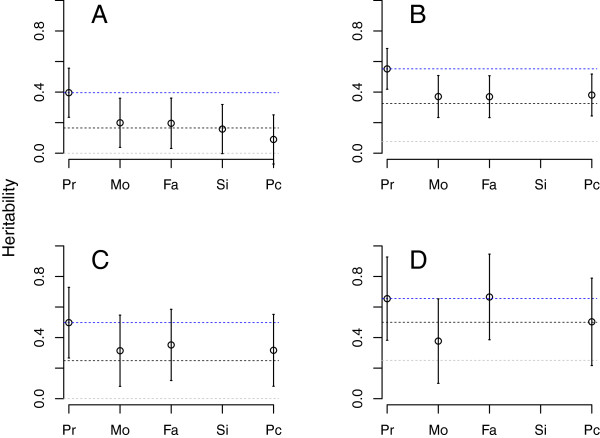
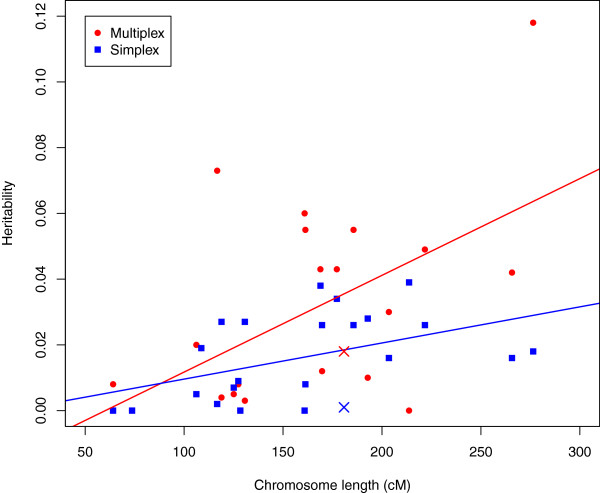
Background: Autism spectrum disorders (ASD) are early onset neurodevelopmental syndromes typified by impairments in reciprocal social interaction and communication, accompanied by restricted and repetitive behaviors. While rare and especially de novo genetic variation are known to affect liability, whether common genetic polymorphism plays a substantial role is an open question and the relative contribution of genes and environment is contentious. It is probable that the relative contributions of rare and common variation, as well as environment, differs between ASD families having only a single affected individual (simplex) versus multiplex families who have two or more affected individuals. Methods: By using quantitative genetics techniques and the contrast of ASD subjects to controls, we estimate what portion of liability can be explained by additive genetic effects, known as narrow-sense heritability. We evaluate relatives of ASD subjects using the same methods to evaluate the assumptions of the additive model and partition families by simplex/multiplex status to determine how heritability changes with status. Results: By analyzing common variation throughout the genome, we show that common genetic polymorphism exerts substantial additive genetic effects on ASD liability and that simplex/multiplex family status has an impact on the identified composition of that risk. As a fraction of the total variation in liability, the estimated narrow-sense heritability exceeds 60% for ASD individuals from multiplex families and is approximately 40% for simplex families. By analyzing parents, unaffected siblings and alleles not transmitted from parents to their affected children, we conclude that the data for simplex ASD families follow the expectation for additive models closely. The data from multiplex families deviate somewhat from an additive model, possibly due to parental assortative mating. Conclusions: Our results, when viewed in the context of results from genome-wide association studies, demonstrate that a myriad of common variants of very small effect impacts ASD liability.
Overview
The claims and statistics of this paper haven’t been checked yet.
Free: it reads the open-access text and checks the first 5 claims that cite a source we can check. Create a free account to check every claim.
Integrity signals
Registry
Cites
Statistics
Figures
Verification
Claims the paper makes
The claims and statistics of this paper haven’t been checked yet.
Free: it reads the open-access text and checks the first 5 claims that cite a source we can check. Create a free account to check every claim.
Claims other papers make about this one
Each is checked against this paper’s own text: does it say what the citing paper says it does?
The check wasn’t confident either way, so it gives no verdict — never disputed.
In the citing paper
“which is higher than estimates from iPSYCH16 but lower than estimates from the AGRE55 and PAGES56 cohorts.”
From Genetic correlates of phenotypic heterogeneity in autism (2022) · cites this paper as [55]
Experimental — accuracy not yet measuredIn the citing paper
“Most of the autistic population is considered “idiopathic” with causes unknown, likely the result of complex polygenic and environmental interactions [1,2,3,4].”
From The Relationship between Autism and Ehlers-Danlos Syndromes/Hypermobility Spectrum Disorders (2020) · cites this paper as [2]
In the citing paper
“Common SNPs acting additively have been reported as a major source of risk for ASD (42) with heritability exceeding 60% for ASD individuals from multiplex families and approximately 40% for simplex families.”
From Gene × Environment Interactions in Autism Spectrum Disorders: Role of Epigenetic Mechanisms (2014) · cites this paper as [42]
In the citing paper
“there is no evidence that the role of environment is more important in the case of absence of de novo event, as common variants were shown to contribute substantially to autism risk (42).”
From Gene × Environment Interactions in Autism Spectrum Disorders: Role of Epigenetic Mechanisms (2014) · cites this paper as [42]
In the citing paper
“We opted to conduct heritability analyses using unscreened population controls rather than family controls (that is, pseudocontrols or unaffected family members), as this likely reduces SNP heritability96 owing to parents having higher genetic likelihood for autism compared to unselected population controls55 and due to assortative mating97.”
From Genetic correlates of phenotypic heterogeneity in autism (2022) · cites this paper as [55]
4 more claims about this paper
Create a free account to see every claim other papers make about this one.
Self-check
Percentages, sums and reported differences re-computed from the paper’s own numbers.
The self-check needs the paper’s full text.
Citations
Cites
PLINK: a tool set for whole-genome association and population-based linkage analyses.
Purcell, S., Neale, B., Todd-Brown, K., Thomas, L., Ferreira, M. A. R., Bender, D., Maller, J., Sklar, P., de Bakker, P. I. W., Daly, M. J., et al. (2007) · The American Journal of Human Genetics · doi:10.1086/519795 · Cited by 34,089 · cited 2×
“We also generate a “ pseudo-control ” from the alleles that parents did not transmit to their affected offspring by using the program Plink [37].”
Introduction to Quantitative Genetics.
Edwards, A. W. F., & Falconer, D. S. (1982) · Biometrics · doi:10.2307/2529912 · Cited by 21,447
Principal components analysis corrects for stratification in genome-wide association studies
Price, A. L., Patterson, N. J., Plenge, R. M., Weinblatt, M. E., Shadick, N. A., & Reich, D. (2006) · Nature Genetics · doi:10.1038/ng1847 · Cited by 10,248 · cited 1×
“Instead it appears that population-based controls contrasted with ASD cases would be a more powerful design [65], even after adjusting for ancestry [66].”
GCTA: a tool for genome-wide complex trait analysis
Yang, J., Lee, S. H., Goddard, M. E., & Visscher, P. M. (2011) · The American Journal of Human Genetics · doi:10.1016/j.ajhg.2010.11.011 · Cited by 8,279 · cited 2×
“Estimating heritability as a case-control contrast Heritability of ASD from probands versus controls was estimated using GCTA software [28], which encodes the theory laid out in [17,18].”
Common polygenic variation contributes to risk of schizophrenia and bipolar disorder
The International Schizophrenia Consortium (2009) · Nature · doi:10.1038/nature08185 · Cited by 4,821 · cited 2×
“There is now sound evidence for common variants affecting liability for schizophrenia [55-57], including a study similar to ours [46].”
Common SNPs explain a large proportion of the heritability for human height
Yang, J., Benyamin, B., McEvoy, B. P., Gordon, S., Henders, A. K., Nyholt, D. R., Madden, P. A., Heath, A. C., Martin, N. G., Montgomery, G. W., et al. (2010) · Nature Genetics · doi:10.1038/ng.608 · Cited by 4,446
Strong association of de novo copy number mutations with autism
Sebat, J., Lakshmi, B., Malhotra, D., Troge, J., Lese-Martin, C., Walsh, T., Yamrom, B., Yoon, S., Krasnitz, A., Kendall, J., et al. (2007) · Science · doi:10.1126/science.1138659 · Cited by 2,795 · cited 5×
“These results suggest that the difference between multiplex and simplex families is largely a matter of degree (see also [42]), namely the number of liability alleles carried by parents, rather than a fundamental difference in the genetic architecture [4,43].”
InfluentialSelf-citationAutism as a strongly genetic disorder: evidence from a British twin study
Bailey, A., Le Couteur, A., Gottesman, I., Bolton, P., Simonoff, E., Yuzda, E., & Rutter, M. (1995) · Psychological Medicine · doi:10.1017/s0033291700028099 · Cited by 2,461 · cited 2×
“Still our findings of substantial heritability are consistent with the majority of twin studies [1,2] and are richer in some ways because the analytic technique [17,18] used here provides a direct estimate of the proportion of liability attributable to additive genetic effects, whereas twin studies…”
Genetic relationship between five psychiatric disorders estimated from genome-wide SNPs
Cross-Disorder Group of the Psychiatric Genomics Consortium (2013) · Nature Genetics · doi:10.1038/ng.2711 · Cited by 2,263
Research works printed but not linked: 3
- Constantino JN Gruber CP The Social Responsiveness Scale manual 2005 Los Angeles, CA: Western Psychological Services
- HealthABC data http://www.ncbi.nlm.nih.gov/projects/gap/cgi-bin/study.cgi?study_id=phs000169.v1.p1
- Neurogenetics Research Consortium data http://www.ncbi.nlm.nih.gov/projects/gap/cgi-bin/study.cgi?study_id=phs000196.v2.p1
Cited by
Items 401–449 of 449
Golovina, E., Fadason, T., Lints, T., Walker, C. G., Vickers, M. H., & O'Sullivan, J. M. (2021) · bioRxiv (Cold Spring Harbor Laboratory) · doi:10.1101/2021.03.03.433667
“The proportion of ASD explained by SNPs has been estimated to be between 17-60% [7, 8], thus their contribution should not be neglected.”
BackgroundBagasra, O., Heggen, C., & Hossain, M. I. (2018) · Wiley eBooks · doi:10.1002/9781119042280.ch2
Gene Regulatory Networks in Autism
Oliphant, M. E., & Fernandez, T. V. (2021) · Springer eBooks · doi:10.1007/978-3-319-91280-6_102153
Novel Approaches for Treating Pediatric Psychiatric Disorders
Prasad, S., & Cook, E. H. (2017) · Oxford University Press eBooks · doi:10.1093/med/9780190681425.003.0067
Self-citationShavitt, R. G. (2020) · Faculty Opinions – Post-Publication Peer Review of the Biomedical Literature · doi:10.3410/f.727864723.793580414
Analysis of convergence of linkage and association studies in autism spectrum disorders
Mpoulimari, I., & Zintzaras, E. (2023) · Psychiatric Genetics · doi:10.1097/ypg.0000000000000341
A case of neurodivergence – the basics of autism spectrum disorder
Brand, S. J. (2023) · South African General Practitioner · doi:10.36303/sagp.0090
Yotova, A. Y. (2024) · Publication Server of Goethe University Frankfurt am Main (Goethe University Frankfurt) · doi:10.21248/gups.85791 · Cited by 2
Human Cerebral Organoids in Pillar/Perfusion Plates for Modeling Neurodevelopmental Disorders
Acharya, P. (2024) · University of North Texas Digital Library (University of North Texas) · doi:10.12794/metadc2332637
Amjad, E., & Sokouti, B. (2025) · Springer eBooks · doi:10.1007/978-3-031-40858-8_389-1
Mammadova, Z., Rustamov, I., Rustamova, N., Ibrahimova, G. A., Bayramov, B., Abbasov, M., & Babayeva, S. M. (2025) · Periodicum Biologorum · doi:10.18054/pb.v126i3-4.32602
Delaby, E. (2014) · theses.fr (ABES) · doi:10.70675/eb96b7c0z1b8dz46faz92edz3318ff1542c7
Papageorgopoulou, E. (2025) · BIROn (Birkbeck, University of London) · doi:10.18743/pub.00055026
Yap, C. X., Alvares, G. A., Henders, A. K., Lin, T., Wallace, L. M., Farrelly, A., McLaren, T., Berry, J., Vinkhuyzen, A. A. E., Trzaskowski, M., et al. (2021) · Figshare · doi:10.6084/m9.figshare.13889079
Brito, A., Franco, F., Brentani, H., & Beltrão-Braga, P. C. B. (2024) · Figshare · doi:10.6084/m9.figshare.26582351
Klei, L., McClain, L. L., Mahjani, B., Panayidou, K., Rubeis, S. D., Grahnat, A.-C. S., Karlsson, G., Lu, Y., Melhem, N., Xu, X., et al. (2021) · Figshare · doi:10.6084/m9.figshare.16755713
Self-citationALIMANDI, F. (2015) · Electronic Theses and Dissertations Repository (University of Pisa)
Maternal Allergic Asthma and the Impacts on Offspring Neurodevelopment
Tamayo, J. M. (2023) · eScholarship (California Digital Library)
Lambrechts, A. M. E. N. (2021) · City Research Online (City University London) · Cited by 1
Autisme og utviklingshemming: sammenhengen mellom psykiske tilleggslidelser og utfordrende atferd.
Reistad, O. T. B. (2020) · NVA (Nasjonalt vitenarkiv) · Cited by 1
Exploring the genetic architecture of autism spectrum disorder
Schmilovich, Z. (2024) · eScholarship@McGill (McGill) · doi:10.82308/38541
Gender differences in autism spectrum disorder
Hossain, S. (2022) · BRAC University Institutional Repository (BRAC University)
Ariaei, A., Ketabforoush, A. H. M. E., Bordbar, S., Barati, S., Lotfi, A., Sayahpour, F. A., Faghihi, F., & Abediankenari, S. (2026) · Egyptian Journal of Medical Human Genetics · doi:10.1186/s43042-026-00850-8
“Studies focusing on twins and consanguinity have repeatedly demonstrated a robust heritable aspect of ASD, with genetic factors accounting for 40–80% of ASD risk [18, 19].”
Examination of Mitochondrial Genetic Variation in Reported Autism Spectrum Disorder
Giannoulis, S. (2022) · TSpace (University of Toronto)
Kolaj, A. (2023) · TSpace (University of Toronto)
Traitement des visages par les jeunes enfants avec un TSA : études en suivi du regard
Guillon, Q. (2014) · theses.fr (ABES) · doi:10.70675/12131cc7z541dz448bzbd99z72fb078ce966
Alirol, S. (2015) · theses.fr (ABES) · doi:10.70675/852a80f4zb693z4ed9za4ddzc3362077f53f
“En 2012, Klei et collaborateurs ont montré que l'ensemble de tous les variants communs contribue à la vulnérabilité aux TSA, cela étant même plus important dans les cas familiaux (familles multiplexes), que dans les cas sporadiques (familles simplexes) (Klei et al., 2012).”
BackgroundAutismus-Spektrum: Neueste Entwicklungen fordern die Erwachsenenpsychiatrie heraus
Haker, H., Unterburger, E., Huber, M., & Schneebeli, M. (2026) · Psychotherapie-Wissenschaft · doi:10.30820/1664-9583-2026-1-35
“Aus dieser pathomechanistischen Perspektive prä-sentiert sich Autismus als eine durch die Summe kleiner genetischen Aberrationen bedingte (Klei et al., 2012), angeborene Informations-Integrationsstörung.”
Exploration de l'hétérogénéité phénotypique des Troubles du Spectre Autistique
Maruani, A. (2018) · theses.fr (ABES) · doi:10.70675/18779a0bz64fdz41f9z99dfzd9f6ca00dfed
Applying multidimensional approaches to disentangle autism spectrum disorder heterogeneity
Mihailov, A. (2021) · theses.fr (ABES) · doi:10.70675/b9bfc6a7za998z4d56z9380z5ec7781bc4ac · Cited by 1
Sulcation corticale et symptomatologie de l’autisme : études en IRM
Burckard, S. (2024) · theses.fr (ABES) · doi:10.70675/430f72c3z7116z4115z8ca4z7a5c76731877
MIND-TEA: An Adaptive Multi-Agent Framework for Multimodal Autism Diagnosis
de Andrade, E. C., Gois, F. N. B., Júnior, J. C., Bluhm, T. D. F., Marques, J. A. L., & Silva, A. G. D. (2026) · IEEE Access · doi:10.1109/access.2026.3688987 · Cited by 1
Zhong, Z., Lin, C., Cao, Y., Luo, Y., Ding, N., Ding, W., & Yang, Y. (2026) · Brain Behavior and Immunity · doi:10.1016/j.bbi.2026.106813
Detecting genomic regions enriched for reciprocal recombination in autism spectrum disorderPreprint
Mahoney, C. F., Salter‐Townshend, M., Fitzpatrick, D. J., & Shields, D. C. (2026) · bioRxiv (Cold Spring Harbor Laboratory) · doi:10.64898/2026.05.26.727863
Hayat, M. T., Shahid, Z., & Qazi, J. (2026) · Spectroscopy Letters · doi:10.1080/00387010.2026.2694447
A mouse model of a rare ASD-implicated patient-derived SCN2A variant
Wang, H., Fischer, D. K., Li, A., Lee, F. S., Rajadhyaksha, A. M., & Pitt, G. S. (2026) · Scientific Reports · doi:10.1038/s41598-026-65589-z
“Because SCN2A is a top ASD-associated locus and polygenic variation is a major contributor to ASD risk 29–31 , we hypothesized that rare variants in SCN2A that affect Na V 1.2 function without causing a significant reduction in Na V 1.2 current could contribute to ASD.”
InfluentialIntranasal oxytocin modulates the social salience network in adult men with autismPreprint
Renström, J. G., Prinsen, J., Alaerts, K., & Choe, K. Y. (2026) · medRxiv · doi:10.64898/2026.08.24.26361211
Sirjon, Setyaningsih, D., & Farihah, E. (2026) · World Psychology
Khan, M., RUTTER, M., Thapar, A., & Yuen, R. K. C. (2026) · Wiley eBooks · doi:10.1002/9781394389933.ch16
Carone, M., Premoli, M., Shamshiri, A., & Bonini, S. A. (2026) · Progress in Neuro-Psychopharmacology and Biological Psychiatry · doi:10.1016/j.pnpbp.2026.111994
Huguet, G. (2013) · theses.fr (ABES) · doi:10.70675/aebf6959z0eebz47f6z9dfaz98d1a0d9e196 · Cited by 1
Investigation of sex-differential genetic risk factors for autism spectrum disorders
Werling, D. M. (2014) · eScholarship (California Digital Library) · Cited by 1
Metadata
- Authors
- Klei, L., Sanders, S. J., Murtha, M. T., Hus, V., Lowe, J. K., Willsey, A. J., Moreno-De-Luca, D., Yu, T. W., Fombonne, E., Geschwind, D., Grice, D. E., Ledbetter, D. H., Lord, C., Mane, S. M., Martin, C. L., Martin, D. M., Morrow, E. M., Walsh, C. A., Melhem, N. M., Chaste, P., Sutcliffe, J. S., State, M. W., Cook, E. H., Roeder, K., & Devlin, B.
- Affiliations
- University of Pittsburgh (US)
- Yale University (US)
- University of California, Los Angeles (US)
- Boston Children's Hospital (US)
- Montreal Children's Hospital (CA)
- Icahn School of Medicine at Mount Sinai (US)
- Geisinger Health System (US)
- Weill Cornell Medicine (US)
- Emory University (US)
- University of Michigan (US)
- Brown University (US)
- Vanderbilt University (US)
- University of Illinois Chicago (US)
- Carnegie Mellon University (US)
- Corresponding author
- Devlin, Bernie
- ORCID
- Klei, Lambertus
- Sanders, Stephan J
- Lowe, Jennifer K
- Willsey, A Jeremy
- Yu, Timothy W
- Fombonne, Eric
- Geschwind, Daniel
- Grice, Dorothy E
- Ledbetter, David H
- Lord, Catherine
- Mane, Shrikant M
- Martin, Donna M
- Morrow, Eric M
- Walsh, Christopher A
- Melhem, Nadine M
- Chaste, Pauline
- Sutcliffe, James S
- State, Matthew W
- Cook, Edwin H
- Roeder, Kathryn
- Devlin, Bernie
- Venue
- Molecular Autism
- Published
- 2012-10-15
- Volume
- 3
- Issue
- 1
- Pages
- 9-9
- ISSN
- 2040-2392 (ISSN-L)
- PMC
- PMC3579743
- OpenAlex
- W2128161895
- Cited by
- 418
- References
- 72
- Citations by year
- 2026: 13 · 2025: 11 · 2024: 10 · 2023: 15 · 2022: 15 · 2021: 35 · 2020: 28 · 2019: 32 · 2018: 27 · 2017: 47 · 2016: 45 · 2015: 40 · 2014: 48 · 2013: 47 · 2012: 2
- FWCI
- 22.42
- Type
- journal article
- Language
- en
- Open access
- gold
- doi.org
- Licence
- cc-by
- creativecommons.org/licenses/by/2.0 (tdm)
- Locations
- Molecular Autism (publishedVersion, cc-by)
- Europe PMC (PubMed Central) (publishedVersion, cc-by)
- PubMed Central (publishedVersion, cc-by)
- PubMed (publishedVersion)
- D-Scholarship@Pitt (University of Pittsburgh) (acceptedVersion)
- Deep Blue (University of Michigan) (submittedVersion)
- Rutgers University Community Repository (Rutgers University) (submittedVersion)
- Digital Access to Scholarship at Harvard (DASH) (Harvard University) (submittedVersion, cc-by)
- DOAJ (DOAJ: Directory of Open Access Journals) (submittedVersion, cc-by-sa)
- eScholarship (California Digital Library) (submittedVersion)
- eScholarship (California Digital Library) (submittedVersion, cc-by)
- Funders
- Autism Speaks
- Simons Foundation
- Yale University
- Johns Hopkins University (HHSN268200782096C, HHSN268201100011I)
- Ontario Innovation Trust
- Wellcome Trust (075491/Z/04,)
- Simons Foundation Autism Research Initiative
- Hussman Foundation
- Fondation FondaMental
- Fondation Orange
- Sick Kids Foundation
- Deutsche Forschungsgemeinschaft
- Institut National de la Santé et de la Recherche Médicale
- Koninklijke Nederlandse Akademie van Wetenschappen
- Fondation pour la Recherche Médicale
- Ministero della Salute
- University of Toronto
- Fondation de France
- Hospital for Sick Children
- National Institutes of Health (075491/Z/04, HHSN268200782096C, MH057881, HD055751)
- Canadian Institutes of Health Research
- Ontario Ministry of Research and Innovation
- NODAI Genome Research Center, Tokyo University of Agriculture
- National Institute on Aging
- National Institute of Mental Health (R01MH080647)
- National Institute of Neurological Disorders and Stroke
- Topics
- Life Sciences › Neuroscience › Cognitive Neuroscience › Autism Spectrum Disorder Research
- Life Sciences › Biochemistry, Genetics and Molecular Biology › Genetics › Genetics and Neurodevelopmental Disorders
- Life Sciences › Biochemistry, Genetics and Molecular Biology › Genetics › Genetic Associations and Epidemiology
- Keywords
- autism spectrum disorder, narrow-sense heritability, additive genetic effects, common genetic variants, simplex families, multiplex families, genetic susceptibility, gene-environment interaction
About these checks
Registry, retraction, Cites and statistics results are computed, not judged, with one exception: a printed reference that no index lists is read once by a model before it counts as a citation error. Claims are extracted by a model and kept only when their quote appears verbatim in the text; each cited source is then checked, with a model’s help, for whether it says what the claim relies on. Those verdicts can be wrong — read the claim’s quote and the cited source before relying on one.
Statistics and arithmetic are recomputed, not judged.
Confidence bands are shown only for fields calibrated on our annotated test set. None is calibrated yet, so no band is shown.
What counts as a claim ›How we measure confidence ›How we check this ›
Are you an author, or do you see a problem with this page? Request a review
Data sources
Bibliographic data: Semantic Scholar, OpenAlex, Crossref.
Contains information from the Semantic Scholar Academic Graph Datasets, made available under the ODC Attribution License (ODC-BY 1.0).
Semantic Scholar’s data is described in: Kinney, R., et al. (2023). The Semantic Scholar Open Data Platform. arXiv:2301.10140.
