

DSM-5 and autism spectrum disorders (ASDs): an opportunity for identifying ASD subtypes
Open accessThe DOI matches its Crossref record; 80 of the 80 references it cites were found in a registry or an index; 17 of the 83 sources its claims cite were checked for support.
Abstract
The heterogeneous clinical presentations of individuals with autism spectrum disorders (ASDs) poses a significant challenge for sample characterization and limits the interpretability and replicability of research studies. The Diagnostic and Statistical Manual of Mental Disorders, 5th edition (DSM-5) diagnostic criteria for ASD, with its dimensional approach, may be a useful framework to increase the homogeneity of research samples. In this review, we summarize the revisions to the diagnostic criteria for ASD, briefly highlight the literature supporting these changes, and illustrate how DSM-5 can improve sample characterization and provide opportunities for researchers to identify possible subtypes within ASD.
Overview
CoChat Summary
## TL;DR
This review argues that DSM-5’s dimensional ASD criteria can improve research sample characterization and make it easier to identify meaningful ASD subtypes. The authors summarize evidence that variability in social-communication, restricted/repetitive behaviors, language, cognitive ability, onset, and comorbidity may help define subgroups.
## Key findings
- DSM-IV’s multi-categorical PDD system had limited reliability and poor predictive value for later outcomes; DSM-5 replaces it with a single ASD diagnosis.
- The paper cites Huerta et al. showing that over 90% of children with DSM-IV-defined PDDs were identified by DSM-5 criteria, and that specificity was substantially improved compared with DSM-IV.
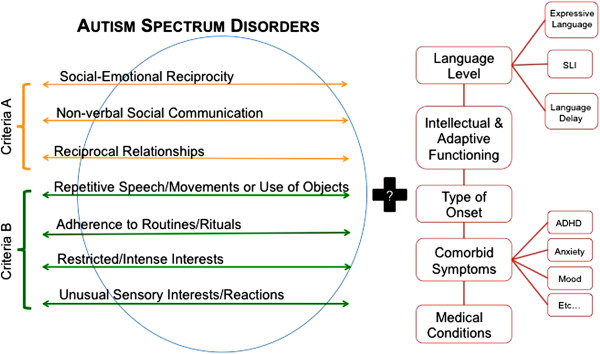
- DSM-5’s two-domain model (social-communication deficits and restricted/repetitive behaviors) is presented as better supported than the DSM-IV triad, with unusual sensory responses and stereotyped language incorporated into the RRB domain.
- The authors highlight several potential subtype dimensions: RRB quantity at age 2 years was inversely related to language skills at 9 years; regressive onset occurs in about 30% of individuals with ASD across a meta-analysis of 85 studies; and regression is often reported around 18 months of age.
## Methods
- Not a primary empirical study; this is a narrative review of DSM-5 revisions and literature relevant to ASD subtyping.
- The paper synthesizes prior studies on ASD symptom structure, language, cognition, onset patterns, comorbidity, and diagnostic validity.
- Main analysis is qualitative comparison and interpretation of published findings to argue for dimensional sample characterization under DSM-5.
## Limitations
- The paper states that no single study will be sufficient to accurately define ASD subgroups because samples vary by factors such as age and IQ.
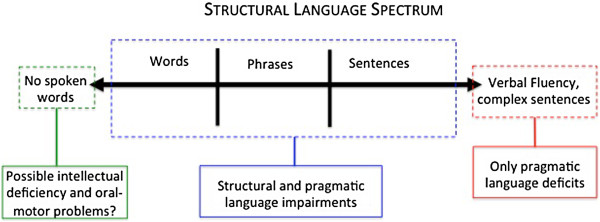
- It notes that evidence on some candidate subtypes remains mixed or incomplete, including regression patterns and whether language impairments in ASD are distinct from or continuous with specific language impairment.
- Evident from the text: this is a review, so it does not present new data or directly test the proposed subtypes.
Model-written summary. Check it against the paper before relying on it.
Integrity signals
Registry
Cites
Statistics
Figures
Verification
Claims the paper makes
5 Valid · 10 Not valid · 25 Not checked · 16 Own results and interpretations
At least one cited source doesn’t support this claim or points to a different paper, and none confirmed it — see the verdicts below.
In the paper
“deficits in cognitive functioning may be more common in females [43-46]”
§ DSM-5 and autism spectrum disorders (ASDs): an opportunity for identifying ASD subtypes > Review > Improved methods for subtyping?
What the sources say
- Disputedcites [43] Dworzynski K Ronald A Bolton P Happé F How different are girls and boys above and below the diagnostic threshold for autism spectrum disorders? J Am Acad Child Adolesc Psychiatry 2012 51 788 797 10.1016/j.jaac.2012.05.018 22840550 sourceExperimental — accuracy not yet measured
The Results (Latent Class Analysis; page unavailable) report that boys and girls were equally likely to belong to each of the four IQ-defined groups. The Discussion likewise states that there were no sex differences in group classification, contrary to the claim that cognitive deficits may be more common in females. (LLM, conf=0.88)
Checked by a reasoning model — may be wrong.
- Not checked — no full text of the sourcecites [44] Nicholas J Charles J Carpenter L King L Jenner W Spratt E Prevalence and characteristics of children with autism-spectrum disorders Ann Epidemiol 2008 18 130 136 10.1016/j.annepidem.2007.10.013 18083540 source
- Not checked — no full text of the sourcecites [45] Szatmari P Bartolucci G Bremner R Asperger's syndrome and autism: comparison of early history and outcome Dev Med Child Neurol 1989 31 709 720 2599265 source
- Not checked — no full text of the sourcecites [46] Wing L Sex ratios in early childhood autism and related conditions Psychiatry Res 1981 5 129 137 10.1016/0165-1781(81)90043-3 6945608 source
hedgedstates an association- Asserted: passes — The authors put it forward as true.
- Checkable: passes — It can be checked against evidence.
- Load-bearing: unclear — It is unclear whether the paper’s conclusions depend on it.
- Based: passes — The paper gives a reason why it holds.
- Disputed
The cited sources that could be checked couldn’t confirm or dispute this claim.
In the paper
“One feature of unusual communication, stereotyped language, has been reassigned to the RRB domain to reflect results from factor analytic studies [25].”
§ DSM-5 and autism spectrum disorders (ASDs): an opportunity for identifying ASD subtypes > Review > Key changes in the DSM-5 ASD criteria
What the sources say
- Could not verifycites [25] Robertson J Tanguay P L’Ecuyer S Sims A Waltrip C Domains of social communication handicap in autism spectrum disorder J Am Acad Child Adolesc Psychiatry 1999 38 738 745 10.1097/00004583-199906000-00022 10361793 sourceExperimental — accuracy not yet measured
Section 3.2 (page unavailable) places stereotyped language, including pedantic speech and delayed echolalia, on a pragmatic-language scale. Our copy does not address whether factor-analytic studies support reassigning it to the RRB domain; searches for factor analysis and RRB reassignment found no such passage. (LLM, conf=0.70)
plainstates a cause- Asserted: passes — The authors put it forward as true.
- Checkable: passes — It can be checked against evidence.
- Load-bearing: passes — The paper’s conclusions depend on it.
- Based: passes — The paper gives a reason why it holds.
- Could not verify
The cited sources that could be checked couldn’t confirm or dispute this claim.
In the paper
“results from a longitudinal study suggested that RRB quantity at 2 years of age is inversely related to language skills at 9 years [37].”
§ DSM-5 and autism spectrum disorders (ASDs): an opportunity for identifying ASD subtypes > Review > Improved methods for subtyping?
What the sources say
- Could not verifycites [37] Anderson D Lord C Risi S DiLavore P Shulman C Thurm A Patterns of growth in verbal abilities among children with autism spectrum disorder J Consult Clin Psychol 2007 75 594 604 17663613 sourceExperimental — accuracy not yet measured
The Intellectual Ability Estimates section says the analyses used verbal-ability measures from ages 2, 3, and 4, rather than later assessments. The passages on autistic traits do not relate RRB quantity at age 2 to language skills at age 9; searches for that longitudinal relationship found no passage in our copy. Page numbers were not available. (LLM, conf=0.76)
hedgedstates an association- Asserted: passes — The authors put it forward as true.
- Checkable: passes — It can be checked against evidence.
- Load-bearing: unclear — It is unclear whether the paper’s conclusions depend on it.
- Based: passes — The paper gives a reason why it holds.
- Could not verify
The cited sources that could be checked couldn’t confirm or dispute this claim.
In the paper
“and poor predictive ability of later outcome based on these subtypes [17,18]”
§ DSM-5 and autism spectrum disorders (ASDs): an opportunity for identifying ASD subtypes > Review
What the sources say
- Could not verifycites [17] Szatmari P Bryson S Duku E Vaccarella L Zwaigenbaum L Bennett T Similar developmental trajectories in autism and Asperger syndrome: from early childhood to adolescence J Child Psychol Psychiatry 2009 50 1459 1467 10.1111/j.1469-7610.2009.02123.x 19686332 sourceExperimental — accuracy not yet measured
The Comparison of DSM-5, DSM-IV-TR, and One-Factor Models section reports that the DSM-IV-TR symptom model did not meet criteria for acceptable fit. The Method and Statistical Analyses sections describe diagnostic categories and cross-sectional model testing, but no passage found on DSM-IV subtype diagnoses predicting later outcomes (searched: predictive ability, longitudinal outcome, diagnostic subtypes). (LLM, conf=0.76)
- Could not verifycites [18] Szatmari P Bryson S Boyle M Streiner D Duku E Predictors of outcome among high functioning children with autism and Asperger syndrome J Child Psychol Psychiatry 2003 44 520 528 10.1111/1469-7610.00141 12751844 sourceExperimental — accuracy not yet measured
The Introduction describes the study as comparing DSM-IV and proposed DSM-5 diagnostic criteria, and the Results report classification sensitivity and specificity against current diagnoses. Neither passage addresses whether DSM-IV subtypes predict later outcomes; searches for outcome, predictive validity, and diagnostic stability found no such finding in our copy. Page numbers were not available. (LLM, conf=0.73)
plain- Asserted: passes — The authors put it forward as true.
- Checkable: passes — It can be checked against evidence.
- Load-bearing: passes — The paper’s conclusions depend on it.
- Based: passes — The paper gives a reason why it holds.
- Could not verify
The sources with a verdict support this claim; the rest weren’t checked yet, have no full text we could read, or their verdicts aren’t rated yet.
In the paper
“with similar core symptom presentations across the categorical diagnoses [12-16]”
§ DSM-5 and autism spectrum disorders (ASDs): an opportunity for identifying ASD subtypes > Review
What the sources say
- Not checked — no full text of the sourcecites [12] Macintosh K Dissanayake C Annotation: the similarities and differences between autistic disorder and asperger’s disorder: a review of the empirical evidence J Child Psychol Psychiatry 2004 45 421 434 10.1111/j.1469-7610.2004.00234.x 15055363 source
- Not checked — no full text of the sourcecites [13] Malhotra S Gupta N Childhood disintegrative disorder re-examination of the current concept Eur Child Adolesc Psychiatry 2002 11 108 114 10.1007/s00787-002-0270-6 12369769 source
- Not checked — no full text of the sourcecites [14] Ozonoff S South M Miller J DSM-IV-defined asperger syndrome: cognitive, behavioral and early history differentiation from high-functioning autism Autism 2000 4 29 46 source
- Not checked — no full text of the sourcecites [15] Snow A Lecavalier L Comparing autism, PDD-NOS, and other developmental disabilities on parent-reported behavior problems: little evidence for ASD subtype validity J Autism Dev Disord 2011 41 302 310 10.1007/s10803-010-1054-3 20556500 source
- Supportedcites [16] Howlin P Outcome in high-functioning adults with autism with and without early language delays: implications for the differentiation between autism and Asperger syndrome J Autism Dev Disord 2003 33 3 13 10.1023/A:1022270118899 12708575 source
The Introduction (page not provided) describes overlapping diagnostic features: Autistic Disorder and Asperger’s Disorder both require social and stereotyped-behavior symptoms, while PDD-NOS requires autistic-like social difficulty plus another impairment. It also describes differences among the diagnoses, but these do not undermine the claim that their core symptom presentations are similar. (LLM, conf=0.90)
plain- Asserted: passes — The authors put it forward as true.
- Checkable: passes — It can be checked against evidence.
- Load-bearing: passes — The paper’s conclusions depend on it.
- Based: passes — The paper gives a reason why it holds.
34 more claims · 7 with their cited sources checked
Create a free account to see all 56 claims and to verify the 2 references still open.
- It may state two separate claims as one. 9
- Probably not a substantial claim. 11
Claims other papers make about this one
Each is checked against this paper’s own text: does it say what the citing paper says it does?
The cited source says what the claim attributes to it.
In the citing paper
“Language impairment is neither specific nor universal to ASD (Baird et al. 2008; Grzadzinski et al. 2013; Hartley and Sikora 2010), though many children with ASD do show delays and/or deficits in this area (Boucher 2012; Matson and Neal 2010; Solomon et al. 2011).”
From The Diagnosis of Autism: From Kanner to DSM-III to DSM-5 and Beyond (2021) · cites this paper as Grzadzinski et al. 2013
The cited source says what the claim attributes to it.
In the citing paper
“Structural brain analyses show similar abnormalities in core language regions of the brain between individuals with ASD and co-occurring language impairment and individuals with specific language impairment without ASD, while individuals with ASD without language deficits do not exhibit this pattern (De Fossé et al. 2004; Grzadzinski et al. 2013).”
From The Diagnosis of Autism: From Kanner to DSM-III to DSM-5 and Beyond (2021) · cites this paper as Grzadzinski et al. 2013
Citations
Cites
Simonoff, E., Pickles, A., Charman, T., Chandler, S., Loucas, T., & Baird, G. (2008) · Journal of the American Academy of Child & Adolescent Psychiatry · doi:10.1097/chi.0b013e318179964f · Cited by 3,399 · cited 1×
“Individuals with ASD often, but not always, present with features consistent with additional non-ASD disorders, such as attention deficit/hyperactivity disorder (ADHD), anxiety disorders, or mood disorders [73].”
BackgroundHandbook of Autism and Pervasive Developmental Disorders
(2005) · Wiley eBooks · doi:10.1002/9780470939352 · Cited by 2,250
Muhle, R., Trentacoste, S. V., & Rapin, I. (2004) · Pediatrics · doi:10.1542/peds.113.5.e472 · Cited by 1,207
The Autism Diagnostic Observation Schedule: Revised Algorithms for Improved Diagnostic Validity
Gotham, K., Risi, S., Pickles, A., & Lord, C. (2007) · Journal of Autism and Developmental Disorders · doi:10.1007/s10803-006-0280-1 · Cited by 1,161 · cited 8×
“Researchers should therefore consider both the quality and quantity of specific ASD symptoms across social-communication and RRBs, as these may provide useful constructs to define ASD subgroups.”
BackgroundInfluentialSelf-citationDescribing the Sensory Abnormalities of Children and Adults with Autism
Leekam, S. R., Nieto, C., Libby, S. J., Wing, L., & Gould, J. (2007) · Journal of Autism and Developmental Disorders · doi:10.1007/s10803-006-0218-7 · Cited by 1,140 · cited 1×
“DSM-5 includes unusual sensory responses in the RRB domain to reflect research showing that these behaviors are prevalent in ASD [31-34] and are useful in distinguishing ASD from other disorders [35,36].”
BackgroundA meta-analysis of sensory modulation symptoms in individuals with autism spectrum disorders
Ben-Sasson, A., Hen, L., Fluss, R., Cermak, S. A., Engel-Yeger, B., & Gal, E. (2009) · Journal of Autism and Developmental Disorders · doi:10.1007/s10803-008-0593-3 · Cited by 1,047 · cited 1×
“DSM-5 includes unusual sensory responses in the RRB domain to reflect research showing that these behaviors are prevalent in ASD [31-34] and are useful in distinguishing ASD from other disorders [35,36].”
BackgroundA Prospective Study of the Emergence of Early Behavioral Signs of Autism
Ozonoff, S., Iosif, A.-M., Baguio, F., Cook, I. C., Hill, M. M., Hutman, T., Rogers, S. J., Rozga, A., Sangha, S., Sigman, M., et al. (2010) · Journal of the American Academy of Child & Adolescent Psychiatry · doi:10.1016/j.jaac.2009.11.009 · Cited by 1,011 · cited 1×
“different patterns of regression [60-64] and some researchers suggest that regressions should be considered along a continuum [65].”
BackgroundAutism From 2 to 9 Years of Age
Lord, C., Risi, S., DiLavore, P. S., Shulman, C., Thurm, A., & Pickles, A. (2006) · Archives of General Psychiatry · doi:10.1001/archpsyc.63.6.694 · Cited by 973 · cited 1×
“found significant differences between groups in symptom severity and later outcomes [41,42].”
BackgroundSelf-citationLanguage and Communication in Autism
Tager‐Flusberg, H., Paul, R., & Lord, C. (2005) · Handbook of Autism and Pervasive Developmental Disorders · doi:10.1002/9780470939345.ch12 · Cited by 960
Self-citationDworzynski, K., Ronald, A., Bolton, P., & Happé, F. (2012) · Journal of the American Academy of Child & Adolescent Psychiatry · doi:10.1016/j.jaac.2012.05.018 · Cited by 633 · cited 1×
“females [43-46], in individuals with known genetic abnormalities [47,48] and in individuals with dysmorphic”
Background
Research works printed but not linked: 1
- Munson J Dawson G Sterling L Beauchaine T Zhou A Koehler E Evidence for latent classes of iq in young children with autism spectrum disorder Am J Ment Retard 2008 113 439 452 10.1352/2008.113:439-452 19127655 PMC2991056 · DOI · Paper page
Cited by
Which terms should be used to describe autism? Perspectives from the UK autism community
Kenny, L., Hattersley, C., Molins, B., Buckley, C., Povey, C., & Pellicano, E. (2016) · Autism · doi:10.1177/1362361315588200 · Cited by 1,941
“These sentiments chime with those of researchers, who have suggested that the unitary label of ‘autism spectrum disorder’ should serve to benefit all individuals who require support from service delivery within education, health and care systems (Grzadzinski et al., 2013; Mahjouri and Lord, 2012).”
BackgroundLord, C., Brugha, T. S., Charman, T., Cusack, J., Dumas, G., Frazier, T., Jones, E. J. H., Jones, R. M., Pickles, A., State, M. W., et al. (2020) · Nature Reviews Disease Primers · doi:10.1038/s41572-019-0138-4 · Cited by 1,859
Self-citationZoghbi, H. Y., & Bear, M. F. (2012) · Cold Spring Harbor Perspectives in Biology · doi:10.1101/cshperspect.a009886 · Cited by 797
Enhancing studies of the connectome in autism using the autism brain imaging data exchange II
Di Martino, A., O’Connor, D., Chen, B., Alaerts, K., Anderson, J. S., Assaf, M., Balsters, J. H., Baxter, L., Beggiato, A., Bernaerts, S., et al. (2017) · Scientific Data · doi:10.1038/sdata.2017.10 · Cited by 710
Self-citationResting-state functional connectivity in autism spectrum disorders: a review
Hull, J. V., Dokovna, L. B., Jacokes, Z. J., Torgerson, C. M., Irimia, A., & Van Horn, J. D. (2017) · Frontiers in Psychiatry · doi:10.3389/fpsyt.2016.00205 · Cited by 546
“Individuals with ASD are found along an entire continuum of cognitive abilities, ranging from profound disability to exceptional intelligence (2).”
BackgroundInfluentialMcKenzie, K., Milton, M., Smith, G., & Ouellette-Kuntz, H. (2016) · Current Developmental Disorders Reports · doi:10.1007/s40474-016-0085-7 · Cited by 453
“15). Of note, a review by Bosco et al. (2013) revealed that improved treatment of low birth weight infants in neonatal intensive care units was a significant contributor to the increased prevalence of intellectual disabilities [35].”
InfluentialThe Heterogeneity Problem: Approaches to Identify Psychiatric Subtypes
Feczko, E., Miranda-Dominguez, O., Marr, M., Graham, A. M., Nigg, J. T., & Fair, D. A. (2019) · Trends in Cognitive Sciences · doi:10.1016/j.tics.2019.03.009 · Cited by 443
“A uthor M anuscript A uthor M anuscript A uthor M anuscript A uthor M anuscript Evidence suggests that major psychiatric conditions are heterogeneous While a plurality of inputs to a given psychiatric presentation has been proposed recently in DSM-5[27] and for far longer in the literature [28], accumulating and recen…”
BackgroundInfluentialAutism spectrum disorders and intestinal microbiota
De Angelis, M., Francavilla, R., Piccolo, M., De Giacomo, A., & Gobbetti, M. (2015) · Gut Microbes · doi:10.1080/19490976.2015.1035855 · Cited by 311
“According to the 5th edition of the Diagnostic and Statistical Manual of Mental Disorders (DSM5), which are diagnostic criteria that have recently been released, the major ASD manifestations include impairments in social communication and behavioral problems such as fixated interests and repetitive behaviors.(8) We in…”
MethodThe Diagnosis of Autism: From Kanner to DSM-III to DSM-5 and Beyond
Rosen, N. E., Lord, C., & Volkmar, F. R. (2021) · Journal of Autism and Developmental Disorders · doi:10.1007/s10803-021-04904-1 · Cited by 302
Self-citationPrenatal factors associated with autism spectrum disorder (ASD)
Ornoy, A., Weinstein-Fudim, L., & Ergaz, Z. (2015) · Reproductive Toxicology · doi:10.1016/j.reprotox.2015.05.007 · Cited by 238
“Indeed, from an analysis of 14 studies where ASD was diagnosed on the basis of DSM 4 criteria, applying the DSM 5 criteria significantly reduced the rate of ASD, especially of the formerly group of Pervasive Developmental Disorder not Otherwise Specified (PDD NOS) [14].”
MethodInfluentialZazpe (2014) · doi:10.1177/0883073813498821 · Cited by 239
Autism spectrum disorder causes, mechanisms, and treatments: focus on neuronal synapses
Won, H., Mah, W., & Kim, E. (2013) · Frontiers in Molecular Neuroscience · doi:10.3389/fnmol.2013.00019 · Cited by 206
“Currently, ASD is included in the diagnostic category of a neurodevelopmental disorders in the Diagnostic and Statistical Manual of Mental Disorders V (Grzadzinski et al., 2013).”
BackgroundAutistic spectrum disorders: A review of clinical features, theories and diagnosis
Fakhoury, M. (2015) · International Journal of Developmental Neuroscience · doi:10.1016/j.ijdevneu.2015.04.003 · Cited by 199
“However, the DSM-5 does not consider delays in language acquisition to be part of the core symptoms of ASD because this characteristic is not universal to individuals with this disorder (American Psychiatric Association, 2013; Grzadzinski et al., 2013).”
BackgroundAutism Spectrum Disorder Screening: Machine Learning Adaptation and DSM-5 Fulfillment
Thabtah, F. (2017) · Proceedings of the 1st International Conference on Medical and Health Informatics 2017 · doi:10.1145/3107514.3107515 · Cited by 192
“After the DSM-5 was published, several studies, i.e. [12, 13, 19] pointed out that some clinical cases who used to be classified under “Autism” or its related disorders using DSM-IV criteria may not qualify for the new class (ASD) if DMS-5 criteria are used.”
MethodAutism Spectrum Disorder: Defining Dimensions and Subgroups
Ousley, O., & Cermak, T. (2014) · Current Developmental Disorders Reports · doi:10.1007/s40474-013-0003-1 · Cited by 188
“This term represents the idea that the core features of ASD can be measured dimensionally and that they fall along a continuum of severity [13, 14].”
BackgroundToward Neurosubtypes in Autism
Hong, S.-J., Vogelstein, J. T., Gozzi, A., Bernhardt, B. C., Yeo, B. T. T., Milham, M. P., & Di Martino, A. (2020) · Biological Psychiatry · doi:10.1016/j.biopsych.2020.03.022 · Cited by 171
Autism spectrum disorder and epilepsy: Disorders with a shared biology
Lee, B. H., Smith, T., & Paciorkowski, A. R. (2015) · Epilepsy & Behavior · doi:10.1016/j.yebeh.2015.03.017 · Cited by 167
“This approach may help identify subgroups based on quantity or quality of symptoms or patterns of abnormalities [15].”
BackgroundLanguage Acquisition and Language Disorders
(2013) · Language acquisition & language disorders · doi:10.1075/lald · Cited by 165
Early Identification and Interventions for Autism Spectrum Disorder: Executive Summary
Zwaigenbaum, L., Bauman, M. L., Choueiri, R., Fein, D., Kasari, C., Pierce, K., Stone, W. L., Yirmiya, N., Estes, A., Hansen, R. L., et al. (2015) · Pediatrics · doi:10.1542/peds.2014-3667b · Cited by 165
Early Autism Screening: A Comprehensive Review
Thabtah, F., & Peebles, D. (2019) · International Journal of Environmental Research and Public Health · doi:10.3390/ijerph16183502 · Cited by 180
“For instance, [82] showed a reduction in sensitivity for adults and toddlers while [85], revealed a consistent sensitivity of cases tested under both the DSM-IV and DSM-5 despite a decrement in specificity.”
Tang, S., Sun, N., Floris, D. L., Zhang, X., Di Martino, A., & Yeo, B. T. T. (2020) · Biological Psychiatry · doi:10.1016/j.biopsych.2019.11.009 · Cited by 144
“This variation is observed at varying degrees across multiple symptom domains (19,20).”
BackgroundExamining overlap and homogeneity in ASD, ADHD, and OCD: a data-driven, diagnosis-agnostic approach
Kushki, A., Anagnostou, E., Hammill, C., Duez, P., Brian, J., Iaboni, A., Schachar, R., Crosbie, J., Arnold, P., & Lerch, J. P. (2019) · Translational Psychiatry · doi:10.1038/s41398-019-0631-2 · Cited by 134
“Previous attempts have been made to discover homogeneous subgroups within each disorder 37 – 42 or on a single level of analysis 16,43 , however, to our knowledge cross-disorder, multi-level strati fi cation has not been examined previously.”
BackgroundSleep disturbances are associated with specific sensory sensitivities in children with autism
Tzischinsky, O., Meiri, G., Manelis, L., Bar-Sinai, A., Flusser, H., Michaelovski, A., Zivan, O., Ilan, M., Faroy, M., Menashe, I., et al. (2018) · Molecular Autism · doi:10.1186/s13229-018-0206-8 · Cited by 134
“A major goal of contemporary autism research is to identify individuals who share more homogeneous symptoms and who may benefit from targeted interventions [2, 3].”
BackgroundStedman, A., Taylor, B., Erard, M., Peura, C., & Siegel, M. (2019) · Journal of Autism and Developmental Disorders · doi:10.1007/s10803-018-3844-y · Cited by 132
“Previous research has touted the importance of identifying specific subtypes within the autism spectrum as a means of developing a framework to better characterize, research, and treat those with an ASD diagnosis (Grzadzinski et al. 2013), but if those more severely affected by ASD are not included in research, we ris…”
Backgroundvan Rentergem, J. A. A., Deserno, M. K., & Geurts, H. M. (2021) · Clinical Psychology Review · doi:10.1016/j.cpr.2021.102033 · Cited by 143
Diagnostic accuracy of the ADOS and ADOS-2 in clinical practice
Kamp‐Becker, I., Albertowski, K., Becker, J., Ghahreman, M., Langmann, A., Mingebach, T., Poustka, L., Weber, L., Schmidt, H., Smidt, J., et al. (2018) · European Child & Adolescent Psychiatry · doi:10.1007/s00787-018-1143-y · Cited by 164
“There is considerable heterogeneity in the expression and severity of the core and associated symptoms of ASD [6, 7].”
BackgroundStevens, E., Dixon, D. R., Novack, M. N., Granpeesheh, D., Smith, T., & Linstead, E. (2019) · International Journal of Medical Informatics · doi:10.1016/j.ijmedinf.2019.05.006 · Cited by 120
“The DSM-5 changes to ASD diagnostic criteria may facilitate efforts to classify potential ASD subtypes [4].”
BackgroundSmith, I. C., Reichow, B., & Volkmar, F. R. (2015) · Journal of Autism and Developmental Disorders · doi:10.1007/s10803-015-2423-8 · Cited by 121
“Though increasing specificity was a stated goal of the DSM-5 workgroup (Grzadzinski et al. 2013), this improvement could come at the cost of detecting true positive cases of ASD.”
BackgroundRomero, M., Aguilar, J. M., Del-Rey-Mejías, Á., Mayoral, F., Rapado, M., Peciña, M., Barbancho, M. Á., Ruiz-Veguilla, M., & Lara, J. P. (2016) · International Journal of Clinical and Health Psychology · doi:10.1016/j.ijchp.2016.03.001 · Cited by 115
“Finally, these findings do support the proposal of Grzadzinski et al. (2013), in order to highlight the importance of carrying out a phenotypic characterization to improve the DSM-5 classification, based not only on the specific core symptoms of ASD but also in their comorbidities and other factors…”
Whole-brain comparison of rodent and human brains using spatial transcriptomics
Beauchamp, A., Yee, Y., Darwin, B. C., Raznahan, A., Mars, R. B., & Lerch, J. P. (2022) · eLife · doi:10.7554/elife.79418 · Cited by 110
Samsam, M. (2014) · World Journal of Gastroenterology · doi:10.3748/wjg.v20.i29.9942 · Cited by 106
Guo, M., Zhu, J., Yang, T., Lai, X., Liu, X., Liu, J., Chen, J., & Li, T. (2017) · Brain Research Bulletin · doi:10.1016/j.brainresbull.2017.11.001 · Cited by 103
Zimmermann, F. F., Gaspary, K. V., Leite, C. E., Cognato, G. D. P., & Bonan, C. D. (2015) · Neurotoxicology and Teratology · doi:10.1016/j.ntt.2015.10.002 · Cited by 107
Cochoy, D. M., Kolevzon, A., Kajiwara, Y., Schoen, M., Pascual‐Lucas, M., Lurie, S., Buxbaum, J. D., Boeckers, T. M., & Schmeißer, M. J. (2015) · Molecular Autism · doi:10.1186/s13229-015-0020-5 · Cited by 98
“restricted interests and/or repetitive behaviors [1].”
Neural Connectivity Evidence for a Categorical-Dimensional Hybrid Model of Autism Spectrum Disorder
Elton, A., Di Martino, A., Hazlett, H. C., & Gao, W. (2016) · Biological Psychiatry · doi:10.1016/j.biopsych.2015.10.020 · Cited by 81
Young Adults on the Autism Spectrum: The Struggle for Appropriate Services
Anderson, C. M., & Butt, C. (2018) · Journal of Autism and Developmental Disorders · doi:10.1007/s10803-018-3673-z · Cited by 100
A systematic review of sensory-based autism subtypes
DeBoth, K. K., & Reynolds, S. (2017) · Research in Autism · doi:10.1016/j.rasd.2017.01.005 · Cited by 94
Mahmud, M., Kaiser, M. S., Rahman, M. A., Wadhera, T., Brown, D. J., Shopland, N., Burton, A. M., Hughes‐Roberts, T., Mamun, S. A., Ieracitano, C., et al. (2022) · Lecture notes in computer science · doi:10.1007/978-3-031-05039-8_26 · Cited by 106
Anti-inflammatory cytokines in autism spectrum disorders: A systematic review and meta-analysis
Saghazadeh, A., Ataeinia, B., Keynejad, K., Abdolalizadeh, A., Hirbod‐Mobarakeh, A., & Rezaei, N. (2019) · Cytokine · doi:10.1016/j.cyto.2019.154740 · Cited by 93
“Autism spectrum disorders (ASD) are defined as a group of neurodevelopmental disorders characterized by deficits in social communication and social interaction and restricted, repetitive patterns of behavior, interests, or activities [7].”
BackgroundAhring, P. K., Liao, V. W. Y., Gardella, E., Johannesen, K. M., Krey, I., Selmer, K. K., Stadheim, B. F., Davis, H., Peinhardt, C., Koko, M., et al. (2022) · Brain · doi:10.1093/brain/awab391 · Cited by 73
Ethical Advocacy Across the Autism Spectrum: Beyond Partial Representation
McCoy, M. S., Liu, E. Y., Lutz, A. S. F., & Sisti, D. A. (2020) · The American Journal of Bioethics · doi:10.1080/15265161.2020.1730482 · Cited by 91
“Indeed, the creation of ASD as a formal diagnostic category is a relatively recent development, which followed several decades of attempts to “categorize the heterogeneity in autism spectrum disorders” (Grzadzinski et al. 2013).”
BackgroundNguyen, R. L., Medvedeva, Y. V., Ayyagari, T., Schmunk, G., & Gargus, J. J. (2018) · Biochimica et Biophysica Acta (BBA) - Molecular Cell Research · doi:10.1016/j.bbamcr.2018.08.003 · Cited by 77
Javadfar, Z., Abdollahzad, H., Moludi, J., Rezaeian, S., Amirian, H., Foroughi, A., Nachvak, S. M., Goharmehr, N., & Mostafai, R. (2020) · Nutrition · doi:10.1016/j.nut.2020.110986 · Cited by 80
Chung, E. Y.-H. (2018) · Journal of Developmental and Physical Disabilities · doi:10.1007/s10882-018-9651-8 · Cited by 77
Neuroligins, synapse balance and neuropsychiatric disorders
Maćkowiak, M., Mordalska, P., & Wędzony, K. (2014) · Pharmacological Reports · doi:10.1016/j.pharep.2014.04.011 · Cited by 76
Excitation/Inhibition Modulators in Autism Spectrum Disorder: Current Clinical Research
Canitano, R., & Palumbi, R. (2021) · Frontiers in Neuroscience · doi:10.3389/fnins.2021.753274 · Cited by 79
Schwartzman, B., Wood, J. J., & Kapp, S. K. (2015) · Journal of Autism and Developmental Disorders · doi:10.1007/s10803-015-2571-x · Cited by 78
“However, valid subtypes of ASD have not been identified (Grzadzinski et al. 2013).”
BackgroundDelehanty, A. D., Stronach, S. T., Guthrie, W., Slate, E. H., & Wetherby, A. M. (2018) · Autism & Developmental Language Impairments · doi:10.1177/2396941518764764 · Cited by 80
“Investigating patterns of social communication in subgroups of children delineated by diagnosis, language, and cognitive levels may inform efforts to tailor intervention to target specific areas of need (Grzadzinski et al., 2013; Tager-Flusberg, 2006).”
BackgroundRahman, M. A., Brown, D. J., Mahmud, M., Harris, M. C., Shopland, N., Heym, N., Sumich, A. L., Turabee, Z. B., Standen, B., Downes, D., et al. (2023) · Brain Informatics · doi:10.1186/s40708-023-00193-9 · Cited by 75
“In the Diagnostic and Statistical Manual of Mental Disorders (DSM-5, 2013) [1, 2], the American Psychiatric Association defines five types of phobia, related to natural environments (e.g., heights), animals (e.g., spiders), specific situations (e.g., public spaces), blood/injury or medical issues,…”
BackgroundTick, B., Colvert, E., McEwen, F., Stewart, C., Woodhouse, E., Gillan, N., Hallett, V., Lietz, S., Garnett, T., Simonoff, E., et al. (2016) · Journal of the American Academy of Child & Adolescent Psychiatry · doi:10.1016/j.jaac.2015.11.013 · Cited by 56
“additional diagnoses such as attention-deficit/hyperactivity disorder (ADHD) or anxiety disorders are allowed in people with ASD for the first time.(7,8) In genetic epidemiology, there are two common reasons for comorbidity: 1) one disorder has”
BackgroundSilva, G. M., Souto, J. J. S., Fernandes, T. P., Bolis, I., & dos Santos, N. A. (2021) · Developmental Neuropsychology · doi:10.1080/87565641.2021.1981905 · Cited by 62
“…time to carry out the study and greater theoretical support on all the aspects involving the disorder at these levels, considering that according to Grzadzinski, Huerta, and Lord (2013), individuals with ASD are immersed in the continuum of a variance related to functional and cognitive skills.”
BackgroundNeuroanatomy of Individual Differences in Language in Adult Males with Autism
Lai, M.-C., Lombardo, M. V., Ecker, C., Chakrabarti, B., Suckling, J., Bullmore, E. T., Happé, F., MRC AIMS Consortium, Murphy, D. G. M., & Baron-Cohen, S. (2015) · Cerebral Cortex · doi:10.1093/cercor/bhu211 · Cited by 52
“In fact, the reverse may be true: fractionating phenotypes into subgroups is still needed to understand the biological basis of “the autisms,” and to identify valid and reliable biomarkers (Lord and Jones 2012; Murphy and Spooren 2012; Ecker, Spooren et al. 2013; Grzadzinski et al. 2013; Lai, Lombardo, Chakrabarti et…”
Hswen, Y., Gopaluni, A., Brownstein, J. S., & Hawkins, J. B. (2019) · JMIR mhealth and uhealth · doi:10.2196/12264 · Cited by 58
“Moreover, the use of multidisciplinary approaches extends to different domains, as well as novel sources of information [24].”
BackgroundZheng, S., Hume, K., Able, H., Bishop, S. L., & Boyd, B. A. (2020) · Autism Research · doi:10.1002/aur.2263 · Cited by 63
Mazurek, M. O., Lu, F., Symecko, H., Butter, E., Bing, N. M., Hundley, R. J., Poulsen, M., Kanne, S. M., Macklin, E. A., & Handen, B. L. (2017) · Journal of Autism and Developmental Disorders · doi:10.1007/s10803-017-3200-7 · Cited by 49
Emotion dysregulation in autism: A meta-analysis
McDonald, R. G., Cargill, M. I., Khawar, S., & Kang, E. (2024) · Autism · doi:10.1177/13623613241257605 · Cited by 77
“Furthermore, as many autistic individuals experience differential sensory sensitivities (Grzadzinski et al., 2013; Maenner et al., 2023), environmental stimuli may become more triggering.”
Sensory Subtypes in Preschool Aged Children with Autism Spectrum Disorder
Tomchek, S. D., Little, L. M., Myers, J. A., & Dunn, W. (2018) · Journal of Autism and Developmental Disorders · doi:10.1007/s10803-018-3468-2 · Cited by 61
“Given the heterogeneity seen in ASD, intervention research mandates that clearly defined and specifically selected treatment groups be selected to maximize homogeneity that highlights treatment efficacy (Gradzinski et al. 2013).”
BackgroundKamp‐Becker, I., Poustka, L., Bachmann, C., Ehrlich, S., Hoffmann, F., Kanske, P., Kirsch, P., Krach, S., Paulus, F. M., Rietschel, M., et al. (2017) · BMC Psychiatry · doi:10.1186/s12888-017-1362-7 · Cited by 47
“In the expression and severity of core and associated ASD symptoms, a considerable heterogeneity is observed [26, 27].”
BackgroundSchadenberg, B. R., Reidsma, D., Heylen, D., & Evers, V. (2020) · Frontiers in Robotics and AI · doi:10.3389/frobt.2020.00028 · Cited by 60
“In terms of cognitive functioning, some autistic individuals have severe intellectual disability while others have exceptional intelligence (Grzadzinski et al., 2013).”
BackgroundMañá, M. T., Gómez‐Morales, A., González‐Gimeno, I., Fornieles-Deu, A., & Gasca, C. B. I. (2016) · Journal of Intellectual Disability Research · doi:10.1111/jir.12291 · Cited by 44
“This new approach offered by the DSM-5 allows for the establishment of different subtypes within ASD (Grzadzinski et al. 2013).”
MethodZachor, D. A., & Ben-Itzchak, E. (2016) · Frontiers in Neuroscience · doi:10.3389/fnins.2016.00410 · Cited by 44
Lian, X., & Sunar, M. S. (2021) · Applied Sciences · doi:10.3390/app11104550 · Cited by 46
“According to the fifth edition of the Diagnostic and statistical manual of mental disorders (DSM-5), all different subtypes, including autism, disintegrating diseases in children, Asperger syndrome, Rett Diseases and generalized developmental disorders are classified as one diagnosis: autism spectrum disorder (ASD) [3…”
MethodMiR-980 Is a Memory Suppressor MicroRNA that Regulates the Autism-Susceptibility Gene A2bp1
Guven-Ozkan, T., Busto, G. U., Schutte, S. S., Cervantes-Sandoval, I., O’Dowd, D. K., & Davis, R. L. (2016) · Cell Reports · doi:10.1016/j.celrep.2016.01.040 · Cited by 46
Peristeri, E., Silleresi, S., & Tsimpli, I. M. (2022) · Autism · doi:10.1177/13623613221075097 · Cited by 47
“Endeavors to identify subtypes within autism have been attempted in the last three decades to better understand the heterogeneity within the spectrum (Eaves et al., 1994; Grzadzinski et al., 2013).”
BackgroundLondon, E. (2018) · Frontiers in Neurology · doi:10.3389/fneur.2018.01120 · Cited by 41
“This was eliminated due to the finding that it was neither specific nor universal (159).”
BackgroundNew Experimental Treatments for Core Social Domain in Autism Spectrum Disorders
Canitano, R. (2014) · Frontiers in Pediatrics · doi:10.3389/fped.2014.00061 · Cited by 47
“ASD are included in the diagnostic category of neurodevelopmental disorders in the Diagnostic and Statistical Manual of Mental Disorders V (1).”
BackgroundBrown, E. A., Lautz, J. D., Davis, T. R., Gniffke, E. P., VanSchoiack, A. A. W., Neier, S. C., Tashbook, N., Nicolini, C., Fahnestock, M., Schrum, A. G., et al. (2018) · Molecular Autism · doi:10.1186/s13229-018-0229-1 · Cited by 39
“Thus, much like cancer, ASD is an individually rare, collectively common disorder with a shared diagnostic phenotype: reduced interest in social interaction, reduced communication, and increased stereotyped or repetitive interests and behaviors [9].”
BackgroundKelly, R. L., O’Malley, M.-P., & Antonijević, S. (2018) · Child Language Teaching and Therapy · doi:10.1177/0265659018806754 · Cited by 51
“While DSM-IV used a multi-categorical system of diagnosing, DSM-V (American Psychiatric Association, 2013) employs a single diagnostic dimension in the form of broader Autism Spectrum Disorder (ASD) (Grzadzinski et al., 2013).”
MethodPickles, A. R., Wright, N., Bedford, R., Steiman, M., Duku, E., Bennett, T. A., Georgiades, S., Kerns, C. M., Mirenda, P., Smith, I. M., et al. (2022) · Journal of Child Psychology and Psychiatry · doi:10.1111/jcpp.13565 · Cited by 54
Foss‐Feig, J. H., McPartland, J. C., Anticevic, A., & Wolf, J. M. (2015) · Journal of Autism and Developmental Disorders · doi:10.1007/s10803-015-2539-x · Cited by 45
“…the disorder at a level that more accurately corresponds to clinical correlates and the existing state of limited scientific knowledge regarding valid, replicable subtypes, while simultaneously opening new freedom for exploring novel ways to parse heterogeneity (Grzadzinski et al. 2013).”
Wijnhoven, L. A. M. W., Creemers, D. H. M., Vermulst, A. A., & Granic, I. (2018) · Frontiers in Psychiatry · doi:10.3389/fpsyt.2018.00050 · Cited by 45
“A possible explanation for the inconsistent findings on ASD subtype as risk factor for anxiety is the limited validity in how ASD subtypes are assigned in the DSMIV, with similar core symptom presentations across subtypes (63).”
Icht, M., Zukerman, G., Ben‐Itzchak, E., & Ben‐David, B. M. (2021) · Autism Research · doi:10.1002/aur.2551 · Cited by 49
Factors associated with DSM-5 severity level ratings for autism spectrum disorder
Mazurek, M. O., Lu, F., Macklin, E. A., & Handen, B. L. (2019) · Autism · doi:10.1177/1362361318755318 · Cited by 37
“These primary changes have received a great deal of attention from scientific, clinical, and lay communities, primarily focused on concern about potential effects on prevalence estimates and service eligibility (Buxbaum and Baron-Cohen, 2013; Grzadzinski et al., 2013; Halfon and Kuo, 2013; Volkmar and Reichow, 2013).”
BackgroundGuo, M., Li, R., Wang, Y., Ma, S., Zhang, Y., Li, S., Zhang, H., Liu, Z., You, C., & Zheng, H. (2022) · Physiology & Behavior · doi:10.1016/j.physbeh.2022.113965 · Cited by 39
“In addition, people with ASD usually have varying degrees of gastrointestinal (GI) and nervous mental symptoms, attention defects, and hyperactivity performance [6].”
BackgroundXavier, J., Bursztejn, C., Stiskin, M., Canitano, R., & Cohen, D. (2015) · Research in Autism · doi:10.1016/j.rasd.2015.06.011 · Cited by 44
“Similarly, Grzadzinski, Huerta, and Lord (2013), describes several dimensions that researchers should consider ‘‘beyond the variability in the presentation of core symptoms of ASD’’ when characterizing their ASD subjects in order to identify possible subtypes.”
BackgroundPatterns of autism symptoms: hidden structure in the ADOS and ADI-R instruments
Lefort-Besnard, J., Vogeley, K., Schilbach, L., Varoquaux, G., Thirion, B., Dumas, G., & Bzdok, D. (2020) · Translational Psychiatry · doi:10.1038/s41398-020-00946-8 · Cited by 35
The Necessity to Identify Subtypes of Autism Spectrum Disorder
Harris, J. C. (2019) · JAMA Psychiatry · doi:10.1001/jamapsychiatry.2019.1928 · Cited by 34
Lizé, M., Monfort, C., Rouget, F., Limon, G., Durand, G., Tillaut, H., & Chevrier, C. (2022) · Environmental Research · doi:10.1016/j.envres.2022.113348 · Cited by 42
“In its fifth edition, the Diagnostic and Statistical Manual (DSM 5) (Messent 2013) clearly identifies the category of autism spectrum disorder (ASD) as a neurodevelopmental disorder The diagnosis is made clinically: "the essential characteristics of autism spectrum disorder are persistent deficits in reciprocal social…”
BackgroundDubois-Sage, M., Jacquet, B., Jamet, F., & Baratgin, J. (2024) · Behavioral Sciences · doi:10.3390/bs14020131 · Cited by 46
“ASD can be with extremely different cognitive functioning, ranging from profound intellectual disability to high potential [225].”
BackgroundPeng, J. J., Zhao, M., Havrilla, J. M., Liu, C., Weng, C., Guthrie, W., Schultz, R. T., Wang, K., & Zhou, Y. (2020) · BMC Medical Informatics and Decision Making · doi:10.1186/s12911-020-01352-2 · Cited by 40
Al-Hiyali, M. I., Yahya, N., Faye, I., Khan, Z. U., & Alsaih, K. (2021) · IEEE-EMBS Conference on Biomedical Engineering and Sciences · doi:10.1109/iecbes48179.2021.9398803 · Cited by 43
“In most ASD cases, the diagnosis is only made after the onset of symptoms [1].”
BackgroundDelineating the autistic phenotype in children with neurofibromatosis type 1
Chisholm, A. K., Haebich, K. M., Pride, N. A., Walsh, K. S., Lami, F., Ure, A., Maloof, T., Brignell, A., Rouel, M., Granader, Y., et al. (2022) · Molecular Autism · doi:10.1186/s13229-021-00481-3 · Cited by 40
“Consistent with current conceptualisation of autism as a ‘spectrum’ [2, 3], substantial variability is evident in its clinical characteristics [4].”
BackgroundDynamic multi-site graph convolutional network for autism spectrum disorder identification
Cui, W., Du, J., Sun, M., Zhu, S., Zhao, S., Peng, Z., Tan, L., & Li, Y. (2023) · Computers in Biology and Medicine · doi:10.1016/j.compbiomed.2023.106749 · Cited by 39
Brick, D. J., Nethercott, H. E., Montesano, S., Bañuelos, M. G., Stover, A. E., Schutte, S. S., O’Dowd, D. K., Hagerman, R. J., Ono, M. Y., Hessl, D. R., et al. (2014) · Stem Cells Translational Medicine · doi:10.5966/sctm.2014-0073 · Cited by 34
Barger, B. D., Campbell, J. M., & Simmons, C. A. (2016) · Journal of Intellectual & Developmental Disability · doi:10.3109/13668250.2016.1208812 · Cited by 38
Infante, M., Sears, B., Rizzo, A. M., Cerati, D. M., Caprio, M., Ricordi, C., & Fabbri, A. (2018) · Nutritional Neuroscience · doi:10.1080/1028415x.2018.1557385 · Cited by 35
Liu, C., Peng, X., Hu, C.-C., Li, C., Li, Q., & Xu, X. (2016) · Development Genes and Evolution · doi:10.1007/s00427-016-0561-4 · Cited by 39
“Accumulating human genetic evidence supports a strong causal relationship between molecular defects in the SHANK3 gene and ASD, which is a heritable, debilitating neurodevelopmental disorder (Grzadzinski et al., 2013; McGuinness and Johnson, 2013; Wang et al., 2014).”
BackgroundPrenatal Zinc Deficient Mice as a Model for Autism Spectrum Disorders
Sauer, A. K., Hagmeyer, S., & Grabrucker, A. M. (2022) · International Journal of Molecular Sciences · doi:10.3390/ijms23116082 · Cited by 35
“A hallmark of ASD symptomatology is the impairment in communication [59,60].”
BackgroundWiggins, L. D., Tian, L. H., Levy, S. E., Rice, C. E., Lee, L., Schieve, L. A., Pandey, J., Daniels, J. L., Blaskey, L. G., Hepburn, S., et al. (2017) · Journal of Autism and Developmental Disorders · doi:10.1007/s10803-017-3280-4 · Cited by 32
“The changes introduced by the DSM-5 were largely driven by research data that showed (1) ASD is best described by two rather than three diagnostic domains, (2) subtype assignment is inconsistent across settings and over time, and (3) subtype assignment is a poor predictor of later outcome (Grzadzinski et al. 2013).”
Lynch, G. T. F., James, S., & VanDam, M. (2017) · Autism Research · doi:10.1002/aur.1888 · Cited by 29
Zukerman, G., Yahav, G., & Ben‐Itzchak, E. (2019) · Psychiatry Research · doi:10.1016/j.psychres.2019.01.098 · Cited by 34
Muratori, F., Turi, M., Prosperi, M., Narzisi, A., Valeri, G., Guerrera, S., Santocchi, E., Apicella, F., Lattarulo, C., Calderoni, S., et al. (2019) · Frontiers in Psychiatry · doi:10.3389/fpsyt.2019.00107 · Cited by 29
“Substantial heterogeneity exists in ASD in terms of genetic susceptibility (2), neural underpinnings (3), clinical presentation (4), medical and psychiatric comorbidities (5), response to treatment (6), and developmental trajectories (7).”
BackgroundHeterogeneity thwarts autism explanatory power: A proposal for endophenotypes
Waterhouse, L. (2022) · Frontiers in Psychiatry · doi:10.3389/fpsyt.2022.947653 · Cited by 29
“(24) claimed that the dimensions approach would reduce heterogeneity by allowing “the identification of subgroups within ASD that will be important for understanding the biological mechanisms, clinical outcomes, and treatment responses” (p.”
BackgroundChahboun, S., Stenseng, F., & Page, A. G. (2022) · Frontiers in Psychiatry · doi:10.3389/fpsyt.2022.787893 · Cited by 29
“There is also a body of work examining possible in vitro causes, such as viral infections or exposure to some chemical products such as mercury and a possible inability to metabolize some toxic substances (10, 14).”
BackgroundPergantis, P., Bamicha, V., Doulou, A., Christou, A. I., Bardis, N. G., Skianis, C. A., & Drigas, A. S. (2025) · Technologies · doi:10.3390/technologies13040144 · Cited by 41
Eberhardt, M., & Nadig, A. (2016) · Research in Developmental Disabilities · doi:10.1016/j.ridd.2016.01.017 · Cited by 30
Retico, A., Gori, I., Giuliano, A., Muratori, F., & Calderoni, S. (2016) · Frontiers in Neuroscience · doi:10.3389/fnins.2016.00306 · Cited by 33
“Different approaches have been proposed to date to explore the clinical (Grzadzinski et al., 2013), genetic (De Rubeis and Buxbaum, 2015), and neurobiological (Hernandez et al., 2015) heterogeneity of Autism Spectrum Disorders (ASD), which are complex neurodevelopmental conditions affecting 1 in 68…”
BackgroundMeral, B. F., & Fidan, A. (2014) · Research in Autism · doi:10.1016/j.rasd.2014.11.009 · Cited by 33
Using Pupillometry to Assess the Atypical Pupillary Light Reflex and LC-NE System in ASD
Lynch, G. T. F. (2018) · Behavioral Sciences · doi:10.3390/bs8110108 · Cited by 35
“The literature supports distinct emerging subtypes predicting developmental outcomes, response to interventions, and degree of intellectual impairment and health complications [14,15].”
BackgroundDavis, J. M., Heft, I., Scherer, S. W., & Sikela, J. M. (2019) · American Journal of Psychiatry · doi:10.1176/appi.ajp.2018.18080993 · Cited by 27
“Autism is an exceptionally heterogenous behaviorally defined condition that may be parsed into severity-based subtypes (2), but also may be best described as a continuum of symptom severity that progresses from minimal impact to a substantial one (3).”
Background
Metadata
- Authors
- Grzadzinski, R., Huerta, M., & Lord, C.
- Affiliations
- NewYork–Presbyterian Hospital (US)
- Weill Cornell Medical Center (US)
- Corresponding author
- Grzadzinski, Rebecca
- Venue
- Molecular Autism
- Published
- 2013
- Volume
- 4
- Issue
- 1
- Pages
- 12
- ISSN
- 2040-2392 (ISSN-L)
- PMC
- PMC3671160
- OpenAlex
- W2151812566
- Cited by
- 378
- References
- 80
- Citations by year
- 2026: 20 · 2025: 22 · 2024: 28 · 2023: 51 · 2022: 31 · 2021: 36 · 2020: 29 · 2019: 38 · 2018: 25 · 2017: 16 · 2016: 23 · 2015: 27 · 2014: 21 · 2013: 9
- FWCI
- 14.57
- Type
- journal article
- Language
- en
- Open access
- gold
- doi.org
- Licence
- cc-by
- Locations
- Molecular Autism (publishedVersion, cc-by)
- Europe PMC (PubMed Central) (publishedVersion, cc-by)
- PubMed Central (publishedVersion, cc-by)
- PubMed (publishedVersion)
- Columbia Academic Commons (Columbia University)
- Funders
- National Institute of Mental Health
- Eunice Kennedy Shriver National Institute of Child Health and Human Development (R01HD073975)
- Topics
- Life Sciences › Neuroscience › Cognitive Neuroscience › Autism Spectrum Disorder Research
- Health Sciences › Medicine › Psychiatry and Mental health › Child Nutrition and Feeding Issues
- Life Sciences › Biochemistry, Genetics and Molecular Biology › Genetics › Genetics and Neurodevelopmental Disorders
- Keywords
- autism spectrum disorder, DSM-5, diagnostic criteria, dimensional approach, ASD subtypes, sample homogeneity, sample characterization
About these checks
Registry, retraction, Cites and statistics results are computed, not judged, with one exception: a printed reference that no index lists is read once by a model before it counts as a citation error. Claims are extracted by a model and kept only when their quote appears verbatim in the text; each cited source is then checked, with a model’s help, for whether it says what the claim relies on. Those verdicts can be wrong — read the claim’s quote and the cited source before relying on one.
The claim verdicts this report counts are experimental: their accuracy is not yet measured.
A language model drew the claims from the paper on 2026-10-10, under version 3 of the claim definition (model deepseek-v4.1-flash, prompt extract-v3).
A second model labelled each claim on 2026-10-10 (model jev-1.13-20260917, definition revision gold-guideline-v0.2).
Cited sources are checked with a language model’s help (gpt-6-sol).
Statistics and arithmetic are recomputed, not judged.
Confidence bands are shown only for fields calibrated on our annotated test set. None is calibrated yet, so no band is shown.
What counts as a claim ›How we measure confidence ›How we check this ›
Are you an author, or do you see a problem with this page? Request a review
Data sources
Bibliographic data: Semantic Scholar, OpenAlex, Crossref.
Contains information from the Semantic Scholar Academic Graph Datasets, made available under the ODC Attribution License (ODC-BY 1.0).
Semantic Scholar’s data is described in: Kinney, R., et al. (2023). The Semantic Scholar Open Data Platform. arXiv:2301.10140.
