

DSM-5 and autism spectrum disorders (ASDs): an opportunity for identifying ASD subtypes
Open accessThe DOI matches its Crossref record; 80 of the 80 references it cites were found in a registry or an index; 17 of the 83 sources its claims cite were checked for support.
Abstract
The heterogeneous clinical presentations of individuals with autism spectrum disorders (ASDs) poses a significant challenge for sample characterization and limits the interpretability and replicability of research studies. The Diagnostic and Statistical Manual of Mental Disorders, 5th edition (DSM-5) diagnostic criteria for ASD, with its dimensional approach, may be a useful framework to increase the homogeneity of research samples. In this review, we summarize the revisions to the diagnostic criteria for ASD, briefly highlight the literature supporting these changes, and illustrate how DSM-5 can improve sample characterization and provide opportunities for researchers to identify possible subtypes within ASD.
Overview
CoChat Summary
## TL;DR
This review argues that DSM-5’s dimensional ASD criteria can improve research sample characterization and make it easier to identify meaningful ASD subtypes. The authors summarize evidence that variability in social-communication, restricted/repetitive behaviors, language, cognitive ability, onset, and comorbidity may help define subgroups.
## Key findings
- DSM-IV’s multi-categorical PDD system had limited reliability and poor predictive value for later outcomes; DSM-5 replaces it with a single ASD diagnosis.
- The paper cites Huerta et al. showing that over 90% of children with DSM-IV-defined PDDs were identified by DSM-5 criteria, and that specificity was substantially improved compared with DSM-IV.
- DSM-5’s two-domain model (social-communication deficits and restricted/repetitive behaviors) is presented as better supported than the DSM-IV triad, with unusual sensory responses and stereotyped language incorporated into the RRB domain.
- The authors highlight several potential subtype dimensions: RRB quantity at age 2 years was inversely related to language skills at 9 years; regressive onset occurs in about 30% of individuals with ASD across a meta-analysis of 85 studies; and regression is often reported around 18 months of age.
## Methods
- Not a primary empirical study; this is a narrative review of DSM-5 revisions and literature relevant to ASD subtyping.
- The paper synthesizes prior studies on ASD symptom structure, language, cognition, onset patterns, comorbidity, and diagnostic validity.
- Main analysis is qualitative comparison and interpretation of published findings to argue for dimensional sample characterization under DSM-5.
## Limitations
- The paper states that no single study will be sufficient to accurately define ASD subgroups because samples vary by factors such as age and IQ.
- It notes that evidence on some candidate subtypes remains mixed or incomplete, including regression patterns and whether language impairments in ASD are distinct from or continuous with specific language impairment.
- Evident from the text: this is a review, so it does not present new data or directly test the proposed subtypes.
Model-written summary. Check it against the paper before relying on it.
Integrity signals
Registry
Cites
Statistics
Figures
Verification
Claims the paper makes
5 Valid · 10 Not valid · 25 Not checked · 16 Own results and interpretations
At least one cited source doesn’t support this claim or points to a different paper, and none confirmed it — see the verdicts below.
In the paper
“deficits in cognitive functioning may be more common in females [43-46]”
§ DSM-5 and autism spectrum disorders (ASDs): an opportunity for identifying ASD subtypes > Review > Improved methods for subtyping?
What the sources say
- Disputedcites [43] Dworzynski K Ronald A Bolton P Happé F How different are girls and boys above and below the diagnostic threshold for autism spectrum disorders? J Am Acad Child Adolesc Psychiatry 2012 51 788 797 10.1016/j.jaac.2012.05.018 22840550 sourceExperimental — accuracy not yet measured
The Results (Latent Class Analysis; page unavailable) report that boys and girls were equally likely to belong to each of the four IQ-defined groups. The Discussion likewise states that there were no sex differences in group classification, contrary to the claim that cognitive deficits may be more common in females. (LLM, conf=0.88)
Checked by a reasoning model — may be wrong.
- Not checked — no full text of the sourcecites [44] matched to “Cognitive profiles and social‐communicative functioning in children with autism spectrum disorder” (2002) source
- Not checked — no full text of the sourcecites [45] matched to “Research Review: Structural language in autistic spectrum disorder – characteristics and causes” (2012) source
- Not checked — no full text of the sourcecites [46] Wing L Sex ratios in early childhood autism and related conditions Psychiatry Res 1981 5 129 137 10.1016/0165-1781(81)90043-3 6945608 source
hedgedstates an association- Asserted: passes — The authors put it forward as true.
- Checkable: passes — It can be checked against evidence.
- Load-bearing: unclear — It is unclear whether the paper’s conclusions depend on it.
- Based: passes — The paper gives a reason why it holds.
- Disputed
The cited sources that could be checked couldn’t confirm or dispute this claim.
In the paper
“One feature of unusual communication, stereotyped language, has been reassigned to the RRB domain to reflect results from factor analytic studies [25].”
§ DSM-5 and autism spectrum disorders (ASDs): an opportunity for identifying ASD subtypes > Review > Key changes in the DSM-5 ASD criteria
What the sources say
- Could not verifycites [25] Robertson J Tanguay P L’Ecuyer S Sims A Waltrip C Domains of social communication handicap in autism spectrum disorder J Am Acad Child Adolesc Psychiatry 1999 38 738 745 10.1097/00004583-199906000-00022 10361793 sourceExperimental — accuracy not yet measured
Section 3.2 (page unavailable) places stereotyped language, including pedantic speech and delayed echolalia, on a pragmatic-language scale. Our copy does not address whether factor-analytic studies support reassigning it to the RRB domain; searches for factor analysis and RRB reassignment found no such passage. (LLM, conf=0.70)
plainstates a cause- Asserted: passes — The authors put it forward as true.
- Checkable: passes — It can be checked against evidence.
- Load-bearing: passes — The paper’s conclusions depend on it.
- Based: passes — The paper gives a reason why it holds.
- Could not verify
The cited sources that could be checked couldn’t confirm or dispute this claim.
In the paper
“results from a longitudinal study suggested that RRB quantity at 2 years of age is inversely related to language skills at 9 years [37].”
§ DSM-5 and autism spectrum disorders (ASDs): an opportunity for identifying ASD subtypes > Review > Improved methods for subtyping?
What the sources say
- Could not verifycites [37] Anderson D Lord C Risi S DiLavore P Shulman C Thurm A Patterns of growth in verbal abilities among children with autism spectrum disorder J Consult Clin Psychol 2007 75 594 604 17663613 sourceExperimental — accuracy not yet measured
The Intellectual Ability Estimates section says the analyses used verbal-ability measures from ages 2, 3, and 4, rather than later assessments. The passages on autistic traits do not relate RRB quantity at age 2 to language skills at age 9; searches for that longitudinal relationship found no passage in our copy. Page numbers were not available. (LLM, conf=0.76)
hedgedstates an association- Asserted: passes — The authors put it forward as true.
- Checkable: passes — It can be checked against evidence.
- Load-bearing: unclear — It is unclear whether the paper’s conclusions depend on it.
- Based: passes — The paper gives a reason why it holds.
- Could not verify
The cited sources that could be checked couldn’t confirm or dispute this claim.
In the paper
“and poor predictive ability of later outcome based on these subtypes [17,18]”
§ DSM-5 and autism spectrum disorders (ASDs): an opportunity for identifying ASD subtypes > Review
What the sources say
- Could not verifycites [17] Szatmari P Bryson S Duku E Vaccarella L Zwaigenbaum L Bennett T Similar developmental trajectories in autism and Asperger syndrome: from early childhood to adolescence J Child Psychol Psychiatry 2009 50 1459 1467 10.1111/j.1469-7610.2009.02123.x 19686332 sourceExperimental — accuracy not yet measured
The Comparison of DSM-5, DSM-IV-TR, and One-Factor Models section reports that the DSM-IV-TR symptom model did not meet criteria for acceptable fit. The Method and Statistical Analyses sections describe diagnostic categories and cross-sectional model testing, but no passage found on DSM-IV subtype diagnoses predicting later outcomes (searched: predictive ability, longitudinal outcome, diagnostic subtypes). (LLM, conf=0.76)
- Could not verifycites [18] Szatmari P Bryson S Boyle M Streiner D Duku E Predictors of outcome among high functioning children with autism and Asperger syndrome J Child Psychol Psychiatry 2003 44 520 528 10.1111/1469-7610.00141 12751844 sourceExperimental — accuracy not yet measured
The Introduction describes the study as comparing DSM-IV and proposed DSM-5 diagnostic criteria, and the Results report classification sensitivity and specificity against current diagnoses. Neither passage addresses whether DSM-IV subtypes predict later outcomes; searches for outcome, predictive validity, and diagnostic stability found no such finding in our copy. Page numbers were not available. (LLM, conf=0.73)
plain- Asserted: passes — The authors put it forward as true.
- Checkable: passes — It can be checked against evidence.
- Load-bearing: passes — The paper’s conclusions depend on it.
- Based: passes — The paper gives a reason why it holds.
- Could not verify
The sources with a verdict support this claim; the rest weren’t checked yet, have no full text we could read, or their verdicts aren’t rated yet.
In the paper
“with similar core symptom presentations across the categorical diagnoses [12-16]”
§ DSM-5 and autism spectrum disorders (ASDs): an opportunity for identifying ASD subtypes > Review
What the sources say
- Not checked — no full text of the sourcecites [12] Macintosh K Dissanayake C Annotation: the similarities and differences between autistic disorder and asperger’s disorder: a review of the empirical evidence J Child Psychol Psychiatry 2004 45 421 434 10.1111/j.1469-7610.2004.00234.x 15055363 source
- Not checked — no full text of the sourcecites [13] matched to “Outcome in High-Functioning Adults with Autism with and Without Early Language Delays: Implications for the Differentiation Between Autism and Asperger Syndrome” (2003) source
- Not checked — no full text of the sourcecites [14] matched to “Similar developmental trajectories in autism and Asperger syndrome: from early childhood to adolescence” (2009) source
- Not checked — no full text of the sourcecites [15] matched to “Predictors of outcome among high functioning children with autism and Asperger syndrome” (2003) source
- Supportedcites [16] Howlin P Outcome in high-functioning adults with autism with and without early language delays: implications for the differentiation between autism and Asperger syndrome J Autism Dev Disord 2003 33 3 13 10.1023/A:1022270118899 12708575 source
The Introduction (page not provided) describes overlapping diagnostic features: Autistic Disorder and Asperger’s Disorder both require social and stereotyped-behavior symptoms, while PDD-NOS requires autistic-like social difficulty plus another impairment. It also describes differences among the diagnoses, but these do not undermine the claim that their core symptom presentations are similar. (LLM, conf=0.90)
plain- Asserted: passes — The authors put it forward as true.
- Checkable: passes — It can be checked against evidence.
- Load-bearing: passes — The paper’s conclusions depend on it.
- Based: passes — The paper gives a reason why it holds.
34 more claims · 7 with their cited sources checked
Create a free account to see all 56 claims and to verify the 2 references still open.
- It may state two separate claims as one. 9
- Probably not a substantial claim. 11
Claims other papers make about this one
Each is checked against this paper’s own text: does it say what the citing paper says it does?
The cited source says what the claim attributes to it.
In the citing paper
“Language impairment is neither specific nor universal to ASD (Baird et al. 2008; Grzadzinski et al. 2013; Hartley and Sikora 2010), though many children with ASD do show delays and/or deficits in this area (Boucher 2012; Matson and Neal 2010; Solomon et al. 2011).”
From The Diagnosis of Autism: From Kanner to DSM-III to DSM-5 and Beyond (2021) · cites this paper as Grzadzinski et al. 2013
The cited source says what the claim attributes to it.
In the citing paper
“Structural brain analyses show similar abnormalities in core language regions of the brain between individuals with ASD and co-occurring language impairment and individuals with specific language impairment without ASD, while individuals with ASD without language deficits do not exhibit this pattern (De Fossé et al. 2004; Grzadzinski et al. 2013).”
From The Diagnosis of Autism: From Kanner to DSM-III to DSM-5 and Beyond (2021) · cites this paper as Grzadzinski et al. 2013
Citations
Cites
Simonoff, E., Pickles, A., Charman, T., Chandler, S., Loucas, T., & Baird, G. (2008) · Journal of the American Academy of Child & Adolescent Psychiatry · doi:10.1097/chi.0b013e318179964f · Cited by 3,399 · cited 1×
“Individuals with ASD often, but not always, present with features consistent with additional non-ASD disorders, such as attention deficit/hyperactivity disorder (ADHD), anxiety disorders, or mood disorders [73].”
BackgroundHandbook of Autism and Pervasive Developmental Disorders
(2005) · Wiley eBooks · doi:10.1002/9780470939352 · Cited by 2,250
Muhle, R., Trentacoste, S. V., & Rapin, I. (2004) · Pediatrics · doi:10.1542/peds.113.5.e472 · Cited by 1,207
The Autism Diagnostic Observation Schedule: Revised Algorithms for Improved Diagnostic Validity
Gotham, K., Risi, S., Pickles, A., & Lord, C. (2007) · Journal of Autism and Developmental Disorders · doi:10.1007/s10803-006-0280-1 · Cited by 1,161 · cited 8×
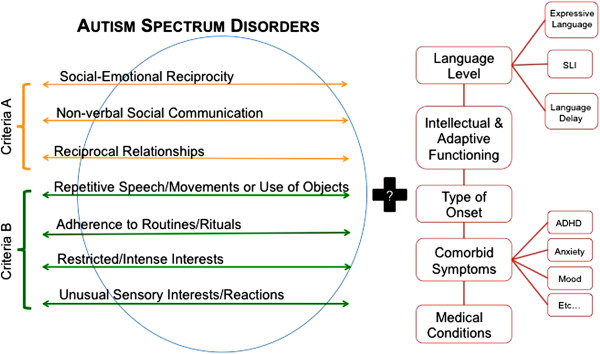
“Researchers should therefore consider both the quality and quantity of specific ASD symptoms across social-communication and RRBs, as these may provide useful constructs to define ASD subgroups.”
BackgroundInfluentialSelf-citationDescribing the Sensory Abnormalities of Children and Adults with Autism
Leekam, S. R., Nieto, C., Libby, S. J., Wing, L., & Gould, J. (2007) · Journal of Autism and Developmental Disorders · doi:10.1007/s10803-006-0218-7 · Cited by 1,140 · cited 1×
“DSM-5 includes unusual sensory responses in the RRB domain to reflect research showing that these behaviors are prevalent in ASD [31-34] and are useful in distinguishing ASD from other disorders [35,36].”
BackgroundA meta-analysis of sensory modulation symptoms in individuals with autism spectrum disorders
Ben-Sasson, A., Hen, L., Fluss, R., Cermak, S. A., Engel-Yeger, B., & Gal, E. (2009) · Journal of Autism and Developmental Disorders · doi:10.1007/s10803-008-0593-3 · Cited by 1,047 · cited 1×
“DSM-5 includes unusual sensory responses in the RRB domain to reflect research showing that these behaviors are prevalent in ASD [31-34] and are useful in distinguishing ASD from other disorders [35,36].”
BackgroundA Prospective Study of the Emergence of Early Behavioral Signs of Autism
Ozonoff, S., Iosif, A.-M., Baguio, F., Cook, I. C., Hill, M. M., Hutman, T., Rogers, S. J., Rozga, A., Sangha, S., Sigman, M., et al. (2010) · Journal of the American Academy of Child & Adolescent Psychiatry · doi:10.1016/j.jaac.2009.11.009 · Cited by 1,011 · cited 1×
“different patterns of regression [60-64] and some researchers suggest that regressions should be considered along a continuum [65].”
BackgroundAutism From 2 to 9 Years of Age
Lord, C., Risi, S., DiLavore, P. S., Shulman, C., Thurm, A., & Pickles, A. (2006) · Archives of General Psychiatry · doi:10.1001/archpsyc.63.6.694 · Cited by 973 · cited 1×
“found significant differences between groups in symptom severity and later outcomes [41,42].”
BackgroundSelf-citationLanguage and Communication in Autism
Tager‐Flusberg, H., Paul, R., & Lord, C. (2005) · Handbook of Autism and Pervasive Developmental Disorders · doi:10.1002/9780470939345.ch12 · Cited by 960
Self-citationDworzynski, K., Ronald, A., Bolton, P., & Happé, F. (2012) · Journal of the American Academy of Child & Adolescent Psychiatry · doi:10.1016/j.jaac.2012.05.018 · Cited by 633 · cited 1×
“females [43-46], in individuals with known genetic abnormalities [47,48] and in individuals with dysmorphic”
BackgroundHowlin, P. (2003) · Journal of Autism and Developmental Disorders · doi:10.1023/a:1022270118899 · Cited by 563 · cited 1×
“A number of studies have reported limited reliability in how DSM-IV subtypes are assigned [10,11], with similar core symptom presentations across the categorical diagnoses [12-16] and poor predictive ability of later outcome based on these subtypes [17,18].”
BackgroundPatterns of growth in verbal abilities among children with autism spectrum disorder.
Anderson, D. K., Lord, C., Risi, S., DiLavore, P. S., Shulman, C., Thurm, A., Welch, K., & Pickles, A. (2007) · Journal of Consulting and Clinical Psychology · doi:10.1037/0022-006x.75.4.594 · Cited by 553 · cited 1×
“For example, results from a longitudinal study suggested that RRB quantity at 2 years of age is inversely related to language skills at 9 years [37].”
BackgroundSelf-citationSensory Processing Subtypes in Autism: Association with Adaptive Behavior
Lane, A. E., Young, R. L., Baker, A. E. Z., & Angley, M. T. (2010) · Journal of Autism and Developmental Disorders · doi:10.1007/s10803-009-0840-2 · Cited by 543 · cited 1×
“Research has begun to explore the possibility of distinct ASD subgroups based on specific patterns of sensory abnormalities [39,40].”
BackgroundLanguage Assessment and Development in Toddlers with Autism Spectrum Disorders
Luyster, R. J., Kadlec, M. B., Carter, A., & Tager-Flusberg, H. (2008) · Journal of Autism and Developmental Disorders · doi:10.1007/s10803-007-0510-1 · Cited by 539 · cited 1×
“These outcomes have been associated with unique clinical presentations; for example, individuals who are non-verbal have more severe symptoms of ASD, ID [54], and oralmotor difficulties [55].”
BackgroundA Multisite Study of the Clinical Diagnosis of Different Autism Spectrum Disorders
Lord, C. (2012) · Archives of General Psychiatry · doi:10.1001/archgenpsychiatry.2011.148 · Cited by 516 · cited 1×
“A number of studies have reported limited reliability in how DSM-IV subtypes are assigned [10,11], with similar core symptom presentations across the categorical diagnoses [12-16] and poor predictive ability of later outcome based on these subtypes [17,18].”
BackgroundSelf-citationCognitive profiles and social‐communicative functioning in children with autism spectrum disorder
Joseph, R. M., Tager‐Flusberg, H., & Lord, C. (2002) · Journal of Child Psychology and Psychiatry · doi:10.1111/1469-7610.00092 · Cited by 503 · cited 1×
“In addition, cognitive profiles based on the relative discrepancy be-tween verbal and non-verbal skills in ASD have been identified [50,51].”
BackgroundSelf-citationSensitivity and specificity of proposed DSM-5 diagnostic criteria for autism spectrum disorder
McPartland, J. C., Reichow, B., & Volkmar, F. R. (2012) · Journal of the American Academy of Child & Adolescent Psychiatry · doi:10.1016/j.jaac.2012.01.007 · Cited by 476 · cited 1×
“Although concerns have been raised about the validity and diagnostic sensitivity of the proposed DSM-5 criteria [19], a number of studies have emerged in support of the conceptual validity of the new criteria [20].”
BackgroundRonald, A., Simonoff, E., Kuntsi, J., Asherson, P., & Plomin, R. (2008) · Journal of Child Psychology and Psychiatry · doi:10.1111/j.1469-7610.2007.01857.x · Cited by 466 · cited 5×
“In the case of individuals with ASD and comorbid ADHD, symptoms tend to include more social deficits and more general psychopathology than found in those individuals with ASD only [74].”
BackgroundInfluentialHome-Based Behavioral Treatment of Young Children with Autism
Sheinkopf, S. J., & Siegel, B. (1998) · Journal of Autism and Developmental Disorders · doi:10.1023/a:1026054701472 · Cited by 416 · cited 1×
“found significant differences between groups in symptom severity and later outcomes [41,42].”
BackgroundValidation of Proposed DSM-5 Criteria for Autism Spectrum Disorder
Frazier, T. W., Youngstrom, E. A., Speer, L., Embacher, R., Law, P., Constantino, J., Findling, R. L., Hardan, A. Y., & Eng, C. (2012) · Journal of the American Academy of Child & Adolescent Psychiatry · doi:10.1016/j.jaac.2011.09.021 · Cited by 392 · cited 8×
“Researchers should therefore consider both the quality and quantity of specific ASD symptoms across social-communication and RRBs, as these may provide useful constructs to define ASD subgroups.”
BackgroundInfluentialResearch Review: Structural language in autistic spectrum disorder – characteristics and causes
Boucher, J. (2012) · Journal of Child Psychology and Psychiatry · doi:10.1111/j.1469-7610.2011.02508.x · Cited by 382 · cited 1×
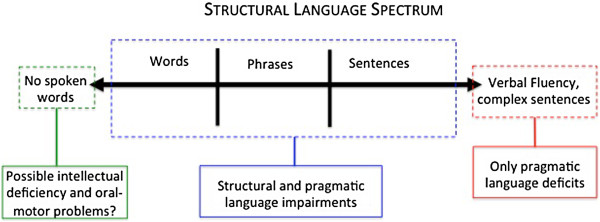
“That is, individuals with ASD differ in the degree to which they master structural aspects of language (such as syntax, morphology, and phonology) [52,53] ranging from individuals who never develop spoken language to individuals with intact structural language abilities (who speak in fluent, complex sentences), yet st…”
BackgroundDiagnosing Autism: Analyses of Data from the Autism Diagnostic Interview
Lord, C., Pickles, A., McLennan, J., Rutter, M., Bregman, J., Folstein, S., Fombonne, E., Leboyer, M., & Minshew, N. (1997) · Journal of Autism and Developmental Disorders · doi:10.1023/a:1025873925661 · Cited by 373 · cited 1×
“In addition, although the criteria for DSMIV Autistic Disorder required a delay in or complete lack of development in expressive language, this requirement has been eliminated in DSM-5 because research has shown that this characteristic is neither specific nor universal to individuals with ASD [26-30].”
BackgroundSelf-citationBaker, A. E. Z., Lane, A., Angley, M. T., & Young, R. L. (2008) · Journal of Autism and Developmental Disorders · doi:10.1007/s10803-007-0459-0 · Cited by 366 · cited 1×
“Research has begun to explore the possibility of distinct ASD subgroups based on specific patterns of sensory abnormalities [39,40].”
BackgroundInfant and toddler oral‐ and manual‐motor skills predict later speech fluency in autism
Gernsbacher, M. A., Sauer, E. A., Geye, H. M., Schweigert, E. K., & Hill Goldsmith, H. (2008) · Journal of Child Psychology and Psychiatry · doi:10.1111/j.1469-7610.2007.01820.x · Cited by 345 · cited 1×
“These outcomes have been associated with unique clinical presentations; for example, individuals who are non-verbal have more severe symptoms of ASD, ID [54], and oralmotor difficulties [55].”
BackgroundSex ratios in early childhood autism and related conditions
Wing, L. (1981) · Psychiatry Research · doi:10.1016/0165-1781(81)90043-3 · Cited by 343 · cited 1×
“females [43-46], in individuals with known genetic abnormalities [47,48] and in individuals with dysmorphic”
BackgroundHuerta, M., Bishop, S. L., Duncan, A., Hus, V., & Lord, C. (2012) · American Journal of Psychiatry · doi:10.1176/appi.ajp.2012.12020276 · Cited by 341 · cited 1×
“[21] found that over 90% of children with DSM-IV -defined PDDs were identified by DSM-5 criteria, and”
BackgroundSelf-citationLanguage‐association cortex asymmetry in autism and specific language impairment
De Fossé, L., Hodge, S. M., Makris, N., Kennedy, D. N., Caviness, V. S., McGrath, L., Steele, S., Ziegler, D. A., Herbert, M. R., Frazier, J. A., et al. (2004) · Annals of Neurology · doi:10.1002/ana.20275 · Cited by 339 · cited 1×
“…and language impairment show similar patterns of structural brain abnormalities in the core language areas of the brain (for example, Wernicke ’ s and Broca ’ s areas) as those individuals with SLI without ASD, whereas individuals with ASD without language impairment do not show this pattern [56].”
BackgroundNo evidence for a new variant of measles-mumps-rubella-induced autism
Fombonne, E., & Chakrabarti, S. (2001) · PEDIATRICS · doi:10.1542/peds.108.4.e58 · Cited by 312 · cited 1×
“However, other studies have identified different patterns of regression [60-64] and some researchers suggest that regressions should be considered along a continuum [65].”
BackgroundSymptoms in the first two years of life: A preliminary population study of infantile autism
Olof Dahlgren, S., & Gillberg, C. (1989) · European Archives of Psychiatry and Neurological Sciences · doi:10.1007/bf00451006 · Cited by 312 · cited 1×
“DSM-5 includes unusual sensory responses in the RRB domain to reflect research showing that these behaviors are prevalent in ASD [31-34] and are useful in distinguishing ASD from other disorders [35,36].”
BackgroundPredictors of outcome among high functioning children with autism and Asperger syndrome
Szatmari, P., Bryson, S. E., Boyle, M. H., Streiner, D. L., & Duku, E. (2003) · Journal of Child Psychology and Psychiatry · doi:10.1111/1469-7610.00141 · Cited by 310 · cited 1×
“A number of studies have reported limited reliability in how DSM-IV subtypes are assigned [10,11], with similar core symptom presentations across the categorical diagnoses [12-16] and poor predictive ability of later outcome based on these subtypes [17,18].”
BackgroundBillstedt, E., Carina Gillberg, I., & Gillberg, C. (2007) · Journal of Child Psychology and Psychiatry · doi:10.1111/j.1469-7610.2007.01774.x · Cited by 309 · cited 1×
“DSM-5 includes unusual sensory responses in the RRB domain to reflect research showing that these behaviors are prevalent in ASD [31-34] and are useful in distinguishing ASD from other disorders [35,36].”
BackgroundASPERGER'S SYNDROME AND AUTISM: COMPARISON OF EARLY HISTORY AND OUTCOME
Szatmari, P., Bartolucci, G., & Bremner, R. (1989) · Developmental Medicine & Child Neurology · doi:10.1111/j.1469-8749.1989.tb04066.x · Cited by 295 · cited 1×
“females [43-46], in individuals with known genetic abnormalities [47,48] and in individuals with dysmorphic”
BackgroundThe onset of autism: patterns of symptom emergence in the first years of life
Ozonoff, S., Heung, K., Byrd, R., Hansen, R., & Hertz‐Picciotto, I. (2008) · Autism Research · doi:10.1002/aur.53 · Cited by 293 · cited 1×
“different patterns of regression [60-64] and some researchers suggest that regressions should be considered along a continuum [65].”
BackgroundOzonoff, S., South, M., & Miller, J. N. (2000) · Autism · doi:10.1177/1362361300004001003 · Cited by 286
Defining language phenotypes in autism
Tager-Flusberg, H. (2006) · Clinical Neuroscience Research · doi:10.1016/j.cnr.2006.06.007 · Cited by 281 · cited 1×
“Review Over the past several decades, researchers have attempted to categorize the heterogeneity in autism spectrum disorders (ASDs) [1-9].”
BackgroundMacintosh, K. E., & Dissanayake, C. (2004) · Journal of Child Psychology and Psychiatry · doi:10.1111/j.1469-7610.2004.00234.x · Cited by 258 · cited 1×
“A number of studies have reported limited reliability in how DSM-IV subtypes are assigned [10,11], with similar core symptom presentations across the categorical diagnoses [12-16] and poor predictive ability of later outcome based on these subtypes [17,18].”
BackgroundEssential versus complex autism: definition of fundamental prognostic subtypes
Miles, J. H., Takahashi, T. N., Bagby, S., Sahota, P. K., Vaslow, D. F., Wang, C. H., Hillman, R. E., & Farmer, J. E. (2005) · American Journal of Medical Genetics Part A · doi:10.1002/ajmg.a.30590 · Cited by 258 · cited 1×
“features [49], suggesting the possible existence of subgroups with unique etiologies or risk factors.”
BackgroundGeorgiades, S., Szatmari, P., Boyle, M., Hanna, S., Duku, E., Zwaigenbaum, L., Bryson, S., Fombonne, E., Volden, J., Mirenda, P., et al. (2013) · Journal of Child Psychology and Psychiatry · doi:10.1111/j.1469-7610.2012.02588.x · Cited by 257 · cited 1×
“Review Over the past several decades, researchers have attempted to categorize the heterogeneity in autism spectrum disorders (ASDs) [1-9].”
BackgroundWiggins, L. D., Robins, D. L., Bakeman, R., & Adamson, L. B. (2009) · Journal of Autism and Developmental Disorders · doi:10.1007/s10803-009-0711-x · Cited by 248 · cited 1×
“DSM-5 includes unusual sensory responses in the RRB domain to reflect research showing that these behaviors are prevalent in ASD [31-34] and are useful in distinguishing ASD from other disorders [35,36].”
BackgroundAge of Symptom Onset in Young Children with Pervasive Developmental Disorders
ROGERS, S. J., & DILALLA, D. L. (1990) · Journal of the American Academy of Child & Adolescent Psychiatry · doi:10.1097/00004583-199011000-00004 · Cited by 243
Prevalence and Onset of Regression within Autism Spectrum Disorders: A Meta-analytic Review
Barger, B. D., Campbell, J. M., & McDonough, J. D. (2013) · Journal of Autism and Developmental Disorders · doi:10.1007/s10803-012-1621-x · Cited by 243
Prevalence and Characteristics of Children With Autism-Spectrum Disorders
Nicholas, J. S., Charles, J. M., Carpenter, L. A., King, L. B., Jenner, W., & Spratt, E. G. (2008) · Annals of Epidemiology · doi:10.1016/j.annepidem.2007.10.013 · Cited by 237 · cited 1×
“females [43-46], in individuals with known genetic abnormalities [47,48] and in individuals with dysmorphic”
BackgroundDefining the cognitive phenotype of autism
Charman, T., Jones, C. R. G., Pickles, A., Simonoff, E., Baird, G., & Happé, F. (2011) · Brain Research · doi:10.1016/j.brainres.2010.10.075 · Cited by 234 · cited 2×
“However, clear ASD subtypes based on specific cognitive deficits, with or without ID, have yet to be clearly defined [1].”
BackgroundADHD symptom subtypes in children with pervasive developmental disorder
Gadow, K. D., DeVincent, C. J., & Pomeroy, J. (2006) · Journal of Autism and Developmental Disorders · doi:10.1007/s10803-005-0060-3 · Cited by 233 · cited 5×
“In the case of individuals with ASD and comorbid ADHD, symptoms tend to include more social deficits and more general psychopathology than found in those individuals with ASD only [74].”
BackgroundInfluentialEvidence for latent classes of IQ in young children with autism spectrum disorder
Munson, J., Dawson, G., Sterling, L., Beauchaine, T., Zhou, A., Koehler, E., Lord, C., Rogers, S., Sigman, M., Estes, A., et al. (2008) · American Journal on Mental Retardation · doi:10.1352/2008.113:439-452 · Cited by 204
Self-citationSpiker, D., Lotspeich, L. J., Dimiceli, S., Myers, R. M., & Risch, N. (2002) · American Journal of Medical Genetics · doi:10.1002/ajmg.10188 · Cited by 193 · cited 1×
“Review Over the past several decades, researchers have attempted to categorize the heterogeneity in autism spectrum disorders (ASDs) [1-9].”
BackgroundSpecifying PDD-NOS: A Comparison of PDD-NOS, Asperger Syndrome, and Autism
WALKER, D. R., THOMPSON, A., ZWAIGENBAUM, L., GOLDBERG, J., BRYSON, S. E., MAHONEY, W. J., STRAWBRIDGE, C. P., & SZATMARI, P. (2004) · Journal of the American Academy of Child & Adolescent Psychiatry · doi:10.1097/00004583-200402000-00012 · Cited by 191 · cited 1×
“A number of studies have reported limited reliability in how DSM-IV subtypes are assigned [10,11], with similar core symptom presentations across the categorical diagnoses [12-16] and poor predictive ability of later outcome based on these subtypes [17,18].”
BackgroundTesting the construct validity of proposed criteria for DSM-5 autism spectrum disorder
Mandy, W. P. L., Charman, T., & Skuse, D. H. (2012) · Journal of the American Academy of Child & Adolescent Psychiatry · doi:10.1016/j.jaac.2011.10.013 · Cited by 191 · cited 1×
“Although concerns have been raised about the validity and diagnostic sensitivity of the proposed DSM-5 criteria [19], a number of studies have emerged in support of the conceptual validity of the new criteria [20].”
BackgroundBaird, G., Charman, T., Pickles, A., Chandler, S., Loucas, T., Meldrum, D., Carcani-Rathwell, I., Serkana, D., & Simonoff, E. (2008) · Journal of Autism and Developmental Disorders · doi:10.1007/s10803-008-0571-9 · Cited by 182 · cited 1×
“These mixed findings may be the result of variability in how regression is operationalized across studies [59] and the challenges that arise when parents confuse plateauing skills with regression [71,72].”
BackgroundExploring the Relationship Between Anxiety and Insistence on Sameness in Autism Spectrum Disorders
Gotham, K., Bishop, S. L., Hus, V., Huerta, M., Lund, S., Buja, A., Krieger, A., & Lord, C. (2013) · Autism Research · doi:10.1002/aur.1263 · Cited by 176
Self-citationA Principal Components Analysis of the Autism Diagnostic Interview-Revised
Tadevosyan-leyfer, O., Dowd, M., Mankoski, R., Winklosky, B., Putnam, S., McGrath, L., Tager-flusberg, H., & Folstein, S. E. (2003) · Journal of the American Academy of Child & Adolescent Psychiatry · doi:10.1097/01.chi.0000046870.56865.90 · Cited by 173 · cited 1×
“DSM-5 includes unusual sensory responses in the RRB domain to reflect research showing that these behaviors are prevalent in ASD [31-34] and are useful in distinguishing ASD from other disorders [35,36].”
BackgroundHus, V., Pickles, A., Cook, E. H., Risi, S., & Lord, C. (2007) · Biological Psychiatry · doi:10.1016/j.biopsych.2006.08.044 · Cited by 172 · cited 2×
“With respect to the quality of symptoms, there is some evidence to suggest that ‘insistence on sameness’ behaviors are distinct from other core ASD features and from symptoms of anxiety [3].”
BackgroundSelf-citationAutism and epilepsy: Historical perspective
Tuchman, R., Cuccaro, M., & Alessandri, M. (2010) · Brain and Development · doi:10.1016/j.braindev.2010.04.008 · Cited by 172 · cited 1×
“In some studies, regressiononset patterns have been associated with lower verbal ability, more severe social impairments [66,67], and possible higher rates of epilepsy [68,69], whereas other studies have found no differences between groups [61,70].”
ResultOverlaps Between Autism and Language Impairment: Phenomimicry or Shared Etiology?
Bishop, D. V. M. (2010) · Behavior Genetics · doi:10.1007/s10519-010-9381-x · Cited by 169 · cited 1×
“Along the same line, genetic variation in the gene CNTNAP2 (contactin-associated protein-like 2) has been implicated in ASD and SLI research separately, further supporting the potential of a subtype of ASD with comorbid SLI and unique underlying biological mechanisms [57].”
BackgroundHoltmann, M., Bölte, S., & Poustka, F. (2007) · Psychopathology · doi:10.1159/000100007 · Cited by 166 · cited 1×
“In the case of individuals with ASD and comorbid ADHD, symptoms tend to include more social deficits and more general psychopathology than found in those individuals with ASD only [74].”
BackgroundReiersen, A. M., Constantino, J. N., Grimmer, M., Martin, N. G., & Todd, R. D. (2008) · Twin Research and Human Genetics · doi:10.1375/twin.11.6.579 · Cited by 163 · cited 5×
“In the case of individuals with ASD and comorbid ADHD, symptoms tend to include more social deficits and more general psychopathology than found in those individuals with ASD only [74].”
BackgroundInfluentialHerman, G. E., Butter, E., Enrile, B., Pastore, M., Prior, T. W., & Sommer, A. (2007) · American Journal of Medical Genetics Part A · doi:10.1002/ajmg.a.31619 · Cited by 160 · cited 1×
“females [43-46], in individuals with known genetic abnormalities [47,48] and in individuals with dysmorphic”
BackgroundLoss of language in early development of autism and specific language impairment
Pickles, A., Simonoff, E., Conti‐Ramsden, G., Falcaro, M., Simkin, Z., Charman, T., Chandler, S., Loucas, T., & Baird, G. (2009) · Journal of Child Psychology and Psychiatry · doi:10.1111/j.1469-7610.2008.02032.x · Cited by 154 · cited 1×
“different patterns of regression [60-64] and some researchers suggest that regressions should be considered along a continuum [65].”
BackgroundRichler, J., Luyster, R., Risi, S., Hsu, W.-L., Dawson, G., Bernier, R., Dunn, M., Hepburn, S., Hyman, S. L., McMahon, W. M., et al. (2006) · Journal of Autism and Developmental Disorders · doi:10.1007/s10803-005-0070-1 · Cited by 149 · cited 1×
“In some studies, regressiononset patterns have been associated with lower verbal ability, more severe social impairments [66,67], and possible higher rates of epilepsy [68,69], whereas other studies have found no differences between groups [61,70].”
ResultSelf-citationSaulnier, C. A., & Klin, A. (2007) · Journal of Autism and Developmental Disorders · doi:10.1007/s10803-006-0288-6 · Cited by 147
Szatmari, P., Bryson, S., Duku, E., Vaccarella, L., Zwaigenbaum, L., Bennett, T., & Boyle, M. H. (2009) · Journal of Child Psychology and Psychiatry · doi:10.1111/j.1469-7610.2009.02123.x · Cited by 136 · cited 1×
“A number of studies have reported limited reliability in how DSM-IV subtypes are assigned [10,11], with similar core symptom presentations across the categorical diagnoses [12-16] and poor predictive ability of later outcome based on these subtypes [17,18].”
BackgroundKlin, A., Saulnier, C., Tsatsanis, K., & Volkmar, F. R. (2005) · Handbook of Autism and Pervasive Developmental Disorders · doi:10.1002/9780470939352.ch3 · Cited by 123
Domains of Social Communication Handicap in Autism Spectrum Disorder
ROBERTSON, J. M., TANGUAY, P. E., L'ECUYER, S., SIMS, A., & WALTRIP, C. (1999) · Journal of the American Academy of Child & Adolescent Psychiatry · doi:10.1097/00004583-199906000-00022 · Cited by 115 · cited 8×
“Researchers should therefore consider both the quality and quantity of specific ASD symptoms across social-communication and RRBs, as these may provide useful constructs to define ASD subgroups.”
BackgroundResultInfluentialClinical Features of Autistic Children with Setback Course in Their Infancy
Hoshino, Y., Kaneko, M., Yashima, Y., Kumashiro, H., Volkmar, F. R., & Cohen, D. J. (1987) · Psychiatry and Clinical Neurosciences · doi:10.1111/j.1440-1819.1987.tb00407.x · Cited by 112
The structure of the Autism Diagnostic Interview—Revised: diagnostic and phenotypic implications
Snow, A. V., Lecavalier, L., & Houts, C. (2009) · Journal of Child Psychology and Psychiatry · doi:10.1111/j.1469-7610.2008.02018.x · Cited by 104 · cited 1×
“Review Over the past several decades, researchers have attempted to categorize the heterogeneity in autism spectrum disorders (ASDs) [1-9].”
BackgroundSolomon, M., Olsen, E., Niendam, T., Ragland, J. D., Yoon, J., Minzenberg, M., & Carter, C. S. (2011) · Schizophrenia Research · doi:10.1016/j.schres.2011.03.005 · Cited by 99 · cited 1×
“In addition, although the criteria for DSMIV Autistic Disorder required a delay in or complete lack of development in expressive language, this requirement has been eliminated in DSM-5 because research has shown that this characteristic is neither specific nor universal to individuals with ASD [26-30].”
BackgroundThe International Molecular Genetic Study of Autism Consortium (IMGSAC), Parr, J. R., Le Couteur, A., Baird, G., Rutter, M., Pickles, A., Fombonne, E., & Bailey, A. J. (2011) · Journal of Autism and Developmental Disorders · doi:10.1007/s10803-010-1055-2 · Cited by 97 · cited 1×
“different patterns of regression [60-64] and some researchers suggest that regressions should be considered along a continuum [65].”
BackgroundChildhood disintegrative disorder: Re-examination of the current concept
Malhotra, S., & Gupta, N. (2002) · European Child & Adolescent Psychiatry · doi:10.1007/s00787-002-0270-6 · Cited by 88
Telescoping of caregiver report on the Autism Diagnostic Interview – Revised
Hus, V., Taylor, A., & Lord, C. (2011) · Journal of Child Psychology and Psychiatry · doi:10.1111/j.1469-7610.2011.02398.x · Cited by 87 · cited 1×
“These mixed findings may be the result of variability in how regression is operationalized across studies [59] and the challenges that arise when parents confuse plateauing skills with regression [71,72].”
BackgroundSelf-citationRelationship Between Symptom Domains in Autism Spectrum Disorders: A Population Based Twin Study
Dworzynski, K., Happé, F., Bolton, P., & Ronald, A. (2009) · Journal of Autism and Developmental Disorders · doi:10.1007/s10803-009-0736-1 · Cited by 79 · cited 1×
“Taken together, these revisions encourage researchers to take a dimensional approach when studying the heterogeneous autism phenotype, similar to approaches that have been used in population samples [78].”
BackgroundJones, L. A., & Campbell, J. M. (2010) · Journal of Autism and Developmental Disorders · doi:10.1007/s10803-009-0823-3 · Cited by 76 · cited 2×
“different patterns of regression [60-64] and some researchers suggest that regressions should be considered along a continuum [65].”
BackgroundResultShumway, S., Thurm, A., Swedo, S. E., Deprey, L., Barnett, L. A., Amaral, D. G., Rogers, S. J., & Ozonoff, S. (2011) · Journal of Autism and Developmental Disorders · doi:10.1007/s10803-011-1203-3 · Cited by 69 · cited 1×
“In some studies, regressiononset patterns have been associated with lower verbal ability, more severe social impairments [66,67], and possible higher rates of epilepsy [68,69], whereas other studies have found no differences between groups [61,70].”
ResultSnow, A. V., & Lecavalier, L. (2011) · Journal of Autism and Developmental Disorders · doi:10.1007/s10803-010-1054-3 · Cited by 54 · cited 1×
“A number of studies have reported limited reliability in how DSM-IV subtypes are assigned [10,11], with similar core symptom presentations across the categorical diagnoses [12-16] and poor predictive ability of later outcome based on these subtypes [17,18].”
BackgroundDefining Autism Subgroups: A Taxometric Solution
Ingram, D. G., Takahashi, T. N., & Miles, J. H. (2008) · Journal of Autism and Developmental Disorders · doi:10.1007/s10803-007-0469-y · Cited by 54 · cited 2×
“Similarly, research has demonstrated the utility of subgrouping within ASD based on specific socialcommunication profiles [4].”
BackgroundDifferentiating communication disorders and autism in children
Matson, J. L., & Neal, D. (2010) · Research in Autism Spectrum Disorders · doi:10.1016/j.rasd.2009.12.006 · Cited by 39 · cited 1×
“In addition, although the criteria for DSMIV Autistic Disorder required a delay in or complete lack of development in expressive language, this requirement has been eliminated in DSM-5 because research has shown that this characteristic is neither specific nor universal to individuals with ASD [26-30].”
BackgroundThe Structure of Autism Symptoms as Measured by the Autism Diagnostic Observation Schedule
Norris, M., Lecavalier, L., & Edwards, M. C. (2012) · Journal of Autism and Developmental Disorders · doi:10.1007/s10803-011-1348-0 · Cited by 32 · cited 8×
“Researchers should therefore consider both the quality and quantity of specific ASD symptoms across social-communication and RRBs, as these may provide useful constructs to define ASD subgroups.”
BackgroundInfluentialHartley, S. L., & Sikora, D. M. (2010) · Focus on Autism and Other Developmental Disabilities · doi:10.1177/1088357609356094 · Cited by 24 · cited 1×
“…although the criteria for DSM-IV Autistic Disorder required a delay in or complete lack of development in expressive language, this requirement has been eliminated in DSM-5 because research has shown that this characteristic is neither specific nor universal to individuals with ASD [26-30].”
BackgroundPickles, A., St Clair, M. C., & Conti-Ramsden, G. (2013) · Journal of Autism and Developmental Disorders · doi:10.1007/s10803-012-1556-2 · Cited by 21 · cited 6×
“A more recent study found that siblings of individuals with SLI and ASD traits were more likely than the general population to have a diagnosis of ASD, providing further evidence for possible combined genetic loadings of ASD and SLI [58].”
BackgroundInfluentialBehaviour profiles in a population of infants later diagnosed as having autistic disorder
Malvy, J., Barth�l�my, C., Damie, D., Lenoir, P., Bodier, C., & Roux, S. (2004) · European Child & Adolescent Psychiatry · doi:10.1007/s00787-004-0374-2 · Cited by 15 · cited 1×
“Review Over the past several decades, researchers have attempted to categorize the heterogeneity in autism spectrum disorders (ASDs) [1-9].”
BackgroundUsing the ADI-R to diagnose autism in preschool children
Lord, C., Storoschuk, S., Rutter, M., & Pickles, A. (1993) · Infant Mental Health Journal · doi:10.1002/1097-0355(199323)14:3<234::aid-imhj2280140308>3.0.co;2-f
Self-citation
Research works printed but not linked: 1
- Munson J Dawson G Sterling L Beauchaine T Zhou A Koehler E Evidence for latent classes of iq in young children with autism spectrum disorder Am J Ment Retard 2008 113 439 452 10.1352/2008.113:439-452 19127655 PMC2991056 · DOI · Paper page
Cited by
Which terms should be used to describe autism? Perspectives from the UK autism community
Kenny, L., Hattersley, C., Molins, B., Buckley, C., Povey, C., & Pellicano, E. (2016) · Autism · doi:10.1177/1362361315588200 · Cited by 1,941
“These sentiments chime with those of researchers, who have suggested that the unitary label of ‘autism spectrum disorder’ should serve to benefit all individuals who require support from service delivery within education, health and care systems (Grzadzinski et al., 2013; Mahjouri and Lord, 2012).”
BackgroundLord, C., Brugha, T. S., Charman, T., Cusack, J., Dumas, G., Frazier, T., Jones, E. J. H., Jones, R. M., Pickles, A., State, M. W., et al. (2020) · Nature Reviews Disease Primers · doi:10.1038/s41572-019-0138-4 · Cited by 1,859
Self-citationZoghbi, H. Y., & Bear, M. F. (2012) · Cold Spring Harbor Perspectives in Biology · doi:10.1101/cshperspect.a009886 · Cited by 797
Enhancing studies of the connectome in autism using the autism brain imaging data exchange II
Di Martino, A., O’Connor, D., Chen, B., Alaerts, K., Anderson, J. S., Assaf, M., Balsters, J. H., Baxter, L., Beggiato, A., Bernaerts, S., et al. (2017) · Scientific Data · doi:10.1038/sdata.2017.10 · Cited by 710
Self-citationResting-state functional connectivity in autism spectrum disorders: a review
Hull, J. V., Dokovna, L. B., Jacokes, Z. J., Torgerson, C. M., Irimia, A., & Van Horn, J. D. (2017) · Frontiers in Psychiatry · doi:10.3389/fpsyt.2016.00205 · Cited by 546
“Individuals with ASD are found along an entire continuum of cognitive abilities, ranging from profound disability to exceptional intelligence (2).”
BackgroundInfluential
Metadata
- Authors
- Grzadzinski, R., Huerta, M., & Lord, C.
- Affiliations
- NewYork–Presbyterian Hospital (US)
- Weill Cornell Medical Center (US)
- Corresponding author
- Grzadzinski, Rebecca
- Venue
- Molecular Autism
- Published
- 2013
- Volume
- 4
- Issue
- 1
- Pages
- 12
- ISSN
- 2040-2392 (ISSN-L)
- PMC
- PMC3671160
- OpenAlex
- W2151812566
- Cited by
- 378
- References
- 80
- Citations by year
- 2026: 20 · 2025: 22 · 2024: 28 · 2023: 51 · 2022: 31 · 2021: 36 · 2020: 29 · 2019: 38 · 2018: 25 · 2017: 16 · 2016: 23 · 2015: 27 · 2014: 21 · 2013: 9
- FWCI
- 14.57
- Type
- journal article
- Language
- en
- Open access
- gold
- doi.org
- Licence
- cc-by
- Locations
- Molecular Autism (publishedVersion, cc-by)
- Europe PMC (PubMed Central) (publishedVersion, cc-by)
- PubMed Central (publishedVersion, cc-by)
- PubMed (publishedVersion)
- Columbia Academic Commons (Columbia University)
- Funders
- National Institute of Mental Health
- Eunice Kennedy Shriver National Institute of Child Health and Human Development (R01HD073975)
- Topics
- Life Sciences › Neuroscience › Cognitive Neuroscience › Autism Spectrum Disorder Research
- Health Sciences › Medicine › Psychiatry and Mental health › Child Nutrition and Feeding Issues
- Life Sciences › Biochemistry, Genetics and Molecular Biology › Genetics › Genetics and Neurodevelopmental Disorders
- Keywords
- autism spectrum disorder, DSM-5, diagnostic criteria, dimensional approach, ASD subtypes, sample homogeneity, sample characterization
About these checks
Registry, retraction, Cites and statistics results are computed, not judged, with one exception: a printed reference that no index lists is read once by a model before it counts as a citation error. Claims are extracted by a model and kept only when their quote appears verbatim in the text; each cited source is then checked, with a model’s help, for whether it says what the claim relies on. Those verdicts can be wrong — read the claim’s quote and the cited source before relying on one.
The claim verdicts this report counts are experimental: their accuracy is not yet measured.
A language model drew the claims from the paper on 2026-10-10, under version 3 of the claim definition (model deepseek-v4.1-flash, prompt extract-v3).
A second model labelled each claim on 2026-10-10 (model jev-1.13-20260917, definition revision gold-guideline-v0.2).
Cited sources are checked with a language model’s help (gpt-6-sol).
Statistics and arithmetic are recomputed, not judged.
Confidence bands are shown only for fields calibrated on our annotated test set. None is calibrated yet, so no band is shown.
What counts as a claim ›How we measure confidence ›How we check this ›
Are you an author, or do you see a problem with this page? Request a review
Data sources
Bibliographic data: Semantic Scholar, OpenAlex, Crossref.
Contains information from the Semantic Scholar Academic Graph Datasets, made available under the ODC Attribution License (ODC-BY 1.0).
Semantic Scholar’s data is described in: Kinney, R., et al. (2023). The Semantic Scholar Open Data Platform. arXiv:2301.10140.
