

DSM-5 and autism spectrum disorders (ASDs): an opportunity for identifying ASD subtypes
Open accessThe DOI matches its Crossref record; 80 of the 80 references it cites were found in a registry or an index; 17 of the 83 sources its claims cite were checked for support.
Abstract
The heterogeneous clinical presentations of individuals with autism spectrum disorders (ASDs) poses a significant challenge for sample characterization and limits the interpretability and replicability of research studies. The Diagnostic and Statistical Manual of Mental Disorders, 5th edition (DSM-5) diagnostic criteria for ASD, with its dimensional approach, may be a useful framework to increase the homogeneity of research samples. In this review, we summarize the revisions to the diagnostic criteria for ASD, briefly highlight the literature supporting these changes, and illustrate how DSM-5 can improve sample characterization and provide opportunities for researchers to identify possible subtypes within ASD.
Overview
CoChat Summary
## TL;DR
This review argues that DSM-5’s dimensional ASD criteria can improve research sample characterization and make it easier to identify meaningful ASD subtypes. The authors summarize evidence that variability in social-communication, restricted/repetitive behaviors, language, cognitive ability, onset, and comorbidity may help define subgroups.
## Key findings
- DSM-IV’s multi-categorical PDD system had limited reliability and poor predictive value for later outcomes; DSM-5 replaces it with a single ASD diagnosis.
- The paper cites Huerta et al. showing that over 90% of children with DSM-IV-defined PDDs were identified by DSM-5 criteria, and that specificity was substantially improved compared with DSM-IV.
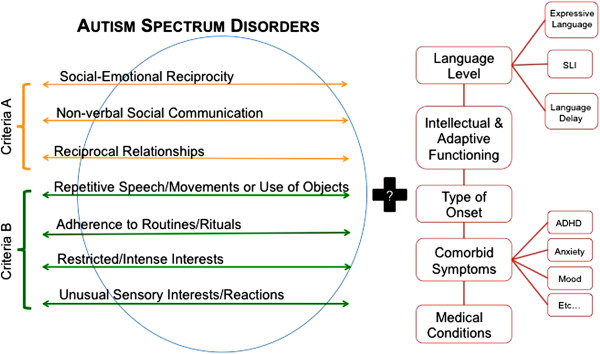
- DSM-5’s two-domain model (social-communication deficits and restricted/repetitive behaviors) is presented as better supported than the DSM-IV triad, with unusual sensory responses and stereotyped language incorporated into the RRB domain.
- The authors highlight several potential subtype dimensions: RRB quantity at age 2 years was inversely related to language skills at 9 years; regressive onset occurs in about 30% of individuals with ASD across a meta-analysis of 85 studies; and regression is often reported around 18 months of age.
## Methods
- Not a primary empirical study; this is a narrative review of DSM-5 revisions and literature relevant to ASD subtyping.
- The paper synthesizes prior studies on ASD symptom structure, language, cognition, onset patterns, comorbidity, and diagnostic validity.
- Main analysis is qualitative comparison and interpretation of published findings to argue for dimensional sample characterization under DSM-5.
## Limitations
- The paper states that no single study will be sufficient to accurately define ASD subgroups because samples vary by factors such as age and IQ.
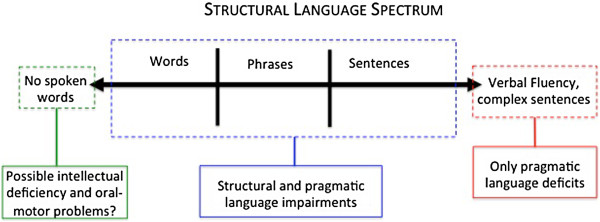
- It notes that evidence on some candidate subtypes remains mixed or incomplete, including regression patterns and whether language impairments in ASD are distinct from or continuous with specific language impairment.
- Evident from the text: this is a review, so it does not present new data or directly test the proposed subtypes.
Model-written summary. Check it against the paper before relying on it.
Integrity signals
Registry
Cites
Statistics
Figures
Verification
Claims the paper makes
5 Valid · 10 Not valid · 25 Not checked · 16 Own results and interpretations
At least one cited source doesn’t support this claim or points to a different paper, and none confirmed it — see the verdicts below.
In the paper
“deficits in cognitive functioning may be more common in females [43-46]”
§ DSM-5 and autism spectrum disorders (ASDs): an opportunity for identifying ASD subtypes > Review > Improved methods for subtyping?
What the sources say
- Disputedcites [43] Dworzynski K Ronald A Bolton P Happé F How different are girls and boys above and below the diagnostic threshold for autism spectrum disorders? J Am Acad Child Adolesc Psychiatry 2012 51 788 797 10.1016/j.jaac.2012.05.018 22840550 sourceExperimental — accuracy not yet measured
The Results (Latent Class Analysis; page unavailable) report that boys and girls were equally likely to belong to each of the four IQ-defined groups. The Discussion likewise states that there were no sex differences in group classification, contrary to the claim that cognitive deficits may be more common in females. (LLM, conf=0.88)
Checked by a reasoning model — may be wrong.
- Not checked — no full text of the sourcecites [44] Nicholas J Charles J Carpenter L King L Jenner W Spratt E Prevalence and characteristics of children with autism-spectrum disorders Ann Epidemiol 2008 18 130 136 10.1016/j.annepidem.2007.10.013 18083540 source
- Not checked — no full text of the sourcecites [45] Szatmari P Bartolucci G Bremner R Asperger's syndrome and autism: comparison of early history and outcome Dev Med Child Neurol 1989 31 709 720 2599265 source
- Not checked — no full text of the sourcecites [46] Wing L Sex ratios in early childhood autism and related conditions Psychiatry Res 1981 5 129 137 10.1016/0165-1781(81)90043-3 6945608 source
hedgedstates an association- Asserted: passes — The authors put it forward as true.
- Checkable: passes — It can be checked against evidence.
- Load-bearing: unclear — It is unclear whether the paper’s conclusions depend on it.
- Based: passes — The paper gives a reason why it holds.
- Disputed
The cited sources that could be checked couldn’t confirm or dispute this claim.
In the paper
“One feature of unusual communication, stereotyped language, has been reassigned to the RRB domain to reflect results from factor analytic studies [25].”
§ DSM-5 and autism spectrum disorders (ASDs): an opportunity for identifying ASD subtypes > Review > Key changes in the DSM-5 ASD criteria
What the sources say
- Could not verifycites [25] Robertson J Tanguay P L’Ecuyer S Sims A Waltrip C Domains of social communication handicap in autism spectrum disorder J Am Acad Child Adolesc Psychiatry 1999 38 738 745 10.1097/00004583-199906000-00022 10361793 sourceExperimental — accuracy not yet measured
Section 3.2 (page unavailable) places stereotyped language, including pedantic speech and delayed echolalia, on a pragmatic-language scale. Our copy does not address whether factor-analytic studies support reassigning it to the RRB domain; searches for factor analysis and RRB reassignment found no such passage. (LLM, conf=0.70)
plainstates a cause- Asserted: passes — The authors put it forward as true.
- Checkable: passes — It can be checked against evidence.
- Load-bearing: passes — The paper’s conclusions depend on it.
- Based: passes — The paper gives a reason why it holds.
- Could not verify
The cited sources that could be checked couldn’t confirm or dispute this claim.
In the paper
“results from a longitudinal study suggested that RRB quantity at 2 years of age is inversely related to language skills at 9 years [37].”
§ DSM-5 and autism spectrum disorders (ASDs): an opportunity for identifying ASD subtypes > Review > Improved methods for subtyping?
What the sources say
- Could not verifycites [37] Anderson D Lord C Risi S DiLavore P Shulman C Thurm A Patterns of growth in verbal abilities among children with autism spectrum disorder J Consult Clin Psychol 2007 75 594 604 17663613 sourceExperimental — accuracy not yet measured
The Intellectual Ability Estimates section says the analyses used verbal-ability measures from ages 2, 3, and 4, rather than later assessments. The passages on autistic traits do not relate RRB quantity at age 2 to language skills at age 9; searches for that longitudinal relationship found no passage in our copy. Page numbers were not available. (LLM, conf=0.76)
hedgedstates an association- Asserted: passes — The authors put it forward as true.
- Checkable: passes — It can be checked against evidence.
- Load-bearing: unclear — It is unclear whether the paper’s conclusions depend on it.
- Based: passes — The paper gives a reason why it holds.
- Could not verify
The cited sources that could be checked couldn’t confirm or dispute this claim.
In the paper
“and poor predictive ability of later outcome based on these subtypes [17,18]”
§ DSM-5 and autism spectrum disorders (ASDs): an opportunity for identifying ASD subtypes > Review
What the sources say
- Could not verifycites [17] Szatmari P Bryson S Duku E Vaccarella L Zwaigenbaum L Bennett T Similar developmental trajectories in autism and Asperger syndrome: from early childhood to adolescence J Child Psychol Psychiatry 2009 50 1459 1467 10.1111/j.1469-7610.2009.02123.x 19686332 sourceExperimental — accuracy not yet measured
The Comparison of DSM-5, DSM-IV-TR, and One-Factor Models section reports that the DSM-IV-TR symptom model did not meet criteria for acceptable fit. The Method and Statistical Analyses sections describe diagnostic categories and cross-sectional model testing, but no passage found on DSM-IV subtype diagnoses predicting later outcomes (searched: predictive ability, longitudinal outcome, diagnostic subtypes). (LLM, conf=0.76)
- Could not verifycites [18] Szatmari P Bryson S Boyle M Streiner D Duku E Predictors of outcome among high functioning children with autism and Asperger syndrome J Child Psychol Psychiatry 2003 44 520 528 10.1111/1469-7610.00141 12751844 sourceExperimental — accuracy not yet measured
The Introduction describes the study as comparing DSM-IV and proposed DSM-5 diagnostic criteria, and the Results report classification sensitivity and specificity against current diagnoses. Neither passage addresses whether DSM-IV subtypes predict later outcomes; searches for outcome, predictive validity, and diagnostic stability found no such finding in our copy. Page numbers were not available. (LLM, conf=0.73)
plain- Asserted: passes — The authors put it forward as true.
- Checkable: passes — It can be checked against evidence.
- Load-bearing: passes — The paper’s conclusions depend on it.
- Based: passes — The paper gives a reason why it holds.
- Could not verify
The sources with a verdict support this claim; the rest weren’t checked yet, have no full text we could read, or their verdicts aren’t rated yet.
In the paper
“with similar core symptom presentations across the categorical diagnoses [12-16]”
§ DSM-5 and autism spectrum disorders (ASDs): an opportunity for identifying ASD subtypes > Review
What the sources say
- Not checked — no full text of the sourcecites [12] Macintosh K Dissanayake C Annotation: the similarities and differences between autistic disorder and asperger’s disorder: a review of the empirical evidence J Child Psychol Psychiatry 2004 45 421 434 10.1111/j.1469-7610.2004.00234.x 15055363 source
- Not checked — no full text of the sourcecites [13] Malhotra S Gupta N Childhood disintegrative disorder re-examination of the current concept Eur Child Adolesc Psychiatry 2002 11 108 114 10.1007/s00787-002-0270-6 12369769 source
- Not checked — no full text of the sourcecites [14] Ozonoff S South M Miller J DSM-IV-defined asperger syndrome: cognitive, behavioral and early history differentiation from high-functioning autism Autism 2000 4 29 46 source
- Not checked — no full text of the sourcecites [15] Snow A Lecavalier L Comparing autism, PDD-NOS, and other developmental disabilities on parent-reported behavior problems: little evidence for ASD subtype validity J Autism Dev Disord 2011 41 302 310 10.1007/s10803-010-1054-3 20556500 source
- Supportedcites [16] Howlin P Outcome in high-functioning adults with autism with and without early language delays: implications for the differentiation between autism and Asperger syndrome J Autism Dev Disord 2003 33 3 13 10.1023/A:1022270118899 12708575 source
The Introduction (page not provided) describes overlapping diagnostic features: Autistic Disorder and Asperger’s Disorder both require social and stereotyped-behavior symptoms, while PDD-NOS requires autistic-like social difficulty plus another impairment. It also describes differences among the diagnoses, but these do not undermine the claim that their core symptom presentations are similar. (LLM, conf=0.90)
plain- Asserted: passes — The authors put it forward as true.
- Checkable: passes — It can be checked against evidence.
- Load-bearing: passes — The paper’s conclusions depend on it.
- Based: passes — The paper gives a reason why it holds.
34 more claims · 7 with their cited sources checked
Create a free account to see all 56 claims and to verify the 3 references still open.
- It may state two separate claims as one. 9
- Probably not a substantial claim. 11
Claims other papers make about this one
Each is checked against this paper’s own text: does it say what the citing paper says it does?
The cited source says what the claim attributes to it.
In the citing paper
“Language impairment is neither specific nor universal to ASD (Baird et al. 2008; Grzadzinski et al. 2013; Hartley and Sikora 2010), though many children with ASD do show delays and/or deficits in this area (Boucher 2012; Matson and Neal 2010; Solomon et al. 2011).”
From The Diagnosis of Autism: From Kanner to DSM-III to DSM-5 and Beyond (2021) · cites this paper as Grzadzinski et al. 2013
The cited source says what the claim attributes to it.
In the citing paper
“Structural brain analyses show similar abnormalities in core language regions of the brain between individuals with ASD and co-occurring language impairment and individuals with specific language impairment without ASD, while individuals with ASD without language deficits do not exhibit this pattern (De Fossé et al. 2004; Grzadzinski et al. 2013).”
From The Diagnosis of Autism: From Kanner to DSM-III to DSM-5 and Beyond (2021) · cites this paper as Grzadzinski et al. 2013
Citations
Cites
Simonoff, E., Pickles, A., Charman, T., Chandler, S., Loucas, T., & Baird, G. (2008) · Journal of the American Academy of Child & Adolescent Psychiatry · doi:10.1097/chi.0b013e318179964f · Cited by 3,399 · cited 1×
“Individuals with ASD often, but not always, present with features consistent with additional non-ASD disorders, such as attention deficit/hyperactivity disorder (ADHD), anxiety disorders, or mood disorders [73].”
BackgroundHandbook of Autism and Pervasive Developmental Disorders
(2005) · Wiley eBooks · doi:10.1002/9780470939352 · Cited by 2,250
Muhle, R., Trentacoste, S. V., & Rapin, I. (2004) · Pediatrics · doi:10.1542/peds.113.5.e472 · Cited by 1,207
The Autism Diagnostic Observation Schedule: Revised Algorithms for Improved Diagnostic Validity
Gotham, K., Risi, S., Pickles, A., & Lord, C. (2007) · Journal of Autism and Developmental Disorders · doi:10.1007/s10803-006-0280-1 · Cited by 1,161 · cited 8×
“Researchers should therefore consider both the quality and quantity of specific ASD symptoms across social-communication and RRBs, as these may provide useful constructs to define ASD subgroups.”
BackgroundInfluentialSelf-citationDescribing the Sensory Abnormalities of Children and Adults with Autism
Leekam, S. R., Nieto, C., Libby, S. J., Wing, L., & Gould, J. (2007) · Journal of Autism and Developmental Disorders · doi:10.1007/s10803-006-0218-7 · Cited by 1,140 · cited 1×
“DSM-5 includes unusual sensory responses in the RRB domain to reflect research showing that these behaviors are prevalent in ASD [31-34] and are useful in distinguishing ASD from other disorders [35,36].”
BackgroundA meta-analysis of sensory modulation symptoms in individuals with autism spectrum disorders
Ben-Sasson, A., Hen, L., Fluss, R., Cermak, S. A., Engel-Yeger, B., & Gal, E. (2009) · Journal of Autism and Developmental Disorders · doi:10.1007/s10803-008-0593-3 · Cited by 1,047 · cited 1×
“DSM-5 includes unusual sensory responses in the RRB domain to reflect research showing that these behaviors are prevalent in ASD [31-34] and are useful in distinguishing ASD from other disorders [35,36].”
BackgroundA Prospective Study of the Emergence of Early Behavioral Signs of Autism
Ozonoff, S., Iosif, A.-M., Baguio, F., Cook, I. C., Hill, M. M., Hutman, T., Rogers, S. J., Rozga, A., Sangha, S., Sigman, M., et al. (2010) · Journal of the American Academy of Child & Adolescent Psychiatry · doi:10.1016/j.jaac.2009.11.009 · Cited by 1,011 · cited 1×
“different patterns of regression [60-64] and some researchers suggest that regressions should be considered along a continuum [65].”
BackgroundAutism From 2 to 9 Years of Age
Lord, C., Risi, S., DiLavore, P. S., Shulman, C., Thurm, A., & Pickles, A. (2006) · Archives of General Psychiatry · doi:10.1001/archpsyc.63.6.694 · Cited by 973 · cited 1×
“found significant differences between groups in symptom severity and later outcomes [41,42].”
BackgroundSelf-citationLanguage and Communication in Autism
Tager‐Flusberg, H., Paul, R., & Lord, C. (2005) · Handbook of Autism and Pervasive Developmental Disorders · doi:10.1002/9780470939345.ch12 · Cited by 960
Self-citationDworzynski, K., Ronald, A., Bolton, P., & Happé, F. (2012) · Journal of the American Academy of Child & Adolescent Psychiatry · doi:10.1016/j.jaac.2012.05.018 · Cited by 633 · cited 1×
“females [43-46], in individuals with known genetic abnormalities [47,48] and in individuals with dysmorphic”
Background
Research works printed but not linked: 1
- Munson J Dawson G Sterling L Beauchaine T Zhou A Koehler E Evidence for latent classes of iq in young children with autism spectrum disorder Am J Ment Retard 2008 113 439 452 10.1352/2008.113:439-452 19127655 PMC2991056 · DOI · Paper page
Cited by
Items 201–300 of 378
The History of Comorbidity in Autism Spectrum Disorders (ASD)
Mazurek, M. O. (2015) · Autism and child psychopathology series · doi:10.1007/978-3-319-19183-6_1 · Cited by 11
Sensory profile in children with autism disorder and children with typical development
Pérez, R. A., Burguillos-Torres, G. E., Castillo-Velásquez, V. G., Zuleta, N. M., Fonseca-Angulo, R., Blumtritt, C., & García-Jiménez, R. (2019) · Revista de Fomento Social · doi:10.24875/rmn.m19000019 · Cited by 9
“It contains 125 questions related to the sensory aspect and has as options of answers: almost always (5), frequently (4), half of the time (3), occasionally (2), almost never (1), and not applicable (0), for the qualification, the sum of the answers to each question was made according to the evaluated item, later this…”
ResultKaneko, S., Kato, T. A., Makinodan, M., Komori, T., Ishida, R., Kishimoto, N., Takahashi, M., Yasuda, Y., Hashimoto, R., Iwasaka, H., et al. (2019) · Autism Research · doi:10.1002/aur.2242 · Cited by 5
Darrehmoradi, M. N., Hosseini, S. A., Biglarian, A., Amiri, N., & Pishyareh, E. (2013) · Iranian Rehabilitation Journal · Cited by 9
Ash, R. T., Palagina, G., Fernández-León, J. A., Park, J., Seilheimer, R. L., Lee, S., Sabharwal, J., Reyes, F., Wang, J., Lu, D., et al. (2022) · Journal of Neuroscience · doi:10.1523/jneurosci.0654-22.2022 · Cited by 5
Weight status and body composition analysis among Polish boys with autism spectrum disorders
Trambacz-Oleszak, S. (2021) · Anthropological Review · doi:10.2478/anre-2021-0015 · Cited by 5
“…and social deficits such as diffi - culty with building and understanding friendly relations appropriate for their age or presenting restricted, repetitive patterns of behaviors, interests, and activities (American Psychiatric Association 2013; Grzadzinski, Huerta and Lord 2013; WHO 2018).”
BackgroundLewis, A. K., & Porter, M. A. (2016) · Journal of Childhood & Developmental Disorders · doi:10.4172/2472-1786.100012 · Cited by 21
Alteraciones motoras en pacientes pediátricos con trastorno del espectro autista
Lopez-Espejo, M. A., Núñez, A. C., Moscoso, O. C., & Escobar, R. G. (2022) · Andes pediatrica · doi:10.32641/andespediatr.v93i1.3455 · Cited by 13
Zhang, J., Ji, G., Gao, X., & Guan, J. (2023) · BMC Bioinformatics · doi:10.1186/s12859-023-05278-0 · Cited by 6
“For example, Diagnostic and Statistical Manual for Mental Disorders, version 5 (DSM-5) [3] defines subtypes of ASD, including Autistic Disorder, Asperger’s Syndrome, Childhood Disintegrative Disorder, and Pervasive Developmental Disorder-Not Oth-erwise Specified.”
BackgroundMarín, E., Navas-Domenech, I., Otero, I. H., Ramírez‐Martín, A., Mayoral, F., Barbancho, M. Á., Lara, J. P., & Romero-González, M. (2023) · Revista de Psiquiatría Infanto-Juvenil · doi:10.31766/revpsij.v40n2a5 · Cited by 5
Enhancing Autism Disease Classification Using a Hybrid GA-KNN Approach for Feature Selection
Yousef, M., Shehab, L. A., Ghani, D. A., et al. (2024) · International Conference on Information and Communication Systems (ICICS) · doi:10.1109/icics63486.2024.10638319 · Cited by 4
“Autism can be detected at any age, but often the signs and symptoms appear in the first 2 years of life and get greater with time [1].”
BackgroundZhong, H., & Han, Z. (2024) · Aslib Journal of Information Management · doi:10.1108/ajim-03-2024-0219 · Cited by 6
Delineating a Pathway for the Discovery of Functional Connectome Biomarkers of Autism
Park, S., Thomson, P., Kiar, G., Castellanos, F. X., Milham, M. P., Bernhardt, B. C., & Martino, A. D. (2024) · Advances in neurobiology · doi:10.1007/978-3-031-69491-2_18 · Cited by 5
Multifaceted roles of DLG3/SAP102 in neurophysiology, neurological disorders and tumorigenesis
Gidado, K. I., Adeshakin, F. O., Rabiu, L., Zhang, Z., Zhang, G., & Wan, X. (2024) · Neuroscience · doi:10.1016/j.neuroscience.2024.11.081 · Cited by 7
Why are individuals with autism spectrum disorder at risk group for unhealthy weight?
Trambacz-Oleszak, S. (2019) · Anthropological Review · doi:10.2478/anre-2019-0023 · Cited by 5
Quantifying the Effects of Temperature and Noise on Attention-Level Using EDA and EEG Sensors
Xue, Z., Yang, L., Rattadilok, P., Li, S., & Gao, L. (2019) · Lecture notes in computer science · doi:10.1007/978-3-030-32962-4_23 · Cited by 6
“By having any abnormal sensory response to environment or unusual sensory interests within one dimension, researchers can explore the clinical outcomes and treatment response of people with ASD subgroups more efficiently [10].”
BackgroundInterpretable Fuzzy System for Early Detection Autism Spectrum Disorder
Prasad, R., & Shukla, P. K. (2023) · International Journal of Intelligent Systems and Applications · doi:10.5815/ijisa.2023.04.03 · Cited by 5
Towards an Improvement of Interpersonal Relationships in Children with Autism Using a Serious Game
Reyes, G. A., Tixi, V. E., Ávila-Pesantez, D., Vaca-Cárdenas, L., & Avila, L. M. (2019) · Advances in intelligent systems and computing · doi:10.1007/978-3-030-32033-1_29 · Cited by 4
Lopez-Espejo, M. A., Nuñez, A. C., Saez, V., Ruz, M., Moscoso, O. C., & Vives, A. (2024) · Journal of Autism and Developmental Disorders · doi:10.1007/s10803-024-06376-5 · Cited by 4
“ASD was diagnosed according to DSM-5 criteria (Grzadzinski et al., 2013).”
Cao-Lei, L., Elgbeili, G., Laplante, D. P., Szyf, M., & King, S. (2025) · International Journal of Molecular Sciences · doi:10.3390/ijms26199468 · Cited by 5
“Autism spectrum disorder (ASD) comprises a set of neurodevelopmental conditions marked by deficits in social interaction and communication, along with restricted and repetitive behaviors [1–3].”
Applying biologically anchored subtypes to advance precision medicine in autism spectrum disorder
Choi, T.-Y., Gunawan, A., Seo, D., Park, J., Ahn, E. H., Suh, S. W., Fuccillo, M. V., & Choi, K. (2025) · Neurobiology of Disease · doi:10.1016/j.nbd.2025.107219 · Cited by 5
Micronutrient Research in Autism Spectrum Disorder. A Clinical Study.
Anastasescu, C. M., Stoicănescu, E. C., Badea, O., & Popescu, F. (2023) · PubMed Central · doi:10.12865/chsj.49.03.14 · Cited by 6
“The increase of Autism Spectrum Disorders (ASD) incidence, in the recent years, has led to increased interest in researching this phenomenon [1].”
BackgroundZukerman, G., Tikochinsky, S., Yahav, G., & Ben‐Itzchak, E. (2024) · Psychiatry Research · doi:10.1016/j.psychres.2024.116304 · Cited by 4
Osorio, S., Tan, J. S., Levine, G., Ahlfors, S. P., Graham, S., Mamashli, F., Khan, S., Joseph, R. M., Nayal, Z., Losh, A., et al. (2025) · Autism Research · doi:10.1002/aur.70120 · Cited by 3
“Autism Spectrum Disorder (ASD) is a developmental condition characterized by a complex set of behavioral and sensory symptoms, the core of which is differences in social communication (Ben-Sasson et al. 2019; Grzadzinski et al. 2013; Haesen et al. 2011; Hedger et al. 2020; Miguel et al. 2017).”
Wen, J., Yang, T., Zhu, J., Guo, M., Lai, X., Tang, T., Chen, L., Chen, J., Xue, M., & Li, T. (2021) · BMC Pediatrics · doi:10.1186/s12887-021-02775-0 · Cited by 6
RetractedBig Data Analytics with OENN Based Clinical Decision Support System
Murari, T., Prathiba, L., Singamaneni, K. K., Venu, D., Nassa, V. K., Kohar, R., & Uparkar, S. S. (2021) · Intelligent Automation & Soft Computing · doi:10.32604/iasc.2022.020203 · Cited by 4
“The symptoms of ASD are language disability, alternative skills and developing applications (like executive performance and adaptive skills) [10] that vary in higher values among the tested people.”
BackgroundKato, S. (2024) · Forum for Linguistic Studies · doi:10.30564/fls.v6i6.7263 · Cited by 28
Nowell, K. P., Goin‐Kochel, R. P., McQuillin, S. D., & Mire, S. S. (2017) · Review Journal of Autism and Developmental Disorders · doi:10.1007/s40489-017-0118-0 · Cited by 5
“In contrast to previous methods of identifying subgroups of individuals with ASD (i.e., as used by the DSM-IV-TR), the findings also suggest that inclusion of additional phenotypic characteristics (i.e., scores on tests of intellectual functioning) is important for the identification of valid and reliable subgroups.”
BackgroundInfluentialEarly intervention of Autism Spectrum Disorder: translating research into practice
Kandasamy, P., & Manohar, H. (2018) · INDIAN JOURNAL OF MENTAL HEALTH AND NEUROSCIENCES · doi:10.32746/ijmhns.2018.v1.i1.3 · Cited by 3
The Diagnostic and Statistical Manual: Historical Observations
Brown, C., DePetro, E., & Whitaker, H. A. (2014) · Revista Psicologia em Pesquisa · doi:10.5327/z1982-1247201400010009 · Cited by 3
Bogatova, D., Smirnakis, S. M., & Palagina, G. (2023) · eNeuro · doi:10.1523/eneuro.0102-23.2023 · Cited by 7
“…become evident, over 90% of individuals with autism experience altered sensation and atypical sensory perception that affect every sensory modality (Simmons et al., 2009; Grzadzinski et al., 2013; A.E. Robertson and Simmons, 2015; C.E. Robertson and Baron-Cohen, 2017; Van der Hallen et al., 2019).”
BackgroundFrom bedside to bench and back: Translating ASD models
Drozd, H. P., Karathanasis, S. F., Molosh, A. I., Lukkes, J. L., Clapp, D. W., & Shekhar, A. (2018) · Progress in brain research · doi:10.1016/bs.pbr.2018.10.003 · Cited by 4
Mota, A. D. P. (2015) · Digital Library of Theses and Dissertations (Universidade de São Paulo) · doi:10.11606/t.47.2015.tde-12082015-151126 · Cited by 3
Advanced paternal age diversifies individual trajectories of vocalization patterns in neonatal micePreprint
Mai, L., Inada, H., Kimura, R., Kanno, K., Matsuda, T., Tachibana, R. O., Tucci, V., Komaki, F., Hiroi, N., & Osumi, N. (2019) · bioRxiv (Cold Spring Harbor Laboratory) · doi:10.1101/738781 · Cited by 3
Segura, P., Pagani, M., Bishop, S. L., et al. (2024) · medRxiv · doi:10.1101/2024.12.09.24318621 · Cited by 3
“We focused on total scores because autism is linked to impairment in both social communication and restricted and repetitive behaviors (RRBs)[60, 61] which have been both observed in children with ADHD .”
Self-citationFekih‐Romdhane, F., Sakr, F., Alhuwailah, A., Chaibi, L. S., Helmy, M. S., Shuwiekh, H. A. M., Boudouda, N. E., Zarrouq, B., Naser, A. Y., Jebreen, K., et al. (2025) · Journal of Public Health Research · doi:10.1177/22799036251377610 · Cited by 4
Kienle, X., Freiberger, V., Greulich, G., & Blank, R. (2015) · Praxis der Kinderpsychologie und Kinderpsychiatrie · doi:10.13109/prkk.2015.64.6.412 · Cited by 2
Robot-mediated Job Interview Training for Individuals with ASD: A Pilot Study
Shahverdi, P., Rousso, K., Bakhoda, I., Huang, N. Z., Rohrbeck, K. L., & Louie, W.-Y. G. (2023) · IEEE RO-MAN · doi:10.1109/ro-man57019.2023.10309611 · Cited by 3
“These nonverbal behaviors were targeted because these are common challenges that individuals with ASD face when participating in job interviews [26], [27].”
BackgroundMoeini, F., Mostaghimi, M., Honarvar, M. R., & Sharifi, A. (2023) · Pajouhan Scientific Journal · doi:10.61186/psj.21.2.97 · Cited by 3
Keyu, W., Zhou, L.-F., Ruan, Y., Shi, X., Wen, X., & Meng, M. (2023) · Visual Cognition · doi:10.1080/13506285.2024.2358559 · Cited by 2
“Communication de fi cits and behaviour rigidity have been widely used to describe the main issues that autistic individuals have di ffi culty with to some degree (American Psychiatric Association & , 2013; Grzadzinski et al., 2013).”
A Normative Model Representing Autistic Individuals Amidst Autism Spectrum Phenotypic Heterogeneity
Portolese, J., Gomes, C. D. S., Gastaldi, V. D., Paula, C. S., Caetano, S. C., Bordini, D., Brunoni, D., Mari, J. D. J., Vêncio, R. Z. N., & Brentani, H. (2024) · Brain Sciences · doi:10.3390/brainsci14121254 · Cited by 5
DSM-5 and ASD: Reflections and Commentary
Lord, C., & Gotham, K. O. (2014) · Autism and child psychopathology series · doi:10.1007/978-3-319-06796-4_17 · Cited by 4
Self-citationAutism Research as Validation of Lived Experience
Morgan, L. (2020) · Autism in Adulthood · doi:10.1089/aut.2020.0070 · Cited by 3
Carbonell, A. M., Pérez, M. C., & Rico, G. M. (2023) · Revista Inclusiones · doi:10.58210/fprc3504 · Cited by 5
Lister, A. (2021) · Open Access Victoria University of Wellington | Te Herenga Waka (Figshare) · doi:10.26686/wgtn.16613965.v1 · Cited by 3
Romanovsky, E., Choudhary, A., Akel, A. A., et al. (2023) · Research Square · doi:10.21203/rs.3.rs-3615078/v1 · Cited by 2
Giarelli, E., Fisher, K. M., Wilson, L. S., Bonacquisti, L. M., Chornobroff, M., DiPietro, A. M. T., Weiss, M. J., & Bannett, G. (2021) · Journal of Developmental and Physical Disabilities · doi:10.1007/s10882-021-09817-6 · Cited by 4
Darweesh, A. N., Salem, N. M., & Al‐Atabany, W. (2022) · Novel Intelligent and Leading Emerging Sciences Conference (NILES) · doi:10.1109/niles56402.2022.9942419 · Cited by 2
León, N. G., & González-Olguín, A. (2023) · Rehabilitación · doi:10.1016/j.rh.2023.100820 · Cited by 7
Mogili, S. P., Gunasekaran, P. K., Saini, A. G., Malhi, P., SINGHI, P. D., Malik, V. S., Singh, S., Didwal, G., Kaur, R., Sahu, J. K., et al. (2025) · Indian Journal of Clinical Biochemistry · doi:10.1007/s12291-025-01320-5 · Cited by 2
The utilization of non-human primates in the investigation of autism spectrum disorder
Zhang, L., & Wang, J. (2025) · Brain Research · doi:10.1016/j.brainres.2025.149900 · Cited by 2
Associations of TNF ‐α Expression With Self‐Esteem in Autism Spectrum Disorder
Kayashima, Y., Yamauchi, T., Takeda, T., Okumura, K., Ishida, R., Yamamuro, K., Toritsuka, M., Okada, T., Iwata, N., & Makinodan, M. (2025) · Neuropsychopharmacology Reports · doi:10.1002/npr2.70047 · Cited by 2
Bibliometric Analysis of Publications on Autism Spectrum Disorder in Türkiye
Aşut, G., Aslan, N. Y., Kurt, H. G., & Kahve, A. C. (2025) · Psikiyatride Guncel Yaklasimlar - Current Approaches in Psychiatry · doi:10.18863/pgy.1760622 · Cited by 1
Sabadini, G., Palacios-Muñoz, A., García, I. E., Romero‐Parra, J., Moraga, D., Soto, M., Vega-Muñoz, A., Contreras-Barraza, N., Salazar-Sepúlveda, G., Mella, J., et al. (2026) · Pharmaceuticals · doi:10.3390/ph19010102 · Cited by 2
Aversion But Not Aggression: Emotional Traits of KM Rats in Sociability Tests
Broshevitskaya, N. D., Rebik, A., Birioukova, L. M., Zaichenko, M. I., & Midzyanovskaya, I. S. (2026) · OBM Neurobiology · doi:10.21926/obm.neurobiol.2601326 · Cited by 1
DIÂMETRO DAS ILHOTAS PANCREÁTICAS DO GAMBÁ Didelphis albiventris EM DESENVOLVIMENTO INTRAMARSUPIAL
da Fonseca, C. C. N., NOGUEIRA, J. C., & Barbosa, A. (2002) · Archives of Veterinary Science · doi:10.5380/avs.v7i2.3992 · Cited by 3
Heterogeneity in Autism Spectrum Disorder(s)
Gwynette, M. F. (2013) · Journal of the American Academy of Child & Adolescent Psychiatry · doi:10.1016/j.jaac.2013.06.015 · Cited by 1
Saccani, M., Buzzi, E., & Paccione, F. (2013) · OA Autism · doi:10.13172/2052-7810-1-3-1103 · Cited by 2
From Molecular Pathways to ASD Therapy: Insights from Syndromic Forms of Autism
Nicholls, L. E., Ramadas, R., & Voineagu, I. (2014) · WORLD SCIENTIFIC eBooks · doi:10.1142/9789814602167_0002 · Cited by 1
SENSORY-BASED SUBTYPING IN CHILDREN WITH AUTISM SPECTRUM DISORDER
DeBoth, K. K. (2016) · VCU Scholars Compass (Virginia Commonwealth University) · doi:10.25772/g61x-7008 · Cited by 1
“The severity and type of language impairments varies considerably among children with ASD, with nonverbal children often having more severe overall deficits (Grzadzinski et al., 2013).”
BackgroundHochfunktionaler Autismus bei Erwachsenen
Kamp‐Becker, I., & Quaschner, K. (2018) · Springer eBooks · doi:10.1007/978-3-662-45995-9_15-1 · Cited by 1
Looking at the Big Neurochemical Picture of Autism Spectrum Disorder
Jaworska, N. (2019) · Biological Psychiatry · doi:10.1016/j.biopsych.2019.10.003 · Cited by 1
The use of videogames as digital leisure among people with autism spectrum disorder
Gómez, J. L. C., Fuentes, S. S., Vázquez, S. S., Sancho, P., & Gómez, M. L. O. (2021) · Siglo Cero: Revista Española sobre Discapacidad Intelectual · doi:10.14201/scero2021523101117 · Cited by 3
“People with ASD are characterized by their great heterogeneity with regard to the clinical manifestations of their symptoms (Grzadzinski et al., 2013), maintaining some common characteristics with regard to difficulties in social relations, communication, restricted interests, and repetitive or…”
BackgroundDefinition, prevalence, and behavioral symptoms of autism
Williams, D. L. (2022) · Elsevier eBooks · doi:10.1016/b978-0-12-816393-1.00008-7 · Cited by 6
Luyindula, P., & Rivières‐Pigeon, C. D. (2022) · Canadian social work review · doi:10.7202/1091517ar · Cited by 1
Cleary, S. R., Teskey, G., Mathews, C., Sachachar, R. J., Nicolson, R., Weksberg, R., Anagnostou, E. A., Bowdish, D. M. E., & Foster, J. A. (2023) · Scientific Reports · doi:10.1038/s41598-023-33380-z · Cited by 3
Yildiz, B., Schiedt, L., Mulaw, M. A., Bockmann, J., Jesse, S., Lutz, A.-K., & Boeckers, T. M. (2023) · Frontiers in Cell and Developmental Biology · doi:10.3389/fcell.2023.1243299 · Cited by 2
“Autism Spectrum Disorders (ASD) encompass a vast range of neuropsychiatric diseases characterized by social and communication impairments, as well as repetitive and restricted behaviors, which can vary in severity among individuals (Grzadzinski et al., 2013).”
BackgroundReasoning about self and others: A dynamic process
Geveke, C. H., Veenker, H., & Steenbeek, H. (2024) · Autism & Developmental Language Impairments · doi:10.1177/23969415241268192 · Cited by 1
“Based on their review of the literature, Grzadzinski et al. (2013) expanded (Table 1, right column) the model of the DSM-5 (Table 1, left column) with fi ve additional features that need to be considered when characterizing autistic people: language level, intellectual and adaptive functioning, type…”
Liyew, W. A., Moges, A., Girma, F., Abebe, W., & Afework, M. (2025) · Child and Adolescent Psychiatry and Mental Health · doi:10.1186/s13034-025-00967-5 · Cited by 1
“Identifying different patterns of impairment and their corresponding variable compositions is important for guiding interventions and management strategies [49].”
Brudkowska, Ż., Jusiak, K., Próchnicki, M., Gołębiowska, B., Morylowska-Topolska, J., Dziwota, E., Pawelczak, P., & Karakuła‐Juchnowicz, H. (2016) · Current Problems of Psychiatry · doi:10.1515/cpp-2016-0017 · Cited by 1
“zaburzeń komunikacji / interakcji społecznych oraz stereotypowych, powtarzalnych zachowań, zainteresowań i aktywności [3,4].”
BackgroundMuhle, R., Sanders, S., Reed, H. E., & State, M. W. (2016) · Elsevier eBooks · doi:10.1016/b978-0-12-800105-9.00029-9 · Cited by 1
Valencia, A. L. (2018) · TEMPUS PSICOLÓGICO · doi:10.30554/tempuspsi.1.2.2567.2019 · Cited by 2
Dakopolos, A. (2019) · doi:10.7916/d8-bkys-bw35 · Cited by 2
“Given the heterogeneity of ASD (Grzadzinski et al., 2013), it is important to understand individual differences within the disorder that are related to cognitive and language development, and whether such differences are similar to those that emerge during typical development or those due to other types of development…”
BackgroundYoga: A Multi-Dimensional Therapeutic Approach to Autism Spectrum Disorder
Gulati, K., Bhargav, P. H., Abraham, S. E., & Bhargav, H. (2020) · Advances in medical diagnosis, treatment, and care (AMDTC) book series · doi:10.4018/978-1-7998-3254-6.ch021 · Cited by 3
Classification of ASD Subtypes Based on Coherence Features of BOLD Resting-state fMRI Signals
Al-Hiyali, M. I., Yahya, N., Faye, I., & Al‐Ezzi, A. A. A. (2021) · International Conference on Intelligent Cybernetics Technology & Applications (ICICyTA) · doi:10.1109/icicyta53712.2021.9689092 · Cited by 2
DSM-5 Autism Criteria Applied to Toddlers with DSM-IV-TR Autism
Jashar, D. T. (2014) · OpenCommons - UConn (University of Connecticut) · Cited by 1
Lasley, J. (2015) · NSUWorks (Nova Southeastern University) · Cited by 1
Piliere, R. (2018) · Digital Commons - LIU Promoting Scholarship and Creative Work of LIU Students, Faculty, and Staff (Long Island University) · Cited by 5
de Jesus, A. J. B. (2020) · Digital Library of Theses and Dissertations (Universidade de São Paulo) · doi:10.11606/t.10.2020.tde-27082020-174347 · Cited by 2
Portolese, J., Gomes, C. D. S., Gastaldi, V. D., Paula, C. S., Caetano, S. C., Bordini, D., Brunoni, D., Mari, J. D. J., Vêncio, R. Z. N., & Brentani, H. (2021) · medRxiv · doi:10.1101/2021.04.22.21255267 · Cited by 1
“They are represented as modifiers such as IQ and language capacity (Lord et al., 2004; Grzadzinski et al., 2013).”
BackgroundEditorial: Autism Signaling Pathways
Hsueh, Y., & Lin, Y. (2021) · Frontiers in Cellular Neuroscience · doi:10.3389/fncel.2021.760994 · Cited by 1
“The second is abnormal sensory responses and stereotypic repetitive behaviors (Grzadzinski et al., 2013).”
BackgroundKrieger, B. (2022) · Research Publications (Maastricht University) · doi:10.26481/dis.20220913bk · Cited by 1
Thorne, B. N. (2023) · Open Access Victoria University of Wellington | Te Herenga Waka (Figshare) · doi:10.26686/wgtn.22714660 · Cited by 2
Fekih‐Romdhane, F., Sakr, F., Alhuwailah, A., et al. (2024) · Research Square · doi:10.21203/rs.3.rs-4534793/v1 · Cited by 1
Altered Use of Prior Expectations and Modified Neural Dynamics in a Mouse Model of AutismPreprint
Davatolhagh, M. F., Couto, J., Melin, M. D., Oesch, L. T., Findling, C., Morales, P., Hong, I., & Churchland, A. K. (2025) · bioRxiv (Cold Spring Harbor Laboratory) · doi:10.1101/2025.09.12.675910 · Cited by 2
The Neurodevelopment Of Basic Sensory Processing And Integration In Autism Spectrum Disorder
Brandwein, A. B. (2014) · CUNY Academic Works (City University of New York) · Cited by 2
Dobson, L. A. (2014) · UST Research Online (University of St. Thomas - Minnesota)
Brown, C., DePetro, E., & Whitaker, H. A. (2014)
Article 4 Update on Autism Spectrum Disorders for Optometry: A Review of the Literature
Jensen, K. A., Spors, F., & Egan, D. J. (2014)
5HT2A Receptor Antagonist Treatment for Repetitive Behaviors and Restricted Interests in BTBR Mice
Amodeo, D. A. (2015) · Figshare
Cross-modal selective attention and perceptual load in autism spectrum disorder
Tillmann, J. (2016) · UCL Discovery (University College London)
Mañá, M. T. (2015) · TDX (Tesis Doctorals en Xarxa) · Cited by 1
Mikita, N. K. (2016) · Research Portal (King's College London)
de Souza, L. L. (2016) · RIUnB Institutional Repository (University of Brasília) · doi:10.26512/2016.12.t.23224
The Baby and Infant Screen for Children with Autism Traits: A DSM-5 Update
Konst, M. J. (2015) · Louisiana State University · doi:10.31390/gradschool_dissertations.144
Claxton, B. L. (2016) · Digital Commons (Liberty University)
Bravo, A. (2019) · Open Access Victoria University of Wellington | Te Herenga Waka (Figshare) · doi:10.26686/wgtn.17136221.v1
Estudo dos componentes de vulnerabilidade genética no transtorno do espectro autista
Reis, V. N. D. S. (2019) · Digital Library of Theses and Dissertations (Universidade de São Paulo) · doi:10.11606/t.5.2019.tde-23082019-163447
A Closer Look at Supporting Elementary Students With Autism in School
Copeland, H. (2019) · Advances in early childhood and K-12 education · doi:10.4018/978-1-7998-1431-3.ch006
Metadata
- Authors
- Grzadzinski, R., Huerta, M., & Lord, C.
- Affiliations
- NewYork–Presbyterian Hospital (US)
- Weill Cornell Medical Center (US)
- Corresponding author
- Grzadzinski, Rebecca
- Venue
- Molecular Autism
- Published
- 2013
- Volume
- 4
- Issue
- 1
- Pages
- 12
- ISSN
- 2040-2392 (ISSN-L)
- PMC
- PMC3671160
- OpenAlex
- W2151812566
- Cited by
- 378
- References
- 80
- Citations by year
- 2026: 20 · 2025: 22 · 2024: 28 · 2023: 51 · 2022: 31 · 2021: 36 · 2020: 29 · 2019: 38 · 2018: 25 · 2017: 16 · 2016: 23 · 2015: 27 · 2014: 21 · 2013: 9
- FWCI
- 14.57
- Type
- journal article
- Language
- en
- Open access
- gold
- doi.org
- Licence
- cc-by
- Locations
- Molecular Autism (publishedVersion, cc-by)
- Europe PMC (PubMed Central) (publishedVersion, cc-by)
- PubMed Central (publishedVersion, cc-by)
- PubMed (publishedVersion)
- Columbia Academic Commons (Columbia University)
- Funders
- National Institute of Mental Health
- Eunice Kennedy Shriver National Institute of Child Health and Human Development (R01HD073975)
- Topics
- Life Sciences › Neuroscience › Cognitive Neuroscience › Autism Spectrum Disorder Research
- Health Sciences › Medicine › Psychiatry and Mental health › Child Nutrition and Feeding Issues
- Life Sciences › Biochemistry, Genetics and Molecular Biology › Genetics › Genetics and Neurodevelopmental Disorders
- Keywords
- autism spectrum disorder, DSM-5, diagnostic criteria, dimensional approach, ASD subtypes, sample homogeneity, sample characterization
About these checks
Registry, retraction, Cites and statistics results are computed, not judged, with one exception: a printed reference that no index lists is read once by a model before it counts as a citation error. Claims are extracted by a model and kept only when their quote appears verbatim in the text; each cited source is then checked, with a model’s help, for whether it says what the claim relies on. Those verdicts can be wrong — read the claim’s quote and the cited source before relying on one.
The claim verdicts this report counts are experimental: their accuracy is not yet measured.
A language model drew the claims from the paper on 2026-10-10, under version 3 of the claim definition (model deepseek-v4.1-flash, prompt extract-v3).
A second model labelled each claim on 2026-10-10 (model jev-1.13-20260917, definition revision gold-guideline-v0.2).
Cited sources are checked with a language model’s help (gpt-6-sol).
Statistics and arithmetic are recomputed, not judged.
Confidence bands are shown only for fields calibrated on our annotated test set. None is calibrated yet, so no band is shown.
What counts as a claim ›How we measure confidence ›How we check this ›
Are you an author, or do you see a problem with this page? Request a review
Data sources
Bibliographic data: Semantic Scholar, OpenAlex, Crossref.
Contains information from the Semantic Scholar Academic Graph Datasets, made available under the ODC Attribution License (ODC-BY 1.0).
Semantic Scholar’s data is described in: Kinney, R., et al. (2023). The Semantic Scholar Open Data Platform. arXiv:2301.10140.
