

Test-retest reliability of the ‘Reading the Mind in the Eyes’ test: a one-year follow-up study
Open accessThe DOI matches its Crossref record; 44 of the 44 references it cites were found in a registry or an index.
Abstract
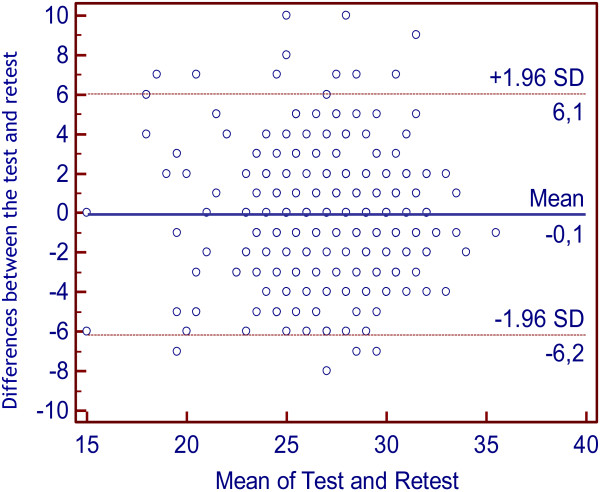
Background: The ‘Reading the Mind in the Eyes’ (Eyes) test is an advanced test of theory of mind. It is widely used to assess individual differences in social cognition and emotion recognition across different groups and cultures. The present study examined distributions of responses and scores on a Spanish version of the test in a non-clinical Spanish adult population, and assessed test-retest reliability over a 1-year interval. Methods: A total of 358 undergraduates of both sexes, age 18 to 65 years, completed the Spanish version of the test twice over an interval of 1 year. The Bland-Altman method was used to calculate test-retest reliability. Results: Distributions of responses and scores were optimal. Test-retest reliability for total score on the Eyes test was .63 (P <.01), based on the intraclass correlation coefficient. Test-retest reliability using the Bland-Altman method was fairly good. Conclusions: This is the first study providing evidence that the Eyes test is reliable and stable over a 1-year period, in a non-clinical sample of adults.
Overview
The claims and statistics of this paper haven’t been checked yet.
Free: it reads the open-access text and checks the first 5 claims that cite a source we can check. Create a free account to check every claim.
Integrity signals
Registry
Cites
Statistics
Figures
Verification
Claims the paper makes
The claims and statistics of this paper haven’t been checked yet.
Free: it reads the open-access text and checks the first 5 claims that cite a source we can check. Create a free account to check every claim.
Claims other papers make about this one
Each is checked against this paper’s own text: does it say what the citing paper says it does?
The source backs part of the claim, not all of it — or backs it for a different population, condition or comparison.
In the citing paper
“It has been adapted to Spanish population with a good test-retest reliability (ICC = 0.76) [52].”
From Mindfulness-based social cognition training (SocialMIND) versus psychoeducational multicomponent intervention for people with a first episode of psychosis: A study protocol for a randomised controlled trial (2019) · cites this paper as [52]
Experimental — accuracy not yet measuredThe source backs part of the claim, not all of it — or backs it for a different population, condition or comparison.
In the citing paper
“The test has good internal consistency and test-retest reliability [60, 61].”
From A 'choice', an 'addiction', a way 'out of the lost': Exploring self-injury in autistic people without intellectual disability (2019) · cites this paper as [61]
Experimental — accuracy not yet measured
Self-check
Percentages, sums and reported differences re-computed from the paper’s own numbers.
The self-check needs the paper’s full text.
Citations
Cites
STATISTICAL METHODS FOR ASSESSING AGREEMENT BETWEEN TWO METHODS OF CLINICAL MEASUREMENT
Martin Bland, J., & Altman, D. (1986) · The Lancet · doi:10.1016/s0140-6736(86)90837-8 · Cited by 47,965
(1965) · The Lancet · doi:10.1016/s0140-6736(65)91037-8 · Cited by 16,856
Baron‐Cohen, S., Wheelwright, S., Hill, J., Raste, Y., & Plumb, I. (2001) · Journal of Child Psychology and Psychiatry · doi:10.1111/1469-7610.00715 · Cited by 4,555 · cited 6×
“Measures The revised Eyes test [1] was used to generate a Spanish version of the Eyes test.”
BackgroundMethodInfluentialSelf-citationBaron‐Cohen, S., Wheelwright, S. J., Hill, J., Raste, Y., & Plumb, I. (2001) · PubMed · Cited by 4,313
Self-citationMindblindness: An Essay on Autism and Theory of Mind
(1995) · Choice Reviews Online · doi:10.5860/choice.33-2412 · Cited by 3,670 · cited 1×
“Social cognitive studies examine how people process information in the social environment, particularly perceiving, interpreting, and responding to the mental states (intentions, feelings, perception, and beliefs), dispositions, and behaviors of others [2-5].”
BackgroundFrith, C., & Frith, U. (2005) · Current Biology · doi:10.1016/j.cub.2005.08.041 · Cited by 3,481
Mindblindness: An Essay on Autism and Theory of Mind
Baron-Cohen, S. (1995) · doi:10.7551/mitpress/4635.001.0001 · Cited by 3,428
Self-citationBaron‐Cohen, S., Jolliffe, T., Mortimore, C., & Robertson, M. (1997) · Journal of Child Psychology and Psychiatry · doi:10.1111/j.1469-7610.1997.tb01599.x · Cited by 1,970 · cited 3×
“developed the ‘Reading the Mind in the Eyes’ test, an advanced test of theory of mind [23].”
BackgroundInfluentialSelf-citationSocial Cognition: From Brains to Culture
Fiske, S. T., & Taylor, S. E. (2013) · SAGE Publications Ltd eBooks · doi:10.4135/9781529681451 · Cited by 1,741
Social Cognition: Making Sense of People
Howard, J. A., & Kunda, Z. (2000) · Contemporary Sociology · doi:10.2307/2654104 · Cited by 1,072
Cited by
Baron-Cohen, S., Bowen, D. C., Holt, R. J., Allison, C., Auyeung, B., Lombardo, M. V., Smith, P., & Lai, M.-C. (2015) · PLOS ONE · doi:10.1371/journal.pone.0136521 · Cited by 238
“The Eyes test has been evaluated in over 250 studies to date, and has been found to have good reliability [32, 33].”
BackgroundSelf-citationOlderbak, S., Wilhelm, O., Olaru, G., Geiger, M., Brenneman, M. W., & Roberts, R. D. (2015) · Frontiers in Psychology · doi:10.3389/fpsyg.2015.01503 · Cited by 228
“…(child version; Vogindroukas et al., 2014), Italian (Vellante et al., 2012), Japanese (Kunihira et al., 2006; Adams et al., 2009), Persian (Khorashad et al., 2015), Romanian (Miu et al., 2012), Spanish (Fernández-Abascal et al., 2013), Swedish (Hallerbäck et al., 2009), and Turkish (Girli, 2014).”
BackgroundBuilding Social Cohesion in Ethnically Mixed Schools: An Intervention on Perspective Taking
Alan, Ş., Baysan, C., Gümren, M., & Kubilay, E. (2021) · The Quarterly Journal of Economics · doi:10.1093/qje/qjab009 · Cited by 202
Warrier, V, Grasby, K. L., Uzefovsky, F., Toro, R., Smith, P., Chakrabarti, B., Khadake, J., Mawbey-Adamson, E., Litterman, N., Hottenga, J.-J., et al. (2018) · Molecular Psychiatry · doi:10.1038/mp.2017.122 · Cited by 140
Self-citationLindeman, M., Svedholm‐Häkkinen, A. M., & Lipsanen, J. O. (2014) · Cognition · doi:10.1016/j.cognition.2014.09.008 · Cited by 154
Devine, R. T., & Hughes, C. (2016) · Journal of Experimental Child Psychology · doi:10.1016/j.jecp.2015.07.011 · Cited by 132
Greenberg, D. M., Warrier, V., Abu-Akel, A. M., Allison, C. L., Gajos, K. Z., Reinecke, K., Rentfrow, P. J., Radecki, M. A., & Baron‐Cohen, S. (2022) · Proceedings of the National Academy of Sciences · doi:10.1073/pnas.2022385119 · Cited by 147
“Therefore, although studies of the Eyes Test when translated to different languages (89–93) demonstrate that the Eyes Test is a suitable measure for the study of social processes in different geographic contexts, more cross-cultural studies are needed.”
Self-citationBaribeau, D. A., Doyle-Thomas, K. A. R., Dupuis, A., Iaboni, A., Crosbie, J., McGinn, H., Arnold, P. D., Brian, J., Kushki, A., Nicolson, R., et al. (2015) · Journal of the American Academy of Child & Adolescent Psychiatry · doi:10.1016/j.jaac.2015.03.016 · Cited by 111
An exploration of changes in cognitive and emotional empathy among medical students in the Caribbean
Youssef, F. F., Nunes, P., Sa, B., & Williams, S. (2014) · International Journal of Medical Education · doi:10.5116/ijme.5412.e641 · Cited by 119
“15 This instrument consists of twenty (20) questions measured on a seven-point Likert scale ranging from 1=strongly disagree to 7= strongly agree, with 4=not sure.”
Moseley, R. L., Gregory, N. J., Smith, P., Allison, C., & Baron-Cohen, S. (2019) · Molecular Autism · doi:10.1186/s13229-019-0267-3 · Cited by 97
Self-citationAriza, M., Cano, N., Segura, B., Adán, A., Bargalló, N., Caldú, X., Campabadal, A., Jurado, M. Á., Mataró, M., Pueyo, R., et al. (2022) · Frontiers in Aging Neuroscience · doi:10.3389/fnagi.2022.1029842 · Cited by 100
“Emotion recognition was assessed with the Reading the Mind in the Eye Test (Fernández-Abascal et al., 2013).”
MethodKourtesis, P., Kouklari, E.-C., Ρούσσος, Π., Mantas, V., Papanikolaou, Κ., Skaloumbakas, C., & Pehlivanidis, A. (2023) · Behavioral Sciences · doi:10.3390/bs13040336 · Cited by 102
Gabriel, E. T., Oberger, R., Schmoeger, M., Deckert, M., Vockh, S., Auff, E., & Willinger, U. (2019) · Psychological Research · doi:10.1007/s00426-019-01263-6 · Cited by 105
Measurement of Social Cognition in Amyotrophic Lateral Sclerosis: A Population Based Study
Burke, T., Pinto‐Grau, M., Lonergan, K., Elamin, M., Bede, P., Costello, E., Hardiman, O. M., & Pender, N. P. (2016) · PLoS ONE · doi:10.1371/journal.pone.0160850 · Cited by 91
Guy, A., Lee, K., & Wolke, D. (2017) · Aggressive Behavior · doi:10.1002/ab.21716 · Cited by 93
Higgins, W. C., Kaplan, D. M., Deschrijver, E., & Ross, R. M. (2023) · Clinical Psychology Review · doi:10.1016/j.cpr.2023.102378 · Cited by 92
Devine, R. T., & Hughes, C. H. (2019) · Child Development · doi:10.1111/cdev.12990 · Cited by 87
Individual differences and the multidimensional nature of face perception
White, D., & Burton, A. M. (2022) · Nature Reviews Psychology · doi:10.1038/s44159-022-00041-3 · Cited by 81
Perceiving Others’ Feelings: The Importance of Personality and Social Structure
Sherman, G. D., Lerner, J. S., Renshon, J., Ma‐Kellams, C., & Joel, S. (2015) · Social Psychological and Personality Science · doi:10.1177/1948550614567358 · Cited by 79
van der Meulen, A., Roerig, S., de Ruyter, D., van Lier, P. A. C., & Krabbendam, L. (2017) · Frontiers in Psychology · doi:10.3389/fpsyg.2017.00594 · Cited by 75
“This description of the RME has not been consistently used however, and the use of different definitions of the task and the construct it measures has contributed to confusion and criticism on the RME (Johnston et al., 2008; Fernández-Abascal et al., 2013).”
BackgroundMethodInfluentialFace individual identity recognition: a potential endophenotype in autism
Minio-Paluello, I., Porciello, G., Pascual-Leone, A., & Baron-Cohen, S. (2020) · Molecular Autism · doi:10.1186/s13229-020-00371-0 · Cited by 66
“The RMET has good reliability [107], autistic individuals consistently perform less well than matched neurotypical controls [108–112] and do not show the neurotypical advantage of female vs.”
BackgroundSelf-citationMetoki, A., Wang, Y., & Olson, I. R. (2021) · Cerebral Cortex · doi:10.1093/cercor/bhab260 · Cited by 76
Romero‐Martínez, Á., Lila, M., Gracia, E., & Moya‐Albiol, L. (2018) · British Journal of Clinical Psychology · doi:10.1111/bjc.12204 · Cited by 72
Fitzpatrick, P., Frazier, J. A., Cochran, D., Mitchell, T. V., Coleman, C., & Schmidt, R. C. (2018) · Frontiers in Psychology · doi:10.3389/fpsyg.2018.01337 · Cited by 76
“The reading the mind in the eyes test has been extensively researched and found to be a reliable measure of ToM (Fernández-Abascal et al., 2013; Vellante et al., 2013) for both males and females with ASD (Baron-Cohen et al.”
BackgroundWhat Do You Have in Mind? Measures to Assess Mental State Reasoning in Neuropsychiatric Populations
Eddy, C. M. (2019) · Frontiers in Psychiatry · doi:10.3389/fpsyt.2019.00425 · Cited by 76
“A North American version of The Hinting Task has been developed (276) and the task has been translated into many languages including Dutch (277), Brazilian Portuguese (278), Spanish (279), and Korean (280).”
BackgroundInfluentialRomero‐Martínez, Á., Lila, M., & Moya‐Albiol, L. (2016) · Violence and Victims · doi:10.1891/0886-6708.vv-d-14-00149 · Cited by 71
Burke, T., Elamin, M., Bede, P., Pinto‐Grau, M., Lonergan, K., Hardiman, O. M., & Pender, N. P. (2016) · Amyotrophic Lateral Sclerosis and Frontotemporal Degeneration · doi:10.1080/21678421.2016.1177088 · Cited by 71
“The Reading the Mind in the Eyes Test (RMET) is a reliable measure (15) which comprises photographs of eye regions of human faces where participants are required to infer the mental/emotional state of others.”
BackgroundMethodKhorashad, B. S., Baron-Cohen, S., Roshan, G. M., Kazemian, M., Khazai, L., Aghili, Z., Talaei, A., & Afkhamizadeh, M. (2015) · Journal of Autism and Developmental Disorders · doi:10.1007/s10803-015-2427-4 · Cited by 67
“The English version of revised Eyes test has been translated into many languages, including Turkish (Yildirim et al. 2011), Spanish (Fernandez-Abascal et al. 2013), Japanese (Kunihira et al. 2006), German (Pfaltz et al. 2013), Swedish (Hallerback et al. 2009), French (Prevost et al. 2014) and Italian (Vellante et al.…”
Self-citationAbility of university-level education to prevent age-related decline in emotional intelligence
Cabello, R., Bravo, B. N., Latorre, J. M., & Fernández‐Berrocal, P. (2014) · Frontiers in Aging Neuroscience · doi:10.3389/fnagi.2014.00037 · Cited by 74
“Eventually this line of research should be extended to both theory of mind and social cognition (Fernández-Abascal et al., 2013), and EI should be assessed using mixed models or self-reported emotional regulation strategies to complement the performance-based activity EI that we have measured here…”
BackgroundSelf-citationKouklari, E.-C., Tsermentseli, S. K., & Auyeung, B. (2018) · Research in Developmental Disabilities · doi:10.1016/j.ridd.2018.02.015 · Cited by 74
The ‘Reading the mind in the Eyes' test and emotional intelligence
Megías‐Robles, A., Gutiérrez‐Cobo, M. J., Cabello, R., Gómez‐Leal, R., Baron‐Cohen, S., & Fernández‐Berrocal, P. (2020) · Royal Society Open Science · doi:10.1098/rsos.201305 · Cited by 66
“For instance, some instruments are supposed to measure explicit verbal reasoning, such as the Strange Stories task [5] or the Faux Pas task [6], while others entail a more implicit social analysis, an example of the latter being the ‘Reading the Mind in the Eyes’ test (Eyes Test) [7,8], a widely used instrument to mea…”
MethodSelf-citationRomero‐Martínez, Á., Lila, M., Martínez, M., Pedrón, V., & Moya‐Albiol, L. (2016) · International Journal of Environmental Research and Public Health · doi:10.3390/ijerph13040394 · Cited by 63
“As the Eyes Test and the WCST showed a high test-retest reliability and stability over a 1-year period [61,62], it is highly probable that the changes observed in these tests in our study are attributable to the intervention program, rather than limitations of the tests used.”
ResultNicholson, T., Williams, D. M., Grainger, C., Lind, S. E., & Carruthers, P. (2019) · Consciousness and Cognition · doi:10.1016/j.concog.2019.01.013 · Cited by 57
Higgins, W. C., Ross, R. M., Langdon, R. A., & Polito, V. (2022) · Assessment · doi:10.1177/10731911221124342 · Cited by 61
“When reported, the test–retest reliability of the RMET is generally acceptable (e.g., Fernández-Abascal et al., 2013; Hallerbäck et al., 2009; 1Macquarie University, Sydney, New South Wales, Australia Corresponding Author: Wendy C. Higgins, Department of Cognitive Science, Macquarie University,…”
MethodKouklari, E.-C., Thompson, T., Monks, C. P., & Tsermentseli, S. K. (2017) · Journal of Cognition and Development · doi:10.1080/15248372.2017.1339708 · Cited by 60
Navarra‐Ventura, G., Fernández‐Gonzalo, S., Turón, M., Pousa, E., Palao, D. J., Cardoner, N., & Jódar, M. (2017) · The Canadian Journal of Psychiatry · doi:10.1177/0706743717746661 · Cited by 57
Pavlova, M. A., & Sokolov, A. A. (2022) · Neuroscience & Biobehavioral Reviews · doi:10.1016/j.neubiorev.2022.104755 · Cited by 54
Campos, D., Modrego-Alarcón, M., López-del-Hoyo, Y., González-Panzano, M., Van Gordon, W., Shonin, E., Navarro-Gil, M., & García-Campayo, J. (2019) · Frontiers in Psychology · doi:10.3389/fpsyg.2019.00809 · Cited by 45
Social Cognition and Cognitive Decline in Patients with Parkinson’s Disease
Alonso‐Recio, L., Carvajal, F., Merino, C., & Serrano, J. M. (2020) · Journal of the International Neuropsychological Society · doi:10.1017/s1355617720001204 · Cited by 44
Linking metacognition and mindreading: Evidence from autism and dual-task investigations.
Nicholson, T., Williams, D. M., Lind, S. E., Grainger, C., & Carruthers, P. (2021) · Journal of Experimental Psychology: General · doi:10.1037/xge0000878 · Cited by 42
Effects of Intranasal Oxytocin on the Interpretation and Expression of Emotions in Anorexia Nervosa
Leppänen, J., Cardi, V., Ng, K. W., Paloyelis, Y., Stein, D. J., Tchanturia, K., & Treasure, J. L. (2017) · Journal of Neuroendocrinology · doi:10.1111/jne.12458 · Cited by 43
Individual Differences in Theory of Mind Predict Inequity Aversion in Children
Tsoi, L., & McAuliffe, K. (2019) · Personality and Social Psychology Bulletin · doi:10.1177/0146167219867957 · Cited by 49
Structural Neural Substrates of Reading the Mind in the Eyes
Sato, W., Kochiyama, T., Uono, S., Sawada, R., Kubota, Y., Yoshimura, S., & Toichi, M. (2016) · Frontiers in Human Neuroscience · doi:10.3389/fnhum.2016.00151 · Cited by 42
“A previous study reported that the reliability of the Eyes Test was high, even over a 1-year period (Fernández-Abascal et al., 2013).”
MethodVass, E., Simon, V., Fekete, Z., Lencse, L., Ecseri, M., Kis, B., & Simon, L. (2020) · Clinical Psychology & Psychotherapy · doi:10.1002/cpp.2519 · Cited by 42
Ayesa‐Arriola, R., Setién‐Suero, E., Neergaard, K. D., Ferro, A., Fatjó‐Vilas, M., Lago, M. R., Otero, S., Rodríguez-Sánchez, J. M., & Crespo‐Facorro, B. (2016) · Frontiers in Psychology · doi:10.3389/fpsyg.2016.00592 · Cited by 40
Virtual reality-based theory of mind intervention in schizophrenia: Preliminary efficacy results
Vass, E., Simon, V., Csukly, G., Fekete, Z., Kis, B., & Simon, L. (2022) · Comprehensive Psychiatry · doi:10.1016/j.comppsych.2022.152350 · Cited by 40
Trojsi, F., Siciliano, M., Russo, A., Passaniti, C., Femiano, C., Ferrantino, T., Liguoro, S. D., Lavorgna, L., Monsurrò, M. R., Tedeschi, G., et al. (2016) · Frontiers in Psychology · doi:10.3389/fpsyg.2016.01934 · Cited by 41
“…factor of ToM abilities, especially for the affective subcomponent, as also demonstrated in studies performed in healthy populations that examined ET performances in relation to some demographic variables, including years of education (Fernández-Abascal et al., 2013; Ayesa-Arriola et al., 2016).”
ResultDoes our cognitive empathy diminish with age? The moderator role of educational level
Gutiérrez‐Cobo, M. J., Cabello, R., Megías‐Robles, A., Gómez‐Leal, R., Baron‐Cohen, S., & Fernández‐Berrocal, P. (2021) · International Psychogeriatrics · doi:10.1017/s1041610221000624 · Cited by 36
“Participants completed the Spanish adaptation of the “ Reading the Mind in the Eyes ” test (Eyes test; Baron-Cohen et al. , 2001; Fernández-Abascal et al. , 2013).”
Self-citationThe role of social isolation and social cognition in thought disorder
de Sousa, P., Sellwood, W., Eldridge, A., & Bentall, R. P. (2018) · Psychiatry Research · doi:10.1016/j.psychres.2018.08.048 · Cited by 30
Imanipour, S., Sheikh, M., Shayestefar, M., & Baloochnejad, T. (2021) · Neurology Research International · doi:10.1155/2021/3793750 · Cited by 30
Social Cognition and Social Functioning in MCI and Dementia in an Epidemiological Sample
Eramudugolla, R., Huynh, K., Zhou, S., Amos, J. G., & Anstey, K. J. (2021) · Journal of the International Neuropsychological Society · doi:10.1017/s1355617721000898 · Cited by 31
Redondo, I., & Herrero‐Fernández, D. (2018) · Cognitive Neuropsychiatry · doi:10.1080/13546805.2018.1461618 · Cited by 31
“Furthermore, most of the studies where psychometric properties of this questionnaire were tested have not reported internal consistency (Fernández-Abascal et al., 2013).”
BackgroundResultInfluentialStructural and functional brain correlates of theory of mind impairment post-stroke
D, J. F. D., Nott, Z. E., Horne, K., Prangley, T., Adams, A. G., Henry, J. D., & Molenberghs, P. (2019) · Cortex · doi:10.1016/j.cortex.2019.09.017 · Cited by 31
Kallitsounaki, A., & Williams, D. (2020) · Journal of Autism and Developmental Disorders · doi:10.1007/s10803-020-04478-4 · Cited by 32
Schulte, M., Trujillo, N., Rodríguez‐Villagra, O. A., Salas, N., Ibáñez, A. M., Carriedo, N., & Huepe, D. (2022) · Scientific Reports · doi:10.1038/s41598-022-21985-9 · Cited by 30
Watching More Closely: Shot Scale Affects Film Viewers’ Theory of Mind Tendency But Not Ability
Rooney, B., & Bálint, K. E. (2018) · Frontiers in Psychology · doi:10.3389/fpsyg.2017.02349 · Cited by 26
“While these measures have been widely and reliably used for decades (e.g., see Wellman et al., 2001; Fernández-Abascal et al., 2013; Devine and Hughes, 2016), they prompt ToM by explicitly asking about mental states (Apperly and Butterfill, 2009; Rosenblau et al., 2015).”
MethodQuek, J., Melvin, G. A., Bennett, C., Gordon, M. S., Saeedi, N., & Newman, L. K. (2018) · Journal of Personality Disorders · doi:10.1521/pedi_2018_32_336 · Cited by 32
Putting Your Money Where Your Mouth is: Examining Metacognition in ASD Using Post-decision Wagering
Carpenter, K. L., Williams, D. M., & Nicholson, T. (2019) · Journal of Autism and Developmental Disorders · doi:10.1007/s10803-019-04118-6 · Cited by 26
Romero‐Martínez, Á., Lila, M., Gracia, E., Martín-Fernández, M., & Moya‐Albiol, L. (2021) · Psychology of Violence · doi:10.1037/vio0000296 · Cited by 26
“Moreover, it has been previously established that this tool presents good sensitivity in assessing emotion decoding abilities (Fernández-Abascal et al., 2013).”
BackgroundStress phenotypes in epilepsy: impact on cognitive functioning and quality of life
Catalán‐Aguilar, J., González‐Bono, E., Lozano‐García, A., Tormos‐Pons, P., Hampel, K. G., Villanueva, V., & Cano‐López, I. (2023) · Frontiers in Psychology · doi:10.3389/fpsyg.2023.1100101 · Cited by 26
Structural brain changes in post-COVID condition and its relationship with cognitive impairment
Pacheco-Jaime, L., Garcia-Vicente, C., Ariza, M., Cano, N., Garolera, M., Carreras-Vidal, L., Roura, I., Capdevila-Lacasa, C., Oltra, J., Pardo, J., et al. (2024) · Brain Communications · doi:10.1093/braincomms/fcaf070 · Cited by 27
“41 Moreover, the world accentuation test (TAP) was also included as an estimate of premorbid IQ 42 and Spanish version of the smell identification test— 40 items (UPSIT-40) 43 was used to measure olfactory function.”
van der Meulen, A., de Ruyter, D., BLOKLAND, A. A. J., & Krabbendam, L. (2019) · Journal of Cross-Cultural Psychology · doi:10.1177/0022022118823283 · Cited by 22
Atypical autonomic nervous system complexity accompanies social cognition task performance in ASD
Saghir, H., Dupuis, A., Chau, T. T., & Kushki, A. (2017) · Research in Autism · doi:10.1016/j.rasd.2017.04.004 · Cited by 24
How therapists' emotion recognition relates to therapy process and outcome
Abargil, M., & Tishby, O. (2022) · Clinical Psychology & Psychotherapy · doi:10.1002/cpp.2680 · Cited by 21
Translation and validation of Baron Cohen’s face test in a general population from Spain.
Huerta‐Ramos, E., Ferrer-Quintero, M., Gómez‐Benito, J., González‐Higueras, F., Cuadras, D., del Rey-Mejías, Á. L., Usall, J., & Ochoa, S. (2021) · Actas Españolas de Psiquiatría · Cited by 26
An Evaluation of Cross-Cultural Adaptations of Social Cognition Testing: A Systematic Review
Bourdage, R., Narme, P., Neeskens, R., Papma, J. M., & Franzen, S. (2023) · Neuropsychology Review · doi:10.1007/s11065-023-09616-0 · Cited by 24
“Fernandez-Abascal et al. (2013) described the following: Two PhD experts in psychology translated the RMET from English to Spanish, two independent translators then back-translated the test.”
del Hoyo, Y. L., Panzano, M. G., Lahera, G., Herrera‐Mercadal, P., Navarro‐Gil, M., Campos, D., Borao, L., Morillo, H., & García‐Campayo, J. (2019) · PLoS ONE · doi:10.1371/journal.pone.0225608 · Cited by 22
“Respondents were asked to choose which of four words best described what the person in the photograph was thinking or feeling, and one point was assigned for each correct response, with scores ranging from 0 to 36 [12,48].”
BackgroundDeng, F., Bueber, M. A., Cao, Y., Tang, J., Bai, X., Cho, Y. I., Lee, J., Lin, Z., Yang, Q., Keshavan, M. S., et al. (2024) · Psychological Medicine · doi:10.1017/s0033291723003501 · Cited by 23
Structural Correlates of Reading the Mind in the Eyes in Autism Spectrum Disorder
Sato, W., Uono, S., Kochiyama, T., Yoshimura, S., Sawada, R., Kubota, Y., Sakihama, M., & Toichi, M. (2017) · Frontiers in Human Neuroscience · doi:10.3389/fnhum.2017.00361 · Cited by 21
Neuropsychological and socio–cognitive deficits in patients with obstructive sleep apnea
Macchitella, L., Romano, D. L., Marinelli, C. V., Toraldo, D. M., Arigliani, M., Benedetto, M. D., & Angelelli, P. (2021) · Journal of Clinical and Experimental Neuropsychology · doi:10.1080/13803395.2021.1944609 · Cited by 20
“The “Eyes” test is a valid, reliable, and widely used measure of the ability to infer complex mental states from eye expressions (Baron-Cohen et al., 2001; Fernández-Abascal et al., 2013; Vellante et al., 2013).”
BackgroundLevels of Self-representation and Their Sociocognitive Correlates in Late-Diagnosed Autistic Adults
Moseley, R. L., Liu, C. H., Gregory, N. J., Smith, P. L., Baron‐Cohen, S., & Sui, J. (2021) · Journal of Autism and Developmental Disorders · doi:10.1007/s10803-021-05251-x · Cited by 21
“RMET scores are stable within a 12-month period (Fernández-Abascal et al., 2013), but we thus lacked RMET data for the NA group and remaining ASC participants.”
BackgroundSelf-citationYang, C., Khalifa, N. R., Lankappa, S. T., & Vӧllm, B. (2018) · Brain and Cognition · doi:10.1016/j.bandc.2018.11.003 · Cited by 21
Isernia, S., Rossetto, F., Blasi, V., Massaro, D., Castelli, I., Ricci, C., Shamay‐Tsoory, S., Marchetti, A., & Baglio, F. (2022) · Current Psychology · doi:10.1007/s12144-022-03457-5 · Cited by 20
Burke, T., Holleran, L., Mothersill, D., Lyons, J., O’Rourke, N., Gleeson, C., Cannon, D. M., McKernan, D. P., Morris, D. W., Kelly, J. P., et al. (2023) · Schizophrenia Research · doi:10.1016/j.schres.2023.10.035 · Cited by 20
Theory-of-mind abilities in older patients with common mental disorders – a cross-sectional study
Peters, M., & Schulz, H. (2021) · Aging & Mental Health · doi:10.1080/13607863.2021.1935461 · Cited by 20
“The results of the validity studies are satisfactory, the test correlates with other social cognitive variables (Vellante et al., 2013), and the test-retest reliability is also high: Fernández-Abascal et al. (2013) found a correlation of r = .63 in a follow-up after one year.”
ResultGiòrdano, M., Licea-Haquet, G., Navarrete, E., Valles‐Capetillo, E., Lizcano-Cortés, F., Carrillo-Peña, A., & Zamora-Ursulo, M. A. (2019) · Cogent Psychology · doi:10.1080/23311908.2019.1634326 · Cited by 21
“Similar to our findings, item 19 was answered correctly by less than 50% of participants in both Argentinian (Allegri, 2006) and Spanish (Fernandez-Abascal et al., 2013) samples, while in other languages the items with least correct responses are different (for a review, see (Khorashad et al.,…”
ResultHow generalizable is the inverse relationship between social class and emotion perception?
Deveney, C. M., Chen, S. H., Wilmer, J. B., Zhao, V., Schmidt, H. B., & Germine, L. T. (2018) · PLoS ONE · doi:10.1371/journal.pone.0205949 · Cited by 19
Can Older People See Something Apart from Themselves?
Pearlman-Avnion, S., Lazar, J. N., & Muschinsky, T. (2015) · International Journal of Social Science and Humanity · doi:10.7763/ijssh.2016.v6.715 · Cited by 17
Are there differences in health professionals’ empathy due to academic and clinical experience?
Putrino, N., Tabullo, Á., Mesurado, B., & Richaud, M. C. (2018) · Current Psychology · doi:10.1007/s12144-018-9980-x · Cited by 18
Trust and mindreading in adolescents: the moderating role of social value orientation
Derks, J., van Scheppingen, M. A., Lee, N. C., & Krabbendam, L. (2015) · Frontiers in Psychology · doi:10.3389/fpsyg.2015.00965 · Cited by 19
“The participant can always choose between three different distributions of points: a cooperative outcome (in which the participant and the other get the same amount of points), an individualistic outcome (in which the participant getsmore points than the other) and a competitive outcome (in which…”
BackgroundMethodEddy, C. M., Rickards, H. E., & Hansen, P. (2017) · Human Brain Mapping · doi:10.1002/hbm.23923 · Cited by 19
Assessment of Theory of Mind in Adults: Beyond False Belief Tasks
Karmakar, A., & Dogra, A. K. (2019) · Activitas Nervosa Superior · doi:10.1007/s41470-019-00028-1 · Cited by 18
Pineda‐Alhucema, W., Rubio, R., Díaz-Granados, E. T. A., & Ossa, J. C. (2019) · psicogente · doi:10.17081/psico.22.42.3546 · Cited by 18
Hanaki, N., Jacquemet, N., Luchini, S., & Zylbersztejn, A. (2016) · Frontiers in Psychology · doi:10.3389/fpsyg.2016.01188 · Cited by 16
Zegarra-Valdivia, J. A., & Vilca, B. N. C. (2019) · Salud Mental · doi:10.17711/sm.0185-3325.2019.005 · Cited by 16
What your eyes tell me: Theory of mind in bipolar disorder
Espinós, U., Fernández-Abascal, E. G., & Bruna, M. M. O. (2017) · Psychiatry Research · doi:10.1016/j.psychres.2017.09.039 · Cited by 18
Self-citationKadlec, J., Walsh, C. R., Sadé, U., Amir, A., Rissman, J., & Ramot, M. (2024) · Communications Psychology · doi:10.1038/s44271-024-00114-4 · Cited by 17
Pahnke, R., Mau‐Moeller, A., Hamm, A. O., & Lischke, A. (2020) · Frontiers in Psychiatry · doi:10.3389/fpsyt.2020.00376 · Cited by 16
“The test version can be used for a reliable differentiation of individuals with impaired and intact emotion recognition abilities (19, 42, 43), indicating satisfying psychometric properties in terms of validity and reliability.”
MethodBurke, T., Pinto‐Grau, M., Costello, E., Peelo, C., Lonergan, K., Heverin, M., Hardiman, O. M., & Pender, N. P. (2020) · Amyotrophic Lateral Sclerosis and Frontotemporal Degeneration · doi:10.1080/21678421.2020.1772824 · Cited by 16
Winters, D. E., & Sakai, J. T. (2023) · Cognition & Emotion · doi:10.1080/02699931.2023.2195154 · Cited by 15
“However, we find this unlikely given that (1) prior work demonstrates test-retest reliability (Fernández-Abascal et al., 2013) and (2) that we observed consistency across instances in the aToM task in basic but changes in complex aToM.”
Background“Reading the Mind in the Eyes Test”: Translated and Korean Versions
Koo, S. J., Kim, Y. J., Han, J. H., Seo, E., Park, H. Y., Bang, M., Park, J. Y., Lee, E. M., & An, S. K. (2021) · Psychiatry Investigation · doi:10.30773/pi.2020.0289 · Cited by 18
Recognition of Emotional Facial Expressions in Alexithymia
Facultad de Psicología, U. D. M., Martínez‐Sánchez, F., Fernández-Abascal, E. G., & Sánchez‐Pérez, N. (2017) · Studia Psychologica · doi:10.21909/sp.2017.03.741 · Cited by 17
Self-citationListener-oriented phonetic reduction and theory of mind
Turnbull, R. (2019) · Language Cognition and Neuroscience · doi:10.1080/23273798.2019.1579349 · Cited by 15
Cognitive Skills, Strategic Sophistication, and Life OutcomesPreprint
Fé, E., Gill, D. M., & Prowse, V. L. (2021) · SSRN Electronic Journal · doi:10.2139/ssrn.3737798 · Cited by 15
Amaoui, S., Marín‐Morales, A., Martín-Pérez, C., Pérez-García, M., & Verdejo‐Román, J. (2022) · Journal of Psychiatric Research · doi:10.1016/j.jpsychires.2022.03.044 · Cited by 15
Sari, N. P., Jansen, P. W., Blanken, L. M. E., Ruigrok, A. N. V., Prinzie, P., Tiemeier, H. W., Baron‐Cohen, S., van IJzendoorn, M. H., & White, T. J. H. (2022) · Molecular Autism · doi:10.1186/s13229-022-00507-4 · Cited by 15
Self-citationGrealy, M. K., Godfrey, E., Brady, F., O’Sullivan, E. W., Carroll, G., & Burke, T. (2022) · Frontiers in Psychiatry · doi:10.3389/fpsyt.2022.1023348 · Cited by 18
Validity of the Reading the Mind in the Eyes Test in a Brazilian Sample
Miguel, F. K., Caramanico, R. B., Huss, E. Y., & Zuanazzi, A. C. (2017) · Paidéia (Ribeirão Preto) · doi:10.1590/1982-43272766201703 · Cited by 14
“Discussion A closer inspection of the difficulties of RMET items showed discrepancies from the studies conducted in USA, Spain, Germany, France, and Italy (Baron-Cohen et al., 2001; Fernández-Abascal et al., 2013; Pfaltz et al., 2013; Prevost et al., 2013; Vellante et al., 2013).”
BackgroundResultPsychometric evaluation and validation of the Serbian version of “Reading the mind in the eyes” test
Djordjević, J., Živanović, M., Pavlovic, A. M., Mihajlović, G., Stašević-Karličić, I., & Pavlović, D. M. (2017) · Psihologija · doi:10.2298/psi170504010d · Cited by 14
“So far, this test has been adapted and translated into variety of languages, e.g. Italian (Vellante et al., 2013), French (Prevost et al., 2014), Romanian (Miu, Pana, & Avram, 2012), Bosnian (Schmidt & Zachariae, 2009), Spanish (Fernández-Abascal, Cabello, Fernández-Berrocal, & BaronCohen, 2013), German (Pfaltz et al.…”
MethodInfluentialThe Reading the Mind in the Eyes Test: A Portuguese version of the adults’ test
Pestana, J. O. M., Menéres, S., Gouveia, M. J., & Oliveira, R. F. (2018) · Análise Psicológica · doi:10.14417/ap.1305 · Cited by 17
“, 2001) and other translated versions (Fernández-Abascal et al., 2013; Khorashad et al., 2015; Pfaltz et al., 2013; Prevost et al., 2014; Vellante et al., 2013; Yıldırım et al., 2011; for an item comparison between several of the above mentioned translations and the original, see Khorashad & colleagues, 2015) ranged f…”
Background
Metadata
- Authors
- Fernández-Abascal, E. G., Cabello, R., Fernández-Berrocal, P., & Baron-Cohen, S.
- Affiliations
- Universidad Nacional de Educación a Distancia (ES)
- Universidad de Huelva (ES)
- Venue
- Molecular Autism
- Published
- 2013-09-11
- Volume
- 4
- Issue
- 1
- Pages
- 33-33
- ISSN
- 2040-2392 (ISSN-L)
- PMC
- PMC3848772
- OpenAlex
- W2115827003
- Cited by
- 187
- References
- 44
- Citations by year
- 2026: 6 · 2025: 9 · 2024: 19 · 2023: 15 · 2022: 21 · 2021: 18 · 2020: 16 · 2019: 25 · 2018: 15 · 2017: 16 · 2016: 13 · 2015: 11 · 2014: 3
- FWCI
- 18.61
- Type
- journal article
- Language
- en
- Open access
- gold
- doi.org
- Licence
- cc-by
- Locations
- Molecular Autism (publishedVersion, cc-by)
- Europe PMC (PubMed Central) (publishedVersion, cc-by)
- PubMed Central (publishedVersion, cc-by)
- PubMed (publishedVersion)
- Repositorio Institucional de la Universidad de Huelva (Universidad de Huelva) (submittedVersion)
- Hispana (submittedVersion, cc-by-nc-nd)
- Repositorio Institucional de la Universidad de Huelva (Universidad de Huelva) (submittedVersion, cc-by-nc-nd)
- Funders
- Wellcome Trust
- National Institute for Health and Care Research
- Medical Research Council
- Topics
- Social Sciences › Psychology › Developmental and Educational Psychology › Child and Animal Learning Development
- Life Sciences › Neuroscience › Cognitive Neuroscience › Autism Spectrum Disorder Research
- Life Sciences › Neuroscience › Cognitive Neuroscience › Face Recognition and Perception
- Keywords
- Reading the Mind in the Eyes Test, theory of mind, test-retest reliability, social cognition, emotion recognition, Spanish translation, non-clinical adults, Bland-Altman analysis, intraclass correlation coefficient
About these checks
Registry, retraction, Cites and statistics results are computed, not judged, with one exception: a printed reference that no index lists is read once by a model before it counts as a citation error. Claims are extracted by a model and kept only when their quote appears verbatim in the text; each cited source is then checked, with a model’s help, for whether it says what the claim relies on. Those verdicts can be wrong — read the claim’s quote and the cited source before relying on one.
Statistics and arithmetic are recomputed, not judged.
Confidence bands are shown only for fields calibrated on our annotated test set. None is calibrated yet, so no band is shown.
What counts as a claim ›How we measure confidence ›How we check this ›
Are you an author, or do you see a problem with this page? Request a review
Data sources
Bibliographic data: Semantic Scholar, OpenAlex, Crossref.
Contains information from the Semantic Scholar Academic Graph Datasets, made available under the ODC Attribution License (ODC-BY 1.0).
Semantic Scholar’s data is described in: Kinney, R., et al. (2023). The Semantic Scholar Open Data Platform. arXiv:2301.10140.
