

The DOI matches its Crossref record; 9 of the 9 references it cites were found in a registry or an index; none of the 8 sources its claims cite is checked for support yet.
SFARI Gene 2.0: a community-driven knowledgebase for the autism spectrum disorders (ASDs)
Open accessAbstract
New technologies enabling genome-wide interrogation have led to a large and rapidly growing number of autism spectrum disorder (ASD) candidate genes. Although encouraging, the volume and complexity of these data make it challenging for scientists, particularly non-geneticists, to comprehensively evaluate available evidence for individual genes. Described here is the Gene Scoring module within SFARI Gene 2.0 ( https://gene.sfari.org/autdb/GS_Home.do ), a platform developed to enable systematic community driven assessment of genetic evidence for individual genes with regard to ASD.
Overview
AI snapshot
Written from the paper’s full text.
TL;DR
SFARI Gene 2.0 introduces a community-driven Gene Scoring module that systematically scores human genetic evidence for ASD candidate genes. In an initial 196-gene set, 58% fell into “Minimal Evidence,” and publication attention was only weakly related to evidence category.
Key findings
- Of 196 scored genes, 114 (58.2%) were assigned “Minimal Evidence” (category 4); no genes were placed in “High confidence” (category 1), while 5 (2.6%) were “Strong candidate” and 17 (8.7%) “Suggestive.”
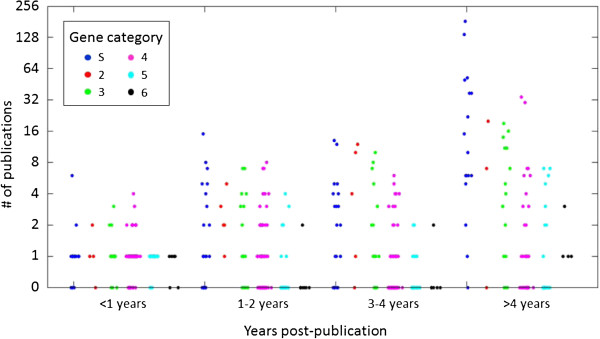
- Publication attention was skewed: among syndromic genes discovered more than four years earlier (n = 17), two genes accounted for almost 50% of ASD-associated publications, while the eight least attended genes in that group collectively accounted for 8.4%.
- Almost half of genes with no or modest support (categories 4/5/6) had more ASD-associated publications than genes with more evidence (categories S/2/3); Table 1 shows syndromic genes had 714 observed versus 160 expected papers (4.4x), while minimal evidence genes had 360 observed versus 834 expected (0.4x).
- The resource includes explicitly defined scoring criteria, downloadable data, community score additions/proposals, and staff/advisory board oversight with versioning.
Methods
- Criteria were developed from a human genetics perspective to quantify evidence for ASD involvement, guided by three principles: use genetic variation in human cohorts, start with no assumptions about individual genes, and make active community involvement central.
- An initial set of 196 genes was scored and annotated in a gene-centric web interface; users with a SFARI login can add scores alongside curated calls, propose new genes, and suggest modifications to scoring criteria, with oversight by staff curators and the SFARI Gene Advisory Board.
- Attention analysis used manually curated publication counts containing “(autism OR autistic)” in the title or abstract; Figure 1 used the PubMed query “(autism OR autistic) AND (‘Gene symbol’)” in the title or abstract, and Table 1 compared observed papers to expected papers based on total observed papers across all categories (n = 1,434).
Limitations
- Stated: the scoring system is “not entirely immune to bias”; scores are not static and will change in the face of new data.
- Evident: the analysis covers only an initial set of 196 genes, and publication counts are used as a proxy for scientific attention; the paper does not report external validation of the scoring categories.
Model-written summary. Check it against the paper before relying on it.
Integrity signals
Registry
Cites
Statistics
Figures
Verification
Claims the paper makes
7 Own interpretation · 6 Own result · 3 Own method · 2 No basis given · 1 Not checked yet
A result the paper reports from its own data — it cites no other source for it, so there is none to check. The quote shows it is in the paper.
In the paper
“Within syndromic genes discovered more than four years ago (n = 17), for example, two genes accounted for almost 50% of the ASD-associated publications.”
§ SFARI Gene 2.0: a community-driven knowledgebase for the autism spectrum disorders (ASDs) > Letter to the Editor
plaincorrelationaln = 17- Asserted: passes — The authors put it forward as true.
- Checkable: passes — It can be checked against evidence.
- Load-bearing: passes — The paper’s conclusions depend on it.
- Based: passes — The paper gives a reason why it holds.
A result the paper reports from its own data — it cites no other source for it, so there is none to check. The quote shows it is in the paper.
In the paper
“A total of 58% of the scored genes, many having been highlighted elsewhere as top candidates, were assigned to the “Minimal Evidence” category.”
§ SFARI Gene 2.0: a community-driven knowledgebase for the autism spectrum disorders (ASDs) > Letter to the Editor
plain- Asserted: passes — The authors put it forward as true.
- Checkable: passes — It can be checked against evidence.
- Load-bearing: passes — The paper’s conclusions depend on it.
- Based: passes — The paper gives a reason why it holds.
The paper states this without a source or data behind it here, so there is nothing to check it against. The quote shows it is in the paper.
In the paper
“Application of these criteria resulted in the identification of genes which despite substantial support had received little or no attention from the field.”
§ SFARI Gene 2.0: a community-driven knowledgebase for the autism spectrum disorders (ASDs) > Letter to the Editor
plaindirect- Asserted: passes — The authors put it forward as true.
- Checkable: passes — It can be checked against evidence.
- Load-bearing: passes — The paper’s conclusions depend on it.
- Based: passes — The paper gives a reason why it holds.
- Rests on an assumption: The scoring categories accurately reflect the strength of genetic evidence for ASD involvement.
A result the paper reports from its own data — it cites no other source for it, so there is none to check. The quote shows it is in the paper.
In the paper
“At the other extreme, the eight least attended to from this group collectively accounted for only 8.4% of the publications.”
§ SFARI Gene 2.0: a community-driven knowledgebase for the autism spectrum disorders (ASDs) > Letter to the Editor
plainn = 17- Asserted: passes — The authors put it forward as true.
- Checkable: passes — It can be checked against evidence.
- Load-bearing: passes — The paper’s conclusions depend on it.
- Based: passes — The paper gives a reason why it holds.
A result the paper reports from its own data — it cites no other source for it, so there is none to check. The quote shows it is in the paper.
In the paper
“Finally, almost half of the genes with no or relatively modest support (categories 4/5/6) have a greater number of ASD-associated publications than those with more evidence for involvement in disease (categories S/2/3).”
§ SFARI Gene 2.0: a community-driven knowledgebase for the autism spectrum disorders (ASDs) > Letter to the Editor
plaincorrelational- Asserted: passes — The authors put it forward as true.
- Checkable: passes — It can be checked against evidence.
- Load-bearing: passes — The paper’s conclusions depend on it.
- Based: passes — The paper gives a reason why it holds.
What the paper did — it cites no source for this, so there is none to check. The quote shows it is in the paper.
In the paper
“To minimize bias, we did not begin with any discussion or review of the literature, but rather the establishment of formalized criteria to quantify available support.”
§ SFARI Gene 2.0: a community-driven knowledgebase for the autism spectrum disorders (ASDs) > Letter to the Editor
plaindirect- Asserted: passes — The authors put it forward as true.
- Checkable: passes — It can be checked against evidence.
- Load-bearing: passes — The paper’s conclusions depend on it.
- Based: passes — The paper gives a reason why it holds.
A conclusion the paper draws from its own results — it cites no other source for it, so there is none to check. The quote shows it is in the paper.
In the paper
“This “winner takes most” effect, where two genes attracted almost 50% of the community’s attention, is in direct conflict with a comprehensive understanding of autism genetics.”
§ SFARI Gene 2.0: a community-driven knowledgebase for the autism spectrum disorders (ASDs) > Letter to the Editor
plainn = 17- Asserted: passes — The authors put it forward as true.
- Checkable: passes — It can be checked against evidence.
- Load-bearing: passes — The paper’s conclusions depend on it.
- Based: passes — The paper gives a reason why it holds.
- Rests on an assumption: The number of manually curated publications containing “(autism OR autistic)” in the title or abstract is a valid measure of attention from the scientific community.
A conclusion the paper draws from its own results — it cites no other source for it, so there is none to check. The quote shows it is in the paper.
In the paper
“Although scores are not static and will change in the face of new data, these data suggest that there exists only modest support for the majority of autism-candidate genes proposed to date.”
§ SFARI Gene 2.0: a community-driven knowledgebase for the autism spectrum disorders (ASDs) > Letter to the Editor
hedged- Asserted: passes — The authors put it forward as true.
- Checkable: passes — It can be checked against evidence.
- Load-bearing: passes — The paper’s conclusions depend on it.
- Based: passes — The paper gives a reason why it holds.
- Rests on an assumption: The initial set of 196 scored genes is representative of autism-candidate genes proposed to date.
A conclusion the paper draws from its own results — it cites no other source for it, so there is none to check. The quote shows it is in the paper.
In the paper
“These data highlight a relatively poor relationship between genetic evidence and attention from the scientific community.”
- Also stated in: § Letter to the Editor · plain
“Consistent with a disconnect between attention from the research community and evidence in support of individual genes, the number of publications for individual genes is highly variable and only weakly related to gene category.”
§ SFARI Gene 2.0: a community-driven knowledgebase for the autism spectrum disorders (ASDs) > Letter to the Editor
plaincorrelational- Asserted: passes — The authors put it forward as true.
- Checkable: passes — It can be checked against evidence.
- Load-bearing: passes — The paper’s conclusions depend on it.
- Based: passes — The paper gives a reason why it holds.
- Rests on an assumption: The number of manually curated publications containing “(autism OR autistic)” in the title or abstract is a valid measure of attention from the scientific community.
- Rests on an assumption: The scoring categories accurately reflect the strength of genetic evidence for ASD involvement.
- Also stated in: § Letter to the Editor · plain
- It may state two separate claims as one. 8
- Probably not a substantial claim. 4
A result the paper reports from its own data — it cites no other source for it, so there is none to check. The quote shows it is in the paper.
In the paper
“Consistent with a disconnect between attention from the research community and evidence in support of individual genes, the number of publications for individual genes is highly variable and only weakly related to gene category.”
§ SFARI Gene 2.0: a community-driven knowledgebase for the autism spectrum disorders (ASDs) > Letter to the Editor
plaincorrelational- Asserted: passes — The authors put it forward as true.
- Checkable: passes — It can be checked against evidence.
- Load-bearing: passes — The paper’s conclusions depend on it.
- Based: passes — The paper gives a reason why it holds.
It may state two separate claims as one.
- Rests on an assumption: The number of manually curated publications containing “(autism OR autistic)” in the title or abstract is a valid measure of attention from the scientific community.
A result the paper reports from its own data — it cites no other source for it, so there is none to check. The quote shows it is in the paper.
In the paper
“Enormous variability was observed both within and between categories, along with marked skewing towards specific genes within a given category (Figure 1).”
§ SFARI Gene 2.0: a community-driven knowledgebase for the autism spectrum disorders (ASDs) > Letter to the Editor
plaincorrelational- Asserted: passes — The authors put it forward as true.
- Checkable: passes — It can be checked against evidence.
- Load-bearing: passes — The paper’s conclusions depend on it.
- Based: passes — The paper gives a reason why it holds.
It may state two separate claims as one.
What the paper did — it cites no source for this, so there is none to check. The quote shows it is in the paper.
In the paper
“Although the scoring system we have developed is itself not entirely immune to bias, evidence is examined and applied in a systemic fashion and is sensitive to community feedback.”
§ SFARI Gene 2.0: a community-driven knowledgebase for the autism spectrum disorders (ASDs) > Letter to the Editor
plain- Asserted: passes — The authors put it forward as true.
- Checkable: passes — It can be checked against evidence.
- Load-bearing: passes — The paper’s conclusions depend on it.
- Based: passes — The paper gives a reason why it holds.
Probably not a substantial claim. It may state two separate claims as one.
A conclusion the paper draws from its own results — it cites no other source for it, so there is none to check. The quote shows it is in the paper.
In the paper
“For genes already included in the portal, users with a SFARI login are able to add their own scores alongside curated calls (https://gene.sfari.org/autdb/search); these are viewable by the entire community in the form of “counts”.”
- Also stated in: § Letter to the Editor · plain
“Registered individuals are also able to propose scores for genes not yet included in the database (https://gene.sfari.org/autdb/user/AddAGene.do), and also suggest modifications to the scoring criteria.”
§ SFARI Gene 2.0: a community-driven knowledgebase for the autism spectrum disorders (ASDs) > Letter to the Editor
plain- Asserted: passes — The authors put it forward as true.
- Checkable: passes — It can be checked against evidence.
- Load-bearing: passes — The paper’s conclusions depend on it.
- Based: passes — The paper gives a reason why it holds.
It may state two separate claims as one.
- Also stated in: § Letter to the Editor · plain
What the paper did — it cites no source for this, so there is none to check. The quote shows it is in the paper.
In the paper
“Extensive safeguards - including staff and advisory board oversight - are in place to ensure the quality and utility of the resource.”
§ SFARI Gene 2.0: a community-driven knowledgebase for the autism spectrum disorders (ASDs) > Letter to the Editor
plaindirect- Asserted: passes — The authors put it forward as true.
- Checkable: passes — It can be checked against evidence.
- Load-bearing: fails — The paper’s conclusions may not depend on it.
- Based: fails — The paper may give no reason why it holds.
Probably not a substantial claim. The paper’s conclusions may not depend on it. The paper may give no reason why it holds.
The paper states this without a source or data behind it here, so there is nothing to check it against. The quote shows it is in the paper.
In the paper
“Further, this process requires the integration of diverse lines of support that are unequal.”
§ SFARI Gene 2.0: a community-driven knowledgebase for the autism spectrum disorders (ASDs) > Letter to the Editor
plain- Asserted: passes — The authors put it forward as true.
- Checkable: fails — It may be too vague to check against evidence.
- Load-bearing: passes — The paper’s conclusions depend on it.
- Based: passes — The paper gives a reason why it holds.
Probably not a substantial claim. It may be too vague to check against evidence.
A conclusion the paper draws from its own results — it cites no other source for it, so there is none to check. The quote shows it is in the paper.
In the paper
“Also new and unique to SFARI Gene 2.0 is a mechanism that enables researchers to provide reasoned arguments for the introduction of new genes, offer alternate scores that sit alongside existing ones, and provide suggestions for the modification of the scoring criteria.”
§ SFARI Gene 2.0: a community-driven knowledgebase for the autism spectrum disorders (ASDs) > Letter to the Editor
plain- Asserted: passes — The authors put it forward as true.
- Checkable: passes — It can be checked against evidence.
- Load-bearing: passes — The paper’s conclusions depend on it.
- Based: passes — The paper gives a reason why it holds.
It may state two separate claims as one.
None of the sources cited for this claim have been checked yet.
In the paper
“Previous work has crafted curated lists of genes implicated in autism spectrum disorders (ASDs) [1-5], and in some cases developed loosely defined “evidence scores” for entries [6-8]. Such efforts are incomplete, non-systematic and static.”
§ SFARI Gene 2.0: a community-driven knowledgebase for the autism spectrum disorders (ASDs) > Letter to the Editor
What the sources say
- Not checked yetcites [1] Basu SN, Kollu R, Banerjee-Basu S: AutDB: a gene reference resource for autism research. Nucleic Acids Res. 2009, 37: 832-836. 10.1093/nar/gkn941. source
- Not checked yetcites [2] Matuszek G, Talebizadeh Z: Autism Genetic Database (AGD): a comprehensive database including autism susceptibility gene-CNVs integrated with known noncoding RNAs and fragile sites. BMC Med Genet. 2009, 10: 102-10.1186/1471-2350-10-102. Epub 2009/09/26 source
- Not checked yetcites [3] Pinto D, Pagnamenta AT, Klei L, Anney R, Merico D, Regan R, Conroy J, Magalhaes TR, Correia C, Abrahams BS, Almeida J, Bacchelli E, Bader GD, Bailey AJ, Baird G, Battaglia A, Berney T, Bolshakova N, Bölte S, Bolton PF, Bourgeron T, Brennan S, Brian J, Bryson SE, Carson AR, Casallo G, Casey J, Chung BH, Cochrane L, Corsello C: Functional impact of global rare copy number variation in autism spectrum disorders. Nature. 2010, 466: 368-372. 10.1038/nature09146. source
- Not checked yetcites [4] Betancur C: Etiological heterogeneity in autism spectrum disorders: more than 100 genetic and genomic disorders and still counting. Brain Res. 2011, 1380: 42-77. source
- Not checked yetcites [5] Weiss LA, Arking DE, Daly MJ, Chakravarti A, Gene Discovery Project of Johns Hopkins & the Autism Consortium: A genome-wide linkage and association scan reveals novel loci for autism. Chakravarti A. Nature. 2009, 461 (7265): 802-808. source
- Not checked yetcites [6] Abrahams BS, Geschwind DH: Advances in autism genetics: on the threshold of a new neurobiology. Nat Rev Genet. 2008, 9 (5): 341-355. 10.1038/nrg2346. source
- Not checked yetcites [7] Abrahams BS, Geschwind DH: Genetics of autism. Vogel and Motulsky's Human Genetics: Problems & Approaches. Edited by: Speicher MR, Antonarakis SE, Motulsky AG. 2009, Berlin: Springer-Verlag, 699-714. 4
- Not checked yetcites [8] Xu LM, Li JR, Huang Y, Zhao M, Tang X, Wei L: AutismKB: an evidence-based knowledgebase of autism genetics. Nucleic Acids Res. 2012, 40: D1016-D1022. 10.1093/nar/gkr1145. source
plain- Asserted: passes — The authors put it forward as true.
- Checkable: passes — It can be checked against evidence.
- Load-bearing: passes — The paper’s conclusions depend on it.
- Based: passes — The paper gives a reason why it holds.
It may state two separate claims as one.
A conclusion the paper draws from its own results — it cites no other source for it, so there is none to check. The quote shows it is in the paper.
In the paper
“In summary, key strengths of SFARI Gene 2.0 include explicitly defined scoring criteria, continuous updates and infrastructure to permit community based involvement.”
§ SFARI Gene 2.0: a community-driven knowledgebase for the autism spectrum disorders (ASDs) > Letter to the Editor
plain- Asserted: passes — The authors put it forward as true.
- Checkable: passes — It can be checked against evidence.
- Load-bearing: passes — The paper’s conclusions depend on it.
- Based: passes — The paper gives a reason why it holds.
Probably not a substantial claim. It may state two separate claims as one.
A conclusion the paper draws from its own results — it cites no other source for it, so there is none to check. The quote shows it is in the paper.
In the paper
“Although similar in concept to other efforts, SFARI Gene 2.0 differs in terms of philosophy, methodology and output.”
§ SFARI Gene 2.0: a community-driven knowledgebase for the autism spectrum disorders (ASDs) > Letter to the Editor
plain- Asserted: passes — The authors put it forward as true.
- Checkable: passes — It can be checked against evidence.
- Load-bearing: passes — The paper’s conclusions depend on it.
- Based: passes — The paper gives a reason why it holds.
It may state two separate claims as one.
The paper relies on this without support.
Downstream work involves considerable resources.
“Given that downstream work involves considerable resources, a portal and framework enabling systematic assessments of all available evidence holds great value.”
The paper relies on this without support.
The initial set of 196 scored genes is representative of autism-candidate genes proposed to date.
“Using these newly developed criteria, we scored an initial set of 196 genes.”
“these data suggest that there exists only modest support for the majority of autism-candidate genes proposed to date.”
The paper relies on this without support.
The number of manually curated publications containing “(autism OR autistic)” in the title or abstract is a valid measure of attention from the scientific community.
“We then looked at the relationship between category placement and attention from the field, as defined by the number of manually curated publications containing “(autism OR autistic)” in the title or abstract.”
The paper relies on this without support.
The scoring categories accurately reflect the strength of genetic evidence for ASD involvement.
“Using a human genetics perspective, we developed a set of criteria to quantify evidence for involvement in the ASDs.”
Claims other papers make about this one
Each is checked against this paper’s own text: does it say what the citing paper says it does?
In the citing paper
“(ii) 235 genes (ASD SFARI 2014) from the SFARI AutDB database22 (accessed on July 2014).”
From Transcriptome analysis reveals dysregulation of innate immune response genes and neuronal activity-dependent genes in autism (2014) · cites this paper as [22]
Citations
Cites
Functional impact of global rare copy number variation in autism spectrum disorders
Pinto, D., Pagnamenta, A. T., Klei, L., Anney, R., Merico, D., Regan, R., Conroy, J., Magalhaes, T. R., Correia, C., Abrahams, B. S., et al. (2010) · Nature · doi:10.1038/nature09146 · Cited by 2,013 · cited 1×
“Letter to the Editor Previous work has crafted curated lists of genes implicated in autism spectrum disorders (ASDs) [1-5], and in some cases developed loosely defined “evidence scores” for entries [6-8].”
Self-citationAdvances in autism genetics: on the threshold of a new neurobiology
Abrahams, B. S., & Geschwind, D. H. (2008) · Nature Reviews Genetics · doi:10.1038/nrg2346 · Cited by 1,866 · cited 1×
“Letter to the Editor Previous work has crafted curated lists of genes implicated in autism spectrum disorders (ASDs) [1-5], and in some cases developed loosely defined “evidence scores” for entries [6-8].”
Self-citationBetancur, C. (2011) · Brain Research · doi:10.1016/j.brainres.2010.11.078 · Cited by 954 · cited 1×
“Letter to the Editor Previous work has crafted curated lists of genes implicated in autism spectrum disorders (ASDs) [1-5], and in some cases developed loosely defined “evidence scores” for entries [6-8].”
A genome-wide linkage and association scan reveals novel loci for autism
The Gene Discovery Project of Johns Hopkins & the Autism Consortium, Weiss, L. A., & Arking, D. E. (2009) · Nature · doi:10.1038/nature08490 · Cited by 619 · cited 1×
“Letter to the Editor Previous work has crafted curated lists of genes implicated in autism spectrum disorders (ASDs) [1-5], and in some cases developed loosely defined “evidence scores” for entries [6-8].”
Self-citationAutDB: a gene reference resource for autism research
Basu, S. N., Kollu, R., & Banerjee-Basu, S. (2009) · Nucleic Acids Research · doi:10.1093/nar/gkn835 · Cited by 394 · cited 1×
“Letter to the Editor Previous work has crafted curated lists of genes implicated in autism spectrum disorders (ASDs) [1-5], and in some cases developed loosely defined “evidence scores” for entries [6-8].”
Self-citationAutismKB: an evidence-based knowledgebase of autism genetics
Xu, L.-M., Li, J.-R., Huang, Y., Zhao, M., Tang, X., & Wei, L. (2012) · Nucleic Acids Research · doi:10.1093/nar/gkr1145 · Cited by 179 · cited 1×
“Letter to the Editor Previous work has crafted curated lists of genes implicated in autism spectrum disorders (ASDs) [1-5], and in some cases developed loosely defined “evidence scores” for entries [6-8].”
Matuszek, G., & Talebizadeh, Z. (2009) · BMC Medical Genetics · doi:10.1186/1471-2350-10-102 · Cited by 48 · cited 1×
“Letter to the Editor Previous work has crafted curated lists of genes implicated in autism spectrum disorders (ASDs) [1-5], and in some cases developed loosely defined “evidence scores” for entries [6-8].”
Vogel and Motulsky's Human Genetics: Problems and Approaches
Vogel, F., Motulsky, A. G., Speicher, M. R., Motulsky, A. G., & Antonarakis, S. E. (1982) · Medical Entomology and Zoology · Cited by 33
Abrahams, B. S., & Geschwind, D. H. (2009) · Springer eBooks · doi:10.1007/978-3-540-37654-5_29 · Cited by 15
Self-citation
Cited by
Sorted by citations
Transcriptome-scale spatial gene expression in the human dorsolateral prefrontal cortex
Maynard, K. R., Collado-Torres, L., Weber, L. M., Uytingco, C., Barry, B. K., Williams, S. R., Catallini, J. L., Tran, M. N., Besich, Z., Tippani, M., et al. (2021) · Nature Neuroscience · doi:10.1038/s41593-020-00787-0 · Cited by 1,222
“(A) Autism spectrum disorder (ASD) laminar enrichments for SFARI (Abrahams et al., 2013) and Satterstrom et al (Satterstrom et al.”
BackgroundMethodInfluentialHuman Gut Microbiota from Autism Spectrum Disorder Promote Behavioral Symptoms in Mice
Sharon, G., Cruz, N. J., Kang, D.-W., Gandal, M. J., Wang, B., Kim, Y.-M., Zink, E. M., Casey, C. P., Taylor, B. C., Lane, C. J., et al. (2019) · Cell · doi:10.1016/j.cell.2019.05.004 · Cited by 1,182
“We examined curated lists of high-confidence ASD risk genes, namely SPARK for Autism and the SFARI Gene datasets (Abrahams et al., 2013) (Figure 3C; Table S2).”
MethodFOXG1-Dependent Dysregulation of GABA/Glutamate Neuron Differentiation in Autism Spectrum Disorders
Mariani, J., Coppola, G., Zhang, P., Abyzov, A., Provini, L., Tomasini, L., Amenduni, M., Szekely, A., Palejev, D., Wilson, M., et al. (2015) · Cell · doi:10.1016/j.cell.2015.06.034 · Cited by 1,149
“…respect to the SFARI autism gene dataset, a collection of genetic information that includes data from linkage and association studies, cytogenetic abnormalities, and specific mutations associated with ASD (https://gene.sfari.org) (SFARI category S to 4) (Abrahams et al., 2013) (p value = 6.51E-5).”
Single-cell genomics identifies cell type–specific molecular changes in autism
Velmeshev, D., Schirmer, L., Jung, D., Haeussler, M., Perez, Y., Mayer, S., Bhaduri, A., Goyal, N., Rowitch, D. H., & Kriegstein, A. R. (2019) · Science · doi:10.1126/science.aav8130 · Cited by 927
Gupta, S., Ellis, S. E., Ashar, F. N., Moes, A., Bader, J. S., Zhan, J., West, A. B., & Arking, D. E. (2014) · Nature Communications · doi:10.1038/ncomms6748 · Cited by 504
Self-citationTrevino, A. E., Müller, F., Andersen, J., Sundaram, L., Kathiria, A., Shcherbina, A., Farh, K., Chang, H. Y., Pașca, A. M., Kundaje, A., et al. (2021) · Cell · doi:10.1016/j.cell.2021.07.039 · Cited by 478
Excitation/Inhibition Imbalance in Animal Models of Autism Spectrum Disorders
Lee, E., Lee, J., & Kim, E. (2017) · Biological Psychiatry · doi:10.1016/j.biopsych.2016.05.011 · Cited by 468
Zhou, X., Feliciano, P., Shu, C., Wang, T., Astrovskaya, I., Hall, J. B., Obiajulu, J. U., Wright, J. R., Murali, S. C., Xu, S. X., et al. (2022) · Nature Genetics · doi:10.1038/s41588-022-01148-2 · Cited by 453
Krishnan, A., Zhang, R., Yao, V., Theesfeld, C. L., Wong, A. K., Tadych, A., Volfovsky, N., Packer, A. I., Lash, A., & Troyanskaya, O. G. (2016) · Nature Neuroscience · doi:10.1038/nn.4353 · Cited by 438
Self-citationFrom cohorts to molecules: adverse impacts of endocrine disrupting mixtures
Caporale, N., Leemans, M., Birgersson, L., Germain, P.-L., Cheroni, C., Borbély, G., Engdahl, E., Lindh, C., Bressan, R. B., Cavallo, F., et al. (2022) · Science · doi:10.1126/science.abe8244 · Cited by 368
Sugathan, A., Biagioli, M., Golzio, C., Erdin, S., Blumenthal, I., Manavalan, P., Ragavendran, A., Brand, H., Lucente, D., Miles, J., et al. (2014) · Proceedings of the National Academy of Sciences · doi:10.1073/pnas.1405266111 · Cited by 342
“0 (19) (574 genes) and AutismKB (20) (171genes; 117 overlap with SFARI) databases, both of which have established varying levels of support for an association with ASD of each gene included (see SI Materials and Methods for details on supporting evidence for these gene lists).”
BackgroundMethodSingle-cell transcriptomic analysis of mouse neocortical development
Loo, L., Simon, J. M., Xing, L., McCoy, E. S., Niehaus, J. K., Guo, J., Anton, E. S., & Zylka, M. J. (2019) · Nature Communications · doi:10.1038/s41467-018-08079-9 · Cited by 289
Methylomic trajectories across human fetal brain development
Spiers, H., Hannon, E., Schalkwyk, L. C., Smith, R., Wong, C. C. Y., O’Donovan, M. C., Bray, N. J., & Mill, J. (2015) · Genome Research · doi:10.1101/gr.180273.114 · Cited by 287
“…high-confidence candidate gene regions were selected from the Simons Foundation Autism Research Initiative (SFARI) gene database (Basu et al. 2009; Abrahams et al. 2013) and complemented by loci identified in recent exome sequencing and genomic studies (Neale et al. 2012; O’Roak et al. 2012a,b;…”
MethodBroad transcriptomic dysregulation occurs across the cerebral cortex in ASD
Gandal, M. J., Haney, J. R., Wamsley, B., Yap, C. X., Parhami, S., Emani, P. S., Chang, N., Chen, G. T., Hoftman, G. D., de Alba, D., et al. (2022) · Nature · doi:10.1038/s41586-022-05377-7 · Cited by 283
Fundamental Elements in Autism: From Neurogenesis and Neurite Growth to Synaptic Plasticity
Gilbert, J. P., & Man, H. (2017) · Frontiers in Cellular Neuroscience · doi:10.3389/fncel.2017.00359 · Cited by 286
Histone Acetylome-wide Association Study of Autism Spectrum Disorder
Sun, W., Poschmann, J., Cruz-Herrera del Rosario, R., Parikshak, N. N., Hajan, H. S., Kumar, V., Ramasamy, R., Belgard, T. G., Elanggovan, B., Wong, C. C. Y., et al. (2016) · Cell · doi:10.1016/j.cell.2016.10.031 · Cited by 306
“DNA sequence variation affecting the function of several hundred genes has been implicated in the etiology of ASD at various levels of significance (Abrahams et al., 2013; de la Torre-Ubieta et al., 2016).”
Molecular and cellular evolution of the primate dorsolateral prefrontal cortex
Ma, S., Škarica, M., Li, Q., Xu, C., Risgaard, R. D., Tebbenkamp, A. T. N., Mato-Blanco, X., Kovner, R., Krsnik, Ž., de Martin, X., et al. (2022) · Science · doi:10.1126/science.abo7257 · Cited by 257
Artificial intelligence for precision medicine in neurodevelopmental disorders
Uddin, M. J., Wang, Y., & Woodbury‐Smith, M. (2019) · npj Digital Medicine · doi:10.1038/s41746-019-0191-0 · Cited by 261
Genomics, convergent neuroscience and progress in understanding autism spectrum disorder
Willsey, H. R., Willsey, A. J., Wang, B., & State, M. W. (2022) · Nature reviews. Neuroscience · doi:10.1038/s41583-022-00576-7 · Cited by 239
Mighell, T. L., Evans-Dutson, S., & O’Roak, B. J. (2018) · The American Journal of Human Genetics · doi:10.1016/j.ajhg.2018.03.018 · Cited by 204
Chd8 mediates cortical neurogenesis via transcriptional regulation of cell cycle and Wnt signaling
Durak, O., Gao, F., Kaeser-Woo, Y. J., Rueda, R., Martorell, A. J., Nott, A., Liu, C. Y., Watson, L. A., & Tsai, L.-H. (2016) · Nature Neuroscience · doi:10.1038/nn.4400 · Cited by 243
Widespread RNA editing dysregulation in brains from autistic individuals
Tran, S. S., Jun, H.-I., Bahn, J. H., Azghadi, A., Ramaswami, G., Nostrand, E. L. V., Nguyen, T. B., Hsiao, Y.-H. E., Lee, C., Pratt, G. A., et al. (2018) · Nature Neuroscience · doi:10.1038/s41593-018-0287-x · Cited by 221
MVP predicts the pathogenicity of missense variants by deep learning
Qi, H., Zhang, H., Zhao, Y., Chen, C., Long, J. J., Chung, W. K., Guan, Y., & Shen, Y. (2021) · Nature Communications · doi:10.1038/s41467-020-20847-0 · Cited by 203
VarCards: an integrated genetic and clinical database for coding variants in the human genome
Li, J., Shi, L., Zhang, K., Zhang, Y., Hu, S., Zhao, T., Teng, H., Li, X., Jiang, Y. W., Ji, L., et al. (2017) · Nucleic Acids Research · doi:10.1093/nar/gkx1039 · Cited by 197
Sequence features associated with the cleavage efficiency of CRISPR/Cas9 system
Liu, X., Homma, A., Sayadi, J., Yang, S., Ohashi, J., & Takumi, T. (2016) · Scientific Reports · doi:10.1038/srep19675 · Cited by 166
Ancestry-inclusive dog genomics challenges popular breed stereotypes
Morrill, K. M., Hekman, J. P., Li, X., McClure, J., Logan, B., Goodman, L., Gao, M., Dong, Y., Alonso, M., Carmichael, E., et al. (2022) · Science · doi:10.1126/science.abk0639 · Cited by 219
“4% of 2155 dogs in the genetic dataset) were funded by owner donations to the Darwin’s Ark Foundation, a 501(c)(3) nonprofit organization (82-3942341).”
BackgroundSingle-cell analysis of prenatal and postnatal human cortical development
Velmeshev, D., Perez, Y., Yan, Z., Valencia, J. E., Castaneda-Castellanos, D. R., Wang, L., Schirmer, L., Mayer, S., Wick, B., Wang, S., et al. (2023) · Science · doi:10.1126/science.adf0834 · Cited by 204
Lombardo, M. V., Moon, H. M., Su, J., Palmer, T. D., Courchesne, E., & Pramparo, T. (2018) · Molecular Psychiatry · doi:10.1038/mp.2017.15 · Cited by 201
“We then further considered ASD-associated gene classes separated by the expert manually curated categories in the SFARI Gene database (http://gene.sfari.org/) 68,69 (see Supplementary Table S1 for gene lists).”
Autism spectrum disorder: insights into convergent mechanisms from transcriptomics
Quesnel-Vallières, M., Weatheritt, R. J., Cordes, S. P., & Blencowe, B. J. (2018) · Nature Reviews Genetics · doi:10.1038/s41576-018-0066-2 · Cited by 167
Zhang, Y., Li, N., Li, C., Zhang, Z., Teng, H., Wang, Y., Zhao, T., Shi, L., Zhang, K., Xia, K., et al. (2020) · Translational Psychiatry · doi:10.1038/s41398-020-0699-8 · Cited by 177
A functional cellular framework for sex and estrous cycle-dependent gene expression and behavior
Knoedler, J. R., Inoue, S., Bayless, D. W., Yang, T., Tantry, A., Davis, C.-H. O., Leung, N. Y., Parthasarathy, S., Wang, G., Alvarado, M., et al. (2022) · Cell · doi:10.1016/j.cell.2021.12.031 · Cited by 168
Deneault, E., White, S. H., Rodrigues, D. C., Ross, P. J., Faheem, M., Zaslavsky, K., Wang, Z., Alexandrova, R., Pellecchia, G., Wei, W., et al. (2018) · Stem Cell Reports · doi:10.1016/j.stemcr.2018.10.003 · Cited by 145
“For this, we used a proprietary list of 736 genes (highlighted in blue in Table S7) associated with ASD (Abrahams et al., 2013; Pinto et al., 2014; Yuen et al., 2017).”
MethodSingle-cell genomics and regulatory networks for 388 human brains
Emani, P. S., Liu, J. J., Clarke, D., Jensen, M., Warrell, J., Gupta, C., Meng, R., Lee, C.-Y., Xu, S., Dursun, C., et al. (2024) · Science · doi:10.1126/science.adi5199 · Cited by 188
Molecular and network-level mechanisms explaining individual differences in autism spectrum disorder
Buch, A. M., Vértes, P. E., Seidlitz, J., Kim, S. H., Grosenick, L., & Liston, C. M. (2023) · Nature Neuroscience · doi:10.1038/s41593-023-01259-x · Cited by 163
Cerebellar associative sensory learning defects in five mouse autism models
Kloth, A. D., Badura, A., Li, A., Cherskov, A., Connolly, S. G., Giovannucci, A., Bangash, M. A., Grasselli, G., Peñagarikano, O., Piochon, C., et al. (2015) · eLife · doi:10.7554/elife.06085 · Cited by 148
“We examined five mouse models that both recapitulate mutations that occur in human idiopathic and syndromic autisms and display phenotypes reminiscent of human autism (Abrahams and Geschwind, 2008; Banerjee-Basu and Packer, 2010; Abrahams et al., 2013; http://gene.sfari.org).”
BackgroundPhan, B. N., Bohlen, J. F., Davis, B. A., Ye, Z., Chen, H.-Y., Mayfield, B., Sripathy, S. R., Page, S. C., Campbell, M. N., Smith, H. L., et al. (2020) · Nature Neuroscience · doi:10.1038/s41593-019-0578-x · Cited by 146
Red fox genome assembly identifies genomic regions associated with tame and aggressive behaviours
Kukekova, A. V., Johnson, J. L., Xiang, X., Feng, S., Liu, S., Rando, H. M., Kharlamova, A. V., Herbeck, Y., Serdyukova, N. A., Xiong, Z., et al. (2018) · Nature Ecology & Evolution · doi:10.1038/s41559-018-0611-6 · Cited by 145
Genetic and Epigenetic Etiology Underlying Autism Spectrum Disorder
Yoon, S. H., Choi, J., Lee, W. Y., & Do, J. (2020) · Journal of Clinical Medicine · doi:10.3390/jcm9040966 · Cited by 175
“According to the Simons Foundation Autism Research Initiative (SFARI) database [154], 913 genes and 17 recurrent CNV loci are suggested to be implicated with autism.”
MethodMolecular and cellular dynamics of the developing human neocortex
Wang, L., Wang, C., Moriano, J., Chen, S., Zuo, G., Cebrián‐Silla, A., Zhang, S., Mukhtar, T., Wang, S., Song, M., et al. (2025) · Nature · doi:10.1038/s41586-024-08351-7 · Cited by 179
“Among the core TFs of the top ten eRegulons correlated with ASD, six were recognized as ASD-risk genes in the SFARI gene database 46 .”
A framework for an evidence-based gene list relevant to autism spectrum disorder
Schaaf, C. P., Betancur, C., Yuen, R. K. C., Parr, J. R., Skuse, D., Gallagher, L., Bernier, R., Buchanan, J. A., Buxbaum, J. D., Chen, C., et al. (2020) · Nature Reviews Genetics · doi:10.1038/s41576-020-0231-2 · Cited by 144
Wen, Y., Alshikho, M. J., & Herbert, M. R. (2016) · PLOS ONE · doi:10.1371/journal.pone.0153329 · Cited by 150
“strength of evidence for inclusion, the Gene Scoring module presently under development for this database that would correct for this [54] is not yet completed, with many genes still unscored, so that there is not yet a systematic, consensual way to correct for this problem.”
BackgroundAbdelli, L. S., Samsam, A., & Naser, S. A. (2019) · Scientific Reports · doi:10.1038/s41598-019-45348-z · Cited by 145
Leblond, C. S., Le, T.-L., Malesys, S., Cliquet, F., Tabet, A., Delorme, R., Rolland, T., & Bourgeron, T. (2021) · Molecular and Cellular Neuroscience · doi:10.1016/j.mcn.2021.103623 · Cited by 144
Blumenthal, I., Ragavendran, A., Erdin, S., Klei, L., Sugathan, A., Guide, J. R., Manavalan, P., Zhou, J. Q., Wheeler, V. C., Levin, J. Z., et al. (2014) · The American Journal of Human Genetics · doi:10.1016/j.ajhg.2014.05.004 · Cited by 145
DNA Methylation and Susceptibility to Autism Spectrum Disorder
Tremblay, M. W., & Jiang, Y. (2019) · Annual Review of Medicine · doi:10.1146/annurev-med-120417-091431 · Cited by 139
Androgens increase excitatory neurogenic potential in human brain organoids
Kelava, I., Chiaradia, I., Pellegrini, L., Kalinka, A. T., & Lancaster, M. A. (2022) · Nature · doi:10.1038/s41586-021-04330-4 · Cited by 124
Gazestani, V., Pramparo, T., Nalabolu, S. R., Kellman, B. P., Murray, S. S., Lopez, L., Pierce, K., Courchesne, E., & Lewis, N. E. (2019) · Nature Neuroscience · doi:10.1038/s41593-019-0489-x · Cited by 111
Genome‐wide Association Study of Autism Spectrum Disorder in the East Asian Populations
Liu, X., Shimada, T., Otowa, T., Wu, Y., Kawamura, Y., Tochigi, M., Iwata, Y., Umekage, T., Toyota, T., Maekawa, M., et al. (2015) · Autism Research · doi:10.1002/aur.1536 · Cited by 118
“Out of the 14 genome wide significant genes, 5 genes (GPC6, JARID2, YTHDC2, CNTN4, and CSMD1) are known ASD associated genes based on the SFARI ASD database [Abrahams et al., 2013; Banerjee-Basu & Packer, 2010], suggesting the overall results are unlikely to be caused by false associations.”
BackgroundWells, M. F., Nemesh, J., Ghosh, S., Mitchell, J. M., Salick, M. R., Mello, C. J., Meyer, D., Pietilainen, O., Piccioni, F., Guss, E. J., et al. (2023) · Cell Stem Cell · doi:10.1016/j.stem.2023.01.010 · Cited by 116
Transcriptome-scale spatial gene expression in the human dorsolateral prefrontal cortexPreprint
Maynard, K. R., Collado‐Torres, L., Weber, L. M., et al. (2020) · bioRxiv (Cold Spring Harbor Laboratory) · doi:10.1101/2020.02.28.969931 · Cited by 119
Lombardo, M. V., Pramparo, T., Gazestani, V., Warrier, V., Bethlehem, R. A. I., Barnes, C. C., Lopez, L., Lewis, N. E., Eyler, L. T., Pierce, K., et al. (2018) · Nature Neuroscience · doi:10.1038/s41593-018-0281-3 · Cited by 96
Bayesian estimation of cell type–specific gene expression with prior derived from single-cell dataPreprint
Wang, J., Roeder, K., & Devlin, B. (2021) · Genome Research · doi:10.1101/gr.268722.120 · Cited by 89
“…CTS DEGs, six genes (GFAP, NRXN1, LRRC4C, KCNMA1, RORB, SLC6A1) were among the 102 ASD risk genes discovered by Satterstrom et al. (2020) (Fisher’s exact test P-value = 0.04) and 49 genes were among the SFARI autism gene list (Abrahams et al. 2013) (Fisher’s exact test P-value = 2.5 ×10⁻⁹).”
BackgroundInfluentialLi, J., Wang, L., Guo, H., Shi, L., Zhang, K., Tang, M., Hu, S., Dong, S., Liu, Y., Wang, T., et al. (2017) · Molecular Psychiatry · doi:10.1038/mp.2017.140 · Cited by 101
Frequency and complexity of de novo structural mutation in autism
Brandler, W. M., Antaki, D., Gujral, M., Noor, A., Rosanio, G., Chapman, T. R., Barrera, D. J., Lin, G. N., Malhotra, D., Watts, A. C., et al. (2016) · The American Journal of Human Genetics · doi:10.1016/j.ajhg.2016.02.018 · Cited by 104
“2 (MIM: 615656).(36) Inherited X-linked variants included a Xp21.”
BackgroundLi, J., Wilkinson, B., Clementel, V. A., Hou, J., O’Dell, T. J., & Coba, M. P. (2016) · Science Signaling · doi:10.1126/scisignal.aaf6716 · Cited by 95
Rbfox1 Mediates Cell-type-Specific Splicing in Cortical Interneurons
Wamsley, B., Jaglin, X. H., Favuzzi, E., Quattrocolo, G., Nigro, M. J., Yusuf, N., Khodadadi‐Jamayran, A., Rudy, B., & Fishell, G. (2018) · Neuron · doi:10.1016/j.neuron.2018.09.026 · Cited by 101
Coexpression networks identify brain region–specific enhancer RNAs in the human brain
Yao, P., Lin, P., Gokoolparsadh, A., Assareh, A. A., Thang, M. W. C., & Voineagu, I. (2015) · Nature Neuroscience · doi:10.1038/nn.4063 · Cited by 94
Jourdon, A., Wu, F., Mariani, J., Capauto, D., Norton, S., Tomasini, L., Amiri, A., Šuvakov, M., Schreiner, J. D., Jang, Y., et al. (2023) · Nature Neuroscience · doi:10.1038/s41593-023-01399-0 · Cited by 106
Wilkinson, B., Grepo, N., Thompson, B. L., Kim, J. Y., Wang, K., Evgrafov, O. V., Lu, W., Knowles, J. A., & Campbell, D. B. (2015) · Translational Psychiatry · doi:10.1038/tp.2015.62 · Cited by 101
Self-citationPathogenic POGZ mutation causes impaired cortical development and reversible autism-like phenotypes
Matsumura, K., Seiriki, K., Okada, S., Nagase, M., Ayabe, S., Yamada, I., Furuse, T., Shibuya, H., Yasuda, Y., Yamamori, H., et al. (2020) · Nature Communications · doi:10.1038/s41467-020-14697-z · Cited by 107
Xiong, F., Wang, R., Lee, J.-H., Li, S., Chen, S.-F., Liao, Z., Hasani, L. A., Nguyen, P. T.-M., Zhu, X., Krakowiak, J., et al. (2021) · Cell Research · doi:10.1038/s41422-021-00515-8 · Cited by 107
Pharmacological modulation of AMPA receptor rescues social impairments in animal models of autism
Kim, J., Park, K., Kang, R. J., Gonzales, E. L., Kim, D. G., Oh, H. A., Seung, H., Ko, M. J., Kwon, K. J., Kim, K. C., et al. (2018) · Neuropsychopharmacology · doi:10.1038/s41386-018-0098-5 · Cited by 111
Warre-Cornish, K. M., Perfect, L., Nagy, R., Duarte, R. R. R., Reid, M. J., Raval, P., Mueller, A., Evans, A., Couch, A. C. M., Ghevaert, C., et al. (2020) · Science Advances · doi:10.1126/sciadv.aay9506 · Cited by 90
Lalli, M. A., Avey, D. R., Dougherty, J. D., Milbrandt, J., & Mitra, R. D. (2020) · Genome Research · doi:10.1101/gr.262295.120 · Cited by 89
“To establish that LUHMES cells are an appropriate model specifically for the study of ASD genes, we analyzed 25 high-confidence autism-causing genes in the SFARI database, a manually curated database of ASD-associated genes (Abrahams et al. 2013).”
Quartier, A., Chatrousse, L., Redin, C. E., Keime, C., Haumesser, N., Maglott, A., Brino, L., Gras, S. L., Benchoua, A., Mandel, J., et al. (2018) · Biological Psychiatry · doi:10.1016/j.biopsych.2018.01.002 · Cited by 84
Taleb, A., Lin, W., Xu, X., Zhang, G., Zhou, Q., Naveed, M., Meng, F. J., Fukunaga, K., & Han, F. (2021) · Biomedicine & Pharmacotherapy · doi:10.1016/j.biopha.2021.111322 · Cited by 102
Decomposition of phenotypic heterogeneity in autism reveals underlying genetic programs
Litman, A., Sauerwald, N., Snyder, L. G., Foss‐Feig, J. H., Park, C. Y., Hao, Y., Dinstein, I., Theesfeld, C. L., & Troyanskaya, O. G. (2025) · Nature Genetics · doi:10.1038/s41588-025-02224-z · Cited by 128
“The SFARI gene set was extracted from SFARIGene and included category 1 genes only 19,22 .”
Asif, M., Martiniano, H., Vicente, A. M., & Couto, F. M. (2018) · PLoS ONE · doi:10.1371/journal.pone.0208626 · Cited by 91
“The standard criteria for ranking ASD genes by available reference is not yet completely defined [29], and, therefore, it is possible that incorporating weighting criteria for genes could introduce a bias.”
BackgroundChristian, D. L., Wu, D. Y., Martin, J. R., Moore, J. R., Liu, Y. R., Clemens, A. W., Nettles, S. A., Kirkland, N. M., Papouin, T., Hill, C. A., et al. (2020) · Cell Reports · doi:10.1016/j.celrep.2020.108416 · Cited by 84
“Gene sets: ASD module 12 (synaptic) and 16 (immune) identified in weighted-gene coexpression analysis of human ASD brain (Voineagu et al., 2011), and ASD-dysregulated genes previously identified (Abrahams et al., 2013; Gandal et al., 2018).”
BackgroundBoth rare and common genetic variants contribute to autism in the Faroe Islands
Leblond, C. S., Cliquet, F., Carton-Buonafine, C., Huguet, G., Mathieu, A., Kergrohen, T., Buratti, J., Lemière, N., Cuisset, L., Bienvenu, T., et al. (2019) · npj Genomic Medicine · doi:10.1038/s41525-018-0075-2 · Cited by 86
Distinct Roles of Honeybee Gut Bacteria on Host Metabolism and Neurological Processes
Zhang, Z., Mu, X., Shi, Y., & Zheng, H. (2022) · Microbiology Spectrum · doi:10.1128/spectrum.02438-21 · Cited by 91
Zhu, Y., Mordaunt, C. E., Yasui, D. H., Marathe, R., Coulson, R. L., Dunaway, K. W., Jianu, J. M., Walker, C. K., Ozonoff, S. J., Hertz‐Picciotto, I., et al. (2019) · Human Molecular Genetics · doi:10.1093/hmg/ddz084 · Cited by 89
First glimpses of the neurobiology of autism spectrum disorder
Sanders, S. J. (2015) · Current Opinion in Genetics & Development · doi:10.1016/j.gde.2015.10.002 · Cited by 84
Kalish, B. T., Cheadle, L., Hrvatin, S., Nagy, M. A., Rivera, S. A., Crow, M., Gillis, J., Kirchner, R., & Greenberg, M. E. (2018) · Proceedings of the National Academy of Sciences · doi:10.1073/pnas.1717871115 · Cited by 70
“Our study complements and extends this prior work by focusing on the developing LGN, profiling multiple developmental conditions, and characterizing multiple nonneuronal cell types, including astrocytes, microglia, and endothelial cells (93, 94).”
ResultSaliva MicroRNA Differentiates Children With Autism From Peers With Typical and Atypical Development
Hicks, S. D., Carpenter, R. L., Wagner, K. E., Pauley, R. A., Barros, M., Tierney‐Aves, C., Barns, S., Greene, C. D., & Middleton, F. A. (2019) · Journal of the American Academy of Child & Adolescent Psychiatry · doi:10.1016/j.jaac.2019.03.017 · Cited by 80
Protein phosphatase 2A – structure, function and role in neurodevelopmental disorders
Sandal, P., Jong, C. J., Merrill, R. A., Song, J., & Strack, S. (2021) · Journal of Cell Science · doi:10.1242/jcs.248187 · Cited by 76
Deep evolutionary conservation of autism-related genes
Shpigler, H. Y., Saul, M. C., Corona, F., Block, L. N., Cash-Ahmed, A. C., Zhao, S. D., & Robinson, G. E. (2017) · Proceedings of the National Academy of Sciences · doi:10.1073/pnas.1708127114 · Cited by 70
“Honey bee control gene sets were derived from two RNA-seq expression sets from honey bee MB: (i) DEGs comparing active and inactive male honey bees (44) and (ii) DEGs comparing worker bees trained to forage at specific times of day (45).”
BackgroundMethodResultInfluentialWilliams, S. M., An, J., Edson, J., Watts, M. E., Murigneux, V., Whitehouse, A., Jackson, C. J., Bellgrove, M. A., Cristino, A. S., & Claudianos, C. (2018) · Molecular Psychiatry · doi:10.1038/s41380-018-0049-x · Cited by 77
Terry, D. M., & Devine, S. E. (2020) · Frontiers in Genetics · doi:10.3389/fgene.2019.01244 · Cited by 76
Landscape of mSWI/SNF chromatin remodeling complex perturbations in neurodevelopmental disorders
Valencia, A. M., Sankar, A., van der Sluijs, P. J., Satterstrom, F. K., Fu, J. M., Talkowski, M. E., Vergano, S. A. S., Santen, G. W. E., & Kadoch, C. (2023) · Nature Genetics · doi:10.1038/s41588-023-01451-6 · Cited by 81
Casingal, C. R., Kikkawa, T., Inada, H., Sasaki, Y., & Osumi, N. (2020) · Molecular Brain · doi:10.1186/s13041-020-00706-1 · Cited by 70
Spatial transcriptomics reveals human cortical layer and area specification
Qian, X., Coleman, K., Jiang, S., Kriz, A. J., Marciano, J. H., Luo, C., Cai, C., Manam, M. D., Caglayan, E., Lai, A., et al. (2025) · Nature · doi:10.1038/s41586-025-09010-1 · Cited by 109
Wang, W., Corominas, R., & Lin, G. N. (2019) · Frontiers in Genetics · doi:10.3389/fgene.2019.00258 · Cited by 70
“Some disease-related gene databases as ASD genes database SFARI (Abrahams et al., 2013) have introduced a scoring parameter that ranks from high confidence to hypothesized but untested, which is extremely useful to evaluate the association of a variant within these genes to the neuropsychiatric phenotype.”
BackgroundGriesi‐Oliveira, K., Fogo, M. S., Pinto, B. G. G., Alves, A. Y., Suzuki, Â. M., Morales, A. G., Ezquina, S., Sosa, J., Sutton, G. J., Sunaga, D. Y., et al. (2020) · Molecular Psychiatry · doi:10.1038/s41380-020-0669-9 · Cited by 80
Paternò, R., Marafiga, J. R., Ramsay, H. J., Li, T., Salvati, K. A., & Baraban, S. C. (2021) · Cell Reports · doi:10.1016/j.celrep.2021.109970 · Cited by 74
“Genome-wide association studies on these patients indicate a genetic basis spanning hundreds of different risk genes (Abrahams et al., 2013; Iakoucheva et al., 2019).”
Identification of 22q13 genes most likely to contribute to Phelan McDermid syndrome
Mitz, A. R., Philyaw, T. J., Boccuto, L., Shcheglovitov, A., Sarasua, S. M., Kaufmann, W. E., & Thurm, A. E. (2018) · European Journal of Human Genetics · doi:10.1038/s41431-017-0042-x · Cited by 72
“We used curated databases and genome-wide association studies (GWAS) for both functional discovery and likelihood of contribution of neuropsychiatricneurodevelopmental genes by locating PMS genes found in the following sources: Class I–III Genes from ASD quartets [38], TADA-65 genes [39], Category S and Category 1–3 S…”
MethodChung, C., Ha, S., Kang, H., Lee, J., Um, S. M., Yan, H., Yoo, Y.-E., Yoo, T., Jung, H., Lee, D., et al. (2018) · Biological Psychiatry · doi:10.1016/j.biopsych.2018.09.025 · Cited by 75
“While the number of candidate ASD-risk genes is rapidly increasing (1), our understanding of the underlying mechanisms has lagged, partly because of the intrinsic heterogeneity and complexity of causal mechanisms in different brain regions at different developmental times.”
Zhang, K., Fang, Y., Zhu, J. K., Han, S., Chen, J., Wu, X., Chen, Y., Shen, T., Liao, J., Guo, W., et al. (2020) · Cell Reports · doi:10.1016/j.celrep.2020.03.085 · Cited by 70
Chen, Y., Chen, C.-Y., Mai, T., Chuang, C.-F., Chen, Y., Gupta, S. K., Yen, L., Wang, Y.-D., & Chuang, T. (2020) · Genome Research · doi:10.1101/gr.255463.119 · Cited by 67
“For empirical gene enrichment analysis in the right panel of Figure 3C, we asked whether the targets of the identified circRNA-miRNA-mRNA interaction (2299 genes) had a higher proportion (proportionobs) of the disease-related gene lists (e.g., SFARI genes) compared to a null distribution of the proportion observed in…”
BackgroundMethodInfluentialIdentification of FMR1-regulated molecular networks in human neurodevelopmentPreprint
Li, M., Shin, J., Risgaard, R. D., Parries, M., Wang, J., Chasman, D. A., Liu, S., Roy, S., Bhattacharyya, A., & Zhao, X. (2020) · Genome Research · doi:10.1101/gr.251405.119 · Cited by 72
“The SFARI human autistic gene set (SFARI-Gene_genes_export18-12-2017.csv) was downloaded from https://gene.sfari.org/.”
InfluentialAnder, B. P., Barger, N., Stamova, B. S., Sharp, F. R., & Schumann, C. M. (2015) · Molecular Autism · doi:10.1186/s13229-015-0029-9 · Cited by 72
“(139 genes) [34] and the SFARI database of positively associated ASD genes (573 genes) [35].”
BackgroundEpigenomic signatures reveal mechanistic clues and predictive markers for autism spectrum disorder
LaSalle, J. M. (2023) · Molecular Psychiatry · doi:10.1038/s41380-022-01917-9 · Cited by 83
“This group represents over 800 proteins encoded in the mammalian genome [149] and many known ASD risk genes [45, 150].”
BackgroundGuo, D., Yang, X., & Shi, L. (2020) · Cells · doi:10.3390/cells9040835 · Cited by 73
Copy number variants in autism spectrum disorders
Vicari, S., Napoli, E., Cordeddu, V., Menghini, D., Alesi, V., Loddo, S., Novelli, A., & Tartaglia, M. (2019) · Progress in Neuro-Psychopharmacology and Biological Psychiatry · doi:10.1016/j.pnpbp.2019.02.012 · Cited by 77
Dougnon, G., & Matsui, H. (2022) · International Journal of Molecular Sciences · doi:10.3390/ijms23147550 · Cited by 76
“do, accessed on 10 May 2022), to date, more an 281 genes have been used to explor ASD phenotypes in mouse models [97].”
Parallel social information processing circuits are differentially impacted in autism
Lewis, E. M., Stein-O’Brien, G. L., Patino, A. V., Nardou, R., Grossman, C. D., Brown, M., Bangamwabo, B., Ndiaye, N., Giovinazzo, D., Dardani, I., et al. (2020) · Neuron · doi:10.1016/j.neuron.2020.10.002 · Cited by 72
Qiu, S., Lu, Z., & Levitt, P. R. (2014) · Journal of Neuroscience · doi:10.1523/jneurosci.2580-14.2014 · Cited by 81
“…MET as a risk factor for autism sprectrum disorder (ASD), a highly heritable psychiatric disorder with disrupted ontogeny of neural connectivity (Campbell et al., 2006, 2007; Geschwind and Levitt, 2007; Jackson et al., 2009; Sousa et al., 2009; Thanseem et al., 2010; Abrahams et al., 2013).”
BackgroundBrain-specific functional relationship networks inform autism spectrum disorder gene prediction
Duda, M., Zhang, H., Li, H., Wall, D. P., Burmeister, M., & Guan, Y. (2018) · Translational Psychiatry · doi:10.1038/s41398-018-0098-6 · Cited by 65
Wenderski, W., Wang, L., Krokhotin, A., Walsh, J. J., Li, H., Shoji, H., Ghosh, S. G., George, R. D., Miller, E. L., Elias, L., et al. (2020) · Proceedings of the National Academy of Sciences · doi:10.1073/pnas.1908238117 · Cited by 60
“Among the most frequently mutated genes in ASD are subunits of the mammalian SWI/SNF (BAF) ATPdependent chromatin remodeling complex (4).”
BackgroundPost, K. L., Belmadani, M., Ganguly, P., Meili, F., Dingwall, R., McDiarmid, T. A., Meyers, W. M., Herrington, C., Young, B. P., Callaghan, D. B., et al. (2020) · Nature Communications · doi:10.1038/s41467-020-15943-0 · Cited by 60
Metadata
- Authors
- Abrahams, B. S., Arking, D. E., Campbell, D. B., Mefford, H. C., Morrow, E. M., Weiss, L. A., Menashe, I., Wadkins, T., Banerjee-Basu, S., & Packer, A.
- Affiliations
- Albert Einstein College of Medicine (US)
- Johns Hopkins University (US)
- University of Southern California (US)
- University of Washington (US)
- Brown University (US)
- University of California, San Francisco (US)
- Ben-Gurion University of the Negev (IL)
- MindSpec (US)
- Simons Foundation (US)
- Corresponding author
- Packer, Alan
- Venue
- Molecular Autism
- Published
- 2013-10-03
- Volume
- 4
- Issue
- 1
- Pages
- 36-36
- ISSN
- 2040-2392 (ISSN-L)
- PMC
- PMC3851189
- OpenAlex
- W2168950294
- Cited by
- 873
- References
- 9
- Citations by year
- 2026: 103 · 2025: 115 · 2024: 79 · 2023: 94 · 2022: 110 · 2021: 95 · 2020: 89 · 2019: 60 · 2018: 46 · 2017: 31 · 2016: 26 · 2015: 12 · 2014: 10 · 2013: 1
- FWCI
- 8.92
- Type
- journal article
- Language
- en
- Open access
- gold
- doi.org
- Licence
- cc-by
- Locations
- Molecular Autism (publishedVersion, cc-by)
- Europe PMC (PubMed Central) (publishedVersion, cc-by)
- PubMed Central (publishedVersion, cc-by)
- PubMed (publishedVersion)
- eScholarship (California Digital Library) (submittedVersion)
- Funders
- Simons Foundation
- Simons Foundation Autism Research Initiative
- National Institute of Mental Health (R01MH100027)
- Topics
- Life Sciences › Neuroscience › Cognitive Neuroscience › Autism Spectrum Disorder Research
- Life Sciences › Biochemistry, Genetics and Molecular Biology › Genetics › Genetics and Neurodevelopmental Disorders
- Life Sciences › Biochemistry, Genetics and Molecular Biology › Genetics › Genomics and Rare Diseases
- Keywords
- autism spectrum disorder, candidate genes, autism genetics, evidence evaluation
About these checks
Registry, retraction, Cites and statistics results are computed, not judged, with one exception: a printed reference that no index lists is read once by a model before it counts as a citation error. Claims are extracted by a model and kept only when their quote appears verbatim in the text; each cited source is then checked, with a model’s help, for whether it says what the claim relies on. Those verdicts can be wrong — read the claim’s quote and the cited source before relying on one.
A language model drew the claims from the paper on 2026-10-06, under version 3 of the claim definition (model deepseek-v4.1-flash, prompt extract-v3).
A second model labelled each claim on 2026-10-06 (model jev-1.13-20260917, definition revision gold-guideline-v0.2).
Statistics and arithmetic are recomputed, not judged.
Confidence bands are shown only for fields calibrated on our annotated test set. None is calibrated yet, so no band is shown.
What counts as a claim ›How we measure confidence ›How we check this ›
Are you an author, or do you see a problem with this page? Request a review
