

The Sensory Perception Quotient (SPQ): development and validation of a new sensory questionnaire for adults with and without autism
Open accessThe DOI matches its Crossref record; 36 of the 36 references it cites were found in a registry or an index; 1 of the 10 sources its claims cite were checked for support.
Abstract
BACKGROUND: Questionnaire-based studies suggest atypical sensory perception in over 90% of individuals with autism spectrum conditions (ASC). Sensory questionnaire-based studies in ASC mainly record parental reports of their child's sensory experience; less is known about sensory reactivity in adults with ASC. Given the DSM-5 criteria for ASC now include sensory reactivity, there is a need for an adult questionnaire investigating basic sensory functioning. We aimed to develop and validate the Sensory Perception Quotient (SPQ), which assesses basic sensory hyper- and hyposensitivity across all five modalities. METHODS: A total of 359 adults with (n = 196) and without (n = 163) ASC were asked to fill in the SPQ, the Sensory Over-Responsivity Inventory (SensOR) and the Autism-Spectrum Quotient (AQ) online. RESULTS: Adults with ASC reported more sensory hypersensitivity on the SPQ compared to controls (P < .001). SPQ scores were correlated with AQ scores both across groups (r = .-38) and within the ASC (r = -.18) and control groups (r = -.15). Principal component analyses conducted separately in both groups indicated that one factor comprising 35 items consistently assesses sensory hypersensitivity. The SPQ showed high internal consistency for both the total SPQ (Cronbach's alpha = .92) and the reduced 35-item version (alpha = .93). The SPQ was significantly correlated with the SensOR across groups (r = -.46) and within the ASC (r = -.49) and control group (r = -.21). CONCLUSIONS: The SPQ shows good internal consistency and concurrent validity and differentiates between adults with and without ASC. Adults with ASC report more sensitivity to sensory stimuli on the SPQ. Finally, greater sensory sensitivity is associated with more autistic traits. The SPQ provides a new tool to measure individual differences on this dimension.
Overview
CoChat Summary
## TL;DR
The paper develops and validates the Sensory Perception Quotient (SPQ), a self-report questionnaire for basic sensory sensitivity in adults with and without autism spectrum conditions (ASC). In a sample of 359 adults, the SPQ showed high internal consistency, correlated with established measures and autistic traits, and differentiated adults with ASC from controls.
## Key findings
- In 359 adults total, adults with ASC (n = 196) reported more sensory hypersensitivity on the SPQ than controls (n = 163), with group differences at P < .001.
- SPQ scores were correlated with autistic traits on the AQ: r = -.38 across groups, r = -.18 within the ASC group, and r = -.15 within controls.
- Principal component analyses in both groups suggested one factor comprising 35 items consistently assessed sensory hypersensitivity; 4 items (8, 16, 47, 54) were excluded for low variance.
- Internal consistency was high: Cronbach’s alpha = .92 for the full 92-item SPQ and .93 for the reduced 35-item version; split-half reliability was Spearman-Brown = .91.
## Methods
- The study developed the SPQ by generating items across vision, hearing, touch, smell, and taste, then refining them with feedback from experts and participants with and without ASC; items focused on basic detection/discrimination rather than affective response.
- Participants completed the SPQ, Sensory Over-Responsivity Inventory (SensOR), Autism Spectrum Quotient (AQ), and a short online Raven’s Progressive Matrices IQ estimate.
- Analyses included principal component analysis to examine factor structure, reliability analyses (split-half and Cronbach’s alpha), correlations for concurrent validity and associations with AQ, and MANOVA/post hoc tests for group and sex differences.
## Limitations
- The authors state that the sex ratio was uneven between groups (more females in the control group).
- The paper states that this was the first report of the SPQ, so future studies are needed to generate a normative dataset.
- The text also makes evident that the study was cross-sectional and online, and the authors note that test-retest reliability and correlation with laboratory-measured reactivity still need to be tested.
Model-written summary. Check it against the paper before relying on it.
Integrity signals
Registry
Cites
Statistics
Figures
Verification
Claims the paper makes
0 Valid · 1 Not valid · 5 Not checked · 39 Own results and interpretations
The cited sources that could be checked couldn’t confirm or dispute this claim.
In the paper
“The most widely used measure for adults with ASC is the Adolescent/Adult Sensory Profile (AASP), a 60-item self-report measure that finds differences in sensory processing in more than 90% of adults with ASC [17,19].”
§ The Sensory Perception Quotient (SPQ): development and validation of a new sensory questionnaire for adults with and without autism > Background
What the sources say
- Not checked — no full text of the sourcecites [17] matched to “The Autism-Spectrum Quotient (AQ): Evidence from Asperger Syndrome/High-Functioning Autism, Males and Females, Scientists and Mathematicians” (2001) source
- Could not verifycites [19] matched to “Factor Structure, Reliability and Criterion Validity of the Autism-Spectrum Quotient (AQ): A Study in Dutch Population and Patient Groups” (2008) sourceExperimental — accuracy not yet measured
The Introduction describes the Autism-Spectrum Quotient (AQ) as a 50-item measure of autistic traits, and the Results report AQ scores, not AASP sensory-processing findings. Searches for the Adolescent/Adult Sensory Profile, a 60-item sensory measure, and the more-than-90% figure found no passage addressing the claim in our copy. (LLM, conf=0.75)
plainstates an association- Asserted: passes — The authors put it forward as true.
- Checkable: passes — It can be checked against evidence.
- Load-bearing: passes — The paper’s conclusions depend on it.
- Based: passes — The paper gives a reason why it holds.
A result the paper reports from its own data — it cites no other source for it, so there is none to check. The quote shows it is in the paper.
In the paper
“However as expected, the ASC group had a higher mean AQ score than the control group (t = 42.95, P < .0001) (see Table 3).”
§ The Sensory Perception Quotient (SPQ): development and validation of a new sensory questionnaire for adults with and without autism > Results > Descriptive statistics
plain- Asserted: passes — The authors put it forward as true.
- Checkable: passes — It can be checked against evidence.
- Load-bearing: unclear — It is unclear whether the paper’s conclusions depend on it.
- Based: passes — The paper gives a reason why it holds.
A result the paper reports from its own data — it cites no other source for it, so there is none to check. The quote shows it is in the paper.
In the paper
“Extraction of underlying dimensions was based on inspection of the scree plots, which suggested that the SPQ is composed of two underlying dimensions in both the control group and the ASC group.”
§ The Sensory Perception Quotient (SPQ): development and validation of a new sensory questionnaire for adults with and without autism > Results > Principal component analysis
hedged- Asserted: passes — The authors put it forward as true.
- Checkable: passes — It can be checked against evidence.
- Load-bearing: passes — The paper’s conclusions depend on it.
- Based: passes — The paper gives a reason why it holds.
A result the paper reports from its own data — it cites no other source for it, so there is none to check. The quote shows it is in the paper.
In the paper
“A MANOVA with group and sex as fixed factors showed that groups differed significantly on the SPQ total scores (F(6,339) = 13.44, P < .0001) (see Table 5).”
§ The Sensory Perception Quotient (SPQ): development and validation of a new sensory questionnaire for adults with and without autism > Results > Differences between the groups
plain- Asserted: passes — The authors put it forward as true.
- Checkable: passes — It can be checked against evidence.
- Load-bearing: passes — The paper’s conclusions depend on it.
- Based: passes — The paper gives a reason why it holds.
A result the paper reports from its own data — it cites no other source for it, so there is none to check. The quote shows it is in the paper.
In the paper
“Additionally, sex differences were found for the total SPQ (F (1) = 4.71, P < .005), and for smell and taste reactivity; females in both groups had lower scores on the SPQ (more sensitive) (see Table 5).”
§ The Sensory Perception Quotient (SPQ): development and validation of a new sensory questionnaire for adults with and without autism > Results > Differences between the groups
plainstates an association- Asserted: passes — The authors put it forward as true.
- Checkable: passes — It can be checked against evidence.
- Load-bearing: unclear — It is unclear whether the paper’s conclusions depend on it.
- Based: passes — The paper gives a reason why it holds.
17 more claims
Create a free account to see all 45 claims and every source verdict.
- It may state two separate claims as one. 17
- Probably not a substantial claim. 10
Statistics recomputed
Every reported test result, recomputed from its test statistic and degrees of freedom. A result shows as not adding up only once an independent check has confirmed it.
- ConsistentF(6, 339) = 13.44reported p < .0001 · recomputed p < .001
“F(6,339) = 13.44, p < .0001”
Self-check
Percentages, sums and reported differences re-computed from the paper’s own numbers.
Each contradiction between two passages listed here was confirmed by an independent check.
Rated major: it would touch a result — a value a result rests on, reported and recomputed p-values on opposite sides of the significance level, two passages that conflict with no sign which is right, or a cited work retracted before this paper was published.
In the paper
§ The Sensory Perception Quotient (SPQ): development and validation of a new sensory questionnaire for adults with and without autism > Abstract > Results
“The SPQ was significantly correlated with the SensOR across groups (r = -.46) and within the ASC (r = -.49) and control group (r = -.21).”
§ The Sensory Perception Quotient (SPQ): development and validation of a new sensory questionnaire for adults with and without autism > Results > Concurrent validity
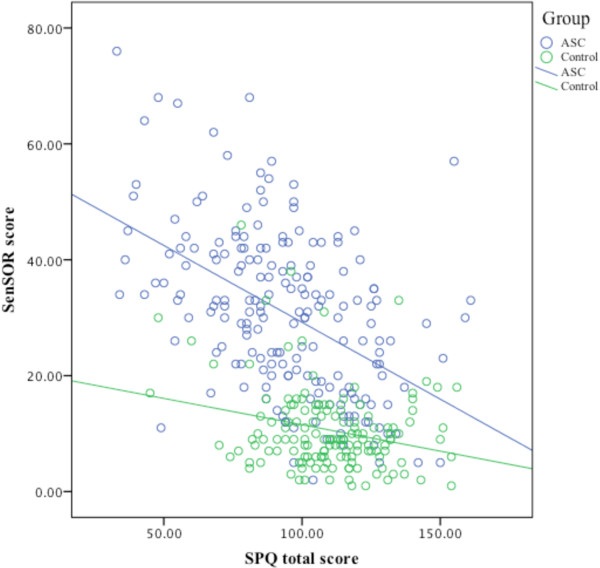
“The total SPQ and SensOR correlated moderately (r = -.50, P < .0001) both across groups and within the ASC (r = -.49, P = .007) and control group (r = -.23, P = .004) (see Figure 1).”
Citations
Cites
Diagnostic and Statistical Manual of Mental Disorders
Williams, J. B. W., & First, M. (2013) · Encyclopedia of Social Work · doi:10.1093/acrefore/9780199975839.013.104 · Cited by 109,519
Baron-Cohen, S., Wheelwright, S., Skinner, R., Martin, J., & Clubley, E. (2001) · Journal of Autism and Developmental Disorders · doi:10.1023/a:1005653411471 · Cited by 6,450 · cited 5×
“We used a standard inclusion criterion of an AQ cut-off score of 26 and above for the ASC group, and a score below 26 for the control group [22,23].”
BackgroundMethodInfluentialSelf-citationDiagnostic and Statistical Manual of Mental Disorders, 5th Edition
(2013) · American Psychiatric Association Publishing eBooks · doi:10.1176/appi.books.9780890425596.893619 · Cited by 4,383
Baron-Cohen, S., & Wheelwright, S. (2004) · Journal of Autism and Developmental Disorders · doi:10.1023/b:jadd.0000022607.19833.00 · Cited by 4,093 · cited 1×
“This new questionnaire also adds to a battery of new dimensional measures (the Autism Spectrum Quotient (AQ), the Empathy Quotient (EQ) and the Systemizing Quotient (SQ)) that seek to provide a metric of the spectrum on which ASC lies, and the relationship between ASC and variation in the general population [22,33,34].”
BackgroundSelf-citationResearch Methods in Social Relations
(1992) · Journal of Environmental Psychology · doi:10.1016/s0272-4944(05)80303-2 · Cited by 2,081
Battle, D. E. (2013) · CoDAS · doi:10.1590/s2317-17822013000200017 · Cited by 1,569
The Raven's Progressive Matrices: Change and Stability over Culture and Time
Raven, J. (2000) · Cognitive Psychology · doi:10.1006/cogp.1999.0735 · Cited by 1,560 · cited 2×
“The Raven’s Progressive Matrices Test has the advantage of being language-free and it can be used for a wide range of ages and cross-culturally (Raven, 2000).”
MethodTomchek, S. D., & Dunn, W. (2007) · American Journal of Occupational Therapy · doi:10.5014/ajot.61.2.190 · Cited by 1,534 · cited 3×
“Sensory questionnaire studies in ASC mainly record parental reports of their child’s sensory experience [5,8-16].”
Background(2013) · Practical Psychology · doi:10.4324/9781315009810-7 · Cited by 1,066
Baranek, G. T., David, F. J., Poe, M. D., Stone, W. L., & Watson, L. R. (2006) · Journal of Child Psychology and Psychiatry · doi:10.1111/j.1469-7610.2005.01546.x · Cited by 975 · cited 1×
“Questionnaires are widely used to study sensory reactivity issues in children with and without ASC [5], in Sensory Processing Disorder [6] and other conditions [7].”
Background
Cited by
Robertson, C. E., & Baron-Cohen, S. (2017) · Nature Reviews Neuroscience · doi:10.1038/nrn.2017.112 · Cited by 1,157
Self-citationGreenberg, D. M., Warrier, V., Allison, C., & Baron-Cohen, S. (2018) · Proceedings of the National Academy of Sciences · doi:10.1073/pnas.1811032115 · Cited by 416
“Participants completed four psychological measures: the Autism Spectrum Quotient-10 (AQ-10) (44) and three newly developed 10-item short forms of the Empathy Quotient (EQ) (3), Systemizing Quotient-Revised (SQR) (4), and the Sensory Perception Quotient (SPQ) (45).”
MethodSelf-citationUpdate of a Meta-analysis of Sensory Symptoms in ASD: A New Decade of Research
Ben-Sasson, A., Gal, E., Fluss, R., Katz-Zetler, N., & Cermak, S. A. (2019) · Journal of Autism and Developmental Disorders · doi:10.1007/s10803-019-04180-0 · Cited by 263
Interoception in autism Spectrum disorder: a review
DuBois, D., Ameis, S. H., Lai, M., Casanova, M. F., & Desarkar, P. (2016) · International Journal of Developmental Neuroscience · doi:10.1016/j.ijdevneu.2016.05.001 · Cited by 192
“Moreover, to fully understand body awareness, interoception, and sensory processing, which likely represent overlapping constructs, the relationship between sensory processing assessment measures, such as the Sensory Processing Quotient (Tavassoli et al., 2014), the Sensory Processing Scale (Schoen et al.”
BackgroundBalasco, L., Provenzano, G., & Bozzi, Y. (2020) · Frontiers in Psychiatry · doi:10.3389/fpsyt.2019.01016 · Cited by 177
Autism spectrum disorder in the scope of tactile processing
Mikkelsen, M., Wodka, E. L., Mostofsky, S. H., & Puts, N. A. J. (2018) · Developmental Cognitive Neuroscience · doi:10.1016/j.dcn.2016.12.005 · Cited by 158
Toward an interdisciplinary approach to understanding sensory function in autism spectrum disorder
Cascio, C. J., Woynaroski, T., Baranek, G. T., & Wallace, M. T. (2016) · Autism Research · doi:10.1002/aur.1612 · Cited by 165
Schauder, K. B., & Bennetto, L. (2016) · Frontiers in Neuroscience · doi:10.3389/fnins.2016.00268 · Cited by 135
“Clinically, low threshold to stimulation is thus conceptualized as an individual requiring less sensory input to generate the typical response, whereas high threshold to stimulation is conceptualized as an individual requiring more sensory input to generate a typical response.”
BackgroundUljarević, M., Baranek, G., Vivanti, G., Hedley, D., Hudry, K., & Lane, A. (2017) · Autism Research · doi:10.1002/aur.1747 · Cited by 131
“, 2011] and physiological laboratory protocols [Schoen, Miller, Brett-Green, & Nielsen, 2009] as well as new measures designed to assess perceived performance on basic sensory perception abilities rather than experience of sensory stimuli [Tavassoli et al., 2014].”
BackgroundSensory processing difficulties in psychiatric disorders: A meta-analysis
van den Boogert, F., Klein, K., Spaan, P., Sizoo, B. B., Bouman, Y. H. A., Hoogendijk, W. J. G., & Roza, S. J. (2022) · Journal of Psychiatric Research · doi:10.1016/j.jpsychires.2022.04.020 · Cited by 163
Ward, J. (2019) · Cognitive Neuroscience · doi:10.1080/17588928.2018.1557131 · Cited by 118
“’ Various questionnaires have been developed to quantify and understand the range of symptoms (Crane, Goddard, & Pring, 2009; Robertson & Simmons, 2013; Tavassoli et al., 2014) and some are translated into other languages (Sapey-Triomphe, Moulin, Sonie, & Schmitz, 2018; Takayama et al.”
BackgroundWalsh, R. J., Krabbendam, L., Dewinter, J., & Begeer, S. (2018) · Journal of Autism and Developmental Disorders · doi:10.1007/s10803-018-3702-y · Cited by 159
Atypical sensory sensitivity as a shared feature between synaesthesia and autism
Ward, J., Hoadley, C., Hughes, J. E. A., Smith, P., Allison, C., Baron-Cohen, S., & Simner, J. (2017) · Scientific Reports · doi:10.1038/srep41155 · Cited by 107
Self-citationDuBois, D., Lymer, E., Gibson, B., Desarkar, P., & Nalder, E. (2017) · Brain Sciences · doi:10.3390/brainsci7080108 · Cited by 105
The Role of Sensorimotor Difficulties in Autism Spectrum Conditions
Hannant, P., Tavassoli, T., & Cassidy, S. (2016) · Frontiers in Neurology · doi:10.3389/fneur.2016.00124 · Cited by 103
Self-citationEnhanced olfactory sensitivity in autism spectrum conditions
Ashwin, C., Chapman, E., Howells, J., Rhydderch, D., Walker, I. O., & Baron‐Cohen, S. (2014) · Molecular Autism · doi:10.1186/2040-2392-5-53 · Cited by 121
“Tavassoli T, Hoekstra R, Baron-Cohen S: The Sensory Perception Quotient (SPQ): development and validation of a new sensory questionnaire for adults with and without autism.”
BackgroundMethodInfluentialSelf-citationMayer, J. (2016) · Journal of Autism and Developmental Disorders · doi:10.1007/s10803-016-2948-5 · Cited by 122
Jussila, K. K., Junttila, M., Kielinen, M., Ebeling, H. E., Joskitt, L., Moilanen, I., & Mattila, M. (2019) · Journal of Autism and Developmental Disorders · doi:10.1007/s10803-019-04237-0 · Cited by 132
Sensorimotor Difficulties Are Associated with the Severity of Autism Spectrum Conditions
Hannant, P., Cassidy, S., Tavassoli, T., & Mann, F. (2016) · Frontiers in Integrative Neuroscience · doi:10.3389/fnint.2016.00028 · Cited by 91
Self-citationModeling empathy: building a link between affective and cognitive processes
Yalçın, Ö. N., & DiPaola, S. (2019) · Artificial Intelligence Review · doi:10.1007/s10462-019-09753-0 · Cited by 128
“Additional tests of empathy focus on distinct features of empathic capacity, such as perception of emotions (Tavassoli et al. 2014) in pictures (Baron-Cohen et al. 2001a), voice (Golan et al. 2007) and movies (Golan et al. 2006), where similar tests can be used to evaluate emotional communication…”
BackgroundSiper, P. M., Kolevzon, A., Wang, A. T., Buxbaum, J. D., & Tavassoli, T. (2017) · Autism Research · doi:10.1002/aur.1750 · Cited by 94
Self-citationSlower Binocular Rivalry in the Autistic Brain
Spiegel, A., Mentch, J., Haskins, A. J., & Robertson, C. E. (2019) · Current Biology · doi:10.1016/j.cub.2019.07.026 · Cited by 71
A working taxonomy for describing the sensory differences of autism
He, J. L., Williams, Z. J., Harris, A. D., Powell, H., Schaaf, R. C., Tavassoli, T., & Puts, N. A. J. (2023) · Molecular Autism · doi:10.1186/s13229-022-00534-1 · Cited by 103
“[53] was developed to specifically assess perceptual sensitivity.”
BackgroundSelf-citationRinaldi, L. J., Simner, J., Koursarou, S., & Ward, J. (2022) · Journal of Autism and Developmental Disorders · doi:10.1007/s10803-022-05623-x · Cited by 86
“…of autism-linked sensitivities have tended to focus on sounds that are loud, or high, or sudden/unexpected (e.g., (Robertson & Simmons, 2013; Tavassoli et al., 2014) and this is notably different to the sounds of misophonia (i.e., often gentle or ambient sounds Misophonia is a condition…”
BackgroundSensory cognitive abnormalities of pain in autism spectrum disorder: a case–control study
Yasuda, Y., Hashimoto, R., Nakae, A., Kang, H., Ohi, K., Yamamori, H., Fujimoto, M., Hagihira, S., & Takeda, M. (2016) · Annals of General Psychiatry · doi:10.1186/s12991-016-0095-1 · Cited by 74
“Both the AASP and the Sensory Over-Responsivity Scale have a similar problem [39], which is their dependence on the recall of sensitive situations.”
BackgroundDixon, E. A., Benham, G., Sturgeon, J. A., Mackey, S., Johnson, K. A., & Younger, J. (2016) · Journal of Behavioral Medicine · doi:10.1007/s10865-016-9720-3 · Cited by 90
“The tool most similar to the SHS has been published is the Sensory Perception Quotient (SPQ) (Tavassoli et al., 2014).”
MethodReduced perceptual exclusivity during object and grating rivalry in autism
Freyberg, J., Robertson, C. E., & Baron-Cohen, S. (2015) · Journal of Vision · doi:10.1167/15.13.11 · Cited by 71
Self-citationA Systematic Review of Assessments for Sensory Processing Abnormalities in Autism Spectrum Disorder
Burns, C. O., Dixon, D. R., Novack, M. N., & Granpeesheh, D. (2017) · Review Journal of Autism and Developmental Disorders · doi:10.1007/s40489-017-0109-1 · Cited by 77
Sleep determines quality of life in autistic adults: A longitudinal study
Deserno, M. K., Borsboom, D., Begeer, S., Agelink van Rentergem, J. A., Mataw, K., & Geurts, H. M. (2019) · Autism Research · doi:10.1002/aur.2103 · Cited by 58
Visual Sensory Experiences From the Viewpoint of Autistic Adults
Parmar, K. R., Porter, C. S., Dickinson, C. M., Pelham, J., Baimbridge, P., & Gowen, E. (2021) · Frontiers in Psychology · doi:10.3389/fpsyg.2021.633037 · Cited by 60
Saure, E., Castrén, M. L., Mikkola, K., & Salmi, J. (2022) · Journal of Intellectual Disability Research · doi:10.1111/jir.12989 · Cited by 82
Sleep, Sensory Integration/Processing, and Autism: A Scoping Review
Lane, S. J., Leão, M. A., & Spielmann, V. (2022) · Frontiers in Psychology · doi:10.3389/fpsyg.2022.877527 · Cited by 83
He, J. L., Oeltzschner, G., Mikkelsen, M. E., Deronda, A. C., Harris, A. D., Crocetti, D., Wodka, E. L., Mostofsky, S. H., Edden, R. A. E., & Puts, N. A. J. (2021) · Translational Psychiatry · doi:10.1038/s41398-021-01525-1 · Cited by 65
Sapey‐Triomphe, L., Moulin, A. M., Sonié, S., & Schmitz, C. (2017) · Journal of Autism and Developmental Disorders · doi:10.1007/s10803-017-3422-8 · Cited by 68
“Other existing tools assessing sensory sensitivity include the recent Sensory Perception Quotient (Tavassoli et al.”
BackgroundMethodInfluentialRevised scored Sensory Perception Quotient reveals sensory hypersensitivity in women with autism
Taylor, E., Holt, R., Tavassoli, T., Ashwin, C., & Baron‐Cohen, S. (2020) · Molecular Autism · doi:10.1186/s13229-019-0289-x · Cited by 65
Self-citationHohn, V. D., de Veld, D. M. J., Mataw, K. J. S., van Someren, E. J. W., & Begeer, S. (2019) · Journal of Autism and Developmental Disorders · doi:10.1007/s10803-019-03891-8 · Cited by 52
Relations between Sensory Responsiveness and Features of Autism in Children
Feldman, J. I., Cassidy, M. M., Liu, Y., Kirby, A. V., Wallace, M. T., & Woynaroski, T. G. (2020) · Brain Sciences · doi:10.3390/brainsci10110775 · Cited by 65
The Dutch Sensory Perception Quotient-Short in adults with and without autism
Weiland, R. F., Polderman, T. J. C., Hoekstra, R. A., Smit, D. J. A., & Begeer, S. (2020) · Autism · doi:10.1177/1362361320942085 · Cited by 50
“Correlation coefficients were rather low but comparable to previous research using the SPQ-Short (Tavassoli et al., 2014).”
BackgroundMethodResultInfluentialSelf-citationYamada, T., Itahashi, T., Nakamura, M., Watanabe, H., Kuroda, M., Ohta, H., Kanai, C., Kato, N., & Hashimoto, R.-I. (2016) · Molecular Autism · doi:10.1186/s13229-016-0106-8 · Cited by 50
“In addition to evidence for auditory hypersensitivity revealed by clinical questionnaires [49, 50], recent behavioral experiments have revealed a more detailed picture of the altered auditory processing in ASD.”
Kuiper, M. W. M., Verhoeven, E. W. M., & Geurts, H. M. (2018) · Autism · doi:10.1177/1362361318788065 · Cited by 62
“Besides the GSQ, another sensory sensitivity questionnaire which has recently been developed is the Sensory Perception Quotient (SPQ; Tavassoli et al., 2014).”
MethodIs Synaesthesia More Prevalent in Autism Spectrum Conditions? Only Where There Is Prodigious Talent
Hughes, J. E., Simner, J., Baron‐Cohen, S., Treffert, D. A., & Ward, J. (2017) · Multisensory Research · doi:10.1163/22134808-00002558 · Cited by 52
Self-citationSensory over responsivity and obsessive compulsive symptoms: A cluster analysis
Ben‐Sasson, A., & Podoly, T. Y. (2016) · Comprehensive Psychiatry · doi:10.1016/j.comppsych.2016.10.013 · Cited by 51
Sensory sensitivity after acquired brain injury: A systematic review
Thielen, H., Tuts, N., Welkenhuyzen, L., Wajer, I. M. C. H., Lafosse, C., & Gillebert, C. R. (2022) · Journal of Neuropsychology · doi:10.1111/jnp.12284 · Cited by 51
Grant, S., Norton, S., Weiland, R. F., Scheeren, A. M., Begeer, S., & Hoekstra, R. A. (2022) · Molecular Autism · doi:10.1186/s13229-022-00486-6 · Cited by 45
“CSI = Central Sensitization Inventory; SPQ = Sensory Perception Quotient; AQ-Short = Autism Quotient – Short; HADS-A = Hospital Anxiety and Depression Scale – Anxiety; HADS-D = Hospital Anxiety and Depression Scale - Depression Hierarchical Regression and Path Analysis Page 9/19 The relationships between the main vari…”
BackgroundInfluentialSelf-citationAversive textures and their role in food rejection
Pellegrino, R., & Luckett, C. R. (2020) · Journal of Texture Studies · doi:10.1111/jtxs.12543 · Cited by 53
Synaesthesia and autism: Different developmental outcomes from overlapping mechanisms?
van Leeuwen, T. M., Neufeld, J., Hughes, J. E., & Ward, J. (2020) · Cognitive Neuropsychology · doi:10.1080/02643294.2020.1808455 · Cited by 41
Clothes, Sensory Experiences and Autism: Is Wearing the Right Fabric Important?
Kyriacou, C., Forrester‐Jones, R., & Triantafyllopoulou, P. (2021) · Journal of Autism and Developmental Disorders · doi:10.1007/s10803-021-05140-3 · Cited by 56
“Several studies found significant differences between autistic and control groups (Baranek et al., 2006; Crane et al., 2009; Tavassoli et al., 2014) in a range of sensory modalities, like * Paraskevi Triantafyllopoulou p.”
BackgroundNeural correlates of taste reactivity in autism spectrum disorder
Avery, J. A., Ingeholm, J. E., Wohltjen, S., Collins, M. A., Riddell, C. D., Gotts, S. J., Kenworthy, L. E., Wallace, G. L., Simmons, W. K., & Martin, A. D. (2018) · NeuroImage Clinical · doi:10.1016/j.nicl.2018.04.008 · Cited by 53
“While the AASP is a widely used measure of sensory symptoms in ASD (Dunn and Westman, 1997), it may be better suited to assessing affective responses and compensatory behaviors that occur as a result of abnormal sensory function, rather than sensory function per se (Tavassoli et al., 2014).”
Donaldson, C. K., Stauder, J. E. A., & Donkers, F. C. L. (2016) · Journal of Autism and Developmental Disorders · doi:10.1007/s10803-016-2888-0 · Cited by 49
“Three recent studies using self-report questionnaires have further supported gender differences in sensory processing, finding that females reported significantly more sensory processing atypicalities than males (Engel-Yeger 2012; Horder et al. 2014; Tavassoli et al. 2014).”
BackgroundResultInfluentialA co-twin-control study of altered sensory processing in autism
Neufeld, J., Taylor, M. J., Remnélius, K. L., Isaksson, J., Lichtenstein, P., & Bölte, S. (2021) · Autism · doi:10.1177/1362361321991255 · Cited by 39
“Furthermore, TD females score higher on the Sensory Perception Quotient (Tavassoli et al., 2014) and females with ASD report more life-time sensory issues compared to males (Lai et al., 2011).”
BackgroundSex differences in Sensory Features between boys and girls with Autism Spectrum Disorder
Bitsika, V., Sharpley, C. F., & Mills, R. (2018) · Research in Autism · doi:10.1016/j.rasd.2018.04.002 · Cited by 42
Karhson, D. S., & Golob, E. J. (2016) · Autism Research · doi:10.1002/aur.1593 · Cited by 37
Making sense of the perceptual capacities in autistic and non-autistic adults
Brinkert, J., & Remington, A. (2020) · Autism · doi:10.1177/1362361320922640 · Cited by 32
“Participants completed the shortened Sensory Perception Quotient (SPQ; Tavassoli et al., 2014), a 35-item scale, that covers aspects of sensory processing that include touch, smell, vision, hearing and taste.”
BackgroundMethodYuan, H.-L., Lai, C. Y. Y., Wong, M., Kwong, T. C., Choy, Y. S., Mung, S. W. Y., & Chan, C. C. H. (2022) · Children · doi:10.3390/children9101584 · Cited by 54
Development of Sensory Sensitivity Scales (SeSS): Reliability and validity analyses
Aykan, S., Vatansever, G., Erdoğan, B. D., & Kalaycıoğlu, C. (2020) · Research in Developmental Disabilities · doi:10.1016/j.ridd.2020.103612 · Cited by 35
Sensory Clusters of Adults With and Without Autism Spectrum Conditions
Elwin, M., Schröder, A., Ek, L., Wallsten, T., & Kjellin, L. (2016) · Journal of Autism and Developmental Disorders · doi:10.1007/s10803-016-2976-1 · Cited by 33
“Strong sensory interests more often have a positive impact, through development of deep interests, as exemplified by Shore (2003, p. 31).”
BackgroundNeural correlates of shared sensory symptoms in autism and attention-deficit/hyperactivity disorder
Itahashi, T., Fujino, J., Sato, T., Ohta, H., Nakamura, M., Kato, N., Hashimoto, R., Martino, A. D., & Aoki, Y. Y. (2020) · Brain Communications · doi:10.1093/braincomms/fcaa186 · Cited by 32
“In line with prior studies (Tavassoli et al., 2014; Bijlenga et al., 2017), the AASP scores were correlated with both AQ and CAARS scores in the current participants, suggesting that iFC correlated with AASP scores can overlap with iFC associated with AQ or CAARS scores.”
ResultIntellectually able adults with autism spectrum disorder show typical resting-state EEG activity
Li, Q., Weiland, R. F., Konvalinka, I., Mansvelder, H. D., Andersen, T., Smit, D. J. A., Begeer, S., & Linkenkaer‐Hansen, K. (2022) · Scientific Reports · doi:10.1038/s41598-022-22597-z · Cited by 32
Grove, R., Baillie, A., Allison, C. L., Baron‐Cohen, S., & Hoekstra, R. A. (2015) · The British Journal of Psychiatry · doi:10.1192/bjp.bp.114.155101 · Cited by 30
Self-citationElwin, M., Schröder, A., Ek, L., & Kjellin, L. (2015) · Nordic Journal of Psychiatry · doi:10.3109/08039488.2015.1053984 · Cited by 35
Stacey, R., & Cage, E. (2023) · Autism in Adulthood · doi:10.1089/aut.2022.0039 · Cited by 27
Gunderson, J. A., Worthley, E., Byiers, B. J., Symons, F. J., & Wolff, J. J. (2023) · Journal of Neurodevelopmental Disorders · doi:10.1186/s11689-022-09473-7 · Cited by 38
“Nine assessment tools were rated as “unsupported/insufficient,” indicating limited or inconsistent data on reliability and validity with the ASD population (SP, ITSP, SPM, SensOR, GSQ, SPSRC-English, SBQ, SeSS, SP-Scales Inventory) [21, 23, 30, 32, 33, 36, 39, 46–57].”
BackgroundMethodInfluentialIsaacs, D. A., Key, A. P. F., Cascio, C. J., Conley, A. C., Riordan, H., Walker, H. C., Wallace, M. T., & Claassen, D. O. (2021) · Comprehensive Psychiatry · doi:10.1016/j.comppsych.2021.152291 · Cited by 32
Carson, T. B., Valente, M. J., Wilkes, B. J., & Richard, L. F. (2021) · Journal of Autism and Developmental Disorders · doi:10.1007/s10803-021-04991-0 · Cited by 33
“Importantly, sex differences in ASD have also been identified in sensory hyper-reactivity behaviors (Tavassoli et al., 2014) and in underlying neural networks related to sensory processing (Cummings et al.”
BackgroundNisticò, V., Faggioli, R., Tedesco, R., Giordano, B., Priori, A., Gambini, O., & Demartini, B. (2022) · Journal of Autism and Developmental Disorders · doi:10.1007/s10803-022-05439-9 · Cited by 33
Autoimmune Encephalitis and Autism Spectrum Disorder
Whiteley, P., Marlow, B. P., Kapoor, R. R., Blagojevic-Stokic, N., & Sala, R. (2021) · Frontiers in Psychiatry · doi:10.3389/fpsyt.2021.775017 · Cited by 30
“Sensory processing issues, a hallmark of ASD (79) are also present in some cases of AE (49).”
BackgroundEvaluating the latent structure of the non-social domain of autism in autistic adults
Grove, R., Begeer, S., Scheeren, A. M., Weiland, R. F., & Hoekstra, R. A. (2021) · Molecular Autism · doi:10.1186/s13229-020-00401-x · Cited by 23
“The AQ-short numbers and patterns subscale and the SPQ-short were also included in the factor models.”
BackgroundMethodInfluentialSelf-citationIsaacs, D. A., Key, A. P. F., Cascio, C. J., Conley, A. C., Walker, H. C., Wallace, M. T., & Claassen, D. O. (2020) · Neuropsychiatric Disease and Treatment · doi:10.2147/ndt.s274165 · Cited by 28
Liu, X., & Huang, H. (2020) · Scientific Reports · doi:10.1038/s41598-020-60702-2 · Cited by 27
Genetic variation in serotonin transporter modulates tactile hyperresponsiveness in ASD
Schauder, K. B., Muller, C. L., Veenstra-VanderWeele, J. M., & Cascio, C. J. (2014) · Research in Autism · doi:10.1016/j.rasd.2014.11.008 · Cited by 28
Intersection of Eating Disorders and the Female Profile of Autism
Brown, C. M., & Stokes, M. A. (2020) · Psychiatric Clinics of North America · doi:10.1016/j.psc.2020.08.009 · Cited by 28
Chen, Y., Jenkins, C. A., Charlton, R. A., Happe, F. G. E., Mandy, W., & Stewart, G. R. (2024) · Autism in Adulthood · doi:10.1089/aut.2024.0031 · Cited by 36
“A similar gender difference in the level of SPDs was also found in studies of younger autistic individuals by Weiland et al. 9 and Tavassoli et al. 34 Many autistic adults receive their autism diagnosis in adulthood 35 ; however, health records suggest that many autistic women remain undiagnosed, 36 including in midli…”
A multilevel investigation of sensory sensitivity and responsivity in autistic adults
Sapey‐Triomphe, L., Dierckx, J., Vettori, S., Overwalle, J. V., & Wagemans, J. P. (2023) · Autism Research · doi:10.1002/aur.2962 · Cited by 29
Intersection of Eating Disorders and the Female Profile of Autism
Brown, C. M., & Stokes, M. A. (2020) · Child and Adolescent Psychiatric Clinics of North America · doi:10.1016/j.chc.2019.11.002 · Cited by 25
Sensory hypersensitivity after acquired brain injury: the patient perspective
de Sain, A. M., Pellikaan, L. W. M., van Voskuilen, J., Migdis, M., Sommers‐Spijkerman, M., Visser‐Meily, J. M. A., & Wajer, I. M. C. H. (2023) · Disability and Rehabilitation · doi:10.1080/09638288.2023.2251401 · Cited by 31
“Exclusion criteria were diagnoses of a psychotic disorder, ADHD, ASD or a primary sensory deficit (e.g., hearing loss, deafness, visually impaired or blindness), since sensory hypersensitivity can be related to these disorders [18–20].”
Maliňáková, K., Novák, L., Trnka, R., & Tavel, P. (2021) · International Journal of Environmental Research and Public Health · doi:10.3390/ijerph182412962 · Cited by 28
Asaridou, M., Wodka, E. L., Edden, R. A. E., Mostofsky, S. H., Puts, N. A. J., & He, J. L. (2022) · Journal of Autism and Developmental Disorders · doi:10.1007/s10803-022-05787-6 · Cited by 26
“In comparison to studies of sex-differences of sensory reactivity, only one study has investigated potential sex-differences of perceptual sensitivity (Tavassoli et al., 2014).”
BackgroundResultInfluentialGenetics, molecular control and clinical relevance of habituation learning
Blok, L. E. R., Boon, M., van Reijmersdal, B., Höffler, K. D., Fencková, M., & Schenck, A. (2022) · Neuroscience & Biobehavioral Reviews · doi:10.1016/j.neubiorev.2022.104883 · Cited by 26
Dwyer, P. S. R., Takarae, Y., Zadeh, I., Rivera, S. M., & Saron, C. D. (2022) · Frontiers in Human Neuroscience · doi:10.3389/fnhum.2022.811547 · Cited by 22
Mauro, N., Ardissono, L., & Cena, F. (2022) · Communications of the ACM · doi:10.1145/3505267 · Cited by 24
“For this purpose, we employ a questionnaire derived from Tavassoli, 23 which provides data about a user’s aversion to a subset of the values that each feature can take.”
MethodPersonalized Recommendation of PoIs to People with Autism
Mauro, N., Ardissono, L., & Cena, F. (2020) · ACM Conference on User Modeling, Adaptation and Personalization (UMAP) · doi:10.1145/3340631.3394845 · Cited by 30
“[50], a standard sensory questionnaire for adults with and without autism that assesses basic sensory hyper- and hyposensitivity.”
BackgroundMethodPodoly, T. Y., & Ben‐Sasson, A. (2020) · Frontiers in Integrative Neuroscience · doi:10.3389/fnint.2020.00017 · Cited by 24
“The S-Hab-Q construct validity (withheld for blind review) was previously tested relative to existing SOR scales (AASP: Brown and Dunn, 2002; SPQ: Tavassoli et al., 2014) and found satisfactory (r = 0.57 and 0.61, respectively, p < 0.001).”
BackgroundMethodInfluentialGonzález‐Herrero, B., Happe, F. G. E., Nicholson, T. R., Morgante, F., Pagonabarraga, J., Deeley, Q., & Edwards, M. J. (2024) · Brain and Behavior · doi:10.1002/brb3.70168 · Cited by 22
Dorris, E., Maccarthy, J., Simpson, K., & McCarthy, G. (2022) · Frontiers in Pain Research · doi:10.3389/fpain.2022.926331 · Cited by 19
“Sensory Perception Quotient The Sensory Perception Quotient (SPQ) is a validated 92-item adult self-report questionnaire measuring sensory sensitivity across modalities (18).”
BackgroundMethodInfluentialAuditory Processing Differences Correlate With Autistic Traits in Males
Aykan, S., Gürses, E., Tokgöz-Yılmaz, S., & Kalaycıoğlu, C. (2020) · Frontiers in Human Neuroscience · doi:10.3389/fnhum.2020.584704 · Cited by 18
The relationship of autistic traits to taste and olfactory processing in anorexia nervosa
Kinnaird, E., Stewart, C. S., & Tchanturia, K. (2020) · Molecular Autism · doi:10.1186/s13229-020-00331-8 · Cited by 23
“However, the following variables could not be transformed and so were analysed using non-parametric tests: BMI, EDE-Q global scores, HADS depression scores, the vision domain of the SPQ and all taste outcomes excepting sour.”
MethodInfluentialBryant, L. K., Woynaroski, T. G., Wallace, M. T., & Cascio, C. J. (2019) · Journal of Autism and Developmental Disorders · doi:10.1007/s10803-019-04043-8 · Cited by 18
“Sensory hypersensitivity had been measured in our sample using the Sensory Perception Questionnaire—Short Version (SPQ) (Tavassoli et al. 2014).”
BackgroundMethodInfluentialMagiati, I. (2016) · Autism and child psychopathology series · doi:10.1007/978-3-319-27171-2_11 · Cited by 20
The effect of learning to drum on behavior and brain function in autistic adolescents
Cahart, M., Amad, A., Draper, S. B., Lowry, R., Marino, L., Carey, C., Ginestet, C. E., Smith, M. S., & Williams, S. (2022) · Proceedings of the National Academy of Sciences · doi:10.1073/pnas.2106244119 · Cited by 33
Adults with autism spectrum disorder show atypical patterns of thoughts and feelings during rest
Simpraga, S., Weiland, R. F., Mansvelder, H. D., Polderman, T. J. C., Begeer, S., Smit, D. J. A., & Linkenkaer‐Hansen, K. (2021) · Autism · doi:10.1177/1362361321990928 · Cited by 22
“This could be related to sensory sensitivity—a common feature of ASD (Baranek et al., 2006; Ben-Sasson et al., 2009; Tavassoli et al., 2014)—due to the experimental environment, which might be less pleasant for sensitive people.”
BackgroundIncreased functional activity, bottom-up and intrinsic effective connectivity in autism
Randeniya, R., Vilares, I., Mattingley, J. B., & Garrido, M. I. (2022) · NeuroImage Clinical · doi:10.1016/j.nicl.2022.103293 · Cited by 21
“, 2001) and Sensory Perception Quotient (SPQ) Questionnaire (Tavassoli et al., 2014) were used to measure autistic traits and sensory sensitivities, respectively.”
Reduced Context Updating but Intact Visual Priors in Autism
Randeniya, R., Vilares, I., Mattingley, J. B., & Garrido, M. I. (2021) · Computational Psychiatry · doi:10.5334/cpsy.69 · Cited by 17
Scheeren, A. M., Howlin, P., Bartels, M., Krabbendam, L., & Begeer, S. (2021) · Autism Research · doi:10.1002/aur.2653 · Cited by 21
“The hypothesis that sensory sensitivities in the autism group would negatively affect accommodation and neighborhood satisfaction (Nagib & Williams, 2017; Tavassoli et al., 2014) was not supported by our study.”
MethodResultXie, Q., Zhang, X., Rekik, I., Chen, X., Mao, N., Shen, D. G., & Zhao, F. (2021) · PeerJ · doi:10.7717/peerj.11692 · Cited by 18
Glackin, A., Pearson, A., & Davis, R. (2023) · Autism in Adulthood · doi:10.1089/aut.2022.0111 · Cited by 24
“14 The finding that TGE adults report higher levels of autistic traits is supported by other quantitative studies employing self-report measures.”
Nisticò, V., Goeta, D., Iacono, A., Tedesco, R., Giordano, B., Faggioli, R., Priori, A., Gambini, O., & Demartini, B. (2022) · Neurological Sciences · doi:10.1007/s10072-022-06048-1 · Cited by 19
“Finally, participants with ASDs completed the Sensory Perception Quotient-Short Form (SPQ-SF35) [18], a 35-item self-reported questionnaire investigating hyper- or hyposensitivity in the 5 modes of perception.”
MethodInfluentialHannant, P., Cassidy, S., Renshaw, D., & Joyce, A. (2021) · Nutritional Neuroscience · doi:10.1080/1028415x.2019.1588486 · Cited by 16
Wilson, L. A., Scarfo, J., Jones, M. E., & Rehm, I. C. (2025) · BMC Psychiatry · doi:10.1186/s12888-024-06441-4 · Cited by 23
“…[24]), one study [51] utilised their recently developed measure of sensory over-responsivity and Schoen et al.’s [115] Sensory Over-Responsivity Scales, and one study [99] utilised the Sensory Habituation Questionnaire [98] and the short version of the Sensory Processing Quotient (SPQ; [133]).”
Mello, M., Fusaro, M., Aglioti, S. M., & Minio-Paluello, I. (2024) · Autism · doi:10.1177/13623613231218314 · Cited by 30
“…in most cases, these measures were not specific to social touches as they included either only non-social items (Ludlow et al., 2015; Sapey-Triomphe et al., 2018; Tavassoli et al., 2014) or both social and non-social items (Crane et al., 2009; Horder et al., 2014; Kuiper et al., 2019; Mayer, 2017).”
Examining the correlation between misophonia symptoms and autistic traits in general population
Ertürk, E., Işık, Ü., Aktepe, E., & Kılıç, F. (2023) · International Journal of Developmental Disabilities · doi:10.1080/20473869.2023.2165231 · Cited by 17
“Nonetheless, it should be underlined that although people with ASD are sensitive to sudden and unexpected sounds, persons with misophonia are sensitive to mild sounds in everyday life (Robertson and Simmons 2013, Tavassoli et al. 2014).”
Metadata
- Authors
- Tavassoli, T., Hoekstra, R. A., & Baron-Cohen, S.
- Affiliations
- University of Cambridge (GB)
- The Open University (GB)
- Corresponding author
- Tavassoli, Teresa
- Venue
- Molecular Autism
- Published
- 2014
- Volume
- 5
- Issue
- 1
- Pages
- 29
- ISSN
- 2040-2392 (ISSN-L)
- PMC
- PMC4005907
- OpenAlex
- W2137129675
- Semantic Scholar
- 6db0a746f1c0ae8a95cc1e2baf2e188dc4956c23
- Cited by
- 251
- References
- 36
- Citations by year
- 2026: 19 · 2025: 23 · 2024: 26 · 2023: 33 · 2022: 40 · 2021: 24 · 2020: 25 · 2019: 13 · 2018: 11 · 2017: 12 · 2016: 17 · 2015: 4 · 2014: 3
- FWCI
- 6.69
- Type
- journal article
- Language
- en
- Open access
- gold
- doi.org
- Licence
- cc-by
- Locations
- Molecular Autism (publishedVersion, cc-by)
- Europe PMC (PubMed Central) (publishedVersion, cc-by)
- PubMed Central (publishedVersion, cc-by)
- PubMed (publishedVersion)
- CentAUR (University of Reading) (acceptedVersion)
- Open Research Online (The Open University) (acceptedVersion)
- Research Portal (King's College London) (submittedVersion, cc-by)
- Funders
- Autism Science Foundation
- Wellcome Trust
- National Institute for Health and Care Research
- Medical Research Council
- Topics
- Life Sciences › Neuroscience › Cognitive Neuroscience › Autism Spectrum Disorder Research
- Health Sciences › Medicine › Psychiatry and Mental health › Child Nutrition and Feeding Issues
- Health Sciences › Medicine › Psychiatry and Mental health › Schizophrenia research and treatment
- Keywords
- autism spectrum disorder, sensory hypersensitivity, sensory reactivity, autistic adults, autistic traits, Autism Spectrum Quotient, questionnaire development, psychometric validation
About these checks
Registry, retraction, Cites and statistics results are computed, not judged, with one exception: a printed reference that no index lists is read once by a model before it counts as a citation error. Claims are extracted by a model and kept only when their quote appears verbatim in the text; each cited source is then checked, with a model’s help, for whether it says what the claim relies on. Those verdicts can be wrong — read the claim’s quote and the cited source before relying on one.
The claim verdicts this report counts are experimental: their accuracy is not yet measured.
A language model drew the claims from the paper on 2026-09-30, under version 3 of the claim definition (model deepseek-v4.1-flash, prompt extract-v3).
A second model labelled each claim on 2026-09-30 (model jev-1.13-20260917, definition revision gold-guideline-v0.2).
Cited sources are checked with a language model’s help (gpt-6-sol).
Statistics and arithmetic are recomputed, not judged.
Confidence bands are shown only for fields calibrated on our annotated test set. None is calibrated yet, so no band is shown.
What counts as a claim ›How we measure confidence ›How we check this ›
Are you an author, or do you see a problem with this page? Request a review
Data sources
Bibliographic data: Semantic Scholar, OpenAlex, Crossref.
Contains information from the Semantic Scholar Academic Graph Datasets, made available under the ODC Attribution License (ODC-BY 1.0).
Semantic Scholar’s data is described in: Kinney, R., et al. (2023). The Semantic Scholar Open Data Platform. arXiv:2301.10140.
