

Lim homeobox genes in the Ctenophore Mnemiopsis leidyi: the evolution of neural cell type specification
Open accessThe DOI matches its Crossref record; 85 of the 85 references it cites were found in a registry or an index.
Abstract
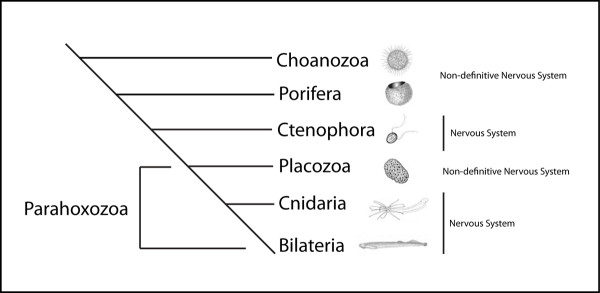
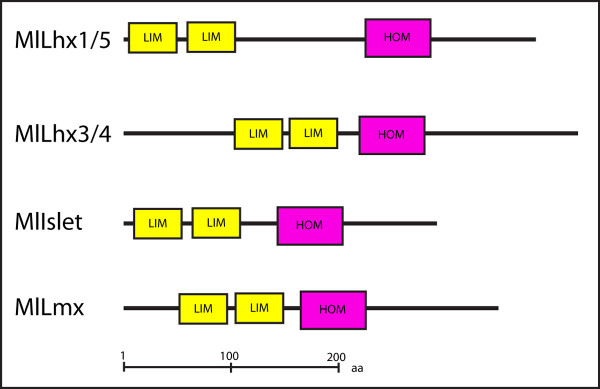
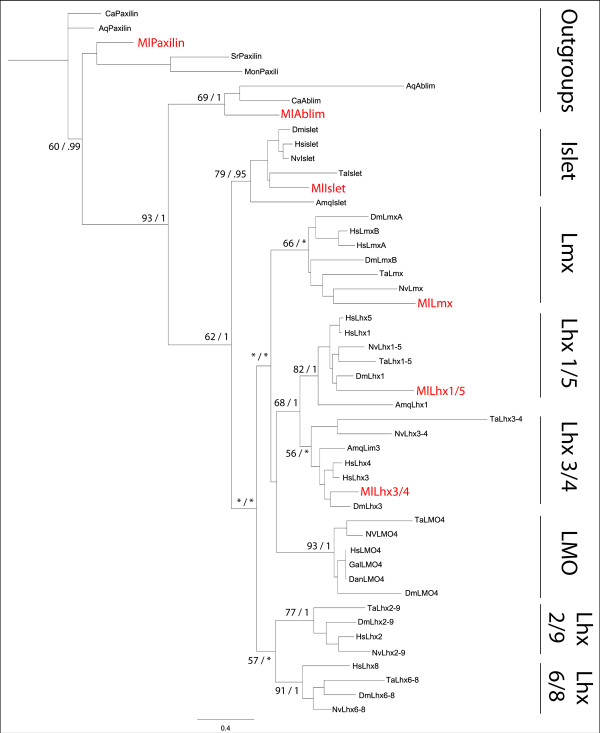
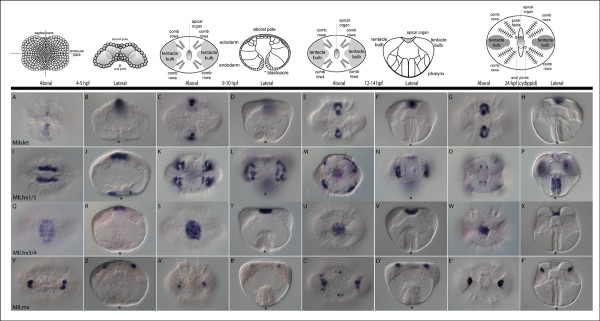
Background: Nervous systems are thought to be important to the evolutionary success and diversification of metazoans, yet little is known about the origin of simple nervous systems at the base of the animal tree. Recent data suggest that ctenophores, a group of macroscopic pelagic marine invertebrates, are the most ancient group of animals that possess a definitive nervous system consisting of a distributed nerve net and an apical statocyst. This study reports on details of the evolution of the neural cell type specifying transcription factor family of LIM homeobox containing genes (Lhx), which have highly conserved functions in neural specification in bilaterian animals. Results: Using next generation sequencing, the first draft of the genome of the ctenophore Mnemiopsis leidyi has been generated. The Lhx genes in all animals are represented by seven subfamilies (Lhx1/5, Lhx3/4, Lmx, Islet, Lhx2/9, Lhx6/8, and LMO) of which four were found to be represented in the ctenophore lineage (Lhx1/5, Lhx3/4, Lmx, and Islet). Interestingly, the ctenophore Lhx gene complement is more similar to the sponge complement (sponges do not possess neurons) than to either the cnidarian-bilaterian or placozoan Lhx complements. Using whole mount in situ hybridization, the Lhx gene expression patterns were examined and found to be expressed around the blastopore and in cells that give rise to the apical organ and putative neural sensory cells. Conclusion: This research gives us a first look at neural cell type specification in the ctenophore M. leidyi. Within M. leidyi, Lhx genes are expressed in overlapping domains within proposed neural cellular and sensory cell territories. These data suggest that Lhx genes likely played a conserved role in the patterning of sensory cells in the ancestor of sponges and ctenophores, and may provide a link to the expression of Lhx orthologs in sponge larval photoreceptive cells. Lhx genes were later co-opted into patterning more diversified complements of neural and non-neural cell types in later evolving animals.
Overview
The claims and statistics of this paper haven’t been checked yet.
Free: it reads the open-access text and checks the first 5 claims that cite a source we can check. Create a free account to check every claim.
Integrity signals
Registry
Cites
Statistics
Figures

Verification
Claims the paper makes
The claims and statistics of this paper haven’t been checked yet.
Free: it reads the open-access text and checks the first 5 claims that cite a source we can check. Create a free account to check every claim.
Claims other papers make about this one
Each is checked against this paper’s own text: does it say what the citing paper says it does?
The cited source says what the claim attributes to it.
In the citing paper
“Both A. queenslandica and M. leidyi contain orthologs of transcription factors involved in bilaterian and cnidarian neural development, including lhx (46), bHLH, six, gli, and sox (classes B, C, E, F) genes.”
From The Genome of the Ctenophore Mnemiopsis leidyi and Its Implications for Cell Type Evolution (2013) · cites this paper as [46]
Self-check
Percentages, sums and reported differences re-computed from the paper’s own numbers.
The self-check needs the paper’s full text.
Citations
Cites
MrBayes 3: Bayesian phylogenetic inference under mixed models
Ronquist, F., & Huelsenbeck, J. P. (2003) · Bioinformatics · doi:10.1093/bioinformatics/btg180 · Cited by 29,077 · cited 1×
“1 [84] using the JTT I+G model with two runs of 2,000,000 generations sampled every 100 generations.”
RAxML-VI-HPC: maximum likelihood-based phylogenetic analyses with thousands of taxa and mixed models
Stamatakis, A. (2006) · Bioinformatics · doi:10.1093/bioinformatics/btl446 · Cited by 15,582 · cited 2×
“0 [82], using maximum likelihood analysis under the JTT I+G model of evolution determined by ProtTest v1.”
Jalview Version 2—a multiple sequence alignment editor and analysis workbench
Waterhouse, A. M., Procter, J. B., Martin, D. M. A., Clamp, M., & Barton, G. J. (2009) · Bioinformatics · doi:10.1093/bioinformatics/btp033 · Cited by 11,399
ProtTest: selection of best-fit models of protein evolution
Abascal, F., Zardoya, R., & Posada, D. (2005) · Bioinformatics · doi:10.1093/bioinformatics/bti263 · Cited by 3,063 · cited 1×
“4 analysis [83].”
Broad phylogenomic sampling improves resolution of the animal tree of life
Dunn, C. W., Hejnol, A., Matus, D. Q., Pang, K., Browne, W. E., Smith, S. A., Seaver, E., Rouse, G. W., Obst, M., Edgecombe, G. D., et al. (2008) · Nature · doi:10.1038/nature06614 · Cited by 1,921 · cited 2×
“Cnidarians are now well accepted to be the sister group to all bilaterians [37-41].”
Self-citationSea Anemone Genome Reveals Ancestral Eumetazoan Gene Repertoire and Genomic Organization
Putnam, N. H., Srivastava, M., Hellsten, U., Dirks, B., Chapman, J., Salamov, A., Terry, A., Shapiro, H., Lindquist, E., Kapitonov, V. V., et al. (2007) · Science · doi:10.1126/science.1139158 · Cited by 1,555 · cited 1×
“Cnidarians are now well accepted to be the sister group to all bilaterians [37-41].”
Self-citationThe Amphimedon queenslandica genome and the evolution of animal complexity
Srivastava, M., Simakov, O., Chapman, J., Fahey, B., Gauthier, M. E. A., Mitros, T., Richards, G. S., Conaco, C., Dacre, M., Hellsten, U., et al. (2010) · Nature · doi:10.1038/nature09201 · Cited by 1,049 · cited 3×
“These competing hypotheses still need to be considered due to the unexpected complex repertoire of structural and patterning nervous system genes found within sponges [34,35].”
SMART 6: recent updates and new developments
Letunic, I., Doerks, T., & Bork, P. (2009) · Nucleic Acids Research · doi:10.1093/nar/gkn808 · Cited by 956 · cited 2×
“complement was predicted by using the SMART database [48].”
The Trichoplax genome and the nature of placozoans
Srivastava, M., Begovic, E., Chapman, J., Putnam, N. H., Hellsten, U., Kawashima, T., Kuo, A., Mitros, T., Salamov, A., Carpenter, M. L., et al. (2008) · Nature · doi:10.1038/nature07191 · Cited by 889 · cited 2×
“While ctenophores and cnidarians have distinct nerve cells and other neural structures, poriferans and placozoans do not [33,34].”
Requirement for LIml in head-organizer function
Shawlot, W., & Behringer, R. R. (1995) · Nature · doi:10.1038/374425a0 · Cited by 805 · cited 1×
“Mouse null mutants of the Lhx1 family die during midgastrulation due to massive head defects [11], while the Lhx5 homologue is expressed in the anterior neural plate and parts of the developing diencephalon [12].”
Research works printed but not linked: 6
- Pang K Ryan JF Mullikin JC Baxevanis AD Martindale MQ TGF beta pathway EvoDevo in press
- Chun C Die Ctenophoren des Golfes von Neapel und der angrenzenden Meeres-Abschnitte Fauna und Flora des Golfes Neapel 1880 1 Leipzig: Engelmann 1 311
- Bethe A Der subepitheliale Nervenplexus der Ctenophoren Biol Zbl 1895 15 140 145
- Heider K Über das Nervensystem von Beroe ovata Nachrichten der Gesellschaft der Wissenschaften zu Göttingen, Math.-phys. KI. Göttingen: Vandenhoeck & Ruprecht 1927
- Hernandez-Nicaise ML Système nerveux et intégration chez. les ctenaires; etude ultrastructurale et comportementale 1974 Lyon, France: Univ. Claude Bernard
- Schnitzler CE Pang K Powers ML Reitzel AM Ryan JF Simmons DK Park M Gupta J Brooks SY Blakesley RW Haddock HSD Martindale MQ Baxevanis AD Bioluminescence and the evolution of photoproteins: A ctenophore genome lights the way in press {AU Query: If you know the journal in which this article will be published, please provide it.}
Cited by
The Genome of the Ctenophore Mnemiopsis leidyi and Its Implications for Cell Type Evolution
Ryan, J. F., Pang, K., Schnitzler, C. E., Nguyen, A.-D., Moreland, R. T., Simmons, D. K., Koch, B. J., Francis, W. R., Havlak, P., Program, N. C. S., et al. (2013) · Science · doi:10.1126/science.1242592 · Cited by 682
Self-citationFrom nerve net to nerve ring, nerve cord and brain — evolution of the nervous system
Arendt, D., Tosches, M. A., & Marlow, H. (2016) · Nature Reviews Neuroscience · doi:10.1038/nrn.2015.15 · Cited by 279
Retinoic acid signaling and neuronal differentiation
Janesick, A., Wu, S. C., & Blumberg, B. (2015) · Cellular and Molecular Life Sciences · doi:10.1007/s00018-014-1815-9 · Cited by 295
Independent origins of neurons and synapses: insights from ctenophores
Moroz, L. L., & Kohn, A. B. (2016) · Philosophical Transactions of the Royal Society B: Biological Sciences · doi:10.1098/rstb.2015.0041 · Cited by 171
Dynamics of genomic innovation in the unicellular ancestry of animals
Grau-Bové, X., Torruella, G., Donachie, S., Suga, H., Leonard, G., Richards, T. A., & Ruiz-Trillo, I. (2017) · eLife · doi:10.7554/elife.26036 · Cited by 164
“As such, they also predate the establishment of the LIM code of cell type specification, which has been shown to control neuronal differentiation via combinatorial expression of LIM-HD subfamilies, in animals from Caenorhabditis elegans to mammals or the sea walnut Mnemiopsis (Simmons et al., 2012; Thor et al., 1999;…”
BackgroundInfluentialEmbracing Uncertainty in Reconstructing Early Animal Evolution
King, N., & Rokas, A. (2017) · Current Biology · doi:10.1016/j.cub.2017.08.054 · Cited by 146
Convergent evolution of neural systems in ctenophores
Moroz, L. L. (2015) · Journal of Experimental Biology · doi:10.1242/jeb.110692 · Cited by 134
“Plus their neuronal colocalization at the cellular level has not been shown (Jager et al., 2006; Derelle and Manuel, 2007; Jager et al., 2008; Ryan et al., 2010; Simmons et al., 2012; Schnitzler et al., 2014).”
BackgroundZhang, F., Bhattacharya, A., Nelson, J. C., Abe, N., Gordon, P., Lloret-Fernandez, C., Maicas, M., Flames, N., Mann, R. S., Colón-Ramos, D. A., et al. (2014) · Development · doi:10.1242/dev.099721 · Cited by 90
Where is my mind? How sponges and placozoans may have lost neural cell types
Ryan, J. F., & Chiodin, M. (2015) · Philosophical Transactions of the Royal Society B: Biological Sciences · doi:10.1098/rstb.2015.0059 · Cited by 73
A developmental perspective on the evolution of the nervous system
Martín-Durán, J. M., & Hejnol, A. (2019) · Developmental Biology · doi:10.1016/j.ydbio.2019.10.003 · Cited by 77
Evolution: Ctenophore Genomes and the Origin of Neurons
Marlow, H., & Arendt, D. (2014) · Current Biology · doi:10.1016/j.cub.2014.06.057 · Cited by 71
Jager, M., Dayraud, C., Mialot, A., Quéinnec, E., le Guyader, H., & Manuel, M. (2013) · PLoS ONE · doi:10.1371/journal.pone.0084363 · Cited by 66
“…the four ‘‘early-diverging’’ (i.e. non-bilaterian) animal phyla, to address the ancient evolutionary history of fundamental animal characteristics, such as body plan properties and underlying regulatory mechanisms, stem cell genes, or the origin of muscles and the nervous system (e.g. [8,29–36]).”
Mass spectrometry of short peptides reveals common features of metazoan peptidergic neurons
Hayakawa, E., Guzman, C., Horiguchi, O., Kawano, C., Shiraishi, A., Mohri, K., Lin, M., Nakamura, R., Nakamura, R., Kawai, E., et al. (2022) · Nature Ecology & Evolution · doi:10.1038/s41559-022-01835-7 · Cited by 61
Did the ctenophore nervous system evolve independently?
Ryan, J. F. (2014) · Zoology · doi:10.1016/j.zool.2014.06.001 · Cited by 55
Evolution of Animal Neural Systems
Liebeskind, B. J., Hofmann, H. A., Hillis, D. M., & Zakon, H. H. (2017) · Annual Review of Ecology, Evolution, and Systematics · doi:10.1146/annurev-ecolsys-110316-023048 · Cited by 49
Think like a sponge: The genetic signal of sensory cells in sponges
Mah, J. L., & Leys, S. P. (2017) · Developmental Biology · doi:10.1016/j.ydbio.2017.06.012 · Cited by 52
“Indeed, as demonstrated in cnidarian and ctenophore neurodevelopment, the genes of non-bilaterian metazoans do display functional conservation (Marlow et al., 2009; Simmons et al., 2012).”
BackgroundBurkhardt, P., & Jékely, G. (2021) · Current Opinion in Neurobiology · doi:10.1016/j.conb.2021.11.002 · Cited by 50
Islet is a key determinant of ascidian palp morphogenesis
Wagner, E., Stolfi, A., Choi, Y. G., & Levine, M. (2014) · Development · doi:10.1242/dev.110684 · Cited by 42
“Islet is expressed in a wide variety of neurons across metazoans (Jackman et al., 2000; Nomaksteinsky et al., 2013; Simmons et al., 2012; Voutev et al., 2009).”
BackgroundBabonis, L. S., DeBiasse, M. B., Francis, W. R., Christianson, L. M., Moss, A. G., Haddock, S. H. D., Martindale, M. Q., & Ryan, J. F. (2018) · Molecular Biology and Evolution · doi:10.1093/molbev/msy171 · Cited by 37
“Cell C54 was identified by the authors only by the presence of a protein with an ShK domain, a domain originally identified from sea anemone toxins.”
BackgroundMethodInfluentialSelf-citationEvo-devo of non-bilaterian animals
Lanna, E. (2015) · Genetics and Molecular Biology · doi:10.1590/s1415-475738320150005 · Cited by 43
“Below, I review some of the evolutionary questions that understanding of the development of non-bilaterians is helping to address.”
BackgroundCtenophores: an evolutionary-developmental perspective
Jager, M., & Manuel, M. (2016) · Current Opinion in Genetics & Development · doi:10.1016/j.gde.2016.05.020 · Cited by 27
Cell polarity signalling at the birth of multicellularity: What can we learn from the first animals
Wright, B. A., Kvansakul, M., Schierwater, B., & Humbert, P. O. (2022) · Frontiers in Cell and Developmental Biology · doi:10.3389/fcell.2022.1024489 · Cited by 27
“Frontiers in Cell and Developmental Biology frontiersin.org01 TYPE Review PUBLISHED 24 November 2022 DOI 10.3389/fcell.2022.1024489 Simons and Mlodzik 2008; Fahey and Degnan 2010; Elsum et al., 2012; Belahbib et al., 2018).”
BackgroundInfluentialPresnell, J. S., Bubel, M. M., Knowles, T., Patry, W. L., & Browne, W. E. (2022) · Nature Protocols · doi:10.1038/s41596-022-00702-w · Cited by 28
Nitric oxide signaling in ctenophores
Moroz, L. L., Mukherjee, K., & Romanova, D. Y. (2023) · Frontiers in Neuroscience · doi:10.3389/fnins.2023.1125433 · Cited by 25
LIM homeodomain proteins and associated partners: Then and now
Yasuoka, Y., & Taira, M. (2021) · Current topics in developmental biology/Current Topics in Developmental Biology · doi:10.1016/bs.ctdb.2021.04.003 · Cited by 23
Martindale, M. Q., & Henry, J. Q. (2015) · Evolutionary Developmental Biology of Invertebrates 1 · doi:10.1007/978-3-7091-1862-7_8 · Cited by 18
Self-citationWinchell, C. J., & Jacobs, D. K. (2013) · EvoDevo · doi:10.1186/2041-9139-4-4 · Cited by 15
Cytoplasmic Polyadenylation Is an Ancestral Hallmark of Early Development in Animals
Rouhana, L., Edgar, A., Hugosson, F., Dountcheva, V., Martindale, M. Q., & Ryan, J. F. (2023) · Molecular Biology and Evolution · doi:10.1093/molbev/msad137 · Cited by 12
“The timing of expression of MlCPEB1d and MlGLD2b mimics the expression of Ml_islet (ML053012a), a LIM family gene expressed in ectoderm and the apical organ of cydippids (Simmons et al. 2012).”
BackgroundSelf-citationCell-Specific Actions of a Human LHX3 Gene Enhancer During Pituitary and Spinal Cord Development
Park, S., Mullen, R. D., & Rhodes, S. J. (2013) · Molecular Endocrinology · doi:10.1210/me.2013-1161 · Cited by 15
Origin and Evolution of Nervous Systems
Layden, M. J. (2019) · Fascinating life sciences · doi:10.1007/978-3-030-18202-1_8 · Cited by 8
Li, X., Zhou, Y., Wen, P., Yuan, Y., Xiao, Z., Shi, H., & Zhou, H. (2021) · Environmental Toxicology · doi:10.1002/tox.23410 · Cited by 8
“Human LHX genes, a subfamily of the homeobox genes, are characterized by the combination of two LIM domains and a homeodomain.(25) Recent studies have proved that LHX genes play critically regulatory roles in cellular processes such as cell fate F IGURE 3 Effects of LHX6 overexpression on CRC cell proliferation and ap…”
BackgroundOverexpression of Lhx8 inhibits cell proliferation and induces cell cycle arrest in PC12 cell line
Li, H., Qin, J., Jin, G., Zou, L., Shi, J., Han, X., Cheng, X., & Zhang, X. (2014) · In Vitro Cellular & Developmental Biology - Animal · doi:10.1007/s11626-014-9838-y · Cited by 9
Back Through Time: How Cnidarians and Basal Metazoans Shed Light on Ancient Nervous Systems
Watanabe, H. (2017) · Diversity and commonality in animals · doi:10.1007/978-4-431-56469-0_3 · Cited by 9
Qu, J., Li, R., Yang, F., Liu, Y., Li, H., Li, W., & Zhang, Q. (2022) · Gene · doi:10.1016/j.gene.2022.146201 · Cited by 6
Bhati, M., Llamosas, E., Jacques, D. A., Jeffries, C. M., Dastmalchi, S., Ripin, N., Nicholas, H., & Matthews, J. M. (2017) · Scientific Reports · doi:10.1038/s41598-017-04587-8 · Cited by 6
Evo-devo applied to sleep research: an approach whose time has come
Brown, R. E. (2024) · SLEEP Advances · doi:10.1093/sleepadvances/zpae040 · Cited by 3
A blastoporal organizer in a ctenophore
Kremnyov, S. V., Lebedeva, T. S., Genikhovich, G., & Hejnol, A. (2026) · Nature · doi:10.1038/s41586-026-10643-z · Cited by 3
Dong, G., Mitchell, D. G., & Moss, A. G. (2026) · iScience · doi:10.1016/j.isci.2026.115508
Metadata
- Authors
- Simmons, D. K., Pang, K., & Martindale, M. Q.
- Affiliations
- University of Hawaiʻi at Mānoa (US)
- University of Bergen (NO)
- Corresponding author
- Martindale, Mark Q
- Venue
- EvoDevo
- Published
- 2012-01-13
- Volume
- 3
- Issue
- 1
- Pages
- 2-2
- ISSN
- 2041-9139 (ISSN-L)
- PMC
- PMC3283466
- OpenAlex
- W2150821870
- Cited by
- 38
- References
- 84
- Citations by year
- 2026: 2 · 2024: 1 · 2023: 2 · 2022: 4 · 2021: 3 · 2019: 2 · 2018: 1 · 2017: 6 · 2016: 1 · 2015: 7 · 2014: 4 · 2013: 5
- FWCI
- 3.81
- Type
- journal article
- Language
- en
- Open access
- gold
- doi.org
- Licence
- cc-by
- Locations
- EvoDevo (publishedVersion, cc-by)
- PubMed Central (publishedVersion, cc-by)
- PubMed (publishedVersion)
- NORA - Norwegian Open Research Archives (submittedVersion, cc-by)
- DOAJ (DOAJ: Directory of Open Access Journals) (submittedVersion, cc-by-sa)
- Funders
- National Science Foundation
- National Aeronautics and Space Administration
- National Institutes of Health
- National Human Genome Research Institute
- Topics
- Life Sciences › Agricultural and Biological Sciences › Animal Science and Zoology › Marine Invertebrate Physiology and Ecology
- Life Sciences › Biochemistry, Genetics and Molecular Biology › Molecular Biology › Developmental Biology and Gene Regulation
- Life Sciences › Neuroscience › Developmental Neuroscience › Neurogenesis and neuroplasticity mechanisms
- Keywords
- LIM homeobox genes, Mnemiopsis leidyi, ctenophores, islet, blastopore, apical organ, statocyst, gene expression patterns, genome assembly
About these checks
Registry, retraction, Cites and statistics results are computed, not judged, with one exception: a printed reference that no index lists is read once by a model before it counts as a citation error. Claims are extracted by a model and kept only when their quote appears verbatim in the text; each cited source is then checked, with a model’s help, for whether it says what the claim relies on. Those verdicts can be wrong — read the claim’s quote and the cited source before relying on one.
Statistics and arithmetic are recomputed, not judged.
Confidence bands are shown only for fields calibrated on our annotated test set. None is calibrated yet, so no band is shown.
What counts as a claim ›How we measure confidence ›How we check this ›
Are you an author, or do you see a problem with this page? Request a review
Data sources
Bibliographic data: Semantic Scholar, OpenAlex, Crossref.
Contains information from the Semantic Scholar Academic Graph Datasets, made available under the ODC Attribution License (ODC-BY 1.0).
Semantic Scholar’s data is described in: Kinney, R., et al. (2023). The Semantic Scholar Open Data Platform. arXiv:2301.10140.
