

The muscle satellite cell at 50: the formative years
Open accessThe DOI matches its Crossref record; 153 of the 153 references it cites were found in a registry or an index.
Abstract
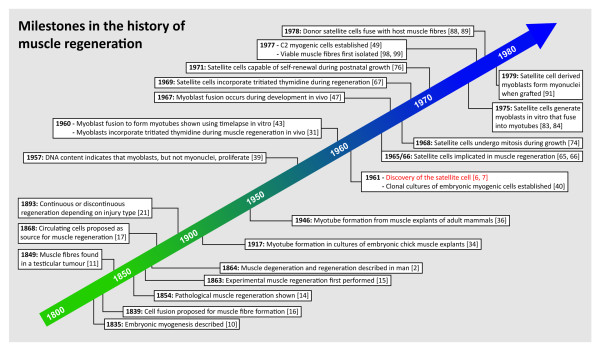
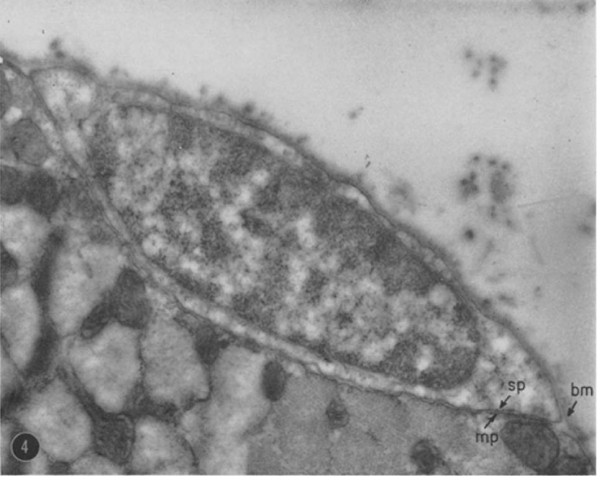
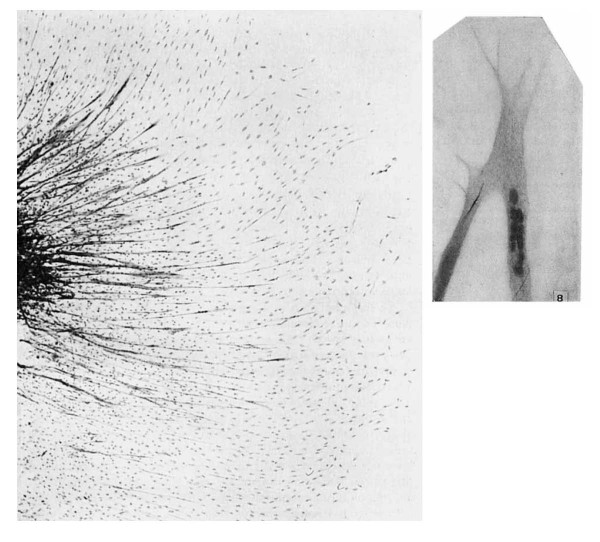
In February 1961, Alexander Mauro described a cell 'wedged' between the plasma membrane of the muscle fibre and the surrounding basement membrane. He postulated that it could be a dormant myoblast, poised to repair muscle when needed. In the same month, Bernard Katz also reported a cell in a similar location on muscle spindles, suggesting that it was associated with development and growth of intrafusal muscle fibres. Both Mauro and Katz used the term 'satellite cell' in relation to their discoveries. Today, the muscle satellite cell is widely accepted as the resident stem cell of skeletal muscle, supplying myoblasts for growth, homeostasis and repair.Since 2011 marks both the 50th anniversary of the discovery of the satellite cell, and the launch of Skeletal Muscle, it seems an opportune moment to summarise the seminal events in the history of research into muscle regeneration. We start with the 19th-century pioneers who showed that muscle had a regenerative capacity, through to the descriptions from the mid-20th century of the underlying cellular mechanisms. The journey of the satellite cell from electron microscope curio, to its gradual acceptance as a bona fide myoblast precursor, is then charted: work that provided the foundations for our understanding of the role of the satellite cell. Finally, the rapid progress in the age of molecular biology is briefly discussed, and some ongoing debates on satellite cell function highlighted.
Overview
The claims and statistics of this paper haven’t been checked yet.
Free: it reads the open-access text and checks the first 5 claims that cite a source we can check. Create a free account to check every claim.
Integrity signals
Registry
Cites
Statistics
Figures
Verification
Claims the paper makes
The claims and statistics of this paper haven’t been checked yet.
Free: it reads the open-access text and checks the first 5 claims that cite a source we can check. Create a free account to check every claim.
Claims other papers make about this one
Each is checked against this paper’s own text: does it say what the citing paper says it does?
The cited source says what the claim attributes to it.
In the citing paper
“and are now wellrecognized as the resident stem cells of skeletal muscle (115).”
From The Hippo signal transduction network for exercise physiologists (2016) · cites this paper as [115]
Self-check
Percentages, sums and reported differences re-computed from the paper’s own numbers.
The self-check needs the paper’s full text.
Citations
Cites
SATELLITE CELL OF SKELETAL MUSCLE FIBERS
Mauro, A. (1961) · The Journal of Cell Biology · doi:10.1083/jcb.9.2.493 · Cited by 3,683 · cited 11×
“In the more famous of the pair, Alexander Mauro used electron microscopy to describe a cell with a striking paucity of cytoplasm relative to its nucleus ‘wedged between the plasma membrane of the muscle fibre and basement membrane’ in the tibialis anticus muscle of the frog [6].”
BackgroundMethodInfluentialSkeletal muscle mass and distribution in 468 men and women aged 18–88 yr
Janssen, I., Heymsfield, S. B., Wang, Z., & Ross, R. (2000) · Journal of Applied Physiology · doi:10.1152/jappl.2000.89.1.81 · Cited by 3,087 · cited 1×
“[1]).”
Muscle Regeneration by Bone Marrow-Derived Myogenic Progenitors
Ferrari, G., Cusella–, G., Angelis, D., Coletta, M., Paolucci, E., Stornaiuolo, A., Cossu, G., & Mavilio, F. (1998) · Science · doi:10.1126/science.279.5356.1528 · Cited by 2,720 · cited 2×
“Mutant and genetically modified mice also provided a powerful tool for both identifying satellite cells [112,124,125], and for lineage tracing to the single cell level, for examination of myogenic potential and contribution to the satellite cell pool [125-128].”
BackgroundMethodPax7 Is Required for the Specification of Myogenic Satellite Cells
Seale, P., Sabourin, L. A., Girgis-Gabardo, A., Mansouri, A., Gruss, P., & Rudnicki, M. A. (2000) · Cell · doi:10.1016/s0092-8674(00)00066-0 · Cited by 2,339 · cited 10×
“Surprisingly however, when the Pax7 locus was inactivated in satellite cells in adult, muscle regeneration was unaffected [160].”
BackgroundMethodInfluentialSerial passaging and differentiation of myogenic cells isolated from dystrophic mouse muscle
YAFFE, D., & SAXEL, O. (1977) · Nature · doi:10.1038/270725a0 · Cited by 2,123 · cited 1×
“Later, while trying to generate lines from dystrophic adult dy mice, Yaffe and Ora Saxel (now Ora Fuchs) produced a control line (C2) from injured thigh muscle of 2-month-old C3H mice [49]: likely derived from the progeny of activated satellite cells.”
BackgroundSubstrate Elasticity Regulates Skeletal Muscle Stem Cell Self-Renewal in Culture
Gilbert, P. M., Havenstrite, K. L., Magnusson, K. E. G., Sacco, A., Leonardi, N. A., Kraft, P., Nguyen, N. K., Thrun, S., Lutolf, M. P., & Blau, H. M. (2010) · Science · doi:10.1126/science.1191035 · Cited by 1,587 · cited 1×
“characterised, but recent work on modelling the niche in culture is already providing useful insight [150,151].”
BackgroundThe myoD Gene Family: Nodal Point During Specification of the Muscle Cell Lineage
Weintraub, H., Davis, R., Tapscott, S., Thayer, M., Krause, M., Benezra, R., Blackwell, T. K., Turner, D., Rupp, R., Hollenberg, S., et al. (1991) · Science · doi:10.1126/science.1846704 · Cited by 1,572 · cited 1×
“Discovery of the myogenic regulatory factor family (Myf5, MyoD, myogenin and MRF4) in the late 1980s was a seminal moment in understanding the specification of the myogenic lineage and control of muscle development [104].”
BackgroundAsymmetric self-renewal and commitment of satellite stem cells in muscle
Kuang, S., Kuroda, K., Le Grand, F., & Rudnicki, M. A. (2007) · Cell · doi:10.1016/j.cell.2007.03.044 · Cited by 1,449 · cited 3×
“Different regenerative potentials have been ascribed to satellite cell subpopulations isolated by FACS using various antigen combinations [153,156].”
BackgroundCollins, C. A., Olsen, I., Zammit, P. S., Heslop, L., Petrie, A., Partridge, T. A., & Morgan, J. E. (2005) · Cell · doi:10.1016/j.cell.2005.05.010 · Cited by 1,445 · cited 2×
“Grafting a single myofibre together with its associated satellite cells resulted in the generation of many new satellite cells in the host muscle, so demonstrating their ability to self-renew: requisite for a stem cell [128].”
BackgroundMethodSelf-citationDirect Isolation of Satellite Cells for Skeletal Muscle Regeneration
Montarras, D., Morgan, J., Collins, C., Relaix, F., Zaffran, S., Cumano, A., Partridge, T., & Buckingham, M. (2005) · Science · doi:10.1126/science.1114758 · Cited by 1,100 · cited 2×
“Mutant and genetically modified mice also provided a powerful tool for both identifying satellite cells [112,124,125], and for lineage tracing to the single cell level, for examination of myogenic potential and contribution to the satellite cell pool [125-128].”
BackgroundMethod
Research works printed but not linked: 3
- Hauschka SD Linkhart TA Clegg C Merrill G Mauro A Clonal studies of human and mouse muscle Muscle Regeneration 1979 New York, USA: Raven Press 311 322
- Mauro A (Ed.) Muscle Regeneration 1979 New York, USA: Raven Press
- Rubin LL Keller CE Schuetze SM Mauro A Satellite cells in isolated adult muscle fibres in tissue culture Muscle Regeneration 1979 New York, USA: Raven Press 281 284
Cited by
Relaix, F., & Zammit, P. S. (2012) · Development · doi:10.1242/dev.069088 · Cited by 882
“Skeletal muscle regeneration was first properly described in the 1860s, but almost a century elapsed before the cellular mechanisms of this process were resolved (Scharner and Zammit, 2011).”
BackgroundSelf-citationSatellite Cells and Skeletal Muscle Regeneration
Dumont, N. A., Bentzinger, C. F., Sincennes, M., & Rudnicki, M. A. (2015) · Comprehensive Physiology · doi:10.1002/cphy.c140068 · Cited by 719
“It has been known since the 19 th century that muscle tissue possesses great regenerative potential even following serious traumas such as ischemia, burns, incisions, or crush injuries (264).”
Skeletal muscle: A review of molecular structure and function, in health and disease
Mukund, K., & Subramaniam, S. (2020) · WIREs Systems Biology and Medicine · doi:10.1002/wsbm.1462 · Cited by 664
“Its ability to regenerate is governed significantly by the interaction between SCs (Scharner & Zammit, 2011) (SCs, unipotent muscle precursor cells) and its microenvironment (niche) (Lander, Kimble, Clevers, et al., 2012).”
BackgroundComparative Study of Injury Models for Studying Muscle Regeneration in Mice
Hardy, D., Besnard, A., Latil, M., Jouvion, G., Briand, D., Thépenier, C., Pascal, Q., Guguin, A., Gayraud-Morel, B., Cavaillon, J.-M., et al. (2016) · PLOS ONE · doi:10.1371/journal.pone.0147198 · Cited by 509
Tissue-Specific Stem Cells: Lessons from the Skeletal Muscle Satellite Cell
Brack, A. S., & Rando, T. A. (2012) · Cell Stem Cell · doi:10.1016/j.stem.2012.04.001 · Cited by 413
“Introduction The observation that skeletal muscle has the capacity to regen- erate after injury was well documented bymicroscopic examination in the mid-19th century, primarily in German literature (Scharner and Zammit, 2011).”
BackgroundStimuli and sensors that initiate skeletal muscle hypertrophy following resistance exercise
Wackerhage, H., Schoenfeld, B. J., Hamilton, D. L., Lehti, M., & Hulmi, J. J. (2019) · Journal of Applied Physiology · doi:10.1152/japplphysiol.00685.2018 · Cited by 357
Forcina, L., Cosentino, M., & Musarò, A. (2020) · Cells · doi:10.3390/cells9051297 · Cited by 246
Inflammaging: Implications in Sarcopenia
Antuña, E., Cachán-Vega, C., Bermejo-Millo, J. C., Potes, Y., Caballero, B., Vega-Naredo, I., Coto-Montes, A., & Garcia-Gonzalez, C. (2022) · International Journal of Molecular Sciences · doi:10.3390/ijms232315039 · Cited by 215
Lying low but ready for action: the quiescent muscle satellite cell
Montarras, D., L'honoré, A., & Buckingham, M. (2013) · The FEBS Journal · doi:10.1111/febs.12372 · Cited by 200
Brooks, N. E., & Myburgh, K. H. (2014) · Frontiers in Physiology · doi:10.3389/fphys.2014.00099 · Cited by 194
“Over recent years, a number of key publications have demonstrated that SCs are not all the same (Zammit, 2008; Biressi and Rando, 2010; Scharner and Zammit, 2011) and variations exist even between SCs in the same muscle (Ono et al., 2012).”
BackgroundJudson, R. N., Tremblay, A. M., Knopp, P., White, R. B., Urcia, R., De Bari, C., Zammit, P. S., Camargo, F. D., & Wackerhage, H. (2012) · Journal of Cell Science · doi:10.1242/jcs.109546 · Cited by 190
“When satellite cells become activated and re-enter the cell cycle, MyoD is expressed (Pax7/MyoD) in culture ex vivo or in response to injury and hypertrophic stimuli in vivo (Scharner and Zammit, 2011; Relaix and Zammit, 2012).”
BackgroundSelf-citationRole of satellite cells in muscle growth and maintenance of muscle mass
Pallafacchina, G., Blaauw, B., & Schiaffino, S. (2013) · Nutrition, Metabolism and Cardiovascular Diseases · doi:10.1016/j.numecd.2012.02.002 · Cited by 176
The Skeletal Muscle Satellite Cell: Still Young and Fascinating at 50
Yablonka-Reuveni, Z. (2011) · Journal of Histochemistry & Cytochemistry · doi:10.1369/0022155411426780 · Cited by 162
An Overview About the Biology of Skeletal Muscle Satellite Cells
Forcina, L., Miano, C., Pelosi, L., & Musarò, A. (2019) · Current Genomics · doi:10.2174/1389202920666190116094736 · Cited by 151
Multipotent stromal cells: One name, multiple identities
Soliman, H., Theret, M., Scott, W., Hill, L., Underhill, T. M., Hinz, B., & Rossi, F. M. V. (2021) · Cell Stem Cell · doi:10.1016/j.stem.2021.09.001 · Cited by 147
Starring or supporting role? Satellite cells and skeletal muscle fiber size regulation
Murach, K. A., Fry, C. S., Kirby, T. J., Jackson, J. R., Lee, J. D., White, S. H., Dupont-Versteegden, E. E., McCarthy, J. J., & Peterson, C. A. (2018) · Physiology · doi:10.1152/physiol.00019.2017 · Cited by 137
The Basis of Muscle Regeneration
Musarò, A. (2014) · Advances in Biology · doi:10.1155/2014/612471 · Cited by 187
Multiscale analysis of a regenerative therapy for treatment of volumetric muscle loss injury
Aguilar, C. A., Greising, S. M., Watts, A., Goldman, S. M., Peragallo, C., Zook, C., Larouche, J. A., & Corona, B. T. (2018) · Cell Death Discovery · doi:10.1038/s41420-018-0027-8 · Cited by 148
Nutritional influences on age-related skeletal muscle loss
Welch, A. A. (2014) · Proceedings of the Nutrition Society · doi:10.1017/s0029665113003698 · Cited by 133
“Satellite cells may control myogenesis and are a population of undifferentiated myogenic cells that supply myoblasts for growth, homoeostasis and repair((89,101,102)).”
BackgroundThe Muscle Stem Cell Niche in Health and Disease
Mashinchian, O., Pisconti, A., Le Moal, E., & Bentzinger, C. F. (2018) · Current Topics in Developmental Biology · doi:10.1016/bs.ctdb.2017.08.003 · Cited by 132
Simon, A., & Tanaka, E. M. (2013) · WIREs Developmental Biology · doi:10.1002/wdev.73 · Cited by 113
microRNAs in skeletal muscle development
Mok, G. F., Lozano-Velasco, E., & Münsterberg, A. (2017) · Seminars in Cell and Developmental Biology · doi:10.1016/j.semcdb.2017.10.032 · Cited by 131
Apoptosis in capillary endothelial cells in ageing skeletal muscle
Wang, H., Listrat, A., Meunier, B., Gueugneau, M., Coudy‐Gandilhon, C., Combaret, L., Taillandier, D., Polge, C., Attaix, D., Lethias, C., et al. (2014) · Aging Cell · doi:10.1111/acel.12169 · Cited by 109
“2E).”
Rong, S., Wang, L., Peng, Z., Liao, Y., Li, D., Yang, X., Nussler, A. K., Liu, L., Bao, W., & Yang, W. Q. (2020) · Journal of Cachexia Sarcopenia and Muscle · doi:10.1002/jcsm.12536 · Cited by 122
“During the formation and repair process, myofibres are developed through fusion of myoblasts(55) supplied by satellite cells.(57) Satellite cells, a population of muscle stem cells with the ability to selfrenew, play an indispensable role in muscle regeneration, which begins with muscle fibre necrosis and ends with ne…”
BackgroundThe Hippo signal transduction network in skeletal and cardiac muscle
Wackerhage, H., Del Re, D. P., Judson, R. N., Sudol, M., & Sadoshima, J. (2014) · Science Signaling · doi:10.1126/scisignal.2005096 · Cited by 92
Awaya, T., Kato, T., Mizuno, Y., Chang, H. C., Niwa, A., Umeda, K., Nakahata, T., & Heike, T. (2012) · PLoS ONE · doi:10.1371/journal.pone.0051638 · Cited by 94
“PAX7, which is essential for the specification of muscle progenitors [3-5,35,36], was detected at day 21 (7+14), but its expression was highly variable.”
BackgroundMetabolic reprogramming as a novel regulator of skeletal muscle development and regeneration
Ryall, J. G. (2013) · The FEBS Journal · doi:10.1111/febs.12189 · Cited by 82
Stem cell therapy for muscular dystrophies
Biressi, S., Filareto, A., & Rando, T. A. (2020) · Journal of Clinical Investigation · doi:10.1172/jci142031 · Cited by 88
Extracellular matrix: Brick and mortar in the skeletal muscle stem cell niche
Schüler, S. C., Liu, Y., Dumontier, S., Grandbois, M., Moal, E. L., Cornelison, D., & Bentzinger, C. F. (2022) · Frontiers in Cell and Developmental Biology · doi:10.3389/fcell.2022.1056523 · Cited by 101
“studied paradigms of adult tissue regeneration (Katz, 1961; Mauro, 1961; Scharner and Zammit, 2011).”
BackgroundSmith, L., Cho, S., & Discher, D. E. (2017) · Seminars in Cell and Developmental Biology · doi:10.1016/j.semcdb.2017.05.025 · Cited by 89
“Constant beating of the heart relies on the long-life of heart muscle, but heart muscle seems to be rarely regenerated compared to skeletal muscle where a resident population of skeletal muscle stem cells (MuSC) provides a robust ability for skeletal muscle to adapt to mechanical demands [70].”
BackgroundDissecting Murine Muscle Stem Cell Aging through Regeneration Using Integrative Genomic Analysis
Shcherbina, A., Larouche, J., Fraczek, P., Yang, B. A., Brown, L. A., Markworth, J. F., Chung, C. H., Khaliq, M., de Silva, K., Choi, J. J., et al. (2020) · Cell Reports · doi:10.1016/j.celrep.2020.107964 · Cited by 76
“, 2014) to maintain healthy muscle into old age (Scharner and Zammit, 2011).”
BackgroundMyogenesis and muscle regeneration
Yusuf, F., & Brand‐Saberi, B. (2012) · Histochemistry and Cell Biology · doi:10.1007/s00418-012-0972-x · Cited by 99
“Work from several researchers (reviewed by Scharner and Zammit 2011) gradually recognized the satellite cells as the myoblast precursors that lead the myogenic regenerative response.”
Potential of adipose-derived stem cells in muscular regenerative therapies
Forcales, S. V. (2015) · Frontiers in Aging Neuroscience · doi:10.3389/fnagi.2015.00123 · Cited by 74
“The classical stem cell from muscle is the satellite cell (Mauro, 1961; Montarras et al., 2005; Scharner and Zammit, 2011), however, in recent years several groups have described other myoprogenitors in muscle tissue such as muscle side-population cells (Gussoni et al.”
BackgroundJudson, R. N., Gray, S. R., Walker, C., Carroll, A. M., Itzstein, C., Lionikas, A., Zammit, P. S., De Bari, C., & Wackerhage, H. (2013) · PLoS ONE · doi:10.1371/journal.pone.0059622 · Cited by 69
Self-citationAdult Skeletal Muscle Stem Cells
Sambasivan, R., & Tajbakhsh, S. (2014) · Results and problems in cell differentiation · doi:10.1007/978-3-662-44608-9_9 · Cited by 83
Zhu, H., Xiao, F., Wang, G., Wei, X., Jiang, L., Chen, Y., Zhu, L., Wang, H., Diao, Y., Wang, H., et al. (2016) · Cell Reports · doi:10.1016/j.celrep.2016.07.041 · Cited by 74
“In vertebratemuscles, muscle satellite cells (MuSCs) are responsible for both embryonic and postnatal muscle growth and muscle regeneration upon injury (Brack and Rando, 2012; Buckingham and Relaix, 2007; Murphy and Kardon, 2011; Scharner and Zammit, 2011; Yin et al., 2013).”
Human and mouse skeletal muscle stem and progenitor cells in health and disease
Mierzejewski, B., Archacka, K., Grabowska, I., Florkowska, A., Ciemerych, M. A., & Brzóska, E. (2020) · Seminars in Cell and Developmental Biology · doi:10.1016/j.semcdb.2020.01.004 · Cited by 76
Satellite cell contribution to disease pathology in Duchenne muscular dystrophy
Kodippili, K., & Rudnicki, M. A. (2023) · Frontiers in Physiology · doi:10.3389/fphys.2023.1180980 · Cited by 74
“Satellite cells, independently discovered in 1961 by Alexander Mauro and Bernard Katz, are cells “wedged” between the basal lamina and plasma membrane of the muscle fiber (Mauro, 1961; Scharner and Zammit, 2011).”
BackgroundMoyle, L. A., & Zammit, P. S. (2014) · Methods in molecular biology · doi:10.1007/978-1-4939-1435-7_6 · Cited by 56
Self-citationArrhythmia in Stem Cell Transplantation
Almeida, S. O., Skelton, R. J. P., Adigopula, S., & Ardehali, R. (2015) · Cardiac Electrophysiology Clinics · doi:10.1016/j.ccep.2015.03.012 · Cited by 60
“A major source of SMs is satellite cells, resident muscle stem cells responsible for muscle growth, repair, and homeostasis.(14) The potential for in vitro amplification of satellite stem cells and their ability to self-renew make SMs a desirable target for CSC therapy.”
BackgroundTranscriptional and Chromatin Dynamics of Muscle Regeneration after Severe Trauma
Aguilar, C. A., Pop, R., Shcherbina, A., Watts, A., Matheny, R. W., Cacchiarelli, D., Han, W. M., Shin, E.-J., Nakhai, S. A., Jang, Y. C., et al. (2016) · Stem Cell Reports · doi:10.1016/j.stemcr.2016.09.009 · Cited by 55
“After insult or injury, adult skeletal muscle enables repair and regeneration of existing fibers and formation of new fibers through a population of stem cells that reside underneath the basal lamina called satellite cells (SCs) (Scharner and Zammit, 2011).”
BackgroundBiomaterials‐Based Technologies in Skeletal Muscle Tissue Engineering
Luo, W., Zhang, H., Wan, R., Cai, Y., Liu, Y., Wu, Y., Yang, Y., Chen, J., Zhang, D., Luo, Z., et al. (2024) · Advanced Healthcare Materials · doi:10.1002/adhm.202304196 · Cited by 58
Ursolic acid ameliorates aging-metabolic phenotype through promoting of skeletal muscle rejuvenation
Bakhtiari, N., Hosseinkhani, S., Tashakor, A., & Hemmati, R. (2015) · Medical Hypotheses · doi:10.1016/j.mehy.2015.02.014 · Cited by 51
“Satellite cells are small mononuclear progenitor cells responsible for repairment of the injured fibers, differentiation and fusion to improve the existing muscle fibers and proliferating to new fiber generation [18].”
BackgroundDefective skeletal muscle growth in lamin A/C-deficient mice is rescued by loss of Lap2α
Cohen, T. V., Gnocchi, V. F., Cohen, J. E., Phadke, A., Liu, H., Ellis, J. A., Foisner, R., Stewart, C. L., Zammit, P. S., & Partridge, T. A. (2013) · Human Molecular Genetics · doi:10.1093/hmg/ddt135 · Cited by 58
“Upon TGFb1 receptormediated activation, Smad2/3 become phosphorylated and translocate to the nucleus to transactivate transcription targets, following which, Smad2/3 become dephosphorylated by protein phosphatase 2A and are exported back to the cytoplasm (18).”
BackgroundSelf-citationLong-Term Evaluation of Functional Outcomes Following Rat Volumetric Muscle Loss Injury and Repair
Mintz, E. L., Passipieri, J. A., Franklin, I. R., Toscano, V. M., Afferton, E. C., Sharma, P. R., & Christ, G. J. (2019) · Tissue Engineering Part A · doi:10.1089/ten.tea.2019.0126 · Cited by 53
Cheng, Y., Lin, S., Cao, Z., Yu, R., Fan, Y., & Chen, J. (2025) · International Immunopharmacology · doi:10.1016/j.intimp.2025.114056 · Cited by 57
The Hippo signal transduction network for exercise physiologists
Gabriel, B. M., Hamilton, D. L., Tremblay, A. M., & Wackerhage, H. (2016) · Journal of Applied Physiology · doi:10.1152/japplphysiol.01076.2015 · Cited by 48
Technical requirements for cultured meat production: a review
Ramani, S., Ko, D., Kim, B., Cho, C., Kim, W., Jo, C., Lee, C., Kang, J., Hur, S. J., & Park, S. (2021) · Journal of Animal Science and Technology · doi:10.5187/jast.2021.e45 · Cited by 55
“myofiber were coined by Jorge Francisco Tello in the same year [43].”
BackgroundHuang, P., Schulz, T. J., Beauvais, A., Tseng, Y., & Gussoni, E. (2014) · Nature Communications · doi:10.1038/ncomms5063 · Cited by 45
Granular Hydrogels Improve Myogenic Invasion and Repair after Volumetric Muscle Loss
Tanner, G. I., Schiltz, L., Narra, N., Figueiredo, M. L., & Qazi, T. H. (2024) · Advanced Healthcare Materials · doi:10.1002/adhm.202303576 · Cited by 45
Larouche, J. A., Mohiuddin, M., Choi, J. J., Ulintz, P. J., Fraczek, P., Sabin, K., Pitchiaya, S., Kurpiers, S. J., Castor-Macias, J., Liu, W., et al. (2021) · eLife · doi:10.7554/elife.66749 · Cited by 42
Ross, J. A., Benn, A., Jonuschies, J., Boldrin, L., Muntoni, F., Hewitt, J., Brown, S., & Morgan, J. E. (2012) · Stem Cells · doi:10.1002/stem.1197 · Cited by 47
Alcazar, C. A., Hu, C., Rando, T. A., Huang, N. F., & Nakayama, K. H. (2020) · Biomaterials Science · doi:10.1039/d0bm00990c · Cited by 43
Systematic review of the synergist muscle ablation model for compensatory hypertrophy
Terena, S. M. L., Fernandes, K. P. S., Bussadori, S. K., Deana, A. M., & Mesquita-Ferrari, R. A. (2017) · Revista da Associação Médica Brasileira · doi:10.1590/1806-9282.63.02.164 · Cited by 38
Scott, I. C., Tomlinson, W., Walding, A., Isherwood, B. J., & Dougall, I. G. (2013) · Journal of Cachexia Sarcopenia and Muscle · doi:10.1007/s13539-012-0097-z · Cited by 42
Laminin Mimetic Peptide Nanofibers Regenerate Acute Muscle Defect
Eren Cimenci, C., Uzunalli, G., Uysal, O., Yergoz, F., Karaca Umay, E., Guler, M. O., & Tekinay, A. B. (2017) · Acta Biomaterialia · doi:10.1016/j.actbio.2017.07.010 · Cited by 36
Clinical value of non-coding RNAs in cardiovascular, pulmonary, and muscle diseases
Bonnet, S., Boucherat, O., Paulin, R., Wu, D., Hindmarch, C. C. T., Archer, S. L., Song, R., Moore, J. B., Provencher, S., Zhang, L., et al. (2019) · American Journal of Physiology-Cell Physiology · doi:10.1152/ajpcell.00078.2019 · Cited by 35
Regulation of Non-Coding RNA in the Growth and Development of Skeletal Muscle in Domestic Chickens
Shi, H., He, Y., Li, X., Du, Y., Zhao, J., & Ge, C. (2022) · Genes · doi:10.3390/genes13061033 · Cited by 39
Sphingosine-1-phosphate receptor 3 influences cell cycle progression in muscle satellite cells
Fortier, M., Figeac, N., White, R. B., Knopp, P., & Zammit, P. S. (2013) · Developmental Biology · doi:10.1016/j.ydbio.2013.07.006 · Cited by 37
“Contents lists available at ScienceDirect Developmental Biology 0012-16 http://d n Corr E-m 1 Pr journal homepage: www.elsevier.com/locate/developmentalbiology Sphingosine-1-phosphate receptor 3 influences cell cycle progression in muscle satellite cells Mathieu Fortier, Nicolas Figeac, Robert B.…”
Self-citationLu, L., Wang, D.-T., Shi, Y., Yin, Y., Wei, L.-B., Zou, Y.-C., Huang, B., Zhao, Y., Wang, M., Wan, H., et al. (2013) · International Journal of Biological Macromolecules · doi:10.1016/j.ijbiomac.2013.06.027 · Cited by 33
Arntz, F., Mkaouer, B., Markov, A., Schoenfeld, B. J., Moran, J., Ramírez‐Campillo, R., Behrens, M., Baumert, P., Erskine, R. M., Hauser, L., et al. (2022) · Frontiers in Physiology · doi:10.3389/fphys.2022.888464 · Cited by 40
“In fact, satellite cells represent the resident stem cells of skeletal muscle (Scharner and Zammit, 2011) and lead to increased muscle regeneration (Barton-Davis et al.”
BackgroundRejuvenating stem cells to restore muscle regeneration in aging
Bengal, E., Perdiguero, E., Serrano, A. L., & Muñoz‐Cánoves, P. (2017) · F1000Research · doi:10.12688/f1000research.9846.1 · Cited by 34
Adult stem cell sources for skeletal and smooth muscle tissue engineering
Salemi, S., Prange, J. A., Baumgartner, V., Haralampieva, D., & Eberli, D. (2022) · Stem Cell Research & Therapy · doi:10.1186/s13287-022-02835-x · Cited by 44
“These cells have been simultaneously discovered by Mauro and Katz in the early 1960s and have since then been widely accepted as the resident stem cells of skeletal muscles, providing myoblasts for growth, homeostasis and repair [9].”
BackgroundKnopp, P., Figeac, N., Fortier, M., Moyle, L. A., & Zammit, P. S. (2013) · Developmental Biology · doi:10.1016/j.ydbio.2013.02.011 · Cited by 37
“Skeletal muscle has a remarkable ability to repair and regenerate due to the presence of resident stem cells, termed muscle satellite cells, located on the surface of a myofibre ((Mauro, 1961), for reviews see (Relaix and Zammit, 2012; Scharner and Zammit, 2011)).”
BackgroundSelf-citationMilner, D., & Cameron, J. A. (2013) · Current Topics in Microbiology and Immunology · doi:10.1007/82_2012_292 · Cited by 28
“Space constraints for this review limits our discussion of these fascinating cells, so readers are directed to a number of recent, outstanding reviews discussing satellite cell biology (Zammit et al. 2006; Ten Broek et al. 2010; Scharner and Zammit 2011; Yablonka-Reuveni 2011).”
BackgroundCOUP-TFII regulates satellite cell function and muscular dystrophy
Xie, X., Tsai, S. Y., & Tsai, M. (2016) · Journal of Clinical Investigation · doi:10.1172/jci87414 · Cited by 30
Pantic, B., Borgia, D., Giunco, S., Malena, A., Kiyono, T., Salvatori, S., Rossi, A. D., Giardina, E., Sangiuolo, F. C., Pegoraro, E., et al. (2016) · Experimental Cell Research · doi:10.1016/j.yexcr.2016.02.013 · Cited by 35
Myogenic Cell Transplantation in Genetic and Acquired Diseases of Skeletal Muscle
Boyer, O., Butler-Browne, G. S., Chinoy, H., Cossu, G., Galli, F., Lilleker, J. B., Magli, A., Mouly, V., Perlingeiro, R. C. R., Previtali, S. C., et al. (2021) · Frontiers in Genetics · doi:10.3389/fgene.2021.702547 · Cited by 33
“With similarity to targeted botulinum toxin injections for treating dysphagia, targeting specific diseased muscles could ameliorate important aspects of the disease (e.g., grip weakness), without requirement for systemic treatment administration and associated adverse effects (Schrey et al., 2017).”
BackgroundMyogenic potential of mesenchymal stem cells isolated from porcine adipose tissue
Milner, D. J., Bionaz, M., Monaco, E. L., Cameron, J. A., & Wheeler, M. B. (2018) · Cell and Tissue Research · doi:10.1007/s00441-017-2764-z · Cited by 27
Single cell dynamics of embryonic muscle progenitor cells in zebrafish
Sharma, P., Ruel, T. D., Kocha, K. M., Liao, S., & Huang, P. (2019) · Development · doi:10.1242/dev.178400 · Cited by 37
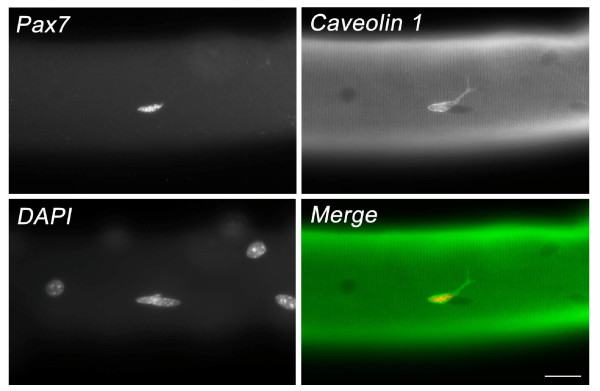
“Quiescent satellite cells often display a bipolar morphology and reside beneath the basal lamina on the surface of the myofiber (Scharner and Zammit, 2011; Webster et al., 2016).”
BackgroundFrom pluripotency to myogenesis: a multistep process in the dish
Świerczek‐Lasek, B., Ciemerych, M. A., & Archacka, K. (2015) · Journal of Muscle Research and Cell Motility · doi:10.1007/s10974-015-9436-y · Cited by 28
“muscle specific stem cells which differentiate to skeletal myoblasts (for review see Moraczewski et al. 2008; Scharner and Zammit 2011; Yablonka-Reuveni 2011).”
BackgroundRegulation of Cell Cycle Entry and Exit: A Single Cell Perspective
Coller, H. A. (2019) · Comprehensive physiology · doi:10.1002/cphy.c190014 · Cited by 35
Perspectives on mitochondrial dysfunction in the regeneration of aging skeletal muscle
Wang, K., Gan, M., Lei, Y., Liao, T., Li, J., Niu, L., Zhao, Y., Chen, L., Wang, Y., Zhu, L., et al. (2025) · Cellular & Molecular Biology Letters · doi:10.1186/s11658-025-00771-1 · Cited by 40
“…muscle stem cells (MuSCs) or satellite cells, “wedged” between the plasma membrane of the muscle fiber and the surrounding basement membrane [2–4], MuSCs are predominantly maintained in a reversible G0 quiescent state, characterized by minimal transcriptional activity and a hypometabolic…”
Myogenic Potential of Canine Craniofacial Satellite Cells
Rovere, R. M. L. L., Quattrocelli, M., Pietrangelo, T., Filippo, E. S. D., Maccatrozzo, L., Cassano, M., Mascarello, F., Barthélémy, I. ̈., Blot, S., Sampaolesi, M., et al. (2014) · Frontiers in Aging Neuroscience · doi:10.3389/fnagi.2014.00090 · Cited by 25
“DISCUSSION In the last decades, SCs have been shown as muscle stem cells responsible for tissue regeneration in adulthood (Scharner and Zammit, 2011).”
Guo, R., Wu, Z., Liu, A., Li, Q., Han, T., & Shen, C. (2024) · International Immunopharmacology · doi:10.1016/j.intimp.2024.113143 · Cited by 27
Ravalli, S., Federico, C., Lauretta, G., Saccone, S., Pricoco, E. P., Roggio, F., Rosa, M. D., Maugeri, G., & Musumeci, G. (2021) · Biomedicines · doi:10.3390/biomedicines9070807 · Cited by 24
Brown, S., Malik, S. N., Aljammal, M., O'Flynn, A., Hobbs, C., Shah, M., Roberts, S. J., & Logan, M. P. O. (2022) · JBMR Plus · doi:10.1002/jbm4.10707 · Cited by 26
“8% of muscle fiber nuclei in rat and mouse are the resident stem cells.((41)) Using FACS to enrich for GFP-positive and GFP-negative cell populations (Fig.”
BackgroundThe Function and Regulation Mechanism of Non-Coding RNAs in Muscle Development
Yang, Y., Wu, J., Liu, W., Zhao, Y., & Chen, H. (2023) · International Journal of Molecular Sciences · doi:10.3390/ijms241914534 · Cited by 25
Normal muscle structure, growth, development, and regeneration
Pinto, W. B. V. D. R., de Souza, P. V. S., & Oliveira, A. S. B. (2015) · Current Reviews in Musculoskeletal Medicine · doi:10.1007/s12178-015-9267-x · Cited by 24
“Although nearly obvious, recently, it became more clear that most of clinical signs related to an acquired or inherited myopathy correlate to the degree of loss of satellite cells [27–30].”
Rozwadowska, N., Kolanowski, T. J., Wiland, E., Siatkowski, M., Pawlak, P., Malcher, A., Miętkiewski, T., Olszewska, M., & Kurpisz, M. K. (2013) · PLoS ONE · doi:10.1371/journal.pone.0073231 · Cited by 21
“Activated cells (myoblasts) proliferate, migrate and fuse with each other or with existing myocytes, giving rise to newly formed muscle fibres [1].”
BackgroundMasyuk, M., & Brand‐Saberi, B. (2014) · Results and problems in cell differentiation · doi:10.1007/978-3-662-44608-9_1 · Cited by 22
The Satellite Cell at 60: The Foundation Years
Engquist, E. N., & Zammit, P. S. (2021) · Journal of Neuromuscular Diseases · doi:10.3233/jnd-210705 · Cited by 23
“Edward Schultz built on earlier work [5] to show that satellite cells also became”
InfluentialSelf-citationGLUD1 determines murine muscle stem cell fate by controlling mitochondrial glutamate levels
Soro-Arnáiz, I., Fitzgerald, G., Cherkaoui, S., Zhang, J., Gilardoni, P. A., Ghosh, A., Bar‐Nur, O., Masschelein, E., Maechler, P., Zamboni, N., et al. (2024) · Developmental Cell · doi:10.1016/j.devcel.2024.07.015 · Cited by 22
Reawakening Atlas: Chemical Approaches To Repair or Replace Dysfunctional Musculature
Jung, D., & Williams, D. R. (2012) · ACS Chemical Biology · doi:10.1021/cb3003368 · Cited by 21
Grabowska, I., Stremińska, W., Jańczyk‐Ilach, K., Machaj, E. K., Pojda, Z., Hoser, G., Kawiak, J., Moraczewski, J., Ciemerych, M. A., & Brzóska, E. (2013) · Current Stem Cell Research & Therapy · doi:10.2174/1574888x11308010010 · Cited by 22
“The phenomenon of muscle regeneration occurs thanks to the satellite cells that are precursor cells located between muscle fiber sarcolemma and surrounding basal lamina (reviewed in [1, 2]).”
BackgroundLapan, A. D., Rozkalne, A., & Gussoni, E. (2012) · Human Molecular Genetics · doi:10.1093/hmg/dds196 · Cited by 23
“Medium conditions: (1) 20% fetal bovine serum (FBS)/DMEM, (2) Invitrogen StemPro MSC SFM, (3) 20% FBS/F10, (4) 20% FBS/F10:DMEM (1:1), (5) 20% FBS/F12, (6) 20% FBS/F12:DMEM (1:1), (7) Invitrogen MesenPRO RS, (8) Invitrogen Knockout SR, (9) Invitrogen StemPro hESC SFM, (10) 20% FBS/RPMI, (11) 10% FBS/OptiMEM and (12) 2…”
Pacilio, S., Costa, R., Papa, V., Rodia, M. T., Gotti, C., Pagnotta, G., Cenacchi, G., & Focarete, M. L. (2023) · Bioengineering · doi:10.3390/bioengineering10020239 · Cited by 22
Dowling, P., Swandulla, D., & Ohlendieck, K. (2023) · European Journal of Translational Myology · doi:10.4081/ejtm.2023.11856 · Cited by 28
Carraro, U., & Yablonka‐Reuveni, Z. (2021) · European Journal of Translational Myology · doi:10.4081/ejtm.2021.9743 · Cited by 18
Tseng, C., Sinha, K. M., Pan, H., Cui, Y., Guo, P., Lin, C. Y., Yang, F., Deng, Z., Eltzschig, H. K., Lu, A., et al. (2018) · Stem Cells · doi:10.1002/stem.2957 · Cited by 17
The role of the aging microenvironment on the fate of PDGFRβ lineage cells in skeletal muscle repair
Lu, A., Tseng, C., Guo, P., Gao, Z., Whitney, K. E., Kolonin, M. G., & Huard, J. (2022) · Stem Cell Research & Therapy · doi:10.1186/s13287-022-03072-y · Cited by 17
“Muscle progenitor cells (MPCs) are primarily responsible for skeletal muscle repair [2–4], while satellite cells (SCs), a major source of MPCs, serve a central role in postnatal maintenance, growth, repair, and regeneration in adult muscle [5, 6].”
BackgroundSkeletal muscle regeneration after extensive cryoinjury of caudal myomeres in adult zebrafish
Oudhoff, H., Hisler, V., Baumgartner, F., Rees, L., Grepper, D., & Jaźwińska, A. (2024) · npj Regenerative Medicine · doi:10.1038/s41536-024-00351-5 · Cited by 19
“In mammals, muscle repair relies on tissue-speci fi c stem cells, also called satellite cells 21,22 .”
Nitric oxide and muscle repair: Multiple actions converging on therapeutic efficacy
Rovere, P. Q., Clementi, E., & Brunelli, S. (2013) · European Journal of Pharmacology · doi:10.1016/j.ejphar.2013.11.006 · Cited by 20
“Upon injury they are primed to proliferate, differentiate and fuse, leading to new myofibre formation and reconstitution of a functional contractile apparatus (Scharner and Zammit, 2011).”
BackgroundMolecular characterization of Malassezia nana isolates from cats
Castellá, G., Bellis, F. D., Bond, R., & Cabañes, F. J. (2010) · Veterinary Microbiology · doi:10.1016/j.vetmic.2010.09.021 · Cited by 20
Kim, A. R., Kim, S.-W., Lee, B.-W., Kim, K.-H., Kim, W., Seok, H., Lee, J., Um, J., Yim, S., Ahn, Y., et al. (2020) · Scientific Reports · doi:10.1038/s41598-020-61491-4 · Cited by 15
Isolation, Cryosection and Immunostaining of Skeletal Muscle
Quiroga, H. P. O., Goto, K., & Zammit, P. S. (2016) · Methods in molecular biology · doi:10.1007/978-1-4939-3810-0_8 · Cited by 13
Self-citationSosnicki, A. A., Gonzalez, J. M., Fields, B., & Knap, P. W. (2024) · Meat Science · doi:10.1016/j.meatsci.2024.109676 · Cited by 14
Rendle, D. I. (2010) · In Practice · doi:10.1136/inpract.32.7.300 · Cited by 12
Myogenic Differentiation of Mouse Embryonic Stem Cells That Lack a Functional Pax7 Gene
Czerwińska, A. M., Grabowska, I., Archacka, K., Bem, J., Świerczek‐Lasek, B., Helinska, A., Stremińska, W., Fogtman, A., Iwanicka‐Nowicka, R., Koblowska, M., et al. (2015) · Stem Cells and Development · doi:10.1089/scd.2015.0162 · Cited by 13
“In injured muscles, these cells become activated, proliferate, and differentiate into myoblasts that fuse and reconstruct muscle fibers (reviewed in Yablonka-Reuveni and Scharner and Zammit [4] [5]).”
Breast meat quality of turkey breeder hens at disposal age affected by deep pectoral myopathy
Cavalcanti, É. N. F., Giampietro‐Ganeco, A., de Mello, J. L. M., Fidelis, H. D. A., de Oliveira, R. F., Pereira, M. R., Villegas-Cayllahua, E. A., de Souza, R. A., de Souza, P. A., & Borba, H. (2021) · Poultry Science · doi:10.1016/j.psj.2021.101259 · Cited by 12
Metadata
- Authors
- Scharner, J., & Zammit, P. S.
- Affiliations
- King's College London (GB)
- Corresponding author
- Zammit, Peter S
- Venue
- Skeletal Muscle
- Published
- 2011
- Volume
- 1
- Issue
- 1
- Pages
- 28
- ISSN
- 2044-5040 (ISSN-L)
- PMC
- PMC3177780
- OpenAlex
- W2167523814
- Cited by
- 180
- References
- 153
- Citations by year
- 2026: 1 · 2025: 6 · 2024: 13 · 2023: 12 · 2022: 17 · 2021: 14 · 2020: 15 · 2019: 8 · 2018: 6 · 2017: 15 · 2016: 8 · 2015: 13 · 2014: 14 · 2013: 17 · 2012: 13
- FWCI
- 5.98
- Type
- journal article
- Language
- en
- Open access
- gold
- doi.org
- Licence
- cc-by
- Locations
- Skeletal Muscle (publishedVersion, cc-by)
- PubMed Central (publishedVersion, cc-by)
- PubMed (publishedVersion)
- DOAJ (DOAJ: Directory of Open Access Journals) (submittedVersion, cc-by-sa)
- Topics
- Life Sciences › Biochemistry, Genetics and Molecular Biology › Molecular Biology › Muscle Physiology and Disorders
- Social Sciences › Arts and Humanities › History and Philosophy of Science › History of Science and Medicine
- Life Sciences › Biochemistry, Genetics and Molecular Biology › Molecular Biology › Developmental Biology and Gene Regulation
- Keywords
- skeletal muscle regeneration, muscle repair, muscle homeostasis, muscle growth, intrafusal muscle fibers
About these checks
Registry, retraction, Cites and statistics results are computed, not judged, with one exception: a printed reference that no index lists is read once by a model before it counts as a citation error. Claims are extracted by a model and kept only when their quote appears verbatim in the text; each cited source is then checked, with a model’s help, for whether it says what the claim relies on. Those verdicts can be wrong — read the claim’s quote and the cited source before relying on one.
Statistics and arithmetic are recomputed, not judged.
Confidence bands are shown only for fields calibrated on our annotated test set. None is calibrated yet, so no band is shown.
What counts as a claim ›How we measure confidence ›How we check this ›
Are you an author, or do you see a problem with this page? Request a review
Data sources
Bibliographic data: Semantic Scholar, OpenAlex, Crossref.
Contains information from the Semantic Scholar Academic Graph Datasets, made available under the ODC Attribution License (ODC-BY 1.0).
Semantic Scholar’s data is described in: Kinney, R., et al. (2023). The Semantic Scholar Open Data Platform. arXiv:2301.10140.
