

The DOI matches its Crossref record; 50 of the 51 references it cites were found in a registry or an index.
Co-occurrence of anaerobic bacteria in colorectal carcinomas
Open accessAbstract
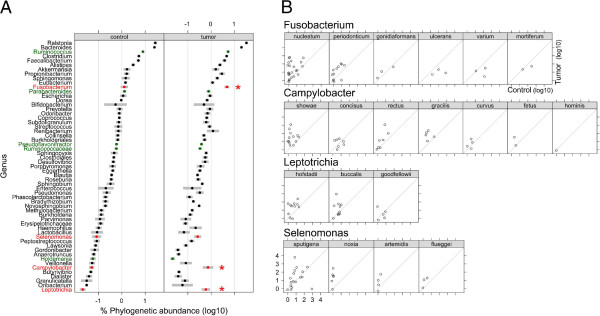
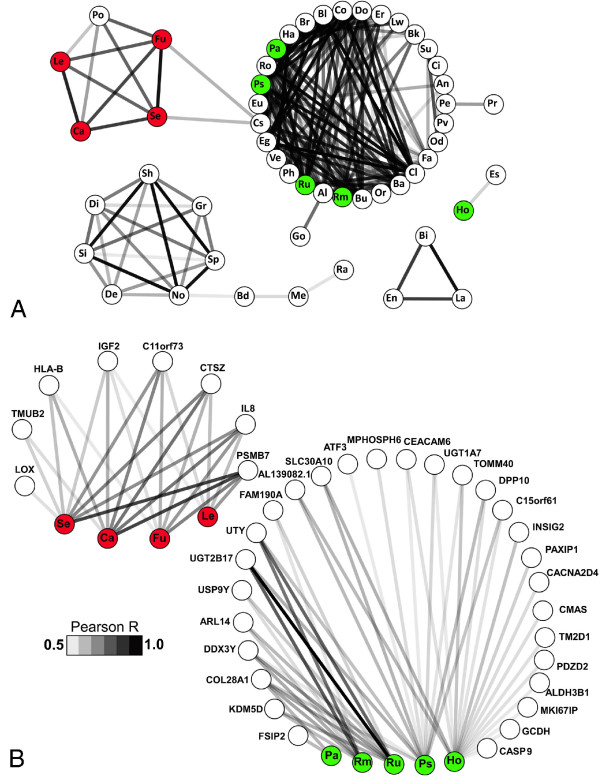
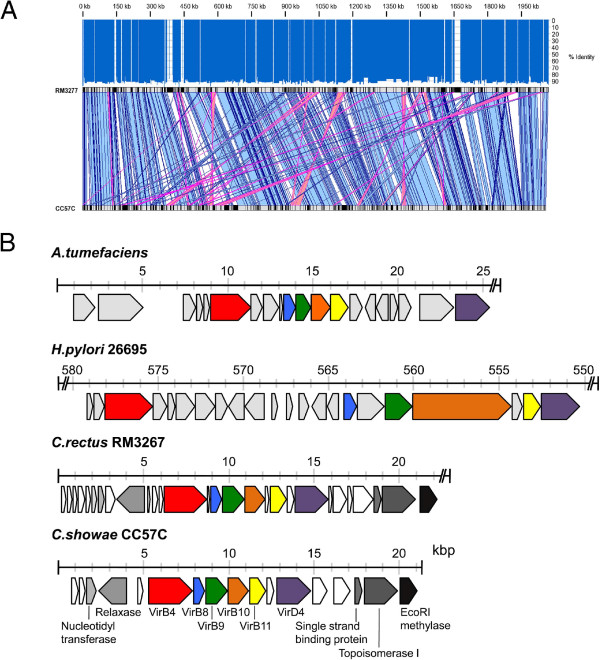
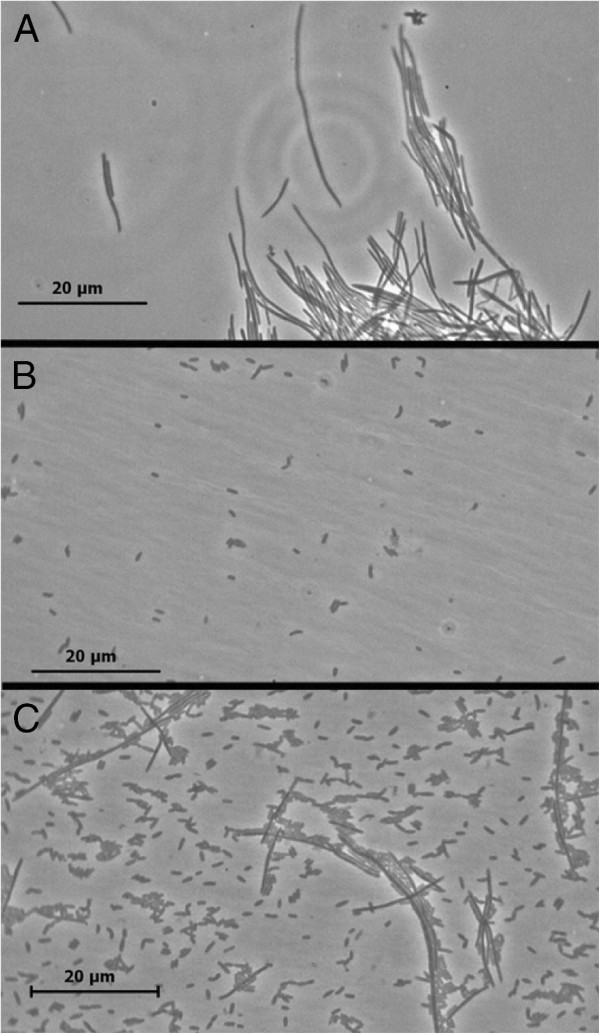
Background: Numerous cancers have been linked to microorganisms. Given that colorectal cancer is a leading cause of cancer deaths and the colon is continuously exposed to a high diversity of microbes, the relationship between gut mucosal microbiome and colorectal cancer needs to be explored. Metagenomic studies have shown an association between Fusobacterium species and colorectal carcinoma. Here, we have extended these studies with deeper sequencing of a much larger number (n = 130) of colorectal carcinoma and matched normal control tissues. We analyzed these data using co-occurrence networks in order to identify microbe-microbe and host-microbe associations specific to tumors. Results: We confirmed tumor over-representation of Fusobacterium species and observed significant co-occurrence within individual tumors of Fusobacterium, Leptotrichia and Campylobacter species. This polymicrobial signature was associated with over-expression of numerous host genes, including the gene encoding the pro-inflammatory chemokine Interleukin-8. The tumor-associated bacteria we have identified are all Gram-negative anaerobes, recognized previously as constituents of the oral microbiome, which are capable of causing infection. We isolated a novel strain of Campylobacter showae from a colorectal tumor specimen. This strain is substantially diverged from a previously sequenced oral Campylobacter showae isolate, carries potential virulence genes, and aggregates with a previously isolated tumor strain of Fusobacterium nucleatum. Conclusions: A polymicrobial signature of Gram-negative anaerobic bacteria is associated with colorectal carcinoma tissue.
Overview
The claims and statistics of this paper haven’t been checked yet.
Run the check — free, no account needed. It reads the open-access text and checks the sources it cites.
Integrity signals
Registry
Cites
Statistics
Figures
Verification
Claims the paper makes
The claims and statistics of this paper haven’t been checked yet.
Run the check — free, no account needed. It reads the open-access text and checks the sources it cites.
Claims other papers make about this one
Each is checked against this paper’s own text: does it say what the citing paper says it does?
In the citing paper
“CRCs have an increased enrichment of opportunistic pathogens and polymicrobial Gram-negative anaerobic bacteria91”
From The gut microbiota and host health: a new clinical frontier (2016) · cites this paper as [91]
Self-check
Percentages, sums and reported differences re-computed from the paper’s own numbers.
The self-check needs the paper’s full text.
Citations
Cites
Basic local alignment search tool
Altschul, S. F., Gish, W., Miller, W., Myers, E. W., & Lipman, D. J. (1990) · Journal of Molecular Biology · doi:10.1006/jmbi.1990.9999 · Cited by 98,669
Fast and accurate short read alignment with Burrows-Wheeler transform
Li, H., & Durbin, R. (2009) · Bioinformatics · doi:10.1093/bioinformatics/btp324 · Cited by 58,607
Fast and accurate long-read alignment with Burrows-Wheeler transform.
Li, H., & Durbin, R. (2010) · Bioinformatics · doi:10.1093/bioinformatics/btp698 · Cited by 12,063
A human gut microbial gene catalogue established by metagenomic sequencing
MetaHIT Consortium, Qin, J., Li, R., Raes, J., Arumugam, M., Burgdorf, K. S., Manichanh, C., Nielsen, T., Pons, N., Levenez, F., et al. (2010) · Nature · doi:10.1038/nature08821 · Cited by 11,624
Velvet: Algorithms for de novo short read assembly using de Bruijn graphsPreprint
Zerbino, D. R., & Birney, E. (2008) · Genome Research · doi:10.1101/gr.074492.107 · Cited by 9,587
Finishing the euchromatic sequence of the human genome
International Human Genome Sequencing Consortium (2004) · Nature · doi:10.1038/nature03001 · Cited by 4,971
Clonal Integration of a Polyomavirus in Human Merkel Cell Carcinoma
Feng, H., Shuda, M., Chang, Y., & Moore, P. S. (2008) · Science · doi:10.1126/science.1152586 · Cited by 3,208
The global health burden of infection‐associated cancers in the year 2002
Parkin, D. M. (2006) · International Journal of Cancer · doi:10.1002/ijc.21731 · Cited by 2,932
Integration of biological networks and gene expression data using Cytoscape
Cline, M. S., Smoot, M., Cerami, E., Kuchinsky, A., Landys, N., Workman, C., Christmas, R., Avila-Campilo, I., Creech, M., Gross, B., et al. (2007) · Nature Protocols · doi:10.1038/nprot.2007.324 · Cited by 2,507
The NIH Human Microbiome ProjectPreprint
The NIH HMP Working Group, Peterson, J. L., Garges, S., Giovanni, M. Y., McInnes, P., Wang, L., Schloss, J. A., Bonazzi, V. R., McEwen, J. E., Wetterstrand, K. A., et al. (2009) · Genome Research · doi:10.1101/gr.096651.109 · Cited by 2,168
Cited by
Sorted by citations
Items 301–349 of 349
Diet and Environment in Colorectal Cancer Development, Roles of
Martín, A., & Thakur, B. K. (2018) · Elsevier eBooks · doi:10.1016/b978-0-12-801238-3.66026-9 · Cited by 2
Gagnière, C. (2015) · médecine/sciences · doi:10.1051/medsci/20153108002
Counterinsurgency Doctrine Applied to Infectious DiseasePreprint
Kirkup, B. C. (2014) · doi:10.7287/peerj.preprints.236v1
Investigating the Role of Anaerobic Bacteria in Colorectal Carcinoma
Coker, O. (2016) · RIT Scholar Works (Rochester Institute of Technology)
Microbiota-based Models Enhance Detection of Colorectal Cancer.
Baxter, N. T. (2016) · Deep Blue (University of Michigan)
Dental biofilm formation in young children and the long term effects of fluoride varnish
Greenwood, D. (2016) · University of Salford Institutional Repository (University of Salford)
Arora, R., Hermann, A., & Wargo, J. A. (2019) · Springer eBooks · doi:10.1007/978-1-4614-7322-0_41-1
Xiao, Q., Lü, W., Kong, X., Shao, Y. W., Hu, Y., Wang, A., Bao, H., Liu, K., Wang, X., Wu, X. Z., et al. (2019) · bioRxiv (Cold Spring Harbor Laboratory) · doi:10.1101/647644
Microbial community profiling of human gastrointestinal cancers
Thomas, A. M. (2019) · Digital Library of Theses and Dissertations (Universidade de São Paulo) · doi:10.11606/t.95.2019.tde-07022019-134344
Microbiota: Novel Gateway Towards Personalised Medicine
Žučko, J., Starčević, A., Diminić, J., & Oros, D. (2019) · Europeanization and globalization · doi:10.1007/978-3-030-16465-2_9
Leptotrichia and leptothrix: linguistic incident, or difficulties of microbiological diagnostics?
Евдокимова, Н. В., & Chernenkaya, T. V. (2021) · Medical alphabet · doi:10.33667/2078-5631-2021-13-47-50
Chemleva, N. G. (1978) · PubMed
Arora, R., Hermann, A., & Wargo, J. A. (2019) · Springer eBooks · doi:10.1007/978-1-4614-7147-9_41
Tsikitis, V. L. (2019) · Faculty Opinions – Post-Publication Peer Review of the Biomedical Literature · doi:10.3410/f.733483090.793562495
Shen, W. X., Liang, S. R., Jiang, Y., & Chen, Y. (2022) · SSRN Electronic Journal · doi:10.2139/ssrn.4129422
Fusobacterium is enriched on the surface and surrounding duodenal mucosa of ampullary carcinomaPreprint
Takada, Y., Yamamoto, K., Ishikawa, T., Yamao, K., Mizutani, Y., Iida, T., Maeda, K., Yamamura, T., Furukawa, K., Ohno, E., et al. (2023) · Research Square · doi:10.21203/rs.3.rs-2896077/v1
Gut Microbiota Links With Disease
Ishiguro, E. E., Haskey, N., & Campbell, K. (2023) · Elsevier eBooks · doi:10.1016/b978-0-323-91387-4.00009-0
Park, W., Bang, Y. H., Choi, J. H., Park, K., Lim, J., Lee, B., Han, K. Y., Pyo, D. H., Cho, Y. B., Kim, T., et al. (2023) · Research Square · doi:10.21203/rs.3.rs-3375190/v1
Gut microbiota in the combined treatment of colorectal cancer using autoprobiotics
Ермоленко, Е. И., Alekhina, G., Кащенко, В. А., Захаренко, А. А., Тен, О. А., Morozova, A. S., Tsapieva, A., Ilyina, A. S., Сергеевич, О. Т., Евгеньевна, П. О., et al. (2024) · Экспериментальная и клиническая гастроэнтерология · doi:10.31146/1682-8658-ecg-218-10-63-76
Ni, J., Li, X., Zhang, H., Xu, Q., Wei, X., Feng, G.-J., Zhao, M., Zhang, Z., Zhang, L., Shen, G., et al. (2023) · Figshare · doi:10.6084/m9.figshare.22599452
The Emerging Role of the Microbiome in Carcinogenesis
Gates, T. J., Dietz, M. A., Martell, M., Balbo, S., Subramanian, S., & Staley, C. M. (2024) · Elsevier eBooks · doi:10.1016/b978-0-323-95488-4.00093-0
Microbiome and colorectal cancer drug resistance
Miya, T. V., Belancio, V. P., & Dlamini, Z. (2024) · Elsevier eBooks · doi:10.1016/b978-0-443-33475-7.00016-0
Takada, Y., Yamamoto, K., Ishikawa, T., Yamao, K., Mizutani, Y., Iida, T., Uetsuki, K., Hirose, T., Maeda, K., Yamamura, T., et al. (2025) · Scientific Reports · doi:10.1038/s41598-025-99899-5
Mousa, W. K., Ali, A., Abdelmoteleb, R. W. A., Shami, R. A., Alramadan, N., Moutraji, S. A., & Ghemrawi, R. (2025) · Targeted Cancer Therapy Connect · doi:10.69709/ciconnect.2025.154988
Role of Microbiota in Pathogenesis of Gastrointestinal Cancers
Belkhiri, A., & Pidkovka, N. A. (2025) · Open Medicine Journal · doi:10.2174/0118742203388914250710052206
Metagenomic profiling of cancer-causing genes
Mukherjee, P., & Saha, R. (2025) · Elsevier eBooks · doi:10.1016/b978-0-443-33351-4.00004-0
Cancer Association with Bacterial Biofilm
Vignesh, K., Bavyataa, V., Sri, K. D., Balasubramani, R., Mariappan, V., & Moorthi, P. V. (2025) · Springer eBooks · doi:10.1007/978-981-96-8975-0_13
Transmembrane Mucin-1 Facilitates Oral Microbial Colonization in Oral Cancer
Kashyap, B., & Kullaa, A. M. (2025) · Oral · doi:10.3390/oral5040075
Janati, A. I., Karp, I., Laprise, C., Sabri, H., & Emami, E. (2020) · Figshare · doi:10.6084/m9.figshare.13331949
Loftus, M., Hassouneh, S. A.-D., & Yooseph, S. (2021) · Figshare · doi:10.6084/m9.figshare.14355517
Siraj, Y. A., Biadgelign, M. G., Yassin, M. O., & Zenebe, Y. (2021) · Figshare · doi:10.6084/m9.figshare.14267016
Deshpande, N. P., Riordan, S. M., Gorman, C. J., Nielsen, S., Russell, T., Correa-Ospina, C., Fernando, B. S. M., Waters, S. A., Castaño‐Rodríguez, N., Man, S. M., et al. (2021) · Figshare · doi:10.6084/m9.figshare.15567531
Modelling Fusobacterium lifestyles transitions by integrating transcriptomics and growth data
Giovannini, M., Bosi, E., Vieri, W., Presta, L., Viciani, E., Bernabei, I., Nannini, G., Stares, M. D., Browne, H. P., Lawley, T. D., et al. (2026) · Current Research in Microbial Sciences · doi:10.1016/j.crmicr.2026.100573
Thomas, C. E., Lorona, N. C., LaBrie, S. D., Curtis, K. R., Yin, H., Ma, N., Randolph, T. W., Qu, C., Huyghe, J. R., Thomas, S., et al. (2026) · Cancer Epidemiology Biomarkers & Prevention · doi:10.1158/1055-9965.epi-25-1580
Rôles de l’autophagie dans l'homéostasie des cellules souches intestinales
Trentesaux, C. (2018) · theses.fr (ABES) · doi:10.70675/6bad110bz19b1z4cd6z81d0z74d0fb1e27f3
Etude de l'activité de la Cytolethal Distending Toxin et des dommages induits en mitose
Pons, B. J. (2019) · theses.fr (ABES) · doi:10.70675/ac14ccf6z85d7z4dfaz8f52ze1d6acf93235
Halle-Smith, J. M., Fung, K. S. W., Efstathiou, E., Tovey, N., Stockton, J., Iqbal, T. H., Moss, P. A. H., Beggs, A. D., & Roberts, K. J. (2026) · Gut Science · doi:10.1136/gutsci-2026-000023
Oral microbiota dysbiosis and the oral-X axis in chronic diseases
Li, E., Huang, J., Yao, J., Lei, M., & Wu, M. (2026) · Genes & Diseases · doi:10.1016/j.gendis.2026.102274
The gut-thyroid interplay: Emerging role of gut dysbiosis in thyroid dysregulation
Raghuvanshi, P., Kaithwas, R., Saini, V., Varshney, N., Rani, A., Parmar, H. S., Kumar, R., & Jha, H. C. (2026) · Biochemical and Biophysical Research Communications · doi:10.1016/j.bbrc.2026.154165
Li, Q., Lutz, K. C., Jiang, S., Koh, A. Y., Neugent, M. L., Nisco, N. J. D., Xie, Y., & Zhan, X. (2026) · Bayesian Analysis · doi:10.1214/26-ba1613
Aldriwesh, M. G., Altammami, M. A., Alswaji, A. A., Almatrafi, R., Hakami, M., Alqarni, A., Alselaim, N. A., Alhalafi, M., Alawfi, H., Algarni, M., et al. (2026) · Scientific Reports · doi:10.1038/s41598-026-62044-x
Glazunova, E. V., Astakhova, L., Kurnosov, A., Doludin, Y. V., Lyundup, A., Kostin, A., Makarov, V., Yudin, S., & Zlobovskaya, O. A. (2026) · Frontiers in Cellular and Infection Microbiology · doi:10.3389/fcimb.2026.1887826
Serna, G., Obón‐Santacana, M., Baraibar, I., Moratalla-Navarro, F., Napoli, S., Ruíz‐Pace, F., Mulet-Margalef, N., Guinó, E., Alonso, L., Boleda, L., et al. (2026) · ESMO Open · doi:10.1016/j.esmoop.2026.108342
Intratumoral microbiota: implications for colorectal cancer pathogenesis and therapy
Liu, J., & Qi, Z. (2026) · Frontiers in Immunology · doi:10.3389/fimmu.2026.1832875
Metadata
- Authors
- Warren, R. L., Freeman, D. J., Pleasance, S., Watson, P., Moore, R. A., Cochrane, K., Allen-Vercoe, E., & Holt, R. A.
- Affiliations
- BC Cancer Agency (CA)
- University of Guelph (CA)
- Corresponding author
- Holt, Robert A
- Venue
- Microbiome
- Published
- 2013-05-15
- Volume
- 1
- Issue
- 1
- Pages
- 16-16
- ISSN
- 2049-2618 (ISSN-L)
- PMC
- PMC3971631
- OpenAlex
- W2122131141
- Cited by
- 348
- References
- 50
- Citations by year
- 2026: 18 · 2025: 24 · 2024: 30 · 2023: 28 · 2022: 37 · 2021: 35 · 2020: 39 · 2019: 33 · 2018: 26 · 2017: 20 · 2016: 27 · 2015: 21 · 2014: 8 · 2013: 1
- FWCI
- 8.52
- Type
- journal article
- Language
- en
- Open access
- gold
- doi.org
- Licence
- cc-by
- Locations
- Microbiome (publishedVersion, cc-by)
- Europe PMC (PubMed Central) (publishedVersion, cc-by)
- PubMed Central (publishedVersion, cc-by)
- PubMed (publishedVersion)
- Summit (Simon Fraser University) (submittedVersion, cc-by)
- Funders
- Genome British Columbia (SOF128)
- Canadian Institutes of Health Research
- Topics
- Life Sciences › Biochemistry, Genetics and Molecular Biology › Molecular Biology › Gut microbiota and health
- Health Sciences › Dentistry › Periodontics › Oral microbiology and periodontitis research
- Health Sciences › Medicine › Infectious Diseases › Clostridium difficile and Clostridium perfringens research
- Keywords
- colorectal cancer, anaerobic bacteria, Fusobacterium, Campylobacter showae, Leptotrichia, host-microbe interactions, co-occurrence networks, interleukin-8, Gram-negative bacteria, gut microbiota, Fusobacterium nucleatum, virulence genes, oral microbiota
About these checks
Registry, retraction, Cites and statistics results are computed, not judged, with one exception: a printed reference that no index lists is read once by a model before it counts as a citation error. Claims are extracted by a model and kept only when their quote appears verbatim in the text; each cited source is then checked, with a model’s help, for whether it says what the claim relies on. Those verdicts can be wrong — read the claim’s quote and the cited source before relying on one.
Statistics and arithmetic are recomputed, not judged.
Confidence bands are shown only for fields calibrated on our annotated test set. None is calibrated yet, so no band is shown.
What counts as a claim ›How we measure confidence ›How we check this ›
Are you an author, or do you see a problem with this page? Request a review
