

Enrichment of lung microbiome with supraglottic taxa is associated with increased pulmonary inflammation
Open accessThe DOI matches its Crossref record; 55 of the 55 references it cites were found in a registry or an index.
Abstract
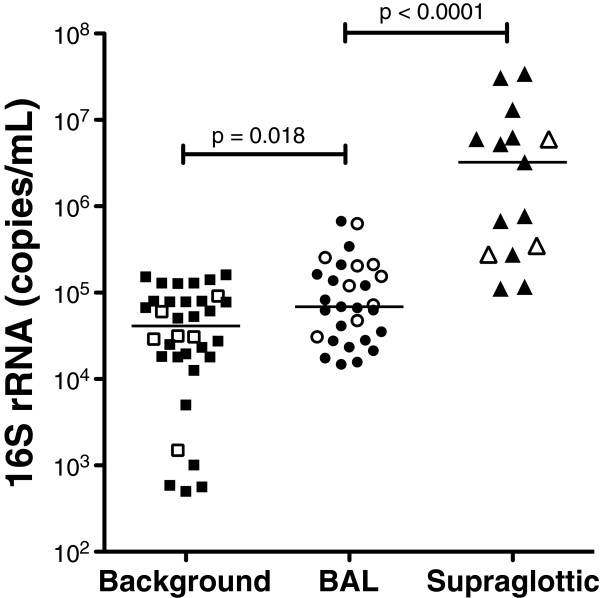
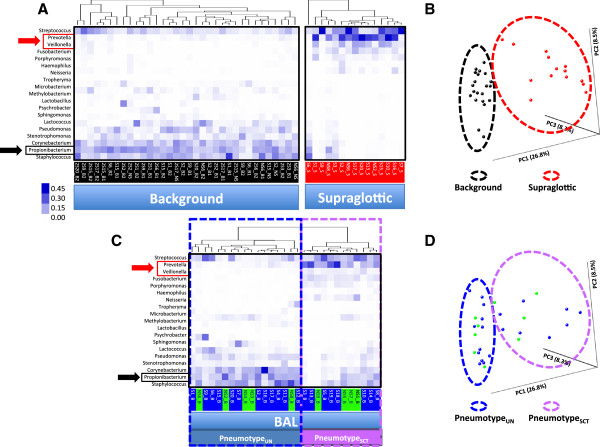
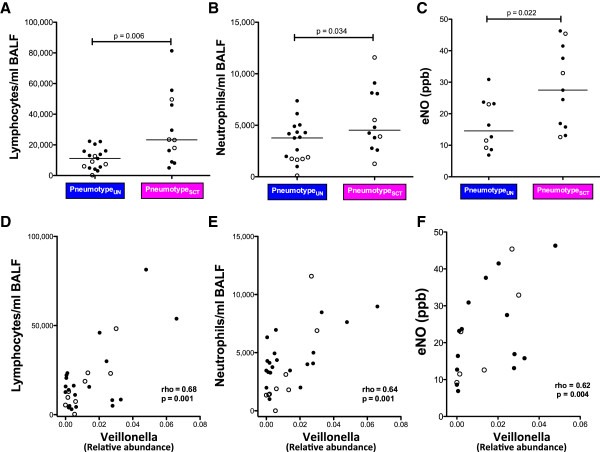
BACKGROUND: The lung microbiome of healthy individuals frequently harbors oral organisms. Despite evidence that microaspiration is commonly associated with smoking-related lung diseases, the effects of lung microbiome enrichment with upper airway taxa on inflammation has not been studied. We hypothesize that the presence of oral microorganisms in the lung microbiome is associated with enhanced pulmonary inflammation. To test this, we sampled bronchoalveolar lavage (BAL) from the lower airways of 29 asymptomatic subjects (nine never-smokers, 14 former-smokers, and six current-smokers). We quantified, amplified, and sequenced 16S rRNA genes from BAL samples by qPCR and 454 sequencing. Pulmonary inflammation was assessed by exhaled nitric oxide (eNO), BAL lymphocytes, and neutrophils. RESULTS: BAL had lower total 16S than supraglottic samples and higher than saline background. Bacterial communities in the lower airway clustered in two distinct groups that we designated as pneumotypes. The rRNA gene concentration and microbial community of the first pneumotype was similar to that of the saline background. The second pneumotype had higher rRNA gene concentration and higher relative abundance of supraglottic-characteristic taxa (SCT), such as Veillonella and Prevotella, and we called it pneumotypeSCT. Smoking had no effect on pneumotype allocation, α, or β diversity. PneumotypeSCT was associated with higher BAL lymphocyte-count (P= 0.007), BAL neutrophil-count (P= 0.034), and eNO (P= 0.022). CONCLUSION: A pneumotype with high relative abundance of supraglottic-characteristic taxa is associated with enhanced subclinical lung inflammation.
Overview
The claims and statistics of this paper haven’t been checked yet.
Free: it reads the open-access text and checks the first 5 claims that cite a source we can check. Create a free account to check every claim.
Integrity signals
Registry
Cites
Statistics
Figures
Verification
Claims the paper makes
The claims and statistics of this paper haven’t been checked yet.
Free: it reads the open-access text and checks the first 5 claims that cite a source we can check. Create a free account to check every claim.
Claims other papers make about this one
Each is checked against this paper’s own text: does it say what the citing paper says it does?
The source backs part of the claim, not all of it — or backs it for a different population, condition or comparison.
In the citing paper
“Culture-independent microbiota studies have confirmed that the lung microbiota largely resembles the URT microbiota when studied in healthy individuals74,75,76.”
From The microbiota of the respiratory tract: gatekeeper to respiratory health (2017) · cites this paper as [75]
Experimental — accuracy not yet measuredThe source backs part of the claim, not all of it — or backs it for a different population, condition or comparison.
In the citing paper
“Interestingly, Tropheryma whipplei seems enriched only in the LRT, which suggests that this might be one of the few bacterial species that is not derived through dispersal from the URT42,75,80.”
From The microbiota of the respiratory tract: gatekeeper to respiratory health (2017) · cites this paper as [75]
Experimental — accuracy not yet measuredThe source backs part of the claim, not all of it — or backs it for a different population, condition or comparison.
In the citing paper
“The adult lung microbiota seems to be dominated by genera in the phyla Firmicutes (including Streptococcus spp. and Veillonella spp.) and Bacteroidetes (including Prevotella spp.)42,75,80.”
From The microbiota of the respiratory tract: gatekeeper to respiratory health (2017) · cites this paper as [75]
Experimental — accuracy not yet measuredThe source backs part of the claim, not all of it — or backs it for a different population, condition or comparison.
In the citing paper
“Although there are subtle regional variations of physiological parameters in the lungs (for example, of oxygen tension, pH and temperature), which, in theory, could affect microbial selection and growth, spatial microbial diversity in the lungs of healthy individuals seems almost absent75,80,86.”
From The microbiota of the respiratory tract: gatekeeper to respiratory health (2017) · cites this paper as [75]
Experimental — accuracy not yet measuredIn the citing paper
“Multiple studies have shown that lung microbiota are more similar to those in the oropharynx, than those in the air, nasopharynx or lower digestive tract (Segal et al., 2013; Venkataraman et al., 2015).”
From Oral Microbiome and SARS-CoV-2: Beware of Lung Co-infection (2020) · cites this paper as Segal et al., 2013
1 more claim about this paper
Create a free account to see every claim other papers make about this one.
Self-check
Percentages, sums and reported differences re-computed from the paper’s own numbers.
The self-check needs the paper’s full text.
Citations
Cites
QIIME allows analysis of high-throughput community sequencing data
Caporaso, J. G., Kuczynski, J., Stombaugh, J., Bittinger, K., Bushman, F. D., Costello, E. K., Fierer, N., Peña, A. G., Goodrich, J. K., Gordon, J. I., et al. (2010) · Nature Methods · doi:10.1038/nmeth.f.303 · Cited by 34,887 · cited 1×
“The obtained 16S rRNA sequences were analyzed using the Quantitative Insights into Microbial Ecology (QIIME) pipeline for analysis of community sequence data [29].”
MethodSearch and clustering orders of magnitude faster than BLAST
Edgar, R. C. (2010) · Bioinformatics · doi:10.1093/bioinformatics/btq461 · Cited by 20,826
Naïve Bayesian Classifier for Rapid Assignment of rRNA Sequences into the New Bacterial Taxonomy
Wang, Q., Garrity, G. M., Tiedje, J. M., & Cole, J. R. (2007) · Applied and Environmental Microbiology · doi:10.1128/aem.00062-07 · Cited by 19,885 · cited 2×
“of each OTU by running the RDP Classifier [31] at 80% bootstrap confidence on a selected representative sequence from each OTU; (4) alignment of representative sequences using PyNAST [32] with the Greengenes core-set alignment template; (5) phylogenetic tree reconstruction from the representative sequences for each OT…”
MethodFastTree 2 – Approximately Maximum-Likelihood Trees for Large Alignments
Price, M. N., Dehal, P. S., & Arkin, A. P. (2010) · PLoS ONE · doi:10.1371/journal.pone.0009490 · Cited by 14,894 · cited 1×
“of each OTU by running the RDP Classifier [31] at 80% bootstrap confidence on a selected representative sequence from each OTU; (4) alignment of representative sequences using PyNAST [32] with the Greengenes core-set alignment template; (5) phylogenetic tree reconstruction from the representative sequences for each OT…”
MethodUniFrac: a New Phylogenetic Method for Comparing Microbial Communities
Lozupone, C., & Knight, R. (2005) · Applied and Environmental Microbiology · doi:10.1128/aem.71.12.8228-8235.2005 · Cited by 8,227 · cited 1×
“Weighted UniFrac was used to measure β diversity of bacterial communities and to perform principal coordinate analysis (PCoA) [36].”
MethodThe ade4 Package: Implementing the Duality Diagram for Ecologists
Dray, S., & Dufour, A.-B. (2007) · Journal of Statistical Software · doi:10.18637/jss.v022.i04 · Cited by 6,211 · cited 1×
“We used the ade4 package in R to PCoA on weighted Unifrac distances [37].”
MethodPyNAST: a flexible tool for aligning sequences to a template alignment
Caporaso, J. G., Bittinger, K., Bushman, F. D., DeSantis, T. Z., Andersen, G. L., & Knight, R. (2010) · Bioinformatics · doi:10.1093/bioinformatics/btp636 · Cited by 3,396 · cited 3×
“Caporaso JG, Bittinger K, Bushman FD, DeSantis TZ, Andersen GL, Knight R: PyNAST: a flexible tool for aligning sequences to a template alignment.”
Method(2005) · American Journal of Respiratory and Critical Care Medicine · doi:10.1164/rccm.200406-710st · Cited by 3,203
UniFrac: an effective distance metric for microbial community comparison
Lozupone, C., Lladser, M. E., Knights, D., Stombaugh, J., & Knight, R. (2011) · The ISME Journal · doi:10.1038/ismej.2010.133 · Cited by 2,825 · cited 1×
“of each OTU by running the RDP Classifier [31] at 80% bootstrap confidence on a selected representative sequence from each OTU; (4) alignment of representative sequences using PyNAST [32] with the Greengenes core-set alignment template; (5) phylogenetic tree reconstruction from the representative sequences for each OT…”
MethodThe ecodist Package for Dissimilarity-based Analysis of Ecological Data
Goslee, S. C., & Urban, D. L. (2007) · Journal of Statistical Software · doi:10.18637/jss.v022.i07 · Cited by 2,429
Bayesian community-wide culture-independent microbial source tracking
Knights, D., Kuczynski, J., Charlson, E. S., Zaneveld, J., Mozer, M. C., Collman, R. G., Bushman, F. D., Knight, R., & Kelley, S. T. (2011) · Nature Methods · doi:10.1038/nmeth.1650 · Cited by 1,856 · cited 1×
“Studies with larger cohorts using low contamination bronchoscopic techniques, deeper sequencing, and bioinformatic source tracking approaches are needed to better describe pneumotype (s) in subjects with low bacterial rRNA gene concentrations [42,43].”
Disordered Microbial Communities in Asthmatic Airways
Hilty, M., Burke, C., Pedro, H., Cardenas, P., Bush, A., Bossley, C., Davies, J., Ervine, A., Poulter, L., Pachter, L., et al. (2010) · PLoS ONE · doi:10.1371/journal.pone.0008578 · Cited by 1,824 · cited 3×
“The early nature of disease in our smoking cohort or the absence of recent drug treatment may account for the differences between our observations and the prior reports [7,8,21].”
BackgroundResultIvanov, I. I., Frutos, R. D. L., Manel, N., Yoshinaga, K., Rifkin, D. B., Sartor, R. B., Finlay, B. B., & Littman, D. R. (2008) · Cell Host & Microbe · doi:10.1016/j.chom.2008.09.009 · Cited by 1,770 · cited 1×
“Background The gut microbiome modulates host mucosal immune response [1,2].”
BackgroundIdentifying differentially expressed genes using false discovery rate controlling procedures
Reiner, A., Yekutieli, D., & Benjamini, Y. (2003) · Bioinformatics · doi:10.1093/bioinformatics/btf877 · Cited by 1,765 · cited 1×
“False discovery rate (FDR) was used to control for multiple testing [35].”
MethodGut immune maturation depends on colonization with a host-specific microbiota
Chung, H., Pamp, S. J., Hill, J. A., Surana, N. K., Edelman, S. M., Troy, E. B., Reading, N. C., Villablanca, E. J., Wang, S., Mora, J. R., et al. (2012) · Cell · doi:10.1016/j.cell.2012.04.037 · Cited by 1,241 · cited 1×
“Background The gut microbiome modulates host mucosal immune response [1,2].”
BackgroundAzithromycin for prevention of exacerbations of COPD
Albert, R. K., Connett, J., Bailey, W. C., Casaburi, R., Cooper, J. A. D., Criner, G. J., Curtis, J. L., Dransfield, M. T., Han, M. K., Lazarus, S. C., et al. (2011) · New England Journal of Medicine · doi:10.1056/nejmoa1104623 · Cited by 1,226
Associating microbiome composition with environmental covariates using generalized UniFrac distances
Chen, J., Bittinger, K., Charlson, E. S., Hoffmann, C., Lewis, J., Wu, G. D., Collman, R. G., Bushman, F. D., & Li, H. (2012) · Bioinformatics · doi:10.1093/bioinformatics/bts342 · Cited by 1,145 · cited 1×
“Studies with larger cohorts using low contamination bronchoscopic techniques, deeper sequencing, and bioinformatic source tracking approaches are needed to better describe pneumotype (s) in subjects with low bacterial rRNA gene concentrations [42,43].”
Topographical Continuity of Bacterial Populations in the Healthy Human Respiratory Tract
Charlson, E. S., Bittinger, K., Haas, A. R., Fitzgerald, A. S., Frank, I., Yadav, A., Bushman, F. D., & Collman, R. G. (2011) · American Journal of Respiratory and Critical Care Medicine · doi:10.1164/rccm.201104-0655oc · Cited by 1,144 · cited 4×
“Such studies identified bacterial rRNA genes of oral cavity anaerobes such as Prevotella and Veillonella in the lower airways of normal individuals [6,8,12-16].”
BackgroundResultInfluentialThe influence of sex, handedness, and washing on the diversity of hand surface bacteria
Fierer, N., Hamady, M., Lauber, C. L., & Knight, R. (2008) · Proceedings of the National Academy of Sciences · doi:10.1073/pnas.0807920105 · Cited by 1,108 · cited 1×
“Each sample was individually barcoded using a unique 12nt sequence during amplification of the V1-V2 regions of the 16S gene [28].”
MethodNAST: a multiple sequence alignment server for comparative analysis of 16S rRNA genes
DeSantis, T. Z., Hugenholtz, P., Keller, K., Brodie, E. L., Larsen, N., Piceno, Y. M., Phan, R., & Andersen, G. L. (2006) · Nucleic Acids Research · doi:10.1093/nar/gkl244 · Cited by 1,035 · cited 1×
“036)), a known environmental contaminant [39].”
Analysis of the lung microbiome in the “healthy” smoker and in COPD.
Erb-Downward, J. R., Thompson, D. L., Han, M. K., Freeman, C. M., McCloskey, L., Schmidt, L. A., Young, V. B., Toews, G. B., Curtis, J. L., Sundaram, B., et al. (2011) · PLoS ONE · doi:10.1371/journal.pone.0016384 · Cited by 973
Comparison of the Respiratory Microbiome in Healthy Nonsmokers and Smokers
Morris, A., Beck, J. M., Schloss, P. D., Campbell, T. B., Crothers, K., Curtis, J. L., Flores, S. C., Fontenot, A. P., Ghedin, E., Huang, L., et al. (2013) · American Journal of Respiratory and Critical Care Medicine · doi:10.1164/rccm.201210-1913oc · Cited by 822 · cited 4×
“Data suggest that smoking alters the upper airway microbiome leading to enrichment with Veillonella [11,41].”
BackgroundResultInfluentialImmunologic Aspects of Chronic Obstructive Pulmonary Disease
Cosio, M. G., Saetta, M., & Agusti, A. (2009) · New England Journal of Medicine · doi:10.1056/nejmra0804752 · Cited by 815 · cited 16×
“In advancing COPD, mucocilliary dysfunction worsens and the risk for microaspiration increases [50,51].”
BackgroundInfluentialAirway microbiota and bronchial hyperresponsiveness in patients with suboptimally controlled asthma
Huang, Y. J., Nelson, C. E., Brodie, E. L., DeSantis, T. Z., Baek, M. S., Liu, J., Woyke, T., Allgaier, M., Bristow, J., Wiener-Kronish, J. P., et al. (2011) · Journal of Allergy and Clinical Immunology · doi:10.1016/j.jaci.2010.10.048 · Cited by 696 · cited 1×
“Such studies identified bacterial rRNA genes of oral cavity anaerobes such as Prevotella and Veillonella in the lower airways of normal individuals [6,8,12-16].”
BackgroundBacterial Infection in Chronic Obstructive Pulmonary Disease
Murphy, T. F., & Sethi, S. (1992) · American Review of Respiratory Disease · doi:10.1164/ajrccm/146.4.1067 · Cited by 580
Monsó, E., Ruiz, J., Rosell, A., Manterola, J., Fiz, J., Morera, J., & Ausina, V (1995) · American Journal of Respiratory and Critical Care Medicine · doi:10.1164/ajrccm.152.4.7551388 · Cited by 562 · cited 1×
“Such studies identified bacterial rRNA genes of oral cavity anaerobes such as Prevotella and Veillonella in the lower airways of normal individuals [6,8,12-16].”
BackgroundThe Lung Tissue Microbiome in Chronic Obstructive Pulmonary Disease
Sze, M. A., Dimitriu, P. A., Hayashi, S., Elliott, W. M., McDonough, J. E., Gosselink, J. V., Cooper, J., Sin, D. D., Mohn, W. W., & Hogg, J. C. (2012) · American Journal of Respiratory and Critical Care Medicine · doi:10.1164/rccm.201111-2075oc · Cited by 552 · cited 1×
“Prior studies suggest that in moderate to severe chronic obstructive pulmonary disease (COPD), the lung microbiome is enriched with bacteria or bacterial products common to the oral cavity [7,9,20,21].”
BackgroundAcute and chronic effects of cigarette smoking on exhaled nitric oxide.
Kharitonov, S. A., Robbins, R. A., Yates, D., Keatings, V, & Barnes, P. J. (1995) · American Journal of Respiratory and Critical Care Medicine · doi:10.1164/ajrccm.152.2.7543345 · Cited by 463 · cited 1×
“Although smoking may influence eNO levels, in our cohort, the association of increased eNO with pneumotypeSCT was independent of smoking history [48,49].”
BackgroundQuantitative Aspiration During Sleep in Normal Subjects
Gleeson, K., Maxwell, S. L., & Eggli, D. F. (1997) · Chest · doi:10.1378/chest.111.5.1266 · Cited by 448 · cited 1×
“Microaspiration of small volumes of oropharyngeal secretions occurs in healthy people [17].”
BackgroundSeemungal, T. A. R., Wilkinson, T. M. A., Hurst, J. R., Perera, W. R., Sapsford, R. J., & Wedzicha, J. A. (2008) · American Journal of Respiratory and Critical Care Medicine · doi:10.1164/rccm.200801-145oc · Cited by 444 · cited 1×
“Furthermore, randomized clinical trials provide indications that antibiotics, especially macrolides, may reduce COPD exacerbations [24,25].”
BackgroundHodge, S., Hodge, G., Scicchitano, R., Reynolds, P. N., & Holmes, M. (2003) · Immunology & Cell Biology · doi:10.1046/j.1440-1711.2003.t01-1-01170.x · Cited by 440 · cited 1×
“In addition, it is plausible that the progressive immune dysfunction of COPD changes the lung microbiome [52,53].”
BackgroundDisordered Microbial Communities in the Upper Respiratory Tract of Cigarette Smokers
Charlson, E. S., Chen, J., Custers-Allen, R., Bittinger, K., Li, H., Sinha, R., Hwang, J., Bushman, F. D., & Collman, R. G. (2010) · PLoS ONE · doi:10.1371/journal.pone.0015216 · Cited by 437 · cited 2×
“Data suggest that smoking alters the upper airway microbiome leading to enrichment with Veillonella [11,41].”
BackgroundThe lung microbiome in moderate and severe chronic obstructive pulmonary disease
Pragman, A. A., Kim, H. B., Reilly, C. S., Wendt, C., & Isaacson, R. E. (2012) · PLoS ONE · doi:10.1371/journal.pone.0047305 · Cited by 437
Defective macrophage phagocytosis of bacteria in COPD
Taylor, A. E., Finney-Hayward, T. K., Quint, J. K., Thomas, C. M. R., Tudhope, S. J., Wedzicha, J. A., Barnes, P. J., & Donnelly, L. E. (2010) · European Respiratory Journal · doi:10.1183/09031936.00036709 · Cited by 359 · cited 1×
“In addition, it is plausible that the progressive immune dysfunction of COPD changes the lung microbiome [52,53].”
BackgroundThe analytical solution of the additive constant problem
Cailliez, F. (1983) · Psychometrika · doi:10.1007/bf02294026 · Cited by 322 · cited 15×
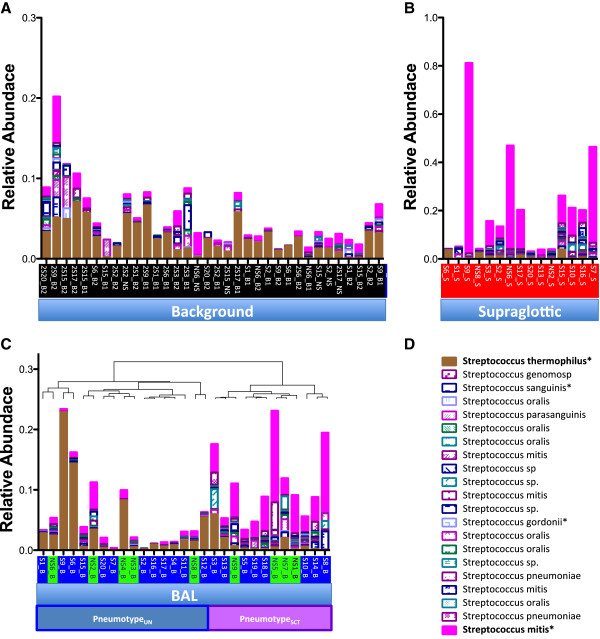
“(B) PCoA analysis based on weighted UniFrac distances clustered background samples separated from supraglotic samples.”
MethodInfluentialComparative analyses of the bacterial microbiota of the human nostril and oropharynx
Lemon, K. P., Klepac-Ceraj, V., Schiffer, H. K., Brodie, E. L., Lynch, S. V., & Kolter, R. (2010) · mBio · doi:10.1128/mbio.00129-10 · Cited by 322 · cited 1×
“The route used for bronchoscopic approach might have significant impact since the microbiome of the oral and nasal cavity are different [40,41].”
BackgroundCabello, H., Torres, A., Celis, R., El-Ebiary, M., Puig de la Bellacasa, J., Xaubet, A., Gonzalez, J., Agusti, C., & Soler, N. (1997) · European Respiratory Journal · doi:10.1183/09031936.97.10051137 · Cited by 284 · cited 1×
“Along the human airways, structures above the vocal cords are exposed to high bacterial burden producing contamination of lower airway samples with oropharyngeal secretions [3,4].”
BackgroundClunes, L. A., Davies, C. M., Coakley, R. D., Aleksandrov, A. A., Henderson, A. G., Zeman, K. L., Worthington, E. N., Gentzsch, M., Kreda, S. M., Cholon, D., et al. (2012) · The FASEB Journal · doi:10.1096/fj.11-192377 · Cited by 261 · cited 1×
“In advancing COPD, mucocilliary dysfunction worsens and the risk for microaspiration increases [50,51].”
BackgroundHuang, Y. J., Kim, E., Cox, M. J., Brodie, E. L., Brown, R., Wiener-Kronish, J. P., & Lynch, S. V. (2010) · OMICS: A Journal of Integrative Biology · doi:10.1089/omi.2009.0100 · Cited by 240 · cited 2×
“The early nature of disease in our smoking cohort or the absence of recent drug treatment may account for the differences between our observations and the prior reports [7,8,21].”
BackgroundResultWidespread Colonization of the Lung by Tropheryma whipplei in HIV Infection
Lozupone, C., Cota-Gomez, A., Palmer, B. E., Linderman, D. J., Charlson, E. S., Sodergren, E., Mitreva, M., Abubucker, S., Martin, J., Yao, G., et al. (2013) · American Journal of Respiratory and Critical Care Medicine · doi:10.1164/rccm.201211-2145oc · Cited by 219 · cited 3×
“11 in the smoker) is consistent with a recent report describing Tropheryma in the lower airways of 12% to 40% of normal subjects [10].”
BackgroundResultPredisposing factors to bacterial colonization in chronic obstructive pulmonary disease
Zalacain, R., Sobradillo, V., Amilibia, J., Barron, J., Achotegui, V., Pijoan, J. I., & Llorente, J. L. (1999) · European Respiratory Journal · doi:10.1034/j.1399-3003.1999.13b21.x · Cited by 210 · cited 1×
“Such studies identified bacterial rRNA genes of oral cavity anaerobes such as Prevotella and Veillonella in the lower airways of normal individuals [6,8,12-16].”
BackgroundPace, E., Ferraro, M., Siena, L., Melis, M., Montalbano, A. M., Johnson, M., Bonsignore, M. R., Bonsignore, G., & Gjomarkaj, M. (2008) · Immunology · doi:10.1111/j.1365-2567.2007.02788.x · Cited by 206 · cited 1×
“Increased toll-like receptor signaling has been associated with pulmonary inflammation in advanced COPD, offering a mechanisms by which microbial inhabitants in the lung might be relevant for the development of smokingrelated lung injury [22,23].”
BackgroundRole of Gastroesophageal Reflux Symptoms in Exacerbations of COPD
Rascon-Aguilar, I. E., Pamer, M., Wludyka, P., Cury, J., Coultas, D., Lambiase, L. R., Nahman, N. S., & Vega, K. J. (2006) · Chest · doi:10.1378/chest.130.4.1096 · Cited by 173 · cited 1×
“The risk for microaspiration is increased in smoking-related lung disease due to reduced coordination of breathing with swallowing and gastro-esophageal reflux [18,19].”
BackgroundLaryngeal penetration and aspiration in individuals with stable COPD
CVEJIC, L., HARDING, R., CHURCHWARD, T., TURTON, A., FINLAY, P., MASSEY, D., BARDIN, P. G., & GUY, P. (2011) · Respirology · doi:10.1111/j.1440-1843.2010.01875.x · Cited by 164
Charlson, E. S., Bittinger, K., Chen, J., Diamond, J. M., Li, H., Collman, R. G., & Bushman, F. D. (2012) · PLoS ONE · doi:10.1371/journal.pone.0042786 · Cited by 160 · cited 2×
“Prior studies suggest that the lower airway microbiome have similar microbial composition to the upper airway, raising concerns for carry-over of oropharyngeal secretions to the lower airways [5,6,9,10].”
BackgroundRisk factors for lower airway bacterial colonization in chronic bronchitis
Monso, E., Rosell, A., Bonet, G., Manterola, J., Cardona, P. J., Ruiz, J., & Morera, J. (1999) · European Respiratory Journal · doi:10.1034/j.1399-3003.1999.13b20.x · Cited by 153 · cited 1×
“Such studies identified bacterial rRNA genes of oral cavity anaerobes such as Prevotella and Veillonella in the lower airways of normal individuals [6,8,12-16].”
BackgroundLong-Term Cigarette Smoke Exposure in a Mouse Model of Ciliated Epithelial Cell Function
Simet, S. M., Sisson, J. H., Pavlik, J. A., DeVasure, J. M., Boyer, C., Liu, X., Kawasaki, S., Sharp, J. G., Rennard, S. I., & Wyatt, T. A. (2010) · American Journal of Respiratory Cell and Molecular Biology · doi:10.1165/rcmb.2009-0297oc · Cited by 138 · cited 1×
“In advancing COPD, mucocilliary dysfunction worsens and the risk for microaspiration increases [50,51].”
BackgroundDressel, H., de la Motte, D., Reichert, J., Ochmann, U., Petru, R., Angerer, P., Holz, O., Nowak, D., & Jörres, R. A. (2008) · Respiratory Medicine · doi:10.1016/j.rmed.2008.02.012 · Cited by 137 · cited 1×
“The association between specific pneumotype and airway inflammation was evaluated utilizing eNO based on prior observations describing increased eNO in pulmonary infections and following lipopolysaccharide administration [45-47].”
MethodEffect of smoking on exhaled nitric oxide and flow-independent nitric oxide exchange parameters
Malinovschi, A., Janson, C., Holmkvist, T., Norbäck, D., Meriläinen, P., & Högman, M. (2006) · European Respiratory Journal · doi:10.1183/09031936.06.00113705 · Cited by 127 · cited 1×
“Although smoking may influence eNO levels, in our cohort, the association of increased eNO with pneumotypeSCT was independent of smoking history [48,49].”
BackgroundHuang, Y. J., & Lynch, S. V. (2011) · Expert Review of Respiratory Medicine · doi:10.1586/ers.11.76 · Cited by 100 · cited 1×
“Such studies identified bacterial rRNA genes of oral cavity anaerobes such as Prevotella and Veillonella in the lower airways of normal individuals [6,8,12-16].”
BackgroundInnate Immune Responses Are Increased in Chronic Obstructive Pulmonary Disease
Baines, K. J., Simpson, J. L., & Gibson, P. G. (2011) · PLoS ONE · doi:10.1371/journal.pone.0018426 · Cited by 77 · cited 1×
“Increased toll-like receptor signaling has been associated with pulmonary inflammation in advanced COPD, offering a mechanisms by which microbial inhabitants in the lung might be relevant for the development of smokingrelated lung injury [22,23].”
BackgroundHIV-1 and Bacterial Pneumonia in the Era of Antiretroviral Therapy
Segal, L. N., Methé, B. A., Nolan, A., Hoshino, Y., Rom, W. N., Dawson, R., Bateman, E. D., & Weiden, M. D. (2011) · Proceedings of the American Thoracic Society · doi:10.1513/pats.201006-044wr · Cited by 68 · cited 2×
“Since we previously observed low bacterial loads in nasal brushing [27], we used an optimized nasal bronchoscopy in an attempt to minimize the potential for contamination of the bronchoscope channel with upper airway microbiota.”
MethodSelf-citationRogers, G. B., Daniels, T. W., Tuck, A., Carroll, M. P., Connett, G. J., David, G. J., & Bruce, K. D. (2009) · BMC Pulmonary Medicine · doi:10.1186/1471-2466-9-14 · Cited by 63 · cited 1×
“Along the human airways, structures above the vocal cords are exposed to high bacterial burden producing contamination of lower airway samples with oropharyngeal secretions [3,4].”
BackgroundExhaled and Nasal Nitric Oxide as a Marker of Pneumonia in Ventilated Patients
Adrie, C., Monchi, M., Dinh‐Xuan, A. T., DALL'AVA-SANTUCCI, J., Dhainaut, J.-F., & Pinsky, M. R. (2001) · American Journal of Respiratory and Critical Care Medicine · doi:10.1164/ajrccm.163.5.9906049 · Cited by 56 · cited 1×
“The association between specific pneumotype and airway inflammation was evaluated utilizing eNO based on prior observations describing increased eNO in pulmonary infections and following lipopolysaccharide administration [45-47].”
MethodExhaled NO and plasma cGMP increase after endotoxin infusion in healthy volunteers
Soop, A., Sollevi, A., Weitzberg, E., Lundberg, J. O., Palm, J., & Albert, J. (2003) · European Respiratory Journal · doi:10.1183/09031936.03.00008603 · Cited by 24 · cited 1×
“The association between specific pneumotype and airway inflammation was evaluated utilizing eNO based on prior observations describing increased eNO in pulmonary infections and following lipopolysaccharide administration [45-47].”
Method
Cited by
Reagent and laboratory contamination can critically impact sequence-based microbiome analyses
Salter, S. J., Cox, M. J., Turek, E. M., Calus, S. T., Cookson, W. O., Moffatt, M. F., Turner, P., Parkhill, J., Loman, N. J., & Walker, A. W. (2014) · BMC Biology · doi:10.1186/s12915-014-0087-z · Cited by 3,463
“who examined the lung microbiota through bronchoalveolar lavage sampling, report their results against the backdrop of copious sequenced ‘background’ controls [43].”
BackgroundMicrobiota in health and diseases
Hou, K., Wu, Z.-X., Chen, X.-Y., Wang, J.-Q., Zhang, D., Xiao, C., Zhu, D., Koya, J. B., Wei, L., Li, J., et al. (2022) · Signal Transduction and Targeted Therapy · doi:10.1038/s41392-022-00974-4 · Cited by 3,171
“reported that the enrichment of oral bacteria Veillonella and Prevotella in bronchoalveolar lavage samples has been associated with subclinical inflammation, characterized by increased neutrophils and lymphocytes.(216) A RCT showed that bronchial microbiome of asthmatic subjects was uniquely enriched with two periodon…”
BackgroundEmerging Pathogenic Links Between Microbiota and the Gut-Lung Axis
Budden, K. F., Gellatly, S. L., Wood, D. L. A., Cooper, M. A., Morrison, M., Hugenholtz, P., & Hansbro, P. M. (2017) · Nature Reviews Microbiology · doi:10.1038/nrmicro.2016.142 · Cited by 1,606
The microbiota of the respiratory tract: gatekeeper to respiratory health
Man, W. H., de Steenhuijsen Piters, W. A. A., & Bogaert, D. (2017) · Nature Reviews Microbiology · doi:10.1038/nrmicro.2017.14 · Cited by 1,384
“Although there are subtle regional variations of physio logical parameters in the lungs (for example, of oxygen tension, pH and temperature), which, in the ory, could affect microbial selection and growth, spatial microbial diversity in the lungs of healthy individuals seems almost absent 75, 80, 86 .”
BackgroundThe Microbiome and the Respiratory Tract
Dickson, R. P., Erb-Downward, J. R., Martinez, F. J., & Huffnagle, G. B. (2016) · Annual Review of Physiology · doi:10.1146/annurev-physiol-021115-105238 · Cited by 953
“Several investigators have performed serial sampling experiments on healthy subjects to determine whether bacterial communities are diluted with serial lavages or brushings in the lower respiratory tract (15, 29, 30), as is expected if most bacterial signal is attributable to bronchoscopic carryover.”
BackgroundInfluential
Metadata
- Authors
- Segal, L. N., Alekseyenko, A. V., Clemente, J. C., Kulkarni, R., Wu, B., Chen, H., Berger, K. I., Goldring, R. M., Rom, W. N., Blaser, M. J., & Weiden, M. D.
- Affiliations
- Bellevue Hospital Center (US)
- New York University (US)
- Corresponding author
- Segal, Leopoldo N
- Weiden, Michael D
- ORCID
- Venue
- Microbiome
- Published
- 2013-07-01
- Volume
- 1
- Issue
- 1
- Pages
- 19-19
- ISSN
- 2049-2618 (ISSN-L)
- PMC
- PMC3971609
- OpenAlex
- W1969359874
- Cited by
- 482
- References
- 55
- Citations by year
- 2026: 25 · 2025: 37 · 2024: 50 · 2023: 35 · 2022: 47 · 2021: 60 · 2020: 42 · 2019: 38 · 2018: 34 · 2017: 35 · 2016: 36 · 2015: 27 · 2014: 13 · 2013: 3
- FWCI
- 32.00
- Type
- journal article
- Language
- en
- Update notices
- erratum (2014-07-02)
- Open access
- gold
- doi.org
- Licence
- cc-by
- creativecommons.org/licenses/by/2.0 (tdm)
- Locations
- Microbiome (publishedVersion, cc-by)
- Europe PMC (PubMed Central) (publishedVersion, cc-by)
- PubMed Central (publishedVersion, cc-by)
- PubMed (publishedVersion)
- Rutgers University Community Repository (Rutgers University) (submittedVersion)
- Funders
- National Institute of Allergy and Infectious Diseases (K23AI102970)
- National Institute of Diabetes and Digestive and Kidney Diseases (R01DK090989)
- Topics
- Health Sciences › Dentistry › Periodontics › Oral microbiology and periodontitis research
- Life Sciences › Biochemistry, Genetics and Molecular Biology › Molecular Biology › Gut microbiota and health
- Health Sciences › Medicine › Pulmonary and Respiratory Medicine › Chronic Obstructive Pulmonary Disease (COPD) Research
- Keywords
- lung microbiome, oral microorganisms, lung inflammation, smoking, bronchoalveolar lavage, exhaled nitric oxide, neutrophils, lymphocytes, Veillonella, Prevotella
About these checks
Registry, retraction, Cites and statistics results are computed, not judged, with one exception: a printed reference that no index lists is read once by a model before it counts as a citation error. Claims are extracted by a model and kept only when their quote appears verbatim in the text; each cited source is then checked, with a model’s help, for whether it says what the claim relies on. Those verdicts can be wrong — read the claim’s quote and the cited source before relying on one.
Statistics and arithmetic are recomputed, not judged.
Confidence bands are shown only for fields calibrated on our annotated test set. None is calibrated yet, so no band is shown.
What counts as a claim ›How we measure confidence ›How we check this ›
Are you an author, or do you see a problem with this page? Request a review
Data sources
Bibliographic data: Semantic Scholar, OpenAlex, Crossref.
Contains information from the Semantic Scholar Academic Graph Datasets, made available under the ODC Attribution License (ODC-BY 1.0).
Semantic Scholar’s data is described in: Kinney, R., et al. (2023). The Semantic Scholar Open Data Platform. arXiv:2301.10140.
