

Enrichment of lung microbiome with supraglottic taxa is associated with increased pulmonary inflammation
Open accessThe DOI matches its Crossref record; 55 of the 55 references it cites were found in a registry or an index.
Abstract
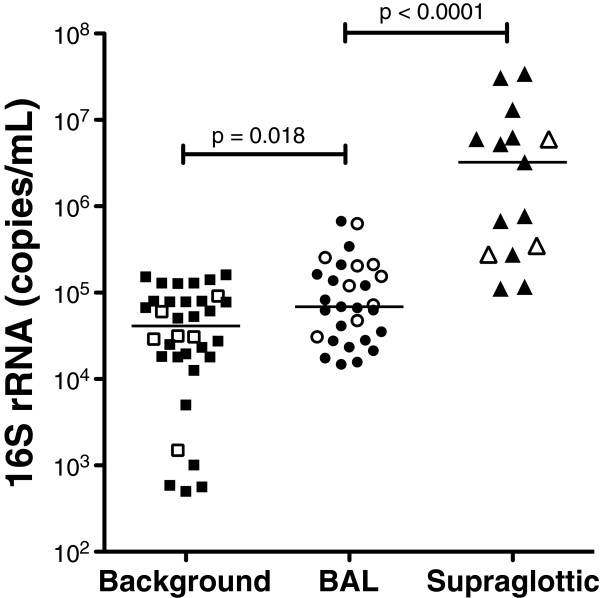
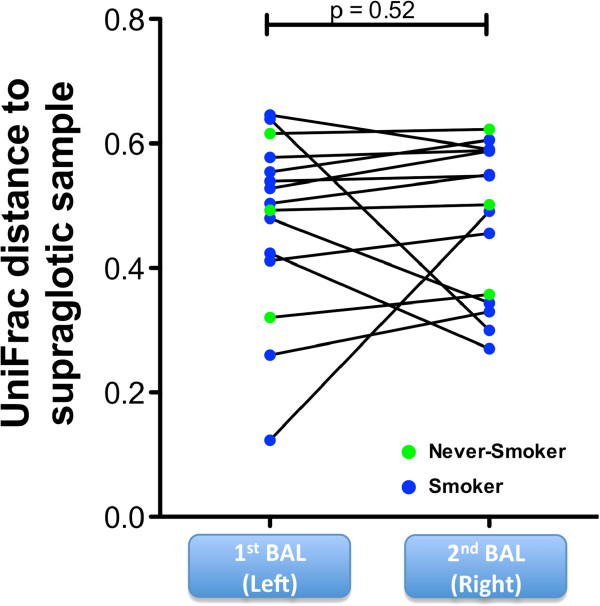
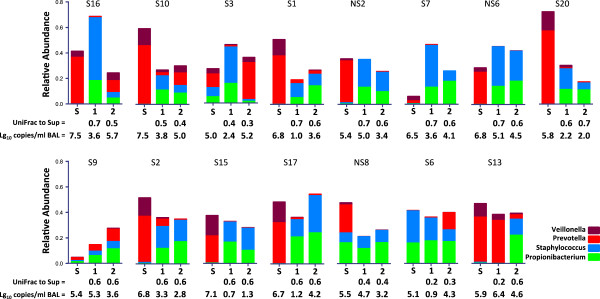
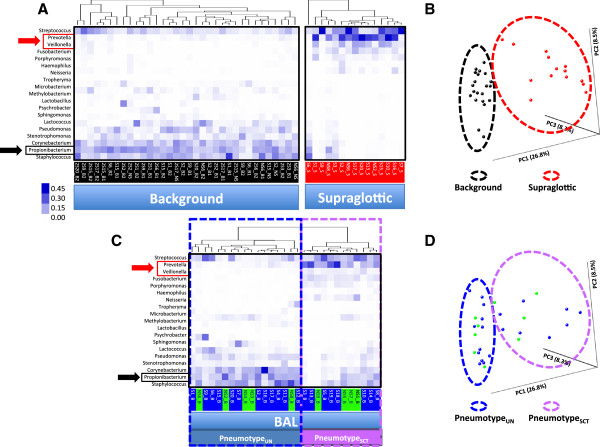
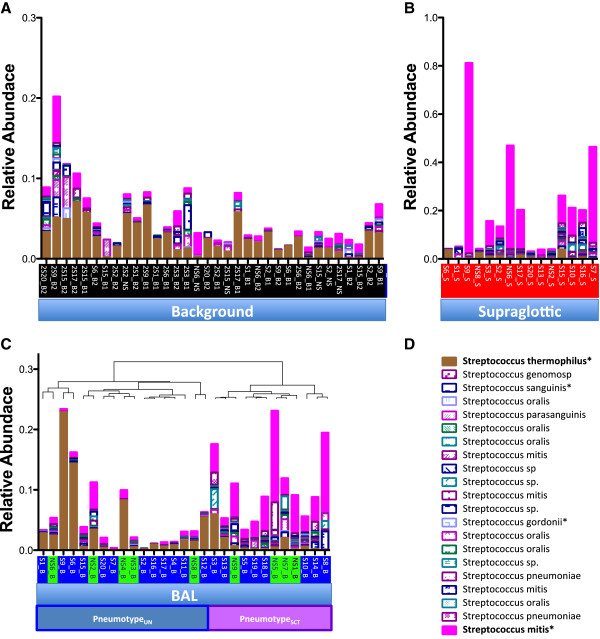
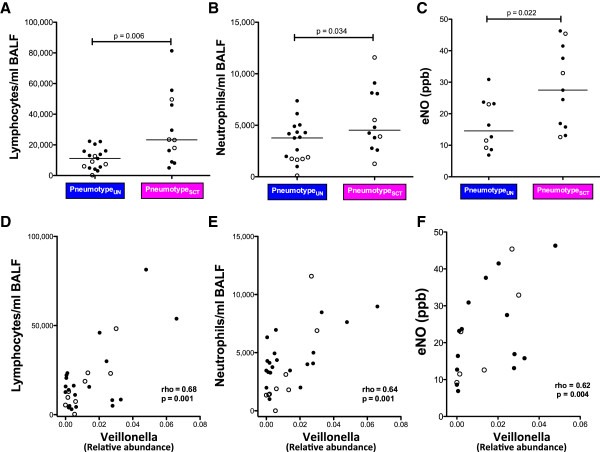
BACKGROUND: The lung microbiome of healthy individuals frequently harbors oral organisms. Despite evidence that microaspiration is commonly associated with smoking-related lung diseases, the effects of lung microbiome enrichment with upper airway taxa on inflammation has not been studied. We hypothesize that the presence of oral microorganisms in the lung microbiome is associated with enhanced pulmonary inflammation. To test this, we sampled bronchoalveolar lavage (BAL) from the lower airways of 29 asymptomatic subjects (nine never-smokers, 14 former-smokers, and six current-smokers). We quantified, amplified, and sequenced 16S rRNA genes from BAL samples by qPCR and 454 sequencing. Pulmonary inflammation was assessed by exhaled nitric oxide (eNO), BAL lymphocytes, and neutrophils. RESULTS: BAL had lower total 16S than supraglottic samples and higher than saline background. Bacterial communities in the lower airway clustered in two distinct groups that we designated as pneumotypes. The rRNA gene concentration and microbial community of the first pneumotype was similar to that of the saline background. The second pneumotype had higher rRNA gene concentration and higher relative abundance of supraglottic-characteristic taxa (SCT), such as Veillonella and Prevotella, and we called it pneumotypeSCT. Smoking had no effect on pneumotype allocation, α, or β diversity. PneumotypeSCT was associated with higher BAL lymphocyte-count (P= 0.007), BAL neutrophil-count (P= 0.034), and eNO (P= 0.022). CONCLUSION: A pneumotype with high relative abundance of supraglottic-characteristic taxa is associated with enhanced subclinical lung inflammation.
Overview
The claims and statistics of this paper haven’t been checked yet.
Free: it reads the open-access text and checks the first 5 claims that cite a source we can check. Create a free account to check every claim.
Integrity signals
Registry
Cites
Statistics
Figures
Verification
Claims the paper makes
The claims and statistics of this paper haven’t been checked yet.
Free: it reads the open-access text and checks the first 5 claims that cite a source we can check. Create a free account to check every claim.
Claims other papers make about this one
Each is checked against this paper’s own text: does it say what the citing paper says it does?
The source backs part of the claim, not all of it — or backs it for a different population, condition or comparison.
In the citing paper
“Culture-independent microbiota studies have confirmed that the lung microbiota largely resembles the URT microbiota when studied in healthy individuals74,75,76.”
From The microbiota of the respiratory tract: gatekeeper to respiratory health (2017) · cites this paper as [75]
Experimental — accuracy not yet measuredThe source backs part of the claim, not all of it — or backs it for a different population, condition or comparison.
In the citing paper
“Interestingly, Tropheryma whipplei seems enriched only in the LRT, which suggests that this might be one of the few bacterial species that is not derived through dispersal from the URT42,75,80.”
From The microbiota of the respiratory tract: gatekeeper to respiratory health (2017) · cites this paper as [75]
Experimental — accuracy not yet measuredThe source backs part of the claim, not all of it — or backs it for a different population, condition or comparison.
In the citing paper
“The adult lung microbiota seems to be dominated by genera in the phyla Firmicutes (including Streptococcus spp. and Veillonella spp.) and Bacteroidetes (including Prevotella spp.)42,75,80.”
From The microbiota of the respiratory tract: gatekeeper to respiratory health (2017) · cites this paper as [75]
Experimental — accuracy not yet measuredThe source backs part of the claim, not all of it — or backs it for a different population, condition or comparison.
In the citing paper
“Although there are subtle regional variations of physiological parameters in the lungs (for example, of oxygen tension, pH and temperature), which, in theory, could affect microbial selection and growth, spatial microbial diversity in the lungs of healthy individuals seems almost absent75,80,86.”
From The microbiota of the respiratory tract: gatekeeper to respiratory health (2017) · cites this paper as [75]
Experimental — accuracy not yet measuredIn the citing paper
“Multiple studies have shown that lung microbiota are more similar to those in the oropharynx, than those in the air, nasopharynx or lower digestive tract (Segal et al., 2013; Venkataraman et al., 2015).”
From Oral Microbiome and SARS-CoV-2: Beware of Lung Co-infection (2020) · cites this paper as Segal et al., 2013
1 more claim about this paper
Create a free account to see every claim other papers make about this one.
Self-check
Percentages, sums and reported differences re-computed from the paper’s own numbers.
The self-check needs the paper’s full text.
Citations
Cites
QIIME allows analysis of high-throughput community sequencing data
Caporaso, J. G., Kuczynski, J., Stombaugh, J., Bittinger, K., Bushman, F. D., Costello, E. K., Fierer, N., Peña, A. G., Goodrich, J. K., Gordon, J. I., et al. (2010) · Nature Methods · doi:10.1038/nmeth.f.303 · Cited by 34,887 · cited 1×
“The obtained 16S rRNA sequences were analyzed using the Quantitative Insights into Microbial Ecology (QIIME) pipeline for analysis of community sequence data [29].”
MethodSearch and clustering orders of magnitude faster than BLAST
Edgar, R. C. (2010) · Bioinformatics · doi:10.1093/bioinformatics/btq461 · Cited by 20,826
Naïve Bayesian Classifier for Rapid Assignment of rRNA Sequences into the New Bacterial Taxonomy
Wang, Q., Garrity, G. M., Tiedje, J. M., & Cole, J. R. (2007) · Applied and Environmental Microbiology · doi:10.1128/aem.00062-07 · Cited by 19,885 · cited 2×
“of each OTU by running the RDP Classifier [31] at 80% bootstrap confidence on a selected representative sequence from each OTU; (4) alignment of representative sequences using PyNAST [32] with the Greengenes core-set alignment template; (5) phylogenetic tree reconstruction from the representative sequences for each OT…”
MethodFastTree 2 – Approximately Maximum-Likelihood Trees for Large Alignments
Price, M. N., Dehal, P. S., & Arkin, A. P. (2010) · PLoS ONE · doi:10.1371/journal.pone.0009490 · Cited by 14,894 · cited 1×
“of each OTU by running the RDP Classifier [31] at 80% bootstrap confidence on a selected representative sequence from each OTU; (4) alignment of representative sequences using PyNAST [32] with the Greengenes core-set alignment template; (5) phylogenetic tree reconstruction from the representative sequences for each OT…”
MethodUniFrac: a New Phylogenetic Method for Comparing Microbial Communities
Lozupone, C., & Knight, R. (2005) · Applied and Environmental Microbiology · doi:10.1128/aem.71.12.8228-8235.2005 · Cited by 8,227 · cited 1×
“Weighted UniFrac was used to measure β diversity of bacterial communities and to perform principal coordinate analysis (PCoA) [36].”
MethodThe ade4 Package: Implementing the Duality Diagram for Ecologists
Dray, S., & Dufour, A.-B. (2007) · Journal of Statistical Software · doi:10.18637/jss.v022.i04 · Cited by 6,211 · cited 1×
“We used the ade4 package in R to PCoA on weighted Unifrac distances [37].”
MethodPyNAST: a flexible tool for aligning sequences to a template alignment
Caporaso, J. G., Bittinger, K., Bushman, F. D., DeSantis, T. Z., Andersen, G. L., & Knight, R. (2010) · Bioinformatics · doi:10.1093/bioinformatics/btp636 · Cited by 3,396 · cited 3×
“Caporaso JG, Bittinger K, Bushman FD, DeSantis TZ, Andersen GL, Knight R: PyNAST: a flexible tool for aligning sequences to a template alignment.”
Method(2005) · American Journal of Respiratory and Critical Care Medicine · doi:10.1164/rccm.200406-710st · Cited by 3,203
UniFrac: an effective distance metric for microbial community comparison
Lozupone, C., Lladser, M. E., Knights, D., Stombaugh, J., & Knight, R. (2011) · The ISME Journal · doi:10.1038/ismej.2010.133 · Cited by 2,825 · cited 1×
“of each OTU by running the RDP Classifier [31] at 80% bootstrap confidence on a selected representative sequence from each OTU; (4) alignment of representative sequences using PyNAST [32] with the Greengenes core-set alignment template; (5) phylogenetic tree reconstruction from the representative sequences for each OT…”
MethodThe ecodist Package for Dissimilarity-based Analysis of Ecological Data
Goslee, S. C., & Urban, D. L. (2007) · Journal of Statistical Software · doi:10.18637/jss.v022.i07 · Cited by 2,429
Cited by
Reagent and laboratory contamination can critically impact sequence-based microbiome analyses
Salter, S. J., Cox, M. J., Turek, E. M., Calus, S. T., Cookson, W. O., Moffatt, M. F., Turner, P., Parkhill, J., Loman, N. J., & Walker, A. W. (2014) · BMC Biology · doi:10.1186/s12915-014-0087-z · Cited by 3,463
“who examined the lung microbiota through bronchoalveolar lavage sampling, report their results against the backdrop of copious sequenced ‘background’ controls [43].”
BackgroundMicrobiota in health and diseases
Hou, K., Wu, Z.-X., Chen, X.-Y., Wang, J.-Q., Zhang, D., Xiao, C., Zhu, D., Koya, J. B., Wei, L., Li, J., et al. (2022) · Signal Transduction and Targeted Therapy · doi:10.1038/s41392-022-00974-4 · Cited by 3,171
“reported that the enrichment of oral bacteria Veillonella and Prevotella in bronchoalveolar lavage samples has been associated with subclinical inflammation, characterized by increased neutrophils and lymphocytes.(216) A RCT showed that bronchial microbiome of asthmatic subjects was uniquely enriched with two periodon…”
BackgroundEmerging Pathogenic Links Between Microbiota and the Gut-Lung Axis
Budden, K. F., Gellatly, S. L., Wood, D. L. A., Cooper, M. A., Morrison, M., Hugenholtz, P., & Hansbro, P. M. (2017) · Nature Reviews Microbiology · doi:10.1038/nrmicro.2016.142 · Cited by 1,606
The microbiota of the respiratory tract: gatekeeper to respiratory health
Man, W. H., de Steenhuijsen Piters, W. A. A., & Bogaert, D. (2017) · Nature Reviews Microbiology · doi:10.1038/nrmicro.2017.14 · Cited by 1,384
“Although there are subtle regional variations of physio logical parameters in the lungs (for example, of oxygen tension, pH and temperature), which, in the ory, could affect microbial selection and growth, spatial microbial diversity in the lungs of healthy individuals seems almost absent 75, 80, 86 .”
BackgroundThe Microbiome and the Respiratory Tract
Dickson, R. P., Erb-Downward, J. R., Martinez, F. J., & Huffnagle, G. B. (2016) · Annual Review of Physiology · doi:10.1146/annurev-physiol-021115-105238 · Cited by 953
“Several investigators have performed serial sampling experiments on healthy subjects to determine whether bacterial communities are diluted with serial lavages or brushings in the lower respiratory tract (15, 29, 30), as is expected if most bacterial signal is attributable to bronchoscopic carryover.”
BackgroundInfluentialBassis, C. M., Erb-Downward, J. R., Dickson, R. P., Freeman, C. M., Schmidt, T. M., Young, V. B., Beck, J. M., Curtis, J. L., & Huffnagle, G. B. (2015) · mBio · doi:10.1128/mbio.00037-15 · Cited by 839
Segal, L. N., Clemente, J. C., Tsay, J.-C. J., Koralov, S. B., Keller, B. C., Wu, B. G., Li, Y., Shen, N., Ghedin, E., Morris, A., et al. (2016) · Nature Microbiology · doi:10.1038/nmicrobiol.2016.31 · Cited by 685
Self-citationThe Gut–Lung Axis in Respiratory Disease
Marsland, B. J., Trompette, A., & Gollwitzer, E. S. (2015) · Annals of the American Thoracic Society · doi:10.1513/annalsats.201503-133aw · Cited by 630
The influence of the microbiome on respiratory health
Wypych, T. P., Wickramasinghe, L. C., & Marsland, B. J. (2019) · Nature Immunology · doi:10.1038/s41590-019-0451-9 · Cited by 611
The Lung Microbiome: New Principles for Respiratory Bacteriology in Health and Disease
Dickson, R. P., & Huffnagle, G. B. (2015) · PLOS Pathogens · doi:10.1371/journal.ppat.1004923 · Cited by 563
Dickson, R. P., Erb-Downward, J. R., Freeman, C. M., McCloskey, L., Beck, J. M., Huffnagle, G. B., & Curtis, J. L. (2015) · Annals of the American Thoracic Society · doi:10.1513/annalsats.201501-029oc · Cited by 567
Bacterial topography of the healthy human lower respiratory tract
Dickson, R. P., Erb-Downward, J. R., Freeman, C. M., McCloskey, L., Falkowski, N. R., Huffnagle, G. B., & Curtis, J. L. (2017) · mBio · doi:10.1128/mbio.02287-16 · Cited by 548
The respiratory tract microbiome and lung inflammation: a two-way street.
Huffnagle, G. B., Dickson, R. P., & Lukacs, N. W. (2017) · Mucosal Immunology · doi:10.1038/mi.2016.108 · Cited by 535
“Prevotella-high and -low community profiles have been noted in healthy subjects,(14,30) with the Prevotella-high profile being associated with enhanced "subclinical" lung inflammation, that is notable for enhanced expression of inflammatory cytokines and elevated Th-17 lymphocytes.(30,52) However, association studies…”
BackgroundResultThe dynamic lung microbiome in health and disease
Natalini, J. G., Singh, S., & Segal, L. N. (2023) · Nature Reviews Microbiology · doi:10.1038/s41579-022-00821-x · Cited by 523
Self-citationRespiratory viral infection-induced microbiome alterations and secondary bacterial pneumonia.
Hanada, S., Pirzadeh, M., Carver, K. Y., & Deng, J. C. (2018) · Frontiers in Immunology · doi:10.3389/fimmu.2018.02640 · Cited by 495
The role of the microbiome in exacerbations of chronic lung diseases
Dickson, R. P., Martinez, F. J., & Huffnagle, G. B. (2014) · The Lancet · doi:10.1016/s0140-6736(14)61136-3 · Cited by 495
The microbiome and critical illness
Dickson, R. P. (2016) · The Lancet Respiratory Medicine · doi:10.1016/s2213-2600(15)00427-0 · Cited by 460
Airway microbiota is associated with upregulation of the PI3K pathway in lung cancer
Tsay, J.-C. J., Wu, B. G., Badri, M. H., Clemente, J. C., Shen, N., Meyn, P., Li, Y., Yie, T.-A., Lhakhang, T., Olsen, E., et al. (2018) · American Journal of Respiratory and Critical Care Medicine · doi:10.1164/rccm.201710-2118oc · Cited by 448
Self-citationInteraction between the microbiome and TP53 in human lung cancer
Greathouse, K. L., White, J. R., Vargas, A. J., Bliskovsky, V. V., Beck, J. A., von Muhlinen, N., Polley, E. C., Bowman, E. D., Khan, M. A., Robles, A. I., et al. (2018) · Genome Biology · doi:10.1186/s13059-018-1501-6 · Cited by 446
Lung microbiome: new insights into the pathogenesis of respiratory diseases
Li, R., Li, J., & Zhou, X. (2024) · Signal Transduction and Targeted Therapy · doi:10.1038/s41392-023-01722-y · Cited by 434
“31,57 The speci fi city lies in the fact that a taxon composed mainly of patients with sarcoidosis featured a microbiota monopolized by the Erythrobacteraceae family, 370 as well as Mycobacterium 372 and Propionibacterium acnes .”
BackgroundApplication of a Neutral Community Model To Assess Structuring of the Human Lung Microbiome
Venkataraman, A., Bassis, C. M., Beck, J. M., Young, V. B., Curtis, J. L., Huffnagle, G. B., & Schmidt, T. M. (2015) · mBio · doi:10.1128/mbio.02284-14 · Cited by 428
“The quantity of microbial DNA recovered from healthy lungs is three orders of magnitude less than that from the oral cavity (2–4), suggesting that the bacterial biomass in healthy lungs is relatively low (3, 5).”
BackgroundYu, G., Gail, M. H., Consonni, D., Carugno, M., Humphrys, M., Pesatori, A. C., Caporaso, N. E., Goedert, J. J., Ravel, J., & Landi, M. T. (2016) · Genome Biology · doi:10.1186/s13059-016-1021-1 · Cited by 405
The Lung Microbiome, Immunity, and the Pathogenesis of Chronic Lung Disease
O’Dwyer, D. N., Dickson, R. P., & Moore, B. B. (2016) · The Journal of Immunology · doi:10.4049/jimmunol.1600279 · Cited by 362
“Sequencing-based studies of tissue from COPD patients have demonstrated an increase in the Firmicutes community in severe disease (GOLD stage 4) attributable to an increase in the Lactobacillus genus (41).”
BackgroundInfluentialDysbiosis of the gut and lung microbiome has a role in asthma
Hufnagl, K., Pali-Schöll, I., Roth-Walter, F., & Jensen-Jarolim, E. (2020) · Seminars in Immunopathology · doi:10.1007/s00281-019-00775-y · Cited by 364
The role of the microbiota in infectious diseases
Libertucci, J., & Young, V. B. (2018) · Nature Microbiology · doi:10.1038/s41564-018-0278-4 · Cited by 357
Bacteria in cancer initiation, promotion and progression
El Tekle, G., & Garrett, W. S. (2023) · Nature Reviews Cancer · doi:10.1038/s41568-023-00594-2 · Cited by 343
Lower Airway Dysbiosis Affects Lung Cancer Progression
Tsay, J.-C. J., Wu, B. G., Sulaiman, I., Gershner, K., Schluger, R., Li, Y., Yie, T.-A., Meyn, P., Olsen, E., Perez, L., et al. (2021) · Cancer Discovery · doi:10.1158/2159-8290.cd-20-0263 · Cited by 322
“In addition, this lower airway microbiota signature was associated with 143 upregulation of IL-17, PI3K, MAPK and ERK pathways in airway transcriptome, and we 144 identified Veillonella parvula as the most abundant taxon driving this association.”
BackgroundInfluentialSelf-citationThe prenatal gut microbiome: are we colonized with bacteria in utero ?
Walker, R. W., Clemente, J. C., Peter, I., & Loos, R. J. F. (2017) · Pediatric Obesity · doi:10.1111/ijpo.12217 · Cited by 293
“Future studies must include adequate controls in analyses and implement strict, validated collection techniques in order to account for potential contamination (140).”
Self-citationMcKnight, D. T., Huerlimann, R., Bower, D. S., Schwarzkopf, L., Alford, R. A., & Zenger, K. R. (2019) · Environmental DNA · doi:10.1002/edn3.11 · Cited by 266
“OTUs from all samples (Jervis‐Bardy et al., 2015; Segal et al., 2013).”
BackgroundInterplay between the lung microbiome and lung cancer
Mao, Q., Jiang, F., Yin, R., Wang, J., Xia, W., Dong, G., Ma, W., Yang, Y., Xu, L., & Hu, J. (2018) · Cancer Letters · doi:10.1016/j.canlet.2017.11.036 · Cited by 254
The Influence of Lung Microbiota on Lung Carcinogenesis, Immunity, and Immunotherapy
Ramírez-Labrada, A. G., Isla, D., Artal, A., Arias, M., Rezusta, A., Pardo, J., & Gálvez, E. M. (2020) · Trends in Cancer · doi:10.1016/j.trecan.2019.12.007 · Cited by 233
“Initial Establishment of Lung Microbiota Studies in animal models have demonstrated that bacterial load in the lungs increases over the first 2 weeks of life, and the taxa of organisms detected in the lung change from Gammaproteobacteria and Firmicutes to Bacteriodetes [26].”
BackgroundInfluentialAirway microbiota across age and disease spectrum in cystic fibrosis
Zemanick, E. T., Wagner, B. D., Robertson, C. E., Ahrens, R. C., Chmiel, J. F., Clancy, J. P., Gibson, R. L., Harris, W. T., Kurland, G., Laguna, T. A., et al. (2017) · European Respiratory Journal · doi:10.1183/13993003.00832-2017 · Cited by 231
Brusca, S. B., Abramson, S. B., & Scher, J. U. (2014) · Current Opinion in Rheumatology · doi:10.1097/bor.0000000000000008 · Cited by 228
“[58] did note a correlation between increased airway inflammation and transposition of traditionally supraglottic bacteria into the lungs, particularly with Prevotella and”
Role of lung and gut microbiota on lung cancer pathogenesis
Zhao, Y., Liu, Y., Li, S., Peng, Z., Liu, X., Chen, J., & Zheng, X. (2021) · Journal of Cancer Research and Clinical Oncology · doi:10.1007/s00432-021-03644-0 · Cited by 212
The lung microbiota in early rheumatoid arthritis and autoimmunity
Scher, J. U., Joshua, V., Artacho, A., Abdollahi-Roodsaz, S., Öckinger, J., Kullberg, S., Sköld, M., Eklund, A., Grunewald, J., Clemente, J. C., et al. (2016) · Microbiome · doi:10.1186/s40168-016-0206-x · Cited by 208
“However, contamination with oropharyngeal microbiota, once a matter of great debate, has not been shown to be a major and frequent event that would preclude utilization of bronchoscopy to sample the lower airways [14, 15, 23, 35].”
Self-citationOral Microbiome and SARS-CoV-2: Beware of Lung Co-infection
Bao, L., Zhang, C., Dong, J., Zhao, L., Li, Y., & Sun, J. (2020) · Frontiers in Microbiology · doi:10.3389/fmicb.2020.01840 · Cited by 207
Does the microbiota play a role in the pathogenesis of autoimmune diseases?
McLean, M. H., Dieguez, D., Miller, L. M., & Young, H. A. (2015) · Gut · doi:10.1136/gutjnl-2014-308514 · Cited by 208
The lung microbiome in health and disease
Moffatt, M. F., & Cookson, W. O. (2017) · Clinical Medicine · doi:10.7861/clinmedicine.17-6-525 · Cited by 204
Kyono, K., Hashimoto, T., Nagai, Y., & Sakuraba, Y. (2018) · Reproductive Medicine and Biology · doi:10.1002/rmb2.12105 · Cited by 202
Jervis-Bardy, J., Leong, L. E. X., Marri, S., Smith, R. J., Choo, J. M., Smith-Vaughan, H. C., Nosworthy, E., Morris, P. S., O’Leary, S., Rogers, G. B., et al. (2015) · Microbiome · doi:10.1186/s40168-015-0083-8 · Cited by 192
“Nevertheless, some well-conducted studies have attempted to address these issues, providing clinically robust conclusions [8].”
BackgroundThe lung microbiome: progress and promise
Whiteside, S. A., McGinniss, J. E., & Collman, R. G. (2021) · Journal of Clinical Investigation · doi:10.1172/jci150473 · Cited by 183
“, bronchoscope channel wash prior to the procedure), indicating a paucity of authentic lung microbiota (48, 49).”
BackgroundThe Lung Microbiome during Health and Disease
Yagi, K., Huffnagle, G. B., Lukacs, N. W., & Asai, N. (2021) · International Journal of Molecular Sciences · doi:10.3390/ijms221910872 · Cited by 179
Oral-lung microbiome interactions in lung diseases.
Mammen, M. J., Scannapieco, F. A., & Sethi, S. (2020) · Periodontology 2000 · doi:10.1111/prd.12301 · Cited by 179
Segal, L. N., Clemente, J. C., Wu, B. G., Wikoff, W. R., Gao, Z., Li, Y., Ko, J. P., Rom, W. N., Blaser, M. J., & Weiden, M. D. (2017) · Thorax · doi:10.1136/thoraxjnl-2016-208599 · Cited by 176
Self-citationMuhlebach, M. S., Zorn, B. T., Esther, C. R., Hatch, J. E., Murray, C. P., Turkovic, L., Ranganathan, S. C., Boucher, R. C., Stick, S. M., & Wolfgang, M. C. (2018) · PLOS Pathogens · doi:10.1371/journal.ppat.1006798 · Cited by 165
“As shown previously, the background signal originating from sample collection reagents and DNA extraction kits [39, 40] can dominate extremely low biomass samples and provide a signature for samples that otherwise lack appreciable amounts of bacteria [41].”
BackgroundHomeostasis and its disruption in the lung microbiome
Dickson, R. P., Erb-Downward, J. R., & Huffnagle, G. B. (2015) · American Journal of Physiology-Lung Cellular and Molecular Physiology · doi:10.1152/ajplung.00279.2015 · Cited by 163
“Studies of the healthy lung microbiome have been quite consistent in their key findings, across both study populations and laboratories (3, 5, 8, 27, 39, 48).”
BackgroundSegal, L. N., Clemente, J. C., Li, Y., Ruan, C., Cao, J., Danckers, M., Morris, A., Tapyrik, S., Wu, B. G., Diaz, P., et al. (2017) · Cell Host & Microbe · doi:10.1016/j.chom.2017.03.003 · Cited by 160
“The supraglottic space has high anaerobic bacterial burden (Segal et al., 2013) and so could be a source of SCFAs that are aspirated into the lower airways.”
BackgroundMethodSelf-citationDenner, D. R., Sangwan, N., Becker, J. B., Hogarth, D. K., Oldham, J., Castillo, J., Sperling, A. I., Solway, J., Naureckas, E. T., Gilbert, J. A., et al. (2016) · Journal of Allergy and Clinical Immunology · doi:10.1016/j.jaci.2015.10.017 · Cited by 160
How the microbiota shapes rheumatic diseases
Van de Wiele, T., Van Praet, J. T., Marzorati, M., Drennan, M. B., & Elewaut, D. (2016) · Nature Reviews Rheumatology · doi:10.1038/nrrheum.2016.85 · Cited by 159
Lung Microbiome for Clinicians. New Discoveries about Bugs in Healthy and Diseased Lungs
Segal, L. N., Rom, W. N., & Weiden, M. D. (2014) · Annals of the American Thoracic Society · doi:10.1513/annalsats.201310-339fr · Cited by 169
Self-citationHaran, J. P., Bradley, E. S., Zeamer, A. L., Cincotta, L., Salive, M.-C., Dutta, P., Mutaawe, S., Anya, O., Meza-Segura, M., Moormann, A. M., et al. (2021) · JCI Insight · doi:10.1172/jci.insight.152346 · Cited by 177
“Veillonella species have shown a strong 222 capacity to induce IL-6 (68) while Prevotella strains primarily activate toll-like receptor 2 and enhance 223 the expression of inflammatory cytokines, including IL-23 and IL-1 (69, 70).”
BackgroundTang, Z.-Z., Chen, G., & Alekseyenko, A. V. (2016) · Bioinformatics · doi:10.1093/bioinformatics/btw311 · Cited by 155
Self-citationInfant airway microbiota and topical immune perturbations in the origins of childhood asthma
Thorsen, J., Rasmussen, M. A., Waage, J., Mortensen, M., Brejnrod, A., Bønnelykke, K., Chawes, B. L., Brix, S., Sørensen, S. J., Stokholm, J., et al. (2019) · Nature Communications · doi:10.1038/s41467-019-12989-7 · Cited by 155
Mammen, M. J., & Sethi, S. (2016) · Respirology · doi:10.1111/resp.12732 · Cited by 151
The lung tissue microbiota of mild and moderate chronic obstructive pulmonary disease
Pragman, A. A., Lyu, T., Baller, J. A., Gould, T. J., Kelly, R. F., Reilly, C. S., Isaacson, R. E., & Wendt, C. H. (2018) · Microbiome · doi:10.1186/s40168-017-0381-4 · Cited by 150
Microbiome dysbiosis in lung cancer: from composition to therapy
Liu, N., Ma, Q., Ge, Y., Yi, C., Wei, L., Tan, J.-C., Chu, Q., Li, J., Zhang, P., & Wang, H. (2020) · npj Precision Oncology · doi:10.1038/s41698-020-00138-z · Cited by 156
Wu, B. G., Sulaiman, I., Tsay, J.-C. J., Perez, L., Franca, B., Li, Y., Wang, J., Gonzalez, A. N., El-Ashmawy, M., Carpenito, J., et al. (2021) · American Journal of Respiratory and Critical Care Medicine · doi:10.1164/rccm.202005-1596oc · Cited by 146
Self-citationBajinka, O., Simbilyabo, L., Tan, Y., Jabang, J. N., & Saleem, S. A. (2021) · Critical Reviews in Microbiology · doi:10.1080/1040841x.2021.1960483 · Cited by 139
“…in the phyla Firmicutes (including Streptococcus spp.and Veillonella spp.) and Bacteroidetes (including Prevotella spp.) Enterobacteriaceae, Haemophilus, Methylobacterium, and Ralstonia species and Tropheryma whipplei (Morris et al. 2013; Segal et al. 2013; Man et al. 2017; Dumas et al. 2018).”
BackgroundLin, L., Yi, X., Liu, H., Meng, R., Li, S., Liu, X., Yang, J., Xu, Y., Li, C., Wang, Y., et al. (2023) · Nature Medicine · doi:10.1038/s41591-023-02424-2 · Cited by 143
Bacterial microbiome of lungs in COPD
Sin, D., Sze, M., & Hogg, J. (2014) · International Journal of Chronic Obstructive Pulmonary Disease · doi:10.2147/copd.s38932 · Cited by 121
“56,57 This notion is supported in part by a recent study reported by Segal et al. 44 They found that some healthy individuals carried organisms in BAL fluid that were commonly observed in the supraglottic region, whereas other individuals demonstrated unique organisms in BAL fluid that were not…”
InfluentialSverrild, A., Kiilerich, P., Brejnrod, A., Pedersen, R., Porsbjerg, C. M., Bergqvist, A., Erjefalt, J. S., Kristiansen, K., & Backer, V. (2016) · Journal of Allergy and Clinical Immunology · doi:10.1016/j.jaci.2016.10.046 · Cited by 127
Yang, J., Mu, X., Wang, Y., Zhu, D., Zhang, J., Liang, C., Chen, B., Wang, J., Zhao, C., Zuo, Z., et al. (2018) · Frontiers in Oncology · doi:10.3389/fonc.2018.00520 · Cited by 117
“Oral bacterial communities may originate from the oropharynx and tracheobronchial or from the environment through inhalation, and probably seed the lungs with oral bacteria (15, 16).”
BackgroundGut Microbiota Predict Pulmonary Infiltrates after Allogeneic Hematopoietic Cell Transplantation
Harris, B., Morjaria, S. M., Littmann, E. R., Geyer, A. I., Stover, D. E., Barker, J. N., Giralt, S. A., Taur, Y., & Pamer, E. G. (2016) · American Journal of Respiratory and Critical Care Medicine · doi:10.1164/rccm.201507-1491oc · Cited by 117
Bacterial biogeography of adult airways in atopic asthma
Durack, J., Huang, Y. J., Nariya, S., Christian, L. S., Ansel, K. M., Beigelman, A., Castro, M., Dyer, A., Israel, E., Kraft, M., et al. (2018) · Microbiome · doi:10.1186/s40168-018-0487-3 · Cited by 130
Evaluation of the airway microbiome in nontuberculous mycobacteria disease
Sulaiman, I., Wu, B. G., Li, Y., Scott, A. S., Malecha, P. W., Scaglione, B. D., Wang, J., Basavaraj, A., Chung, S., Bantis, K., et al. (2018) · European Respiratory Journal · doi:10.1183/13993003.00810-2018 · Cited by 121
Self-citationAbdelbary, M. M. H., Hatting, M., Bott, A., Dahlhausen, A., Keller, D., Trautwein, C., & Conrads, G. (2022) · Frontiers in Cellular and Infection Microbiology · doi:10.3389/fcimb.2022.1010853 · Cited by 130
“, 2021), lung (Segal et al., 2013), and esophagus diseases (Park and Lee, 2020).”
BackgroundA Brave New World: The Lung Microbiota in an Era of Change
Segal, L. N., & Blaser, M. J. (2014) · Annals of the American Thoracic Society · doi:10.1513/annalsats.201306-189mg · Cited by 113
Self-citationBronchiectasis: Current Concepts in Pathogenesis, Immunology, and Microbiology
Boyton, R. J., & Altmann, D. M. (2016) · Annual Review of Pathology Mechanisms of Disease · doi:10.1146/annurev-pathol-012615-044344 · Cited by 130
Hoffmann, A. R., Proctor, L. M., Surette, M. G., & Suchodolski, J. S. (2015) · Veterinary Pathology · doi:10.1177/0300985815595517 · Cited by 147
“Another study examining the LRT microbiota using similar comparisons but carried out on BAL obtained through the nasal route to minimize oropharyngeal contamination observed URT microbiota in some but not all individuals.(104) In other samples, bacterial DNA was detected but most likely represented lowlevel DNA contam…”
BackgroundResultMechanistic insight into the function of the microbiome in lung diseases
Ubags, N. D. J., & Marsland, B. J. (2017) · European Respiratory Journal · doi:10.1183/13993003.02467-2016 · Cited by 109
Does dysbiotic endometrium affect blastocyst implantation in IVF patients?
Hashimoto, T., & Kyono, K. (2019) · Journal of Assisted Reproduction and Genetics · doi:10.1007/s10815-019-01630-7 · Cited by 109
Quantitative Proteomics of Bronchoalveolar Lavage Fluid in Idiopathic Pulmonary Fibrosis
Foster, M. W., Morrison, L. D., Todd, J. L., Snyder, L. D., Thompson, J. W., Soderblom, E. J., Plonk, K., Weinhold, K. J., Townsend, R., Minnich, A., et al. (2015) · Journal of Proteome Research · doi:10.1021/pr501149m · Cited by 108
Bacteria isolated from lung modulate asthma susceptibility in mice
Remot, A., Descamps, D., Noordine, M.-L., Boukadiri, A., Mathieu, E., Robert, V., Riffault, S., Lambrecht, B., Langella, P., Hammad, H., et al. (2017) · The ISME Journal · doi:10.1038/ismej.2016.181 · Cited by 107
“The question of a stable versus transient colonization of lung by bacteria remains open (Segal et al., 2013), but even if the lung microbes are only transited they Correspondence: A Remot or M Thomas, Laboratoire Interactions”
BackgroundThe microbiota in pneumonia: From protection to predisposition
Thibeault, C., Suttorp, N., & Opitz, B. (2021) · Science Translational Medicine · doi:10.1126/scitranslmed.aba0501 · Cited by 113
“However, the similarity between the oral and lung microbiota varies, with some persons having almost identical microbial communities and others largely lacking oropharyngeal microbes in their lungs (17, 19).”
BackgroundComposition and immunological significance of the upper respiratory tract microbiota
Schenck, L. P., Surette, M. G., & Bowdish, D. M. E. (2016) · FEBS Letters · doi:10.1002/1873-3468.12455 · Cited by 118
“Culture independent approaches identified the presence of microbial DNA that originated primarily from the oral cavity [26, 27].”
Esaiassen, E., Hjerde, E., Cavanagh, J. P., Pedersen, T., Andresen, J. H., Rettedal, S. I., Støen, R., Nakstad, B., Willassen, N. P., & Klingenberg, C. (2018) · Frontiers in Pediatrics · doi:10.3389/fped.2018.00347 · Cited by 102
Chen, C., Wang, Z., Wang, J., Ding, C., Sun, C., Liu, P., Xu, X., Liu, Y., Chen, B., & Gu, B. (2020) · Translational Lung Cancer Research · doi:10.21037/tlcr-19-590 · Cited by 105
“Bronchoalveolar lavage (BAL) was performed on the side of the lung suspicious nodules following a standardized protocol developed to minimize oral contamination (22), and then 2 mL BALF was collected from each patient and stored at −80 °C within 30 min.”
MethodMartinu, T., Koutsokera, A., Benden, C., Cantu, E., Chambers, D. C., Cypel, M., Edelman, J. D., Emtiazjoo, A. M., Fisher, A. J., Greenland, J. R., et al. (2020) · The Journal of Heart and Lung Transplantation · doi:10.1016/j.healun.2020.07.006 · Cited by 100
Jin, J., Gan, Y., Liu, H., Wang, Z., Yuan, J., Deng, T., Zhou, Y., Zhu, Y., Zhu, H. L., Yang, S., et al. (2019) · Lung Cancer · doi:10.1016/j.lungcan.2019.08.022 · Cited by 108
Effect of Advanced HIV Infection on the Respiratory Microbiome
Twigg, H. L., Knox, K. S., Zhou, J. J., Crothers, K. A., Nelson, D. E., Toh, E. C., Day, R. B., Lin, H., Gao, X., Dong, Q., et al. (2016) · American Journal of Respiratory and Critical Care Medicine · doi:10.1164/rccm.201509-1875oc · Cited by 108
“Interestingly, after 1 year of Finally, given the potential importance of Veillonella and Prevotella as components of a proin fl ammatory lung microbiome (28), we speci fi cally assessed changes in these organisms over time in the population infected with HIV.”
InfluentialThe Oral-Lung Axis: The Impact of Oral Health on Lung Health
Gaeckle, N. T., Pragman, A. A., Pendleton, K. M., Baldomero, A. K., & Criner, G. J. (2020) · Respiratory Care · doi:10.4187/respcare.07332 · Cited by 107
“In a cohort of healthy individuals, the enrichment of the oral flora Veillonella and Prevotella in bronchoalveolar lavage fluid has been associated with increased pulmonary inflammation as measured with number of inflammatory cells and exhaled nitric oxide.(34) A study of the bronchial microbiome of subjects with atop…”
BackgroundHorn, K. J., Schopper, M. A., Drigot, Z., & Clark, S. E. (2022) · Nature Communications · doi:10.1038/s41467-022-31074-0 · Cited by 105
The Lung Microbiome and Its Role in Pneumonia
Wu, B. G., & Segal, L. N. (2018) · Clinics in Chest Medicine · doi:10.1016/j.ccm.2018.07.003 · Cited by 103
Self-citationThe impact of lung microbiota dysbiosis on inflammation
Yang, D., Xing, Y., Song, X., & Qian, Y. (2019) · Immunology · doi:10.1111/imm.13139 · Cited by 108
Ren, L., Zhang, R., Rao, J. Y., Xiao, Y., Zhang, Z., Yang, B., Cao, D., Zhong, H., Ning, P., Shang, Y., et al. (2018) · mSystems · doi:10.1128/msystems.00199-18 · Cited by 96
“The concept of a pneumotype was initially proposed by Segal and colleagues in healthy individuals; the researchers defined two pneumotypes according to the abundance of the oral microbes Veillonella and Prevotella in BALF samples (29, 33).”
BackgroundResultInfluentialKyo, M., Nishioka, K., Nakaya, T., Kida, Y., Tanabe, Y., Ohshimo, S., & Shime, N. (2019) · Respiratory Research · doi:10.1186/s12931-019-1203-y · Cited by 99
Sze, M. A., Abbasi, M., Hogg, J. C., & Sin, D. D. (2014) · PLoS ONE · doi:10.1371/journal.pone.0110351 · Cited by 91
“bacterial microbiome between normal lungs and COPD lungs that might affect disease pathogenesis and progression [19,21].”
BackgroundAnalysis of the association between host genetics, smoking, and sputum microbiota in healthy humans
Lim, M. Y., Yoon, H. S., Rho, M., Sung, J., Song, Y.-M., Lee, K., & Ko, G. (2016) · Scientific Reports · doi:10.1038/srep23745 · Cited by 89
“A positive correlation of the relative abundance of Veillonella in the BAL microbiota with exhaled nitric oxide (a non-invasive measure of airway inflammation) in asymptomatic individuals has been reported 11 .”
Cell-associated bacteria in the human lung microbiome
Dickson, R. P., Erb-Downward, J. R., Prescott, H. C., Martinez, F. J., Curtis, J. L., Lama, V. N., & Huffnagle, G. B. (2014) · Microbiome · doi:10.1186/2049-2618-2-28 · Cited by 89
“While most studies to date have utilized whole BAL [1], some have utilized acellular BAL [6,7].”
BackgroundHealy, C., Munoz-Wolf, N., Strydom, J., Faherty, L., Williams, N. C., Kenny, S., Donnelly, S. C., & Cloonan, S. M. (2021) · Respiratory Research · doi:10.1186/s12931-021-01722-y · Cited by 78
The respiratory microbiome: an underappreciated player in the human response to inhaled pollutants?
Adar, S. D., Huffnagle, G. B., & Curtis, J. L. (2016) · Annals of Epidemiology · doi:10.1016/j.annepidem.2016.03.010 · Cited by 88
“For example, differences in bacterial communities in the lungs have been associated with asthma severity [17,25,29,30] and with the frequency of exacerbations in patients with bronchiectasis [31].”
Combs, M. P., Wheeler, D., Luth, J. E., Falkowski, N. R., Walker, N., Erb‐Downward, J. R., Lama, V. N., & Dickson, R. P. (2021) · The Lancet Respiratory Medicine · doi:10.1016/s2213-2600(20)30405-7 · Cited by 92
Bernarde, C., Keravec, M., Mounier, J., Gouriou, S., Rault, G., Férec, C., Barbier, G., & Héry-Arnaud, G. (2015) · PLoS ONE · doi:10.1371/journal.pone.0124124 · Cited by 97
“Even lungs, long considered sterile, exhibit unexpected microbial diversity, including in healthy people [1–4].”
BackgroundTumor microbiome – an integral part of the tumor microenvironment
Čierniková, S., Ševčíková, A., Števurková, V., & Mego, M. (2022) · Frontiers in Oncology · doi:10.3389/fonc.2022.1063100 · Cited by 93
The microbiome: an integral player in immune homeostasis and inflammation in the respiratory tract
Perdijk, O., Azzoni, R., & Marsland, B. J. (2023) · Physiological Reviews · doi:10.1152/physrev.00020.2023 · Cited by 105
Commensal bacteria in the upper respiratory tract regulate susceptibility to infection
Clark, S. E. (2020) · Current Opinion in Immunology · doi:10.1016/j.coi.2020.03.010 · Cited by 93
Microbiome alterations in HIV infection a review
Williams, B., LANDAY, A. L., & Presti, R. M. (2016) · Cellular Microbiology · doi:10.1111/cmi.12588 · Cited by 85
“…is especially pertinent in HIV-infected subjects in the HAART era, which has seen a shift in the spectrum of pulmonary complications from opportunistic infections to complications more often associated with chronic inflammation (lung cancer, pulmonary hypertension, COPD) (Segal et al., 2013).”
BackgroundInfluentialHuang, Y. J., Erb‐Downward, J. R., Dickson, R. P., Curtis, J. L., Huffnagle, G. B., & Han, M. K. (2016) · Translational research · doi:10.1016/j.trsl.2016.06.007 · Cited by 90
Functional lower airways genomic profiling of the microbiome to capture active microbial metabolism
Sulaiman, I., Wu, B. G., Li, Y., Tsay, J.-C. J., Sauthoff, M., Scott, A. S., Ji, K., Koralov, S. B., Weiden, M. D., Clemente, J. C., et al. (2021) · European Respiratory Journal · doi:10.1183/13993003.03434-2020 · Cited by 84
Self-citationHuman Lung Microbiome on the Way to Cancer
Kovaleva, O. V., Romashin, D. D., Zborovskaya, I. B., Давыдов, М. М., Сергеевич, Ш. М., & Gratchev, A. N. (2019) · Journal of Immunology Research · doi:10.1155/2019/1394191 · Cited by 76
“According to several studies, there are two main phyla—Bacteroidetes and Firmicutes—that constitute lung microbiome [8, 9].”
Background
Metadata
- Authors
- Segal, L. N., Alekseyenko, A. V., Clemente, J. C., Kulkarni, R., Wu, B., Chen, H., Berger, K. I., Goldring, R. M., Rom, W. N., Blaser, M. J., & Weiden, M. D.
- Affiliations
- Bellevue Hospital Center (US)
- New York University (US)
- Corresponding author
- Segal, Leopoldo N
- Weiden, Michael D
- ORCID
- Venue
- Microbiome
- Published
- 2013-07-01
- Volume
- 1
- Issue
- 1
- Pages
- 19-19
- ISSN
- 2049-2618 (ISSN-L)
- PMC
- PMC3971609
- OpenAlex
- W1969359874
- Cited by
- 482
- References
- 55
- Citations by year
- 2026: 25 · 2025: 37 · 2024: 50 · 2023: 35 · 2022: 47 · 2021: 60 · 2020: 42 · 2019: 38 · 2018: 34 · 2017: 35 · 2016: 36 · 2015: 27 · 2014: 13 · 2013: 3
- FWCI
- 32.00
- Type
- journal article
- Language
- en
- Update notices
- erratum (2014-07-02)
- Open access
- gold
- doi.org
- Licence
- cc-by
- creativecommons.org/licenses/by/2.0 (tdm)
- Locations
- Microbiome (publishedVersion, cc-by)
- Europe PMC (PubMed Central) (publishedVersion, cc-by)
- PubMed Central (publishedVersion, cc-by)
- PubMed (publishedVersion)
- Rutgers University Community Repository (Rutgers University) (submittedVersion)
- Funders
- National Institute of Allergy and Infectious Diseases (K23AI102970)
- National Institute of Diabetes and Digestive and Kidney Diseases (R01DK090989)
- Topics
- Health Sciences › Dentistry › Periodontics › Oral microbiology and periodontitis research
- Life Sciences › Biochemistry, Genetics and Molecular Biology › Molecular Biology › Gut microbiota and health
- Health Sciences › Medicine › Pulmonary and Respiratory Medicine › Chronic Obstructive Pulmonary Disease (COPD) Research
- Keywords
- lung microbiome, oral microorganisms, lung inflammation, smoking, bronchoalveolar lavage, exhaled nitric oxide, neutrophils, lymphocytes, Veillonella, Prevotella
About these checks
Registry, retraction, Cites and statistics results are computed, not judged, with one exception: a printed reference that no index lists is read once by a model before it counts as a citation error. Claims are extracted by a model and kept only when their quote appears verbatim in the text; each cited source is then checked, with a model’s help, for whether it says what the claim relies on. Those verdicts can be wrong — read the claim’s quote and the cited source before relying on one.
Statistics and arithmetic are recomputed, not judged.
Confidence bands are shown only for fields calibrated on our annotated test set. None is calibrated yet, so no band is shown.
What counts as a claim ›How we measure confidence ›How we check this ›
Are you an author, or do you see a problem with this page? Request a review
Data sources
Bibliographic data: Semantic Scholar, OpenAlex, Crossref.
Contains information from the Semantic Scholar Academic Graph Datasets, made available under the ODC Attribution License (ODC-BY 1.0).
Semantic Scholar’s data is described in: Kinney, R., et al. (2023). The Semantic Scholar Open Data Platform. arXiv:2301.10140.
