

The DOI matches its Crossref record; 24 of the 25 references it cites were found in a registry or an index.
The nasal cavity microbiota of healthy adults
Open accessAbstract
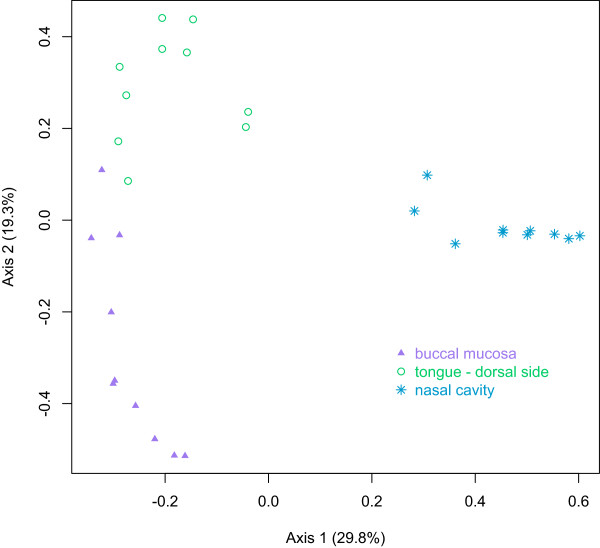
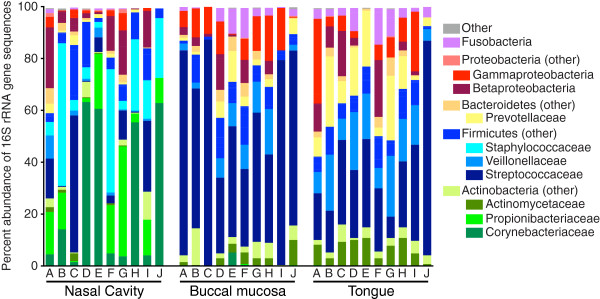
BACKGROUND: The microbiota of the nares has been widely studied. However, relatively few studies have investigated the microbiota of the nasal cavity posterior to the nares. This distinct environment has the potential to contain a distinct microbiota and play an important role in health. RESULTS: We obtained 35,142 high-quality bacterial 16S rRNA-encoding gene sequence reads from the nasal cavity and oral cavity (the dorsum of the tongue and the buccal mucosa) of 12 healthy adult humans and deposited these data in the Sequence Read Archive (SRA) of the National Center for Biotechnology Information (NCBI) (Bioproject: PRJNA248297). In our initial analysis, we compared the bacterial communities of the nasal cavity and the oral cavity from ten of these subjects. The nasal cavity bacterial communities were dominated by Actinobacteria, Firmicutes, and Proteobacteria and were statistically distinct from those on the tongue and buccal mucosa. For example, the same Staphylococcaceae operational taxonomic unit (OTU) was present in all of the nasal cavity samples, comprising up to 55% of the community, but Staphylococcaceae was comparatively uncommon in the oral cavity. CONCLUSIONS: There are clear differences between nasal cavity microbiota and oral cavity microbiota in healthy adults. This study expands our knowledge of the nasal cavity microbiota and the relationship between the microbiota of the nasal and oral cavities.
Overview
The claims and statistics of this paper haven’t been checked yet.
Run the check — free, no account needed. It reads the open-access text and checks the sources it cites.
Integrity signals
Registry
Cites
Statistics
Figures
Verification
Claims the paper makes
The claims and statistics of this paper haven’t been checked yet.
Run the check — free, no account needed. It reads the open-access text and checks the sources it cites.
Claims other papers make about this one
Each is checked against this paper’s own text: does it say what the citing paper says it does?
In the citing paper
“In healthy adults, bacteria present in the nasal cavity are typically those associated with skin, predominantly members of the Actinobacteria (e.g., Corynebacterium spp., Propionibacterium spp.), followed by Firmicutes (e.g., Staphylococcus spp.), and Proteobacteria”
From Respiratory viral infection-induced microbiome alterations and secondary bacterial pneumonia. (2018) · cites this paper as [69]
Self-check
Percentages, sums and reported differences re-computed from the paper’s own numbers.
The self-check needs the paper’s full text.
Citations
Cites
The SILVA ribosomal RNA gene database project: improved data processing and web-based tools
Quast, C., Pruesse, E., Yilmaz, P., Gerken, J., Schweer, T., Yarza, P., Peplies, J., & Glöckner, F. O. (2012) · Nucleic Acids Research · doi:10.1093/nar/gks1219 · Cited by 33,055 · cited 1×
“The sequences were aligned to the Silva reference alignment [17,18].”
MethodSchloss, P. D., Westcott, S. L., Ryabin, T., Hall, J. R., Hartmann, M., Hollister, E. B., Lesniewski, R. A., Oakley, B. B., Parks, D. H., Robinson, C. J., et al. (2009) · Applied and Environmental Microbiology · doi:10.1128/aem.01541-09 · Cited by 19,549 · cited 1×
“0 according to the Schloss SOP of November 27, 2012 [15,16].”
MethodUCHIME improves sensitivity and speed of chimera detection
Edgar, R. C., Haas, B. J., Clemente, J. C., Quince, C., & Knight, R. (2011) · Bioinformatics · doi:10.1093/bioinformatics/btr381 · Cited by 15,114
A new method for non-parametric multivariate analysis of variance
Anderson, M. J. (2001) · Austral Ecology · doi:10.1111/j.1442-9993.2001.01070.pp.x · Cited by 13,828 · cited 4×
“Principle coordinates analysis (PCoA) was used to visualize the θ distance matrix, and analysis of molecular variance (AMOVA) [22] was used to test the statistical significance of the differences between bacterial communities of different groups (i.e., nasal cavity communities versus buccal mucosa communities).”
MethodInfluentialStructure, function and diversity of the healthy human microbiome
The Human Microbiome Project Consortium (2012) · Nature · doi:10.1038/nature11234 · Cited by 11,726
Bacterial Community Variation in Human Body Habitats Across Space and Time
Costello, E. K., Lauber, C. L., Hamady, M., Fierer, N., Gordon, J. I., & Knight, R. (2009) · Science · doi:10.1126/science.1177486 · Cited by 3,231 · cited 1×
“However, many studies have characterized the microbiota of the healthy human nares [6-11], which are adjacent and anterior to the nasal cavity.”
BackgroundTopographical and Temporal Diversity of the Human Skin Microbiome
Grice, E. A., Kong, H. H., Conlan, S., Deming, C. B., Davis, J., Young, A. C., Program, N. C. S., Bouffard, G. G., Blakesley, R. W., Murray, P. R., et al. (2009) · Science · doi:10.1126/science.1171700 · Cited by 2,953 · cited 1×
“However, many studies have characterized the microbiota of the healthy human nares [6-11], which are adjacent and anterior to the nasal cavity.”
BackgroundThe role of the gut microbiota in nutrition and health
Flint, H. J., Scott, K. P., Louis, P., & Duncan, S. H. (2012) · Nature Reviews Gastroenterology & Hepatology · doi:10.1038/nrgastro.2012.156 · Cited by 2,283
Reducing the Effects of PCR Amplification and Sequencing Artifacts on 16S rRNA-Based Studies
Schloss, P. D., Gevers, D., & Westcott, S. L. (2011) · PLoS ONE · doi:10.1371/journal.pone.0027310 · Cited by 2,112 · cited 1×
“0 according to the Schloss SOP of November 27, 2012 [15,16].”
MethodSorokin, S. P. (1983) · doi:10.1007/978-1-349-06859-3_23 · Cited by 1,783
Cited by
Sorted by citations
Items 101–200 of 209
Loss of bacterial diversity in the sinuses is associated with lower smell discrimination scores
Biswas, K., Mackenzie, B. W., Ballauf, C., Draf, J., Douglas, R. G., & Hummel, T. R. (2020) · Scientific Reports · doi:10.1038/s41598-020-73396-3 · Cited by 13
Menberu, M. A., Hayes, A. J., Liu, S., Psaltis, A. J., Wormald, P., & Vreugde, S. (2020) · International Forum of Allergy & Rhinology · doi:10.1002/alr.22730 · Cited by 12
Current evidence of biofilms in chronic rhinosinusitis- a microbiological perspective
Koefoed, A., Mackenzie, B. W., Douglas, R. G., & Biswas, K. (2023) · Expert Review of Clinical Immunology · doi:10.1080/1744666x.2023.2231153 · Cited by 12
“The two main phenotypes of CRS are defined by the presence (CRSwNP) or absence of nasal polyposis (CRSsNP) [2,3].”
BackgroundGut Microbiota and Respiratory Infections: Insights from Mendelian Randomization
Huang, S., Li, J., Zhu, Z., Liu, X., Shen, T., Wang, Y., Ma, Q., Wang, X., Yang, G., Guo, G., et al. (2023) · Microorganisms · doi:10.3390/microorganisms11082108 · Cited by 12
“The URT, being more exposed to the external environment, is colonized by a diverse range of microbial species soon after birth, with Actinobacteria being a dominant phylum [59,60].”
BackgroundPersistence, loss and appearance of bacteria upstream and downstream of a river system
Dann, L. M., Smith, R. J., Jeffries, T. C., McKerral, J. C., Fairweather, P. G., Oliver, R. L., & Mitchell, J. G. (2016) · Marine and Freshwater Research · doi:10.1071/mf16010 · Cited by 12
Costantini, C., Nunzi, E., Spolzino, A., Merli, F., Facchini, L., Spadea, A., Melillo, L. M. A., Codeluppi, K., Marchesi, F., Marchesini, G., et al. (2022) · Infection and Immunity · doi:10.1128/iai.00048-22 · Cited by 11
Alterations in nasal microbiota of patients with amyotrophic lateral sclerosis
Liu, K., Guo, Q., Ding, Y., Luo, L., Huang, J., & Zhang, Q. (2023) · Chinese Medical Journal · doi:10.1097/cm9.0000000000002701 · Cited by 11
“[34] However, recent work also implicates nasal Actinobacteria in PD, [35] and Actinobacterial resting spores can serve as infectious agents, infiltrating the olfactory epithelium through the nasal cavity, where they are then mobilized via retrograde axonal transport to associated cerebral nuclei…”
BackgroundWhole-Genome Deep Sequencing of the Healthy Adult Nasal Microbiome
Cannon, M. L., Ferrer, G., Tesch, M. L., & Schipma, M. J. (2024) · Microorganisms · doi:10.3390/microorganisms12071407 · Cited by 10
“Previous studies have shown that the most abundant bacteria are Staphylococcus aureus , Staphylococcus epidermidis , and Propionibacterium acnes [38,39].”
Backgroundvan der Does, A. M., Amatngalim, G. D., Keijser, B. J. F., Hiemstra, P. S., & Villenave, R. (2018) · Vaccines · doi:10.3390/vaccines6030049 · Cited by 10
Unveiling the Forensic Potential of Oral and Nasal Microbiota in Post-Mortem Interval Estimation
Chen, J., Wei, Q., Yang, F., Liu, Y., Zhao, Y., Zhang, H., Huang, X., Zeng, J., Wang, X., & Zhang, S. (2025) · International Journal of Molecular Sciences · doi:10.3390/ijms26073432 · Cited by 9
“In contrast, the hypoxic oral cavity provides a suitable environment for anaerobic bacteria [29].”
The Upper Respiratory Tract Microbiome Network Impacted by SARS-CoV-2
Li, W., & Ma, Z. S. (2022) · Microbial Ecology · doi:10.1007/s00248-022-02148-9 · Cited by 9
“The normal URT microbiomes are dominant by Corynebacterium , Staphylococcus , Streptococcus , Dolosigranulum , and Moraxella , and the species abundance of Enterobacteriaceae is low [1, 18, 32].”
Jeon, Y. J., Gil, C. H., Won, J., Jo, A., & Kim, H. J. (2023) · BMC Microbiology · doi:10.1186/s12866-023-02898-7 · Cited by 9
“There is also growing evidence that a microbiome community resides in the human nasal mucus and exhibits the potential crosstalk between the nasal microbiome and Th2 allergic inflammation in the upper airway [23, 24].”
BackgroundZhang, J., Yu, D., Zhang, L., Wang, T., & Yan, J. (2024) · Forensic Science International Genetics · doi:10.1016/j.fsigen.2024.103170 · Cited by 8
Aquino, W. E., Olvera-Ramírez, A. M., Arellano‐Carbajal, F., Lanz‐Mendoza, H., Villagrán‐Herrera, E., & Acevedo‐Whitehouse, K. A. (2016) · Methods in Ecology and Evolution · doi:10.1111/2041-210x.12680 · Cited by 8
“…the quantitation of antibodies (Brandtzaeg 2007a; Weissenbacher 2014), epithelial and immune cell cul- ture (Michalczyk et al. 2004), DNA andRNA extraction (Spi- vack et al. 2004; van Wieren-de Wijer et al. 2009) and isolation of microbiota (Lemon et al. 2010; Bassis et al. 2014; Bik et al. 2016).”
BackgroundGut microbiota and chronic rhinosinusitis: a two-sample Mendelian randomization study
Zhang, F., Cai, B., Luo, J., Xiao, Y., Tian, Y., Sun, Y., Liu, H., & Zhang, J. (2024) · European Archives of Oto-Rhino-Laryngology · doi:10.1007/s00405-024-08468-5 · Cited by 7
“Previous studies have shown that Actinobacteria, Firmicutes, and Proteobacteria are the dominant phyla in the healthy human nasal cavity [21], which suggests that these microorganisms may have important ecological functions in the healthy nasal ecosystem.”
Jo, A., Kim, K.-S., Won, J., Shin, H., Kim, S., Kim, B., Kim, D. J., Cho, J., & Kim, H. J. (2024) · Communications Biology · doi:10.1038/s42003-024-06706-4 · Cited by 7
“Thus, insights into the microbiota of the human nasal mucus can provide fun-damentalinformationaboutthesusceptibilityofanindividualtorespiratoryviralinfectionsandfactorscontributingtorelatedimmunemechanisms 10,11 .”
BackgroundHopp, R. J., Allison, J., & Brooks, D. (2016) · Pediatric Allergy Immunology and Pulmonology · doi:10.1089/ped.2016.0645 · Cited by 7
Establishment of sheep nasal mucosa explant model and its application in antiviral research
Zheng, J., Lin, J., Ma, Y., Yang, C., Zhong, Q., Li, Y., & Yang, Q. (2023) · Frontiers in Microbiology · doi:10.3389/fmicb.2023.1124936 · Cited by 7
“Studies have demonstrated that the microbiota in the mucosal layer is key for restricting the invasion and infection of various pathogens (Bassis et al., 2014; Man et al., 2017; Spacova et al., 2021).”
BackgroundMukhtar, F., Guarnieri, A., Naro, M. D., Nicolosi, D., Brancazio, N., Varricchio, A., Varricchio, A., Zubair, M., Didbaridze, T., Petronio, G. P., et al. (2026) · Microorganisms · doi:10.3390/microorganisms14010234 · Cited by 8
“Lactobacillus sakei and Lactobacillus plantarum have demonstrated the potential to inhibit pathogens and the regulation of mucosal immunity [50].”
InfluentialMathias, K., Petronilho, F. C., & Danielski, L. G. (2026) · Neuroscience · doi:10.1016/j.neuroscience.2026.01.039 · Cited by 6
Kronbichler, A., Harrison, E. M., & Wagner, J. (2020) · Computational and Structural Biotechnology Journal · doi:10.1016/j.csbj.2020.12.031 · Cited by 7
Hao, Y., Lee, Y. S., Yap, K., Samuel, M., & Chow, V. T. K. (2025) · International Journal of Molecular Sciences · doi:10.3390/ijms26020778 · Cited by 5
López-Martín, G., Caparco, A., van Steenoven, C., Leganes‐Fonteneau, M., & Galvez-Pol, A. (2025) · NeuroImage · doi:10.1016/j.neuroimage.2025.121650 · Cited by 8
Composition and dynamics of the adult nasal microbiome
Liu, C. M., Erikstrup, L. T., Edslev, S. M., Park, D. E., Salazar, J. E., Aziz, M., Rendboe, A. K., Pham, T., Dinh, K. M., Roach, K., et al. (2026) · Microbiome · doi:10.1186/s40168-025-02250-3 · Cited by 8
“…studies, we found that while the nasal microbiome can be highly dynamic, certain core taxa— such as S. epidermidis and C acnes—persist within all individuals over time [34, 35], while our identification of nine CSTs offers a comprehensive framework for understanding nasal microbiome dynamics.”
Allam, V. S. R. R., Patel, V. K., Rubis, G. D., Paudel, K. R., Gupta, G. K., Chellappan, D. K., Singh, S. K., Hansbro, P. M., Oliver, B. G. G., & Dua, K. (2024) · Life Sciences · doi:10.1016/j.lfs.2024.122730 · Cited by 5
Maheshwari, K., Gupta, R., Sharma, R., Kaur, A., Vashist, A., & Aggarwal, G. (2024) · Critical Reviews in Microbiology · doi:10.1080/1040841x.2024.2391488 · Cited by 6
“Particulate matter (PM) travels through the nasal cavity to the brain via a pathway called the olfactory nerve pathway (Bassis et al. 2014; Hardy and Merrell 2021). the nasal cavity is directly connected to the brain by a small structure called the cribriform plate (cP), located on the upper…”
Li, Y., van Houten, C. B., Boers, S. A., Jansen, R., Cohen, A., Engelhard, D., Kraaij, R., Hiltemann, S., Ju, J., Fernández, D., et al. (2022) · PLoS ONE · doi:10.1371/journal.pone.0267140 · Cited by 6
Culture and Molecular Profiling of the Respiratory Tract Microbiota
Whelan, F., Rossi, L., Stearns, J. C., & Surette, M. G. (2018) · Methods in molecular biology · doi:10.1007/978-1-4939-8728-3_4 · Cited by 5
Martín-Castaño, B., Diez‐Echave, P., García-García, J., Hidalgo‐Garcia, L., Ruiz‐Malagón, A. J., Molina‐Tijeras, J. A., Rodríguez‐Sojo, M. J., Redruello-Romero, A., Martínez-Zaldívar, M., Mota, E., et al. (2024) · eLife · doi:10.7554/elife.95292 · Cited by 7
The oral microbiome and its effect on exhaled breath volatile analysis–the elephant in the room
Petralia, L. S., Chawaguta, A., Ruzsányi, V., Mayhew, C. A., & Sanders, D. (2025) · Journal of Breath Research · doi:10.1088/1752-7163/adf505 · Cited by 5
“…mentioning that mechanical filter ciliated body and upregulation of iNOS and nitric oxide keep the nasal environment with a minimal microbial load [42], thus making the nasal route the preferred choice for collecting higher quality exhaled breath samples that are little contaminated by microbial…”
Du, L., Cheng, X., Liu, B., Hao, Y., Long, Z., Hu, Q., Huo, B., Xie, T., Cheng, Q., Zhou, Y., et al. (2025) · International Journal of Molecular Sciences · doi:10.3390/ijms262412061 · Cited by 5
“Since the nasal cavity is continuously exposed to the external environment [20], and its mucosa is lined with diverse types of epithelial cells, it creates a heterogeneous microenvironment for the microbiota.”
Li, Y., Sun, Y., Shi, L., Wang, A., Gao, X., & Leng, H. (2026) · Frontiers in Allergy · doi:10.3389/falgy.2026.1799085 · Cited by 5
Hýblová, M., Hadžega, D., Babišová, K., Krumpolec, P., Gnip, A., Sabaka, P., Laššán, Š., & Minárik, G. (2023) · Microorganisms · doi:10.3390/microorganisms11071804 · Cited by 4
“Of both Gram-negative coccobacilli, Moraxella osloensis is rarely isolated from clinical specimens and Pasteurella multocida is part of the normal microbiota in the nasopharynx of many wild and domestic animals, including cats and dogs.”
BackgroundNasal microbes in allergic rhinitis children with or without sublingual immunotherapy
Shen, X., Teng, Z.-P., Li, Q., & Yu, Z. (2023) · Medicine · doi:10.1097/md.0000000000035711 · Cited by 5
“These shown that the bacterial evenness of AR patients had increased in their nasal microbiomes, as prior studies reports, [19,20] but had an apparently fallen after 2 years SLIT treatment.”
ResultQin, L., Pan, J., Feng, D., Yu, B., Li, S., Liu, X., Jin, Y., Zhu, S., Wu, W., & Yang, W. (2025) · Toxics · doi:10.3390/toxics13030180 · Cited by 4
González-García, S., Hamdan‐Partida, A., Pérez‐Ramos, J., Garrido, J. F. A., Bustos-Hamdan, A., & Bustos‐Martínez, J. (2024) · Journal of Medical Microbiology · doi:10.1099/jmm.0.001940 · Cited by 4
“Therefore, the microbiome of the nasal passages of healthy adults has been observed to be dominated by three phyla: Actinobacteria , Bacillota and Proteobacteria [11, 12, 26, 27].”
Acute Pneumonia: Biological Rules and Laws require Attention and Respect
Klepikov, I. (2019) · Journal of Respiratory Diseases · doi:10.14302/issn.2642-9241.jrd-19-2773 · Cited by 4
Drug Resistance in Ear, Nose, and Throat Infections
Ahmed, M. Z., Mutahir, Z., Rao, T., Islam, A., Hameed, N., Shakeel, S., Shahzad, H., Ali, M., Hameed, S., Hizbullah, S., et al. (2021) · Springer eBooks · doi:10.1007/978-3-030-76320-6_6 · Cited by 4
The Human Microbiome—A Physiologic Perspective
Yang, X. J., Louwies, T., Mars, R. A. T., & Kashyap, P. (2024) · Comprehensive physiology · doi:10.1002/cphy.c230013 · Cited by 14
Briceño, O., González-Navarro, M., Montufar, N., Chávez-Torres, M., Abato, I., Espinosa-Sosa, A., Ablanedo‐Terrazas, Y., Luna-Villalobos, Y. A., Ávila‐Ríos, S., Reyes‐Terán, G., et al. (2022) · Frontiers in Microbiology · doi:10.3389/fmicb.2022.958739 · Cited by 3
“Another study found that Staphylococcaceae was present in all nasal samples in an overall relative abundance of 55% (Bassis et al., 2014).”
BackgroundAltered nasal and oral microbiomes define pediatric sickle cell disease
Crouch, A. L., Severance, B. M., Creary, S. E., Hood, D. B., Bailey, M., Mejías, A., Ramilo, O., Gillespie, M. L., Ebelt, S., Sheehan, V., et al. (2025) · mSphere · doi:10.1128/msphere.00137-25 · Cited by 3
“These data are similar to results in other studies comparing the two body sites in both healthy and diseased subjects (11, 40–45).”
Vangrinsven, E., Fastrès, A., Taminiau, B., Billen, F., Daube, G., & Clercx, C. (2023) · BMC Microbiology · doi:10.1186/s12866-023-02828-7 · Cited by 5
“It can be hypothesized that, as it has been described in humans [1, 38], different healthy profiles exist, some of them being dominated by a particular bacterial taxon (e.”
BackgroundBaharvand, R., Fallah, F., Jafari, P., & Azimi, L. (2024) · AMB Express · doi:10.1186/s13568-024-01667-7 · Cited by 3
“In general, S. aureus and C. albicans are found in the oral cavity and are human oral microbiota(Bassis et al. 2014).”
BackgroundLi, C., Lv, M., Liu, H., Lin, Y.-X., Pan, J.-B., You, C., & Su, J. (2024) · Microbiology Spectrum · doi:10.1128/spectrum.03791-23 · Cited by 3
Microbiota - The Unseen Players in Adult Asthmatic Airways
Öztürk, A. B., Ranjan, R., Rani, A., Yazıcı, D., & Bavbek, S. (2020) · Turkish Thoracic Journal · doi:10.5152/turkthoracj.2020.19085 · Cited by 3
Cappas, V. M., Roy, R., Davenport, E., & Sykes, D. G. (2025) · Science & Justice · doi:10.1016/j.scijus.2025.101302 · Cited by 2
The modulatory approaches of microbiome therapeutics
Tembhre, M. K., Shipra, Imran, S., & Jaiswal, K. P. (2023) · Elsevier eBooks · doi:10.1016/b978-0-323-99336-4.00013-6 · Cited by 2
Pérez‐Losada, M. (2025) · Allergies · doi:10.3390/allergies5020016 · Cited by 3
“The nasal microbiome, however, although usually less diverse due to lower airflow, environmental exposure and nutrient availability, seems more stable due to mucosal immunity influence [116–118].”
Humphreys, G. J., Kumar, N., & McBain, A. J. (2017) · Journal of Medical Microbiology · doi:10.1099/jmm.0.000567 · Cited by 2
Microbiome and Diseases: Allergy
Wölbing, F., Köberle, M., Volz, T., & Biedermann, T. (2018) · Springer eBooks · doi:10.1007/978-3-319-90545-7_12 · Cited by 2
Microbial colonization of the nasal mucosa in the elderly with chronic rhinosinusitis
Tarasova, N. V., Belan, E. B., Степаненко, И. С., & Sokolova, M. V. (2024) · Saratov Journal of Medical Scientific Research · doi:10.15275/ssmj2002121 · Cited by 1
Functional crosstalk between the lung and eye: a new frontier in chronic lung diseases
Lee, H., Taylor-Blair, H. C., Chellappan, D. K., Rubis, G. D., Paudel, K. R., Oliver, B. G. G., Dua, K., & Yeung, S. (2025) · Archives of Toxicology · doi:10.1007/s00204-025-04136-7 · Cited by 1
“The upper respiratory tract has a distinct microbiome compared to that of the oral cavity (Bassis et al. 2014), including nasal commensal bacteria comprising Staphylococcus aureus and Moraxella catarrhalis (Pettigrew et al. 2008).”
Langenfeld, K. L., Arts, P. J., Monahan, A., Criswell, A., Wigginton, K. R., & Duhaime, M. B. (2026) · mSphere · doi:10.1128/msphere.00113-26 · Cited by 1
“Previous research on bacterial commun ities has similarly shown that the oral microbiome is distinct from the other human microbiomes (42, 51) though published studies on the viral component of these human microbiomes are limited.”
Characteristics of healthy sinonasal microbiome - single-centre study in the Czech Republic
Mamiňák, K., Janoušková, K., Holý, R., Prášilová, A., Filipovský, T., Kovář, D., & Astl, J. (2025) · Journal of Applied Biomedicine · doi:10.32725/jab.2025.012 · Cited by 1
Alsubhi, T. L., Yasir, M., Badreddine, S. A., El-Kafrawy, S. A., Khan, I., Hassan, A. M., Othman, N. A., Atrouni, A. A., Kumosani, T., & Azhar, E. I. (2025) · Journal of Infection and Public Health · doi:10.1016/j.jiph.2025.102986 · Cited by 1
Characteristics of Respiratory Microbiome in COPD—A Literature Review
Ciesielska-Markowska, I., Mycroft, K., Korczyński, P., Pulik, K., & Górska, K. (2026) · Advances in respiratory medicine · doi:10.3390/arm94030037 · Cited by 1
“The nasal cavity bacterial communities are dominated by phyla Actinobacteria , Firmicutes , and Proteobacteria [48].”
Inflammation in the lung today, hyperbolic perceptions of infection
Klepikov, I. (2019) · International Medicine · doi:10.5455/im.302644227 · Cited by 1
Martín-Castaño, B., Diez‐Echave, P., García-García, J., Hidalgo‐Garcia, L., Ruiz‐Malagón, A. J., Molina‐Tijeras, J. A., Rodríguez‐Sojo, M. J., Redruello-Romero, A., Martínez-Zaldívar, M., Mota, E., et al. (2025) · eLife · doi:10.7554/elife.95292.3 · Cited by 1
[Analysis of nasal flora composition in children with perennial allergic rhinitis].
Shen, X., Teng, Z.-P., Li, Q., & Yu, Z. (2024) · PubMed Central · doi:10.13201/j.issn.2096-7993.2024.02.009 · Cited by 3
Rathnakumar, B. S. L., Gowda, U., Guttal, C., & Gautham, S. (2024) · Cureus · doi:10.7759/cureus.76048 · Cited by 1
Effect of Inferior Turbinate Radiofrequency Procedure on Nasal Flora: A Prospective Study
Bayraktar, F. G. İ., Çelik, R. Ç., Berkıten, G., Arabacı, Ç., Ak, K., Zorlu, T. G., & Uyar, Y. (2025) · American Journal of Rhinology and Allergy · doi:10.1177/19458924251370502 · Cited by 1
“12,13 While our fi ndings provide valuable culture-based insight into dominant microbial populations following RF treatment, future research incorporating metagenomic approaches may offer a more comprehensive understanding of the intervention's effects on the nasal microbiome.”
Kothari, V., Joshi, C., Patel, P., Shahi, D., Mehta, C., Prajapati, B., Patel, S. J., Mandaliya, D. K., & Seshadri, S. (2018) · Elsevier eBooks · doi:10.1016/b978-0-12-813667-6.00008-5 · Cited by 1
Otolaryngologic Mucosal Immune Compartments
Shnawa, I. M. S. (2017) · Otolaryngology Open Access Journal · doi:10.23880/ooaj-16000147 · Cited by 1
“The total microbial entities in these compartments, the microbiome [2] interplayed an integral roles in maintaining compartmental homeostasis, mucosal protection there in the commensal parts of the microbiome may played the role of the balance to the intruding microbial pathogens and might produce secondary metabolite…”
BackgroundMicrobiome of the Unified Airway
Gitomer, S. A., & Ramakrishnan, V. R. (2020) · Springer eBooks · doi:10.1007/978-3-030-50330-7_1 · Cited by 1
Allergic Rhinitis and Chronic Rhinosinusitis
Kloepfer, K. M., Singh, A., & Ramakrishnan, V. R. (2022) · Respiratory medicine · doi:10.1007/978-3-030-87104-8_4 · Cited by 1
Microbiome in Upper Respiratory Tract Infections
Mittal, P., Mittal, M., Rawat, U., & Ambika (2022) · Springer eBooks · doi:10.1007/978-981-16-8957-4_17 · Cited by 1
Diet‐Based Microbiome Modulation: You are What You Eat
Li, J., Qu, Z., Liu, F., Hao, J., Pan, Y., Guo, S., & Ho, C. L. (2022) · Wiley eBooks · doi:10.1002/9783527825462.ch1 · Cited by 1
Vaginal Microbiota Transplantation: Possible Mechanisms and Future PerspectivesPreprint
Tuniyazi, M., Li, S., Fu, Y., Hu, X., & Zhang, N. (2023) · Preprints.org · doi:10.20944/preprints202302.0242.v1 · Cited by 1
Acute Pneumonia: Infection or Inflammation in the Lung?
Klepikov, I. (2019) · American Journal of Biomedical Science & Research · doi:10.34297/ajbsr.2019.03.000653
BİLGİ, S. T. (2020) · International Journal of Scientific and Technological Research · doi:10.7176/jstr/6-01-04
Jo, A., Won, J., Chil, C. H., Choi, J. Y., Lee, K., Yoon, S. S., & Kim, H. J. (2020) · bioRxiv (Cold Spring Harbor Laboratory) · doi:10.1101/2020.08.03.235648
Optimized Analysis of the Lung Allograft Microbiota from Bronchoalveolar Lavage Fluid
Prescod, J. (2018) · TSpace (University of Toronto)
Zhou, Y., Lu, S., Li, M., Wang, M., Ma, J., Mao, Y., Zhu, Z., Min, J., Xiao, J., Qiu, R., et al. (2021) · Research Square · doi:10.21203/rs.3.rs-490714/v1
Villalonga, C. C. (2009) · Lluc: revista de cultura i d'idees
Unlocking the Mysteries of the Human Microbiome to Combat COVID-19
Muthuirulan, P., Bandyopadhyay, M., Mamillapalli, S., & Sharma, P. (2022) · Springer eBooks · doi:10.1007/978-981-16-7672-7_11
Yadav, M., & Bhambi, M. (2021) · Elsevier eBooks · doi:10.1016/b978-0-12-819265-8.00078-4
Schröder, J. (2020) · Faculty Opinions – Post-Publication Peer Review of the Biomedical Literature · doi:10.3410/f.735855705.793576333
Li, X., Jiang, W., Lijuan, D., Liu, G., Yu, B., & Fang, M. (2022) · bioRxiv (Cold Spring Harbor Laboratory) · doi:10.1101/2022.11.29.518443
First insights into nasal microbiome in wine tastersPreprint
Duarte-Coimbra, S., Forcina, G., Pérez-Pardal, L., & Beja‐Pereira, A. (2023) · bioRxiv (Cold Spring Harbor Laboratory) · doi:10.1101/2023.03.21.533426
Jo, A., Kim, K.-S., Won, J., Shin, H., Kim, S., Kim, B., Kim, D. J., Cho, J., & Kim, H. J. (2023) · Research Square · doi:10.21203/rs.3.rs-3044970/v1
Babišová, K., Krumpolec, P., Hadžega, D., Sabaka, P., Jackuliak, P., Minárik, G., & Hýblová, M. (2023) · Acta Virologica · doi:10.3389/av.2023.11664
“Firmicutes, Proteobacteria, and Bacteroidetes are represented in the oropharynx.”
BackgroundInfluentialNasal cavity microbiota features among people who have had COVID-19
Romanov, V. A., Духанина, И. В., Afanasev, A. V., Гульнева, М. Ю., & Semechkin, N. V. (2023) · ASTRAKHAN MEDICAL JOURNAL · doi:10.17021/1992-6499-2023-4-97-102
Martín-Castaño, B., Diez‐Echave, P., García-García, J., Hidalgo‐Garcia, L., Ruiz‐Malagón, A. J., Molina‐Tijeras, J. A., Rodríguez‐Sojo, M. J., Redruello-Romero, A., Martínez-Zaldívar, M., Mota, E., et al. (2024) · eLife · doi:10.7554/elife.95292.1
Udayan, S., & Naik, A. S. (2024) · Elsevier eBooks · doi:10.1016/b978-0-323-90144-4.00004-5
An, S., Oh, J., Shon, H., Song, J., Choi, Y. S., & Kim, D.-H. (2024) · International Journal of Antimicrobial Agents · doi:10.1016/j.ijantimicag.2024.107369
Tarasova, N. V., Степаненко, И. С., Belan, E. B., Sokolova, M. V., & Косов, В. А. (2024) · Folia Otorhinolaryngologiae et Pathologiae Respiratoriae · doi:10.33848/fopr628996
Martín-Castaño, B., Diez‐Echave, P., García-García, J., Hidalgo‐Garcia, L., Ruiz‐Malagón, A. J., Molina‐Tijeras, J. A., Rodríguez‐Sojo, M. J., Redruello-Romero, A., Martínez-Zaldívar, M., Mota, E., et al. (2024) · eLife · doi:10.7554/elife.95292.2
Imran, M., & Ahmad, B. (2024) · Springer eBooks · doi:10.1007/978-981-97-6948-3_2 · Cited by 1
Jean-Joseph, J., Westerhausen, C., Doescher, J., Maerkl, B., Roushan, Z., Neu, M., Janzen, T., Kahl, K.-H., Stueben, G., & Balagiannis, N. (2025) · Advances in Radiation Oncology · doi:10.1016/j.adro.2025.101896
“21 The associated reduction in prophylactic antibiotic use may further simplify posttreatment management and lower overall health care costs.”
Konovalovas, A., Armalytė, J., Klimkaitė, L., Liveikis, T., Jonaitytė, B., Danila, E., Bironaitė, D., Mieliauskaitė, D., Bagdonas, E., & Aldonytė, R. (2024) · Figshare · doi:10.6084/m9.figshare.25708957
Konovalovas, A., Armalytė, J., Klimkaitė, L., Liveikis, T., Jonaitytė, B., Danila, E., Bironaitė, D., Mieliauskaitė, D., Bagdonas, E., & Aldonytė, R. (2024) · Figshare · doi:10.6084/m9.figshare.26713541
Jeon, Y. J., Gil, C. H., Won, J., Jo, A., & Kim, H. J. (2020) · Figshare · doi:10.6084/m9.figshare.13065401
Jeon, Y. J., Gil, C. H., Won, J., Jo, A., & Kim, H. J. (2020) · Figshare · doi:10.6084/m9.figshare.13065404
Lupancu, T., Limpah, J., Aydin, E., Fan, T., Wong, V., Rimmer, J., Wang, B. S., Yen, D. M., Rostom, E., & Damry, A. M. (2025) · Methods · doi:10.1016/j.ymeth.2025.12.006
Pham, H. T., Pham, V. H., Tran, D. K., Tran, N. H. T., Nguyen, T. H. T., Pham, A. H., Ha, Q. D., Tran, N. V., Nhung, N. V., Nguyen, T. V. F., et al. (2026) · Viruses · doi:10.3390/v18020153
“Since respiratory viruses are not part of the normal microbial flora of the upper respiratory tract [46–48], their detection in any respiratory specimen is generally considered sufficient to identify them as the causative agents of infection.”
Jablonska, S., Kula, A., & Putonti, C. (2026) · Frontiers in Microbiomes · doi:10.3389/frmbi.2026.1691965
“…healthy individuals have been studied largely in isolation (Costello et al., 2009; Bik et al., 2010; Human Microbiome Project Consortium, 2012; Bassis et al., 2014; Price et al., 2020a), comparatively little is known about how the urinary microbiome relates to more distant anatomical sites.”
Starikova, V. A., Konstantinov, D. Y., & Константинова, Е. А. (2026) · Journal of microbiology epidemiology immunobiology · doi:10.36233/0372-9311-753
Metadata
- Authors
- Bassis, C. M., Tang, A. L., Young, V. B., & Pynnonen, M. A.
- Affiliations
- University of Michigan (US)
- University of Cincinnati (US)
- Corresponding author
- Bassis, Christine M
- Venue
- Microbiome
- Published
- 2014-08-11
- Volume
- 2
- Issue
- 1
- Pages
- 27-27
- ISSN
- 2049-2618 (ISSN-L)
- PMC
- PMC4138944
- OpenAlex
- W2161225919
- Cited by
- 209
- References
- 25
- Citations by year
- 2026: 17 · 2025: 17 · 2024: 25 · 2023: 23 · 2022: 22 · 2021: 15 · 2020: 30 · 2019: 14 · 2018: 11 · 2017: 15 · 2016: 13 · 2015: 6
- FWCI
- 15.10
- Type
- journal article
- Language
- en
- Open access
- gold
- doi.org
- Locations
- Microbiome (publishedVersion)
- Europe PMC (PubMed Central) (publishedVersion, cc-by)
- PubMed Central (publishedVersion, cc-by)
- PubMed (publishedVersion)
- Deep Blue (University of Michigan) (submittedVersion)
- Funders
- National Institutes of Health
- National Heart, Lung, and Blood Institute
- Topics
- Health Sciences › Dentistry › Periodontics › Oral microbiology and periodontitis research
- Life Sciences › Biochemistry, Genetics and Molecular Biology › Molecular Biology › Gut microbiota and health
- Physical Sciences › Environmental Science › Ecology › Microbial Community Ecology and Physiology
- Keywords
- tongue dorsum, buccal mucosa, Staphylococcaceae, bacterial community composition, healthy adults, 16S rRNA gene sequencing, actinobacteria, Firmicutes, Proteobacteria
About these checks
Registry, retraction, Cites and statistics results are computed, not judged, with one exception: a printed reference that no index lists is read once by a model before it counts as a citation error. Claims are extracted by a model and kept only when their quote appears verbatim in the text; each cited source is then checked, with a model’s help, for whether it says what the claim relies on. Those verdicts can be wrong — read the claim’s quote and the cited source before relying on one.
Statistics and arithmetic are recomputed, not judged.
Confidence bands are shown only for fields calibrated on our annotated test set. None is calibrated yet, so no band is shown.
What counts as a claim ›How we measure confidence ›How we check this ›
Are you an author, or do you see a problem with this page? Request a review
