

The DOI matches its Crossref record; 279 of the 280 references it cites were found in a registry or an index.
The composition and stability of the vaginal microbiota of normal pregnant women is different from that of non-pregnant women
Open accessAbstract
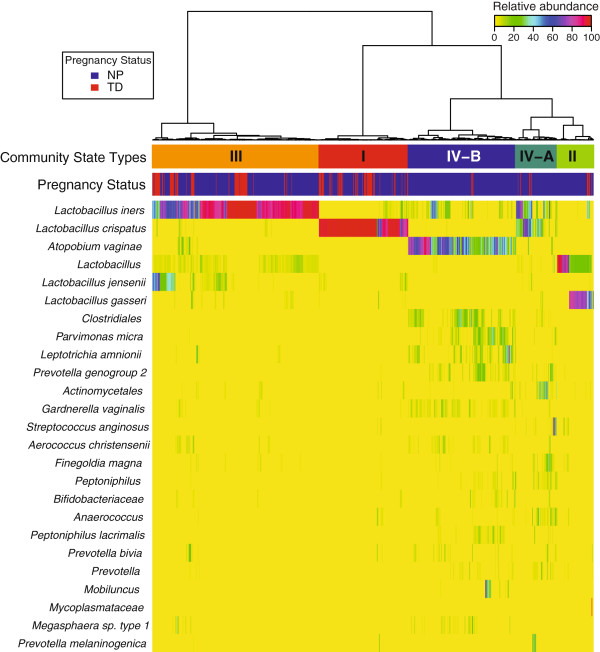
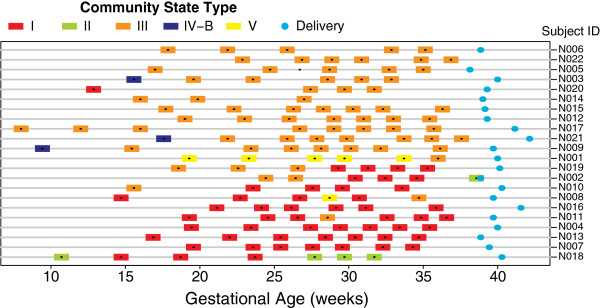
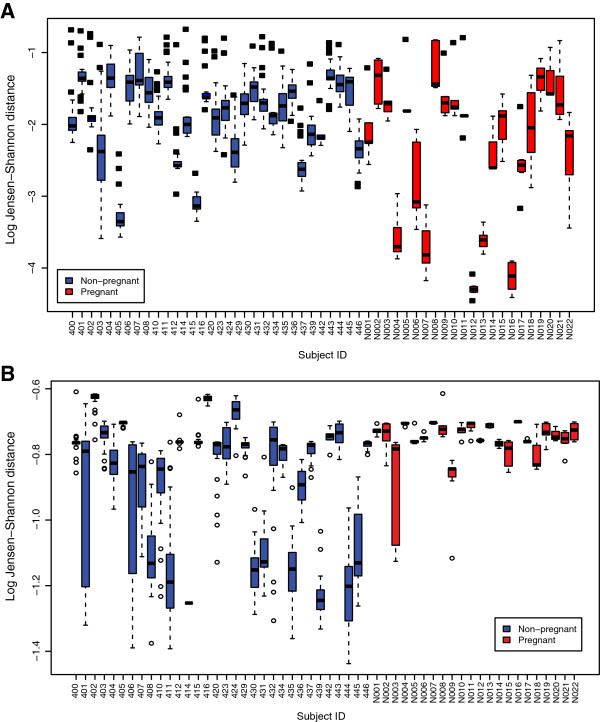
BACKGROUND: This study was undertaken to characterize the vaginal microbiota throughout normal human pregnancy using sequence-based techniques. We compared the vaginal microbial composition of non-pregnant patients with a group of pregnant women who delivered at term. RESULTS: A retrospective case-control longitudinal study was designed and included non-pregnant women (n = 32) and pregnant women who delivered at term (38 to 42 weeks) without complications (n = 22). Serial samples of vaginal fluid were collected from both non-pregnant and pregnant patients. A 16S rRNA gene sequence-based survey was conducted using pyrosequencing to characterize the structure and stability of the vaginal microbiota. Linear mixed effects models and generalized estimating equations were used to identify the phylotypes whose relative abundance was different between the two study groups. The vaginal microbiota of normal pregnant women was different from that of non-pregnant women (higher abundance of Lactobacillus vaginalis, L. crispatus, L. gasseri and L. jensenii and lower abundance of 22 other phylotypes in pregnant women). Bacterial community state type (CST) IV-B or CST IV-A characterized by high relative abundance of species of genus Atopobium as well as the presence of Prevotella, Sneathia, Gardnerella, Ruminococcaceae, Parvimonas, Mobiluncus and other taxa previously shown to be associated with bacterial vaginosis were less frequent in normal pregnancy. The stability of the vaginal microbiota of pregnant women was higher than that of non-pregnant women; however, during normal pregnancy, bacterial communities shift almost exclusively from one CST dominated by Lactobacillus spp. to another CST dominated by Lactobacillus spp. CONCLUSION: We report the first longitudinal study of the vaginal microbiota in normal pregnancy. Differences in the composition and stability of the microbial community between pregnant and non-pregnant women were observed. Lactobacillus spp. were the predominant members of the microbial community in normal pregnancy. These results can serve as the basis to study the relationship between the vaginal microbiome and adverse pregnancy outcomes.
Overview
The claims and statistics of this paper haven’t been checked yet.
Run the check — free, no account needed. It reads the open-access text and checks the sources it cites.
Integrity signals
Registry
Cites
Statistics
Figures
Verification
Claims the paper makes
The claims and statistics of this paper haven’t been checked yet.
Run the check — free, no account needed. It reads the open-access text and checks the sources it cites.
Claims other papers make about this one
Each is checked against this paper’s own text: does it say what the citing paper says it does?
The cited source says what the claim attributes to it.
In the citing paper
“Five major subcategories of cervicovaginal bacterial species were identified and defined as Community State Types (CSTs).”
The cited source says what the claim attributes to it.
In the citing paper
“Among the four groups, there was a high prevalence of lactobacilli. In particular, L. crispatus prevailed in CST I, L. gasseri in CST II, L. iners in CST III, and L. jensenii in CST V. In the remaining Community state type (CST IV) predominate anaerobic bacteria, such G. vaginalis , Atopobium vaginae , and Megasphaera spp., similar to the vaginal microbiota in bacterial vaginosis [27, 28].”
Self-check
Percentages, sums and reported differences re-computed from the paper’s own numbers.
The self-check needs the paper’s full text.
Citations
Cites
Metagenomic biomarker discovery and explanation
Segata, N., Izard, J., Waldron, L., Gevers, D., Miropolsky, L., Garrett, W. S., & Huttenhower, C. (2011) · Genome Biology · doi:10.1186/gb-2011-12-6-r60 · Cited by 16,192
Differential expression analysis for sequence count data
Anders, S., & Huber, W. (2010) · Genome Biology · doi:10.1186/gb-2010-11-10-r106 · Cited by 15,581
UCHIME improves sensitivity and speed of chimera detection
Edgar, R. C., Haas, B. J., Clemente, J. C., Quince, C., & Knight, R. (2011) · Bioinformatics · doi:10.1093/bioinformatics/btr381 · Cited by 15,114
An obesity-associated gut microbiome with increased capacity for energy harvest
Turnbaugh, P. J., Ley, R. E., Mahowald, M. A., Magrini, V., Mardis, E. R., & Gordon, J. I. (2006) · Nature · doi:10.1038/nature05414 · Cited by 12,444
A human gut microbial gene catalogue established by metagenomic sequencing
MetaHIT Consortium, Qin, J., Li, R., Raes, J., Arumugam, M., Burgdorf, K. S., Manichanh, C., Nielsen, T., Pons, N., Levenez, F., et al. (2010) · Nature · doi:10.1038/nature08821 · Cited by 11,624
Phylogenetic identification and in situ detection of individual microbial cells without cultivation
Amann, R., Ludwig, W., & SCHLEIFER, K. H. (1995) · Microbiological Reviews · doi:10.1128/mr.59.1.143-169.1995 · Cited by 9,218
Human gut microbes associated with obesity
Ley, R. E., Turnbaugh, P. J., Klein, S., & Gordon, J. I. (2006) · Nature · doi:10.1038/4441022a · Cited by 8,785
Diversity of the Human Intestinal Microbial Flora
Eckburg, P. B., Bik, E. M., Bernstein, C. N., Purdom, E., Dethlefsen, L., Sargent, M., Gill, S. R., Nelson, K. E., & Relman, D. A. (2005) · Science · doi:10.1126/science.1110591 · Cited by 7,913
Turnbaugh, P. J., Ley, R. E., Hamady, M., Fraser-Liggett, C. M., Knight, R., & Gordon, J. I. (2007) · Nature · doi:10.1038/nature06244 · Cited by 6,091
Divergence measures based on the Shannon entropy
Lin, J.-H. (1991) · IEEE Transactions on Information Theory · doi:10.1109/18.61115 · Cited by 5,877
Research works printed but not linked: 2
- Döderlein A: Das Scheidensekret und seine Bedeutung fuerdas Puerperalfieber. Die Arten des Scheidensekretes. 1892, 11: 699-
- Højsgaard S, Halekoh U, Yan J: The R package geepack for generalized estimating equations. J Stat Softw. 2006, 15: 1-11.
Cited by
Sorted by citations
Items 501–600 of 864
Yu, T., Sun, Q., Shao, X., & Wang, Z. (2023) · Frontiers in Endocrinology · doi:10.3389/fendo.2023.1200002 · Cited by 21
Ptacek, T., Lobashevsky, E. S., Cliver, S., Lefkowitz, E. J., Morrow, C. D., Biggio, J., Edwards, R. K., & Subramaniam, A. (2016) · American Journal of Perinatology · doi:10.1055/s-0036-1585467 · Cited by 8
Odogwu, N. M., Olayemi, O. O., & Omigbodun, A. O. (2020) · PeerJ · doi:10.7717/peerj.9684 · Cited by 9
Liang, X., Li, Z., Tye, K. D., Chen, Y., Luo, H., & Xiao, X. (2020) · Journal of obstetrics and gynaecology research · doi:10.1111/jog.14434 · Cited by 13
Vitali, B., Abruzzo, A., & Mastromarino, P. (2017) · Elsevier eBooks · doi:10.1016/b978-0-12-804024-9.00043-4 · Cited by 8
Łaniewski, P., & Herbst‐Kralovetz, M. M. (2017) · Elsevier eBooks · doi:10.1016/b978-0-12-801238-3.64406-9 · Cited by 8
Interaction of microbiota, mucosal malignancies, and immunotherapy—Mechanistic insights
Mager, L. F., Krause, T., & McCoy, K. D. (2024) · Mucosal Immunology · doi:10.1016/j.mucimm.2024.03.007 · Cited by 8
The sow vaginal and gut microbiota associated with longevity and reproductive performance
Liu, Z., Tsai, T.-C., Zuo, B., Howe, S. M., Farrar, J. E., Randolph, C. E., Maxwell, C. V. V., & Zhao, J. (2025) · Journal of Animal Science and Biotechnology/Journal of animal science and biotechnology · doi:10.1186/s40104-024-01140-2 · Cited by 7
Passarelli, G. V., Whang, S. N., Gilbert, N. M., & Hu, J. (2026) · mBio · doi:10.1128/mbio.02677-25 · Cited by 8
Microbiome and Hemato-immune Aging
Johansson, A., Ho, N. P. Y., & Takizawa, H. (2024) · Experimental Hematology · doi:10.1016/j.exphem.2024.104685 · Cited by 7
Ma’ayeh, M., Rood, K. M., Walker, H., Oliver, E., Gee, S., & Iams, J. D. (2019) · BJOG An International Journal of Obstetrics & Gynaecology · doi:10.1111/1471-0528.15801 · Cited by 7
Purkayastha, S. D., Bhattacharya, M. K., Prasad, H. K., & Mandal, S. D. (2020) · Elsevier eBooks · doi:10.1016/b978-0-12-821265-3.00017-7 · Cited by 7
Aslam, S., Saraf, V. S., Saleem, S., Saeed, S., Javed, S., Junjua, M., & Bokhari, H. (2020) · The Journal of Maternal-Fetal & Neonatal Medicine · doi:10.1080/14767058.2020.1810660 · Cited by 7
Breastfeeding and the Influence of the Breast Milk Microbiota on Infant Health
Chegdani, F., Nouadi, B., & Bennis, F. (2021) · IntechOpen eBooks · doi:10.5772/intechopen.99758 · Cited by 7
Cervicovaginal Microbial–Immune State and Group B Streptococcus Colonization in Pregnancy
McCoy, J. A., Burris, H. H., Gerson, K. D., McCarthy, C., Ravel, J., & Elovitz, M. A. (2023) · American Journal of Perinatology · doi:10.1055/s-0043-1772226 · Cited by 7
Self-citationCharacterization of vaginal Lactobacillus species by rplK -based multiplex qPCR in Russian women
Витальевич, Д. В., & Игоревич, К. С. (2017) · Anaerobe · doi:10.1016/j.anaerobe.2017.03.011 · Cited by 7
Prakash, N. R. M. (2017) · International Journal of Current Microbiology and Applied Sciences · doi:10.20546/ijcmas.2017.601.114 · Cited by 7
La prématurité spontanée et le microbiote maternel
Côté, N., & Pasquier, J. (2018) · médecine/sciences · doi:10.1051/medsci/2018205 · Cited by 7
Microbiome Of The Women’S Genital System
Pytka, M., Kordowska‐Wiater, M., & Jarocki, P. (2019) · Postępy Mikrobiologii - Advancements of Microbiology · doi:10.21307/pm-2019.58.3.227 · Cited by 9
Species diversity of lactobacillus of vaginal microbiom: how to see
Витальевич, Д. В. (2018) · Molecular Genetics Microbiology and Virology (Russian) · doi:10.17116/molgen2018360313 · Cited by 7
Szubert, M., Weteska, M., Zgliczynska, J., Olszak, O., Zgliczyńska, M., Kalinka, J., & Wilczyński, J. R. (2021) · Ginekologia Polska · doi:10.5603/gp.a2021.0035 · Cited by 7
Hussein, K., Tesfai, B., Frezgi, O., Hayelom, H., Gebremeskel, Y., Werede, A., Gebremariam, H., Kibreab, F., & Hamida, M. E. (2024) · BioMed Research International · doi:10.1155/2024/7193490 · Cited by 7
Affective Symptoms in Pregnancy are Associated with the Vaginal Microbiome
Scheible, K. M., Beblavy, R., Sohn, M. B., Qui, X., Gill, A. L., Miranda, J. N., Brunner, J., Miller, R. K., Barrett, E. S., O’Connor, T. G., et al. (2024) · Journal of Affective Disorders · doi:10.1016/j.jad.2024.09.108 · Cited by 7
Self-citationLiao, Y., Liu, T., Zeng, X., Xiao, B., Xiao, M., Zhu, Y., & Song, Q. (2025) · BMC Pregnancy and Childbirth · doi:10.1186/s12884-025-07411-8 · Cited by 6
Methodology for microbiome data analysis: An overview
Creus-Martí, I., Moyá, A., & Gómez, F. J. S. (2025) · Computers in Biology and Medicine · doi:10.1016/j.compbiomed.2025.110157 · Cited by 9
Vinitha, G., Balakrishnan, J., Nagarajan, P., & Kannan, S. (2025) · The Open Microbiology Journal · doi:10.2174/0118742858375414250428060224 · Cited by 6
Engineered Tissue Models to Decode Host–Microbiota Interactions
Adelfio, M., Callen, G. E., He, X., Paster, B. J., Hastürk, H., & Ghezzi, C. E. (2025) · Advanced Science · doi:10.1002/advs.202417687 · Cited by 6
Host Microbiota Contributes to Health and Response to Disease.
Aurora, R., & Sanford, T. R. (2015) · Europe PMC (PubMed Central) · Cited by 6
Cervicovaginal microbiota and HPV-induced cervical cancer
Jain, A., Shrivastava, S. K., & Joy, L. (2022) · Elsevier eBooks · doi:10.1016/b978-0-323-91797-1.00010-7 · Cited by 6
Meta-analysis of metagenomics reveals the signatures of vaginal microbiome in preterm birth
Huo, Y., Jiang, Q., & Zhao, W. (2022) · Medicine in Microecology · doi:10.1016/j.medmic.2022.100065 · Cited by 6
Interaction between Microbes and Host in Sow Vaginas in Early Pregnancy
Zang, X., Wang, W., Gu, S., Gu, T., Yang, H., Zheng, E., Xu, Z., Huang, S., Li, Z., Cai, G., et al. (2023) · mSystems · doi:10.1128/msystems.01192-22 · Cited by 6
Odogwu, N. M., Olayemi, O. O., & Omigbodun, A. O. (2023) · Medicine in Microecology · doi:10.1016/j.medmic.2023.100080 · Cited by 6
Masson, L., Wilson, J., Hamzah, A. S. A., Tachedjian, G., & Payne, M. S. (2023) · American Journal of Reproductive Immunology · doi:10.1111/aji.13750 · Cited by 6
Vaginal Microbiota Profile in first-trimester miscarriages cases
Abdulla, S. R., Kareem, S. R., & Hasan, A. H. (2023) · Cellular and Molecular Biology · doi:10.14715/cmb/2023.69.8.2 · Cited by 6
Zangirolamo, A. F., Souza, A. K., Yokomizo, D. N., Miguel, A. K. A., Costa, M., Alfieri, A. A., & Seneda, M. M. (2024) · Animals · doi:10.3390/ani14131971 · Cited by 8
Vaginale Mikrobiota – ein Update
Mendling, W. (2015) · Der Gynäkologe · doi:10.1007/s00129-015-3743-7 · Cited by 6
Risk and protective factors associated with BV chronicity among women in Rakai, Uganda
Thoma, M. E., Brotman, R. M., Gray, R. H., Sewankambo, N. K., & Wawer, M. J. (2019) · Sexually Transmitted Infections · doi:10.1136/sextrans-2019-054145 · Cited by 6
Amin, M. E., Azab, M., Hanora, A., Atwa, K. A., & Shabayek, S. (2023) · Microorganisms · doi:10.3390/microorganisms11010139 · Cited by 7
Variable Selection for Sparse Data with Applications to Vaginal Microbiome and Gene Expression Data
Mousavi, N. D., Yang, J., & Aldirawi, H. (2023) · Genes · doi:10.3390/genes14020403 · Cited by 6
Translational informatics for human microbiota: data resources, models and applications
Shen, K., Din, A. U., Sinha, B., Zhou, Y., Qian, F., & Shen, B. (2023) · Briefings in Bioinformatics · doi:10.1093/bib/bbad168 · Cited by 6
New techniques to characterise the vaginal microbiome in pregnancy
Mendz, G. L., Kaakoush, N. O., & Quinlivan, J. A. (2016) · AIMS Microbiology · doi:10.3934/microbiol.2016.1.55 · Cited by 6
A Model-Based Approach for Species Abundance Quantification Based on Shotgun Metagenomic Data
Chen, E. Z., Bushman, F. D., & Li, H. (2016) · Statistics in Biosciences · doi:10.1007/s12561-016-9148-x · Cited by 6
McElroy, K. G., Chung, S.-Y., & Regan, M. B. (2017) · AJN American Journal of Nursing · doi:10.1097/01.naj.0000520917.73358.99 · Cited by 7
Topics on Critical Issues in Neonatal Care
Barría, R. M. (2021) · IntechOpen eBooks · doi:10.5772/intechopen.94706 · Cited by 6
The Microbiome in Health and Disease
Yang, I. H., Edwards, S. M., Dunlop, A. L., & Hertzberg, V. (2019) · Elsevier eBooks · doi:10.1016/b978-0-12-801238-3.11462-x · Cited by 6
Maternal influences on offspring food allergy
Lee, H. Y., Nazmul, T., Lan, J., & Oyoshi, M. K. (2024) · Immunological Reviews · doi:10.1111/imr.13392 · Cited by 7
Talukdar, D., Raju, Y. J., Jana, P., Sharma, K., Babele, P., Kothidar, A., Ahrodia, T., Narendrakumar, L., Shyam, K. R., Singh, U., et al. (2025) · Genomics · doi:10.1016/j.ygeno.2025.111063 · Cited by 5
Vaginal microbiome and its implications in preterm birth
Park, S., You, Y., Lee, G., Hur, Y. M., Go, Y.-Y., Park, S., & Kim, Y. J. (2025) · Obstetrics & Gynecology Science · doi:10.5468/ogs.25085 · Cited by 8
McKee, K. S., Bassis, C. M., Golob, J. L., Palazzolo, B., Comstock, S. S., Rosas‐Salazar, C., Stanford, J. B., Ananda, S., O’Connor, T., Gern, J. E., et al. (2025) · Annals of Epidemiology · doi:10.1016/j.annepidem.2025.11.003 · Cited by 8
Liu, S., Alipour, H., Zachar, V., Kesmodel, U. S., & Dardmeh, F. (2024) · Nutrients · doi:10.3390/nu16111781 · Cited by 6
da Silva‐Álvarez, E., Gómez‐Arrones, V., Correa‐Fiz, F., Martín‐Cano, F. E., Gaitskell‐Phillips, G., Carrasco, J. J., Rey, J., Aparicio, I. M., Peña, F. J., Rodríguez, J. M. A., et al. (2025) · PLoS ONE · doi:10.1371/journal.pone.0321389 · Cited by 5
Banga, L. (2021) · New Zealand College of Midwives · doi:10.12784/nzcomjnl57.2021.5.34-40 · Cited by 4
The Medium Is the Message: Defining a “Normal” Vaginal Microbiome in Healthy Reproductive-Age Women
Witkin, S. S., & Linhares, I. M. (2022) · Reproductive Sciences · doi:10.1007/s43032-022-01067-x · Cited by 6
Evans, G. E., Mahajan, V., Wakeman, S. A., Slatter, T. L., Ponnampalam, A. P., Anderson, T. P., Sarwar, M., & Evans, J. J. (2023) · Archives of Gynecology and Obstetrics · doi:10.1007/s00404-023-06987-w · Cited by 5
Sabo, M. C., Lokken, E. M., Srinivasan, S., Kinuthia, J., Richardson, B. A., Fiedler, T. L., Munch, M. M., Proll, S. C., Salano, J. C., John-Stewart, G. C., et al. (2023) · The Journal of Infectious Diseases · doi:10.1093/infdis/jiad168 · Cited by 5
Species Diversity of Lactobacilli of Vaginal Microbiome: How to Observe It
Витальевич, Д. В. (2018) · Molecular Genetics Microbiology and Virology · doi:10.3103/s0891416818030023 · Cited by 5
Sule-Odu, A., Oluwole, A. A., Akadri, A. A., Andu, B. A., Akiseku, A. K., Osinupebi, O. A., Lawal, I. A., & Oritogun, K. S. (2020) · Ghana Medical Journal · doi:10.4314/gmj.v54i1.3 · Cited by 5
The vaginal microbiome in pregnant women: knowledge gaps in relation to clinical relevance
Witkin, S. S., Moron, A. F., Linhares, I. M., & Skupski, D. W. (2020) · BJOG An International Journal of Obstetrics & Gynaecology · doi:10.1111/1471-0528.16527 · Cited by 5
Sandeford, J., Nippita, T. A. C., Bhuta, T., Patterson, J. A., Morris, J. M., & Seeho, S. K. M. (2021) · Australian and New Zealand Journal of Obstetrics and Gynaecology · doi:10.1111/ajo.13313 · Cited by 5
Wright, M. L., Dunlop, A. L., Amore, A. D., Mitchell, R., Wissel, E. F., & Corwin, E. J. (2021) · Journal of Women s Health · doi:10.1089/jwh.2021.0148 · Cited by 5
Scalise, M. L., Garimano, N., Sanz, M. E., Padola, N. L., Leonino, P., Pereyra, A., Casale, R., Amaral, M. M., Sacerdoti, F., & Ibarra, C. (2022) · Frontiers in Endocrinology · doi:10.3389/fendo.2022.945736 · Cited by 5
Li, M., Huang, Z., Tao, Z., Meng, Y., Wen, J., Zhang, Q., Liu, Y., Shang, M., Wang, Y., Wang, Y., et al. (2022) · Frontiers in Microbiology · doi:10.3389/fmicb.2022.1069254 · Cited by 5
Linhares, I. M., Minis, E. E., Robial, R., & Witkin, S. S. (2019) · Elsevier eBooks · doi:10.1016/b978-0-12-815249-2.00011-7 · Cited by 5
The Social and Thermal Competence of Wild Vervet Monkeys
McFarland, R., Henzi, S. P., & Barrett, L. (2019) · Cambridge University Press eBooks · doi:10.1017/9781139019941.015 · Cited by 5
A Bayesian Nonparametric Topic Model for Microbiome Data Using Subject Attributes
Okui, T. (2020) · IPSJ Transactions on Bioinformatics · doi:10.2197/ipsjtbio.13.1 · Cited by 5
Wang, J., Reyes‐Gibby, C. C., & Shete, S. S. (2020) · Statistics in Biosciences · doi:10.1007/s12561-020-09295-y · Cited by 6
Romero, R. J., Tarca, A. L., Gomez‐Lopez, N., Winters, A. D., Panzer, J. J., Huang, L., Gudicha, D. W., Galaz, J., Farías, M., Kracht, D. J., et al. (2022) · Research Square · doi:10.21203/rs.3.rs-2359402/v1 · Cited by 6
Self-citationThe impact of vaginal microbiome composition, race, and immunological factors on preterm birth
Nouri-Nikbakht, R., & Honsa, E. S. (2022) · Reviews and Research in Medical Microbiology · doi:10.1097/mrm.0000000000000292 · Cited by 4
The influence of vaginal microbiota on ewe fertility: a metagenomic and functional genomic approach
Reinoso-Peláez, E. L., Saura, M., González, C., Ramón, M., Calvo, J. H., & Serrano, M. (2025) · Microbiome · doi:10.1186/s40168-025-02165-z · Cited by 4
Roth‐Schulze, A. J., Bandala‐Sanchez, E., Ngui, K., Naselli, G., Oakey, H., Ashwood, P., Martin, G., Brown, J. D., Zozaya‐Valdés, E., Thomson, R. L., et al. (2025) · Diabetologia · doi:10.1007/s00125-025-06509-0 · Cited by 4
Borum, L. S., Bartolomaeus, T. U. P., Lamont, R., Bagge, J. R., Markó, L., Vinter, C. A., Löber, U., Dechend, R., Forslund, S. K., & Joergensen, J. S. (2025) · Maternal Health Neonatology and Perinatology · doi:10.1186/s40748-025-00238-3 · Cited by 4
Self-citationMicrobiota dynamics in HPV-Infected individuals: implications for cervical neoplasia development
Meng, L., Xu, Y., Lin, Z., Shen, Y., Zhang, Y., & Liu, S. (2026) · Discover Oncology · doi:10.1007/s12672-026-04641-w · Cited by 4
Skrabulyte-Barbulescu, J., Yassin, L. K., Almazrouei, S., Alkuwaiti, S. H., Almarzooqi, S., AlNuaimi, F., Alketbi, S., Nakhal, M. M., Rutkowska-Gauvry, P., Matar, S. A., et al. (2026) · Gut Microbes · doi:10.1080/19490976.2026.2673888 · Cited by 6
Comparison of microbiota structure in reproductive tract of Yanbian cattle and Yanhuang cattle
Teng, Y., Feng, S., Gu, Z., Hou, C., Xu, H., Li, Z., Zhao, J., Fang, Y., Ma, X., Liu, H., et al. (2024) · Frontiers in Microbiology · doi:10.3389/fmicb.2024.1419914 · Cited by 4
Nam, G. E., Lee, K. A., Kim, S. J., Oh, K. Y., Lee, S., Lee, H., Kim, S. Y., & Park, M. H. (2025) · Medicina · doi:10.3390/medicina61040752 · Cited by 4
McClelland, R. S., Lokken, E. M., Kinuthia, J., Srinivasan, S., Richardson, B. A., Jaoko, W. G., Lannon, S., Pulei, A., Fiedler, T. L., Munch, M. M., et al. (2024) · Paediatric and Perinatal Epidemiology · doi:10.1111/ppe.13099 · Cited by 4
Gálvez, A., de Terán, E. D., Espinosa, J. Á., Pérez-Pedregosa, J., Bartha, J. L., del Valle, J. G., Cuerva, M. J., Jiménez, E., & Badiola, C. (2024) · Beneficial Microbes · doi:10.1163/18762891-bja00021 · Cited by 4
Characterization of the vaginal microbiota in infertile women with repeated implantation failure
Liu, L., Feng, T., Liu, Q., Liao, M., Liu, B., & Li, M. (2024) · Acta Microbiologica et Immunologica Hungarica · doi:10.1556/030.2024.02323 · Cited by 4
Harauchi, S., Osawa, T., Kubono, N., Itoh, H., Naito, T., & Kawakami, J. (2017) · Journal of Infection and Chemotherapy · doi:10.1016/j.jiac.2017.03.015 · Cited by 4
Human β-defensin-2 as a biochemical indicator of vaginal environment in pregnant women
Kotani, H., Matsubara, K., Koshizuka, T., Nishiyama, K., Kaneko, H., Tasaka, M., Sugiyama, T., & Suzutani, T. (2018) · Hypertension Research in Pregnancy · doi:10.14390/jsshp.hrp2018-005 · Cited by 4
Impact of infections in autoimmune rheumatic diseases and pregnancy
Jara, L. J., Cruz-Domínguez, M. P., & Saavedra, M. Á. (2019) · Current Opinion in Rheumatology · doi:10.1097/bor.0000000000000636 · Cited by 4
The influence of race on cervical length in pregnant women in Brazil
Minis, E. E., Moron, A. F., Hatanaka, A. R., Sarmento, S. G. P., Santucci, M., Carvalho, F. H. C., Hamamoto, T. K., Mattar, R., Linhares, I. M., Sabino, É. C., et al. (2020) · Journal of Perinatal Medicine · doi:10.1515/jpm-2020-0065 · Cited by 4
Liu, T., Xu, P., Du, Y., Lu, H. J., Zhao, H., & Wang, T. (2021) · Briefings in Bioinformatics · doi:10.1093/bib/bbab443 · Cited by 4
Cervicovaginal microbiome in twin vs singleton gestations
Lawlor, M. L., Goldkamp, J. M., Boerrigter, A., Jakes, C., Pyon, R. E., Vricella, L. K., Gross, G. A., & Aurora, R. (2022) · American Journal of Obstetrics & Gynecology MFM · doi:10.1016/j.ajogmf.2022.100579 · Cited by 4
The Development of the Gut Microbiota in Childhood and Its Distortion by Lifestyle Changes
Penders, J., & van Best, N. (2022) · Progress in inflammation research · doi:10.1007/978-3-030-91051-8_7 · Cited by 4
Tobita, K., Watanabe, I., & Saito, M. (2016) · Bioscience of Microbiota Food and Health · doi:10.12938/bmfh.16-011 · Cited by 4
Turner, T. R., Schmitt, C. A., & Cramer, J. D. (2019) · Cambridge University Press eBooks · doi:10.1017/9781139019941.003 · Cited by 5
The Vaginal Microbiota in Menopause
Farage, M. A., Miller, K. W., Song, Y., & Sobel, J. D. (2016) · Springer eBooks · doi:10.1007/978-3-662-47398-6_84 · Cited by 4
Kwawukume, A. (2017) · Mspace (University of Manitoba) · Cited by 4
Diop, K., Fall, N. S., Levasseur, A., Diagne, N., Bachar, D., Bretelle, F., Sokhna, C., Lagier, J., Raoult, D., & Fenollar, F. (2020) · doi:10.21203/rs.3.rs-63079/v1 · Cited by 4
Krog, M. C., Hugerth, L. W., Fransson, E., Bashir, Z., Andersen, A. N., Edfeldt, G., Engstrand, L. G., Nielsen, H. S., & Schuppe‐Koistinen, I. (2021) · Research Square · doi:10.21203/rs.3.rs-696563/v1 · Cited by 4
Monari, B., Wilcox, H., Haywood, P., Gajer, P., Rojas-Vargas, J., Zuanazzi, D., Rutt, L., Shouldice, A. C., Parmar, R., Waetjen, L. E., et al. (2025) · Cell Reports · doi:10.1016/j.celrep.2025.116632 · Cited by 3
Self-citationHacıoğlu, Ö. (2026) · Progress in molecular and subcellular biology · doi:10.1007/978-3-032-11438-9_9 · Cited by 4
Pattern‐Recognition Receptors and Cervical Microbiome in Patients with Early Miscarriages
Vladimirovna, G. M., Kozarenko, O. N., Ivannikova, V. M., Dmitrievna, S. Y., Burakova, I. Y., Altukhova, O. B., Ивановна, С. Н., Syromyatnikov, M., Maslov, A. Y., & Op, L. (2024) · International Journal of Inflammation · doi:10.1155/2024/5320926 · Cited by 3
The Vaginal Microbiota in Menopause
Farage, M. A., Miller, K. W., Song, Y., & Sobel, J. D. (2015) · Springer eBooks · doi:10.1007/978-3-642-27814-3_84-2 · Cited by 3
Pregnancy Changes Predisposing to Infections
Mehta, S., & Mann, A. (2022) · Springer eBooks · doi:10.1007/978-981-16-7865-3_2 · Cited by 3
Detect feature edges for diagnosis of bacterial vaginosis
Li, J., & Li, Y. (2023) · PeerJ · doi:10.7717/peerj.14667 · Cited by 3
Yang, Y., Liu, Z., Chen, X., Qin, F., & Zhou, W. (2023) · PubMed Central · Cited by 3
Kulshrestha, S., Redhu, R., Dua, R., Gupta, R., Gupta, P., Gupta, S., Narad, P., & Sengupta, A. (2024) · Diagnostic Microbiology and Infectious Disease · doi:10.1016/j.diagmicrobio.2024.116349 · Cited by 3
Prevalence and associated factors of bacterial vaginosis among pregnant women in Hue, Vietnam
Nguyen, A. T. C., Nguyen, L. N. T., Tran, T. T., Nguyen, T. T., Hoang, T. T., Trần, M. L., Tran, K. T., Phan, T. D., Nguyen, X. T., Lê, M. T., et al. (2024) · The Journal of Infection in Developing Countries · doi:10.3855/jidc.18949 · Cited by 3
Metadata
- Authors
- Romero, R., Hassan, S. S., Gajer, P., Tarca, A. L., Fadrosh, D. W., Nikita, L., Galuppi, M., Lamont, R. F., Chaemsaithong, P., Miranda, J., Chaiworapongsa, T., & Ravel, J.
- Affiliations
- National Institutes of Health (US)
- University of Maryland, Baltimore (US)
- Corresponding author
- Romero, Roberto
- Ravel, Jacques
- ORCID
- Venue
- Microbiome
- Published
- 2014-02-03
- Volume
- 2
- Issue
- 1
- Pages
- 10-10
- ISSN
- 2049-2618 (ISSN-L)
- PMC
- PMC3916806
- OpenAlex
- W2100318919
- Cited by
- 852
- References
- 280
- Citations by year
- 2026: 34 · 2025: 43 · 2024: 77 · 2023: 85 · 2022: 72 · 2021: 106 · 2020: 94 · 2019: 104 · 2018: 54 · 2017: 66 · 2016: 49 · 2015: 43 · 2014: 23
- FWCI
- 49.25
- Type
- journal article
- Language
- en
- Update notices
- erratum (2014-04-15)
- Open access
- gold
- doi.org
- Licence
- cc-by
- Locations
- Microbiome (publishedVersion, cc-by)
- Europe PMC (PubMed Central) (publishedVersion, cc-by)
- PubMed Central (publishedVersion, cc-by)
- PubMed (publishedVersion)
- University of Southern Denmark Research Portal (University of Southern Denmark) (publishedVersion)
- Human Biology (submittedVersion)
- Funders
- U.S. Department of Health and Human Services
- Wayne State University
- National Institutes of Health
- National Institute of Child Health and Human Development
- Eunice Kennedy Shriver National Institute of Child Health and Human Development
- Topics
- Life Sciences › Immunology and Microbiology › Microbiology › Reproductive tract infections research
- Life Sciences › Biochemistry, Genetics and Molecular Biology › Molecular Biology › Gut microbiota and health
- Health Sciences › Dentistry › Periodontics › Oral microbiology and periodontitis research
- Keywords
- vaginal microbiota, pregnancy, Lactobacillus, microbiome stability, bacterial vaginosis, Atopobium, Gardnerella, term birth
About these checks
Registry, retraction, Cites and statistics results are computed, not judged, with one exception: a printed reference that no index lists is read once by a model before it counts as a citation error. Claims are extracted by a model and kept only when their quote appears verbatim in the text; each cited source is then checked, with a model’s help, for whether it says what the claim relies on. Those verdicts can be wrong — read the claim’s quote and the cited source before relying on one.
Statistics and arithmetic are recomputed, not judged.
Confidence bands are shown only for fields calibrated on our annotated test set. None is calibrated yet, so no band is shown.
What counts as a claim ›How we measure confidence ›How we check this ›
Are you an author, or do you see a problem with this page? Request a review
