

The DOI matches its Crossref record; 279 of the 280 references it cites were found in a registry or an index.
The composition and stability of the vaginal microbiota of normal pregnant women is different from that of non-pregnant women
Open accessAbstract
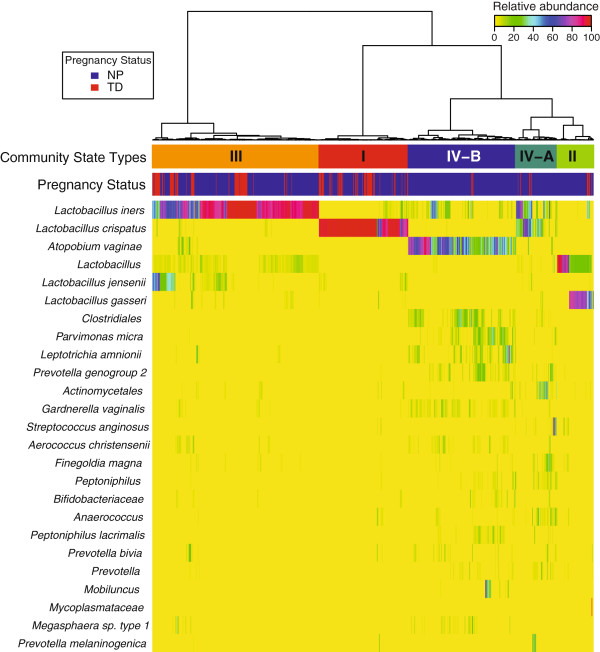
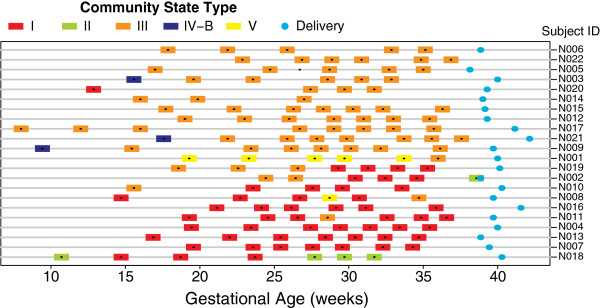
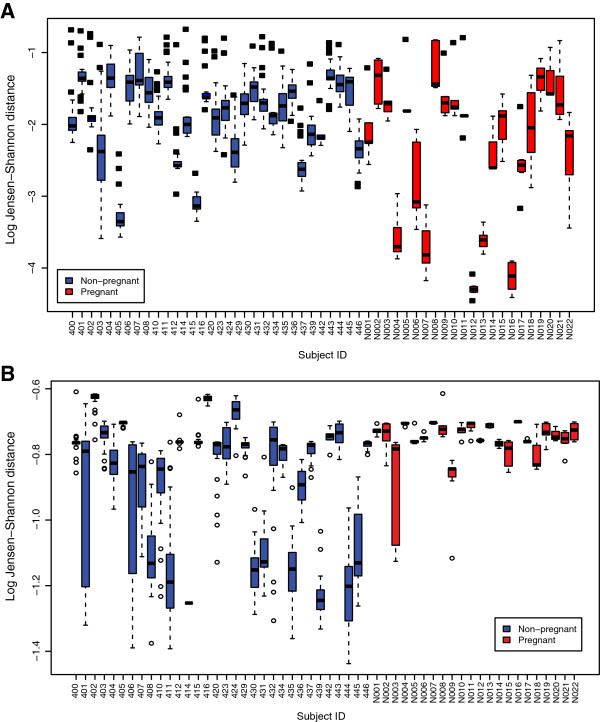
BACKGROUND: This study was undertaken to characterize the vaginal microbiota throughout normal human pregnancy using sequence-based techniques. We compared the vaginal microbial composition of non-pregnant patients with a group of pregnant women who delivered at term. RESULTS: A retrospective case-control longitudinal study was designed and included non-pregnant women (n = 32) and pregnant women who delivered at term (38 to 42 weeks) without complications (n = 22). Serial samples of vaginal fluid were collected from both non-pregnant and pregnant patients. A 16S rRNA gene sequence-based survey was conducted using pyrosequencing to characterize the structure and stability of the vaginal microbiota. Linear mixed effects models and generalized estimating equations were used to identify the phylotypes whose relative abundance was different between the two study groups. The vaginal microbiota of normal pregnant women was different from that of non-pregnant women (higher abundance of Lactobacillus vaginalis, L. crispatus, L. gasseri and L. jensenii and lower abundance of 22 other phylotypes in pregnant women). Bacterial community state type (CST) IV-B or CST IV-A characterized by high relative abundance of species of genus Atopobium as well as the presence of Prevotella, Sneathia, Gardnerella, Ruminococcaceae, Parvimonas, Mobiluncus and other taxa previously shown to be associated with bacterial vaginosis were less frequent in normal pregnancy. The stability of the vaginal microbiota of pregnant women was higher than that of non-pregnant women; however, during normal pregnancy, bacterial communities shift almost exclusively from one CST dominated by Lactobacillus spp. to another CST dominated by Lactobacillus spp. CONCLUSION: We report the first longitudinal study of the vaginal microbiota in normal pregnancy. Differences in the composition and stability of the microbial community between pregnant and non-pregnant women were observed. Lactobacillus spp. were the predominant members of the microbial community in normal pregnancy. These results can serve as the basis to study the relationship between the vaginal microbiome and adverse pregnancy outcomes.
Overview
The claims and statistics of this paper haven’t been checked yet.
Run the check — free, no account needed. It reads the open-access text and checks the sources it cites.
Integrity signals
Registry
Cites
Statistics
Figures
Verification
Claims the paper makes
The claims and statistics of this paper haven’t been checked yet.
Run the check — free, no account needed. It reads the open-access text and checks the sources it cites.
Claims other papers make about this one
Each is checked against this paper’s own text: does it say what the citing paper says it does?
The cited source says what the claim attributes to it.
In the citing paper
“Five major subcategories of cervicovaginal bacterial species were identified and defined as Community State Types (CSTs).”
The cited source says what the claim attributes to it.
In the citing paper
“Among the four groups, there was a high prevalence of lactobacilli. In particular, L. crispatus prevailed in CST I, L. gasseri in CST II, L. iners in CST III, and L. jensenii in CST V. In the remaining Community state type (CST IV) predominate anaerobic bacteria, such G. vaginalis , Atopobium vaginae , and Megasphaera spp., similar to the vaginal microbiota in bacterial vaginosis [27, 28].”
Self-check
Percentages, sums and reported differences re-computed from the paper’s own numbers.
The self-check needs the paper’s full text.
Citations
Cites
Metagenomic biomarker discovery and explanation
Segata, N., Izard, J., Waldron, L., Gevers, D., Miropolsky, L., Garrett, W. S., & Huttenhower, C. (2011) · Genome Biology · doi:10.1186/gb-2011-12-6-r60 · Cited by 16,192
Differential expression analysis for sequence count data
Anders, S., & Huber, W. (2010) · Genome Biology · doi:10.1186/gb-2010-11-10-r106 · Cited by 15,581
UCHIME improves sensitivity and speed of chimera detection
Edgar, R. C., Haas, B. J., Clemente, J. C., Quince, C., & Knight, R. (2011) · Bioinformatics · doi:10.1093/bioinformatics/btr381 · Cited by 15,114
An obesity-associated gut microbiome with increased capacity for energy harvest
Turnbaugh, P. J., Ley, R. E., Mahowald, M. A., Magrini, V., Mardis, E. R., & Gordon, J. I. (2006) · Nature · doi:10.1038/nature05414 · Cited by 12,444
A human gut microbial gene catalogue established by metagenomic sequencing
MetaHIT Consortium, Qin, J., Li, R., Raes, J., Arumugam, M., Burgdorf, K. S., Manichanh, C., Nielsen, T., Pons, N., Levenez, F., et al. (2010) · Nature · doi:10.1038/nature08821 · Cited by 11,624
Phylogenetic identification and in situ detection of individual microbial cells without cultivation
Amann, R., Ludwig, W., & SCHLEIFER, K. H. (1995) · Microbiological Reviews · doi:10.1128/mr.59.1.143-169.1995 · Cited by 9,218
Human gut microbes associated with obesity
Ley, R. E., Turnbaugh, P. J., Klein, S., & Gordon, J. I. (2006) · Nature · doi:10.1038/4441022a · Cited by 8,785
Diversity of the Human Intestinal Microbial Flora
Eckburg, P. B., Bik, E. M., Bernstein, C. N., Purdom, E., Dethlefsen, L., Sargent, M., Gill, S. R., Nelson, K. E., & Relman, D. A. (2005) · Science · doi:10.1126/science.1110591 · Cited by 7,913
Turnbaugh, P. J., Ley, R. E., Hamady, M., Fraser-Liggett, C. M., Knight, R., & Gordon, J. I. (2007) · Nature · doi:10.1038/nature06244 · Cited by 6,091
Divergence measures based on the Shannon entropy
Lin, J.-H. (1991) · IEEE Transactions on Information Theory · doi:10.1109/18.61115 · Cited by 5,877
Research works printed but not linked: 2
- Döderlein A: Das Scheidensekret und seine Bedeutung fuerdas Puerperalfieber. Die Arten des Scheidensekretes. 1892, 11: 699-
- Højsgaard S, Halekoh U, Yan J: The R package geepack for generalized estimating equations. J Stat Softw. 2006, 15: 1-11.
Cited by
Sorted by citations
Items 101–200 of 864
Maternal microbiome – A pathway to preterm birth
Vinturache, A., Gyamfi‐Bannerman, C., Hwang, J. K., Mysorekar, I. U., & Jacobsson, B. (2016) · Seminars in Fetal and Neonatal Medicine · doi:10.1016/j.siny.2016.02.004 · Cited by 125
Prenatal and postnatal contributions of the maternal microbiome on offspring programming
Jašarević, E., & Bale, T. L. (2019) · Frontiers in Neuroendocrinology · doi:10.1016/j.yfrne.2019.100797 · Cited by 131
Influence of maternal microbiota during pregnancy on infant immunity
Nyangahu, D. D., & Jaspan, H. B. (2019) · Clinical & Experimental Immunology · doi:10.1111/cei.13331 · Cited by 132
The impact of the female genital tract microbiome in women health and reproduction: a review
Punzón-Jiménez, P., & Labarta, E. (2021) · Journal of Assisted Reproduction and Genetics · doi:10.1007/s10815-021-02247-5 · Cited by 138
The Human Microbiome before Birth
Blaser, M. J., & Domínguez-Bello, M. G. (2016) · Cell Host & Microbe · doi:10.1016/j.chom.2016.10.014 · Cited by 131
Anton, L., Sierra, L., Devine, A., Barila, G., Heiser, L. M., Brown, A. G., & Elovitz, M. A. (2018) · Frontiers in Microbiology · doi:10.3389/fmicb.2018.02181 · Cited by 123
The female reproductive tract microbiotas, inflammation, and gynecological conditions
Gholiof, M., Luca, E. A.-D., & Wessels, J. M. (2022) · Frontiers in Reproductive Health · doi:10.3389/frph.2022.963752 · Cited by 137
Romero, R. J., Hassan, S. S., Gajer, P., Tarca, A. L., Fadrosh, D. W., Nikita, L., Galuppi, M., Lamont, R., Chaemsaithong, P., Miranda, J., et al. (2014) · Microbiome · doi:10.1186/2049-2618-2-10 · Cited by 120
Self-citationfor the Vaginal Biomarkers Study Group, Jespers, V., van de Wijgert, J. H. H. M., Cools, P., Verhelst, R., Verstraelen, H., Delany‐Moretlwe, S., Mwaura, M., Ndayisaba, G., Mandaliya, K. N., et al. (2015) · BMC Infectious Diseases · doi:10.1186/s12879-015-0825-z · Cited by 119
Zhang, X., & Yi, N. (2020) · BMC Bioinformatics · doi:10.1186/s12859-020-03803-z · Cited by 117
Hata, T., Miyata, N., Takakura, S., Yoshihara, K., Asano, Y., Kimura-Todani, T., Yamashita, M., Zhang, X.-T., Watanabe, N., Mikami, K., et al. (2019) · Endocrinology · doi:10.1210/en.2019-00408 · Cited by 116
McMillan, A., Rulisa, S., Sumarah, M., Macklaim, J. M., Renaud, J., Bisanz, J. E., Gloor, G. B., & Reid, G. (2015) · Scientific Reports · doi:10.1038/srep14174 · Cited by 131
Bacterial biogeography of adult airways in atopic asthma
Durack, J., Huang, Y. J., Nariya, S., Christian, L. S., Ansel, K. M., Beigelman, A., Castro, M., Dyer, A., Israel, E., Kraft, M., et al. (2018) · Microbiome · doi:10.1186/s40168-018-0487-3 · Cited by 118
Noyes, N. R., Cho, K.-C., Ravel, J., Forney, L. J., & Abdo, Z. (2018) · PLoS ONE · doi:10.1371/journal.pone.0191625 · Cited by 122
Self-citationRoles of the Microbiota of the Female Reproductive Tract in Gynecological and Reproductive Health
Zhu, B., Tao, Z., Edupuganti, L., Serrano, M. G., & Buck, G. A. (2022) · Microbiology and Molecular Biology Reviews · doi:10.1128/mmbr.00181-21 · Cited by 131
Bisanz, J. E., Enos, M. K., PrayGod, G., Seney, S. L., Macklaim, J. M., Chilton, S., Willner, D. L., Knight, R. D., Fusch, C., Fusch, G., et al. (2015) · Applied and Environmental Microbiology · doi:10.1128/aem.00780-15 · Cited by 116
Immunobiology of Acute Chorioamnionitis
Cappelletti, M., Presicce, P., & Kallapur, S. G. (2020) · Frontiers in Immunology · doi:10.3389/fimmu.2020.00649 · Cited by 120
Unraveling the Dynamics of the Human Vaginal Microbiome.
Nunn, K. L., & Forney, L. J. (2016) · PubMed Central · Cited by 112
The Vaginal Microbiome: A Long Urogenital Colonization Throughout Woman Life
Auriemma, R. S., Scairati, R., Vecchio, G. D., Liccardi, A., Verde, N., Pirchio, R., Pivonello, R., Ercolini, D., & Colao, A. (2021) · Frontiers in Cellular and Infection Microbiology · doi:10.3389/fcimb.2021.686167 · Cited by 114
Host and Microbiome Interplay Shapes the Vaginal Microenvironment
Kwon, M. S., & Lee, H. K. (2022) · Frontiers in Immunology · doi:10.3389/fimmu.2022.919728 · Cited by 116
What fertility specialists should know about the vaginal microbiome: a review
García-Velasco, J. A., Menabrito, M., & Catalán, I. B. (2017) · Reproductive BioMedicine Online · doi:10.1016/j.rbmo.2017.04.005 · Cited by 114
Feehily, C., Crosby, D. A., Walsh, C. J., Lawton, E. M., Higgins, S., McAuliffe, F. M., & Cotter, P. D. (2020) · npj Biofilms and Microbiomes · doi:10.1038/s41522-020-00162-8 · Cited by 107
Determinants of Vaginal Microbiota Composition
Moosa, Y., Kwon, D. S., de Oliveira, T., & Wong, E. B. (2020) · Frontiers in Cellular and Infection Microbiology · doi:10.3389/fcimb.2020.00467 · Cited by 112
Stafford, G. P., Parker, J. L., Amabebe, E., Kistler, J. O., Reynolds, S., Stern, V., Paley, M. N. J., & Anumba, D. O. C. (2017) · Frontiers in Physiology · doi:10.3389/fphys.2017.00615 · Cited by 108
Zhou, L., & Xiao, X. (2017) · Bioscience Reports · doi:10.1042/bsr20171234 · Cited by 110
Microbiome and Cervical Cancer
Castanheira, C. P., Sallas, M. L., Nunes, R. A. L., Lorenzi, N. P. C., & Termini, L. (2020) · Pathobiology · doi:10.1159/000511477 · Cited by 114
The microbiome, parturition, and timing of birth: more questions than answers
Prince, A., Antony, K. M., Chu, D. M., & Aagaard, K. M. (2014) · Journal of Reproductive Immunology · doi:10.1016/j.jri.2014.03.006 · Cited by 107
Neuman, H., & Koren, O. (2017) · Nestlé Nutrition Institute Workshop series · doi:10.1159/000455207 · Cited by 103
Exhaustive repertoire of human vaginal microbiota
Diop, K., Dufour, J.-C., Levasseur, A., & Fenollar, F. (2019) · Human Microbiome Journal · doi:10.1016/j.humic.2018.11.002 · Cited by 103
Microbial diversity in the vaginal microbiota and its link to pregnancy outcomes
Baud, A., Hillion, K.-H., Plainvert, C., Tessier, V., Tazi, A., Mandelbrot, L., Poyart, C., & Kennedy, S. (2023) · Scientific Reports · doi:10.1038/s41598-023-36126-z · Cited by 103
Bernabeu, A., Lledó, B., Díaz, M. C., Lozano, F. M., Ruiz, V., Fuentes, A., López‐Pineda, A., Moliner, B., Castillo, J. C., Ortiz, J. A., et al. (2019) · Journal of Assisted Reproduction and Genetics · doi:10.1007/s10815-019-01564-0 · Cited by 97
Epigenetics in depression and gut-brain axis: A molecular crosstalk
Begum, N., Mandhare, A., Tryphena, K. P., Srivastava, S., Shaikh, M. F., Singh, S. B., & Khatri, D. K. (2022) · Frontiers in Aging Neuroscience · doi:10.3389/fnagi.2022.1048333 · Cited by 102
Shiozaki, A., Yoneda, S., Yoneda, N., Yonezawa, R., Matsubayashi, T., Seo, G., & Saito, S. (2014) · PLoS ONE · doi:10.1371/journal.pone.0111374 · Cited by 100
Psychosocial Stress, Cortisol Levels, and Maintenance of Vaginal Health
Amabebe, E., & Anumba, D. O. C. (2018) · Frontiers in Endocrinology · doi:10.3389/fendo.2018.00568 · Cited by 107
The microbiome: Composition and locations
Kennedy, M. S., & Chang, E. B. (2020) · Progress in molecular biology and translational science · doi:10.1016/bs.pmbts.2020.08.013 · Cited by 108
Vaginal Microbiome in Preterm Rupture of Membranes
Bennett, P. R., Brown, R. G., & MacIntyre, D. A. (2020) · Obstetrics and Gynecology Clinics of North America · doi:10.1016/j.ogc.2020.08.001 · Cited by 95
Acquisition of microbiota according to the type of birth: an integrative review
Coelho, G. D. P., Ayres, L. F. A., Barreto, D. S., Henriques, B. D., do Prado, M. R. M. C., & dos Passos, C. M. (2021) · Revista Latino-Americana de Enfermagem · doi:10.1590/1518.8345.4466.3446 · Cited by 111
Statistical challenges in longitudinal microbiome data analysis
Kodikara, S., Ellul, S., & Cao, K. L. (2022) · Briefings in Bioinformatics · doi:10.1093/bib/bbac273 · Cited by 95
Candida and its dual lifestyle as a commensal and a pathogen
Cauchie, M., Desmet, S., & Lagrou, K. (2017) · Research in Microbiology · doi:10.1016/j.resmic.2017.02.005 · Cited by 101
Vaginal Microbiome Signature Is Associated With Spontaneous Preterm Delivery
Hočevar, K., Maver, A., Šimic, M. V., Hodžić, A., Haslberger, A. G., Sršen, T. P., & Peterlin, B. (2019) · Frontiers in Medicine · doi:10.3389/fmed.2019.00201 · Cited by 96
Tian, M., Li, Q., Zheng, T., Yang, S., Chen, F., Guan, W., & Zhang, S. (2023) · Gut Microbes · doi:10.1080/19490976.2023.2206505 · Cited by 102
Latent variable modeling for the microbiome
Sankaran, K., & Holmes, S. (2018) · Biostatistics · doi:10.1093/biostatistics/kxy018 · Cited by 92
The connection between microbiome and schizophrenia
Golofast, B., & Vales, K. (2020) · Neuroscience & Biobehavioral Reviews · doi:10.1016/j.neubiorev.2019.12.011 · Cited by 92
Shaping Microbiota During the First 1000 Days of Life
Selma‐Royo, M., Tarrazó, M., García‐Mantrana, I., Gómez-Gallego, C., Salminen, S., & Collado, M. C. (2019) · Advances in experimental medicine and biology · doi:10.1007/5584_2018_312 · Cited by 98
The Vaginal Microbiome as a Tool to Predict rASRM Stage of Disease in Endometriosis: a Pilot Study
Perrotta, A. R., Borrelli, G. M., Martins, C., Kallas, E. G., Sanabani, S. S., Griffith, L. G., Alm, E. J., & Abrão, M. S. (2020) · Reproductive Sciences · doi:10.1007/s43032-019-00113-5 · Cited by 93
On the origin of species: Factors shaping the establishment of infant's gut microbiota
van Best, N., Hornef, M. W., Savelkoul, P. H. M., & Penders, J. (2015) · Birth Defects Research Part C Embryo Today Reviews · doi:10.1002/bdrc.21113 · Cited by 96
The matter of the reproductive microbiome
Schoenmakers, S., Steegers‐Theunissen, R. P. M., & Faas, M. M. (2018) · Obstetric Medicine · doi:10.1177/1753495x18775899 · Cited by 91
Chen, Y., Hong, Z., Wang, W., Gu, L., Gao, H., Qiu, L., & Di, W. J. (2019) · BMC Infectious Diseases · doi:10.1186/s12879-019-4279-6 · Cited by 89
Watcharin, S., Sovijit, W., Pu, S., Usuda, K., Inoüe, R., Watanabe, G., Yamaguchi, H., & Nagaoka, K. (2019) · Neuroscience Research · doi:10.1016/j.neures.2019.04.005 · Cited by 94
Vaginal and Uterine Bacterial Communities in Postpartum Lactating Cows
Clemmons, B. A., Reese, S. T., Dantas, F. G., Franco, G. A., Smith, T. P. L., Adeyosoye, O. I., Pohler, K. G., & Myer, P. R. (2017) · Frontiers in Microbiology · doi:10.3389/fmicb.2017.01047 · Cited by 88
Govender, Y., Gabriel, I. M., Minassian, V. A., & Fichorova, R. N. (2019) · Frontiers in Cellular and Infection Microbiology · doi:10.3389/fcimb.2019.00133 · Cited by 86
Yang, S., Reid, G., Challis, J. R. G., Gloor, G. B., Asztalos, E. V., Money, D., Seney, S. L., & Bocking, A. D. (2020) · Nutrients · doi:10.3390/nu12020368 · Cited by 98
Temporal Dynamics of the Adult Female Lower Urinary Tract Microbiota
Price, T. K., Wolff, B. J., Halverson, T. M., Limeira, R., Brubaker, L. T., Dong, Q., Mueller, E. R., & Wolfe, A. J. (2020) · mBio · doi:10.1128/mbio.00475-20 · Cited by 85
Gut and vaginal microbiomes on steroids: implications for women’s health
Graham, M. E., Herbert, W. G., Song, S., Raman, H. N., Zhu, J. E., Gonzalez, P. E., Walther-Antonio, M. R. S., & Tetel, M. J. (2021) · Trends in Endocrinology and Metabolism · doi:10.1016/j.tem.2021.04.014 · Cited by 87
Jašarević, E., Hill, E. M., Kane, P. J., Rutt, L., Gyles, T. M., Folts, L. M., Rock, K. D., Howard, C. D., Morrison, K. E., Ravel, J., et al. (2021) · Nature Communications · doi:10.1038/s41467-021-26634-9 · Cited by 86
Self-citationRelationship between vitamin D status and the vaginal microbiome during pregnancy
Jefferson, K. K., Parikh, H. I., Garcia, E. M., Edwards, D. J., Serrano, M. G., Hewison, M., Shary, J. R., Powell, A. M., Hollis, B. W., Fettweis, J. M., et al. (2019) · Journal of Perinatology · doi:10.1038/s41372-019-0343-8 · Cited by 84
The microbiome in preterm birth
Chu, D. M., Seferovic, M. D., Pace, R. M., & Aagaard, K. M. (2018) · Best Practice & Research Clinical Obstetrics & Gynaecology · doi:10.1016/j.bpobgyn.2018.03.006 · Cited by 84
Placental Microbiome and Its Role in Preterm Birth
Cao, B., Stout, M. J., Lee, I., & Mysorekar, I. U. (2014) · NeoReviews · doi:10.1542/neo.15-12-e537 · Cited by 82
Multiomic immune clockworks of pregnancy
Peterson, L. S., Stelzer, I. A., Tsai, A. S., Ghaemi, M. S., Han, X., Ando, K., Winn, V. D., Martinez, N., Contrepois, K., Moufarrej, M. N., et al. (2020) · Seminars in Immunopathology · doi:10.1007/s00281-019-00772-1 · Cited by 84
The Unique Microbiome and Innate Immunity During Pregnancy
Mei, C., Yang, W., Wei, X., Wu, K., & Huang, D. (2019) · Frontiers in Immunology · doi:10.3389/fimmu.2019.02886 · Cited by 84
Microbial embryonal colonization during pipefish male pregnancy
Beemelmanns, A., Poirier, M., Bayer, T., Kuenzel, S., & Roth, O. (2019) · Scientific Reports · doi:10.1038/s41598-018-37026-3 · Cited by 78
Dunlop, A. L., Satten, G. A., Hu, Y., Knight, A. K., Hill, C. C., Wright, M. L., Smith, A. K., Read, T. D., Pearce, B. D., & Corwin, E. J. (2021) · Frontiers in Cellular and Infection Microbiology · doi:10.3389/fcimb.2021.641005 · Cited by 86
Association between preterm delivery and bacterial vaginosis with or without treatment
Shimaoka, M., Yo, Y., Doh, K., Kotani, Y., Suzuki, A., Tsuji, I., Mandai, M., & Matsumura, N. (2019) · Scientific Reports · doi:10.1038/s41598-018-36964-2 · Cited by 78
Maternal Microbiome and Infections in Pregnancy
Amir, M., Brown, J. A., Rager, S. L., Sanidad, K. Z., Ananthanarayanan, A., & Zeng, M. Y. (2020) · Microorganisms · doi:10.3390/microorganisms8121996 · Cited by 82
Necrotizing Enterocolitis and the Preterm Infant Microbiome
Baranowski, J. R., & Claud, E. C. (2019) · Advances in experimental medicine and biology · doi:10.1007/5584_2018_313 · Cited by 80
Gardnerella and vaginal health: the truth is out there
Rosca, A. S., Castro, J., Sousa, L. G. V., & Cerca, N. (2019) · FEMS Microbiology Reviews · doi:10.1093/femsre/fuz027 · Cited by 81
Emerging literature in the Microbiota-Brain Axis and Perinatal Mood and Anxiety Disorders
Rackers, H., Thomas, S., Williamson, K., Posey, R., & Kimmel, M. (2018) · Psychoneuroendocrinology · doi:10.1016/j.psyneuen.2018.05.020 · Cited by 77
Lewis, A. L., & Gilbert, N. M. (2020) · German Medical Science GMS Publishing House · doi:10.3205/id000046 · Cited by 79
Leyva‐Gómez, G., Prado-Audelo, M. L. D., Ortega‐Peña, S., Mendoza‐Muñoz, N., Urbán‐Morlán, Z., González‐Torres, M., Carmen, M. G., Figueroa‐González, G., Reyes‐Hernández, O. D., & Cortés, H. (2019) · Pharmaceutics · doi:10.3390/pharmaceutics11050217 · Cited by 75
Staude, B., Oehmke, F., Lauer, T., Behnke, J., Göpel, W., Schloter, M., Schulz, H., Krauss‐Etschmann, S., & Ehrhardt, H. (2018) · BioMed Research International · doi:10.1155/2018/7218187 · Cited by 79
The genital tract and rectal microbiomes: their role in HIV susceptibility and prevention in women
Karim, S. S. A., Baxter, C., Passmore, J.-A. S., McKinnon, L. R., & Williams, B. L. (2019) · Journal of the International AIDS Society · doi:10.1002/jia2.25300 · Cited by 74
Ichiyama, T., Kuroda, K., Nagai, Y., Urushiyama, D., Ohno, M., Yamaguchi, T., Nagayoshi, M., Sakuraba, Y., Yamasaki, F., Hata, K., et al. (2021) · Reproductive Medicine and Biology · doi:10.1002/rmb2.12389 · Cited by 79
The human microbiome and the great obstetrical syndromes: A new frontier in maternal–fetal medicine
Solt, I. (2014) · Best Practice & Research Clinical Obstetrics & Gynaecology · doi:10.1016/j.bpobgyn.2014.04.024 · Cited by 72
Dysbiotic gut microbiome: A key element of Crohn's disease
Øyri, S. F., Műzes, G., & Sípos, F. (2015) · Comparative Immunology Microbiology and Infectious Diseases · doi:10.1016/j.cimid.2015.10.005 · Cited by 78
Meta-Analysis of Vaginal Microbiome Data Provides New Insights Into Preterm Birth
Kosti, I., Lyalina, S., Pollard, K. S., Butte, A. J., & Sirota, M. (2020) · Frontiers in Microbiology · doi:10.3389/fmicb.2020.00476 · Cited by 73
When a Neonate Is Born, So Is a Microbiota
Coscia, A., Bardanzellu, F., Caboni, E., Fanos, V., & Peroni, D. G. (2021) · Life · doi:10.3390/life11020148 · Cited by 77
The interplay between human papillomavirus and vaginal microbiota in cervical cancer development
Sharifian, K., Shoja, Z., & Jalilvand, S. (2023) · Virology Journal · doi:10.1186/s12985-023-02037-8 · Cited by 81
Prenatal and postnatal administration of prebiotics and probiotics
Sohn, K., & Underwood, M. A. (2017) · Seminars in Fetal and Neonatal Medicine · doi:10.1016/j.siny.2017.07.002 · Cited by 72
Microbiota and Neurodevelopmental Trajectories: Role of Maternal and Early-Life Nutrition
Codagnone, M. G., Stanton, C., O’Mahony, S. M., Dinan, T. G., & Cryan, J. F. (2019) · Annals of Nutrition and Metabolism · doi:10.1159/000499144 · Cited by 74
From Microbiome to Inflammation: The Key Drivers of Cervical Cancer
Zhou, Z., Long, H., Cheng, Y., Luo, H., Wen, D., & Gao, L. (2021) · Frontiers in Microbiology · doi:10.3389/fmicb.2021.767931 · Cited by 79
Huang, Y., Wang, Y., He, Y., Ji, Y. I., Wang, L., Sheng, H.-F., Zhang, M., Huang, Q., Zhang, D.-J., Wu, J., et al. (2014) · Microbial Ecology · doi:10.1007/s00248-014-0487-1 · Cited by 72
Persistent microbial dysbiosis in preterm premature rupture of membranes from onset until delivery
Baldwin, E. A., Walther-Antonio, M. R. S., Maclean, A., Gohl, D. M., Beckman, K. B., Chen, J., White, B. A., Creedon, D. J., & Chia, N. (2015) · PeerJ · doi:10.7717/peerj.1398 · Cited by 77
The first glimpse of the endometrial microbiota in early pregnancy
Moreno, I., Garcia-Grau, I., Baù, D., Pérez-Villaroya, D., Gonzáléz-Monfort, M., Vilella, F., Romero, R. J., & Simón, C. (2020) · American Journal of Obstetrics and Gynecology · doi:10.1016/j.ajog.2020.01.031 · Cited by 79
Self-citationAtassi, F., Pho Viet Ahn, D. L., & Lievin-Le Moal, V. (2019) · Frontiers in Microbiology · doi:10.3389/fmicb.2019.02900 · Cited by 71
The human vaginal microbial community
Vaneechoutte, M. (2017) · Research in Microbiology · doi:10.1016/j.resmic.2017.08.001 · Cited by 73
Joseph, R. J., Ser, H.-L., Kuai, Y.-H., Tan, L. T.-H., Arasoo, V. J. T., Letchumanan, V., Wang, L., Pusparajah, P., Goh, B.-H., Ab Mutalib, N.-S., et al. (2021) · Antibiotics · doi:10.3390/antibiotics10060719 · Cited by 68
A Review of the Diversity of the Genital Tract Microbiome and Implications for Fertility of Cattle
Adnane, M., & Chapwanya, A. (2022) · Animals · doi:10.3390/ani12040460 · Cited by 68
Impact of the mother's gut microbiota on infant microbiome and brain development
Mady, E. A., Doghish, A. S., El‐Dakroury, W. A., Elkhawaga, S. Y., Ismail, A., El‐Mahdy, H. A., Elsakka, E. G. E., & El‐Husseiny, H. M. (2023) · Neuroscience & Biobehavioral Reviews · doi:10.1016/j.neubiorev.2023.105195 · Cited by 73
Influence of Pregnancy History on the Vaginal Microbiome of Pregnant Women in their First Trimester
Nasioudis, D., Forney, L. J., Schneider, G., Gliniewicz, K., France, M., Boester, A., Sawai, M., Scholl, J. E., & Witkin, S. S. (2017) · Scientific Reports · doi:10.1038/s41598-017-09857-z · Cited by 68
First-trimester vaginal microbiome diversity: A potential indicator of preterm delivery risk
Haque, M. M., Merchant, M., Kumar, P. N., Dutta, A., & Mande, S. S. (2017) · Scientific Reports · doi:10.1038/s41598-017-16352-y · Cited by 68
Temporal probabilistic modeling of bacterial compositions derived from 16S rRNA sequencing
Äijö, T., Müller, C. L., & Bonneau, R. (2017) · Bioinformatics · doi:10.1093/bioinformatics/btx549 · Cited by 64
García‐Mantrana, I., & Collado, M. C. (2016) · Molecular Nutrition & Food Research · doi:10.1002/mnfr.201501018 · Cited by 65
Cervical Microbiota in Women with Preterm Prelabor Rupture of Membranes
Kacerovský, M., Vrbacký, F., Kutová, R., Plíšková, L., Andrýs, C., Musilova, I. K., Menon, R., Lamont, R., & Nekvindová, J. (2015) · PLoS ONE · doi:10.1371/journal.pone.0126884 · Cited by 65
Self-citationEcological succession in the vaginal microbiota during pregnancy and birth
Rasmussen, M. A., Thorsen, J., Domínguez-Bello, M. G., Blaser, M. J., Mortensen, M. S., Brejnrod, A., Shah, S. A., Hjelmsø, M. H., Lehtimäki, J., Trivedi, U., et al. (2020) · The ISME Journal · doi:10.1038/s41396-020-0686-3 · Cited by 65
The Role of Hydrogen-Peroxide (H2O2) Produced by Vaginal Microbiota in Female Reproductive Health
Mikó, É., & Barakonyi, A. (2023) · Antioxidants · doi:10.3390/antiox12051055 · Cited by 67
Human Milk Microbiome—A Review of Scientific Reports
Dombrowska-Pali, A., Wiktorczyk-Kapischke, N., Chrustek, A., Olszewska-Słonina, D. M., Gospodarek-Komkowska, E., & Socha, M. W. (2024) · Nutrients · doi:10.3390/nu16101420 · Cited by 74
Kúdela, E., Líšková, A., Samec, M., Koklesová, L., Holubeková, V., Rokos, T., Kozubík, E., Pribulová, T., Zhai, K., Büsselberg, D., et al. (2021) · The EPMA Journal · doi:10.1007/s13167-021-00244-3 · Cited by 63
Female reproductive tract microbiota and recurrent pregnancy loss: a nested case-control study
Peuranpää, P., Holster, T., Saqib, S., Kalliala, I. E. J., Tiitinen, A. E., Salonen, A., & Hautamäki, H. (2022) · Reproductive BioMedicine Online · doi:10.1016/j.rbmo.2022.06.008 · Cited by 67
Ovarian cycling and reproductive state shape the vaginal microbiota in wild baboons
Miller, E. A., Livermore, J. A., Alberts, S. C., Tung, J., & Archie, E. A. (2017) · Microbiome · doi:10.1186/s40168-017-0228-z · Cited by 65
Intricacies of assessing the human microbiome in epidemiologic studies
Robinson, C. K., Brotman, R. M., & Ravel, J. (2016) · Annals of Epidemiology · doi:10.1016/j.annepidem.2016.04.005 · Cited by 64
Self-citation
Metadata
- Authors
- Romero, R., Hassan, S. S., Gajer, P., Tarca, A. L., Fadrosh, D. W., Nikita, L., Galuppi, M., Lamont, R. F., Chaemsaithong, P., Miranda, J., Chaiworapongsa, T., & Ravel, J.
- Affiliations
- National Institutes of Health (US)
- University of Maryland, Baltimore (US)
- Corresponding author
- Romero, Roberto
- Ravel, Jacques
- ORCID
- Venue
- Microbiome
- Published
- 2014-02-03
- Volume
- 2
- Issue
- 1
- Pages
- 10-10
- ISSN
- 2049-2618 (ISSN-L)
- PMC
- PMC3916806
- OpenAlex
- W2100318919
- Cited by
- 852
- References
- 280
- Citations by year
- 2026: 34 · 2025: 43 · 2024: 77 · 2023: 85 · 2022: 72 · 2021: 106 · 2020: 94 · 2019: 104 · 2018: 54 · 2017: 66 · 2016: 49 · 2015: 43 · 2014: 23
- FWCI
- 49.25
- Type
- journal article
- Language
- en
- Update notices
- erratum (2014-04-15)
- Open access
- gold
- doi.org
- Licence
- cc-by
- Locations
- Microbiome (publishedVersion, cc-by)
- Europe PMC (PubMed Central) (publishedVersion, cc-by)
- PubMed Central (publishedVersion, cc-by)
- PubMed (publishedVersion)
- University of Southern Denmark Research Portal (University of Southern Denmark) (publishedVersion)
- Human Biology (submittedVersion)
- Funders
- U.S. Department of Health and Human Services
- Wayne State University
- National Institutes of Health
- National Institute of Child Health and Human Development
- Eunice Kennedy Shriver National Institute of Child Health and Human Development
- Topics
- Life Sciences › Immunology and Microbiology › Microbiology › Reproductive tract infections research
- Life Sciences › Biochemistry, Genetics and Molecular Biology › Molecular Biology › Gut microbiota and health
- Health Sciences › Dentistry › Periodontics › Oral microbiology and periodontitis research
- Keywords
- vaginal microbiota, pregnancy, Lactobacillus, microbiome stability, bacterial vaginosis, Atopobium, Gardnerella, term birth
About these checks
Registry, retraction, Cites and statistics results are computed, not judged, with one exception: a printed reference that no index lists is read once by a model before it counts as a citation error. Claims are extracted by a model and kept only when their quote appears verbatim in the text; each cited source is then checked, with a model’s help, for whether it says what the claim relies on. Those verdicts can be wrong — read the claim’s quote and the cited source before relying on one.
Statistics and arithmetic are recomputed, not judged.
Confidence bands are shown only for fields calibrated on our annotated test set. None is calibrated yet, so no band is shown.
What counts as a claim ›How we measure confidence ›How we check this ›
Are you an author, or do you see a problem with this page? Request a review
