

The DOI matches its Crossref record; 87 of the 88 references it cites were found in a registry or an index.
The cognitive-interpersonal maintenance model of anorexia nervosa revisited: a summary of the evidence for cognitive, socio-emotional and interpersonal predisposing and perpetuating factors
Open accessAbstract
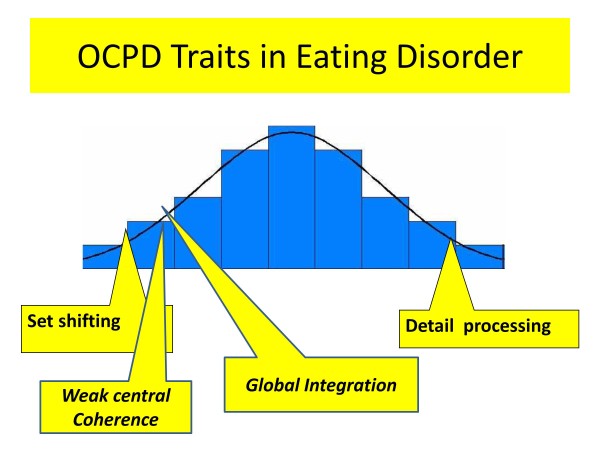
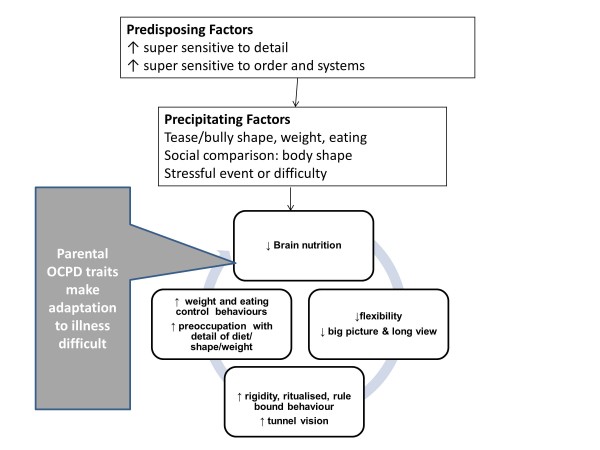
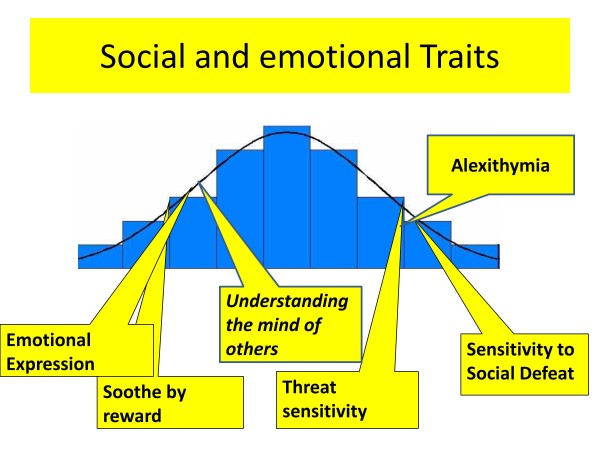
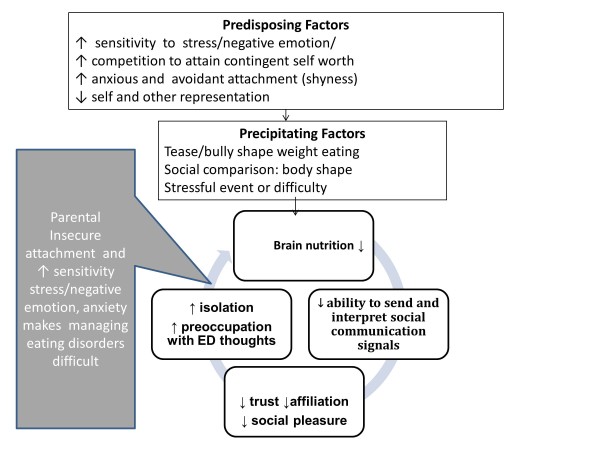
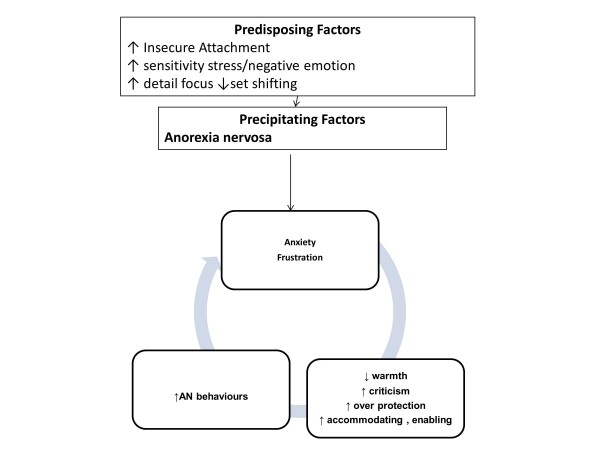
AIM: To describe the evidence base relating to the Cognitive-Interpersonal Maintenance Model for anorexia nervosa (AN). BACKGROUND: A Cognitive-Interpersonal Maintenance Model maintenance model for anorexia nervosa was described in 2006. This model proposed that cognitive, socio-emotional and interpersonal elements acted together to both cause and maintain eating disorders. METHOD: A review of the empirical literature relating to the key constructs of the model (cognitive, socio-emotional, interpersonal) risk and maintaining factors for anorexia nervosa was conducted. RESULTS: Set shifting and weak central coherence (associated with obsessive compulsive traits) have been widely studied. There is some evidence to suggest that a strong eye for detail and weak set shifting are inherited vulnerabilities to AN. Set shifting and global integration are impaired in the ill state and contribute to weak central coherence. In addition, there are wide-ranging impairments in socio-emotional processing including: an automatic bias in attention towards critical and domineering faces and away from compassionate faces; impaired signalling of, interpretation and regulation of emotions. Difficulties in social cognition may in part be a consequence of starvation but inherited vulnerabilities may also contribute to these traits. The shared familial traits may accentuate family members' tendency to react to the frustrating and frightening symptoms of AN with high expressed emotion (criticism, hostility, overprotection), and inadvertently perpetuate the problem. CONCLUSION: The cognitive interpersonal model is supported by accumulating evidence. The model is complex in that cognitive and socio-emotional factors both predispose to the illness and are exaggerated in the ill state. Furthermore, some of the traits are inherited vulnerabilities and are present in family members. The clinical formulations from the model are described as are new possibilities for targeted treatment.
Overview
The claims and statistics of this paper haven’t been checked yet.
Run the check — free, no account needed. It reads the open-access text and checks the sources it cites.
Integrity signals
Registry
Cites
Statistics
Figures
Verification
Claims the paper makes
The claims and statistics of this paper haven’t been checked yet.
Run the check — free, no account needed. It reads the open-access text and checks the sources it cites.
Claims other papers make about this one
Each is checked against this paper’s own text: does it say what the citing paper says it does?
The cited source says what the claim attributes to it.
In the citing paper
“These interpersonal difficulties may contribute to the high levels of social withdrawal and isolation that patients with AN often report.”
From Do anxiety, depression, and intolerance of uncertainty contribute to social problem solving in adult women with anorexia nervosa? (2020) · cites this paper as Treasure & Schmidt, 2013
The cited source says what the claim attributes to it.
In the citing paper
“In conclusion, this study has shown that one of the factors underlying the interpersonal maintaining factors of AN (Fairburn, 2008; Treasure & Schmidt, 2013) might be suboptimal social problem solving skills and these inefficient skills may be due to anxiety and high IU, which could be ameliorated in treatment as a means of better supporting the social and cognitive skills of people with AN.”
From Do anxiety, depression, and intolerance of uncertainty contribute to social problem solving in adult women with anorexia nervosa? (2020) · cites this paper as Treasure & Schmidt, 2013
Self-check
Percentages, sums and reported differences re-computed from the paper’s own numbers.
The self-check needs the paper’s full text.
Citations
Cites
Developing and evaluating complex interventions: the new Medical Research Council guidance
Craig, P., Dieppe, P., Macintyre, S., Michie, S., Nazareth, I., & Petticrew, M. (2008) · BMJ · doi:10.1136/bmj.a1655 · Cited by 10,995 · cited 1×
“The Medical Research Council (MRC) has developed guidelines on the development of complex interventions as it is acknowledged that they entail unique challenges [7].”
Gómez, J. G., & Dally, P. (1979) · Cited by 1,965
Oxytocin and vasopressin in the human brain: social neuropeptides for translational medicine
Meyer-Lindenberg, A., Domes, G., Kirsch, P., & Heinrichs, M. (2011) · Nature Reviews Neuroscience · doi:10.1038/nrn3044 · Cited by 1,688
Jacobi, C., Hayward, C., de Zwaan, M., KRAEMER, H. C., & Agras, W. S. (2004) · Psychological Bulletin · doi:10.1037/0033-2909.130.1.19 · Cited by 1,514
Lock, J., Le Grange, D., Agras, W. S., Moye, A., Bryson, S. W., & Jo, B. (2010) · Archives of General Psychiatry · doi:10.1001/archgenpsychiatry.2010.128 · Cited by 866
Cognitive Bias Modification Approaches to Anxiety
MacLeod, C., & Mathews, A. (2012) · Annual Review of Clinical Psychology · doi:10.1146/annurev-clinpsy-032511-143052 · Cited by 664
Risk Factors for Anorexia Nervosa
Fairburn, C. G., Cooper, Z., Doll, H., & Welch, S. L. (1999) · Archives of General Psychiatry · doi:10.1001/archpsyc.56.5.468 · Cited by 642
Social complexity as a proximate and ultimate factor in communicative complexity
Freeberg, T. M., Dunbar, R., & Ord, T. J. (2012) · Philosophical Transactions of the Royal Society B Biological Sciences · doi:10.1098/rstb.2011.0213 · Cited by 587
Harrison, A., Sullivan, S. A., Tchanturia, K., & Treasure, J. L. (2010) · Psychological Medicine · doi:10.1017/s0033291710000036 · Cited by 535
Self-citationAppearance-related teasing, body dissatisfaction, and disordered eating: A meta-analysis
Menzel, J. E., Schaefer, L. M., Burke, N. L., Mayhew, L. L., Brannick, M. Τ., & Thompson, J. K. (2010) · Body Image · doi:10.1016/j.bodyim.2010.05.004 · Cited by 453
Tchanturia, K., Davies, H. A., Roberts, M., Harrison, A., Nakazato, M., Schmidt, U. H., Treasure, J. L., & Morris, R. G. (2012) · PLoS ONE · doi:10.1371/journal.pone.0028331 · Cited by 433
Self-citationAnderluh, M. B., Tchanturia, K., Rabe-Hesketh, S., & Treasure, J. (2003) · American Journal of Psychiatry · doi:10.1176/appi.ajp.160.2.242 · Cited by 400
Self-citationIs Impaired Set-Shifting an Endophenotype of Anorexia Nervosa?
Holliday, J., Tchanturia, K., Landau, S., Collier, D. A., & Treasure, J. L. (2005) · American Journal of Psychiatry · doi:10.1176/appi.ajp.162.12.2269 · Cited by 378
Self-citationThe case for early intervention in anorexia nervosa: theoretical exploration of maintaining factors
Treasure, J. L., & Russell, G. F. M. (2011) · The British Journal of Psychiatry · doi:10.1192/bjp.bp.110.087585 · Cited by 348
Self-citationSwinbourne, J., Hunt, C., Abbott, M., Russell, J., St Clare, T., & Touyz, S. (2012) · Australian & New Zealand Journal of Psychiatry · doi:10.1177/0004867411432071 · Cited by 316
Dunbar, R. (2003) · Science · doi:10.1126/science.1092116 · Cited by 314
Efficacy of attention bias modification using threat and appetitive stimuli: a meta-analytic review
Beard, C., Sawyer, A. T., & Hofmann, S. G. (2012) · Behavior Therapy · doi:10.1016/j.beth.2012.01.002 · Cited by 291
Adolescent-onset anorexia nervosa: 18-year outcome.
Wentz, E., Gillberg, I. C., Anckarsäter, H., Gillberg, C., & Råstam, M. (2009) · British Journal of Psychiatry · doi:10.1192/bjp.bp.107.048686 · Cited by 289
The socio-emotional processing stream in Anorexia Nervosa
Oldershaw, A., Hambrook, D. G., Stahl, D. R., Tchanturia, K., Treasure, J. L., & Schmidt, U. H. (2010) · Neuroscience & Biobehavioral Reviews · doi:10.1016/j.neubiorev.2010.11.001 · Cited by 286
Self-citationZucker, N. L., Losh, M., Bulik, C. M., LaBar, K. S., Piven, J., & Pelphrey, K. A. (2007) · Psychological Bulletin · doi:10.1037/0033-2909.133.6.976 · Cited by 284
Powell, J., Lewis, P. A., Roberts, N., García‐Fiñana, M., & Dunbar, R. (2012) · Proceedings of the Royal Society B Biological Sciences · doi:10.1098/rspb.2011.2574 · Cited by 261
Zabala, M. J., Macdonald, P., & Treasure, J. (2009) · European Eating Disorders Review · doi:10.1002/erv.925 · Cited by 261
Self-citationExploring the neurocognitive signature of poor set-shifting in anorexia and bulimia nervosa.
Roberts, M. E., Tchanturia, K., & Treasure, J. L. (2010) · Journal of Psychiatric Research · doi:10.1016/j.jpsychires.2010.03.001 · Cited by 258 · cited 1×
“Cognitive processing styles such as set shifting and central coherence [10-12] underpin these traits and have been the subject of highly active examination.”
Self-citationNeural Correlates of Impaired Cognitive-Behavioral Flexibility in Anorexia Nervosa
Zastrow, A., Kaiser, S., Stippich, C., Walther, S., Herzog, W., Tchanturia, K., Belger, A., Weisbrod, M., Treasure, J. L., & Friederich, H. (2009) · American Journal of Psychiatry · doi:10.1176/appi.ajp.2008.08050775 · Cited by 251
Self-citationTenconi, E., Santonastaso, P., Degortes, D., Bosello, R., Titton, F., Mapelli, D., & Favaro, A. (2010) · The World Journal of Biological Psychiatry · doi:10.3109/15622975.2010.483250 · Cited by 238
Increased plasticity of the bodily self in eating disorders
Eshkevari, E., Rieger, E., Longo, M. R., Haggard, P., & Treasure, J. L. (2011) · Psychological Medicine · doi:10.1017/s0033291711002091 · Cited by 236
Self-citationAspects of social cognition in anorexia nervosa: Affective and cognitive theory of mind
Russell, T. A., Schmidt, U. H., Doherty, L., Young, V., & Tchanturia, K. (2009) · Psychiatry Research · doi:10.1016/j.psychres.2008.10.028 · Cited by 217
Self-citationAttentional Bias, Emotion Recognition, and Emotion Regulation in Anorexia: State or Trait?
Harrison, A., Tchanturia, K., & Treasure, J. L. (2010) · Biological Psychiatry · doi:10.1016/j.biopsych.2010.04.037 · Cited by 215
Self-citationAlexander‐Bloch, A. F., Lambiotte, R., Roberts, B., Giedd, J. N., Gogtay, N., & Bullmore, E. T. (2011) · NeuroImage · doi:10.1016/j.neuroimage.2011.11.035 · Cited by 201
Amodeo, D. A., Jones, J. H., Sweeney, J. A., & Ragozzino, M. E. (2011) · Behavioural Brain Research · doi:10.1016/j.bbr.2011.10.032 · Cited by 200
An examination of the concept of central coherence in women with anorexia nervosa
López, C., Tchanturia, K., Stahl, D. R., Booth, R. D. L., Holliday, J., & Treasure, J. L. (2007) · International Journal of Eating Disorders · doi:10.1002/eat.20478 · Cited by 198
Self-citationEmotional Theory of Mind and Emotional Awareness in Recovered Anorexia Nervosa Patients
Oldershaw, A., Hambrook, D. G., Tchanturia, K., Treasure, J. L., & Schmidt, U. H. (2009) · Psychosomatic Medicine · doi:10.1097/psy.0b013e3181c6c7ca · Cited by 197
Self-citationDeficient Activity in the Neural Systems That Mediate Self-regulatory Control in Bulimia Nervosa
Marsh, R., Steinglass, J. E., Gerber, A. J., Graziano O’Leary, K., Wang, Z., Murphy, D., Walsh, B. T., & Peterson, B. S. (2009) · Archives of General Psychiatry · doi:10.1001/archgenpsychiatry.2008.504 · Cited by 190
The recognition of emotion in the faces and voice of anorexia nervosa
Kucharska‐Pietura, K., Nikolaou, V., Masiak, M., & Treasure, J. L. (2003) · International Journal of Eating Disorders · doi:10.1002/eat.10219 · Cited by 187
Self-citationLópez, C., Tchanturia, K., Stahl, D. R., & Treasure, J. L. (2008) · Journal of Clinical and Experimental Neuropsychology · doi:10.1080/13803390802036092 · Cited by 180
Self-citationCardi, V., Matteo, R. D., Corfield, F., & Treasure, J. (2013) · The World Journal of Biological Psychiatry · doi:10.3109/15622975.2012.665479 · Cited by 176
Self-citationOut-patient psychological therapies for adults with anorexia nervosa: randomised controlled trial
Schmidt, U. H., Oldershaw, A., Jichi, F., Sternheim, L. C., Startup, H. M., McIntosh, V. V. W., Jordan, J., Tchanturia, K., Wolff, G., Rooney, M., et al. (2012) · The British Journal of Psychiatry · doi:10.1192/bjp.bp.112.112078 · Cited by 165
Self-citationEvoked facial emotional expression and emotional experience in people with anorexia nervosa
Davies, H. A., Schmidt, U. H., Stahl, D. R., & Tchanturia, K. (2010) · International Journal of Eating Disorders · doi:10.1002/eat.20852 · Cited by 160
Self-citationThe BTBR T+tf/J mouse model for autism spectrum disorders–in search of biomarkers
Meyza, K. Z., Defensor, E. B., Jensen, A. L., Corley, M. J., Pearson, B. L., Pobbe, R. L. H., Bolivar, V. J., Blanchard, D. C., & Blanchard, R. J. (2013) · Behavioural Brain Research · doi:10.1016/j.bbr.2012.07.021 · Cited by 147
Family therapy for anorexia nervosa
Fisher, C. A., Hetrick, S. E., & Rushford, N. (2010) · Cochrane Database of Systematic Reviews · doi:10.1002/14651858.cd004780.pub2 · Cited by 140
Karwautz, A. F. K., Rabe‐Hesketh, S., HU, X., Zhao, J., Sham, P. C., Collier, D. A., & Treasure, J. L. (2001) · Psychological Medicine · doi:10.1017/s0033291701003129 · Cited by 139
Self-citationSepúlveda, A. R., Kyriacou, O., & Treasure, J. L. (2009) · BMC Health Services Research · doi:10.1186/1472-6963-9-171 · Cited by 125
Self-citationLawson, E. A., Donoho, D. A., Blum, J. I., Meenaghan, E. M., Misra, M., Herzog, D. B., Sluss, P. M., Miller, K. K., & Klibanski, A. (2011) · The Journal of Clinical Psychiatry · doi:10.4088/jcp.10m06617 · Cited by 124
The assessment of the family of people with eating disorders
Treasure, J. L., Sepúlveda, A. R., Macdonald, P., Whitaker, W., López, C., Zabala, M. J., Kyriacou, O., & Todd, G. (2008) · European Eating Disorders Review · doi:10.1002/erv.859 · Cited by 122
Self-citationLawson, E. A., Holsen, L. M., Santin, M., Meenaghan, E. M., Eddy, K. T., Becker, A. E., Herzog, D. B., Goldstein, J. M., & Klibanski, A. (2012) · The Journal of Clinical Endocrinology & Metabolism · doi:10.1210/jc.2012-1702 · Cited by 121
Cognitive interpersonal maintenance model of eating disorders: intervention for carers
Goddard, E., Macdonald, P., Sepúlveda, A. R., Naumann, U., Landau, S., Schmidt, U. H., & Treasure, J. L. (2011) · The British Journal of Psychiatry · doi:10.1192/bjp.bp.110.088401 · Cited by 116
Self-citationRoberts, M., Tchanturia, K., & Treasure, J. L. (2012) · The World Journal of Biological Psychiatry · doi:10.3109/15622975.2011.639804 · Cited by 116
Self-citationCSF oxytocin in anorexia nervosa and bulimia nervosa: clinical and pathophysiologic considerations
Demitrack, M. A., Lesem, M. D., LISTWAK, S. J., Brandt, H., Jimerson, D. C., & Gold, P. W. (1990) · American Journal of Psychiatry · doi:10.1176/ajp.147.7.882 · Cited by 116
Grover, M., Naumann, U., Mohammad-Dar, L., Glennon, D., Ringwood, S., Eisler, I., Williams, C. J., Treasure, J. L., & Schmidt, U. H. (2011) · Psychological Medicine · doi:10.1017/s0033291711000766 · Cited by 108
Self-citationAnckarsäter, H. S., Hofvander, B., Billstedt, E., Gillberg, I. C., Gillberg, C., Wentz, E., & Råstam, M. (2011) · Psychological Medicine · doi:10.1017/s0033291711002881 · Cited by 104
Repetitive Transcranial Magnetic Stimulation in Anorexia Nervosa: a Pilot Study
den Eynde, F. V., Guillaume, S., Broadbent, H. J., Campbell, I. C., & Schmidt, U. H. (2011) · European Psychiatry · doi:10.1016/j.eurpsy.2011.06.002 · Cited by 101
Self-citationCrane, A. M., Roberts, M. E., & Treasure, J. (2007) · International Journal of Eating Disorders · doi:10.1002/eat.20419 · Cited by 98
Self-citationCaregiving and coping in carers of people with anorexia nervosa admitted for intensive hospital care
Raenker, S., Hibbs, R., Goddard, E., Naumann, U., Arcelus, J., Ayton, A. K., Bamford, B. H., Boughton, N., Connan, F., Goss, K., et al. (2012) · International Journal of Eating Disorders · doi:10.1002/eat.22068 · Cited by 94
Self-citationGillberg, I. C., Billstedt, E., Wentz, E., Anckarsäter, H. S., Råstam, M., & Gillberg, C. (2009) · Journal of Clinical and Experimental Neuropsychology · doi:10.1080/13803390903066857 · Cited by 92
Krug, I., Penelo, E., Fernández‐Aranda, F., Anderluh, M. B., Bellodi, L., Cellini, E., Bernardo, M. D., Granero, R., Karwautz, A. F. K., Nacmias, B., et al. (2012) · Journal of Health Psychology · doi:10.1177/1359105311435946 · Cited by 90
Self-citationAltered social reward and attention in anorexia nervosa
Watson, K. K. (2010) · Frontiers in Psychology · doi:10.3389/fpsyg.2010.00036 · Cited by 90
Cognitive Set‐Shifting in Anorexia Nervosa
Shott, M. E., Filoteo, J. V., Bhatnagar, K. A. C., Peak, N. J., Hagman, J., Rockwell, R. E., Kaye, W. H., & Frank, G. (2012) · European Eating Disorders Review · doi:10.1002/erv.2172 · Cited by 87
Social emotional functioning and cognitive styles in eating disorders
Harrison, A., Tchanturia, K., Naumann, U., & Treasure, J. L. (2011) · British Journal of Clinical Psychology · doi:10.1111/j.2044-8260.2011.02026.x · Cited by 86
Self-citationAdenzato, M., Todisco, P., & Ardito, R. B. (2012) · PLoS ONE · doi:10.1371/journal.pone.0044414 · Cited by 85
The Neuropsychological Profile of Children, Adolescents, and Young Adults with Anorexia Nervosa
Stedal, K., Rose, M., Frampton, I. J., Landrø, N. I., & Lask, B. D. (2012) · Archives of Clinical Neuropsychology · doi:10.1093/arclin/acs032 · Cited by 84
Cognitive flexibility in juvenile anorexia nervosa patients before and after weight recovery
Bühren, K., Mainz, V., Herpertz‐Dahlmann, B., Schäfer, K., Kahraman-Lanzerath, B., Lente, C., & Konrad, K. (2012) · Journal of Neural Transmission · doi:10.1007/s00702-012-0821-z · Cited by 82
Karwautz, A. F. K., Wagner, G., Waldherr, K., Nader, I. W., Fernández‐Aranda, F., Estivill, X., Holliday, J., Collier, D. A., & Treasure, J. L. (2010) · Molecular Psychiatry · doi:10.1038/mp.2010.125 · Cited by 81
Self-citationNeural correlates of executive control functions in the monkey
Stoet, G., & Snyder, L. H. (2009) · Trends in Cognitive Sciences · doi:10.1016/j.tics.2009.02.002 · Cited by 81
Restrictive Anorexia Nervosa and Set-Shifting in Adolescents: A Biobehavioral Interface
McAnarney, E. R., Zarcone, J. R., Singh, P., Michels, J. L., Welsh, S., Litteer, T., Wang, H., & Klein, J. D. (2011) · Journal of Adolescent Health · doi:10.1016/j.jadohealth.2010.11.259 · Cited by 80
A case series evaluation of the Maudsley Model for treatment of adults with anorexia nervosa
Wade, T. D., Treasure, J. L., & Schmidt, U. H. (2011) · European Eating Disorders Review · doi:10.1002/erv.1078 · Cited by 80
Self-citationLesions of the orbital prefrontal cortex impair the formation of attentional set in rats
Chase, E. A., Tait, D. S., & Brown, V. J. (2012) · European Journal of Neuroscience · doi:10.1111/j.1460-9568.2012.08141.x · Cited by 79
Kanakam, N., Raoult, C., Collier, D. A., & Treasure, J. L. (2012) · The World Journal of Biological Psychiatry · doi:10.3109/15622975.2012.665478 · Cited by 77
Self-citationSocial Cognition in Bulimia Nervosa: A Systematic Review
DeJong, H., den Eynde, F. V., Broadbent, H. J., Kenyon, M., Lavender, A., Startup, H. M., & Schmidt, U. H. (2011) · European Psychiatry · doi:10.1016/j.eurpsy.2011.07.002 · Cited by 73
Self-citationImpaired neural processing of social attribution in anorexia nervosa
McAdams, C. J., & Krawczyk, D. C. (2011) · Psychiatry Research Neuroimaging · doi:10.1016/j.pscychresns.2011.06.016 · Cited by 68
The neuropsychological profile of children at high risk of developing an eating disorder
Kothari, R., Solmi, F., Treasure, J. L., & Micali, N. (2012) · Psychological Medicine · doi:10.1017/s0033291712002188 · Cited by 60
Self-citationEmotional Processing Following Recovery from Anorexia Nervosa
Oldershaw, A., DeJong, H., Hambrook, D. G., Broadbent, H. J., Tchanturia, K., Treasure, J. L., & Schmidt, U. H. (2012) · European Eating Disorders Review · doi:10.1002/erv.2153 · Cited by 59
Self-citationCserjési, R., Vermeulen, N., Lénárd, L., & Luminet, O. (2011) · Psychiatry Research · doi:10.1016/j.psychres.2010.12.008 · Cited by 57
A Review of Family-Based Treatment for Adolescents with Eating Disorders
Stiles‐Shields, C., Rienecke, R. D., Doyle, P. M., & Grange, D. L. (2012) · Reviews on Recent Clinical Trials · doi:10.2174/157488712800100242 · Cited by 54
Theory of mind in bulimia nervosa
Kenyon, M., Samarawickrema, N., DeJong, H., den Eynde, F. V., Startup, H. M., Lavender, A., Goodman‐Smith, E., & Schmidt, U. H. (2011) · International Journal of Eating Disorders · doi:10.1002/eat.20967 · Cited by 52
Self-citationAdambegan, M., Wagner, G., Nader, I. W., Fernández‐Aranda, F., Treasure, J. L., & Karwautz, A. F. K. (2011) · European Eating Disorders Review · doi:10.1002/erv.1152 · Cited by 51
Self-citationA review of cognitive neuropsychiatry in the taxonomy of eating disorders: State, trait, or genetic?
Kanakam, N., & Treasure, J. L. (2012) · Cognitive Neuropsychiatry · doi:10.1080/13546805.2012.682362 · Cited by 45
Self-citationGrover, M., Williams, C., Eisler, I., Fairbairn, P., McCloskey, C., Smith, G., Treasure, J. L., & Schmidt, U. H. (2010) · International Journal of Eating Disorders · doi:10.1002/eat.20871 · Cited by 44
Self-citationRozenstein, M. H., Latzer, Y., Stein, D. J., & Eviatar, Z. (2011) · Journal of Affective Disorders · doi:10.1016/j.jad.2011.06.009 · Cited by 43
Claes, L., Jiménez‐Múrcia, S., Santamaría, J. J., Moussa, M. B., Sánchez, I., Forcano, L., Magnenat‐Thalmann, N., Konstantas, D., Overby, M. L., Nielsen, J. H., et al. (2012) · European Eating Disorders Review · doi:10.1002/erv.2212 · Cited by 42
Self-citationMcKnight, R., & Boughton, N. (2009) · BMJ · doi:10.1136/bmj.b3800 · Cited by 39
Neural responses to emotional faces in women recovered from anorexia nervosa
Cowdrey, F. A., Harmer, C. J., Park, R. J., & McCabe, C. (2012) · Psychiatry Research Neuroimaging · doi:10.1016/j.pscychresns.2011.08.009 · Cited by 37
Eeg in adolescent anorexia nervosa: Impact of refeeding and weight gain
Hatch, A., Madden, S., Kohn, M. R., Clarke, S. P., Touyz, S. W., Gordon, E., & Williams, L. M. (2010) · International Journal of Eating Disorders · doi:10.1002/eat.20777 · Cited by 29
Kim, Y., Heo, S. Y., Kang, H., Song, K., & Treasure, J. L. (2009) · International Journal of Eating Disorders · doi:10.1002/eat.20752 · Cited by 29
Self-citationSternheim, L., Startup, H., Pretorius, N., Johnson-Sabine, E., Schmidt, U., & Channon, S. (2012) · Psychiatry Research · doi:10.1016/j.psychres.2012.06.029 · Cited by 29
Self-citationPerception of affect in biological motion cues in anorexia nervosa
Zucker, N. L., Moskovich, A. A., Bulik, C. M., Merwin, R. M., Gaddis, K., Losh, M. C., Piven, J., Wagner, H. R., & LaBar, K. S. (2012) · International Journal of Eating Disorders · doi:10.1002/eat.22062 · Cited by 22
Kadambari, S. (2007) · Medical Teacher · doi:10.1080/01421590701305376 · Cited by 18
Hansel, S. L., & Wittrock, D. A. (1997) · International Journal of Eating Disorders · doi:10.1002/(sici)1098-108x(199701)21:1
Self-citation
Cited by
Sorted by citations
Vall, E., & Wade, T. (2015) · International Journal of Eating Disorders · doi:10.1002/eat.22411 · Cited by 458
Treasure, J., Stein, D., & Maguire, S. (2015) · Early Intervention in Psychiatry · doi:10.1111/eip.12170 · Cited by 353
Self-citationWestwood, H., Kerr-Gaffney, J., Stahl, D., & Tchanturia, K. (2017) · Journal of Psychosomatic Research · doi:10.1016/j.jpsychores.2017.06.007 · Cited by 354
A systematic review and meta-analysis of ‘Systems for Social Processes' in eating disorders
Caglar-Nazali, H. P., Corfield, F., Cardi, V., Ambwani, S., Leppanen, J., Olabintan, O., Deriziotis, S., Hadjimichalis, A., Scognamiglio, P., Eshkevari, E., et al. (2014) · Neuroscience & Biobehavioral Reviews · doi:10.1016/j.neubiorev.2013.12.002 · Cited by 294
Vall, E., & Wade, T. (2016) · International Journal of Eating Disorders · doi:10.1002/eat.22518 · Cited by 196
Metadata
- Authors
- Treasure, J., & Schmidt, U.
- Affiliations
- King's College London (GB)
- Corresponding author
- Treasure, Janet
- Venue
- Journal of Eating Disorders
- Published
- 2013-04-15
- Volume
- 1
- Issue
- 1
- Pages
- 13-13
- ISSN
- 2050-2974 (ISSN-L)
- PMC
- PMC4081714
- OpenAlex
- W2128692360
- Cited by
- 646
- References
- 88
- Citations by year
- 2026: 30 · 2025: 53 · 2024: 51 · 2023: 48 · 2022: 58 · 2021: 66 · 2020: 71 · 2019: 46 · 2018: 43 · 2017: 47 · 2016: 45 · 2015: 46 · 2014: 31 · 2013: 9
- FWCI
- 6.45
- Type
- journal article
- Language
- en
- Open access
- gold
- doi.org
- Licence
- Locations
- Journal of Eating Disorders (publishedVersion, cc-by)
- Europe PMC (PubMed Central) (publishedVersion, cc-by)
- PubMed Central (publishedVersion, cc-by)
- PubMed (publishedVersion)
- Research Portal (King's College London) (publishedVersion, other-oa)
- Funders
- National Institute for Health and Care Research (RP-PG-0606-1043)
- Topics
- Social Sciences › Psychology › Clinical Psychology › Eating Disorders and Behaviors
- Social Sciences › Psychology › Experimental and Cognitive Psychology › Anxiety, Depression, Psychometrics, Treatment, Cognitive Processes
- Health Sciences › Nursing › Nutrition and Dietetics › Nutrition, Health and Food Behavior
- Keywords
- anorexia nervosa, risk factors, maintaining factors, set-shifting, weak central coherence, obsessive-compulsive traits, socio-emotional processing, emotion regulation, social cognition, expressed emotion, family vulnerability
About these checks
Registry, retraction, Cites and statistics results are computed, not judged, with one exception: a printed reference that no index lists is read once by a model before it counts as a citation error. Claims are extracted by a model and kept only when their quote appears verbatim in the text; each cited source is then checked, with a model’s help, for whether it says what the claim relies on. Those verdicts can be wrong — read the claim’s quote and the cited source before relying on one.
Statistics and arithmetic are recomputed, not judged.
Confidence bands are shown only for fields calibrated on our annotated test set. None is calibrated yet, so no band is shown.
What counts as a claim ›How we measure confidence ›How we check this ›
Are you an author, or do you see a problem with this page? Request a review
