

The DOI matches its Crossref record; 52 of the 53 references it cites were found in a registry or an index.
MONKEY: identifying conserved transcription-factor binding sites in multiple alignments using a binding site-specific evolutionary model
Open accessAbstract
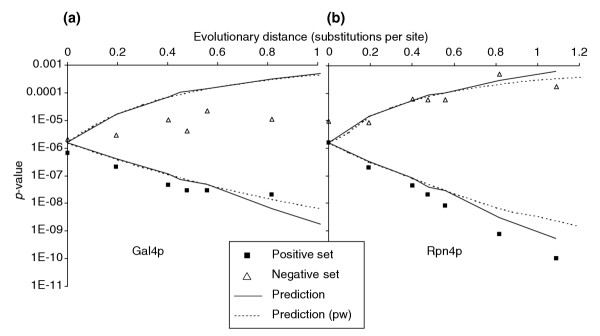
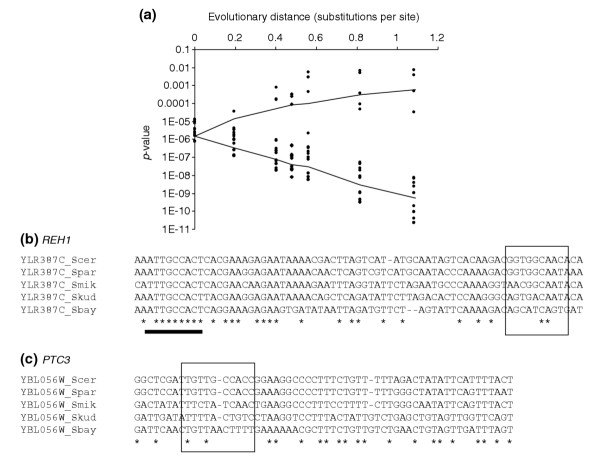
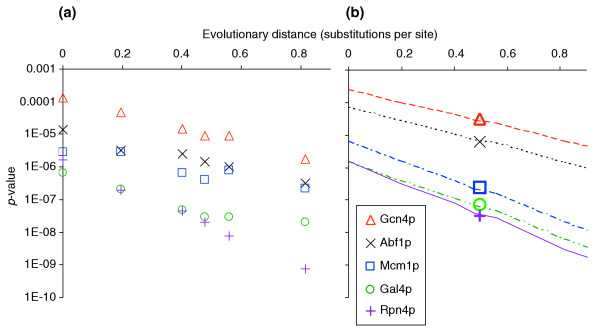
We introduce a method (MONKEY) to identify conserved transcription-factor binding sites in multispecies alignments. MONKEY employs probabilistic models of factor specificity and binding-site evolution, on which basis we compute the likelihood that putative sites are conserved and assign statistical significance to each hit. Using genomes from the genus Saccharomyces , we illustrate how the significance of real sites increases with evolutionary distance and explore the relationship between conservation and function.
Overview
The claims and statistics of this paper haven’t been checked yet.
Run the check — free, no account needed. It reads the open-access text and checks the sources it cites.
Integrity signals
Registry
Cites
Statistics
Figures
Verification
Claims the paper makes
The claims and statistics of this paper haven’t been checked yet.
Run the check — free, no account needed. It reads the open-access text and checks the sources it cites.
Claims other papers make about this one
Each is checked against this paper’s own text: does it say what the citing paper says it does?
In the citing paper
“there is an inverse relationship between the degeneracy of columns within an RNAcompete motif and the evolutionary conservation of the matching bases within the predicted binding site in transcripts”
From A compendium of RNA-binding motifs for decoding gene regulation (2013) · cites this paper as [23]
Self-check
Percentages, sums and reported differences re-computed from the paper’s own numbers.
The self-check needs the paper’s full text.
Citations
Cites
Thompson, J. D., Higgins, D. G., & Gibson, T. J. (1994) · Nucleic Acids Research · doi:10.1093/nar/22.22.4673 · Cited by 64,617
Cluster analysis and display of genome-wide expression patterns
Eisen, M. B., Spellman, P. T., Brown, P. O., & Botstein, D. (1998) · Proceedings of the National Academy of Sciences · doi:10.1073/pnas.95.25.14863 · Cited by 16,184
Self-citationEvolutionary trees from DNA sequences: A maximum likelihood approach.
Felsenstein, J. (1981) · Journal of Molecular Evolution · doi:10.1007/bf01734359 · Cited by 14,571
Evolution of Protein Molecules
JUKES, T. H., & CANTOR, C. R. (1969) · Mammalian Protein Metabolism · doi:10.1016/b978-1-4832-3211-9.50009-7 · Cited by 11,032
Dating of the human–ape splitting by a molecular clock of mitochondrial DNA.
Hasegawa, M., Kishino, H., & Yano, T.-A. (1985) · Journal of Molecular Evolution · doi:10.1007/bf02101694 · Cited by 8,687
PAML: a program package for phylogenetic analysis by maximum likelihood
Yang, Z. (1997) · Computer applications in the biosciences · doi:10.1093/bioinformatics/13.5.555 · Cited by 5,377
Genomic Expression Programs in the Response of Yeast Cells to Environmental Changes
Gasch, A. P., Spellman, P. T., Kao, C. M., Carmel-Harel, O., Eisen, M. B., Storz, G., Botstein, D., & Brown, P. O. (2000) · Molecular Biology of the Cell · doi:10.1091/mbc.11.12.4241 · Cited by 4,815
Self-citationIntegrated Genomic and Proteomic Analyses of a Systematically Perturbed Metabolic Network
Ideker, T., Thorsson, V., Ranish, J. A., Christmas, R., Buhler, J., Eng, J. K., Bumgarner, R., Goodlett, D. R., Aebersold, R., & Hood, L. (2001) · Science · doi:10.1126/science.292.5518.929 · Cited by 2,050
Genome-Wide Location and Function of DNA Binding Proteins
Ren, B., Robert, F., Wyrick, J. J., Aparicio, O. M., Jennings, E. G., Simon, I., Zeitlinger, J., Schreiber, J., Hannett, N. M., Kanin, E. I., et al. (2000) · Science · doi:10.1126/science.290.5500.2306 · Cited by 1,768
Sequencing and comparison of yeast species to identify genes and regulatory elements
Kellis, M., Patterson, N. J., Endrizzi, M. G., Birren, B. W., & Lander, E. S. (2003) · Nature · doi:10.1038/nature01644 · Cited by 1,751
DNA binding sites: representation and discovery
Stormo, G. D. (2000) · Bioinformatics · doi:10.1093/bioinformatics/16.1.16 · Cited by 1,519
The Evolution of Transcriptional Regulation in Eukaryotes
Wray, G. A. (2003) · Molecular Biology and Evolution · doi:10.1093/molbev/msg140 · Cited by 1,229
SGD: Saccharomyces Genome Database
Cherry, J. M. (1998) · Nucleic Acids Research · doi:10.1093/nar/26.1.73 · Cited by 1,145
Hughes, J. D., Estep, P. W., Tavazoie, S., & Church, G. M. (2000) · Journal of Molecular Biology · doi:10.1006/jmbi.2000.3519 · Cited by 1,008
Finding Functional Features in Saccharomyces Genomes by Phylogenetic Footprinting
Cliften, P. F., Sudarsanam, P., Desikan, A., Fulton, L. A., Fulton, B., Majors, J. E., Waterston, R., Cohen, B. A., & Johnston, M. (2003) · Science · doi:10.1126/science.1084337 · Cited by 813
Selection of DNA binding sites by regulatory proteins
Berg, O. G., & von Hippel, P. H. (1987) · Journal of Molecular Biology · doi:10.1016/0022-2836(87)90354-8 · Cited by 754
Identification of novel small RNAs using comparative genomics and microarrays
Wassarman, K. M., Repoila, F., Rosenow, C., Storz, G., & Gottesman, S. (2001) · Genes & Development · doi:10.1101/gad.901001 · Cited by 723
Promoter-specific binding of Rap1 revealed by genome-wide maps of protein–DNA association
Lieb, J. D., Liu, X., Botstein, D., & Brown, P. O. (2001) · Nature Genetics · doi:10.1038/ng569 · Cited by 707
Computer methods to locate signals in nucleic acid sequences
Staden, R. (1984) · Nucleic Acids Research · doi:10.1093/nar/12.1part2.505 · Cited by 667
DNA recognition by GAL4: structure of a protein-DNA complex
Marmorstein, R., Carey, M., Ptashne, M., & Harrison, S. C. (1992) · Nature · doi:10.1038/356408a0 · Cited by 662
Use of the ‘Perceptron’ algorithm to distinguish translational initiation sites in E. coli
Stormo, G. D., Schneider, T. D., Gold, L., & Ehrenfeucht, A. (1982) · Nucleic Acids Research · doi:10.1093/nar/10.9.2997 · Cited by 651
Evidence for stabilizing selection in a eukaryotic enhancer element
Ludwig, M. Z., Bergman, C., Patel, N. H., & Kreitman, M. (2000) · Nature · doi:10.1038/35000615 · Cited by 575
Gasch, A. P., Huang, M., Metzner, S., Botstein, D., Elledge, S. J., & Brown, P. O. (2001) · Molecular Biology of the Cell · doi:10.1091/mbc.12.10.2987 · Cited by 542
Human-mouse genome comparisons to locate regulatory sites
Wasserman, W. W., Palumbo, M. J., Thompson, W. A., Fickett, J. W., & Lawrence, C. E. (2000) · Nature Genetics · doi:10.1038/79965 · Cited by 475
Exploring the conditional coregulation of yeast gene expression through fuzzy k-means clustering
Gasch, A. P., & Eisen, M. B. (2002) · Genome biology · doi:10.1186/gb-2002-3-11-research0059 · Cited by 475
Self-citationDermitzakis, E. T., & Clark, A. G. (2002) · Molecular Biology and Evolution · doi:10.1093/oxfordjournals.molbev.a004169 · Cited by 463
ConSite: web-based prediction of regulatory elements using cross-species comparison
Sandelin, A., Wasserman, W. W., & Lenhard, B. (2004) · Nucleic Acids Research · doi:10.1093/nar/gkh372 · Cited by 456
rVista for Comparative Sequence-Based Discovery of Functional Transcription Factor Binding SitesPreprint
Loots, G. G., Ovcharenko, I., Pachter, L. S., Dubchak, I. L., & Rubin, E. M. (2002) · Genome Research · doi:10.1101/gr.225502 · Cited by 439
SCPD: a promoter database of the yeast Saccharomyces cerevisiae.
Zhu, J., & Zhang, M. Q. (1999) · Bioinformatics · doi:10.1093/bioinformatics/15.7.607 · Cited by 436
Transcriptional regulation in the yeast GAL gene family: a complex genetic network
Lohr, D., Venkov, P., & Zlatanova, J. S. (1995) · The FASEB Journal · doi:10.1096/fasebj.9.9.7601342 · Cited by 419
Conserved noncoding sequences are reliable guides to regulatory elements
Hardison, R. C. (2000) · Trends in Genetics · doi:10.1016/s0168-9525(00)02081-3 · Cited by 418
rVISTA 2.0: evolutionary analysis of transcription factor binding sites
Loots, G. G., & Ovcharenko, I. (2004) · Nucleic Acids Research · doi:10.1093/nar/gkh383 · Cited by 411
Computational identification of noncoding RNAs in E. coli by comparative genomics
Rivas, E., Klein, R. J., Jones, T. A., & Eddy, S. R. (2001) · Current Biology · doi:10.1016/s0960-9822(01)00401-8 · Cited by 400
Evolutionary distances for protein-coding sequences: modeling site- specific residue frequencies
Halpern, A. L., & Bruno, W. (1998) · Molecular Biology and Evolution · doi:10.1093/oxfordjournals.molbev.a025995 · Cited by 324
Mannhaupt, G., Schnall, R., Карпов, В. Л., Vetter, I., & Feldmann, H. (1999) · FEBS Letters · doi:10.1016/s0014-5793(99)00467-6 · Cited by 322
Evolution of a Fungal Regulatory Gene Family: The Zn(II)2Cys6 Binuclear Cluster DNA Binding Motif
Todd, R. B., & Andrianopoulos, A. (1997) · Fungal Genetics and Biology · doi:10.1006/fgbi.1997.0993 · Cited by 295
Tatusov, R. L., Altschul, S. F., & Koonin, E. V. (1994) · Proceedings of the National Academy of Sciences · doi:10.1073/pnas.91.25.12091 · Cited by 287
Identification of conserved regulatory elements by comparative genome analysis
Lenhard, B., Sandelin, A., Mendoza, L., Engström, P. G., Jareborg, N., & Wasserman, W. W. (2003) · Journal of Biology · doi:10.1186/1475-4924-2-13 · Cited by 270
Comparative genomics: genome-wide analysis in metazoan eukaryotes
Ureta‐Vidal, A., Ettwiller, L. M., & Birney, E. (2003) · Nature Reviews Genetics · doi:10.1038/nrg1043 · Cited by 236
A computational approach to identify genes for functional RNAs in genomic sequences
Carter, R. J., Dubchak, I. L., & Holbrook, S. R. (2001) · Nucleic Acids Research · doi:10.1093/nar/29.19.3928 · Cited by 194
Parallel inactivation of multiple GAL pathway genes and ecological diversification in yeasts
Hittinger, C. T., Rokas, A., & Carroll, S. B. (2004) · Proceedings of the National Academy of Sciences · doi:10.1073/pnas.0404319101 · Cited by 178
Position specific variation in the rate of evolution in transcription factor binding sites
Moses, A. M., Chiang, D. Y., Kellis, M., Lander, E. S., & Eisen, M. B. (2003) · BMC Evolutionary Biology · doi:10.1186/1471-2148-3-19 · Cited by 163
Self-citationMethods for calculating the probabilities of finding patterns in sequences
Staden, R. (1989) · Computer applications in the biosciences · doi:10.1093/bioinformatics/5.2.89 · Cited by 146
Evolutionary dynamics of the enhancer region of even-skipped in Drosophila.
Ludwig, M. Z., & Kreitman, M. (1995) · Molecular Biology and Evolution · doi:10.1093/oxfordjournals.molbev.a040277 · Cited by 131
Benchmarking tools for the alignment of functional noncoding DNA
Pollard, D. A., Bergman, C., Stoye, J., Celniker, S., & Eisen, M. B. (2004) · BMC Bioinformatics · doi:10.1186/1471-2105-5-6 · Cited by 120
Self-citationBelting, H., Shashikant, C. S., & Ruddle, F. H. (1998) · Proceedings of the National Academy of Sciences · doi:10.1073/pnas.95.5.2355 · Cited by 112
Berezikov, E., Guryev, V., Plasterk, R. H. A., & Cuppen, E. P. J. G. (2003) · Genome Research · doi:10.1101/gr.1642804 · Cited by 97
(2000) · Current Opinion in Plant Biology · doi:10.1016/s1369-5266(00)80008-4 · Cited by 74
Exon discovery by genomic sequence alignment
Morgenstern, B., Rinner, O., Abdeddaïm, S., Haase, D., Mayer, K., Dress, A., & Mewes, H. (2002) · Bioinformatics · doi:10.1093/bioinformatics/18.6.777 · Cited by 60
Chiang, D. Y., Moses, A. M., Kellis, M., Lander, E. S., & Eisen, M. B. (2003) · Genome biology · doi:10.1186/gb-2003-4-7-r43 · Cited by 53
Self-citationBigelow, H., Wenick, A. S., Wong, A. M., & Hobert, O. (2004) · BMC Bioinformatics · doi:10.1186/1471-2105-5-27 · Cited by 36
Mrowka, R., Steinhage, K., Patzak, A. R., & Persson, P. B. (2003) · American Journal of Physiology-Regulatory, Integrative and Comparative Physiology · doi:10.1152/ajpregu.00448.2002 · Cited by 12
Cited by
Sorted by citations
Detection of nonneutral substitution rates on mammalian phylogenies
Pollard, K. S., Hubisz, M. J., Rosenbloom, K. R., & Siepel, A. (2010) · Genome Research · doi:10.1101/gr.097857.109 · Cited by 2,353
A compendium of RNA-binding motifs for decoding gene regulation
Ray, D., Kazan, H., Cook, K. B., Weirauch, M. T., Najafabadi, H. S., Li, X., Gueroussov, S., Albu, M., Zheng, H., Yang, A., et al. (2013) · Nature · doi:10.1038/nature12311 · Cited by 1,480
PHAST and RPHAST: phylogenetic analysis with space/time models
Hubisz, M. J., Pollard, K. S., & Siepel, A. (2011) · Briefings in Bioinformatics · doi:10.1093/bib/bbq072 · Cited by 490
Transcription Factors Bind Thousands of Active and Inactive Regions in the Drosophila Blastoderm
Li, X., MacArthur, S., Bourgon, R., Nix, D. A., Pollard, D. A., Iyer, V. N., Hechmer, A., Simirenko, L., Stapleton, M., Hendriks, C. L. L., et al. (2008) · PLoS Biology · doi:10.1371/journal.pbio.0060027 · Cited by 485
Self-citationSystematic discovery and characterization of regulatory motifs in ENCODE TF binding experiments
Kheradpour, P., & Kellis, M. (2013) · Nucleic Acids Research · doi:10.1093/nar/gkt1249 · Cited by 447
Metadata
- Authors
- Moses, A. M., Chiang, D. Y., Pollard, D. A., Iyer, V. N., & Eisen, M. B.
- Affiliations
- University of California, Berkeley (US)
- Lawrence Berkeley National Laboratory (US)
- Corresponding author
- Eisen, Michael B
- Venue
- Genome Biology
- Published
- 2004-11-30
- Volume
- 5
- Issue
- 12
- Pages
- R98-R98
- ISSN
- 1465-6906 (ISSN-L)
- 1474-760X
- PMC
- PMC545801
- OpenAlex
- W2109314645
- Cited by
- 153
- References
- 53
- Citations by year
- 2026: 1 · 2025: 1 · 2023: 1 · 2022: 1 · 2021: 4 · 2018: 1 · 2017: 4 · 2016: 4 · 2015: 3 · 2014: 4 · 2013: 6 · 2012: 12
- FWCI
- 6.29
- Type
- journal article
- Language
- en
- Open access
- gold
- doi.org
- Locations
- Genome biology (publishedVersion, cc-by)
- PubMed Central (publishedVersion)
- PubMed (publishedVersion)
- University of North Texas Digital Library (University of North Texas) (submittedVersion)
- OSTI OAI (U.S. Department of Energy Office of Scientific and Technical Information) (submittedVersion)
- Funders
- National Human Genome Research Institute (R01HG002779)
- Topics
- Life Sciences › Biochemistry, Genetics and Molecular Biology › Molecular Biology › Genomics and Chromatin Dynamics
- Life Sciences › Biochemistry, Genetics and Molecular Biology › Molecular Biology › Genomics and Phylogenetic Studies
- Life Sciences › Biochemistry, Genetics and Molecular Biology › Molecular Biology › Fungal and yeast genetics research
- Keywords
- transcription factor binding sites, conserved binding sites, binding site evolution, Saccharomyces, phylogenetic distance
- MeSH terms
- Binding Sites, DNA, DNA-Binding Proteins, DNA, Fungal, Biological Evolution, Gene Expression Regulation, Models, Genetic, Saccharomyces cerevisiae, Software, Species Specificity, Transcription Factors, Sequence Alignment, Conserved Sequence, Saccharomyces cerevisiae Proteins
About these checks
Registry, retraction, Cites and statistics results are computed, not judged, with one exception: a printed reference that no index lists is read once by a model before it counts as a citation error. Claims are extracted by a model and kept only when their quote appears verbatim in the text; each cited source is then checked, with a model’s help, for whether it says what the claim relies on. Those verdicts can be wrong — read the claim’s quote and the cited source before relying on one.
Statistics and arithmetic are recomputed, not judged.
Confidence bands are shown only for fields calibrated on our annotated test set. None is calibrated yet, so no band is shown.
What counts as a claim ›How we measure confidence ›How we check this ›
Are you an author, or do you see a problem with this page? Request a review
