

The DOI matches its Crossref record; 99 of the 99 references it cites were found in a registry or an index.
Large-scale analysis of transcriptional cis-regulatory modules reveals both common features and distinct subclasses
Abstract
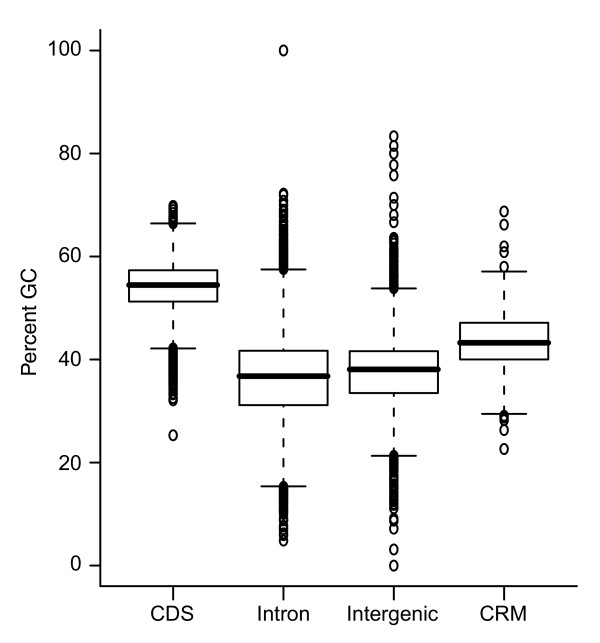
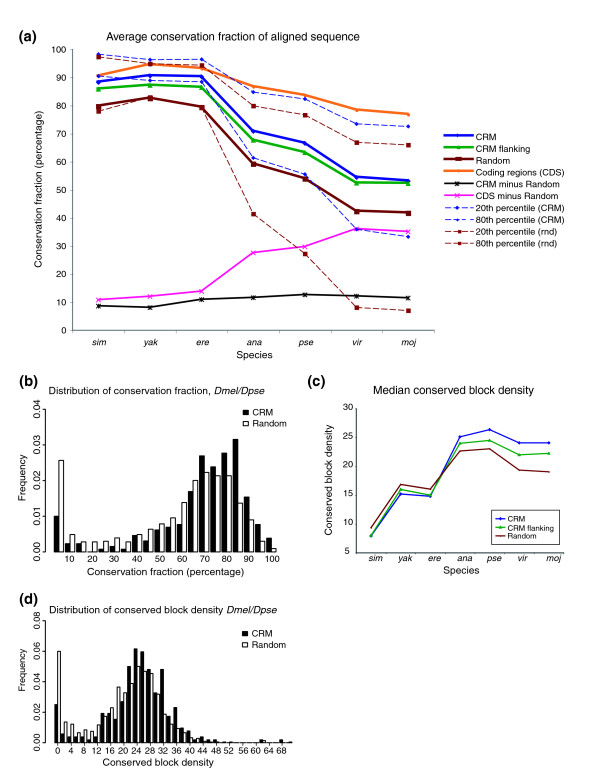
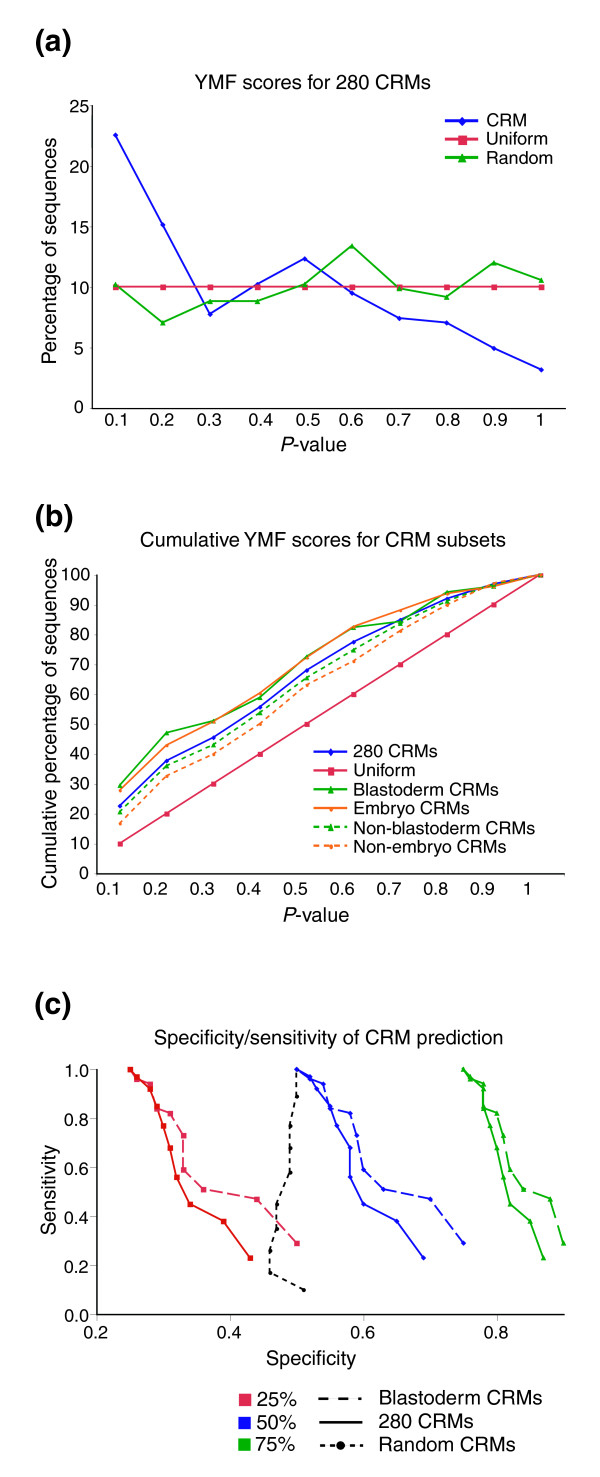
Background: Transcriptional cis -regulatory modules (for example, enhancers) play a critical role in regulating gene expression. While many individual regulatory elements have been characterized, they have never been analyzed as a class. Results: We have performed the first such large-scale study of cis -regulatory modules in order to determine whether they have common properties that might aid in their identification and contribute to our understanding of the mechanisms by which they function. A total of 280 individual, experimentally verified cis -regulatory modules from Drosophila were analyzed for a range of sequence-level and functional properties. We report here that regulatory modules do indeed share common properties, among them an elevated GC content, an increased level of interspecific sequence conservation, and a tendency to be transcribed into RNA. However, we find that dense clustering of transcription factor binding sites, especially homotypic clustering, which is commonly believed to be a general characteristic of regulatory modules, is rather a feature that belongs chiefly to a specific subclass. This has important implications for current computational approaches, many of which are biased toward this subset. We explore two new strategies to assess binding site clustering and gauge their performances with respect to their ability to detect all 280 modules and various functionally coherent subsets. Conclusion: Our findings demonstrate that cis -regulatory modules share common features that help to define them as a class and that may lead to new insights into mechanisms of gene regulation. However, these properties alone may not be sufficient to reliably distinguish regulatory from non-regulatory sequences. We also demonstrate that there are distinct subclasses of cis -regulatory modules that are more amenable to in silico detection than others and that these differences must be taken into account when attempting genome-wide regulatory element discovery.
Overview
The claims and statistics of this paper haven’t been checked yet.
Run the check — free, no account needed. It reads the open-access text and checks the sources it cites.
Integrity signals
Registry
Cites
Statistics
Figures
Verification
Claims the paper makes
The claims and statistics of this paper haven’t been checked yet.
Run the check — free, no account needed. It reads the open-access text and checks the sources it cites.
Claims other papers make about this one
Each is checked against this paper’s own text: does it say what the citing paper says it does?
In the citing paper
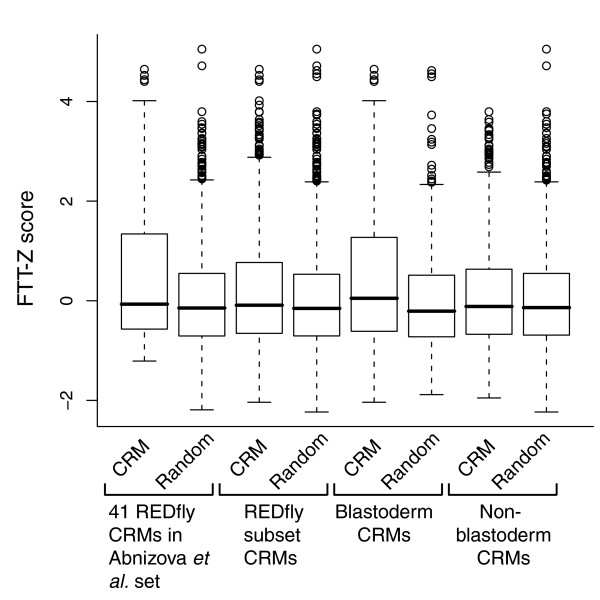
“Li et al. (92) reported greater homotypic TF binding site clustering in blastoderm-stage (early) enhancers than in those for other developmental programs, possibly reflecting the greater complexity of cell fate decisions driven by positional information in the early Drosophila embryo.”
From Behavior-related gene regulatory networks: A new level of organization in the brain (2020) · cites this paper as [92]
Self-check
Percentages, sums and reported differences re-computed from the paper’s own numbers.
The self-check needs the paper’s full text.
Citations
Cites
Tandem repeats finder: a program to analyze DNA sequences
Benson, G. (1999) · Nucleic Acids Research · doi:10.1093/nar/27.2.573 · Cited by 9,374
Evolutionarily conserved elements in vertebrate, insect, worm, and yeast genomes
Siepel, A., Bejerano, G., Pedersen, J. S., Hinrichs, A. S., Hou, M., Rosenbloom, K., Clawson, H., Spieth, J., Hillier, L. W., Richards, S., et al. (2005) · Genome Research · doi:10.1101/gr.3715005 · Cited by 3,971 · cited 1×
“Ultraconserved elements are overrepresented in CRMs Several recent studies have remarked on the presence of 'ultraconserved' elements and other highly conserved regions in both vertebrate and invertebrate genomes [19,53,54].”
The Transcriptional Landscape of the Mammalian Genome
Carninci, P., Kasukawa, T., Katayama, S., Gough, J., Frith, M. C., Maeda, N., Oyama, R., Ravasi, T., Lenhard, B., Wells, C. A., et al. (2005) · Science · doi:10.1126/science.1112014 · Cited by 3,492
Ultraconserved Elements in the Human Genome
Bejerano, G., Pheasant, M., Makunin, I., Stephen, S., Kent, W. J., Mattick, J. S., & Haussler, D. (2004) · Science · doi:10.1126/science.1098119 · Cited by 1,732
A genomic regulatory network for development
Davidson, E. H., Rast, J. P., Oliveri, P., Ransick, A., Calestani, C., Yuh, C.-H., Minokawa, T., Amore, G., Hinman, V., Arenas-Mena, C., et al. (2002) · Science · doi:10.1126/science.1069883 · Cited by 1,567
The evolutionary significance of cis-regulatory mutations
Wray, G. A. (2007) · Nature Reviews Genetics · doi:10.1038/nrg2063 · Cited by 1,521
Applied bioinformatics for the identification of regulatory elements
Wasserman, W. W., & Sandelin, A. (2004) · Nature Reviews Genetics · doi:10.1038/nrg1315 · Cited by 1,228
Transcriptional Maps of 10 Human Chromosomes at 5-Nucleotide Resolution
Cheng, J., Kapranov, P., Drenkow, J., Dike, S., Brubaker, S., Patel, S., Long, J., Stern, D., Tammana, H., Helt, G., et al. (2005) · Science · doi:10.1126/science.1108625 · Cited by 1,178
The RNA Polymerase II Core Promoter
Smale, S. T., & Kadonaga, J. T. (2003) · Annual Review of Biochemistry · doi:10.1146/annurev.biochem.72.121801.161520 · Cited by 1,133
The Regulatory Genome: Gene Regulatory Networks In Development And Evolution
Davidson, E. H. (2006) · Thammasat University Digital Collections · Cited by 1,048
From DNA to diversity: molecular genetics and the evolution of animal design
(2002) · Choice Reviews Online · doi:10.5860/choice.39-5182 · Cited by 983
Highly Conserved Non-Coding Sequences Are Associated with Vertebrate Development
Woolfe, A., Goodson, M., Goode, D. K., Snell, P., McEwen, G. K., Vavouri, T., Smith, S. F., North, P., Callaway, H., Kelly, K., et al. (2004) · PLoS Biology · doi:10.1371/journal.pbio.0030007 · Cited by 970
Empirical Analysis of Transcriptional Activity in the Arabidopsis Genome
Yamada, K., Lim, J., Dale, J. M., Chen, H., Shinn, P., Palm, C. J., Southwick, A. M., Wu, H. C., Kim, C., Nguyen, M., et al. (2003) · Science · doi:10.1126/science.1088305 · Cited by 883
Large-Scale Transcriptional Activity in Chromosomes 21 and 22
Kapranov, P., Cawley, S. E., Drenkow, J., Bekiranov, S., Strausberg, R. L., Fodor, S. P. A., & Gingeras, T. R. (2002) · Science · doi:10.1126/science.1068597 · Cited by 869
The hardwiring of development: organization and function of genomic regulatory systems
Arnone, M. I., & Davidson, E. H. (1997) · Development · doi:10.1242/dev.124.10.1851 · Cited by 699
DIALIGN 2: improvement of the segment-to-segment approach to multiple sequence alignment.
Morgenstern, B. (1999) · Bioinformatics · doi:10.1093/bioinformatics/15.3.211 · Cited by 678
The gradient morphogen bicoid is a concentration-dependent transcriptional activator
Struhl, G., Struhl, K., & Macdonald, P. M. (1989) · Cell · doi:10.1016/0092-8674(89)90062-7 · Cited by 643
Progress and Prospects in Evolutionary Biology. The Drosophila Model.
Powell, J. R. (1997) · doi:10.5281/zenodo.10763570 · Cited by 636
Two distinct mechanisms for long-range patterning by Decapentaplegic in the Drosophila wing
Lecuit, T., Brook, W. J., Ng, M., Calleja, M., Sun, H., & Cohen, S. M. (1996) · Nature · doi:10.1038/381387a0 · Cited by 623
From DNA to Diversity: Molecular Genetics and the Evolution of Animal Design
Gostling, N. J. (2002) · Heredity · doi:10.1038/sj.hdy.6800154 · Cited by 618
Berman, B. P., Nibu, Y., Pfeiffer, B. D., Tomancak, P., Celniker, S. E., Levine, M., Rubin, G. M., & Eisen, M. B. (2002) · Proceedings of the National Academy of Sciences · doi:10.1073/pnas.231608898 · Cited by 605
Predicting Gene Expression from Sequence
Beer, M. A., & Tavazoie, S. (2004) · Cell · doi:10.1016/s0092-8674(04)00304-6 · Cited by 599
Evidence for stabilizing selection in a eukaryotic enhancer element
Ludwig, M. Z., Bergman, C., Patel, N. H., & Kreitman, M. (2000) · Nature · doi:10.1038/35000615 · Cited by 579
Phylogenetic Shadowing of Primate Sequences to Find Functional Regions of the Human Genome
Boffelli, D., McAuliffe, J., Ovcharenko, D., Lewis, K. D., Ovcharenko, I., Pachter, L., & Rubin, E. M. (2003) · Science · doi:10.1126/science.1081331 · Cited by 516
Richards, S., Liu, Y., Bettencourt, B. R., Hradecky, P., Letovsky, S., Nielsen, R., Thornton, K., Hubisz, M. J., Chen, R., Meisel, R. P., et al. (2005) · Genome Research · doi:10.1101/gr.3059305 · Cited by 498
Progress and Prospects in Evolutionary Biology: The Drosophila Model
Powell, J. R. (1997) · doi:10.1093/oso/9780195076912.001.0001 · Cited by 494
The interpretation of morphogen gradients
Ashe, H. L., & Briscoe, J. (2006) · Development · doi:10.1242/dev.02238 · Cited by 486
Human-mouse genome comparisons to locate regulatory sites
Wasserman, W. W., Palumbo, M. J., Thompson, W. A., Fickett, J. W., & Lawrence, C. E. (2000) · Nature Genetics · doi:10.1038/79965 · Cited by 475
Hallikas, O. K., Palin, K., Sinjushina, N., Rautiainen, R., Partanen, J. M., Ukkonen, E., & Taipale, J. (2006) · Cell · doi:10.1016/j.cell.2005.10.042 · Cited by 469
Driever, W., Thoma, G., & Nüsslein-Volhard, C. (1989) · Nature · doi:10.1038/340363a0 · Cited by 428
Conserved noncoding sequences are reliable guides to regulatory elements
Hardison, R. C. (2000) · Trends in Genetics · doi:10.1016/s0168-9525(00)02081-3 · Cited by 418
Identification of regulatory regions which confer muscle-specific gene expression
Wasserman, W. W., & Fickett, J. W. (1998) · Journal of Molecular Biology · doi:10.1006/jmbi.1998.1700 · Cited by 399
Laubichler, M. D. (2003) · Max Planck Institute for Plasma Physics · Cited by 387
Johnson, J. M., Edwards, S., Shoemaker, D., & Schadt, E. E. (2005) · Trends in Genetics · doi:10.1016/j.tig.2004.12.009 · Cited by 386
High intrinsic rate of DNA loss in Drosophila
Petrov, D. A., Lozovskaya, E. R., & Hartl, D. L. (1996) · Nature · doi:10.1038/384346a0 · Cited by 378
Markstein, M., Markstein, P., Markstein, V., & Levine, M. S. (2002) · Proceedings of the National Academy of Sciences · doi:10.1073/pnas.012591199 · Cited by 375
Intergenic transcription and transinduction of the human β-globin locus
Ashe, H. L., Monks, J., Wijgerde, M., Fraser, P., & Proudfoot, N. J. (1997) · Genes & Development · doi:10.1101/gad.11.19.2494 · Cited by 327
Computational prediction of transcription-factor binding site locations.
Bulyk, M. L. (2003) · Genome biology · doi:10.1186/gb-2003-5-1-201 · Cited by 315
Halfon, M. S., Grad, Y., Church, G. M., & Michelson, A. M. (2002) · Genome Research · doi:10.1101/gr.228902 · Cited by 298
Self-citationThe transcriptional activity of human Chromosome 22Preprint
Rinn, J. L., Euskirchen, G. M., Bertone, P., Martone, R., Luscombe, N. M., Hartman, S., Harrison, P. M., Nelson, F. K., Miller, P., Gerstein, M., et al. (2003) · Genes & Development · doi:10.1101/gad.1055203 · Cited by 292
A Gene Expression Map for the Euchromatic Genome of Drosophila melanogaster
Stolc, V., Gauhar, Z., Mason, C., Halasz, G., van Batenburg, M. F., Rifkin, S. A., Hua, S., Herreman, T., Tongprasit, W., Barbano, P. E., et al. (2004) · Science · doi:10.1126/science.1101312 · Cited by 290
From gradients to stripes in Drosophila embryogenesis: filling in the gaps
Rivera-Pomar, R., & Jãckle, H. (1996) · Trends in Genetics · doi:10.1016/0168-9525(96)10044-5 · Cited by 261
Blanchette, M., Bataille, A. R., Chen, X., Poitras, C., Laganière, J., Lefèbvre, C., Deblois, G., Giguère, V., Ferretti, V., Bergeron, D., et al. (2006) · Genome Research · doi:10.1101/gr.4866006 · Cited by 261
Transcriptional Control in the Segmentation Gene Network of Drosophila
Schroeder, M. D., Pearce, M., Fak, J. J., Fan, H., Unnerstall, U., Emberly, E. G., Rajewsky, N., Siggia, E. D., & Gaul, U. (2004) · PLoS Biology · doi:10.1371/journal.pbio.0020271 · Cited by 241
Wenick, A. S., & Hobert, O. (2004) · Developmental Cell · doi:10.1016/j.devcel.2004.05.004 · Cited by 239
Halligan, D. L., & Keightley, P. D. (2006) · Genome Research · doi:10.1101/gr.5022906 · Cited by 233
Intergenic transcription through a Polycomb group response element counteracts silencingPreprint
Schmitt, S., Prestel, M., & Paro, R. (2005) · Genes & Development · doi:10.1101/gad.326205 · Cited by 230
Rajewsky, N., Vergassola, M., Gaul, U., & Siggia, E. D. (2002) · BMC Bioinformatics · doi:10.1186/1471-2105-3-30 · Cited by 223
Berman, B. P., Pfeiffer, B. D., Laverty, T., Salzberg, S. L., Rubin, G. M., Eisen, M. B., & Celniker, S. (2004) · Genome biology · doi:10.1186/gb-2004-5-9-r61 · Cited by 215
A probabilistic method to detect regulatory modules
Sinha, S., van Nimwegen, E., & Siggia, E. D. (2003) · Bioinformatics · doi:10.1093/bioinformatics/btg1040 · Cited by 207
Self-citationA Predictive Model for Regulatory Sequences Directing Liver-Specific TranscriptionPreprint
Krivan, W., & Wasserman, W. W. (2001) · Genome Research · doi:10.1101/gr.180601 · Cited by 206
A statistical method for finding transcription factor binding sites.
Sinha, S., & Tompa, M. (2000) · PubMed · Cited by 199
Self-citationBergman, C., Carlson, J., & Celniker, S. (2004) · Computer applications in the biosciences · doi:10.1093/bioinformatics/bti173 · Cited by 188
Manak, J. R., Dike, S., Sementchenko, V. I., Kapranov, P., Biemar, F., Long, J. C., Cheng, J., Bell, I., Ghosh, S., Piccolboni, A., et al. (2006) · Nature Genetics · doi:10.1038/ng1875 · Cited by 182
Close sequence comparisons are sufficient to identify human cis -regulatory elementsPreprint
Prabhakar, S., Poulin, F., Shoukry, M. I., Afzal, V., Rubin, E. M., Couronne, O., & Pennacchio, L. A. (2006) · Genome Research · doi:10.1101/gr.4717506 · Cited by 176
Patterns of intron sequence evolution in Drosophila are dependent upon length and GC content
Haddrill, P. R., Charlesworth, B., Halligan, D. L., & Andolfatto, P. (2005) · Genome biology · doi:10.1186/gb-2005-6-8-r67 · Cited by 173
Homotypic regulatory clusters in Drosophila.Preprint
Lifanov, A., Makeev, V., Nazina, A., & Papatsenko, D. A. (2003) · Genome Research · doi:10.1101/gr.668403 · Cited by 170
The role of binding site cluster strength in Bicoid-dependent patterning in Drosophila
Ochoa‐Espinosa, A., Yucel, G., Kaplan, L., Paré, A. C., Pura, N., Oberstein, A., Papatsenko, D., & Small, S. (2005) · Proceedings of the National Academy of Sciences · doi:10.1073/pnas.0500373102 · Cited by 170
Molecular mechanisms of selector gene function and evolution
Mann, R. S. (2002) · Current Opinion in Genetics & Development · doi:10.1016/s0959-437x(02)00344-1 · Cited by 170
Immunity Regulatory DNAs Share Common Organizational Features in Drosophila
Senger, K., Armstrong, G. W., Rowell, W. J., Kwan, J. M., Markstein, M., & Levine, M. (2004) · Molecular Cell · doi:10.1016/s1097-2765(03)00500-8 · Cited by 158
Chromatin remodeling and extragenic transcription at the MHC class II locus control region
Masternak, K., Peyraud, N., Krawczyk, M., Barras, E., & Reith, W. (2003) · Nature Immunology · doi:10.1038/ni883 · Cited by 157
Comparative genomics of Drosophila and human core promoters
FitzGerald, P. C., Sturgill, D. M., Shyakhtenko, A., Oliver, B., & Vinson, C. (2006) · Genome biology · doi:10.1186/gb-2006-7-7-r53 · Cited by 154
Codon usage bias and base composition of nuclear genes in Drosophila.
Moriyama, E. N., & Hartl, D. L. (1993) · Genetics · doi:10.1093/genetics/134.3.847 · Cited by 149
Rebeiz, M., Reeves, N., & Posakony, J. W. (2002) · Proceedings of the National Academy of Sciences · doi:10.1073/pnas.152320899 · Cited by 149
Castro, B., Barolo, S., Bailey, A. M., et al. (2005) · Development · doi:10.1242/dev.01920 · Cited by 142
Bergman, C., Pfeiffer, B. D., Rincón-Limas, D. E., Hoskins, R. A., Gnirke, A., Mungall, C., Wang, A. M., Kronmiller, B. A., Pacleb, J., Park, S., et al. (2002) · Genome biology · doi:10.1186/gb-2002-3-12-research0086 · Cited by 140
The regulatory content of intergenic DNA shapes genome architecture
Nelson, C. E., Hersh, B. M., & Carroll, S. B. (2004) · Genome biology · doi:10.1186/gb-2004-5-4-r25 · Cited by 140
Bae, E., Calhoun, V. C., Levine, M., Lewis, E. B., & Drewell, R. A. (2002) · Proceedings of the National Academy of Sciences · doi:10.1073/pnas.222671299 · Cited by 129
Locus Control Region Transcription Plays an Active Role in Long-Range Gene Activation
Ho, Y., Elefant, F., Liebhaber, S. A., & Cooke, N. E. (2006) · Molecular Cell · doi:10.1016/j.molcel.2006.05.041 · Cited by 128
Glazov, E. A., Pheasant, M., McGraw, E. A., Bejerano, G., & Mattick, J. S. (2005) · Genome Research · doi:10.1101/gr.3545105 · Cited by 124
Dpp signaling thresholds in the dorsal ectoderm of the Drosophila embryo
Ashe, H. L., Mannervik, M., & Levine, M. (2000) · Development · doi:10.1242/dev.127.15.3305 · Cited by 124
Benchmarking tools for the alignment of functional noncoding DNA
Pollard, D. A., Bergman, C., Stoye, J., Celniker, S., & Eisen, M. B. (2004) · BMC Bioinformatics · doi:10.1186/1471-2105-5-6 · Cited by 118
Coordinate enhancers share common organizational features in the Drosophila genome
Erives, A., & Levine, M. (2004) · Proceedings of the National Academy of Sciences · doi:10.1073/pnas.0400611101 · Cited by 117
Whole-Genome Analysis of Temporal Gene Expression during Foregut Development
Gaudet, J., Muttumu, S., Horner, M. A., & Mango, S. E. (2004) · PLoS Biology · doi:10.1371/journal.pbio.0020352 · Cited by 93
Drewell, R. A., Bae, E., Burr, J., & Lewis, E. B. (2002) · Proceedings of the National Academy of Sciences · doi:10.1073/pnas.222671199 · Cited by 92
Conservation of regulatory elements between two species of Drosophila
Emberly, E. G., Rajewsky, N., & Siggia, E. D. (2003) · BMC Bioinformatics · doi:10.1186/1471-2105-4-57 · Cited by 92
Dermitzakis, E. T. (2003) · Molecular Biology and Evolution · doi:10.1093/molbev/msg077 · Cited by 88
Babak, T., Blencowe, B. J., & Hughes, T. R. (2005) · BMC Genomics · doi:10.1186/1471-2164-6-104 · Cited by 81
Disperse versus Compact Elements for the Regulation ofruntStripes inDrosophila
Klingler, M., Soong, J., Butler, B., & Gergen, J. P. (1996) · Developmental Biology · doi:10.1006/dbio.1996.0146 · Cited by 81
REDfly: a Regulatory Element Database for Drosophila
Gallo, S. M., Li, L., Hu, Z., & Halfon, M. S. (2005) · Bioinformatics · doi:10.1093/bioinformatics/bti794 · Cited by 80
Self-citationJohnson, K. D., Grass, J. A., Park, C., Im, H., Choi, K., & Bresnick, E. H. (2003) · Molecular and Cellular Biology · doi:10.1128/mcb.23.18.6484-6493.2003 · Cited by 76
Sironi, M., Menozzi, G., Comi, G. P., Cagliani, R., Bresolin, N., & Pozzoli, U. (2005) · Human Molecular Genetics · doi:10.1093/hmg/ddi257 · Cited by 71
Philippakis, A., Busser, B. W., Gisselbrecht, S. S., He, F. S., Estrada, B., Michelson, A. M., & Bulyk, M. L. (2006) · PLoS Computational Biology · doi:10.1371/journal.pcbi.0020053 · Cited by 68
Computational methods for transcriptional regulation
Siggia, E. D. (2005) · Current Opinion in Genetics & Development · doi:10.1016/j.gde.2005.02.004 · Cited by 64
Grad, Y. H., Roth, F. P., Halfon, M. S., & Church, G. M. (2004) · Bioinformatics · doi:10.1093/bioinformatics/bth320 · Cited by 63
Self-citationEnhancer sequence conservation between vertebrates is favoured in developmental regulator genes
Plessy, C., Dickmeis, T., Chalmel, F., & Strähle, U. (2005) · Trends in Genetics · doi:10.1016/j.tig.2005.02.006 · Cited by 62
Turnover of binding sites for transcription factors involved in early Drosophila development
Costas, J., Casares, F., & Vieira, J. (2003) · Gene · doi:10.1016/s0378-1119(03)00556-0 · Cited by 60
Using hexamers to predict cis-regulatory motifs in Drosophila
Chan, B., & Kibler, D. F. (2005) · BMC Bioinformatics · doi:10.1186/1471-2105-6-262 · Cited by 54
Analysis of intergenic transcription in the human IL-4/IL-13 gene cluster
Rogan, D. F., Cousins, D. J., Santangelo, S., Ioannou, P. A., Antoniou, M. N., Lee, T. H., & Staynov, D. Z. (2004) · Proceedings of the National Academy of Sciences · doi:10.1073/pnas.0308327100 · Cited by 53
Detecting novel low-abundant transcripts in Drosophila
Lee, S., Bao, J., Zhou, G., Shapiro, J. A., Xu, J., Shi, R., Lu, X., Clark, T., Johnson, D. S., Kim, Y. C., et al. (2005) · RNA · doi:10.1261/rna.7239605 · Cited by 36
Exploring genetic regulatory networks in metazoan development: methods and models
Halfon, M. S., & Michelson, A. M. (2002) · Physiological Genomics · doi:10.1152/physiolgenomics.00072.2002 · Cited by 34
Self-citationAbnizova, I., Boekhorst, R. T., Walter, K., & Gilks, W. R. (2005) · BMC Bioinformatics · doi:10.1186/1471-2105-6-109 · Cited by 31
Dickmeis, T., & Müller, F. (2005) · Briefings in Functional Genomics and Proteomics · doi:10.1093/bfgp/3.4.332 · Cited by 28
Dissecting the transcription networks of a cell using computational genomics
Li, H., & Wang, W. (2003) · Current Opinion in Genetics & Development · doi:10.1016/j.gde.2003.10.012 · Cited by 28
Conservation patterns in different functional sequence categories of divergent Drosophila \nspecies
Papatsenko, D., Kislyuk, A. O., Levine, M., & Dubchak, I. L. (2005) · eScholarship (California Digital Library) · Cited by 20
From DNA to Diversity, Molecular Genetics and the Evolution of Animal Design, 2nd edition
McGinnis, W. J. (2005) · Journal of Heredity · doi:10.1093/jhered/esi101 · Cited by 20
(Re)modeling the transcriptional enhancer
Halfon, M. S. (2006) · Nature Genetics · doi:10.1038/ng1006-1102 · Cited by 19
Self-citationWolff, C., Pepling, M. E., Gergen, P., & Klingler, M. (1999) · Mechanisms of Development · doi:10.1016/s0925-4773(98)00196-8 · Cited by 18
Biological code breaking in the 21st century
Michelson, A. M., & Bulyk, M. L. (2006) · Molecular Systems Biology · doi:10.1038/msb4100062 · Cited by 9
Cited by
Behavior-related gene regulatory networks: A new level of organization in the brain
Sinha, S., Jones, B. M., Traniello, I. M., Bukhari, S. A., Halfon, M. S., Hofmann, H. A., Huang, S., Katz, P. S., Keagy, J., Lynch, V. J., et al. (2020) · Proceedings of the National Academy of Sciences · doi:10.1073/pnas.1921625117 · Cited by 85
Self-citationDynamic CRM occupancy reflects a temporal map of developmental progression
Wilczyński, B., & Furlong, E. E. M. (2010) · Molecular Systems Biology · doi:10.1038/msb.2010.35 · Cited by 44
An Enhancer's Length and Composition Are Shaped by Its Regulatory Task
Li, L., & Wunderlich, Z. (2017) · Frontiers in Genetics · doi:10.3389/fgene.2017.00063 · Cited by 42
“…if it consists of a cluster of TF binding sites within a short distance (Wasserman and Fickett, 1998; Berman et al., 2002; Frith et al., 2002; Halfon et al., 2002; Markstein et al., 2002; Rebeiz et al., 2002; Li et al., 2007; Wunderlich and Mirny, 2009; Hardison and Taylor, 2012).”
BackgroundSelf-citation
Metadata
- Authors
- Li, L., Zhu, Q., He, X., Sinha, S., & Halfon, M. S.
- Venue
- Genome Biology
- Published
- 2007-06-05
- Volume
- 8
- Issue
- 6
- ISSN
- 1474-760X
- PMC
- PMC2394749
- Cited by
- 69
- References
- 99
- Language
- en
- Licence
- creativecommons.org/licenses/by/2.0/ (tdm)
- creativecommons.org/licenses/by/2.0/ (vor)
About these checks
Registry, retraction, Cites and statistics results are computed, not judged, with one exception: a printed reference that no index lists is read once by a model before it counts as a citation error. Claims are extracted by a model and kept only when their quote appears verbatim in the text; each cited source is then checked, with a model’s help, for whether it says what the claim relies on. Those verdicts can be wrong — read the claim’s quote and the cited source before relying on one.
Statistics and arithmetic are recomputed, not judged.
Confidence bands are shown only for fields calibrated on our annotated test set. None is calibrated yet, so no band is shown.
What counts as a claim ›How we measure confidence ›How we check this ›
Are you an author, or do you see a problem with this page? Request a review
Data sources
Bibliographic data: Semantic Scholar, OpenAlex, Crossref.
Contains information from the Semantic Scholar Academic Graph Datasets, made available under the ODC Attribution License (ODC-BY 1.0).
Semantic Scholar’s data is described in: Kinney, R., et al. (2023). The Semantic Scholar Open Data Platform. arXiv:2301.10140.
