

Genome-wide analysis identifies a functional association of Tet1 and Polycomb repressive complex 2 in mouse embryonic stem cells
Open accessThe DOI matches its Crossref record; 66 of the 66 references it cites were found in a registry or an index.
Abstract
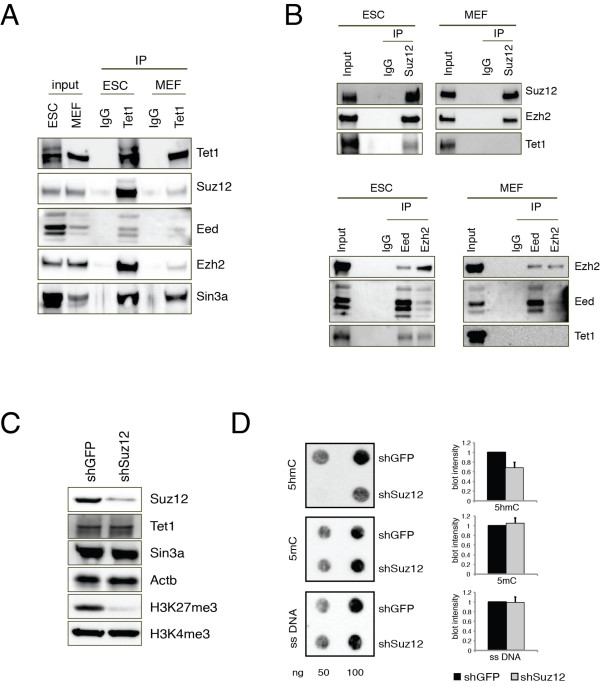
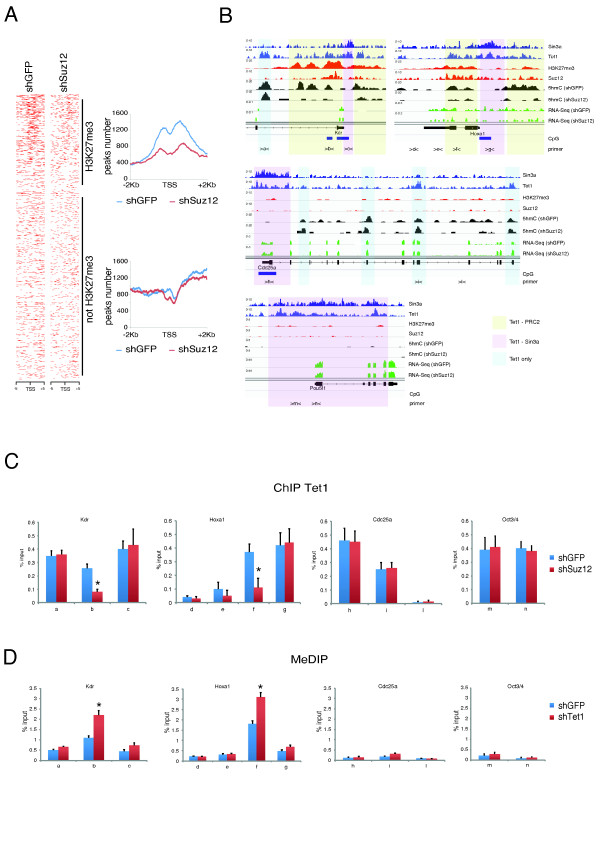
Background: Ten-Eleven Translocation (TETs)proteins mediate the oxidation of 5-methylcytosine (5mC) to 5-hydroxymethylcytosine (5hmC). Tet1 is expressed at high levels in mouse embryonic stem cells (ESCs), where it mediates the induction of 5hmC decoration on gene-regulatory elements. While the function of Tet1 is known, the mechanisms of its specificity remain unclear. Results: We perform a genome-wide comparative analysis of 5hmC in pluripotent ESCs, as well as in differentiated embryonic and adult cells. We find that 5hmC co-localization with Polycomb repressive complex 2 (PRC2) is specific to ESCs and is absent in differentiated cells. Tet1 in ESCs is distributed on bivalent genes in two independent pools: one with Sin3a centered at non-hydroxymethylated transcription start sites and another centered downstream from these sites. This latter pool of Tet1 co-localizes with 5hmC and PRC2. Through co-immunoprecipitation experiments, we show that Tet1 forms a complex with PRC2 specifically in ESCs. Genome-wide analysis of 5hmC profiles in ESCs following knockdown of the PRC2 subunit Suz12 shows a reduction of 5hmC within promoter sequences, specifically at H3K27me3-positive regions of bivalent promoters. Conclusions: In ESCs, PRC2 recruits Tet1 to chromatin at H3K27me3 positive regions of the genome, with 5hmC enriched in a broad peak centered 455 bp after the transcription start site and dependent on the PRC2 component Suz12. These results suggest that PRC2-dependent recruitment of Tet1 contributes to epigenetic plasticity throughout cell differentiation.
Overview
The claims and statistics of this paper haven’t been checked yet.
Free: it reads the open-access text and checks the first 5 claims that cite a source we can check. Create a free account to check every claim.
Integrity signals
Registry
Cites
Statistics
Figures
Verification
Claims the paper makes
The claims and statistics of this paper haven’t been checked yet.
Free: it reads the open-access text and checks the first 5 claims that cite a source we can check. Create a free account to check every claim.
Claims other papers make about this one
Each is checked against this paper’s own text: does it say what the citing paper says it does?
The source backs part of the claim, not all of it — or backs it for a different population, condition or comparison.
In the citing paper
“Interestingly, the signature CpG sites were associated with genes involved in synaptic and neuronal processes and enriched for the binding of polycomb repressive complex 2 (PRC2) and its histone methyltransferase product H3K27me3, both of which are known to recruit Tet enzymes47,48 (Extended Data Fig 10g–i).”
From Reprogramming to recover youthful epigenetic information and restore vision (2020) · cites this paper as [48]
Experimental — accuracy not yet measured
Self-check
Percentages, sums and reported differences re-computed from the paper’s own numbers.
The self-check needs the paper’s full text.
Citations
Cites
An integrated encyclopedia of DNA elements in the human genome
The ENCODE Project Consortium (2012) · Nature · doi:10.1038/nature11247 · Cited by 18,072
Conversion of 5-Methylcytosine to 5-Hydroxymethylcytosine in Mammalian DNA by MLL Partner TET1
Tahiliani, M., Koh, K. P., Shen, Y., Pastor, W. A., Bandukwala, H., Brudno, Y., Agarwal, S., Iyer, L. M., Liu, D. R., Aravind, L., et al. (2009) · Science · doi:10.1126/science.1170116 · Cited by 5,836 · cited 1×
“More recently, a number of studies have identified a mechanism of DNA demethylation involving the oxidation of 5mC to 5-hydroxymethylcytosine (5hmC), which can function as a new epigenetic marker or as an intermediate toward further oxidative states by Ten-eleven translocation (TET) proteins [4-11].”
BackgroundHistone H3K27ac separates active from poised enhancers and predicts developmental state
Creyghton, M. P., Cheng, A. W., Welstead, G. G., Kooistra, T., Carey, B. W., Steine, E. J., Hanna, J., Lodato, M. A., Frampton, G. M., Sharp, P. A., et al. (2010) · Proceedings of the National Academy of Sciences · doi:10.1073/pnas.1016071107 · Cited by 4,302
Genome-wide maps of chromatin state in pluripotent and lineage-committed cells
Mikkelsen, T. S., Ku, M., Jaffe, D. B., Issac, B., Lieberman, E., Giannoukos, G., Alvarez, P., Brockman, W., Kim, T.-K., Koche, R. P., et al. (2007) · Nature · doi:10.1038/nature06008 · Cited by 4,129 · cited 2×
“Datasets for ChIP-Seq of H3K27me3 on MEFs was downloaded from GSE12241.”
MethodThe Polycomb complex PRC2 and its mark in life
Margueron, R., & Reinberg, D. (2011) · Nature · doi:10.1038/nature09784 · Cited by 3,347 · cited 1×
“It is formed by a core complex that includes Enhancer of Zeste 1 or 2 homolog (Ezh1 or Ezh2), Suppressor of Zeste 12 homolog (Suz12), Embryonic ectoderm development (Eed), and other accessory subunits, many of which are specific to ESCs [33-41].”
BackgroundThe Nuclear DNA Base 5-Hydroxymethylcytosine Is Present in Purkinje Neurons and the Brain
Kriaucionis, S., & Heintz, N. (2009) · Science · doi:10.1126/science.1169786 · Cited by 2,700 · cited 1×
“More recently, a number of studies have identified a mechanism of DNA demethylation involving the oxidation of 5mC to 5-hydroxymethylcytosine (5hmC), which can function as a new epigenetic marker or as an intermediate toward further oxidative states by Ten-eleven translocation (TET) proteins [4-11].”
BackgroundGenome-scale DNA methylation maps of pluripotent and differentiated cells
Meissner, A., Mikkelsen, T. S., Gu, H., Wernig, M., Hanna, J., Sivachenko, A., Zhang, X., Bernstein, B. E., Nusbaum, C., Jaffe, D. B., et al. (2008) · Nature · doi:10.1038/nature07107 · Cited by 2,536 · cited 1×
“For comparative analysis, we downloaded GEO Datasets data for the ESC histone modifications GSE12241 [53,54] and GSE11172 [55], and the transcription factors GSE11431 [56], GSE24843 [25], and GSE26833 [19,32].”
MethodHistone modifications at human enhancers reflect global cell-type-specific gene expression
Heintzman, N. D., Hon, G. C., Hawkins, R. D., Kheradpour, P., Stark, A., Harp, L. F., Ye, Z., Lee, L. K., Stuart, R. K., Ching, C. W., et al. (2009) · Nature · doi:10.1038/nature07829 · Cited by 2,533 · cited 1×
“[59], and active or poised enhancers were defined as previously described [60,61].”
BackgroundChen, X., Xu, H., Yuan, P., Fang, F., Huss, M., Vega, V. B., Wong, E., Orlov, Y. L., Zhang, W., Jiang, J., et al. (2008) · Cell · doi:10.1016/j.cell.2008.04.043 · Cited by 2,501
Ito, S., D’Alessio, A. C., Taranova, O. V., Hong, K., Sowers, L. C., & Zhang, Y. (2010) · Nature · doi:10.1038/nature09303 · Cited by 2,373
Genomic imprinting: parental influence on the genome
Reik, W., & Walter, J. (2001) · Nature Reviews Genetics · doi:10.1038/35047554 · Cited by 2,285
Weber, M., Hellmann, I., Stadler, M. B., Ramos, L., Pääbo, S., Rebhan, M., & Schübeler, D. (2007) · Nature Genetics · doi:10.1038/ng1990 · Cited by 2,221
The DNA methyltransferases of mammals
Bestor, T. H. (2000) · Human Molecular Genetics · doi:10.1093/hmg/9.16.2395 · Cited by 2,041
Chromatin modification and epigenetic reprogramming in mammalian development
Li, E. (2002) · Nature Reviews Genetics · doi:10.1038/nrg887 · Cited by 1,900
Mechanisms of Polycomb gene silencing: knowns and unknowns
Simon, J. A., & Kingston, R. E. (2009) · Nature Reviews Molecular Cell Biology · doi:10.1038/nrm2763 · Cited by 1,317
Dynamic regulation of 5-hydroxymethylcytosine in mouse ES cells and during differentiation
Ficz, G., Branco, M. R., Seisenberger, S., Santos, F., Krueger, F., Hore, T. A., Marques, C. J., Andrews, S., & Reik, W. (2011) · Nature · doi:10.1038/nature10008 · Cited by 1,133
Zhang, Y., Ng, H.-H., Erdjument-Bromage, H., Tempst, P., Bird, A., & Reinberg, D. (1999) · Genes & Development · doi:10.1101/gad.13.15.1924 · Cited by 1,103 · cited 1×
“Previous findings that MeCP2, Np95, and Mbd3 recognize 5hmC [10,43-45] imply that this DNA modification can be a specific epigenetic signal.”
BackgroundSelective chemical labeling reveals the genome-wide distribution of 5-hydroxymethylcytosine
Song, C.-X., Szulwach, K. E., Fu, Y., Dai, Q., Yi, C., Li, X., Li, Y., Chen, C.-H., Zhang, W., Jian, X., et al. (2011) · Nature Biotechnology · doi:10.1038/nbt.1732 · Cited by 1,085
Base-Resolution Analysis of 5-Hydroxymethylcytosine in the Mammalian Genome
Yu, M., Hon, G. C., Szulwach, K. E., Song, C.-X., Zhang, L., Kim, A., Li, X., Dai, Q., Shen, Y., Park, B., et al. (2012) · Cell · doi:10.1016/j.cell.2012.04.027 · Cited by 1,036
TET1 and hydroxymethylcytosine in transcription and DNA methylation fidelity
Williams, K., Christensen, J., Pedersen, M. T., Johansen, J. V., Cloos, P. A. C., Rappsilber, J., & Helin, K. (2011) · Nature · doi:10.1038/nature10066 · Cited by 1,021
Shen, X., Liu, Y., Hsu, Y.-J., Fujiwara, Y., Kim, J., Mao, X., Yuan, G.-C., & Orkin, S. H. (2008) · Molecular Cell · doi:10.1016/j.molcel.2008.10.016 · Cited by 1,021
Genomewide Analysis of PRC1 and PRC2 Occupancy Identifies Two Classes of Bivalent Domains
Ku, M., Koche, R. P., Rheinbay, E., Mendenhall, E. M., Endoh, M., Mikkelsen, T. S., Presser, A., Nusbaum, C., Xie, X., Chi, A. S., et al. (2008) · PLoS Genetics · doi:10.1371/journal.pgen.1000242 · Cited by 1,009
MeCP2 binds to 5hmC enriched within active genes and accessible chromatin in the nervous system
Mellén, M., Ayata, P., Dewell, S., Kriaucionis, S., & Heintz, N. (2012) · Cell · doi:10.1016/j.cell.2012.11.022 · Cited by 943
Quantitative Sequencing of 5-Methylcytosine and 5-Hydroxymethylcytosine at Single-Base Resolution
Booth, M. J., Branco, M. R., Ficz, G., Oxley, D., Krueger, F., Reik, W., & Balasubramanian, S. (2012) · Science · doi:10.1126/science.1220671 · Cited by 928
Roles of the EZH2 histone methyltransferase in cancer epigenetics
Simon, J. A., & Lange, C. A. (2008) · Mutation Research - Fundamental and Molecular Mechanisms of Mutagenesis · doi:10.1016/j.mrfmmm.2008.07.010 · Cited by 855
Quantum nonlinear optics with single photons enabled by strongly interacting atoms
Peyronel, T., Firstenberg, O., Liang, Q.-Y., Hofferberth, S., Gorshkov, A. V., Pohl, T., Lukin, M. D., & Vuletić, V. (2012) · Nature · doi:10.1038/nature11361 · Cited by 844
5-hmC–mediated epigenetic dynamics during postnatal neurodevelopment and aging
Szulwach, K. E., Li, X., Li, Y., Song, C.-X., Wu, H., Dai, Q., Irier, H., Upadhyay, A. K., Gearing, M., Levey, A. I., et al. (2011) · Nature Neuroscience · doi:10.1038/nn.2959 · Cited by 826
Genome-wide mapping of 5-hydroxymethylcytosine in embryonic stem cells
Pastor, W. A., Pape, U. J., Huang, Y., Henderson, H. R., Lister, R., Ko, M., McLoughlin, E. M., Brudno, Y., Mahapatra, S., Kapranov, P., et al. (2011) · Nature · doi:10.1038/nature10102 · Cited by 804
Loss of 5-hydroxymethylcytosine is an epigenetic hallmark of melanoma
Lian, C. G., Xu, Y., Ceol, C., Wu, F., Larson, A., Dresser, K., Xu, W., Tan, L., Hu, Y., Zhan, Q., et al. (2012) · Cell · doi:10.1016/j.cell.2012.07.033 · Cited by 789 · cited 1×
“In embryonic stem cells (ESCs) and in embryonic and adult tissues, 5hmC modification occurs at high levels, whereas it is significantly reduced in cancer[12-17].”
BackgroundKoh, K. P., Yabuuchi, A., Rao, S., Huang, Y., Cunniff, K., Nardone, J., Laiho, A., Tahiliani, M., Sommer, C. A., Mostoslavsky, G., et al. (2011) · Cell Stem Cell · doi:10.1016/j.stem.2011.01.008 · Cited by 776
The Polycomb Group Protein Suz12 Is Required for Embryonic Stem Cell Differentiation
Pasini, D., Bracken, A. P., Hansen, J. B., Capillo, M., & Helin, K. (2007) · Molecular and Cellular Biology · doi:10.1128/mcb.01432-06 · Cited by 696
Mechanisms and functions of Tet protein-mediated 5-methylcytosine oxidation
Wu, H., & Zhang, Y. (2011) · Genes & Development · doi:10.1101/gad.179184.111 · Cited by 672
Dual functions of Tet1 in transcriptional regulation in mouse embryonic stem cells
Wu, H., D’Alessio, A. C., Ito, S., Xia, K., Wang, Z., Cui, K., Zhao, K., Eve Sun, Y., & Zhang, Y. (2011) · Nature · doi:10.1038/nature09934 · Cited by 646 · cited 8×
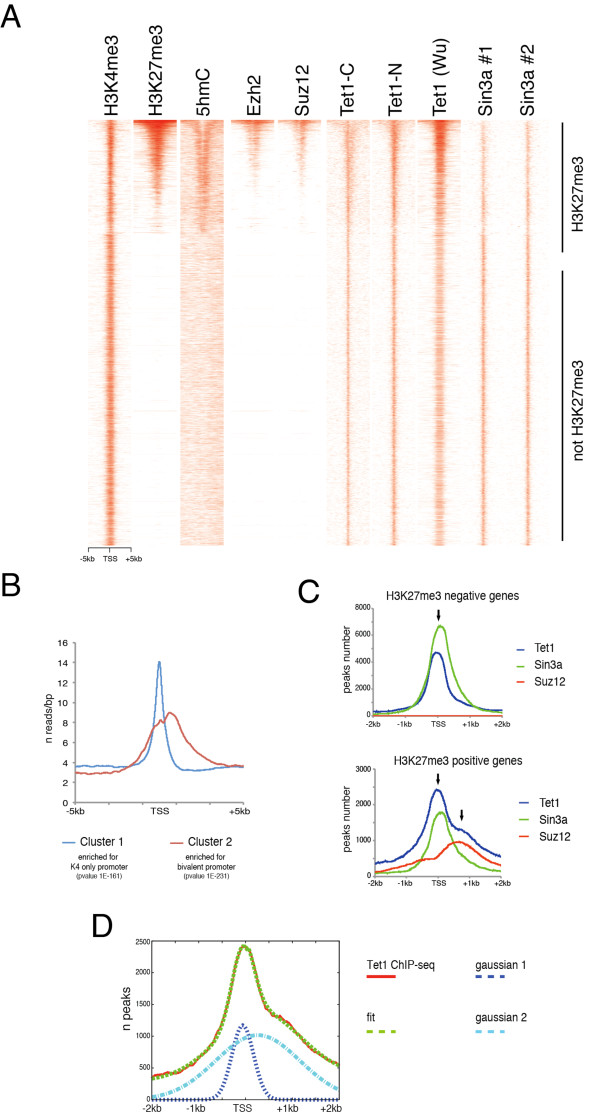
“Further analysis of Tet1 distribution, using published chromatin immunoprecipitation sequencing (ChIP-Seq) datasets [25][32], on genes ordered by level of H3K27me3, showed that Tet1 binding correlates with Ezh2 and Suz12, as well as with Sin3a, a protein recently discovered in complex with Tet1 [25] (Figure 4A).”
BackgroundMethodResultInfluentialXu, Y., Wu, F., Tan, L., Kong, L., Xiong, L., Deng, J., Barbera, A. J., Zheng, L., Zhang, H., Huang, S., et al. (2011) · Molecular Cell · doi:10.1016/j.molcel.2011.04.005 · Cited by 632
Nucleosome-Interacting Proteins Regulated by DNA and Histone Methylation
Bartke, T., Vermeulen, M., Xhemalce, B., Robson, S. C., Mann, M., & Kouzarides, T. (2010) · Cell · doi:10.1016/j.cell.2010.10.012 · Cited by 611
Dnmt3a-Dependent Nonpromoter DNA Methylation Facilitates Transcription of Neurogenic Genes
Wu, H., Coskun, V., Tao, J., Xie, W., Ge, W., Yoshikawa, K., Li, E., Zhang, Y., & Sun, Y. E. (2010) · Science · doi:10.1126/science.1190485 · Cited by 604 · cited 1×
“In fact, genome-wide analysis reported mutual exclusiveness of H3K27me3 with DNA methylation in CpG islands [48-51], and DNA methylation inhibits the binding of PRC2 in vitro [50].”
BackgroundWu, H., D'Alessio, A. C., Ito, S., Wang, Z., Cui, K., Zhao, K., Sun, Y. E., & Zhang, Y. (2011) · Genes & Development · doi:10.1101/gad.2036011 · Cited by 583
Yang, H., Liu, Y., Bai, F., Zhang, J.-Y., Ma, S.-H., Liu, J., Xu, Z.-D., Zhu, H.-G., Ling, Z.-Q., Ye, D., et al. (2013) · Oncogene · doi:10.1038/onc.2012.67 · Cited by 574
JARID2 regulates binding of the Polycomb repressive complex 2 to target genes in ES cells
Pasini, D., Cloos, P. A. C., Walfridsson, J., Olsson, L., Bukowski, J.-P., Johansen, J. V., Bak, M., Tommerup, N., Rappsilber, J., & Helin, K. (2010) · Nature · doi:10.1038/nature08788 · Cited by 561
Dawlaty, M. M., Ganz, K., Powell, B. E., Hu, Y.-C., Markoulaki, S., Cheng, A. W., Gao, Q., Kim, J., Choi, S.-W., Page, D. C., et al. (2011) · Cell stem cell · doi:10.1016/j.stem.2011.07.010 · Cited by 508 · cited 1×
“Tet1 depletion in ESCs leads to both transcriptional activation, in accordance with its role in oxidation of 5mC, and transcriptional repression [6,20,25,28-32].”
BackgroundJarid2 and PRC2, partners in regulating gene expression
Li, G., Margueron, R., Ku, M., Chambon, P., Bernstein, B. E., & Reinberg, D. (2010) · Genes & Development · doi:10.1101/gad.1886410 · Cited by 498
5-Hydroxymethylcytosine is associated with enhancers and gene bodies in human embryonic stem cells
Stroud, H., Feng, S., Morey Kinney, S., Pradhan, S., & Jacobsen, S. E. (2011) · Genome Biology · doi:10.1186/gb-2011-12-6-r54 · Cited by 471
Dynamics of 5-Hydroxymethylcytosine and Chromatin Marks in Mammalian Neurogenesis
Hahn, M. A., Qiu, R., Wu, X., Li, A. X., Zhang, H., Wang, J., Jui, J., Jin, S.-G., Jiang, Y., Pfeifer, G. P., et al. (2013) · Cell Reports · doi:10.1016/j.celrep.2013.01.011 · Cited by 455
Yildirim, O., Li, R., Hung, J.-H., Chen, P. B., Dong, X., Ee, L.-S., Weng, Z., Rando, O. J., & Fazzio, T. G. (2011) · Cell · doi:10.1016/j.cell.2011.11.054 · Cited by 450
Jin, S.-G., Jiang, Y., Qiu, R., Rauch, T. A., Wang, Y., Schackert, G., Krex, D., Lu, Q., & Pfeifer, G. P. (2011) · Cancer Research · doi:10.1158/0008-5472.can-11-2023 · Cited by 448
Polycomb/Trithorax response elements and epigenetic memory of cell identity
Ringrose, L., & Paro, R. (2007) · Development · doi:10.1242/dev.02723 · Cited by 444
Haffner, M. C., Chaux, A., Meeker, A. K., Esopi, D. M., Gerber, J., Pellakuru, L. G., Toubaji, A., Argani, P., Iacobuzio-Donahue, C., Nelson, W. G., et al. (2011) · Oncotarget · doi:10.18632/oncotarget.316 · Cited by 423
Brinkman, A. B., Gu, H., Bartels, S. J. J., Zhang, Y., Matarese, F., Simmer, F., Marks, H., Bock, C., Gnirke, A., Meissner, A., et al. (2012) · Genome Research · doi:10.1101/gr.133728.111 · Cited by 413
DNA Methylation and Demethylation in Mammals
Chen, Z.-X., & Riggs, A. D. (2011) · Journal of Biological Chemistry · doi:10.1074/jbc.r110.205286 · Cited by 395
Embryonic lethal phenotype reveals a function of TDG in maintaining epigenetic stability
Cortázar, D., Kunz, C., Selfridge, J., Lettieri, T., Saito, Y., MacDougall, E., Wirz, A., Schuermann, D., Jacobs, A. L., Siegrist, F., et al. (2011) · Nature · doi:10.1038/nature09672 · Cited by 387
MeCP2 binds to 5hmc enriched within active genes and accessible chromatin in the nervous system
Mellen, M., Ayata, P., Dewell, S., Kriaucionis, S., & Heintz, N. (2013) · Epigenetics & Chromatin · doi:10.1186/1756-8935-6-s1-p52 · Cited by 345
Integrating 5-Hydroxymethylcytosine into the Epigenomic Landscape of Human Embryonic Stem Cells
Szulwach, K. E., Li, X., Li, Y., Song, C.-X., Han, J. W., Kim, S., Namburi, S., Hermetz, K., Kim, J. J., Rudd, M. K., et al. (2011) · PLoS Genetics · doi:10.1371/journal.pgen.1002154 · Cited by 287
Loss of 5‐hydroxymethylcytosine is accompanied with malignant cellular transformation
Kudo, Y., Tateishi, K., Yamamoto, K., Yamamoto, S., Asaoka, Y., Ijichi, H., Nagae, G., Yoshida, H., Aburatani, H., & Koike, K. (2012) · Cancer Science · doi:10.1111/j.1349-7006.2012.02213.x · Cited by 278
Walker, E., Chang, W. Y., Hunkapiller, J., Cagney, G., Garcha, K., Torchia, J., Krogan, N. J., Reiter, J. F., & Stanford, W. L. (2010) · Cell Stem Cell · doi:10.1016/j.stem.2009.12.014 · Cited by 183
Recognition of 5-Hydroxymethylcytosine by the Uhrf1 SRA Domain
Frauer, C., Hoffmann, T., Bultmann, S., Casa, V., Cardoso, M. C., Antes, I., & Leonhardt, H. (2011) · PLoS ONE · doi:10.1371/journal.pone.0021306 · Cited by 180
Metabolism unhinged: IDH mutations in cancer
Prensner, J. R., & Chinnaiyan, A. M. (2011) · Nature Medicine · doi:10.1038/nm0311-291 · Cited by 172
Zhang, Z., Jones, A., Sun, C.-W., Li, C., Chang, C.-W., Joo, H.-Y., Dai, Q., Mysliwiec, M. R., Wu, L.-C., Guo, Y., et al. (2011) · Stem Cells · doi:10.1002/stem.578 · Cited by 152
Antagonism between DNA and H3K27 Methylation at the Imprinted Rasgrf1 Locus
Lindroth, A. M., Park, Y. J., McLean, C. M., Dokshin, G. A., Persson, J. M., Herman, H., Pasini, D., Miró, X., Donohoe, M. E., Lee, J. T., et al. (2008) · PLoS Genetics · doi:10.1371/journal.pgen.1000145 · Cited by 121
Chromatin profiling by directly sequencing small quantities of immunoprecipitated DNA
Goren, A., Ozsolak, F., Shoresh, N., Ku, M., Adli, M., Hart, C., Gymrek, M., Zuk, O., Regev, A., Milos, P. M., et al. (2010) · Nature Methods · doi:10.1038/nmeth.1404 · Cited by 118
(2009) · Nature reviews. Neuroscience · doi:10.1038/nrn2731 · Cited by 117
Neri, F., Zippo, A., Křepelová, A., Cherubini, A., Rocchigiani, M., & Oliviero, S. (2012) · Molecular and Cellular Biology · doi:10.1128/mcb.06148-11 · Cited by 113
Self-citationFreudenberg, J. M., Ghosh, S., Lackford, B. L., Yellaboina, S., Zheng, X., Li, R., Cuddapah, S., Wade, P. A., Hu, G., & Jothi, R. (2012) · Nucleic Acids Research · doi:10.1093/nar/gkr1253 · Cited by 98
5‐Hydroxymethylcytosine: a new kid on the epigenetic block?
Matarese, F., Carrillo‐de Santa Pau, E., & Stunnenberg, H. G. (2011) · Molecular Systems Biology · doi:10.1038/msb.2011.95 · Cited by 74
Robertson, J., Robertson, A. B., & Klungland, A. (2011) · Biochemical and Biophysical Research Communications · doi:10.1016/j.bbrc.2011.06.077 · Cited by 67
β-Catenin Inversely Regulates Vascular Endothelial Growth Factor-D mRNA Stability
Orlandini, M., Semboloni, S., & Oliviero, S. (2003) · Journal of Biological Chemistry · doi:10.1074/jbc.m304255200 · Cited by 39
Self-citationZhu, H. G., Bai, F., Zhang, J., et al. (2020) · Carolina Digital Repository (University of North Carolina at Chapel Hill) · doi:10.17615/fc0b-vn94 · Cited by 28
Cited by
TET-mediated active DNA demethylation: mechanism, function and beyond
Wu, X., & Zhang, Y. (2017) · Nature Reviews Genetics · doi:10.1038/nrg.2017.33 · Cited by 1,661
Reprogramming to recover youthful epigenetic information and restore vision
Lu, Y., Brommer, B., Tian, X., Krishnan, A., Meer, M., Wang, C., Vera, D. L., Zeng, Q., Yu, D., Bonkowski, M. S., et al. (2020) · Nature · doi:10.1038/s41586-020-2975-4 · Cited by 820
Intragenic DNA methylation prevents spurious transcription initiation
Neri, F., Rapelli, S., Krepelova, A., Incarnato, D., Parlato, C., Basile, G., Maldotti, M., Anselmi, F., & Oliviero, S. (2017) · Nature · doi:10.1038/nature21373 · Cited by 739
Self-citationUnderstanding the relationship between DNA methylation and histone lysine methylation
Rose, N. R., & Klose, R. J. (2014) · Biochimica et Biophysica Acta (BBA) - Gene Regulatory Mechanisms · doi:10.1016/j.bbagrm.2014.02.007 · Cited by 542
Regulation of transposable elements by DNA modifications
Deniz, Ö., Frost, J. M., & Branco, M. R. (2019) · Nature Reviews Genetics · doi:10.1038/s41576-019-0106-6 · Cited by 486
Metadata
- Authors
- Neri, F., Incarnato, D., Krepelova, A., Rapelli, S., Pagnani, A., Zecchina, R., Parlato, C., & Oliviero, S.
- Affiliations
- Italian institute for Genomic Medicine (IT)
- University of Siena (IT)
- Politecnico di Torino (IT)
- Corresponding author
- Oliviero, Salvatore
- ORCID
- Venue
- Genome Biology
- Published
- 2013-08-29
- Volume
- 14
- Issue
- 8
- Pages
- R91-R91
- ISSN
- 1465-6906 (ISSN-L)
- 1474-760X
- PMC
- PMC4053938
- OpenAlex
- W2107368073
- Cited by
- 179
- References
- 66
- Citations by year
- 2026: 7 · 2025: 10 · 2024: 7 · 2023: 16 · 2022: 13 · 2021: 18 · 2020: 14 · 2019: 21 · 2018: 11 · 2017: 15 · 2016: 16 · 2015: 18 · 2014: 13
- FWCI
- 7.01
- Type
- journal article
- Language
- en
- Open access
- gold
- doi.org
- Licence
- cc-by
- creativecommons.org/licenses/by/2.0/ (tdm)
- creativecommons.org/licenses/by/2.0/ (vor)
- Locations
- Genome biology (publishedVersion, cc-by)
- Europe PMC (PubMed Central) (publishedVersion, cc-by)
- PubMed Central (publishedVersion, cc-by)
- PubMed (publishedVersion)
- Institutional Research Information System University of Turin (University of Turin) (submittedVersion, other-oa)
- PORTO@Iris (submittedVersion)
- PORTO Publications Open Repository TOrino (Politecnico di Torino) (submittedVersion)
- Funders
- Ministero della Salute
- Associazione Italiana per la Ricerca sul Cancro
- Regione Toscana
- Topics
- Life Sciences › Biochemistry, Genetics and Molecular Biology › Molecular Biology › Epigenetics and DNA Methylation
- Life Sciences › Biochemistry, Genetics and Molecular Biology › Molecular Biology › Genomics and Chromatin Dynamics
- Life Sciences › Biochemistry, Genetics and Molecular Biology › Molecular Biology › Pluripotent Stem Cells Research
- Keywords
- TET1, polycomb repressive complex 2, 5-hydroxymethylcytosine, 5-methylcytosine oxidation, mouse embryonic stem cells, bivalent promoters, H3K27me3, SUZ12, SIN3A, epigenetic plasticity, cell differentiation, transcription start sites
- MeSH terms
- Animals, Cell Differentiation, Chromatin, Cytosine, DNA-Binding Proteins, Gene Expression Regulation, Histones, Promoter Regions, Genetic, Proto-Oncogene Proteins, Repressor Proteins, Transcription, Genetic, Genome, RNA, Small Interfering, Pluripotent Stem Cells, 5-Methylcytosine, Mice, Embryonic Stem Cells, Adult Stem Cells, Sin3 Histone Deacetylase and Corepressor Complex, Polycomb Repressive Complex 2
About these checks
Registry, retraction, Cites and statistics results are computed, not judged, with one exception: a printed reference that no index lists is read once by a model before it counts as a citation error. Claims are extracted by a model and kept only when their quote appears verbatim in the text; each cited source is then checked, with a model’s help, for whether it says what the claim relies on. Those verdicts can be wrong — read the claim’s quote and the cited source before relying on one.
Statistics and arithmetic are recomputed, not judged.
Confidence bands are shown only for fields calibrated on our annotated test set. None is calibrated yet, so no band is shown.
What counts as a claim ›How we measure confidence ›How we check this ›
Are you an author, or do you see a problem with this page? Request a review
Data sources
Bibliographic data: Semantic Scholar, OpenAlex, Crossref.
Contains information from the Semantic Scholar Academic Graph Datasets, made available under the ODC Attribution License (ODC-BY 1.0).
Semantic Scholar’s data is described in: Kinney, R., et al. (2023). The Semantic Scholar Open Data Platform. arXiv:2301.10140.
