

Applying a biopsychosocial model to migraine: rationale and clinical implications
Open accessThe DOI matches its Crossref record; 200 of the 200 references it cites were found in a registry or an index.
Abstract
Migraine is a complex condition in which genetic predisposition interacts with other biological and environmental factors determining its course. A hyperresponsive brain cortex, peripheral and central alterations in pain processing, and comorbidities play a role from an individual biological standpoint. Besides, dysfunctional psychological mechanisms, social and lifestyle factors may intervene and impact on the clinical phenotype of the disease, promote its transformation from episodic into chronic migraine and may increase migraine-related disability. Thus, given the multifactorial origin of the condition, the application of a biopsychosocial approach in the management of migraine could favor therapeutic success. While in chronic pain conditions the biopsychosocial approach is already a mainstay of treatment, in migraine the biomedical approach is still dominant. It is instead advisable to carefully consider the individual with migraine as a whole, in order to plan a tailored treatment. In this review, we first reported an analytical and critical discussion of the biological, psychological, and social factors involved in migraine. Then, we addressed the management implications of the application of a biopsychosocial model discussing how the integration between non-pharmacological management and conventional biomedical treatment may provide advantages to migraine care.
Overview
The claims and statistics of this paper haven’t been checked yet.
Free: it reads the open-access text and checks the first 5 claims that cite a source we can check. Create a free account to check every claim.
Integrity signals
Registry
Cites
Statistics
Figures
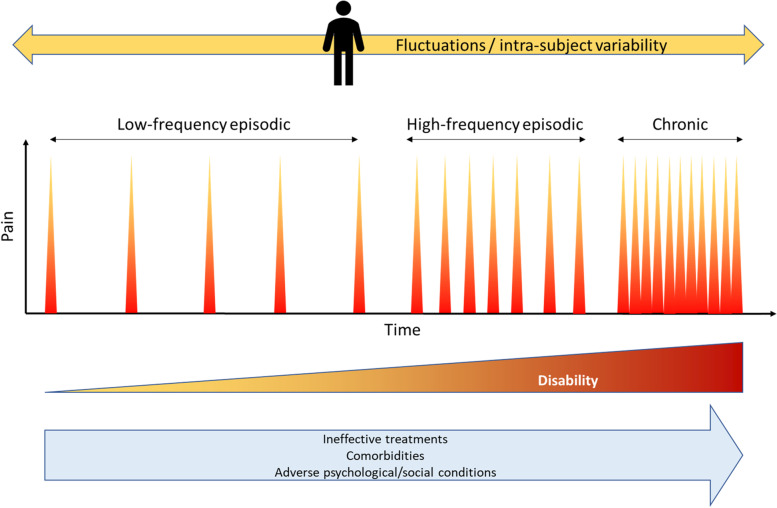
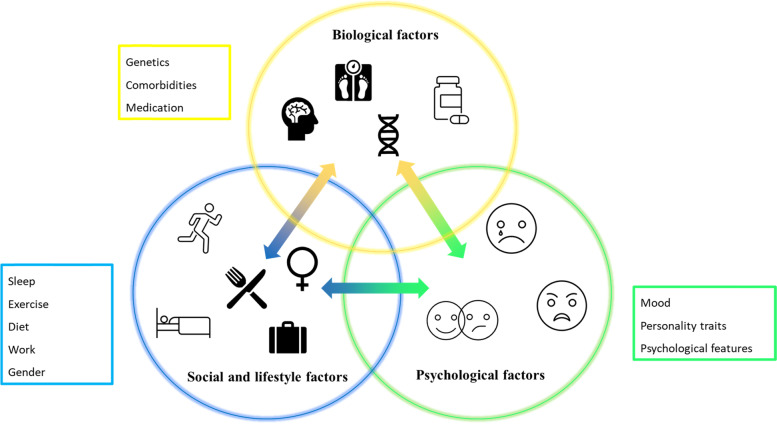
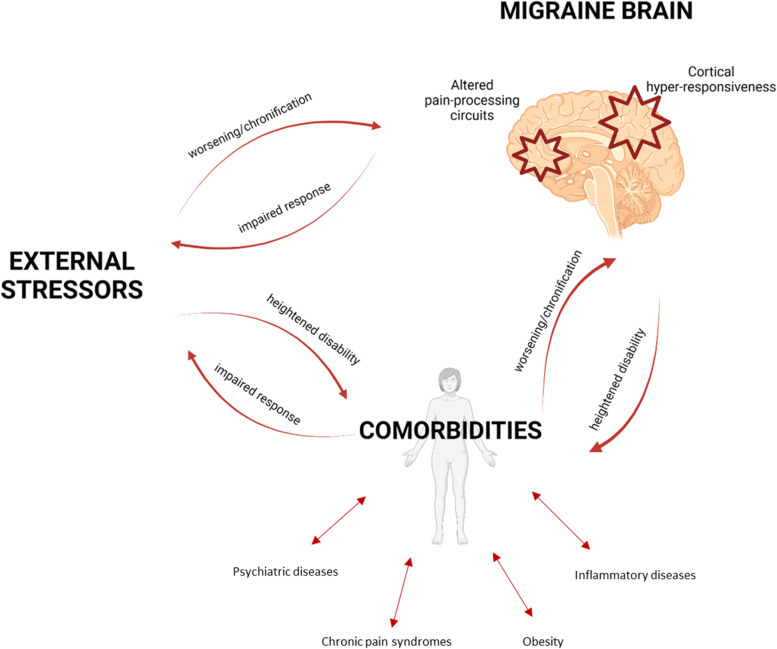
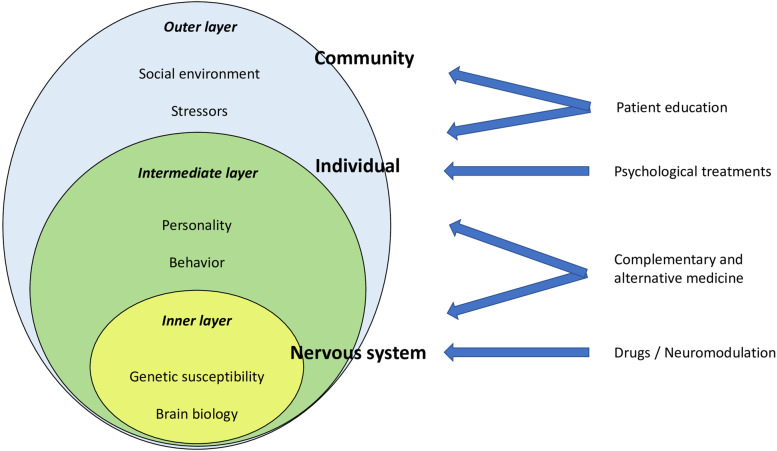
Verification
Claims the paper makes
The claims and statistics of this paper haven’t been checked yet.
Free: it reads the open-access text and checks the first 5 claims that cite a source we can check. Create a free account to check every claim.
Self-check
Percentages, sums and reported differences re-computed from the paper’s own numbers.
The self-check needs the paper’s full text.
Citations
Cites
Vos, T., Lim, S. S., Abbafati, C., Abbas, K. M., Abbasi, M., Abbasifard, M., Abbasi-Kangevari, M., Abbastabar, H., Abd-Allah, F., Abdelalim, A., et al. (2020) · The Lancet · doi:10.1016/s0140-6736(20)30925-9 · Cited by 19,358
A psychobiological model of temperament and character
Cloninger, C. R. (1993) · Archives of General Psychiatry · doi:10.1001/archpsyc.1993.01820240059008 · Cited by 5,458 · cited 2×
“According to psychobiological model, migraineurs have high level of harm avoidance and persistence, and a lower level of self-directedness compared to non-migraineurs [85].”
BackgroundInternational Classification of Functioning, Disability and Health (ICF) 2001
Jiménez Buñuales, M. ª. T., González Diego, P., & Martín Moreno, J. M. ª. (2002) · Revista Española de Salud Pública · doi:10.1590/s1135-57272002000400002 · Cited by 3,254
The Validity and Reproducibility of a Work Productivity and Activity Impairment Instrument
Reilly, M. C., Zbrozek, A. S., & Dukes, E. M. (1993) · PharmacoEconomics · doi:10.2165/00019053-199304050-00006 · Cited by 3,071
Chronic pain: an update on burden, best practices, and new advances
Cohen, S. P., Vase, L., & Hooten, W. M. (2021) · The Lancet · doi:10.1016/s0140-6736(21)00393-7 · Cited by 2,614
Migraine prevalence, disease burden, and the need for preventive therapy
Lipton, R. B., Bigal, M. E., Diamond, M., Freitag, F., Reed, M. L., & Stewart, W. F. (2007) · Neurology · doi:10.1212/01.wnl.0000252808.97649.21 · Cited by 2,337 · cited 2×
“For many individuals with migraine old age is associated with a resolution of the disease, but for others the disease persists into old age and can have a still disabling pattern [8].”
BackgroundPersonality disorders and the five factor model of personality
Costa, P. T., & McCrae, R. R. (1990) · Journal of Personality Disorders · doi:10.1521/pedi.1990.4.4.362 · Cited by 1,653
Nociplastic pain: towards an understanding of prevalent pain conditions
Fitzcharles, M.-A., Cohen, S. P., Clauw, D. J., Littlejohn, G., Usui, C., & Häuser, W. (2021) · The Lancet · doi:10.1016/s0140-6736(21)00392-5 · Cited by 1,253
Personalized medicine: Time for one-person trials
Schork, N. J. (2015) · Nature · doi:10.1038/520609a · Cited by 1,223
Headache, O. B. O. L. T. B. T. G. C. A., Steiner, T. J., Stovner, L. J., Jensen, R., Uluduz, D., & Katsarava, Z. (2020) · The Journal of Headache and Pain · doi:10.1186/s10194-020-01208-0 · Cited by 1,035
Cited by
Items 101–138 of 138
Principe, E., Pirrotta, M., Fava, N., Marchio, C., Catalano, L. M., Iannacchero, R., & Bosco, D. (2025) · Confinia Cephalalgica · doi:10.4081/cc.2025.15788
Auf dem Weg zu einer personalisierten Therapie der Migräne
Goßrau, G., & Jürgens, T. P. (2023) · Der Schmerz · doi:10.1007/s00482-023-00696-8
Consciousness-Pathology Relationship: Formation of Health and Disease via Psychological Suggestion
Liao, C. (2023) · MEDS Clinical Medicine · doi:10.23977/medsc.2023.040805
Eliaçık, S. (2024) · American Journal of Health Behavior · doi:10.5993/ajhb.48.4.18
Use of Acupuncture in Migraine Management and its Impact on Lifestyle Behavior and Quality of Life
Alp, H. (2024) · American Journal of Health Behavior · doi:10.5993/ajhb.48.5.8
Der DMKG-Kopfschmerzfragebogen
Ruscheweyh, R., Gaul, C., Dresler, T., Jürgens, T. P., Lewis, D., Kraya, T., Neeb, L., Ruschil, V., & Goßrau, G. (2025) · Der Schmerz · doi:10.1007/s00482-025-00870-0
Ruscheweyh, R., Gaul, C., Dresler, T., Jürgens, T. P., Kraya, T., Neeb, L., Lewis, D., Ruschil, V., & Goßrau, G. (2025) · NeuroTransmitter · doi:10.1007/s15016-025-3993-0
Fernández‐de‐las‐Peñas, C., Cigarán‐Méndez, M., Ambite‐Quesada, S., Gómez‐Calero, C., Fernández-Palacios, F. G., Pacho-Hernández, J. C., Tejera-Alonso, Á., Plaza‐Manzano, G., Valera‐Calero, J. A., Álvarez-Mariño, B., et al. (2025) · BMJ Open · doi:10.1136/bmjopen-2025-103305
“3 These data support the need for a biopsy-chosocial approach 4 from a multidisciplinary viewpoint of migraine.”
A balanced time perspective as a migraine-relieving factor
Plucińska, E., Sobol, M., Wrona, P., Boczarska‐Jedynak, M., Piotrowska, J., Bąbel, P., Howick, J., & Maleki, N. (2025) · Personality and Individual Differences · doi:10.1016/j.paid.2025.113460 · Cited by 1
Dias, F. M. V., Vescovi, R. G. L., Anhoque, C. F., dos Santos, M. E. P., de Barros, C. N., de Souza, I. I., Filho, W. G. D. S., Ilha, J., & Arêas, F. Z. D. S. (2025) · MethodsX · doi:10.1016/j.mex.2025.103681
“From a biopsychosocial perspective, combining therapeutic strategies with lifestyle modifications, meditation-based interventions, and non-invasive neuromodulation offers a more integrative approach to migraine management [20].”
Demont, A., & Mawet, J. (2025) · Douleurs Évaluation - Diagnostic - Traitement · doi:10.1016/j.douler.2025.09.010
Demont, A., & Mawet, J. (2025) · Kinésithérapie la Revue · doi:10.1016/j.kine.2025.09.015
Dias, F. M. V., Anhoque, C. F., de Barros, C. N., Vescovi, R. G. L., & Arêas, F. Z. D. S. (2025) · Medical Hypotheses · doi:10.1016/j.mehy.2025.111808
Wang, X., Na, W., Yang, Y., Zhang, W., Zhao, J., Zhang, T., Zhou, Y., Liu, H., Zhao, D., & Yu, S. (2023) · Figshare · doi:10.6084/m9.figshare.22611277
Waliszewska‐Prosół, M., Montisano, D. A., Antolak, M., Bighiani, F., Cammarota, F., Cetta, I., Corrado, M., Ihara, K., Kartamysheva, R., Petrušić, I., et al. (2024) · Figshare · doi:10.6084/m9.figshare.25333391
Self-citationWang, X., Na, W., Yang, Y., Zhang, W., Zhao, J., Zhang, T., Zhou, Y., Liu, H., Zhao, D., & Yu, S. (2023) · Figshare · doi:10.6084/m9.figshare.22611274
Bottiroli, S., Rosi, A., Sances, G., Allena, M., Icco, R. D., Lecce, S., Vecchi, T., Tassorelli, C., & Cavallini, E. (2024) · Figshare · doi:10.6084/m9.figshare.26585010
Magdy, R., Hassan, A., Mohammed, Z., Abdeltwab, M. A., Ghaffar, N. F. A., & Hussein, M. (2024) · Figshare · doi:10.6084/m9.figshare.26676062
Wang, X., Na, W., Yang, Y., Zhang, W., Zhao, J., Zhang, T., Zhou, Y., Liu, H., Zhao, D., & Yu, S. (2023) · Figshare · doi:10.6084/m9.figshare.22611265
Filzmoser, N., Webber, I., Kerr, G. K., Alaa, A., Asmar, M. L. E., Karki, M., Sasco, E. R., & El-Osta, A. A. R. (2024) · Figshare · doi:10.6084/m9.figshare.25092519
Waliszewska‐Prosół, M., Montisano, D. A., Antolak, M., Bighiani, F., Cammarota, F., Cetta, I., Corrado, M., Ihara, K., Kartamysheva, R., Petrušić, I., et al. (2024) · Figshare · doi:10.6084/m9.figshare.25333382
Self-citationAdditional file 2 of MicroRNA profiling in women with migraine: effects of CGRP-targeting treatment
Ornello, R., Zelli, V., Compagnoni, C., Caponnetto, V., Matteis, E. D., Tiseo, C., Tessitore, A., & Sacco, S. (2024) · Figshare · doi:10.6084/m9.figshare.25844546
Self-citationAdditional file 1 of MicroRNA profiling in women with migraine: effects of CGRP-targeting treatment
Ornello, R., Zelli, V., Compagnoni, C., Caponnetto, V., Matteis, E. D., Tiseo, C., Tessitore, A., & Sacco, S. (2024) · Figshare · doi:10.6084/m9.figshare.25844375
Self-citationWang, X., Na, W., Yang, Y., Zhang, W., Zhao, J., Zhang, T., Zhou, Y., Liu, H., Zhao, D., & Yu, S. (2023) · Figshare · doi:10.6084/m9.figshare.22611268
Bottiroli, S., Rosi, A., Sances, G., Allena, M., Icco, R. D., Lecce, S., Vecchi, T., Tassorelli, C., & Cavallini, E. (2024) · Figshare · doi:10.6084/m9.figshare.26585007
Nichols, V. P., Ellard, D. R., Griffiths, F. E., Underwood, M. R., Haywood, K. L., & Taylor, S. J. (2024) · Figshare · doi:10.6084/m9.figshare.26488329
Psychosocial and environmental influences on episodic migraine explored through the Four P model
Ahmad, S., & Senese, V. P. (2025) · Discover Psychology · doi:10.1007/s44202-025-00477-7
“For instance, the review by Rosignoli et al. [5] provided an analytical and critical discussion of the biological, psychological, and social factors involved in migraine.”
Factors Associated with the Development of Medication Overuse Headache: A Literature Review
Kniazeva, I. A., & Разумовна, Л. Е. (2025) · Ural Medical Journal · doi:10.52420/umj.24.6.63 · Cited by 2
2025 highlights in headache in children and adolescents
Papetti, L. (2026) · Cephalalgia · doi:10.1177/03331024251407208
The Impact of Lifestyle Factors on Migraine Frequency and Severity in Neurology
Iyun, O. B., Okobi, O. E., Sams, N. P., Kebede, E., & Ezie, O. B. (2024) · Journal of Biosciences and Medicines · doi:10.4236/jbm.2024.127028
Cervical musculoskeletal comorbidities in migraine patients
Antonio, S. D., & Castaldo, M. (2026) · Confinia Cephalalgica · doi:10.4081/cc.2026.15918
“(30)”
Predictors of response to biofeedback-assisted relaxation for migraine: An exploratory analysis
Szuhany, K. L., Dorf, J., Bostic, R. C., Fanning, K. M., & Minen, M. T. (2026) · Cephalalgia · doi:10.1177/03331024261441579
Geschlechterunterschiede bei Migräne im Kindes- und Jugendalter
Zaranek, L., & Goßrau, G. (2026) · Der Schmerz · doi:10.1007/s00482-026-00949-2
Transgender-Gesundheit, Migräne und Kopfschmerzen – unterschätzte Zusammenhänge, begrenzte Datenlage
Scheffler, A., & Holle-Lee, D. (2026) · Der Schmerz · doi:10.1007/s00482-026-00956-3
Badawy, W., & Al-Qadimi, F. Y. H. (2026) · The Journal of Psychology · doi:10.1080/00223980.2026.2711404
Turkoglu, B. G., Sunter, G., Şahin, F., Yener, C., Kaymak, A., Yağmur, K., & Ağan, K. (2026) · Uludağ Üniversitesi Tıp Fakültesi Dergisi · doi:10.32708/uutfd.1893755
“This finding aligns with the ‘Biopsychosocial Model of Migraine’, suggesting that the burden of the disease is not merely a reflection of nociceptive input but is heavily influenced by affective processing 6,13 .”
Feldman, E. C. H., Ernst, M. M., Marzouk, M. A., Gibler, R. C., Reidy, B. L., Chamberlin, L. A., Pfeiffer, M., Peugh, J., Kabbouche, M. A., LeCates, S. L., et al. (2026) · Headache The Journal of Head and Face Pain · doi:10.1111/head.70176
“24 This view of migraine recognizes that a complex interplay of biological (e.g., genetics, hormone fluctuations, altered pain processing), social (e.g., social support, socioeconomic factors, cultural beliefs), and psychological (e.g., personality traits, coping strategies, cognitive) factors are…”
Trenz, M. E., Addanki, R. N. D., Raad, J. H., Kaniecki, R. G., Hanmer, J., Jhamb, M., Kerr, W. T., & Thirumala, P. D. (2026) · Headache The Journal of Head and Face Pain · doi:10.1111/head.70220
Metadata
- Authors
- Rosignoli, C., Ornello, R., Onofri, A., Caponnetto, V., Grazzi, L., Raggi, A., Leonardi, M., & Sacco, S.
- Affiliations
- University of L'Aquila (IT)
- Fondazione IRCCS Istituto Neurologico Carlo Besta (IT)
- Corresponding author
- Sacco, Simona
- ORCID
- Venue
- The Journal of Headache and Pain
- Published
- 2022-08-11
- Volume
- 23
- Issue
- 1
- Pages
- 100-100
- ISSN
- 1129-2369 (ISSN-L)
- 1129-2377
- PMC
- PMC9367111
- OpenAlex
- W4291171105
- Cited by
- 138
- References
- 200
- Citations by year
- 2026: 17 · 2025: 38 · 2024: 46 · 2023: 33 · 2022: 4
- FWCI
- 5.21
- Type
- journal article
- Language
- en
- Update notices
- correction (2022-09-07)
- Open access
- gold
- doi.org
- Licence
- cc-by
- creativecommons.org/licenses/by/4.0 (tdm)
- creativecommons.org/licenses/by/4.0 (vor)
- Locations
- The Journal of Headache and Pain (publishedVersion, cc-by)
- PubMed Central (publishedVersion, cc-by)
- PubMed (publishedVersion)
- Archivio Istituzionale della Ricerca - Università degli Studi dell Aquila (submittedVersion, cc-by)
- DOAJ (DOAJ: Directory of Open Access Journals) (submittedVersion, cc-by-sa)
- Funders
- Ministero della Salute
- Topics
- Health Sciences › Medicine › Clinical Neurology › Migraine and Headache Studies
- Health Sciences › Dentistry › Oral Surgery › Temporomandibular Joint Disorders
- Health Sciences › Health Professions › Physical Therapy, Sports Therapy and Rehabilitation › Musculoskeletal pain and rehabilitation
- Keywords
- migraine, biopsychosocial model, chronic migraine, migraine disability, pain processing, comorbidities, psychological factors, social factors, lifestyle factors, non-pharmacological treatment, personalized treatment, genetic susceptibility
- MeSH terms
- Models, Biopsychosocial, Chronic Disease, Humans, Migraine Disorders, Chronic Pain
About these checks
Registry, retraction, Cites and statistics results are computed, not judged, with one exception: a printed reference that no index lists is read once by a model before it counts as a citation error. Claims are extracted by a model and kept only when their quote appears verbatim in the text; each cited source is then checked, with a model’s help, for whether it says what the claim relies on. Those verdicts can be wrong — read the claim’s quote and the cited source before relying on one.
Statistics and arithmetic are recomputed, not judged.
Confidence bands are shown only for fields calibrated on our annotated test set. None is calibrated yet, so no band is shown.
What counts as a claim ›How we measure confidence ›How we check this ›
Are you an author, or do you see a problem with this page? Request a review
Data sources
Bibliographic data: Semantic Scholar, OpenAlex, Crossref.
Contains information from the Semantic Scholar Academic Graph Datasets, made available under the ODC Attribution License (ODC-BY 1.0).
Semantic Scholar’s data is described in: Kinney, R., et al. (2023). The Semantic Scholar Open Data Platform. arXiv:2301.10140.
