

ADHD-related sex differences in fronto-subcortical intrinsic functional connectivity and associations with delay discounting
Open accessThe DOI matches its Crossref record; 89 of the 89 references it cites were found in a registry or an index.
Abstract
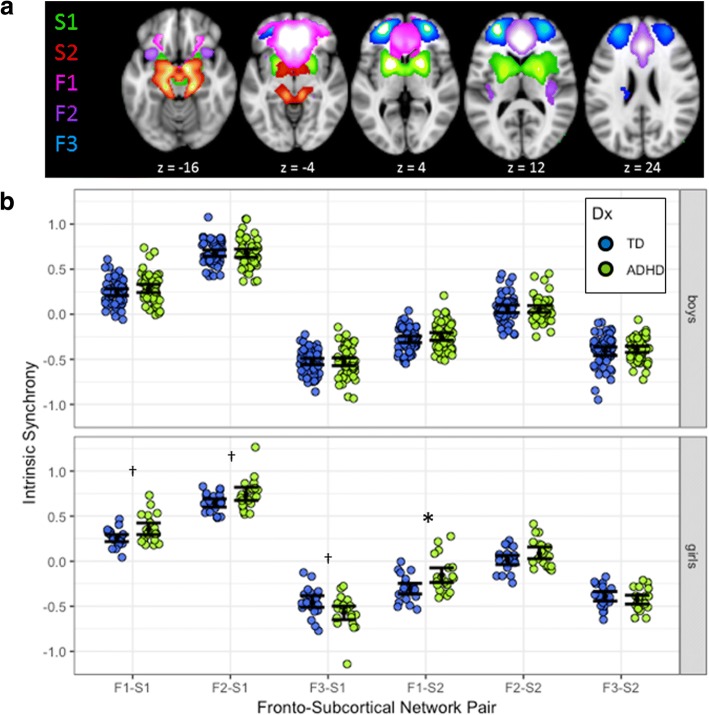
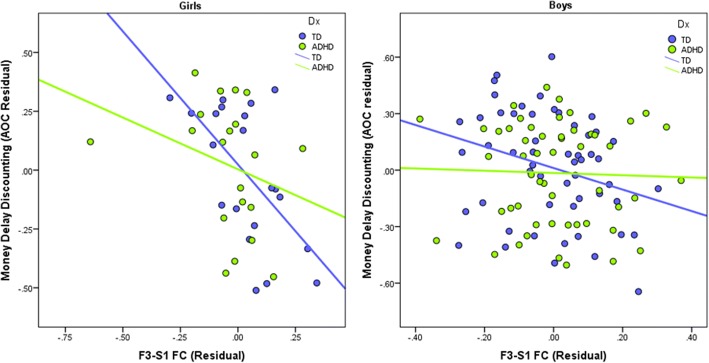
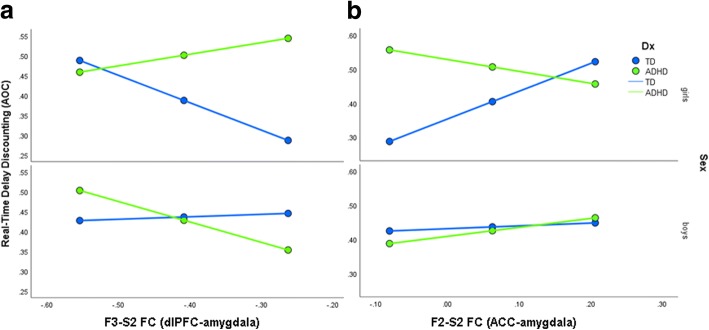
BACKGROUND: Attention-deficit/hyperactivity disorder (ADHD) is associated with atypical fronto-subcortical neural circuitry and heightened delay discounting, or a stronger preference for smaller, immediate rewards over larger, delayed rewards. Recent evidence of ADHD-related sex differences in brain structure and function suggests anomalies in fronto-subcortical circuitry may differ among girls and boys with ADHD. The current study examined whether the functional connectivity (FC) within fronto-subcortical neural circuitry differs among girls and boys with ADHD compared to same-sex typically developing (TD) controls and relates to delay discounting. METHODS: Participants include 8-12-year-old children with ADHD (n = 72, 20 girls) and TD controls (n = 75, 21 girls). Fronto-subcortical regions of interest were functionally defined by applying independent component analysis to resting-state fMRI data. Intrinsic FC between subcortical components, including the striatum and amygdala, and prefrontal components, including ventromedial prefrontal cortex (vmPFC), anterior cingulate cortex (ACC), and anterior dorsolateral prefrontal cortex (dlPFC), was compared across diagnostic groups overall and within sex. Correlations between intrinsic FC of the six fronto-subcortical pairs and delay discounting were also examined. RESULTS: Both girls and boys with ADHD show atypical FC between vmPFC and subcortical regions including the striatum (stronger positive FC in ADHD) and amygdala (weaker negative FC in ADHD), with the greatest diagnostic effects among girls. In addition, girls with ADHD show atypical intrinsic FC between the striatum and dlPFC components, including stronger positive FC with ACC and stronger negative FC with dlPFC. Further, girls but not boys, with ADHD, show heightened real-time delay discounting. Brain-behavior correlations suggest (1) stronger negative FC between the striatal and dlPFC components correlated with greater money delay discounting across all participants and (2) stronger FC between the amygdala with both the dlPFC and ACC components was differentially related to heightened real-time discounting among girls and boys with and without ADHD. CONCLUSIONS: Our findings suggest fronto-subcortical functional networks are affected in children with ADHD, particularly girls, and relate to delay discounting. These results also provide preliminary evidence of greater disruptions in fronto-subcortical FC among girls with ADHD that is not due to elevated inattention symptom severity, intellectual reasoning ability, age, or head motion.
Overview
The claims and statistics of this paper haven’t been checked yet.
Free: it reads the open-access text and checks the first 5 claims that cite a source we can check. Create a free account to check every claim.
Integrity signals
Registry
Cites
Statistics
Figures
Verification
Claims the paper makes
The claims and statistics of this paper haven’t been checked yet.
Free: it reads the open-access text and checks the first 5 claims that cite a source we can check. Create a free account to check every claim.
Claims other papers make about this one
Each is checked against this paper’s own text: does it say what the citing paper says it does?
The cited source doesn’t support the claim as written.
In the citing paper
“Functional imaging similarly points to sex-differentiated profiles: men typically exhibit reduced activation in executive networks, whereas women often display activation closer to neurotypical controls—potentially reflecting compensatory neural recruitment [135].”
From ADHD in Adulthood: Clinical Presentation, Comorbidities, and Treatment Perspectives (2025) · cites this paper as [135]
Checked by a reasoning model — may be wrong.
Experimental — accuracy not yet measuredIn the citing paper
“Functional connectivity between these regions also correlated with increased delay discounting of monetary rewards, a proxy for altered reward functioning and impulsivity, that was elevated in ADHD females only.”
From Sex and gender in neurodevelopmental conditions (2023) · cites this paper as [207]
In the citing paper
“Evidence from one study suggests that, compared with neurotypical peers, school-aged ADHD females display more alterations in resting-state functional connectivity between striatal and prefrontal regions than males207.”
From Sex and gender in neurodevelopmental conditions (2023) · cites this paper as [207]
Self-check
Percentages, sums and reported differences re-computed from the paper’s own numbers.
The self-check needs the paper’s full text.
Citations
Cites
Controlling the False Discovery Rate: A Practical and Powerful Approach to Multiple Testing
Benjamini, Y., & Hochberg, Y. (1995) · Journal of the Royal Statistical Society Series B: Statistical Methodology · doi:10.1111/j.2517-6161.1995.tb02031.x · Cited by 109,482 · cited 1×
“05 [77] was applied to each family of tests (i.”
MethodAn Information-Maximization Approach to Blind Separation and Blind Deconvolution
Bell, A. J., & Sejnowski, T. J. (1995) · Neural Computation · doi:10.1162/neco.1995.7.6.1129 · Cited by 8,986
Parallel organization of functionally segregated circuits linking basal ganglia and cortex
Alexander, G. E., DeLong, M. R., & Strick, P. L. (1986) · Annual Review of Neuroscience · doi:10.1146/annurev.ne.09.030186.002041 · Cited by 8,527
Power, J. D., Barnes, K. A., Snyder, A. Z., Schlaggar, B. L., & Petersen, S. E. (2012) · NeuroImage · doi:10.1016/j.neuroimage.2011.10.018 · Cited by 7,429
Maldjian, J. A., Laurienti, P. J., Kraft, R. A., & Burdette, J. H. (2003) · NeuroImage · doi:10.1016/s1053-8119(03)00169-1 · Cited by 5,085
Functional architecture of basal ganglia circuits: neural substrates of parallel processing
Alexander, G. E., & Crutcher, M. D. (1990) · Trends in Neurosciences · doi:10.1016/0166-2236(90)90107-l · Cited by 4,131
A method for making group inferences from functional MRI data using independent component analysis
Calhoun, V. D., Adali, T., Pearlson, G. D., & Pekar, J. J. (2001) · Human Brain Mapping · doi:10.1002/hbm.1048 · Cited by 2,994
Tracking whole-brain connectivity dynamics in the resting state
Allen, E. A., Damaraju, E., Plis, S. M., Erhardt, E. B., Eichele, T., & Calhoun, V. D. (2014) · Cerebral Cortex · doi:10.1093/cercor/bhs352 · Cited by 2,992
Functional brain networks develop from a local to distributed organization
Fair, D. A., Cohen, A. L., Power, J. D., Dosenbach, N. U. F., Church, J. A., Miezin, F. M., Schlaggar, B. L., & Petersen, S. E. (2009) · PLoS Computational Biology · doi:10.1371/journal.pcbi.1000381 · Cited by 1,530
AREA UNDER THE CURVE AS A MEASURE OF DISCOUNTING
Myerson, J., Green, L., & Warusawitharana, M. (2001) · Journal of the Experimental Analysis of Behavior · doi:10.1901/jeab.2001.76-235 · Cited by 1,505
Research works printed but not linked: 7
- Wechsler DL Wechsler intelligence scale for children - fourth edition (WISC-IV) 2003 San Antonio, TX The Psychological Corporation
- Wechsler DL Wechsler intelligence scale for children - fifth edition (WISC-V): the psychological corporation 2014
- Kaufman J Birmaher B Axelson D Perepletchikova F Brent D Ryan N Kiddie schedule for affective disorders and schizophrenia for school-aged children – lifetime version (Kiddie-SADS-PL 2013 Working Draft) 2013 Pittsburgh Pennsylvania Western Psychiatric Institute and Clinic and Yale University
- Conners CK Conners 3 2008 North Tonawanda, NY Multi-Health Systems, Inc.
- DuPaul GJ Power TJ Anastopoulos AD Reid R ADHD rating scale—IV 1998 New York, NY Guilford Press
- Patros CH, Sweeney K, Mahone EM, Mostofsky SH, Rosch KS. Greater delay discounting among girls, but not boys, with ADHD correlates with cognitive control. Child Neuropsychology. In press. PMC5796876 28768457
- Cohen D Statistical power analyses for the behavioral sciences 1988 2 Lawrence Earlbaum Associates Hillsdale, NJ
Cited by
Sex and gender in neurodevelopmental conditions
Bölte, S., Neufeld, J., Marschik, P. B., Williams, Z. J., Gallagher, L., & Lai, M.-C. (2023) · Nature Reviews Neurology · doi:10.1038/s41582-023-00774-6 · Cited by 249
Santos, S., Ferreira, H., Martins, J., Gonçalves, J., & Castelo-Branco, M. (2022) · Neuroscience & Biobehavioral Reviews · doi:10.1016/j.neubiorev.2022.104577 · Cited by 142
“However, sex dimorphisms were found in front-subcortical functional networks in children with ADHD, in which girls showed larger differences than boys (Rosch et al., 2018).”
BackgroundSaad, J. F., Griffiths, K. R., & Korgaonkar, M. S. (2020) · Frontiers in Integrative Neuroscience · doi:10.3389/fnint.2020.00031 · Cited by 89
The role of hedonics in the Human Affectome
Becker, S., Bräscher, A., Bannister, S., Bensafi, M., Calma‐Birling, D., Chan, R. C. K., Eerola, T., Ellingsen, D., Ferdenzi, C., Hanson, J. L., et al. (2019) · Neuroscience & Biobehavioral Reviews · doi:10.1016/j.neubiorev.2019.05.003 · Cited by 103
Lawrence, K. E., Hernandez, L. M., Bowman, H. C., Padgaonkar, N. T., Fuster, E., Jack, A., Aylward, E., Gaab, N., Van Horn, J. D., Bernier, R. A., et al. (2020) · Cerebral Cortex · doi:10.1093/cercor/bhaa105 · Cited by 93
“order (ADHD) found that girls with ADHD significantly differed from their same-sex TD counterparts in functional connectivity, but boys with ADHD did not significantly differ from TD boys (Rosch et al. 2018).”
BackgroundNeuroimaging in Attention-Deficit/Hyperactivity Disorder: Recent Advances
Firouzabadi, F. D., Ramezanpour, S., Firouzabadi, M. D., Yousem, I. J., Puts, N. A. J., & Yousem, D. M. (2021) · American Journal of Roentgenology · doi:10.2214/ajr.21.26316 · Cited by 90
Precision Medicine Care in ADHD: The Case for Neural Excitation and Inhibition
Mamiya, P. C., Arnett, A. B., & Stein, M. A. (2021) · Brain Sciences · doi:10.3390/brainsci11010091 · Cited by 73
Carucci, S., Narducci, C., Bazzoni, M., Balia, C., Donno, F., Gagliano, A., & Zuddas, A. (2022) · Journal of Neuroscience Research · doi:10.1002/jnr.25038 · Cited by 62
Gait control in children with attention-deficit/hyperactivity disorder
Simmons, R. W., Taggart, T. C., Thomas, J. D., Mattson, S. N., & Riley, E. P. (2020) · Human Movement Science · doi:10.1016/j.humov.2020.102584 · Cited by 55
Li, G., Zhang, S., Le, T. M., Tang, X., & Li, C. R. (2020) · Cerebral Cortex Communications · doi:10.1093/texcom/tgaa025 · Cited by 41
Cory‐Slechta, D. A., Sobolewski, M., & Oberdörster, G. (2020) · Atmosphere · doi:10.3390/atmos11101098 · Cited by 41
Beneath the surface: hyper-connectivity between caudate and salience regions in ADHD fMRI at rest
Damiani, S., Tarchi, L., Scalabrini, A., Marini, S., Provenzani, U., Rocchetti, M., Oliva, F., & Politi, P. (2020) · European Child & Adolescent Psychiatry · doi:10.1007/s00787-020-01545-0 · Cited by 37
Amado-Caballero, P., Casaseca‐de‐la‐Higuera, P., Alberola-López, S., de Llano, J. M. A., Villalobos, J. A. L., & Alberola‐López, C. (2023) · Artificial Intelligence in Medicine · doi:10.1016/j.artmed.2023.102630 · Cited by 32
Nikolaidis, A., He, X., Pekar, J., Rosch, K., & Mostofsky, S. H. (2022) · Developmental Cognitive Neuroscience · doi:10.1016/j.dcn.2022.101101 · Cited by 28
“Rosch 2018 was the first study to simultaneously consider the impact of sex and ADHD of FCSC and found key differences by sex as well as sex by diagnosis interaction in FCSC.”
BackgroundResultSelf-citationLin, H., Kessler, D. A., Tseng, W. I., & Gau, S. S. (2019) · Journal of the American Academy of Child & Adolescent Psychiatry · doi:10.1016/j.jaac.2019.11.012 · Cited by 24
Breach, M. R., Dye, C. N., Galan, A., & Lenz, K. M. (2022) · Brain Behavior and Immunity · doi:10.1016/j.bbi.2022.02.026 · Cited by 22
Mehta, K. P., Pines, A. R., Adebimpe, A., Larsen, B., Bassett, D. S., Calkins, M. E., Baller, E. B., Gell, M., Patrick, L. M., Shafiei, G., et al. (2023) · Developmental Cognitive Neuroscience · doi:10.1016/j.dcn.2023.101265 · Cited by 22
“cognitive control regions such as the dorsolateral prefrontal cortex (dlPFC) are related to DD in adolescents (Wang et al., 2017; Rosch et al., 2018).”
Chen, Y., Li, G., Ide, J. S., Luo, X., & Li, C.-S. R. (2021) · Neuroimage: Reports · doi:10.1016/j.ynirp.2021.100025 · Cited by 16
Yang, F. N., Liu, T. T., & Wang, Z. (2023) · Journal of Child Psychology and Psychiatry · doi:10.1111/jcpp.13843 · Cited by 16
ADHD in Adulthood: Clinical Presentation, Comorbidities, and Treatment Perspectives
Bogdańska-Chomczyk, E., Majewski, M. K., & Kozłowska, A. (2025) · International Journal of Molecular Sciences · doi:10.3390/ijms262211020 · Cited by 15
“Functional imaging similarly points to sex-differentiated profiles: men typically exhibit reduced activation in executive networks, whereas women often display activation closer to neurotypical controls—potentially reflecting compensatory neural recruitment [135].”
Li, W., Lei, D., Tallman, M. J., Welge, J. A., Blom, T. J., Fleck, D. E., Klein, C. C., Adler, C. M., Patino, L. R., Strawn, J. R., et al. (2023) · Journal of Affective Disorders · doi:10.1016/j.jad.2023.05.070 · Cited by 15
Doi, H., Kanai, C., & Ohta, H. (2022) · Autism Research · doi:10.1002/aur.2712 · Cited by 15
“Some previous studies indicate that sex-specific biological factors underlie phenotypic expressions of ASD (Lai et al., 2013; Schwarz et al., 2010; Zhang et al., 2020) and ADHD (Endres et al., 2019; Hermens et al., 2004; Rosch et al., 2018; Valera et al., 2010).”
BackgroundKerr-German, A. N., White, S. F., Santosa, H., Buss, A. T., & Doucet, G. E. (2022) · European Psychiatry · doi:10.1192/j.eurpsy.2022.2325 · Cited by 15
“[52] reported that girls, but not boys, with ADHD aged 8–12 showed atypical FC between the striatum and frontal regions, with it being related to delay discounting.”
Hall, M. D., Gipson, K. S., Gipson, S. Y.-M. T., Colvin, M. K., Nguyen, S. T. T., & Greenberg, E. (2025) · Harvard Review of Psychiatry · doi:10.1097/hrp.0000000000000429 · Cited by 13
Kember, J., Stepien, L., Panda, E., & Tekok-Kılıç, A. (2023) · PLoS ONE · doi:10.1371/journal.pone.0277382 · Cited by 13
“For example, in 8–12-year-olds with an ADHD diagnosis, sex differences exist in the strength of resting-state functional connectivity between medial prefrontal cortex and the striatum (circuits crucial for perceptual decision-making) [41].”
BackgroundFeng, M., & Xu, J. (2024) · Brain Sciences · doi:10.3390/brainsci14050469 · Cited by 13
“Functional imaging studies have also highlighted abnormal functioning in the prefrontal cortex and striatum in individuals with ADHD [44].”
BackgroundChai, Y., Chimelis-Santiago, J. R., Bixler, K., Aalsma, M. C., Yu, M., & Hulvershorn, L. A. (2021) · NeuroImage Clinical · doi:10.1016/j.nicl.2021.102789 · Cited by 13
“Of note, we found no group differences with amygdala seeds, unlike prior studies in youth with (Rosch et al., 2018) or without ADHD (Alarcón et al., 2015; Müller-Oehring et al., 2018).”
BackgroundMethodResultInfluentialDupont, G., van Rooij, D., Buitelaar, J. K., Reif, A., & Grimm, O. (2022) · Frontiers in Psychiatry · doi:10.3389/fpsyt.2022.962911 · Cited by 12
“In more detail, girls with ADHD showed atypical intrinsic FC between the striatum and the prefrontal cortex, including stronger positive FC with the anterior cingulate cortex and a stronger negative FC with the dorsolateral prefrontal cortex (38).”
BackgroundLiu, Q., Liao, W., Yang, L., Cao, L., Liu, N., Gu, Y., Wang, S., Xu, X., & Wang, H. (2024) · BMC Psychiatry · doi:10.1186/s12888-024-06350-6 · Cited by 12
Rosch, K. S., Batschelett, M. A., Crocetti, D., Mostofsky, S. H., & Seymour, K. E. (2022) · SSRN Electronic Journal · doi:10.1016/j.bbr.2023.114525 · Cited by 13
Self-citationThe Resting-State Neural Network of Delay Discounting
Yang, F., Li, X., & Hu, P. (2022) · Frontiers in Psychology · doi:10.3389/fpsyg.2022.828929 · Cited by 11
Research progress of tDCS in the treatment of ADHD
Huang, R., & Liu, Y. (2024) · Journal of Neural Transmission · doi:10.1007/s00702-024-02853-4 · Cited by 10
Ghanizadeh, A. J., Salehi, A., & Moeini, S. R. (2019) · PubMed Central · doi:10.30476/ijcbnm.2019.44999 · Cited by 10
Elahi, H., Iosif, A., Mukherjee, P., Hinshaw, S. P., & Schweitzer, J. B. (2023) · Research on Child and Adolescent Psychopathology · doi:10.1007/s10802-023-01149-7 · Cited by 10
“Error bars represent ± 1 standard error (e.g., Rosch et al., 2018), where females may exhibit more severe ADHD symptoms, particularly regarding impulsivity.”
BackgroundTarchi, L., Damiani, S., Fantoni, T., Pisano, T., Castellini, G., Politi, P., & Ricca, V. (2022) · Brain Imaging and Behavior · doi:10.1007/s11682-022-00708-8 · Cited by 10
The neurobehavioral mechanisms of motivational control in attention-deficit/hyperactivity disorder
Ceceli, A. O., Natsheh, J. Y., Cruz, D., & Tricomi, E. (2020) · Cortex · doi:10.1016/j.cortex.2020.02.009 · Cited by 9
“Importantly, ADHD is consistently associated with irregular fronto-striatal connectivity (Costa Dias et al., 2013; Rosch, Mostofsky, & Nebel, 2018; Tomasi & Volkow, 2012; von Rhein et al., 2017).”
Jones, S. A., Nagel, B. J., Nigg, J. T., & Karalunas, S. L. (2022) · JCPP Advances · doi:10.1002/jcv2.12109 · Cited by 9
Bu, X., Xia, M.-R., Cui, Z.-X., & He, Y. (2025) · Journal of Pacific Rim Psychology · doi:10.1177/18344909241308101 · Cited by 8
“…et al., 2016; Jacobson et al., 2015; Lawrence et al., 2013; Nagel et al., 2011), functional activity (Arns et al., 2013; Mostofsky et al., 2006; Rosch et al., 2018; Shappell et al., 2021), and neurochemical activity (Vanicek et al., 2014; Yokokura et al., 2021) were primarily examined via…”
Wynchank, D., de Jong, M., & Kooij, J. J. S. (2025) · European Psychiatry · doi:10.1192/j.eurpsy.2025.10120 · Cited by 8
Lee, S., Chia, S., Chou, T., & Gau, S. S. (2023) · Biological Psychology · doi:10.1016/j.biopsycho.2023.108552 · Cited by 8
Peterson, R. K., Duvall, P., Crocetti, D., Palin, T., Robinson, J., Mostofsky, S. H., & Rosch, K. S. (2023) · Brain Imaging and Behavior · doi:10.1007/s11682-023-00795-1 · Cited by 9
“Magnetic resonance imaging (MRI), including both structural MRI (Dirlikov et al., 2015; Rosch et al., 2018a; Seymour et al., 2017) and functional MRI (Nikolaidis et al., 2022; Zhao et al., 2022; Rosch et al., 2018b) have revealed sex differences in frontal-subcortical networks, with boys with ADHD…”
Self-citationDelay aversion in school-aged children with attention-deficit hyperactivity disorder
Mphahlele, R. M., Pillay, B. J., & Meyer, A. (2020) · South African Journal of Psychology · doi:10.1177/0081246320964350 · Cited by 8
“, 2009) and age differences in delay aversion among children with ADHD (Bitsakou et al., 2009; Rosch et al., 2018; Wilson et al., 2011).”
BackgroundResultChen, W.-Y., Ling, Z., & Jia, T. (2024) · Entropy · doi:10.3390/e26100864 · Cited by 7
“…in brain regions such as the bilateral posterior cingulate and left middle occipital gyrus, which contribute to better performance in mental rotation tasks [11], but may give rise to higher risk for autism spectrum disorder (ASD) [12] and attention deficit hyperactivity disorder (ADHD) [13].”
BackgroundZhao, Y., Nebel, M. B., Caffo, B. S., Mostofsky, S. H., & Rosch, K. S. (2021) · Biological Psychiatry Global Open Science · doi:10.1016/j.bpsgos.2021.06.003 · Cited by 7
Self-citationGao, Y., Zhou, Z., Bao, W., Chen, Y., Hu, X., Li, H., Zhang, L., Gong, Q., & Huang, X. (2025) · Nature Mental Health · doi:10.1038/s44220-025-00512-5 · Cited by 6
“Moreover, studies on resting-state FC concerning sex differences have been limited, focusing primarily on the fronto-subcortical circuit 34 .”
Xu, W., Ying, F., Luo, Y., Zhang, X., & Li, Z. (2020) · Brain Imaging and Behavior · doi:10.1007/s11682-020-00379-3 · Cited by 6
“(c) A brain region with VS_Neg but DLPFC_Pos is a COG component that can be interrupted by bottom-up disturbance from incentive stimuli (Rosch et al., 2018).”
BackgroundDufford, A. J., Kimble, V. M., Tejavibulya, L., Dadashkarimi, J., Ibrahim, K., Sukhodolsky, D. G., & Scheinost, D. (2022) · Biological Psychiatry · doi:10.1016/j.biopsych.2022.02.234 · Cited by 6
Genética e neuroimagem no TDAH e fenótipos relacionados
Cupertino, R. B. (2019) · Lume (Universidade Federal do Rio Grande do Sul) · Cited by 5
Shu, Y., Zhang, Q., Liu, J., He, Q., & Hou, Y.-Z. (2025) · European Child & Adolescent Psychiatry · doi:10.1007/s00787-025-02906-3 · Cited by 4
Problematic Social Media Use and Attention-Deficit/Hyperactivity Disorder Symptoms in Adolescents
Nagata, J. M., Otmar, C. D., Nayak, S., Li, E. J., Ramappa, S., Ganson, K. T., Lavender, J. M., Testa, A. M., He, J. S., Christakis, D., et al. (2026) · JAMA Network Open · doi:10.1001/jamanetworkopen.2026.23748 · Cited by 5
Ceceli, A. O., Esposito, G., & Tricomi, E. M. (2019) · Frontiers in Psychology · doi:10.3389/fpsyg.2019.01997 · Cited by 4
The Delay Discounting Procedure: Methodology and Flexibility
Halcomb, M. (2023) · Neuromethods · doi:10.1007/978-1-0716-3267-3_3 · Cited by 3
Ji, S., Yang, F., & Li, X. (2024) · Frontiers in Psychiatry · doi:10.3389/fpsyt.2024.1320830 · Cited by 3
Luο, X., Lin, X., Ide, J. S., Luo, X., Zhang, Y., Xu, J., Wang, L., Chen, Y. S., Cheng, W., Zheng, J., et al. (2023) · Child and Adolescent Psychiatry and Mental Health · doi:10.1186/s13034-022-00536-0 · Cited by 3
“Broadly in support of this hypothesis are findings that boys relative to girls [88] and ADHD relative to neurotypical children [89] showed higher impulsivity and cortical striatal functional connectivity.”
ResultDelay Discounting of Monetary Outcomes by Justice-Involved Male Adolescents and College Students
Brogan, K. M., Rapp, J. T., & Newland, M. C. (2025) · The Psychological Record · doi:10.1007/s40732-024-00617-w · Cited by 2
“This finding resembles delay discounting research focused on other clinical samples such as controlled substance users (Petry, 2002), pathological gamblers (Dixon et al., 2003), and those with certain clinical mental health diagnoses (Rosch et al., 2018; Wilson et al., 2011).”
Sex differences in brain–behavior relationships in the first 2 years of life
Fenske, S. J., Liu, J., Chen, H., Diniz, M. A., Stephens, R. L., Cornea, E. A., Gilmore, J. H., & Gao, W. (2025) · Cerebral Cortex · doi:10.1093/cercor/bhaf133 · Cited by 3
Nguyen, N. H., Hess, J., Orman, S. V., Forken, P. J., Blatt, S. D., Fremont, W. P., Faraone, S. V., & Glatt, S. J. (2022) · Research Square · doi:10.21203/rs.3.rs-1443111/v1 · Cited by 2
Lundstrum, E. G., Hudson, H., Patel, P., Busch, C., Gordon, C., & Kerr-German, A. N. (2025) · BioMed · doi:10.3390/biomed5020014 · Cited by 1
Murray, O. K., Mattey-Mora, P. P., Aloi, J. M., Lovins, S., Smoker, M. P., & Hulvershorn, L. A. (2025) · Advances in Drug and Alcohol Research · doi:10.3389/adar.2025.14591 · Cited by 1
“…also be at play here in our sample with both ADHD and a disruptive behavior disorder: stronger positive connectivity between the striatum and both the vmPFC and the ACC has been found in children with ADHD compared to typically developing controls and was more pronounced in girls with ADHD [119].”
Explainable anomaly detection and localization for ADHD in MRI using topological features
Wang, P., Duan, J., Xing, Y., Xu, R., Xu, A., Chen, H., Hu, S., Wang, T., & Liu, S. (2026) · Pattern Recognition · doi:10.1016/j.patcog.2026.114347 · Cited by 1
Jeste, S., & Nelson, C. A. (2018) · Journal of Neurodevelopmental Disorders · doi:10.1186/s11689-018-9258-5 · Cited by 1
“[1], arterial spin labeling in autism [2], sex differences in attention-deficit hyperactivity disorder [3], functional im-”
BackgroundProjection scrubbing: a more effective, data-driven fMRI denoising methodPreprint
Pham, D., McDonald, D. J., Ding, L., Nebel, M. B., & Mejia, A. F. (2021) · arXiv (Cornell University)
Self-citationDiferenças sexuais nas redes de regulação gênica durante o período fetal do neurodesenvolvimento
de Toledo, V. H. C. (2022) · Digital Library of Theses and Dissertations (Universidade de São Paulo) · doi:10.11606/d.5.2022.tde-01022023-092430
Ding, M., Zhang, R., & Feng, T. (2025) · Progress in Neuro-Psychopharmacology and Biological Psychiatry · doi:10.1016/j.pnpbp.2025.111427
Rosch, K. S., Hyde, C. E., Fuelscher, I. T., Crocetti, D., Singh, M., & Mostofsky, S. H. (2025) · Developmental Medicine & Child Neurology · doi:10.1111/dmcn.16395
Self-citationHe, J., Li, J., Pei, H., Benhouhou, I., He, Z., Gu, L., & Tang, J. (2026) · European Archives of Psychiatry and Clinical Neuroscience · doi:10.1007/s00406-026-02194-1
“This decision was based on the understand - ing that underlying of ADHD may be different in males and females [32 ].”
Salem, T., Harati, H., & Summaka, M. (2026) · Nordic Journal of Psychiatry · doi:10.1080/08039488.2026.2708719
“…Disorders, Fourth Edition » (DSM-IV) [32,36,38,41,51–53 ,56 With respect to the subtype of ADHD assessed, most studies focused on the combined subtype [30–33,41,42,44,46–50, 52,53,59,61,63,65,66,70], followed by studies addressing both combined and inattentive subtypes [35,37,38,51,54,56,60,64,67].”
Hyde, C., Fuelscher, I. T., Rosch, K. S., Seymour, K. E., Crocetti, D., Silk, T. J., Singh, M., & Mostofsky, S. H. (2026) · NeuroImage Clinical · doi:10.1016/j.nicl.2026.104053
“While not a direct focus of the present study, prior work from our group has identified sex differences in neural and behavioral outcomes in males and females with ADHD (DeRonda et al., 2021; Rosch and Mostofsky, 2016; Rosch et al., 2018; Tang et al., 2019).”
Self-citationRen, Y., Shao, T., Zhao, H., Huang, J., Yang, C., Xiong, Z., Shen, H., Zhang, Z., Liu, Y., Feng, T., et al. (2026) · Behavioural Brain Research · doi:10.1016/j.bbr.2026.116502
El TDAH en mujeres: barreras diagnósticas y consenso profesional para su detección
Olmos, S. M. (2026) · Rovira & Virgili repository
Vandewouw, M. M., Kushki, A., Schachar, R. J., Kelley, E. A., Ayub, M., Nicolson, R., Trinari, E., Arnold, P. D., Lerch, J. P., Taylor, M. J., et al. (2026) · Imaging Neuroscience · doi:10.1162/imag.a.1449
Dupont, G., van Rooij, D., Buitelaar, J. K., Reif, A., & Grimm, O. (2022) · doi:10.3389/fpsyt.2022.962911.s003
Metadata
- Authors
- Rosch, K. S., Mostofsky, S. H., & Nebel, M. B.
- Affiliations
- Kennedy Krieger Institute (US)
- Corresponding author
- Rosch, Keri S.
- Venue
- Journal of Neurodevelopmental Disorders
- Published
- 2018-12
- Volume
- 10
- Issue
- 1
- Pages
- 34-34
- ISSN
- 1866-1947 (ISSN-L)
- 1866-1955
- PMC
- PMC6292003
- OpenAlex
- W2903229881
- Cited by
- 69
- References
- 88
- Citations by year
- 2026: 5 · 2025: 11 · 2024: 6 · 2023: 13 · 2022: 12 · 2021: 7 · 2020: 9 · 2019: 5 · 2018: 1
- FWCI
- 4.30
- Type
- journal article
- Language
- en
- Open access
- gold
- doi.org
- Licence
- cc-by
- creativecommons.org/licenses/by/4.0/ (tdm)
- creativecommons.org/licenses/by/4.0/ (vor, 12 d)
- Locations
- Journal of Neurodevelopmental Disorders (publishedVersion, cc-by)
- Europe PMC (PubMed Central) (publishedVersion, other-oa)
- PubMed Central (publishedVersion, cc-by)
- PubMed (publishedVersion)
- DOAJ (DOAJ: Directory of Open Access Journals) (submittedVersion, cc-by-sa)
- Funders
- National Institute of Mental Health (R01 MH078160, R01 MH085328, K23 MH101322, K01 MH109766)
- National Institute of Child Health and Human Development (U54 HD079123)
- Topics
- Health Sciences › Medicine › Psychiatry and Mental health › Attention Deficit Hyperactivity Disorder
- Life Sciences › Neuroscience › Cognitive Neuroscience › Functional Brain Connectivity Studies
- Life Sciences › Neuroscience › Cognitive Neuroscience › Neural and Behavioral Psychology Studies
- Keywords
- attention deficit hyperactivity disorder, sex differences, delay discounting, intrinsic functional connectivity, striatum, amygdala, ventromedial prefrontal cortex, anterior cingulate cortex, dorsolateral prefrontal cortex, children, reward processing, brain-behavior relationship, independent component analysis, resting-state fMRI, impulsivity
- MeSH terms
- Amygdala, Attention Deficit Disorder with Hyperactivity, Brain, Brain Mapping, Child, Corpus Striatum, Female, Gyrus Cinguli, Humans, Magnetic Resonance Imaging, Male, Neural Pathways, Sex Characteristics, Prefrontal Cortex, Delay Discounting
About these checks
Registry, retraction, Cites and statistics results are computed, not judged, with one exception: a printed reference that no index lists is read once by a model before it counts as a citation error. Claims are extracted by a model and kept only when their quote appears verbatim in the text; each cited source is then checked, with a model’s help, for whether it says what the claim relies on. Those verdicts can be wrong — read the claim’s quote and the cited source before relying on one.
Statistics and arithmetic are recomputed, not judged.
Confidence bands are shown only for fields calibrated on our annotated test set. None is calibrated yet, so no band is shown.
What counts as a claim ›How we measure confidence ›How we check this ›
Are you an author, or do you see a problem with this page? Request a review
Data sources
Bibliographic data: Semantic Scholar, OpenAlex, Crossref.
Contains information from the Semantic Scholar Academic Graph Datasets, made available under the ODC Attribution License (ODC-BY 1.0).
Semantic Scholar’s data is described in: Kinney, R., et al. (2023). The Semantic Scholar Open Data Platform. arXiv:2301.10140.
