

The DOI matches its Crossref record; 71 of the 71 references it cites were found in a registry or an index.
A neural network multi-task learning approach to biomedical named entity recognition
Open accessAbstract
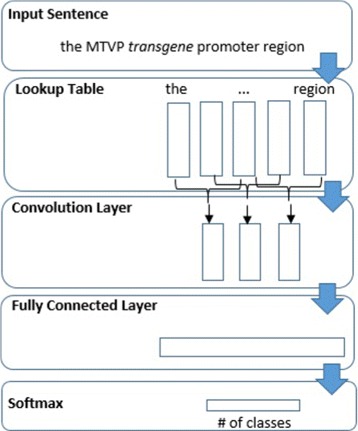
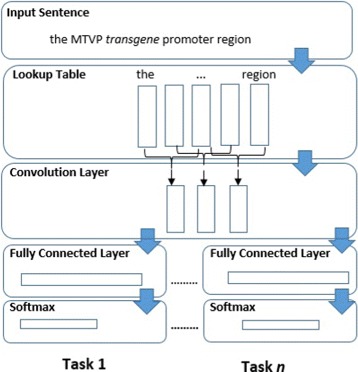
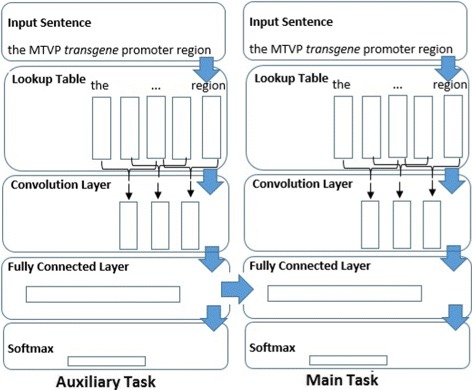
BACKGROUND: Named Entity Recognition (NER) is a key task in biomedical text mining. Accurate NER systems require task-specific, manually-annotated datasets, which are expensive to develop and thus limited in size. Since such datasets contain related but different information, an interesting question is whether it might be possible to use them together to improve NER performance. To investigate this, we develop supervised, multi-task, convolutional neural network models and apply them to a large number of varied existing biomedical named entity datasets. Additionally, we investigated the effect of dataset size on performance in both single- and multi-task settings. RESULTS: We present a single-task model for NER, a Multi-output multi-task model and a Dependent multi-task model. We apply the three models to 15 biomedical datasets containing multiple named entities including Anatomy, Chemical, Disease, Gene/Protein and Species. Each dataset represent a task. The results from the single-task model and the multi-task models are then compared for evidence of benefits from Multi-task Learning. With the Multi-output multi-task model we observed an average F-score improvement of 0.8% when compared to the single-task model from an average baseline of 78.4%. Although there was a significant drop in performance on one dataset, performance improves significantly for five datasets by up to 6.3%. For the Dependent multi-task model we observed an average improvement of 0.4% when compared to the single-task model. There were no significant drops in performance on any dataset, and performance improves significantly for six datasets by up to 1.1%. The dataset size experiments found that as dataset size decreased, the multi-output model's performance increased compared to the single-task model's. Using 50, 25 and 10% of the training data resulted in an average drop of approximately 3.4, 8 and 16.7% respectively for the single-task model but approximately 0.2, 3.0 and 9.8% for the multi-task model. CONCLUSIONS: Our results show that, on average, the multi-task models produced better NER results than the single-task models trained on a single NER dataset. We also found that Multi-task Learning is beneficial for small datasets. Across the various settings the improvements are significant, demonstrating the benefit of Multi-task Learning for this task.
Overview
The claims and statistics of this paper haven’t been checked yet.
Run the check — free, no account needed. It reads the open-access text and checks the sources it cites.
Integrity signals
Registry
Cites
Statistics
Figures
Verification
Claims the paper makes
The claims and statistics of this paper haven’t been checked yet.
Run the check — free, no account needed. It reads the open-access text and checks the sources it cites.
Claims other papers make about this one
Each is checked against this paper’s own text: does it say what the citing paper says it does?
The source backs part of the claim, not all of it — or backs it for a different population, condition or comparison.
In the citing paper
“Machine learning methods11–14, particularly deep learning, typically employ neural networks and the first generation of transformer-based large language models (e.g., BERT).”
From A critical assessment of using ChatGPT for extracting structured data from clinical notes (2024) · cites this paper as [11]
Experimental — accuracy not yet measured
Self-check
Percentages, sums and reported differences re-computed from the paper’s own numbers.
The self-check needs the paper’s full text.
Citations
Cites
Very Deep Convolutional Networks for Large-Scale Image Recognition
Simonyan, K., & Zisserman, A. (2014) · arXiv · doi:10.48550/arxiv.1409.1556 · Cited by 114,148
Adam: A Method for Stochastic Optimization
Kingma, D. P., & Ba, J. (2014) · arXiv · doi:10.48550/arxiv.1412.6980 · Cited by 98,946
(2014) · Cited by 33,419
Efficient Estimation of Word Representations in Vector Space
Mikolov, T., Chen, K., Corrado, G., & Dean, J. (2013) · arXiv · doi:10.48550/arxiv.1301.3781 · Cited by 26,568
Advances in Neural Information Processing Systems 19
(2007) · The MIT Press eBooks · doi:10.52202/085713 · Cited by 16,043
(2010) · International Conference on Machine Learning · Cited by 13,995
Natural Language Processing (almost) from ScratchPreprint
Collobert, R., Weston, J., Bottou, L., Karlen, M., Kavukcuoglu, K., & Kuksa, P. P. (2011) · arXiv (Cornell University) · doi:10.48550/arxiv.1103.0398 · Cited by 6,923
Caruana, R. (1997) · Machine Learning · doi:10.1023/a:1007379606734 · Cited by 6,636
A unified architecture for natural language processing: deep neural networks with multitask learning
Collobert, R., & Weston, J. (2008) · Proceedings of the 25th international conference on Machine learning - ICML '08 · doi:10.1145/1390156.1390177 · Cited by 5,058
Learning deep structured semantic models for web search using clickthrough data
Huang, P.-S., He, X., Gao, J., Deng, L., Acero, A., & Heck, L. P. (2013) · ACM International Conference on Information and Knowledge Management (CIKM) · doi:10.1145/2505515.2505665 · Cited by 2,120
Research works printed but not linked: 5
- Wei CH, Peng Y, Leaman R, Davis AP, Mattingly CJ, Li J, Wiegers TC, Lu Z. Overview of the Biocreative V chemical disease relation (CDR) task. In: Proceedings of the BioCreative 5 Workshop. Sevilla: The Fifth BioCreative challenge evaluation workshop 2015: 2015. p. 154–66.
- Bakker B, Heskes T. Task clustering and gating for bayesian multitask learning. J Mach Learn Res. 2003; 4:83–99.
- Leaman R, Miller C, Gonzalez G. Enabling recognition of diseases in biomedical text with machine learning: corpus and benchmark. In: Proceedings of the 2009 Symposium on Languages in Biology and Medicine, vol. 82. Jeju Island: The 3rd International Symposium on Languages in Biology and Medicine: 2009.
- Ando RK. Biocreative ii gene mention tagging system at ibm watson. In: Proceedings of the Second BioCreative Challenge Evaluation Workshop, vol. 23. Madrid: Centro Nacional de Investigaciones Oncologicas (CNIO): 2007. p. 101–3.
- Li H, Chen Q, Chen K, Tang B. HITSZ CDR system for disease and chemical named entity recognition and relation extraction. In: Proceedings of the Fifth BioCreative Challenge Evaluation Workshop. Sevilla: The fifth BioCreative challenge evaluation workshop 2015: 2015. p. 196–201.
Cited by
Sorted by citations
Domain-specific language model pretraining for biomedical natural language processing
Gu, Y., Tinn, R., Cheng, H., Lucas, M., Usuyama, N., Liu, X., Naumann, T., Gao, J., & Poon, H. (2022) · ACM Transactions on Computing for Healthcare · doi:10.1145/3458754 · Cited by 2,170
A Survey on Deep Learning for Named Entity Recognition
Li, J., Sun, A., Han, J., & Li, C. (2020) · IEEE Transactions on Knowledge and Data Engineering · doi:10.1109/tkde.2020.2981314 · Cited by 1,801
An introduction to Deep Learning in Natural Language Processing: Models, techniques, and tools
Lauriola, I., Lavelli, A., & Aiolli, F. (2021) · Neurocomputing · doi:10.1016/j.neucom.2021.05.103 · Cited by 755
A critical assessment of using ChatGPT for extracting structured data from clinical notes
Huang, J., Yang, D. M., Rong, R., Nezafati, K., Treager, C., Chi, Z., Wang, S., Cheng, X., Guo, Y., Klesse, L. J., et al. (2024) · npj Digital Medicine · doi:10.1038/s41746-024-01079-8 · Cited by 298
Cross-type biomedical named entity recognition with deep multi-task learning
Wang, X., Zhang, Y., Ren, X., Zhang, Y., Žitnik, M., Shang, J., Langlotz, C. P., & Han, J. (2018) · Bioinformatics · doi:10.1093/bioinformatics/bty869 · Cited by 282
Domain Adaptation: Challenges, Methods, Datasets, and Applications
Singhal, P., Walambe, R. A., Ramanna, S., & Kotecha, K. V. (2023) · IEEE Access · doi:10.1109/access.2023.3237025 · Cited by 276
Transfer learning for biomedical named entity recognition with neural networks
Giorgi, J., & Bader, G. D. (2018) · Bioinformatics · doi:10.1093/bioinformatics/bty449 · Cited by 193
Clinical concept extraction: A methodology review
Fu, S., Chen, D. J., He, H., Liu, S., Moon, S., Peterson, K. J., Shen, F., Wang, L., Wang, Y., Wen, A., et al. (2020) · Journal of Biomedical Informatics · doi:10.1016/j.jbi.2020.103526 · Cited by 190
CollaboNet: collaboration of deep neural networks for biomedical named entity recognition
Yoon, W., So, C. H., Lee, J., & Kang, J. (2019) · BMC Bioinformatics · doi:10.1186/s12859-019-2813-6 · Cited by 156
Cross-Domain NER using Cross-Domain Language Modeling
Chen, J., Liang, X., & Zhang, Y. (2019) · Proceedings of the conference - Association for Computational Linguistics. Meeting · doi:10.18653/v1/p19-1236 · Cited by 132
Zhao, S., Liu, T., Zhao, S., & Wang, F. (2019) · Proceedings of the AAAI Conference on Artificial Intelligence · doi:10.1609/aaai.v33i01.3301817 · Cited by 120
COVID-19 Literature Knowledge Graph Construction and Drug Repurposing Report Generation
Wang, Q., Li, M., Wang, X., Parulian, N. N., Han, G., Ma, J., Tu, J., Lin, Y., Zhang, R. H., Liu, W., et al. (2021) · doi:10.18653/v1/2021.naacl-demos.8 · Cited by 149
BioELECTRA:Pretrained Biomedical text Encoder using Discriminators
Kanakarajan, K. R., Kundumani, B., & Sankarasubbu, M. (2021) · Workshop on Biomedical Language Processing (BioNLP) · doi:10.18653/v1/2021.bionlp-1.16 · Cited by 131
Machine Learning Techniques for Biomedical Natural Language Processing: A Comprehensive Review
Houssein, E. H., Mohamed, R. E., & Ali, A. A. (2021) · IEEE Access · doi:10.1109/access.2021.3119621 · Cited by 119
An Empirical Study of Multi-Task Learning on BERT for Biomedical Text Mining
Peng, Y., Chen, Q., & Lu, Z. (2020) · Workshop on Biomedical Language Processing (BioNLP) · doi:10.18653/v1/2020.bionlp-1.22 · Cited by 122
Deep learning methods for biomedical named entity recognition: a survey and qualitative comparison
Song, B., Li, F., Liu, Y., & Zeng, X. (2021) · Briefings in Bioinformatics · doi:10.1093/bib/bbab282 · Cited by 112
Advancing entity recognition in biomedicine via instruction tuning of large language models
Keloth, V. K., Hu, Y., Xie, Q., Peng, X., Wang, Y., Zheng, A., Selek, M., Raja, K., Wei, C. H., Jin, Q., et al. (2024) · Bioinformatics · doi:10.1093/bioinformatics/btae163 · Cited by 104
MedMentions: A Large Biomedical Corpus Annotated with UMLS ConceptsPreprint
Mohan, S., & Li, D. (2019) · arXiv (Cornell University) · doi:10.48550/arxiv.1902.09476 · Cited by 134
A survey on clinical natural language processing in the United Kingdom from 2007 to 2022
Wu, H., Wang, M., Wu, J., Francis, F., Chang, Y.-H., Shavick, A., Dong, H., Poon, M. T. C., Fitzpatrick, N., Levine, A. P., et al. (2022) · npj Digital Medicine · doi:10.1038/s41746-022-00730-6 · Cited by 101
A Multi-Task Learning Approach to Hate Speech Detection Leveraging Sentiment Analysis
Plaza-del-Arco, F. M., Molina-González, M. D., López, L. A. U., & Valdivia, M. T. M. (2021) · IEEE Access · doi:10.1109/access.2021.3103697 · Cited by 108
An extensive benchmark study on biomedical text generation and mining with ChatGPT
Chen, Q., Sun, H., Liu, H., Jiang, Y., Ran, T., Jin, X., Xiao, X., Lin, Z., Chen, H., & Niu, Z. (2023) · Bioinformatics · doi:10.1093/bioinformatics/btad557 · Cited by 125
Biomedical Named Entity Recognition with Multilingual BERT
Hakala, K., & Pyysalo, S. (2019) · Proceedings of The 5th Workshop on BioNLP Open Shared Tasks · doi:10.18653/v1/d19-5709 · Cited by 96
Self-citationTowards reliable named entity recognition in the biomedical domain
Giorgi, J., & Bader, G. D. (2019) · Bioinformatics · doi:10.1093/bioinformatics/btz504 · Cited by 91
AIONER: all-in-one scheme-based biomedical named entity recognition using deep learning
Luo, L., Wei, C.-H., Lai, P., Leaman, R., Chen, Q., & Lu, Z. (2023) · Bioinformatics · doi:10.1093/bioinformatics/btad310 · Cited by 81
Empirical Study of Zero-Shot NER with ChatGPT
Xie, T., Li, Q., Zhang, J., Zhang, Y., Liu, Z., & Wang, H. (2023) · Conference on Empirical Methods in Natural Language Processing (EMNLP) · doi:10.18653/v1/2023.emnlp-main.493 · Cited by 110
Batbaatar, E., & Ryu, K. H. (2019) · International Journal of Environmental Research and Public Health · doi:10.3390/ijerph16193628 · Cited by 68
Multi-Cell Compositional LSTM for NER Domain Adaptation
Chen, J., & Zhang, Y. (2020) · Proceedings of the conference - Association for Computational Linguistics. Meeting · doi:10.18653/v1/2020.acl-main.524 · Cited by 63
MT-clinical BERT: scaling clinical information extraction with multitask learning
Mulyar, A., Uzuner, Ö., & McInnes, B. (2021) · Journal of the American Medical Informatics Association · doi:10.1093/jamia/ocab126 · Cited by 63
Pre-trained transformers: an empirical comparison
Casola, S., Lauriola, I., & Lavelli, A. (2022) · Machine Learning with Applications · doi:10.1016/j.mlwa.2022.100334 · Cited by 77
Ahmad, P. N., Shah, A. M., & Lee, K. Y. (2023) · Healthcare · doi:10.3390/healthcare11091268 · Cited by 59
Zhang, Y., Sui, X., Pan, F., Yu, K., Li, K., Tian, S., Erdengasileng, A., Han, Q., Wang, W., Wang, J., et al. (2025) · Nature Machine Intelligence · doi:10.1038/s42256-025-01014-w · Cited by 71
Sukegawa, S., Matsuyama, T., Tanaka, F., Hara, T., Yoshii, K., Yamashita, K., Nakano, K., Takabatake, K., Kawai, H., Nagatsuka, H., et al. (2022) · Scientific Reports · doi:10.1038/s41598-021-04603-y · Cited by 47
BatteryDataExtractor: battery-aware text-mining software embedded with BERT models
Huang, S., & Cole, J. M. (2022) · Chemical Science · doi:10.1039/d2sc04322j · Cited by 54
Clinical Natural Language Processing with Deep Learning
Hasan, S. A., & Farri, O. (2019) · Springer eBooks · doi:10.1007/978-3-030-05249-2_5 · Cited by 45
Relation Extraction From Biomedical and Clinical Text: Unified Multitask Learning Framework
Yadav, S., Jayashree, S. R., Saha, S., & Ekbal, A. (2020) · IEEE Transactions on Computational Biology and Bioinformatics · doi:10.1109/tcbb.2020.3020016 · Cited by 48
Maftouni, M., Shen, B., Law, A. C. C., Yazdi, N. A., Hadavand, F., Ghiasvand, F., & Kong, Z. (2022) · IISE Transactions on Healthcare Systems Engineering · doi:10.1080/24725579.2022.2142866 · Cited by 44
Hierarchical shared transfer learning for biomedical named entity recognition
Chai, Z., Han, J., Shi, S., Zhan, S., Zhuo, L., & Yang, Y. (2022) · BMC Bioinformatics · doi:10.1186/s12859-021-04551-4 · Cited by 40
Deep Patient Representation of Clinical Notes via Multi-Task Learning for Mortality Prediction.
Si, Y., & Roberts, K. E. (2019) · PubMed Central · Cited by 40
OGER++: hybrid multi-type entity recognition
Furrer, L., Jancso, A., Colic, N., & Rinaldi, F. (2019) · Journal of Cheminformatics · doi:10.1186/s13321-018-0326-3 · Cited by 39
A Named Entity Recognition Shootout for German
Riedl, M. J., & Padó, S. (2018) · Proceedings of the conference - Association for Computational Linguistics. Meeting · doi:10.18653/v1/p18-2020 · Cited by 45
Neural networks for open and closed Literature-based Discovery
Crichton, G., Baker, S., Guo, Y., & Korhonen, A. (2020) · PLoS ONE · doi:10.1371/journal.pone.0232891 · Cited by 36
Self-citationNamed Entity Recognition with Small Strongly Labeled and Large Weakly Labeled Data
Jiang, H., Zhang, D., Cao, T., Yin, B., & Zhao, T. (2021) · doi:10.18653/v1/2021.acl-long.140 · Cited by 46
Khan, M. R., Ziyadi, M., & AbdelHady, M. (2020) · arXiv (Cornell University) · doi:10.48550/arxiv.2001.08904 · Cited by 44
Combining Multi-task Learning with Transfer Learning for Biomedical Named Entity Recognition
Mehmood, T., Gerevini, A., Lavelli, A., & Serina, I. (2020) · Procedia Computer Science · doi:10.1016/j.procs.2020.09.080 · Cited by 30
Li, Z., Zhong, Q., Yang, J. L., Duan, Y., Wang, W., Wu, C., & He, K. (2021) · Bioinformatics · doi:10.1093/bioinformatics/btab767 · Cited by 29
Raza, S., & Schwartz, B. (2023) · BMC Medical Informatics and Decision Making · doi:10.1186/s12911-023-02117-3 · Cited by 35
Multitask learning for biomedical named entity recognition with cross-sharing structure
Wang, X., Lyu, J., Dong, L. M., & Xu, K. (2019) · BMC Bioinformatics · doi:10.1186/s12859-019-3000-5 · Cited by 28
Tong, Y., Chen, Y., & Shi, X. (2021) · Findings of the Association for Computational Linguistics: ACL (Findings of ACL) · doi:10.18653/v1/2021.findings-acl.424 · Cited by 28
Zhu, F., Liu, M., Wang, F., Qiu, D., Li, R., & Dai, C. (2021) · Mathematical Biosciences & Engineering · doi:10.3934/mbe.2021387 · Cited by 28
BINER: A low-cost biomedical named entity recognition
Asghari, M., Sierra-Sosa, D., & Elmaghraby, A. S. (2022) · Information Sciences · doi:10.1016/j.ins.2022.04.037 · Cited by 28
Agrawal, A., Tripathi, S., & Vardhan, M. (2021) · Progress in Artificial Intelligence · doi:10.1007/s13748-021-00230-w · Cited by 28
How Do Your Biomedical Named Entity Recognition Models Generalize to Novel Entities?
Kim, H., & Kang, J. (2022) · IEEE Access · doi:10.1109/access.2022.3157854 · Cited by 32
Exploiting and assessing multi-source data for supervised biomedical named entity recognition
Galea, D., Laponogov, I., & Veselkov, K. (2018) · Bioinformatics · doi:10.1093/bioinformatics/bty152 · Cited by 26
Word embeddings for biomedical natural language processing: A survey
Chiu, B., & Baker, S. (2020) · Language and Linguistics Compass · doi:10.1111/lnc3.12402 · Cited by 31
Self-citationBiomedical Named Entity Recognition via Knowledge Guidance and Question Answering
Banerjee, P., Pal, K. K., Devarakonda, M. V., & Baral, C. R. (2021) · ACM Transactions on Computing for Healthcare · doi:10.1145/3465221 · Cited by 24
Hu, C., Zhang, S., Gu, T., Yan, Z., & Jiang, J. (2022) · International Journal of Environmental Research and Public Health · doi:10.3390/ijerph19095601 · Cited by 25
PubMed knowledge graph 2.0: Connecting papers, patents, and clinical trials in biomedical science
Xu, J., Yu, C., Xu, J., Torvik, V. I., Kang, J., Sung, M., Song, M., Bu, Y., & Ding, Y. (2025) · Scientific Data · doi:10.1038/s41597-025-05343-8 · Cited by 32
Multi-Task Learning for Chemical Named Entity Recognition with Chemical Compound Paraphrasing
Watanabe, T., Tamura, A., Ninomiya, T., Makino, T., & Iwakura, T. (2019) · Conference on Empirical Methods in Natural Language Processing (EMNLP) · doi:10.18653/v1/d19-1648 · Cited by 25
Integrating domain knowledge for biomedical text analysis into deep learning: A survey
Cai, L., Li, J., Lv, H., Liu, W., Niu, H., & Wang, Z. (2023) · Journal of Biomedical Informatics · doi:10.1016/j.jbi.2023.104418 · Cited by 25
Proceedings of The 5th Workshop on BioNLP Open Shared Tasks
Kim, J.-D., Nédellec, C., Bossy, R., & Deléger, L. (2019) · doi:10.18653/v1/d19-57 · Cited by 23
Goyal, N., & Singh, N. (2024) · Neurocomputing · doi:10.1016/j.neucom.2024.129171 · Cited by 32
In-BoXBART: Get Instructions into Biomedical Multi-Task Learning
Parmar, M., Mishra, S. R., Purohit, M., Luo, M., Mohammad, M., & Baral, C. R. (2022) · Findings of the Association for Computational Linguistics: NAACL · doi:10.18653/v1/2022.findings-naacl.10 · Cited by 38
MedBERT: A Pre-trained Language Model for Biomedical Named Entity Recognition
Vasantharajan, C., Tun, K. Z., Ho, T.-N., Jain, S., Rong, T., & Siong, C. E. (2022) · Asia-Pacific Signal and Information Processing Association Annual Summit and Conference (APSIPA ASC) · doi:10.23919/apsipaasc55919.2022.9980157 · Cited by 22
A Comprehensive Benchmark Study on Biomedical Text Generation and Mining with ChatGPTPreprint
Chen, Q., Sun, H., Liu, H., Jiang, Y., Ran, T., Jin, X., Xiao, X.-L., Lin, Z.-M., Niu, Z., & Chen, H. (2023) · bioRxiv · doi:10.1101/2023.04.19.537463 · Cited by 24
A Joint Model for Named Entity Recognition With Sentence-Level Entity Type Attentions
Tao, Q., Zhang, M., Lou, Y., & Hua, D. (2021) · IEEE/ACM Transactions on Audio Speech and Language Processing · doi:10.1109/taslp.2021.3069295 · Cited by 21
Miftahutdinov, Z., Alimova, I., & Tutubalina, E. V. (2020) · Lecture notes in computer science · doi:10.1007/978-3-030-45442-5_35 · Cited by 22
Özyurt, İ. B. (2020) · Workshop on Scholarly Document Processing (SDP) · doi:10.18653/v1/2020.sdp-1.12 · Cited by 18
Roy, S., Mincu, D., Loreaux, E., Mottram, A., Protsyuk, I., Harris, N., Xue, Y., Schrouff, J., Montgomery, H., Connell, A., et al. (2021) · Journal of the American Medical Informatics Association · doi:10.1093/jamia/ocab101 · Cited by 20
Zhang, Z., & Chen, A. L. P. (2022) · BMC Bioinformatics · doi:10.1186/s12859-022-04994-3 · Cited by 19
Systematic Literature Review on Named Entity Recognition: Approach, Method, and Application
Warto, Rustad, S., Shidik, G. F., Noersasongko, E., Purwanto, P., Muljono, M., & Setiadi, D. R. I. M. (2024) · Statistics Optimization & Information Computing · doi:10.19139/soic-2310-5070-1631 · Cited by 27
Leveraging Multi-task Learning for Biomedical Named Entity Recognition
Mehmood, T., Gerevini, A., Lavelli, A., & Serina, I. (2019) · Lecture notes in computer science · doi:10.1007/978-3-030-35166-3_31 · Cited by 16
Leaman, R., Islamaj, R., Adams, V., Alliheedi, M., Almeida, J. R., Antunes, R., Bevan, R., Chang, Y., Erdengasileng, A., Hodgskiss, M., et al. (2023) · Database · doi:10.1093/database/baad005 · Cited by 15
Medication and Adverse Event Extraction from Noisy Text
Dai, X., Karimi, S., & Paris, C. L. (2017) · Cited by 15
Dataset-aware multi-task learning approaches for biomedical named entity recognition
Zuo, M., & Zhang, Y. (2020) · Bioinformatics · doi:10.1093/bioinformatics/btaa515 · Cited by 15
Synthetic Biology Knowledge System
Mante, J. V., Hao, Y., Jett, J., Joshi, U., Keating, K. W., Lu, X., Nakum, G., Rodriguez, N. E., Tang, J., Terry, L., et al. (2021) · ACS Synthetic Biology · doi:10.1021/acssynbio.1c00188 · Cited by 15
ADMit: Improving NER in automotive domain with domain adversarial training and multi-task learning
Park, C., Jeong, S., & Kim, J. (2022) · Expert Systems with Applications · doi:10.1016/j.eswa.2023.120007 · Cited by 14
Simple Hierarchical Multi-Task Neural End-To-End Entity Linking for Biomedical Text
Wiatrak, M., & Iso-Sipilä, J. (2020) · International Workshop on Health Text Mining and Information Analysis (LOUHI) · doi:10.18653/v1/2020.louhi-1.2 · Cited by 14
BioBBC: a multi-feature model that enhances the detection of biomedical entities
Alamro, H., Gojobori, T., Essack, M., & Gao, X. (2024) · Scientific Reports · doi:10.1038/s41598-024-58334-x · Cited by 15
A Domain Knowledge-Enhanced LSTM-CRF Model for Disease Named Entity Recognition.
Yuan, L., Hasan, S. A., Farri, O., Chen, Z., van Ommering, R., Yee, C., & Dimitrova, N. (2019) · PubMed Central · Cited by 13
Xiong, Y., Chen, S., Tang, B., Chen, Q., Wang, X., Yan, J., & Zhou, Y. (2021) · BMC Bioinformatics · doi:10.1186/s12859-021-04236-y · Cited by 13
Named Entity Recognition based Resume Parser and Summarizer
Narendra, G. O., & Hashwanth, S. (2022) · International Journal of Advanced Research in Science Communication and Technology · doi:10.48175/ijarsct-3029 · Cited by 13
On the Use of Knowledge Transfer Techniques for Biomedical Named Entity Recognition
Mehmood, T., Serina, I., Lavelli, A., Putelli, L., & Gerevini, A. (2023) · Future Internet · doi:10.3390/fi15020079 · Cited by 12
Split-NER: Named Entity Recognition via Two Question-Answering-based Classifications
Arora, J., & Park, Y. H. (2023) · Proceedings of the conference - Association for Computational Linguistics. Meeting · doi:10.18653/v1/2023.acl-short.36 · Cited by 12
A Weakly-Supervised Method for Named Entity Recognition of Agricultural Knowledge Graph
Wang, L., Jiang, J., Song, J., & Liu, J. (2023) · Intelligent Automation & Soft Computing · doi:10.32604/iasc.2023.036402 · Cited by 12
Wind Power Forecasting Based on WaveNet and Multitask Learning
Wang, H., Chen, P., Liao, B., Cao, X., & Li, S. (2023) · Sustainability · doi:10.3390/su151410816 · Cited by 12
Huang, X., Dong, L., Boschee, E., & Peng, N. (2019) · Conference on Computational Natural Language Learning · doi:10.18653/v1/k19-1048 · Cited by 15
A hybrid deep learning framework for bacterial named entity recognition with domain features
Li, X., Fu, C., Zhong, R., Zhong, D., He, T., & Jiang, X. (2019) · BMC Bioinformatics · doi:10.1186/s12859-019-3071-3 · Cited by 11
Noise Reduction Learning Based on XLNet-CRF for Biomedical Named Entity Recognition
Chai, Z., Jin, H., Shi, S., Zhan, S., Zhuo, L., Yang, Y., & Lian, Q. (2022) · IEEE Transactions on Computational Biology and Bioinformatics · doi:10.1109/tcbb.2022.3157630 · Cited by 12
TaughtNet: Learning Multi-Task Biomedical Named Entity Recognition From Single-Task Teachers
Moscato, V., Postiglione, M., Sansone, C., & Sperlí, G. (2023) · IEEE Journal of Biomedical and Health Informatics · doi:10.1109/jbhi.2023.3244044 · Cited by 12
Effects of data and entity ablation on multitask learning models for biomedical entity recognition
Rodriguez, N. E., Nguyen, M., & McInnes, B. T. (2022) · Journal of Biomedical Informatics · doi:10.1016/j.jbi.2022.104062 · Cited by 11
A neural classification method for supporting the creation of BioVerbNet
Chiu, B., Majewska, O., Pyysalo, S., Wey, L. T., Stenius, U., Korhonen, A., & Palmer, M. S. (2019) · Journal of Biomedical Semantics · doi:10.1186/s13326-018-0193-x · Cited by 11
Self-citationEffective Feature Representation for Clinical Text Concept Extraction
Tao, Y., Godefroy, B., Genthial, G., & Potts, C. (2019) · Clinical Natural Language Processing Workshop (ClinicalNLP) · doi:10.18653/v1/w19-1901 · Cited by 13
PENNER: Pattern-enhanced Nested Named Entity Recognition in Biomedical Literature
Wang, X., Zhang, Y., Li, Q., Wu, C. H., & Han, J. (2018) · IEEE International Conference on Bioinformatics and Biomedicine (BIBM) · doi:10.1109/bibm.2018.8621485 · Cited by 10
Improving Multi-Word Entity Recognition for Biomedical TextsPreprint
Nayel, H., Shashirekha, H. L., Shindo, H., & Matsumoto, Y. (2019) · arXiv (Cornell University) · doi:10.48550/arxiv.1908.05691 · Cited by 16
Augmenting biomedical named entity recognition with general-domain resources
Yin, Y., Kim, H., Xiao, X., Wei, C.-H., Kang, J., Lu, Z., Xu, H., Fang, M., & Chen, Q. (2024) · Journal of Biomedical Informatics · doi:10.1016/j.jbi.2024.104731 · Cited by 13
Entity linking systems for literature reviews
Marrone, M., Lemke, S. L., & Kolbe, L. M. (2022) · Scientometrics · doi:10.1007/s11192-022-04423-5 · Cited by 9
Chemical identification and indexing in PubMed full-text articles using deep learning and heuristics
de Almeida, T. D., Antunes, R., Silva, J., Almeida, J. R., & Matos, S. (2022) · Database · doi:10.1093/database/baac047 · Cited by 9
Lancheros, B. S., Pastor, G. C., & Mitkov, R. (2024) · Language Resources and Evaluation · doi:10.1007/s10579-024-09738-8 · Cited by 8
Metadata
- Authors
- Crichton, G., Pyysalo, S., Chiu, B., & Korhonen, A.
- Affiliations
- University of Cambridge (GB)
- Corresponding author
- Crichton, Gamal
- Venue
- BMC Bioinformatics
- Published
- 2017-08-15
- Volume
- 18
- Issue
- 1
- Pages
- 368-368
- ISSN
- 1471-2105 (ISSN-L)
- PMC
- PMC5558737
- OpenAlex
- W2743028754
- Cited by
- 229
- References
- 71
- Citations by year
- 2026: 8 · 2025: 6 · 2024: 23 · 2023: 37 · 2022: 32 · 2021: 44 · 2020: 32 · 2019: 36 · 2018: 9 · 2017: 2
- FWCI
- 8.82
- Type
- journal article
- Language
- en
- Open access
- gold
- doi.org
- Licence
- cc-by
- Locations
- BMC Bioinformatics (publishedVersion, cc-by)
- PubMed Central (publishedVersion, cc-by)
- PubMed (publishedVersion)
- DOAJ (DOAJ: Directory of Open Access Journals) (submittedVersion, cc-by-sa)
- Apollo (University of Cambridge) (submittedVersion, cc-by)
- Apollo
- Funders
- Medical Research Council (MR/M013049/1)
- Cambridge Commonwealth, European and International Trust
- Topics
- Health Sciences › Medicine › Health Informatics › Biomedical Text Mining and Ontologies
- Physical Sciences › Computer Science › Artificial Intelligence › Topic Modeling
- Physical Sciences › Computer Science › Artificial Intelligence › Machine Learning in Healthcare
- Keywords
- biomedical named entity recognition, multi-task learning, convolutional neural networks, multi-output models, dataset size effects, limited training data, biomedical text mining, chemical entity, disease entity
- MeSH terms
- Machine Learning, Models, Theoretical, Databases, Factual, Neural Networks, Computer, Data Mining
About these checks
Registry, retraction, Cites and statistics results are computed, not judged, with one exception: a printed reference that no index lists is read once by a model before it counts as a citation error. Claims are extracted by a model and kept only when their quote appears verbatim in the text; each cited source is then checked, with a model’s help, for whether it says what the claim relies on. Those verdicts can be wrong — read the claim’s quote and the cited source before relying on one.
Statistics and arithmetic are recomputed, not judged.
Confidence bands are shown only for fields calibrated on our annotated test set. None is calibrated yet, so no band is shown.
What counts as a claim ›How we measure confidence ›How we check this ›
Are you an author, or do you see a problem with this page? Request a review
