

The DOI matches its Crossref record; 32 of the 33 references it cites were found in a registry or an index.
Web-based design and analysis tools for CRISPR base editing
Open accessPublished version of a preprint
Abstract
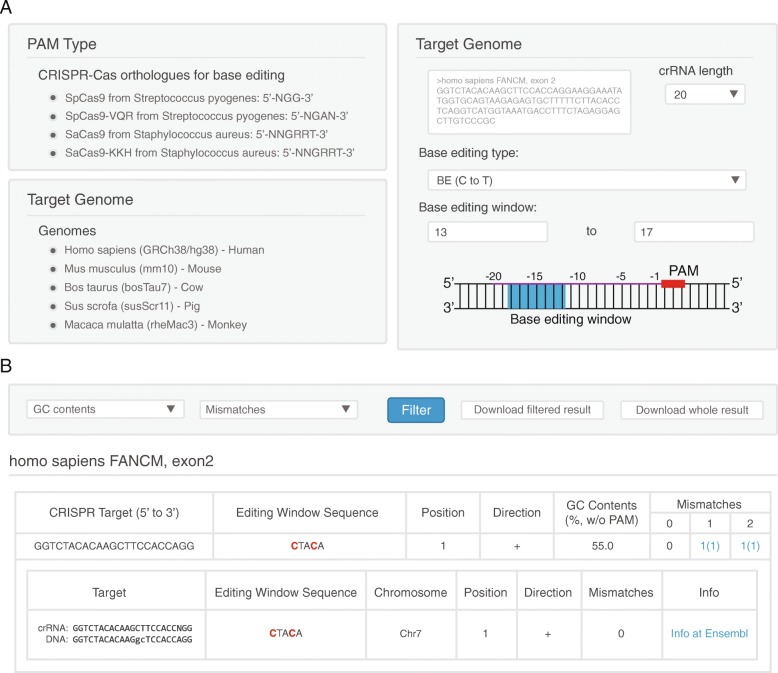
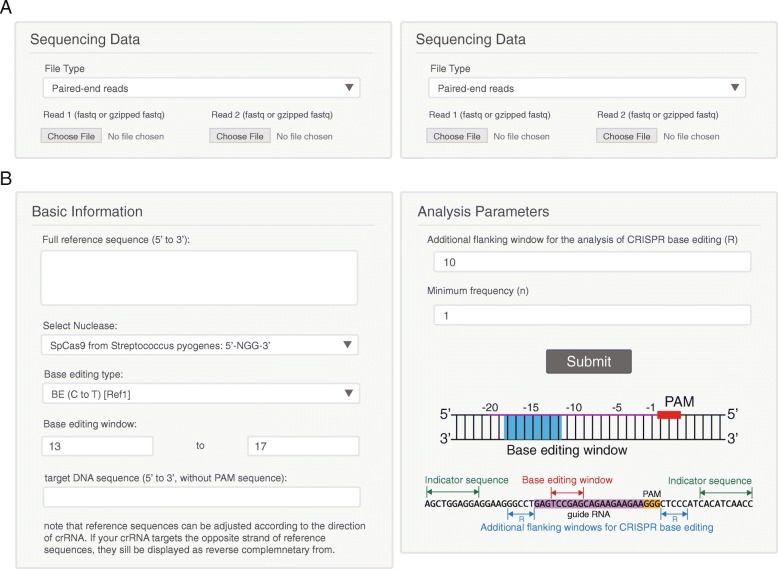
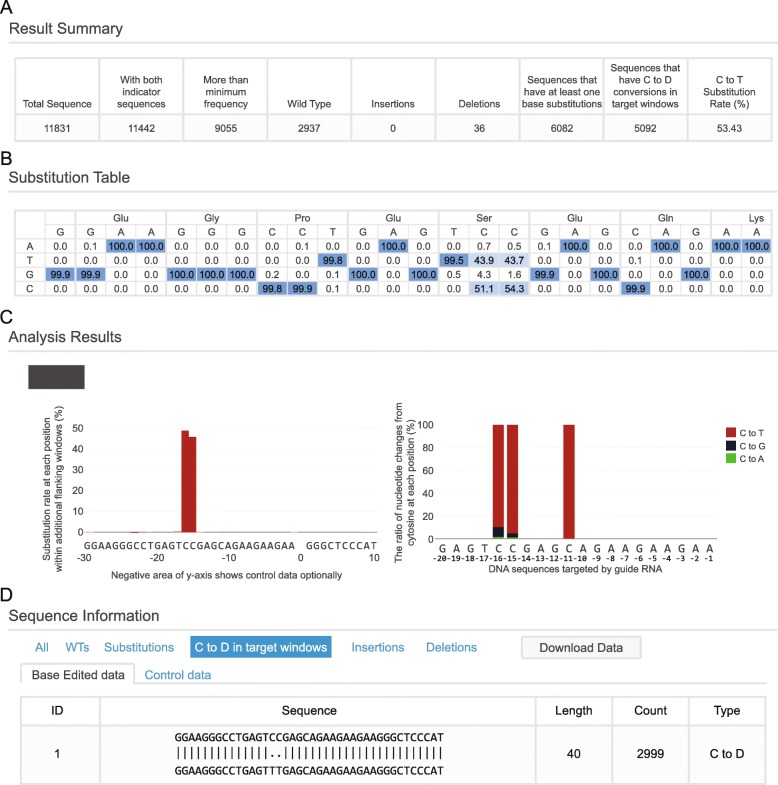
BACKGROUND: As a result of its simplicity and high efficiency, the CRISPR-Cas system has been widely used as a genome editing tool. Recently, CRISPR base editors, which consist of deactivated Cas9 (dCas9) or Cas9 nickase (nCas9) linked with a cytidine or a guanine deaminase, have been developed. Base editing tools will be very useful for gene correction because they can produce highly specific DNA substitutions without the introduction of any donor DNA, but dedicated web-based tools to facilitate the use of such tools have not yet been developed. RESULTS: We present two web tools for base editors, named BE-Designer and BE-Analyzer. BE-Designer provides all possible base editor target sequences in a given input DNA sequence with useful information including potential off-target sites. BE-Analyzer, a tool for assessing base editing outcomes from next generation sequencing (NGS) data, provides information about mutations in a table and interactive graphs. Furthermore, because the tool runs client-side, large amounts of targeted deep sequencing data (< 1 GB) do not need to be uploaded to a server, substantially reducing running time and increasing data security. BE-Designer and BE-Analyzer can be freely accessed at http://www.rgenome.net/be-designer/ and http://www.rgenome.net/be-analyzer /, respectively. CONCLUSION: We develop two useful web tools to design target sequence (BE-Designer) and to analyze NGS data from experimental results (BE-Analyzer) for CRISPR base editors.
Overview
The claims and statistics of this paper haven’t been checked yet.
Run the check — free, no account needed. It reads the open-access text and checks the sources it cites.
Integrity signals
Registry
Cites
Statistics
Figures
Verification
Claims the paper makes
The claims and statistics of this paper haven’t been checked yet.
Run the check — free, no account needed. It reads the open-access text and checks the sources it cites.
Claims other papers make about this one
Each is checked against this paper’s own text: does it say what the citing paper says it does?
The cited source doesn’t support the claim as written.
In the citing paper
“Off-target prediction was done using CRISPR RGEN Tools allowing up to three mismatches in the prediction algorithm [38].”
From Precise CRISPR/Cas9 and Cas12 Correction Using Lipoplexes in Retinal Models Derived from Patients with Inherited Retinal Dystrophies (2026) · cites this paper as [38]
Checked by a reasoning model — may be wrong.
Experimental — accuracy not yet measuredThe source backs part of the claim, not all of it — or backs it for a different population, condition or comparison.
In the citing paper
“Off-target prediction was performed using the online tool Cas-OFFinder [38], allowing up to three mismatches.”
From Precise CRISPR/Cas9 and Cas12 Correction Using Lipoplexes in Retinal Models Derived from Patients with Inherited Retinal Dystrophies (2026) · cites this paper as [38]
Experimental — accuracy not yet measured
Self-check
Percentages, sums and reported differences re-computed from the paper’s own numbers.
The self-check needs the paper’s full text.
Citations
Cites
A Programmable Dual-RNA–Guided DNA Endonuclease in Adaptive Bacterial Immunity
Jinek, M., Chylinski, K., Fonfara, I., Hauer, M., Doudna, J. A., & Charpentier, E. (2012) · Science · doi:10.1126/science.1225829 · Cited by 17,116
Multiplex Genome Engineering Using CRISPR/Cas Systems
Cong, L., Ran, F. A., Cox, D., Lin, S., Barretto, R., Habib, N., Hsu, P. D., Wu, X., Jiang, W., Marraffini, L. A., et al. (2013) · Science · doi:10.1126/science.1231143 · Cited by 15,339
The new frontier of genome engineering with CRISPR-Cas9
Doudna, J. A., & Charpentier, E. (2014) · Science · doi:10.1126/science.1258096 · Cited by 7,062
Programmable editing of a target base in genomic DNA without double-stranded DNA cleavage
Komor, A. C., Kim, Y. B., Packer, M. S., Zuris, J. A., & Liu, D. R. (2016) · Nature · doi:10.1038/nature17946 · Cited by 5,437
Programmable base editing of A•T to G•C in genomic DNA without DNA cleavage
Gaudelli, N. M., Komor, A. C., Rees, H. A., Packer, M. S., Badran, A. H., Bryson, D. I., & Liu, D. R. (2017) · Nature · doi:10.1038/nature24644 · Cited by 4,184
Double nicking by RNA-guided CRISPR Cas9 for enhanced genome editing specificity
Ran, F. A., Hsu, P. D., Lin, C.-Y., Gootenberg, J. S., Konermann, S., Trevino, A. E., Scott, D. A., Inoue, A., Matoba, S., Zhang, Y., et al. (2013) · Cell · doi:10.1016/j.cell.2013.08.021 · Cited by 3,299
High-Frequency off-Target Mutagenesis Induced by CRISPR-Cas Nucleases in Human Cells
Fu, Y., Foden, J. A., Khayter, C., Maeder, M. L., Reyon, D., Joung, J. K., & Sander, J. D. (2013) · Nature Biotechnology · doi:10.1038/nbt.2623 · Cited by 3,292
CRISPR-Cas systems for editing, regulating and targeting genomes
Sander, J. D., & Joung, J. K. (2014) · Nature Biotechnology · doi:10.1038/nbt.2842 · Cited by 3,153
Bae, S., Park, J., & Kim, J.-S. (2014) · Bioinformatics · doi:10.1093/bioinformatics/btu048 · Cited by 2,339
Self-citationCrystal structure of Cas9 in complex with guide RNA and target DNA
Nishimasu, H., Ran, F. A., Hsu, P. D., Konermann, S., Shehata, S. I., Dohmae, N., Ishitani, R., Zhang, F., & Nureki, O. (2014) · Cell · doi:10.1016/j.cell.2014.02.001 · Cited by 2,306
Cited by
Sorted by citations
Items 101–198 of 198
Le, T. T., Choi, H. I., Kim, J. W., Yun, J., Lee, Y. H., Jeon, E. J., Kwon, K. K., Cho, D., Choi, D., Park, S., et al. (2025) · Proceedings of the National Academy of Sciences · doi:10.1073/pnas.2415072122 · Cited by 12
Self-citationCRISPR Base Editing in Induced Pluripotent Stem Cells
Chang, Y., Xu, C. L., Cui, X., Bassuk, A. G., Mahajan, V. B., Tsai, Y.-T., & Tsang, S. H. (2019) · Methods in molecular biology · doi:10.1007/7651_2019_243 · Cited by 12
Jo, D. H., Jang, H., Cho, C. S., Han, J. H., Ryu, G., Jung, Y., Bae, S., & Kim, J. H. (2021) · bioRxiv (Cold Spring Harbor Laboratory) · doi:10.1101/2021.01.07.425822 · Cited by 12
Self-citationYang, Y., Zhang, C., Song, Y., Li, Y., Li, P., Huang, M., Meng, F., & Zhang, M. (2022) · Nucleic Acids Research · doi:10.1093/nar/gkac742 · Cited by 11
Engineering a photoactivatable A-to-I RNA base editor for gene therapy in vivo
Li, H., Qiu, Y., Song, B., Quan, X., Zhang, D., Li, X., Yang, J., Liu, X., Zeng, Z., Ji, J., et al. (2025) · Nature Biotechnology · doi:10.1038/s41587-025-02610-2 · Cited by 11
Tonetto, E., Cucci, A., Follenzi, A., Bernardi, F., Pinotti, M., & Balestra, D. (2024) · Journal of Thrombosis and Haemostasis · doi:10.1016/j.jtha.2024.04.020 · Cited by 10
A motif preferred adenine base editor with minimal bystander and off-targets editing
Shang, M., Li, Y., Cao, Q., Ren, J., Zeng, Y., Wang, J., Gonzalez, R. V. L., & Zhang, X. (2025) · Nature Communications · doi:10.1038/s41467-025-64203-6 · Cited by 10
Lee, S., Wu, J., Im, D., Hwang, G., Jeong, Y. K., Jiang, H., Lee, S. J., Jo, D. H., Goddard, W. A., Kim, J. H., et al. (2025) · Molecular Therapy — Methods & Clinical Development · doi:10.1016/j.omtm.2025.101461 · Cited by 13
Self-citationHu, S. W., Jeong, S., Jiang, L., Koo, H., Wang, Z., Choi, W. H., Zhu, B., Seok, H., Zhou, Y., Kim, M. G., et al. (2025) · Nature Communications · doi:10.1038/s41467-025-62562-8 · Cited by 13
Self-citationOptimized in vivo base editing restores auditory function in a DFNA15 mouse model
Wang, M., Zhang, Z., Wang, X., Zhang, L., Chen, X., Li, N., Sun, Q., Lu, Y., He, Z., Yang, H., et al. (2025) · Nature Communications · doi:10.1038/s41467-025-63613-w · Cited by 12
Li, P., Dong, D., Gao, F., Xie, Y., Huang, H., Sun, S., Ma, Z., He, C., Lai, J., Du, X., et al. (2024) · Science China Life Sciences · doi:10.1007/s11427-023-2682-5 · Cited by 9
AlleleProfileR: A versatile tool to identify and profile sequence variants in edited genomes
Bruyneel, A. A. N., Colas, A. R., Karakikes, I., & Mercola, M. A. (2019) · PLoS ONE · doi:10.1371/journal.pone.0226694 · Cited by 9
Song, B., Kang, C. Y., Han, J. H., Kano, M., Konnerth, A., & Bae, S. (2021) · Computational and Structural Biotechnology Journal · doi:10.1016/j.csbj.2021.04.051 · Cited by 8
Self-citationIn vivo adenine base editing rescues adrenoleukodystrophy in a humanized mouse model
Gopalappa, R., Lee, M., Kim, G., Jung, E. S., Lee, H., Hwang, H.-Y., Lee, J. G., Kim, S. J., Yoo, H. J., Sung, Y. H., et al. (2024) · Molecular Therapy · doi:10.1016/j.ymthe.2024.05.027 · Cited by 8
Self-citationCha, J. H., Lee, S., Yun, Y., Choi, W. H., Koo, H., Jung, S. H., Chae, H. B., Lee, S. J., Lee, S. J., Jo, D. H., et al. (2024) · Molecular Therapy — Nucleic Acids · doi:10.1016/j.omtn.2024.102257 · Cited by 7
Self-citationApplication of Bioinformatics Tools in CRISPR/Cas
Choudhary, S., Ubale, A., Padiya, J., & Mikkilineni, V. (2020) · Concepts and strategies in plant sciences · doi:10.1007/978-3-030-42022-2_2 · Cited by 8
Annotation and evaluation of base editing outcomes in multiple cell types using CRISPRbase
Fan, J., Shi, L., Liu, Q., Zhu, Z., Wang, F., Song, R., Su, J., Zhou, D., Chen, X., Li, K., et al. (2022) · Nucleic Acids Research · doi:10.1093/nar/gkac967 · Cited by 7
A Review: Computational Approaches to Design sgRNA of CRISPR-Cas9
Nasir, M. A., Nawaz, S., & Huang, J. H. (2021) · Current Bioinformatics · doi:10.2174/1574893616666210601105553 · Cited by 7
Zhang, D., Zheng, R., Chen, Z., Wang, L., Chen, X., Yang, L., Huo, Y., Yin, S., Zhang, D., Huang, J., et al. (2024) · Science China Life Sciences · doi:10.1007/s11427-024-2697-3 · Cited by 6
Triple base editor catalyzes saturation mutation of adenine, cytidine, and guanine
Wu, Y., Wang, J., Zhang, Z., Shang, M., Wang, S. W., Li, Y., Li, G., lu, S., Ji, K., Wang, X., et al. (2025) · Nucleic Acids Research · doi:10.1093/nar/gkaf1423 · Cited by 6
Steiner, S., & Roy, C. R. (2024) · mSphere · doi:10.1128/msphere.00523-24 · Cited by 6
Development and use of CRISPR in industrial applications
Abdelaal, A. S., & Yazdani, S. S. (2020) · Elsevier eBooks · doi:10.1016/b978-0-12-818140-9.00016-7 · Cited by 6
Computational design of guide RNAs and vector to knockout LasR gene of Pseudomonas aeruginosa
KesavanNair, L. R. (2023) · Gene and Genome Editing · doi:10.1016/j.ggedit.2023.100028 · Cited by 6
Saito, A. C., Higashi, T., & Chiba, H. (2024) · STAR Protocols · doi:10.1016/j.xpro.2024.103179 · Cited by 5
Loret, C., Pauset, A., Faye, P.-A., Prouzet‐Mauleon, V., Pyromali, I., Nizou, A., Miressi, F., Sturtz, F. G., Favreau, F. D., Turcq, B., et al. (2024) · Biomedicines · doi:10.3390/biomedicines12071550 · Cited by 5
Engineering Oncogenic Hotspot Mutations on SF3B1 via CRISPR-Directed PRECIS Mutagenesis
Fernandez, M. M., Jia, Q., Yu, L., Wang, X., Hart, K. L., Jia, Z., Lin, R.-J., & Wang, L. (2024) · Cancer Research Communications · doi:10.1158/2767-9764.crc-24-0145 · Cited by 5
Bioinformatic Tools in CRISPR/Cas Platform
Ahmad, A., Ashraf, S., Majeed, H. N., Aslam, S., Aslam, M. A., Mubarik, M. S., & Munawar, N. (2022) · Springer eBooks · doi:10.1007/978-981-16-6305-5_3 · Cited by 5
Yu, W., Wang, Y., Li, S., Dai, Y., Li, Y., Zhang, X., Li, B., Qian, S., Zhang, X., & Bi, C. (2025) · Synthetic and Systems Biotechnology · doi:10.1016/j.synbio.2025.03.007 · Cited by 5
Detection of Bacterial Genomic DNA Fragments Using the MXene CRISPR-Cas9 Field-Effect Transistor
Li, J., Taheri, A., Liu, W., Zhuo, Y., Ma, P., & Wu, C. (2025) · ACS Applied Nano Materials · doi:10.1021/acsanm.5c02695 · Cited by 5
Protein-nucleic acid language model-assisted design of precise and compact adenine base editor
Ren, J., Yao, J.-W., Cao, Q., Li, Y.-N., Li, Y., Zhang, Z., Ge, X., Wang, S.-F., Zhang, Y., Wang, X.-G., et al. (2025) · Nature Communications · doi:10.1038/s41467-025-65311-z · Cited by 4
BEscreen: a versatile toolkit to design base editing libraries
Schneider, P. G., Liu, S., Bullinger, L., & Ostendorf, B. N. (2025) · Nucleic Acids Research · doi:10.1093/nar/gkaf406 · Cited by 4
Engineering CjCas9 for Efficient Base Editing and Prime Editing
Liu, S., Zhao, Y., Mo, Q., Sun, Y., & Ma, H. (2024) · The CRISPR Journal · doi:10.1089/crispr.2024.0018 · Cited by 4
Dead Cas Systems: Types, Principles, and Applications
Brezgin, S., Kostyusheva, A., Kostyushev, D. S., & Chulanov, V. (2020) · Vide Leaf, Hyderabad eBooks · doi:10.37247/pamb.1.2020.14 · Cited by 5
Precise Genome Editing of Plants Through Base and Prime Editor
Alharbi, S., Al‐Dakhil, M., & Alotaibi, F. S. (2024) · doi:10.1002/9781394209156.ch14 · Cited by 4
Hu, S. W., Jeong, S., Jiang, L., Koo, H., Wang, Z., Choi, W. H., Zhu, B., Seok, H., Zhou, Y., Kim, M. G., et al. (2024) · bioRxiv (Cold Spring Harbor Laboratory) · doi:10.1101/2024.10.29.620803 · Cited by 4
Self-citationEngineering with care: safety assessment platforms for CRISPR-modified natural killer cells
Fazeli, A., Ullrich, E., Cathomen, T., & Bexte, T. (2025) · Frontiers in Immunology · doi:10.3389/fimmu.2025.1711414 · Cited by 3
CRISPR single base-editing: in silico predictions to variant clonal cell lines
Dickson, K.-A., Field, N. R., Blackman, T., Ma, Y., Xie, T., Kurangil, E., Idrees, S., Rathnayake, S. N. H., Mahbub, R. M., Faiz, A., et al. (2023) · Human Molecular Genetics · doi:10.1093/hmg/ddad105 · Cited by 3
KOnezumi-AID: Automation Software for Efficient Multiplex Gene Knockout Using Target-AID
Taki, T., Morimoto, K., Mizuno, S., & Kuno, A. (2024) · International Journal of Molecular Sciences · doi:10.3390/ijms252413500 · Cited by 3
Chapdelaine, V., Shenoy, S., Masud, W., Minju-OP, A., Bérubé, M.-A., Schönherr, S., Forer, L., Fradet‐Turcotte, A., Taliun, D., & Cuella-Martin, R. (2025) · Nucleic Acids Research · doi:10.1093/nar/gkaf382 · Cited by 4
Highly efficient biallelic correction of homozygous COL7A1 mutation using ABE8e adenine base editor
Brooks, I. R., Alrokh, Y., Kazemizadeh, A., Balon, K., Newby, G. A., Liu, D. R., Łaczmański, Ł., McGrath, J. A., & Jackow, J. (2023) · British Journal of Dermatology · doi:10.1093/bjd/ljad522 · Cited by 3
Bioinformatic tools for CRISPR-mediated genome editing
Gila, F., Shakeri, S., Khoddam, S., Jamali, Z., Sichani, A. S., Dehghan, Z., & Fallahi, J. (2025) · Gene Reports · doi:10.1016/j.genrep.2025.102204 · Cited by 3
Web-Based Computational Tools for Base Editors
Hwang, G., & Bae, S. (2023) · Methods in molecular biology · doi:10.1007/978-1-0716-2879-9_2 · Cited by 3
Self-citationXiang, X., Qu, K., Liang, X., Pan, X., Wang, J., Han, P., Dong, Z., Liu, L., Zhong, J., Ma, T., et al. (2020) · bioRxiv (Cold Spring Harbor Laboratory) · doi:10.1101/2020.05.20.103614 · Cited by 4
Self-citationBystander base editing interferes with visual function restoration in Leber congenital amaurosisPreprint
Lee, S., Wu, J., Im, D., Hwang, G., Jeong, Y. K., Jiang, H., Lee, S. J., Jo, D. H., Goddard, W. A., Kim, J. H., et al. (2024) · bioRxiv (Cold Spring Harbor Laboratory) · doi:10.1101/2024.10.23.619839 · Cited by 3
Self-citationLNP‐mediated in vivo base editing corrects Agxt to cure primary hyperoxaluria type 1
Zhang, D., Zheng, R., Chen, Z., Chen, X., Yang, L., Huo, Y., Zhao, Y., Huang, J., Zhang, D., Yin, S., et al. (2025) · Clinical and Translational Medicine · doi:10.1002/ctm2.70533 · Cited by 2
Techno-economic assessment-guided biofoundry for microbial strain development
Heo, Y. B., Ko, S. C., Keasling, J. D., & Woo, H. M. (2025) · Trends in biotechnology · doi:10.1016/j.tibtech.2025.11.002 · Cited by 3
BES-Designer: A Web Tool to Design Guide RNAs for Base Editing to Simplify Library
Zhou, Q., Gao, Q., Gao, Y., Zhang, Y., Chen, Y., Li, M., Wei, P., & Yue, Z. (2024) · Interdisciplinary Sciences Computational Life Sciences · doi:10.1007/s12539-024-00663-6 · Cited by 2
Ehmsen, K. T., Knuesel, M. T., Martinez, D. M., Asahina, M., Aridomi, H., & Yamamoto, K. R. (2021) · Nucleic Acids Research · doi:10.1093/nar/gkab700 · Cited by 4
Protocol for arrayed gRNA screening by base editors in mammalian cell lines using lentiviral system
Ravi, N. S., George, A., & Mohankumar, K. M. (2023) · STAR Protocols · doi:10.1016/j.xpro.2023.102668 · Cited by 2
Basturea, G. N. (2019) · Materials and Methods · doi:10.13070/mm.en.9.2800 · Cited by 2
Definition of alleles and altered regulatory motifs across Cas9-edited cell populationsPreprint
Ehmsen, K. T., Knuesel, M. T., Martinez, D. M., Asahina, M., Aridomi, H., & Yamamoto, K. R. (2019) · bioRxiv (Cold Spring Harbor Laboratory) · doi:10.1101/775361 · Cited by 2
BEdeepon: an in silico tool for prediction of base editor efficiencies and outcomesPreprint
Zhang, C., Yu, Z., Wang, D., Qi, T., Zhang, Y., Hou, L., Lan, F., Yang, J., Shi, L. M., Ong, S., et al. (2021) · bioRxiv (Cold Spring Harbor Laboratory) · doi:10.1101/2021.03.14.435303 · Cited by 2
Functional characterization of splicing regulatory elementsPreprint
Adamson, S. I., Zhan, L., & Graveley, B. R. (2021) · bioRxiv (Cold Spring Harbor Laboratory) · doi:10.1101/2021.05.14.444228 · Cited by 2
Nonviral base editing of KCNJ13 mutation preserves vision in an inherited retinal channelopathyPreprint
Kabra, M., Shahi, P. K., Wang, Y., Sinha, D., Spillane, A., Newby, G. A., Saxena, S., Tong, Y., Chang, Y., Abdeen, A. A., et al. (2022) · bioRxiv (Cold Spring Harbor Laboratory) · doi:10.1101/2022.07.12.499808 · Cited by 2
Chen, L., Zhang, S., Xue, N., Hong, M., Zhang, X., Zhang, D., Yang, J., Bai, S., Huang, Y., Meng, H., et al. (2022) · bioRxiv (Cold Spring Harbor Laboratory) · doi:10.1101/2022.08.12.503700 · Cited by 2
Proteome-wide base editor screens to assess phosphorylation site functionality in high-throughputPreprint
Kennedy, P. H., Sheikh, A. A. D., Balakar, M., Jones, A. C., Olive, M. E., Hegde, M., Matias, M. I., Pirete, N., Burt, R. A., Levy, J. M., et al. (2023) · bioRxiv (Cold Spring Harbor Laboratory) · doi:10.1101/2023.11.11.566649 · Cited by 2
Hijacking and recording intracellular RNAs in human cells using eukaryotic reprogrammed tracrRNAsPreprint
Lee, S.-H., Park, J., Jung, C., & Bae, S. (2024) · bioRxiv (Cold Spring Harbor Laboratory) · doi:10.1101/2024.10.28.620760 · Cited by 2
Self-citationThe CRISPR/Cas9-mediated base editing design of HBV specific gRNA: A computational approach
Yuliawuri, H., Christian, J. E., & Suherman, E. A. (2024) · AIP conference proceedings · doi:10.1063/5.0199141 · Cited by 1
Purohit, S., Nayak, A., Rani, V., & Jain, C. K. (2025) · Advances in Science, Technology & Innovation/Advances in science, technology & innovation · doi:10.1007/978-3-031-80189-1_12 · Cited by 1
Bioinformatics Tools Developed for Genome Editing Studies
Mohsenpour, M., Zamani, K., Amirian, R., & Shariatpanahi, M. E. (2025) · Sustainable landscape planning and natural resources management · doi:10.1007/978-3-031-81639-0_13 · Cited by 1
Vadakkethil, A. A., Panda, S., Mitra, A., Dash, M., Baig, M. J., Angadi, U. B., Kumar, D. B. U., Jaiswal, S., Iquebal, M. A., & Molla, K. A. (2025) · Briefings in Bioinformatics · doi:10.1093/bib/bbaf575 · Cited by 1
Spatially concentrated adenine base editors efficiently correct PLP1 mutations in oligodendrocytes
Zhang, C., Ye, K., Shang, Y., Song, Y., Li, P., Jiang, X., Yang, C., Liang, A., Zhang, J., Meng, F., et al. (2026) · Nucleic Acids Research · doi:10.1093/nar/gkag156 · Cited by 1
In vivo adenine base editing of mutant Galc gene ameliorates Krabbe disease progression
Nam, B.-G., Seo, J., Hong, S.-A., Kim, J., Kang, M., Notario, G. R., Hong, Y., Cho, S., Bae, S., & Cho, S.-R. (2026) · Genome Medicine · doi:10.1186/s13073-026-01620-2 · Cited by 1
Self-citationGenome Engineering Human ESCs or iPSCs with Cytosine and Adenine Base Editors
Pavani, G., Klein, J. G., French, D. L., & Gadue, P. J. (2022) · Methods in molecular biology · doi:10.1007/7651_2022_461 · Cited by 1
Perancangan Sistem Perpustakaan Berbasis Web Menggunakan Framework Laravel
Supriyadi, S. (2023) · JSAI (Journal Scientific and Applied Informatics) · doi:10.36085/jsai.v6i2.5019 · Cited by 1
Functional Assessment of BRCA1 variants using CRISPR-Mediated Base Editors
See, J.-E., Shin, H. R., Jang, G., Kweon, J., & Kim, Y. (2021) · Journal of Visualized Experiments · doi:10.3791/61557 · Cited by 1
The CRISPR Technology and Application in Rice
Gouda, G., Gupta, M. K., Sabarinathan, S., Donde, R., Ponnana, M., Dash, G. K., Rajesh, N., Sanghamitra, P., Parameswaran, C., Vadde, R., et al. (2021) · Springer eBooks · doi:10.1007/978-981-16-3997-5_10 · Cited by 1
Using CRISPR-Cas9 to Dissect Cancer Mutations in Cell Lines
Sayed, S., Sürün, D., Mircetic, J., Sidorova, O. A., & Buchholz, F. (2022) · Methods in molecular biology · doi:10.1007/978-1-0716-2376-3_18 · Cited by 1
A PLATFORM TO AID SELECT THE OPTIMAL TOOL TO DESIGN GUIDE RNAS
Qianqian, Y. A. N. G., & Lei, M. A. (2022) · Frontiers of Agricultural Science and Engineering · doi:10.15302/j-fase-2022479
Both A-to-G and C-to-T base editing in human cells with dual base editor (A&C-BEmax)Preprint
Zhu, B., Zhang, X., Chen, L., Wang, L., & Li, D. (2020) · doi:10.21203/rs.3.pex-877/v1 · Cited by 1
Engineered mitochondrial A-to-G editors with enhanced efficiency and targeting scopePreprint
Chen, L., Hong, M., Luan, C., Yuan, M., Wang, Y., Guo, X., Fang, Y., Huang, H., Dong, X., Gao, H., et al. (2024) · bioRxiv (Cold Spring Harbor Laboratory) · doi:10.1101/2024.11.19.623682 · Cited by 1
Siles, L., Ruiz-Nogales, S., Méndez-Vendrell, P., & Pomares, E. (2026) · Cells · doi:10.3390/cells15050457
“Off-target prediction was done using CRISPR RGEN Tools allowing up to three mismatches in the prediction algorithm [38].”
Computational Tools for Target Design and Analysis
Hwang, G., & Bae, S. (2022) · Wiley eBooks · doi:10.1002/9781119671404.ch5 · Cited by 1
Self-citationLan, J., Cui, Y., Wang, X., Song, G., & Lou, J. (2020) · bioRxiv (Cold Spring Harbor Laboratory) · doi:10.1101/2020.03.04.976340
Functional Analysis of Variants in BRCA1 Using CRISPR Base Editors
See, J.-E., & Kim, Y. (2023) · Methods in molecular biology · doi:10.1007/978-1-0716-2879-9_7
Cytosine Base Editing in Bacteria
Liu, Y., Liu, Y., Zheng, P., Wang, Y., & Wang, M. (2023) · Methods in molecular biology · doi:10.1007/978-1-0716-2879-9_17
Designing Guide-RNA for Generating Premature Stop Codons for Gene Knockout Using CRISPR-BETS
Wu, Y., & Zhang, T. (2023) · Methods in molecular biology · doi:10.1007/978-1-0716-3131-7_6
Progress and Prospects in CRISPR Genome Engineering Nucleases
Surendranath, K., Akram, K., Kanagaraj, R., Savash, M., Khan, S., Pantuzcek, J., Karri, M., Guha, S., Rangan, S. L., Kour, E., et al. (2024) · Springer eBooks · doi:10.1007/978-981-97-1777-4_4
Tan, Y. Y., Liew, Y. Y., Lee, R. R. Q., Castel, B., Chan, N. M., Wan, W.-L., Zhang, Y., Hu, D., Chan, P., Kim, S., et al. (2024) · Molecular Plant-Microbe Interactions · doi:10.1094/mpmi-10-24-0127-ta · Cited by 1
Self-citationMicrobial base editing: a powerful emerging technology for microbial genome engineering
Naaz, F., Zeeshan, M., & Farhan, M. (2025) · Elsevier eBooks · doi:10.1016/b978-0-443-31554-1.00009-1
Mutcrisper: A Toolkit for Optimized Grna Design in Base Editing TechnologyPreprint
Etemadi, A., Nasri, R., Absalan, M., Kheirandish, M., Malekshahi, Z. V., Razi, F., Rezaei-Tavirani, M., & Mazloumi, M. (2025) · SSRN Electronic Journal · doi:10.2139/ssrn.5225370
SuperDecode: A versatile toolkit for mutation analysis in genome editing
Hua, G., He, C., & Zuo, E. (2025) · aBIOTECH · doi:10.1007/s42994-025-00213-8
Wei, Y., Yuan, M., Zhang, Y., & Gao, Y. (2025) · International Journal of Molecular Sciences · doi:10.3390/ijms26094229
WITHDRAWN: Codon-Optimized Base Editors Enable Efficient Base Substitution in Non-model AnimalsPreprint
Wang, J., Wang, J., Florea, A., Stewart, R., Ballantyne, M., Tucker, C. S., Houston, R. D., & Robledo, D. (2025) · bioRxiv (Cold Spring Harbor Laboratory) · doi:10.1101/2025.04.25.650635
Spillane, A., Akyüz, E., Kabra, M., Sinha, D., Soref, C. M., Gissot, L., Saneh, A. A., Pillala, S. K., Shahi, P. K., Saha, K., et al. (2025) · The Journal of Precision Medicine Health and Disease · doi:10.1016/j.premed.2025.100019
Wang, H., Feng, M., Xiao, Y., Wang, J., Wu, S., & Bao, W. (2025) · Toxicology · doi:10.1016/j.tox.2025.154325
Siegner, S. M., Karasu, M. E., Schröder, M., Kontarakis, Z., & Corn, J. E. (2021) · Figshare · doi:10.6084/m9.figshare.14151046
Siegner, S. M., Karasu, M. E., Schröder, M., Kontarakis, Z., & Corn, J. E. (2021) · Figshare · doi:10.6084/m9.figshare.14151049
Lv, J., Yang, L., Chen, X., Zhang, J., Li, Z., Duan, J., Zhang, T., Li, Y., Li, D., & Cheng, Y. (2026) · Materials Today · doi:10.1016/j.mattod.2026.103189
Virus-like particle delivery enables orthogonal genome editing in vitro and in vivoPreprint
Shin, S., Nam, B.-G., Park, E. J., Kim, M. G., Cho, C. S., Kim, Y.-W., Lee, S., Kim, J. H., & Sangsu, B. A. E. (2026) · bioRxiv (Cold Spring Harbor Laboratory) · doi:10.64898/2026.02.10.705092 · Cited by 1
Self-citationCodon-optimized base editors enable efficient base substitution in Atlantic salmon
Wang, J., Wang, J., Florea, A., Stewart, R., Houston, R. D., & Robledo, D. (2026) · Trends in biotechnology · doi:10.1016/j.tibtech.2026.01.015
Cytosine base editing of LPA in transgenic mice averts large deletions
Chuecos, M. A., Park, S. H., Bhakta, M., Too-Chiobi, U., Betancourth, D., Cao, M., Giorgi, M. D., Walkey, C. J., Tiwari, A., Godin, B., et al. (2026) · Molecular Therapy · doi:10.1016/j.ymthe.2026.02.049 · Cited by 1
Mudla, A., Quintana, D. D., Atallah, C. F., Savoy, L. R., Leu, A. I., Dam, T., Acharya, G., Rajappan, K., & Chivukula, P. (2026) · bioRxiv (Cold Spring Harbor Laboratory) · doi:10.64898/2026.03.20.713290
High-diversity base mutagenesis via simultaneous adenine, cytosine and guanine editing
Hong, M., Luan, C., Yuan, M., Huang, H., Guo, X., Meng, D., Huang, M., Xu, Y., Sj, Z., Chen, K., et al. (2026) · Nature Communications · doi:10.1038/s41467-026-76020-6
Simplifying in silico protein evolution with minimal screening by unZipro
Qin, Z., Zhao, S., Deng, Z., Si, X., Xing, C., Zhang, Z., Zhang, Y., Han, X., Zhang, J., Chen, Y., et al. (2026) · Molecular Cell · doi:10.1016/j.molcel.2026.08.028
Advances and Applications of Genome Editing in Precision Crop Breeding
Zhao, J., Qian, X., Zhong, X., Xun, H., & Guo, D. (2026) · Plants · doi:10.3390/plants15193057
From base transitions to expanded editing tools: development and applications of plant base editors
Sui, N., Zhang, J., Xu, W., 庞美新, Zhang, R., Chai, N., Wen, J., Liu, T., Zheng, Z., Huang, J., et al. (2026) · Biotechnology Advances · doi:10.1016/j.biotechadv.2026.109074
Metadata
- Authors
- Hwang, G.-H., Park, J., Lim, K., Kim, S., Yu, J., Yu, E., Kim, S.-T., Eils, R., Kim, J.-S., & Bae, S.
- Affiliations
- Hanyang University (KR)
- Heidelberg University (DE)
- Seoul National University (KR)
- University Hospital Heidelberg (DE)
- Corresponding author
- Bae, Sangsu
- ORCID
- Venue
- BMC Bioinformatics
- Published
- 2018-12
- Volume
- 19
- Issue
- 1
- Pages
- 542-542
- ISSN
- 1471-2105 (ISSN-L)
- PMC
- PMC6307267
- OpenAlex
- W2883250809
- Cited by
- 198
- References
- 33
- Citations by year
- 2026: 12 · 2025: 34 · 2024: 29 · 2023: 23 · 2022: 27 · 2021: 29 · 2020: 32 · 2019: 12
- FWCI
- 6.49
- Type
- journal article
- Language
- en
- Open access
- gold
- doi.org
- Licence
- Locations
- BMC Bioinformatics (publishedVersion, cc-by)
- bioRxiv (Cold Spring Harbor Laboratory) (acceptedVersion)
- Europe PMC (PubMed Central) (publishedVersion, cc-by)
- PubMed Central (publishedVersion, cc-by)
- PubMed (publishedVersion)
- heiDOK (Heidelberg University) (acceptedVersion, other-oa)
- DOAJ (DOAJ: Directory of Open Access Journals) (submittedVersion, cc-by-sa)
- Seoul National University Open Repository (Seoul National University) (submittedVersion)
- Funders
- Deutsches Krebsforschungszentrum
- National Research Foundation (2017M3A9G8084539, 2018M3A9H3022412, HI16C1012)
- Ministry of Trade, Industry and Energy (20000158)
- National Research Foundation of Korea (PJ01319301, 2018M3A9H3022412, 20000158, 2017M3A9G8084539)
- Topics
- Life Sciences › Biochemistry, Genetics and Molecular Biology › Molecular Biology › CRISPR and Genetic Engineering
- Life Sciences › Biochemistry, Genetics and Molecular Biology › Molecular Biology › RNA regulation and disease
- Life Sciences › Biochemistry, Genetics and Molecular Biology › Molecular Biology › Genomics and Phylogenetic Studies
- Keywords
- CRISPR base editing, web-based design tool, off-target sites, cytidine deaminase, guanine deaminase, dCas9, next-generation sequencing data analysis, genome editing
- MeSH terms
- Gene Editing, Humans, Internet, Clustered Regularly Interspaced Short Palindromic Repeats, CRISPR-Cas Systems
About these checks
Registry, retraction, Cites and statistics results are computed, not judged, with one exception: a printed reference that no index lists is read once by a model before it counts as a citation error. Claims are extracted by a model and kept only when their quote appears verbatim in the text; each cited source is then checked, with a model’s help, for whether it says what the claim relies on. Those verdicts can be wrong — read the claim’s quote and the cited source before relying on one.
Statistics and arithmetic are recomputed, not judged.
Confidence bands are shown only for fields calibrated on our annotated test set. None is calibrated yet, so no band is shown.
What counts as a claim ›How we measure confidence ›How we check this ›
Are you an author, or do you see a problem with this page? Request a review
