

The DOI matches its Crossref record; 3 of the 3 references it cites were found in a registry or an index.
PathNetDRP: a novel biomarker discovery framework using pathway and protein–protein interaction networks for immune checkpoint inhibitor response prediction
Open accessAbstract
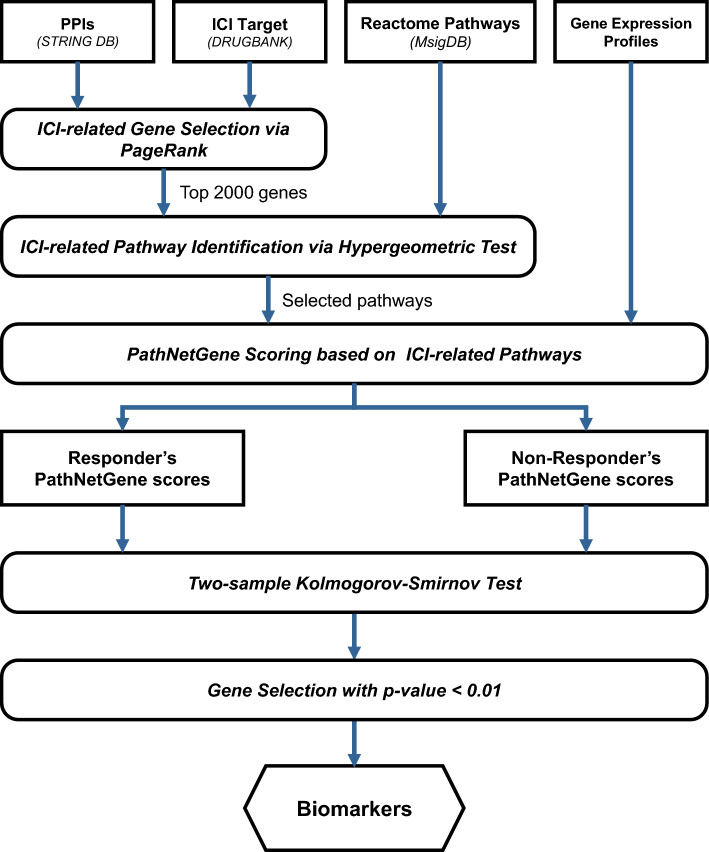
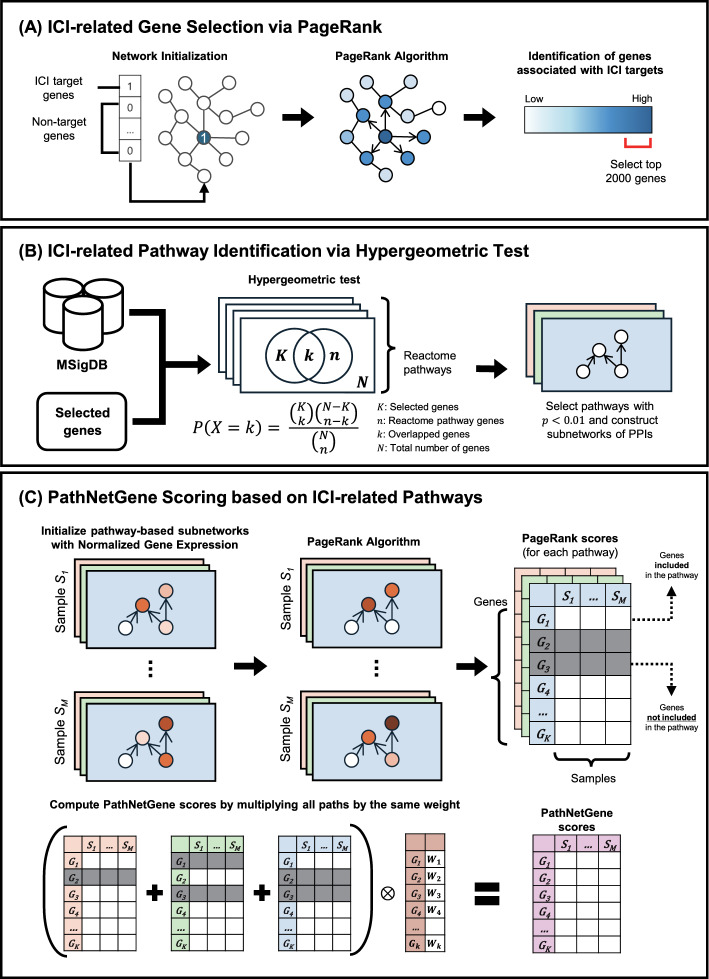
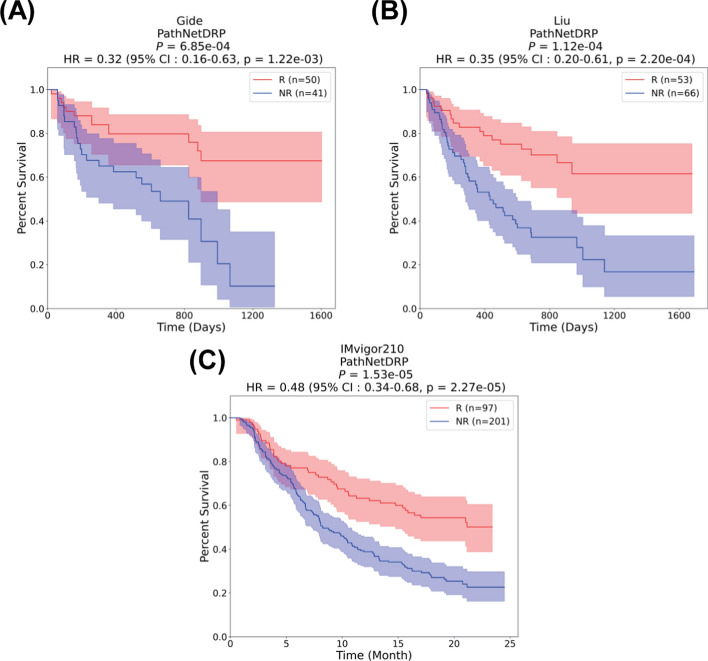
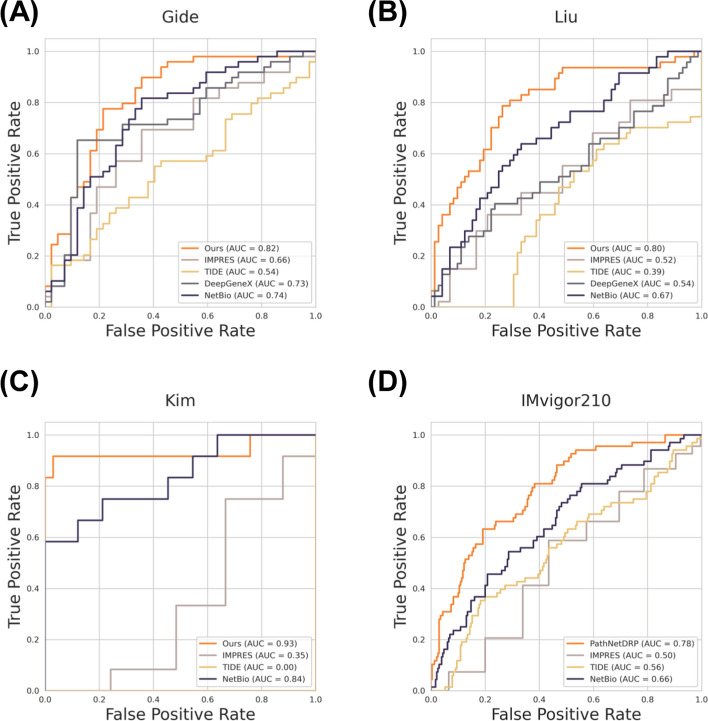
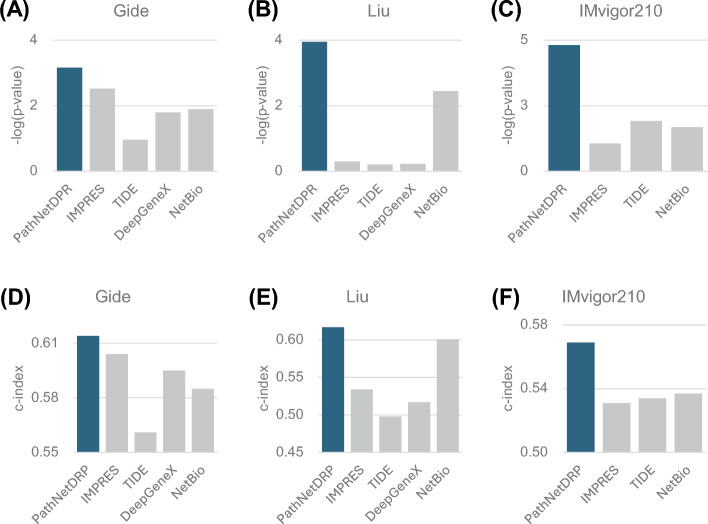
BACKGROUND: Predicting immune checkpoint inhibitor (ICI) response remains a significant challenge in cancer immunotherapy. Many existing approaches rely on differential gene expression analysis or predefined immune signatures, which may fail to capture the complex regulatory mechanisms underlying immune response. Network-based models attempt to integrate biological interactions, but they often lack a quantitative framework to assess how individual genes contribute within pathways, limiting the specificity and interpretability of biomarkers. Given these limitations, we developed PathNetDRP, a framework that integrates biological pathways, protein-protein interaction networks, and machine learning to identify functionally relevant biomarkers for ICI response prediction. RESULTS: We introduce PathNetDRP, a novel biomarker discovery approach that applies the PageRank algorithm to prioritize ICI-associated genes, maps them to relevant biological pathways, and calculates PathNetGene scores to quantify their contribution to immune response. Unlike conventional methods that focus solely on gene expression differences, PathNetDRP systematically incorporates biological context to improve biomarker selection. Validation across multiple independent cancer cohorts showed that PathNetDRP achieved strong predictive performance, with cross-validation the area under the receiver operating characteristic curves increasing from 0.780 to 0.940. Interestingly, PathNetDRP did not merely improve predictive accuracy; it also provided insights into key immune-related pathways, reinforcing its potential for identifying clinically relevant biomarkers. CONCLUSION: The biomarkers identified by PathNetDRP demonstrated robust predictive performance across cross-validation and independent validation datasets, suggesting their potential utility in clinical applications. Furthermore, enrichment analysis highlighted key immune-related pathways, providing a deeper understanding of their role in ICI response regulation. While these findings underscore the promise of PathNetDRP, future work will explore the integration of additional predictive features, such as tumor mutational burden and microsatellite instability, to further refine its applicability.
Overview
The claims and statistics of this paper haven’t been checked yet.
Run the check — free, no account needed. It reads the open-access text and checks the sources it cites.
Integrity signals
Registry
Cites
Statistics
Figures
Verification
Claims the paper makes
The claims and statistics of this paper haven’t been checked yet.
Run the check — free, no account needed. It reads the open-access text and checks the sources it cites.
Claims other papers make about this one
Each is checked against this paper’s own text: does it say what the citing paper says it does?
The source backs part of the claim, not all of it — or backs it for a different population, condition or comparison.
In the citing paper
“Multiple reviews and original research studies have indicated that HLA variation and expression levels are important determinants of ICI response.”
From PathTIGR: A pathway topology-informed graph representation learning framework for immunotherapy response prediction (2026) · cites this paper as [53]
Experimental — accuracy not yet measuredThe source backs part of the claim, not all of it — or backs it for a different population, condition or comparison.
In the citing paper
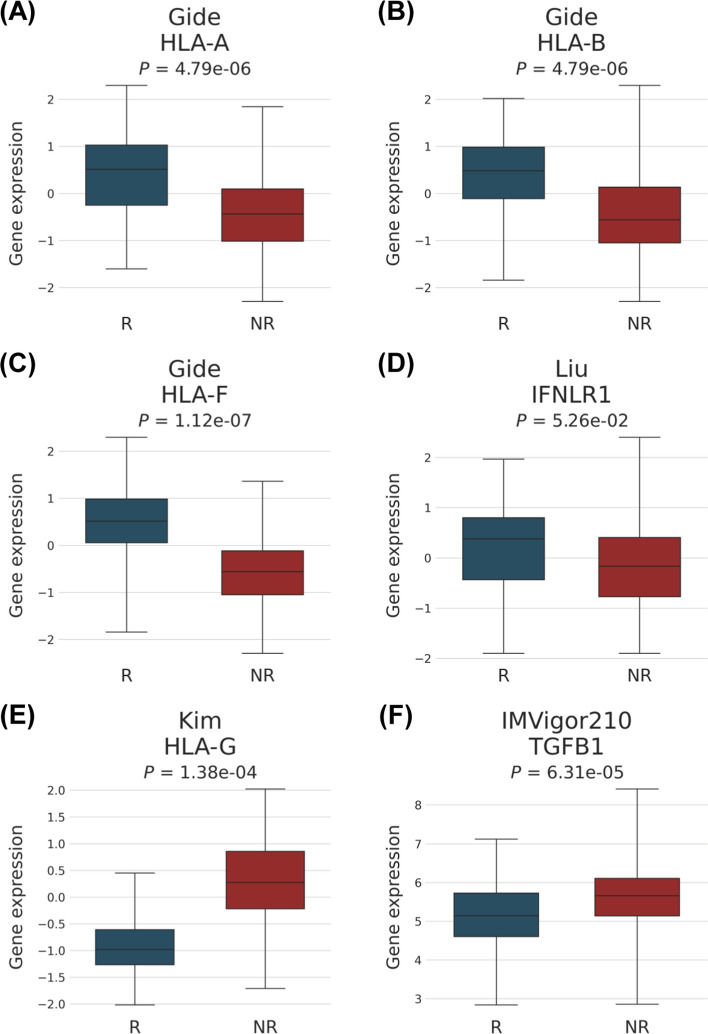
“HLA has been identified as a biomarker for predicting ICI response, with higher expression observed in responders (51–53).”
From PathTIGR: A pathway topology-informed graph representation learning framework for immunotherapy response prediction (2026) · cites this paper as [53]
Experimental — accuracy not yet measured
Self-check
Percentages, sums and reported differences re-computed from the paper’s own numbers.
The self-check needs the paper’s full text.
Citations
Cites
Subramanian, A., Tamayo, P., Mootha, V. K., Mukherjee, S., Ebert, B. L., Gillette, M. A., Paulovich, A., Pomeroy, S. L., Golub, T. R., Lander, E. S., et al. (2005) · Proceedings of the National Academy of Sciences · doi:10.1073/pnas.0506580102 · Cited by 53,625
Schmid, P., Rugo, H. S., Adams, S., Schneeweiss, A., Barrios, C. H., Iwata, H., Diéras, V., Henschel, V., Molinero, L., Chui, S. Y., et al. (2020) · The Lancet Oncology · doi:10.1016/s1470-2045(19)30689-8 · Cited by 1,216
In search of definitions: Cancer‐associated fibroblasts and their markers
Nurmik, M., Ullmann, P., Rodriguez, F., Haan, S., & Letellier, E. (2020) · International Journal of Cancer · doi:10.1002/ijc.32193 · Cited by 739
Research works printed but not linked: 45
- Havel JJ, Chowell D, Chan TA. The evolving landscape of biomarkers for checkpoint inhibitor immunotherapy. Nat Rev Cancer. 2019;19(3):133–50. · DOI · Paper page
- Darvin P, Toor SM, Sasidharan Nair V, Elkord E. Immune checkpoint inhibitors: recent progress and potential biomarkers. Exp Mol Med. 2018;50(12):1–11. · DOI · Paper page
- Robert C, Long GV, Brady B, Dutriaux C, Maio M, Mortier L, Hassel JC, Rutkowski P, McNeil C, Kalinka-Warzocha E. Nivolumab in previously untreated melanoma without braf mutation. N Engl J Med. 2015;372(4):320–30. · DOI · Paper page
- Ziogas DC, Theocharopoulos C, Koutouratsas T, Haanen J, Gogas H. Mechanisms of resistance to immune checkpoint inhibitors in melanoma: What we have to overcome? Cancer Treat Rev. 2023;113:102499. · DOI
- Garon EB, Rizvi NA, Hui R, Leighl N, Balmanoukian AS, Eder JP, Patnaik A, Aggarwal C, Gubens M, Horn L. Pembrolizumab for the treatment of non-small-cell lung cancer. N Engl J Med. 2015;372(21):2018–28. · DOI · Paper page
- Le DT, Uram JN, Wang H, Bartlett BR, Kemberling H, Eyring AD, Skora AD, Luber BS, Azad NS, Laheru D. Pd-1 blockade in tumors with mismatch-repair deficiency. N Engl J Med. 2015;372(26):2509–20. · DOI · Paper page
- Shum B, Larkin J, Turajlic S. Predictive biomarkers for response to immune checkpoint inhibition. In: Seminars in Cancer Biology, vol. 79, Amsterdam: Elsevier; 2022. pp. 4–17 · DOI
- Balar AV, Galsky MD, Rosenberg JE, Powles T, Petrylak DP, Bellmunt J, Loriot Y, Necchi A, Hoffman-Censits J, Perez-Gracia JL. Atezolizumab as first-line treatment in cisplatin-ineligible patients with locally advanced and metastatic urothelial carcinoma: a single-arm, multicentre, phase 2 trial. Lancet. 2017;389(10064):67–76. · DOI · Paper page
- Llosa NJ, Cruise M, Tam A, Wicks EC, Hechenbleikner EM, Taube JM, Blosser RL, Fan H, Wang H, Luber BS. The vigorous immune microenvironment of microsatellite instable colon cancer is balanced by multiple counter-inhibitory checkpoints. Cancer Discov. 2015;5(1):43–51. · DOI · Paper page
- Ayers M, Lunceford J, Nebozhyn M, Murphy E, Loboda A, Kaufman DR, Albright A, Cheng JD, Kang SP, Shankaran V. Ifn-$$\gamma$$-related mrna profile predicts clinical response to pd-1 blockade. J Clin Investig. 2017;127(8):2930–40. · DOI · Paper page
- Litchfield K, Reading JL, Puttick C, Thakkar K, Abbosh C, Bentham R, Watkins TB, Rosenthal R, Biswas D, Rowan A. Meta-analysis of tumor-and t cell-intrinsic mechanisms of sensitization to checkpoint inhibition. Cell. 2021;184(3):596–614. · DOI · Paper page
- Harper J, Sainson RC. Regulation of the anti-tumour immune response by cancer-associated fibroblasts. In: Seminars in Cancer Biology, vol. 25, Elsevier; 2014. p. 69–77 · DOI
- Dancsok AR, Gao D, Lee AF, Steigen SE, Blay J-Y, Thomas DM, Maki RG, Nielsen TO, Demicco EG. Tumor-associated macrophages and macrophage-related immune checkpoint expression in sarcomas. Oncoimmunology. 2020;9(1):1747340. · DOI
- Jiang P, Gu S, Pan D, Fu J, Sahu A, Hu X, Li Z, Traugh N, Bu X, Li B. Signatures of t cell dysfunction and exclusion predict cancer immunotherapy response. Nat Med. 2018;24(10):1550–8. · DOI · Paper page
- Auslander N, Zhang G, Lee JS, Frederick DT, Miao B, Moll T, Tian T, Wei Z, Madan S, Sullivan RJ. Robust prediction of response to immune checkpoint blockade therapy in metastatic melanoma. Nat Med. 2018;24(10):1545–9. · DOI
- Kang Y, Vijay S, Gujral TS. Deep neural network modeling identifies biomarkers of response to immune-checkpoint therapy. Iscience. 2022;25(5):104228. · DOI
- Kong J, Ha D, Lee J, Kim I, Park M, Im S-H, Shin K, Kim S. Network-based machine learning approach to predict immunotherapy response in cancer patients. Nat Commun. 2022;13(1):3703. · DOI · Paper page
- Zhao L, Qi X, Chen Y, Qiao Y, Bu D, Wu Y, Luo Y, Wang S, Zhang R, Zhao Y. Biological knowledge graph-guided investigation of immune therapy response in cancer with graph neural network. Brief Bioinform. 2023;24(2):023. · DOI
- Virtanen P, Gommers R, Oliphant TE, Haberland M, Reddy T, Cournapeau D, Burovski E, Peterson P, Weckesser W, Bright J. Scipy 1.0: fundamental algorithms for scientific computing in python. Nat Methods. 2020;17(3):261–72. · DOI · Paper page
- Seabold S, Perktold J. Statsmodels: econometric and statistical modeling with python. SciPy. 2010;7:1.
- Al-Labadi L, Zarepour M. Two-sample Kolmogorov-Smirnov test using a Bayesian nonparametric approach. Math Methods Statist. 2017;26:212–25. · DOI
- Lee JS, Nair NU, Dinstag G, Chapman L, Chung Y, Wang K, Sinha S, Cha H, Kim D, Schperberg AV. Synthetic lethality-mediated precision oncology via the tumor transcriptome. Cell. 2021;184(9):2487–502. · DOI
- Mariathasan S, Turley SJ, Nickles D, Castiglioni A, Yuen K, Wang Y, Kadel Iii EE, Koeppen H, Astarita JL, Cubas R. Tgf$$\beta$$ attenuates tumour response to pd-l1 blockade by contributing to exclusion of t cells. Nature. 2018;554(7693):544–8. · DOI · Paper page
- Riaz N, Havel JJ, Makarov V, Desrichard A, Urba WJ, Sims JS, Hodi FS, Martín-Algarra S, Mandal R, Sharfman WH. Tumor and microenvironment evolution during immunotherapy with nivolumab. Cell. 2017;171(4):934–49. · DOI · Paper page
- Prat A, Navarro A, Paré L, Reguart N, Galván P, Pascual T, Martínez A, Nuciforo P, Comerma L, Alos L. Immune-related gene expression profiling after pd-1 blockade in non-small cell lung carcinoma, head and neck squamous cell carcinoma, and melanoma. Can Res. 2017;77(13):3540–50. · DOI · Paper page
- Kim ST, Cristescu R, Bass AJ, Kim K-M, Odegaard JI, Kim K, Liu XQ, Sher X, Jung H, Lee M. Comprehensive molecular characterization of clinical responses to pd-1 inhibition in metastatic gastric cancer. Nat Med. 2018;24(9):1449–58. · DOI
- Eisenhauer EA, Therasse P, Bogaerts J, Schwartz LH, Sargent D, Ford R, Dancey J, Arbuck S, Gwyther S, Mooney M. New response evaluation criteria in solid tumours: revised recist guideline (version 1.1). Eur J Cancer. 2009;45(2):228–47. · DOI · Paper page
- Szklarczyk D, Gable AL, Lyon D, Junge A, Wyder S, Huerta-Cepas J, Simonovic M, Doncheva NT, Morris JH, Bork P. String v11: protein-protein association networks with increased coverage, supporting functional discovery in genome-wide experimental datasets. Nucleic Acids Res. 2019;47(D1):607–13. · DOI · Paper page
- Gillespie M, Jassal B, Stephan R, Milacic M, Rothfels K, Senff-Ribeiro A, Griss J, Sevilla C, Matthews L, Gong C. The reactome pathway knowledgebase 2022. Nucleic Acids Res. 2022;50(D1):687–92. · DOI
- Lakatos E, Williams MJ, Schenck RO, Cross WC, Househam J, Zapata L, Werner B, Gatenbee C, Robertson-Tessi M, Barnes CP. Evolutionary dynamics of neoantigens in growing tumors. Nat Genet. 2020;52(10):1057–66. · DOI
- Boudreau JE, Hsu KC. Natural killer cell education and the response to infection and cancer therapy: stay tuned. Trends Immunol. 2018;39(3):222–39. · DOI
- Gallegos CE, Michelin S, Dubner D, Carosella ED. Immunomodulation of classical and non-classical hla molecules by ionizing radiation. Cell Immunol. 2016;303:16–23. · DOI
- Lasfar A, Abushahba W, Balan M, Cohen-Solal KA. Interferon lambda: a new sword in cancer immunotherapy. J Immunol Res. 2011;2011(1):349575.
- Sato A, Ohtsuki M, Hata M, Kobayashi E, Murakami T. Antitumor activity of ifn-$$\lambda$$ in murine tumor models. J Immunol. 2006;176(12):7686–94. · DOI
- Carosella ED, Rouas-Freiss N, Tronik-Le Roux D, Moreau P, LeMaoult J. Hla-g: an immune checkpoint molecule. Adv Immunol. 2015;127:33–144. · DOI
- LeMaoult J, Krawice-Radanne I, Dausset J, Carosella ED. Hla-g1-expressing antigen-presenting cells induce immunosuppressive cd4+ t cells. Proc Natl Acad Sci. 2004;101(18):7064–9. · DOI
- Bartolome J, Molto C, Benitez-Fuentes JD, Fernandez-Hinojal G, Manzano A, Perez-Segura P, Mittal A, Tamimi F, Amir E, Ocana A. Prognostic value of human leukocyte antigen g expression in solid tumors: a systematic review and meta-analysis. Front Immunol. 2023;14:1165813. · DOI
- Akhurst RJ, Hata A. Targeting the tgf$$\beta$$ signalling pathway in disease. Nat Rev Drug Discovery. 2012;11(10):790–811. · DOI · Paper page
- Ni Y, Soliman A, Joehlin-Price A, Rose PG, Vlad A, Edwards RP, Mahdi H. High tgf-$$\beta$$ signature predicts immunotherapy resistance in gynecologic cancer patients treated with immune checkpoint inhibition. NPJ precision oncology. 2021;5(1):101. · DOI
- Ritchie ME, Phipson B, Wu D, Hu Y, Law CW, Shi W, Smyth GK. limma powers differential expression analyses for rna-sequencing and microarray studies. Nucleic Acids Res. 2015;43(7):47–47. · DOI · Paper page
- Kolberg L, Raudvere U, Kuzmin I, Adler P, Vilo J, Peterson H. g: Profiler—interoperable web service for functional enrichment analysis and gene identifier mapping (2023 update). Nucleic Acids Res. 2023;51(W1):207–12. · DOI · Paper page
- Sherman BT, Hao M, Qiu J, Jiao X, Baseler MW, Lane HC, Imamichi T, Chang W. David: a web server for functional enrichment analysis and functional annotation of gene lists (2021 update). Nucleic Acids Res. 2022;50(W1):216–21. · DOI
- Jiang T, Zhou C, Ren S. Role of il-2 in cancer immunotherapy. Oncoimmunology. 2016;5(6):1163462. · DOI
- Raeber ME, Sahin D, Karakus U, Boyman O. A systematic review of interleukin-2-based immunotherapies in clinical trials for cancer and autoimmune diseases. EBioMedicine. 2023;90:104539. · DOI
- Wu X, Li T, Jiang R, Yang X, Guo H, Yang R. Targeting mhc-i molecules for cancer: function, mechanism, and therapeutic prospects. Mol Cancer. 2023;22(1):194. · DOI · Paper page
Cited by
Sorted by citations
Li, X., He, Y., Wu, J., Wang, Z., Zhao, X., Zhang, Y., Pan, B., Tang, Y., & Han, J. (2026) · PubMed · doi:10.1126/sciadv.aed6373 · Cited by 1
“HLA has been identified as a biomarker for predicting ICI response, with higher expression observed in responders ( 51 – 53 ).”
Metadata
- Authors
- Lee, D., Ahn, J., & Choi, J.
- Affiliations
- Incheon National University (KR)
- Hallym University (KR)
- Corresponding author
- Lee, Dohee
- Ahn, Jaegyoon
- Choi, Jonghwan
- Venue
- BMC Bioinformatics
- Published
- 2025-05-05
- Volume
- 26
- Issue
- 1
- Pages
- 119-119
- ISSN
- 1471-2105 (ISSN-L)
- PMC
- PMC12051301
- OpenAlex
- W4410078064
- Cited by
- 4
- References
- 3
- Citations by year
- 2026: 4
- FWCI
- 1.66
- Type
- journal article
- Language
- en
- Open access
- gold
- doi.org
- Licence
- Locations
- BMC Bioinformatics (publishedVersion, cc-by-nc-nd)
- Europe PMC (PubMed Central) (publishedVersion, cc-by-nc-nd)
- PubMed Central (publishedVersion, cc-by-nc-nd)
- PubMed (publishedVersion)
- DOAJ (DOAJ: Directory of Open Access Journals) (submittedVersion, cc-by-sa)
- Funders
- Ministry of Science and ICT, South Korea (IITP-2025-RS-2023-00260175, RS-2024-00345226)
- Topics
- Health Sciences › Medicine › Oncology › Cancer Immunotherapy and Biomarkers
- Life Sciences › Biochemistry, Genetics and Molecular Biology › Molecular Biology › Bioinformatics and Genomic Networks
- Life Sciences › Pharmacology, Toxicology and Pharmaceutics › Drug Discovery › Computational Drug Discovery Methods
- Keywords
- immune checkpoint inhibitor response prediction, biomarker discovery, protein-protein interaction network, pathway analysis, cancer immunotherapy, immune pathways
- MeSH terms
- Machine Learning, Immune Checkpoint Inhibitors, Algorithms, Humans, Neoplasms, Biomarkers, Tumor, Computational Biology, Protein Interaction Maps
About these checks
Registry, retraction, Cites and statistics results are computed, not judged, with one exception: a printed reference that no index lists is read once by a model before it counts as a citation error. Claims are extracted by a model and kept only when their quote appears verbatim in the text; each cited source is then checked, with a model’s help, for whether it says what the claim relies on. Those verdicts can be wrong — read the claim’s quote and the cited source before relying on one.
Statistics and arithmetic are recomputed, not judged.
Confidence bands are shown only for fields calibrated on our annotated test set. None is calibrated yet, so no band is shown.
What counts as a claim ›How we measure confidence ›How we check this ›
Are you an author, or do you see a problem with this page? Request a review
