

The mitochondrial outer membrane protein SYNJ2BP interacts with the cell adhesion molecule TMIGD1 and can recruit it to mitochondria
Open accessThe DOI matches its Crossref record; 46 of the 47 references it cites were found in a registry or an index.
Abstract
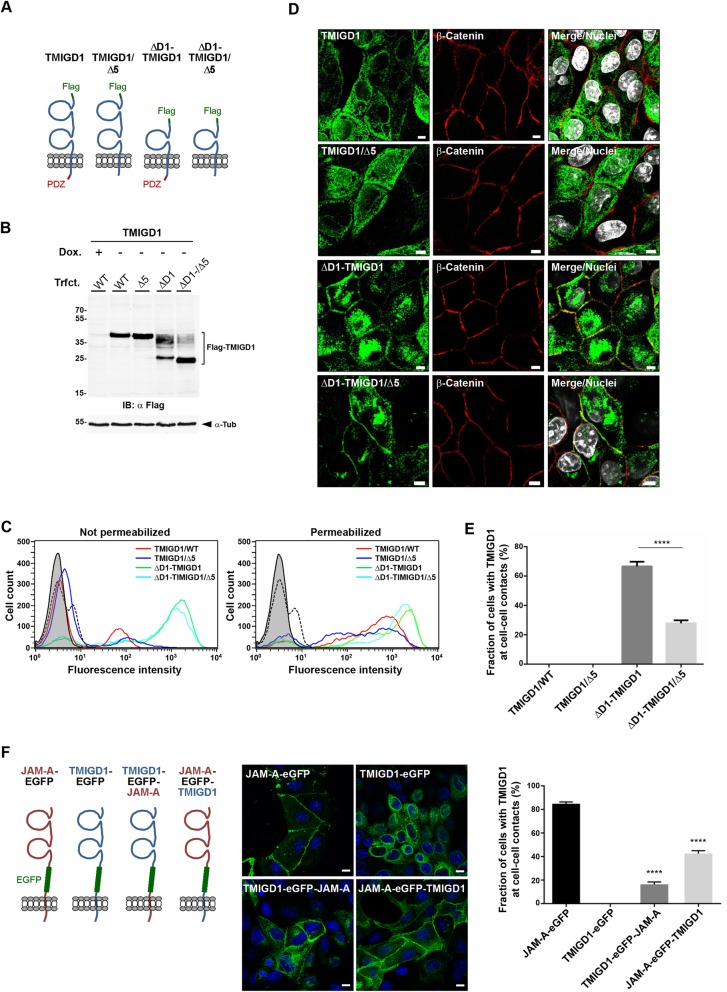
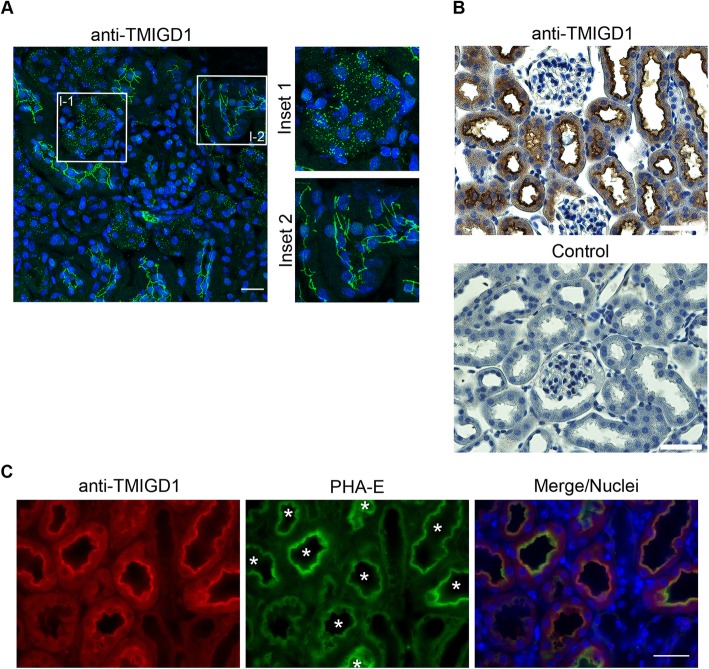
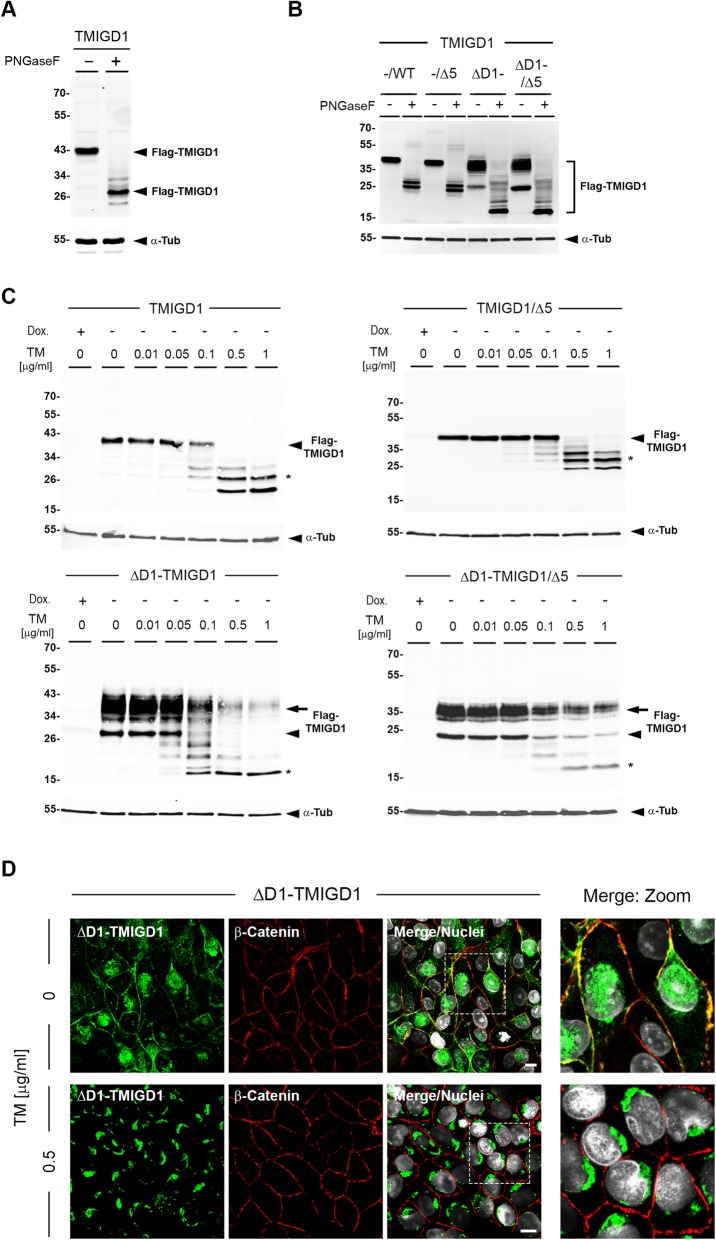
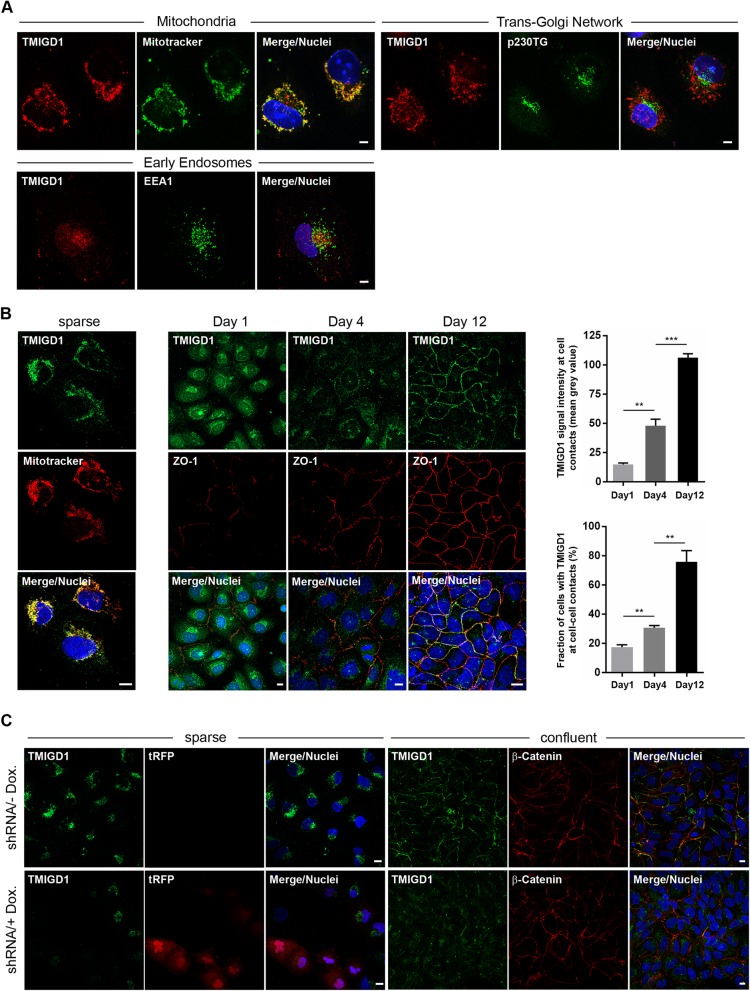
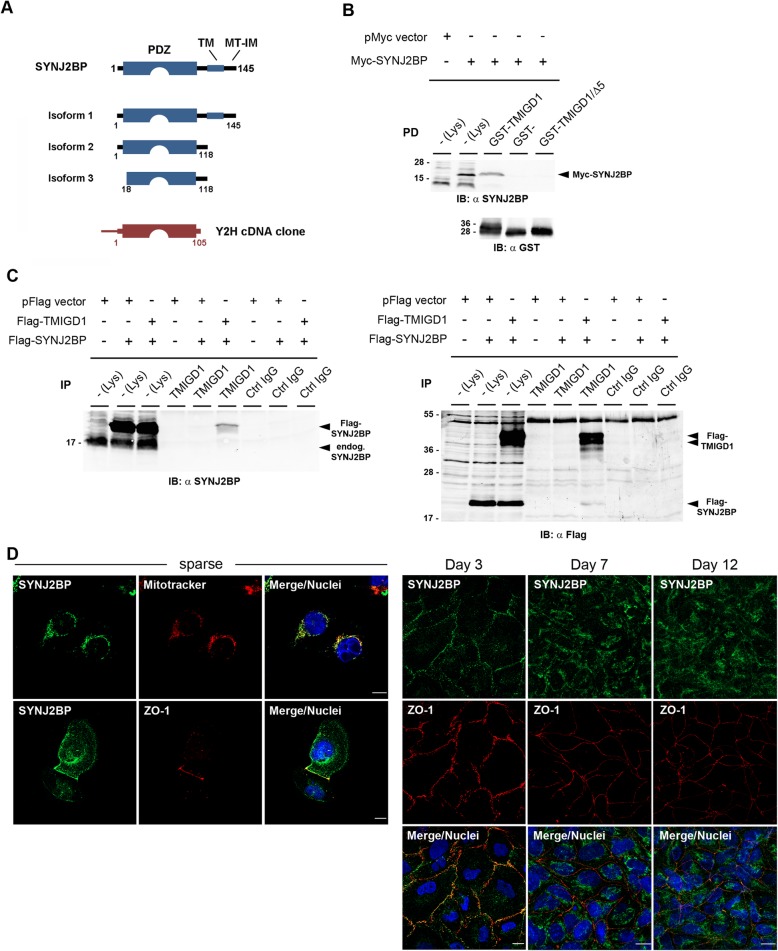
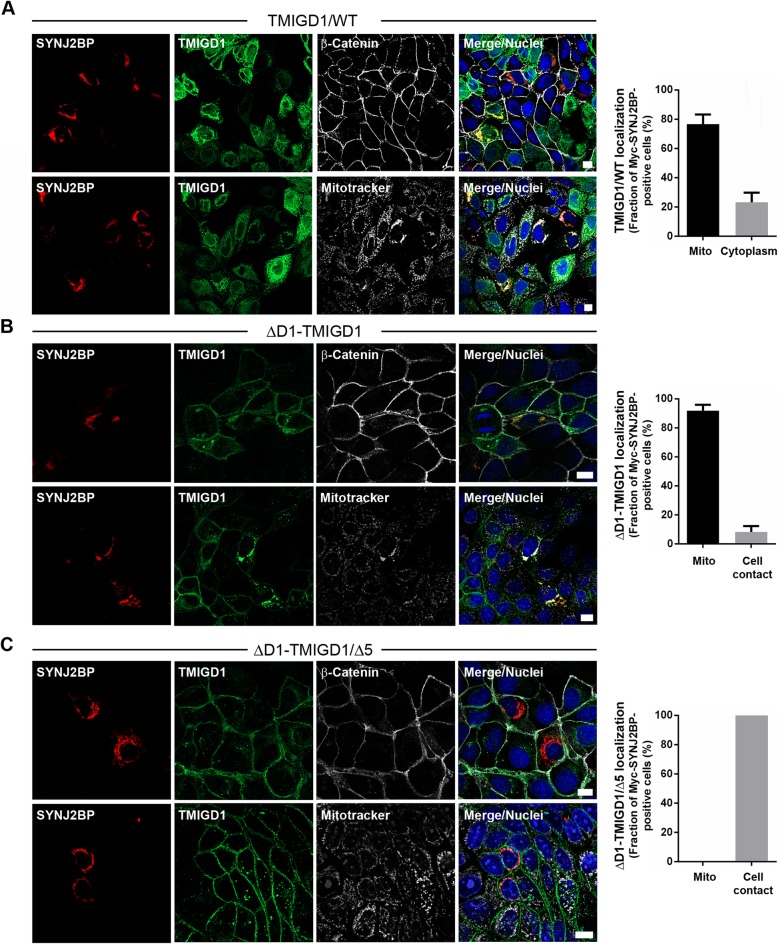
Background: Transmembrane and immunoglobulin domain-containing protein 1 (TMIGD1) is a recently identified cell adhesion molecule which is predominantly expressed by epithelial cells of the intestine and the kidney. Its expression is downregulated in both colon and renal cancer suggesting a tumor suppressive activity. The function of TMIGD1 at the cellular level is largely unclear. Published work suggests a protective role of TMIGD1 during oxidative stress in kidney epithelial cells, but the underlying molecular mechanisms are unknown. Results: In this study, we address the subcellular localization of TMIGD1 in renal epithelial cells and identify a cytoplasmic scaffold protein as interaction partner of TMIGD1. We find that TMIGD1 localizes to different compartments in renal epithelial cells and that this localization is regulated by cell confluency. Whereas it localizes to mitochondria in subconfluent cells it is localized at cell-cell contacts in confluent cells. We find that cell-cell contact localization is regulated by N-glycosylation and that both the extracellular and the cytoplasmic domain contribute to this localization. We identify Synaptojanin 2-binding protein (SYNJ2BP), a PDZ domain-containing cytoplasmic protein, which localizes to both mitochondria and the plasma membrane, as interaction partner of TMIGD1. The interaction of TMIGD1 and SYNJ2BP is mediated by the PDZ domain of SYNJ2BP and the C-terminal PDZ domain-binding motif of TMIGD1. We also find that SYNJ2BP can actively recruit TMIGD1 to mitochondria providing a potential mechanism for the localization of TMIGD1 at mitochondria. Conclusions: This study describes TMIGD1 as an adhesion receptor that can localize to both mitochondria and cell-cell junctions in renal epithelial cells. It identifies SYNJ2BP as an interaction partner of TMIGD1 providing a potential mechanism underlying the localization of TMIGD1 at mitochondria. The study thus lays the basis for a better understanding of the molecular function of TMIGD1 during oxidative stress regulation.
Overview
The claims and statistics of this paper haven’t been checked yet.
Free: it reads the open-access text and checks the first 5 claims that cite a source we can check. Create a free account to check every claim.
Integrity signals
Registry
Cites
Statistics
Figures
Verification
Claims the paper makes
The claims and statistics of this paper haven’t been checked yet.
Free: it reads the open-access text and checks the first 5 claims that cite a source we can check. Create a free account to check every claim.
Claims other papers make about this one
Each is checked against this paper’s own text: does it say what the citing paper says it does?
The cited source says what the claim attributes to it.
In the citing paper
“TMIGD1 is predominantly expressed by proximal tubule kidney epithelial cells23–25 and by intestinal epithelial cells26–28.”
From Membrane recruitment of the polarity protein Scribble by the cell adhesion receptor TMIGD1 (2023) · cites this paper as [25]
The cited source says what the claim attributes to it.
In the citing paper
“In kidney epithelial cells TMIGD1 is localized at mitochondria when cells are grown at low density but redistributes to cell-cell contacts when cells reach confluency25.”
From Membrane recruitment of the polarity protein Scribble by the cell adhesion receptor TMIGD1 (2023) · cites this paper as [25]
Self-check
Percentages, sums and reported differences re-computed from the paper’s own numbers.
The self-check needs the paper’s full text.
Citations
Cites
Journal of Biological Chemistry
(2021) · Journal of Biological Chemistry · doi:10.1074/jbc · Cited by 3,400
Varki, A. (2017) · Glycobiology · doi:10.1093/glycob/cww086 · Cited by 2,635
The Immunoglobulin Superfamily: Domains For Cell Surface Recognition
Williams, A. (1988) · Annual Review of Immunology · doi:10.1146/annurev.immunol.6.1.381 · Cited by 2,254
Schiestl, R. H., & Gietz, R. D. (1989) · Current Genetics · doi:10.1007/bf00340712 · Cited by 2,131
Mammalian Ras interacts directly with the serine/threonine kinase raf
Vojtek, A. B., Hollenberg, S. M., & Cooper, J. A. (1993) · Cell · doi:10.1016/0092-8674(93)90307-c · Cited by 1,941
The multifaceted contributions of mitochondria to cellular metabolism
Spinelli, J. B., & Haigis, M. C. (2018) · Nature Cell Biology · doi:10.1038/s41556-018-0124-1 · Cited by 1,935
Regulation of cadherin-mediated adhesion in morphogenesis
Gumbiner, B. M. (2005) · Nature Reviews Molecular Cell Biology · doi:10.1038/nrm1699 · Cited by 1,523
Assembly of Cell Regulatory Systems Through Protein Interaction Domains
Pawson, T., & Nash, P. (2003) · Science · doi:10.1126/science.1083653 · Cited by 1,422
Recognition of Unique Carboxyl-Terminal Motifs by Distinct PDZ Domains
Songyang, Z., Fanning, A. S., Fu, C., Xu, J., Marfatia, S. M., Chishti, A. H., Crompton, A., Chan, A. C., Anderson, J. M., & Cantley, L. C. (1997) · Science · doi:10.1126/science.275.5296.73 · Cited by 1,385
Mitochondrial proteins: from biogenesis to functional networks
Pfanner, N., Warscheid, B., & Wiedemann, N. (2019) · Nature Reviews Molecular Cell Biology · doi:10.1038/s41580-018-0092-0 · Cited by 1,028
HK-2: An immortalized proximal tubule epithelial cell line from normal adult human kidney
Ryan, M. J., Johnson, G., Kirk, J., Fuerstenberg, S. M., Zager, R. A., & Torok-Storb, B. (1994) · Kidney International · doi:10.1038/ki.1994.6 · Cited by 891
Oxidative stress in chronic kidney disease
Daenen, K., Andries, A., Mekahli, D., Van Schepdael, A., Jouret, F., & Bammens, B. (2019) · Pediatric Nephrology · doi:10.1007/s00467-018-4005-4 · Cited by 882
Isolation of Monoclonal Antibodies Specific for Human c-myc Proto-Oncogene Product
Evan, G. I., Lewis, G. K., Ramsay, G., & Bishop, J. M. (1985) · Molecular and Cellular Biology · doi:10.1128/mcb.5.12.3610-3616.1985 · Cited by 794
The pINDUCER lentiviral toolkit for inducible RNA interference in vitro and in vivo
Meerbrey, K. L., Hu, G., Kessler, J. D., Roarty, K., Li, M. Z., Fang, J. E., Herschkowitz, J. I., Burrows, A. E., Ciccia, A., Sun, T., et al. (2011) · Proceedings of the National Academy of Sciences · doi:10.1073/pnas.1019736108 · Cited by 666
Hollenberg, S. M., Sternglanz, R., Cheng, P. F., & Weintraub, H. (1995) · Molecular and Cellular Biology · doi:10.1128/mcb.15.7.3813 · Cited by 647
Junctional adhesion molecules (JAMs): more molecules with dual functions?
Ebnet, K., Suzuki, A., Ohno, S., & Vestweber, D. (2004) · Journal of Cell Science · doi:10.1242/jcs.00930 · Cited by 501
Self-citationWong, H.-S., Dighe, P. A., Mezera, V., Monternier, P.-A., & Brand, M. D. (2017) · Journal of Biological Chemistry · doi:10.1074/jbc.r117.789271 · Cited by 483
Junctional Adhesion Molecule Interacts with the PDZ Domain-containing Proteins AF-6 and ZO-1
Ebnet, K., Schulz, C. U., Meyer zu Brickwedde, M.-K., Pendl, G. G., & Vestweber, D. (2000) · Journal of Biological Chemistry · doi:10.1074/jbc.m002363200 · Cited by 438
Self-citationMitochondrial dysfunction in the pathophysiology of renal diseases
Che, R., Yuan, Y., Huang, S., & Zhang, A. (2014) · American Journal of Physiology-Renal Physiology · doi:10.1152/ajprenal.00571.2013 · Cited by 394
Hung, V., Lam, S. S., Udeshi, N. D., Svinkina, T., Guzman, G., Mootha, V. K., Carr, S. A., & Ting, A. Y. (2017) · eLife · doi:10.7554/elife.24463 · Cited by 372
Ubiquilins Chaperone and Triage Mitochondrial Membrane Proteins for Degradation
Itakura, E., Zavodszky, E., Shao, S., Wohlever, M. L., Keenan, R. J., & Hegde, R. S. (2016) · Molecular Cell · doi:10.1016/j.molcel.2016.05.020 · Cited by 254
Nemoto, Y. (1999) · The EMBO Journal · doi:10.1093/emboj/18.11.2991 · Cited by 194
Epidermal Growth Factor Receptor Translocation to the Mitochondria
Demory, M. L., Boerner, J. L., Davidson, R., Faust, W., Miyake, T., Lee, I., Hüttemann, M., Douglas, R., Haddad, G., & Parsons, S. J. (2009) · Journal of Biological Chemistry · doi:10.1074/jbc.m109.000760 · Cited by 184
Ebnet, K. (2017) · Physiological Reviews · doi:10.1152/physrev.00004.2017 · Cited by 176
Self-citationThe MDCK epithelial cell line expresses a cell surface antigen of the kidney distal tubule.
Herzlinger, D. A., Easton, T. G., & Ojakian, G. K. (1982) · The Journal of cell biology · doi:10.1083/jcb.93.2.269 · Cited by 160
Cao, X., Zhu, H., Ali‐Osman, F., & Lo, H. (2011) · Molecular Cancer · doi:10.1186/1476-4598-10-26 · Cited by 105
Keegan, K. S., & Cooper, J. A. (1996) · PubMed · Cited by 96
A Structural Portrait of the PDZ Domain Family
Ernst, A., Appleton, B. A., Ivarsson, Y., Zhang, Y., Gfeller, D., Wiesmann, C., & Sidhu, S. S. (2014) · Journal of Molecular Biology · doi:10.1016/j.jmb.2014.08.012 · Cited by 90
Rehder, D., Iden, S., Nasdala, I., Wegener, J., zu Brickwedde, M.-K. M., Vestweber, D., & Ebnet, K. (2006) · Experimental Cell Research · doi:10.1016/j.yexcr.2006.07.004 · Cited by 87
Self-citationMatsuzaki, T., Hanai, S., Kishi, H., Liu, Z., Bao, Y., Kikuchi, A., Tsuchida, K., & Sugino, H. (2002) · Journal of Biological Chemistry · doi:10.1074/jbc.m112472200 · Cited by 85 · cited 1×
“Interestingly, SYNJ2BP has been found to interact with the cytoplasmic domain of activin type II receptors (ActRII) to regulate their endocytosis [18], as well as with the cytoplasmic domains of the Notch ligands Delta like protein (DLL) 1 and DLL4 to increase protein stability and Notch signalling [19].”
BackgroundAdam, M. G., Berger, C., Feldner, A., Yang, W.-J., Wüstehube-Lausch, J., Herberich, S. E., Pinder, M., Gesierich, S., Hammes, H.-P., Augustin, H. G., et al. (2013) · Circulation Research · doi:10.1161/circresaha.113.301686 · Cited by 84
Prion Protein Helix1 Promotes Aggregation but Is Not Converted into beta-Sheet
Watzlawik, J. O., Skóra, L., Frense, D., Griesinger, C., Zweckstetter, M., Schulz‐Schaeffer, W., & Kramer, M. L. (2006) · Journal of Biological Chemistry · doi:10.1074/jbc.m605141200 · Cited by 55
Elucidation of the binding preferences of peptide recognition modules: SH3 and PDZ domains
Teyra, J., Sidhu, S. S., & Kim, P. M. (2012) · FEBS Letters · doi:10.1016/j.febslet.2012.05.043 · Cited by 54
Profiles of microRNA networks in intestinal epithelial cells in a mouse model of colitis
Lee, J., Park, E. J., Yuki, Y., Ahmad, S., Mizuguchi, K., Ishii, K. J., Shimaoka, M., & Kiyono, H. (2015) · Scientific Reports · doi:10.1038/srep18174 · Cited by 52
Lee, T.-Y., Muschal, S., Pravda, E. A., Folkman, J., Abdollahi, A., & Javaherian, K. (2009) · Blood · doi:10.1182/blood-2008-12-197236 · Cited by 47
Cattaneo, E., Laczko, E., Buffoli, F., Zorzi, F., Bianco, M. A., Menigatti, M., Bartosova, Z., Haider, R., Helmchen, B., Sabates‐Bellver, J., et al. (2011) · EMBO Molecular Medicine · doi:10.1002/emmm.201100141 · Cited by 44
Mojica, W., & Hawthorn, L. (2010) · BMC Genomics · doi:10.1186/1471-2164-11-5 · Cited by 43
Roberts, D. L., O’Dwyer, S. T., Stern, P. L., & Renehan, A. G. (2015) · Oncotarget · doi:10.18632/oncotarget.3198 · Cited by 42
Chen, M., Qiu, T., Wu, J., Yang, Y., Wright, G. D., Wu, M., & Ge, R. (2018) · Cell Death and Differentiation · doi:10.1038/s41418-018-0092-9 · Cited by 42
TMIGD1 Is a Novel Adhesion Molecule That Protects Epithelial Cells from Oxidative Cell Injury
Arafa, E., Bondzie, P. A., Rezazadeh, K., Meyer, R. D., Hartsough, E., Henderson, J. M., Schwartz, J. H., Chitalia, V., & Rahimi, N. (2015) · The American Journal of Pathology · doi:10.1016/j.ajpath.2015.06.006 · Cited by 40
Wang, M., Wu, H., Li, S., Xu, Z., Li, X., Yang, Y. Y., Li, B., Li, Y., Guo, J., & Chen, H. (2017) · Oncotarget · doi:10.18632/oncotarget.21058 · Cited by 34
Liu, Z. H., Tsuchida, K., Matsuzaki, T., Bao, Y., Kurisaki, A., & Sugino, H. (2006) · Journal of Endocrinology · doi:10.1677/joe.1.06420 · Cited by 30
TMIGD1 acts as a tumor suppressor through regulation of p21Cip1/p27Kip1 in renal cancer
Meyer, R. D., Zou, X., Ali, M., Ersoy, E., Bondzie, P. A., Lavaei, M., Alexandrov, I., Henderson, J., & Rahimi, N. (2018) · Oncotarget · doi:10.18632/oncotarget.23822 · Cited by 24
Lectin staining of renal tubules in normal kidney
Engel, U., Breborowicz, D., Bøg-Hansen, T. C., & Francis, D. (1997) · Apmis · doi:10.1111/j.1699-0463.1997.tb00536.x · Cited by 22
MicroRNA-orchestrated pathophysiologic control in gut homeostasis and inflammation
Lee, J., Park, E. J., & Kiyono, H. (2016) · BMB Reports · doi:10.5483/bmbrep.2016.49.5.041 · Cited by 15
Modulatory roles of NHERF1 and NHERF2 in cell surface expression of the glutamate transporter GLAST.
Sato, K., Otsu, W., Otsuka, Y., & Inaba, M. (2013) · Biochemical and Biophysical Research Communications - BBRC · doi:10.1016/j.bbrc.2012.11.059 · Cited by 10
Cited by
Luan, Y., Luan, Y., Yuan, R., Feng, Q., Chen, X., & Yang, Y. (2021) · Oxidative Medicine and Cellular Longevity · doi:10.1155/2021/4578809 · Cited by 121
Genome-Wide Association Study of Motor Coordination
Mountford, H. S., Hill, A., Barnett, A. L., & Newbury, D. F. (2021) · Frontiers in Human Neuroscience · doi:10.3389/fnhum.2021.669902 · Cited by 36
Wang, M., Wei, R., Li, G., Bi, H.-L., Jia, Z., Zhang, M., Pang, M., Li, X., Ma, L., & Tang, Y. (2022) · Cancer Letters · doi:10.1016/j.canlet.2022.215871 · Cited by 33
Zhou, L., Zhu, L., Wu, X., Hu, S., Zhang, S., Ning, M., Yu, J. Q., & Chen, M. (2023) · BMC Medicine · doi:10.1186/s12916-023-02989-2 · Cited by 33
Luan, Y., Jin, Y., Zhang, P., Li, H., & Yang, Y. (2022) · Frontiers in Cardiovascular Medicine · doi:10.3389/fcvm.2022.1015722 · Cited by 26
Metadata
- Authors
- Hartmann, C., Schwietzer, Y. A., Kummer, D., Kirschnick, N., Hoppe, E., Thüring, E.-M., Glaesner-Ebnet, M., Brinkmann, F., Gerke, V., Reuter, S., Nakayama, M., & Ebnet, K.
- Affiliations
- University of Münster (DE)
- University Hospital Münster (DE)
- Max Planck Institute for Heart and Lung Research (DE)
- Corresponding author
- Ebnet, Klaus
- ORCID
- Venue
- BMC Molecular and Cell Biology
- Published
- 2020-04-17
- Volume
- 21
- Issue
- 1
- Pages
- 30-30
- ISSN
- 2661-8850 (ISSN-L)
- PMC
- PMC7164261
- OpenAlex
- W3016484868
- Cited by
- 32
- References
- 47
- Citations by year
- 2026: 2 · 2025: 6 · 2024: 1 · 2023: 8 · 2022: 8 · 2021: 7
- FWCI
- 5.16
- Type
- journal article
- Language
- en
- Open access
- gold
- doi.org
- Licence
- cc-by
- creativecommons.org/licenses/by/4.0/ (tdm)
- creativecommons.org/licenses/by/4.0/ (vor)
- Locations
- BMC Molecular and Cell Biology (publishedVersion, cc-by)
- PubMed Central (publishedVersion, cc-by)
- PubMed (publishedVersion)
- DOAJ (DOAJ: Directory of Open Access Journals) (submittedVersion, cc-by-sa)
- MPG.PuRe (Max Planck Society) (submittedVersion)
- Funders
- Deutsche Forschungsgemeinschaft (EB 160/5-1, EB 160/6-1)
- Medizinische Fakultät, Westfälische Wilhelms-Universität Münster (IZKF Eb2/020/14)
- Topics
- Health Sciences › Medicine › Immunology and Allergy › Cell Adhesion Molecules Research
- Life Sciences › Biochemistry, Genetics and Molecular Biology › Molecular Biology › Mitochondrial Function and Pathology
- Life Sciences › Biochemistry, Genetics and Molecular Biology › Molecular Biology › Cell death mechanisms and regulation
- Keywords
- mitochondrial outer membrane, adhesion molecules, PDZ domain, protein-protein interaction, subcellular localization, renal epithelial cells, cell-cell contact, N-glycosylation, cell confluence, oxidative stress, tumor suppressor
- MeSH terms
- Cell Adhesion, Cell Membrane, Cytoplasm, Epithelial Cells, Glycosylation, Humans, Membrane Glycoproteins, Membrane Proteins, Mitochondria, Protein Binding, Cell Line, Tumor, Mitochondrial Membranes, PDZ Domains, Junctional Adhesion Molecules
About these checks
Registry, retraction, Cites and statistics results are computed, not judged, with one exception: a printed reference that no index lists is read once by a model before it counts as a citation error. Claims are extracted by a model and kept only when their quote appears verbatim in the text; each cited source is then checked, with a model’s help, for whether it says what the claim relies on. Those verdicts can be wrong — read the claim’s quote and the cited source before relying on one.
Statistics and arithmetic are recomputed, not judged.
Confidence bands are shown only for fields calibrated on our annotated test set. None is calibrated yet, so no band is shown.
What counts as a claim ›How we measure confidence ›How we check this ›
Are you an author, or do you see a problem with this page? Request a review
Data sources
Bibliographic data: Semantic Scholar, OpenAlex, Crossref.
Contains information from the Semantic Scholar Academic Graph Datasets, made available under the ODC Attribution License (ODC-BY 1.0).
Semantic Scholar’s data is described in: Kinney, R., et al. (2023). The Semantic Scholar Open Data Platform. arXiv:2301.10140.
