

Global transcriptome and gene regulation network for secondary metabolite biosynthesis of tea plant (Camellia sinensis)
Open accessThe DOI matches its Crossref record; 54 of the 54 references it cites were found in a registry or an index.
Abstract
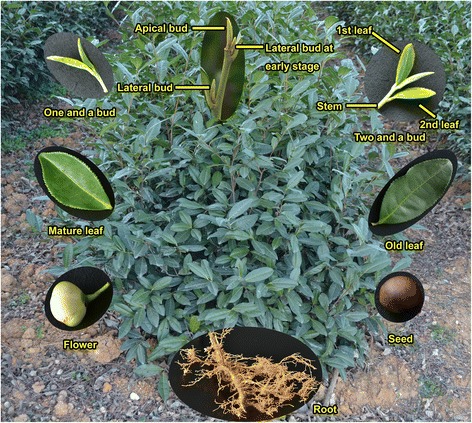
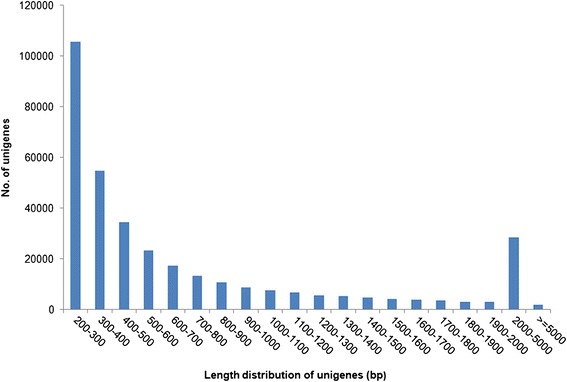
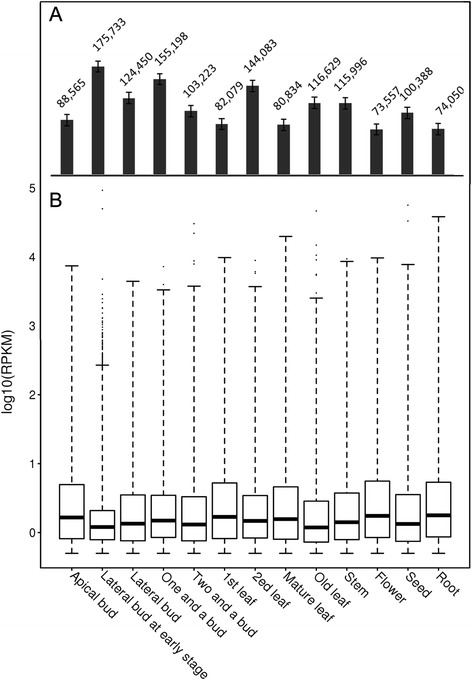
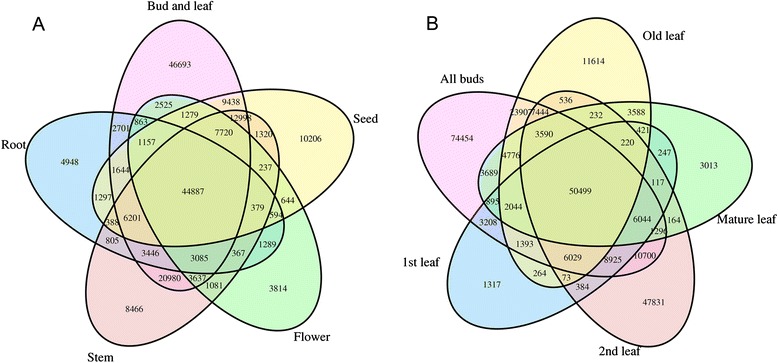
BACKGROUND: Major secondary metabolites, including flavonoids, caffeine, and theanine, are important components of tea products and are closely related to the taste, flavor, and health benefits of tea. Secondary metabolite biosynthesis in Camellia sinensis is differentially regulated in different tissues during growth and development. Until now, little was known about the expression patterns of genes involved in secondary metabolic pathways or their regulatory mechanisms. This study aimed to generate expression profiles for C. sinensis tissues and to build a gene regulation model of the secondary metabolic pathways. RESULTS: RNA sequencing was performed on 13 different tissue samples from various organs and developmental stages of tea plants, including buds and leaves of different ages, stems, flowers, seeds, and roots. A total of 43.7 Gbp of raw sequencing data were generated, from which 347,827 unigenes were assembled and annotated. There were 46,693, 8446, 3814, 10,206, and 4948 unigenes specifically expressed in the buds and leaves, stems, flowers, seeds, and roots, respectively. In total, 1719 unigenes were identified as being involved in the secondary metabolic pathways in C. sinensis, and the expression patterns of the genes involved in flavonoid, caffeine, and theanine biosynthesis were characterized, revealing the dynamic nature of their regulation during plant growth and development. The possible transcription factor regulation network for the biosynthesis of flavonoid, caffeine, and theanine was built, encompassing 339 transcription factors from 35 families, namely bHLH, MYB, and NAC, among others. Remarkably, not only did the data reveal the possible critical check points in the flavonoid, caffeine, and theanine biosynthesis pathways, but also implicated the key transcription factors and related mechanisms in the regulation of secondary metabolite biosynthesis. CONCLUSIONS: Our study generated gene expression profiles for different tissues at different developmental stages in tea plants. The gene network responsible for the regulation of the secondary metabolic pathways was analyzed. Our work elucidated the possible cross talk in gene regulation between the secondary metabolite biosynthetic pathways in C. sinensis. The results increase our understanding of how secondary metabolic pathways are regulated during plant development and growth cycles, and help pave the way for genetic selection and engineering for germplasm improvement.
Overview
The claims and statistics of this paper haven’t been checked yet.
Free: it reads the open-access text and checks the first 5 claims that cite a source we can check. Create a free account to check every claim.
Integrity signals
Registry
Cites
Statistics
Figures
Verification
Claims the paper makes
The claims and statistics of this paper haven’t been checked yet.
Free: it reads the open-access text and checks the first 5 claims that cite a source we can check. Create a free account to check every claim.
Self-check
Percentages, sums and reported differences re-computed from the paper’s own numbers.
The self-check needs the paper’s full text.
Citations
Cites
Ultrafast and memory-efficient alignment of short DNA sequences to the human genome.
Langmead, B., Trapnell, C., Pop, M., & Salzberg, S. L. (2009) · Genome Biology · doi:10.1186/gb-2009-10-3-r25 · Cited by 21,849
Full-length transcriptome assembly from RNA-Seq data without a reference genome
Grabherr, M. G., Haas, B. J., Yassour, M., Levin, J. Z., Thompson, D. A., Amit, I., Adiconis, X., Fan, L., Raychowdhury, R., Zeng, Q., et al. (2011) · Nature Biotechnology · doi:10.1038/nbt.1883 · Cited by 21,039
Mapping and quantifying mammalian transcriptomes by RNA-Seq
Mortazavi, A., Williams, B. A., McCue, K., Schaeffer, L., & Wold, B. (2008) · Nature Methods · doi:10.1038/nmeth.1226 · Cited by 13,696 · cited 1×
“RPKM (reads per kilobase per million reads) was used to quantify gene expression, which can eliminate the effect of sequence length [59].”
MethodRNA-Seq: a revolutionary tool for transcriptomics
Wang, Z., Gerstein, M., & Snyder, M. (2009) · Nature Reviews Genetics · doi:10.1038/nrg2484 · Cited by 13,174 · cited 1×
“RNA-seq is particularly attractive for nonmodel organisms without available genomic sequences [21, 22].”
BackgroundMaere, S., Heymans, K., & Kuiper, M. (2005) · Bioinformatics · doi:10.1093/bioinformatics/bti551 · Cited by 4,155
Flavonoid Biosynthesis. A Colorful Model for Genetics, Biochemistry, Cell Biology, and Biotechnology
Winkel-Shirley, B. (2001) · Plant Physiology · doi:10.1104/pp.126.2.485 · Cited by 3,635
Beneficial Effects of Green Tea—A Review
Cabrera, C., Artacho, R., & Giménez, R. (2006) · Journal of the American College of Nutrition · doi:10.1080/07315724.2006.10719518 · Cited by 1,904 · cited 1×
“cular diseases and cancer [3–5].”
Hertog, M. G. L., Hollman, P. C. H., Katan, M. B., & Kromhout, D. (1993) · Nutrition and Cancer · doi:10.1080/01635589309514267 · Cited by 1,216 · cited 1×
“cular diseases and cancer [3–5].”
Tea Polyphenols for Health Promotion
Khan, N., & Mukhtar, H. (2007) · Life Sciences · doi:10.1016/j.lfs.2007.06.011 · Cited by 1,156
Zhong, R., Lee, C., Zhou, J., McCarthy, R. L., & Ye, Z.-H. (2008) · The Plant Cell · doi:10.1105/tpc.108.061325 · Cited by 960
Nesi, N., Jond, C., Debeaujon, I., Caboche, M., & Lepiniec, L. (2001) · The Plant Cell · doi:10.1105/tpc.010098 · Cited by 857
Genetics and Biochemistry of Anthocyanin Biosynthesis
Holton, T. A., & Cornish, E. C. (1995) · The Plant Cell · doi:10.2307/3870058 · Cited by 802
Plant Flavonoids—Biosynthesis, Transport and Involvement in Stress Responses
Petrussa, E., Braidot, E., Zancani, M., Peresson, C., Bertolini, A., Patui, S., & Vianello, A. (2013) · International Journal of Molecular Sciences · doi:10.3390/ijms140714950 · Cited by 664
Yamaguchi, S., & Ninomiya, K. (2000) · The Journal of Nutrition · doi:10.1093/jn/130.4.921s · Cited by 608
Shi, C.-Y., Yang, H., Wei, C.-L., Yu, O., Zhang, Z.-Z., Jiang, C.-J., Sun, J., Li, Y.-Y., Chen, Q., Xia, T., et al. (2011) · BMC Genomics · doi:10.1186/1471-2164-12-131 · Cited by 398
L-Theanine—a unique amino acid of green tea and its relaxation effect in humans
Juneja, L. (1999) · Trends in Food Science & Technology · doi:10.1016/s0924-2244(99)00044-8 · Cited by 363 · cited 1×
“Theanine was reported to act as an antagonist against caffeine-induced paralysis [10–13].”
BackgroundBaudry, A., Caboche, M., & Lepiniec, L. (2006) · The Plant Journal · doi:10.1111/j.1365-313x.2006.02733.x · Cited by 362
l-theanine reduces psychological and physiological stress responses
Kimura, K., Ozeki, M., Juneja, L. R., & Ohira, H. (2007) · Biological Psychology · doi:10.1016/j.biopsycho.2006.06.006 · Cited by 349 · cited 1×
“Additionally, it acts as a neurotransmitter in the brain and has a relaxation-inducing effect in humans [10].”
BackgroundLin, Y.-L., Juan, I.-M., Chen, Y.-L., Liang, Y.-C., & Lin, J.-K. (1996) · Journal of Agricultural and Food Chemistry · doi:10.1021/jf950652k · Cited by 331
Flavonoids and Isoflavonoids: From Plant Biology to Agriculture and Neuroscience
Dixon, R. A., & Pasinetti, G. M. (2010) · Plant Physiology · doi:10.1104/pp.110.161430 · Cited by 331
Transcription factors controlling plant secondary metabolism: what regulates the regulators?
Vom Endt, D. (2002) · Phytochemistry · doi:10.1016/s0031-9422(02)00185-1 · Cited by 330
AGRIS: the Arabidopsis Gene Regulatory Information Server, an update
Yilmaz, A., Mejia-Guerra, M. K., Kurz, K., Liang, X., Welch, L., & Grotewold, E. (2011) · Nucleic Acids Research · doi:10.1093/nar/gkq1120 · Cited by 328
Global transcriptome profiles of Camellia sinensis during cold acclimation
Wang, X.-C., Zhao, Q.-Y., Ma, C.-L., Zhang, Z.-H., Cao, H.-L., Kong, Y.-M., Yue, C., Hao, X.-Y., Chen, L., Ma, J.-Q., et al. (2013) · BMC Genomics · doi:10.1186/1471-2164-14-415 · Cited by 323
Self-citationChemistry and Applications of Green Tea
Yamamoto, T. S., Juneja, L. R., DjoingChi, C., & Kim, M. (1997) · Cited by 296
Molecular basis of AMP deaminase deficiency in skeletal muscle.
Morisaki, T., Gross, M., Morisaki, H., Pongratz, D., Zöllner, N., & Holmes, E. W. (1992) · Proceedings of the National Academy of Sciences · doi:10.1073/pnas.89.14.6457 · Cited by 212
The Gene Ontology: enhancements for 2011
The Gene Ontology Consortium (2012) · Nucleic Acids Research · doi:10.1093/nar/gkr1028 · Cited by 204
Comprehensive analysis of RNA-seq data reveals the complexity of the transcriptome in Brassica rapa
Tong, C., Wang, X., Yu, J., Wu, J., Li, W., Huang, J., Dong, C., Hua, W., & Liu, S. (2013) · BMC Genomics · doi:10.1186/1471-2164-14-689 · Cited by 190
Self-citationTea polyphenols, their biological effects and potential molecular targets.
Chen, D., Milacic, V., Chen, M. S., Wan, S. B., Lam, W. H., Huo, C., Landis‐Piwowar, K. R., Cui, Q. C., Wali, A., Chan, T. H., et al. (2008) · PubMed · doi:10.14670/hh-23.487 · Cited by 185
PhMYB4 fine-tunes the floral volatile signature of Petunia×hybrida through PhC4H
Colquhoun, T. A., Kim, J. Y., Wedde, A. E., Levin, L. A., Schmitt, K. C., Schuurink, R. C., & Clark, D. G. (2010) · Journal of Experimental Botany · doi:10.1093/jxb/erq342 · Cited by 175
Neuroprotective effects of the green tea components theanine and catechins
Kakuda, T. (2002) · Biological & Pharmaceutical Bulletin · doi:10.1248/bpb.25.1513 · Cited by 165 · cited 1×
“Theanine was reported to act as an antagonist against caffeine-induced paralysis [10–13].”
BackgroundDistribution of Iron-Containing Superoxide Dismutase in Vascular Plants
Bridges, S. M., & Salin, M. L. (1981) · PLANT PHYSIOLOGY · doi:10.1104/pp.68.2.275 · Cited by 156
Liu, Y., Shi, Z., Maximova, S. N., Payne, M. J., & Guiltinan, M. J. (2013) · BMC Plant Biology · doi:10.1186/1471-2229-13-202 · Cited by 147
Ashihara, H., Deng, W., Mullen, W., & Crozier, A. (2010) · Phytochemistry · doi:10.1016/j.phytochem.2010.01.010 · Cited by 142
Biosynthesis of theanine (γ-ethylamino-l-glutamic acid) in seedlings of Camellia sinensis
Deng, W., Ogita, S., & Ashihara, H. (2008) · Phytochemistry Letters · doi:10.1016/j.phytol.2008.06.002 · Cited by 132
Purification and Characterization of Caffeine Synthase from Tea Leaves1
Kato, M., Mizuno, K., Fujimura, T., Iwama, M., Masachika, I. R. I. E., Crozier, A., & Ashihara, H. (1999) · PLANT PHYSIOLOGY · doi:10.1104/pp.120.2.579 · Cited by 128
Wu, Z., Li, X., Liu, Z., Xu, Z., & Zhuang, J. (2014) · BMC Plant Biology · doi:10.1186/s12870-014-0277-4 · Cited by 103
Self-citationMamati, G. E., Liang, Y., & Lu, J. (2005) · Journal of the Science of Food and Agriculture · doi:10.1002/jsfa.2368 · Cited by 98
Park, J.-S., Kim, J.-B., Hahn, B.-S., Kim, K.-H., Ha, S., Kim, J., & Kim, Y. (2004) · Plant Science · doi:10.1016/j.plantsci.2003.12.010 · Cited by 95
Neuroprotective effect of γ-glutamylethylamide (theanine) on cerebral infarction in mice
Egashira, N., Hayakawa, K., Mishima, K., Kimura, H., Iwasaki, K., & Fujiwara, M. (2004) · Neuroscience Letters · doi:10.1016/j.neulet.2004.03.046 · Cited by 80 · cited 1×
“Theanine was reported to act as an antagonist against caffeine-induced paralysis [10–13].”
BackgroundSeasonal variations in biosynthetic capacity for the synthesis of caffeine in tea leaves
Fujimori, N., Suzuki, T., & Ashihara, H. (1991) · Phytochemistry · doi:10.1016/0031-9422(91)83622-r · Cited by 74
Singh, H. P., Ravindranath, S. D., & Singh, C. (1999) · Journal of Agricultural and Food Chemistry · doi:10.1021/jf9807263 · Cited by 71
Wu, H., Chen, D., Li, J., Yu, B., Qiao, X., Huang, H., & He, Y. (2012) · Plant Molecular Biology Reporter · doi:10.1007/s11105-012-0519-2 · Cited by 68
Patterns of adenine metabolism and caffeine biosynthesis in different parts of tea seedlings
Ashihara, H., & Kubota, H. (1986) · Physiologia Plantarum · doi:10.1111/j.1399-3054.1986.tb01926.x · Cited by 65
Chen, L., Zhao, L., & Gao, Q. (2004) · Plant Science · doi:10.1016/j.plantsci.2004.08.009 · Cited by 62
Self-citationShi, D., Winston, J. H., Blackburn, M. R., Datta, S. K., Hanten, G., & Kellems, R. E. (1997) · Journal of Biological Chemistry · doi:10.1074/jbc.272.4.2334 · Cited by 55
Differences in Caffeine and Tannin Contents between Tea Cultivars, and Application to Tea Breeding
Takeda, Y. (1994) · Cited by 54
Biochemical frontiers of allelopathy
Waller, G. R. (1989) · Biologia Plantarum · doi:10.1007/bf02876217 · Cited by 49
Effect of caffeine on shot-hole borer beetle (Xyleborusfornicatus) of tea (Camellia sinensis)
Hewavitharanage, P., Karunaratne, S., & Kumar, N. S. (1999) · Phytochemistry · doi:10.1016/s0031-9422(98)00610-4 · Cited by 45
Investigation of the presence and significance of theanine in the tea plant
Feldheim, W., Yongvanit, P., & Cummings, P. H. (1986) · Journal of the Science of Food and Agriculture · doi:10.1002/jsfa.2740370604 · Cited by 44
l-alanine decarboxylase in Camellia sinensis
TAKEO, T. (1978) · Phytochemistry · doi:10.1016/s0031-9422(00)94173-6 · Cited by 41
Differences in Caffeine and Tannin Contents between Tea Cultivars, and Application to Tea Breeding
Takeda, Y. (1994) · Japan Agricultural Research Quarterly JARQ · Cited by 34
Caffeine Metabolism in High and Low Caffeine Containing Cultivars of Camellia sinensis
Ashihara, H., Shimizu, H., Takeda, Y., Suzuki, T., Gillies, F. M., & Crozier, A. (1995) · Zeitschrift für Naturforschung C · doi:10.1515/znc-1995-9-1002 · Cited by 16
Phukon, M., Namdev, R., Deka, D., Modi, M. K., & Sen, P. (2012) · Gene · doi:10.1016/j.gene.2012.06.055 · Cited by 14
FAIRsharing record for: Conserved Domain Database
FAIRsharing Team (2015) · FAIRsharing.org · doi:10.25504/fairsharing.b9st5p · Cited by 1
Research works printed but not linked: 2
- Conserved Domain Database. http://www.ncbi.nlm.nih.gov/cdd/. Accessed 4 Nov 2010.
- Terrasaki Y Suzuki T Ashihara H Purine metabolism and the biosynthesis of purine alkaloids in tea fruits during development Plant Physiol 1994 13 135 42
Cited by
Wei, C., Yang, H., Wang, S., Zhao, J., Liu, C., Gao, L., Xia, E., Lu, Y., Tai, Y., She, G., et al. (2018) · Proceedings of the National Academy of Sciences · doi:10.1073/pnas.1719622115 · Cited by 923
Self-citationZhuang, W.-B., Li, Y.-H., Shu, X.-C., Pu, Y.-T., Wang, X.-J., Wang, T., & Wang, Z. (2023) · Molecules · doi:10.3390/molecules28083599 · Cited by 241
Self-citationTea plant genomics: achievements, challenges and perspectives
Xia, E.-H., Tong, W., Wu, Q., Wei, S., Zhao, J., Zhang, Z.-Z., Wei, C.-L., & Wan, X.-C. (2020) · Horticulture Research · doi:10.1038/s41438-019-0225-4 · Cited by 224
Zhao, J., Li, P., Xia, T., & Wan, X. (2020) · Critical Reviews in Biotechnology · doi:10.1080/07388551.2020.1752617 · Cited by 181
Wang, W., Xin, H., Wang, M., Ma, Q., Wang, L., Kaleri, N. A., Wang, Y., & Li, X. (2016) · Frontiers in Plant Science · doi:10.3389/fpls.2016.00385 · Cited by 172
Self-citation
Metadata
- Authors
- Li, C.-F., Zhu, Y., Yu, Y., Zhao, Q.-Y., Wang, S.-J., Wang, X.-C., Yao, M.-Z., Luo, D., Li, X., Chen, L., & Yang, Y.-J.
- Affiliations
- Chinese Academy of Agricultural Sciences (CN)
- Chinese Academy of Sciences (CN)
- Sun Yat-sen University (CN)
- Corresponding author
- Li, Xuan
- Chen, Liang
- Yang, Ya-Jun
- Venue
- BMC Genomics
- Published
- 2015-07-29
- Volume
- 16
- Issue
- 1
- Pages
- 560-560
- ISSN
- 1471-2164 (ISSN-L)
- PMC
- PMC4518527
- OpenAlex
- W1936666270
- Cited by
- 180
- References
- 53
- Citations by year
- 2026: 6 · 2025: 10 · 2024: 13 · 2023: 17 · 2022: 20 · 2021: 14 · 2020: 32 · 2019: 20 · 2018: 28 · 2017: 12 · 2016: 8
- FWCI
- 6.94
- Type
- journal article
- Language
- en
- Open access
- gold
- doi.org
- Locations
- BMC Genomics (publishedVersion, cc-by)
- Europe PMC (PubMed Central) (publishedVersion, cc-by)
- PubMed Central (publishedVersion, cc-by)
- PubMed (publishedVersion)
- Funders
- National Natural Science Foundation of China (31400581, 2012CB316501, 31100504, 31271409, 31170624)
- Earmarked Fund for China Agriculture Research System (CARS-023)
- Topics
- Life Sciences › Biochemistry, Genetics and Molecular Biology › Molecular Biology › Plant Gene Expression Analysis
- Life Sciences › Biochemistry, Genetics and Molecular Biology › Molecular Biology › Plant biochemistry and biosynthesis
- Life Sciences › Agricultural and Biological Sciences › Plant Science › Plant Molecular Biology Research
- Keywords
- Camellia sinensis, secondary metabolite biosynthesis, flavonoid biosynthesis, caffeine biosynthesis, theanine biosynthesis, gene expression profiles, tissue-specific gene expression, transcriptional regulatory networks, bHLH, MYB, NAC, plant development
- MeSH terms
- Caffeine, Flavonoids, Glutamates, Plant Proteins, RNA, Transcription Factors, Sequence Analysis, RNA, Plant Leaves, Plant Roots, Camellia sinensis, Flowers, Gene Regulatory Networks, Biosynthetic Pathways, Transcriptome, Real-Time Polymerase Chain Reaction
About these checks
Registry, retraction, Cites and statistics results are computed, not judged, with one exception: a printed reference that no index lists is read once by a model before it counts as a citation error. Claims are extracted by a model and kept only when their quote appears verbatim in the text; each cited source is then checked, with a model’s help, for whether it says what the claim relies on. Those verdicts can be wrong — read the claim’s quote and the cited source before relying on one.
Statistics and arithmetic are recomputed, not judged.
Confidence bands are shown only for fields calibrated on our annotated test set. None is calibrated yet, so no band is shown.
What counts as a claim ›How we measure confidence ›How we check this ›
Are you an author, or do you see a problem with this page? Request a review
Data sources
Bibliographic data: Semantic Scholar, OpenAlex, Crossref.
Contains information from the Semantic Scholar Academic Graph Datasets, made available under the ODC Attribution License (ODC-BY 1.0).
Semantic Scholar’s data is described in: Kinney, R., et al. (2023). The Semantic Scholar Open Data Platform. arXiv:2301.10140.
