

Molecular profile of dissociative drug ketamine in relation to its rapid antidepressant action
Open accessThe DOI matches its Crossref record; 48 of the 48 references it cites were found in a registry or an index.
Abstract
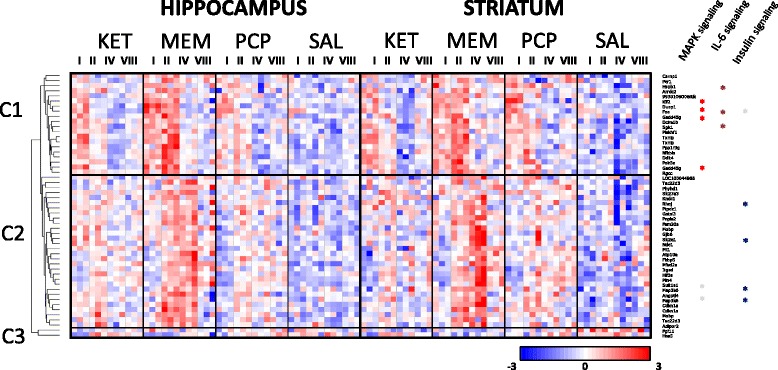
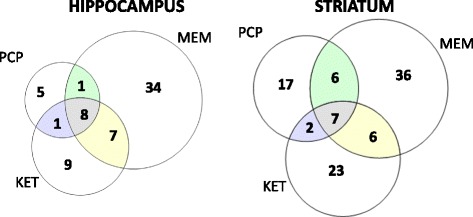
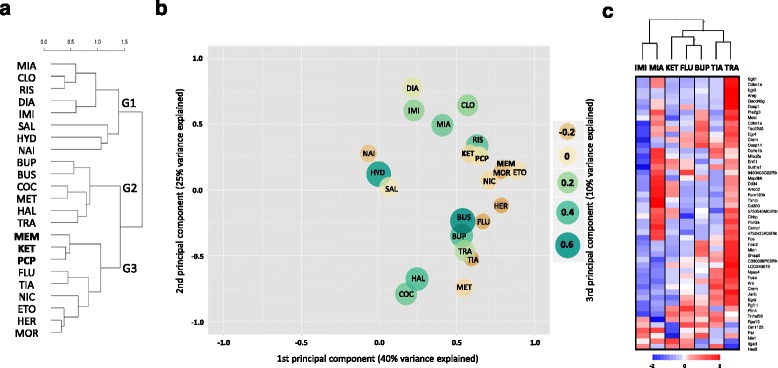
BACKGROUND: The NMDA receptor antagonist ketamine was found to act as a fast-acting antidepressant. The effects of single treatment were reported to persist for days to weeks, even in otherwise treatment-refractory cases. Identification of the mechanisms underlying ketamine's antidepressant action may permit development of novel drugs, with similar clinical properties but lacking psychotomimetic, sedative and other side effects. METHODS: We applied whole-genome microarray profiling to analyze detailed time-course (1, 2, 4 and 8 h) of transcriptome alterations in the striatum and hippocampus following acute administration of ketamine, memantine and phencyclidine in C57BL/6 J mice. The transcriptional effects of ketamine were further analyzed using next-generation sequencing and quantitative PCR. Gene expression alterations induced by the NMDA antagonists were compared to the molecular profiles of psychotropic drugs: antidepressants, antipsychotics, anxiolytics, psychostimulants and opioids. RESULTS: We identified 52 transcripts (e.g. Dusp1, Per1 and Fkbp5) with altered expression (FDR < 1 %) in response to treatment with NMDA receptor antagonists. Functional links that connect expression of the regulated genes to the MAPK, IL-6 and insulin signaling pathways were indicated. Moreover, ketamine-regulated expression of specific gene isoforms was detected (e.g. Tsc22d3, Sgk1 and Hif3a). The comparison with other psychotropic drugs revealed that the molecular effects of ketamine are most similar to memantine and phencyclidine. Clustering based on expression profiles placed the NMDA antagonists among fluoxetine, tianeptine, as well as opioids and ethanol. CONCLUSIONS: The identified patterns of gene expression alteration in the brain provided novel molecular classification of ketamine. The transcriptional profile of ketamine reflects its multi-target pharmacological nature. The results reveal similarities between the effects of ketamine and monoaminergic antidepressants that may explain the mechanisms of its rapid antidepressant action.
Overview
The claims and statistics of this paper haven’t been checked yet.
Free: it reads the open-access text and checks the first 5 claims that cite a source we can check. Create a free account to check every claim.
Integrity signals
Registry
Cites
Statistics
Figures
Verification
Claims the paper makes
The claims and statistics of this paper haven’t been checked yet.
Free: it reads the open-access text and checks the first 5 claims that cite a source we can check. Create a free account to check every claim.
Claims other papers make about this one
Each is checked against this paper’s own text: does it say what the citing paper says it does?
The source backs part of the claim, not all of it — or backs it for a different population, condition or comparison.
In the citing paper
“In addition, an altered expression of the HPA axis-modulating components, FKBP51 and SGK1 [137, 138], was observed following ketamine administration [139].”
From The HPA Axis as Target for Depression (2024) · cites this paper as [139]
Experimental — accuracy not yet measuredThe cited source says what the claim attributes to it.
In the citing paper
“In the striatum of mice, a significant increase of approximately 1.5 to 2-fold in the transcriptional levels of SGK1 was observed following acute ketamine treatment”
From Serum/glucocorticoid regulated kinase 1 (SGK1) in neurological disorders: pain or gain (2024) · cites this paper as Ficek et al., 2016
Self-check
Percentages, sums and reported differences re-computed from the paper’s own numbers.
The self-check needs the paper’s full text.
Citations
Cites
Molecular Mechanisms of Depression: Perspectives on New Treatment Strategies
Lang, U. E., & Borgwardt, S. (2013) · Cellular Physiology and Biochemistry · doi:10.1159/000350094 · Cited by 8,475
Enrichr: interactive and collaborative HTML5 gene list enrichment analysis tool
Chen, E. Y., Tan, C. M., Kou, Y., Duan, Q., Wang, Z., Meirelles, G. V., Clark, N. R., & Ma’ayan, A. (2013) · BMC Bioinformatics · doi:10.1186/1471-2105-14-128 · Cited by 7,814
Lamb, J., Crawford, E. D., Peck, D., Modell, J. W., Blat, I. C., Wrobel, M. J., Lerner, J., Brunet, J.-P., Subramanian, A., Ross, K. N., et al. (2006) · Science · doi:10.1126/science.1132939 · Cited by 5,257
Antidepressant effects of ketamine in depressed patients
Berman, R. M., Cappiello, A., Anand, A., Oren, D. A., Heninger, G. R., Charney, D. S., & Krystal, J. H. (2000) · Biological Psychiatry · doi:10.1016/s0006-3223(99)00230-9 · Cited by 3,856 · cited 2×
“Due to the almost immediate onset of antidepressant effects ketamine could potentially be particularly useful in acute treatment of depression [1].”
A randomized trial of an N-methyl-D-aspartate antagonist in treatment-resistant major depression.
Zarate, C. A., Singh, J. B., Carlson, P. J., Brutsche, N. E., Ameli, R., Luckenbaugh, D. A., Charney, D. S., & Manji, H. K. (2006) · Archives of General Psychiatry · doi:10.1001/archpsyc.63.8.856 · Cited by 3,766
mTOR-Dependent Synapse Formation Underlies the Rapid Antidepressant Effects of NMDA Antagonists
Li, N., Lee, B., Liu, R.-J., Banasr, M., Dwyer, J. M., Iwata, M., Li, X.-Y., Aghajanian, G., & Duman, R. S. (2010) · Science · doi:10.1126/science.1190287 · Cited by 2,881 · cited 3×
“Ketamine has been shown to induce expression of synapse-associated proteins through the rapid activation of mTOR-regulated ERK and Akt signaling pathways [11].”
NMDA receptor blockade at rest triggers rapid behavioural antidepressant responses
Autry, A. E., Adachi, M., Nosyreva, E., Na, E. S., Los, M. F., Cheng, P.-F., Kavalali, E. T., & Monteggia, L. M. (2011) · Nature · doi:10.1038/nature10130 · Cited by 1,926 · cited 1×
“Previous results suggested involvement of molecular mechanisms concerning mTOR, BDNF and eEF2 kinase pathways in ketamine action [11, 31].”
Binder, E. B., Salyakina, D., Lichtner, P., Wochnik, G. M., Ising, M., Pütz, B., Papiol, S., Seaman, S., Lucae, S., Kohli, M. A., et al. (2004) · Nature Genetics · doi:10.1038/ng1479 · Cited by 977 · cited 1×
“The Fkbp5 gene is a prime example, as the gene was connected with sensitivity to rapid effects of treatment with antidepressants [34].”
Binder, E. B. (2009) · Psychoneuroendocrinology · doi:10.1016/j.psyneuen.2009.05.021 · Cited by 968
Ketamine Pharmacology: An Update ( Pharmacodynamics and Molecular Aspects, Recent Findings )
Mion, G., & Villevieille, T. (2013) · CNS Neuroscience & Therapeutics · doi:10.1111/cns.12099 · Cited by 711 · cited 1×
“Ketamine is a noncompetitive antagonist of the NMDA glutamate receptor, with affinities for other receptors and transporters, including dopamine D2 and opioid receptors as well as monoamine transporters [3–6].”
Feder, A., Parides, M. K., Murrough, J. W., Perez, A. M., Morgan, J. E., Saxena, S., Kirkwood, K., aan het Rot, M., Lapidus, K. A. B., Wan, L.-B., et al. (2014) · JAMA Psychiatry · doi:10.1001/jamapsychiatry.2014.62 · Cited by 613 · cited 1×
“Ketamine has also been effective in treatment of multiple severe neuropsychiatric conditions including bipolar disorder, post-traumatic stress disorder and chronic pain [15, 16].”
Insulin resistance in brain alters dopamine turnover and causes behavioral disorders
Kleinridders, A., Cai, W., Cappellucci, L., Ghazarian, A., Collins, W. R., Vienberg, S. G., Pothos, E. N., & Kahn, C. R. (2015) · Proceedings of the National Academy of Sciences · doi:10.1073/pnas.1500877112 · Cited by 486 · cited 1×
“The regulation of this pathway is potentially interesting in the context of connection between depression and insulin resistance in diabetic patients [30].”
Kapur, S., & Seeman, P. (2002) · Molecular Psychiatry · doi:10.1038/sj.mp.4001093 · Cited by 459
Ketamine for Depression: Where Do We Go from Here?
aan het Rot, M., Zarate, C. A., Charney, D. S., & Mathew, S. J. (2012) · Biological Psychiatry · doi:10.1016/j.biopsych.2012.05.003 · Cited by 418
A negative regulator of MAP kinase causes depressive behavior
Duric, V., Banasr, M., Licznerski, P., Schmidt, H. D., Stockmeier, C. A., Simen, A. A., Newton, S. S., & Duman, R. S. (2010) · Nature Medicine · doi:10.1038/nm.2219 · Cited by 412 · cited 1×
“Both these pathways were previously proposed as factors involved in the mechanisms of depressive disorders associated with chronic stress [27–29].”
A Double-Blind, Placebo-Controlled Study of Memantine in the Treatment of Major Depression
Zarate, C. A., Singh, J. B., Quiroz, J. A., De Jesus, G., Denicoff, K. K., Luckenbaugh, D. A., Manji, H. K., & Charney, D. S. (2006) · American Journal of Psychiatry · doi:10.1176/appi.ajp.163.1.153 · Cited by 387
Origin of dopaminergic innervation of the rat hippocampal formation
Scatton, B., Simon, H., Le Moal, M., & Bischoff, S. (1980) · Neuroscience Letters · doi:10.1016/0304-3940(80)90314-6 · Cited by 323 · cited 1×
“Both these regions receive dopaminergic inputs from the ventral midbrain that may explain similar transcriptional alterations in response to the selected psychoactive compounds [21].”
Anacker, C., Cattaneo, A., Musaelyan, K., Zunszain, P. A., Horowitz, M., Molteni, R., Luoni, A., Calabrese, F., Tansey, K., Gennarelli, M., et al. (2013) · Proceedings of the National Academy of Sciences · doi:10.1073/pnas.1300886110 · Cited by 319 · cited 1×
“Both these pathways were previously proposed as factors involved in the mechanisms of depressive disorders associated with chronic stress [27–29].”
Lally, N., Nugent, A. C., Luckenbaugh, D. A., Ameli, R., Roiser, J. P., & Zarate, C. A. (2014) · Translational Psychiatry · doi:10.1038/tp.2014.105 · Cited by 271
Fukunaga, K., & Miyamoto, E. (1998) · Molecular Neurobiology · doi:10.1007/bf02740604 · Cited by 256 · cited 1×
“The first group includes, for instance, the transcript of the dualspecificity phosphatase-1 (DUSP1), which is a negative regulator of MAPK kinase signaling - one of the major pathways that mediate neuronal plasticity [24].”
Gideons, E. S., Kavalali, E. T., & Monteggia, L. M. (2014) · Proceedings of the National Academy of Sciences · doi:10.1073/pnas.1323920111 · Cited by 232 · cited 2×
“On the other hand, memantine did not show fast antidepressant-like properties in animal models [10].”
Lavretsky, H., Reinlieb, M., St. Cyr, N., Siddarth, P., Ercoli, L. M., & Senturk, D. (2015) · American Journal of Psychiatry · doi:10.1176/appi.ajp.2014.14070889 · Cited by 184
Shared Gene Expression Alterations in Schizophrenia and Bipolar Disorder
Shao, L., & Vawter, M. P. (2008) · Biological Psychiatry · doi:10.1016/j.biopsych.2007.11.010 · Cited by 183 · cited 1×
“Further examples include the hypoxia inducible factor 3 alpha subunit (Hif3a), whose expression was found to be increased in schizophrenic and bipolar patients [36] or Sgk1 and Tsc22d3, which were associated with high interleukin (IL)-6 levels in patients suffering from the major depressive disorder [37].”
Frodl, T., Carballedo, A., Hughes, M. M., Saleh, K., Fagan, A., Skokauskas, N., McLoughlin, D. M., Meaney, J., O'Keane, V, & Connor, T. J. (2012) · Translational Psychiatry · doi:10.1038/tp.2012.14 · Cited by 176 · cited 1×
“Further examples include the hypoxia inducible factor 3 alpha subunit (Hif3a), whose expression was found to be increased in schizophrenic and bipolar patients [36] or Sgk1 and Tsc22d3, which were associated with high interleukin (IL)-6 levels in patients suffering from the major depressive disorder [37].”
Significance of SGK1 in the regulation of neuronal function
Lang, F., Strutz-Seebohm, N., Seebohm, G., & Lang, U. E. (2010) · The Journal of Physiology · doi:10.1113/jphysiol.2010.190926 · Cited by 170 · cited 1×
“The second group includes the transcript of the serum- and glucocorticoid-inducible kinase 1 (SGK1), which is implicated in memory formation as well as function of glial cells [25, 26].”
The dissection of transcriptional modules regulated by various drugs of abuse in the mouse striatum
Piechota, M., Korostynski, M., Solecki, W., Gieryk, A., Slezak, M., Bilecki, W., Ziolkowska, B., Kostrzewa, E., Cymerman, I., Swiech, L., et al. (2010) · Genome Biology · doi:10.1186/gb-2010-11-5-r48 · Cited by 162 · cited 1×
“These effects of ketamine on opioid system may result in expression of genes also regulated in the striatum by opioids and ethanol [43].”
Self-citationChatterjee, M., Verma, R., Ganguly, S., & Palit, G. (2012) · Neuropharmacology · doi:10.1016/j.neuropharm.2012.05.041 · Cited by 162 · cited 1×
“These alterations are related to activation of downstream intracellular signaling pathways and transcription of genes [12].”
Donahue, R. J., Muschamp, J. W., Russo, S. J., Nestler, E. J., & Carlezon, W. A. (2014) · Biological Psychiatry · doi:10.1016/j.biopsych.2013.12.014 · Cited by 161
Ketamine-Induced Neurotoxicity and Changes in Gene Expression in the Developing Rat Brain
Liu, F., G. Paule, M., Ali, S., & Wang, C. (2011) · Current Neuropharmacology · doi:10.2174/157015911795017155 · Cited by 151 · cited 2×
“Despite the common use of ketamine in clinical and experimental studies there are relatively few reports of its action on gene expression in brain regions involved in the control of motivation and executive functions [18, 19].”
Potentiation of μ‐opioid receptor‐mediated signaling by ketamine
Gupta, A., Devi, L. A., & Gomes, I. (2011) · Journal of Neurochemistry · doi:10.1111/j.1471-4159.2011.07361.x · Cited by 132
Tsukada, H., Harada, N., Nishiyama, S., Ohba, H., Sato, K., Fukumoto, D., & Kakiuchi, T. (2000) · Synapse · doi:10.1002/1098-2396(200008)37:2<95::aid-syn3>3.0.co;2-h · Cited by 128
Zunszain, P. A., Horowitz, M. A., Cattaneo, A., Lupi, M. M., & Pariante, C. M. (2013) · Molecular Psychiatry · doi:10.1038/mp.2013.87 · Cited by 108 · cited 1×
“These processes are related to the development of depression through synaptic remodeling and immunomodulation [32].”
Nadler, J. J., Zou, F., Huang, H., Moy, S. S., Lauder, J., Crawley, J. N., Threadgill, D. W., Wright, F. A., & Magnuson, T. R. (2006) · Genetics · doi:10.1534/genetics.106.061481 · Cited by 108
Cao, R., Li, A., Cho, H.-Y., Lee, B., & Obrietan, K. (2010) · The Journal of Neuroscience · doi:10.1523/jneurosci.5482-09.2010 · Cited by 103 · cited 1×
“pression of circadian proteins [33].”
Depression, traumatic stress and interleukin-6
Bob, P., Raboch, J., Maes, M., Susta, M., Pavlat, J., Jasova, D., Vevera, J., Uhrova, J., Benakova, H., & Zima, T. (2010) · Journal of Affective Disorders · doi:10.1016/j.jad.2009.03.017 · Cited by 97 · cited 1×
“Both these pathways were previously proposed as factors involved in the mechanisms of depressive disorders associated with chronic stress [27–29].”
Yamanaka, H., Yokoyama, C., Mizuma, H., Kurai, S., Finnema, S. J., Halldin, C., Doi, H., & Onoe, H. (2014) · Translational Psychiatry · doi:10.1038/tp.2013.112 · Cited by 84
Sałat, K., Siwek, A., Starowicz, G., Librowski, T., Nowak, G., Drabik, U., Gajdosz, R., & Popik, P. (2015) · Neuropharmacology · doi:10.1016/j.neuropharm.2015.07.037 · Cited by 77 · cited 1×
“Ketamine is a noncompetitive antagonist of the NMDA glutamate receptor, with affinities for other receptors and transporters, including dopamine D2 and opioid receptors as well as monoamine transporters [3–6].”
Tan, S., Rudd, J. A., & Yew, D. T. W. (2011) · PLoS ONE · doi:10.1371/journal.pone.0021328 · Cited by 67 · cited 1×
“It was found that chronic ketamine treatment regulates GABAA receptor alpha 5 subunits in the mouse prefrontal cortex [23].”
Astrocytes are a neural target of morphine action via glucocorticoid receptor‐dependent signaling
Slezak, M., Korostynski, M., Gieryk, A., Golda, S., Dzbek, J., Piechota, M., Wlazlo, E., Bilecki, W., & Przewlocki, R. (2013) · Glia · doi:10.1002/glia.22460 · Cited by 59 · cited 2×
“The second group includes the transcript of the serum- and glucocorticoid-inducible kinase 1 (SGK1), which is implicated in memory formation as well as function of glial cells [25, 26].”
Self-citationKos, T., & Popik, P. (2005) · Behavioural Pharmacology · doi:10.1097/00008877-200505000-00004 · Cited by 54 · cited 1×
“the literature, particular attention being paid to their pharmacological effects in C57BL/6 J mice [44–46].”
Marvanová, M., Lakso, M., & Wong, G. (2004) · Neuropsychopharmacology · doi:10.1038/sj.npp.1300398 · Cited by 41 · cited 2×
“Gene expression profiling in rat limbic cortex of uncompetitive NMDA antagonists (memantine and MK-801) indicated broad actions of these agents on the molecular level [19].”
Korostynski, M., Piechota, M., Dzbek, J., Mlynarski, W., Szklarczyk, K., Ziolkowska, B., & Przewlocki, R. (2013) · BMC Genomics · doi:10.1186/1471-2164-14-606 · Cited by 41 · cited 7×
“The dissection procedure was performed as previously described [13].”
Self-citationThe role of setting for ketamine abuse: clinical and preclinical evidence
De Luca, M. T., Meringolo, M., Spagnolo, P. A., & Badiani, A. (2012) · Reviews in the Neurosciences · doi:10.1515/revneuro-2012-0078 · Cited by 37 · cited 1×
“However, the psychotomimetic and addictive properties of this drug limit its clinical applications [17].”
Hillhouse, T. M., & Porter, J. H. (2013) · Behavioural Pharmacology · doi:10.1097/fbp.0000000000000014 · Cited by 34
Yamamoto, H., Kamegaya, E., Sawada, W., Hasegawa, R., Yamamoto, T., Hagino, Y., Takamatsu, Y., Imai, K., Koga, H., Mishina, M., et al. (2013) · Molecular Brain · doi:10.1186/1756-6606-6-56 · Cited by 31
Comparison of Antidepressant‐Like and Abuse‐Related Effects of Phencyclidine in Rats
Hillhouse, T. M., Porter, J. H., & Negus, S. S. (2014) · Drug Development Research · doi:10.1002/ddr.21228 · Cited by 15 · cited 1×
“antagonists does not provide clear indication of the possible mechanism of action [7, 8].”
Fujikura-Ouchi, Y., Kubota, Y., Kuramasu, A., Watanabe, T., & Ito, C. (2005) · Molecular Brain Research · doi:10.1016/j.molbrainres.2005.07.011 · Cited by 13
Regulation of alternative gene transcription in the striatum in response to antidepressant drugs
Piechota, M., Gołda, S., Ficek, J., Jantas, D., Przewłocki, R., & Korostyński, M. (2015) · Neuropharmacology · doi:10.1016/j.neuropharm.2015.08.006 · Cited by 9 · cited 2×
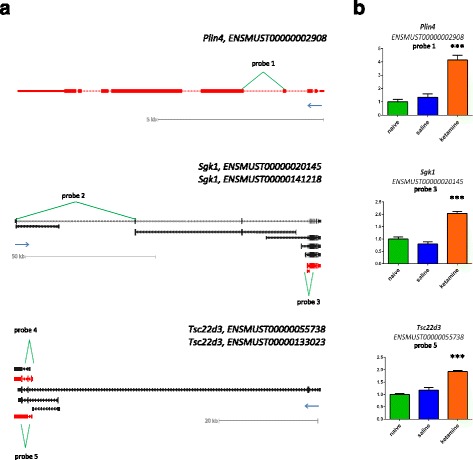
“In all three cases ketamine treatment induced only expression of the short transcriptional variants, which again points at the importance of analysis of gene expression at transcript rather than gene level [38].”
Self-citation
Cited by
Kohtala, S. (2021) · Pharmacological Reports · doi:10.1007/s43440-021-00232-4 · Cited by 142
Jefsen, O. H., Elfving, B., Wegener, G., & Müller, H. K. (2021) · Journal of Psychopharmacology · doi:10.1177/0269881120959614 · Cited by 127
“, 2000); or (d) transcriptional effects of anti-depressive treatments (Bramham et al., 2008; Conti et al., 2007; Ficek et al., 2016; Jeanneteau et al., 2010, 2018; Svenningsson et al., 2013).”
BackgroundThe HPA Axis as Target for Depression
Menke, A. (2024) · Current Neuropharmacology · doi:10.2174/1570159x21666230811141557 · Cited by 131
“In addition, an altered expression of the HPA axis-modulating components, FKBP51 and SGK1 [137, 138], was observed following ketamine administration [139].”
BackgroundOrozco-Solis, R., Montellier, E., Aguilar-Arnal, L., Sato, S., Vawter, M. P., Bunney, B. G., Bunney, W. E., & Sassone-Corsi, P. (2017) · Biological Psychiatry · doi:10.1016/j.biopsych.2017.02.1176 · Cited by 119
“We collected brain tissue at one time point (ZT 13) to avoid the confounding factor of time-dependent variability (50,51) and centered our analyses on the ACC to decrease regional variability (49).”
Astrocyte regulation of synaptic signaling in psychiatric disorders
Kruyer, A., Kalivas, P. W., & Scofield, M. D. (2022) · Neuropsychopharmacology · doi:10.1038/s41386-022-01338-w · Cited by 91
Metadata
- Authors
- Ficek, J., Zygmunt, M., Piechota, M., Hoinkis, D., Rodriguez Parkitna, J., Przewlocki, R., & Korostynski, M.
- Affiliations
- Maj Institute of Pharmacology (PL)
- Venue
- BMC Genomics
- Published
- 2016-05-17
- Volume
- 17
- Issue
- 1
- Pages
- 362-362
- ISSN
- 1471-2164 (ISSN-L)
- PMC
- PMC4869301
- OpenAlex
- W2407277813
- Cited by
- 42
- References
- 48
- Citations by year
- 2026: 1 · 2025: 4 · 2024: 3 · 2023: 5 · 2022: 5 · 2021: 3 · 2020: 8 · 2019: 4 · 2018: 4 · 2017: 4 · 2016: 1
- FWCI
- 3.51
- Type
- journal article
- Language
- en
- Open access
- gold
- doi.org
- Licence
- cc-by
- Locations
- BMC Genomics (publishedVersion, cc-by)
- PubMed Central (publishedVersion, cc-by)
- PubMed (publishedVersion)
- Funders
- Narodowe Centrum Nauki (2011/03/D/NZ3/01686)
- Narodowe Centrum Badań i Rozwoju (POIG.01.01.02-12-004/09 t.3.1)
- Topics
- Health Sciences › Medicine › Pharmacology (medical) › Treatment of Major Depression
- Life Sciences › Neuroscience › Cellular and Molecular Neuroscience › Neurotransmitter Receptor Influence on Behavior
- Life Sciences › Neuroscience › Cellular and Molecular Neuroscience › Neuroscience and Neuropharmacology Research
- Keywords
- ketamine, NMDA receptor antagonists, memantine, phencyclidine, striatum, hippocampus, gene expression profiling, psychotropic drugs, MAPK signaling, IL-6 signaling, insulin signaling, gene isoforms, TSC22D3, SGK1, HIF-3α, MKP-1, Per1, FKBP5
- MeSH terms
- Anesthetics, Dissociative, Animals, Antidepressive Agents, Corpus Striatum, Gene Expression Regulation, Hippocampus, Ketamine, Ligands, Male, Reproducibility of Results, Cluster Analysis, Receptors, N-Methyl-D-Aspartate, Computational Biology, Gene Expression Profiling, Mice, High-Throughput Nucleotide Sequencing, Transcriptome
About these checks
Registry, retraction, Cites and statistics results are computed, not judged, with one exception: a printed reference that no index lists is read once by a model before it counts as a citation error. Claims are extracted by a model and kept only when their quote appears verbatim in the text; each cited source is then checked, with a model’s help, for whether it says what the claim relies on. Those verdicts can be wrong — read the claim’s quote and the cited source before relying on one.
Statistics and arithmetic are recomputed, not judged.
Confidence bands are shown only for fields calibrated on our annotated test set. None is calibrated yet, so no band is shown.
What counts as a claim ›How we measure confidence ›How we check this ›
Are you an author, or do you see a problem with this page? Request a review
Data sources
Bibliographic data: Semantic Scholar, OpenAlex, Crossref.
Contains information from the Semantic Scholar Academic Graph Datasets, made available under the ODC Attribution License (ODC-BY 1.0).
Semantic Scholar’s data is described in: Kinney, R., et al. (2023). The Semantic Scholar Open Data Platform. arXiv:2301.10140.
