

High-throughput cultivation and screening platform for unicellular phototrophs
Open accessThe DOI matches its Crossref record; 23 of the 23 references it cites were found in a registry or an index.
Abstract
BACKGROUND: High-throughput cultivation and screening methods allow a parallel, miniaturized and cost efficient processing of many samples. These methods however, have not been generally established for phototrophic organisms such as microalgae or cyanobacteria. RESULTS: In this work we describe and test high-throughput methods with the model organism Synechocystis sp. PCC6803. The required technical automation for these processes was achieved with a Tecan Freedom Evo 200 pipetting robot. The cultivation was performed in 2.2 ml deepwell microtiter plates within a cultivation chamber outfitted with programmable shaking conditions, variable illumination, variable temperature, and an adjustable CO2 atmosphere. Each microtiter-well within the chamber functions as a separate cultivation vessel with reproducible conditions. The automated measurement of various parameters such as growth, full absorption spectrum, chlorophyll concentration, MALDI-TOF-MS, as well as a novel vitality measurement protocol, have already been established and can be monitored during cultivation. Measurement of growth parameters can be used as inputs for the system to allow for periodic automatic dilutions and therefore a semi-continuous cultivation of hundreds of cultures in parallel. The system also allows the automatic generation of mid and long term backups of cultures to repeat experiments or to retrieve strains of interest. CONCLUSIONS: The presented platform allows for high-throughput cultivation and screening of Synechocystis sp. PCC6803. The platform should be usable for many phototrophic microorganisms as is, and be adaptable for even more. A variety of analyses are already established and the platform is easily expandable both in quality, i.e. with further parameters to screen for additional targets and in quantity, i.e. size or number of processed samples.
Overview
The claims and statistics of this paper haven’t been checked yet.
Free: it reads the open-access text and checks the first 5 claims that cite a source we can check. Create a free account to check every claim.
Integrity signals
Registry
Cites
Statistics
Figures
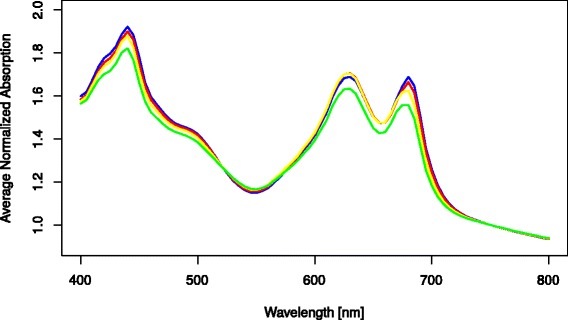
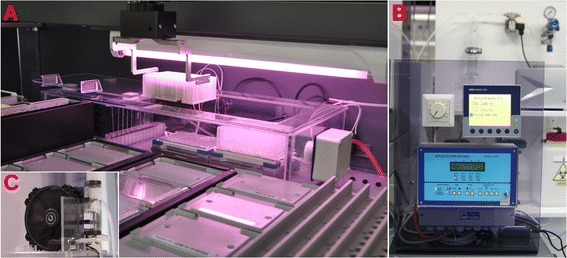
Verification
Claims the paper makes
The claims and statistics of this paper haven’t been checked yet.
Free: it reads the open-access text and checks the first 5 claims that cite a source we can check. Create a free account to check every claim.
Self-check
Percentages, sums and reported differences re-computed from the paper’s own numbers.
The self-check needs the paper’s full text.
Citations
Cites
Generic Assignments, Strain Histories and Properties of Pure Cultures of Cyanobacteria
Rippka, R., Stanier, R. Y., Deruelles, J., Herdman, M., & Waterbury, J. B. (1979) · Microbiology · doi:10.1099/00221287-111-1-1 · Cited by 7,606 · cited 1×
“All strains were cultivated in sterile marine BG11 medium (modified from [18]): 30 g/l instant ocean (Aquarium Systems, rue Gambette 43, F-57400 Sarrebourg, France); 17.”
MethodAn Approximate Distribution of Estimates of Variance Components
Satterthwaite, F. E. (1946) · Biometrics Bulletin · doi:10.2307/3002019 · Cited by 4,373 · cited 2×
“First Welch’s t-test [20] was used to determine the t-value: t ¼ X1− X2ð Þffiffiffiffiffiffiffiffiffiffiffiffiffi s21 n1 þ s22n2 q Xi… sample mean si… sample variance ni… sample size then the Welch–Satterthwaite [21] equation was used to estimate the degrees of freedom: DF≈ s21 n1 þ s22n2 2 s41 n21 ν1 þ s42n22ν2 where…”
MethodTHE GENERALIZATION OF ‘STUDENT'S’ PROBLEM WHEN SEVERAL DIFFERENT POPULATION VARLANCES ARE INVOLVED
WELCH, B. L. (1947) · Biometrika · doi:10.1093/biomet/34.1-2.28 · Cited by 4,135 · cited 1×
“First Welch’s t-test [20] was used to determine the t-value:”
MethodDrug Discovery: A Historical Perspective
Drews, J. (2000) · Science · doi:10.1126/science.287.5460.1960 · Cited by 2,760 · cited 1×
“Its impact has been especially huge in pharmaceutical research, where libraries of numerous chemicals are screened for potential new drug candidates (compound screening) [1,2].”
BackgroundKaneko, T., Sato, S., Kotani, H., Tanaka, A., Asamizu, E., Nakamura, Y., Miyajima, N., Hirosawa, M., Sugiura, M., Sasamoto, S., et al. (1996) · DNA Research · doi:10.1093/dnares/3.3.185 · Cited by 2,432 · cited 1×
“PCC 6803 genome was sequenced in 1996 [14], as the first genome from a photosynthetic organism.”
BackgroundThe phycobilisome, a light-harvesting complex responsive to environmental conditions
Grossman, A. R., Schaefer, M. R., Chiang, G. G., & Collier, J. L. (1993) · Microbiological Reviews · doi:10.1128/mr.57.3.725-749.1993 · Cited by 649
Occurrence and nature of chromatic adaptation in cyanobacteria
Tandeau de Marsac, N. (1977) · Journal of Bacteriology · doi:10.1128/jb.130.1.82-91.1977 · Cited by 384 · cited 1×
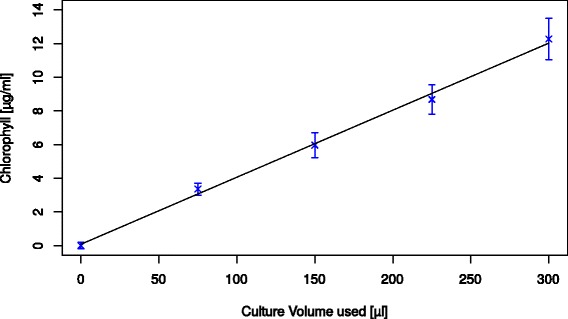
“However it has to be considered, that the total chlorophyll concentration is not only dependent on the number of cells but on their individual level of pigmentation, which is in turn affected by other factors such as culture vitality as well as nutrient and light conditions [16].”
BackgroundDuetz, W. A., Rüedi, L., Hermann, R., O'Connor, K., Büchs, J., & Witholt, B. (2000) · Applied and Environmental Microbiology · doi:10.1128/aem.66.6.2641-2646.2000 · Cited by 347
Cryopreservation and Freeze-Drying Protocols
(2007) · Methods in Molecular Biology · doi:10.1007/978-1-59745-362-2 · Cited by 318
The Future of High-Throughput Screening
Mayr, L. M., & Fuerst, P. (2008) · SLAS Discovery · doi:10.1177/1087057108319644 · Cited by 276 · cited 1×
“Modern HTS systems are often incorporated into liquid handling systems (pipetting robots), which allow automation, and massive increase in throughput of steps traditionally performed by trained lab technicians [3,2,4].”
Background
Cited by
Innovations to culturing the uncultured microbial majority
Lewis, W. H., Tahon, G., Geesink, P., Sousa, D. Z., & Ettema, T. J. G. (2021) · Nature Reviews Microbiology · doi:10.1038/s41579-020-00458-8 · Cited by 605
Lab-scale photobioreactor systems: principles, applications, and scalability
Benner, P., Meier, L., Pfeffer, A., Krüger, K., Oropeza Vargas, J. E., & Weuster-Botz, D. (2022) · Bioprocess and Biosystems Engineering · doi:10.1007/s00449-022-02711-1 · Cited by 215
“The addition of beads can additionally be helpful if the cells tend towards agglomeration [58].”
BackgroundReimann, R., Zeng, B., Jakopec, M., Burdukiewicz, M., Petrick, I., Schierack, P., & Rödiger, S. (2020) · Algal Research · doi:10.1016/j.algal.2020.101908 · Cited by 79
Strain Development in Microalgal Biotechnology—Random Mutagenesis Techniques
Bleisch, R., Freitag, L., Ihadjadene, Y., Sprenger, U., Steingroewer, J., Walther, T., & Krujatz, F. (2022) · Life · doi:10.3390/life12070961 · Cited by 63
Needs, S. H., Diep, T. T., Bull, S. P., Lindley-DeCaire, A., Ray, P. P., & Edwards, A. D. (2019) · PLoS ONE · doi:10.1371/journal.pone.0224878 · Cited by 39
“17864/1947.220. for example screening against exogenous agents such as antibiotics for antimicrobial resistance (AMR) [1, 3].”
BackgroundInfluentialMorschett, H., Wiechert, W., & Oldiges, M. (2016) · Microbial Cell Factories · doi:10.1186/s12934-016-0433-7 · Cited by 36
Włodkowic, D., & Jansen, M. (2022) · Chemosphere · doi:10.1016/j.chemosphere.2022.135929 · Cited by 33
Du, W., Angermayr, S. A., Jongbloets, J. A., Molenaar, D., Bachmann, H., Hellingwerf, K. J., & Branco dos Santos, F. (2017) · ACS Synthetic Biology · doi:10.1021/acssynbio.6b00235 · Cited by 25
An automated workflow for multi-omics screening of microbial model organisms
Donati, S., Mattanovich, M., Hjort, P., Jacobsen, S. A. B., Blomquist, S. D., Mangaard, D., Gurdo, N., Pastor, F. P., Maury, J., Hanke, R., et al. (2023) · npj Systems Biology and Applications · doi:10.1038/s41540-023-00277-6 · Cited by 24
Olia, M. S. J., Azin, M., Sepahi, A. A., & Moazami, N. (2019) · Renewable Energy · doi:10.1016/j.renene.2019.12.069 · Cited by 22
Morschett, H., Schiprowski, D., Müller, C., Mertens, K., Felden, P., Meyer, J., Wiechert, W., & Oldiges, M. (2017) · Biotechnology and Bioengineering · doi:10.1002/bit.26051 · Cited by 19
“DOI 10.1002/bit.26051 122 Biotechnology and Bioengineering, Vol. 114, No. 1, January, 2017 2016 Wiley Periodicals, Inc. and well-to-well cross-talk (Radzun et al., 2015; Tillich et al., 2014) or suboptimal properties of the illumination unit (Chen et al., 2012).”
BackgroundInfluentialMorschett, H., Freier, L., Rohde, J., Wiechert, W., von Lieres, E., & Oldiges, M. (2017) · Biotechnology for Biofuels · doi:10.1186/s13068-017-0711-6 · Cited by 19
“To take full advantage of phototrophic microscale cultivation, supporting methodologies and technologies, such as simplified strain maintenance [28], high throughput analytics [29, 30], and automated processing [20, 31], are needed.”
High-Throughput Screening to Accelerate Microalgae-Based Phycochemical Production
Wolf, J., Chapman, R., Deepika, C., Pietri, M., Bensalem, S., & Hankamer, B. D. (2023) · Springer eBooks · doi:10.1007/978-3-031-42026-9_10 · Cited by 19
Brilliant future of phytomedicines in the light of latest technological developments
Khan, H. (2015) · The Journal of Phytopharmacology · doi:10.31254/phyto.2015.4110 · Cited by 18
Automated Cultivation System for Microalgae: Growth Factors and Control
Chew, K. W., Khor, J. G., Lim, H. R., & Chia, W. Y. (2022) · Current Nutrition & Food Science · doi:10.2174/1573401318666220421132428 · Cited by 18
Du, W., Caicedo-Burbano, P., Hellingwerf, K. J., & dos Santos, F. B. (2018) · Advances in experimental medicine and biology · doi:10.1007/978-981-13-0854-3_1 · Cited by 17
Staining to machine learning: An emerging technology for determination of microalgal cell viability
Kim, T., Pradhan, B., & Ki, J. (2024) · Journal of Applied Phycology · doi:10.1007/s10811-024-03274-2 · Cited by 16
“To enhance microalgal culture and production processes, automated analytical techniques to track and analyze cell behavior in high-throughput selection and breeding systems as well as in production facilities are needed (Havlik et al. 2013; Tillich et al. 2014).”
Laboratory-scale photobiotechnology—current trends and future perspectives
Morschett, H., Loomba, V., Huber, G., Wiechert, W., von Lieres, E., & Oldiges, M. (2018) · FEMS Microbiology Letters · doi:10.1093/femsle/fnx238 · Cited by 14
Morschett, H., Schiprowski, D., Rohde, J., Wiechert, W., & Oldiges, M. (2017) · Bioprocess and Biosystems Engineering · doi:10.1007/s00449-016-1731-5 · Cited by 11
Earth's most needed uncultivated aquatic prokaryotes
Simon, S. A., Aschmann, V., Behrendt, A., Hügler, M., Engl, L. M., Pohlner, M., Rolfes, S., Brinkhoff, T., Engelen, B., Könneke, M., et al. (2024) · Water Research · doi:10.1016/j.watres.2024.122928 · Cited by 10
Jodlbauer, J., Schmal, M., Waltl, C., Rohr, T., Mach-Aigner, A. R., Mihovilovic, M. D., & Rudroff, F. (2024) · Trends in Biotechnology · doi:10.1016/j.tibtech.2024.07.011 · Cited by 9
Schulze, K., Lang, I., Enke, H., Grohme, D., & Frohme, M. (2015) · BMC Research Notes · doi:10.1186/s13104-015-1112-1 · Cited by 9
“The approach is based on a previously developed fluorescence microscopic method [7] which has since also been adapted for high throughput application [8].”
MethodSelf-citationA Colony Picking Robot with Multi-Pin Synchronous Manipulator
Huang, C., He, K., Liu, C., Fu, X., & Du, R. (2018) · IEEE International Conference on Information and Automation (ICIA) · doi:10.1109/icinfa.2018.8812499 · Cited by 6
“In addition, some literatures showed the import application of colony pickers in Synthetic biology, enzyme evolution, biofuels, phage display, protein expression [3-5].”
BackgroundA semi-automated, KNIME-based workflow for biofilm assays
Leinweber, K., Müller, S., & Kroth, P. G. (2016) · BMC Microbiology · doi:10.1186/s12866-016-0676-9 · Cited by 4
“minutissimum and S32 co-cultivation system could be connected to high-resolution mass spectrometry in order to elucidate the nature of biofilm-inducing substance [11, 32].”
BackgroundMethodNegi, R. S., Nigam, M., & SINGH, R. K. (2024) · Algal Research · doi:10.1016/j.algal.2024.103702 · Cited by 5
Schmidt, J. (2018) · mediaTUM (Technical University of Munich) · Cited by 4
Thajuddin, F., Rasheed, A. S., Rajendran, P. J., Palanivel, P., Nooruddin, T., & Dharumadurai, D. (2026) · Renewable and Sustainable Energy Reviews · doi:10.1016/j.rser.2026.117105 · Cited by 3
Noonan, A. J. C., Cameron, P. M. N., Dofher, K., Sukkasam, N., Liu, T. X., Rönn, L., Monshupanee, T., & Hallam, S. (2025) · Communications Biology · doi:10.1038/s42003-025-07853-y · Cited by 2
“However, current lighting systems developed for microplate screening or for optogenetics involve either specialized stand-alone devices (one 24 to 96-well plate) 22,28,33,34,44,45 , or the manual placement of microplates across an illuminated surface, also limiting throughput 23,30,46 .”
Jodlbauer, J. (2024) · reposiTUm (TU Wien) · doi:10.34726/hss.2024.120492 · Cited by 1
Konzept zur beschleunigten Entwicklung phototropher Bioprozesse
Morschett, H. (2017) · RWTH Publications (RWTH Aachen) · doi:10.18154/rwth-2017-03218
Towards stable cyanobacterial cell factories
Du, W. (2018) · UvA-DARE (University of Amsterdam)
Keil, K., Dierenbach, J., Tillich, U. M., Steuer, R., & Frohme, M. (2019) · Journal of Cellular Biotechnology · doi:10.3233/jcb-199002
“One of the first integrated platforms for high-throughput cultivation and screening of phototrophic microorganisms, the PhotoScreener , was described by Tillich et al. [17].”
InfluentialSelf-citationA Robot for Quickly Picking Clone Colony
Huang, L., Jin, Z., Zhao, W., Zhu, W. K., & He, K. (2020) · International Conference on Mechatronics, Robotics and Automation (ICMRA) · doi:10.1109/icmra51221.2020.9398367
“Whether it is directly breeding strains from nature, mutagenesis technology or genetic modification, it will involve high-throughput clone screening of strains, that is, clone colony picking [2].”
Background
Metadata
- Authors
- Tillich, U. M., Wolter, N., Schulze, K., Kramer, D., Brödel, O., & Frohme, M.
- Affiliations
- Technical University of Applied Sciences Wildau (DE)
- Corresponding author
- Frohme, Marcus
- Venue
- BMC Microbiology
- Published
- 2014-09-16
- Volume
- 14
- Issue
- 1
- Pages
- 239-239
- ISSN
- 1471-2180 (ISSN-L)
- PMC
- PMC4172822
- OpenAlex
- W2065016357
- Cited by
- 31
- References
- 23
- Citations by year
- 2026: 1 · 2025: 1 · 2024: 4 · 2023: 2 · 2022: 5 · 2020: 3 · 2019: 4 · 2018: 2 · 2017: 3 · 2016: 4 · 2015: 2
- FWCI
- 0.99
- Type
- journal article
- Language
- en
- Open access
- gold
- doi.org
- Locations
- BMC Microbiology (publishedVersion, cc-by)
- PubMed Central (publishedVersion, cc-by)
- PubMed (publishedVersion)
- TH Wildau (Technical University of Applied Sciences Wildau) (submittedVersion, cc-by)
- Funders
- European Commission (311975, 2007–2013, FP7 2007-2013, FP7/2007)
- Topics
- Physical Sciences › Energy › Renewable Energy, Sustainability and the Environment › Algal biology and biofuel production
- Life Sciences › Biochemistry, Genetics and Molecular Biology › Molecular Biology › Microbial Metabolic Engineering and Bioproduction
- Life Sciences › Biochemistry, Genetics and Molecular Biology › Molecular Biology › Photosynthetic Processes and Mechanisms
- Keywords
- high-throughput cultivation, high-throughput screening, Synechocystis sp. PCC 6803, cyanobacteria, microalgae, semi-continuous cultivation, chlorophyll content, MALDI-TOF mass spectrometry, growth monitoring, phototrophic microorganisms
- MeSH terms
- Cell Culture Techniques, Bioreactors, Synechocystis, Phototrophic Processes, High-Throughput Screening Assays, Microalgae
About these checks
Registry, retraction, Cites and statistics results are computed, not judged, with one exception: a printed reference that no index lists is read once by a model before it counts as a citation error. Claims are extracted by a model and kept only when their quote appears verbatim in the text; each cited source is then checked, with a model’s help, for whether it says what the claim relies on. Those verdicts can be wrong — read the claim’s quote and the cited source before relying on one.
Statistics and arithmetic are recomputed, not judged.
Confidence bands are shown only for fields calibrated on our annotated test set. None is calibrated yet, so no band is shown.
What counts as a claim ›How we measure confidence ›How we check this ›
Are you an author, or do you see a problem with this page? Request a review
Data sources
Bibliographic data: Semantic Scholar, OpenAlex, Crossref.
Contains information from the Semantic Scholar Academic Graph Datasets, made available under the ODC Attribution License (ODC-BY 1.0).
Semantic Scholar’s data is described in: Kinney, R., et al. (2023). The Semantic Scholar Open Data Platform. arXiv:2301.10140.
