

Characterization of virulence factors of Salmonella isolated from human stools and street food in urban areas of Burkina Faso
Open accessThe DOI matches its Crossref record; 55 of the 55 references it cites were found in a registry or an index; 11 of the 20 sources its claims cite were checked for support.
Abstract
Study on virulence genes of Salmonella isolates in street food and stool cultures in urban areas of Burkina Faso.
Overview
CoChat Summary
## TL;DR
This study characterized Salmonella serotypes and five virulence genes in isolates from human diarrheal stools and street-vended beef sandwiches in urban Burkina Faso. It found that most isolates carried at least one virulence gene, and the authors argue that street food may be an important source of transmission to humans.
## Key findings
- A total of 106 Salmonella isolates were analyzed: 91 from human stools and 15 from sandwich samples.
- 86% (91/106) of isolates were reactive by serological identification; the most common serogroup was O:4,5 at 40% (36/91).
- In the molecular analysis, fimA was the most frequent virulence gene (77.4%, 82/106), followed by invA and stn (66%, 70/106 each), spvC (48.1%, 51/106), and spvR (36.8%, 39/106).
- Among clinical isolates, Salmonella Enteritidis and Salmonella Typhimurium were found only in stools, at 5/91 (5.5%) and 3/91 (3.3%), respectively; 14 strains had incomplete serotyping evocative of Kentucky/Bargny.
- The most common genetic profile was P1, positive for all five genes, at 35.8% (38/106); 20.8% (22/106) were negative for all five genes tested.
## Methods
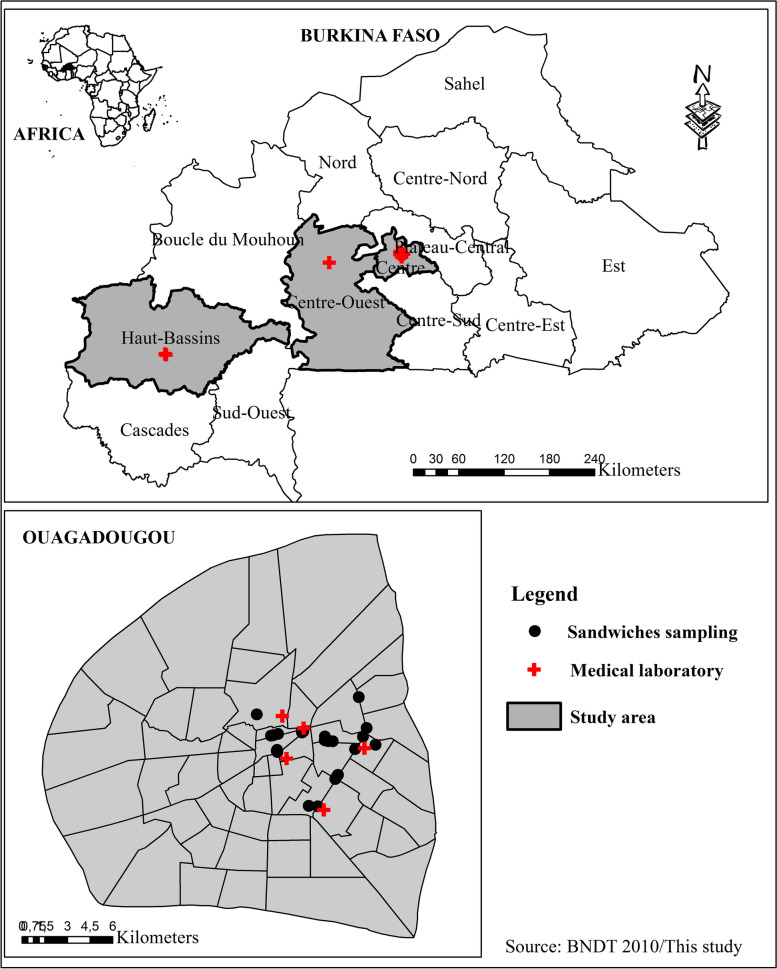
- The study examined Salmonella from ready-to-eat beef sandwiches and clinical Salmonella isolates from diarrheal stools collected between February 2017 and May 2018 in Ouagadougou, Bobo-Dioulasso, and Koudougou.
- Sandwich samples were processed by culture and identification using ISO 6579-1:2017, while clinical isolates were verified by API 20E.
- Isolates were serotyped by the White-Kauffmann-Le Minor scheme and tested by PCR for invA, spvR, spvC, fimA, and stn; the analysis reported frequencies by origin and serotype.
## Limitations
- The paper states that some serotyping was incomplete, so several isolates could only be labeled as suspected Kentucky serotypes rather than fully confirmed.
- The authors note that additional analysis is needed to confirm the plausible presence of the Kentucky/Bargny serotype among food and clinical isolates.
- Evident from the text: the food sample set was limited to 85 sandwiches from Ouagadougou, which may limit generalizability beyond the sampled foods and city.
Model-written summary. Check it against the paper before relying on it.
Integrity signals
Registry
Cites
Statistics
Figures
Verification
Claims the paper makes
6 Valid · 2 Not valid · 5 Not checked · 33 Own results and interpretations
Some cited sources support this claim and some don’t — read each source’s verdict below.
In the paper
“This frequency of spvR is significantly higher than those reported by several authors [24, 31, 48].”
§ Characterization of virulence factors of Salmonella isolated from human stools and street food in urban areas of Burkina Faso > Discussion
What the sources say
- Supportedcites [24] Somda NS, Bonkoungou JIO, Sambe-Ba B, Drabo MS, Wane AA, Sawadogo-Lingani H, et al. Diversity and antimicrobial drug resistance of non-typhoid Salmonella serotypes isolated in lettuce, irrigation water and clinical samples in Burkina Faso. J Agri Food Res. 2021;100167. 10.1016/j.jafr.2021.100167. source
Somda et al. (2021) report in Section 3.4 'Detection of virulence genes' that spvR was found 'at low frequency 12%' among the non-typhoid Salmonella analyzed (invA, pipD, misL 91%; orfL 81%), and the Discussion (Section 4) repeats that 'spvR genes were found in low frequency (12%) from all NTS isolated'. That 12% is far below the 36.8% the citing paper reports for its own study, so the cited value supports the comparison the citation is offered for; the word 'significantly' is the citing authors' own statistical framing and is not attributed to this source. (LLM, conf=0.85)
- Disputedcites [31] Chaudhary J Nayak J Brahmbhatt M Makwana P Virulence genes detection of Salmonella serovars isolated from pork and slaughterhouse environment in Ahmedabad, Gujarat Vet World 2015 8 1 121 124 10.14202/vetworld.2015.121-124 27047008 PMC4777800 sourceExperimental — accuracy not yet measured
The Results and Discussion reports spvR in 30 of 37 isolates, approximately 81%, which is higher—not lower—than the citing study’s 36.8%. The source also does not report a statistical comparison with that study. (LLM, conf=0.88)
Checked by a reasoning model — may be wrong.
- Supportedcites [48] Deguenon E Dougnon V Lozes E Maman N Agbankpe J Abdel-Massih RM Resistance and virulence determinants of faecal Salmonella spp. isolated from slaughter animals in Benin BMC Res Notes 2019 12 1 317 10.1186/s13104-019-4341-x 31174590 PMC6556020 source
The Results report spvR in 20% of isolates, below the citing study’s stated 36.8%. The cited paper supplies one of the lower reported frequencies; the characterization of the difference as significant is the citing authors’ comparison. (LLM, conf=0.86)
plain- Asserted: passes — The authors put it forward as true.
- Checkable: passes — It can be checked against evidence.
- Load-bearing: unclear — It is unclear whether the paper’s conclusions depend on it.
- Based: passes — The paper gives a reason why it holds.
- Supported
The cited sources support only part of this claim — read each source’s verdict below.
In the paper
“However, the acquisition of the lactose operon by Salmonella reduces its virulence potential [59].”
§ Characterization of virulence factors of Salmonella isolated from human stools and street food in urban areas of Burkina Faso > Discussion
What the sources say
- Partly supportedcites [59] Eswarappa SM Karnam G Nagarajan AG Chakraborty S Chakravortty D lac repressor is an antivirulence factor of Salmonella enterica: its role in the evolution of virulence in Salmonella Plos One 2009 4 6 e5789 10.1371/journal.pone.0005789 19495420 PMC2686271 sourceExperimental — accuracy not yet measured
The Results (page unavailable) show reduced virulence in mice when S. enterica expresses LacI. The Introduction (page unavailable) distinguishes lacI, which encodes the repressor, from the lacZYA lactose operon. The paper does not show that acquisition of the operon itself reduces virulence. (LLM, conf=0.88)
plainstates a cause- Asserted: passes — The authors put it forward as true.
- Checkable: passes — It can be checked against evidence.
- Load-bearing: unclear — It is unclear whether the paper’s conclusions depend on it.
- Based: passes — The paper gives a reason why it holds.
- Partly supported
A result the paper reports from its own data — it cites no other source for it, so there is none to check. The quote shows it is in the paper.
In the paper
“Salmonella of the antigenic groups OMA+/O:4.5 [39.6% (36/91)] and the antigenic group OMB+/O:6,7,8 [25.3% (23/91)] were the most frequent.”
§ Characterization of virulence factors of Salmonella isolated from human stools and street food in urban areas of Burkina Faso > Results > Serotyping of Salmonella strains
plain- Asserted: passes — The authors put it forward as true.
- Checkable: passes — It can be checked against evidence.
- Load-bearing: unclear — It is unclear whether the paper’s conclusions depend on it.
- Based: passes — The paper gives a reason why it holds.
A result the paper reports from its own data — it cites no other source for it, so there is none to check. The quote shows it is in the paper.
In the paper
“For all isolates combined (food and human); profile P1 (positive for all five genes tested) was the most prevalent 38 (35.8%), follow by P2 (spvR absent), 12 (11.3%), profile P3 (spvR and spvC absent), 16 (15.1%), P10 (unique presence of fimA), 10 (9.4%) and P11 (negative for all five genes tested), 22 (20.8%).”
§ Characterization of virulence factors of Salmonella isolated from human stools and street food in urban areas of Burkina Faso > Results > Molecular characterization of Salmonella strains
plain- Asserted: passes — The authors put it forward as true.
- Checkable: passes — It can be checked against evidence.
- Load-bearing: unclear — It is unclear whether the paper’s conclusions depend on it.
- Based: passes — The paper gives a reason why it holds.
A result the paper reports from its own data — it cites no other source for it, so there is none to check. The quote shows it is in the paper.
In the paper
“Salmonella of the antigenic groups OMA+/O:4.5 [39.6% (36/91)] and the antigenic group OMB+/O:6,7,8 [25.3% (23/91)] were the most frequent.”
§ Characterization of virulence factors of Salmonella isolated from human stools and street food in urban areas of Burkina Faso > Results > Serotyping of Salmonella strains
plain- Asserted: passes — The authors put it forward as true.
- Checkable: passes — It can be checked against evidence.
- Load-bearing: unclear — It is unclear whether the paper’s conclusions depend on it.
- Based: passes — The paper gives a reason why it holds.
16 more claims
Create a free account to see all 46 claims and to verify the 5 references still open.
- Probably not a substantial claim. 8
- It may state two separate claims as one. 21
Self-check
Percentages, sums and reported differences re-computed from the paper’s own numbers.
Each contradiction between two passages listed here was confirmed by an independent check.
Rated major: it would touch a result — a value a result rests on, reported and recomputed p-values on opposite sides of the significance level, two passages that conflict with no sign which is right, or a cited work retracted before this paper was published.
In the paper
§ Characterization of virulence factors of Salmonella isolated from human stools and street food in urban areas of Burkina Faso > Abstract > Results
“A total of 106 Salmonella isolates (77 human stools; 14 sandwiches) was analyzed”
§ Characterization of virulence factors of Salmonella isolated from human stools and street food in urban areas of Burkina Faso > Methods > Sample’s collection
“Ninety-one (91) Salmonella clinical strains, isolated from diarrheal stools samples from inpatients and out patients were collected”
Rated minor: it would not touch a result — a value no result rests on, a p-value that stays on the same side of the significance level, or a conflict that is clerical, resolved elsewhere in the paper, or outside its own findings.
In the paper
§ Characterization of virulence factors of Salmonella isolated from human stools and street food in urban areas of Burkina Faso > Abstract > Results
“A total of 106 Salmonella isolates (77 human stools; 14 sandwiches) was analyzed”
§ Characterization of virulence factors of Salmonella isolated from human stools and street food in urban areas of Burkina Faso > Results > Salmonella strains isolated from food and clinical samples
“Fifteen (15) Salmonella was isolated from sandwich samples and 91 from clinical samples.”
Citations
Cites
International Organization for Standardization (ISO)
Nahler, G. (2009) · Dictionary of Pharmaceutical Medicine · doi:10.1007/978-3-211-89836-9_723 · Cited by 3,677
Purification of Nucleic Acids by Extraction with Phenol:Chloroform
Sambrook, J., & Russell, D. W. (2006) · Cold Spring Harbor Protocols · doi:10.1101/pdb.prot4455 · Cited by 1,047 · cited 1×
“Genomic DNA extraction The extraction of total genomic DNA was carried out by the phenol/chloroform method [30] using Salmonella fresh growths from Luria Bertani (LB) broth.”
MethodMolecular genetic bases of Salmonella entry into host cells
Galán, J. E. (1996) · Molecular Microbiology · doi:10.1111/j.1365-2958.1996.tb02615.x · Cited by 435 · cited 1×
“The invA gene of Salmonella is also involved invasion of host epithelial cells [13, 14].”
BackgroundSalmonellosis Outcomes Differ Substantially by Serotype
Jones, T. F., Ingram, L. A., Cieslak, P. R., Vugia, D. J., Tobin‐D’Angelo, M., Hurd, S., Medus, C., Cronquist, A., & Angulo, F. J. (2008) · The Journal of Infectious Diseases · doi:10.1086/588823 · Cited by 418 · cited 1×
“An earlier study argued that more than 2500 serovars of Salmonella enterica were identified by using the WhiteKauffmann-Le Minor scheme; about 20 serovars were found primarily in antigen groups B, C, D and E [41].”
BackgroundThe Safe Food Imperative: Accelerating Progress in Low- and Middle-Income Countries
Jaffee, S., Henson, S., Unnevehr, L., Grace, D., & Cassou, E. (2019) · doi:10.1596/978-1-4648-1345-0 · Cited by 373
Foley, S. L., Lynne, A. M., & Nayak, R. (2008) · Journal of Animal Science · doi:10.2527/jas.2007-0464 · Cited by 356 · cited 2×
“Indeed, Salmonella Typhimurium and Salmonella Enteritidis, are the most serotypes involved in human infections and frequently isolated from farm animals [40].”
BackgroundDistinguishable Epidemics of Multidrug-Resistant Salmonella Typhimurium DT104 in Different Hosts
Mather, A. E., Reid, S. W. J., Maskell, D. J., Parkhill, J., Fookes, M. C., Harris, S. R., Brown, D. J., Coia, J. E., Mulvey, M. R., Gilmour, M. W., et al. (2013) · Science · doi:10.1126/science.1240578 · Cited by 344
Salmonella Pathogenicity and Host Adaptation in Chicken-Associated Serovars
Foley, S. L., Johnson, T. J., Ricke, S. C., Nayak, R., & Danzeisen, J. (2013) · Microbiology and Molecular Biology Reviews · doi:10.1128/mmbr.00015-13 · Cited by 330 · cited 2×
“[11, 49], the difference in frequency of the virulence genes observed in our study could be related to the topology of the gene in Salmonella; despite their different locations, they remain responsible for virulence in salmonellosis.”
BackgroundMolecular analysis of spv virulence genes of the salmonella virulence plasmids
Gulig, P. A., Danbara, H., Guiney, D. G., Lax, A. J., Norel, F., & Rhen, M. (1993) · Molecular Microbiology · doi:10.1111/j.1365-2958.1993.tb01172.x · Cited by 320 · cited 2×
“In addition, most Salmonella Typhimurium strains contain a self-transmissible virulence plasmid (pSLT) such as the spv operon [18].”
BackgroundAntimicrobial resistance and management of invasive Salmonella disease
Kariuki, S., Gordon, M. A., Feasey, N., & Parry, C. M. (2015) · Vaccine · doi:10.1016/j.vaccine.2015.03.102 · Cited by 309
Marks, F., von Kalckreuth, V., Aaby, P., Adu-Sarkodie, Y., El Tayeb, M. A., Ali, M., Aseffa, A., Baker, S., Biggs, H. M., Bjerregaard-Andersen, M., et al. (2017) · The Lancet Global Health · doi:10.1016/s2214-109x(17)30022-0 · Cited by 306 · cited 1×
“Although Salmonella is a major cause of foodborne illness in developing countries, there is a scarcity of data on street found intake and Salmonella related diseases which undermined the real impact of salmonellosis on population health [19].”
BackgroundSelf-citationMooijman, K. A., Pielaat, A., & Kuijpers, A. F. A. (2019) · International Journal of Food Microbiology · doi:10.1016/j.ijfoodmicro.2018.03.022 · Cited by 296
Le Hello, S., Hendriksen, R. S., Doublet, B., Fisher, I., Nielsen, E. M., Whichard, J. M., Bouchrif, B., Fashae, K., Granier, S. A., Jourdan-Da Silva, N., et al. (2011) · Journal of Infectious Diseases · doi:10.1093/infdis/jir409 · Cited by 277 · cited 1×
“This ubiquitous serotype has been closely linked to poultry since 1937 and is now spread in several African countries [43].”
BackgroundThe global burden and epidemiology of invasive non-typhoidal Salmonella infections
Balasubramanian, R., Im, J., Lee, J.-S., Jeon, H. J., Mogeni, O. D., Kim, J. H., Rakotozandrindrainy, R., Baker, S., & Marks, F. (2019) · Human Vaccines & Immunotherapeutics · doi:10.1080/21645515.2018.1504717 · Cited by 261 · cited 1×
“Background Salmonella is one of the most problematic foodborne and zoonotic pathogens that threaten general health and well-being [1].”
BackgroundThe Role of the spv Genes in Salmonella Pathogenesis
Guiney, D. G., & Fierer, J. (2011) · Frontiers in Microbiology · doi:10.3389/fmicb.2011.00129 · Cited by 223 · cited 1×
“The spvR locus is strongly associated with strains that cause non-typhoid bacteremia, but are not present in typhoid strains [54].”
BackgroundFeasey, N. A., Hadfield, J., Keddy, K. H., Dallman, T. J., Jacobs, J., Deng, X., Wigley, P., Barquist, L., Langridge, G. C., Feltwell, T., et al. (2016) · Nature Genetics · doi:10.1038/ng.3644 · Cited by 217 · cited 16×
“Three (3) Salmonella Typhimurium serotypes (OMA+/O:4.5; HMB+/H:i H2:gm) and five (5) Salmonella Enteritidis serotypes (OMA+/O:9; HMB+/H1:gm H2”
BackgroundInfluentialRapid detection of food-borne pathogens by using molecular techniques
Naravaneni, R., & Jamil, K. (2005) · Journal of Medical Microbiology · doi:10.1099/jmm.0.45687-0 · Cited by 152 · cited 1×
“fimA F: CCT TTC TCC ATC GTC CTG AA R: TGG TGT TAT CTG CCT GAC CA 56 85 [35]”
BackgroundStepwise evolution of Salmonella Typhimurium ST313 causing bloodstream infection in Africa
Pulford, C. V., Perez-Sepulveda, B. M., Canals, R., Bevington, J. A., Bengtsson, R. J., Wenner, N., Rodwell, E. V., Kumwenda, B., Zhu, X., Bennett, R. J., et al. (2020) · Nature Microbiology · doi:10.1038/s41564-020-00836-1 · Cited by 151 · cited 15×
“Three (3) Salmonella Typhimurium serotypes (OMA+/O:4.5; HMB+/H:i H2:gm) and five (5) Salmonella Enteritidis serotypes (OMA+/O:9; HMB+/H1:gm H2”
BackgroundInfluential(2006) · BMC Microbiology · doi:10.1186/1471-2180-6-101 · Cited by 148 · cited 1×
“The serogroups B, D and C are the main causes of human infections, including gastroenteritis and bacteremia [42].”
BackgroundEvaluation of culture, ELISA and PCR assays for the detection of Salmonella in seafood
Kumar, R., Surendran, P. K., & Thampuran, N. (2007) · Letters in Applied Microbiology · doi:10.1111/j.1472-765x.2007.02286.x · Cited by 128 · cited 2×
“invA F: GTG AAA TTA TCG CCA CGT TCG GGC AA R: TCA TCG CAC CGT CAA AGG AAC C 63 284 [32]”
BackgroundChiu, C., Su, L., Chu, C.-H., Wang, M.-H., Yeh, C., Weill, F., & Chu, C. (2006) · Journal of Clinical Microbiology · doi:10.1128/jcm.00171-06 · Cited by 108 · cited 2×
“Then, genetic variations in Salmonella could be derived from the transfer of virulence plasmid from animal-origin strains to human-origin strains or vice versa, which remains to be investigated [55].”
BackgroundMakino, S., Kurazono, H., CHONGSANGUAM, M., Hayashi, H., Cheun, H., Suzuki, S., & Shirahata, T. (1999) · Journal of Veterinary Medical Science · doi:10.1292/jvms.61.1245 · Cited by 103
Amini, K., Salehı, T. Z., Brujeni, G. N., Ranjbar, R., Amini, J., & Ashrafganjooei, S. B. (2010) · African Journal of Microbiology Research · doi:10.5897/ajmr.9000508 · Cited by 89 · cited 1×
“[52] found out the presence of spvC in Salmonella strains isolated from humans and cattle and reported 100 and 90%, respectively.”
BackgroundLangendorf, C., Le Hello, S., Moumouni, A., Gouali, M., Mamaty, A.-A., Grais, R. F., Weill, F.-X., & Page, A.-L. (2015) · PLOS ONE · doi:10.1371/journal.pone.0120275 · Cited by 88 · cited 1×
“In resource-limited countries, particularly in Sub-saharan Africa, NTS is endemic, with high rates in children under 3 years of age and immunocompromised individuals [8, 9].”
BackgroundBorges, K. A., Furian, T. Q., Borsoi, A., Moraes, H. L. S., Salle, C. T. P., & Nascimento, V. P. (2013) · Pesquisa Veterinária Brasileira · doi:10.1590/s0100-736x2013001200004 · Cited by 86 · cited 2×
“Several authors previously revealed the constant presence of invA, fimA and stn gene in all Salmonella isolates analyzed in their study [31, 47, 48].”
BackgroundGulig, P. A., Doyle, T. J., Hughes, J. A., & Matsui, H. (1998) · Infection and Immunity · doi:10.1128/iai.66.6.2471-2485.1998 · Cited by 78 · cited 1×
“The Salmonella virulence plasmid carry several key virulence factors, including the spvABCD system and its spvR regulator, which are essential for systemic virulence [17].”
BackgroundChaudhary, J. H., Nayak, J. B., Brahmbhatt, M. N., & Makwana, P. P. (2015) · Veterinary World · doi:10.14202/vetworld.2015.121-124 · Cited by 77
Interaction of Salmonella spp. with the Intestinal Microbiota
Ahmer, B. M. M., & Gunn, J. S. (2011) · Frontiers in Microbiology · doi:10.3389/fmicb.2011.00101 · Cited by 74 · cited 2×
“Then, Salmonella may be in a virulent (invA) or non-virulent state [50].”
BackgroundPrager, R. (1995) · FEMS Immunology and Medical Microbiology · doi:10.1016/0928-8244(95)00048-c · Cited by 71 · cited 2×
“Salmonella enterotoxin (stn) gene is a clinical important biomarker which is use to differentiate Salmonella enterica strains (stn+), from in Salmonella bongori and other Enterobacteriaceae [15].”
BackgroundLi, Q., Cheng, W., Zhang, D., Yu, T., Yin, Y., Ju, H., & Ding, S. (2012) · International Journal of Electrochemical Science · doi:10.1016/s1452-3981(23)13380-3 · Cited by 67 · cited 2×
“The virulence of Salmonella is linked to a combination of chromosomal and plasmid factors; the invA gene serves also as a specific biomarker for the identification of the genus Salmonella [12].”
BackgroundDetection of virulence genes in Salmonella Enteritidis isolated from different sources
Oliveira, S. D. D., Rodenbusch, C. R., Michael, G. B., Cardoso, M. I. R., Canal, C. W., & Brandelli, A. (2003) · Brazilian Journal of Microbiology · doi:10.1590/s1517-83822003000500042 · Cited by 60 · cited 1×
“spvC F: ACT CCT TGC ACA ACC AAA TGC GGA R: TGT CTT CTG CAT TTC GCC ACC ATC A 63 571 [34]”
BackgroundPasmans, F., Van Immerseel, F., Heyndrickx, M., Martel, A., Godard, C., Wildemauwe, C., Ducatelle, R., & Haesebrouck, F. (2003) · Infection and Immunity · doi:10.1128/iai.71.10.6068-6074.2003 · Cited by 59
Mthembu, T. P., Zishiri, O. T., & El Zowalaty, M. E. (2019) · Pathogens · doi:10.3390/pathogens8030124 · Cited by 56
Krzyzanowski, F., Zappelini, L., Martone-Rocha, S., Dropa, M., Matté, M. H., Nacache, F., & Razzolini, M. T. P. (2014) · BMC Microbiology · doi:10.1186/s12866-014-0263-x · Cited by 44 · cited 1×
“[51] found out a low rate of Salmonella strains with the spvC gene, suggesting its particularity in the virulence of Salmonella.”
BackgroundSalmonella Detection Methods for Food and Food Ingredients
Joseph, A., & Carlos, G. (2012) · InTech eBooks · doi:10.5772/29526 · Cited by 42 · cited 1×
“The main biochemical tests are glucose fermentation, ortho phenyl beta galactosidase negative reaction, urease negative, lysine decarboxylase, negative indole test, H2S production, and fermentation of dulcitol [28].”
BackgroundSalmonella: a continuing problem
Hardy, A. (2004) · Postgraduate Medical Journal · doi:10.1136/pgmj.2003.016584 · Cited by 39 · cited 1×
“In spite of that Salmonella continue to be remains an important human pathogen and a serious public health concern worldwide [3].”
BackgroundGebreyes, W. A., Thakur, S., Dorr, P., Tadesse, D. A., Post, K., & Wolf, L. (2009) · Journal of Clinical Microbiology · doi:10.1128/jcm.01660-08 · Cited by 39 · cited 1×
“elements that are lost over the time: their distribution, which appears low, does not reflect the clinical reality [56].”
BackgroundCollinson, S. K., Liu, S., Clouthier, S. C., Banser, P. A., Doran, J. L., Sanderson, K. E., & Kay, W. W. (1996) · Gene · doi:10.1016/0378-1119(95)00763-6 · Cited by 37
Eswarappa, S. M., Karnam, G., Nagarajan, A. G., Chakraborty, S., & Chakravortty, D. (2009) · PLoS ONE · doi:10.1371/journal.pone.0005789 · Cited by 36
Deguenon, E., Dougnon, V., Lozes, E., Maman, N., Agbankpe, J., Abdel-Massih, R. M., Djegui, F., Baba-Moussa, L., & Dougnon, J. (2019) · BMC Research Notes · doi:10.1186/s13104-019-4341-x · Cited by 33 · cited 2×
“This frequency of spvR is significantly higher than those reported by several authors [24, 31, 48].”
BackgroundResultSomda, N. S., Bonkoungou, I. J. O., Sambe-Ba, B., Drabo, M. S., Wane, A. A., Sawadogo-Lingani, H., & Savadogo, A. (2021) · Journal of Agriculture and Food Research · doi:10.1016/j.jafr.2021.100167 · Cited by 33 · cited 3×
“This frequency of spvR is significantly higher than those reported by several authors [24, 31, 48].”
BackgroundResultSelf-citationKarasová, D., Havlíčková, H., Sisak, F., & Rychlı́k, I. (2009) · Veterinary Microbiology · doi:10.1016/j.vetmic.2009.06.023 · Cited by 28 · cited 1×
“Although all serotypes of Salmonella can be considered potentially pathogenic, there have some differences in their virulence [57].”
BackgroundDembelé, R., Konaté, A., Traoré, O., Kaboré, W. A. D., Soulama, I., Kagambèga, A., Traore, A. S., Guessennd, N., Aïdara‐Kane, A., Gassama‐Sow, A., et al. (2020) · BMC Pediatrics · doi:10.1186/s12887-020-02342-z · Cited by 28
Self-citationKagambèga, A., Lienemann, T., Frye, J. G., Barro, N., & Haukka, K. (2018) · Tropical Medicine and Health · doi:10.1186/s41182-018-0086-9 · Cited by 27 · cited 1×
“On the other hand, studies have been reported on the resistance genes of these bacteria [25, 26].”
BackgroundSelf-citationEuropean Food Poisoning Outbreaks Involving Meat and Meat-based Products
Hennekinne, J., Herbin, S., Firmesse, O., & Auvray, F. (2015) · Procedia Food Science · doi:10.1016/j.profoo.2015.09.024 · Cited by 25 · cited 1×
“Salmonellosis, caused by Salmonella, manifests mainly as mild diarrhea, also known as food poisoning [4].”
BackgroundDerakhshandeh, A., Firouzi, R., & Khoshbakht, R. (2012) · Indian Journal of Microbiology · doi:10.1007/s12088-012-0316-5 · Cited by 24 · cited 1×
“[53] also found out two human serotypes of Salmonella Enteritidis indicating a simultaneous presence of spvC and spvR.”
BackgroundNontyphoidalSalmonellaSerovars Cause Different Degrees of Invasive Disease Globally
Langridge, G. C., Nair, S., & Wain, J. R. (2009) · The Journal of Infectious Diseases · doi:10.1086/596208 · Cited by 24
(2013) · Cited by 23
InvA Gene Sequencing of Salmonella typhimurium Isolated from Egyptian Poultry
El-Sebay, N. A., Shady, H. M. A., El-Zeedy, S. A., & Samy, A. A. (2017) · Asian Journal of Scientific Research · doi:10.3923/ajsr.2017.194.202 · Cited by 20 · cited 1×
“The invA gene of Salmonella is also involved invasion of host epithelial cells [13, 14].”
BackgroundGASSAMA-SOW, A., WANE, A. A., CANU, N. A., UZZAU, S., KANE, A. A., & RUBINO, S. (2006) · Epidemiology and Infection · doi:10.1017/s0950268805005807 · Cited by 16 · cited 1×
“However, in Senegal, none of Salmonella serotype Keurmassar investigated (human and poultry origin) harbored a virulence plasmid [46].”
BackgroundSalmonella Kentucky: prevalence and challenges in Nigeria and the Africa continent
Igomu, E. E. (2020) · African Journal of Clinical and Experimental Microbiology · doi:10.4314/ajcem.v21i4.3 · Cited by 16
Kagambèga, A., Hiott, L. M., Boyle, D. S., McMillan, E. A., Sharma, P., Gupta, S. K., Ramadan, H., Cho, S., Humayoun, S. B., Woodley, T. A., et al. (2021) · BMC Microbiology · doi:10.1186/s12866-021-02085-6 · Cited by 15
Self-citationRen, D., Ali, K., Isidore, J. O. B., Assta, K., Kiessoun, K., T., S. B., Alfred, S. T., & Nicolas, B. (2014) · African Journal of Microbiology Research · doi:10.5897/ajmr2014.7002 · Cited by 14 · cited 1×
“In resource-limited countries, particularly in Sub-saharan Africa, NTS is endemic, with high rates in children under 3 years of age and immunocompromised individuals [8, 9].”
BackgroundMicrobiological quality of some street foods in N'Djamena, Chad: case of sandwiches
Djibrine, M. A., Tidjani, A., Ngandolo, B. N. R., Nadlaou, B., & Barro, N. (2018) · International Journal of Biological and Chemical Sciences · doi:10.4314/ijbcs.v12i3.3 · Cited by 12 · cited 1×
“[39] did not isolate any Salmonella from beef minced sandwiches vended in streets.”
BackgroundSelf-citationSalmonella: Invasion, Evasion & Persistence
Chami, B., & Bao, S. (2012) · Salmonella - Distribution, Adaptation, Control Measures and Molecular Technologies · doi:10.5772/30443 · Cited by 3
Research works printed but not linked: 4
- Tran Dien A.. Génomique épidémiologique de Salmonella (Doctoral dissertation, Paris, Institut agronomique, vétérinaire et forestier de France). 2018. p.22.. https://tel.archives-ouvertes.fr/tel-02006644/document. Accessed date May 2020.
- Grimont PA Weill FX Antigenic formulae of the Salmonella serovars WHO collaborating centre for reference and research on Salmonella 2007 1 166
- Hassanin F Reham AA Shawky N Gomaa W Incidence of Escherichia coli and Salmonella in ready to eat foods Benha Vet Med J 2014 27 1 84 91
- Abd-El-Malek AM Microbiological quality of ready-to-eat liver sandwiches (Kibda) Global Vet 2014 13 6 1097 1102 10.5829/idosi.gv.2014.13.06.91141 · doi:10.5829/idosi.gv.2014.13.06.91141
Cited by
Human Salmonellosis: A Continuous Global Threat in the Farm-to-Fork Food Safety Continuum
Teklemariam, A. D., Al-Hindi, R. R., Albiheyri, R. S., Alharbi, M. G., Alghamdi, M. A., Filimban, A. A. R., Al Mutiri, A. S., Al-Alyani, A. M., Alseghayer, M. S., Almaneea, A. M., et al. (2023) · Foods · doi:10.3390/foods12091756 · Cited by 186
“Furthermore, 14 serotypes of Salmonella (12/91 human strains and 2/15 sandwich strains) were evocative of Kentucky and Bargny serotypes [143].”
BackgroundPathogenic Bacteria in Free-Living Birds, and Its Public Health Significance
Kobuszewska, A., & Wysok, B. (2024) · Animals · doi:10.3390/ani14060968 · Cited by 49
A Comprehensive Review for the Surveillance of Human Pathogenic Microorganisms in Shellfish
Desdouits, M., Reynaud, Y., Philippe, C., & Guyader, F. S. L. (2023) · Microorganisms · doi:10.3390/microorganisms11092218 · Cited by 38
“Virulence genes targeted by PCR include invA [107], a component of the Salmonella pathogenicity island 1, which is crucial for efficient cell invasion [108,109].”
BackgroundManyi-Loh, C. E., & Lues, R. J. F. (2023) · Microorganisms · doi:10.3390/microorganisms11102484 · Cited by 33
“Fimbriae encoded by the gene fim A are filamentous structures on the surface of the bacterium engaging in the invasion of host epithelial cells [148].”
BackgroundWójcicki, M., Chmielarczyk, A., Świder, O., Średnicka, P., Strus, M., Kasperski, T., Shymialevich, D., Cieślak, H., Emanowicz, P., Kowalczyk, M., et al. (2022) · Pathogens · doi:10.3390/pathogens11111323 · Cited by 29
“invA located on pathogenicity island 1 (SPI1, Salmonella Pathogenicity Islands 1) has been extensively studied for its ability to promote the virulence of Salmonella [47,48].”
BackgroundResultInfluential
Metadata
- Authors
- Nikiema, M. E. M., Kakou-ngazoa, S., Ky/Ba, A., Sylla, A., Bako, E., Addablah, A. Y. A., Ouoba, J. B., Sampo, E., Gnada, K., Zongo, O., Traoré, K. A., Sanou, A., Bonkoungou, I. J. O., Ouédraogo, R., Barro, N., & Sangaré, L.
- Affiliations
- Université Joseph Ki-Zerbo (BF)
- Institut Pasteur de Côte d'Ivoire (CI)
- Centre Muraz (BF)
- Nazi Boni University (BF)
- Centre Hospitalier Universitaire Yalgado Ouédraogo (BF)
- Corresponding author
- Nikiema, Marguerite E. M.
- ORCID
- Venue
- BMC Microbiology
- Published
- 2021-12
- Volume
- 21
- Issue
- 1
- Pages
- 338-338
- ISSN
- 1471-2180 (ISSN-L)
- PMC
- PMC8665542
- OpenAlex
- W4200254592
- Semantic Scholar
- cf8d59e763da4c6d84541d4ebf237f356b534c4b
- Cited by
- 47
- References
- 55
- Citations by year
- 2026: 10 · 2025: 5 · 2024: 16 · 2023: 11 · 2022: 5
- FWCI
- 4.78
- Type
- journal article
- Language
- en
- Open access
- gold
- doi.org
- Licence
- cc-by
- creativecommons.org/licenses/by/4.0 (tdm)
- creativecommons.org/licenses/by/4.0 (vor, 10 d)
- Locations
- BMC Microbiology (publishedVersion, cc-by)
- PubMed Central (publishedVersion, cc-by)
- PubMed (publishedVersion)
- DOAJ (DOAJ: Directory of Open Access Journals) (submittedVersion, cc-by-sa)
- Funders
- West African Research Association, Boston University
- Topics
- Life Sciences › Agricultural and Biological Sciences › Food Science › Salmonella and Campylobacter epidemiology
- Life Sciences › Immunology and Microbiology › Microbiology › Escherichia coli research studies
- Life Sciences › Immunology and Microbiology › Microbiology › Enterobacteriaceae and Cronobacter Research
- Keywords
- Salmonella, virulence genes, street food, foodborne pathogens, salmonellosis, Salmonella serotypes, Salmonella Enteritidis, Salmonella typhimurium, invA gene, fimA, subthalamic nucleus, spvC, Burkina Faso
- MeSH terms
- Burkina Faso, Diarrhea, Feces, Genes, Bacterial, Humans, Salmonella, Serotyping, Virulence, Prevalence, Virulence Factors, Fast Foods, Serogroup
About these checks
Registry, retraction, Cites and statistics results are computed, not judged, with one exception: a printed reference that no index lists is read once by a model before it counts as a citation error. Claims are extracted by a model and kept only when their quote appears verbatim in the text; each cited source is then checked, with a model’s help, for whether it says what the claim relies on. Those verdicts can be wrong — read the claim’s quote and the cited source before relying on one.
The claim verdicts this report counts are experimental: their accuracy is not yet measured.
A language model drew the claims from the paper on 2026-10-10, under version 3 of the claim definition (model deepseek-v4.1-flash, prompt extract-v3).
A second model labelled each claim on 2026-10-10 (model jev-1.13-20260917, definition revision gold-guideline-v0.2).
Cited sources are checked with a language model’s help (qwen3.8-omni-flash and gpt-6-sol).
Statistics and arithmetic are recomputed, not judged.
Confidence bands are shown only for fields calibrated on our annotated test set. None is calibrated yet, so no band is shown.
What counts as a claim ›How we measure confidence ›How we check this ›
Are you an author, or do you see a problem with this page? Request a review
Data sources
Bibliographic data: Semantic Scholar, OpenAlex, Crossref.
Contains information from the Semantic Scholar Academic Graph Datasets, made available under the ODC Attribution License (ODC-BY 1.0).
Semantic Scholar’s data is described in: Kinney, R., et al. (2023). The Semantic Scholar Open Data Platform. arXiv:2301.10140.
