

Prevalence and treatment of atherogenic dyslipidemia in the primary prevention of cardiovascular disease in Europe: EURIKA, a cross-sectional observational study
Open accessThe DOI matches its Crossref record; 33 of the 33 references it cites were found in a registry or an index.
Abstract
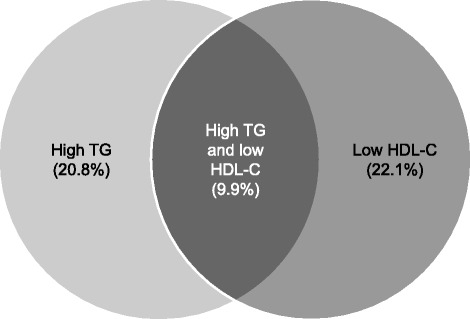
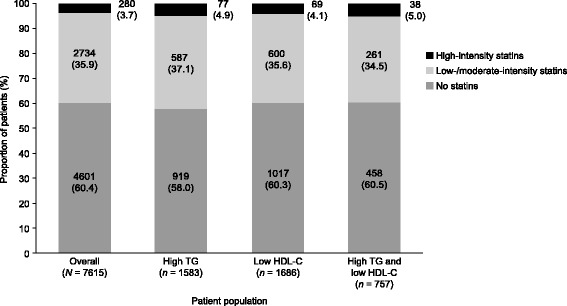
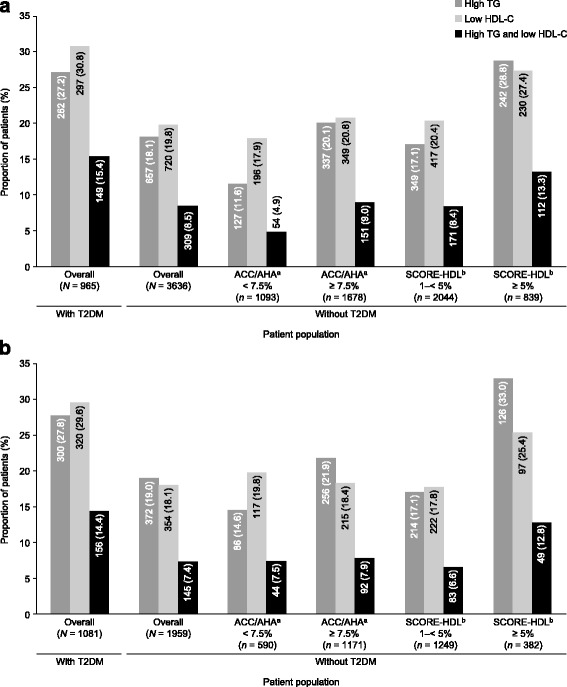
BACKGROUND: Atherogenic dyslipidemia is associated with poor cardiovascular outcomes, yet markers of this condition are often ignored in clinical practice. Here, we address a clear evidence gap by assessing the prevalence and treatment of two markers of atherogenic dyslipidemia: elevated triglyceride levels and low levels of high-density lipoprotein cholesterol. METHODS: This cross-sectional observational study assessed the prevalence of two atherogenic dyslipidemia markers, high triglyceride levels and low high-density lipoprotein cholesterol levels, in the study population from the European Study on Cardiovascular Risk Prevention and Management in Usual Daily Practice (EURIKA; N = 7641; of whom 51.6% were female and 95.6% were White/Caucasian). The EURIKA population included European patients, aged at least 50 years with at least one cardiovascular risk factor but no history of cardiovascular disease. RESULTS: Over 20% of patients from the EURIKA population have either triglyceride or high-density lipoprotein cholesterol levels characteristic of atherogenic dyslipidemia. Furthermore, the proportions of patients with one of these markers were higher in subpopulations with type 2 diabetes mellitus or those already calculated to be at high risk of cardiovascular disease. Approximately 55% of the EURIKA population who have markers of atherogenic dyslipidemia are not receiving lipid-lowering therapy. CONCLUSIONS: A considerable proportion of patients with at least one major cardiovascular risk factor in the primary cardiovascular disease prevention setting have markers of atherogenic dyslipidemia. The majority of these patients are not receiving optimal treatment, as specified in international guidelines, and thus their risk of developing cardiovascular disease is possibly underestimated. TRIAL REGISTRATION: The present study is registered with ClinicalTrials.gov (ID: NCT00882336).
Overview
The claims and statistics of this paper haven’t been checked yet.
Free: it reads the open-access text and checks the first 5 claims that cite a source we can check. Create a free account to check every claim.
Integrity signals
Registry
Cites
Statistics
Figures
Verification
Claims the paper makes
The claims and statistics of this paper haven’t been checked yet.
Free: it reads the open-access text and checks the first 5 claims that cite a source we can check. Create a free account to check every claim.
Claims other papers make about this one
Each is checked against this paper’s own text: does it say what the citing paper says it does?
The source backs part of the claim, not all of it — or backs it for a different population, condition or comparison.
In the citing paper
“Multiple disturbances in lipoprotein metabolism in individuals with prediabetes and T2D result from the combined effects of insulin deficiency, insulin resistance, and hyperglycemia.”
From American Association of Clinical Endocrinology Clinical Practice Guideline: Developing a Diabetes Mellitus Comprehensive Care Plan-2022 Update. (2022) · cites this paper as [306]
Experimental — accuracy not yet measured
Self-check
Percentages, sums and reported differences re-computed from the paper’s own numbers.
The self-check needs the paper’s full text.
Citations
Cites
Friedewald, W. T., Levy, R. I., & Fredrickson, D. S. (1972) · Clinical Chemistry · doi:10.1093/clinchem/18.6.499 · Cited by 32,423 · cited 1×
“LDL-C concentration was calculated by the Friedewald formula [17].”
MethodEuropean Guidelines on cardiovascular disease prevention in clinical practice (version 2012)
Authors/Task Force Members:, Perk, J., De Backer, G., Gohlke, H., Graham, I., Reiner, Ž., Verschuren, M., Albus, C., Benlian, P., Boysen, G., et al. (2012) · European Heart Journal · doi:10.1093/eurheartj/ehs092 · Cited by 8,490
Self-citation2016 European Guidelines on cardiovascular disease prevention in clinical practice
Piepoli, M. F., Hoes, A. W., Agewall, S., Albus, C., Brotons, C., Catapano, A. L., Cooney, M.-T., Corrà, U., Cosyns, B., Deaton, C., et al. (2016) · European Heart Journal · doi:10.1093/eurheartj/ehw106 · Cited by 6,457
Self-citationAntihyperlipidemic and Biochemical Activities of Mcy Protein in Streptozotocin Induced Diabetic Rats
Marella, S., Maddirela, D. R., Badri, K. R., Jyothi Kumar, M. V., & Chippada, A. (2015) · Cellular Physiology and Biochemistry · doi:10.1159/000373954 · Cited by 5,938
Estimation of ten-year risk of fatal cardiovascular disease in Europe: the SCORE project
Conroy, R. (2003) · European Heart Journal · doi:10.1016/s0195-668x(03)00114-3 · Cited by 5,290
2013 ACC/AHA Guideline on the Assessment of Cardiovascular Risk
Goff, D. C., Lloyd-Jones, D. M., Bennett, G., Coady, S., D’Agostino, R. B., Gibbons, R., Greenland, P., Lackland, D. T., Levy, D., O’Donnell, C. J., et al. (2014) · Journal of the American College of Cardiology · doi:10.1016/j.jacc.2013.11.005 · Cited by 4,945
Authors/Task Force Members, Graham, I., Atar, D., Borch-Johnsen, K., Boysen, G., Burell, G., Cifkova, R., Dallongeville, J., De Backer, G., Ebrahim, S., et al. (2007) · European Heart Journal · doi:10.1093/eurheartj/ehm316 · Cited by 3,753
Self-citationGoff, D. C., Lloyd-Jones, D. M., Bennett, G., Coady, S., D’Agostino, R. B., Gibbons, R., Greenland, P., Lackland, D. T., Levy, D., O’Donnell, C. J., et al. (2014) · Circulation · doi:10.1161/01.cir.0000437741.48606.98 · Cited by 3,697
Danesh, J., Wheeler, J. G., Hirschfield, G. M., Eda, S., Eiriksdottir, G., Rumley, A., Lowe, G. D. O., Pepys, M. B., & Gudnason, V. (2004) · New England Journal of Medicine · doi:10.1056/nejmoa032804 · Cited by 2,953
Nordestgaard, B. G., Benn, M., Schnohr, P., & Tybjærg-Hansen, A. (2007) · JAMA · doi:10.1001/jama.298.3.299 · Cited by 2,058 · cited 1×
“A topic of debate has been whether measuring non-fasting TG levels is a better predictor of CVD than measuring fasting TG levels, with some studies showing a stronger association between non-fasting TG levels and CVD risk than fasting TG levels [24, 29].”
Result
Cited by
Blonde, L., Umpierrez, G. E., Reddy, S. S., McGill, J. B., Berga, S. L., Bush, M., Chandrasekaran, S., DeFronzo, R. A., Einhorn, D., Galindo, R. J., et al. (2022) · Endocrine Practice · doi:10.1016/j.eprac.2022.08.002 · Cited by 507
Samson, S. L., Vellanki, P., Blonde, L., Christofides, E. A., Galindo, R. J., Hirsch, I. B., Isaacs, S. D., Izuora, K. E., Low Wang, C. C., Twining, C. L., et al. (2023) · Endocrine Practice · doi:10.1016/j.eprac.2023.02.001 · Cited by 375
Fruchart, J.-C., Santos, R. D., Aguilar-Salinas, C., Aikawa, M., Al Rasadi, K., Amarenco, P., Barter, P. J., Ceska, R., Corsini, A., Després, J.-P., et al. (2019) · Cardiovascular Diabetology · doi:10.1186/s12933-019-0864-7 · Cited by 140
Lifestyle and Metabolic Syndrome: Contribution of the Endocannabinoidome
Di Marzo, V., & Silvestri, C. (2019) · Nutrients · doi:10.3390/nu11081956 · Cited by 135
“A plethora of epidemiological studies point to these aspects as major predictors of various forms of dysmetabolism, including obesity and visceral adipose tissue accumulation [2], glucose intolerance, pre-diabetes and type 2 diabetes [3], dyslipidemia [4], hypertension [5] and, eventually, the development of atherogen…”
BackgroundForte, N., Fernández-Rilo, A. C., Palomba, L., Di Marzo, V., & Cristino, L. (2020) · International Journal of Molecular Sciences · doi:10.3390/ijms21051554 · Cited by 103
Menopause symptom management in women with dyslipidemias: An EMAS clinical guide
Anagnostis, P. G., Bitzer, J., Cano, A., Ceauşu, I., Chedraui, P. A., Durmuşoğlu, F., Erkkola, R., Goulis, D. G., Hirschberg, A. L., Kiesel, L., et al. (2020) · Maturitas · doi:10.1016/j.maturitas.2020.03.007 · Cited by 109
Boden, W. E., Bhatt, D. L., Toth, P. P., Ray, K. K., Chapman, M. J., & Lüscher, T. F. (2020) · European Heart Journal · doi:10.1093/eurheartj/ehz778 · Cited by 72
“30 mmol/L (204 mg/ dL).(10) In a more recent NHANES analysis spanning 2007–14, an estimated one-third of all patients on statin therapy have a serum TG >_1.”
BackgroundTargeting Platelet in Atherosclerosis Plaque Formation: Current Knowledge and Future Perspectives
Wang, L., & Tang, C. (2020) · International Journal of Molecular Sciences · doi:10.3390/ijms21249760 · Cited by 93
NAFLD and Cardiovascular Diseases: Epidemiological, Mechanistic and Therapeutic Considerations
Niederseer, D., Wernly, B., Aigner, E. S., Stickel, F., & Datz, C. (2021) · Journal of Clinical Medicine · doi:10.3390/jcm10030467 · Cited by 93
Chapman, M. J., Zamorano, J. L., & Parhofer, K. G. (2022) · Pharmacology & Therapeutics · doi:10.1016/j.pharmthera.2022.108172 · Cited by 67
Current Management Guidelines on Hyperlipidemia: The Silent Killer
Su, L., Mittal, R., Ramgobin, D., Jain, R., & Jain, R. (2021) · Journal of Lipids · doi:10.1155/2021/9883352 · Cited by 75
Prediction for cardiovascular diseases based on laboratory data: An analysis of random forest model
Su, X., Xu, Y., Tan, Z., Wang, X., Yang, P., Su, Y., Jiang, Y., Qin, S., & Shang, L. (2020) · Journal of Clinical Laboratory Analysis · doi:10.1002/jcla.23421 · Cited by 48
Liu, A., Xu, P., Gong, C., Zhu, Y., Zhang, H., Nie, W., Zhou, X., Liang, X., Xu, Y., Huang, C., et al. (2020) · Journal of Trace Elements in Medicine and Biology · doi:10.1016/j.jtemb.2020.126470 · Cited by 45
Lorenzatti, A. J., Monsalvo, M. L., López, J. A. G., Wang, H., & Rosenson, R. S. (2021) · Cardiovascular Diabetology · doi:10.1186/s12933-021-01287-6 · Cited by 34
Metabolic Syndrome Features: Is There a Modulation Role by Mineral Water Consumption? A Review
Costa-Vieira, D., Monteiro, R., & Martins, M. J. (2019) · Nutrients · doi:10.3390/nu11051141 · Cited by 40
Tian, Y., Li, D., Cui, H., Zhang, X., Xiaoyan, F., & Lu, F. (2024) · BMC Public Health · doi:10.1186/s12889-023-17619-y · Cited by 34
Drug Therapy of Dyslipidemia in the Elderly
Yandrapalli, S., Gupta, S., Andries, G., Cooper, H. A., & Aronow, W. S. (2019) · Drugs & Aging · doi:10.1007/s40266-018-00632-x · Cited by 32
Gómez-Álvarez, E., Verdejo, J., Ocampo, S., Ponte-Negretti, C. I., Ruíz, E., & Ríos, M. M. (2020) · IJC Heart & Vasculature · doi:10.1016/j.ijcha.2020.100545 · Cited by 27
Pitso, L., Mofokeng, T. R. P., & Nel, R. (2021) · BMC Endocrine Disorders · doi:10.1186/s12902-021-00813-7 · Cited by 27
“In one multi-centre study of over 7 000 participants in Europe, only 45 % of the participants with atherogenic dyslipidaemia were on lipid-lowering therapy [20].”
BackgroundLuna-Castillo, K. P., Lin, S., Muñóz-Valle, J. F., Vizmanos-Lamotte, B., López-Quintero, A., & Márquez‐Sandoval, F. (2021) · Nutrients · doi:10.3390/nu13041165 · Cited by 28
“According to the current American College of Cardiology/American Heart Association (ACC/AHA) [31] and European Society of Cardiology (ESC) and European Atherosclerosis Society (EAS) Guidelines for the management of dyslipidemias, no specific goals for HDL-C levels have been determined in clinical trials, although incr…”
BackgroundInfluentialAlcohol and Cardiovascular Disease
Gupta, S., Ahimsadasan, N., Dalsania, K., Jing, L., Waraich, H., Gupta, K., Kaminska, M., Balamane, S., García-Zamora, S., Miranda‐Arboleda, A. F., et al. (2025) · The American Journal of Cardiology · doi:10.1016/j.amjcard.2025.09.035 · Cited by 26
Samson, S. L., Vellanki, P., Blonde, L., Hirsch, I. B., Hoang, T. D., Isaacs, S. D., Izuora, K. E., Wang, C. C. L., Ooi, C. P., Padilla, B. I., et al. (2026) · Endocrine Practice · doi:10.1016/j.eprac.2026.01.006 · Cited by 36
Dyslipidemia in patients with amyotrophic lateral sclerosis – a case control retrospective study
Chełstowska, B., Barańczyk‐Kuźma, A., & Kuźma‐Kozakiewicz, M. (2020) · Amyotrophic Lateral Sclerosis and Frontotemporal Degeneration · doi:10.1080/21678421.2020.1832119 · Cited by 25
Pathophysiological mechanisms of cardiovascular disorders in non-alcoholic fatty liver disease.
Garbuzenko, D. V. (2022) · Gastroenterology and hepatology from bed to bench. · doi:10.22037/ghfbb.v15i3.2549 · Cited by 25
“in NAFLD is accompanied by high serum triglycerides and low high-density lipoprotein (HDL) cholesterol levels, with moderately increased serum LDL cholesterol levels (21).”
BackgroundDu, J., Chen, Y., Zhou, N., Song, Y., Wang, W., & Hong, X. (2022) · Sleep Medicine · doi:10.1016/j.sleep.2022.04.004 · Cited by 17
Lipid Disorders Management Strategies (2024) in Prediabetic and Diabetic Patients
Gaiţă, L., Timar, B., Timar, R. Z., Fras, Z., Gaiță, D. I., & Banach, M. (2024) · Pharmaceuticals · doi:10.3390/ph17020219 · Cited by 33
“…although all LDL particles are proven to be atherogenic, the small, dense ones are even more so due to their increased ability to pass through the arterial intima, their lower affinity for the LDL receptor and their reduced antioxidant properties in comparison to other types of particles [14–17].”
BackgroundZhang, B., Yue, R., Wang, Y., Wang, L., Chin, J., Huang, X., & Jiang, Y. (2019) · Phytotherapy Research · doi:10.1002/ptr.6592 · Cited by 21
“In modern medicine, lifestyle modification and statin lipid-lowering drugs are considered to be the basis for treating DLP, but unfortunately, this disease has not received enough attention and effective control in most regions of the world (Halcox et al., 2017; Pan et al., 2016).”
BackgroundKatundu, K., Mukhula, V. T., Phiri, T., Phiri, C. T., Filisa-Kaphamtengo, F., Chipewa, P., Chirambo, G., Mipando, M., Mwandumba, H. C., Muula, A. S., et al. (2022) · BMC Cardiovascular Disorders · doi:10.1186/s12872-022-03011-y · Cited by 21
Comprehensive analysis of dyslipidemia states associated with fat in the pancreas
Skudder‐Hill, L., Coffey, S., Sequeira, I. R., Ko, J., Poppitt, S. D., & Petrov, M. S. (2023) · Diabetes & Metabolic Syndrome Clinical Research & Reviews · doi:10.1016/j.dsx.2023.102881 · Cited by 18
Sicras‐Mainar, A., Sánchez-Alvarez, L., Navarro‐Artieda, R., & Darbà, J. (2018) · Lipids in Health and Disease · doi:10.1186/s12944-018-0918-y · Cited by 18
SPPARM alpha: the Lazarus effect
Fruchart, J., & Santos, R. D. (2019) · Current Opinion in Lipidology · doi:10.1097/mol.0000000000000640 · Cited by 19
“Type 2 diabetes mellitus (T2DM) is a tracer of economic transition.”
BackgroundInfluentialSazonova, M. A., Sinyov, V. V., Ryzhkova, A. I., Sazonova, M. D., Khasanova, Z. B., Shkurat, T. P., Karagodin, V. P., Orekhov, A. N., & Sobenin, I. A. (2019) · Biomolecules · doi:10.3390/biom9090499 · Cited by 19
Veroneze, R., Corbi, S. C. T., da Silva, B. R., Rocha, C. S., Maurer‐Morelli, C. V., Orrico, S. R. P., Cirelli, J. A., Zuben, F. J. V., & Scarel‐Caminaga, R. M. (2020) · PLoS ONE · doi:10.1371/journal.pone.0240269 · Cited by 16
Shi, S., Yu, B., Li, W., Shan, J., & Ma, T. (2019) · Phytotherapy Research · doi:10.1002/ptr.6474 · Cited by 15
“C) have been demonstrated in AP patients (Halcox et al., 2017; Morishita et al., 2018).”
BackgroundMetabolomic Profiles of Plasma Retinol-Associated Dyslipidemia in Men and Women
Wang, N., Ru, Y., Yang, Z., Sun, C., Li, S., Yan, M., Zhao, X., Lü, Y., Hsing, A. W., & Zhu, S. (2021) · Frontiers in Nutrition · doi:10.3389/fnut.2021.740435 · Cited by 15
Prevalence and management of dyslipidemia in primary care practices in Canada
Spohn, O., Morkem, R., Singer, A. G., & Barber, D. (2024) · Canadian Family Physician · doi:10.46747/cfp.7003187 · Cited by 18
Martínez-Shio, E. B., Cárdenas-Hernández, Á. M., Jiménez-Suárez, V., Marín-Jáuregui, L. S., del Campo, C. C.-M., González‐Amaro, R., Escobedo-Uribe, C. D., & Monsiváis-Urenda, A. E. (2022) · Clinical & Experimental Immunology · doi:10.1093/cei/uxac013 · Cited by 16
Kutkienė, S., Petrulionienė, Ž., Laucevičius, A., Matuzevičienė, G., Kasiulevičius, V., Petrulionytė, E., Staigytė, J., Saulyte, A., Gargalskaite, U., Skiauterytė, E., et al. (2018) · Lipids in Health and Disease · doi:10.1186/s12944-018-0851-0 · Cited by 15
“9% in primary prevention patients with at least one cardiovascular risk factor [11], 27.”
Tackling cardiometabolic risk in the Asia Pacific region
Li, J., Yeo, K. K., Tan, K., Ako, J., Krittayaphong, R., Tan, R., Aylward, P. E., Lam, C. S. P., Baek, S. H., Dalal, J. J., et al. (2020) · American Journal of Preventive Cardiology · doi:10.1016/j.ajpc.2020.100096 · Cited by 14
“This combination of lipid abnormalities is considered to be highly atherogenic, with evidence of heightened CV risk, even when LDL cholesterol levels are at current treatment goal levels [37].”
BackgroundZhou, J., Cai, L., Ni, S., Zhong, Z., Yang, M., Yu, H., Zhao, Y., Xun, P., & Bai, J. (2021) · British Journal Of Nutrition · doi:10.1017/s0007114521002300 · Cited by 12
“Additionally, dyslipidemia is also an essential consideration for controlling CVD risk (2, 4) .”
BackgroundOmega n-3 Supplementation: Exploring the Cardiovascular Benefits Beyond Lipoprotein Reduction
Zambon, A., Pirillo, A., Zambon, S., Norata, G. D., & Catapano, A. L. (2020) · Current Atherosclerosis Reports · doi:10.1007/s11883-020-00893-1 · Cited by 12
Lampka, M., Olszewska-Słonina, D. M., Hołyńska-Iwan, I., Grąbczewska, Z., Obońska, K., Cwynar, A., Stępowska, J., & Szewczyk‐Golec, K. (2022) · International Journal of Environmental Research and Public Health · doi:10.3390/ijerph19148637 · Cited by 11
Therapeutic Gene Editing in Dyslipidemias
Zadeh, S. S. T., & Shapiro, M. D. (2024) · Reviews in Cardiovascular Medicine · doi:10.31083/j.rcm2508286 · Cited by 9
“Despite ongoing research to identify causes and treatments, dyslipidemia often remains underdiagnosed and inadequately treated [ 3].”
BackgroundGeorgiopoulos, G. A., Delialis, D., Aivalioti, E., Georgakis, V., Mavraganis, G., Angelidakis, L., Bampatsias, D., Armeni, E., Maneta, E., Patras, R., et al. (2023) · Hellenic Journal of Cardiology · doi:10.1016/j.hjc.2023.02.006 · Cited by 11
Figliuzzi, I., Presta, V., Citoni, B., Miceli, F., Simonelli, F., Battistoni, A., Coluccia, R., Ferrucci, A., Volpe, M., & Tocci, G. (2018) · Clinical Cardiology · doi:10.1002/clc.22955 · Cited by 10
Bershtein, L. L., Golovina, A., Katamadze, N. O., Bondareva, E. V., & Saiganov, S. A. (2019) · Russian Journal of Cardiology · doi:10.15829/1560-4071-2019-5-20-25 · Cited by 9
Madhloum, N., Luyten, L. J., Provost, E. B., Boever, P. D., Dockx, Y., Sleurs, H., Plusquin, M., Roodt, J. O. ’., Vrijens, K., & Nawrot, T. S. (2020) · Scientific Reports · doi:10.1038/s41598-020-61987-z · Cited by 8
Kutkienė, S., Petrulionienė, Ž., Laucevičius, A., Čerkauskienė, R., Staigytė, J., Saulyte, A., Petrulionytė, E., Gargalskaite, U., Skiauterytė, E., Matuzevičienė, G., et al. (2018) · Atherosclerosis · doi:10.1016/j.atherosclerosis.2018.06.008 · Cited by 11
Pedro‐Botet, J., Ascaso, J. F., Blasco, M., Brea, Á., Rodríguez, Á. D., Hernández‐Mijares, A., Pintó, X., & Millán, J. (2020) · Clínica e Investigación en Arteriosclerosis · doi:10.1016/j.arteri.2019.12.003 · Cited by 19
Incidence and Risk Factors of Dyslipidemia after Menopause
Jeong, I. S., Yun, H. S., Kim, M.-S., & Hwang, Y. S. (2022) · Journal of Korean Academy of Nursing · doi:10.4040/jkan.21188 · Cited by 9
Association Between Nutrients and Cardiovascular Diseases
Shakarami, A. (2024) · Current Cardiology Reviews · doi:10.2174/011573403x263414231101095310 · Cited by 10
“Dyslipidemia is a common presentation among CVD patients and is considered an important biomarker to predict prognosis [110].”
Rahmani, P., Heidari, G., Farahmand, F., & Moradzadeh, A. (2022) · Annals of Medicine and Surgery · doi:10.1016/j.amsu.2022.103489 · Cited by 7
A Jordanian Multidisciplinary Consensus Statement on the Management of Dyslipidemia
Mousa, E. A., Al-Azzam, S. I., Araydah, M., Karasneh, R. A., Ghnaimat, M. A., Al-Makhamreh, H. K., Khawaldeh, A., Al-Samen, M. A. A., HADDAD, J. A., Najjar, S. A., et al. (2023) · Journal of Clinical Medicine · doi:10.3390/jcm12134312 · Cited by 9
“8% of the population were found to have dyslipidemia [28].”
BackgroundTorres-Costoso, A. I., Martínez‐Vizcaíno, V., Oliveira, A. P., Sánchez‐López, M., Rodríguez‐Gutiérrez, E., de Arenas‐Arroyo, S. N., Solera-Martínez, M., Notario‐Pacheco, B., Martínez-Madrid, V., & Mesas, A. E. (2025) · BMC Medicine · doi:10.1186/s12916-025-03859-9 · Cited by 8
Niu, M., Zhang, L., Wang, Y., Tu, R., Liu, X., Hou, J., Huo, W., Mao, Z., Wang, Z., & Wang, C. (2021) · Lipids in Health and Disease · doi:10.1186/s12944-021-01439-3 · Cited by 6
Liu, C., Yin, R., Shi, Z.-H., Zheng, P., Deng, G., Guan, Y., & Wei, B. (2021) · Aging · doi:10.18632/aging.202514 · Cited by 6
Mucaca, C., Filho, J. H. T., Arruda, L. L., Galvão, A. M., Maia, M. B. D. S., Alves, E. M. D. S., Franco, E. D. S., & do Nascimento, E. (2022) · Food Bioscience · doi:10.1016/j.fbio.2022.101671 · Cited by 6
Escobar-Cervantes, C., Villa, G., Campos-Tapias, I., Sorio-Vilela, F., Lozano, J., Kahangire, D. A., Fernandez-Delgado, M., Sicras-Navarro, A., & Sicras-Mainar, A. (2022) · Advances in Therapy · doi:10.1007/s12325-022-02187-1 · Cited by 6
Can Cardiometabolic Risk Be Reduced in the Elderly? Comprehensive Epidemiological Study
Mariș, L., & Ghitea, T. C. (2023) · Geriatrics · doi:10.3390/geriatrics8040073 · Cited by 5
“Atherogenic dyslipidemia has been extensively studied in Europe [5], China [46], and India.”
BackgroundInfluentialSilva, A. M. E., Aguíar, C., Duarte, J. S., Couto, L., Veríssimo, M. T., & da Silva, P. M. (2019) · Revista Portuguesa de Cardiologia · doi:10.1016/j.repc.2019.03.005 · Cited by 9
Gan, L., Xie, X., Fu, Y., Song, Y., Song, C., Ren, T., & Long, H. (2023) · Expert Review of Anti-infective Therapy · doi:10.1080/14787210.2023.2292544 · Cited by 5
“Alternatively, clinicians should pay more attention to blood lipid levels since dyslipidemia is an independent risk factor for the occurrence and development of cardiovascular diseases [26].”
BackgroundTran, D. T., Palfrey, D., Lo, T., & Welsh, R. C. (2020) · Canadian Journal of Cardiology · doi:10.1016/j.cjca.2020.03.022 · Cited by 6
Far North residents’ age-related peculiarities based on construction of functional state matrices
Averyanova, I. V., Lugovaya, E. A., Вдовенко, С. И., & Barbaruk, Y. V. (2023) · Экология человека · doi:10.17816/humeco111891 · Cited by 4
Primary Prevention of Cardiovascular Risk in Lithuania—Results from EUROASPIRE V Survey
Urbonas, G., Vencevičienė, L., Valius, L., Krivickienė, I., Petrauskas, L., Lazarenkienė, G., Karpavičienė, J., Briedė, G., Žučenkienė, E., & Vencevičius, K. (2020) · Medicina · doi:10.3390/medicina56030134 · Cited by 4
Cha, B. (2020) · Journal of Korean Academy of Fundamentals of Nursing · doi:10.7739/jkafn.2020.27.3.310 · Cited by 5
“는 결과[11]와 12개 유럽국가의 50세 이상 성인을 대상으로 한 연구[17]에서 체질량지수로 측정한 비만은 정상 체질량지수보 다 고중성지방혈증 유병 위험이 1.”
InfluentialQiu, X., Li, Y., Ma, M., Cao, M., Yan, X., & Cai, H. (2022) · Medicine · doi:10.1097/md.0000000000030230 · Cited by 4
“Dyslipidemia plays a pivotal role in the pathophysiological mechanism of diabetes mellitus and coronary heart disease.[2,3] More and more evidence found that dyslipidemia was also an important risk factor for various cancers, including breast cancer, colorectal cancer, and prostate cancer.”
BackgroundLópez-Santi, R., Piskorz, D. L., García-Zamora, S., Martínez, D., Martinez-Demaria, D., Renna, N. F., Forte, E. H., Ibarrola, M., Igolnikof, D. B., Lorenzatti, A. J., et al. (2022) · Current Problems in Cardiology · doi:10.1016/j.cpcardiol.2022.101434 · Cited by 4
Role of omega-3 polyunsaturated fatty acids in cardiovascular risk management
Podzolkov, V. I., & Владимирович, П. М. (2020) · CARDIOVASCULAR THERAPY AND PREVENTION · doi:10.15829/1728-8800-2020-2589 · Cited by 4
Pedro‐Botet, J., Ascaso, J. F., Blasco, M., Brea, Á., Díaz, Á., Hernández‐Mijares, A., Pintó, X., & Millán, J. (2020) · Clínica e Investigación en Arteriosclerosis (English Edition) · doi:10.1016/j.artere.2019.12.001 · Cited by 7
Frings, V. G., Gläsel, M., Rau, M., Geier, A., Fleißner, J., Presser, D., Goebeler, M., & Kerstan, A. (2025) · JID Innovations · doi:10.1016/j.xjidi.2025.100419 · Cited by 3
Gómez, G., Aguirre, R., Meza, L. D. B., Pinto‐Tomás, A. A., Solís, J. J. C., Barrientos-Calvo, I., & Carvajal, A. P. (2024) · Revista Española de Geriatría y Gerontología · doi:10.1016/j.regg.2024.101513 · Cited by 3
dos Santos, R. M., Silva, E. B. S., Rodiguero, G., Acrani, G. O., Kasperavicius, J. P., Fernandes, J. G. P., Sandri, P., Barbosa, S. J. F., Mafra, T. K. A., TRIBINO, U. M., et al. (2022) · Brazilian Journal of Health Review · doi:10.34119/bjhrv5n2-295 · Cited by 3
Atherogenic dyslipidaemia in type 2 diabetes mellitus: The PREDISAT study
Climent, E., Millán, J., Ascaso, J. F., Tembra, M. S., Morillas, C., Civeira, F., Bellón, J. M., Pedro‐Botet, J., & the Spanish Atherosclerosis Society Working Group on Atherogenic Dyslipidaemia (2023) · Lipids · doi:10.1002/lipd.12374 · Cited by 3
The association between rapid growth and lipid profile: a systematic review and meta-analysis
Chen, B., Chen, Y., Wang, Y., Xin, Q., & Ma, D. (2024) · Frontiers in Endocrinology · doi:10.3389/fendo.2024.1353334 · Cited by 3
Therapeutic Feasibility of the Natural Products in the Heart Complaints: An Overview
de Souza, P., Mariano, L. N. B., da Silva, R. D. C. M. V. A. F., Gasparotto, F., Lourenço, E. L. B., Donadel, G., Boeing, T., & Gasparotto, A. (2021) · Journal of Medicinal Food · doi:10.1089/jmf.2021.0030 · Cited by 3
Györfi, I., Mănescu, I. B., Oprea, O. R., Curici, A., Fotache, A. M., & Dobreanu, M. (2025) · Scandinavian Journal of Clinical and Laboratory Investigation · doi:10.1080/00365513.2025.2592875 · Cited by 2
“The EURIKA study ( n = 7,641) further demonstrated that 20% of European Caucasians display triglyceride or HDL-C levels consistent with atherogenic dyslipid-emia, while 55% are not receiving lipid-lowering therapy [12].”
Averyanova, I. V. (2021) · Russian Clinical Laboratory Diagnostics · doi:10.51620/0869-2084-2021-66-12-728-732 · Cited by 2
Názara-Otero, C., Argüeso, R., Pedro‐Botet, J., Pintó, X., Millán, J., Seijo, M. P., Fernández, P. A., Ameneiros, M. E., del Alamo, A., Rodríguez, A., et al. (2023) · Clínica e Investigación en Arteriosclerosis · doi:10.1016/j.arteri.2022.11.002 · Cited by 2
Urriza-Trejo, S., Hurtazo, H. A., Palacios, J. R., & Cruz-Soto, M. E. (2023) · International Journal of Environmental Research and Public Health · doi:10.3390/ijerph20237135 · Cited by 2
“…risks are dyslipidemia, which occurs when the cholesterol, triglycerides, and low-and high-density lipoprotein values are affected negatively [21,24,26,27], and diabetes and insulin resistance syndrome, associated with a chronic inflammatory state [28], which causes a morbidity level higher than…”
BackgroundVikulova, D. N., Pinheiro-Muller, D., Francis, G., Halperin, F. A., Sedlak, T., Walley, K. R., Fordyce, C. B., Mancini, G. J., Pimstone, S. N., & Brunham, L. R. (2024) · American Journal of Preventive Cardiology · doi:10.1016/j.ajpc.2024.100704 · Cited by 2
Silva, A. M. E., Aguíar, C., Duarte, J. S., Couto, L., Veríssimo, M. T., & da Silva, P. M. (2019) · Revista Portuguesa de Cardiologia (English Edition) · doi:10.1016/j.repce.2019.03.010 · Cited by 4
“Furthermore, 80% of participants agreed (in the 7–9 range) that atherogenic dyslipidemia is underdiagnosed and undertreated; this has been increasingly recognized in recent studies and appears to be true worldwide.(8,10,18) There was consensus among the expert panel on the importance of LDL-C levels in screening, CV r…”
BackgroundInfluentialKimura, M., Takeda, T., Tsujino, Y., Matsumoto, Y., Yamaji, M., Sakaguchi, T., Maeda, K., Mabuchi, H., & Murakami, T. (2023) · Journal of Atherosclerosis and Thrombosis · doi:10.5551/jat.64010 · Cited by 2
Prevalence of dyslipidemia in a Burkinabe military population
Karfo, R., Fabrice, M. K., Kabré, E., Ouedraogo, P., Zakaria, N., Zakaria, S., Adama, D., Sakandé, J., & Lassane, S. (2020) · African Journal of Biochemistry Research · doi:10.5897/ajbr2019.1063 · Cited by 2
“The major role of dyslipidemia in the genesis of cardiovascular disease has been established by large studies in population cohorts, particularly in the United States (Robert and Nelson, 2013) and in Europe (Julian et al., 2017).”
BackgroundLópez-Santi, R., Martínez, F. A., Baranchuk, A. M., Liprandi, Á. S., Piskorz, D. L., Lorenzatti, A. J., Kaski, J. C., & VIPFARMA ISCP Investigators (2021) · European Cardiology Review · doi:10.15420/ecr.2020.42 · Cited by 3
Boytsov, S. A., Вавилова, Т. В., Gurevich, V. S., Drapkina, O. M., Drozdova, L. Y., Владиславович, Е. М., Звартау, Н. Э., & Сергиенко, И. В. (2025) · Russian Journal of Preventive Medicine · doi:10.17116/profmed2025280417 · Cited by 1
Diagnóstico de la dislipidemia aterogénica por los médicos de atención primaria en España
Álvarez, J. C., Rodríguez, Á. D., Rodríguez, E. M., García, N. C., Estrada, C. C., & Calvo, J. A. S. (2020) · Medicina de Familia SEMERGEN · doi:10.1016/j.semerg.2020.07.008 · Cited by 4
Zaki, M. E., Kamal, S., El-Bassyouni, H. T., Hussein, M. A. E. A., Tawfeek, H. M., Girgiss, M. W., Ahmed, N. M., Orban, H. A., Ibrahim, A., & Youness, E. R. (2021) · Egyptian Journal of Chemistry · doi:10.21608/ejchem.2021.55814.3177 · Cited by 1
“least one cardiovascular risk factor [28].”
Lipid disorders in blue-collar workers in Lubelskie region
Jankowska, P., Jankowski, K., Rudnicka-Drożak, E., & Kamiński, P. (2020) · Journal of Education Health and Sport · doi:10.12775/jehs.2020.10.09.041 · Cited by 1
Názara-Otero, C., Argüeso, R. M., Pedro‐Botet, J., Pintó, X., Millán, J., Seijo, M. P., Fernández, P. A., Ameneiros, M. E., del Alamo, A., Rodríguez, A., et al. (2023) · Clínica e Investigación en Arteriosclerosis (English Edition) · doi:10.1016/j.artere.2023.07.002 · Cited by 3
Prevalence and Characteristics of Dyslipidemia in a Hospital in Madagascar
Randrianarisoa, R. M. F., Abdoul-Kader, A., Ravelonjatovo, M. F., & Randriamihangy, N. A. (2024) · Cureus · doi:10.7759/cureus.73424 · Cited by 4
“In European countries, the proportion of treated patients was well over 30% [23,30].”
InfluentialExperience on statin therapy in paediatric age: retrospective study in a Portuguese referral centre
Gomes, H. A., Garcia, P., Diogo, L. M., Pires, A., & Martins, P. (2020) · Cardiology in the Young · doi:10.1017/s1047951120001158 · Cited by 2
Sazonova, M. A., Синёв, В. В., Ryzhkova, A. I., Sazonova, M. D., Дорощук, Н. А., Kirichenko, T. V., Карагодин, В. П., Орехов, А. Н., & Sobenin, I. A. (2020) · Zhurnal «Patologicheskaia fiziologiia i eksperimental`naia terapiia» · doi:10.25557/0031-2991.2020.04.140-147
Ostroumova, O. D., Кочетков, А. И., & Листратов, А. И. (2021) · Medical alphabet · doi:10.33667/2078-5631-2021-17-13-19 · Cited by 2
Wang, Y., Liu, X., Dong, X., Liu, B., Kang, N., Huo, W., Mao, Z., Hou, J., & Wang, C. (2022) · Lipids in Health and Disease · doi:10.1186/s12944-022-01719-6 · Cited by 7
Relación del perfil lipídico y presión arterial en pacientes con aterosclerosis.
Ortega, G. G. F., Merchán, D. V., & Díaz, S. A. (2023) · MQRInvestigar · doi:10.56048/mqr20225.7.1.2023.1525-1547 · Cited by 1
Jo, H., & Kang, Y.-H. (2021) · Journal of the Korea Society of Computer and Information · doi:10.9708/jksci.2021.26.01.201
Treatment of atherogenic dyslipidaemia in Primary Care in
Capón Álvarez, J., Díaz Fernández, B., Rodríguez, Á. D., Crespo García, N., Cuello Estrada, C., García Ferreiro, T., Pérez, E. R., Méndez Rodríguez, E., Álvarez, A. F., & Calvo, J. S. (2021) · World Journal of Biology Pharmacy and Health Sciences · doi:10.30574/wjbphs.2021.6.1.0013
“The prevalence of AD in Europe is 20% and 55% remain untreated (EURIKA study) [11].”
BackgroundSazonova, M. A., Синёв, В. В., Ryzhkova, A. I., Sazonova, M. D., Дорощук, Н. А., Kirichenko, T. V., Орехов, А. Н., & Sobenin, I. A. (2021) · Zhurnal «Patologicheskaia fiziologiia i eksperimental`naia terapiia» · doi:10.25557/0031-2991.2021.04.121-127
COMBINED EFFECTS OF OBESITY AND SMOKING ON DYSLIPIDEMIA IN ADULTS WITH HYPERTENSION BY GENDER
Cha, B. (2021) · Journal of Southwest Jiaotong University · doi:10.35741/issn.0258-2724.56.6.41
Wang, Y., Liu, X., Dong, X., Liu, B., Kang, N., Huo, W., Mao, Z., Hou, J. Y., & Wang, C. (2022) · Research Square · doi:10.21203/rs.3.rs-1821095/v1
Metadata
- Authors
- Halcox, J. P., Banegas, J. R., Roy, C., Dallongeville, J., De Backer, G., Guallar, E., Perk, J., Hajage, D., Henriksson, K. M., & Borghi, C.
- Affiliations
- Swansea University (GB)
- Centro de Investigación Biomédica en Red de Epidemiología y Salud Pública (ES)
- Inserm (FR)
- Linnaeus University (SE)
- Uppsala University (SE)
- University of Bologna (IT)
- Corresponding author
- Halcox, Julian P.
- Venue
- BMC Cardiovascular Disorders
- Published
- 2017-06-17
- Volume
- 17
- Issue
- 1
- Pages
- 160-160
- ISSN
- 1471-2261 (ISSN-L)
- PMC
- PMC5473961
- OpenAlex
- W2626453073
- Cited by
- 122
- References
- 33
- Citations by year
- 2026: 4 · 2025: 12 · 2024: 14 · 2023: 14 · 2022: 21 · 2021: 19 · 2020: 22 · 2019: 12 · 2018: 4
- FWCI
- 10.64
- Type
- journal article
- Language
- en
- Open access
- gold
- doi.org
- Licence
- cc-by
- Locations
- BMC Cardiovascular Disorders (publishedVersion, cc-by)
- Europe PMC (PubMed Central) (publishedVersion, cc-by)
- PubMed Central (publishedVersion, cc-by)
- PubMed (publishedVersion)
- LA Referencia (Red Federada de Repositorios Institucionales de Publicaciones Científicas) (publishedVersion)
- Biblos-e Archivo (Universidad Autónoma de Madrid) (submittedVersion)
- Uppsala University Publications (Uppsala University) (submittedVersion, other-oa)
- Archivio istituzionale della ricerca (Alma Mater Studiorum Università di Bologna) (submittedVersion, cc-by)
- LA Referencia (Red Federada de Repositorios Institucionales de Publicaciones Científicas) (submittedVersion, other-oa)
- DOAJ (DOAJ: Directory of Open Access Journals) (submittedVersion, cc-by-sa)
- Hispana (submittedVersion)
- Tesis Doctorals en Xarxa (Consorci de Serveis Universitaris de Catalunya) (submittedVersion, cc-by)
- Funders
- AstraZeneca
- Topics
- Health Sciences › Medicine › Cardiology and Cardiovascular Medicine › Lipoproteins and Cardiovascular Health
- Health Sciences › Medicine › Endocrinology, Diabetes and Metabolism › Diabetes, Cardiovascular Risks, and Lipoproteins
- Health Sciences › Medicine › Cardiology and Cardiovascular Medicine › Lipid metabolism and disorders
- Keywords
- atherogenic dyslipidemia, hypertriglyceridemia, low HDL cholesterol, cardiovascular risk, primary prevention, lipid-lowering therapy, treatment gap, type 2 diabetes, cardiovascular risk factors
- MeSH terms
- Aged, Hypolipidemic Agents, Cardiovascular Diseases, Cross-Sectional Studies, Diabetes Mellitus, Type 2, Europe, Female, Humans, Cholesterol, HDL, Male, Middle Aged, Practice Patterns, Physicians', Primary Prevention, Risk Factors, Triglycerides, Biomarkers, Prevalence, Treatment Outcome, Practice Guidelines as Topic, Guideline Adherence, Dyslipidemias, Atherosclerosis
About these checks
Registry, retraction, Cites and statistics results are computed, not judged, with one exception: a printed reference that no index lists is read once by a model before it counts as a citation error. Claims are extracted by a model and kept only when their quote appears verbatim in the text; each cited source is then checked, with a model’s help, for whether it says what the claim relies on. Those verdicts can be wrong — read the claim’s quote and the cited source before relying on one.
Statistics and arithmetic are recomputed, not judged.
Confidence bands are shown only for fields calibrated on our annotated test set. None is calibrated yet, so no band is shown.
What counts as a claim ›How we measure confidence ›How we check this ›
Are you an author, or do you see a problem with this page? Request a review
Data sources
Bibliographic data: Semantic Scholar, OpenAlex, Crossref.
Contains information from the Semantic Scholar Academic Graph Datasets, made available under the ODC Attribution License (ODC-BY 1.0).
Semantic Scholar’s data is described in: Kinney, R., et al. (2023). The Semantic Scholar Open Data Platform. arXiv:2301.10140.
