

The DOI matches its Crossref record; 53 of the 53 references it cites were found in a registry or an index.
The supportive care needs of parents with a child with a rare disease: results of an online survey
Open accessAbstract
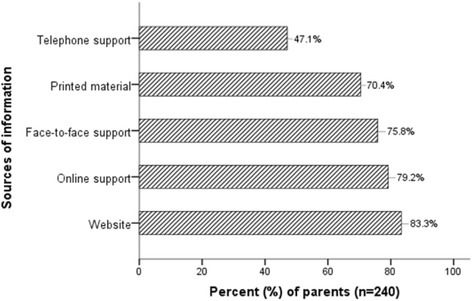
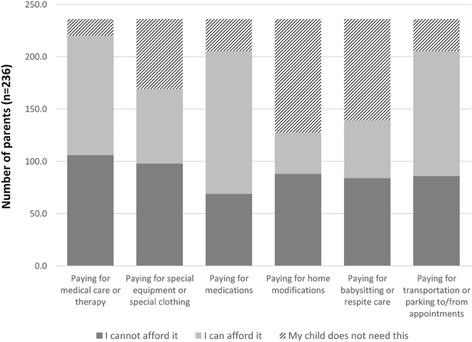
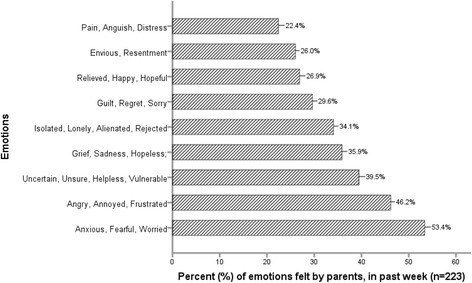
BACKGROUND: Parents caring for a child affected by a rare disease have unmet needs, the origins of which are complex and varied. Our aim was to determine the supportive care needs of parents caring for a child with a rare disease. METHODS: An online survey was developed consisting of 45 questions (108 items) and separated into six domains. The survey included questions about perceived level of satisfaction with receiving care, experiences and needs of providing daily care, the impacts of disease on relationships, the emotional and psychological burdens of disease, and parents overall satisfaction with the support received. RESULTS: Three-hundred and one parents from Australia and New Zealand completed the survey; 91 % (n = 275/301) were mothers, with 132 distinct rare diseases being reported. Fifty-four percent (n = 140/259) of parents were dissatisfied with health professionals' level of knowledge and awareness of disease; 71 % (n = 130/183) of parents felt they received less support compared to other parents. Information regarding present (60 %, n = 146/240) and future services (72 %, n = 174/240) available for their child were considered important. Almost half of parents (45 %, n = 106/236) struggled financially, 38 % (n = 99/236) reduced their working hours and 34 % (n = 79/236) ceased paid employment. Forty-two percent (n = 99/223) of parents had no access to a disease specific support group, and 58 % (n = 134/230) stated that their number of friends had reduced since the birth of their child; 75 % (n = 173/230) had no contact with other parents with a child with a similar disease, and 46 % (n = 106/230) reported feeling socially isolated and desperately lonely. Most frequent emotions expressed by parents in the week prior to completing the survey were anxiety and fear (53 %, n = 119/223), anger and frustration (46 %, n = 103/223) and uncertainty (39 %, n = 88/223). CONCLUSION: This study is the first to develop an online survey specifically for use with parents to investigate their supportive care needs across a large and diverse group of rare diseases. The findings highlight that parents with a child with a rare disease have common unmet needs regardless of what disease their child has. Such information may allow health providers to improve child outcomes through improving parental supportive care.
Overview
The claims and statistics of this paper haven’t been checked yet.
Run the check — free, no account needed. It reads the open-access text and checks the sources it cites.
Integrity signals
Registry
Cites
Statistics
Figures
Verification
Claims the paper makes
The claims and statistics of this paper haven’t been checked yet.
Run the check — free, no account needed. It reads the open-access text and checks the sources it cites.
Claims other papers make about this one
Each is checked against this paper’s own text: does it say what the citing paper says it does?
The source backs part of the claim, not all of it — or backs it for a different population, condition or comparison.
In the citing paper
“The low prevalence of these conditions means there is often a lack of knowledge and scarcity of expertise among health care professionals [4,5].”
From Social Media Use Among Parents and Caregivers of Children With Rare Genetic Diseases: Scoping Review (2025) · cites this paper as [5]
Experimental — accuracy not yet measuredThe cited source says what the claim attributes to it.
In the citing paper
“Many parents may never physically meet other parents caring for a child with the same or similar genetic condition [5].”
From Social Media Use Among Parents and Caregivers of Children With Rare Genetic Diseases: Scoping Review (2025) · cites this paper as [5]
Self-check
Percentages, sums and reported differences re-computed from the paper’s own numbers.
The self-check needs the paper’s full text.
Citations
Cites
Busby, D. M., Christensen, C., Crane, D. R., & Larson, J. H. (1995) · Journal of Marital and Family Therapy · doi:10.1111/j.1752-0606.1995.tb00163.x · Cited by 985
What are scoping studies? A review of the nursing literature
Davis, K., Drey, N., & Gould, D. (2009) · International Journal of Nursing Studies · doi:10.1016/j.ijnurstu.2009.02.010 · Cited by 855 · cited 1×
“Friends and family may struggle to fully comprehend the gravity of the parents’ situation and what they are going through, and as such, distance themselves from the parents [39].”
BackgroundWhy rare diseases are an important medical and social issue
Schieppati, A., Henter, J., Daina, E., & Aperia, A. C. (2008) · The Lancet · doi:10.1016/s0140-6736(08)60872-7 · Cited by 620
Barlow, J., & Ellard, D. R. (2006) · Child Care Health and Development · doi:10.1111/j.1365-2214.2006.00591.x · Cited by 444
Clinical research for rare disease: Opportunities, challenges, and solutions
Griggs, R. C., Batshaw, M., Dunkle, M., Gopal-Srivastava, R., Kaye, E., Krischer, J., Nguyen, T., Paulus, K., & Merkel, P. A. (2009) · Molecular Genetics and Metabolism · doi:10.1016/j.ymgme.2008.10.003 · Cited by 401 · cited 1×
“Recruitment challenges and small sample sizes are common issues encountered by researchers undertaking work in the area of rare diseases [50].”
BackgroundAnderson, M., Elliott, E. J., & Zurynski, Y. A. (2013) · Orphanet Journal of Rare Diseases · doi:10.1186/1750-1172-8-22 · Cited by 331
The supportive care needs of parents caring for a child with a rare disease: A scoping review
Pelentsov, L. J., Laws, T. A., & Esterman, A. J. (2015) · Disability and Health Journal · doi:10.1016/j.dhjo.2015.03.009 · Cited by 312
Self-citationDellve, L., Samuelsson, L., Tallborn, A., Fasth, A., & Hallberg, L. (2006) · Journal of Advanced Nursing · doi:10.1111/j.1365-2648.2006.03736.x · Cited by 294
Graungaard, A. H., & Skov, L. (2006) · Child Care Health and Development · doi:10.1111/j.1365-2214.2006.00666.x · Cited by 289
Shilling, V., Morris, C., Thompson‐Coon, J., Ukoumunne, O., Rogers, M., & Logan, S. (2013) · Developmental Medicine & Child Neurology · doi:10.1111/dmcn.12091 · Cited by 247 · cited 1×
“It provides parents with a shared social identity and sense of belonging, and enables parents to better cope with their situation, alleviate stress and feel empowered and supported to manage their child’s ongoing health care needs [40–42].”
BackgroundThe burden of multiple sclerosis: A community health survey
Jones, C. A., Pohar, S. L., Warren, S., Turpin, K. V. L., & Warren, K. G. (2008) · Health and Quality of Life Outcomes · doi:10.1186/1477-7525-6-1 · Cited by 226
Coyne, I. (2013) · Health Expectations · doi:10.1111/hex.12104 · Cited by 200
Parenting a child with chronic illness: a metasynthesis.
Coffey, J. S. (2006) · PubMed · Cited by 173
Smyth, J. D., Dillman, D. A., Christian, L. M., & O’Neill, A. C. (2010) · American Behavioral Scientist · doi:10.1177/0002764210361695 · Cited by 168
Developing services to support parents caring for a technology‐dependent child at home
Kirk, S. A., & Glendinning, C. (2004) · Child Care Health and Development · doi:10.1111/j.1365-2214.2004.00393.x · Cited by 163
The Personal Costs of Caring for a Child with a Disability: A Review of the Literature
Anderson, D. M., Dumont, S., Jacobs, P., & Azzaria, L. (2007) · Public Health Reports · doi:10.1177/003335490712200102 · Cited by 150
Anxiety and depression in mothers and fathers of a chronically ill child
van Oers, H. A., Haverman, L., Limperg, P. F., van Dijk-Lokkart, E. M., Maurice-Stam, H., & Grootenhuis, M. A. (2014) · Maternal and Child Health Journal · doi:10.1007/s10995-014-1445-8 · Cited by 147
Quality of life among parents of children with heart disease
Arafa, M. A., Zaher, S., El-Dowaty, A. A., & Moneeb, D. E. (2008) · Health and Quality of Life Outcomes · doi:10.1186/1477-7525-6-91 · Cited by 147
Rare childhood diseases: how should we respond?
Zurynski, Y., Frith, K., Leonard, H., & Elliott, E. (2008) · Archives of Disease in Childhood · doi:10.1136/adc.2007.134940 · Cited by 140
Parent participation in decision-making in health-care services for children: an integrative review
Aarthun, A., & Akerjordet, K. (2012) · Journal of Nursing Management · doi:10.1111/j.1365-2834.2012.01457.x · Cited by 140
Pelentsov, L. J., Fielder, A. L., & Esterman, A. (2015) · Journal of Pediatric Nursing · doi:10.1016/j.pedn.2015.10.022 · Cited by 118
Self-citationCoping and Social Support for Parents of Children with Autism
Luther, E. H., Canham, D. L., & Cureton, V. Y. (2005) · The Journal of School Nursing · doi:10.1177/10598405050210010901 · Cited by 109
The common problem of rare disease in general practice
Knight, A. W., & Senior, T. P. (2006) · The Medical Journal of Australia · doi:10.5694/j.1326-5377.2006.tb00477.x · Cited by 109
Coping and Social Support for Parents of Children With Autism
Luther, E. H., Canham, D. L., & Cureton, V. Y. (2005) · The Journal of School Nursing · doi:10.1622/1059-8405(2005)021[0040:cassfp]2.0.co;2 · Cited by 99
Madeo, A. C., O'Brien, K. E., Bernhardt, B. A., & Biesecker, B. B. (2012) · American Journal of Medical Genetics Part A · doi:10.1002/ajmg.a.35425 · Cited by 94
Supportive Care Needs of Parents of Children With Cancer: Transition From Diagnosis to Treatment
Kerr, L., Harrison, M. B., Medves, J., & Tranmer, J. E. (2004) · Oncology nursing forum · doi:10.1188/04.onf.e116-e126 · Cited by 94
Assessing the strengths of the Dyadic Adjustment Scale.
Spanier, G. B. (1988) · Journal of Family Psychology · doi:10.1037/h0080477 · Cited by 91
Clifford, T., & Minnes, P. (2012) · Journal of Autism and Developmental Disorders · doi:10.1007/s10803-012-1714-6 · Cited by 88
Kerr, L., Harrison, M. B., Medves, J., Tranmer, J. E., & Fitch, M. I. (2007) · Journal of Pediatric Oncology Nursing · doi:10.1177/1043454207304907 · Cited by 87
The Main Problems of Parents of a Child With Epidermolysis Bullosa
van Scheppingen, C., Lettinga, A. T., Duipmans, J. C., Maathuis, K. G. B., & Jonkman, M. F. (2008) · Qualitative Health Research · doi:10.1177/1049732308315110 · Cited by 81
Anxiety and Depression among Parents of Children with Intellectual Disability in Pakistan.
Azeem, M. W., Dogar, I. A., Shah, S. N., Cheema, M. A., Asmat, A., Akbar, M., Kousar, S., & Haider, I. I. (2013) · Europe PMC (PubMed Central) · Cited by 76
Age at diagnosis of birth defects
Bower, C. I., Rudy, E., Callaghan, A., Quick, J., & Nassar, N. (2010) · Birth Defects Research Part A Clinical and Molecular Teratology · doi:10.1002/bdra.20658 · Cited by 72
The importance of rare diseases: from the gene to society
Dodge, J. A., Tt, C., Donadieu, J., Grossman, Z., Ramos, F. J., Serlicorni, A., Siderius, L., Stefanidis, C. J., Tasic, V., Valiulis, A., et al. (2010) · Archives of Disease in Childhood · doi:10.1136/adc.2010.193664 · Cited by 71
Macfadyen, A., Swallow, V. M., Santacroce, S. J., & Lambert, H. J. (2011) · Journal for Specialists in Pediatric Nursing · doi:10.1111/j.1744-6155.2011.00287.x · Cited by 68
Parenting a Child With a Chronic Medical Condition
Case‐Smith, J. (2004) · American Journal of Occupational Therapy · doi:10.5014/ajot.58.5.551 · Cited by 61
Azar, M., & Badr, L. K. (2009) · Journal of Pediatric Nursing · doi:10.1016/j.pedn.2008.11.001 · Cited by 61
Parental Coping and Childhood Epilepsy
Duffy, L. V. (2011) · Journal of Neuroscience Nursing · doi:10.1097/jnn.0b013e3182029846 · Cited by 58
Call for a national plan for rare diseases
Jaffé, A., Zurynski, Y. A., Beville, L., & Elliott, E. J. (2009) · Journal of Paediatrics and Child Health · doi:10.1111/j.1440-1754.2009.01608.x · Cited by 52
Parental coping following childhood acquired brain injury
Benn, K., & McColl, M. A. (2004) · Brain Injury · doi:10.1080/02699050310001617343 · Cited by 47
Aytch, L. S., Hammond, R., & White, C. (2001) · Journal of Neuroscience Nursing · doi:10.1097/01376517-200110000-00008 · Cited by 46
The Impact of Juvenile Huntington's Disease on the Family
Brewer, H. M., Eatough, V., Smith, J. A., Stanley, C. A., Glendinning, N. W., & Quarrell, O. W. J. (2007) · Journal of Health Psychology · doi:10.1177/1359105307084307 · Cited by 44
Research Into Rare Diseases of Childhood
Batshaw, M., Groft, S., & Krischer, J. (2014) · Journal of the American Medical Association (JAMA) · doi:10.1001/jama.2013.285873 · Cited by 38
Delayed access to treatments for rare diseases: Who's to blame?
Feltmate, K., Janiszewski, P. M., Gingerich, S., & Cloutier, M. (2015) · Respirology · doi:10.1111/resp.12498 · Cited by 26
Molster, C. M., Youngs, L., Hammond, E., Dawkins, H. J. S., & National Rare Diseases Working Group (2012) · Orphanet Journal of Rare Diseases · doi:10.1186/1750-1172-7-50 · Cited by 25
Development of the Family Needs Assessment Tool
Rawlins, P., Rawlins, T. D., & Homer, M. (1990) · Western Journal of Nursing Research · doi:10.1177/019394599001200206 · Cited by 25
Eatough, V., Santini, H., Eiser, C., Goller, M.-L., Krysa, W., Nicola, A. D., Paduanello, M., Petrollini, M., Rakowicz, M. J., Squitieri, F., et al. (2013) · European Journal of Human Genetics · doi:10.1038/ejhg.2013.15 · Cited by 20
Coping with small populations of patients in clinical trials
O’Connor, D. J., & Hemmings, R. J. (2014) · Expert Opinion on Orphan Drugs · doi:10.1517/21678707.2014.931221 · Cited by 11
Skirton, H., Barnoy, S., Erdem, Y., Malmgren, C. I., Pestoff, R., Tekşen, F., & Williams, J. (2012) · Journal of Community Genetics · doi:10.1007/s12687-012-0098-9 · Cited by 11
Parental Needs among Children with Birth Defects: Defining a Parent‐to‐Parent Support Network
Mathiesen, A. M., Frost, C. J., Dent, K. M., & Feldkamp, M. L. (2012) · Journal of Genetic Counseling · doi:10.1007/s10897-012-9518-6 · Cited by 10
Why R&D into Rare Diseases Matter
de Vrueh, R. L. A. (2013) · Communications in medical and care compunetics · doi:10.1007/978-3-642-38643-5_1 · Cited by 7
The Challenges of Clinical Research in Orphan Diseases
Spagnolo, P., & du Bois, R. M. (2014) · Springer eBooks · doi:10.1007/978-1-4471-2401-6_2 · Cited by 5
Anderson, D. L. (2007) · Cambridge University Press eBooks · doi:10.1017/cbo9781139167291.003 · Cited by 2
Grewal, J., & Hoppe, N. (2015) · European Journal of Health Law · doi:10.1163/15718093-12341351 · Cited by 2
Cited by
Sorted by citations
Zurynski, Y., Deverell, M., Dalkeith, T., Johnson, S., Christodoulou, J., Leonard, H., & Elliott, E. (2017) · Orphanet Journal of Rare Diseases · doi:10.1186/s13023-017-0622-4 · Cited by 211
Nicholl, H., Tracey, C., Begley, T., King, C., & Lynch, A. M. (2017) · Journal of Medical Internet Research · doi:10.2196/jmir.5834 · Cited by 143
Being the Pillar for Children with Rare Diseases—A Systematic Review on Parental Quality of Life
Boettcher, J., Boettcher, M., Wiegand-Grefe, S., & Zapf, H. (2021) · International Journal of Environmental Research and Public Health · doi:10.3390/ijerph18094993 · Cited by 126
“Even though there is great heterogeneity in the complex disease patterns of rare diseases, the burden on the affected patients and their families is very similar [5,6].”
BackgroundExperiencing loneliness in parenthood: a scoping review
Nowland, R. A., Thomson, G., McNally, L., Smith, T. D. H., & Whittaker, K. A. (2021) · Perspectives in Public Health · doi:10.1177/17579139211018243 · Cited by 118
Children with a rare congenital genetic disorder: a systematic review of parent experiences
von der Lippe, C., Neteland, I., & Feragen, K. B. (2022) · Orphanet Journal of Rare Diseases · doi:10.1186/s13023-022-02525-0 · Cited by 94
Metadata
- Authors
- Pelentsov, L. J., Fielder, A. L., Laws, T. A., & Esterman, A. J.
- Affiliations
- University of South Australia (AU)
- Keele University (GB)
- Corresponding author
- Pelentsov, Lemuel J.
- Venue
- BMC Family Practice
- Published
- 2016-07-21
- Volume
- 17
- Issue
- 1
- Pages
- 88-88
- ISSN
- 1471-2296 (ISSN-L)
- PMC
- PMC4955113
- OpenAlex
- W2477707385
- Cited by
- 168
- References
- 53
- Citations by year
- 2026: 19 · 2025: 24 · 2024: 25 · 2023: 27 · 2022: 28 · 2021: 17 · 2020: 9 · 2019: 7 · 2018: 7 · 2017: 4 · 2016: 1
- FWCI
- 8.48
- Type
- journal article
- Language
- en
- Open access
- gold
- doi.org
- Licence
- cc-by
- Locations
- BMC Family Practice (publishedVersion, cc-by)
- PubMed Central (publishedVersion, cc-by)
- PubMed (publishedVersion)
- UniSA Research Outputs Repository (University of South Australia) (acceptedVersion, other-oa)
- ResearchOnline - JCU (James Cook University) (submittedVersion)
- University of Salford Institutional Repository (University of Salford) (submittedVersion, cc-by)
- Adelaide Research & Scholarship (AR&S) (University of Adelaide) (submittedVersion, cc-by)
- Topics
- Social Sciences › Psychology › Clinical Psychology › Family and Disability Support Research
- Life Sciences › Biochemistry, Genetics and Molecular Biology › Genetics › Genomics and Rare Diseases
- Health Sciences › Medicine › Pediatrics, Perinatology and Child Health › Adolescent and Pediatric Healthcare
- Keywords
- rare diseases, parents of children with rare diseases, supportive care needs, caregiver burden, social isolation, loneliness, financial stress, job loss, support groups, emotional burden, family relationships
- MeSH terms
- Adolescent, Adult, Anxiety, Australia, Clinical Competence, Emotions, Fathers, Female, Health Services Accessibility, Humans, Interpersonal Relations, Male, Middle Aged, Mothers, New Zealand, Quality of Health Care, Surveys and Questionnaires, Self-Help Groups, Social Isolation, Social Support, Reproducibility of Results, Patient Satisfaction, Needs Assessment, Uncertainty, Rare Diseases, Consumer Health Information, Young Adult
About these checks
Registry, retraction, Cites and statistics results are computed, not judged, with one exception: a printed reference that no index lists is read once by a model before it counts as a citation error. Claims are extracted by a model and kept only when their quote appears verbatim in the text; each cited source is then checked, with a model’s help, for whether it says what the claim relies on. Those verdicts can be wrong — read the claim’s quote and the cited source before relying on one.
Statistics and arithmetic are recomputed, not judged.
Confidence bands are shown only for fields calibrated on our annotated test set. None is calibrated yet, so no band is shown.
What counts as a claim ›How we measure confidence ›How we check this ›
Are you an author, or do you see a problem with this page? Request a review
