

Dynapenic obesity and the effect on long-term physical function and quality of life: data from the osteoarthritis initiative
Open accessThe DOI matches its Crossref record; 49 of the 49 references it cites were found in a registry or an index.
Abstract
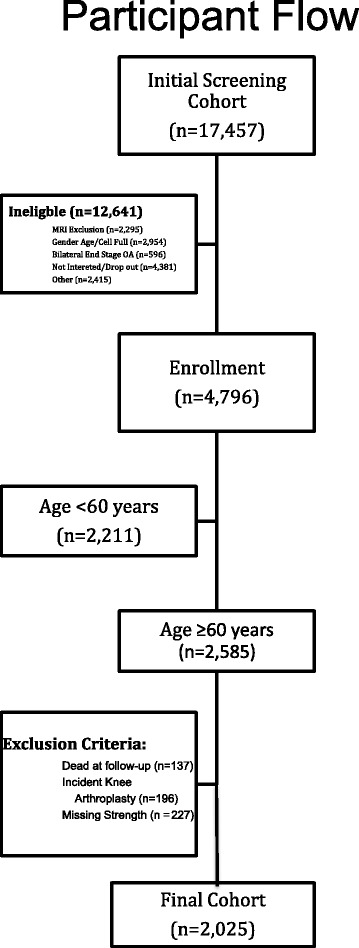
BACKGROUND: Obesity is associated with functional impairment, institutionalization, and increased mortality risk in elders. Dynapenia is defined as reduced muscle strength and is a known independent predictor of adverse events and disability. The synergy between dynapenia and obesity leads to worse outcomes than either independently. We identified the impact of dynapenic obesity in a cohort at risk for and with knee osteoarthritis on function. METHODS: We identified adults aged ≥ 60 years from the Osteoarthritis Initiative. Obesity was defined as a body mass index ≥ 30 kg/m(2). Dynapenia was classified using the lowest sex-specific tertile of knee extensor strength. Participants were grouped according to obesity and knee strength: dynapenic obesity; dynapenia without obesity; obesity without dynapenia; and no dynapenia nor obesity. Four-year data was available. Self-reported activities of daily living (ADL) were assessed at follow-up. Outcomes of gait speed, 400 m walk distance, Late-life Disability and Function Index (LLFDI), and Short-Form (SF)-12 were analyzed using mixed effects and logistic regression models. RESULTS: Of 2025 subjects (56.3 % female), mean age was 68.2 years and 182 (24.1 %) had dynapenic obesity. Dynapenic obesity was associated with reduced gait speed, LLFDI-limitations, and SF-12 physical score in both sexes and in the 400 m walk in men only (all p < 0.001). A time*group interaction was significant for dynapenic obese men in the 400 m walk distance only. Odds of ADL limitations in dynapenic obesity was OR 2.23 [1.42:3.50], in dynapenia 0.98 [0.66:1.46], and in obesity 1.98 [1.39:2.80] in males. In females, odds were 2.45 [1.63:3.68], 1.60 [1.15:2.22], and 1.47 [1.06:2.04] respectively. CONCLUSION: Dynapenic obesity may be a risk factor for functional decline suggesting the need to target subjects with low knee strength and obesity.
Overview
The claims and statistics of this paper haven’t been checked yet.
Free: it reads the open-access text and checks the first 5 claims that cite a source we can check. Create a free account to check every claim.
Integrity signals
Registry
Cites
Statistics
Figures
Verification
Claims the paper makes
The claims and statistics of this paper haven’t been checked yet.
Free: it reads the open-access text and checks the first 5 claims that cite a source we can check. Create a free account to check every claim.
Claims other papers make about this one
Each is checked against this paper’s own text: does it say what the citing paper says it does?
The source backs part of the claim, not all of it — or backs it for a different population, condition or comparison.
In the citing paper
“a combination of low knee extensor strength with high BMI was associated with reduced gait speed and reduced Late-Life Function and Disability Index and Short Form-12 scores207”
From Sarcopenic obesity in older adults: aetiology, epidemiology and treatment strategies (2018) · cites this paper as [207]
Experimental — accuracy not yet measured
Self-check
Percentages, sums and reported differences re-computed from the paper’s own numbers.
The self-check needs the paper’s full text.
Citations
Cites
Charlson, M. E., Pompei, P., Ales, K. L., & MacKenzie, C. R. (1987) · Journal of Chronic Diseases · doi:10.1016/0021-9681(87)90171-8 · Cited by 49,742 · cited 1×
“The Charlson co-morbidity index assessed subject co-morbidity [21].”
BackgroundFrailty in Older Adults: Evidence for a Phenotype
Fried, L. P., Tangen, C. M., Walston, J., Newman, A. B., Hirsch, C., Gottdiener, J., Seeman, T., Tracy, R., Kop, W. J., Burke, G., et al. (2001) · The Journals of Gerontology Series A: Biological Sciences and Medical Sciences · doi:10.1093/gerona/56.3.m146 · Cited by 24,907 · cited 1×
“For this study, subjects <60 years of age were excluded (n = 2221) due to a lower risk of functional impairment [18] and higher capacity for homeostasis [19].”
BackgroundSarcopenia: European consensus on definition and diagnosis
Cruz-Jentoft, A. J., Baeyens, J. P., Bauer, J. M., Boirie, Y., Cederholm, T., Landi, F., Martin, F. C., Michel, J.-P., Rolland, Y., Schneider, S. M., et al. (2010) · Age and Ageing · doi:10.1093/ageing/afq034 · Cited by 11,601
The metabolic phenotype in obesity: Fat mass, body fat distribution, and adipose tissue function
Goossens, G. H. (2017) · Obesity Facts · doi:10.1159/000471488 · Cited by 8,481
Prevalence of Childhood and Adult Obesity in the United States, 2011-2012
Ogden, C. L., Carroll, M. D., Kit, B. K., & Flegal, K. M. (2014) · JAMA · doi:10.1001/jama.2014.732 · Cited by 8,072
Gait speed and survival in older adults.
Studenski, S. (2011) · JAMA · doi:10.1001/jama.2010.1923 · Cited by 4,558 · cited 2×
“This is consistent with other studies demonstrating the drop in gait speed and physical fitness with time in the overall population [30].”
ResultStudenski, S. A., Peters, K. W., Alley, D. E., Cawthon, P. M., McLean, R. R., Harris, T. B., Ferrucci, L., Guralnik, J. M., Fragala, M. S., Kenny, A. M., et al. (2014) · The Journals of Gerontology: Series A · doi:10.1093/gerona/glu010 · Cited by 2,545 · cited 4×
“Challenges exist in adequately defining the relationship between sarcopenia and obesity which has impeded progress in characterizing the syndrome [5].”
BackgroundMethodInfluentialKatz, S. (1963) · JAMA · doi:10.1001/jama.1963.03060120024016 · Cited by 2,421 · cited 1×
“Subjects were classified as having impairment in function if they were unable to perform a basic ADL including, walking, bathing, dressing, eating, transferring out of bed, or toileting [28].”
MethodNewman, A. B., Kupelian, V., Visser, M., Simonsick, E. M., Goodpaster, B. H., Kritchevsky, S. B., Tylavsky, F. A., Rubin, S. M., Harris, T. B., & on Behalf of the Health, A. A. B. C. S. I. (2006) · The Journals of Gerontology Series A: Biological Sciences and Medical Sciences · doi:10.1093/gerona/61.1.72 · Cited by 1,692 · cited 1×
“In contrast, dynapenia alone may also lead to adverse, unintended outcomes [10–13].”
BackgroundAccuracy of body mass index in diagnosing obesity in the adult general population
Romero-Corral, A., Somers, V. K., Sierra-Johnson, J., Thomas, R. J., Collazo-Clavell, M. L., Korinek, J., Allison, T. G., Batsis, J. A., Sert-Kuniyoshi, F. H., & Lopez-Jimenez, F. (2008) · International Journal of Obesity · doi:10.1038/ijo.2008.11 · Cited by 1,589 · cited 1×
“Secondly, we fully acknowledge that we used BMI as a measure of obesity and that this anthropometric measure, while easy to use clinically, may suboptimally assess fat in older adults [48].”
MethodSelf-citation
Research works printed but not linked: 1
- Ware J Kosinski M Keller S How to score the SF-12 physical. The mental health summary scales 1995 Boston, MA The Health Institute, New England Medical Center
Cited by
Sarcopenic obesity in older adults: aetiology, epidemiology and treatment strategies
Batsis, J. A., & Villareal, D. T. (2018) · Nature Reviews Endocrinology · doi:10.1038/s41574-018-0062-9 · Cited by 1,382
Self-citationDonini, L. M., Busetto, L., Bauer, J. M., Bischoff, S., Boirie, Y., Cederholm, T., Cruz-Jentoft, A. J., Dicker, D., Frühbeck, G., Giustina, A., et al. (2020) · Clinical Nutrition · doi:10.1016/j.clnu.2019.11.024 · Cited by 326
“Study design were predominantly cross-sectional (64 studies, one of which was nested in a retrospective cohort [57]) followed by prospective cohort studies (6 studies) [33,40,43,52,92,93] and randomized clinical trials (5 studies) [36,44,58,69,78].”
BackgroundMethodInfluentialExercise and nutrition strategies to counteract sarcopenic obesity
Trouwborst, I., Verreijen, A., Memelink, R., Massanet, P., Boirie, Y., Weijs, P., & Tieland, M. (2018) · Nutrients · doi:10.3390/nu10050605 · Cited by 210
“Additionally, it is often thought that sarcopenia and obesity work in a synergistic manner, as the consequences of sarcopenic obesity are often more severe than for sarcopenia or obesity alone [6,7].”
BackgroundSarcopenic Obesity: An Emerging Public Health Problem
Ji, T., Li, Y., & Ma, L. (2022) · Aging and disease · doi:10.14336/ad.2021.1006 · Cited by 124
“Muscle strength can be evaluated by measuring grip strength using a hand dynamometer, or by measuring knee extension strength [40].”
The impact of sarcopenic obesity on knee and hip osteoarthritis: a scoping review
Godziuk, K., Prado, C. M. M., Woodhouse, L. J., & Forhan, M. A. (2018) · BMC Musculoskeletal Disorders · doi:10.1186/s12891-018-2175-7 · Cited by 133
“2%) were secondary analyses of the North American Osteoarthritis Initiative (OAI) population cohort [59, 62], one (9%) was a secondary analysis of the French Knee and Hip OsteoArthritis Long-term Assessment (KHOALA) cohort [69], and the remaining four (36.”
BackgroundMethodInfluentialIwamura, M., & Kanauchi, M. (2017) · BMC Geriatrics · doi:10.1186/s12877-016-0400-5 · Cited by 106
Resnick, B. M., & Boltz, M. P. (2019) · Clinics in Geriatric Medicine · doi:10.1016/j.cger.2019.01.003 · Cited by 96
Alexandre, T. D. S., Scholes, S., Santos, J. L. F., Duarte, Y. A. D. O., & de Oliveira, C. M. (2017) · Clinical Nutrition · doi:10.1016/j.clnu.2017.09.018 · Cited by 89
“At baseline and over the study period, dynapenic obese men had worse performance in a 400-m walking test [25].”
BackgroundDuchowny, K. A., Clarke, P. J., & Peterson, M. D. (2017) · The journal of nutrition health & aging · doi:10.1007/s12603-017-0951-y · Cited by 78
“Prior work examining the association between muscle weakness and disability have typically relied on binary definitions of disability status (presence/absence) (13, 34) which may underestimate the weakness-disability association at the population level since disability has been shown to fluctuate over time (34–37).”
Alexandre, T. D. S., Scholes, S., Santos, J. L. F., & de Oliveira, C. M. (2018) · The Journals of Gerontology Series A · doi:10.1093/gerona/gly182 · Cited by 73
“Finally, Batsis and colleagues (14), analyzing 2,025 subjects aged 60 years and over with knee osteoarthritis over 4 years of follow-up, using BMI and knee extensor strength as the key exposure measures, found that obesity only (BMI ≥ 30 kg/m2), dynapenia only (lowest sexspecific tertile), and dynapenic obesity were a…”
BackgroundDynapenia, abdominal obesity or both: which accelerates the gait speed decline most?
Máximo, R. D. O., de Oliveira, D. C., Ramírez, P. C., Luiz, M. M., de Souza, A. F., Delinocente, M. L. B., Steptoe, A., de Oliveira, C. M., & Alexandre, T. D. S. (2021) · Age and Ageing · doi:10.1093/ageing/afab093 · Cited by 58
“study [17] had higher gait speed in the four groups studied (ND/NAO, AO, D and D/AO) than those in the Stenholm et al .”
BackgroundMethodResultInfluentialDynapenic abdominal obesity and the effect on long-term gait speed and falls in older adults
Zhang, L., Liu, S., Wang, W., Sun, M., Tian, H., Wei, L. S., & Wu, Y. (2021) · Clinical Nutrition · doi:10.1016/j.clnu.2021.11.011 · Cited by 42
Wen, D., Zheng, L., Yang, F., Li, H., & Hou, W.-Q. (2017) · Oncotarget · doi:10.18632/oncotarget.23292 · Cited by 36
“In both humans and animals, numbers of studies have confirmed that moderate exercise improves the quality of life and prolongs lifespan [16, 27, 50]; however, obesity leads to a variety of diseases and a bad quality of life [4, 5].”
BackgroundMáximo, R. D. O., de Oliveira, D. C., Ramírez, P. C., Luiz, M. M., de Souza, A. F., Delinocente, M. L. B., Steptoe, A., de Oliveira, C. M., & Alexandre, T. D. S. (2022) · American Journal of Clinical Nutrition · doi:10.1093/ajcn/nqac023 · Cited by 40
“(23) found no decline in gait speed in individuals with dynapenic obesity over the 4-y follow-up period.”
Dietary weight-loss interventions for the management of obesity in older adults
Goisser, S., Kiesswetter, E., Schoene, D., Torbahn, G., & Bauer, J. M. (2020) · Reviews in Endocrine and Metabolic Disorders · doi:10.1007/s11154-020-09577-2 · Cited by 36
Prognostic utility of dynapenia in patients with cardiovascular disease
Uchida, S., Kamiya, K., Hamazaki, N., Nozaki, K., Ichikawa, T., Nakamura, T., Yamashita, M., Maekawa, E., Reed, J. L., Yamaoka‐Tojo, M., et al. (2020) · Clinical Nutrition · doi:10.1016/j.clnu.2020.09.050 · Cited by 35
Han, A., & Gellhorn, A. C. (2018) · American Journal of Physical Medicine & Rehabilitation · doi:10.1097/phm.0000000000000926 · Cited by 31
“First, the OAI excluded subjects older than 79 yrs, removing older individuals with potentially more co-morbidities or more severe reductions in pain, function, andQOL.”
InfluentialAddressing Obesity to Promote Healthy Aging
Roderka, M. N., Puri, S., & Batsis, J. A. (2020) · Clinics in Geriatric Medicine · doi:10.1016/j.cger.2020.06.006 · Cited by 28
Self-citationSAÚDE PÚBLICA: EPIDEMIOLOGIA, CLÍNICA E ESTRATÉGIAS DE TRATAMENTO
Oliveira, C. P. D. C., da Silva, A. A., Filho, P. S. D. P. S., & Mota, L. P. (2023) · Paulo Sérgio da Paz Silva Filho eBooks · doi:10.56161/sci.ed.20230128 · Cited by 24
Zheng, X., Wang, Y., Jin, X., Huang, H., Chen, H., Wang, Y., & Shang, S. (2022) · BMC Geriatrics · doi:10.1186/s12877-022-03117-0 · Cited by 23
Fico, B. G., Maharaj, A., Pena, G. S., & Huang, C. (2023) · Biology · doi:10.3390/biology12060865 · Cited by 19
“Low muscle strength (dynapenia) occurs independently of the loss in muscle mass [82] and is highly associated with poor physical function [83], quality of life [84], mortality [85], and fall risk [86,87] in obese middle-aged and older adults.”
BackgroundAre Young Athletes Strong Enough for Sport? DREAM On
Faigenbaum, A. D., MacDonald, J. P., & Haff, G. G. (2019) · Current Sports Medicine Reports · doi:10.1249/jsr.0000000000000554 · Cited by 21
“Dynapenic obesity is a recognized risk factor for functional decline in older adults (14), and it appears that the synergistic relationship between dynapenia and obesity also may limit performance in youth.”
BackgroundCarvalho, L. P., Pion, C. H., Boutros, G. E. H., Gaudreau, P., Chevalier, S., Bélanger, M., Morais, J. A., & Aubertin‐Leheudre, M. (2018) · Aging Clinical and Experimental Research · doi:10.1007/s40520-018-1048-0 · Cited by 17
Tomažič, A., Žvanut, B., Grbac, L. V., & Jurdana, M. (2022) · PLoS ONE · doi:10.1371/journal.pone.0269956 · Cited by 13
Leahy, S., Cassarino, M., Connell, M. D. O., Glynn, L. G., & Galvin, R. (2019) · BMJ Open · doi:10.1136/bmjopen-2018-027728 · Cited by 14
Christiansen, M. B., Thoma, L. M., Master, H., Voinier, D., & White, D. K. (2020) · The Journal of Rheumatology · doi:10.3899/jrheum.190876 · Cited by 12
Chao, Y., Fang, W., Peng, T., Wu, L., Yang, H., & Kao, T. (2025) · Journal of Cachexia Sarcopenia and Muscle · doi:10.1002/jcsm.13788 · Cited by 9
“A sex-specific pattern was observed in the US Osteoarthritis Initiative study: The OR for functional limitations in men with low muscle strength was 0.98 (95% CI = 0.66–1.46), whereas that in women was 1.60 (95% CI = 1.15–2.22) [ 30].”
InfluentialEglseer, D., Traxler, M., & Bauer, S. (2022) · Nutrients · doi:10.3390/nu14214684 · Cited by 10
“with diseases such as osteoarthritis, dyslipidaemia, insulin resistance and cardiovascular disease [1,9,11,14].”
BackgroundAmano, T., Gallegos, C. A., Waters, W. F., & Freire, W. B. (2020) · Journal of Gerontological Social Work · doi:10.1080/01634372.2020.1814476 · Cited by 8
Nakade, T., Maeda, D., Matsue, Y., Kagiyama, N., Fujimoto, Y., Sunayama, T., Dotare, T., Jujo, K., Saito, K., Kamiya, K., et al. (2024) · Journal of the American Medical Directors Association · doi:10.1016/j.jamda.2024.105350 · Cited by 8
Ghachem, A., Bagna, M., Payette, H., Gaudreau, P., Brochu, M., & Dionne, I. J. (2019) · Clinical Obesity · doi:10.1111/cob.12295 · Cited by 9
“Studies showed that the dynapenic-obese phenotype negatively affects physical capacities, activities of daily living and quality of life.(37) Individuals in this cluster also had a higher burden of chronic diseases, which is in agreement with other studies showing that the combination of obesity and dynapenia leads to…”
ResultZhang, Z., Wang, J., Wang, J., Ma, B., Jia, Y., & Chen, O. (2023) · BMC Geriatrics · doi:10.1186/s12877-023-03857-7 · Cited by 7
Associations Between the Severity of Sarcopenia and Health-Related Quality of Life in Older Adults
Hung, W.-S., Chen, Y.-J., Tsai, T.-S., Lee, C., Fang, J., Wen, M., Lin, C.-Y., Liao, K., & Yen, C. (2025) · Journal of Clinical Medicine · doi:10.3390/jcm15010161 · Cited by 5
“Previous research indicated that dynapenic obesity leads to greater functional impairment and disability than either sarcopenia or obesity alone, likely due to the “double burden” of carrying excess weight with insufficient muscle force [38,39].”
dos Santos, L., Neto, P. D. F. V., de Almeida, C. B., Coqueiro, R. D. S., Santos, D. D. A. T., Carneiro, J. A. O., Santana, P. D. S., Costa, E. L., Galvão, L. L., & Casotti, C. A. (2025) · Obesities · doi:10.3390/obesities5030057 · Cited by 4
Handgrip strength, dynapenia, and health-related quality of life in older Korean adults
Yoo, K., Park, Y. S., & Kim, H. J. (2025) · BMC Geriatrics · doi:10.1186/s12877-025-06218-8 · Cited by 4
“Its effects are further exacerbated in conditions such as obesity and diabetes, where it accelerates physical QoL deterioration [28, 29].”
Jerliu, N., Burazeri, G., Toçi, E., Philp, I., Czabanowska, K., Ramadani, N., & Brand, H. (2018) · European Journal of Public Health · doi:10.1093/eurpub/cky172 · Cited by 4
Wallace, K. D. (2016) · Journal of Bioresource Management · Cited by 2
Bu, H., Lv, M., Wang, L., Jiang, D., Ding, Y., Wang, Z., Hu, Y., Zhuang, Q., & Tian, Z. (2025) · PLoS ONE · doi:10.1371/journal.pone.0316819 · Cited by 2
FATORES QUE INFLUENCIAM NA ESCOLHA DA VIA DE PARTO: UMA REVISÃO DE LITERATURA
do Nascimento, B. T. S., da Costa, K. L., Muniz, K. M. H., Schuler, M. F. D. L., Costa, Y. F. D. A., de Oliveira, S. D., & do Nascimento, I. T. S. (2023) · Paulo Sérgio da Paz Silva Filho eBooks · doi:10.56161/sci.ed.20230128c10 · Cited by 3
Evranos, B., & Atmış, V. (2019) · Acta Medica · doi:10.32552/2019.actamedica.372 · Cited by 1
“gesting the need to target subjects with low knee strength and obesity [31].”
BackgroundStatus of resource recycling stations in Taiwan and recycling work-related health effects
Hung, C.-S., Yiin, .-M., Yen, C.-F., Hsieh, C., Hsieh, J., & Tseng, C. (2022) · Tzu Chi Medical Journal · doi:10.4103/tcmj.tcmj_111_22 · Cited by 1
Reframing the need for exercise therapy in the clinical management of people living with obesity
Grannell, A. (2022) · Clinical Obesity · doi:10.1111/cob.12554 · Cited by 1
“Individuals living with a chronic condition such as obesity present with reduced function and quality of life which is in part due to reduced relative strength and fitness.(18) Importantly PWO”
BackgroundMonteiro, P. N. C., Sousa, C. E. D. S., Chaves, M. S. R. S., Lima, C. D. A., Santos, J. D. S., Carvalho, A. R., Moreira, W. D. S., da Silva, E., & Ferreira, L. G. D. F. (2023) · Paulo Sérgio da Paz Silva Filho eBooks · doi:10.56161/sci.ed.20230128c9 · Cited by 1
DORES CRÔNICAS E A TERAPIA COMPORTAMENTAL: REVISÃO INTEGRATIVA
da Costa, L. N. X., César, V. S., de Sousa, F. M. A., Albuquerque, V. V., Ferreira, M. E. C., Albuquerque, F. B. D. C., Vicente, L. Í., & Prado, R. D. C. P. (2023) · Paulo Sérgio da Paz Silva Filho eBooks · doi:10.56161/sci.ed.20230128c7 · Cited by 1
Shin, D., Choi, C.-W., Desrochers, P. C., & Gill, S. V. (2023) · Journal of Motor Behavior · doi:10.1080/00222895.2023.2237920 · Cited by 2
“People who report having poor physical health (men with severe obesity) have slower gait speeds and reduced physical function (Batsis et al., 2015; Von Lengerke et al., 2007).”
Backgrounddos Santos, L., Neto, P. D. F. V., de Almeida, C. B., da Silva, D. J., Barbosa, R. D. S., Santos, I. C., Godinho, G. A., Lopes, C. D. D., & Casotti, C. A. (2024) · Geriatric Nursing · doi:10.1016/j.gerinurse.2024.10.002 · Cited by 1
Age but not BMI Predicts Accelerated Progression of KOA: Data from the Osteoarthritis Initiative
Wallace, K. D., Nahhas, R. W., Froehle, A. W., & Khalil, N. (2018) · Ohio Journal of Public Health · doi:10.18061/ojph.v1i1.9047
Duchowny, C. (2018) · Deep Blue (University of Michigan) · Cited by 1
Ng, K. L. S. (2019) · Universiti Putra Malaysia Institutional Repository (Universiti Putra Malaysia)
Does dynapenic abdominal obesity accelerate the decline in physical performance in older adults?Preprint
Máximo, R. D. O., de Oliveira, D. C., Ramírez, P. C., Luiz, M. M., de Souza, A. F., Delinocente, M. L. B., Steptoe, A., de Oliveira, C. M., & Alexandre, T. D. S. (2020) · Research Square · doi:10.21203/rs.3.rs-23563/v1
Bacocina, R. C., Marques, I. S., Kawamoto, A. B. S. S., de Carvalho, W. V., Katakura, E. A. L. B., & Alarcon, M. F. S. (2023) · Paulo Sérgio da Paz Silva Filho eBooks · doi:10.56161/sci.ed.20230128c19
Monteiro, P. N. C., Chaves, M. S. R. S., Lima, C. D. A., Santos, J. D. S., Carvalho, A. R., Moreira, W. D. S., & Ferreira, L. G. D. F. (2023) · Paulo Sérgio da Paz Silva Filho eBooks · doi:10.56161/sci.ed.20230128c3
FIBROMIALGIA: ASPECTOS CLÍNICOS E SUA IMPLICAÇÃO NA VIDA DOS PACIENTES – UMA REVISÃO DE LITERATURA
Taveira, A. C. S., Alves, A. C. D. S., da Silva, B. D. F., Alves, G. C., Lins, J. M. F. B., Lima, L. A., Alves, M. G. C., Dias, T. S., & da Costa, A. W. S. (2023) · Paulo Sérgio da Paz Silva Filho eBooks · doi:10.56161/sci.ed.20230128c11
OBESIDADE SARCOPÊNICA: UM NOVO DESAFIO
de Queiroga, V. M., & Chaves, T. C. S. P. (2023) · Paulo Sérgio da Paz Silva Filho eBooks · doi:10.56161/sci.ed.20230128c14
Sartori, I. F. G., Arossi, G. A., & Hirdes, A. (2023) · Paulo Sérgio da Paz Silva Filho eBooks · doi:10.56161/sci.ed.20230128c22
OZONIOTERAPIA NO TRATAMENTO DE DOENÇAS INFLAMATÓRIAS CRÔNICAS: REVISÃO BIBLIOGRÁFICA
Ferreira, D. B. M., & Moura, M. L. V. (2023) · Paulo Sérgio da Paz Silva Filho eBooks · doi:10.56161/sci.ed.20230128c16
DIAGNÓSTICO E TERAPÊUTICA DA TUBERCULOSE INFANTIL
Vasconcelos, A. F., da Silva, A. A., Terto, W. D. D. S., Calaça, M. B., da Silva, F. P. M., Rocha, F. V. T., de Sousa, A. C., de Oliveira, E. V., Madureira, G. N., dos Santos, B. S. P., et al. (2023) · Paulo Sérgio da Paz Silva Filho eBooks · doi:10.56161/sci.ed.20230128c25
TUMOR GLIONEURAL DIFUSO LEPTOMENÍNGEO
de Queiroga, V. M. (2023) · Paulo Sérgio da Paz Silva Filho eBooks · doi:10.56161/sci.ed.20230128c23
BULLYING NAS ESCOLAS: MANIFESTAÇÕES E SUAS CONSEQUÊNCIAS
de Sousa, F. M. A., de Sousa, K. A., Albuquerque, V. V., & Gomes, G. B. (2023) · Paulo Sérgio da Paz Silva Filho eBooks · doi:10.56161/sci.ed.20230128c5
ANÁLISE DOS TONS DE CINZA EM IMAGENS DE SUBTRAÇÃO RADIOGRÁFICA PARA DETECÇÃO DE PERDA ÓSSEA
Cabau, L., Lima, A. F. D. S., Auresco, F. N., Gava, F., Matheus, R. A., & Queiroz, P. M. (2023) · Paulo Sérgio da Paz Silva Filho eBooks · doi:10.56161/sci.ed.20230128c2
Lopes, L. C. A., Amorim, F. A., Sá, N. S., Lima, T. D. S. S., Sá, W. S., Cardoso, A. C. R. B., & Goncalves, E. M. D. S. (2023) · Paulo Sérgio da Paz Silva Filho eBooks · doi:10.56161/sci.ed.20230128c4
A IMPORTÂNCIA DO ALEITAMENTO MATERNO PARA O SISTEMA IMUNOLÓGICO: REVISÃO BIBLIOGRÁFICA
Júnior, E. L. D. S., & Gonzalez, L. F. C. (2023) · Paulo Sérgio da Paz Silva Filho eBooks · doi:10.56161/sci.ed.20230128c1
SÍNDROME DE NOONAN: UM RELATO DE CASO
de Queiroga, V. M. (2023) · Paulo Sérgio da Paz Silva Filho eBooks · doi:10.56161/sci.ed.20230128c21
IMPACTOS DA TV E DA INTERNET NO COMPORTAMENTO INFANTIL: UMA REVISÃO DA LITERATURA BRASILEIRA
de Andrade, R. R., & Prado, R. D. C. P. (2023) · Paulo Sérgio da Paz Silva Filho eBooks · doi:10.56161/sci.ed.20230128c13
REVISÃO NARRATIVA SOBRE O PAPEL DO ENFERMEIRO FRENTE À DOENÇA HIPERTENSIVA ESPECÍFICA DA GRAVIDEZ
da Silva, M. L., Coelho, A. A. D. S., Silva, E. P., da Conceição, I. M. P., Miguel, J. L. P., & do Nascimento, R. C. M. (2023) · Paulo Sérgio da Paz Silva Filho eBooks · doi:10.56161/sci.ed.20230128c20
EFEITO DAS SAPONINAS SOBRE A MICROBIOTA INTESTINAL DE PACIENTES COM SÍNDROME METABÓLICA
dos Santos, L. C., Costa, D. D. D. M., Lima, D. D. O., Batista, C. C., dos Santos, K. E., Moreira-Araújo, R. S. D. R., Brandão, A. D. C. A. S., da Silva, R. A., & Martins, M. D. C. D. C. E. (2023) · Paulo Sérgio da Paz Silva Filho eBooks · doi:10.56161/sci.ed.20230128c8
CORRELATOS ENTRE NOMOFOBIA E DEPENDÊNCIA DE SMARTPHONE
da Cunha, L. R. L., Santos, L. B., dos Santos, Z. C., da Silva, P. G. N., SOUSA, Í. M., de Araújo, G. R., Araújo, R. S. E., dos Santos, L. P., Silva, T. C., & de Medeiros, É. D. (2023) · Paulo Sérgio da Paz Silva Filho eBooks · doi:10.56161/sci.ed.20230128c6
PERFIL EPIDEMIOLÓGICO DE ÓBITOS MATERNOS NO ESTADO DO PIAUÍ ENTRE 2018 A 2020
Almeida, A. B. D. C., Guedes, R. D. Q. F., da Silva, M. E. V. L., de Sousa, G. P., Ruiz, M. S., de Oliveira, M. G. F. U., de Sousa, O. M. C., Silva, M. Y. S., Silva, E. V. S. E., & de Araújo, M. F. O. (2023) · Paulo Sérgio da Paz Silva Filho eBooks · doi:10.56161/sci.ed.20230128c17
Morais, C. D. A., Filho, F. J. D. A., Carneiro, F. A., de Oliveira, J. X., Gurgel, L. L., Linhares, L. J. P., & Linhares, F. J. D. S. (2023) · Paulo Sérgio da Paz Silva Filho eBooks · doi:10.56161/sci.ed.20230128c18
HANSENÍASE EM MENORES DE QUINZE ANOS NO BRASIL: ASPECTOS SÓCIO DEMOGRÁFICOS, CLÍNICOS E OPERACIONAIS
Almeida, P. D., Ribeiro, U. K. D. S., Candido, S. C. N., & Filho, A. C. A. D. A. (2023) · Paulo Sérgio da Paz Silva Filho eBooks · doi:10.56161/sci.ed.20230128c12
Takenami, L. I., Filha, A. M. S. G., Bomfim, E. S., Lagares, L. S., de Macedo, R. C., de Almeida, L. A. B., & dos Santos, C. P. C. (2023) · Revista Brasileira de Fisiologia do Exercício · doi:10.33233/rbfex.v21i4.5379
Zheng, X., Wang, Y., Jin, X., Huang, H., Chen, H., Wang, Y., & Shang, S. (2022) · Figshare · doi:10.6084/m9.figshare.19881368
Zhang, Z., Wang, J., Wang, J., Ma, B., Jia, Y., & Chen, O. (2024) · Figshare · doi:10.6084/m9.figshare.26589177
Zheng, X., Wang, Y., Jin, X., Huang, H., Chen, H., Wang, Y., & Shang, S. (2022) · Figshare · doi:10.6084/m9.figshare.19881371
Gong, S., Dong, G., Li, N., He, M., Liang, Q., Lin, L., Gao, Z., Liu, X., & Shi, L. (2026) · BMC Musculoskeletal Disorders · doi:10.1186/s12891-026-09743-8
“While Batsis et al. [22] and Veronese et al. [23] have noted that dynapenia exacerbates functional decline and obesity risks in KOA patients, neither of them fully investigated its determinants or epidemiological profile.”
da Anunciação, T. A., Roriz, A. K. C., da Costa, M. L. V., Souza, V. S., de Jesús, R. P., Costa, P. R. D. F., Bueno, A. A., & de Oliveira, L. P. M. (2026) · Journal of Obesity · doi:10.1155/jobe/4826660
“While previous studies with cancer suferers [24] and with suferers of other conditions [20] have identifed detrimental efects of dynapaenic obesity on overall health, our study has identifed novel defcits in specifc QoL domains and subdomains which had not been explored before.”
Metadata
- Authors
- Batsis, J. A., Zbehlik, A. J., Pidgeon, D., & Bartels, S. J.
- Affiliations
- Dartmouth College (US)
- Corresponding author
- Batsis, John A.
- Venue
- BMC Geriatrics
- Published
- 2015-10-08
- Volume
- 15
- Issue
- 1
- Pages
- 118-118
- ISSN
- 1471-2318 (ISSN-L)
- PMC
- PMC4599326
- OpenAlex
- W1927908814
- Cited by
- 74
- References
- 49
- Citations by year
- 2026: 2 · 2025: 5 · 2024: 3 · 2023: 28 · 2022: 8 · 2021: 2 · 2020: 6 · 2019: 6 · 2018: 9 · 2017: 5
- FWCI
- 3.44
- Type
- journal article
- Language
- en
- Open access
- gold
- doi.org
- Licence
- Locations
- BMC Geriatrics (publishedVersion, cc-by)
- Europe PMC (PubMed Central) (publishedVersion, cc-by)
- PubMed Central (publishedVersion, cc-by)
- PubMed (publishedVersion)
- Funders
- Foundation for the National Institutes of Health ((N01-AR-2-2258)
- U.S. Department of Health and Human Services (N01-AR-2-2258, N01-AR-2-2261, N01-AR-2-2262, N01-AR-2-2259, N01-AR-2-2260)
- Pfizer (N01-AR-2-2262)
- GlaxoSmithKline (N01-AR-2-2262)
- Novartis Pharmaceuticals Corporation (N01-AR-2-2261, N01-AR-2-2260)
- Dartmouth College
- National Institutes of Health (N01 AR‐2‐2260, N01-AR-2-2258,N01-AR-2-2259,N01-AR-2-2260,N01-AR-2-2261,N01-AR-2-2262, N01-AR-2-2258, N01‐AR‐2‐2259, N01-AR-2-2261, N01-AR-2-2262, U48DP005018)
- Centers for Disease Control and Prevention (U48DP005018)
- National Institute of Arthritis and Musculoskeletal and Skin Diseases (N01 ‐ AR ‐ 2 ‐ 2261, N01‐AR‐2‐2260, N01 ‐ AR ‐ 2 ‐ 2258, N01-AR-2- 2262, N01AR22259)
- National Center for Chronic Disease Prevention and Health Promotion (U48DP005018)
- Topics
- Health Sciences › Medicine › Physiology (medical) › Nutrition and Health in Aging
- Health Sciences › Medicine › Geriatrics and Gerontology › Frailty in Older Adults
- Health Sciences › Medicine › Public Health, Environmental and Occupational Health › Aging, Health, and Disability
- Keywords
- dynapenic obesity, dynapenia, knee osteoarthritis, quadriceps strength, physical function, activities of daily living, walking speed, disability, quality of life, older adults, functional decline
- MeSH terms
- Activities of Daily Living, Aged, Female, Gait, Humans, Longitudinal Studies, Male, Middle Aged, Motor Activity, Obesity, Osteoarthritis, Prospective Studies, Quality of Life, Risk Factors, Statistics as Topic, Time Factors, Cohort Studies, Body Mass Index, Muscle Strength
About these checks
Registry, retraction, Cites and statistics results are computed, not judged, with one exception: a printed reference that no index lists is read once by a model before it counts as a citation error. Claims are extracted by a model and kept only when their quote appears verbatim in the text; each cited source is then checked, with a model’s help, for whether it says what the claim relies on. Those verdicts can be wrong — read the claim’s quote and the cited source before relying on one.
Statistics and arithmetic are recomputed, not judged.
Confidence bands are shown only for fields calibrated on our annotated test set. None is calibrated yet, so no band is shown.
What counts as a claim ›How we measure confidence ›How we check this ›
Are you an author, or do you see a problem with this page? Request a review
Data sources
Bibliographic data: Semantic Scholar, OpenAlex, Crossref.
Contains information from the Semantic Scholar Academic Graph Datasets, made available under the ODC Attribution License (ODC-BY 1.0).
Semantic Scholar’s data is described in: Kinney, R., et al. (2023). The Semantic Scholar Open Data Platform. arXiv:2301.10140.
