

A comprehensive meta-review of systematic reviews and meta-analyses on nonpharmacological interventions for informal dementia caregivers
Open accessThe DOI matches its Crossref record; 89 of the 89 references it cites were found in a registry or an index.
Abstract
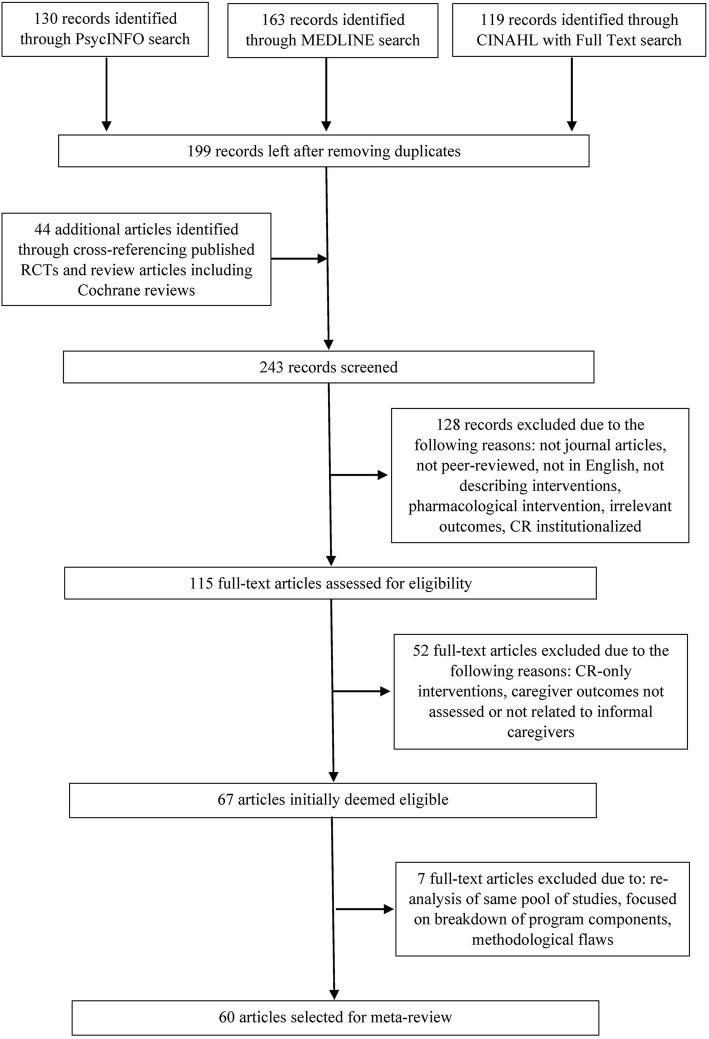
Background: Many reviews with conflicting findings on dementia caregiver interventions have been published. A meta-review was conducted to synthesize the findings of systematic reviews and meta-analyses. Methods: MEDLINE, PsycINFO, CINAHL and Cochrane Library were searched to identify reviews published during 2006–2018. Results: Sixty reviews covering > 500 intervention studies were selected and appraised with Assessment of Multiple Systematic Reviews (AMSTAR) II. The great majority of studies were of low quality according to AMSTAR II, but quality factors appeared unrelated to the conclusions obtained. Depression was most modifiable, with effects found across a spectrum of interventions (psychoeducation, counseling/psychotherapy, occupational therapy, mindfulness-based interventions, multicomponent interventions, etc.). Evidence of intervention effect was also found for quality of life (psychoeducation), mastery (psychoeducation, occupational therapy and multicomponent interventions) and communication skills (communication training). Null or weak results were found for anxiety, social support and burden. Support groups and respite were generally ineffective. There was no evidence that dyadic programs were better than caregiver-only programs, or that programs delivered individually or in groups would differ in their impacts. The evidence also does not support multicomponent interventions to have broader impacts than single-component programs. Methodological issues in the existing reviews (e.g., selective use of studies to serve different research purposes and inconsistent classification of interventions) were noted and taken into account when interpreting findings. Conclusions: This meta-review clarified variations in review methodology and identified a few potent groups of intervention (most notably psychoeducation, psychotherapy, occupational therapy, and multicomponent interventions), although no intervention type had broad effects on caregiver outcomes. We note that improvements are needed in the reporting of intervention studies and in making the classification of interventions more transparent and consistent. We further recommend fewer and larger-scale reviews and more attention to positive outcomes in order to better inform the field. Developing interventions with broader impacts and packaging them to meet caregivers’ changing needs in the course of dementia should be a priority for researchers and practitioners.
Overview
The claims and statistics of this paper haven’t been checked yet.
Free: it reads the open-access text and checks the first 5 claims that cite a source we can check. Create a free account to check every claim.
Integrity signals
Registry
Cites
Statistics
Figures
Verification
Claims the paper makes
The claims and statistics of this paper haven’t been checked yet.
Free: it reads the open-access text and checks the first 5 claims that cite a source we can check. Create a free account to check every claim.
Claims other papers make about this one
Each is checked against this paper’s own text: does it say what the citing paper says it does?
The source backs part of the claim, not all of it — or backs it for a different population, condition or comparison.
In the citing paper
“A meta-review of over 60 meta-analyses and systematic reviews of dementia caregiver interventions indicate that although various interventions may have positive effects on depression and other measures of caregiver well-being, challenges related to how interventions are reported and classified has made it difficult to ascertain what works and why for dementia caregivers.556”
From 2023 Alzheimer's disease facts and figures (2023) · cites this paper as [556]
Experimental — accuracy not yet measuredThe source backs part of the claim, not all of it — or backs it for a different population, condition or comparison.
In the citing paper
“While existing systematic reviews and meta-analyses provide some evidence on psychological interventions for older adults, these reviews tend to focus on people with specific health conditions, such as dementia (Cheng 2020; Sun 2022), stroke caregivers (Panzeri 2019), or subclinical depressive symptoms (Corpas 2022).”
From Psychotherapeutic treatments for depression in older adults (2024) · cites this paper as Cheng 2020
Experimental — accuracy not yet measuredThe cited source says what the claim attributes to it.
In the citing paper
“challenges related to how interventions are reported and classified has made it difficult to ascertain what works and why for dementia caregivers.556”
From 2023 Alzheimer's disease facts and figures (2023) · cites this paper as [556]
Self-check
Percentages, sums and reported differences re-computed from the paper’s own numbers.
The self-check needs the paper’s full text.
Citations
Cites
Eysenck, H. J. (1985) · Behaviour Research and Therapy · doi:10.1016/0005-7967(85)90087-7 · Cited by 31,975
“Stress: appraisal and coping,”
Folkman, S. (2013) · Encyclopedia of Behavioral Medicine · doi:10.1007/978-1-4419-1005-9_215 · Cited by 27,833
Shea, B. J., Reeves, B. C., Wells, G., Thuku, M., Hamel, C., Moran, J., Moher, D., Tugwell, P., Welch, V., Kristjansson, E., et al. (2017) · BMJ · doi:10.1136/bmj.j4008 · Cited by 10,636
(2015) · HAL · Cited by 2,238
Nonpharmacological therapies in Alzheimer’s disease: a systematic review of efficacy
Olazarán, J., Reisberg, B., Clare, L., Cruz, I., Peña-Casanova, J., del Ser, T., Woods, B., Beck, C., Auer, S., Lai, C., et al. (2010) · Dementia and Geriatric Cognitive Disorders · doi:10.1159/000316119 · Cited by 937
Pinquart, M., & Sorensen, S. (2006) · International Psychogeriatrics · doi:10.1017/s1041610206003462 · Cited by 827
Dementia Caregiver Burden: a Research Update and Critical Analysis
Cheng, S.-T. (2017) · Current Psychiatry Reports · doi:10.1007/s11920-017-0818-2 · Cited by 595
Self-citationHaley, W. E., Levine, E. G., Brown, S. L., & Bartolucci, A. A. (1987) · Psychology and Aging · doi:10.1037//0882-7974.2.4.323 · Cited by 588
Meta-Analysis of Nonpharmacological Interventions for Neuropsychiatric Symptoms of Dementia
Brodaty, H., & Arasaratnam, C. (2012) · American Journal of Psychiatry · doi:10.1176/appi.ajp.2012.11101529 · Cited by 479
Boots, L. M. M., de Vugt, M. E., van Knippenberg, R. J. M., Kempen, G. I. J. M., & Verhey, F. R. J. (2014) · International Journal of Geriatric Psychiatry · doi:10.1002/gps.4016 · Cited by 449
Research works printed but not linked: 1
- Biondi-Zoccai G Umbrella reviews: evidence synthesis with overviews of reviews and meta-epidemiologic studies 2016 Basel Springer International Publishing
Cited by
2023 Alzheimer's disease facts and figures
(2023) · Alzheimer's & Dementia · doi:10.1002/alz.13016 · Cited by 3,212
2024 Alzheimer's disease facts and figures
(2024) · Alzheimer's & Dementia · doi:10.1002/alz.13809 · Cited by 2,536
2022 Alzheimer's disease facts and figures
(2022) · Alzheimer's & Dementia · doi:10.1002/alz.12638 · Cited by 2,341
2021 Alzheimer's disease facts and figures
(2021) · Alzheimer's & Dementia · doi:10.1002/alz.12328 · Cited by 2,201
2025 Alzheimer's disease facts and figures
(2025) · Alzheimer's & Dementia · doi:10.1002/alz.70235 · Cited by 474
Sun, Y., Ji, M., Leng, M., Li, X., Zhang, X., & Wang, Z. (2022) · International Journal of Nursing Studies · doi:10.1016/j.ijnurstu.2022.104204 · Cited by 176
Meng, X., Su, J.-P., Li, H., Ma, D., Zhao, Y., Li, Y., Zhang, X., Li, Z., & Sun, J. (2021) · Ageing Research Reviews · doi:10.1016/j.arr.2021.101448 · Cited by 65
Jawahir, S., Tan, E. H., Tan, Y. R., Noh, S. N. M., & Rahim, I. A. (2021) · BMC Health Services Research · doi:10.1186/s12913-021-06412-5 · Cited by 57
“For example, mindfulness-based interventions have a positive influence on reducing depression, and occupational therapy training have a direct impact on strengthening caregivers’ competence and confidence [68].”
BackgroundOrden, K. A. V., & Heffner, K. L. (2022) · The Gerontologist · doi:10.1093/geront/gnac032 · Cited by 48
He, J., Wang, J., Zhong, H., & Guan, C. (2022) · International Journal of Environmental Research and Public Health · doi:10.3390/ijerph19126973 · Cited by 52
“Caregiver well-being is a multiple concept that includes emotional, psychological, social, and spiritual aspects, and multi-component interventions contain a variety of components covering educational, physical, psychological, emotional, and social supports that can be selected by caregivers as needed and better meet…”
BackgroundKirvalidze, M., Abbadi, A., Dahlberg, L., Sacco, L., Morin, L., & Calderón‐Larrañaga, A. (2023) · BMJ Open · doi:10.1136/bmjopen-2022-068646 · Cited by 55
2026 Alzheimer's disease facts and figures
Alzheimer's, T. S. O. A. D. A. A. W. S. C. I. T. B. I., neurons, T. B. N. A. E. A. A. H. A. B. H. B. O., long, E. W., connections, B. E. T. E. E. I. N. T. F. C. W. O. N. A. S., synapses, C., memories, I. F. I. T. B. O. C. T. A. R. B. O. N. A. T. U. B. A. N. T. B. C. T. O. S. T. A. S. T. T. R. T. T. B. T. S. F. T. C. B. O., thoughts, sensations, emotions, & skills., M. A. (2026) · Alzheimer s & Dementia · doi:10.1002/alz.71345 · Cited by 126
Fortinsky, R. H., Gitlin, L. N., Pizzi, L. T., Piersol, C. V., Grady, J., Robison, J. T., Molony, S., & Wakefield, D. (2020) · Innovation in Aging · doi:10.1093/geroni/igaa053 · Cited by 40
Where Are Smart Cities Heading? A Meta-Review and Guidelines for Future Research
dos Reis, J. C. G., Marques, P. A., & Marques, P. C. (2022) · Applied Sciences · doi:10.3390/app12168328 · Cited by 43
Efficacy of a Virtual Education Program for Family Caregivers of Persons Living with Dementia
Noel, M. A., Lackey, E., Labi, V., & Bouldin, E. D. (2022) · Journal of Alzheimer s Disease · doi:10.3233/jad-215359 · Cited by 49
“Other studies of psychoeducational interventions have shown variable impact on caregiver burden [12, 16, 49].”
BackgroundGroup-Based Interventions for Carers of People With Dementia: A Systematic Review
McLoughlin, B. (2022) · Innovation in Aging · doi:10.1093/geroni/igac011 · Cited by 41
“Recent systematic reviews regarding psycho-social interventions for carers have reported inconsistent findings (Cheng and Zhang, 2020; Dam et al., 2016; Dickinson et al., 2017; Hopkinson et al., 2019), with many concluding that the effectiveness of group-based interventions varies widely between studies and does not a…”
BackgroundZhu, E. M., Buljac‐Samardžić, M., Ahaus, K., Sevdalis, N., & Huijsman, R. (2023) · Implementation Science · doi:10.1186/s13012-023-01314-y · Cited by 34
Hansen, N. H., Bjerrekær, L., Pallesen, K. J., Juul, L., & Fjorback, L. O. (2022) · Frontiers in Psychiatry · doi:10.3389/fpsyt.2022.949066 · Cited by 33
“This problem has also been reported in other systematic reviews and meta-analyses (14, 20, 83).”
BackgroundMethodResultInfluentialPérez-González, A., Celaya, J. V., & Guàrdia‐Olmos, J. (2023) · Palliative & Supportive Care · doi:10.1017/s1478951523001360 · Cited by 30
“There is a wide range of supportive therapies to caregiver (Cheng and Zhang 2020), but the challenge for the future is to establish different phases in the process to improve adherence and medium-and long-term effects.”
Rogers, K., Hirzle, T., Karaosmanoglu, S., Palomino, P. T., Durmanova, E., Isotani, S., & Nacke, L. E. (2024) · ACM Transactions on Computer-Human Interaction · doi:10.1145/3685266 · Cited by 26
Cost–Benefit Analysis of the COPE Program for Persons Living With Dementia: Toward a Payment Model
Pizzi, L. T., Jutkowitz, E., Prioli, K. M., Lu, E. (., Babcock, Z., McAbee-Sevick, H., Wakefield, D. B., Robison, J., Molony, S., Piersol, C. V., et al. (2022) · Innovation in Aging · doi:10.1093/geroni/igab042 · Cited by 22
Fuju, T., Yamagami, T., Yamaguchi, H., & Yamazaki, T. (2021) · Perspectives In Psychiatric Care · doi:10.1111/ppc.13013 · Cited by 26
Dessy, A. M., Zhao, A. J., Kyaw, K. T., Vieira, D. L., & Salinas, J. (2022) · Journal of Alzheimer s Disease · doi:10.3233/jad-220005 · Cited by 24
Oliveira, D., da Mata, F. A. F., & Aubeeluck, A. (2023) · British Medical Bulletin · doi:10.1093/bmb/ldad029 · Cited by 26
Programmes Addressed to Informal Caregivers’ Needs: A Systematic Literature Review
Gemito, M. L., Alves, E., Moreira, J., Marques, M. F., Caldeira, E. D. C. V., Ferreira, R., Bico, I. M. T., de Pinho, L. G., da Fonseca, C. J. V., Sousa, L., et al. (2024) · Geriatrics · doi:10.3390/geriatrics9030071 · Cited by 27
“However, no consensus exists on how to best prepare and support caregivers throughout the care trajectory [53,54].”
BackgroundDietzel, N., Kürten, L., Karrer, L., Reichold, M., Köhler, L., Nagel, A., Chmelirsch, C., Seebahn, K., Hladik, M., Meuer, S., et al. (2021) · BMJ Open · doi:10.1136/bmjopen-2020-043473 · Cited by 22
Cheng, S., Chan, W. C., & LAM, L. C. W. (2021) · American Journal of Geriatric Psychiatry · doi:10.1016/j.jagp.2021.08.009 · Cited by 22
Self-citationPonsoda, J. M., Beleña, M. Á., & Díaz, A. (2023) · Healthcare · doi:10.3390/healthcare11233084 · Cited by 25
Ko, E., Wongvibul, T., Rose, K. M., & Jun, J. (2023) · International Journal of Nursing Studies Advances · doi:10.1016/j.ijnsa.2023.100141 · Cited by 17
“…revealed that depressive symptoms might be improved by using multi-component interventions but did not find the superior effect of multi-component interventions over single-component ones on burden, anxiety, and quality of life in caregivers of people living with dementia (Cheng and Zhang, 2020).”
BackgroundLyons, T. L., & Champion, J. D. (2022) · Journal of Gerontological Nursing · doi:10.3928/00989134-20220606-03 · Cited by 16
Effect of support groups on caregiver’s quality of life
Bernabéu‐Álvarez, C., Lima‐Rodríguez, J. S., & Lima‐Serrano, M. (2021) · Family Process · doi:10.1111/famp.12684 · Cited by 26
Bui, L. K., Park, M., & Giap, T. (2022) · Geriatric Nursing · doi:10.1016/j.gerinurse.2022.09.015 · Cited by 32
Caregiver Distress and Coronary Artery Disease: Prevalence, Risk, Outcomes, and Management
Bouchard, K., Dans, M., Higdon, G., Quinlan, B., & Tulloch, H. E. (2022) · Current Cardiology Reports · doi:10.1007/s11886-022-01810-5 · Cited by 19
Contreras, M., Mioshi, E., & Kishita, N. (2021) · Health & Social Care in the Community · doi:10.1111/hsc.13552 · Cited by 26
Kwok, J. Y. Y., Cheung, D. S. K., Zarit, S. H., Cheung, K. S.-L., Lau, B. H. P., LOU, V. W. Q., Cheng, S., Gallagher-Thompson, D. E., Qian, M., & Chou, K. (2025) · JAMA Network Open · doi:10.1001/jamanetworkopen.2025.0069 · Cited by 22
Self-citationSocial support interventions for caregivers of older adults with dementia: a scoping review
Yuan, S., Zhang, F., Pu, L., Lv, J., Xie, X., Lin, L., Qiu, M., Huang, L., Jiang, W., Zhu, J., et al. (2025) · BMJ Open · doi:10.1136/bmjopen-2024-095815 · Cited by 22
“27 In England, respite care is often the preferred option for those caring for individuals with advanced dementia.”
Self-citationFelstead, C., Perkins, L., Stott, J. C. H., Hui, E. K., & Spector, A. E. (2022) · Aging & Mental Health · doi:10.1080/13607863.2022.2141193 · Cited by 20
“This inconsistency in approach, research quality and the difficulty in integrating findings between studies is similar to previous findings in reviews looking at non-pharmacological intervention on the effects of care-giver outcomes (Cheng & Zhang, 2020; vandepitte et al., 2016).”
BackgroundResultMårtensson, E., Coumoundouros, C., Sörensdotter, R., von Essén, L., & Woodford, J. (2022) · Journal of Affective Disorders · doi:10.1016/j.jad.2022.09.093 · Cited by 23
“…provide some evidence for psychological interventions for informal caregivers of older adults, reviews tend to target caregivers of persons with specific health conditions, e.g. dementia (Cheng and Zhang, 2020; Huo et al., 2021; Sun et al., 2022) or stroke (Chin et al., 2021; Panzeri et al., 2019).”
Fleisher, J. E., Suresh, M., Levin, M. E., Hess, S., Akram, F., Dodson, D., Tosin, M. H. D. S., Stebbins, G. T., Woo, K., Ouyang, B., et al. (2023) · Parkinsonism & Related Disorders · doi:10.1016/j.parkreldis.2023.105492 · Cited by 17
Yu, D. S. F., Cheng, S., Chow, E. O.-W., Kwok, T. C. Y., McCormack, B. G., & Wu, W. (2023) · Age and Ageing · doi:10.1093/ageing/afad160 · Cited by 16
Self-citationOttaviani, A. C., Monteiro, D. Q., Oliveira, D., Gratão, A. C. M., Jacinto, A. F., Campos, C. R. F., Barham, E. J., Orlandi, F. D. S., da Cruz, K. C. T., Corrêa, L., et al. (2021) · Aging & Mental Health · doi:10.1080/13607863.2021.1975095 · Cited by 16
“The number of studies assessing the effectiveness of technological interventions for family carers of people living with dementia has increased significantly in the last few years (Cheng & Zhang, 2020; Deeken et al., 2019; Etxeberria et al., 2020).”
BackgroundChung, M. L., Lee, S. J., Son, Y., Miller, J., & King, R. B. (2020) · The Journal of Cardiovascular Nursing · doi:10.1097/jcn.0000000000000773 · Cited by 13
Tamura, N. T., Shikimoto, R., Nagashima, K., Sato, Y., Nakagawa, A., Irie, S., Iwashita, S., Mimura, M., & Fujisawa, D. (2022) · Psychogeriatrics · doi:10.1111/psyg.12919 · Cited by 14
Pantelis, A. G., Machairiotis, N., Stavros, S., Disu, S., & Drakakis, P. (2023) · Surgical Endoscopy · doi:10.1007/s00464-023-10546-4 · Cited by 12
Perach, R., Read, S., Hicks, B., Harris, P. R., Rusted, J. M., Brayne, C., Dangoor, M., Miles, E., Dixon, J., Robinson, L. A., et al. (2022) · Aging & Mental Health · doi:10.1080/13607863.2022.2080179 · Cited by 17
“However, more evidence is needed to determine which support might best alleviate loneliness among unpaid dementia carers (Cheng & Zhang, 2020).”
BackgroundFamily Caregiver Assessment in Primary Care: How to Strengthen the HealthCare Triad?
Fortinsky, R. H. (2021) · Journal of the American Geriatrics Society · doi:10.1111/jgs.16994 · Cited by 15
Dementia literacy in an ageing world
Smith, G. D., Ho, K. H. M., Lee, A. T. C., Lam, L. C. W., & Chan, S. W. (2022) · Journal of Advanced Nursing · doi:10.1111/jan.15556 · Cited by 16
The Moderating Role of Caregiving on Fear of COVID-19 and Post-Traumatic Stress Symptoms
Carballo, J. L., Coloma‐Carmona, A., Arteseros-Bañón, S., & Pérez‐Jover, V. (2021) · International Journal of Environmental Research and Public Health · doi:10.3390/ijerph18116125 · Cited by 11
Monin, J. K., Oettingen, G., Laws, H. B., David, D., Dematteo, L., & Marottoli, R. A. (2021) · The Journals of Gerontology Series B · doi:10.1093/geronb/gbab115 · Cited by 13
Juengst, S. B., Supnet, C. B., Kew, C. L., Silva, V. R., Vega, M., Han, G., Kelley, B. J., Smith, M. L., & Maestre, G. E. (2021) · Contemporary Clinical Trials · doi:10.1016/j.cct.2021.106506 · Cited by 10
Grewal, K. S., Gowda-Sookochoff, R., Peacock, S., Cammer, A. L., McWilliams, L. A., Spiteri, R. J., Haase, K. R., Harrison, M., Holtslander, L. F., MacRae, R., et al. (2024) · JMIR Formative Research · doi:10.2196/63041 · Cited by 12
“A variety of services and programs support care partners of people living with dementia [14-17].”
Chen, I., Sung, J., & Wang, W. (2025) · International Journal of Geriatric Psychiatry · doi:10.1002/gps.70080 · Cited by 11
Hout, E. V., Contreras, M., Mioshi, E., & Kishita, N. (2022) · Journal of Geriatric Psychiatry and Neurology · doi:10.1177/08919887221093359 · Cited by 11
Riffin, C. A., Brody, L. A., Mukhi, P., Herr, K., Pillemer, K. A., Rogers, M., Henderson, C., & Reid, M. C. (2023) · Innovation in Aging · doi:10.1093/geroni/igad074 · Cited by 11
“More than 500 interventions have been designed to improve caregiver skills, knowledge, and coping (Butler et al., 2021; Cheng & Zhang, 2020), yet there remains a relative paucity of programs designed to help caregivers of persons with dementia with pain symptom recognition and communication.”
BackgroundCórdoba, . M. C., Tiga-Loza, D. C., Anaya, W. A. Á., Peña, E. D., Espíndola, L. R. J., & Osma, L. J. P. (2021) · Revista CUIDARTE · doi:10.15649/cuidarte.2002 · Cited by 14
Petrovsky, D., Yıldız, M., Yefimova, M., Sefcik, J. S., Baker, Z. G., Ma, K. P. K., Rahemi, Z., Bacsu, J.-D., Smith, M. L., & Pickering, C. E. Z. (2024) · Innovation in Aging · doi:10.1093/geroni/igae034 · Cited by 8
“Caregiver distress is often treated as an outcome worthy of intervention (Butler et al., 2020; Cheng & Zhang, 2020) and unaddressed/unmanaged caregiver distress may cause harm to the person living with dementia and increase BPSD (Pickering et al., 2022).”
BackgroundSürer, H. K., Yaylagül, N. K., & Helvik, A. (2025) · Geriatrics and gerontology international/Geriatrics & gerontology international · doi:10.1111/ggi.70190 · Cited by 8
“Nevertheless, psychoeducation and multi-component programs were reported to have no or weak effects on caregiver burden [61].”
Fortinsky, R. H., Shugrue, N. A., Robison, J. T., & Gitlin, L. N. (2023) · Journal of the American Medical Directors Association · doi:10.1016/j.jamda.2023.09.026 · Cited by 9
Kaskie, B. P., Bobitt, J., Herrera, J., Bhagianadh, D., Segal‐Gidan, F., Brummel‐Smith, K., & Arora, K. (2020) · Clinical Gerontologist · doi:10.1080/07317115.2020.1852465 · Cited by 10
“We also learned that not all PwD receive prescription medications when indicated and others quit using prescribed medications because they become less effective as dementia progresses (Cheng & Zhang, 2020; Cheng et al., 2020).”
BackgroundWang, S., Mello, J. D. A., & Declercq, A. (2021) · Frontiers in Bioscience-Landmark · doi:10.52586/4967 · Cited by 12
“A recent meta-review recommended that interventions should be developed to meet informal caregivers’ changing needs in the course of dementia [26].”
BackgroundDementia care partners’ reported outcomes after adaptive riding: a theoretical thematic analysis
Lassell, R., Fields, B., Cross, J. E., & Wood, W. H. (2022) · Quality in Ageing and Older Adults · doi:10.1108/qaoa-01-2022-0007 · Cited by 8
Zhu, E. M., Buljac‐Samardžić, M., Ahaus, K., Sevdalis, N., & Huijsman, R. (2022) · BMJ Open · doi:10.1136/bmjopen-2021-052324 · Cited by 9
A Skill-Based multimodal intervention for dementia caregivers: impact on burden and anxiety
Abdelhalim, D., Ahmed, M., Hussein, H. A., Sarhan, M. D., & Khalaf, O. O. (2025) · Aging Clinical and Experimental Research · doi:10.1007/s40520-025-02985-x · Cited by 10
The potential of transformative video design for improving caregiver’s wellbeing
Petrovic, M., & Gaggioli, A. (2021) · Health Psychology Open · doi:10.1177/20551029211009098 · Cited by 7
“Psychological interventions to reduce caregiver’s burden The comprehensive meta-review (Cheng and Zhang, 2020) of systematic reviews and meta-analyses on non-pharmacological interventions for informal dementia caregivers, revealed consistent evidence support across reviews for several types of…”
BackgroundInfluentialPérez, A. S., Mendialdua-Canales, D., Hurtado‐Pomares, M., Peral‐Gómez, P., Juárez-Leal, I., Espinosa-Sempere, C., Fernández-Pires, P., Zango-Martín, I., Miralles, I. A., López-González, P., et al. (2022) · Healthcare · doi:10.3390/healthcare10030542 · Cited by 9
“A recent meta-review based on systematic reviews and meta-analyses of nonpharmacological interventions for informal dementia caregivers showed that mindfulness-based interventions may be effective for caregivers in reducing burden and emotional issues, such as depression and anxiety, as well as in improving their qual…”
BackgroundNovotni, G., Taneska, M., Novotni, A., Fischer, J., Iloski, S., Ivanovska, A., Dimitrova, V., Novotni, L., Milutinović, M., Joksimoski, B., et al. (2024) · Frontiers in Dementia · doi:10.3389/frdem.2024.1391471 · Cited by 12
Yu, D. S. F., Cheng, S., & Chen, K. S. Z. (2025) · Journal of Advanced Nursing · doi:10.1111/jan.17083 · Cited by 8
Self-citationWang, S., Cheung, D. S. K., Bressington, D. T., Li, Y., & Leung, A. Y. M. (2022) · International Journal of Environmental Research and Public Health · doi:10.3390/ijerph19148731 · Cited by 7
“A published review reported that self-help interventions adopting cognitive behavioral therapy techniques could modify the caregivers’ thoughts and behaviors by facilitating self-help [9].”
BackgroundMougias, A. A., Christidi, F., Kontaxopoulou, D., Zervou, M., Kostoglou, D., Vlami, M. A., Dimitriou, M., & Politis, A. M. (2021) · Journal of Geriatric Psychiatry and Neurology · doi:10.1177/08919887211023593 · Cited by 9
“Our findings are in line with previous studies and recent systematic review and meta-analytic studies supporting the positive impact of psychoeducational programs with psychotherapeutic components and counseling/psychotherapy in depressive symptoms and multicomponent interventions in burden of care.(50) Specifically,…”
ResultLi, Q., Zhang, D., Quinn, É., Walsh, K., & Hynes, S. M. (2026) · International Journal of Nursing Studies Advances · doi:10.1016/j.ijnsa.2026.100490 · Cited by 7
“When considering the broader landscape of non-pharmacological interventions for dementia caregivers, Cheng and Zhang (2020) found, in a comprehensive meta-review, only a weak effect on caregiver burden, regardless of the modality (e.g. face-to-face vs. technology-based).”
Caring for the caregiver in dementia
Young, K. M., & Young, T. D. (2023) · The Journal of Family Practice · doi:10.12788/jfp.0606 · Cited by 5
“However, systematic reviews have found variability in the degree of helpfulness of these interventions.(35,36) Some caregivers and care recipients may benefit from complementary and integrative medicine referrals.”
BackgroundRobertson, K., Thyne, M. A., Thomson, R., & Watkins, L. (2024) · Dementia · doi:10.1177/14713012241279683 · Cited by 6
Johansson, M. F., McKee, K., Dahlberg, L., Williams, C. L., & Hammar, L. M. (2024) · International Journal of Environmental Research and Public Health · doi:10.3390/ijerph21101348 · Cited by 10
“How informal caregivers perceive the importance of formal support services has rarely been studied, with formal support usually conceptualized from a care-professional or organizational perspective in terms of the mode of delivery or targeted outcome for support [38,39].”
BackgroundMurphy, C. L., Laine, C., Macaulay, M., Avery, M., & Fader, M. J. (2021) · Age and Ageing · doi:10.1093/ageing/afab221 · Cited by 7
“• interventions frequently fail to demonstrate effective understanding of the complexities of living with dementia [8], • the amount of burden someone feels is individual, with different triggers and thresholds of burden for different carers [9], • whether a program works may well depend on whether its focus matches c…”
Ahmad, N., Kunicki, Z. J., Tambor, E. S., Epstein-Lubow, G. P., & Tremont, G. N. (2023) · Journal of Geriatric Psychiatry and Neurology · doi:10.1177/08919887231195217 · Cited by 5
“29 Thus, investigating how to differentiate caregivers into speci fi c subgroups is an important area of research with valuable potential implications for dementia caregivers.”
BackgroundThe Implementation Success of Technology-Based Counseling in Dementia Care: Scoping Review
Bauernschmidt, D., Wittmann, J., Hirt, J., Meyer, G., & Bieber, A. (2024) · JMIR Aging · doi:10.2196/51544 · Cited by 6
“Supportive interventions [5] are complex in their development, delivery, and impact, as they involve multiple components, aim at multiple outcomes, and are delivered in different settings.”
BackgroundJürschik, S. P., de Sola, S., Brugulat‐Serrat, A., Llosera, G. M.-V., Castillo, Á., Huesa, G., Piromalli, D., & Fombuena, N. G. (2022) · Revista de Neurología · doi:10.33588/rn.7508.2022180 · Cited by 13
“Sus efectos son discretos, pero significativos: sin efectos adversos, balance coste-efectividad positivo [11,12], retraso de la claudicación de la persona cuidadora y de la institucionalización [5,6,8], y mayor impacto que la asistencia habitual o la no intervención [13].”
BackgroundInfluentialPlys, E., Seward, M., Allen, E. M., Tatar, R., Huberty, J., & Vranceanu, A. (2025) · The Gerontologist · doi:10.1093/geront/gnaf047 · Cited by 7
LOU, V. W. Q., Chan, S. K. L., Tang, V. M. Y., Chandola, T., Chan, W. S., Quan, J., Lum, T. Y. S., Tsoi, T. C. W., Lin, W. W., & Leung, D. K. Y. (2025) · The Gerontologist · doi:10.1093/geront/gnaf151 · Cited by 6
Models and Interventions for Informal Caregiving in Later Life
O’Malley, K. A., Qualls, S. H., & Jacobs, M. L. (2020) · Elsevier eBooks · doi:10.1016/b978-0-12-818697-8.00031-5 · Cited by 4
Eastham, C., Prior, Y., Keady, J. D., Mansell, W., Riley, C., Walters, M., & Morris, L. (2024) · Aging & Mental Health · doi:10.1080/13607863.2024.2410258 · Cited by 5
“…group-based interventions is variable, they are recommended in clinical guidance (National Institute for Health & Clinical Excellence, 2018) and participants report satisfaction with this format, identifying social support and connection as positive factors (Cheng & Zhang, 2020; McLoughlin, 2022).”
Impact of health interventions on informal caregivers: A systematic review and meta-analysis
Fajardo, D. J. C., Perdomo-Romero, A. Y., Cantillo-Medina, C. P., de Souza, M. C. M. R., & Ramírez-Perdomo, C. A. (2024) · Collegian Journal of the Royal College of Nursing Australia · doi:10.1016/j.colegn.2024.10.005 · Cited by 4
Cheng, S., & Ng, P. H. F. (2024) · Applied Psychology Health and Well-Being · doi:10.1111/aphw.12645 · Cited by 4
Self-citationVartiainen, A., Lungu, D. A., Rissanen, E., Pirrotta, L., Scopis, L., Schroeder, T., Sogstad, M., Odberg, K. R., Hole, A., Delgado-Saborit, J. M., et al. (2025) · BMC Health Services Research · doi:10.1186/s12913-025-13372-7 · Cited by 11
Cheng, S., & Ng, P. H. F. (2026) · American Journal of Geriatric Psychiatry · doi:10.1016/j.jagp.2026.01.001 · Cited by 9
Self-citationSung, H. C., Su, H., Lee, W., Chin, M.-Y., Wang, H.-M., Huang, H.-J., & Chu, C.-H. (2026) · International Psychogeriatrics · doi:10.1016/j.inpsyc.2026.100202 · Cited by 4
Nash, C. (2024) · Journal of Ageing and Longevity · doi:10.3390/jal4040034 · Cited by 4
“Yet anxiety reduction is not the focus of most interventions [32], and 49.7% of caregivers never use a psychosocial intervention—of those who do, there is a 31.8% dropout rate—still, this is below the 50% dropout rate for other interventions regarding this group [33].”
InfluentialDobignies, M., Larochette, C., Andreotti, E., Millequant-Gourari, F., de Linares, J. G., Lefebvre, L., Cassagnaud, P., Pasquier, F., & Antoine, P. (2025) · International Journal of Qualitative Studies on Health and Well-Being · doi:10.1080/17482631.2025.2494349 · Cited by 3
“To support caregivers, psycho-socioeducational interventions, counselling, and combined approaches have mainly been used; such approaches result in genuine and moderate levels of effectiveness (Cheng & Zhang, 2020; Dickinson et al., 2017; Elvish et al., 2013; Giannouli, 2017; Walter et al., 2020).”
Preferences of Caregivers of People with Dementia for Respite Care: A Discrete Choice Experiment
Gao, W., Zhang, T., Wang, H., Wang, S., Ye, X., Pang, X., & Hu, Y. (2023) · Health & Social Care in the Community · doi:10.1155/2023/8877104 · Cited by 3
“Designing respite services for informal dementia caregivers to respond to their nuances and particular preferences precisely should be a priority for researchers and policymakers currently [13, 14, 20].”
BackgroundRetractedSanprakhon, P., Chaimongkol, N., Hengudomsub, P., & Lach, H. W. (2022) · Journal of Gerontological Nursing · doi:10.3928/00989134-20220908-04 · Cited by 3
Respite Services: A Critical Support for Family Caregivers
Reinhard, S. C., Tilly, J. A., & Flinn, B. (2024) · doi:10.26419/ppi.00216.001 · Cited by 3
Juengst, S. B., Smith, M. L., Wilmoth, K., Wright, B., Han, G., Supnet, C., & Maestre, G. (2025) · Frontiers in Public Health · doi:10.3389/fpubh.2025.1682373 · Cited by 2
“There is growing evidence that interventions focused on emotional support and stress management for caregivers may help in reducing or managing caregiver burden (17, 18).”
Bushell, D., Jones, C., & Moro, C. (2023) · Frontiers in Dementia · doi:10.3389/frdem.2023.1156863 · Cited by 6
Ehwarieme, T. A., Josiah, U., & Emina, A. (2024) · Journal of Integrative Nursing · doi:10.4103/jin.jin_28_24 · Cited by 1
Family carers and the provision of person-centred dementia care for activities of daily living
Carparelli, C., Oyebode, J. R., & Riley, G. A. (2025) · Dementia · doi:10.1177/14713012241312266 · Cited by 3
“Despite the very large number of previous studies that have evaluated interventions for family carers in dementia (a recent meta-review identi fi ed over 500 – Cheng & Zhang, 2020), relatively few have aimed to improve the person-centredness of care provided by the family (Marulappa et al., 2022).”
Perioperative Nurses' Experience of Working With Persons Living With Dementia
Kovaleva, M. A., Jones, A. C., Garrard, C. F., Lauderdale, J. L., Dietrich, M. S., Johnson, P., & Maxwell, C. A. (2025) · Research in Gerontological Nursing · doi:10.3928/19404921-20250331-02 · Cited by 3
Conducting family meetings on families with dementia: An integrative review
Zhang, H., Wang, N., Bai, N., & Yin, M. (2024) · Journal of Clinical Nursing · doi:10.1111/jocn.17007 · Cited by 3
Alyafei, A. S., Swarbrick, C., & Holland, C. (2025) · Journal of global ageing. · doi:10.1332/29767202y2024d000000017 · Cited by 3
Juengst, S. B., Holland, A., Wilmoth, K., Smith, M. L., Han, G., Supnet, C. B., Kew, C. L., Khera, A., & Maestre, G. E. (2025) · The Lancet Regional Health - Americas · doi:10.1016/j.lana.2025.101222 · Cited by 6
Bailie, C. R., Pillai, P., Singh, A. G., Leishman, J., Grills, N., & Mathias, K. R. (2023) · Cambridge Prisms Global Mental Health · doi:10.1017/gmh.2023.38 · Cited by 3
Metadata
- Authors
- Cheng, S.-T., & Zhang, F.
- Affiliations
- University of East Anglia (GB)
- Education University of Hong Kong (HK)
- Corresponding author
- Cheng, Sheung-Tak
- Venue
- BMC Geriatrics
- Published
- 2020-04-15
- Volume
- 20
- Issue
- 1
- Pages
- 137-137
- ISSN
- 1471-2318 (ISSN-L)
- PMC
- PMC7158025
- OpenAlex
- W3015707000
- Cited by
- 166
- References
- 89
- Citations by year
- 2026: 23 · 2025: 36 · 2024: 24 · 2023: 29 · 2022: 26 · 2021: 23 · 2020: 5
- FWCI
- 3.44
- Type
- journal article
- Language
- en
- Open access
- gold
- doi.org
- Licence
- cc-by
- creativecommons.org/licenses/by/4.0/ (tdm)
- creativecommons.org/licenses/by/4.0/ (vor)
- Locations
- BMC Geriatrics (publishedVersion, cc-by)
- PubMed Central (publishedVersion, cc-by)
- PubMed (publishedVersion)
- DOAJ (DOAJ: Directory of Open Access Journals) (submittedVersion, cc-by-sa)
- Topics
- Health Sciences › Medicine › Psychiatry and Mental health › Dementia and Cognitive Impairment Research
- Health Sciences › Nursing › Research and Theory › Nursing care and research
- Social Sciences › Psychology › Clinical Psychology › Family Caregiving in Mental Illness
- Keywords
- dementia caregiving, informal caregivers, non-pharmacological treatment, caregiver depression, caregiver anxiety, caregiver burden, quality of life, mastery, communication skills, psychoeducation, psychotherapy, occupational therapy, mindfulness-based interventions, multicomponent intervention, support groups, respite care, dyadic intervention, intervention quality, review methodology
- MeSH terms
- Systematic Reviews as Topic, Anxiety, Dementia, Depression, Humans, Quality of Life, Social Support, Caregivers
About these checks
Registry, retraction, Cites and statistics results are computed, not judged, with one exception: a printed reference that no index lists is read once by a model before it counts as a citation error. Claims are extracted by a model and kept only when their quote appears verbatim in the text; each cited source is then checked, with a model’s help, for whether it says what the claim relies on. Those verdicts can be wrong — read the claim’s quote and the cited source before relying on one.
Statistics and arithmetic are recomputed, not judged.
Confidence bands are shown only for fields calibrated on our annotated test set. None is calibrated yet, so no band is shown.
What counts as a claim ›How we measure confidence ›How we check this ›
Are you an author, or do you see a problem with this page? Request a review
Data sources
Bibliographic data: Semantic Scholar, OpenAlex, Crossref.
Contains information from the Semantic Scholar Academic Graph Datasets, made available under the ODC Attribution License (ODC-BY 1.0).
Semantic Scholar’s data is described in: Kinney, R., et al. (2023). The Semantic Scholar Open Data Platform. arXiv:2301.10140.
