

Effect of 12-weeks elastic band resistance training on MyomiRs and osteoporosis markers in elderly women with Osteosarcopenic obesity: a randomized controlled trial
Open accessThe DOI matches its Crossref record; 48 of the 48 references it cites were found in a registry or an index.
Abstract
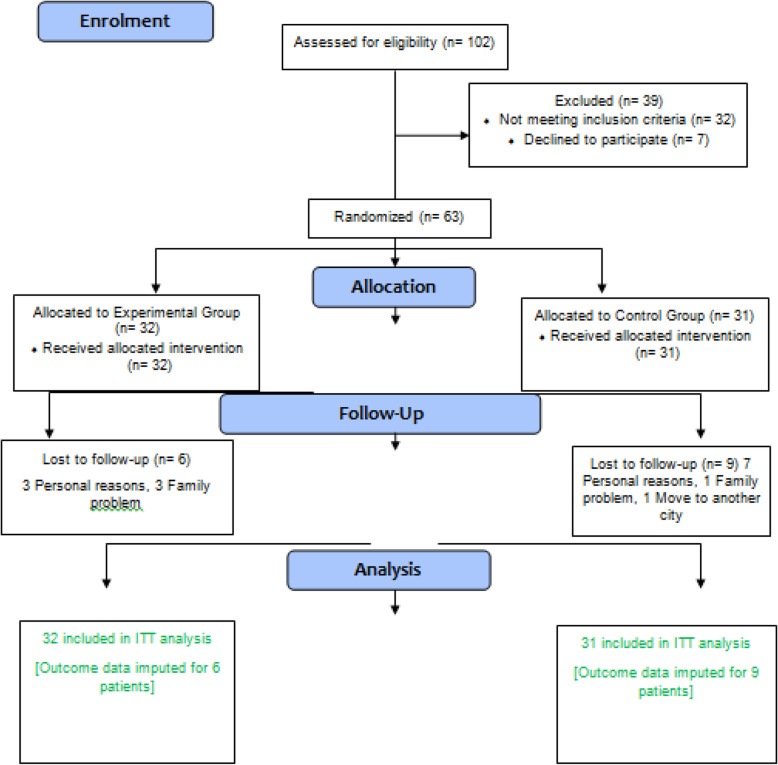
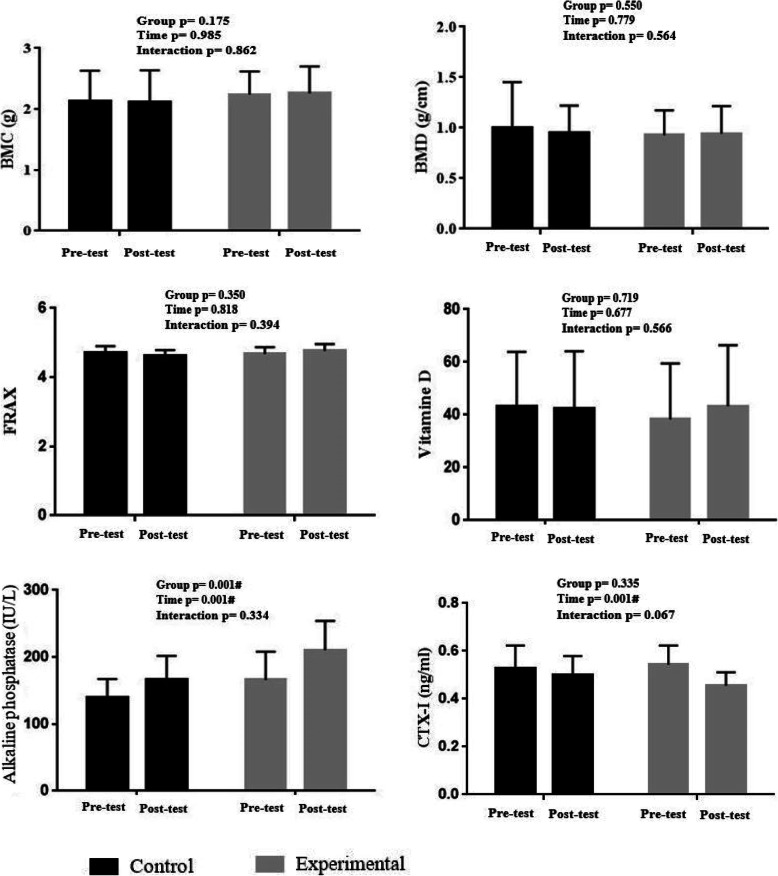
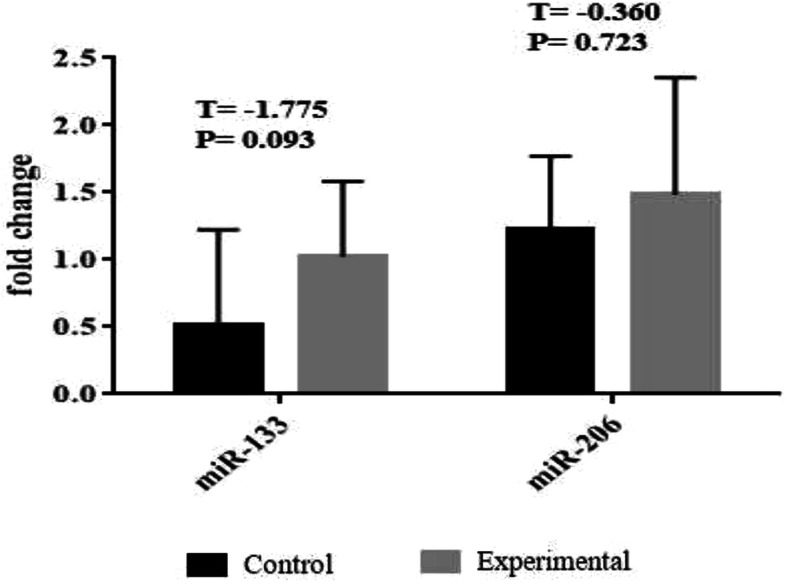
Background: Interorgan communication networks established during exercise in several different tissues can be mediated by several exercise-induced factors. Therefore, the present study aimed to investigate the effects of resistance-type training using elastic band-induced changes of myomiRs (i.e., miR-206 and miR-133), vitamin D, CTX-I, ALP, and FRAX® score in elderly women with osteosarcopenic obesity (OSO). Methods: In this randomized controlled trial, 63 women (aged 65–80 years) with Osteosarcopenic Obesity were recruited and assessed, using a dual-energy X-ray absorptiometry instrument. The resistance-type training via elastic bands was further designed three times per week for 12-weeks. The main outcomes were Fracture Risk Assessment Tool score, bone mineral content, bone mineral density, vitamin D, alkaline phosphatase, C-terminal telopeptides of type I collagen, expression of miR-206 and miR-133. Results: There was no significant difference between the study groups in terms of the Fracture Risk Assessment Tool score ( p = 0.067), vitamin D ( p = 0.566), alkaline phosphatase ( p = 0.334), C-terminal telopeptides of type I collagen (p = 0.067), microR-133 ( p = 0.093) and miR-206 ( p = 0.723). Conclusion: Overall, the results of this study illustrated 12-weeks of elastic band resistance training causes a slight and insignificant improvement in osteoporosis markers in women affected with Osteosarcopenic Obesity. Trial registration: Randomized controlled trial (RCT) (Iranian Registry of Clinical Trials, trial registration number: IRCT20180627040260N1 . Date of registration: 27/11/2018.
Overview
The claims and statistics of this paper haven’t been checked yet.
Free: it reads the open-access text and checks the first 5 claims that cite a source we can check. Create a free account to check every claim.
Integrity signals
Registry
Cites
Statistics
Figures
Verification
Claims the paper makes
The claims and statistics of this paper haven’t been checked yet.
Free: it reads the open-access text and checks the first 5 claims that cite a source we can check. Create a free account to check every claim.
Claims other papers make about this one
Each is checked against this paper’s own text: does it say what the citing paper says it does?
The cited source doesn’t support the claim as written.
In the citing paper
“The meta-analysis results reveal a significant reduction in percent body fat (MD −1.53%; 95%CI, −2.91 to −0.15) through resistance training.”
From Nutritional and exercise interventions in individuals with sarcopenic obesity around retirement age: a systematic review and meta-analysis (2023) · cites this paper as [29]
Checked by a reasoning model — may be wrong.
Experimental — accuracy not yet measuredThe cited source doesn’t support the claim as written.
In the citing paper
“In terms of adiposity-related variables, PT was also effective in reducing BF% and VF, consistent with previous trials [27,34,35,36].”
From Efficacy of Power Training on Sarcopenic Obesity in Community-Dwelling Older Women: A 32-Week Randomized Clinical Trial (2025) · cites this paper as [35]
Checked by a reasoning model — may be wrong.
Experimental — accuracy not yet measuredThe cited source says what the claim attributes to it.
In the citing paper
“The effects of resistance training were examined in 6 trials.29–32,36,38”
From Nutritional and exercise interventions in individuals with sarcopenic obesity around retirement age: a systematic review and meta-analysis (2023) · cites this paper as [29]
In the citing paper
“Six studies assessed the effectiveness of exercise interventions,29–32,36,38 2 studies assessed different nutritional interventions,28,37 and 3 studies evaluated the effect of a nutritional intervention in combination with training.33–35”
From Nutritional and exercise interventions in individuals with sarcopenic obesity around retirement age: a systematic review and meta-analysis (2023) · cites this paper as [29]
In the citing paper
“The results of the meta-analysis showed no significant effect (MD −0.57 kg/m2; 95%CI, −1.91 to 0.77; I2 = 0%).”
From Nutritional and exercise interventions in individuals with sarcopenic obesity around retirement age: a systematic review and meta-analysis (2023) · cites this paper as [29]
Self-check
Percentages, sums and reported differences re-computed from the paper’s own numbers.
The self-check needs the paper’s full text.
Citations
Cites
Shepherd, J. A., Ng, B. K., Sommer, M. J., & Heymsfield, S. B. (2017) · Bone · doi:10.1016/j.bone.2017.06.010 · Cited by 460
Skeletal Muscle as an Endocrine Organ: The Role of Myokines in Exercise Adaptations
Hoffmann, C., & Weigert, C. (2017) · Cold Spring Harbor Perspectives in Medicine · doi:10.1101/cshperspect.a029793 · Cited by 393 · cited 1×
“Emerging evidence indicates that muscle-bone communication may be also achieved by the release of some myotube-derived exosomal microRNAs (myomiRs) to neighboring cells [6], and myomiRs can further transport health-promoting information of exercise interventions to other tissues in endocrine and paracrine manners [7]…”
BackgroundDavidsen, P. K., Gallagher, I. J., Hartman, J. W., Tarnopolsky, M. A., Dela, F., Helge, J. W., Timmons, J. A., & Phillips, S. M. (2011) · Journal of Applied Physiology · doi:10.1152/japplphysiol.00901.2010 · Cited by 385 · cited 1×
“Thirdly, further analysis in the present study indicated that myomiRs might play a role in the phenotypic change of muscle and pronounced intergroup variations in exercise training responses [26].”
ResultNielsen, S., Scheele, C., Yfanti, C., Åkerström, T., Nielsen, A. R., Pedersen, B. K., & Laye, M. (2010) · The Journal of Physiology · doi:10.1113/jphysiol.2010.189860 · Cited by 344 · cited 2×
“These results did not correspond with the findings of the published studies in this area, indicating that some of these myomiRs [27, 28], had changed in response to exercise training regimes in skeletal muscle.”
BackgroundResultmicroRNAs in the Regulation of Adipogenesis and Obesity
A. McGregor, R., & S. Choi, M. (2011) · Current Molecular Medicine · doi:10.2174/156652411795677990 · Cited by 287 · cited 1×
“Other researchers had further confirmed that miRNA-133 [29, 30] and miRNA-206 [30, 31] had contributed to regulating obesity, and adipose tissue, regulation of osteoporosis and bone metabolism [32, 33], as well as muscle sarcopenia and atrophy [34, 35].”
BackgroundRussell, A. P., Lamon, S., Boon, H., Wada, S., Güller, I., Brown, E. L., Chibalin, A. V., Zierath, J. R., Snow, R. J., Stepto, N., et al. (2013) · The Journal of Physiology · doi:10.1113/jphysiol.2013.255695 · Cited by 271 · cited 1×
“These results did not correspond with the findings of the published studies in this area, indicating that some of these myomiRs [27, 28], had changed in response to exercise training regimes in skeletal muscle.”
ResultAging changes mechanical loading thresholds for bone formation in rats
Turner, C. H., Takano, Y., & Owan, I. (1995) · Journal of Bone and Mineral Research · doi:10.1002/jbmr.5650101016 · Cited by 270 · cited 1×
“Although it has been shown that muscle and bone are both mechanoresponsive tissues [38], it seems that younger individuals have more mechanoresponsiveness to myogenic and osteogenic signals, hormones, growth factors, and cytokines compared with older ones [39].”
BackgroundRole of microRNAs in obesity and obesity-related diseases
Iacomino, G., & Siani, A. (2017) · Genes & Nutrition · doi:10.1186/s12263-017-0577-z · Cited by 226 · cited 1×
“Other researchers had further confirmed that miRNA-133 [29, 30] and miRNA-206 [30, 31] had contributed to regulating obesity, and adipose tissue, regulation of osteoporosis and bone metabolism [32, 33], as well as muscle sarcopenia and atrophy [34, 35].”
BackgroundFulzele, S., Mendhe, B., Khayrullin, A., Johnson, M., Kaiser, H., Liu, Y., Isales, C. M., & Hamrick, M. W. (2019) · Aging · doi:10.18632/aging.101874 · Cited by 215
Weilner, S., Skalicky, S., Salzer, B., Keider, V., Wagner, M., Hildner, F., Gabriel, C., Dovjak, P., Pietschmann, P., Grillari-Voglauer, R., et al. (2015) · Bone · doi:10.1016/j.bone.2015.05.027 · Cited by 200 · cited 1×
“bone remodeling and their extracellular shuttling, it was first hypothesized that circulating myomiRs could have the potentials to show functional relevance to bone remolding [16].”
BackgroundForterre, A., Jalabert, A., Chikh, K., Pesenti, S., Euthine, V., Granjon, A., Errazuriz, E., Lefai, E., Vidal, H., & ROME, S. (2014) · Cell Cycle · doi:10.4161/cc.26808 · Cited by 194 · cited 1×
“Recently, studies have suggested a possible role in cell-to-cell crosstalk, where myomiRs might be able to mediate gene expression in target tissues in a way comparable to hormones and myokines [41].”
BackgroundBone and skeletal muscle: neighbors with close ties
DiGirolamo, D. J., Kiel, D. P., & Esser, K. A. (2013) · Journal of Bone and Mineral Research · doi:10.1002/jbmr.1969 · Cited by 193 · cited 1×
“Emerging evidence indicates that muscle-bone communication may be also achieved by the release of some myotube-derived exosomal microRNAs (myomiRs) to neighboring cells [6], and myomiRs can further transport health-promoting information of exercise interventions to other tissues in endocrine and paracrine manners [7]…”
BackgroundHackl, M., Heilmeier, U., Weilner, S., & Grillari, J. (2015) · Molecular and Cellular Endocrinology · doi:10.1016/j.mce.2015.10.015 · Cited by 179 · cited 1×
“Other researchers had further confirmed that miRNA-133 [29, 30] and miRNA-206 [30, 31] had contributed to regulating obesity, and adipose tissue, regulation of osteoporosis and bone metabolism [32, 33], as well as muscle sarcopenia and atrophy [34, 35].”
BackgroundRoles of the canonical myomiRs miR-1, -133 and -206 in cell development and disease
Mitchelson, K. R. (2015) · World Journal of Biological Chemistry · doi:10.4331/wjbc.v6.i3.162 · Cited by 175 · cited 1×
“The miRNAs chosen a priori in this study are muscle-enriched ones previously described to regulate important genes in pathways central for skeletal muscle and bone tissues [43], which made them attractive candidates as exercise factors.”
BackgroundZuo, B., Zhu, J., Li, J., Wang, C., Zhao, X., Cai, G., Li, Z., Peng, J., Wang, P., Shen, C., et al. (2015) · Journal of Bone and Mineral Research · doi:10.1002/jbmr.2352 · Cited by 173 · cited 1×
“had illustrated that miR-103a could be sensitive to mechanical loading [40], but, in the present study, myomiRs could not be a mechanosensitive miRNA following resistance training regimes in women with OSO.”
BackgroundMuscle-enriched microRNA miR-486 decreases in circulation in response to exercise in young men
Aoi, W., Ichikawa, H., Mune, K., Tanimura, Y., Mizushima, K., Naito, Y., & Yoshikawa, T. (2013) · Frontiers in Physiology · doi:10.3389/fphys.2013.00080 · Cited by 172 · cited 1×
“Another potential explanation could be associated with the selective release of these myomiRs by skeletal muscle and to serum in response to exercise training protocols [25].”
BackgroundMuscle–bone interactions: basic and clinical aspects
Cianferotti, L., & Brandi, M. L. (2014) · Endocrine · doi:10.1007/s12020-013-0026-8 · Cited by 167
MicroRNA in myogenesis and muscle atrophy
Wang, X. H. (2013) · Current Opinion in Clinical Nutrition and Metabolic Care · doi:10.1097/mco.0b013e32835f81b9 · Cited by 159 · cited 1×
“Other researchers had further confirmed that miRNA-133 [29, 30] and miRNA-206 [30, 31] had contributed to regulating obesity, and adipose tissue, regulation of osteoporosis and bone metabolism [32, 33], as well as muscle sarcopenia and atrophy [34, 35].”
BackgroundImboden, M. T., Welch, W. A., Swartz, A. M., Montoye, A. H. K., Finch, H. W., Harber, M. P., & Kaminsky, L. A. (2017) · PLOS ONE · doi:10.1371/journal.pone.0175110 · Cited by 150
Colado, J. C., Garcia-Masso, X., Triplett, T. N., Flandez, J., Borreani, S., & Tella, V. (2012) · Journal of Strength and Conditioning Research · doi:10.1519/jsc.0b013e318245c0c9 · Cited by 144 · cited 2×
“In addition, they became familiar with the targeted number of repetitions (TNRs) and OMNI-resistance exercise scale (OMNI-RES) to control exercise intensity in the first two sessions [20].”
BackgroundMiR-133a Modulates Osteogenic Differentiation of Vascular Smooth Muscle Cells
Liao, X., Zhang, Z., Yuan, K., Liu, Y., Feng, X., Cui, R.-R., Hu, Y., Yuan, Z., Gu, L., Li, S., et al. (2013) · Endocrinology · doi:10.1210/en.2012-2236 · Cited by 144 · cited 1×
“For instance, miRNA-133a-5p inhibits the expression of osteoblast differentiation-associated markers by targeting the RUNX2 in bone marrow [44].”
BackgroundOsteosarcopenic Obesity: Current Knowledge, Revised Identification Criteria and Treatment Principles
Kelly, O. J., Gilman, J. C., Boschiero, D., & Ilich, J. Z. (2019) · Nutrients · doi:10.3390/nu11040747 · Cited by 126
Osteosarcopenic obesity syndrome: what is it and how can it be identified and diagnosed?
Ilich, J. Z., Kelly, O. J., & Inglis, J. E. (2016) · Current Gerontology and Geriatrics Research · doi:10.1155/2016/7325973 · Cited by 115
Mechanical Loading: Bone Remodeling and Cartilage Maintenance
Yokota, H., Leong, D. J., & Sun, H. B. (2011) · Current Osteoporosis Reports · doi:10.1007/s11914-011-0067-y · Cited by 95
Exosomes and Extracellular RNA in Muscle and Bone Aging and Crosstalk
Qin, W., & Dallas, S. L. (2019) · Current Osteoporosis Reports · doi:10.1007/s11914-019-00537-7 · Cited by 95 · cited 1×
“Emerging evidence indicates that muscle-bone communication may be also achieved by the release of some myotube-derived exosomal microRNAs (myomiRs) to neighboring cells [6], and myomiRs can further transport health-promoting information of exercise interventions to other tissues in endocrine and paracrine manners [7]…”
BackgroundRamos, A. E., Lo, C. T., Estephan, L. E., Tai, Y.-Y., Tang, Y. M., Zhao, J., Sugahara, M., Gorcsan, J., Brown, M. G., Lieberman, D. E., et al. (2018) · American Journal of Physiology-Heart and Circulatory Physiology · doi:10.1152/ajpheart.00741.2017 · Cited by 90 · cited 1×
“had increased miR-133a and had consequently reduced skeletal muscle miRNA-133a [45].”
BackgroundThe effects of resistance training volume on osteosarcopenic obesity in older women
Cunha, P. M., Ribeiro, A. S., Tomeleri, C. M., Schoenfeld, B. J., Silva, A. M., Souza, M. F., Nascimento, M. A., Sardinha, L. B., & Cyrino, E. S. (2018) · Journal of Sports Sciences · doi:10.1080/02640414.2017.1403413 · Cited by 88 · cited 1×
“Considerable evidence exists that resistance training alone regulates energy balance, stimulates anabolic process, promotes muscular hypertrophy, reduces fat mass, and improves bone density [11] and resistance training may improve OSO phenotypes in older women [12].”
BackgroundTheodorakopoulos, C., Jones, J., Bannerman, E., & Greig, C. A. (2017) · Nutrition Research · doi:10.1016/j.nutres.2017.05.002 · Cited by 86 · cited 1×
“The potential mechanisms by which exercise can improve OSO syndrome-related parameters are multifactorial and may relate to the regulation of genes, circulating hormone levels, and metabolic pathways [10].”
BackgroundGombos, G., Bajsz, V., Pék, E., Schmidt, B., Sió, E., Molics, B., & Betlehem, J. (2016) · BMC Musculoskeletal Disorders · doi:10.1186/s12891-016-1109-5 · Cited by 79 · cited 4×
“In agreement with the results of the present study, Gombos et al. (2016) had not observed a significant difference after 12 weeks of resistance training in serum ALP levels in elderly women [21].”
BackgroundResultInfluentialImboden, M. T., Swartz, A. M., Finch, H. W., Harber, M. P., & Kaminsky, L. A. (2017) · PLOS ONE · doi:10.1371/journal.pone.0176161 · Cited by 75
Changes of MicroRNA Profile and MicroRNA-mRNA Regulatory Network in Bones of Ovariectomized Mice
An, J. H., Ohn, J. H., Song, J. A., Yang, J., Park, H., Choi, H. J., Kim, S. W., Kim, S. Y., Park, W., & Shin, C. S. (2013) · Journal of Bone and Mineral Research · doi:10.1002/jbmr.2060 · Cited by 71 · cited 1×
“, 133a, 206, and 204) had changed in the bone tissue of ovariectomized mice [9].”
BackgroundInfluence of physical exercise on microRNAs in skeletal muscle regeneration, aging and diseases
Ultimo, S., Zauli, G., Martelli, A. M., Vitale, M., McCubrey, J. A., Capitani, S., & Neri, L. M. (2018) · Oncotarget · doi:10.18632/oncotarget.24991 · Cited by 68 · cited 1×
“endurance training could simultaneously modify miR133a and miR-206 gene expression [46].”
BackgroundMarinho, R., de Alcântara, P. S. M., Otoch, J. P., & Seelaender, M. C. L. (2018) · Frontiers in Nutrition · doi:10.3389/fnut.2017.00069 · Cited by 63 · cited 1×
“MyomiRs can be also crucial for bone health benefits conferred by exercise training modalities as they are responsible for cell-cell communication [42].”
Backgroundde Oliveira, P. A., Blasczyk, J. C., Junior, G. S., Lagoa, K. F., Soares, M., de Oliveira, R. J., Filho, P. J. B. G., Carregaro, R. L., & Martins, W. R. (2017) · Journal of Physical Activity and Health · doi:10.1123/jpah.2016-0415 · Cited by 60 · cited 1×
“Unlike resistance machine-based training, a wide range of upper and lower body exercises can be easily performed in any location using such bands [15].”
BackgroundMechanoresponsive musculoskeletal tissue differentiation of adipose-derived stem cells
Trumbull, A., Subramanian, G., & Yildirim-Ayan, E. (2016) · BioMedical Engineering OnLine · doi:10.1186/s12938-016-0150-9 · Cited by 54 · cited 1×
“Although it has been shown that muscle and bone are both mechanoresponsive tissues [38], it seems that younger individuals have more mechanoresponsiveness to myogenic and osteogenic signals, hormones, growth factors, and cytokines compared with older ones [39].”
BackgroundMicroRNAs in Muscle: Characterizing the Powerlifter Phenotype
D'Souza, R. F., Bjørnsen, T., Zeng, N., Aasen, K. M. M., Raastad, T., Cameron-Smith, D., & Mitchell, C. J. (2017) · Frontiers in Physiology · doi:10.3389/fphys.2017.00383 · Cited by 54 · cited 1×
“However, muscle contraction-induced adaptations in gene expression had differed between young and old populations [36, 37].”
BackgroundBanitalebi, E., Faramarzi, M., Ghahfarokhi, M. M., SavariNikoo, F., Soltani, N., & Bahramzadeh, A. (2020) · Experimental Gerontology · doi:10.1016/j.exger.2020.110884 · Cited by 51 · cited 1×
“Accordingly, the use of elastic bands is cheaper than traditional resistance training with weights having a significant effect on improving body composition, physical functions, physiological adaptations, and balance [14].”
BackgroundSelf-citationmiR-206-3p Inhibits 3T3-L1 Cell Adipogenesis via the c-Met/PI3K/Akt Pathway
Tang, R., Ma, F., Li, W., Ouyang, S., Liu, Z., & Wu, J. (2017) · International Journal of Molecular Sciences · doi:10.3390/ijms18071510 · Cited by 47 · cited 1×
“Other researchers had further confirmed that miRNA-133 [29, 30] and miRNA-206 [30, 31] had contributed to regulating obesity, and adipose tissue, regulation of osteoporosis and bone metabolism [32, 33], as well as muscle sarcopenia and atrophy [34, 35].”
BackgroundRegulatory Role of MicroRNAs in Muscle Atrophy during Exercise Intervention
Zhang, S., & Chen, N. (2018) · International Journal of Molecular Sciences · doi:10.3390/ijms19020405 · Cited by 46 · cited 1×
“Other researchers had further confirmed that miRNA-133 [29, 30] and miRNA-206 [30, 31] had contributed to regulating obesity, and adipose tissue, regulation of osteoporosis and bone metabolism [32, 33], as well as muscle sarcopenia and atrophy [34, 35].”
BackgroundMicroRNAs and Bone Regeneration
Nakasa, T., Yoshizuka, M., Usman, M., Mahmoud, E. E., & Ochi, M. (2015) · Current Genomics · doi:10.2174/1389202916666150817213630 · Cited by 46 · cited 1×
“Other researchers had further confirmed that miRNA-133 [29, 30] and miRNA-206 [30, 31] had contributed to regulating obesity, and adipose tissue, regulation of osteoporosis and bone metabolism [32, 33], as well as muscle sarcopenia and atrophy [34, 35].”
BackgroundEffects of physical activity on sclerostin concentrations
Janik, M., Stuss, M., Michalska, M., Jegier, A., & Sewerynek, E. (2015) · Endokrynologia Polska · doi:10.5603/ep.a2018.0008 · Cited by 35 · cited 1×
“, (2018), in line with the present study, had revealed that 12 weeks of exercise had failed to have a significant effect on CTX-I levels of middle-aged and elderly women with osteoporosis syndrome [22].”
ResultSong, J., Saeman, M. R., Baer, L. A., Cai, A. R., Wade, C. E., & Wolf, S. E. (2016) · Journal of Burn Care & Research · doi:10.1097/bcr.0000000000000444 · Cited by 28 · cited 1×
“However, muscle contraction-induced adaptations in gene expression had differed between young and old populations [36, 37].”
BackgroundRathnayake, N., Alwis, G., Lenora, J., & Lekamwasam, S. (2018) · Journal of PHYSIOLOGICAL ANTHROPOLOGY · doi:10.1186/s40101-018-0179-5 · Cited by 18
Shen, S., Chu, J., Cheng, L., Zeng, X., He, T., Xu, L., Li, J.-R., & Chen, X. (2016) · BMJ Open · doi:10.1136/bmjopen-2016-012140 · Cited by 15 · cited 1×
“Considerable evidence exists that resistance training alone regulates energy balance, stimulates anabolic process, promotes muscular hypertrophy, reduces fat mass, and improves bone density [11] and resistance training may improve OSO phenotypes in older women [12].”
BackgroundIlich, J. Z. (2017) · Journal of the American Medical Directors Association · doi:10.1016/j.jamda.2017.05.001 · Cited by 15
Moazami, M., & Jamali, F. S. (2013) · Cited by 6
Fujiwara, K., Yaguchi, C., Maekawa, M., & Kiyota, N. (2018) · Journal of PHYSIOLOGICAL ANTHROPOLOGY · doi:10.1186/s40101-017-0162-6 · Cited by 6
Hakimeh, H., Mohammadhosein, G., Dehkhoda, M., & Kazemi, A. (2012) · Cited by 2
Cited by
Papadopoulou, S. K., Papadimitriou, K., Voulgaridou, G., Georgaki, E., Tsotidou, E., Zantidou, O., & Papandreou, D. (2021) · Nutrients · doi:10.3390/nu13124499 · Cited by 231
“Obesity, sarcopenia and osteoporosis may coexist as an entity called “osteosarcopenic obesity”, with patients experiencing health problems more severely than individuals with only one of these disorders [96] (Table 3).”
BackgroundEglseer, D., Traxler, M., Schoufour, J. D., Weijs, P. J. M., Voortman, T., Boirie, Y., Cruz-Jentoft, A. J., Reiter, L., Bauer, S., for the SO-NUTS Consortium, et al. (2023) · Nutrition Reviews · doi:10.1093/nutrit/nuad007 · Cited by 68
Sellami, M., Elrayess, M. A., Puce, L., & Bragazzi, N. L. (2022) · Frontiers in Molecular Biosciences · doi:10.3389/fmolb.2021.815410 · Cited by 62
Linhares, D. G., Borba-Pinheiro, C. J., de Castro, J. B. P., dos Santos, A. O. B., dos Santos, L. L., Cordeiro, L. D. S., Drigo, A. J., Nunes, R. D. A. M., & Vale, R. G. D. S. (2022) · International Journal of Environmental Research and Public Health · doi:10.3390/ijerph192114195 · Cited by 61
“Aging tends to be accompanied by a loss of bone and muscle mass and an increase in the percentage of fat due to the reduction of sex hormones, especially anabolic steroids [1,2].”
BackgroundEffect of Exercise on Secondary Sarcopenia: A Comprehensive Literature Review
Supriya, R., Singh, K. P., Gao, Y., Gu, Y., & Baker, J. S. (2021) · Biology · doi:10.3390/biology11010051 · Cited by 42
“Furthermore, elastic band resistance training was designed to be used three times per week for 12 weeks [20], a periodized single set protocol was scheduled for HIRT twice a week, 12 months [21], 16 months [22], 18 months [23], RET 12 weeks [24], high intensity dynamic resistance exercise (HIT-DRT) for 16 months [25],…”
Method
Metadata
- Authors
- Banitalebi, E., Ghahfarrokhi, M. M., & Dehghan, M.
- Affiliations
- Shahrekord University (IR)
- Shahrekord University of Medical Sciences (IR)
- Corresponding author
- Dehghan, Mortaza
- Venue
- BMC Geriatrics
- Published
- 2021-07-20
- Volume
- 21
- Issue
- 1
- Pages
- 433-433
- ISSN
- 1471-2318 (ISSN-L)
- PMC
- PMC8290586
- OpenAlex
- W3185955889
- Cited by
- 45
- References
- 48
- Citations by year
- 2026: 9 · 2025: 11 · 2024: 7 · 2023: 9 · 2022: 7 · 2021: 2
- FWCI
- 6.15
- Type
- journal article
- Language
- en
- Open access
- gold
- doi.org
- Licence
- cc-by
- creativecommons.org/licenses/by/4.0 (tdm)
- creativecommons.org/licenses/by/4.0 (vor)
- Locations
- BMC Geriatrics (publishedVersion, cc-by)
- PubMed Central (publishedVersion, cc-by)
- PubMed (publishedVersion)
- DOAJ (DOAJ: Directory of Open Access Journals) (submittedVersion, cc-by-sa)
- Topics
- Health Sciences › Medicine › Orthopedics and Sports Medicine › Bone health and osteoporosis research
- Health Sciences › Medicine › Physiology (medical) › Nutrition and Health in Aging
- Life Sciences › Biochemistry, Genetics and Molecular Biology › Molecular Biology › Muscle Physiology and Disorders
- Keywords
- resistance band training, osteosarcopenic obesity, older women, miR-206, miR-133, bone mineral density, bone mineral content, vitamin D, C-terminal telopeptide of type I collagen, alkaline phosphatase, FRAX score, fracture risk, sarcopenia
- MeSH terms
- Aged, Female, Humans, Obesity, Osteoporosis, Absorptiometry, Photon, Bone Density, MicroRNAs, Resistance Training, Sarcopenia
About these checks
Registry, retraction, Cites and statistics results are computed, not judged, with one exception: a printed reference that no index lists is read once by a model before it counts as a citation error. Claims are extracted by a model and kept only when their quote appears verbatim in the text; each cited source is then checked, with a model’s help, for whether it says what the claim relies on. Those verdicts can be wrong — read the claim’s quote and the cited source before relying on one.
Statistics and arithmetic are recomputed, not judged.
Confidence bands are shown only for fields calibrated on our annotated test set. None is calibrated yet, so no band is shown.
What counts as a claim ›How we measure confidence ›How we check this ›
Are you an author, or do you see a problem with this page? Request a review
Data sources
Bibliographic data: Semantic Scholar, OpenAlex, Crossref.
Contains information from the Semantic Scholar Academic Graph Datasets, made available under the ODC Attribution License (ODC-BY 1.0).
Semantic Scholar’s data is described in: Kinney, R., et al. (2023). The Semantic Scholar Open Data Platform. arXiv:2301.10140.
