

Mindfulness-based stress reduction in Parkinson’s disease: a systematic review
Open accessThe DOI matches its Crossref record; 41 of the 42 references it cites were found in a registry or an index.
Abstract
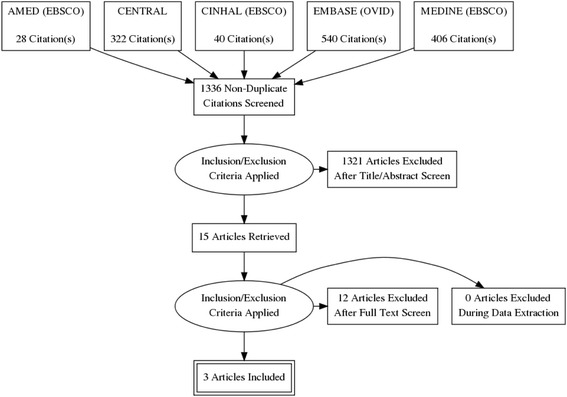
BACKGROUND: Mindfulness based stress reduction (MBSR) is increasingly being used to improve outcomes such as stress and depression in a range of long-term conditions (LTCs). While systematic reviews on MBSR have taken place for a number of conditions there remains limited information on its impact on individuals with Parkinson's disease (PD). METHODS: Medline, Central, Embase, Amed, CINAHAL were searched in March 2016. These databases were searched using a combination of MeSH subject headings where available and keywords in the title and abstracts. We also searched the reference lists of related reviews. Study quality was assessed based on questions from the Cochrane Collaboration risk of bias tool. RESULTS: Two interventions and three papers with a total of 66 participants were included. The interventions were undertaken in Belgium (n = 27) and the USA (n = 39). One study reported significantly increased grey matter density (GMD) in the brains of the MBSR group compared to the usual care group. Significant improvements were reported in one study for a number of outcomes including PD outcomes, depression, mindfulness, and quality of life indicators. Only one intervention was of reasonable quality and both interventions failed to control for potential confounders in the analysis. Adverse events and reasons for drop-outs were not reported. There was also no reporting on the costs/benefits of the intervention or how they affected health service utilisation. CONCLUSION: This systematic review found limited and inconclusive evidence of the effectiveness of MBSR for PD patients. Both of the included interventions claimed positive effects for PD patients but significant outcomes were often contradicted by other results. Further trials with larger sample sizes, control groups and longer follow-ups are needed before the evidence for MBSR in PD can be conclusively judged.
Overview
The claims and statistics of this paper haven’t been checked yet.
Free: it reads the open-access text and checks the first 5 claims that cite a source we can check. Create a free account to check every claim.
Integrity signals
Registry
Cites
Statistics
Figures
Verification
Claims the paper makes
The claims and statistics of this paper haven’t been checked yet.
Free: it reads the open-access text and checks the first 5 claims that cite a source we can check. Create a free account to check every claim.
Claims other papers make about this one
Each is checked against this paper’s own text: does it say what the citing paper says it does?
The cited source doesn’t support the claim as written.
In the citing paper
“Published systematic reviews have examined a variety of outcomes in people with PD, but have not focused on specific third-wave psychotherapies.”
From A Systematic Review of Third-Wave Therapies to Reduce Distress and Improve Wellbeing and Quality of Life in People with Parkinson's Disease. (2025) · cites this paper as McLean et al. (2017)
Checked by a reasoning model — may be wrong.
Experimental — accuracy not yet measuredThe source backs part of the claim, not all of it — or backs it for a different population, condition or comparison.
In the citing paper
“McLean et al. (2017), for example, examined the efficacy of Mindfulness-Based Stress Reduction (MBSR) and found substantial improvements in varied outcomes, including depression and quality of life.”
From A Systematic Review of Third-Wave Therapies to Reduce Distress and Improve Wellbeing and Quality of Life in People with Parkinson's Disease. (2025) · cites this paper as McLean et al. (2017)
Experimental — accuracy not yet measuredThe cited source says what the claim attributes to it.
In the citing paper
“a 2017 systematic review concluded the effects of mindfulness meditation remained inconclusive in PD patients13.”
From A randomized clinical trial of mindfulness meditation versus exercise in Parkinson’s disease during social unrest (2023) · cites this paper as [13]
The cited source says what the claim attributes to it.
In the citing paper
“However, only one of the two interventions investigated was of acceptable quality, and neither intervention appropriately accounted for possible confounding variables.”
From A Systematic Review of Third-Wave Therapies to Reduce Distress and Improve Wellbeing and Quality of Life in People with Parkinson's Disease. (2025) · cites this paper as McLean et al. (2017)
Self-check
Percentages, sums and reported differences re-computed from the paper’s own numbers.
The self-check needs the paper’s full text.
Citations
Cites
1 retracted
Gotink, R. A., Chu, P., Busschbach, J. J. V., Benson, H., Fricchione, G. L., & Hunink, M. G. M. (2015) · PLOS ONE · doi:10.1371/journal.pone.0124344 · Cited by 539 · cited 1×
“MBSR and related approaches have also been associated with improvements for a range of conditions [10].”
BackgroundRetractedPreferred Reporting Items for Systematic Reviews and Meta-Analyses: the PRISMA statement
Moher, D., Liberati, A., Tetzlaff, J., Altman, D. G., & for the PRISMA Group (2009) · BMJ · doi:10.1136/bmj.b2535 · Cited by 83,823
Preferred Reporting Items for Systematic Reviews and Meta-Analyses: The PRISMA Statement
Moher, D., Liberati, A., Tetzlaff, J., Altman, D. G., & The PRISMA Group (2009) · PLoS Medicine · doi:10.1371/journal.pmed.1000097 · Cited by 64,042 · cited 2×
“A registered protocol (PROSPERO 2016: CRD4 2016035304) guided the conduct of this review [18], which is reported in adherence to the Preferred Reporting Items for Systematic Reviews and Meta-analyses (PRISMA) Statement [19].”
MethodThe PHQ-9: Validity of a brief depression severity measure
Kroenke, K., Spitzer, R. L., & Williams, J. B. W. (2001) · Journal of General Internal Medicine · doi:10.1046/j.1525-1497.2001.016009606.x · Cited by 44,910
Preferred reporting items for systematic reviews and meta-analyses: the PRISMA Statement.
(2009) · PubMed Central · Cited by 44,859
The Cochrane Collaboration's tool for assessing risk of bias in randomised trials
Higgins, J. P. T., Altman, D. G., Gotzsche, P. C., Juni, P., Moher, D., Oxman, A. D., Savovic, J., Schulz, K. F., Weeks, L., Sterne, J. A. C., et al. (2011) · BMJ · doi:10.1136/bmj.d5928 · Cited by 33,817
A Brief Measure for Assessing Generalized Anxiety Disorder: The GAD-7
Spitzer, R. L., Kroenke, K., Williams, J. B. W., & Löwe, B. (2006) · Archives of Internal Medicine · doi:10.1001/archinte.166.10.1092 · Cited by 31,765 · cited 2×
“[23] assessed the impact on anxiety using the Generalized Anxiety Disorder-7 [31] scale but found no significant differences.”
MethodDermyshi, E., Wang, Y., Yan, C., Hong, W., Qiu, G., Gong, X., & Zhang, T. (2017) · Neonatology · doi:10.1159/000454668 · Cited by 24,451
Wang, G., Ma, R., Qiao, G., Wada, K., Aizawa, Y., & Satoh, T. (2015) · Integrative Medicine International · doi:10.1159/000368408 · Cited by 18,657
Goetz, C. G., Tilley, B. C., Shaftman, S. R., Stebbins, G. T., Fahn, S., Martinez‐Martin, P., Poewe, W., Sampaio, C., Stern, M. B., Dodel, R., et al. (2008) · Movement Disorders · doi:10.1002/mds.22340 · Cited by 7,536 · cited 6×
“They found significant change was obtained for the UPDRS motor III score (F = 4.39, p .05), demonstrating motor changes for the MBSR group (pre-M = 27.43 versus post-M = 21.93), while no significant changes could be obtained for the UC group (pre-M = 27.92 versus post-M = 29) [25].”
MethodInfluential
Research works printed but not linked: 1
- McLean G, Mercer S, Lawrence M. Mindfulness based stress reduction in Parkinson’s disease. PROSPERO 2016: CRD42016035304. PMC5433018 28506263
Cited by
Stress and mindfulness in Parkinson’s disease – a survey in 5000 patients
van der Heide, A., Speckens, A. E. M., Meinders, M. J., Rosenthal, L. S., Bloem, B. R., & Helmich, R. C. (2021) · npj Parkinson's Disease · doi:10.1038/s41531-020-00152-9 · Cited by 82
Mindfulness meditation for workplace wellness: An evidence map
Hilton, L. G., Marshall, N. J., Motala, A., Taylor, S. L., Miake-Lye, I. M., Baxi, S., Shanman, R. M., Solloway, M. R., Beroesand, J. M., & Hempel, S. (2019) · Work · doi:10.3233/wor-192922 · Cited by 77
Pontone, G. M., Dissanayaka, N. N., Apostolova, L. G., Brown, R. G., Dobkin, R. D., Dujardin, K., Friedman, J. H., Leentjens, A. F. G., Lenze, E. J., Marsh, L., et al. (2019) · npj Parkinson's Disease · doi:10.1038/s41531-019-0102-8 · Cited by 74
Jani, B. D., Simpson, R., Lawrence, M., Simpson, S., & Mercer, S. W. (2018) · Pilot and Feasibility Studies · doi:10.1186/s40814-018-0244-1 · Cited by 45
Self-citationStaying hidden: The burden of stigma in PD
McDaniels, B., Pontone, G. M., Mathur, S., & Subramanian, I. (2023) · Parkinsonism & Related Disorders · doi:10.1016/j.parkreldis.2023.105838 · Cited by 44
Kwok, J. Y. Y., Choi, E. P. H., Wong, J. Y. H., Lok, K. Y. W., Ho, M.-H., Fong, D. Y. T., Kwan, J. C. Y., Pang, S. Y. Y., & Auyeung, M. (2023) · npj Parkinson's Disease · doi:10.1038/s41531-023-00452-w · Cited by 43
Rodgers, S. H., Schütze, R., Gasson, N., Anderson, R. A., Kane, R. T., Starkstein, S., Morgan-Lowes, K., & Egan, S. J. (2019) · Behavioural and Cognitive Psychotherapy · doi:10.1017/s135246581800070x · Cited by 43
“A recent systematic review echoes this call for further research into mindfulness-based therapies for PD (McLean et al., 2017).”
BackgroundPerson-centered home-based rehabilitation for persons with Parkinson’s disease: A scoping review
Vaartio‐Rajalin, H., Rauhala, A., & Fagerström, L. (2019) · International Journal of Nursing Studies · doi:10.1016/j.ijnurstu.2019.103395 · Cited by 44
Klietz, M., Drexel, S. C., Schnur, T., Lange, F., Groh, A., Paracka, L., Greten, S., Dressler, D. W., Höglinger, G. U., & Wegner, F. (2020) · Brain Sciences · doi:10.3390/brainsci10020111 · Cited by 31
“Mindfulness interventions have already shown some positive effects in PwP [17,18].”
BackgroundKraemer, K. M., Jain, F. A., Mehta, D. H., & Fricchione, G. L. (2022) · Seminars in Neurology · doi:10.1055/s-0042-1742287 · Cited by 29
Happiness: A Novel Outcome in Parkinson Studies?
Cools, C. I., de Vries, N. M., & Bloem, B. R. (2020) · Journal of Parkinson s Disease · doi:10.3233/jpd-201999 · Cited by 25
“New non-pharmacological therapies that may potentially have a positive effect on happiness, such as mindfulness [22], dance therapy [23, 24], or music therapy [25], are currently being developed and put to the test in clinical studies.”
BackgroundHusain, F. T., Zimmerman, B., Tai, Y., Finnegan, M. K., Kay, E., Khan, F., Menard, C., & Gobin, R. L. (2019) · International Journal of Audiology · doi:10.1080/14992027.2019.1629655 · Cited by 21
“However, a recent systematic review of mindfulness-based therapies found grey matter increases in the treated group with Parkinson’s disease compared to the control group (McLean et al. 2017).”
BackgroundThe Western origins of mindfulness therapy in ancient Rome
Cavanna, A. E., Purpura, G., Riva, A., Nacinovich, R., & Seri, S. (2023) · Neurological Sciences · doi:10.1007/s10072-023-06651-w · Cited by 32
“Specifically, there is evidence for the effectiveness of mindfulness-based interventions in patients with movement disorders associated with behavioural symptoms, such as Parkinson disease [12], multiple sclerosis [13–16], epilepsy [17, 18], sleep disorders [19–22], headache [23–26], and chronic pain symptoms [27–29].”
BackgroundIntegrative Medicine and Health Therapy for Parkinson Disease
Hall, M.-F. E., & Church, F. (2020) · Topics in Geriatric Rehabilitation · doi:10.1097/tgr.0000000000000278 · Cited by 22
Mindfulness based stress reduction in people with Parkinson's disease and their care partners
Shah-Zamora, D., Allen, A. M., Rardin, L., Ivancic, M., Durham, K., Hickey, P., Cooney, J. W., Scott, B. L., & Mantri, S. (2021) · Complementary Therapies in Clinical Practice · doi:10.1016/j.ctcp.2021.101377 · Cited by 19
Lin, H., Tam, K., & Kuan, Y. (2023) · European Journal of Neurology · doi:10.1111/ene.15839 · Cited by 19
Lin, R. S. Y., Su, J. J., Abu‐Odah, H., & Bayuo, J. (2023) · International Journal of Geriatric Psychiatry · doi:10.1002/gps.5986 · Cited by 18
Buchwitz, T. M., Maier, F., Greuel, A., Thieken, F., Steidel, K., Jakobs, V., & Eggers, C. (2021) · Frontiers in Psychology · doi:10.3389/fpsyg.2021.763350 · Cited by 15
Hicks, A., Phillips, K. M., Siwik, C. J., Salmon, P. M., Litvan, I., Jablonski, M. E., Filoteo, J. V., Kayser, K., & Sephton, S. E. (2019) · Quality of Life Research · doi:10.1007/s11136-019-02217-6 · Cited by 15
“Although research with PD patients is limited [48], three studies support the use of MBIs for this population [49–52].”
ResultYi, M., Zhang, W., Zhao, B., & Wang, Z. (2024) · Clinical Gerontologist · doi:10.1080/07317115.2024.2314192 · Cited by 17
“McLean’s systematic review included only three studies, and the results indicated that the evidence for the effectiveness of MBIs in patients with PD was unreliable and uncertain (McLean et al., 2017).”
Smart, C. M., Ali, J. I., Viczko, J., & Silveira, K. (2021) · Mindfulness · doi:10.1007/s12671-021-01779-2 · Cited by 20
Re-examining the Parkinsonian Personality hypothesis: A systematic review
Cerasa, A. (2018) · Personality and Individual Differences · doi:10.1016/j.paid.2018.03.045 · Cited by 14
Nagatsu, T. (2020) · Journal of Neural Transmission · doi:10.1007/s00702-019-02111-y · Cited by 8
Approaches for treating neuropsychiatric symptoms in Parkinson’s disease: a narrative review
Rodríguez-Antigüedad, J., Olmedo‐Saura, G., Pagonabarraga, J., Martínez‐Horta, S., & Kulisevsky, J. (2025) · Therapeutic Advances in Neurological Disorders · doi:10.1177/17562864251336903 · Cited by 10
“143,144”
Giguère-Rancourt, A., Plourde, M., Racine, E., Couture, M., Langlois, M., Dupré, N., & Simard, M. (2022) · PLoS ONE · doi:10.1371/journal.pone.0263108 · Cited by 12
“Another less studied treatment in PD, the Mindfulness Based Stress Reduction program includes formal meditative exercises to develop non-judgmental attention to experiences in the present moment [24, 25].”
BackgroundResultSubramanian, I., Ricciardi, L., Schrag, A. E., Appel‐Cresswell, S., Kola, S., Domingos, J., Pickut, B. A., Dahodwala, N. A., Bocoum, A., Falup‐Pecurariu, C., et al. (2025) · Movement Disorders Clinical Practice · doi:10.1002/mdc3.70381 · Cited by 12
“84 MBSR and MBI have been shown to be feasible and effective in reducing neuropsychiatric symptoms and in improving quality of life in PD. 85 – 87 RCTs evaluating the impact of a MBI for PWP have demonstrated changes in behavioral measures 86 – 88 and structural brain changes on MRI following the…”
InfluentialLovegrove, C., Sturkenboom, I. H. W. M., Marsden, J. F., & Bannigan, K. (2023) · Journal of Parkinson s Disease · doi:10.3233/jpd-230150 · Cited by 8
“However, evidence for the effectiveness of mindfulness and cognitive behavioral therapy approaches is limited and inconclusive in people with PD [10–13].”
Finlay, K. A., Hearn, J. H., & Chater, A. (2021) · BMC Psychology · doi:10.1186/s40359-021-00628-0 · Cited by 6
“The utility of mindfulness for chronic illness management is wide-ranging: mindfulness has been shown to have positive psychological and physical health benefits for a significant number of chronic health conditions, including Spinal Cord Injury (SCI) [8], Multiple Sclerosis (MS) [9], Chronic Obstructive Pulmonary Dis…”
BackgroundLawrence, M., Davis, B., Clark, N. E., Booth, J., Donald, G., Dougall, N. J., Grealy, M., Jani, B., MacDonald, J., Mason, H., et al. (2024) · Pilot and Feasibility Studies · doi:10.1186/s40814-024-01545-w · Cited by 8
“MBSR is effective in the treatment of anxiety and depression in diverse clinical populations including multiple sclerosis and Parkinson’s disease [11, 12] and in a range of settings [13].”
BackgroundSelf-citationBuchwitz, T. M., Maier, F., Greuel, A., & Eggers, C. (2020) · Frontiers in Psychology · doi:10.3389/fpsyg.2020.00743 · Cited by 8
Kwok, J. Y. Y., Auyeung, M., Pang, S., Ho, P. W., Yu, D. S. F., Fong, D., Lin, C., Walker, R. W., Wong, S. Y. S., & Ho, R. (2023) · BMC Complementary Medicine and Therapies · doi:10.1186/s12906-023-04049-x · Cited by 11
“support MBSR practice for PD was inconclusive [26].”
BackgroundMorte, S. D., Berti, E., Lalli, C., Modugno, N., Morgante, F., Schrag, A. E., Makovac, E., & Ricciardi, L. (2024) · European Journal of Neurology · doi:10.1111/ene.16286 · Cited by 5
“Our re-sults demonstrate the feasibility of implementing this treatment in people with PD in keeping with previous studies on the potential utility of mindfulness-based therapies in this population [8, 34].”
MethodBlard, F., Erraud, J., Bonnet, M., Auzou, N., & Tison, F. (2024) · Revue Neurologique · doi:10.1016/j.neurol.2024.03.013 · Cited by 5
Hartmann-Nardin, D., Stock, S., Kalbe, E., & Folkerts, A. (2024) · Journal of Parkinson s Disease · doi:10.3233/jpd-230213 · Cited by 6
“Additionally, the included studies in previously published systematic reviews [8, 17–29] were identified via hand-search and checked for eligibility.”
BackgroundThe Role of Mindfulness in Neurorehabilitation: From the Monastery to the Clinic
Smart, C. M. (2019) · Springer eBooks · doi:10.1007/978-3-030-14895-9_34 · Cited by 8
Complementary Health Approaches for People With Parkinson Disease
Moon, S., Sarmento, C. V. M., Colgrove, Y., & Liu, W. (2020) · Archives of Physical Medicine and Rehabilitation · doi:10.1016/j.apmr.2020.03.024 · Cited by 5
“Additionally, multiple mobile applications are available to guide meditation, but there is lack of evidence for its effectiveness for PD.10,11 Benefits: Improved pain, stress, anxiety, depression, and sleep.”
BackgroundChristodoulou, D., Reeves, S., Carvalho, N. P., Stellman, J., & Gould, R. L. (2025) · Clinical Gerontologist · doi:10.1080/07317115.2025.2511957 · Cited by 4
“McLean et al. (2017), for example, examined the efficacy of Mindfulness-Based Stress Reduction (MBSR) and found substantial improvements in varied outcomes, including depression and quality of life.”
Velissaris, S. L., Davis, M., Fisher, F., Gluyas, C., & Stout, J. C. (2023) · Journal of Community Genetics · doi:10.1007/s12687-023-00651-1 · Cited by 10
“2014), Parkinson’s disease (McLean et al. 2017), and motor neurone disease (Pagnini et al.”
BackgroundPsychosocial Challenges Associated with Parkinson’s Disease
McDaniels, B. W., & Subramanian, I. (2024) · Springer eBooks · doi:10.1007/978-3-031-32046-0_47-1 · Cited by 5
Thomsen, T. H., Skovbølling, S., Möller, M., Brønden, M., Grønlund, V., Ilsfort, D., Frederiksen, J., & Biering‐Sørensen, B. (2024) · International Journal of Nursing and Health Care Research · doi:10.29011/2688-9501.101541 · Cited by 4
“Mindfulness practices have emerged as a valuable adjunct tool in chronic conditions, offering patients a holistic approach to managing their condition [36].”
BackgroundStress Management and Resiliency Training in People with Parkinson's Disease and their Care Partners
Maurer, C. W., Skinner, S., Kulikov, V. N., & Gonzalez, A. (2026) · Movement Disorders Clinical Practice · doi:10.1002/mdc3.70676 · Cited by 1
Anxiety in Parkinson’s Disease
Dissanayaka, N. N. (2021) · Cambridge University Press eBooks · doi:10.1017/9781139087469.009 · Cited by 1
Integrative Medicine in Rehabilitation
Pai, A. B., Shuart, L. V., & Drake, D. F. (2020) · Elsevier eBooks · doi:10.1016/b978-0-323-62539-5.00018-7 · Cited by 4
Mood Disorders in Parkinson’s Disease
Tsai, P., & Gopalakrishna, G. (2022) · Cambridge University Press eBooks · doi:10.1017/9781009039291.010 · Cited by 3
Betätigungsorientierte Therapieansätze für parkinsonspezifische Themen
Orellana, A. (2021) · Springer eBooks · doi:10.1007/978-3-662-62583-5_14 · Cited by 1
Evidencia empírica de las intervenciones basadas en Mindfulness en patología somática.
Ibáñez, Á., & León-Quismondo, L. (2019) · Revista de Investigación y Educación en Ciencias de la Salud (RIECS) · doi:10.37536/riecs.2019.4.s1.120
“[5], en la que se incluyen tres artículos de dos intervenciones (un ensayo controlado aleatorizado y un ensayo no aleatorizado), con un total de 66 participantes, las evidencias de que el Mindfulness puede ser útil en pacientes con enfermedad de Parkinson son limitadas.”
BackgroundTraitements non médicamenteux et neurochirurgicaux de la maladie de Parkinson
Houéto, J., & Erraud, J. (2022) · Elsevier eBooks · doi:10.1016/b978-2-294-76331-1.00024-0
Lawrence, M., Davis, B., Clark, N. E., Booth, J., Donald, G., Dougall, N. J., Grealy, M., Jani, B., MacDonald, J., Mason, H., et al. (2023) · Research Square · doi:10.21203/rs.3.rs-3396574/v1
Self-citationThomsen, T. H., Skovbølling, S. L., Møller, M. H., Brønden, M., Grønlund, V., Ilsfort, D. N., Frederiksen, J., & Biering‐Sørensen, B. (2023) · Research Square · doi:10.21203/rs.3.rs-3788602/v1
Aghayi, M. M. H., Mahmoudi, A., & Nik, S. S. H. (2023) · doi:10.61838/kman.jayps.4.9.3 · Cited by 4
Psychosocial Challenges Associated with Parkinson’s Disease
McDaniels, B. W., & Subramanian, I. (2025) · Springer eBooks · doi:10.1007/978-3-031-73363-5_47
LAWRENCE, M., Davis, B., Clark, N. E., Booth, J., Donald, G., Dougall, N. J., Grealy, M., Jani, B., MacDonald, J., Mason, H., et al. (2024) · Figshare · doi:10.6084/m9.figshare.27012285
Self-citationLAWRENCE, M., Davis, B., Clark, N. E., Booth, J., Donald, G., Dougall, N. J., Grealy, M., Jani, B., MacDonald, J., Mason, H., et al. (2024) · Figshare · doi:10.6084/m9.figshare.27012282
Self-citationLAWRENCE, M., Davis, B., Clark, N. E., Booth, J., Donald, G., Dougall, N. J., Grealy, M., Jani, B., MacDonald, J., Mason, H., et al. (2024) · Figshare · doi:10.6084/m9.figshare.27012291
Self-citationLAWRENCE, M., Davis, B., Clark, N. E., Booth, J., Donald, G., Dougall, N. J., Grealy, M., Jani, B., MacDonald, J., Mason, H., et al. (2024) · Figshare · doi:10.6084/m9.figshare.27012288
Self-citationLovegrove, C., Bannigan, K., Marsden, J. F., & Sturkenboom, I. H. W. M. (2026) · BMJ Open · doi:10.1136/bmjopen-2025-107930
Bogahawatta, P., Wijekoon, A., Harini, S., & Wettasinghe, A. H. (2026) · Neuropsychological Rehabilitation · doi:10.1080/09602011.2026.2725697
Lifestyle medicine for neuroprotection: evidence and implementation in Asian contexts
Kim, S., Chung, S. J., Yoon, S., Bloem, B. R., Postma, E., Kim, R., Fujioka, S., Nagaishi, Y., Phokaewvarangkul, O., Park, K. W., et al. (2026) · Journal of Neural Transmission · doi:10.1007/s00702-026-03294-x
Metadata
- Authors
- McLean, G., Lawrence, M., Simpson, R., & Mercer, S. W.
- Affiliations
- University of Glasgow (GB)
- Glasgow Caledonian University (GB)
- Corresponding author
- Mercer, S. W.
- Venue
- BMC Neurology
- Published
- 2017-05-15
- Volume
- 17
- Issue
- 1
- Pages
- 92-92
- ISSN
- 1471-2377 (ISSN-L)
- PMC
- PMC5433018
- OpenAlex
- W2614961045
- Cited by
- 59
- References
- 42
- Citations by year
- 2026: 4 · 2025: 4 · 2024: 11 · 2023: 11 · 2022: 4 · 2021: 7 · 2020: 6 · 2019: 9 · 2018: 2 · 2017: 1
- FWCI
- 0.76
- Type
- journal article
- Language
- en
- Open access
- gold
- doi.org
- Licence
- cc-by
- Locations
- BMC Neurology (publishedVersion, cc-by)
- Europe PMC (PubMed Central) (publishedVersion, cc-by)
- PubMed Central (publishedVersion, cc-by)
- PubMed (publishedVersion)
- ENLIGHTEN (Jurnal Bimbingan dan Konseling Islam) (acceptedVersion)
- ResearchOnline (Glasgow Caledonian University) (acceptedVersion, cc-by)
- Edinburgh Research Explorer (University of Edinburgh) (submittedVersion, cc-by)
- DOAJ (DOAJ: Directory of Open Access Journals) (submittedVersion)
- Funders
- RS McDonald Trust
- Topics
- Social Sciences › Psychology › Clinical Psychology › Mindfulness and Compassion Interventions
- Health Sciences › Medicine › Clinical Neurology › Parkinson's Disease Mechanisms and Treatments
- Health Sciences › Medicine › Oncology › Cancer survivorship and care
- Keywords
- mindfulness-based stress reduction, Parkinson's disease, depression, quality of life, gray matter density, chronic disease, mindfulness-based interventions
- MeSH terms
- Aged, Belgium, Depression, Female, Humans, Male, Parkinson Disease, Quality of Life, Stress, Psychological, United States, Mindfulness
About these checks
Registry, retraction, Cites and statistics results are computed, not judged, with one exception: a printed reference that no index lists is read once by a model before it counts as a citation error. Claims are extracted by a model and kept only when their quote appears verbatim in the text; each cited source is then checked, with a model’s help, for whether it says what the claim relies on. Those verdicts can be wrong — read the claim’s quote and the cited source before relying on one.
Statistics and arithmetic are recomputed, not judged.
Confidence bands are shown only for fields calibrated on our annotated test set. None is calibrated yet, so no band is shown.
What counts as a claim ›How we measure confidence ›How we check this ›
Are you an author, or do you see a problem with this page? Request a review
Data sources
Bibliographic data: Semantic Scholar, OpenAlex, Crossref.
Contains information from the Semantic Scholar Academic Graph Datasets, made available under the ODC Attribution License (ODC-BY 1.0).
Semantic Scholar’s data is described in: Kinney, R., et al. (2023). The Semantic Scholar Open Data Platform. arXiv:2301.10140.
