

Mindfulness-based stress reduction in Parkinson’s disease: a systematic review
Open accessThe DOI matches its Crossref record; 41 of the 42 references it cites were found in a registry or an index.
Abstract
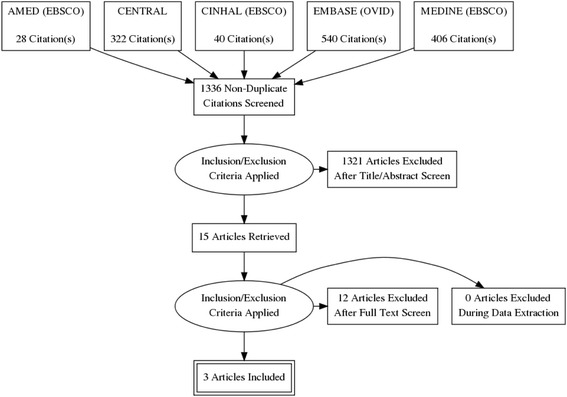
BACKGROUND: Mindfulness based stress reduction (MBSR) is increasingly being used to improve outcomes such as stress and depression in a range of long-term conditions (LTCs). While systematic reviews on MBSR have taken place for a number of conditions there remains limited information on its impact on individuals with Parkinson's disease (PD). METHODS: Medline, Central, Embase, Amed, CINAHAL were searched in March 2016. These databases were searched using a combination of MeSH subject headings where available and keywords in the title and abstracts. We also searched the reference lists of related reviews. Study quality was assessed based on questions from the Cochrane Collaboration risk of bias tool. RESULTS: Two interventions and three papers with a total of 66 participants were included. The interventions were undertaken in Belgium (n = 27) and the USA (n = 39). One study reported significantly increased grey matter density (GMD) in the brains of the MBSR group compared to the usual care group. Significant improvements were reported in one study for a number of outcomes including PD outcomes, depression, mindfulness, and quality of life indicators. Only one intervention was of reasonable quality and both interventions failed to control for potential confounders in the analysis. Adverse events and reasons for drop-outs were not reported. There was also no reporting on the costs/benefits of the intervention or how they affected health service utilisation. CONCLUSION: This systematic review found limited and inconclusive evidence of the effectiveness of MBSR for PD patients. Both of the included interventions claimed positive effects for PD patients but significant outcomes were often contradicted by other results. Further trials with larger sample sizes, control groups and longer follow-ups are needed before the evidence for MBSR in PD can be conclusively judged.
Overview
The claims and statistics of this paper haven’t been checked yet.
Free: it reads the open-access text and checks the first 5 claims that cite a source we can check. Create a free account to check every claim.
Integrity signals
Registry
Cites
Statistics
Figures
Verification
Claims the paper makes
The claims and statistics of this paper haven’t been checked yet.
Free: it reads the open-access text and checks the first 5 claims that cite a source we can check. Create a free account to check every claim.
Claims other papers make about this one
Each is checked against this paper’s own text: does it say what the citing paper says it does?
The cited source doesn’t support the claim as written.
In the citing paper
“Published systematic reviews have examined a variety of outcomes in people with PD, but have not focused on specific third-wave psychotherapies.”
From A Systematic Review of Third-Wave Therapies to Reduce Distress and Improve Wellbeing and Quality of Life in People with Parkinson's Disease. (2025) · cites this paper as McLean et al. (2017)
Checked by a reasoning model — may be wrong.
Experimental — accuracy not yet measuredThe source backs part of the claim, not all of it — or backs it for a different population, condition or comparison.
In the citing paper
“McLean et al. (2017), for example, examined the efficacy of Mindfulness-Based Stress Reduction (MBSR) and found substantial improvements in varied outcomes, including depression and quality of life.”
From A Systematic Review of Third-Wave Therapies to Reduce Distress and Improve Wellbeing and Quality of Life in People with Parkinson's Disease. (2025) · cites this paper as McLean et al. (2017)
Experimental — accuracy not yet measuredThe cited source says what the claim attributes to it.
In the citing paper
“a 2017 systematic review concluded the effects of mindfulness meditation remained inconclusive in PD patients13.”
From A randomized clinical trial of mindfulness meditation versus exercise in Parkinson’s disease during social unrest (2023) · cites this paper as [13]
The cited source says what the claim attributes to it.
In the citing paper
“However, only one of the two interventions investigated was of acceptable quality, and neither intervention appropriately accounted for possible confounding variables.”
From A Systematic Review of Third-Wave Therapies to Reduce Distress and Improve Wellbeing and Quality of Life in People with Parkinson's Disease. (2025) · cites this paper as McLean et al. (2017)
Self-check
Percentages, sums and reported differences re-computed from the paper’s own numbers.
The self-check needs the paper’s full text.
Citations
Cites
1 retracted
Gotink, R. A., Chu, P., Busschbach, J. J. V., Benson, H., Fricchione, G. L., & Hunink, M. G. M. (2015) · PLOS ONE · doi:10.1371/journal.pone.0124344 · Cited by 539 · cited 1×
“MBSR and related approaches have also been associated with improvements for a range of conditions [10].”
BackgroundRetractedPreferred Reporting Items for Systematic Reviews and Meta-Analyses: the PRISMA statement
Moher, D., Liberati, A., Tetzlaff, J., Altman, D. G., & for the PRISMA Group (2009) · BMJ · doi:10.1136/bmj.b2535 · Cited by 83,823
Preferred Reporting Items for Systematic Reviews and Meta-Analyses: The PRISMA Statement
Moher, D., Liberati, A., Tetzlaff, J., Altman, D. G., & The PRISMA Group (2009) · PLoS Medicine · doi:10.1371/journal.pmed.1000097 · Cited by 64,042 · cited 2×
“A registered protocol (PROSPERO 2016: CRD4 2016035304) guided the conduct of this review [18], which is reported in adherence to the Preferred Reporting Items for Systematic Reviews and Meta-analyses (PRISMA) Statement [19].”
MethodThe PHQ-9: Validity of a brief depression severity measure
Kroenke, K., Spitzer, R. L., & Williams, J. B. W. (2001) · Journal of General Internal Medicine · doi:10.1046/j.1525-1497.2001.016009606.x · Cited by 44,910
Preferred reporting items for systematic reviews and meta-analyses: the PRISMA Statement.
(2009) · PubMed Central · Cited by 44,859
The Cochrane Collaboration's tool for assessing risk of bias in randomised trials
Higgins, J. P. T., Altman, D. G., Gotzsche, P. C., Juni, P., Moher, D., Oxman, A. D., Savovic, J., Schulz, K. F., Weeks, L., Sterne, J. A. C., et al. (2011) · BMJ · doi:10.1136/bmj.d5928 · Cited by 33,817
A Brief Measure for Assessing Generalized Anxiety Disorder: The GAD-7
Spitzer, R. L., Kroenke, K., Williams, J. B. W., & Löwe, B. (2006) · Archives of Internal Medicine · doi:10.1001/archinte.166.10.1092 · Cited by 31,765 · cited 2×
“[23] assessed the impact on anxiety using the Generalized Anxiety Disorder-7 [31] scale but found no significant differences.”
MethodDermyshi, E., Wang, Y., Yan, C., Hong, W., Qiu, G., Gong, X., & Zhang, T. (2017) · Neonatology · doi:10.1159/000454668 · Cited by 24,451
Wang, G., Ma, R., Qiao, G., Wada, K., Aizawa, Y., & Satoh, T. (2015) · Integrative Medicine International · doi:10.1159/000368408 · Cited by 18,657
Goetz, C. G., Tilley, B. C., Shaftman, S. R., Stebbins, G. T., Fahn, S., Martinez‐Martin, P., Poewe, W., Sampaio, C., Stern, M. B., Dodel, R., et al. (2008) · Movement Disorders · doi:10.1002/mds.22340 · Cited by 7,536 · cited 6×
“They found significant change was obtained for the UPDRS motor III score (F = 4.39, p .05), demonstrating motor changes for the MBSR group (pre-M = 27.43 versus post-M = 21.93), while no significant changes could be obtained for the UC group (pre-M = 27.92 versus post-M = 29) [25].”
MethodInfluentialUsing Self-Report Assessment Methods to Explore Facets of Mindfulness
Baer, R. A., Smith, G. T., Hopkins, J., Krietemeyer, J., & Toney, L. (2006) · Assessment · doi:10.1177/1073191105283504 · Cited by 7,511 · cited 2×
“Both Cash [23] and Pickut et al. [25] used Five Facet Mindfulness Questionnaire [34] (FFMQ) of 39 items; five domains of mindfulness “skills” are assessed: observing, describing, acting with awareness, non- judging of inner experience, and non-reactivity to inner experience.”
MethodParkinson's disease: clinical features and diagnosis
Jankovic, J. (2008) · Journal of Neurology, Neurosurgery & Psychiatry · doi:10.1136/jnnp.2007.131045 · Cited by 5,720 · cited 1×
“Parkinson’s disease (PD) is a chronic neurodegenerative disease generally conceptualised as affecting motor function [1].”
BackgroundAdams, J. L., Dinesh, K., Xiong, M., Tarolli, C. G., Sharma, S., Sheth, N., Aranyosi, A. J., Zhu, W., Goldenthal, S., Biglan, K. M., et al. (2017) · Digital Biomarkers · doi:10.1159/000479018 · Cited by 3,171
The well-built clinical question: A key to evidence-based decisions
(1995) · ACP Journal Club · doi:10.7326/acpjc-1995-123-3-a12 · Cited by 2,931 · cited 1×
“SPIO is an adaptation of the PICO (Population, Interventions, Comparison, Outcomes) framework [20] https://library.”
MethodThe clinical use of mindfulness meditation for the self-regulation of chronic pain
Kabat-Zinn, J., Lipworth, L., & Burney, R. (1985) · Journal of Behavioral Medicine · doi:10.1007/bf00845519 · Cited by 1,745 · cited 1×
“MBSR was first conceptualized and used by Jon Kabat-Zinn [8] and was developed as a complementary intervention in a hospital setting to serve as a referral service to physicians and other health care providers for patients with chronic pain or multiple chronic conditions who were not responding sufficiently to standar…”
MethodJENKINSON, C., FITZPATRICK, R., PETO, V., GREENHALL, R., & HYMAN, N. (1997) · Age and Ageing · doi:10.1093/ageing/26.5.353 · Cited by 1,321 · cited 6×
“The Parkinson’s disease questionnaire (PDQ-39): development and validation of a Parkinson’s disease summary index score.”
MethodInfluentialReliability, validity, and clinical correlates of apathy in Parkinson's disease
(1992) · The Journal of Neuropsychiatry and Clinical Neurosciences · doi:10.1176/jnp.4.2.134 · Cited by 1,185 · cited 1×
“[23] used the Apathy scale [33] to measure changes in apathy but found no significant changes in levels.”
MethodVeehof, M. M., Oskam, M.-J., Schreurs, K. M. G., & Bohlmeijer, E. T. (2011) · PAIN · doi:10.1016/j.pain.2010.11.002 · Cited by 792
Moher, D., Pham, B., Lawson, M., & Klassen, T. (2003) · Health Technology Assessment · doi:10.3310/hta7410 · Cited by 500 · cited 1×
“Finally, we only considered studies published in peer-reviewed journals in English, as evidence suggests that limiting studies in this way does not introduce significant bias but is associated with considerable resource savings [21].”
BackgroundKabat-Zinn, J., Lipworth, L., Burncy, R., & Sellers, W. (1986) · The Clinical Journal of Pain · doi:10.1097/00002508-198602030-00004 · Cited by 483 · cited 1×
“MBSR was first conceptualized and used by Jon Kabat-Zinn [8] and was developed as a complementary intervention in a hospital setting to serve as a referral service to physicians and other health care providers for patients with chronic pain or multiple chronic conditions who were not responding sufficiently to standar…”
MethodPiet, J., Würtzen, H., & Zachariae, R. (2012) · Journal of Consulting and Clinical Psychology · doi:10.1037/a0028329 · Cited by 436 · cited 1×
“Reviews have demonstrated improvements in symptoms amongst people with cancer [11, 12] pain [13, 14] cardiovascular disease [15], stroke [16] and * Correspondence: Stewart.”
BackgroundChaudhuri, K. R., Prieto‐Jurcynska, C., Naidu, Y., Mitra, T., Frades‐Payo, B., Tluk, S., Ruessmann, A., Odin, P., Macphee, G., Stocchi, F., et al. (2010) · Movement Disorders · doi:10.1002/mds.22868 · Cited by 431
Abbott, R. A., Whear, R., Rodgers, L. R., Bethel, A., Thompson Coon, J., Kuyken, W., Stein, K., & Dickens, C. (2014) · Journal of Psychosomatic Research · doi:10.1016/j.jpsychores.2014.02.012 · Cited by 313 · cited 1×
“Reviews have demonstrated improvements in symptoms amongst people with cancer [11, 12] pain [13, 14] cardiovascular disease [15], stroke [16] and * Correspondence: Stewart.”
BackgroundMindfulness‐Based Stress Reduction as supportive therapy in cancer care: systematic review
Smith, J. E., Richardson, J., Hoffman, C., & Pilkington, K. (2005) · Journal of Advanced Nursing · doi:10.1111/j.1365-2648.2005.03592.x · Cited by 273 · cited 1×
“Reviews have demonstrated improvements in symptoms amongst people with cancer [11, 12] pain [13, 14] cardiovascular disease [15], stroke [16] and * Correspondence: Stewart.”
BackgroundStress, depression and Parkinson's disease
Hemmerle, A. M., Herman, J. P., & Seroogy, K. B. (2012) · Experimental Neurology · doi:10.1016/j.expneurol.2011.09.035 · Cited by 225 · cited 1×
“Depression and anxiety can also exacerbate the symptoms of PD [2, 5].”
BackgroundMindfulness based interventions in multiple sclerosis–a systematic review
Simpson, R., Booth, J., Lawrence, M., Byrne, S., Mair, F., & Mercer, S. (2014) · BMC Neurology · doi:10.1186/1471-2377-14-15 · Cited by 195
Self-citationThe placebo effect in neurological disorders
de la Fuente-Fernández, R., Schulzer, M., & Stoessl, A. J. (2002) · The Lancet Neurology · doi:10.1016/s1474-4422(02)00038-8 · Cited by 187 · cited 2×
“Two of the studies assessed the impact on depression using two different measures [23, 28].”
BackgroundMindfulness based intervention in Parkinson's disease leads to structural brain changes on MRI
Pickut, B. A., Van Hecke, W., Kerckhofs, E., Mariën, P., Vanneste, S., Cras, P., & Parizel, P. M. (2013) · Clinical Neurology and Neurosurgery · doi:10.1016/j.clineuro.2013.10.002 · Cited by 174
Parkinson's disease and depression: psychometric properties of the Beck Depression Inventory.
Levin, B. E., Llabre, M. M., & Weiner, W. J. (1988) · Journal of Neurology, Neurosurgery & Psychiatry · doi:10.1136/jnnp.51.11.1401 · Cited by 167 · cited 2×
“However, Pickut et al. [25] used the Beck Depression Inventory (BDI) [30] and found no significant difference.”
Method(2009) · PubMed · Cited by 160
A qualitative analysis of mindfulness‐based cognitive therapy (MBCT) in Parkinson's disease
Fitzpatrick, L., Simpson, J., & Smith, A. (2010) · Psychology and Psychotherapy: Theory, Research and Practice · doi:10.1348/147608309x471514 · Cited by 136
Lawrence, M., Booth, J., Mercer, S., & Crawford, E. (2013) · International Journal of Stroke · doi:10.1111/ijs.12135 · Cited by 132 · cited 1×
“Reviews have demonstrated improvements in symptoms amongst people with cancer [11, 12] pain [13, 14] cardiovascular disease [15], stroke [16] and * Correspondence: Stewart.”
BackgroundSelf-citationNonmotor Symptoms in Parkinson’s Disease in 2012: Relevant Clinical Aspects
Bonnet, A. M., Jutras, M. F., Czernecki, V., Corvol, J. C., & Vidailhet, M. (2012) · Parkinson's Disease · doi:10.1155/2012/198316 · Cited by 119 · cited 2×
“Depression and anxiety can also exacerbate the symptoms of PD [2, 5].”
BackgroundAdvocat, J., Enticott, J., Vandenberg, B., Hassed, C., Hester, J., & Russell, G. (2016) · BMC Neurology · doi:10.1186/s12883-016-0685-1 · Cited by 94 · cited 1×
“Since conducting our review a recent additional small exploratory RCT been published on an intervention that combined mindfulness with lifestyle education [37].”
BackgroundCash, T. V., Ekouevi, V. S., Kilbourn, C., & Lageman, S. K. (2016) · Mindfulness · doi:10.1007/s12671-015-0452-1 · Cited by 86
Mindfulness Training among Individuals with Parkinson’s Disease: Neurobehavioral Effects
Pickut, B., Vanneste, S., Hirsch, M. A., Van Hecke, W., Kerckhofs, E., Mariën, P., Parizel, P. M., Crosiers, D., & Cras, P. (2015) · Parkinson's Disease · doi:10.1155/2015/816404 · Cited by 80
Epidemiology of complementary and alternative medicine use in patients with Parkinson’s disease
Wang, Y., Xie, C., Wang, W., Lü, L., Fu, D.-L., Wang, X., & Zheng, G. (2013) · Journal of Clinical Neuroscience · doi:10.1016/j.jocn.2012.10.022 · Cited by 70 · cited 1×
“People with PD have been found to be open to nonpharmacological treatment interventions [6, 7].”
BackgroundOehlberg, K., Barg, F. K., Brown, G. K., Taraborelli, D., Stern, M. B., & Weintraub, D. (2008) · Journal of Geriatric Psychiatry and Neurology · doi:10.1177/0891988708316862 · Cited by 53 · cited 1×
“People with PD have been found to be open to nonpharmacological treatment interventions [6, 7].”
BackgroundSimpson, J., Lekwuwa, G., & Crawford, T. (2014) · Disability and Rehabilitation · doi:10.3109/09638288.2014.883442 · Cited by 52 · cited 1×
“These NMS have been associated with reduced quality of life in PD [4].”
BackgroundThe Effects of Meditation-Based Interventions on the Treatment of Fibromyalgia
Kozasa, E. H., Tanaka, L. H., Monson, C., Little, S. W., Leão, F. C., & Peres, M. F. P. (2012) · Current Pain and Headache Reports · doi:10.1007/s11916-012-0285-8 · Cited by 46 · cited 1×
“Reviews have demonstrated improvements in symptoms amongst people with cancer [11, 12] pain [13, 14] cardiovascular disease [15], stroke [16] and * Correspondence: Stewart.”
BackgroundThe assessment of depression in Parkinson’s disease
Koerts, J., Leenders, K. L., Koning, M., Bouma, A., & Beilen, M. V. (2008) · European Journal of Neurology · doi:10.1111/j.1468-1331.2008.02101.x · Cited by 26 · cited 1×
“However, those with PD often face additional ‘non-motor symptoms’ (NMS), such as mental health comorbidities including depression and anxiety [2, 3].”
Background
Research works printed but not linked: 1
- McLean G, Mercer S, Lawrence M. Mindfulness based stress reduction in Parkinson’s disease. PROSPERO 2016: CRD42016035304. PMC5433018 28506263
Cited by
Stress and mindfulness in Parkinson’s disease – a survey in 5000 patients
van der Heide, A., Speckens, A. E. M., Meinders, M. J., Rosenthal, L. S., Bloem, B. R., & Helmich, R. C. (2021) · npj Parkinson's Disease · doi:10.1038/s41531-020-00152-9 · Cited by 82
Mindfulness meditation for workplace wellness: An evidence map
Hilton, L. G., Marshall, N. J., Motala, A., Taylor, S. L., Miake-Lye, I. M., Baxi, S., Shanman, R. M., Solloway, M. R., Beroesand, J. M., & Hempel, S. (2019) · Work · doi:10.3233/wor-192922 · Cited by 77
Pontone, G. M., Dissanayaka, N. N., Apostolova, L. G., Brown, R. G., Dobkin, R. D., Dujardin, K., Friedman, J. H., Leentjens, A. F. G., Lenze, E. J., Marsh, L., et al. (2019) · npj Parkinson's Disease · doi:10.1038/s41531-019-0102-8 · Cited by 74
Jani, B. D., Simpson, R., Lawrence, M., Simpson, S., & Mercer, S. W. (2018) · Pilot and Feasibility Studies · doi:10.1186/s40814-018-0244-1 · Cited by 45
Self-citationStaying hidden: The burden of stigma in PD
McDaniels, B., Pontone, G. M., Mathur, S., & Subramanian, I. (2023) · Parkinsonism & Related Disorders · doi:10.1016/j.parkreldis.2023.105838 · Cited by 44
Metadata
- Authors
- McLean, G., Lawrence, M., Simpson, R., & Mercer, S. W.
- Affiliations
- University of Glasgow (GB)
- Glasgow Caledonian University (GB)
- Corresponding author
- Mercer, S. W.
- Venue
- BMC Neurology
- Published
- 2017-05-15
- Volume
- 17
- Issue
- 1
- Pages
- 92-92
- ISSN
- 1471-2377 (ISSN-L)
- PMC
- PMC5433018
- OpenAlex
- W2614961045
- Cited by
- 59
- References
- 42
- Citations by year
- 2026: 4 · 2025: 4 · 2024: 11 · 2023: 11 · 2022: 4 · 2021: 7 · 2020: 6 · 2019: 9 · 2018: 2 · 2017: 1
- FWCI
- 0.76
- Type
- journal article
- Language
- en
- Open access
- gold
- doi.org
- Licence
- cc-by
- Locations
- BMC Neurology (publishedVersion, cc-by)
- Europe PMC (PubMed Central) (publishedVersion, cc-by)
- PubMed Central (publishedVersion, cc-by)
- PubMed (publishedVersion)
- ENLIGHTEN (Jurnal Bimbingan dan Konseling Islam) (acceptedVersion)
- ResearchOnline (Glasgow Caledonian University) (acceptedVersion, cc-by)
- Edinburgh Research Explorer (University of Edinburgh) (submittedVersion, cc-by)
- DOAJ (DOAJ: Directory of Open Access Journals) (submittedVersion)
- Funders
- RS McDonald Trust
- Topics
- Social Sciences › Psychology › Clinical Psychology › Mindfulness and Compassion Interventions
- Health Sciences › Medicine › Clinical Neurology › Parkinson's Disease Mechanisms and Treatments
- Health Sciences › Medicine › Oncology › Cancer survivorship and care
- Keywords
- mindfulness-based stress reduction, Parkinson's disease, depression, quality of life, gray matter density, chronic disease, mindfulness-based interventions
- MeSH terms
- Aged, Belgium, Depression, Female, Humans, Male, Parkinson Disease, Quality of Life, Stress, Psychological, United States, Mindfulness
About these checks
Registry, retraction, Cites and statistics results are computed, not judged, with one exception: a printed reference that no index lists is read once by a model before it counts as a citation error. Claims are extracted by a model and kept only when their quote appears verbatim in the text; each cited source is then checked, with a model’s help, for whether it says what the claim relies on. Those verdicts can be wrong — read the claim’s quote and the cited source before relying on one.
Statistics and arithmetic are recomputed, not judged.
Confidence bands are shown only for fields calibrated on our annotated test set. None is calibrated yet, so no band is shown.
What counts as a claim ›How we measure confidence ›How we check this ›
Are you an author, or do you see a problem with this page? Request a review
Data sources
Bibliographic data: Semantic Scholar, OpenAlex, Crossref.
Contains information from the Semantic Scholar Academic Graph Datasets, made available under the ODC Attribution License (ODC-BY 1.0).
Semantic Scholar’s data is described in: Kinney, R., et al. (2023). The Semantic Scholar Open Data Platform. arXiv:2301.10140.
