

Mindfulness-based stress reduction for people with multiple sclerosis – a feasibility randomised controlled trial
Open accessThe DOI matches its Crossref record; 49 of the 49 references it cites were found in a registry or an index.
Abstract
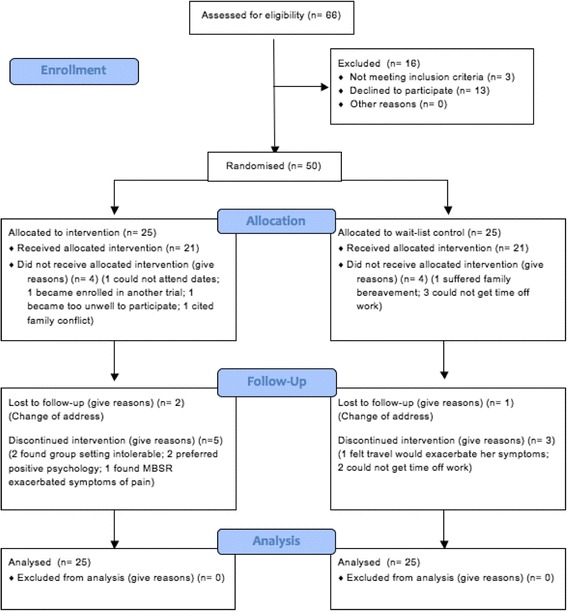
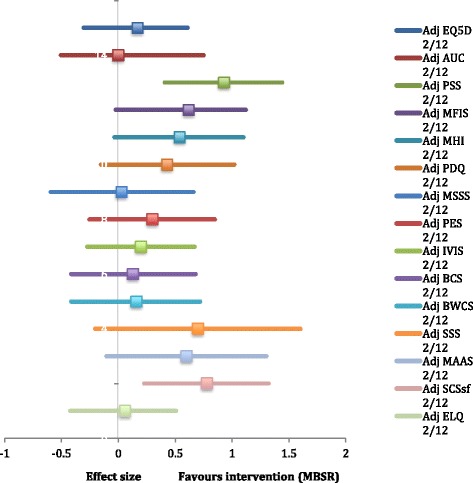
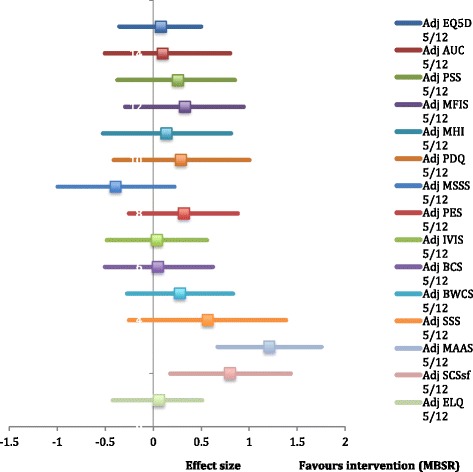
BACKGROUND: Multiple sclerosis (MS) is a stressful condition. Mental health comorbidity is common. Stress can increase the risk of depression, reduce quality of life (QOL), and possibly exacerbate disease activity in MS. Mindfulness-Based Stress Reduction (MBSR) may help, but has been little studied in MS, particularly among more disabled individuals. METHODS: The objective of this study was to test the feasibility and likely effectiveness of a standard MBSR course for people with MS. Participant eligibility included: age > 18, any type of MS, an Expanded Disability Status Scale (EDSS) </= 7.0. Participants received either MBSR or wait-list control. Outcome measures were collected at baseline, post-intervention, and three-months later. Primary outcomes were perceived stress and QOL. Secondary outcomes were common MS symptoms, mindfulness, and self-compassion. RESULTS: Fifty participants were recruited and randomised (25 per group). Trial retention and outcome measure completion rates were 90% at post-intervention, and 88% at 3 months. Sixty percent of participants completed the course. Immediately post-MBSR, perceived stress improved with a large effect size (ES 0.93; p < 0.01), compared to very small beneficial effects on QOL (ES 0.17; p = 0.48). Depression (ES 1.35; p < 0.05), positive affect (ES 0.87; p = 0.13), anxiety (ES 0.85; p = 0.05), and self-compassion (ES 0.80; p < 0.01) also improved with large effect sizes. At three-months post-MBSR (study endpoint) improvements in perceived stress were diminished to a small effect size (ES 0.26; p = 0.39), were negligible for QOL (ES 0.08; p = 0.71), but were large for mindfulness (ES 1.13; p < 0.001), positive affect (ES 0.90; p = 0.54), self-compassion (ES 0.83; p < 0.05), anxiety (ES 0.82; p = 0.15), and prospective memory (ES 0.81; p < 0.05). CONCLUSIONS: Recruitment, retention, and data collection demonstrate that a RCT of MBSR is feasible for people with MS. Trends towards improved outcomes suggest that a larger definitive RCT may be warranted. However, optimisation changes may be required to render more stable the beneficial treatment effects on stress and depression. TRIAL REGISTRATION: ClinicalTrials.gov Identifier NCT02136485 ; trial registered 1st May 2014.
Overview
The claims and statistics of this paper haven’t been checked yet.
Free: it reads the open-access text and checks the first 5 claims that cite a source we can check. Create a free account to check every claim.
Integrity signals
Registry
Cites
Statistics
Figures
Verification
Claims the paper makes
The claims and statistics of this paper haven’t been checked yet.
Free: it reads the open-access text and checks the first 5 claims that cite a source we can check. Create a free account to check every claim.
Claims other papers make about this one
Each is checked against this paper’s own text: does it say what the citing paper says it does?
The source backs part of the claim, not all of it — or backs it for a different population, condition or comparison.
In the citing paper
“mindfulness has been shown to have positive psychological and physical health benefits for a significant number of chronic health conditions, including Spinal Cord Injury (SCI) [8], Multiple Sclerosis (MS) [9], Chronic Obstructive Pulmonary Disease [10], Parkinson’s Disease [11], stroke and traumatic brain injury [12].”
From Grieving a disrupted biography: an interpretative phenomenological analysis exploring barriers to the use of mindfulness after neurological injury or impairment (2021) · cites this paper as [9]
Experimental — accuracy not yet measuredThe source backs part of the claim, not all of it — or backs it for a different population, condition or comparison.
In the citing paper
“One study109 only produced a small, insignificant increase after treatment and at the 3-month follow-up.”
From Quality of life in adults with multiple sclerosis: A systematic review (2020) · cites this paper as [109]
Experimental — accuracy not yet measuredThe cited source says what the claim attributes to it.
In the citing paper
“These psychological barriers are held in tension with the clear research base suggesting that mindfulness may enhance variables associated with quality of life, from reduced stress [9], fatigue [3], depression and anxiety [8], to enhanced resilience [23] and self-compassion [24].”
In the citing paper
“Of the three studies on mindfulness-based stress reduction programmes, two showed a significant increase in QoL after treatment.107–109”
From Quality of life in adults with multiple sclerosis: A systematic review (2020) · cites this paper as [109]
In the citing paper
“A variety of mindfulness-based approaches107–109 and a community-based intervention were directed at stress reduction.110 Three of the four studies showed some kind of improvement in QoL, including the only study with a control group.”
From Quality of life in adults with multiple sclerosis: A systematic review (2020) · cites this paper as [109]
Self-check
Percentages, sums and reported differences re-computed from the paper’s own numbers.
The self-check needs the paper’s full text.
Citations
Cites
A Global Measure of Perceived Stress
Cohen, S., Kamarck, T., & Mermelstein, R. (1983) · Journal of Health and Social Behavior · doi:10.2307/2136404 · Cited by 32,807 · cited 6×
“PSS – Perceived stress scale adjusted for age/sex/SES/meditation/yoga.”
BackgroundInfluentialRating neurologic impairment in multiple sclerosis: An expanded disability status scale (EDSS)
Kurtzke, J. F. (1983) · Neurology · doi:10.1212/wnl.33.11.1444 · Cited by 15,011
The benefits of being present: Mindfulness and its role in psychological well-being
Brown, K. W., & Ryan, R. M. (2003) · Journal of Personality and Social Psychology · doi:10.1037/0022-3514.84.4.822 · Cited by 13,448 · cited 2×
“Assess items measuring the putative processes of mindfulness: a. Mindfulness (Mindful Attention Awareness Scale – MAAS) [33]. b. Self-compassion (Self-Compassion Scale - short form – SCS-sf ) [34].”
BackgroundKabat-Zinn, J. (1982) · General Hospital Psychiatry · doi:10.1016/0163-8343(82)90026-3 · Cited by 4,255 · cited 1×
“Mindfulness-Based Stress Reduction (MBSR) was the original model for MBIs, first used for people with chronic pain [17].”
Method(2005) · Medical Entomology and Zoology · Cited by 3,197
Hölzel, B. K., Lazar, S. W., Gard, T., Schuman-Olivier, Z., Vago, D. R., & Ott, U. (2011) · Perspectives on Psychological Science · doi:10.1177/1745691611419671 · Cited by 3,024
Construction and factorial validation of a short form of the Self-Compassion Scale
Raes, F., Pommier, E., Neff, K. D., & Van Gucht, D. (2011) · Clinical Psychology & Psychotherapy · doi:10.1002/cpp.702 · Cited by 2,997
The Neuroscience of Mindfulness Meditation
Tang, Y.-Y., Hölzel, B. K., & Posner, M. I. (2015) · Nature reviews. Neuroscience · doi:10.1038/nrn3916 · Cited by 2,889
Bellg, A. J., Treatment Fidelity Workgroup of the NIH Behavior Change Consortium, Borrelli, B., Resnick, B., Hecht, J., Minicucci, D. S., Ory, M., Ogedegbe, G., Orwig, D., Ernst, D., et al. (2004) · Health Psychology · doi:10.1037/0278-6133.23.5.443 · Cited by 2,620 · cited 1×
“Fidelity assessment was informed by the National Institutes of Health guidance for behavioural interventions [29] (Table 2).”
MethodMeditation Programs for Psychological Stress and Well-being: A Systematic Review and Meta-analysis
Goyal, M., Singh, S., Sibinga, E. M. S., Gould, N. F., Rowland-Seymour, A., Sharma, R., Berger, Z., Sleicher, D., Maron, D. D., Shihab, H. M., et al. (2014) · JAMA Internal Medicine · doi:10.1001/jamainternmed.2013.13018 · Cited by 2,380
Research works printed but not linked: 1
- Ritvo P MSQLI—Multiple Sclerosis Quality of Life Inventory 1997 New York National MS Society
Cited by
Quality of life in adults with multiple sclerosis: A systematic review
Gil-González, I., Martín-Rodríguez, A., Conrad, R., & Pérez-San-Gregorio, M. Á. (2020) · BMJ Open · doi:10.1136/bmjopen-2020-041249 · Cited by 263
“Due to the vast number of topics and limited resources, our search was restricted to a 5-year period through January 2019.”
Choe, E. Y., Jorgensen, A., & Sheffield, D. (2020) · Landscape and Urban Planning · doi:10.1016/j.landurbplan.2020.103886 · Cited by 121
Kılıç, A., Hudson, J., McCracken, L. M., Ruparelia, R., Fawson, S., & Hughes, L. D. (2021) · Behavior Therapy · doi:10.1016/j.beth.2020.08.001 · Cited by 98
Simpson, R., Simpson, S., Ramparsad, N., Lawrence, M., Booth, J., & Mercer, S. W. (2019) · Journal of Neurology, Neurosurgery & Psychiatry · doi:10.1136/jnnp-2018-320165 · Cited by 86
“While all MS phenotypes featured among the included studies, only two evaluated MBI effects on specific phenotypes,23 31 limiting analysis to pooled data, meaning no recommendations can be made for people with a particular type of MS. Participant SES was poorly covered; important because there is an established link b…”
BackgroundInfluentialSelf-citationHarrison, A. M., Safari, R., Mercer, T. H., Picariello, F., van der Linden, M. L., White, C. M., Moss-Morris, R. E., & Norton, S. (2021) · Multiple Sclerosis Journal · doi:10.1177/1352458521996002 · Cited by 104
Ghielen, I., Rutten, S., Boeschoten, R. E., Houniet-de Gier, M., van Wegen, E. E. H., van den Heuvel, O. A., & Cuijpers, P. (2019) · Journal of Psychosomatic Research · doi:10.1016/j.jpsychores.2019.05.001 · Cited by 74
“Nine studies examined a CBT-based intervention [31,33–37,39,41,42] and three studies investigated an MBT [32,38,40].”
BackgroundInfluentialPositive psychological interventions for neurological disorders: A systematic review
Lai, S.-T., Lim, K. S., Low, W. Y., & Tang, V. Y. H. (2018) · The Clinical Neuropsychologist · doi:10.1080/13854046.2018.1489562 · Cited by 82
“(Bahrani et al., 2017; Bedard et al., 2013; Bédard et al., 2003; Cash et al., 2016; Grossman et al., 2010; Joo et al., 2010; Paller et al., 2015; Simpson et al., 2017; Tang et al., 2015; Thompson et al., 2015, 2010) and symptomatic related disability in 9/12 (75”
BackgroundInfluentialWahls, T. L., Chenard, C. A., & Snetselaar, L. (2019) · Nutrients · doi:10.3390/nu11020352 · Cited by 61
Simpson, R., Simpson, S., Ramparsad, N., Lawrence, M., Booth, J., & Mercer, S. W. (2020) · Multiple Sclerosis and Related Disorders · doi:10.1016/j.msard.2019.101493 · Cited by 45
Self-citationSenders, A., Hanes, D., Bourdette, D., Carson, K., Marshall, L. M., & Shinto, L. (2019) · Multiple Sclerosis Journal · doi:10.1177/1352458518786650 · Cited by 41
Third wave cognitive behavioural therapies for people with multiple sclerosis: a scoping review
Zarotti, N., Eccles, F., Broyd, A., Longinotti, C., Mobley, A., & Simpson, J. (2023) · Disability and Rehabilitation · doi:10.1080/09638288.2022.2069292 · Cited by 40
“Fatigue Pain Resilience [94] MBSR Secondary qualitative analysis of Simpson et al. (2017) I: 23 RRMS N/A Good level of acceptability for people with MS. PPMS Optimisation needed for some components to avoid causing discomfort (e.g., mindful movement).”
MethodMistretta, E. G., & Davis, M. C. (2021) · Mindfulness · doi:10.1007/s12671-021-01766-7 · Cited by 49
“One pilot RCT of MBSR for people with multiple sclerosis found a large between-person effect on self-compassion compared to a waitlist control condition at post-intervention ( d = 0.80) (Simpson et al., 2017).”
InfluentialCognitive impairment in multiple sclerosis: from phenomenology to neurobiological mechanisms
Jellinger, K. A. (2024) · Journal of Neural Transmission · doi:10.1007/s00702-024-02786-y · Cited by 32
Simpson, R., Simpson, S., Wasilewski, M., Mercer, S., & Lawrence, M. (2022) · Disability and Rehabilitation · doi:10.1080/09638288.2021.1964622 · Cited by 30
Self-citationTaylor, P., Dorstyn, D., & Prior, E. (2019) · Journal of Health Psychology · doi:10.1177/1359105319860185 · Cited by 35
“An overall trend toward improvement on stress, depression, and anxiety measures was reported by four studies, with statistically significant and very large effects associated with two MBSR programs at 1-month (Kolahkaj and Zargar, 2015) and 3-month follow-up (Sanaeinasab et al., 2017).”
BackgroundMethodInfluentialCarletto, S., Cavalera, C., Sadowski, I., Rovaris, M., Borghi, M., Khoury, B., Ostacoli, L., & Pagnini, F. (2020) · Psychosomatic Medicine · doi:10.1097/psy.0000000000000819 · Cited by 29
Han, A. (2021) · Archives of Physical Medicine and Rehabilitation · doi:10.1016/j.apmr.2021.03.011 · Cited by 29
Nazari, N., Sadeghi, M., Ghadampour, E., & Mirzaeefar, D. (2020) · BMC Psychology · doi:10.1186/s40359-020-00480-8 · Cited by 29
Simpson, R., Posa, S., Langer, L. K., Bruno, T. R., Simpson, S., Lawrence, M., Booth, J., Mercer, S. W., Feinstein, A., & Bayley, M. T. (2022) · Journal of Neurology · doi:10.1007/s00415-022-11451-x · Cited by 40
“Adverse events In one study, a participant undertaking MBSR reported an increase in neuropathic pain following the ‘raisin exercise’— an introductory MBI exercise, which involves exploring sensory experiences associated with seeing, touching, and tasting a raisin using mindful awareness [51].”
BackgroundMethodInfluentialSelf-citationHan, A. (2022) · Psychology, Health & Medicine · doi:10.1080/13548506.2021.1894345 · Cited by 28
Russell, R., Black, L. J., Pham, N. M., & Begley, A. M. (2020) · Multiple Sclerosis and Related Disorders · doi:10.1016/j.msard.2020.102171 · Cited by 27
Cara, M. D., Grezzo, D., Palmeri, R., Buono, V. L., Cartella, E., Micchìa, K., Formica, C., Rifici, C., Sessa, E., D’Aleo, G., et al. (2021) · Neurological Sciences · doi:10.1007/s10072-021-05686-1 · Cited by 32
Hadoush, H., Alawneh, A., Kassab, M. I., Al-Wardat, M. S., & Al-Jarrah, M. D. (2022) · Neurorehabilitation · doi:10.3233/nre-210328 · Cited by 30
Simpson, R., Simpson, S., Wood, K., Mercer, S. W., & Mair, F. S. (2019) · Chronic Illness · doi:10.1177/1742395318769354 · Cited by 23
Self-citationDunne, J., Chih, H. J., Begley, A., Daly, A., Gerlach, R., Schütze, R., Castell, E., Byrne, J., & Black, L. J. (2021) · Multiple Sclerosis and Related Disorders · doi:10.1016/j.msard.2020.102728 · Cited by 23
Sauder, T., Hansen, S., Bauswein, C., Müller, R., Jaruszowic, S., Keune, J., Schenk, T., Oschmann, P., & Keune, P. M. (2021) · BMC Neurology · doi:10.1186/s12883-021-02390-7 · Cited by 22
“In recent studies, where fatigue was examined in relation to mindfulness training [26, 27], the authors used a different self-report measure than in the current study to quantify fatigue-related symptoms (Modified Fatigue Impact Scale, MFIS [56]).”
ResultBehavioral Interventions in Multiple Sclerosis.
Turner, A. P., & Knowles, L. M. (2020) · PubMed Central · Cited by 28
The emotional disorders associated with multiple sclerosis
Raimo, S., Santangelo, G., & Trojano, L. (2021) · Handbook of clinical neurology · doi:10.1016/b978-0-12-822290-4.00009-8 · Cited by 24
Mohseni, E., & Moghaddasi, S. M. (2022) · Computational Intelligence and Neuroscience · doi:10.1155/2022/5430528 · Cited by 18
“$ere may be complete disappearance of disease symptoms between relapses; however, permanent neurological problems persist, particularly as the disease advances [6].”
BackgroundInto the Moment: Does Mindfulness Affect Biological Pathways in Multiple Sclerosis?
Willekens, B., Perrotta, G., Cras, P., & Cools, N. (2018) · Frontiers in Behavioral Neuroscience · doi:10.3389/fnbeh.2018.00103 · Cited by 16
“…even telemedicine, Skype, and/or online training (Grossman et al., 2010; Senders et al., 2014; Bogosian et al., 2015; Kolahkaj and Zargar, 2015; Frontario et al., 2016; Nejati et al., 2016; Blankespoor et al., 2017; Gilbertson and Klatt, 2017; Hoogerwerf et al., 2017; Simpson et al., 2017).”
BackgroundImproving Sleep among Adults with Multiple Sclerosis using Mindfulness plus Sleep Education
Lorenz, R. A., Auerbach, S. L., Nisbet, P., Sessanna, L., Alanazi, N., Lach, H. W., Newland, P., Fisher, N. M., Pandey, K. S., Thomas, F. P., et al. (2020) · Western Journal of Nursing Research · doi:10.1177/0193945920947409 · Cited by 17
Li, J., & Qin, X. (2021) · Psychology in the Schools · doi:10.1002/pits.22578 · Cited by 12
Trait mindfulness, emotion dysregulation, and depression in individuals with multiple sclerosis
Duraney, E. J., Schirda, B., Nicholas, J. A., & Prakash, R. S. (2022) · Multiple Sclerosis and Related Disorders · doi:10.1016/j.msard.2022.103651 · Cited by 13
Smart, C. M., Ali, J. I., Viczko, J., & Silveira, K. (2021) · Mindfulness · doi:10.1007/s12671-021-01779-2 · Cited by 20
“Study quality for most studies was in the moderate range (i.e., PEDro score = 5/10 or higher; Bogosian et al., 2015, 2016; Grossman et al., 2010; Simpson et al., 2017) except for one study of lower quality (i.”
BackgroundRequier, F., Demnitz‐King, H., Whitfield, T. J., Klimecki, O., Marchant, N. L., & Collette, F. (2023) · Psychologica Belgica · doi:10.5334/pb.1182 · Cited by 17
Lawrence, M., Davis, B., Amicis, L. D., Booth, J., Dickson, S., Dougall, N. J., Grealy, M., Jani, B., Maxwell, M., Parkinson, B., et al. (2023) · Healthcare · doi:10.3390/healthcare11030355 · Cited by 14
“For example, offering the option of seated mindful movement and adapting the preparation for, and the conduct of, physical practices can help people with cognitive and/or physical limitations better engage with a practice [59,60].”
Self-citationTurkowitch, D., Donkers, S. J., Costa, S. L., Vaduvathiriyan, P., Williams, J. A., & Siengsukon, C. F. (2024) · International Journal of MS Care · doi:10.7224/1537-2073.2022-110 · Cited by 11
Campbell, M., & Pakenham, K. I. (2021) · Applied Research in Quality of Life · doi:10.1007/s11482-021-09944-4 · Cited by 13
“This is higher than levels of weekly home practice recorded in previous studies of MBIs for PwMS, (e.g. 32.5 min Simpson et al., 2017; 29.2 min Grossman et al., 2010).”
BackgroundResultInfluentialNahayati, M., Vagharseyyedin, S. A., Bahrami-Taghanaki, H., Rezaee, Z., Mehrpooya, N., & Rahimi, H. (2020) · Complementary Medicine Journal · doi:10.32598/cmja.10.3.1020.1 · Cited by 9
Korupolu, R., Malik, A., Ratcliff, C., Robinson-Whelen, S., & Taylor, H. B. (2022) · Archives of Physical Medicine and Rehabilitation · doi:10.1016/j.apmr.2022.05.020 · Cited by 8
Rezaee, K., & Zolfaghari, S. (2021) · Computational Intelligence · doi:10.1111/coin.12480 · Cited by 8
Miller, J., Altaras, C., Vissicchio, N. A., Zemon, V. M., Portnoy, J. G., Gromisch, E. S., Sloan, J., Tyry, T. M., & Foley, F. W. (2020) · Quality of Life Research · doi:10.1007/s11136-020-02567-6 · Cited by 9
Sessanna, L., Nisbet, P., Alanazi, N., Lorissaint, D., Auerbach, S. L., Chang, Y., & Lorenz, R. A. (2020) · Clinical Nursing Research · doi:10.1177/1054773820958125 · Cited by 13
“Furthermore, MBIs have improved depression, physical function, and HRQOL among adults with MS (Bogosian et al., 2016; Gilbertson & Klatt, 2017; Simpson et al., 2017), and is an effective treatment for primary insomnia (Gross et al., 2011).”
BackgroundFinlay, K. A., Hearn, J. H., Gillett, J. L., Ratwatte, P., Morton-Bye, J., & Chater, A. (2022) · Rehabilitation Psychology · doi:10.1037/rep0000455 · Cited by 11
Komar, A., Dickson, K., Alavinia, M., Bruno, T. R., Bayley, M. T., Feinstein, A., Scandiffio, J., & Simpson, R. (2024) · Frontiers in Psychiatry · doi:10.3389/fpsyt.2024.1339851 · Cited by 10
Self-citationSimpson, R., Posa, S., Bruno, T. R., Simpson, S., Wasilewski, M. B., Robinson, L. R., Munce, S., Bayley, M. T., & Feinstein, A. (2022) · Journal of Neurology · doi:10.1007/s00415-022-11497-x · Cited by 15
“Of these, seven reported mean (SD) EDSS [10, 39, 41, 42, 45, 49, 51], which ranged from 1.”
BackgroundMethodInfluentialSelf-citationFinlay, K. A., Hearn, J. H., & Chater, A. (2021) · BMC Psychology · doi:10.1186/s40359-021-00628-0 · Cited by 6
“These psychological barriers are held in tension with the clear research base suggesting that mindfulness may enhance variables associated with quality of life, from reduced stress [9], fatigue [3], depression and anxiety [8], to enhanced resilience [23] and self-compassion [24].”
BackgroundChoe, E. Y., Jørgensen, A., & Sheffield, D. (2021) · Urban forestry & urban greening · doi:10.1016/j.ufug.2021.127414 · Cited by 9
Meek, C., Moghaddam, N. G., Evangelou, N., Oates, L. L., Topcu, G., Allen, C. M., & das Nair, R. (2021) · Journal of Contextual Behavioral Science · doi:10.1016/j.jcbs.2021.07.001 · Cited by 11
“Community recruitment, such as through SPMS social media support groups and local charities could be utilised, provided SPMS status can be determined (Simpson et al., 2017).”
Method(2019) · Cambridge University Press eBooks · doi:10.1017/9781316014165 · Cited by 8
Liang, L.-Y., & Shek, D. T. L. (2024) · Applied Research in Quality of Life · doi:10.1007/s11482-024-10305-0 · Cited by 6
“MBSR has been confirmed its effectiveness in increasing levels of self-compassion in people with multiple sclerosis or acquired brain injury as well (Johansson et al., 2015; Simpson et al., 2017).”
InfluentialKiropoulos, L. A., Krug, I., & Dang, P. L. (2025) · Nutrients · doi:10.3390/nu17101609 · Cited by 5
Ramadam Fasting and Neurologic Disorders
El‐Mitwalli, A. (2019) · Cambridge University Press eBooks · doi:10.1017/9781316014165.013 · Cited by 5
Beyond Reasonable Doubt: Cognitive and Neuropsychological Implications for Religious Disbelief
Pennycook, G., Tranel, D., Warner, K., & Asp, E. W. (2019) · Cambridge University Press eBooks · doi:10.1017/9781316014165.012 · Cited by 5
Montazeri, S., Aghaei, A., & Golparvar, M. (2022) · PubMed Central · doi:10.22088/cjim.13.3.634 · Cited by 3
“On the other hand, stress may contribute to disease activity, development of anxiety, and impair quality of life in patients suffering from MS (3).”
BackgroundInfluentialNg, M. S. N., Li, C., Chan, Z. K. W., & Steindl, S. R. (2024) · Mindfulness · doi:10.1007/s12671-024-02436-0 · Cited by 3
“…Scale (SCS) or SCS-Short Form (SCS-SF) (Blankespoor et al., 2017; Campbell & Paken-ham, 2022; Igarashi et al., 2022; Innes et al., 2012; Simpson et al., 2017; Spitzer & Pakenham, 2018; Toise et al., 2014), or mixed-methods evaluations (Berk et al., 2019; Bogosian et al., 2016; Craig et…”
InfluentialReligion and Frontotemporal Dementia
Block, N., & Miller, B. L. (2019) · Cambridge University Press eBooks · doi:10.1017/9781316014165.016 · Cited by 3
Eastern Spirituality, Mind–Body Practices and Neuro-Rehabilitation
Yeates, G. (2019) · Cambridge University Press eBooks · doi:10.1017/9781316014165.018 · Cited by 5
Autism and the Panoply of Religious Belief, Disbelief and Experience
Clark, K. J., & Visuri, I. (2019) · Cambridge University Press eBooks · doi:10.1017/9781316014165.014 · Cited by 3
de Groot, S., Ettema, F. W. L., van Leeuwen, C. M. C., Achterberg, W. P., Janssen, T. W. J., & Hoekstra, S. P. (2023) · International Journal of Environmental Research and Public Health · doi:10.3390/ijerph20186784 · Cited by 2
“Mindset exercises, i.e., focusing on the task without being distracted and using willpower, self-control and commitment to perform the WHM daily, are also part of mindfulness, which has been shown to decrease perceived stress in people with multiple sclerosis [15].”
BackgroundVratislavia Medica, S. I. Ś. J. P. I. W. W., Neustein, J., Pawik, M., Katedra Rehabilitacji w Chorobach Wewnętrznych, W. F., & Rymaszewska, J. (2018) · Aktualności Neurologiczne · doi:10.15557/an.2018.0005 · Cited by 6
Coles, A. J. (2019) · Cambridge University Press eBooks · doi:10.1017/9781316014165.002 · Cited by 2
The Scientific Study of Religion
Collicutt, J. (2019) · Cambridge University Press eBooks · doi:10.1017/9781316014165.003 · Cited by 2
Shaheen, A. A. M., Alsharafi, J. A., Aldaihan, M. M., Alrushud, A. S., Alderaa, A. A., Aldera, M., Alhammad, S. A., Farrag, A., Elsayed, W. H., Almurdi, M. M., et al. (2025) · Neurorehabilitation · doi:10.1177/10538135251344929 · Cited by 2
“…(FAMS) (Labiano-Fontcuberta et al., 2015), Multiple Sclerosis International Quality of Life (MusiQOL), Multiple Sclerosis Quality of Life Inventory (MSQLI) (Simpson et al., 2017), and (MSQOL-54) (Rezapour et al., 2017)] are intended to evaluate certain patient populations or diagnostic groups.”
Fu, L., Mao, M., Hong, C., Zhang, Y., Chen, C., Yang, Z., Lin, Y., Xiao, H., & Huang, H. (2025) · Medicine · doi:10.1097/md.0000000000043190 · Cited by 1
Henry, G., Honan, I., Waight, E., Swinburn, K., Given, F., McIntyre, S. J., & Smithers‐Sheedy, H. (2026) · Healthcare · doi:10.3390/healthcare14020197 · Cited by 1
“Extensive research demonstrates that mindfulness interventions can have small to large effects on reducing elevated symptoms of anxiety and depression across a wide range of clinical populations [9,40–42].”
Mindfulness y compasión en el Sistema Nacional de Salud
Muñoz‐Sanjosé, A., Liria, A. F., Vega, B. R., Palao, Á., Bayón, C., Amador, B., & Pérez, A. (2019) · Revista de Investigación y Educación en Ciencias de la Salud (RIECS) · doi:10.37536/riecs.2019.4.s1.128 · Cited by 5
Philosophical Hazards in the Neuroscientific Study of Religion
Haan, D. D. D. (2019) · Cambridge University Press eBooks · doi:10.1017/9781316014165.007 · Cited by 3
Methodological Hazards in the Neuroscientific Study of Religion
Judge, S. J. (2019) · Cambridge University Press eBooks · doi:10.1017/9781316014165.004 · Cited by 2
Phenomenology, Neurology, Psychiatry and Religious Commitment
Kidd, I. J. (2019) · Cambridge University Press eBooks · doi:10.1017/9781316014165.006 · Cited by 4
Sauder, T., Keune, P. M., Schenk, T., & Hansen, S. (2024) · Zeitschrift für Neuropsychologie · doi:10.1024/1016-264x/a000398 · Cited by 1
Parkinson’s Disease, Religious Belief and Spirituality
Barker, R. A., & Redfern, C. (2019) · Cambridge University Press eBooks · doi:10.1017/9781316014165.011 · Cited by 1
Religion and Spirituality in Neuro-Rehabilitation: A Case Study
Collicutt, J. (2019) · Cambridge University Press eBooks · doi:10.1017/9781316014165.017 · Cited by 1
Aggarwal, N. K. (2019) · Cambridge University Press eBooks · doi:10.1017/9781316014165.009 · Cited by 1
Personhood and Religion in People with Dementia
Hughes, J. C. (2019) · Cambridge University Press eBooks · doi:10.1017/9781316014165.015 · Cited by 1
Tong, L.-Q. (2020) · World Chinese Journal of Digestology · doi:10.11569/wcjd.v28.i7.265 · Cited by 1
Simpson, R., & Mercer, S. W. (2020) · SAGE Publications Ltd eBooks · doi:10.4135/9781529734508 · Cited by 1
Self-citationTurkowitch, D., Donkers, S. J., Costa, S. L., Vaduvathiriyan, P., Williams, J. A., & Siengsukon, C. F. (2022) · medRxiv · doi:10.1101/2022.10.29.22281670 · Cited by 1
Evidencia empírica de las intervenciones basadas en Mindfulness en patología somática.
Ibáñez, Á., & León-Quismondo, L. (2019) · Revista de Investigación y Educación en Ciencias de la Salud (RIECS) · doi:10.37536/riecs.2019.4.s1.120
“lista de espera aporta nuevos datos que apuntan en la misma dirección [7].”
BackgroundTemporal Lobe Epilepsy, Dostoyevsky and Irrational Significance
Coles, A. J. (2019) · Cambridge University Press eBooks · doi:10.1017/9781316014165.010 · Cited by 2
Embodied Cognition and the Neurology of Religion
Brown, W. S. (2019) · Cambridge University Press eBooks · doi:10.1017/9781316014165.005
Near-Death and Out-of-Body Experiences: A Case for Dialogue between Scientist and Theologian?
Marsh, M. N. (2019) · Cambridge University Press eBooks · doi:10.1017/9781316014165.020 · Cited by 1
Chappell, S. G. (2019) · Cambridge University Press eBooks · doi:10.1017/9781316014165.008 · Cited by 1
Examining the Continuum of Life to Determine Death: A Jewish Perspective
Buchman, A. S. (2019) · Cambridge University Press eBooks · doi:10.1017/9781316014165.019
Coles, A. J., & Collicutt, J. (2019) · Cambridge University Press eBooks · doi:10.1017/9781316014165.001
Coles, A. J., & Collicutt, J. (2019) · Cambridge University Press eBooks · doi:10.1017/9781316014165.022
Coles, A. J., & Collicutt, J. (2019) · Cambridge University Press eBooks · doi:10.1017/9781316014165.021
Fedeger, V. M., Pedri, E., Mello, R. G., & Laux, A. L. (2021) · International Journal of Scientific Research and Management (IJSRM) · doi:10.18535/ijsrm/v9i06.mp02
“(11) Euro-Qol (EQ5D) e Multiple sclerosis international Quality of Life (MusiQoL)”
BackgroundKatani, A. M., Arani, A. M., Hajmanouchehri, R., & Mohajerin, B. (2023) · Medical Science · doi:10.54905/disssi.v27i139.e353ms3204
“There are no established efficacious therapeutics for psychologically-driven problems in somatic diseases such as MS (Simpson et al., 2017).”
BackgroundKutyło, Ł. (2023) · Springer eBooks · doi:10.1007/978-3-031-32257-0_44-1
Current approaches to rehabilitation for multiple sclerosis
Komissarova, N. V., Urban, M. A., Aleksandrov, V. A., & Mukhetdinova, A. A. (2025) · Spravočnik vrača obŝej praktiki (Journal of Family Medicine) · doi:10.33920/med-10-2508-02
نظری, ن., Sadeghi, M., pour, E. G., & Mirzaeefar, D. (2020) · Figshare · doi:10.6084/m9.figshare.13174051
نظری, ن., Sadeghi, M., pour, E. G., & Mirzaeefar, D. (2020) · Figshare · doi:10.6084/m9.figshare.13174045
Kutyło, Ł. (2026) · Springer eBooks · doi:10.1007/978-3-031-76750-0_44
Cognitive Strategy Use for Functional Compensation in Multiple Sclerosis: A Systematic Review
Nicholson, R., Turner, A. P., & Gromisch, E. S. (2026) · Archives of Physical Medicine and Rehabilitation · doi:10.1016/j.apmr.2026.04.007
Metadata
- Authors
- Simpson, R., Mair, F. S., & Mercer, S. W.
- Affiliations
- University of Glasgow (GB)
- Corresponding author
- Simpson, Robert
- Venue
- BMC Neurology
- Published
- 2017-05-16
- Volume
- 17
- Issue
- 1
- Pages
- 94-94
- ISSN
- 1471-2377 (ISSN-L)
- PMC
- PMC5434553
- OpenAlex
- W2615367274
- Cited by
- 95
- References
- 49
- Citations by year
- 2026: 3 · 2025: 4 · 2024: 5 · 2023: 6 · 2022: 10 · 2021: 16 · 2020: 16 · 2019: 30 · 2018: 5
- FWCI
- 17.25
- Type
- journal article
- Language
- en
- Open access
- gold
- doi.org
- Licence
- cc-by
- Locations
- BMC Neurology (publishedVersion, cc-by)
- Europe PMC (PubMed Central) (publishedVersion, cc-by)
- PubMed Central (publishedVersion, cc-by)
- PubMed (publishedVersion)
- ENLIGHTEN (Jurnal Bimbingan dan Konseling Islam) (acceptedVersion)
- DOAJ (DOAJ: Directory of Open Access Journals) (submittedVersion)
- Edinburgh Research Explorer (University of Edinburgh) (submittedVersion, cc-by)
- Topics
- Social Sciences › Psychology › Clinical Psychology › Mindfulness and Compassion Interventions
- Health Sciences › Medicine › Clinical Neurology › Multiple Sclerosis Research Studies
- Health Sciences › Medicine › Oncology › Cancer survivorship and care
- Keywords
- multiple sclerosis, mindfulness-based stress reduction, perceived stress, quality of life, depression, anxiety, self-compassion, mindfulness, positive affect, prospective memory, feasibility, disability severity, psychiatric comorbidity, meditation intervention, participant recruitment and retention
- MeSH terms
- Anxiety, Anxiety Disorders, Depression, Persons with Disabilities, Humans, Mental Health, Multiple Sclerosis, Quality of Life, Research Design, Stress, Psychological, Waiting Lists, Outcome Assessment, Health Care, Mindfulness
About these checks
Registry, retraction, Cites and statistics results are computed, not judged, with one exception: a printed reference that no index lists is read once by a model before it counts as a citation error. Claims are extracted by a model and kept only when their quote appears verbatim in the text; each cited source is then checked, with a model’s help, for whether it says what the claim relies on. Those verdicts can be wrong — read the claim’s quote and the cited source before relying on one.
Statistics and arithmetic are recomputed, not judged.
Confidence bands are shown only for fields calibrated on our annotated test set. None is calibrated yet, so no band is shown.
What counts as a claim ›How we measure confidence ›How we check this ›
Are you an author, or do you see a problem with this page? Request a review
Data sources
Bibliographic data: Semantic Scholar, OpenAlex, Crossref.
Contains information from the Semantic Scholar Academic Graph Datasets, made available under the ODC Attribution License (ODC-BY 1.0).
Semantic Scholar’s data is described in: Kinney, R., et al. (2023). The Semantic Scholar Open Data Platform. arXiv:2301.10140.
