

The effect of acceptance and commitment therapy on insomnia and sleep quality: A systematic review
Open accessThe DOI matches its Crossref record; 56 of the 57 references it cites were found in a registry or an index.
Abstract
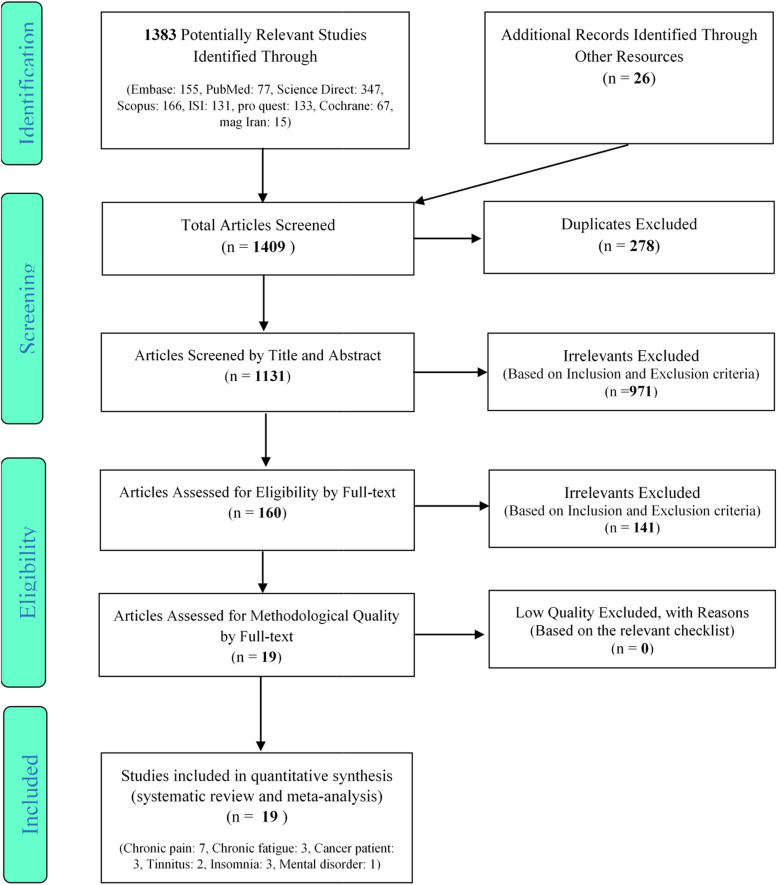
Background: Acceptance and Commitment Therapy (ACT), as a type of behavioral therapy, attempts to respond to changes in people’s performance and their relationship to events. ACT can affect sleep quality by providing techniques to enhance the flexibility of patients’ thoughts, yet maintaining mindfullness. Therefore, for the first time, a systematic review on the effects of ACT on sleep quality has been conducted. Methods: This systematic review was performed to determine the effect of ACT on insomnia and sleep quality. To collect articles, the PubMed, Web of Science (WOS), Cochrane library, Embase, Scopus, Science Direct, ProQuest, Mag Iran, Irandoc, and Google Scholar databases were searched, without a lower time-limit, and until April 2020. Results: Related articles were derived from 9 research repositories, with no lower time-limit and until April 2020. After assessing 1409 collected studies, 278 repetitive studies were excluded. Moreover, following the primary and secondary evaluations of the remaining articles, 1112 other studies were removed, and finally a total of 19 intervention studies were included in the systematic review process. Within the remaining articles, a sample of 1577 people had been assessed for insomnia and sleep quality. Conclusion: The results of this study indicate that ACT has a significant effect on primary and comorbid insomnia and sleep quality, and therefore, it can be used as an appropriate treatment method to control and improve insomnia.
Overview
The claims and statistics of this paper haven’t been checked yet.
Free: it reads the open-access text and checks the first 5 claims that cite a source we can check. Create a free account to check every claim.
Integrity signals
Registry
Cites
Statistics
Figures
Verification
Claims the paper makes
The claims and statistics of this paper haven’t been checked yet.
Free: it reads the open-access text and checks the first 5 claims that cite a source we can check. Create a free account to check every claim.
Claims other papers make about this one
Each is checked against this paper’s own text: does it say what the citing paper says it does?
The source backs part of the claim, not all of it — or backs it for a different population, condition or comparison.
In the citing paper
“Additionally, studies suggest that insomnia treatment utilizing ACT is associated with significant reductions in insomnia, fatigue, depression, and anxiety.9,32–35”
From Comparison of Acceptance and Commitment Therapy (ACT) and Cognitive Behavior Therapy (CBT) for Chronic Insomnia: A Pilot Randomized Controlled Trial (2023) · cites this paper as [9]
Experimental — accuracy not yet measuredThe source backs part of the claim, not all of it — or backs it for a different population, condition or comparison.
In the citing paper
“Cognitive defusion has been found to generally improve functioning, reduce dysfunctional attitudes, anxiety, negative affect (102) and also post-traumatic-like symptoms (129) and sleep difficulties (130).”
From Developing a mechanism-based therapy for acute psychiatric inpatients with psychotic symptoms: an Intervention Mapping approach (2023) · cites this paper as [130]
Experimental — accuracy not yet measuredThe source backs part of the claim, not all of it — or backs it for a different population, condition or comparison.
In the citing paper
“A meta-analysis of 19 studies and 1577 participants [135] reported improved sleep and reduced insomnia following an ACT intervention for chronic fatigue [143,144], tinnitus, or chronic pain [145,146].”
From Cognitive behavioral therapy and acceptance and commitment therapy for the discontinuation of long-term benzodiazepine use in insomnia and anxiety disorders (2021) · cites this paper as [135]
Experimental — accuracy not yet measuredThe cited source says what the claim attributes to it.
In the citing paper
“Acceptance and Commitment Therapy (ACT) is the latest therapeutic approach in cognitive behavioral therapy, focusing on acceptance rather than modifying dysfunctional thoughts and feelings.9”
From Comparison of Acceptance and Commitment Therapy (ACT) and Cognitive Behavior Therapy (CBT) for Chronic Insomnia: A Pilot Randomized Controlled Trial (2023) · cites this paper as [9]
The cited source says what the claim attributes to it.
In the citing paper
“In a recent review it was concluded that ACT was an effective treatment for insomnia (Salari et al ., 2020).”
From ACT-i, an insomnia intervention for autistic adults: A pilot study (2023) · cites this paper as Salari et al., 2020
5 more claims about this paper
Create a free account to see every claim other papers make about this one.
Self-check
Percentages, sums and reported differences re-computed from the paper’s own numbers.
The self-check needs the paper’s full text.
Citations
Cites
PRISMA-P Group, Moher, D., Shamseer, L., Clarke, M., Ghersi, D., Liberati, A., Petticrew, M., Shekelle, P., & Stewart, L. A. (2015) · Systematic Reviews · doi:10.1186/2046-4053-4-1 · Cited by 26,223
CONSORT 2010 Statement: updated guidelines for reporting parallel group randomised trials
the CONSORT Group, Schulz, K. F., Altman, D. G., & Moher, D. (2010) · BMC Medicine · doi:10.1186/1741-7015-8-18 · Cited by 13,371
Acceptance and commitment therapy: model, processes and outcomes
Hayes, S. C., Luoma, J. B., Bond, F. W., Masuda, A., & Lillis, J. (2006) · Behaviour Research and Therapy · doi:10.1016/j.brat.2005.06.006 · Cited by 6,587
Morin, C. M., Belleville, G., Bélanger, L., & Ivers, H. (2011) · Sleep · doi:10.1093/sleep/34.5.601 · Cited by 4,620
International Classification of Sleep Disorders-Third Edition
Sateia, M. J. (2014) · Chest · doi:10.1378/chest.14-0970 · Cited by 3,860
Epidemiology of insomnia: what we know and what we still need to learn
Ohayon, M. M. (2002) · Sleep Medicine Reviews · doi:10.1053/smrv.2002.0186 · Cited by 3,743
The Efficacy of Cognitive Behavioral Therapy: A Review of Meta-analyses
Hofmann, S. G., Asnaani, A., Vonk, I. J. J., Sawyer, A. T., & Fang, A. (2012) · Cognitive Therapy and Research · doi:10.1007/s10608-012-9476-1 · Cited by 3,445
Qaseem, A., Kansagara, D., Forciea, M. A., Cooke, M., Denberg, T. D., & for the Clinical Guidelines Committee of the American College of Physicians* (2016) · Annals of Internal Medicine · doi:10.7326/m15-2175 · Cited by 1,965
CONSORT 2010 Statement: updated guidelines for reporting parallel group randomised trials
the CONSORT Group, Schulz, K. F., Altman, D. G., & Moher, D. (2010) · Trials · doi:10.1186/1745-6215-11-32 · Cited by 1,871 · cited 3×
“In 8 studies, the included data were redacted [26].”
InfluentialDewald, J. F., Meijer, A. M., Oort, F. J., Kerkhof, G. A., & Bögels, S. M. (2010) · Sleep Medicine Reviews · doi:10.1016/j.smrv.2009.10.004 · Cited by 1,526
Research works printed but not linked: 2
- Khazaie H Zakiei A Efficacy of acceptance and commitment therapy on emotional dysregulation and sleep quality in patients with chronic insomnia Journal of Mazandaran University of Medical Sciences 2019 29 178 52 63
- Farhang M The effectiveness of acceptance and commitment group therapy in general health, happiness, and general well-being among mental disorder patients Saussurea 2017 6 1 99 117
Cited by
Zakiei, A., Khazaie, H., Rostampour, M., Lemola, S., Esmaeili, M., Dürsteler, K., Brühl, A., Sadeghi-Bahmani, D., & Brand, S. (2021) · Life · doi:10.3390/life11020133 · Cited by 84
“The present pattern of results was comparable and fit well with those reported recently in a systematic review on the influence of ACT on insomnia and sleep quality [47].”
BackgroundResultInfluentialSelf-citationChapoutot, M., Peter-Derex, L., Bastuji, H., Leslie, W., Schoendorff, B., Heinzer, R., Siclari, F., Nicolas, A., Lemoine, P., Higgins, S., et al. (2021) · International Journal of Environmental Research and Public Health · doi:10.3390/ijerph181910222 · Cited by 59
Paulos-Guarnieri, L., Linares, I. M. P., & El Rafihi-Ferreira, R. (2022) · Journal of Contextual Behavioral Science · doi:10.1016/j.jcbs.2021.11.001 · Cited by 48
Zhang, C., Zhang, R., Lu, Y., Liu, H., Kong, S., Baker, J. S., & Zhang, H. (2020) · Journal of Contextual Behavioral Science · doi:10.1016/j.jcbs.2020.12.004 · Cited by 49
Eisenhut, L., Bahmani, D. S., Gerber, M., Saemann, A., Staub, L., Brand, S., & Cordier, D. (2022) · Journal of Psychiatric Research · doi:10.1016/j.jpsychires.2022.03.058 · Cited by 41
Monfaredi, Z., Malakouti, J., Farvareshi, M., & Mirghafourvand, M. (2022) · BMC Psychiatry · doi:10.1186/s12888-022-03768-8 · Cited by 36
“This study results also showed that ACT counseling improves sleep quality and insomnia [57].”
ResultJiang, A., Rosario, M., Stahl, S., Gill, J., & Rusch, H. L. (2021) · Current Psychiatry Reports · doi:10.1007/s11920-021-01272-6 · Cited by 40
Gibson Watt, T., Gillanders, D., Spiller, J. A., & Finucane, A. M. (2023) · Palliative Medicine · doi:10.1177/02692163231183101 · Cited by 32
Cho, A., Cha, C., & Baek, G. (2024) · Journal of Medical Internet Research · doi:10.2196/54029 · Cited by 29
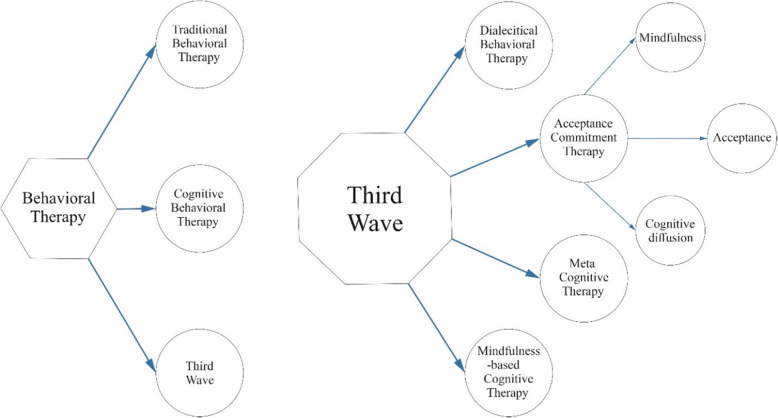
“Acceptance and commitment therapy (ACT) is part of the third wave of CBT [47].”
Baker, L. D., & Berghoff, C. R. (2022) · Journal of Contextual Behavioral Science · doi:10.1016/j.jcbs.2021.12.002 · Cited by 28
Shin, J.-W., Kim, S., Shin, Y. J., Park, B., & Park, S. (2023) · Nature and Science of Sleep · doi:10.2147/nss.s409981 · Cited by 25
“Acceptance and Commitment Therapy (ACT) is the latest therapeutic approach in cognitive behavioral therapy, focusing on acceptance rather than modifying dysfunctional thoughts and feelings.(9) Excessive control of thoughts and feelings can be related to the paradoxical effects of control, resulting in unintentionally…”
BackgroundMartin, J. L., Carlson, G. C., Kelly, M. R., Song, Y., Mitchell, M. N., Josephson, K. R., McGowan, S. K., Culver, N. C., Kay, M. A., Erickson, A. J., et al. (2023) · Journal of Consulting and Clinical Psychology · doi:10.1037/ccp0000836 · Cited by 23
Sadeghi-Bahmani, D., Esmaeili, L., Mokhtari, F., Sadeghi Bahmani, L., Afsharzadeh, M., Shaygannejad, V., Mirmosayyeb, O., Goldstein-Piekarski, A. N., & Gross, J. J. (2022) · Multiple Sclerosis and Related Disorders · doi:10.1016/j.msard.2022.104029 · Cited by 22
Ruan, J., Chen, S., Liang, J., Mak, Y. W., Yee Ho, F. Y., Chung, K. F., Kwun Tong, A. K., Zhang, X. L., & Yeung, W. F. (2022) · Journal of Contextual Behavioral Science · doi:10.1016/j.jcbs.2022.09.002 · Cited by 20
Shi, J.-Y., Cao, Y.-M., Luo, H.-Y., Liu, S., Yang, F.-M., & Wang, Z.-H. (2023) · Schizophrenia Research · doi:10.1016/j.schres.2023.03.042 · Cited by 19
A closer look at yoga nidra- early randomized sleep lab investigations
Sharpe, E., Butler, M. P., Clark-Stone, J., Soltanzadeh, R., Jindal, R. D., Hanes, D. A., & Bradley, R. D. (2023) · Journal of Psychosomatic Research · doi:10.1016/j.jpsychores.2023.111169 · Cited by 23
Shahsavari Googhari, Z., Hafezi, F., Asgari, P., & Heidari, A. (2022) · Journal of Shahrekord University of Medical Sciences · doi:10.34172/jsums.2022.07 · Cited by 15
“Today, third-wave psychological interventions, including mindfulness-based cognitive therapy (MBCT) and acceptance and commitment therapy (ACT), aim to promote individuals’ psychological relationship with their thoughts and emotions instead of cognitive modifications (11,12).”
BackgroundACT-i, an insomnia intervention for autistic adults: A pilot study
Lawson, L. P., Richdale, A. L., Denney, K., & Morris, E. M. J. (2023) · Behavioural and Cognitive Psychotherapy · doi:10.1017/s1352465822000571 · Cited by 13
“In a recent review it was concluded that ACT was an effective treatment for insomnia (Salari et al., 2020).”
The Future of Insomnia Research—There's Still Work to Be Done
Dressle, R. J., Spiegelhalder, K., Schiel, J. E., Benz, F., Johann, A. F., Feige, B., Jernelöv, S., Perlis, M. L., & Riemann, D. W. (2025) · Journal of Sleep Research · doi:10.1111/jsr.70091 · Cited by 16
“A systematic review that investigated the effect of ACT on insomnia and sleep quality showed mixed results and considerable methodological variation (Salari et al. 2020).”
Disparities in post-stroke rehabilitation: an African perspective
Aderinto, N., Olatunji, G. D., Kokori, E., Abraham, I. C., Ogieuhi, I. J., Ogunbowale, I., Esangbedo, I. J., Babalola, A. E., Moradeyo, A. A., Christopher, A. A., et al. (2025) · Discover Public Health · doi:10.1186/s12982-025-00622-6 · Cited by 13
Wang, D., Lin, B., Xiong, F., Deng, Y., & Zhang, L. (2023) · Journal of Affective Disorders · doi:10.1016/j.jad.2023.08.125 · Cited by 17
Christodoulou, V., Flaxman, P. E., Morris, E. M. J., & Oliver, J. E. (2024) · European Journal of Work and Organizational Psychology · doi:10.1080/1359432x.2024.2314934 · Cited by 15
“Defusion has been proposed to play an influential when ACT is deployed as a clinical treatment for insomnia (Salari et al., 2020).”
BackgroundZakiei, A., Khazaie, H., Rostampour, M., Moradi, M.-T., Rezaie, L., Komasi, S., & Rafihi-Ferreira, R. E. (2024) · Current Sleep Medicine Reports · doi:10.1007/s40675-024-00293-w · Cited by 10
“Regarding poor sleep outcomes, a systematic review study showed that ACT is effective treatment [24].”
Self-citationGerdle, B. U. C., Dragioti, E., Fischer, M. R., Dong, H., & Ringqvist, Å. (2023) · Frontiers in Pain Research · doi:10.3389/fpain.2023.1244606 · Cited by 11
Hout, E. V., Contreras, M., Mioshi, E., & Kishita, N. (2022) · Journal of Geriatric Psychiatry and Neurology · doi:10.1177/08919887221093359 · Cited by 11
“However, it remains unclear whether these positive effects on subjective sleep quality diminish in the long term.(60,61) This long-term impact is particularly important given the established relationship between carers’ quality of sleep and dementia severity.”
BackgroundKalantar‐Hormozi, B., Khosravi, Z., & Sabzi, N. (2022) · Brain and Behavior · doi:10.1002/brb3.2688 · Cited by 12
“Today, third-wave therapies, which focus on values, skills instead of symptoms andemotional processes, are being tested as insomnia treatments (Kim et al., 2021; Perini et al., 2021; Salari et al., 2020; Taylor et al., 2015).”
BackgroundSpiegelhalder, K., Baglioni, C., Morin, C. M., Nissen, C., Palagini, L., Perlis, M. L., Scott, H., & Riemann, D. W. (2026) · Nature Reviews Disease Primers · doi:10.1038/s41572-026-00693-y · Cited by 22
Paradoxic Intention as an Adjunct Treatment to Cognitive Behavioral Therapy for Insomnia
Jansson‐Fröjmark, M., Sandlund, C., & Norell‐Clarke, A. (2023) · Sleep Medicine Clinics · doi:10.1016/j.jsmc.2022.10.001 · Cited by 11
Insomnio, en busca del tratamiento ideal: fármacos y medidas no farmacológicas
Contreras, A., & Pérez, C. (2021) · Revista Médica Clínica Las Condes · doi:10.1016/j.rmclc.2021.09.004 · Cited by 19
Miller‐Mendes, M., Castilho, P., Clara, M. I., Clemente, V., & Gomes, A. A. (2023) · New Ideas in Psychology · doi:10.1016/j.newideapsych.2023.101013 · Cited by 12
Fadhil, A. A., Kadhim, Q. K., Shakir, A., Alaraji, M. K., Hussein, H. A., & Yousuf, L. M. (2023) · International journal of body, mind and culture · doi:10.22122/ijbmc.v9isp.422 · Cited by 7
Wallsten, D., Norell‐Clarke, A., Alfonsson, S., Gryphon, D., Eriksson, H., & Tillfors, M. (2021) · Behavioural and Cognitive Psychotherapy · doi:10.1017/s1352465821000278 · Cited by 8
“…unified protocol (UP) addresses emotional/experiential avoidance and recent reviews found that both UP and ACT are effective for insomnia disorder (Cassiello-Robbins et al., 2020; Salari et al., 2020) and promising for social anxiety disorder (Cassiello-Robbins et al., 2020; Norton et al., 2015).”
BackgroundWang, D., Lin, B., Du, J., Liu, W., Sun, T., Li, Q., & Xiao, L. (2025) · International Journal of Clinical and Health Psychology · doi:10.1016/j.ijchp.2025.100543 · Cited by 11
“Unlike CBT-I, ACT prioritizes acceptance over modifying thoughts (Salari et al., 2020), promoting acceptance of insomnia and reducing excessive con-trol (Shin et al., 2023).”
Mechanisms of change in an online acceptance and commitment therapy intervention for insomnia
Hämäläinen, T., Lappalainen, P., Langrial, S. U., Lappalainen, R. I., & Kiuru, N. H. (2025) · Scientific Reports · doi:10.1038/s41598-025-87018-3 · Cited by 10
“Recent systematic reviews, although mostly addressing studies investigating face-to-face ACT interventions, have underlined ACT as a viable option for treating insomnia 18,21,22 .”
Insomnia Epidemic: How Poor Sleeping Habits Are Undermining Mental Wellness
Kamene, K. (2025) · Premier journal of social science. · doi:10.70389/pjss.100012 · Cited by 6
Jam, M. M., Rasouli, A., Soumee, Z. N., Vand, H. D. A., & Saed, O. (2025) · BMC Psychiatry · doi:10.1186/s12888-025-06832-1 · Cited by 8
“…disorders (g = 0.35–2.85; [20] or other transdiagnostic protocols for insomnia such as Acceptance and Commitment Theray (d = 0.036–1.69 [37], Mindfulness Based Stress Rduction (d = 1.12–2.03 [38], and mindfulness Based Cognitive Therapy (d = 1.32 [39] they reflect the potential…”
InfluentialBarreto, M., & Gaynor, S. T. (2022) · Journal of Contextual Behavioral Science · doi:10.1016/j.jcbs.2022.11.004 · Cited by 5
Garcia, M. A., Rabinowitz, E. P., Levin, M. E., Shasteen, H., Allen, P. A., & Delahanty, D. L. (2023) · Journal of Behavioral and Cognitive Therapy · doi:10.1016/j.jbct.2023.09.001 · Cited by 4
Hellrigel-Holderbaum, M., Romanczuk-Seiferth, N., Glos, M., & Fietze, I. (2023) · Sleep Medicine · doi:10.1016/j.sleep.2023.03.022 · Cited by 5
Spencer, J., Gustin, M., Anders, R., Chapoutot, M., Leslie, W., Schoendorff, B., Moghaddam, N. G., Dawson, D. L., Peter‐Derex, L., & Putois, B. (2025) · Journal of Behavioral and Cognitive Therapy · doi:10.1016/j.jbct.2025.100532 · Cited by 6
Ripley, G. H., Nam, J. K., Carlin, V. E., Powers, J. M., & Ditre, J. W. (2025) · Substance Use & Misuse · doi:10.1080/10826084.2025.2561919 · Cited by 4
“…and Commitment Therapy (ACT), which has shown efficacy in treating each condition individually (Du et al., 2021; McCallion & Zvolensky, 2015; Salari et al., 2020), may hold promise as a comprehensive intervention for individuals with co-occurring pain, sleep disturbance, and…”
Mohammadi, S., Fattahi, A., Jaberghaderi, N., Kheirabadi, Z., & Bakhtiari, M. (2022) · Shenakht Journal of Psychology and Psychiatry · doi:10.32598/shenakht.9.3.85 · Cited by 6
Carbone, E. A., Menculini, G., de Filippis, R., D’Angelo, M., Zebi, L., & Steardo, L. (2023) · Life · doi:10.3390/life13081636 · Cited by 3
“Recently, ACT was found to be effective in reducing the severity of insomnia, suggesting ACT can improve sleep quality and sleep disorders [75].”
BackgroundAhn, J., Cho, E., Cho, I., Lee, D., Kim, J., & Chung, S. (2024) · Sleep And Breathing · doi:10.1007/s11325-024-03128-8 · Cited by 6
Insomnia disorder update: the benefits of screening and treatment for this common presentation
Ree, M. J., & Richardson, C. E. (2021) · Internal Medicine Journal · doi:10.1111/imj.15567 · Cited by 5
Skarpsno, E. S., Gismervik, S., Fimland, M. S., & Aasdahl, L. (2021) · Nature and Science of Sleep · doi:10.2147/nss.s318052 · Cited by 3
Gussmann, E., Lucae, S., Falkai, P., Padberg, F., Egli, S., & Kopf-Beck, J. (2023) · Frontiers in Psychiatry · doi:10.3389/fpsyt.2023.1160075 · Cited by 2
“Cognitive defusion has been found to generally improve functioning, reduce dysfunctional attitudes, anxiety, negative affect (102) and also post-traumatic-like symptoms (129) and sleep difficulties (130).”
BackgroundBarroso, D. C., Portilho, N. D. P., Garbacka, A., Godoi, D. C., Ellwanger, M. P., Mendes, T. P., Ribeiro, V. E. A., Soares, V. G., Hespanhol, L. C., Barros, M. L. S., et al. (2026) · Journal of Clinical Sleep Medicine · doi:10.1007/s44470-026-00125-4 · Cited by 3
“Preliminary investigations have demonstrated the potential of ACT to ameliorate insomnia symptoms and enhance sleep quality [37, 38].”
Rakitzi, S. (2023) · Springer eBooks · doi:10.1007/978-3-031-27837-2_2 · Cited by 3
Values Expressed by Women Veterans Receiving Treatment for Chronic Insomnia Disorder
Saldaña, K., Carlson, G. E., Revolorio, K. Y., Kelly, M. R., Josephson, K. R., Mitchell, M. N., Culver, N. C., Kay, M. A., McGowan, S. K., Song, Y., et al. (2023) · Behavioral Sleep Medicine · doi:10.1080/15402002.2023.2260517 · Cited by 2
“There is preliminary evidence that ACT and acceptance-based approaches improve sleep disturbance, as either an adjunct treatment to behavioral therapies or a stand-alone approach (Fiorentino et al., 2020; Salari et al., 2020).”
BackgroundSalari, N., Heidarian, P., Hassani, R., Babajani, F., Abdolmaleki, A., & Mohammadi, M. (2024) · Journal of Affective Disorders Reports · doi:10.1016/j.jadr.2024.100847 · Cited by 1
Self-citationErickson, A. J., Carlson, G. E., Kelly, M. R., Mitchell, M. N., Fung, C. H., Song, Y., McGowan, S. K., Josephson, K. R., Zeidler, M. R., Washington, D. L., et al. (2025) · Behavior Therapy · doi:10.1016/j.beth.2025.02.003 · Cited by 4
Perseverative Thinking in Depression and Insomnia
Ballesio, A., Zagaria, A., & Goldschmied, J. (2025) · CBT: science into practice · doi:10.1007/978-3-031-92265-7_3 · Cited by 1
Zhai, Y., Ji, W., Li, Y., & Du, Q. (2025) · Frontiers in Psychiatry · doi:10.3389/fpsyt.2025.1637904 · Cited by 1
“Mindfulness-based interventions or acceptance and commitment therapy improved awareness and acceptance of nighttime awakenings and negative emotions (42).”
Chapoutot, M., Gustin, M., Anders, R., Peter‐Derex, L., Bastuji, H., Khazaal, Y., & Putois, B. (2025) · Sleep Medicine · doi:10.1016/j.sleep.2025.108744 · Cited by 4
Sosic-Vasic, Z., Bergmann, M., & Kroener, J. (2026) · Frontiers in Psychiatry · doi:10.3389/fpsyt.2025.1673223 · Cited by 1
Management of Insomnia Disorder
Carlson, G. E., Zeidler, M. R., & Martin, J. L. (2022) · Respiratory medicine · doi:10.1007/978-3-030-93739-3_13 · Cited by 1
Sleep in Children with Neurodevelopmental Disorders
Richdale, A. L., Baker, E. K., & Sciberras, E. (2022) · Springer eBooks · doi:10.1007/978-981-19-5791-8_20 · Cited by 1
Leckey, J., Dagher, A., & Lee‐Baggley, D. (2023) · Journal of Contextual Behavioral Science · doi:10.1016/j.jcbs.2023.10.002 · Cited by 2
Öğrenme ve Karar Verme Yolculuğunda Uyku ve Stres Mesaisi
Bayram, K., Acar, A. K., Kara, B. Y. D., & Kaya, D. Ö. (2024) · İzmir Katip Çelebi Üniversitesi Sağlık Bilimleri Fakültesi Dergisi · doi:10.61399/ikcusbfd.1425777 · Cited by 3
Kim, S., Shin, Y. J., Park, B., Park, S., & Shin, J.-W. (2021) · Journal of Sleep Medicine · doi:10.13078/jsm.210002 · Cited by 1
“이를 통해 질병의 증상에 초 점을 두기보다는 삶에 집중하고 가치에 따른 행동을 활성화 하도록 하여 불면증을 경험하는 환자들의 낮 일상에 의미 있 는 활동들을 증가하게 할 수 있다.(18) Zakiei와 Khazaie(19)에 따 르면 ACT는 만성 불면증 환자의 수면의 질을 향상시켰으며 그 효과는 치료 후 3개월까지 안정적으로 지속되는 것으로”
Pre-Sleep Anxiety: Mechanisms and Therapeutic Approaches in Clinical Practice.
Song, S., Irfan, M., Tahir, Z., Garrison, K. A., & Ziskind, S. (2026) · Current Sleep Medicine Reports · doi:10.1007/s40675-026-00370-2
Miller‐Mendes, M., Castilho, P., Clara, M. I., Clemente, V., & Gomes, A. A. (2026) · British Journal of Clinical Psychology · doi:10.1111/bjc.70077
Insomnia Symptoms in Chronic Pain : Clinical presentation, risk and treatment
Wiklund, T. (2021) · Linköping University medical dissertations · doi:10.3384/diss.diva-175373
Adiyasa, R. P., & Ismoyowati, T. W. (2021) · IJNP (Indonesian Journal of Nursing Practices) · doi:10.18196/ijnp.v5i2.10818 · Cited by 1
Jabali, A. L., Mojtabaei, M., & Mirhashemi, M. (2022) · Jundishapur Journal of Chronic Disease Care · doi:10.5812/jjcdc-123365 · Cited by 1
ezzati, Z., Shahabizadeh, F., Soleimannejad, K., & Nasri, M. (2022) · The Journal Of Psychological Science · doi:10.52547/jps.21.117.1833
Khorramabad, H. N., Jayervand, H., & Marashian, F. S. (2022) · Quarterly Journal of Child Mental Health · doi:10.52547/jcmh.9.1.6 · Cited by 5
Kooteh, B. R., Mojahed, A., Yaztappeh, J. S., & Mousavi, S. E. (2022) · Quarterly of Horizon of Medical Sciences · doi:10.32598/hms.28.2.3691.1
Evidence of Acceptance and Commitment Therapy-Based Therapies for Insomnia
Paulos‐Guarnieri, L., Linares, I. M. P., & Rafihi‐Ferreira, R. E. (2024) · Springer eBooks · doi:10.1007/978-3-031-50710-6_14 · Cited by 1
Haussmann, A., Steindorf, K., & Sauer, C. (2024) · Die Onkologie · doi:10.1007/s00761-024-01526-x
SLEEP PROBLEMS IN COMBATANTS WITH POSTTRAUMATIC STRESS DISORDER AND ITS ACCEPTANCE
Boiko, D. I. (2024) · Bulletin of Problems Biology and Medicine · doi:10.29254/2077-4214-2024-2-173-165-174 · Cited by 1
“Цей кон - структ характеризує здатність переживати поточний момент, не намагаючись його змінити, і займатися ціннісно орієнтованою діяльністю [21].”
Leitlinienempfehlungen zu Insomnien in der Onkologie: Ein Weckruf für Screening und Behandlung
Haussmann, A., Steindorf, K., & Sauer, C. (2025) · Im Focus Onkologie · doi:10.1007/s15015-025-4093-5
Sleep Disorders in Latin America
Yupanqui-Lorenzo, D. E., & Quispilaya-Capcha, K. L. (2025) · Springer eBooks · doi:10.1007/978-3-031-84433-1_18
When stress steals sleep: The impact of perceived stress reactivity on young adults’ sleep quality
Smith-Mason, C. E., & Gil-Rivas, V. G. R. (2026) · Current Psychology · doi:10.1007/s12144-025-09023-z
“Similarly, acceptance and commitment therapy has been shown to have sustained positive effects on sleep qual - ity by promoting awareness, psychological flexibility, and changes in maladaptive cognitions and attitudes associated with negative emotions (Salari et al., 2020).”
van Loon, I. G., Ooms, E., Luik, A. I., Sunamura, M., Wally, T., Boersma, E. H., Vromen, T., Limpt, N. T. V., Bussmann, H., Boon, M. R., et al. (2026) · BMJ Open · doi:10.1136/bmjopen-2026-117963
Norouzi, E., Shahmoradi, N., & Abdi, M. (2026) · Acta Psychologica · doi:10.1016/j.actpsy.2026.107045
Zalamea-Delgado, M. P., Jiménez‐López, E., Mesas, A. E., Sepulveda, R. A. Y., Gutiérrez‐Espinoza, H., Arancibia, J. E. O., Ezzatvar, Y., Stubbs, B., Smith, L., Ridgell, L., et al. (2026) · Healthcare · doi:10.3390/healthcare14142183 · Cited by 1
Metadata
- Authors
- Salari, N., Khazaie, H., Hosseinian-Far, A., Khaledi-Paveh, B., Ghasemi, H., Mohammadi, M., & Shohaimi, S.
- Affiliations
- Kermanshah University of Medical Sciences (IR)
- Universiti Putra Malaysia (MY)
- Corresponding author
- Ghasemi, Hooman
- Mohammadi, Masoud
- Venue
- BMC Neurology
- Published
- 2020-08-13
- Volume
- 20
- Issue
- 1
- Pages
- 300-300
- ISSN
- 1471-2377 (ISSN-L)
- PMC
- PMC7425538
- OpenAlex
- W3048822545
- Cited by
- 78
- References
- 57
- Citations by year
- 2026: 8 · 2025: 14 · 2024: 10 · 2023: 16 · 2022: 16 · 2021: 13 · 2020: 1
- FWCI
- 1.68
- Type
- journal article
- Language
- en
- Open access
- gold
- doi.org
- Licence
- cc-by
- creativecommons.org/licenses/by/4.0 (tdm)
- creativecommons.org/licenses/by/4.0 (vor)
- Locations
- BMC Neurology (publishedVersion, cc-by)
- PubMed Central (publishedVersion, cc-by)
- PubMed (publishedVersion)
- NECTAR - Northampton Electronic Collection of Thesis and Research (University of Northampton) (acceptedVersion)
- DOAJ (DOAJ: Directory of Open Access Journals) (submittedVersion, cc-by-sa)
- Funders
- Kermanshah University of Medical Sciences
- Topics
- Social Sciences › Psychology › Experimental and Cognitive Psychology › Sleep and related disorders
- Social Sciences › Psychology › Clinical Psychology › Mindfulness and Compassion Interventions
- Health Sciences › Medicine › Physiology (medical) › Obstructive Sleep Apnea Research
- Keywords
- acceptance and commitment therapy, insomnia, sleep quality, mindfulness, behavior therapy, comorbid insomnia, insomnia treatment
- MeSH terms
- Humans, Sleep Initiation and Maintenance Disorders, Sleep, Acceptance and Commitment Therapy
About these checks
Registry, retraction, Cites and statistics results are computed, not judged, with one exception: a printed reference that no index lists is read once by a model before it counts as a citation error. Claims are extracted by a model and kept only when their quote appears verbatim in the text; each cited source is then checked, with a model’s help, for whether it says what the claim relies on. Those verdicts can be wrong — read the claim’s quote and the cited source before relying on one.
Statistics and arithmetic are recomputed, not judged.
Confidence bands are shown only for fields calibrated on our annotated test set. None is calibrated yet, so no band is shown.
What counts as a claim ›How we measure confidence ›How we check this ›
Are you an author, or do you see a problem with this page? Request a review
Data sources
Bibliographic data: Semantic Scholar, OpenAlex, Crossref.
Contains information from the Semantic Scholar Academic Graph Datasets, made available under the ODC Attribution License (ODC-BY 1.0).
Semantic Scholar’s data is described in: Kinney, R., et al. (2023). The Semantic Scholar Open Data Platform. arXiv:2301.10140.
