

Physical activity and sedentary time during pregnancy and associations with maternal and fetal health outcomes: an epidemiological study
Open accessThe DOI matches its Crossref record; 38 of the 40 references it cites were found in a registry or an index.
Abstract
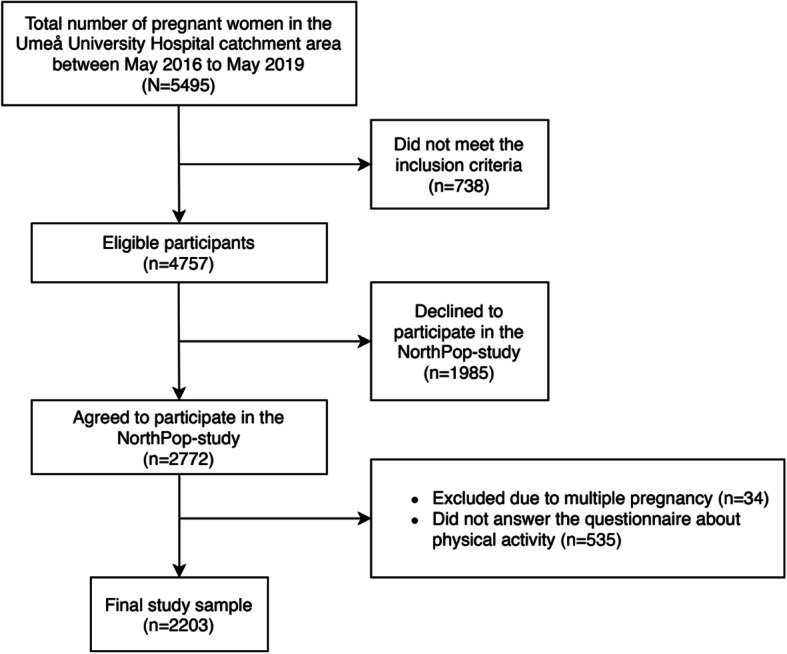
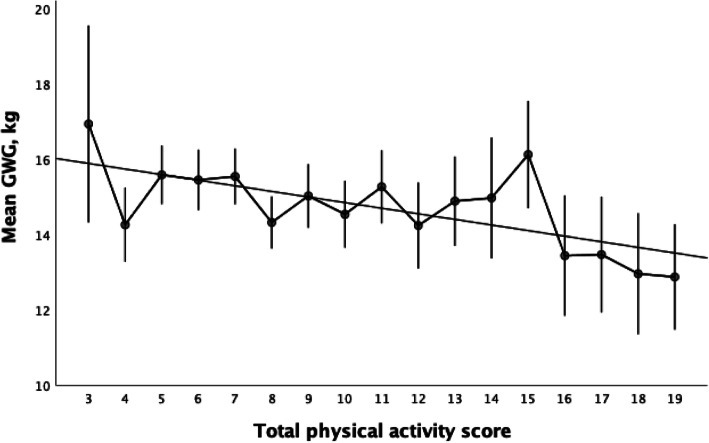
Background: Physical activity is generally considered safe for the pregnant woman as well as for her fetus. In Sweden, pregnant women without contraindications are recommended to engage in physical activity for at least 30 min per day most days of the week. Physical activity during pregnancy has been associated with decreased risks of adverse health outcomes for the pregnant woman and her offspring. However, there are at present no recommendations regarding sedentary behavior during pregnancy. The aim was to examine the level of physical activity and sedentary time in a representative sample of the pregnant population in Sweden, and to explore potential effects on gestational age, gestational weight gain, birth weight of the child, mode of delivery, blood loss during delivery/postpartum, self-rated health during pregnancy and risk of pregnancy-induced hypertension and preeclampsia. Methods: This was an epidemiological study using data from the prospective, population-based NorthPop study in Northern Sweden and information on pregnancy outcomes from the national Swedish Pregnancy Register (SPR). A questionnaire regarding physical activity and sedentary time during pregnancy was answered by 2203 pregnant women. Possible differences between categories were analyzed using one-way Analysis of variance and Pearson’s Chi-square test. Associations between the level of physical activity/sedentary time and outcome variables were analyzed with univariable and multivariable logistic regression and linear regression. Results: Only 27.3% of the included participants reported that they reached the recommended level of physical activity. A higher level of physical activity was associated with a reduced risk of emergency caesarean section, lower gestational weight gain, more favorable self-rated health during pregnancy, and a decreased risk of exceeding the Institute of Medicine’s recommendations regarding gestational weight gain. Higher sedentary time was associated with a non-favorable self-rated health during pregnancy. Conclusions: Our study showed that only a minority of pregnant women achieved the recommended level of physical activity, and that higher physical activity and lower sedentary time were associated with improved health outcomes. Encouraging pregnant women to increase their physical activity and decrease their sedentary time, may be important factors to improve maternal and fetal/child health outcomes.
Overview
The claims and statistics of this paper haven’t been checked yet.
Free: it reads the open-access text and checks the first 5 claims that cite a source we can check. Create a free account to check every claim.
Integrity signals
Registry
Cites
Statistics
Figures
Verification
Claims the paper makes
The claims and statistics of this paper haven’t been checked yet.
Free: it reads the open-access text and checks the first 5 claims that cite a source we can check. Create a free account to check every claim.
Claims other papers make about this one
Each is checked against this paper’s own text: does it say what the citing paper says it does?
The source backs part of the claim, not all of it — or backs it for a different population, condition or comparison.
In the citing paper
“There is a growing body of evidence that suggests that a sedentary lifestyle during pregnancy puts the individual at risk for chronic disease.”
From Activity Restriction and Hospitalization in Pregnancy: Can Bed-Rest Exercise Prevent Deconditioning? A Narrative Review (2023) · cites this paper as [7]
Experimental — accuracy not yet measuredThe source backs part of the claim, not all of it — or backs it for a different population, condition or comparison.
In the citing paper
“as the importance of being physically active during pregnancy grows, the ineffectiveness of restricting activity on preserving pregnancy outcomes is called into question [6,7,8].”
From Activity Restriction and Hospitalization in Pregnancy: Can Bed-Rest Exercise Prevent Deconditioning? A Narrative Review (2023) · cites this paper as [7]
Experimental — accuracy not yet measured
Self-check
Percentages, sums and reported differences re-computed from the paper’s own numbers.
The self-check needs the paper’s full text.
Citations
Cites
Garber, C. E., Blissmer, B., Deschenes, M. R., Franklin, B. A., Lamonte, M. J., Lee, I.-M., Nieman, D. C., & Swain, D. P. (2011) · Medicine & Science in Sports & Exercise · doi:10.1249/mss.0b013e318213fefb · Cited by 9,319 · cited 1×
“Physical activity (PA) is associated with reduced mortality and reduced risk of several major noncommunicable diseases such as cardiovascular disease, hypertension and type 2 diabetes in the general population [1].”
BackgroundWeight Gain During Pregnancy: Reexamining the Guidelines
Rasmussen, K. M., & Yaktine, A. L. (2009) · Cited by 4,493
Brown, M. A., Magee, L. A., Kenny, L. C., Karumanchi, S. A., McCarthy, F. P., Saito, S., Hall, D. R., Warren, C. E., Adoyi, G., & Ishaku, S. (2018) · Hypertension · doi:10.1161/hypertensionaha.117.10803 · Cited by 2,089
Wilmot, E. G., Edwardson, C. L., Achana, F. A., Davies, M. J., Gorely, T., Gray, L. J., Khunti, K., Yates, T., & Biddle, S. J. H. (2012) · Diabetologia · doi:10.1007/s00125-012-2677-z · Cited by 1,789 · cited 1×
“Sedentary behavior is related to all-cause mortality, cardiovascular disease and type 2 diabetes in adults, regardless of level of PA [9].”
BackgroundGoldstein, R. F., Abell, S. K., Ranasinha, S., Misso, M., Boyle, J. A., Black, M. H., Li, N., Hu, G., Corrado, F., Rode, L., et al. (2017) · JAMA · doi:10.1001/jama.2017.3635 · Cited by 1,636
The evolving definition of “sedentary.”
Pate, R. R., O'Neill, J. R., & Lobelo, F. (2008) · Exercise and Sport Sciences Reviews · doi:10.1097/jes.0b013e3181877d1a · Cited by 1,280 · cited 1×
“5 metabolic equivalent units (METs), like sitting, sleeping and watching television [8].”
BackgroundSummary of the NHLBI Working Group on Research on Hypertension During Pregnancy
Roberts, J. M., Pearson, G., Cutler, J., & Lindheimer, M. (2003) · Hypertension · doi:10.1161/01.hyp.0000054981.03589.e9 · Cited by 677
The Epidemiology of Postpartum Hemorrhage in a Large, Nationwide Sample of Deliveries
Bateman, B. T., Berman, M. F., Riley, L. E., & Leffert, L. R. (2010) · Anesthesia & Analgesia · doi:10.1213/ane.0b013e3181d74898 · Cited by 666 · cited 1×
“Excessive postpartum blood loss is another cause of maternal morbidity and there is an increasing incidence of women diagnosed with postpartum hemorrhage [13].”
BackgroundDiet or exercise, or both, for preventing excessive weight gain in pregnancy
Muktabhant, B., Lawrie, T. A., Lumbiganon, P., & Laopaiboon, M. (2015) · Cochrane Database of Systematic Reviews · doi:10.1002/14651858.cd007145.pub3 · Cited by 601 · cited 2×
“Previous studies have found PA during pregnancy to be inversely associated with excessive GWG [5, 27, 28].”
BackgroundDavenport, M. H., Ruchat, S.-M., Poitras, V. J., Jaramillo Garcia, A., Gray, C. E., Barrowman, N., Skow, R. J., Meah, V. L., Riske, L., Sobierajski, F., et al. (2018) · British Journal of Sports Medicine · doi:10.1136/bjsports-2018-099355 · Cited by 579 · cited 2×
“PA interventions have previously been shown to reduce the risk of hypertension disorders during pregnancy [4, 37].”
BackgroundRisk factors and outcomes of maternal obesity and excessive weight gain during pregnancy
Gaillard, R., Durmuş, B., Hofman, A., Mackenbach, J. P., Steegers, E. A. P., & Jaddoe, V. W. V. (2013) · Obesity · doi:10.1002/oby.20088 · Cited by 490 · cited 1×
“An increase in postpartum hemorrhage might be associated with obesity [33], but women with more sedentary time did not present a higher BMI in our study.”
BackgroundAccelerometry and physical activity questionnaires - a systematic review
Skender, S., Ose, J., Chang-Claude, J., Paskow, M., Brühmann, B., Siegel, E. M., Steindorf, K., & Ulrich, C. M. (2016) · BMC Public Health · doi:10.1186/s12889-016-3172-0 · Cited by 449 · cited 1×
“This study has some limitations: PA level and sedentary time were self-reported in the questionnaires from the NorthPop study, which may contribute to an overestimation or underestimation of PA time compared to accelerometer data [40].”
ResultSummary of the NHLBI Working Group on Research on Hypertension During Pregnancy
Roberts, J. M., Pearson, G. D., Cutler, J. A., & Lindheimer, M. D. (2003) · Hypertension in Pregnancy · doi:10.1081/prg-120016792 · Cited by 436
Continuous growth reference from 24thweek of gestation to 24 months by gender
Niklasson, A., & Albertsson-Wikland, K. (2008) · BMC Pediatrics · doi:10.1186/1471-2431-8-8 · Cited by 373
Exercise during pregnancy: A review of patterns and determinants
Gaston, A., & Cramp, A. (2011) · Journal of Science and Medicine in Sport · doi:10.1016/j.jsams.2011.02.006 · Cited by 352 · cited 2×
“Higher educational level and having no other children at home have been associated to higher level of PA [26].”
BackgroundStuebe, A. M., Oken, E., & Gillman, M. W. (2009) · American Journal of Obstetrics and Gynecology · doi:10.1016/j.ajog.2009.02.025 · Cited by 289
Developmental Trajectories of Overweight During Childhood: Role of Early Life Factors
Li, C., Goran, M. I., Kaur, H., Nollen, N., & Ahluwalia, J. S. (2007) · Obesity · doi:10.1038/oby.2007.585 · Cited by 285 · cited 1×
“High birth weight and excess GWG are also associated with increased risk of childhood obesity [15].”
BackgroundMagro‐Malosso, E. R., Saccone, G., Di Tommaso, M., Roman, A., & Berghella, V. (2017) · Acta Obstetricia et Gynecologica Scandinavica · doi:10.1111/aogs.13151 · Cited by 258 · cited 1×
“PA interventions have previously been shown to reduce the risk of hypertension disorders during pregnancy [4, 37].”
BackgroundEvenson, K. R., & Wen, F. (2011) · Preventive Medicine · doi:10.1016/j.ypmed.2011.04.014 · Cited by 252
Streuling, I., Beyerlein, A., & von Kries, R. (2010) · The American Journal of Clinical Nutrition · doi:10.3945/ajcn.2010.29363 · Cited by 225 · cited 1×
“Previous studies have found PA during pregnancy to be inversely associated with excessive GWG [5, 27, 28].”
BackgroundSedentary behaviours during pregnancy: a systematic review
Fazzi, C., Saunders, D. H., Linton, K., Norman, J. E., & Reynolds, R. M. (2017) · International Journal of Behavioral Nutrition and Physical Activity · doi:10.1186/s12966-017-0485-z · Cited by 207 · cited 1×
“The effect of sedentary time is not as well investigated as the effect of PA on pregnancy outcomes, and the possible associations between sedentary time and GWG, hypertensive disorders during pregnancy, and birth weight still remain uncertain [10].”
BackgroundThe Swedish Pregnancy Register – for quality of care improvement and research
Stephansson, O., Petersson, K., Björk, C., Conner, P., & Wikström, A. (2018) · Acta Obstetricia et Gynecologica Scandinavica · doi:10.1111/aogs.13266 · Cited by 194 · cited 2×
“Strengths of this study is that both the NorthPop study and the SPR have a high coverage of the population in the catchment area (64 and 85%, respectively) and most of the variables in the SPR are transferred electronically from medical records [17, 18].”
MethodOlsson, S. J. G., Ekblom, Ö., Andersson, E., Börjesson, M., & Kallings, L. V. (2016) · Scandinavian Journal of Public Health · doi:10.1177/1403494815602830 · Cited by 182 · cited 2×
“A questionnaire from the Swedish National Board of Health and Welfare (NBHW) based on validated categorical questions was used to estimate the level of PA during pregnancy [21].”
BackgroundMethodPoyatos‐León, R., García‐Hermoso, A., Sanabria‐Martínez, G., Álvarez‐Bueno, C., Cavero‐Redondo, I., & Martínez‐Vizcaíno, V. (2017) · Birth · doi:10.1111/birt.12294 · Cited by 175 · cited 1×
“PA during pregnancy is also associated with improved psychological well-being and reduced risk of postpartum depressive symptoms [6].”
BackgroundDavenport, M. H., Ruchat, S.-M., Sobierajski, F., Poitras, V. J., Gray, C. E., Yoo, C., Skow, R. J., Jaramillo Garcia, A., Barrowman, N., Meah, V. L., et al. (2019) · British Journal of Sports Medicine · doi:10.1136/bjsports-2018-099821 · Cited by 171
Sports and Leisure Time Physical Activity During Pregnancy in Nulliparous Women
Hegaard, H. K., Damm, P., Hedegaard, M. S., Henriksen, T. B., Ottesen, B., Dykes, A., & Kjærgaard, H. W. (2010) · Maternal and Child Health Journal · doi:10.1007/s10995-010-0647-y · Cited by 120 · cited 1×
“A possible explanation for the difference between the outcomes of the studies is that pregnant women tend to decrease their PA later in pregnancy [24].”
ResultLoprinzi, P. D., Fitzgerald, E. M., Woekel, E., & Cardinal, B. J. (2013) · Journal of Women s Health · doi:10.1089/jwh.2013.4394 · Cited by 81
Di Fabio, D. R., Blomme, C. K., Smith, K. M., Welk, G. J., & Campbell, C. G. (2015) · International Journal of Behavioral Nutrition and Physical Activity · doi:10.1186/s12966-015-0191-7 · Cited by 76 · cited 4×
“Nevertheless, previous studies show that a large proportion of pregnant women do not reach the recommendations, and time allocated to PA tends to decrease during the course of pregnancy [7].”
BackgroundResultInfluentialOn behalf of the GUSTO Study Group, Padmapriya, N., Bernard, J. Y., Shen, L., Loy, S. L., Shen, Z., Kwek, K. Y. C., Godfrey, K. M., Gluckman, P. D., Chong, Y. S., et al. (2016) · Archives of Women s Mental Health · doi:10.1007/s00737-016-0664-y · Cited by 70 · cited 1×
“Reported median sedentary time in our study was 7–9 h, which is similar to an observational study among Chinese, Malay and Indian women which reported a median sitting time of 9 h per day [34].”
ResultOwe, K. M., Nystad, W., Stigum, H., Vangen, S., & Bø, K. (2016) · American Journal of Obstetrics and Gynecology · doi:10.1016/j.ajog.2016.08.014 · Cited by 61
Internal validity of the Swedish Maternal Health Care Register
Petersson, K., Persson, M., Lindkvist, M., Hammarström, M., Nilses, C., Haglund, I., Skogsdal, Y., & Mogren, I. (2014) · BMC Health Services Research · doi:10.1186/1472-6963-14-364 · Cited by 56 · cited 2×
“Strengths of this study is that both the NorthPop study and the SPR have a high coverage of the population in the catchment area (64 and 85%, respectively) and most of the variables in the SPR are transferred electronically from medical records [17, 18].”
MethodSelf-citationLindqvist, M., Lindkvist, M., Eurenius, E., Persson, M., Ivarsson, A., & Mogren, I. (2016) · Sexual & Reproductive Healthcare · doi:10.1016/j.srhc.2016.03.006 · Cited by 56 · cited 2×
“3%) of the participants reached the recommended level of PA during pregnancy until gestational age 32–34 weeks as compared to a previous study that investigated the pre-pregnant PA level and PA until gestational age 10 weeks in the Swedish pregnant population, in which 47% reported that they reached the recommended le…”
ResultSelf-citationNielsen, E. N., Andersen, P. K., Hegaard, H. K., & Juhl, M. (2017) · Journal of Pregnancy · doi:10.1155/2017/6209605 · Cited by 55 · cited 1×
“This result is in line with some other observational studies examining PA and the risk of emergency CS [29, 30].”
ResultPhysical activity in pregnancy and postpartum depressive symptoms in a multiethnic cohort
Shakeel, N., Richardsen, K. R., Martinsen, E. W., Eberhard-Gran, M., Slinning, K., & Jenum, A. K. (2018) · Journal of Affective Disorders · doi:10.1016/j.jad.2018.04.081 · Cited by 44 · cited 1×
“The proportion of pregnant women who reached the recommendations in the 3rd trimester was at similar levels compared to previous studies in other countries reporting 28 and 27% reaching ≥150 min of moderate PA/week [7, 25].”
ResultChasan‐Taber, L., Silveira, M. L., Pekow, P. S., Braun, B., Manson, J. E., Solomon, C. G., & Markenson, G. R. (2014) · Hypertension in Pregnancy · doi:10.3109/10641955.2014.946616 · Cited by 40 · cited 1×
“not well investigated, and two previous studies present no significant association [38, 39].”
ResultKallings, L., Olsson, S. J. G., Ekblom, Ö. B., Ekblom‐Bak, E., & Börjesson, M. (2019) · International Journal of Environmental Research and Public Health · doi:10.3390/ijerph16234766 · Cited by 39 · cited 1×
“Sedentary time was also evaluated once during pregnancy in the NorthPop questionnaire sent out around gestational age 32–34 weeks and included a previously validated question about how many hours each day the participants spent sitting down, not including sleeping [23].”
MethodSedentary behaviour and physical activity across pregnancy and birth outcomes
Jones, M. A., Catov, J. M., Jeyabalan, A., Whitaker, K. M., & Barone Gibbs, B. (2021) · Paediatric and Perinatal Epidemiology · doi:10.1111/ppe.12731 · Cited by 37
Nilses, C., Persson, M., Lindkvist, M., Petersson, K., & Mogren, I. (2016) · Sexual & Reproductive Healthcare · doi:10.1016/j.srhc.2016.08.004 · Cited by 18 · cited 1×
“A possible explanation for the association between PA and emergency CS is that pregnant women with a lower level of PA had a higher risk of exceeding the IOM recommended GWG, and a GWG above the recommendations is associated with increased risk of emergency CS [32].”
BackgroundSelf-citation
Research works printed but not linked: 2
- WHO Global Recommendations on Physical Activity for Health 2010 26180873
- Professional Associations for Physical activity Physical Activity in the Prevention and Treatment of Disease: Swedish National Institute of Public Health 2010
Cited by
Silva-José, C., Sánchez‐Polán, M., Barakat, R., Ares, J. G., & Refoyo, I. (2022) · Journal of Clinical Medicine · doi:10.3390/jcm11154638 · Cited by 94
“The gestational period is not excluded from this problem [6], which supports the appearance of diseases.”
BackgroundAbraham, T., & Romani, A. (2022) · Cells · doi:10.3390/cells11091548 · Cited by 98
“[28] 2021 North Sweden 2203 Epidemiological study To examine the level of physical activity and sedentary time in the Sweden population and explore effects of gestation weight gain, mode of delivery, birth weight of the child, and blood loss The study shows that higher levels of physical activity are associated with r…”
BackgroundBucciarelli, V., Mattioli, A. V., Sciomer, S., Moscucci, F., Renda, G., & Gallina, S. (2023) · Journal of Clinical Medicine · doi:10.3390/jcm12134347 · Cited by 64
“Recent data from a Swedish epidemiological study showed a correlation between longer sedentary time during pregnancy and the increase in blood loss during delivery/postpartum, as well as worse self-rated health during pregnancy [97].”
BackgroundXiao, L., Zuo, Z., & Zhao, F. (2023) · Genomics Proteomics & Bioinformatics · doi:10.1093/gpbjnl/qzad005 · Cited by 51
“An active lifestyle is recommended for all women, whether currently pregnant or planning for conception [1,64,65].”
BackgroundImpact of Physical Activity of Pregnant Women on Obstetric Outcomes
Goławski, K., & Wojtyła, C. (2022) · International Journal of Environmental Research and Public Health · doi:10.3390/ijerph191912541 · Cited by 39
“1% of this study group were in the 26–35 age range and the average age of patients in the bibliography oscillated around 30–31 ± 4 years old [32,33,40].”
Background
Metadata
- Authors
- Meander, L., Lindqvist, M., Mogren, I., Sandlund, J., West, C. E., & Domellöf, M.
- Affiliations
- Umeå University (SE)
- Corresponding author
- Domellöf, Magnus
- Venue
- BMC Pregnancy and Childbirth
- Published
- 2021-02-27
- Volume
- 21
- Issue
- 1
- Pages
- 166-166
- ISSN
- 1471-2393 (ISSN-L)
- PMC
- PMC7913456
- OpenAlex
- W3134810052
- Cited by
- 112
- References
- 40
- Citations by year
- 2026: 20 · 2025: 36 · 2024: 17 · 2023: 22 · 2022: 15 · 2021: 2
- FWCI
- 8.80
- Type
- journal article
- Language
- en
- Open access
- gold
- doi.org
- Licence
- cc-by
- creativecommons.org/licenses/by/4.0/ (tdm)
- creativecommons.org/licenses/by/4.0/ (vor)
- Locations
- BMC Pregnancy and Childbirth (publishedVersion, cc-by)
- PubMed Central (publishedVersion, cc-by)
- PubMed (publishedVersion)
- DiVA at Umeå University (Umeå University) (submittedVersion, other-oa)
- DOAJ (DOAJ: Directory of Open Access Journals) (submittedVersion, cc-by-sa)
- Figshare (submittedVersion, cc-by)
- La Trobe University (cc-by)
- Funders
- Vetenskapsrådet (2019-01005)
- Västerbotten Läns Landsting (ALF grants)
- Medicinska fakulteten, Umeå Universitet (Infrastructure grant)
- Topics
- Health Sciences › Medicine › Public Health, Environmental and Occupational Health › Physical Activity and Health
- Health Sciences › Medicine › Obstetrics and Gynecology › Gestational Diabetes Research and Management
- Health Sciences › Medicine › Obstetrics and Gynecology › Pregnancy and preeclampsia studies
- Keywords
- exercise during pregnancy, sedentary behavior, gestational weight gain, birth weight, mode of delivery, cesarean section, self-rated health, gestational hypertension, preeclampsia, maternal outcomes, fetal outcomes, physical activity guidelines
- MeSH terms
- Adult, Female, Health Status, Humans, Pregnancy, Pregnancy Complications, Pregnancy Outcome, Prenatal Care, Sweden, Exercise, Body Mass Index, Incidence, Pregnant Women, Pregnant People, Sedentary Behavior
About these checks
Registry, retraction, Cites and statistics results are computed, not judged, with one exception: a printed reference that no index lists is read once by a model before it counts as a citation error. Claims are extracted by a model and kept only when their quote appears verbatim in the text; each cited source is then checked, with a model’s help, for whether it says what the claim relies on. Those verdicts can be wrong — read the claim’s quote and the cited source before relying on one.
Statistics and arithmetic are recomputed, not judged.
Confidence bands are shown only for fields calibrated on our annotated test set. None is calibrated yet, so no band is shown.
What counts as a claim ›How we measure confidence ›How we check this ›
Are you an author, or do you see a problem with this page? Request a review
Data sources
Bibliographic data: Semantic Scholar, OpenAlex, Crossref.
Contains information from the Semantic Scholar Academic Graph Datasets, made available under the ODC Attribution License (ODC-BY 1.0).
Semantic Scholar’s data is described in: Kinney, R., et al. (2023). The Semantic Scholar Open Data Platform. arXiv:2301.10140.
