

An integrative gene expression signature analysis identifies CMS4 KRAS-mutated colorectal cancers sensitive to combined MEK and SRC targeted therapy
Open accessThe DOI matches its Crossref record; 58 of the 58 references it cites were found in a registry or an index; 53 of the 68 sources its claims cite were checked for support.
Abstract
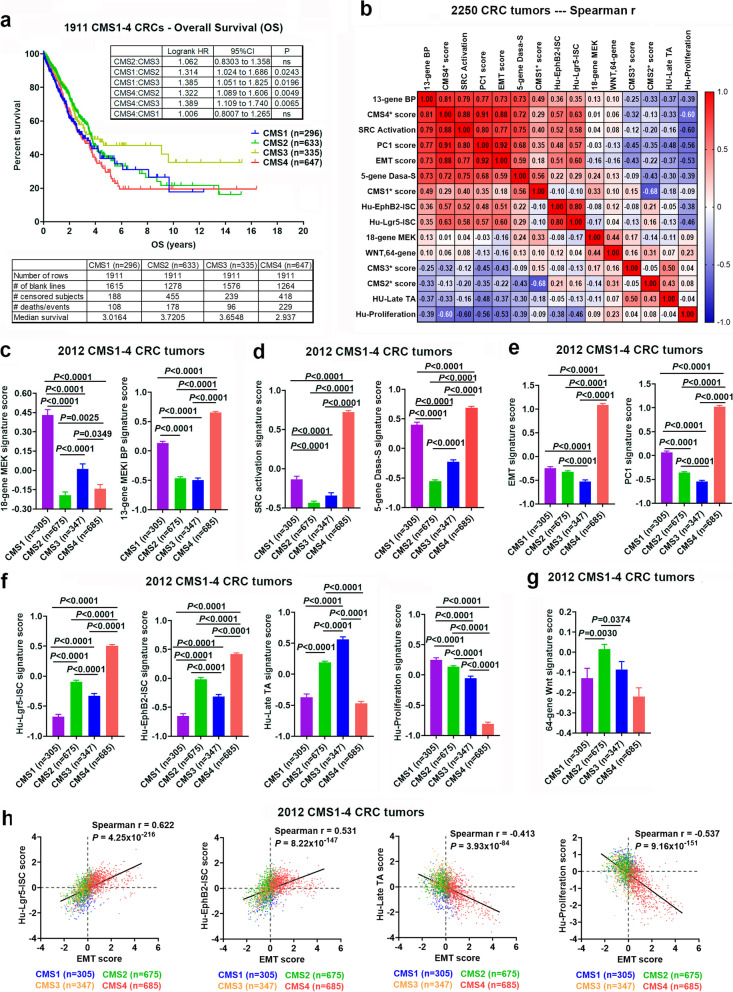
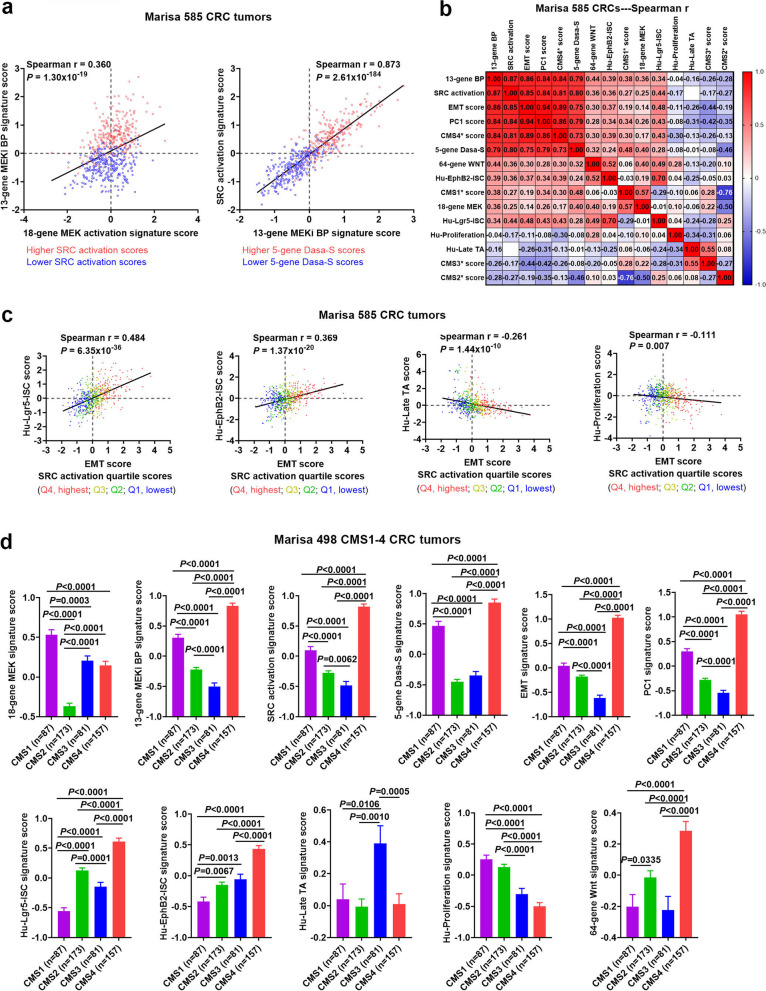
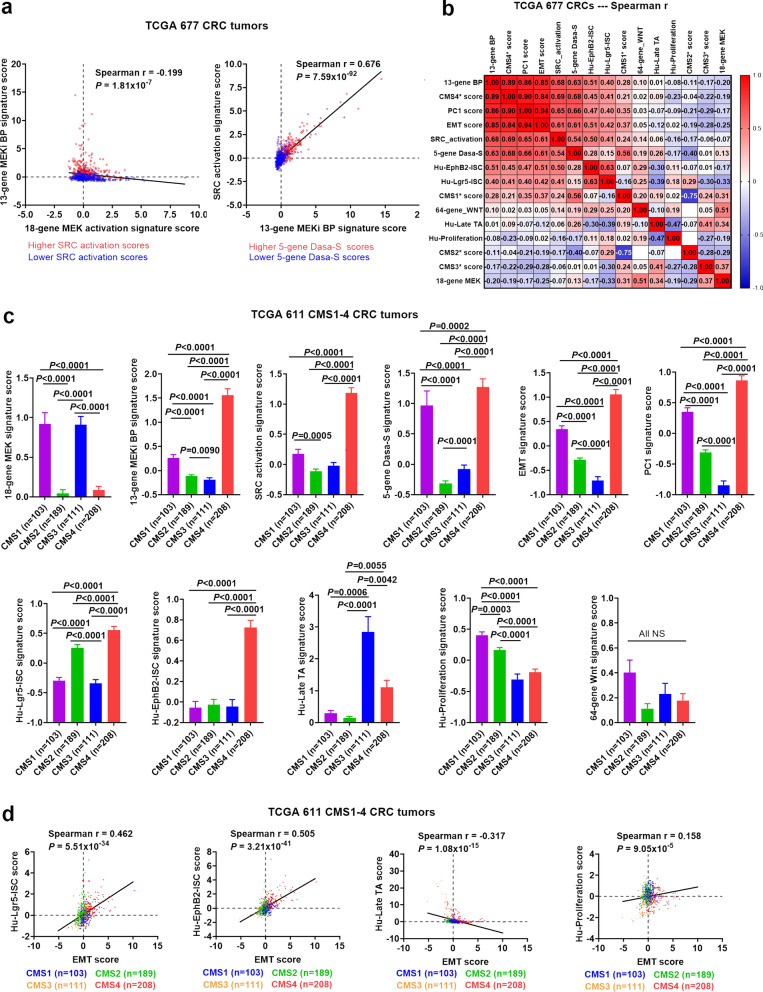
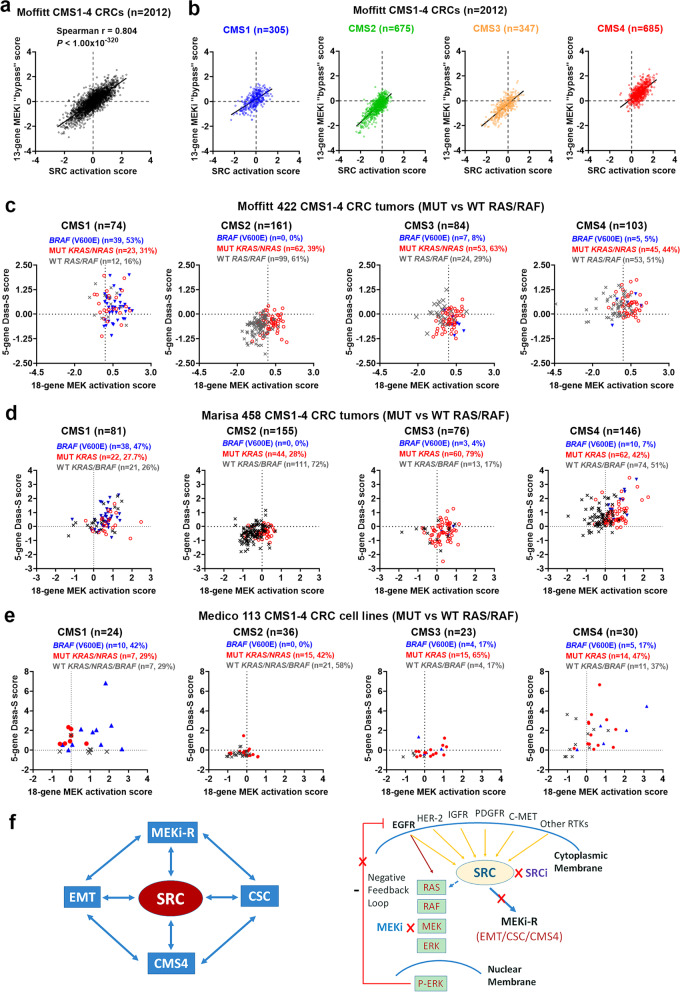
Background: Over half of colorectal cancers (CRCs) are hard-wired to RAS/RAF/MEK/ERK pathway oncogenic signaling. However, the promise of targeted therapeutic inhibitors, has been tempered by disappointing clinical activity, likely due to complex resistance mechanisms that are not well understood. This study aims to investigate MEK inhibitor-associated resistance signaling and identify subpopulation(s) of CRC patients who may be sensitive to biomarker-driven drug combination(s). Methods: We classified 2250 primary and metastatic human CRC tumors by consensus molecular subtypes (CMS). For each tumor, we generated multiple gene expression signature scores measuring MEK pathway activation, MEKi “bypass” resistance, SRC activation, dasatinib sensitivity, EMT, PC1, Hu-Lgr5-ISC, Hu-EphB2-ISC, Hu-Late TA, Hu-Proliferation, and WNT activity. We carried out correlation, survival and other bioinformatic analyses. Validation analyses were performed in two independent publicly available CRC tumor datasets ( n = 585 and n = 677) and a CRC cell line dataset ( n = 154). Results: Here we report a central role of SRC in mediating “bypass”-resistance to MEK inhibition (MEKi), primarily in cancer stem cells (CSCs). Our integrated and comprehensive gene expression signature analyses in 2250 CRC tumors reveal that MEKi-resistance is strikingly-correlated with SRC activation (Spearman P < 10 –320 ), which is similarly associated with EMT (epithelial to mesenchymal transition), regional metastasis and disease recurrence with poor prognosis. Deeper analysis shows that both MEKi-resistance and SRC activation are preferentially associated with a mesenchymal CSC phenotype. This association is validated in additional independent CRC tumor and cell lines datasets. The CMS classification analysis demonstrates the strikingly-distinct associations of CMS1-4 subtypes with the MEKi-resistance and SRC activation. Importantly, MEKi + SRCi sensitivities are predicted to occur predominantly in the KRAS mutant, mesenchymal CSC-like CMS4 CRCs. Conclusions: Large human tumor gene expression datasets representing CRC heterogeneity can provide deep biological insights heretofore not possible with cell line models, suggesting novel repurposed drug combinations. We identified SRC as a common targetable node–-an Achilles’ heel–-in MEKi-targeted therapy-associated resistance in mesenchymal stem-like CRCs, which may help development of a biomarker-driven drug combination (MEKi + SRCi) to treat problematic subpopulations of CRC.
Overview
CoChat Summary
TL;DR
In large CRC gene expression datasets, MEK inhibitor bypass-resistance was strongly correlated with SRC activation, EMT, mesenchymal stem-like phenotype, and CMS4 subtype. The authors propose combined MEK + SRC inhibition as a biomarker-driven strategy for KRAS/NRAS-mutant CMS4 colorectal cancers.
Key findings
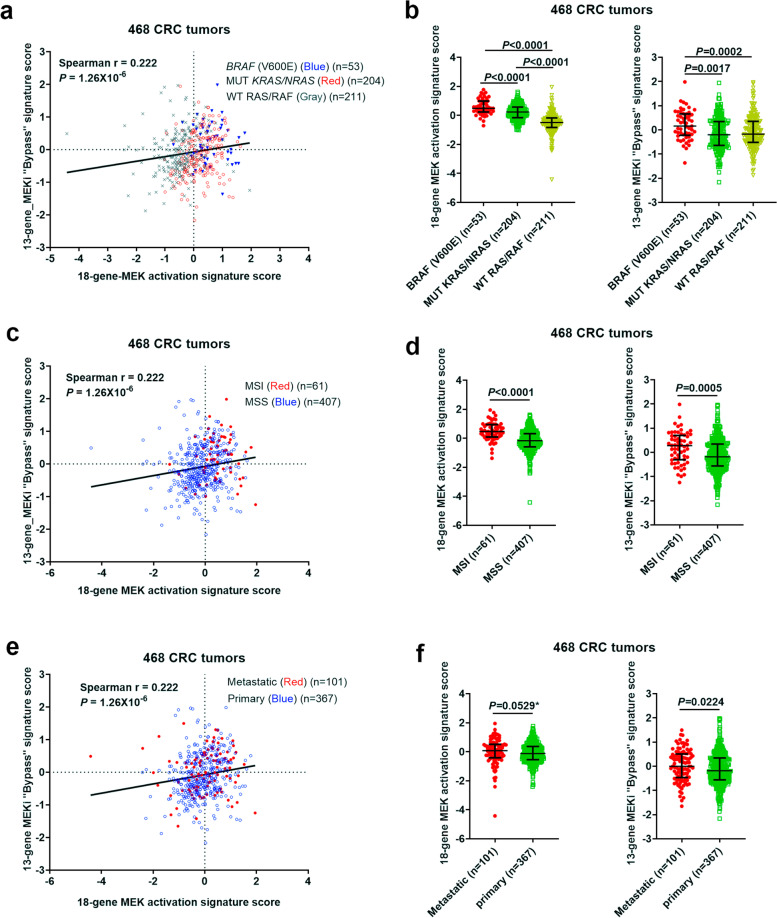
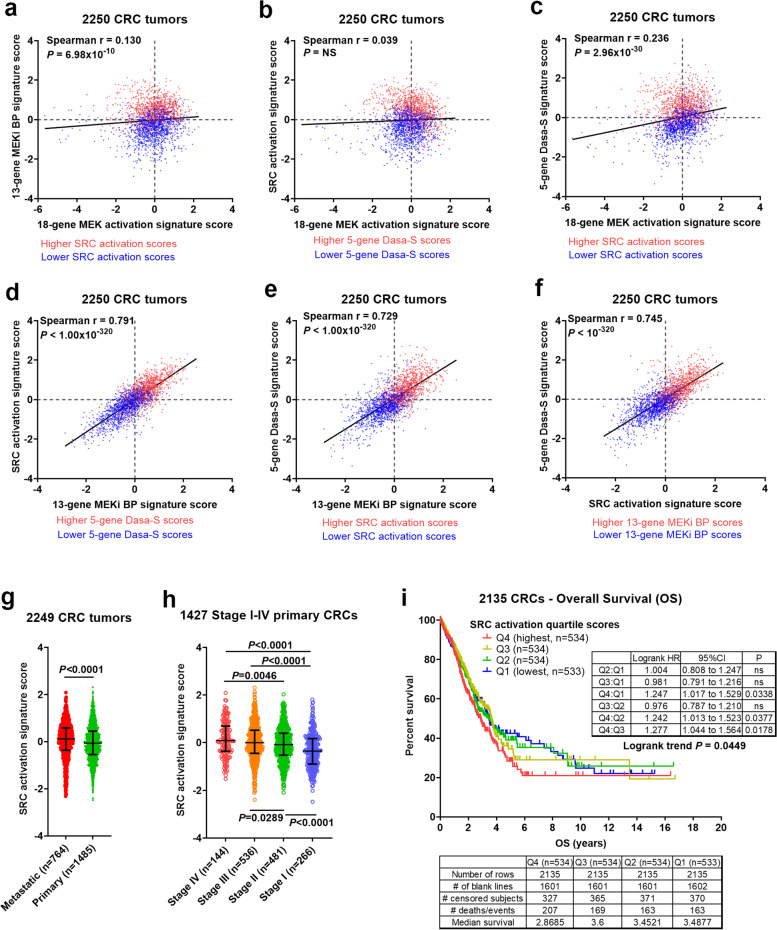
- In 2250 Moffitt CRCs, the 13-gene MEKi “bypass”-resistance score was strongly correlated with SRC activation and 5-gene dasatinib sensitivity scores (both Spearman P < 10–320), but not with the 18-gene MEK activation score.
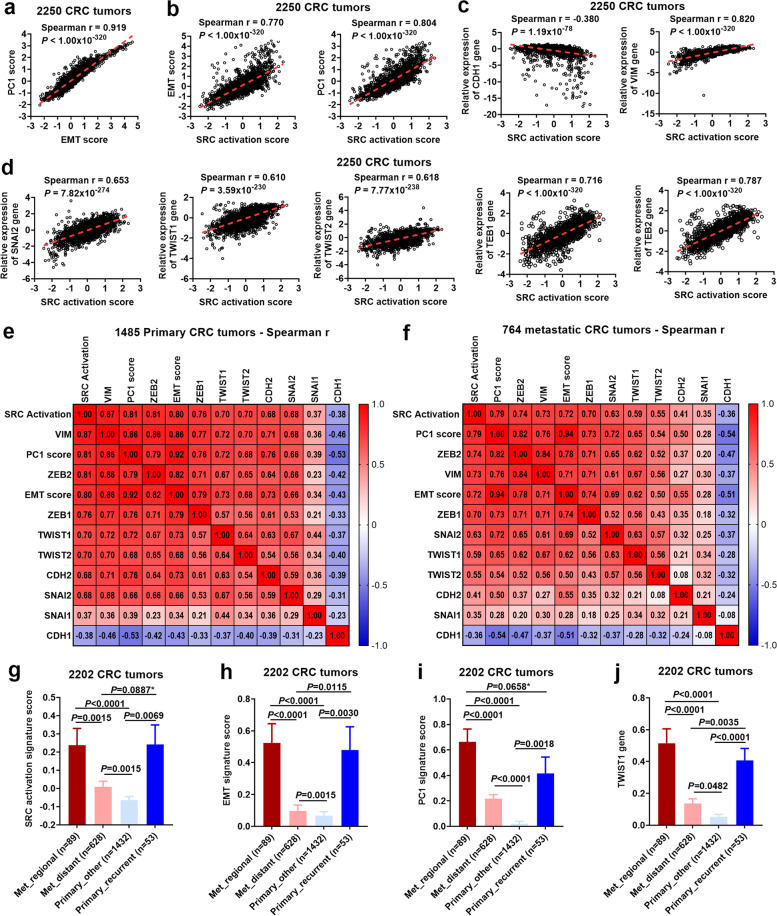
- SRC activation correlated with EMT and PC1 signature scores (both P < 10–320) and was associated with metastasis, primary tumor stage I–IV progression, disease recurrence, and poor overall survival.
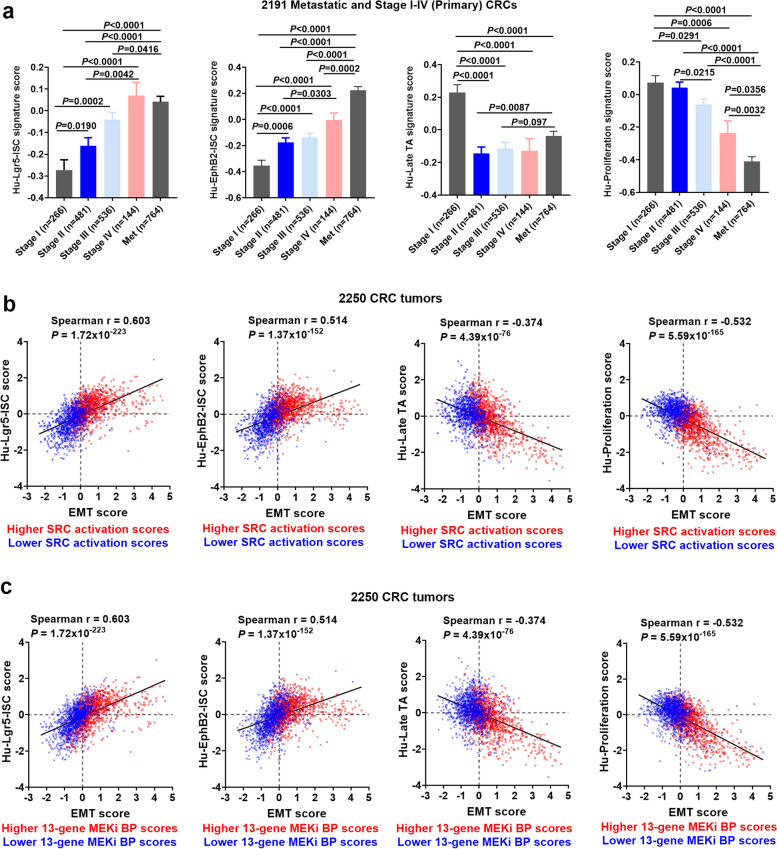
- MEKi resistance and SRC activation were preferentially associated with a mesenchymal CSC-like phenotype and CMS4; CMS4 tumors had the highest 13-gene MEKi-resistance and SRC activation scores, while CMS1 had the second highest.
- MEKi + SRCi sensitivity was predicted predominantly in KRAS/NRAS-mutant CMS4 and BRAF V600E CMS1 tumors; validation included Marisa n = 585, TCGA n = 677, and Medico n = 154 cell lines, with HCT116 (CMS4, KRAS G13D) and LIM2405 (CMS1, BRAF V600E) sensitive in vitro.
Methods
- Integrative gene expression signature analysis in the Moffitt CRC dataset (n = 2250; 1485 primary, 764 metastatic), with validation in Marisa (n = 585), TCGA (n = 677), and Medico CRC cell lines (n = 154); CMS classification used CMScaller.
- Signature scores measured MEK pathway activation, MEKi bypass resistance, SRC activation, dasatinib sensitivity, EMT, PC1, stemness, WNT activity, and other programs; analyses included Spearman correlation, Kaplan–Meier survival, Mann–Whitney, Welch’s t test, and chi-square trend tests.
Limitations
- Stated by the authors: the study is retrospective and primarily in silico bioinformatic; signature scores are surrogates for MEKi or SRCi sensitivity because human tumor data from CRC patients treated with MEKi or SRCi are scarce; MEKi + SRCi has never been tested in CRC patients; cell line data are limited, and more extensive CRC cell line and PDX studies are needed.
- Evident from the text: the findings are correlational and hypothesis-generating, with no prospective clinical validation, and the CMS/signature scores may not directly measure drug response.
Model-written summary. Check it against the paper before relying on it.
Integrity signals
Registry
Cites
Statistics
Figures
Verification
Claims the paper makes
32 Valid · 1 Not valid · 5 Not checked · 72 Own results and interpretations
Every source the paper cites for this claim was checked and supports it.
In the paper
“We recently showed that PTPRS CRISPR-knock out sensitized CRC cells to the inhibitors of ERK in association with decreased SRC activity as measured by P-SRC Y419 [35].”
§ An integrative gene expression signature analysis identifies CMS4 KRAS-mutated colorectal cancers sensitive to combined MEK and SRC targeted therapy > Results > Striking correlation of MEKi resistance with SRC activation in 2250 CRCs
What the sources say
- Supportedcites [35] Davis TB Yang M Wang H Lee C Yeatman TJ Pledger WJ PTPRS drives adaptive resistance to MEK/ERK inhibitors through SRC Oncotarget 2019 10 63 6768 6780 31827720 PMC6887575 source
The Introduction identifies the HCT116 colorectal cancer cells as a CRISPR-generated PTPRS knockout and says they were more sensitive to MEK/ERK inhibitors than parental cells. The Results (Figure 5 and “The role of SRC in resistance to MEK and ERK inhibition”) report decreased SRC activity after ERK inhibition in the knockout cells, measured by SRC-Y419 phosphorylation. No page numbers are provided in our copy. (LLM, conf=0.93)
plainstates a cause- Asserted: passes — The authors put it forward as true.
- Checkable: passes — It can be checked against evidence.
- Load-bearing: passes — The paper’s conclusions depend on it.
- Based: passes — The paper gives a reason why it holds.
- Supported
The cited sources support only part of this claim — read each source’s verdict below.
In the paper
“supporting the notion that some KRAS-mutated CRC tumors are decoupled from RAS/MEK pathway activation [32]”
§ An integrative gene expression signature analysis identifies CMS4 KRAS-mutated colorectal cancers sensitive to combined MEK and SRC targeted therapy > Results > Analysis of MEK activation vs. MEKi resistance signature scores in 468 human CRCs
What the sources say
- Partly supportedcites [32] Loboda A Nebozhyn M Klinghoffer R Frazier J Chastain M Arthur W A gene expression signature of RAS pathway dependence predicts response to PI3K and RAS pathway inhibitors and expands the population of RAS pathway activated tumors BMC Med Genomics 2010 3 26 20591134 PMC2911390 sourceExperimental — accuracy not yet measured
In Results and Discussion (‘Baseline level of RAS pathway signature correlates with drug sensitivity’), two KRAS-mutated lung cancer cell lines had low RAS signature scores and resisted MEK inhibition. The metastatic CRC section relates signature scores to cetuximab response but does not establish that some KRAS-mutated CRC tumors lack RAS/MEK pathway activation. The claim extends a finding from lung cell lines to CRC tumors. (LLM, conf=0.86)
hedged- Asserted: passes — The authors put it forward as true.
- Checkable: passes — It can be checked against evidence.
- Load-bearing: passes — The paper’s conclusions depend on it.
- Based: passes — The paper gives a reason why it holds.
- Partly supported
The cited sources support only part of this claim — read each source’s verdict below.
In the paper
“Thus, AR can rapidly induce drug resistance to targeted therapy in tumors that are natively “sensitive”.”
§ An integrative gene expression signature analysis identifies CMS4 KRAS-mutated colorectal cancers sensitive to combined MEK and SRC targeted therapy > Background
What the sources say
- Partly supportedcites [8] Yaeger R Yao Z Hyman DM Hechtman JF Vakiani E Zhao H Mechanisms of Acquired Resistance to BRAF V600E Inhibition in Colon Cancers Converge on RAF Dimerization and Are Sensitive to Its Inhibition Cancer Res 2017 77 23 6513 6523 28951457 PMC5712250 sourceExperimental — accuracy not yet measured
The Discussion (page unavailable) links adaptive resistance to RAF inhibitors in colorectal cancer with rapid acquired resistance when RAS expression is high. The claim omits that condition and generalizes the finding to targeted therapy and tumors more broadly. (LLM, conf=0.86)
- Partly supportedcites [9] Prahallad A Sun C Huang S Di Nicolantonio F Salazar R Zecchin D Unresponsiveness of colon cancer to BRAF(V600E) inhibition through feedback activation of EGFR Nature 2012 483 7387 100 103 22281684 sourceExperimental — accuracy not yet measured
In the section “feedback activation of EGFR” (p. 2), the paper reports that BRAF inhibition rapidly activates EGFR, allowing continued proliferation despite treatment. But it investigates intrinsically resistant colorectal cancers; its experiment in normally sensitive melanoma cells induced resistance by introducing EGFR, rather than showing adaptive resistance arising in natively sensitive tumors. (LLM, conf=0.86)
- Partly supportedcites [10] Corcoran RB Andre T Atreya CE Schellens JHM Yoshino T Bendell JC Combined BRAF, EGFR, and MEK Inhibition in Patients with BRAF(V600E)-Mutant Colorectal Cancer Cancer Discov 2018 8 4 428 443 29431699 PMC5882509 sourceExperimental — accuracy not yet measured
The Introduction describes adaptive feedback that restores MAPK signaling after initial suppression by a BRAF inhibitor, and the Discussion links MAPK reactivation to resistance in BRAF V600E colorectal cancer (page numbers unavailable). The claim extends this finding to natively sensitive tumors generally, whereas the paper emphasizes that these colorectal tumors respond poorly to BRAF inhibitor monotherapy. (LLM, conf=0.84)
- Partly supportedcites [11] Corcoran RB Ebi H Turke AB Coffee EM Nishino M Cogdill AP EGFR-mediated re-activation of MAPK signaling contributes to insensitivity of BRAF mutant colorectal cancers to RAF inhibition with vemurafenib Cancer Discov 2012 2 3 227 235 22448344 PMC3308191 sourceExperimental — accuracy not yet measured
The Results report that vemurafenib initially suppressed MAPK signaling in BRAF-mutant colorectal cancer cells, but signaling rebounded within hours; the Discussion links this reactivation to reduced drug sensitivity. The paper describes these cancers as relatively insensitive to vemurafenib from the outset, not as tumors that were natively drug-sensitive and then developed resistance. (LLM, conf=0.87)
- Partly supportedcites [12] Chen G Gao C Gao X Zhang DH Kuan SF Burns TF Wnt/beta-Catenin Pathway Activation Mediates Adaptive Resistance to BRAF Inhibition in Colorectal Cancer Mol Cancer Ther 2018 17 4 806 813 29167314 PMC5882543 sourceExperimental — accuracy not yet measured
The Abstract and Introduction describe adaptive signaling that contributes to resistance to BRAF inhibition in colorectal cancer. But they say BRAF inhibitor monotherapy is ineffective in BRAF-mutant colorectal cancer, rather than studying tumors natively sensitive to it. The cited passages also do not establish how rapidly resistance develops. (LLM, conf=0.84)
plainstates a cause- Asserted: passes — The authors put it forward as true.
- Checkable: passes — It can be checked against evidence.
- Load-bearing: passes — The paper’s conclusions depend on it.
- Based: passes — The paper gives a reason why it holds.
- Partly supported
Every source the paper cites for this claim was checked and supports it.
In the paper
“supporting the notion that EMT is arguably the dominant program in human CRC [25]”
§ An integrative gene expression signature analysis identifies CMS4 KRAS-mutated colorectal cancers sensitive to combined MEK and SRC targeted therapy > Results > Strong correlation of SRC activation with EMT, regional metastasis and disease recurrence
What the sources say
- Supportedcites [25] Loboda A Nebozhyn MV Watters JW Buser CA Shaw PM Huang PS EMT is the dominant program in human colon cancer BMC Med Genomics 2011 4 9 21251323 PMC3032646 source
The Abstract Results identify the most dominant pattern of intrinsic gene expression in colon cancer (PC1) and report that it is tightly correlated with the EMT signature. This supports the citing sentence’s qualified characterization of EMT as arguably the dominant program in human CRC. (LLM, conf=0.93)
hedged- Asserted: passes — The authors put it forward as true.
- Checkable: passes — It can be checked against evidence.
- Load-bearing: passes — The paper’s conclusions depend on it.
- Based: passes — The paper gives a reason why it holds.
- Supported
The cited sources support only part of this claim — read each source’s verdict below.
In the paper
“It is noteworthy that the 13-gene signature was developed from cell lines treated with the MEKi for a 72 h period [6] during which AR could be induced [11].”
§ An integrative gene expression signature analysis identifies CMS4 KRAS-mutated colorectal cancers sensitive to combined MEK and SRC targeted therapy > Results > Analysis of MEK activation vs. MEKi resistance signature scores in 468 human CRCs
What the sources say
- Partly supportedcites [6] Dry JR Pavey S Pratilas CA Harbron C Runswick S Hodgson D Transcriptional pathway signatures predict MEK addiction and response to selumetinib (AZD6244) Cancer Res 2010 70 6 2264 2273 20215513 PMC3166660 sourceExperimental — accuracy not yet measured
The Results (Generation of novel candidate multivariate markers) report that the authors identified a 13-gene compensatory-resistance signature. But Materials and Methods (Cell culture and cell viability assays) describes 72 hours as the period used to measure drug effects on cell growth, not as the treatment period from which the signature was developed; it describes a separate drug-treated panel exposed for 8 hours. The adaptive-resistance clause is attached to a different citation and is not assessed here. Page numbers are unavailable in our copy. (LLM, conf=0.90)
- Partly supportedcites [11] Corcoran RB Ebi H Turke AB Coffee EM Nishino M Cogdill AP EGFR-mediated re-activation of MAPK signaling contributes to insensitivity of BRAF mutant colorectal cancers to RAF inhibition with vemurafenib Cancer Discov 2012 2 3 227 235 22448344 PMC3308191 sourceExperimental — accuracy not yet measured
Citation [11] is attached to the claim that adaptive resistance could arise during the 72-hour treatment period, not to the development of the 13-gene signature. The Results and Discussion (pages unavailable) report MAPK reactivation as early as 3–6 hours after treatment with the RAF inhibitor vemurafenib. They do not establish that this occurred during MEK-inhibitor treatment; the Results instead say a MEK inhibitor blocked the observed rebound. (LLM, conf=0.83)
hedgedstates a cause- Asserted: passes — The authors put it forward as true.
- Checkable: passes — It can be checked against evidence.
- Load-bearing: passes — The paper’s conclusions depend on it.
- Based: passes — The paper gives a reason why it holds.
- Partly supported
64 more claims · 11 with their cited sources checked
Create a free account to see all 110 claims and every source verdict.
- Probably not a substantial claim. 17
- It may state two separate claims as one. 30
Claims other papers make about this one
Each is checked against this paper’s own text: does it say what the citing paper says it does?
The cited source says what the claim attributes to it.
In the citing paper
“From gene expression signatures studies, KRAS-mutated CMS4 colorectal cancer was further predicted to respond to combined MEK and SRC inhibition (69).”
From Clinical Challenges of Consensus Molecular Subtype CMS4 Colon Cancer in the Era of Precision Medicine (2024) · cites this paper as [69]
In the citing paper
“| Combined MEK and SRC | | Gene expression signature of sensitivity | (69) |”
From Clinical Challenges of Consensus Molecular Subtype CMS4 Colon Cancer in the Era of Precision Medicine (2024) · cites this paper as [69]
Citations
Cites
Comprehensive molecular characterization of human colon and rectal cancer
The Cancer Genome Atlas Network (2012) · Nature · doi:10.1038/nature11252 · Cited by 8,499
The consensus molecular subtypes of colorectal cancer
Guinney, J., Dienstmann, R., Wang, X., de Reyniès, A., Schlicker, A., Soneson, C., Marisa, L., Roepman, P., Nyamundanda, G., Angelino, P., et al. (2015) · Nature Medicine · doi:10.1038/nm.3967 · Cited by 5,170 · cited 3×
“with the mesenchymal CSC-like CMS4 subtype Heterogenous CRC has been recently classified into four consensus molecular subtypes (CMS1-4) with distinguishing features: CMS1 (MSI, immune), hypermutated, microsatellite unstable and strong immune activation; CMS2 (canonical), epithelial, marked WNT and MYC signaling activ…”
BackgroundNieto, M. A., Huang, R. Y.-J., Jackson, R. A., & Thiery, J. P. (2016) · Cell · doi:10.1016/j.cell.2016.06.028 · Cited by 4,492
Batlle, E., & Clevers, H. (2017) · Nature Medicine · doi:10.1038/nm.4409 · Cited by 2,769 · cited 1×
“Cancer stem cells (CSCs) are thought to be resistant to targeted therapies and responsible for metastasis, disease recurrence and poor outcomes [42, 45].”
BackgroundEMT, CSCs, and drug resistance: the mechanistic link and clinical implications
Shibue, T., & Weinberg, R. A. (2017) · Nature Reviews Clinical Oncology · doi:10.1038/nrclinonc.2017.44 · Cited by 2,539
The Clinical KRAS(G12C) Inhibitor AMG 510 Drives Anti-Tumour Immunity
Canon, J., Rex, K., Saiki, A. Y., Mohr, C., Cooke, K., Bagal, D., Gaida, K., Holt, T., Knutson, C. G., Koppada, N., et al. (2019) · Nature · doi:10.1038/s41586-019-1694-1 · Cited by 2,277 · cited 5×
“Canon J, Rex K, Saiki AY, Mohr C, Cooke K, Bagal D, et al. The clinical KRAS(G12C) inhibitor AMG 510 drives anti-tumour immunity.”
BackgroundInfluentialUnresponsiveness of colon cancer to BRAF(V600E) inhibition through feedback activation of EGFR
Prahallad, A., Sun, C., Huang, S., Di Nicolantonio, F., Salazar, R., Zecchin, D., Beijersbergen, R. L., Bardelli, A., & Bernards, R. (2012) · Nature · doi:10.1038/nature10868 · Cited by 2,051 · cited 3×
“This suggested that, in contrast to that observed with BRAFi treatments [9, 11], MEKi may mediate AR by a mechanism independent of EGFR.”
BackgroundResultToward a Shared Vision for Cancer Genomic Data
Grossman, R. L., Heath, A. P., Ferretti, V., Varmus, H. E., Lowy, D. R., Kibbe, W. A., & Staudt, L. M. (2016) · New England Journal of Medicine · doi:10.1056/nejmp1607591 · Cited by 1,680 · cited 2×
“by two independent CRC tumor datasets We validated the findings from > 2000 Moffitt CRC tumors using two independent, publicly-available CRC human datasets (Marisa 585 CRCs [23] and TCGA 677 CRCs [47], see METHODS).”
MethodHyperactive Ras in developmental disorders and cancer
Schubbert, S., Shannon, K., & Bollag, G. (2007) · Nature Reviews Cancer · doi:10.1038/nrc2109 · Cited by 1,583
Marisa, L., de Reyniès, A., Duval, A., Selves, J., Gaub, M. P., Vescovo, L., Etienne-Grimaldi, M.-C., Schiappa, R., Guenot, D., Ayadi, M., et al. (2013) · PLoS Medicine · doi:10.1371/journal.pmed.1001453 · Cited by 1,507 · cited 4×
“by two independent CRC tumor datasets We validated the findings from > 2000 Moffitt CRC tumors using two independent, publicly-available CRC human datasets (Marisa 585 CRCs [23] and TCGA 677 CRCs [47], see METHODS).”
MethodInfluentialYeatman, T. J. (2004) · Nature Reviews Cancer · doi:10.1038/nrc1366 · Cited by 1,113 · cited 2×
“In response signaling from a variety of RTKs (including EGFR, HER2, HER4, PDGFR, VEGFR, FGFR4, GPCR, C-MET, IL-4/IL13/IL-13Rα2, IL-6ST/ IL-6R/IL-11R), SRC has been reported to mediate diverse cell signaling pathways including RAS/MAPK (proliferation), PI3K/AKT (survival), FAK (adhesion/migration/ EMT), and STAT3 (angi…”
BackgroundSelf-citationCorcoran, R. B., Ebi, H., Turke, A. B., Coffee, E. M., Nishino, M., Cogdill, A. P., Brown, R. D., Della Pelle, P., Dias-Santagata, D., Hung, K. E., et al. (2012) · Cancer Discovery · doi:10.1158/2159-8290.cd-11-0341 · Cited by 1,022 · cited 3×
“This suggested that, in contrast to that observed with BRAFi treatments [9, 11], MEKi may mediate AR by a mechanism independent of EGFR.”
BackgroundMethodResultMerlos-Suárez, A., Barriga, F. M., Jung, P., Iglesias, M., Céspedes, M. V., Rossell, D., Sevillano, M., Hernando-Momblona, X., da Silva-Diz, V., Muñoz, P., et al. (2011) · Cell Stem Cell · doi:10.1016/j.stem.2011.02.020 · Cited by 934
Molecular Mechanisms of Resistance to Cetuximab and Panitumumab in Colorectal Cancer
Bardelli, A., & Siena, S. (2010) · Journal of Clinical Oncology · doi:10.1200/jco.2009.24.6116 · Cited by 746 · cited 1×
“Two well-characterized EGFRi therapies (cetuximab, panitumumab) have been FDAapproved in the first and second line, but only for wildtype KRAS/NRAS metastatic CRC patients [14].”
Backgroundc-Src and cooperating partners in human cancer
Ishizawar, R., & Parsons, S. J. (2004) · Cancer Cell · doi:10.1016/j.ccr.2004.09.001 · Cited by 617
MEK1 and MEK2 inhibitors and cancer therapy: the long and winding road
Caunt, C. J., Sale, M. J., Smith, P. D., & Cook, S. J. (2015) · Nature Reviews Cancer · doi:10.1038/nrc4000 · Cited by 606 · cited 1×
“In addition, it is formally possible that these RTKs may also directly contribute to intrinsic resistance mechanisms to MEK inhibitors [5].”
BackgroundCombined BRAF, EGFR, and MEK Inhibition in Patients with BRAF V600E-Mutant Colorectal Cancer
Corcoran, R. B., André, T., Atreya, C. E., Schellens, J. H. M., Yoshino, T., Bendell, J. C., Hollebecque, A., McRee, A. J., Siena, S., Middleton, G., et al. (2018) · Cancer Discovery · doi:10.1158/2159-8290.cd-17-1226 · Cited by 592 · cited 3×
“For example, while MEKi (selumetinib, AZD6244) may mediate feedback activation of EGFR in BRAF (V600E) CRC cells [9], no clinical responses were observed in CRC patients treated with combination of MEKi with EGFRi [10].”
BackgroundVanharanta, S., & Massagué, J. (2013) · Cancer Cell · doi:10.1016/j.ccr.2013.09.007 · Cited by 563 · cited 1×
“Cancer stem cells (CSCs) are thought to be resistant to targeted therapies and responsible for metastasis, disease recurrence and poor outcomes [42, 45].”
BackgroundRoot development in Arabidopsis: four mutants with dramatically altered root morphogenesis
Benfey, P. N., Linstead, P. J., Roberts, K., Schiefelbein, J. W., Hauser, M.-T., & Aeschbacher, R. A. (1993) · Development · doi:10.1242/dev.119.1.57 · Cited by 558
Activating SRC mutation in a subset of advanced human colon cancers
Irby, R. B., Mao, W., Coppola, D., Kang, J., Loubeau, J. M., Trudeau, W., Karl, R., Fujita, D. J., Jove, R., & Yeatman, T. J. (1999) · Nature Genetics · doi:10.1038/5971 · Cited by 489 · cited 2×
“Previously, our laboratory was the first to document that human CRC truncating mutations in the negative regulatory domain of SRC result in SRC activation [20].”
BackgroundSelf-citationCMScaller: an R package for consensus molecular subtyping of colorectal cancer pre-clinical models
Eide, P. W., Bruun, J., Lothe, R. A., & Sveen, A. (2017) · Scientific Reports · doi:10.1038/s41598-017-16747-x · Cited by 437 · cited 2×
“00) generated by the CMScaller, which measure the distance of a tumor from the CMS1, CMS2, CMS3 and CMS4 templates, respectively [31].”
MethodIncrease in activity and level of pp60c-src in progressive stages of human colorectal cancer.
Talamonti, M. S., Roh, M. S., Curley, S. A., & Gallick, G. E. (1993) · Journal of Clinical Investigation · doi:10.1172/jci116200 · Cited by 399
Huang, F., Reeves, K., Han, X., Fairchild, C., Platero, S., Wong, T. W., Lee, F., Shaw, P., & Clark, E. (2007) · Cancer Research · doi:10.1158/0008-5472.can-06-3633 · Cited by 344 · cited 4×
“The second SRC signature score was derived from 5 upregulated genes of a 6-gene dasatinib sensitivity (Dasa-S) signature that was developed in breast cell lines and validated in lung cell lines to predict sensitivity to dasatinib in solid tumors including breast, lung and ovary [28] (see Fig.”
BackgroundInfluentialSun, C., Hobor, S., Bertotti, A., Zecchin, D., Huang, S., Galimi, F., Cottino, F., Prahallad, A., Grernrum, W., Tzani, A., et al. (2014) · Cell Reports · doi:10.1016/j.celrep.2014.02.045 · Cited by 304 · cited 1×
“This notion is supported by the observation that MEKi (selumtinib) induced MYC-dependent transcriptional upregulation of the ERBB3 receptor tyrosine kinase in KRAS-mutated CRC cell lines [7].”
BackgroundThe molecular landscape of colorectal cancer cell lines unveils clinically actionable kinase targets
Medico, E., Russo, M., Picco, G., Cancelliere, C., Valtorta, E., Corti, G., Buscarino, M., Isella, C., Lamba, S., Martinoglio, B., et al. (2015) · Nature Communications · doi:10.1038/ncomms8002 · Cited by 302 · cited 2×
“Recently, a large number of human CRC cell lines were reported to be analyzed for genetic and transcriptional profiling of CRC cells and in vitro cetuximab sensitivity [24].”
BackgroundActivation of the pp60c-src protein kinase is an early event in colonic carcinogenesis.
Cartwright, C. A., Meisler, A. I., & Eckhart, W. (1990) · Proceedings of the National Academy of Sciences · doi:10.1073/pnas.87.2.558 · Cited by 277
EMT is the dominant program in human colon cancer
Loboda, A., Nebozhyn, M. V., Watters, J. W., Buser, C. A., Shaw, P. M., Huang, P. S., Van't Veer, L., Tollenaar, R. A., Jackson, D. B., Agrawal, D., et al. (2011) · BMC Medical Genomics · doi:10.1186/1755-8794-4-9 · Cited by 274 · cited 5×
“92, P < 10–135) with the most dominant pattern of intrinsic gene expression in colon cancer (PC1, the first principal component)–both in gene identity and directionality in 326 colon tumors [25].”
BackgroundMethodSelf-citationTranscriptional Pathway Signatures Predict MEK Addiction and Response to Selumetinib (AZD6244)
Dry, J. R., Pavey, S., Pratilas, C. A., Harbron, C., Runswick, S., Hodgson, D., Chresta, C., McCormack, R., Byrne, N., Cockerill, M., et al. (2010) · Cancer Research · doi:10.1158/0008-5472.can-09-1577 · Cited by 262 · cited 5×
“Two gene expression signatures predictive of response/resistance to MEKi have been developed using large cell line panels of diverse tumor types including melanoma, lung and colon as reported by Dry et al.[6].”
BackgroundMethodResultInfluentialvan Geel, R. M. J. M., Tabernero, J., Elez, E., Bendell, J. C., Spreafico, A., Schuler, M., Yoshino, T., Delord, J.-P., Yamada, Y., Lolkema, M. P., et al. (2017) · Cancer Discovery · doi:10.1158/2159-8290.cd-16-0795 · Cited by 232 · cited 1×
“Recent clinical trials report that combined BRAF and EGFR inhibition significantly improves response rates in BRAF (V600E) metastatic CRC patients (10% or 19%) [10, 13], and has now become the FDA-approved, standard of care.”
BackgroundHerbst, A., Jurinovic, V., Krebs, S., Thieme, S. E., Blum, H., Göke, B., & Kolligs, F. T. (2014) · BMC Genomics · doi:10.1186/1471-2164-15-74 · Cited by 212
A multigene mutation classification of 468 colorectal cancers reveals a prognostic role for APC
Schell, M. J., Yang, M., Teer, J. K., Lo, F. Y., Madan, A., Coppola, D., Monteiro, A. N. A., Nebozhyn, M. V., Yue, B., Loboda, A., et al. (2016) · Nature Communications · doi:10.1038/ncomms11743 · Cited by 207 · cited 5×
“The 2250 CRC tumors included a subset of 468 tumors we previously analyzed with global gene expression data, MSI status, and targeted gene sequencing of 1321 cancer-related genes [3, 4, 22].”
MethodSelf-citationMao, W., Irby, R., Coppola, D., Fu, L., Wloch, M., Turner, J., Yu, H., Garcia, R., Jove, R., & Yeatman, T. J. (1997) · Oncogene · doi:10.1038/sj.onc.1201496 · Cited by 200
Self-citationMEK inhibitors activate Wnt signalling and induce stem cell plasticity in colorectal cancer
Zhan, T., Ambrosi, G., Wandmacher, A. M., Rauscher, B., Betge, J., Rindtorff, N., Häussler, R. S., Hinsenkamp, I., Bamberg, L., Hessling, B., et al. (2019) · Nature Communications · doi:10.1038/s41467-019-09898-0 · Cited by 189 · cited 1×
“Recently, MEK inhibitors were reported to activate Wnt signaling and induce stem cell plasticity in CRC in vitro [51].”
BackgroundLoboda, A., Nebozhyn, M., Klinghoffer, R., Frazier, J., Chastain, M., Arthur, W., Roberts, B., Zhang, T., Chenard, M., Haines, B., et al. (2010) · BMC Medical Genomics · doi:10.1186/1755-8794-3-26 · Cited by 152 · cited 3×
“scores in 468 human CRCs Due to numerous genetic changes in tumors and the complexity of mechanisms underlying RAS signaling pathway, a gene expression signature-based pathway readout is thought to be more robust than a single molecular indicator in predicting RAS/MEK pathway activation, which is a pre-requisite for d…”
BackgroundMethodSelf-citationImplementing Personalized Medicine in a Cancer Center
Fenstermacher, D. A., Wenham, R. M., Rollison, D. E., & Dalton, W. S. (2011) · The Cancer Journal · doi:10.1097/ppo.0b013e318238216e · Cited by 149 · cited 3×
“In all cases, tissue and clinical data were collected under the approval of the Institutional Review Board of Moffitt Cancer Center as part of the Total Cancer Care® (TCC) project (MCC14690) [21].”
BackgroundMethodInfluentialChen, G., Gao, C., Gao, X., Zhang, D. H., Kuan, S.-F., Burns, T. F., & Hu, J. (2018) · Molecular Cancer Therapeutics · doi:10.1158/1535-7163.mct-17-0561 · Cited by 104
Yaeger, R., Yao, Z., Hyman, D. M., Hechtman, J. F., Vakiani, E., Zhao, H., Su, W., Wang, L., Joelson, A., Cercek, A., et al. (2017) · Cancer Research · doi:10.1158/0008-5472.can-17-0768 · Cited by 94
(1987) · PubMed · Cited by 87
Regulation of Src Family Kinases during Colorectal Cancer Development and Its Clinical Implications
Jin, W. (2020) · Cancers · doi:10.3390/cancers12051339 · Cited by 86 · cited 1×
“In response signaling from a variety of RTKs (including EGFR, HER2, HER4, PDGFR, VEGFR, FGFR4, GPCR, C-MET, IL-4/IL13/IL-13Rα2, IL-6ST/ IL-6R/IL-11R), SRC has been reported to mediate diverse cell signaling pathways including RAS/MAPK (proliferation), PI3K/AKT (survival), FAK (adhesion/migration/ EMT), and STAT3 (angi…”
BackgroundAnderson, G. R., Winter, P. S., Lin, K. H., Nussbaum, D. P., Cakir, M., Stein, E. M., Soderquist, R. S., Crawford, L., Leeds, J. C., Newcomb, R., et al. (2017) · Cell Reports · doi:10.1016/j.celrep.2017.07.006 · Cited by 80
c‐Src drives intestinal regeneration and transformation
Cordero, J. B., Ridgway, R. A., Valeri, N., Nixon, C., Frame, M. C., Muller, W. J., Vidal, M., & Sansom, O. J. (2014) · The EMBO Journal · doi:10.1002/embj.201387454 · Cited by 77 · cited 2×
“activation with “mesenchymal-like” stemness SRC is necessary and sufficient to drive intestinal stem cell (ISC) proliferation during tissue self-renewal, regeneration and tumorigenesis in vivo [44].”
BackgroundTWIST1 Overexpression is Associated with Nodal Invasion and Male Sex in Primary Colorectal Cancer
Valdés-Mora, F., Gómez del Pulgar, T., Bandrés, E., Cejas, P., Ramírez de Molina, A., Pérez-Palacios, R., Gallego-Ortega, D., García-Cabezas, M. A., Casado, E., Larrauri, J., et al. (2009) · Annals of Surgical Oncology · doi:10.1245/s10434-008-0166-x · Cited by 75 · cited 1×
“Note that we previously reported the PC1 signature predicted disease progression and recurrence in CRC [25] whereas TWIST1 overexpression was reported to be associated with nodal invasion (regional metastasis) in primary colorectal cancer [48].”
BackgroundCombination of MEK and SRC inhibition suppresses melanoma cell growth and invasion
Ferguson, J., Arozarena, I., Ehrhardt, M., & Wellbrock, C. (2013) · Oncogene · doi:10.1038/onc.2012.25 · Cited by 68
Simpkins, F., Jang, K., Yoon, H., Hew, K. E., Kim, M., Azzam, D. J., Sun, J., Zhao, D., Ince, T. A., Liu, W., et al. (2018) · Clinical Cancer Research · doi:10.1158/1078-0432.ccr-17-3697 · Cited by 67
The Src family of protein tyrosine kinases: regulation and functions
Courtneidge, S. A., Fumagalli, S., Koegl, M., Superti-Furga, G., & Twamley-Stein, G. M. (1993) · Development · doi:10.1242/dev.119.supplement.57 · Cited by 66
Arcaroli, J. J., Touban, B. M., Tan, A. C., Varella-Garcia, M., Powell, R. W., Eckhardt, S. G., Elvin, P., Gao, D., & Messersmith, W. A. (2010) · Clinical Cancer Research · doi:10.1158/1078-0432.ccr-10-0066 · Cited by 64 · cited 1×
“Notably, the DOWN gene IGFBP2 was excluded here because it appeared to be not predictive of SRCi sensitivity in CRC cell lines and explant tumors [30].”
BackgroundInvestigation of colorectal cancer in accordance with consensus molecular subtype classification
Sawayama, H., Miyamoto, Y., Ogawa, K., Yoshida, N., & Baba, H. (2020) · Annals of Gastroenterological Surgery · doi:10.1002/ags3.12362 · Cited by 60 · cited 2×
“We found that both poorlydifferentiated CMS4 (mesenchymal, stem cell subtype) and CMS1 (MSI, immune subtype) tumors [52] were associated with SRC-mediated MEKi resistance.”
BackgroundTranslational evidence on the role of Src kinase and activated Src kinase in invasive breast cancer
Elsberger, B. (2014) · Critical Reviews in Oncology/Hematology · doi:10.1016/j.critrevonc.2013.12.009 · Cited by 54 · cited 1×
“In response signaling from a variety of RTKs (including EGFR, HER2, HER4, PDGFR, VEGFR, FGFR4, GPCR, C-MET, IL-4/IL13/IL-13Rα2, IL-6ST/ IL-6R/IL-11R), SRC has been reported to mediate diverse cell signaling pathways including RAS/MAPK (proliferation), PI3K/AKT (survival), FAK (adhesion/migration/ EMT), and STAT3 (angi…”
BackgroundSchell, M. J., Yang, M., Missiaglia, E., Delorenzi, M., Soneson, C., Yue, B., Nebozhyn, M. V., Loboda, A., Bloom, G., & Yeatman, T. J. (2016) · Clinical Cancer Research · doi:10.1158/1078-0432.ccr-15-0143 · Cited by 42 · cited 5×
“Note that for each tumor, we generated and standardized four signature scores from the humanized signature gene lists [29] (see Methods), as we did previously for a composite prognostic signature [4].”
BackgroundMethodInfluentialSelf-citationRao, G., Kim, I.-K., Conforti, F., Liu, J., Zhang, Y.-W., & Giaccone, G. (2018) · European Journal of Cancer · doi:10.1016/j.ejca.2018.05.013 · Cited by 34
c-Src-Mediated Epithelial Cell Migration and Invasion Regulated by PDZ Binding Site
Baumgartner, M., Radziwill, G., Lorger, M., Weiss, A., & Moelling, K. (2008) · Molecular and Cellular Biology · doi:10.1128/mcb.01024-07 · Cited by 28 · cited 2×
“Here, the first SRC activation score was generated from the transcriptional signature induced by a metastasispromoting (human) SRC mutant harboring an L − > A mutation at the C-terminal GENL motif of SRC[27, 36] (see Methods).”
BackgroundMethodDavis, T. B., Yang, M., Schell, M. J., Wang, H., Ma, L., Pledger, W. J., & Yeatman, T. J. (2018) · Scientific Reports · doi:10.1038/s41598-018-27584-x · Cited by 27 · cited 9×
“Striking correlation of MEKi resistance with SRC activation in 2250 CRCs We previously reported that PTPRS negatively regulated ERK activity in CRC cells [34].”
BackgroundSelf-citationYuan, M., Xu, L.-F., Zhang, J., Kong, S.-Y., Wu, M., Lao, Y.-Z., Zhou, H., Zhang, L., & Xu, H. (2019) · Frontiers in Oncology · doi:10.3389/fonc.2019.00586 · Cited by 26
Adaptation of a RAS pathway activation signature from FF to FFPE tissues in colorectal cancer
Omolo, B., Yang, M., Lo, F. Y., Schell, M. J., Austin, S., Howard, K., Madan, A., & Yeatman, T. J. (2016) · BMC Medical Genomics · doi:10.1186/s12920-016-0225-2 · Cited by 25 · cited 1×
“formalin-fixed, paraffin-embedded (FFPE) tissues [33], as a means to predict RAS/MEK pathway dependence regardless of RAS/RAF mutation status.”
MethodSelf-citationRepurposing EGFR Inhibitor Utility in Colorectal Cancer in Mutant APC and TP53 Subpopulations
Yang, M., Schell, M. J., Loboda, A. P., Nebozhyn, M., Li, J., Teer, J. K., Pledger, W. J., & Yeatman, T. J. (2019) · Cancer Epidemiology Biomarkers & Prevention · doi:10.1158/1055-9965.epi-18-1383 · Cited by 25 · cited 4×
“We previously used these cell line data to validate a cetuximab sensitivity signature score we developed [22].”
MethodInfluentialSelf-citationPTPRS drives adaptive resistance to MEK/ERK inhibitors through SRC
Davis, T. B., Yang, M., Wang, H., Lee, C., Yeatman, T. J., & Pledger, W. J. (2019) · Oncotarget · doi:10.18632/oncotarget.27335 · Cited by 11
Self-citationTranscriptional signature induced by a metastasis‐promoting c‐Src mutant in a human breast cell line
Broecker, F., Hardt, C., Herwig, R., Timmermann, B., Kerick, M., Wunderlich, A., Schweiger, M. R., Borsig, L., Heikenwalder, M., Lehrach, H., et al. (2016) · The FEBS Journal · doi:10.1111/febs.13694 · Cited by 9 · cited 4×
“This 435-gene signature included (i) 61 up-regulated genes (UP), (ii) 50 down-regulated genes (DOWN), (iii) 163 “ + inf” genes that represented genes detectable in cells expressing SRC mutant but not detectable in the control cells), and (iv) 161 “-inf” genes that were detectable in the control cells but not detectabl…”
BackgroundMethodInfluentialActivation of human pp60c-src.
Bjorge, J. D., O'Connor, T. J., & Fujita, D. J. (1996) · PubMed · doi:10.1139/o96-052 · Cited by 2
Cited by
Soundararajan, R., Maurin, M. M., Rodriguez-Silva, J. A., Upadhyay, G., Alden, A. J., Gowda, S. G. B., Schell, M. J., Yang, M., Levine, N. J., Gowda, D., et al. (2024) · Gut · doi:10.1136/gutjnl-2024-332535 · Cited by 64
Self-citationMouillet-Richard, S., Cazelles, A., Sroussi, M., Gallois, C., Taieb, J., & Laurent-Puig, P. (2024) · Clinical Cancer Research · doi:10.1158/1078-0432.ccr-23-3964 · Cited by 43
“From gene expression signatures studies, KRAS -mutated CMS4colorectal cancer was further predicted to respond to combined MEK and SRC inhibition (69).”
BackgroundFan, X., Gong, M., Yu, H., et al. (2022) · Stem Cell Research & Therapy · doi:10.1186/s13287-022-03087-5 · Cited by 26
“Src is a nonreceptor cytoplasmic kinase that mediates formation of focal adhesions and arrangement of actin filaments for cell extension, and Src activation contributes to epithelial-mesenchymal transformation, a key event in tumor stem cell development [43, 44].”
BackgroundThe potent role of Src kinase-regulating glucose metabolism in cancer
Shao, W., Liu, L., Zheng, F., Ma, Y., & Zhang, J. (2022) · Biochemical Pharmacology · doi:10.1016/j.bcp.2022.115333 · Cited by 15
Anti-Cancer and Pro-Immune Effects of Lauric Acid on Colorectal Cancer Cells
Mori, S., Fujiwara‐Tani, R., Ogata, R., Ohmori, H., Fujii, K., Luo, Y., Sasaki, T., Nishiguchi, Y., BHAWAL, U. K., Kishi, S., et al. (2025) · International Journal of Molecular Sciences · doi:10.3390/ijms26051953 · Cited by 15
“For example, mutations in pathways such as RAS/RAF/mitogen-activated protein kinase complicate the efficacy of specific targeted therapies, leading to treatment resistance and limited treatment options [10,11].”
Metadata
- Authors
- Yang, M., Davis, T. B., Pflieger, L., Nebozhyn, M. V., Loboda, A., Wang, H., Schell, M. J., Thota, R., Pledger, W. J., & Yeatman, T. J.
- Affiliations
- University of South Florida (US)
- Intermountain Healthcare (US)
- Moffitt Cancer Center (US)
- University of Utah (US)
- Corresponding author
- Yeatman, Timothy J.
- ORCID
- Venue
- BMC Cancer
- Published
- 2022-03-10
- Volume
- 22
- Issue
- 1
- Pages
- 256-256
- ISSN
- 1471-2407 (ISSN-L)
- PMC
- PMC8908604
- OpenAlex
- W4220962445
- Semantic Scholar
- ab7c805285579b01d5ecf3c48e85d57ffe152ae9
- Cited by
- 22
- References
- 58
- Citations by year
- 2026: 8 · 2025: 6 · 2024: 4 · 2023: 1 · 2022: 3
- FWCI
- 1.57
- Type
- journal article
- Language
- en
- Open access
- gold
- doi.org
- Licence
- cc-by
- creativecommons.org/licenses/by/4.0 (tdm)
- creativecommons.org/licenses/by/4.0 (vor)
- Locations
- BMC Cancer (publishedVersion, cc-by)
- PubMed Central (publishedVersion, cc-by)
- PubMed (publishedVersion)
- DOAJ (DOAJ: Directory of Open Access Journals) (submittedVersion, cc-by-sa)
- Funders
- Intermountain Healthcare
- National Institutes of Health
- National Cancer Institute (R21CA256372, UH3CA227955, R21CA255312)
- Topics
- Health Sciences › Medicine › Oncology › Colorectal Cancer Treatments and Studies
- Life Sciences › Biochemistry, Genetics and Molecular Biology › Molecular Biology › Melanoma and MAPK Pathways
- Health Sciences › Medicine › Oncology › Colorectal Cancer Surgical Treatments
- Keywords
- colorectal cancer, KRAS mutation, MEK inhibitor resistance, Src kinase inhibition, dasatinib, consensus molecular subtypes, mesenchymal stem-like cells, epithelial-mesenchymal transition, cancer stem cells, RAS/MAPK pathway, gene expression signatures, Wnt signaling, drug repurposing, biomarker-guided therapy
- MeSH terms
- Antineoplastic Agents, Humans, Colorectal Neoplasms, Proto-Oncogene Proteins p21(ras), Drug Resistance, Neoplasm, src-Family Kinases, Mitogen-Activated Protein Kinase Kinases, MAP Kinase Signaling System, Protein Kinase Inhibitors, Epithelial-Mesenchymal Transition, Transcriptome
About these checks
Registry, retraction, Cites and statistics results are computed, not judged, with one exception: a printed reference that no index lists is read once by a model before it counts as a citation error. Claims are extracted by a model and kept only when their quote appears verbatim in the text; each cited source is then checked, with a model’s help, for whether it says what the claim relies on. Those verdicts can be wrong — read the claim’s quote and the cited source before relying on one.
The claim verdicts this report counts are experimental: their accuracy is not yet measured.
A language model drew the claims from the paper on 2026-10-10, under version 3 of the claim definition (model deepseek-v4.1-flash, prompt extract-v3).
A second model labelled each claim on 2026-10-10 (model jev-1.13-20260917, definition revision gold-guideline-v0.2).
Cited sources are checked with a language model’s help (gpt-6-sol).
Statistics and arithmetic are recomputed, not judged.
Confidence bands are shown only for fields calibrated on our annotated test set. None is calibrated yet, so no band is shown.
What counts as a claim ›How we measure confidence ›How we check this ›
Are you an author, or do you see a problem with this page? Request a review
Data sources
Bibliographic data: Semantic Scholar, OpenAlex, Crossref.
Contains information from the Semantic Scholar Academic Graph Datasets, made available under the ODC Attribution License (ODC-BY 1.0).
Semantic Scholar’s data is described in: Kinney, R., et al. (2023). The Semantic Scholar Open Data Platform. arXiv:2301.10140.
