

Characterization of gut microbiota in children with pulmonary tuberculosis
Open accessThe DOI matches its Crossref record; 40 of the 41 references it cites were found in a registry or an index.
Abstract
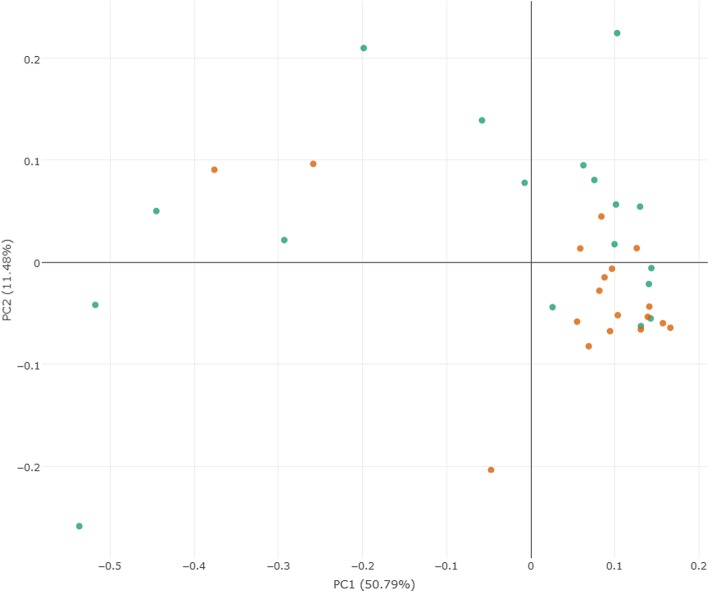
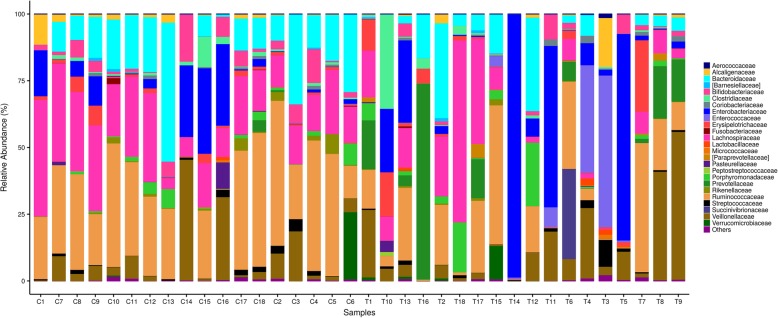
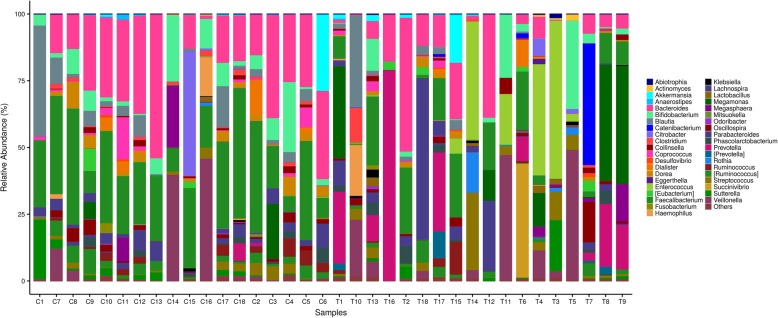
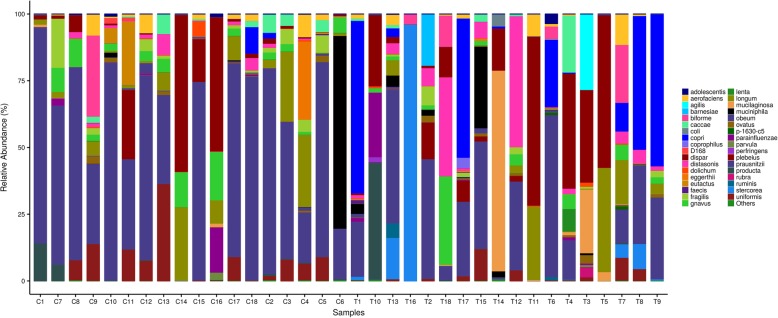
Background: Gut microbiota plays a critical role in many important physiological processes and is linked with various pulmonary infectious diseases. The relationship between pulmonary tuberculosis (PTB) and gut microbiota has been poorly studied. The present study aimed to characterize gut microbiota in pediatric patients with PTB. Methods: A case-controlled study was executed for the characterization of gut microbiota in pediatric PTB patients. Fecal samples were collected from the PTB patients and healthy controls upon admission. In addition, a one-month follow-up assessment was performed to investigate alterations in the gut microbiota post anti-tuberculosis treatment. 16SrDNA sequencing analysis of fecal DNA was completed on the Illumina MiSeq platform. Results: Compared with healthy controls, the gut microbiota of pediatric patients with PTB was characterized by decreased microbial diversity. PTB patients further presented an up-regulation of the pro-inflammatory bacteria Prevotella,the opportunistic pathogen Enterococcus,as well as a reduction of beneficial bacteria including Ruminococcaceae,Bifidobacteriaceae and prausnitzii.One-month after anti-tuberculosis therapy, the richness of gut microbiota in PTB patients was distinctly depleted. Conclusions: The gut microbiota of pediatric patients with PTB was significantly distinct from healthy controls. Additionally, the richness of gut microbiota in PTB patients decreased after one-month anti-tuberculosis treatment. It is hypothesized that the homeostasis of gut microbiota in PTB patients may affect the pathogenies of PTB by de-regulation of the hosts’ immune status through the gut-lung axis.
Overview
The claims and statistics of this paper haven’t been checked yet.
Free: it reads the open-access text and checks the first 5 claims that cite a source we can check. Create a free account to check every claim.
Integrity signals
Registry
Cites
Statistics
Figures
Verification
Claims the paper makes
The claims and statistics of this paper haven’t been checked yet.
Free: it reads the open-access text and checks the first 5 claims that cite a source we can check. Create a free account to check every claim.
Claims other papers make about this one
Each is checked against this paper’s own text: does it say what the citing paper says it does?
The source backs part of the claim, not all of it — or backs it for a different population, condition or comparison.
In the citing paper
“PTB patients further presented upregulation of the opportunistic pathogen Enterococcus and the proinflammatory bacteria Prevotella, as well as a decrease in beneficial bacteria, including Bifidobacteriaceae, Ruminococcaceae and Prausnitzii, a significant reduction in short-chain fatty acid (SCFA)-producing bacteria as associated metabolic pathways, and a high pulmonary tuberculosis rate (18,38).”
From The Role of Gut Microbiota in Lung Cancer: From Carcinogenesis to Immunotherapy (2021) · doi:10.3389/fonc.2021.720842 · cites this paper as [38]
Experimental — accuracy not yet measuredThe source backs part of the claim, not all of it — or backs it for a different population, condition or comparison.
In the citing paper
“tuberculosis patients show dramatic alterations in intestinal microbiota, as symbolized by striking decreases in microbial diversity and species populations (18,38).”
From The Role of Gut Microbiota in Lung Cancer: From Carcinogenesis to Immunotherapy (2021) · doi:10.3389/fonc.2021.720842 · cites this paper as [38]
Experimental — accuracy not yet measured
Self-check
Percentages, sums and reported differences re-computed from the paper’s own numbers.
The self-check needs the paper’s full text.
Citations
Cites
QIIME allows analysis of high-throughput community sequencing data
Caporaso, J. G., Kuczynski, J., Stombaugh, J., Bittinger, K., Bushman, F. D., Costello, E. K., Fierer, N., Peña, A. G., Goodrich, J. K., Gordon, J. I., et al. (2010) · Nature Methods · doi:10.1038/nmeth.f.303 · Cited by 34,887
Global tuberculosis report (2014)
Gabbasova, L. A., & Who, E. R. E. (2014) · Cited by 12,702
den Besten, G., van Eunen, K., Groen, A. K., Venema, K., Reijngoud, D.-J., & Bakker, B. M. (2013) · Journal of Lipid Research · doi:10.1194/jlr.r036012 · Cited by 5,048
Functional interactions between the gut microbiota and host metabolism
Tremaroli, V., & Bäckhed, F. (2012) · Nature · doi:10.1038/nature11552 · Cited by 4,387
Interactions Between the Microbiota and the Immune System
Hooper, L. V., Littman, D. R., & Macpherson, A. J. (2012) · Science · doi:10.1126/science.1223490 · Cited by 4,173
Ecological and Evolutionary Forces Shaping Microbial Diversity in the Human Intestine
Ley, R. E., Peterson, D. A., & Gordon, J. I. (2006) · Cell · doi:10.1016/j.cell.2006.02.017 · Cited by 3,358
The immune response to Prevotella bacteria in chronic inflammatory disease
Larsen, J. M. (2017) · Immunology · doi:10.1111/imm.12760 · Cited by 1,343
The ecology, epidemiology and virulence of Enterococcus
Fisher, K., & Phillips, C. (2009) · Microbiology · doi:10.1099/mic.0.026385-0 · Cited by 1,227
Faecalibacterium prausnitzii: from microbiology to diagnostics and prognostics
Lopez-Siles, M., Duncan, S. H., Garcia-Gil, L. J., & Martinez-Medina, M. (2017) · The ISME Journal · doi:10.1038/ismej.2016.176 · Cited by 874
The Gut Microbiota Plays a Protective Role in the Host Defence Against Pneumococcal Pneumonia
Schuijt, T. J., Lankelma, J. M., Scicluna, B. P., de Sousa e Melo, F., Roelofs, J. J. T. H., de Boer, J. D., Hoogendijk, A. J., de Beer, R., de Vos, A., Belzer, C., et al. (2016) · Gut · doi:10.1136/gutjnl-2015-309728 · Cited by 832
Low gut microbiota diversity in early infancy precedes asthma at school age
Abrahamsson, T. R., Jakobsson, H. E., Andersson, A. F., Björkstén, B., Engstrand, L., & Jenmalm, M. C. (2014) · Clinical & Experimental Allergy · doi:10.1111/cea.12253 · Cited by 750
The Gut–Lung Axis in Respiratory Disease
Marsland, B. J., Trompette, A., & Gollwitzer, E. S. (2015) · Annals of the American Thoracic Society · doi:10.1513/annalsats.201503-133aw · Cited by 630
Mutlu, E. A., Keshavarzian, A., Losurdo, J., Swanson, G., Siewe, B., Forsyth, C., French, A., DeMarais, P., Sun, Y., Koenig, L., et al. (2014) · PLoS Pathogens · doi:10.1371/journal.ppat.1003829 · Cited by 438
Regulation of lung immunity and host defense by the intestinal microbiota
Samuelson, D. R., Welsh, D. A., & Shellito, J. E. (2015) · Frontiers in Microbiology · doi:10.3389/fmicb.2015.01085 · Cited by 433 · cited 1×
“Cellular proliferation, activation and apoptosis via a host of other signalling pathways have also been implicated in the scope of SCFA’s effects [35].”
BackgroundPrimary sclerosing cholangitis is characterised by intestinal dysbiosis independent from IBD
Sabino, J., Vieira-Silva, S., Machiels, K., Joossens, M., Falony, G., Ballet, V., Ferrante, M., Van Assche, G., Van der Merwe, S., Vermeire, S., et al. (2016) · Gut · doi:10.1136/gutjnl-2015-311004 · Cited by 413
Stool microbiota and vaccine responses of infants
Huda, M. N., Lewis, Z., Kalanetra, K. M., Rashid, M., Ahmad, S. M., Raqib, R., Qadri, F., Underwood, M. A., Mills, D. A., & Stephensen, C. B. (2014) · PEDIATRICS · doi:10.1542/peds.2013-3937 · Cited by 392
Greninger, A. L., Messacar, K., Dunnebacke, T., Naccache, S. N., Federman, S., Bouquet, J., Mirsky, D., Nomura, Y., Yagi, S., Glaser, C., et al. (2016) · Genome Medicine · doi:10.1186/s13073-015-0257-9 · Cited by 333
Gut microbiota diversity predicts immune status in HIV-1 infection
Nowak, P., Troseid, M., Avershina, E., Barqasho, B., Neogi, U., Holm, K., Hov, J. R., Noyan, K., Vesterbacka, J., Svärd, J., et al. (2015) · AIDS · doi:10.1097/qad.0000000000000869 · Cited by 301
Gut-Lung Axis: The Microbial Contributions and Clinical Implications
He, Y., Wen, Q., Yao, F., Xu, D., Huang, Y., & Wang, J. (2017) · Critical Reviews in Microbiology · doi:10.1080/1040841x.2016.1176988 · Cited by 301
Contributions of the intestinal microbiome in lung immunity
McAleer, J. P., & Kolls, J. K. (2018) · European Journal of Immunology · doi:10.1002/eji.201646721 · Cited by 243
Intestinal Microbiota of Mice Influences Resistance to Staphylococcus aureus Pneumonia
Gauguet, S., D'Ortona, S., Ahnger-Pier, K., Duan, B., Surana, N. K., Lu, R., Cywes-Bentley, C., Gadjeva, M., Shan, Q., Priebe, G. P., et al. (2015) · Infection and Immunity · doi:10.1128/iai.00037-15 · Cited by 208
Qu, W., Yuan, X., Zhao, J., Zhang, Y., Hu, J., Wang, J., & Li, J. (2017) · Molecular Nutrition & Food Research · doi:10.1002/mnfr.201700118 · Cited by 195 · cited 6×
“SCFAs, especially butyrate, seem to exert a profound impact on the maintenance of immune homeostasis through broad anti-inflammatory effects, such as the regulation, migration, and adhesion of immune cells, the expression of inflammatory cytokines, and inhibition of histone deacetylases.”
BackgroundInfluentialAlternation of Gut Microbiota in Patients with Pulmonary Tuberculosis
Luo, M., Liu, Y., Wu, P., Luo, D.-X., Sun, Q., Zheng, H., Hu, R., Pandol, S. J., Li, Q.-F., Han, Y.-P., et al. (2017) · Frontiers in Physiology · doi:10.3389/fphys.2017.00822 · Cited by 189 · cited 1×
“They hypothesized that Prevotella may regulate the immune status of the host and therefore may be related to the prognosis and outcome of TB patients [24].”
BackgroundLing, Z., Jin, C., Xie, T., Cheng, Y., Li, L., & Wu, N. (2016) · Scientific Reports · doi:10.1038/srep30673 · Cited by 185 · cited 1×
“have reported that the relative abundance of Prevotella was predominant in HIV patients’ intestines when compared with healthy controls [26, 27].”
BackgroundTuberculosis susceptibility and protection in children
Roy, R. B., Whittaker, E., Seddon, J. A., & Kampmann, B. (2018) · The Lancet Infectious Diseases · doi:10.1016/s1473-3099(18)30157-9 · Cited by 166
Hoen, A. G., Li, J., Moulton, L. A., O'Toole, G. A., Housman, M. L., Koestler, D. C., Guill, M. F., Moore, J. H., Hibberd, P. L., Morrison, H. G., et al. (2015) · The Journal of Pediatrics · doi:10.1016/j.jpeds.2015.02.049 · Cited by 165
del Giudice, M. M., Indolfi, C., Capasso, M., Maiello, N., Decimo, F., & Ciprandi, G. (2017) · The Italian Journal of Pediatrics/Italian journal of pediatrics · doi:10.1186/s13052-017-0340-5 · Cited by 159
Namasivayam, S., Maiga, M., Yuan, W., Thovarai, V., Costa, D. L., Mittereder, L. R., Wipperman, M. F., Glickman, M. S., Dzutsev, A., Trinchieri, G., et al. (2017) · Microbiome · doi:10.1186/s40168-017-0286-2 · Cited by 150
Aerosol Mycobacterium tuberculosis Infection Causes Rapid Loss of Diversity in Gut Microbiota
Winglee, K., Eloe-Fadrosh, E., Gupta, S., Guo, H., Fraser, C., & Bishai, W. (2014) · PLoS ONE · doi:10.1371/journal.pone.0097048 · Cited by 140
Influence of H7N9 virus infection and associated treatment on human gut microbiota
Qin, N., Zheng, B., Yao, J., Guo, L., Zuo, J., Wu, L., Zhou, J., Liu, L., Guo, J., Ni, S., et al. (2015) · Scientific Reports · doi:10.1038/srep14771 · Cited by 120
Self-citationWu, S., Jiang, Z.-Y., Sun, Y.-F., Yu, B., Chen, J., Dai, C.-Q., Wu, X.-L., Tang, X.-L., & Chen, X.-Y. (2013) · Current Microbiology · doi:10.1007/s00284-013-0380-z · Cited by 116
Gootenberg, D. B., Paer, J. M., Luévano, J. M., & Kwon, D. S. (2016) · Current Opinion in Infectious Diseases · doi:10.1097/qco.0000000000000341 · Cited by 113
Allergic Patients with Long-Term Asthma Display Low Levels of Bifidobacterium adolescentis
Hevia, A., Milani, C., López, P., Donado, C. D., Cuervo, A., González, S., Suárez, A., Turroni, F., Gueimonde, M., Ventura, M., et al. (2016) · PLOS ONE · doi:10.1371/journal.pone.0147809 · Cited by 108
Chen, L.-W., Chen, P.-H., & Hsu, C.-M. (2011) · Shock · doi:10.1097/shk.0b013e3182184ee7 · Cited by 104
Heidrich, B., Vital, M., Plumeier, I., Döscher, N., Kahl, S., Kirschner, J., Ziegert, S., Solbach, P., Lenzen, H., Potthoff, A., et al. (2018) · Liver International · doi:10.1111/liv.13485 · Cited by 100
Microbiome diversity in the sputum of patients with pulmonary tuberculosis
Krishna, P., Jain, A., & Bisen, P. S. (2016) · European Journal of Clinical Microbiology & Infectious Diseases · doi:10.1007/s10096-016-2654-4 · Cited by 85
Chiappini, E., Accetta, G., Bonsignori, F., Boddi, V., Galli, L., Biggeri, A., & de Martino, M. (2012) · International Journal of Immunopathology and Pharmacology · doi:10.1177/039463201202500301 · Cited by 44
Erratum to: Pretreatment gut microbiome predicts chemotherapy-related bloodstream infection
Montassier, E., Al‐Ghalith, G. A., Ward, T., Corvec, S., Gastinne, T., Potel, G., Moreau, P., Cochetiere, M. F. D. L., Batard, É., & Knights, D. (2016) · Genome Medicine · doi:10.1186/s13073-016-0321-0 · Cited by 16
[Diagnostic standards and therapeutic recommendations for pulmonary tuberculosis in children].
(2006) · PubMed · Cited by 7
The influence of some dietary components on intestinal microbiota
Abruzzo, A., Damiano, G., Altomare, R., Palumbo, V. D., Tomasello, G., Buscemi, S., Monte, G. L., Maione, C., Buscemi, G., & Monte, A. I. L. (2016) · Progress in nutrition · Cited by 5
Research works printed but not linked: 1
- The Subspecialty Group of Respiratory Disease, The Society of Pediatrics, Chinese Medical Association. The clinical diagnosis criteria and therapeutic regimen of pulmonary tuberculosis in children. Chinese Journal of Pediatrics. 2006;44(4):249-51.
Cited by
Role of gut microbiota in infectious and inflammatory diseases
Maciel-Fiuza, M. F., Muller, G. C., Campos, D. M. S., do Socorro Silva Costa, P., Peruzzo, J., Bonamigo, R. R., Veit, T., & Vianna, F. S. L. (2023) · Frontiers in Microbiology · doi:10.3389/fmicb.2023.1098386 · Cited by 233
Dysbiosis, malnutrition and enhanced gut-lung axis contribute to age-related respiratory diseases
Saint‐Criq, V., Lugo‐Villarino, G., & Thomas, M. (2020) · Ageing Research Reviews · doi:10.1016/j.arr.2020.101235 · Cited by 166
The Role of Gut Microbiota in Lung Cancer: From Carcinogenesis to Immunotherapy
(2021) · doi:10.3389/fonc.2021.720842 · Cited by 136
“reduction in short-chain fatty acid (SCFA)-producing bacteria as associated metabolic pathways, and a high pulmonary tuberculosis rate (18, 38).”
BackgroundXu, L., Zhang, Y., Li, X., Li, C., Hu, H., Hu, J., Liu, M., Yang, Q. Z., Gu, P., Li, J., et al. (2025) · iMeta · doi:10.1002/imt2.270 · Cited by 154
The gut microbiota mediates protective immunity against tuberculosis via modulation of lncRNA
Yang, F., Yang, Y., Chen, L., Zhang, Z., Liu, L., Zhang, C., Mai, Q., Chen, Y., Chen, Z., Lin, T., et al. (2022) · Gut Microbes · doi:10.1080/19490976.2022.2029997 · Cited by 94
Metadata
- Authors
- Li, W., Zhu, Y., Liao, Q., Wang, Z., & Wan, C.
- Affiliations
- Sichuan University (CN)
- Corresponding author
- Wang, Zhiling
- Wan, Chaomin
- Venue
- BMC Pediatrics
- Published
- 2019-11-18
- Volume
- 19
- Issue
- 1
- Pages
- 445-445
- ISSN
- 1471-2431 (ISSN-L)
- PMC
- PMC6859623
- OpenAlex
- W2989289427
- Cited by
- 94
- References
- 41
- Citations by year
- 2026: 11 · 2025: 18 · 2024: 23 · 2023: 18 · 2022: 11 · 2021: 10 · 2020: 3
- FWCI
- 1.98
- Type
- journal article
- Language
- en
- Open access
- gold
- doi.org
- Licence
- cc-by
- creativecommons.org/licenses/by/4.0/ (tdm)
- creativecommons.org/licenses/by/4.0/ (vor)
- Locations
- BMC Pediatrics (publishedVersion, cc-by)
- PubMed Central (publishedVersion, cc-by)
- PubMed (publishedVersion)
- DOAJ (DOAJ: Directory of Open Access Journals) (submittedVersion)
- Funders
- Pediatric Clinical Research Center Foundation of Sichuan Province, China (No.2017-46-4)
- the Fundamental Research Funds for Central Universities (No.2012017yjsy196)
- Research development project of Sichuan Provincial Science and Technology Department (No.2018SZ0130)
- Topics
- Life Sciences › Biochemistry, Genetics and Molecular Biology › Molecular Biology › Gut microbiota and health
- Health Sciences › Medicine › Infectious Diseases › Tuberculosis Research and Epidemiology
- Health Sciences › Medicine › Infectious Diseases › Diagnosis and treatment of tuberculosis
- Keywords
- gut microbiota, pediatric pulmonary tuberculosis, tuberculosis treatment, microbial diversity, Prevotella, Enterococcus, Ruminococcaceae, Bifidobacteriaceae, gut-lung axis, host immune modulation
- MeSH terms
- Gastrointestinal Microbiome, Adolescent, Child, Child, Preschool, Female, Humans, Infant, Male, Tuberculosis, Pulmonary, Case-Control Studies
About these checks
Registry, retraction, Cites and statistics results are computed, not judged, with one exception: a printed reference that no index lists is read once by a model before it counts as a citation error. Claims are extracted by a model and kept only when their quote appears verbatim in the text; each cited source is then checked, with a model’s help, for whether it says what the claim relies on. Those verdicts can be wrong — read the claim’s quote and the cited source before relying on one.
Statistics and arithmetic are recomputed, not judged.
Confidence bands are shown only for fields calibrated on our annotated test set. None is calibrated yet, so no band is shown.
What counts as a claim ›How we measure confidence ›How we check this ›
Are you an author, or do you see a problem with this page? Request a review
Data sources
Bibliographic data: Semantic Scholar, OpenAlex, Crossref.
Contains information from the Semantic Scholar Academic Graph Datasets, made available under the ODC Attribution License (ODC-BY 1.0).
Semantic Scholar’s data is described in: Kinney, R., et al. (2023). The Semantic Scholar Open Data Platform. arXiv:2301.10140.
