

Atypical antipsychotic augmentation in SSRI treatment refractory obsessive-compulsive disorder: a systematic review and meta-analysis
Open accessThe DOI matches its Crossref record; 43 of the 44 references it cites were found in a registry or an index.
Abstract
BACKGROUND: In 2006, the National Institute of Clinical and Health Excellence (NICE) guidelines for Obsessive Compulsive Disorder (OCD) recommended anti-psychotics as a class for SSRI treatment resistant OCD. The article aims to systematically review and conduct a meta-analysis on the clinical effectiveness of atypical anti-psychotics augmenting an SSRI. METHODS: Studies that were double-blind randomized controlled trials of an atypical antipsychotic against a placebo, for a minimum of 4 weeks, in adults with OCD, were included. Yale-Brown Obsessive Compulsive Scale (Y-BOCS) scores were the primary outcome measure. Inclusion criteria included Y-BOCS score of 16 or more and at least one adequate trial of a SSRI or clomipramine for at least 8 weeks prior to randomization. Data sources included Medline, Embase, PsycINFO, Cochrane Database of Systematic Reviews (CDSR), trial registries and pharmaceutical databases and manufacturers up to September 2013. Forest-plots were drawn to display differences between drug and placebo on the Y-BOCS. RESULTS: Two studies found aripiprazole to be effective in the short-term. There was a small effect-size for risperidone or anti-psychotics in general in the short-term. We found no evidence for the effectiveness of quetiapine or olanzapine in comparison to placebo. CONCLUSIONS: Risperidone and aripiprazole can be used cautiously at a low dose as an augmentation agent in non-responders to SSRIs and CBT but should be monitored at 4 weeks to determine efficacy.
Overview
The claims and statistics of this paper haven’t been checked yet.
Free: it reads the open-access text and checks the first 5 claims that cite a source we can check. Create a free account to check every claim.
Integrity signals
Registry
Cites
Statistics
Figures
Verification
Claims the paper makes
The claims and statistics of this paper haven’t been checked yet.
Free: it reads the open-access text and checks the first 5 claims that cite a source we can check. Create a free account to check every claim.
Claims other papers make about this one
Each is checked against this paper’s own text: does it say what the citing paper says it does?
The cited source says what the claim attributes to it.
In the citing paper
“According to a recent meta-analysis, low doses of add-on aripiprazole had an important overall effect size and was the most effective short-term option [28].”
From Clinical Advances in Treatment Strategies for Obsessive-compulsive Disorder in Adults (2023) · cites this paper as [28]
In the citing paper
“Whilst dopaminergic medications are not first-line treatments for OCD, dopamine receptor antagonists are often used to augment first-line treatment in refractory cases (Hirschtritt et al. 2017) and the efficacy of this strategy is confirmed by meta-analyses (Dold et al. 2015; Veale et al. 2014).”
From Dopaminergic drug treatment remediates exaggerated cingulate prediction error responses in obsessive-compulsive disorder (2019) · cites this paper as Veale et al. 2014
In the citing paper
“meta-analysis confirms that dopamine receptor antagonists reduce obsessive-compulsive symptoms in SSRI-refractory OCD (Dold et al. 2015; Veale et al. 2014).”
From Dopaminergic drug treatment remediates exaggerated cingulate prediction error responses in obsessive-compulsive disorder (2019) · cites this paper as Veale et al. 2014
Self-check
Percentages, sums and reported differences re-computed from the paper’s own numbers.
The self-check needs the paper’s full text.
Citations
Cites
Preferred Reporting Items for Systematic Reviews and Meta-Analyses: the PRISMA statement
Moher, D., Liberati, A., Tetzlaff, J., Altman, D. G., & for the PRISMA Group (2009) · BMJ · doi:10.1136/bmj.b2535 · Cited by 83,823
Preferred reporting items for systematic reviews and meta-analyses: the PRISMA Statement.
(2009) · PubMed Central · Cited by 44,859
Meta-analysis in clinical trials
DerSimonian, R., & Laird, N. (1986) · Controlled Clinical Trials · doi:10.1016/0197-2456(86)90046-2 · Cited by 39,552 · cited 1×
“), using a random effects meta-analysis model of continuous data, with each study change score weighted by the inverse of the variance [29].”
MethodPreferred reporting items for systematic reviews and meta-analyses: The PRISMA statement
Moher, D., Liberati, A., Tetzlaff, J., Altman, D. G., & the PRISMA Group* (2009) · Annals of Internal Medicine · doi:10.7326/0003-4819-151-4-200908180-00135 · Cited by 37,554
Preferred Reporting Items for Systematic Reviews and Meta-Analyses: The PRISMA Statement
Moher, D., Liberati, A., Tetzlaff, J., & Altman, D. G. (2009) · Journal of Clinical Epidemiology · doi:10.1016/j.jclinepi.2009.06.005 · Cited by 19,575
Grading quality of evidence and strength of recommendations
(2004) · BMJ · doi:10.1136/bmj.328.7454.1490 · Cited by 8,477
Jacobson, N. S., & Truax, P. (1991) · Journal of Consulting and Clinical Psychology · doi:10.1037/0022-006x.59.1.12 · Cited by 7,770 · cited 2×
“Jacobson NS, Truax P: Clinical significance: a statistical approach to defining meaningful change in psychotherapy research.”
MethodThe Yale-Brown Obsessive Compulsive Scale: I. Development, Use, and Reliability
Goodman, W. K. (1989) · Archives of General Psychiatry · doi:10.1001/archpsyc.1989.01810110048007 · Cited by 7,712 · cited 1×
“(2) They used the Yale-Brown Obsessive Compulsive Scale (Y-BOCS) [11] as a primary outcome measure.”
MethodMeta-Analytic Procedures for Social Research
Rosenthal, R. (1991) · doi:10.4135/9781412984997 · Cited by 4,635 · cited 1×
“However the small number of studies and participants for each individual drug made it difficult to interpret [30].”
BackgroundMeta-Analytic Procedures for Social Research.
Metcalfe, A., & Rosenthal, R. (1994) · The Statistician · doi:10.2307/2348600 · Cited by 4,249
Leucht, S., Cipriani, A., Spineli, L., Mavridis, D., Örey, D., Richter, F., Samara, M., Barbui, C., Engel, R. R., Geddes, J. R., et al. (2013) · The Lancet · doi:10.1016/s0140-6736(13)60733-3 · Cited by 2,561 · cited 3×
“We excluded haloperidol from the review as, although it was included in the original meta-analysis by NICE, there is only one early RCT [9], and of all the antipsychotics it is the most likely to cause extra-pyramidal side effects or be discontinued for any reason [10].”
BackgroundMethodThe Yale-Brown Obsessive-Compulsive Scale: Measures of internal consistency
Kim, S. W., Dysken, M. W., Pheley, A. M., & Hoover, K. M. (1994) · Psychiatry Research · doi:10.1016/0165-1781(94)90039-6 · Cited by 2,359
Metan: fixed- and random-effects meta-analysis
Harris, R. J., Deeks, J. J., Altman, D. G., Bradburn, M. J., Harbord, R. M., & Sterne, J. A. C. (2008) · The Stata Journal: Promoting communications on statistics and Stata · doi:10.1177/1536867x0800800102 · Cited by 1,027 · cited 1×
“Analyses were conducted using “metan” and associated commands in STATA, version 11 [27,28].”
MethodNational Collaborating Centre for Mental Health
Veale, D. M. (2006) · Research Portal (King's College London) · Cited by 941
Self-citationSymptoms of obsessive-compulsive disorder
(1997) · American Journal of Psychiatry · doi:10.1176/ajp.154.7.911 · Cited by 766 · cited 1×
“Two studies [12,19] attempted to classify their participants according to predominant symptom subtype (for example the dimensions of checking; symmetry, order, counting and repeating; contamination and cleaning; hoarding) [34].”
BackgroundMcDougle, C. J., Epperson, C. N., Pelton, G. H., Wasylink, S., & Price, L. H. (2000) · Archives of General Psychiatry · doi:10.1001/archpsyc.57.8.794 · Cited by 571 · cited 9×
“, [12] we calculated the mean and standard deviation from the raw data provided and used Last Observation Carried Forward (LOCF) methodology for three participants whose data were missing post observation (risperidone M = 19.”
BackgroundMethodResultInfluentialMcDougle, C. J. (1994) · Archives of General Psychiatry · doi:10.1001/archpsyc.1994.03950040046006 · Cited by 570
Treatment non-response in OCD: methodological issues and operational definitions
Pallanti, S., Hollander, E., Bienstock, C., Koran, L., Leckman, J., Marazziti, D., Pato, M., Stein, D., Zohar, J., & International Treatment Refractory OCD Consortium (2002) · The International Journal of Neuropsychopharmacology · doi:10.1017/s1461145702002900 · Cited by 416 · cited 1×
“Psychopharmacologists prefer different percentage changes on the Y-BOCS [35] whilst cognitive behaviour therapists tend to use the Jacobson & Truax [36] index of "reliable and significant change" and to complement the YBOCS with subject rated symptom and quality of life measures.”
MethodRivas, C., Ramsay, J., Sadowski, L., Davidson, L. L., Dunne, D., Eldridge, S., Hegarty, K., Taft, A., & Feder, G. (2015) · Cochrane Database of Systematic Reviews · doi:10.1002/14651858.cd005043.pub3 · Cited by 392
Denys, D., de Geus, F., van Megen, H. J. G. M., & Westenberg, H. G. M. (2004) · The Journal of Clinical Psychiatry · doi:10.4088/jcp.v65n0803 · Cited by 248 · cited 9×
“Only four out of the 14 studies [14,18,19,22] recruited a majority (range 62.”
BackgroundMethodResultInfluentialSimpson, H. B., Foa, E. B., Liebowitz, M. R., Huppert, J. D., Cahill, S., Maher, M. J., McLean, C. P., Bender, J., Marcus, S. M., Williams, M. T., et al. (2013) · JAMA Psychiatry · doi:10.1001/jamapsychiatry.2013.1932 · Cited by 248 · cited 5×
“, [16] evaluated CBT as an additional arm and found that adding CBT was superior to adding either risperidone or placebo.”
BackgroundMethodResultInfluentialBad Pharma: How Drug Companies Mislead Doctors and Harm Patients
Goldacre, B. M. (2012) · Medical Entomology and Zoology · Cited by 241
Self-citationBystritsky, A., Ackerman, D. L., Rosen, R. M., Vapnik, T., Gorbis, E., Maidment, K. M., & Saxena, S. (2004) · The Journal of Clinical Psychiatry · doi:10.4088/jcp.v65n0418 · Cited by 220 · cited 3×
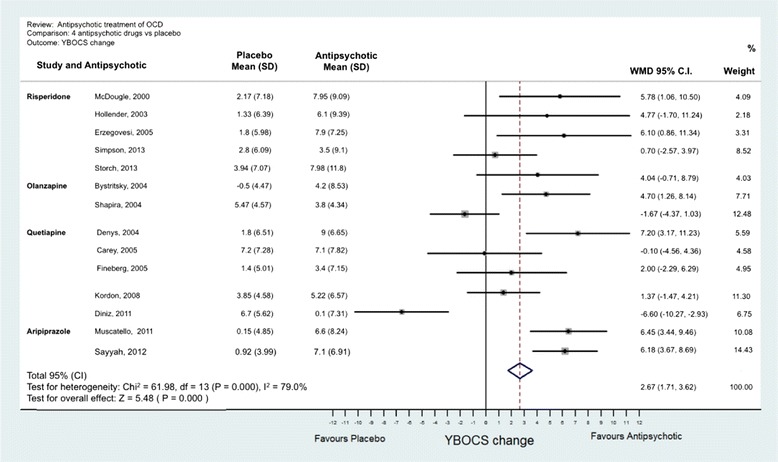
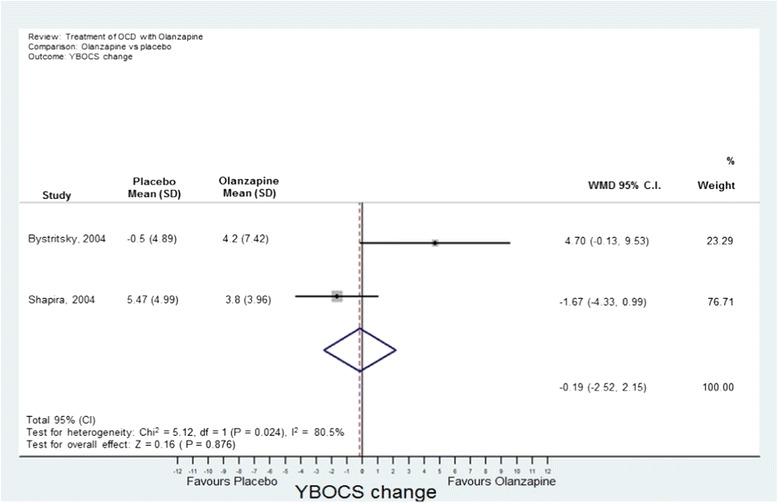
“(b) Olanzapine: Two studies were identified [13,18] with 35 participants taking olanzapine and 35 taking a placebo.”
BackgroundHollander, E., Rossi, N. B., Sood, E., & Pallanti, S. (2003) · The International Journal of Neuropsychopharmacology · doi:10.1017/s1461145703003730 · Cited by 197 · cited 5×
“Only four out of the 14 studies [14,18,19,22] recruited a majority (range 62.”
BackgroundMethodResultInfluentialShapira, N. A., Ward, H. E., MANDOKI, M. W., Murphy, T. K., Yang, M. C. K., Blier, P., & Goodman, W. K. (2004) · Biological Psychiatry · doi:10.1016/j.biopsych.2003.11.010 · Cited by 154 · cited 6×
“Shapira, 2004 [13] Olanzapine (22) 5 - 10 6 8 40.”
BackgroundMethodInfluentialIntention to treat analysis in clinical trials when there are missing data
Streiner, D., & Geddes, J. (2001) · Evidence Based Mental Health · doi:10.1136/ebmh.4.3.70 · Cited by 148 · cited 1×
“However LOCF carries a risk of bias and variance of treatment effect will be underestimated as natural variation in measurement is factored out [32].”
BackgroundErzegovesi, S., Guglielmo, E., Siliprandi, F., & Bellodi, L. (2004) · European Neuropsychopharmacology · doi:10.1016/j.euroneuro.2004.04.004 · Cited by 138 · cited 9×
“Of these three studies, Erzegovesi [15] also investigated effect of augmenting SRRI responders with risperidone and found no difference between risperidone and placebo.”
BackgroundMethodResultInfluentialCarey, P. D., Vythilingum, B., Seedat, S., Muller, J. E., van Ameringen, M., & Stein, D. J. (2005) · BMC Psychiatry · doi:10.1186/1471-244x-5-5 · Cited by 133
Placebo-Controlled Study of Pimozide Augmentation of Fluoxetine in Body Dysmorphic Disorder
Phillips, K. A. (2005) · American Journal of Psychiatry · doi:10.1176/appi.ajp.162.2.377 · Cited by 122 · cited 1×
“The same guidelines did not recommend adding an antipsychotic to a SSRI for people with Body Dysmorphic Disorder (BDD) on the basis of one negative trial with pimozide in those resistant to a SSRI [2].”
BackgroundMuscatello, M. R. A., Bruno, A., Pandolfo, G., Micò, U., Scimeca, G., Romeo, V. M., Santoro, V., Settineri, S., Spina, E., & Zoccali, R. A. (2011) · Journal of Clinical Psychopharmacology · doi:10.1097/jcp.0b013e31820e3db6 · Cited by 122 · cited 3×
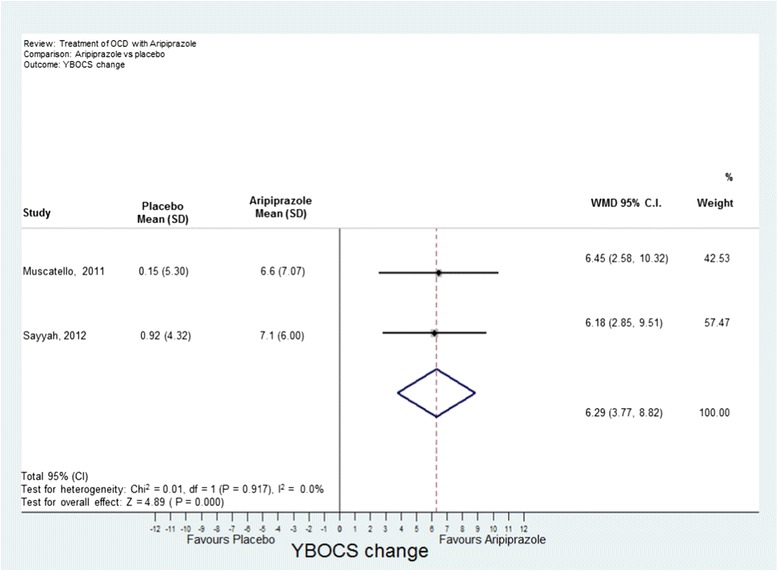
“Muscatello, 2011 [24] Aripiprazole (20) 15 16 12 (routine care SSRI) Not known Not known Y-BOCS ≥16”
BackgroundPharmacotherapy of obsessive–compulsive disorder: evidence-based treatment and beyond
Fineberg, N. A., Reghunandanan, S., Brown, A., & Pampaloni, I. (2013) · Australian & New Zealand Journal of Psychiatry · doi:10.1177/0004867412461958 · Cited by 122 · cited 1×
“drugs as a class for augmentation of SSRI treatment resistant OCD [5,6].”
BackgroundMatsunaga, H., Nagata, T., Hayashida, K., Ohya, K., Kiriike, N., & Stein, D. J. (2009) · The Journal of Clinical Psychiatry · doi:10.4088/jcp.08m04369 · Cited by 110
metan-an alternative meta-analysis command
Bradburn, M. J., Deeks, J. J., & Altman, D. G. (1999) · Stata technical bulletin · Cited by 109
Sayyah, M., Sayyah, M., Boostani, H., Ghaffari, S. M., & Hoseini, A. (2012) · Depression and Anxiety · doi:10.1002/da.21996 · Cited by 105 · cited 2×
“Sayyah, 2012 [25] Aripiprazole (21) 10 12 12 (routine care SSRI) Not known Not known Y-BOCS ≥21”
BackgroundFineberg, N. A., Sivakumaran, T., Roberts, A., & Gale, T. (2005) · International Clinical Psychopharmacology · doi:10.1097/00004850-200507000-00005 · Cited by 105 · cited 2×
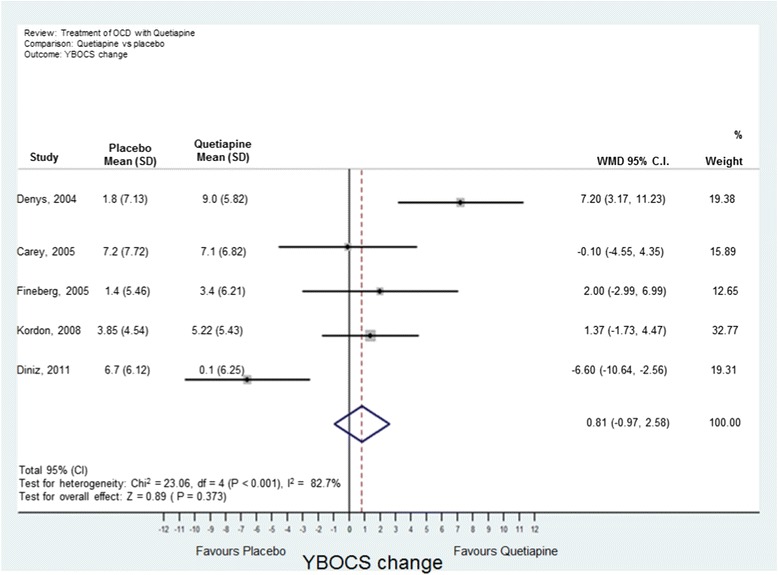
“(c) Quetiapine: Five studies were identified [19-23] with 89 participants taking quetiapine and 89 placebo.”
BackgroundSecond-generation antipsychotics for obsessive compulsive disorder
Komossa, K., Depping, A. M., Meyer, M., Kissling, W., & Leucht, S. (2010) · Cochrane Database of Systematic Reviews · doi:10.1002/14651858.cd008141.pub2 · Cited by 96 · cited 3×
“We therefore confined our categorical analysis to risperidone studies only since the previous Cochrane review [4] had conducted this analysis on other antipsychotics and there were no new studies for quietapine and olanzapine.”
BackgroundResultKordon, A., Wahl, K., Koch, N., Zurowski, B., Anlauf, M., Vielhaber, K., Kahl, K. G., Broocks, A., Voderholzer, U., & Hohagen, F. (2008) · Journal of Clinical Psychopharmacology · doi:10.1097/jcp.0b013e318185e735 · Cited by 78 · cited 5×
“Only four out of the 14 studies [14,18,19,22] recruited a majority (range 62.”
BackgroundMethodInfluentialDiniz, J. B., Shavitt, R. G., Fossaluza, V., Koran, L., Pereira, C. A. D. B., & Miguel, E. C. (2011) · Journal of Clinical Psychopharmacology · doi:10.1097/jcp.0b013e3182367aee · Cited by 73
Citalopram for treatment-resistant obsessive-compulsive disorder
Pallanti, S., Quercioli, L., Paiva, R. S., & Koran, L. M. (1999) · European Psychiatry · doi:10.1016/s0924-9338(99)80725-1 · Cited by 66 · cited 1×
“Another randomised open-label trial found that citalopram with clomipramine was superior to citalopram alone [37].”
BackgroundA 2012 evidence-based algorithm for the pharmacotherapy for obsessive-compulsive disorder
Stein, D. J., Koen, N., Fineberg, N., Fontenelle, L. F., Matsunaga, H., Osser, D., & Simpson, H. B. (2012) · Current Psychiatry Reports · doi:10.1007/s11920-012-0268-9 · Cited by 65 · cited 1×
“drugs as a class for augmentation of SSRI treatment resistant OCD [5,6].”
BackgroundPampaloni, I., Sivakumaran, T., Hawley, C., Al Allaq, A., Farrow, J., Nelson, S., & Fineberg, N. (2010) · Journal of Psychopharmacology · doi:10.1177/0269881109104850 · Cited by 47
Storch, E. A., Goddard, A. W., Grant, J. E., De Nadai, A. S., Goodman, W. K., Mutch, P. J., Medlock, C., Odlaug, B., McDougle, C. J., & Murphy, T. K. (2013) · The Journal of Clinical Psychiatry · doi:10.4088/jcp.12m08278 · Cited by 45 · cited 4×
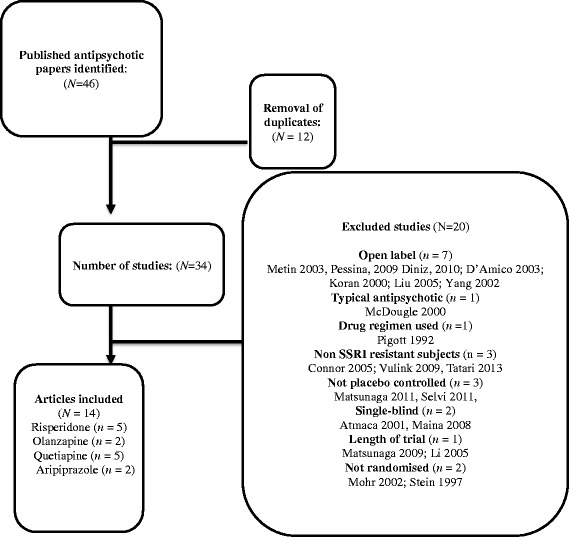
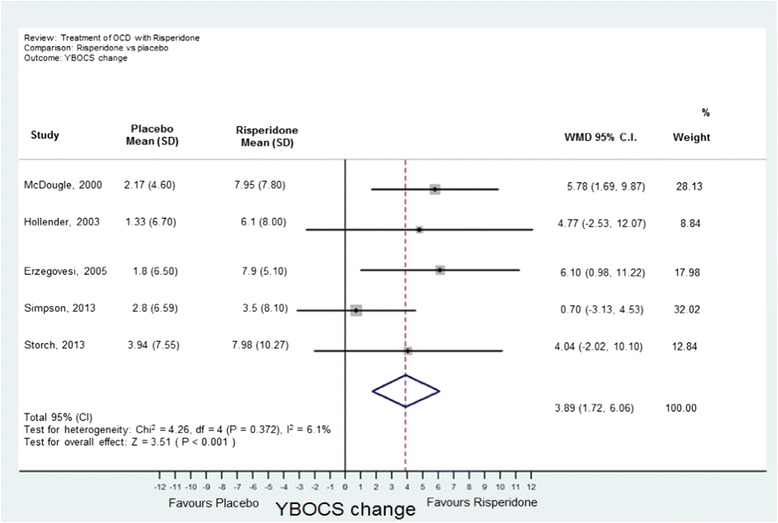
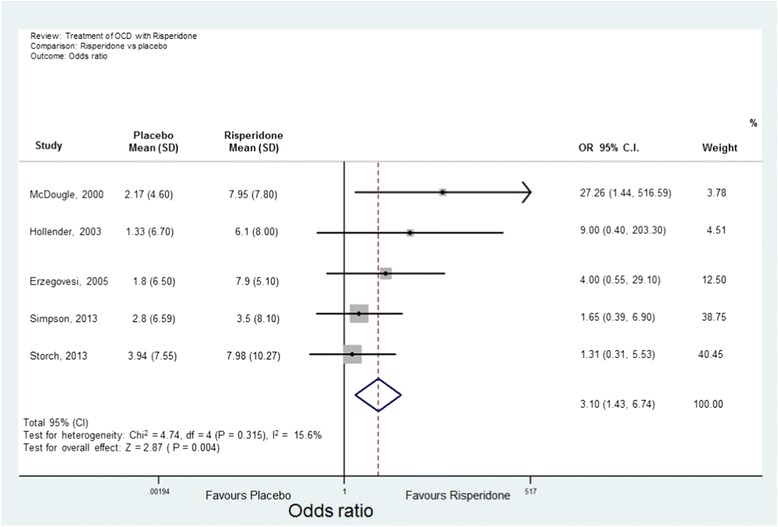
“The results of the individual atypical anti-psychotics were as follows: (a) Risperidone: Five studies were identified [12,14-17] with 77 participants in total taking risperidone and 89 receiving placebo.”
BackgroundMethodResultInfluentialFolb, P. I. (2013) · South African Medical Journal · doi:10.7196/samj.6833 · Cited by 3
Research works printed but not linked: 1
- Tatari F Khazaei H Jahandar F Rezaei M Effect of adding risperidone to fluoxetine in treatment of obsession compulsion disorder patients Life Sci J 2013 10 11s 153 157
Cited by
Psychopharmacological Treatment of Obsessive-Compulsive Disorder (OCD)
Del Casale, A., Sorice, S., Padovano, A., Simmaco, M., Ferracuti, S., Lamis, D. A., Rapinesi, C., Sani, G., Girardi, P., Kotzalidis, G. D., et al. (2019) · Current Neuropharmacology · doi:10.2174/1570159x16666180813155017 · Cited by 223
Roessner, V., Eichele, H., Stern, J. S., Skov, L., Rizzo, R., Debes, N. M., Nagy, P., Cavanna, A. E., Termine, C., Ganos, C., et al. (2022) · European Child & Adolescent Psychiatry · doi:10.1007/s00787-021-01899-z · Cited by 197
“However, it is important to keep in mind the limited evidence base and the need for drug safety monitoring, as pointed out in an observational study including children with tic-related OCD [180] as well as a meta-analysis including adults with OCD (without tics) [181].”
BackgroundAnxiety in Patients with Schizophrenia: Epidemiology and Management
Temmingh, H., & Stein, D. J. (2015) · CNS Drugs · doi:10.1007/s40263-015-0282-7 · Cited by 173
Fineberg, N. A., Hollander, E., Pallanti, S., Walitza, S., Grünblatt, E., Dell’Osso, B. M., Albert, U., Geller, D. A., Brakoulias, V., Janardhan Reddy, Y. C., et al. (2020) · International Clinical Psychopharmacology · doi:10.1097/yic.0000000000000314 · Cited by 161
Clinical practice guidelines for Obsessive-Compulsive Disorder
Janardhan Reddy, Y., Sundar, A., Narayanaswamy, J., & Math, S. (2017) · Indian Journal of Psychiatry · doi:10.4103/0019-5545.196976 · Cited by 156
“Two recent meta-analyses of 14 RCTs on antipsychotic augmentation found that antipsychotic as a group was significantly more effective than placebo in decreasing YBOCS scores [24, 25].”
Background
Metadata
- Authors
- Veale, D., Miles, S., Smallcombe, N., Ghezai, H., Goldacre, B., & Hodsoll, J.
- Affiliations
- King's College London (GB)
- London School of Hygiene & Tropical Medicine (GB)
- Corresponding author
- Veale, David
- Venue
- BMC Psychiatry
- Published
- 2014-11-29
- Volume
- 14
- Issue
- 1
- Pages
- 317-317
- ISSN
- 1471-244X (ISSN-L)
- PMC
- PMC4262998
- OpenAlex
- W2067425354
- Cited by
- 162
- References
- 44
- Citations by year
- 2026: 16 · 2025: 10 · 2024: 10 · 2023: 8 · 2022: 8 · 2021: 11 · 2020: 19 · 2019: 24 · 2018: 16 · 2017: 15 · 2016: 14 · 2015: 11
- FWCI
- 2.03
- Type
- journal article
- Language
- en
- Open access
- gold
- doi.org
- Locations
- BMC Psychiatry (publishedVersion, cc-by)
- PubMed Central (publishedVersion, cc-by)
- PubMed (publishedVersion)
- LSHTM Research Online (London School of Hygiene and Tropical Medicine) (acceptedVersion)
- Research Portal (King's College London) (submittedVersion)
- Funders
- South London and Maudsley NHS Foundation Trust
- National Institute for Health and Care Research
- King's College London
- Topics
- Social Sciences › Psychology › Clinical Psychology › Obsessive-Compulsive Spectrum Disorders
- Health Sciences › Medicine › Psychiatry and Mental health › Schizophrenia research and treatment
- Social Sciences › Psychology › Experimental and Cognitive Psychology › Anxiety, Depression, Psychometrics, Treatment, Cognitive Processes
- Keywords
- obsessive-compulsive disorder, atypical antipsychotics, SSRI augmentation, treatment-resistant OCD, aripiprazole, risperidone, quetiapine, olanzapine, Yale-Brown Obsessive Compulsive Scale, clomipramine, cognitive behavioral therapy
- MeSH terms
- Aripiprazole, Quetiapine Fumarate, Olanzapine, Adult, Benzodiazepines, Clomipramine, Dibenzothiazepines, Double-Blind Method, Drug Resistance, Drug Therapy, Combination, Humans, Obsessive-Compulsive Disorder, Piperazines, Antipsychotic Agents, Quinolones, Randomized Controlled Trials as Topic, Treatment Outcome, Selective Serotonin Reuptake Inhibitors, Risperidone
About these checks
Registry, retraction, Cites and statistics results are computed, not judged, with one exception: a printed reference that no index lists is read once by a model before it counts as a citation error. Claims are extracted by a model and kept only when their quote appears verbatim in the text; each cited source is then checked, with a model’s help, for whether it says what the claim relies on. Those verdicts can be wrong — read the claim’s quote and the cited source before relying on one.
Statistics and arithmetic are recomputed, not judged.
Confidence bands are shown only for fields calibrated on our annotated test set. None is calibrated yet, so no band is shown.
What counts as a claim ›How we measure confidence ›How we check this ›
Are you an author, or do you see a problem with this page? Request a review
Data sources
Bibliographic data: Semantic Scholar, OpenAlex, Crossref.
Contains information from the Semantic Scholar Academic Graph Datasets, made available under the ODC Attribution License (ODC-BY 1.0).
Semantic Scholar’s data is described in: Kinney, R., et al. (2023). The Semantic Scholar Open Data Platform. arXiv:2301.10140.
