

Atypical antipsychotic augmentation in SSRI treatment refractory obsessive-compulsive disorder: a systematic review and meta-analysis
Open accessThe DOI matches its Crossref record; 43 of the 44 references it cites were found in a registry or an index.
Abstract
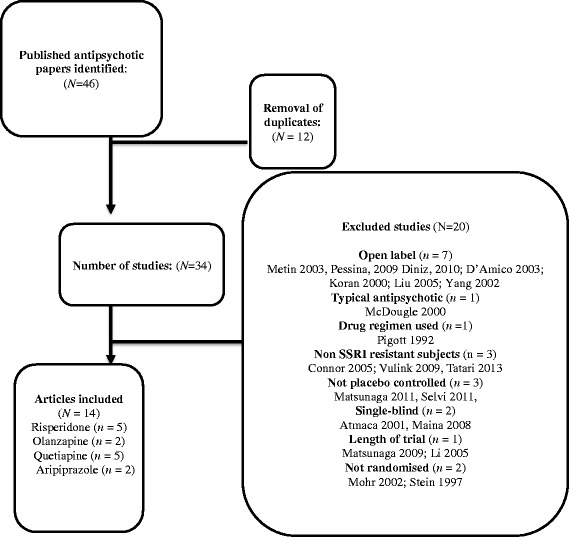
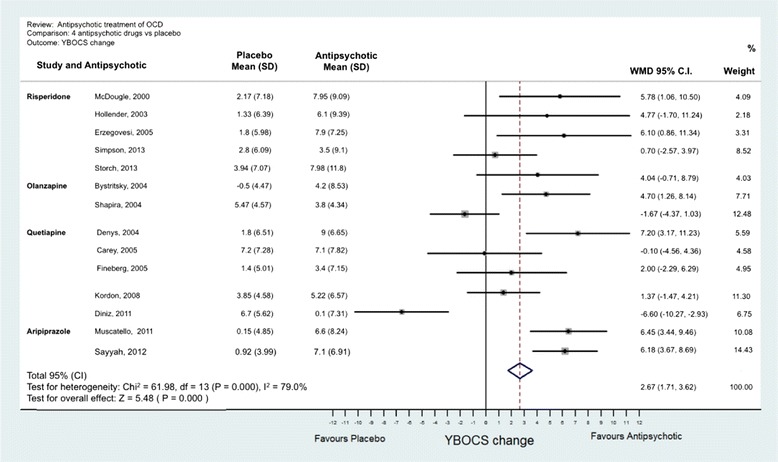
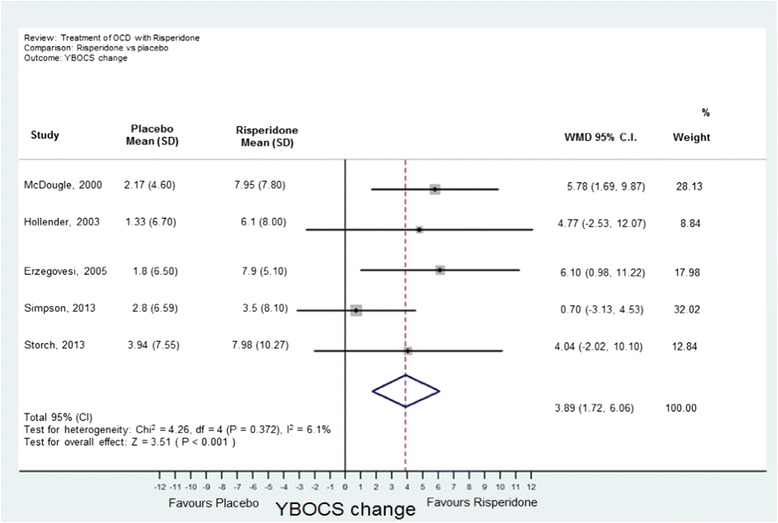
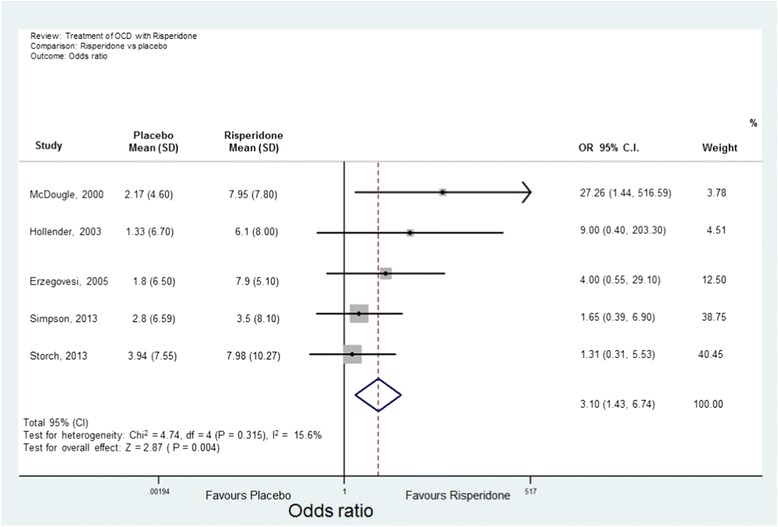
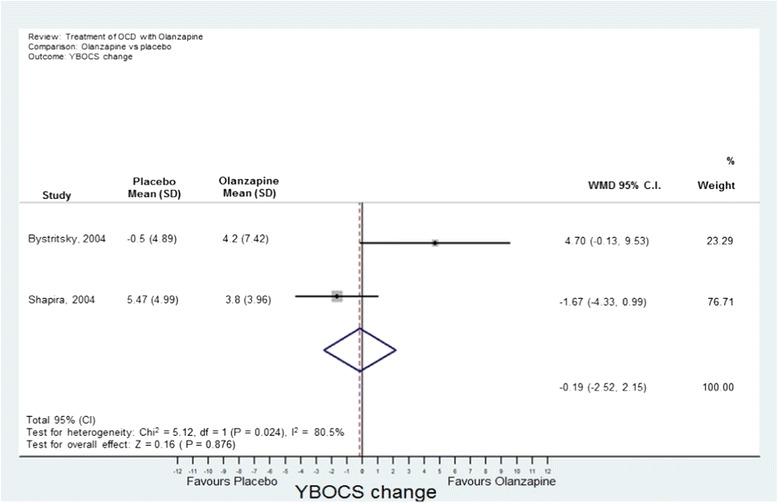
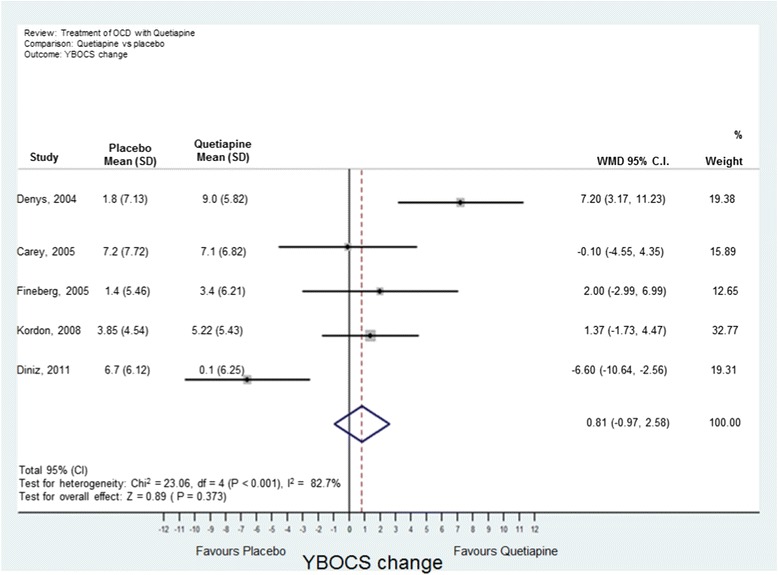
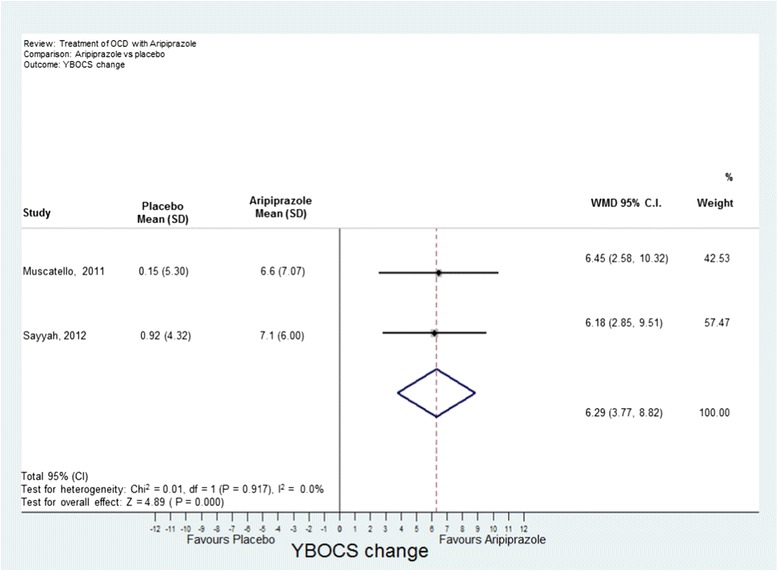
BACKGROUND: In 2006, the National Institute of Clinical and Health Excellence (NICE) guidelines for Obsessive Compulsive Disorder (OCD) recommended anti-psychotics as a class for SSRI treatment resistant OCD. The article aims to systematically review and conduct a meta-analysis on the clinical effectiveness of atypical anti-psychotics augmenting an SSRI. METHODS: Studies that were double-blind randomized controlled trials of an atypical antipsychotic against a placebo, for a minimum of 4 weeks, in adults with OCD, were included. Yale-Brown Obsessive Compulsive Scale (Y-BOCS) scores were the primary outcome measure. Inclusion criteria included Y-BOCS score of 16 or more and at least one adequate trial of a SSRI or clomipramine for at least 8 weeks prior to randomization. Data sources included Medline, Embase, PsycINFO, Cochrane Database of Systematic Reviews (CDSR), trial registries and pharmaceutical databases and manufacturers up to September 2013. Forest-plots were drawn to display differences between drug and placebo on the Y-BOCS. RESULTS: Two studies found aripiprazole to be effective in the short-term. There was a small effect-size for risperidone or anti-psychotics in general in the short-term. We found no evidence for the effectiveness of quetiapine or olanzapine in comparison to placebo. CONCLUSIONS: Risperidone and aripiprazole can be used cautiously at a low dose as an augmentation agent in non-responders to SSRIs and CBT but should be monitored at 4 weeks to determine efficacy.
Overview
The claims and statistics of this paper haven’t been checked yet.
Free: it reads the open-access text and checks the first 5 claims that cite a source we can check. Create a free account to check every claim.
Integrity signals
Registry
Cites
Statistics
Figures
Verification
Claims the paper makes
The claims and statistics of this paper haven’t been checked yet.
Free: it reads the open-access text and checks the first 5 claims that cite a source we can check. Create a free account to check every claim.
Claims other papers make about this one
Each is checked against this paper’s own text: does it say what the citing paper says it does?
The cited source says what the claim attributes to it.
In the citing paper
“According to a recent meta-analysis, low doses of add-on aripiprazole had an important overall effect size and was the most effective short-term option [28].”
From Clinical Advances in Treatment Strategies for Obsessive-compulsive Disorder in Adults (2023) · cites this paper as [28]
In the citing paper
“Whilst dopaminergic medications are not first-line treatments for OCD, dopamine receptor antagonists are often used to augment first-line treatment in refractory cases (Hirschtritt et al. 2017) and the efficacy of this strategy is confirmed by meta-analyses (Dold et al. 2015; Veale et al. 2014).”
From Dopaminergic drug treatment remediates exaggerated cingulate prediction error responses in obsessive-compulsive disorder (2019) · cites this paper as Veale et al. 2014
In the citing paper
“meta-analysis confirms that dopamine receptor antagonists reduce obsessive-compulsive symptoms in SSRI-refractory OCD (Dold et al. 2015; Veale et al. 2014).”
From Dopaminergic drug treatment remediates exaggerated cingulate prediction error responses in obsessive-compulsive disorder (2019) · cites this paper as Veale et al. 2014
Self-check
Percentages, sums and reported differences re-computed from the paper’s own numbers.
The self-check needs the paper’s full text.
Citations
Cites
Preferred Reporting Items for Systematic Reviews and Meta-Analyses: the PRISMA statement
Moher, D., Liberati, A., Tetzlaff, J., Altman, D. G., & for the PRISMA Group (2009) · BMJ · doi:10.1136/bmj.b2535 · Cited by 83,823
Preferred reporting items for systematic reviews and meta-analyses: the PRISMA Statement.
(2009) · PubMed Central · Cited by 44,859
Meta-analysis in clinical trials
DerSimonian, R., & Laird, N. (1986) · Controlled Clinical Trials · doi:10.1016/0197-2456(86)90046-2 · Cited by 39,552 · cited 1×
“), using a random effects meta-analysis model of continuous data, with each study change score weighted by the inverse of the variance [29].”
MethodPreferred reporting items for systematic reviews and meta-analyses: The PRISMA statement
Moher, D., Liberati, A., Tetzlaff, J., Altman, D. G., & the PRISMA Group* (2009) · Annals of Internal Medicine · doi:10.7326/0003-4819-151-4-200908180-00135 · Cited by 37,554
Preferred Reporting Items for Systematic Reviews and Meta-Analyses: The PRISMA Statement
Moher, D., Liberati, A., Tetzlaff, J., & Altman, D. G. (2009) · Journal of Clinical Epidemiology · doi:10.1016/j.jclinepi.2009.06.005 · Cited by 19,575
Grading quality of evidence and strength of recommendations
(2004) · BMJ · doi:10.1136/bmj.328.7454.1490 · Cited by 8,477
Jacobson, N. S., & Truax, P. (1991) · Journal of Consulting and Clinical Psychology · doi:10.1037/0022-006x.59.1.12 · Cited by 7,770 · cited 2×
“Jacobson NS, Truax P: Clinical significance: a statistical approach to defining meaningful change in psychotherapy research.”
MethodThe Yale-Brown Obsessive Compulsive Scale: I. Development, Use, and Reliability
Goodman, W. K. (1989) · Archives of General Psychiatry · doi:10.1001/archpsyc.1989.01810110048007 · Cited by 7,712 · cited 1×
“(2) They used the Yale-Brown Obsessive Compulsive Scale (Y-BOCS) [11] as a primary outcome measure.”
MethodMeta-Analytic Procedures for Social Research
Rosenthal, R. (1991) · doi:10.4135/9781412984997 · Cited by 4,635 · cited 1×
“However the small number of studies and participants for each individual drug made it difficult to interpret [30].”
BackgroundMeta-Analytic Procedures for Social Research.
Metcalfe, A., & Rosenthal, R. (1994) · The Statistician · doi:10.2307/2348600 · Cited by 4,249
Research works printed but not linked: 1
- Tatari F Khazaei H Jahandar F Rezaei M Effect of adding risperidone to fluoxetine in treatment of obsession compulsion disorder patients Life Sci J 2013 10 11s 153 157
Cited by
Psychopharmacological Treatment of Obsessive-Compulsive Disorder (OCD)
Del Casale, A., Sorice, S., Padovano, A., Simmaco, M., Ferracuti, S., Lamis, D. A., Rapinesi, C., Sani, G., Girardi, P., Kotzalidis, G. D., et al. (2019) · Current Neuropharmacology · doi:10.2174/1570159x16666180813155017 · Cited by 223
Roessner, V., Eichele, H., Stern, J. S., Skov, L., Rizzo, R., Debes, N. M., Nagy, P., Cavanna, A. E., Termine, C., Ganos, C., et al. (2022) · European Child & Adolescent Psychiatry · doi:10.1007/s00787-021-01899-z · Cited by 197
“However, it is important to keep in mind the limited evidence base and the need for drug safety monitoring, as pointed out in an observational study including children with tic-related OCD [180] as well as a meta-analysis including adults with OCD (without tics) [181].”
BackgroundAnxiety in Patients with Schizophrenia: Epidemiology and Management
Temmingh, H., & Stein, D. J. (2015) · CNS Drugs · doi:10.1007/s40263-015-0282-7 · Cited by 173
Fineberg, N. A., Hollander, E., Pallanti, S., Walitza, S., Grünblatt, E., Dell’Osso, B. M., Albert, U., Geller, D. A., Brakoulias, V., Janardhan Reddy, Y. C., et al. (2020) · International Clinical Psychopharmacology · doi:10.1097/yic.0000000000000314 · Cited by 161
Clinical practice guidelines for Obsessive-Compulsive Disorder
Janardhan Reddy, Y., Sundar, A., Narayanaswamy, J., & Math, S. (2017) · Indian Journal of Psychiatry · doi:10.4103/0019-5545.196976 · Cited by 156
“Two recent meta-analyses of 14 RCTs on antipsychotic augmentation found that antipsychotic as a group was significantly more effective than placebo in decreasing YBOCS scores [24, 25].”
BackgroundA critical review of cosmetic treatment outcomes in body dysmorphic disorder
Bowyer, L., Krebs, G., Mataix-Cols, D., Veale, D., & Monzani, B. (2016) · Body Image · doi:10.1016/j.bodyim.2016.07.001 · Cited by 120
Self-citationTreatment-resistant OCD: Pharmacotherapies in adults
van Roessel, P. J., Grassi, G., Aboujaoude, E. N., Menchón, J. M., Van Ameringen, M., & Rodríguez, C. I. (2023) · Comprehensive Psychiatry · doi:10.1016/j.comppsych.2022.152352 · Cited by 86
Albert, U., Marazziti, D., Di Salvo, G., Solia, F., Rosso, G., & Maina, G. (2019) · Current Medicinal Chemistry · doi:10.2174/0929867325666171222163645 · Cited by 90
Fradkin, I., Adams, R. A., Parr, T., Roiser, J. P., & Huppert, J. D. (2020) · Psychological Review · doi:10.1037/rev0000188 · Cited by 89
“Treatment augmentation with atypical antipsychotics (Veale et al., 2014) has become increasingly common.”
BackgroundCastle, D., Beilharz, F., Phillips, K. A., Brakoulias, V., Drummond, L. M., Hollander, E., Ioannidis, K., Pallanti, S., Chamberlain, S. R., Rossell, S. L., et al. (2021) · International Clinical Psychopharmacology · doi:10.1097/yic.0000000000000342 · Cited by 72
Self-citationSwierkosz-Lenart, K., Santos, J. F. A. D., Elowe, J., Clair, A.-H., Bally, J. F., Riquier, F., Bloch, J., Draganski, B., Clerc, M.-T., Moyano, B. P., et al. (2023) · Frontiers in Psychiatry · doi:10.3389/fpsyt.2023.1065812 · Cited by 81
Modarresi, A., Chaibakhsh, S., Koulaeinejad, N., & Koupaei, S. R. (2019) · Psychiatry Research · doi:10.1016/j.psychres.2019.112602 · Cited by 61
Modarresi, A., Sayyah, M., Razooghi, S., Eslami, K., Javadi, M., & Kouti, L. (2017) · Pharmacopsychiatry · doi:10.1055/s-0043-120268 · Cited by 62
“The practice guidelines for SRI-refractory patients generally include augmentation with antipsychotics [4]; however, patients often experience intolerable side effects [9].”
BackgroundPharmacotherapeutic Strategies and New Targets in OCD
Pittenger, C. (2021) · Current topics in behavioral neurosciences · doi:10.1007/7854_2020_204 · Cited by 59
Murray, G. K., Knolle, F., Ersche, K. D., Craig, K. J., Abbott, S., Shabbir, S. S., Fineberg, N. A., Suckling, J., Sahakian, B. J., Bullmore, E. T., et al. (2019) · Psychopharmacology · doi:10.1007/s00213-019-05292-2 · Cited by 53
Laroche, D. G., & Gaillard, A. (2016) · Psychiatry Research · doi:10.1016/j.psychres.2016.09.031 · Cited by 53
“Quetiapine does not seem to be effective in OCD refractory to SSRI treatment in recent meta-analyses (Veale et al., 2014), (Skapinakis et al., 2007), or in randomized, placebo-controlled studies (Kordon et al., 2008).”
Pardossi, S., Cuomo, A., & Fagiolini, A. M. (2024) · Journal of Clinical Medicine · doi:10.3390/jcm13164739 · Cited by 52
“Some authors describe a “paradox” in the role of antipsychotics for obsessive symptoms [94]: many antipsychotics are effective in typical OCD, even when refractory to SSRIs [109,113], but they can trigger or exacerbate OCSs or OCD in SCZ patients under treatment [90,114,115].”
BackgroundTreatments used for obsessive–compulsive disorder—An international perspective
Brakoulias, V., Starčević, V., Albert, U., Arumugham, S. S., Bailey, B. E., Belloch, A., Borda, T., Dell’Osso, L., Elias, J. A., Falkenstein, M. J., et al. (2019) · Human Psychopharmacology Clinical and Experimental · doi:10.1002/hup.2686 · Cited by 47
“The preference for risperidone and aripiprazole as augmenting agents may relate to their relatively favourable side effect profiles and the greater number of reported trials using these agents (Albert et al., 2016; Veale et al., 2014).”
BackgroundSpataro, E. A., Kandathil, C. K., Saltychev, M., Olds, C. E., & Most, S. P. (2020) · Aesthetic Surgery Journal · doi:10.1093/asj/sjaa004 · Cited by 44
Zhou, D., Zhou, X., Li, Y., Zhang, K.-F., Lv, Z., Chen, X., Wan, L.-Y., Wang, W., Wang, G.-M., Li, D., et al. (2018) · Progress in Neuro-Psychopharmacology and Biological Psychiatry · doi:10.1016/j.pnpbp.2018.12.009 · Cited by 48
Rutrick, D., Stein, D. J., Subramanian, G., Smith, B., Fava, M., Hasler, G., Cha, J., Gasparini, F., Donchev, T., Ocwieja, M., et al. (2017) · Advances in Therapy · doi:10.1007/s12325-016-0468-5 · Cited by 44
Li, Y., Zhang, C., Weidacker, K., Zhang, Y., He, N., Jin, H., Chen, W., Voon, V., Edden, R. A. E., & Yan, F. (2019) · BMC Psychiatry · doi:10.1186/s12888-019-2160-1 · Cited by 44
Psychopharmacotherapy of Obsessive-Compulsive Symptoms within the Framework of Tourette Syndrome
Rothenberger, A., & Roessner, V. (2018) · Current Neuropharmacology · doi:10.2174/1570159x16666180828095131 · Cited by 44
The Psychopharmacology of Obsessive-Compulsive Disorder: A Preclinical Roadmap
Szechtman, H., Harvey, B. H., Woody, E. Z., & Hoffman, K. L. (2019) · Pharmacological Reviews · doi:10.1124/pr.119.017772 · Cited by 41
“, 2014), but the evidence for clinical efficacy based on meta-analysis of randomized trials is available thus far only for neuroleptics (Bloch et al., 2006; Skapinakis et al., 2007; Dold et al., 2013, 2015; Veale et al., 2014).”
BackgroundResultInfluentialObsessive–compulsive symptoms in schizophrenia: a review
Grover, S., Sahoo, S., & Surendran, I. (2018) · Acta Neuropsychiatrica · doi:10.1017/neu.2018.27 · Cited by 39
“Previous meta-analysis have also reached to similar conclusions (79).”
ResultKim, D., Ryba, N., Kalabalik, J., & Westrich, L. (2018) · Drugs in R&D · doi:10.1007/s40268-018-0246-8 · Cited by 38
“Veale and colleagues published a meta-analysis of 14 placebo-controlled, randomized clinical trials of SGAs in SRI-resistant OCD (n = 493) [123].”
BackgroundZhou, D.-D., Zhou, X.-X., Lv, Z., Chen, X.-R., Wang, W., Wang, G.-M., Liu, C., Li, D.-Q., & Kuang, L. (2019) · Journal of Psychiatric Research · doi:10.1016/j.jpsychires.2019.01.014 · Cited by 37
Farrand, S., Evans, A. H., Mangelsdorf, S., Loi, S. M., Mocellin, R., Borham, A., Bevilacqua, J., Blair‐West, S., Walterfang, M., Bittar, R. G., et al. (2017) · Australian & New Zealand Journal of Psychiatry · doi:10.1177/0004867417731819 · Cited by 45
“…of achieving full remission with serotonin reuptake inhibitors is 38% according to the same criteria (Catapano et al., 2006), Australian & New Zealand Journal of Psychiatry, 52(7) and a review of augmentation with atypical antipsychotics found a mean YBOCS reduction of 10% (Veale et al., 2014).”
BackgroundShalbafan, M., Malekpour, F., Najafabadi, B. T., Ghamari, K., Dastgheib, S. A., Mowla, A., Shirazi, E., Ardebili, M. E., Ghazizadeh‐Hashemi, M., & Akhondzadeh, S. (2019) · Journal of Psychopharmacology · doi:10.1177/0269881119878177 · Cited by 37
“This hyperdopaminergic state and the similarity with schizophrenia could be a reason why antipsychotic drugs have shown positive additional effects when augmented with SSRIs toward the treatment of OCD (Bloch et al., 2006; Dold et al., 2013; McDougle et al., 1994; Veale et al., 2014).”
BackgroundPallanti, S., Marras, A., Salerno, L., Makris, N., & Hollander, E. (2016) · Journal of Psychopharmacology · doi:10.1177/0269881116628427 · Cited by 36
“More recently, a systematic review and meta-analysis (Veale et al., 2014) found evidence for the benefit with a modest effect size for aripiprazole in the short term in people with OCD who were resistant to at least one SSRI, whereas risperidone or antipsychotics as a class had a statistically significant benefit in t…”
BackgroundCarli, M., Weiss, F., Grenno, G., Ponzini, S., Kolachalam, S., Vaglini, F., Viaggi, C., Pardini, C., Tidona, S., Longoni, B., et al. (2023) · Current Neuropharmacology · doi:10.2174/1570159x21666230224102318 · Cited by 43
“Preliminarily, it could be said that low-dose augmentation with Aripiprazole could be beneficial in some cases of resistant OCD, but caution is recommended [140, 141].”
BackgroundTrichotillomania is more related to Tourette disorder than to obsessive-compulsive disorder
Lamothe, H., Baleyte, J., Mallet, L., & Pélissolo, A. (2020) · Brazilian Journal of Psychiatry · doi:10.1590/1516-4446-2019-0471 · Cited by 37
Management and treatment of obsessive–compulsive disorder
Fineberg, N. A., Drummond, L. M., Reid, J. E., Cinosi, E., Carmi, L., & Mpavaenda, D. (2020) · doi:10.1093/med/9780198713005.003.0098 · Cited by 33
Brakoulias, V., & Stockings, E. (2018) · Expert Opinion on Pharmacotherapy · doi:10.1080/14656566.2018.1540590 · Cited by 38
“The duration (12 and 16 weeks) and outcomes between the two studies was similar (see meta-analysis by Veale et al. (2014) [15]).”
BackgroundAntipsychotic augmentation in the treatment of obsessive-compulsive disorder
Jaisoorya, T. S., & Thamby, A. (2019) · Indian Journal of Psychiatry · doi:10.4103/psychiatry.indianjpsychiatry_519_18 · Cited by 39
“There are six meta-analyses to date, all of which have included double-blind, randomized, placebo-controlled trials comparing augmentation of SSRIs with antipsychotics to placebo supplementation in treatment-resistant OCD.”
BackgroundResultInfluentialDowling, N. L., Thomas, N., Blair‐West, S., Bousman, C., Yap, K., Smith, D. J., & Ng, C. H. (2016) · Journal of Obsessive-Compulsive and Related Disorders · doi:10.1016/j.jocrd.2016.04.006 · Cited by 35
“Further, augmenting EX/RP to SRIs may yield superior long-term outcomes compared to other augmentation strategies (i.e. SMT; Foa et al., 2013; or low dose risperidone or aripiprazole; Veale et al., 2014) during the acute and maintenance treatment phases (Foa et al., 2015; McLean et al., 2015).”
BackgroundRole of Glutamatergic System in Obsessive-Compulsive Disorder with Possible Therapeutic Implications
Vlček, P., Polák, J., Brunovský, M., & Horáček, J. (2017) · Pharmacopsychiatry · doi:10.1055/s-0043-118665 · Cited by 33
“, aripiprazole) is necessary [8] and may be beneficial for another 40 % of patients nonresponsive to the first selected drug [9, 10].”
BackgroundAblative neurosurgery and deep brain stimulation for obsessive-compulsive disorder
Arumugham, S. S., Balachander, S., & Srinivas, D. (2019) · Indian Journal of Psychiatry · doi:10.4103/psychiatry.indianjpsychiatry_523_18 · Cited by 31
Suhas, S., Malo, P. K., Kumar, V., Issac, T. G., Chithra, N. K., Bhaskarapillai, B., Reddy, Y. C. J., & Rao, N. P. (2022) · The World Journal of Biological Psychiatry · doi:10.1080/15622975.2022.2082525 · Cited by 34
“2022 Informa UK Limited, trading as Taylor & Francis Group et al. 2013; Veale et al. 2014; Dold et al. 2015), memantine (Modarresi et al. 2018), and D-Cycloserine (Xia et al. 2015; McGuire et al. 2017).”
BackgroundResultZheng, H., Jia, F., Han, H., Wang, S., Guo, G., Quan, D., Li, G., & Huang, H. (2019) · European Neuropsychopharmacology · doi:10.1016/j.euroneuro.2018.12.010 · Cited by 28
Wheaton, M. G., Rosenfield, D., Foa, E. B., & Simpson, H. B. (2015) · Journal of Consulting and Clinical Psychology · doi:10.1037/ccp0000025 · Cited by 24
“However, not all patients respond to the combination of SRIs with EX/RP; moreover, some patients do respond to the combination of SRIs and risperidone, both in our study (Simpson, Foa, et al., 2013) and in prior antipsychotic augmentation studies (Bloch et al., 2006; Veale et al., 2014).”
BackgroundGiakoumatos, C. I., & Osser, D. (2019) · Harvard Review of Psychiatry · doi:10.1097/hrp.0000000000000197 · Cited by 27
“In cases of unsatisfactory OCD response, treatment with the SSRI can be augmented with a second-generation antipsychotic, especially risperidone or aripiprazole.(177)”
MethodThe Pharmacological Treatment of Obsessive-Compulsive Disorder
Pittenger, C. (2023) · Psychiatric Clinics of North America · doi:10.1016/j.psc.2022.11.005 · Cited by 28
Jalal, B., Chamberlain, S. R., Robbins, T. W., & Sahakian, B. J. (2022) · CNS Spectrums · doi:10.1017/s1092852920001947 · Cited by 24
New treatment models for compulsive disorders
Grant, J. E., Fineberg, N. A., Ameringen, M. V., Cath, D. C., Visser, H. A. D., Carmi, L., Pallanti, S., Hollander, E., & van Balkom, A. J. L. M. (2015) · European Neuropsychopharmacology · doi:10.1016/j.euroneuro.2015.11.008 · Cited by 26
“In the case of OCD, there is a fairly strong evidence base for the augmentation of SRIs with low dosages of antipsychotics (Fineberg et al., 2014; Dold et al., 2013; but see Veale et al., 2014).”
Ketamine induces immediate and delayed alterations of OCD-like behavior
Thompson, S. L., Welch, A. C., Iourinets, J., & Dulawa, S. C. (2020) · Psychopharmacology · doi:10.1007/s00213-019-05397-8 · Cited by 24
“Augmenting SRI treatment with atypical antipsychotics has proven effective in some treatment-refractory patients (Veale et al. 2014; Dold et al. 2015) but with the downside of associated side effects.”
BackgroundZhu, L., Yang, S., Wang, S.-Q., Gong, H., Li, L., & Xu, W. (2015) · Evidence-based Complementary and Alternative Medicine · doi:10.1155/2015/328642 · Cited by 23
“And plotting symbol size represented the weight of included studies in themeta-analysis [62].”
MethodTreating OCD: what to do when first-line therapies fail
Castle, D. J., Bosanac, P., & Rossell, S. L. (2015) · Australasian Psychiatry · doi:10.1177/1039856215590027 · Cited by 25
Olfactory Reference Disorder: Diagnosis, Epidemiology and Management
Thomas, E., du Plessis, S., Chiliza, B., Löchner, C., & Stein, D. J. (2015) · CNS Drugs · doi:10.1007/s40263-015-0292-5 · Cited by 23
“Based on available ORD literature and drawing from related OCD literature evidence [47], the authors recommend initiating treatment with an SSRI to maximum tolerable doses for a trial of at least 12 weeks.”
MethodChallenges in the diagnosis and treatment of pediatric obsessive–compulsive disorder
Stewart, S. E., & Westwell-Roper, C. Y. (2019) · Indian Journal of Psychiatry · doi:10.4103/psychiatry.indianjpsychiatry_524_18 · Cited by 27
“and aripiprazole, with weaker evidence for olanzapine and quetiapine.[131] Importantly, no controlled trials”
BackgroundSahraian, A., Ehsaei, Z., & Mowla, A. (2018) · Progress in Neuro-Psychopharmacology and Biological Psychiatry · doi:10.1016/j.pnpbp.2018.03.014 · Cited by 26
“A recent meta-analysis of clinical trials of aripiprazole for OCD patients has demonstrated the efficacy of low-doses add-on aripiprazole to SSRIs in treatment of obsessive compulsive disorder (Veale et al., 2014).”
Pittenger, C., Brennan, B. P., Koran, L. M., Mathews, C. A., Nestadt, G., Pato, M. T., Phillips, K. A., Rodríguez, C. I., Simpson, H. B., Skapinakis, P., et al. (2021) · Psychiatry Research · doi:10.1016/j.psychres.2021.113853 · Cited by 24
Sharafkhah, M., Alamdar, M. A., Massoudifar, A., Abdolrazaghnejad, A., Ebrahimi-Monfared, M., Saber, R., & Mohammadbeigi, A. (2019) · International Clinical Psychopharmacology · doi:10.1097/yic.0000000000000267 · Cited by 22
“, 2014), and after ≥10 weeks of augmentation treatment with antipsychotics [risperidone at a dosage of at least 2 mg/day (Veale et al., 2014); quetiapine at a dosage of at least 150 mg/day (Denys et al.”
BackgroundClinical Advances in Treatment Strategies for Obsessive-compulsive Disorder in Adults
Roh, D., Jang, K. W., & Kim, C.-H. (2023) · Clinical Psychopharmacology and Neuroscience · doi:10.9758/cpn.23.1075 · Cited by 20
“According to a recent meta-analysis, low doses of add-on aripiprazole had an important overall effect size and was the most effective short-term option [28].”
MethodTreatment Resistance in Obsessive-Compulsive Disorder
Middleton, R., Wheaton, M. G., Kayser, R., & Simpson, H. B. (2019) · Treatment Resistance in Psychiatry · doi:10.1007/978-981-10-4358-1_11 · Cited by 19
Tic-related obsessive–compulsive disorder
Pringsheim, T. M., & Piacentini, J. C. (2018) · Journal of Psychiatry and Neuroscience · doi:10.1503/jpn.180086 · Cited by 18
Attitude and perceptions of patients towards long acting depot injections (LAIs)
Grover, S., Sahoo, S., Subodh, B. N., Malhotra, N., Dua, D., & Avasthi, A. (2019) · Asian Journal of Psychiatry · doi:10.1016/j.ajp.2019.07.052 · Cited by 18
Umehara, H., Numata, S., Tajima, A., Nishi, A., Nakataki, M., Imoto, I., Sumitani, S., & Ohmori, T. (2016) · PLoS ONE · doi:10.1371/journal.pone.0157232 · Cited by 18
Beaulieu, A. M., Tabasky, E., & Osser, D. N. (2019) · Psychiatry Research · doi:10.1016/j.psychres.2019.112583 · Cited by 21
Management of obsessive-compulsive disorder comorbid with bipolar disorder
Kazhungil, F., & Mohandas, E. (2016) · Indian Journal of Psychiatry · doi:10.4103/0019-5545.192001 · Cited by 19
“[77] A recent systematic review of DBDCTs observed that olanzapine may not be effective as an augmenting agent in OCD.[75] There is a single report of olanzapine-induced OCS in BD on treatment with olanzapine.”
BackgroundInfluentialPoppe, C., Müller, S. T., Greil, W., Walder, A., Grohmann, R., & Stübner, S. (2016) · Journal of Affective Disorders · doi:10.1016/j.jad.2016.04.035 · Cited by 19
“There is some evidence that haloperidol and some SGAs were effective administered as an adjunctive strategy in combination with SSRIs in treatment refractory cases (Bloch et al., 2006; Dold et al., 2015; Komossa et al., 2010; Veale et al., 2014).”
BackgroundWoody, E. Z., Hoffman, K. L., & Szechtman, H. (2019) · Advances in pharmacology · doi:10.1016/bs.apha.2019.04.003 · Cited by 17
The use of antipsychotics in obsessive compulsive disorder
Conti, D., Girone, N., Boscacci, M., Casati, L., Cassina, N., Cerolini, L., Giacovelli, L., Viganò, C. A., Conde, M. M., Cremaschi, L., et al. (2024) · Human Psychopharmacology Clinical and Experimental · doi:10.1002/hup.2893 · Cited by 15
“Several reviews and meta ‐ analyses comparing available RCTs for each antipsychotic agent supported the higher effectiveness of antipsychotics versus placebo as augmentative options (Albert et al., 2018; Bloch et al., 2008; Fineberg et al., 2006; Skapinakis et al., 2007; Veale et al., 2014).”
BackgroundResultInfluentialLevy, D. M., Arush, O. B., Carmi, L., Juven‐Wetzler, A., & Zohar, J. (2024) · Comprehensive Psychiatry · doi:10.1016/j.comppsych.2024.152486 · Cited by 15
de Brouwer, G., Fick, A., Lombaard, A., Stein, D. J., Harvey, B. H., & Wolmarans, D. W. (2020) · Behavioural Brain Research · doi:10.1016/j.bbr.2020.112794 · Cited by 16
Poyurovsky, M., Braverman, L., & Weizman, A. (2020) · International Clinical Psychopharmacology · doi:10.1097/yic.0000000000000325 · Cited by 16
Hylén, U., McGlinchey, A. J., Orešič, M., Bejerot, S., Humble, M. B., Särndahl, E., Hyötyläinen, T., & Eklund, D. (2021) · Frontiers in Psychiatry · doi:10.3389/fpsyt.2021.778325 · Cited by 16
Akça, Ö. F., & Yılmaz, S. (2016) · Journal of Clinical Psychopharmacology · doi:10.1097/jcp.0000000000000566 · Cited by 16
Grover, S., & Gupta, B. M. (2022) · Asian Journal of Psychiatry · doi:10.1016/j.ajp.2022.103146 · Cited by 15
Anxiety disorders, post-traumatic stress disorder, and obsessive–compulsive disorder
Gordon, R. P., Brandish, E. K., & Baldwin, D. S. (2016) · Medicine · doi:10.1016/j.mpmed.2016.08.010 · Cited by 14
Prescription Pattern and Off-Label Use of Antipsychotics in a Middle Eastern Population
Bastaki, K., Anbari, M. E., Ghuloum, S., & Jithesh, P. V. (2021) · Frontiers in Pharmacology · doi:10.3389/fphar.2021.753845 · Cited by 13
“…be used cautiously as first-line pharmacological augmenting agents for OCD patients who are not responding to selective serotonin reuptake inhibitors (SSRI) and cognitive behavioral therapy (CBT), but at low doses and should be monitored at 4 weeks to determine the efficacy (Veale et al., 2014).”
BackgroundAmeringen, M. V., Fineberg, N. A., Ravindran, A. V., Arnold, P. D., Beaulieu, S., Brakoulias, V., Brietzke, E. M., Dowlati, Y., Drummond, L. M., Ferretti, C. J., et al. (2026) · Journal of Psychiatric Research · doi:10.1016/j.jpsychires.2025.12.039 · Cited by 15
Current and emerging pharmacotherapeutic strategies for Tourette syndrome
Cavanna, A. E. (2022) · Expert Opinion on Pharmacotherapy · doi:10.1080/14656566.2022.2107902 · Cited by 14
“compulsive symptoms in the absence of tics [47].”
BackgroundSijercic, I., Whitfield, K. M., Cassin, S. E., & Antony, M. M. (2020) · Journal of Obsessive-Compulsive and Related Disorders · doi:10.1016/j.jocrd.2020.100532 · Cited by 12
Hegde, A., Kalyani, B. G., Arumugham, S. S., Narayanaswamy, J. C., Math, S. B., & Reddy, Y. C. J. (2016) · International Journal of Psychiatry in Clinical Practice · doi:10.1080/13651501.2016.1225098 · Cited by 12
“2013), others either recommend lower doses (Veale et al. 2014) or failed to report a definite association between dose and response (Dold et al.”
Backgroundde Brouwer, G., Harvey, B. H., & Wolmarans, D. W. (2019) · Behavioural Pharmacology · doi:10.1097/fbp.0000000000000536 · Cited by 13
“Such therapy is often augmented with low-dose dopamine antagonists in refractory cases (Dold et al., 2013; Fineberg et al., 2013; Veale et al., 2014).”
Backgroundde Oliveira, M. V. S., de Barros, P. M. F., de Mathis, M. A., Boavista, R., Chacon, P., Echevarria, M. A. N., Ferrão, Y. A., Vattimo, E. F. D. Q., Lopes, A. C., Torres, A. R., et al. (2023) · Brazilian Journal of Psychiatry · doi:10.47626/1516-4446-2022-2891 · Cited by 52
Management of obsessive-compulsive disorder in adults
Abramowitz, J. S., Abramovitch, A., McKay, D., & Draffin, A. (2026) · BMJ · doi:10.1136/bmj-2024-083443 · Cited by 11
Anxiety disorders, post-traumatic stress disorder, and obsessive–compulsive disorder
Impey, B., Gordon, R. P., & Baldwin, D. S. (2020) · Medicine · doi:10.1016/j.mpmed.2020.08.005 · Cited by 10
Tandt, H. L. N., de Velde, N. V., Witte, S. D., Audenaert, K., Baeken, C., & Lemmens, G. M. D. (2020) · European Archives of Psychiatry and Clinical Neuroscience · doi:10.1007/s00406-020-01142-x · Cited by 10
Clinical practice guidelines for obsessive-compulsive disorder: 2025 update
Arumugham, S. S., Narayanaswamy, J. C., Balachander, S., Sharma, E., Jaisoorya, T. S., Reddy, S. C., Siddiqui, A., Desouza, A., Shah, P., & Reddy, Y. C. J. (2026) · Indian Journal of Psychiatry · doi:10.4103/indianjpsychiatry_1259_25 · Cited by 13
“[45,64] About a third of patients respond to antipsychotic augmentation.”
Pharmacological Treatment for Comorbid Bipolar Disorder and Obsessive-Compulsive Disorder in Adults
Netto, V. D. M., Flores, C. A. S., & Pallanti, S. (2020) · Journal of Psychiatric Practice · doi:10.1097/pra.0000000000000499 · Cited by 10
Wolmarans, D. W., Stein, D. J., & Harvey, B. H. (2017) · Current Medicinal Chemistry · doi:10.2174/0929867324666170523125256 · Cited by 11
Jalenques, I., Asatryan, V., Tauveron-Jalenques, U., Pereira, B., & Rondepierre, F. (2024) · Journal of Psychiatric Research · doi:10.1016/j.jpsychires.2024.09.048 · Cited by 9
Giacovelli, L., Piccoli, E., Landi, P., Vismara, M. E. M., Benatti, B., & Dell’Osso, B. M. (2025) · International Clinical Psychopharmacology · doi:10.1097/yic.0000000000000583 · Cited by 8
“…with second-generation antipsychotics (in particular, risperidone 1–2 mg/day, and aripiprazole 10–15 mg/ day), or first-generation antipsychotics (like haloperidol) representing the most effective agents (McDougle et al ., 1994; Veale et al ., 2014; Dold et al ., 2015; Conti et al ., 2024).”
Veznedaroğlu, B., Dılbaz, N., Uzun, Ö., & Işık, E. (2018) · Therapeutic Advances in Psychopharmacology · doi:10.1177/2045125318772712 · Cited by 8
Depression and Anxiety Disorders
Karamustafalıoğlu, O., & Yumrukçal, H. (2025) · Wiley eBooks · doi:10.1002/9781119870203.mpg003.pub2 · Cited by 8
Khorshidian, F., Hamidia, A., Kheirkhah, F., Moghadamnia, A. A., Bijani, A., Mirtabar, S. M., & Koutanaei, S. J. (2023) · Health Science Reports · doi:10.1002/hsr2.1531 · Cited by 8
Electroencephalographic Correlates of Obsessive-Compulsive Disorder
de Souza, A. M. F. L. P. (2021) · Current topics in behavioral neurosciences · doi:10.1007/7854_2020_200 · Cited by 8
Park, C. I., Han, M., Jung, I., Kim, E. H., Kang, J. I., & Kim, S. J. (2021) · Acta Psychiatrica Scandinavica · doi:10.1111/acps.13375 · Cited by 7
Biological Mechanisms and Treatment of Obsessive–Compulsive Disorder
Pittenger, C. (2026) · Annual Review of Clinical Psychology · doi:10.1146/annurev-clinpsy-081423-020516 · Cited by 6
Mukai, K., Matsuura, N., Miyauchi, M., Hashimoto, T., Yamanishi, K., Maebayashi, K., Hayashida, K., & Matsunaga, H. (2021) · Psychiatry and Clinical Neurosciences · doi:10.1111/pcn.13207 · Cited by 7
Baweja, R. K., Waschbusch, D. A., Rajalakshmi, A. K., Petrovic-Dovat, L., & Waxmonsky, J. G. (2025) · Journal of Child and Adolescent Psychopharmacology · doi:10.1089/cap.2025.0049 · Cited by 6
Avances en el tratamiento farmacológico del trastorno obsesivo-compulsivo.
Vega‐Dienstmaier, J. M. (2017) · Revista de Neuro-Psiquiatría · doi:10.20453/rnp.v79i4.2978 · Cited by 7
Swisher, V. S., Leman, T. Y., Piacentini, J. C., & Ricketts, E. J. (2023) · Current Developmental Disorders Reports · doi:10.1007/s40474-023-00284-6 · Cited by 5
“Among adults with treatment-refractory OCD, augmentation with aripiprazole, risperidone, and haloperidol is efficacious [77, 78], and comorbid tics are associated with a more positive response to augmentation with neuroleptics compared to OCD without comorbid tics [77].”
Prazosin addition to fluvoxamine: A preclinical study and open clinical trial in OCD
Feenstra, M. G. P., Klompmakers, A. A., Figee, M., Fluitman, S. B. A. H. A., Vulink, N. C. C., Westenberg, H. G. M., & Denys, D. A. J. P. (2015) · European Neuropsychopharmacology · doi:10.1016/j.euroneuro.2015.12.008 · Cited by 5
“Of note, other augmentation studies suggest that about a third of OCD patients respond to antipsychotic augmentation, however, these patients have generally not received more than one previous SRI treatment and no previous antipsychotic (Bloch et al., 2006; Veale et al., 2014).”
ResultAre current pharmacotherapeutic strategies effective in treating OCD?
Reddy, Y. C. J., & Arumugham, S. S. (2020) · Expert Opinion on Pharmacotherapy · doi:10.1080/14656566.2020.1735355 · Cited by 5
“Two influential meta-analyses concluded that aripiprazole and risperidone significantly outperform placebo [16,17], but the study by Veale et al.”
ResultAmbulatory Pharmacotherapy of Five Psychiatric Disorders in Bahrain: a Descriptive Study
Tayem, Y. I., Jahrami, H., Ali, M. K., & Hattab, S. (2020) · Psychiatric Quarterly · doi:10.1007/s11126-019-09705-5 · Cited by 4
Metabolic syndrome in patients with obsessive-compulsive disorder
Khalkhali, M., Rasekh, K., Eslamdoust-Siahestalkhi, F., Farrahi, H., & Zare, R. (2023) · Frontiers in Psychiatry · doi:10.3389/fpsyt.2023.1164750 · Cited by 6
“Selective serotonin reuptake inhibitors (SSRIs) and cognitive behavior therapy (CBT) are the most frequently used pharmacologic and psychotherapeutic treatments in patients with OCD (3, 4).”
BackgroundApproaches to the Diagnosis and Treatment of OCD with Comorbid Tic Disorders
Kostek, N. T., García-Delgar, B., Rojas, A., Luber, M. J., & Coffey, B. J. (2016) · Current Treatment Options in Psychiatry · doi:10.1007/s40501-016-0091-8 · Cited by 4
Metadata
- Authors
- Veale, D., Miles, S., Smallcombe, N., Ghezai, H., Goldacre, B., & Hodsoll, J.
- Affiliations
- King's College London (GB)
- London School of Hygiene & Tropical Medicine (GB)
- Corresponding author
- Veale, David
- Venue
- BMC Psychiatry
- Published
- 2014-11-29
- Volume
- 14
- Issue
- 1
- Pages
- 317-317
- ISSN
- 1471-244X (ISSN-L)
- PMC
- PMC4262998
- OpenAlex
- W2067425354
- Cited by
- 162
- References
- 44
- Citations by year
- 2026: 16 · 2025: 10 · 2024: 10 · 2023: 8 · 2022: 8 · 2021: 11 · 2020: 19 · 2019: 24 · 2018: 16 · 2017: 15 · 2016: 14 · 2015: 11
- FWCI
- 2.03
- Type
- journal article
- Language
- en
- Open access
- gold
- doi.org
- Locations
- BMC Psychiatry (publishedVersion, cc-by)
- PubMed Central (publishedVersion, cc-by)
- PubMed (publishedVersion)
- LSHTM Research Online (London School of Hygiene and Tropical Medicine) (acceptedVersion)
- Research Portal (King's College London) (submittedVersion)
- Funders
- South London and Maudsley NHS Foundation Trust
- National Institute for Health and Care Research
- King's College London
- Topics
- Social Sciences › Psychology › Clinical Psychology › Obsessive-Compulsive Spectrum Disorders
- Health Sciences › Medicine › Psychiatry and Mental health › Schizophrenia research and treatment
- Social Sciences › Psychology › Experimental and Cognitive Psychology › Anxiety, Depression, Psychometrics, Treatment, Cognitive Processes
- Keywords
- obsessive-compulsive disorder, atypical antipsychotics, SSRI augmentation, treatment-resistant OCD, aripiprazole, risperidone, quetiapine, olanzapine, Yale-Brown Obsessive Compulsive Scale, clomipramine, cognitive behavioral therapy
- MeSH terms
- Aripiprazole, Quetiapine Fumarate, Olanzapine, Adult, Benzodiazepines, Clomipramine, Dibenzothiazepines, Double-Blind Method, Drug Resistance, Drug Therapy, Combination, Humans, Obsessive-Compulsive Disorder, Piperazines, Antipsychotic Agents, Quinolones, Randomized Controlled Trials as Topic, Treatment Outcome, Selective Serotonin Reuptake Inhibitors, Risperidone
About these checks
Registry, retraction, Cites and statistics results are computed, not judged, with one exception: a printed reference that no index lists is read once by a model before it counts as a citation error. Claims are extracted by a model and kept only when their quote appears verbatim in the text; each cited source is then checked, with a model’s help, for whether it says what the claim relies on. Those verdicts can be wrong — read the claim’s quote and the cited source before relying on one.
Statistics and arithmetic are recomputed, not judged.
Confidence bands are shown only for fields calibrated on our annotated test set. None is calibrated yet, so no band is shown.
What counts as a claim ›How we measure confidence ›How we check this ›
Are you an author, or do you see a problem with this page? Request a review
Data sources
Bibliographic data: Semantic Scholar, OpenAlex, Crossref.
Contains information from the Semantic Scholar Academic Graph Datasets, made available under the ODC Attribution License (ODC-BY 1.0).
Semantic Scholar’s data is described in: Kinney, R., et al. (2023). The Semantic Scholar Open Data Platform. arXiv:2301.10140.
