

Depression and the risk of coronary heart disease: a meta-analysis of prospective cohort studies
Open accessThe DOI matches its Crossref record; 77 of the 77 references it cites were found in a registry or an index.
Abstract
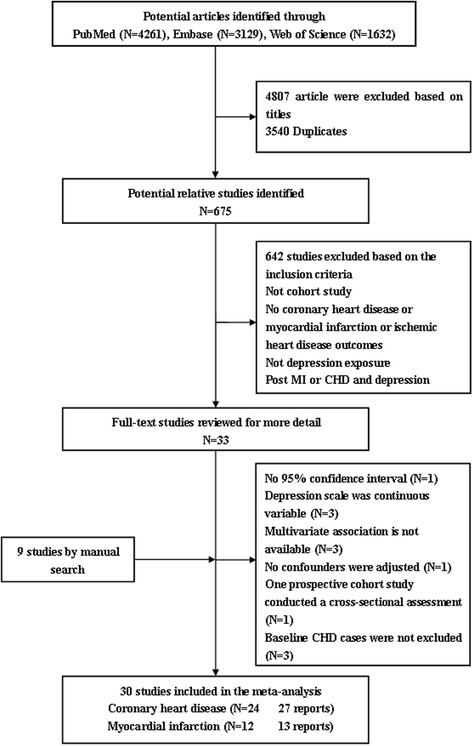
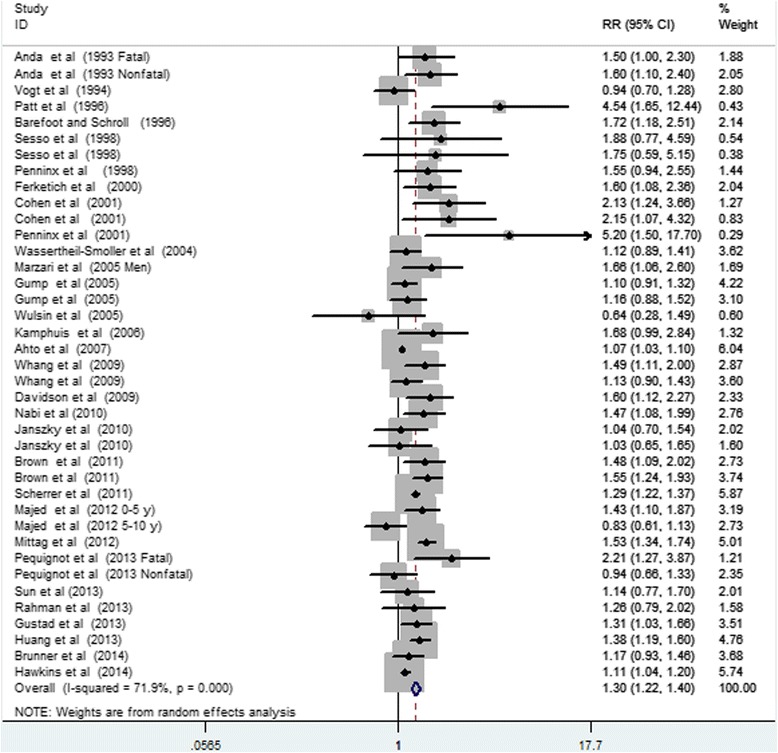
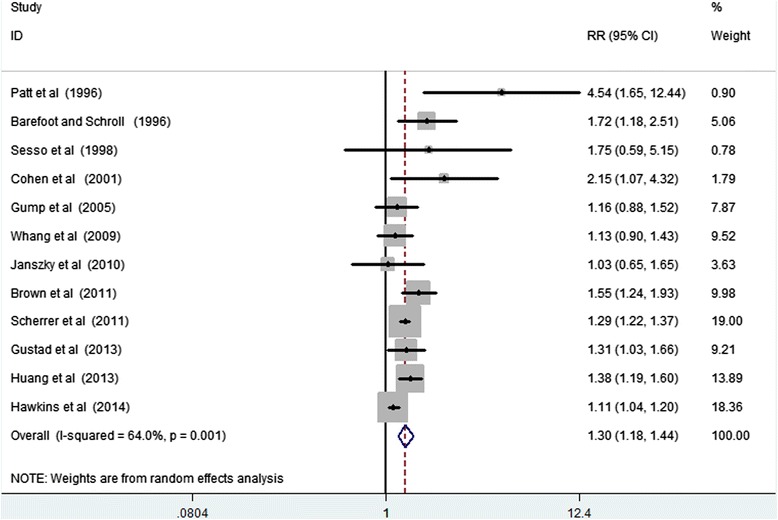
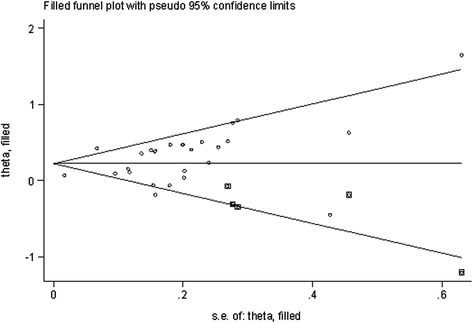
BACKGROUND: Several systematic reviews and meta-analyses demonstrated the association between depression and the risk of coronary heart disease (CHD), but the previous reviews had some limitations. Moreover, a number of additional studies have been published since the publication of these reviews. We conducted an updated meta-analysis of prospective studies to assess the association between depression and the risk of CHD. METHODS: Relevant prospective studies investigating the association between depression and CHD were retrieved from the PubMed, Embase, Web of Science search (up to April 2014) and from reviewing reference lists of obtained articles. Either a random-effects model or fixed-effects model was used to compute the pooled risk estimates when appropriate. RESULTS: Thirty prospective cohort studies with 40 independent reports met the inclusion criteria. These groups included 893,850 participants (59,062 CHD cases) during a follow-up duration ranging from 2 to 37 years. The pooled relative risks (RRs) were 1.30 (95% CI, 1.22-1.40) for CHD and 1.30 (95% CI, 1.18-1.44) for myocardial infarction (MI). In the subgroup analysis by follow-up duration, the RR of CHD was 1.36 (95% CI, 1.24-1.49) for less than 15 years follow-up, and 1.09 (95% CI, 0.96-1.23) for equal to or more than 15 years follow-up. Potential publication bias may exist, but correction for this bias using trim-and-fill method did not alter the combined risk estimate substantially. CONCLUSIONS: The results of our meta-analysis suggest that depression is independently associated with a significantly increased risk of CHD and MI, which may have implications for CHD etiological research and psychological medicine.
Overview
The claims and statistics of this paper haven’t been checked yet.
Free: it reads the open-access text and checks the first 5 claims that cite a source we can check. Create a free account to check every claim.
Integrity signals
Registry
Cites
Statistics
Figures
Verification
Claims the paper makes
The claims and statistics of this paper haven’t been checked yet.
Free: it reads the open-access text and checks the first 5 claims that cite a source we can check. Create a free account to check every claim.
Claims other papers make about this one
Each is checked against this paper’s own text: does it say what the citing paper says it does?
The source backs part of the claim, not all of it — or backs it for a different population, condition or comparison.
In the citing paper
“Indeed, several meta-analyses of prospective cohort studies have reported that baseline MDD increases the risk of future cardiovascular events38-41.”
From Comorbidity between major depressive disorder and physical diseases: a comprehensive review of epidemiology, mechanisms and management (2023) · cites this paper as [38]
Experimental — accuracy not yet measuredThe source backs part of the claim, not all of it — or backs it for a different population, condition or comparison.
In the citing paper
“In this 2014 meta-analysis, depression was associated with an increased risk of MI (RR, 1.30 [95% CI, 1.22-1.40])”
From Psychological Health, Well-Being, and the Mind-Heart-Body Connection: A Scientific Statement From the American Heart Association (2021) · cites this paper as [42]
Experimental — accuracy not yet measuredThe cited source says what the claim attributes to it.
In the citing paper
“Depression was found to be associated with an increased risk of AD, any dementia, DM and CHD by between 30% and 104%,11,77,80 but had no effect on VaD risk.11”
From Common risk factors for major noncommunicable disease, a systematic overview of reviews and commentary: the implied potential for targeted risk reduction (2019) · cites this paper as [80]
The cited source says what the claim attributes to it.
In the citing paper
“These associations remained significant after adjustment for potential confounders, including sociodemographic factors and health behaviors.”
From Psychological Health, Well-Being, and the Mind-Heart-Body Connection: A Scientific Statement From the American Heart Association (2021) · cites this paper as [42]
The check wasn’t confident either way, so it gives no verdict — never disputed.
In the citing paper
“HCV prevalence ranging from 2.1 to 51% and an average weighted prevalence of 16.32%.”
From The Lancet Psychiatry Commission: a blueprint for protecting physical health in people with mental illness (2019) · cites this paper as [33]
Experimental — accuracy not yet measured
3 more claims about this paper
Create a free account to see every claim other papers make about this one.
Self-check
Percentages, sums and reported differences re-computed from the paper’s own numbers.
The self-check needs the paper’s full text.
Citations
Cites
Bias in meta-analysis detected by a simple, graphical test
Egger, M., Smith, G. D., Schneider, M., & Minder, C. (1997) · BMJ · doi:10.1136/bmj.315.7109.629 · Cited by 56,722 · cited 1×
“We used the Begg test [20], the Egger test [21] and visual inspection of a funnel plot to assess the publication bias.”
MethodDermyshi, E., Wang, Y., Yan, C., Hong, W., Qiu, G., Gong, X., & Zhang, T. (2017) · Neonatology · doi:10.1159/000454668 · Cited by 24,451
Self-citationMeta-analysis of Observational Studies in Epidemiology<SUBTITLE>A Proposal for Reporting</SUBTITLE>
Stroup, D. F. (2000) · JAMA · doi:10.1001/jama.283.15.2008 · Cited by 20,623
Operating characteristics of a rank correlation test for publication bias
Begg, C. B., & Mazumdar, M. (1994) · Biometrics · doi:10.2307/2533446 · Cited by 16,955 · cited 1×
“We used the Begg test [20], the Egger test [21] and visual inspection of a funnel plot to assess the publication bias.”
MethodDuval, S., & Tweedie, R. (2000) · Biometrics · doi:10.1111/j.0006-341x.2000.00455.x · Cited by 14,099 · cited 1×
“The Duval and Tweedie nonparametric trim-and-fill method [22] was performed to further assess the potential publication bias.”
MethodPractical Statistics for Medical Research
Altman, D. G. (1990) · doi:10.1201/9780429258589 · Cited by 10,668
European Guidelines on cardiovascular disease prevention in clinical practice (version 2012)
Authors/Task Force Members:, Perk, J., De Backer, G., Gohlke, H., Graham, I., Reiner, Ž., Verschuren, M., Albus, C., Benlian, P., Boysen, G., et al. (2012) · European Heart Journal · doi:10.1093/eurheartj/ehs092 · Cited by 8,490
Molecular Mechanisms of Depression: Perspectives on New Treatment Strategies
Lang, U. E., & Borgwardt, S. (2013) · Cellular Physiology and Biochemistry · doi:10.1159/000350094 · Cited by 8,475
(1996) · Cited by 6,884
Heart Disease and Stroke Statistics—2011 Update: A Report From the American Heart Association
Roger, V. L., Go, A. S., Lloyd-Jones, D. M., Adams, R. J., Berry, J. D., Brown, T. M., Carnethon, M. R., Dai, S., de Simone, G., Ford, E. S., et al. (2011) · Circulation · doi:10.1161/cir.0b013e3182009701 · Cited by 6,149
Research works printed but not linked: 1
- 54. Sun WJ, Xu L, Chan WM, Lam TH, Schooling CM: Are Depressive Symptoms Associated With Cardiovascular Mortality Among Older Chinese: A Cohort Study of 64,000 People in Hong Kong? Am J Geriatr Psychiatry 2013. · DOI
Cited by
Items 101–200 of 500
Ojala, A., Kostensalo, J., Viik, J., Matilainen, H., Wik, I., Virtanen, L., & Muilu–Mäkelä, R. (2023) · Journal of Environmental Psychology · doi:10.1016/j.jenvp.2023.102059 · Cited by 50
Hohls, J. K., König, H., Quirke, E., & Hajek, A. (2019) · BMJ Open · doi:10.1136/bmjopen-2018-027218 · Cited by 44
“Both disorders have been associated with a considerable economic burden, as well as adverse implications for the affected individual, such as increased risk for physical comorbidities, for example, cardiovascular disease.(7) 8 Moreover, individual cross-sectional and longitudinal studies have suggested that anxiety an…”
BackgroundLoneliness and Social Isolation: Determinants of Cardiovascular Outcomes
Sharma, T., Padala, P. R., & Mehta, J. L. (2021) · Current Cardiology Reviews · doi:10.2174/1573403x17666210129101845 · Cited by 42
Petersen, I., Bhana, A., Folb, N., Thornicroft, G., Zani, B., Selohilwe, O., Petrus, R., Mntambo, N., Georgeu-Pepper, D., Kathree, T., et al. (2018) · Trials · doi:10.1186/s13063-018-2518-6 · Cited by 36
Karlsen, H. R., Saksvik‐Lehouillier, I., Stone, K. L., Schernhammer, E. S., Yaffe, K. S., & Langvik, E. (2020) · Psychology and Health · doi:10.1080/08870446.2020.1779273 · Cited by 40
“This is contrary to other studies showing depression to be an independent risk marker for incident CHD (Gan et al., 2014; Nicholson, Kuper, & Hemingway, 2006; Rugulies, 2002; Wu & Kling, 2016).”
ResultHackett, M. L., Farnbach, S., Glozier, N., Skinner, T. C., Teixeira-Pinto, A. M., Askew, D. A., Gee, G., Cass, A., & Brown, A. D. H. (2016) · BMJ Open · doi:10.1136/bmjopen-2016-015009 · Cited by 33
“Mental illness and depression are also considered to be key contributors to the development of chronic disease.[9-12] The presence of depression approximately doubles the risk of first myocardial infarction or cardiac death, but amongst patients with established ischaemic heart disease the risk of a future serious car…”
Anxiety-Related Bleeding and Thrombosis
Hoirisch-Clapauch, S. (2018) · Seminars in Thrombosis and Hemostasis · doi:10.1055/s-0038-1639501 · Cited by 37
Deschênes, S. S., Burns, R. J., Graham, E. A., & Schmitz, N. (2019) · Epidemiology and Psychiatric Sciences · doi:10.1017/s2045796019000441 · Cited by 40
Young, H. A., Cousins, A. L., Watkins, H., & Benton, D. (2016) · Biological Psychology · doi:10.1016/j.biopsycho.2016.12.001 · Cited by 36
Shen, R., Zhao, N., Wang, J., Guo, P., Shen, S., Liu, D., & Zou, T. (2022) · Frontiers in Cardiovascular Medicine · doi:10.3389/fcvm.2022.954563 · Cited by 35
Online physical activity interventions for mental disorders: A systematic review
Rosenbaum, S., Newby, J. M., Steel, Z., Andrews, G., & Ward, P. B. (2015) · Internet Interventions · doi:10.1016/j.invent.2015.04.001 · Cited by 31
Fugger, G., Dold, M., Bartova, L., Kautzky, A., Souery, D., Mendlewicz, J., Serretti, A., Zohar, J., Montgomery, S., Frey, R., et al. (2019) · European Neuropsychopharmacology · doi:10.1016/j.euroneuro.2019.03.005 · Cited by 34
Kalkman, H. O. (2020) · Pharmaceuticals · doi:10.3390/ph13050092 · Cited by 34
“In particular, cardiovascular disorders like atherosclerosis [14], diabetes [15,16], coronary heart disease [17,18], myocardial infarction [19], or congestive heart failure [20,21] and their risk factors like tobacco smoking [22], obesity [23–25], homocysteinemia [26], or old age [27,28] involve vascular inflammation…”
BackgroundBarger, S. D., & Struve, G. C. (2022) · Preventing Chronic Disease · doi:10.5888/pcd19.210418 · Cited by 35
“Unipolar depression is observed in 7% of the US adult population (1), is a leading cause of disability (2), and in 2018 was noted in more than 10 million office visits in the US (3).”
Minarini, G. (2020) · IntechOpen eBooks · doi:10.5772/intechopen.89827 · Cited by 37
Frost, C., Toczko, M., Merrigan, J. J., & Martin, J. R. (2021) · Sleep Epidemiology · doi:10.1016/j.sleepe.2021.100014 · Cited by 36
Non-Traditional Risk Factors as Contributors to Cardiovascular Disease
Wang, L., Lei, J., Wang, R., & Li, K. (2023) · Reviews in Cardiovascular Medicine · doi:10.31083/j.rcm2405134 · Cited by 33
“Another meta-analysis of 30 prospective cohort trials found that depression was independently associated with an increased risk of CAD and AMI [95].”
BackgroundA heartfelt message, estrogen replacement therapy: use it or lose it
Speth, R. C., D’Ambra, M., Ji, H., & Sandberg, K. L. (2018) · American Journal of Physiology-Heart and Circulatory Physiology · doi:10.1152/ajpheart.00041.2018 · Cited by 33
Depression, treatable cardiovascular risk factors and incident cardiac events in the Gazel cohort
Hamieh, N. M., Meneton, P., Wiernik, E., Limosin, F., Zins, M., Goldberg, M., Melchior, M., & Lemogne, C. (2018) · International Journal of Cardiology · doi:10.1016/j.ijcard.2018.10.013 · Cited by 35
Mental health disorders among patients with acute myocardial infarction in the United States
Sreenivasan, J., Khan, M. S., Khan, S. U., Hooda, U., Aronow, W. S., Panza, J. A., Levine, G. N., Commodore-Mensah, Y. Y., Blumenthal, R. S., & Michos, E. D. (2020) · American Journal of Preventive Cardiology · doi:10.1016/j.ajpc.2020.100133 · Cited by 29
“This concerning increase in the prevalence of major depression and bipolar disorder among patients with acute MI needs special attention as they are important but often under-estimated as risk factors for CVD [8].”
BackgroundCocker, K. A. D., Biddle, S., Teychenne, M. J., & Bennie, J. A. (2021) · Depression and Anxiety · doi:10.1002/da.23157 · Cited by 32
“For example, a meta‐analysis concluded that depression is an independent risk factor for coronary heart disease and myocardial infarction (Gan et al., 2014).”
BackgroundPálinkás, A., Sándor, J., Papp, M., Kőrösi, L., Falusi, Z., Pál, L., Bélteczki, Z., Rihmer, Z., & Döme, P. (2018) · Social Psychiatry and Psychiatric Epidemiology · doi:10.1007/s00127-018-1545-7 · Cited by 29
Вачиковна, П. Н., Boytsov, S. A., Оганов, Р. Г., Yufereva, Y. M., Kostyuk, G. P., Kursakov, A. A., Ausheva, A. K., & Vygodin, V. A. (2018) · Kardiologiia · doi:10.18087/cardio.2018.9.10171 · Cited by 31
Symptoms of Depression and Risk of Abdominal Aortic Aneurysm: A HUNT Study
Nyrønning, L. Å., Stenman, M., Hultgren, R., Albrektsen, G., Videm, V., & Mattsson, E. J. R. (2019) · Journal of the American Heart Association · doi:10.1161/jaha.119.012535 · Cited by 27
“10,13,47 There was no signi fi cant difference in the association between depression and AAA in women compared with men, although the relative risk estimates were slightly higher for women.”
Insight Into the Hispanic Paradox: The Language Hypothesis
Llabre, M. M. (2021) · Perspectives on Psychological Science · doi:10.1177/1745691620968765 · Cited by 33
Вачиковна, П. Н., Boytsov, S. A., Bacquer, D. D., Sokolova, O. Y., Аушева, А. К., Kursakov, A. A., & Saner, H. E. (2021) · Global Heart · doi:10.5334/gh.1017 · Cited by 41
Lin, J., Yang, R., Zhang, Y., Hou, Y., Yang, H., Zhou, X., Liu, T., Yang, Q., & Wang, Y. (2023) · Journal of Affective Disorders · doi:10.1016/j.jad.2023.03.046 · Cited by 28
Self-citationShively, C. A., Silverstein‐Metzler, M. G., Justice, J. N., & Willard, S. L. (2016) · Neuroscience & Biobehavioral Reviews · doi:10.1016/j.neubiorev.2016.08.037 · Cited by 28
“…disorder may e clinically relevant (Leung et al., 2012; Rugulies, 2002; Rudisch nd Nemeroff, 2003 Rugulies, 2002; Rudisch and Nemeroff, 2003). eta-analyses suggest that depression is independently associated ith a significantly increased risk of CHD and MI (Gan et al., 2014; u and Kling, 2016).”
Backgroundde Geus, E. J. C. (2020) · Journal of the American Heart Association · doi:10.1161/jaha.120.019861 · Cited by 30
Predictors of Psychological Distress among Post-Operative Cardiac Patients: A Narrative Review
McCann, W. D., Hou, X., Stolic, S., & Ireland, M. J. (2023) · Healthcare · doi:10.3390/healthcare11202721 · Cited by 47
“…the prevalence of MDD doubles among people who experience a major cardiac event and is observed at a rate greater than 50% among patients who have undergone CABGS [9–11 , 22 Three meta-analyses representing a combined total of 57 studies provide further evidence of this interrelationship [25–27].”
BackgroundPutra, I. G. N. E., Daly, M., Sutin, A. R., Steptoe, A., Scholes, S., & Robinson, E. (2024) · International Journal of Obesity · doi:10.1038/s41366-024-01551-1 · Cited by 40
“There is also some evidence that compromised psychological well-being (e.g., depressive symptoms, anxiety) is associated with future NCD risk, including hypertension [24], heart disease [25], stroke [26], diabetes [27], arthritis [28], cancer [29], and dementia [30].”
Smith, P. J., Sherwood, A., Mabe, S., Watkins, L. L., Hinderliter, A. L., & Blumenthal, J. A. (2017) · General Hospital Psychiatry · doi:10.1016/j.genhosppsych.2017.05.001 · Cited by 34
Zhang, H., Xu, Y., & Xu, Y. (2024) · Frontiers in Endocrinology · doi:10.3389/fendo.2024.1402336 · Cited by 26
Kim, H., Yoo, J., Han, K., & Jeon, H. J. (2022) · General Hospital Psychiatry · doi:10.1016/j.genhosppsych.2022.07.002 · Cited by 27
Cheung, E. O., Addington, E. L., Bassett, S. M., Schuette, S., Shiu, E. W., Cohn, M., Leykin, Y., Saslow, L. R., & Moskowitz, J. T. (2018) · JMIR Research Protocols · doi:10.2196/10494 · Cited by 27
“Moreover, elevated depressive symptomatology is a significant risk factor for developing major depression [5,6]; has been associated with increased cardiovascular morbidity and mortality [7], risk of disability [8]; and carries an estimated annual economic cost of US $210.5 billion [9].”
BackgroundInfluentialMental and Addictive Disorders and Medical Comorbidities
Walker, E. R., & Druss, B. G. (2018) · Current Psychiatry Reports · doi:10.1007/s11920-018-0956-1 · Cited by 29
Librenza‐Garcia, D., Passos, I. C., Feiten, J. G., Lotufo, P. A., Goulart, A. C., Santos, I. S., Viana, M. C., Benseñor, I. M., & Brunoni, A. R. (2020) · Psychological Medicine · doi:10.1017/s0033291720001579 · Cited by 27
“For example, depression is a risk factor for clinical diseases such as diabetes (Brown, Majumdar, Newman, & Johnson, 2005), coronary heart disease (Gan et al., 2014; O ’ Neil et al., 2016), and autoimmune diseases(Andersson et al., 2015), with patients being twice as likely to die prematurely when…”
BackgroundDag, Y. N. O., Mehlig, K., Rosengren, A., Lissner, L., & Rosvall, M. (2019) · Journal of Psychosomatic Research · doi:10.1016/j.jpsychores.2019.109888 · Cited by 27
Rajan, S., Rathod, S. D., Luitel, N. P., Murphy, A., Roberts, T., & Jordans, M. J. D. (2020) · BMC Health Services Research · doi:10.1186/s12913-020-05094-9 · Cited by 31
Honda, Y., Mok, Y., Mathews, L. M., Hof, J. V., Daumit, G. L., Kucharska‐Newton, A., Selvin, E., Mosley, T. H., Coresh, J., & Matsushita, K. (2021) · Atherosclerosis · doi:10.1016/j.atherosclerosis.2021.04.020 · Cited by 26
Moise, N., Falzon, L., Obi, M., Ye, S., Patel, S. R., Gonzalez, C. J., Bryant, K. B., & Kronish, I. M. (2018) · Journal of General Internal Medicine · doi:10.1007/s11606-018-4554-z · Cited by 27
Social support and stress, depression, and cardiovascular disease
Uchino, B. N., Cronan, S. B., Scott, E. E., Landvatter, J., & Papadakis, M. (2019) · Elsevier eBooks · doi:10.1016/b978-0-12-815015-3.00009-x · Cited by 29
Varghese, T. P., Kumar, A. V., Varghese, N. M., & Chand, S. (2019) · Current Cardiology Reviews · doi:10.2174/1573403x15666191127104520 · Cited by 24
Xu, Q., Chen, C., You, R., Ni, L., Chen, S., & Peng, B. (2023) · BMC Medical Genomics · doi:10.1186/s12920-023-01625-5 · Cited by 25
“MDD, major depression disorder; CHD, coronary heart disease; IVW, inverse variance weighted; MR, mendelian randomization studies ( N = 893,850) discovered that people with MDD had a 30% greater risk of getting CHD than patients without MDD (RR = 1.30, 95% CI:1.22–1.34) [ 15].”
BackgroundInfluentialLiu, H., Tian, Y., Liu, Y., Nigatu, Y. T., & Wang, J. (2019) · Journal of Psychosomatic Research · doi:10.1016/j.jpsychores.2019.01.007 · Cited by 23
When Heart Beats Differently in Depression: Review of Nonlinear Heart Rate Variability Measures
Čukić, M., Savić, D., & Sidorova, J. (2023) · JMIR Mental Health · doi:10.2196/40342 · Cited by 28
“We registered at least 14 reviews that meta-analytically compared conventional methods of analysis of this relation [16-28].”
BackgroundMethodShu, J. E., Lo, S. B., Phillips, M., Sun, F. X., Seldin, D. C., Berenbaum, I., Berk, J. L., & Sanchorawala, V. (2016) · Amyloid · doi:10.1080/13506129.2016.1208081 · Cited by 25
Huang, C., Hsieh, H., Tu, H., Jiang, H., Wang, P., & Lin, C. (2017) · Journal of Affective Disorders · doi:10.1016/j.jad.2017.09.044 · Cited by 23
“The association between depression and these comorbidities has been extensively reported (Gan et al., 2014; Garfield et al., 2014; Grenon et al., 2014).”
BackgroundWelsh, J., Korda, R., Joshy, G., Butterworth, P., Brown, A. D. H., & Banks, E. (2017) · Journal of Epidemiology & Community Health · doi:10.1136/jech-2017-209535 · Cited by 24
Aspects of diastolic dysfunction in patients with new and recurrent depression
Tudoran, M., Tudoran, C., Ciocârlie, T., & Giurgi-Oncu, C. (2020) · PLoS ONE · doi:10.1371/journal.pone.0228449 · Cited by 23
“Other results of recent meta-analyses of prospective cohort studies, conducted on subjects that were initially without CVD, indicate that depression was associated with a 30% increased risk of future coronary events [21, 22].”
ResultPolanka, B. M., Berntson, J., Vrany, E. A., & Stewart, J. C. (2018) · Annals of Behavioral Medicine · doi:10.1093/abm/kay007 · Cited by 24
“To illustrate, recent meta-analyses revealed that adults with a depressive disorder (meeting diagnostic criteria) or elevated depressive symptoms (achieving a higher questionnaire score) have a 30% greater risk of coronary heart disease [1], a 30% greater risk of myocardial infarction (MI) [1, 2], and a 36% greater ri…”
BackgroundUnmet needs in the management of cardiovascular risk in inflammatory joint diseases
Castañeda, S., Vicente‐Rabaneda, E. F., García-Castañeda, N., Prieto-Pena, D., Dessein, P. H., & González-Gay, M. Á. (2019) · Expert Review of Clinical Immunology · doi:10.1080/1744666x.2019.1699058 · Cited by 26
“Recent meta-analyses proved that both depression and anxiety are independently associated with incident CVE rates [86,87].”
BackgroundAssociation of Depression with Subclinical Coronary Atherosclerosis: a Systematic Review
Khan, S. A., Shahzad, U., Zarak, M. S., Channa, J., Khan, I., & Ghani, M. O. A. (2020) · Journal of Cardiovascular Translational Research · doi:10.1007/s12265-020-09985-4 · Cited by 23
Euteneuer, F., Neuert, M., Salzmann, S., Fischer, S., Ehlert, U., & Rief, W. (2022) · Psychological Medicine · doi:10.1017/s0033291722000447 · Cited by 27
“Given the increased incidence of CVD in patients with MD, it is of clinical relevance whether common treatments affect cardiovascular health (Gan et al., 2014; Harshfield et al., 2020; Li et al., 2019; Wu & Kling, 2016).”
BackgroundDhingra, R., He, F., Al‐Shaar, L., Saunders, E. F. H., Chinchilli, V. M., Yanosky, J. D., & Liao, D. (2022) · Journal of Affective Disorders · doi:10.1016/j.jad.2022.12.038 · Cited by 24
Virtanen, M., Elovainio, M. J., Josefsson, K., Batty, G. D., Singh‐Manoux, A., & Kivimäki, M. (2016) · Heart · doi:10.1136/heartjnl-2016-310207 · Cited by 25
Gender Differences in Brain-Heart Connection
Trevisan, C., Sergi, G., & Maggi, S. (2020) · Springer eBooks · doi:10.1007/978-3-030-28008-6_61 · Cited by 30
Reprint of: Positive Psychological Well-Being and Cardiovascular Disease
Kubzansky, L. D., Huffman, J. C., Boehm, J. K., Hernández, R., Kim, E. S., Koga, H. K., Feig, E. H., Lloyd‐Jones, D. M., Seligman, M. E. P., & Labarthe, D. R. (2018) · Journal of the American College of Cardiology · doi:10.1016/j.jacc.2018.10.023 · Cited by 27
“For example, a 2014 meta-analysis of 30 prospective studies (including 40 independent reports), with 893,850 participants with follow-up periods ranging from 2 to 37 years, found that depression consistently predicted excess risk of developing coronary heart disease (12).”
BackgroundTang, S., Wu, Z., Cao, H., Chen, X., Wu, G., Tan, W., Liu, D., Yang, J., Long, Y., & Liu, Z. (2022) · Frontiers in Aging Neuroscience · doi:10.3389/fnagi.2021.809853 · Cited by 23
A multivariate genome-wide association study of psycho-cardiometabolic multimorbidity
Baltramonaityte, V., Pingault, J., Cecil, C. A. M., Choudhary, P., Järvelin, M., Penninx, B. W. J. H., Felix, J. F., Sebert, S. P., Milaneschi, Y., & Walton, E. (2023) · PLoS Genetics · doi:10.1371/journal.pgen.1010508 · Cited by 26
Priegnitz, J., Langheim, E., Rademacher, W., Schmitz, C., & Köllner, V. (2019) · PPmP - Psychotherapie · Psychosomatik · Medizinische Psychologie · doi:10.1055/a-1023-4609 · Cited by 24
“So gilt Depression inzwischen als eigenständiger Risikofaktor für das Auftreten einer Koronaren Herzkrankheit [2, 3].”
BackgroundLai, F. T. T., Mercer, S. W., Guthrie, B., Yip, B. H. K., Chung, G. K. K., Zou, D., Lee, K.-P., Chau, P. Y. K., Chung, R. Y., Wong, E. L. Y., et al. (2020) · Psychological Medicine · doi:10.1017/s0033291720001920 · Cited by 19
“Depression is consistently associated with a heightened risk of subsequent adverse cardiovascular events (Barlinn et al., 2014; Dong, Zhang, Tong, & Qin, 2012; Gan et al., 2014; Wium-Andersen et al., 2019).”
BackgroundLubas, M. M., Wang, M., Jefferies, J. L., Ness, K. K., Ehrhardt, M. J., Krull, K. R., Mulrooney, D. A., Srivastava, D. K., Howell, R. M., Robison, L. L., et al. (2020) · Cancer Epidemiology Biomarkers & Prevention · doi:10.1158/1055-9965.epi-20-1183 · Cited by 23
The impact of gratitude interventions on patients with cardiovascular disease: a systematic review
Wang, X., & Song, C. (2023) · Frontiers in Psychology · doi:10.3389/fpsyg.2023.1243598 · Cited by 26
“…be characterized by chronic stress (Richardson et al., 2012; Steptoe and Kivimaki, 2013), anger (Chida and Steptoe, 2009; Mostofsky et al., 2014), anxiety (Emdin et al., 2016), depression (Gan et al., 2014) and pessimism (Pankalainen et al., 2016), which can negatively affect cardiovascular health.”
BackgroundPsychiatric disorders and cardiovascular diseases: A mendelian randomization study
Sui, X., Liu, T., Liang, Y., & Zhang, B. (2023) · Heliyon · doi:10.1016/j.heliyon.2023.e20754 · Cited by 17
“At the same time, the meta-analysis of Gan Y et al. [37] indicated that CAD and myocardial infarction were more common in persons with depression, which is supported by the present study.”
Cundiff, J. M., & Smith, T. W. (2017) · Social and Personality Psychology Compass · doi:10.1111/spc3.12310 · Cited by 24
Brain mechanisms of stress and depression in coronary artery disease
Bremner, J. D., Campanella, C., Khan, Z., Fani, N., Kasher, N., Evans, S., Reiff, C. M., Mishra, S., Ladd, S. L., Nye, J. A., et al. (2018) · Journal of Psychiatric Research · doi:10.1016/j.jpsychires.2018.11.017 · Cited by 23
“The relationship between major depression and coronary artery disease (CAD) is well established (Carney and Freedland, 2017; Gan et al., 2014; Meijer et al., 2011; Vaccarino and Bremner, 2014; Vaccarino et al., 2009).”
BackgroundDeschênes, S. S., Burns, R. J., & Schmitz, N. (2020) · Psychosomatic Medicine · doi:10.1097/psy.0000000000000790 · Cited by 48
“For instance, a meta-analysis of 30 prospective cohort studies found that depression was associated with a 30% increased risk of incident coronary heart disease (5).”
BackgroundPhysical health in affective disorders: a narrative review of the literature
Colomer, L., Anmella, G., Vieta, E., & Grande, I. (2021) · Brazilian Journal of Psychiatry · doi:10.1590/1516-4446-2020-1246 · Cited by 22
Neyer, S., Witthöft, M., Cropley, M., Pawelzik, M. R., Lugo, R. G., & Sütterlin, S. (2021) · PLoS ONE · doi:10.1371/journal.pone.0248686 · Cited by 20
Sun, X., Chen, L., Wang, Z., Lu, Y., Chen, M., He, Y., Xu, H., & Zheng, L. (2021) · Frontiers in Cardiovascular Medicine · doi:10.3389/fcvm.2021.676030 · Cited by 21
Depression and Coronary Artery Disease—Where We Stand?
Apostolos, A., Κωνσταντίνου, Κ., Ktenopoulos, N., Vlachakis, P. K., Skalidis, I., Chrysostomidis, G., Panoulas, V. F., & Tsioufis, K. P. (2025) · Journal of Clinical Medicine · doi:10.3390/jcm14124281 · Cited by 19
“Several studies [17,18] and multiple meta-analyses have identified this relationship [19–21].”
Brupbacher, G., Zander-Schellenberg, T., Straus, D., Porschke, H., Infanger, D., Gerber, M., von Känel, R., & Schmidt‐Trucksäss, A. (2021) · SLEEP · doi:10.1093/sleep/zsab177 · Cited by 19
“The effect on fitness is pertinent because depression increases the risk of coronary heart disease and myocardial infarction [20].”
BackgroundSadlonova, M., Kermani, M. B., Huffman, J. C., Nikrahan, G. R., Sadeghi, M., & Celano, C. M. (2022) · Journal of the Academy of Consultation-Liaison Psychiatry · doi:10.1016/j.jaclp.2022.03.004 · Cited by 19
The longitudinal connection between depressive symptoms and inflammation: Mediation by sleep quality
Song, S., DeMeo, N. N., Almeida, D. M., Majd, M., Engeland, C. G., & Graham‐Engeland, J. E. (2022) · PLoS ONE · doi:10.1371/journal.pone.0269033 · Cited by 20
“Major depressive disorder often coincides with chronic diseases such as cardiovascular disease, arthritis, and diabetes [2,3], many of which are leading causes of death and disability [4].”
BackgroundThe lipid paradox in neuroprogressive disorders: Causes and consequences
Morris, G., Berk, M., Walder, K., O’Neil, A., Maes, M., & Puri, B. K. (2021) · Neuroscience & Biobehavioral Reviews · doi:10.1016/j.neubiorev.2021.06.017 · Cited by 17
Korhonen, K., Moustgaard, H., Tarkiainen, L., Östergren, O., Costa, G., Urhøj, S. K., & Martikainen, P. (2021) · Journal of Affective Disorders · doi:10.1016/j.jad.2021.08.076 · Cited by 20
Obas, K. A., Kwiatkowski, M., Schaffner, E., Lang, U. E., Stolz, D., Eze, I. C., Imboden, M., & Probst-Hensch, N. M. (2022) · Scientific Reports · doi:10.1038/s41598-022-09396-2 · Cited by 19
Chen, F., Dong, X., Yu, Z., Zhang, Y., & Shi, Y. (2024) · Journal of Affective Disorders · doi:10.1016/j.jad.2024.03.098 · Cited by 22
Self-citationvon Känel, R. (2024) · Seminars in Thrombosis and Hemostasis · doi:10.1055/s-0044-1787660 · Cited by 22
Michel, G., Baenziger, J., Brodbeck, J., Mader, L., Kuehni, C. E., & Roser, K. (2024) · PLoS ONE · doi:10.1371/journal.pone.0305192 · Cited by 18
Liu, H.-C., Chaou, C., Lo, C., Chung, H., & Hwang, M. (2022) · Children · doi:10.3390/children9040578 · Cited by 16
“The relationship between depression and poor cardiovascular (CV) outcomes has been proposed for acquired heart disease patients [7].”
BackgroundVerma, H., Shivavedi, N., Tej, G. N. V. C., Kumar, M., & Nayak, P. K. (2022) · Journal of Biochemical and Molecular Toxicology · doi:10.1002/jbt.23160 · Cited by 19
Digitalizing Public Services: Opportunities for Latin America and the Caribbean
Cristia, J., & Vlaicu, R. (2022) · doi:10.18235/0004543 · Cited by 31
Singh, A., Riaz, R., Verma, A., Irfan, H., Shaukat, A. F., Nadeem, A., Goyal, P., Habib, A., & Satapathy, P. (2025) · Annals of Medicine and Surgery · doi:10.1097/ms9.0000000000003391 · Cited by 18
“A meta-analysis of 30 prospective cohort studies ( N = 893 850) found that there is a statistically significant 30% (relative risk [RR] = 1.30, 95% CI: 1.22–1.40) increase in the risk of CHD among those who have depression as opposed to those who do not [ 97 ] .”
InfluentialLin, S., Zhang, H., & Ma, A. (2018) · Journal of Affective Disorders · doi:10.1016/j.jad.2018.02.027 · Cited by 16
Mood disorders, childhood maltreatment, and medical morbidity in US adults: An observational study
Stapp, E. K., Williams, S. C., Kalb, L. G., Holingue, C., Eck, K. V., Ballard, E. D., Merikangas, K. R., & Gallo, J. J. (2020) · Journal of Psychosomatic Research · doi:10.1016/j.jpsychores.2020.110207 · Cited by 15
Euteneuer, F., Neuert, M., Salzmann, S., Fischer, S., Ehlert, U., & Rief, W. (2022) · Zurich Open Repository and Archive (University of Zurich) · doi:10.5167/uzh-218437 · Cited by 15
Balasubramanian, R., Shutta, K. H., Guasch‐Ferré, M., Huang, T., Jha, S. C., Zhu, Y., Shadyab, A. H., Manson, J. E., Corella, D., Fitó, M., et al. (2023) · Brain Behavior and Immunity · doi:10.1016/j.bbi.2023.08.010 · Cited by 16
Birhanu, M. M., Zaman, S. B., Thrift, A. G., Evans, R. G., & Zengin, A. (2022) · Preventive Medicine · doi:10.1016/j.ypmed.2022.107036 · Cited by 16
Chang, S., Crous‐Bou, M., Prescott, J., ROSNER, B. A., Simon, N. M., Wang, W., Vivo, I. D., & Okereke, O. I. (2018) · Depression and Anxiety · doi:10.1002/da.22732 · Cited by 15
“…with higher risk of major somatic conditions and adverse health outcomes (Batelaan, Seldenrijk, Bot, van Balkom, & Penninx, 2016; Chodosh, Kado, Seeman, & Karlamangla, 2007; Cuijpers et al., 2013; Gan et al., 2014; Gulpers et al., 2016; Luppino et al., 2011; Mezuk, Eaton, Albrecht, & Golden, 2008).”
The association between depressive mood and ischemic heart disease: a twin study
Wium‐Andersen, M. K., Wium‐Andersen, I. K., Jørgensen, M. B., McGue, M. K., Jørgensen, T. S. H., Christensen, K., & Osler, M. (2019) · Acta Psychiatrica Scandinavica · doi:10.1111/acps.13072 · Cited by 14
“However, the association persists in studies, which have controlled for several lifestyle and socio-economic factors ((6)).”
BackgroundInfluentialImplicit affectivity in clinically depressed patients during acute illness and recovery
Suslow, T., Bodenschatz, C. M., Kersting, A., Quirin, M., & Günther, V. (2019) · BMC Psychiatry · doi:10.1186/s12888-019-2365-3 · Cited by 16
van Zutphen, E. M., Kok, A. A. L., Rijnhart, J. J. M., Rhebergen, D., Huisman, M. A., & Beekman, A. T. F. (2021) · Journal of Affective Disorders · doi:10.1016/j.jad.2021.03.081 · Cited by 18
Rantanen, A. T., Korkeila, J. J. A., Kautiainen, H., & Korhonen, P. E. (2019) · Journal of Psychosomatic Research · doi:10.1016/j.jpsychores.2019.109887 · Cited by 19
Solomon, A., Stanwix, A. E., Castañeda, S., Llorca, J., González‐Juanatey, C., Hodkinson, B., Benitha, R., Ally, M. M. T. M., Maharaj, A. B., van Duuren, E., et al. (2020) · BMC Rheumatology · doi:10.1186/s41927-020-00139-2 · Cited by 17
“Finally, recent meta-analyses documented that both depression and anxiety are independently associated with incident CVD event rates [107, 108].”
BackgroundSmagula, S. F., Capps, C. S., & Krafty, R. T. (2021) · Journal of Affective Disorders · doi:10.1016/j.jad.2021.01.069 · Cited by 14
Depressive symptoms and the development of hypertension
Inoue, T. (2024) · Hypertension Research · doi:10.1038/s41440-024-01856-8 · Cited by 20
“Depression is associated with coronary artery disease (CAD) and also the risk of CAD death [4, 5].”
den Brok, M. G. H. E., Hoevenaar‐Blom, M. P., Coley, N., Andrieu, S., van Dalen, J. W., Meiller, Y., Guillemont, J., Brayne, C., van Gool, W. A., van Charante, E. P. M., et al. (2021) · The Journal of Prevention of Alzheimer s Disease · doi:10.14283/jpad.2021.53 · Cited by 15
“dementia (3), and there is a bidirectional association between depression and cardiovascular risk factors and events (13-17).”
BackgroundZhu, C., Wang, J., Wang, J., Zhong, Q., Huang, Y., Chen, Y., & Lian, Z. (2022) · Journal of Affective Disorders · doi:10.1016/j.jad.2022.01.106 · Cited by 13
Metadata
- Authors
- Gan, Y., Gong, Y., Tong, X., Sun, H., Cong, Y., Dong, X., Wang, Y., Xu, X., Yin, X., Deng, J., Li, L., Cao, S., & Lu, Z.
- Affiliations
- Huazhong University of Science and Technology (CN)
- Nanfang Hospital (CN)
- Jiangxi Science and Technology Normal University (CN)
- Corresponding author
- Cao, Shiyi
- Lu, Zuxun
- ORCID
- Venue
- BMC Psychiatry
- Published
- 2014-12
- Volume
- 14
- Issue
- 1
- Pages
- 371-371
- ISSN
- 1471-244X (ISSN-L)
- PMC
- PMC4336481
- OpenAlex
- W2050428535
- Semantic Scholar
- aca069354d584e2aa1a2f966d259f0a6b06a2f47
- Cited by
- 502
- References
- 77
- Citations by year
- 2026: 37 · 2025: 41 · 2024: 45 · 2023: 54 · 2022: 64 · 2021: 64 · 2020: 59 · 2019: 52 · 2018: 40 · 2017: 21 · 2016: 20 · 2015: 5
- FWCI
- 2.47
- Type
- journal article
- Language
- en
- Open access
- gold
- doi.org
- Locations
- BMC Psychiatry (publishedVersion, cc-by)
- Europe PMC (PubMed Central) (publishedVersion, cc-by)
- PubMed Central (publishedVersion, cc-by)
- PubMed (publishedVersion)
- Topics
- Health Sciences › Medicine › Cardiology and Cardiovascular Medicine › Cardiac Health and Mental Health
- Health Sciences › Medicine › Cardiology and Cardiovascular Medicine › Cardiovascular Health and Risk Factors
- Health Sciences › Medicine › Psychiatry and Mental health › Mental Health Treatment and Access
- Keywords
- depression, coronary artery disease, myocardial infarction, cardiovascular risk, psychological factors in disease, follow-up duration, publication bias
- MeSH terms
- Adult, Aged, Cardiovascular Diseases, Coronary Disease, Depressive Disorder, Female, Humans, Male, Middle Aged, Myocardial Infarction, Prospective Studies, Risk Factors, Publication Bias
About these checks
Registry, retraction, Cites and statistics results are computed, not judged, with one exception: a printed reference that no index lists is read once by a model before it counts as a citation error. Claims are extracted by a model and kept only when their quote appears verbatim in the text; each cited source is then checked, with a model’s help, for whether it says what the claim relies on. Those verdicts can be wrong — read the claim’s quote and the cited source before relying on one.
Statistics and arithmetic are recomputed, not judged.
Confidence bands are shown only for fields calibrated on our annotated test set. None is calibrated yet, so no band is shown.
What counts as a claim ›How we measure confidence ›How we check this ›
Are you an author, or do you see a problem with this page? Request a review
Data sources
Bibliographic data: Semantic Scholar, OpenAlex, Crossref.
Contains information from the Semantic Scholar Academic Graph Datasets, made available under the ODC Attribution License (ODC-BY 1.0).
Semantic Scholar’s data is described in: Kinney, R., et al. (2023). The Semantic Scholar Open Data Platform. arXiv:2301.10140.
