

Depression and the risk of coronary heart disease: a meta-analysis of prospective cohort studies
Open accessThe DOI matches its Crossref record; 77 of the 77 references it cites were found in a registry or an index.
Abstract
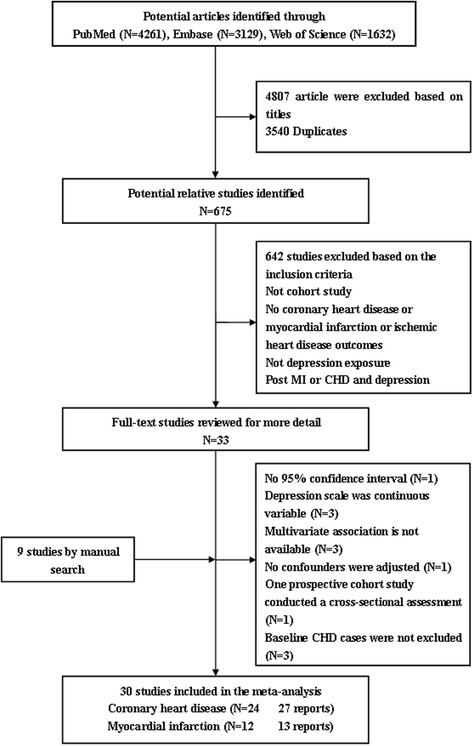
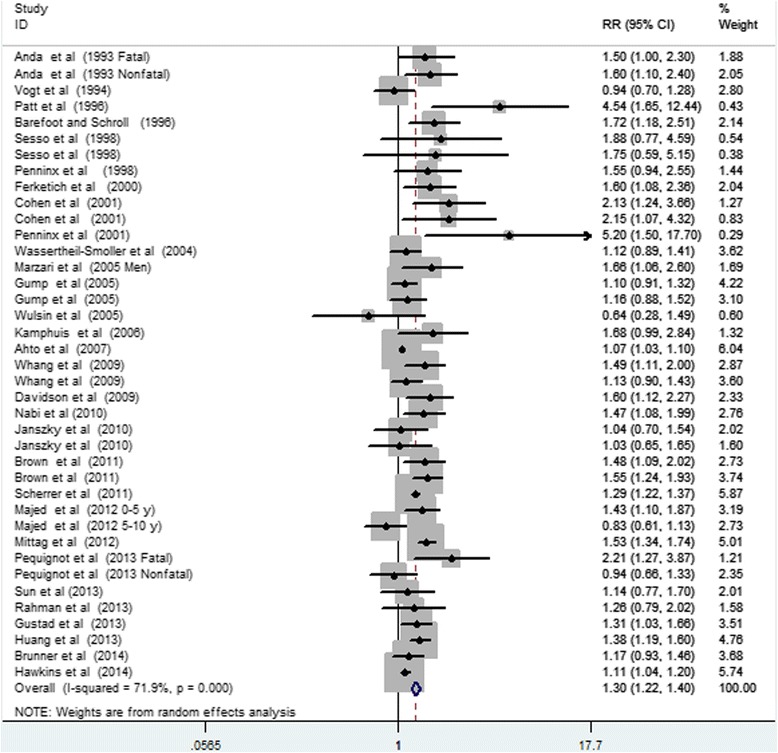
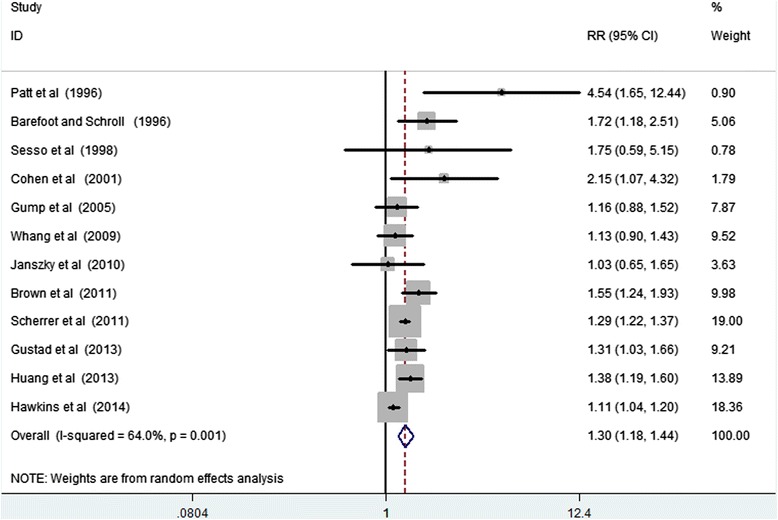
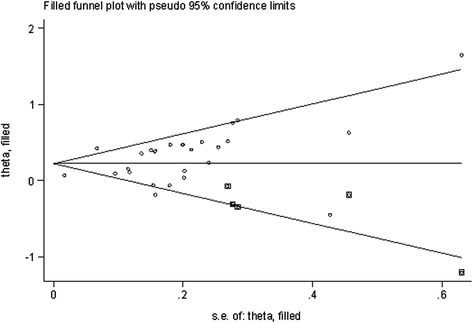
BACKGROUND: Several systematic reviews and meta-analyses demonstrated the association between depression and the risk of coronary heart disease (CHD), but the previous reviews had some limitations. Moreover, a number of additional studies have been published since the publication of these reviews. We conducted an updated meta-analysis of prospective studies to assess the association between depression and the risk of CHD. METHODS: Relevant prospective studies investigating the association between depression and CHD were retrieved from the PubMed, Embase, Web of Science search (up to April 2014) and from reviewing reference lists of obtained articles. Either a random-effects model or fixed-effects model was used to compute the pooled risk estimates when appropriate. RESULTS: Thirty prospective cohort studies with 40 independent reports met the inclusion criteria. These groups included 893,850 participants (59,062 CHD cases) during a follow-up duration ranging from 2 to 37 years. The pooled relative risks (RRs) were 1.30 (95% CI, 1.22-1.40) for CHD and 1.30 (95% CI, 1.18-1.44) for myocardial infarction (MI). In the subgroup analysis by follow-up duration, the RR of CHD was 1.36 (95% CI, 1.24-1.49) for less than 15 years follow-up, and 1.09 (95% CI, 0.96-1.23) for equal to or more than 15 years follow-up. Potential publication bias may exist, but correction for this bias using trim-and-fill method did not alter the combined risk estimate substantially. CONCLUSIONS: The results of our meta-analysis suggest that depression is independently associated with a significantly increased risk of CHD and MI, which may have implications for CHD etiological research and psychological medicine.
Overview
The claims and statistics of this paper haven’t been checked yet.
Free: it reads the open-access text and checks the first 5 claims that cite a source we can check. Create a free account to check every claim.
Integrity signals
Registry
Cites
Statistics
Figures
Verification
Claims the paper makes
The claims and statistics of this paper haven’t been checked yet.
Free: it reads the open-access text and checks the first 5 claims that cite a source we can check. Create a free account to check every claim.
Claims other papers make about this one
Each is checked against this paper’s own text: does it say what the citing paper says it does?
The source backs part of the claim, not all of it — or backs it for a different population, condition or comparison.
In the citing paper
“Indeed, several meta-analyses of prospective cohort studies have reported that baseline MDD increases the risk of future cardiovascular events38-41.”
From Comorbidity between major depressive disorder and physical diseases: a comprehensive review of epidemiology, mechanisms and management (2023) · cites this paper as [38]
Experimental — accuracy not yet measuredThe source backs part of the claim, not all of it — or backs it for a different population, condition or comparison.
In the citing paper
“In this 2014 meta-analysis, depression was associated with an increased risk of MI (RR, 1.30 [95% CI, 1.22-1.40])”
From Psychological Health, Well-Being, and the Mind-Heart-Body Connection: A Scientific Statement From the American Heart Association (2021) · cites this paper as [42]
Experimental — accuracy not yet measuredThe cited source says what the claim attributes to it.
In the citing paper
“Depression was found to be associated with an increased risk of AD, any dementia, DM and CHD by between 30% and 104%,11,77,80 but had no effect on VaD risk.11”
From Common risk factors for major noncommunicable disease, a systematic overview of reviews and commentary: the implied potential for targeted risk reduction (2019) · cites this paper as [80]
The cited source says what the claim attributes to it.
In the citing paper
“These associations remained significant after adjustment for potential confounders, including sociodemographic factors and health behaviors.”
From Psychological Health, Well-Being, and the Mind-Heart-Body Connection: A Scientific Statement From the American Heart Association (2021) · cites this paper as [42]
The check wasn’t confident either way, so it gives no verdict — never disputed.
In the citing paper
“HCV prevalence ranging from 2.1 to 51% and an average weighted prevalence of 16.32%.”
From The Lancet Psychiatry Commission: a blueprint for protecting physical health in people with mental illness (2019) · cites this paper as [33]
Experimental — accuracy not yet measured
3 more claims about this paper
Create a free account to see every claim other papers make about this one.
Self-check
Percentages, sums and reported differences re-computed from the paper’s own numbers.
The self-check needs the paper’s full text.
Citations
Cites
Bias in meta-analysis detected by a simple, graphical test
Egger, M., Smith, G. D., Schneider, M., & Minder, C. (1997) · BMJ · doi:10.1136/bmj.315.7109.629 · Cited by 56,722 · cited 1×
“We used the Begg test [20], the Egger test [21] and visual inspection of a funnel plot to assess the publication bias.”
MethodDermyshi, E., Wang, Y., Yan, C., Hong, W., Qiu, G., Gong, X., & Zhang, T. (2017) · Neonatology · doi:10.1159/000454668 · Cited by 24,451
Self-citationMeta-analysis of Observational Studies in Epidemiology<SUBTITLE>A Proposal for Reporting</SUBTITLE>
Stroup, D. F. (2000) · JAMA · doi:10.1001/jama.283.15.2008 · Cited by 20,623
Operating characteristics of a rank correlation test for publication bias
Begg, C. B., & Mazumdar, M. (1994) · Biometrics · doi:10.2307/2533446 · Cited by 16,955 · cited 1×
“We used the Begg test [20], the Egger test [21] and visual inspection of a funnel plot to assess the publication bias.”
MethodDuval, S., & Tweedie, R. (2000) · Biometrics · doi:10.1111/j.0006-341x.2000.00455.x · Cited by 14,099 · cited 1×
“The Duval and Tweedie nonparametric trim-and-fill method [22] was performed to further assess the potential publication bias.”
MethodPractical Statistics for Medical Research
Altman, D. G. (1990) · doi:10.1201/9780429258589 · Cited by 10,668
European Guidelines on cardiovascular disease prevention in clinical practice (version 2012)
Authors/Task Force Members:, Perk, J., De Backer, G., Gohlke, H., Graham, I., Reiner, Ž., Verschuren, M., Albus, C., Benlian, P., Boysen, G., et al. (2012) · European Heart Journal · doi:10.1093/eurheartj/ehs092 · Cited by 8,490
Molecular Mechanisms of Depression: Perspectives on New Treatment Strategies
Lang, U. E., & Borgwardt, S. (2013) · Cellular Physiology and Biochemistry · doi:10.1159/000350094 · Cited by 8,475
(1996) · Cited by 6,884
Heart Disease and Stroke Statistics—2011 Update: A Report From the American Heart Association
Roger, V. L., Go, A. S., Lloyd-Jones, D. M., Adams, R. J., Berry, J. D., Brown, T. M., Carnethon, M. R., Dai, S., de Simone, G., Ford, E. S., et al. (2011) · Circulation · doi:10.1161/cir.0b013e3182009701 · Cited by 6,149
Research works printed but not linked: 1
- 54. Sun WJ, Xu L, Chan WM, Lam TH, Schooling CM: Are Depressive Symptoms Associated With Cardiovascular Mortality Among Older Chinese: A Cohort Study of 64,000 People in Hong Kong? Am J Geriatr Psychiatry 2013. · DOI
Cited by
Correll, C. U., Solmi, M., Veronese, N., Bortolato, B., Rosson, S., Santonastaso, P., Thapa‐Chhetri, N., Fornaro, M., Gallicchio, D., Collantoni, E., et al. (2017) · World Psychiatry · doi:10.1002/wps.20420 · Cited by 1,729
Firth, J., Siddiqi, N., Koyanagi, A., Siskind, D., Rosenbaum, S., Galletly, C., Allan, S., Caneo, C., Carney, R., Carvalho, A. F., et al. (2019) · The Lancet Psychiatry · doi:10.1016/s2215-0366(19)30132-4 · Cited by 1,531
Effects of stress on the development and progression of cardiovascular disease
Kivimäki, M., & Steptoe, A. (2018) · Nature Reviews Cardiology · doi:10.1038/nrcardio.2017.189 · Cited by 1,197
Levine, G. N., Cohen, B. E., Commodore-Mensah, Y., Fleury, J., Huffman, J. C., Khalid, U., Labarthe, D. R., Lavretsky, H., Michos, E. D., Spatz, E. S., et al. (2021) · Circulation · doi:10.1161/cir.0000000000000947 · Cited by 865
Depression and coronary heart disease
Carney, R. M., & Freedland, K. E. (2017) · Nature Reviews Cardiology · doi:10.1038/nrcardio.2016.181 · Cited by 705
The intriguing relationship between coronary heart disease and mental disorders
De Hert, M., Detraux, J., & Vancampfort, D. (2018) · Dialogues in Clinical Neuroscience · doi:10.31887/dcns.2018.20.1/mdehert · Cited by 489
A meta-analysis of heart rate variability in major depression
Koch, C., Wilhelm, M., Salzmann, S., Rief, W., & Euteneuer, F. (2019) · Psychological Medicine · doi:10.1017/s0033291719001351 · Cited by 474
“, 2014; Wu and Kling, 2016) and coronary heart disease (Rugulies, 2002; Nicholson et al., 2006a, 2006b; van der Kooy et al., 2007; Gan et al., 2014; Wu and Kling, 2016).”
BackgroundInfluentialPositive Psychological Well-Being and Cardiovascular Disease
Kubzansky, L. D., Huffman, J. C., Boehm, J. K., Hernandez, R., Kim, E. S., Koga, H. K., Feig, E. H., Lloyd-Jones, D. M., Seligman, M. E. P., & Labarthe, D. R. (2018) · Journal of the American College of Cardiology · doi:10.1016/j.jacc.2018.07.042 · Cited by 429
“For example, a 2014 meta-analysis of 30 prospective studies (including 40 independent reports), with 893,850 participants with follow-up periods ranging from 2 to 37 years, found that depression consistently predicted excess risk of developing coronary heart disease (12).”
BackgroundVaccarino, V., Badimon, L., Bremner, J. D., Cenko, E., Cubedo, J., Dorobantu, M., Duncker, D. J., Koller, A., Manfrini, O., Milicic, D., et al. (2020) · European Heart Journal · doi:10.1093/eurheartj/ehy913 · Cited by 404
“Many studies have shown a relationship between major depression, or depressive symptoms, and CHD.(3,8,9) This literature has been summarized by a number of meta-analyses, all providing evidence for”
BackgroundResultLi, H., Zheng, D., Li, Z., Wu, Z., Feng, W., Cao, X., Wang, J., Gao, Q., Li, X., Wang, W., et al. (2019) · JAMA Network Open · doi:10.1001/jamanetworkopen.2019.16591 · Cited by 383
Berk, M., Köhler‐Forsberg, O., Turner, M., Penninx, B. W. J. H., Wrobel, A., Firth, J., Loughman, A., Reavley, N. J., McGrath, J. J., Momen, N. C., et al. (2023) · World Psychiatry · doi:10.1002/wps.21110 · Cited by 336
Patel, J. S., Oh, Y., Rand, K. L., Wu, W., Cyders, M. A., Kroenke, K., & Stewart, J. C. (2019) · Depression and Anxiety · doi:10.1002/da.22940 · Cited by 306
Association of Depression and Cardiovascular Disease
Krittanawong, C., Maitra, N. S., Qadeer, Y. K., Wang, Z., Fogg, S., Storch, E. A., Celano, C. M., Huffman, J. C., Jha, M., Charney, D. S., et al. (2023) · The American Journal of Medicine · doi:10.1016/j.amjmed.2023.04.036 · Cited by 302
Hohls, J. K., König, H.-H., Quirke, E., & Hajek, A. (2021) · International Journal of Environmental Research and Public Health · doi:10.3390/ijerph182212022 · Cited by 296
“Anxiety and depression have been associated with adverse societal and individual correlates, including higher health care costs [9–11] and an increased risk for physical comorbidities, such as cardiovascular illnesses [12,13].”
BackgroundRao, G., Lopez-Jimenez, F., Boyd, J., D’Amico, F., Durant, N. H., Hlatky, M. A., Howard, G., Kirley, K., Masi, C., Powell-Wiley, T. M., et al. (2017) · Circulation · doi:10.1161/cir.0000000000000523 · Cited by 269
Rajan, S., McKee, M., Rangarajan, S., Bangdiwala, S., Rosengren, A., Gupta, R., Kutty, V. R., Wielgosz, A., Lear, S., AlHabib, K. F., et al. (2020) · JAMA Psychiatry · doi:10.1001/jamapsychiatry.2020.1351 · Cited by 266
Type D Personality as a Risk Factor in Coronary Heart Disease: a Review of Current Evidence
Kupper, N., & Denollet, J. (2018) · Current Cardiology Reports · doi:10.1007/s11886-018-1048-x · Cited by 236
Cené, C. W., Beckie, T. M., Sims, M., Suglia, S. F., Aggarwal, B., Moise, N., Jiménez, M. C., Gaye, B., McCullough, L. D., & the American Heart Association Social Determinants of Health Committee of the Council on Epidemiology and Prevention and Council on Quality of Care and Outcomes Research; Prevention Science Committee of the Council on Epidemiology and Prevention and Council on Cardiovascular and Stroke Nursing; Council on Arteriosclerosis, T. A. V. B. A. S. C. (2022) · Journal of the American Heart Association · doi:10.1161/jaha.122.026493 · Cited by 219
Peters, R., Ee, N., Peters, J., Beckett, N., Booth, A., Rockwood, K., & Anstey, K. J. (2019) · Therapeutic Advances in Chronic Disease · doi:10.1177/2040622319880392 · Cited by 213
Cardiovascular Disease and Hair Cortisol: a Novel Biomarker of Chronic Stress
Iob, E., & Steptoe, A. (2019) · Current Cardiology Reports · doi:10.1007/s11886-019-1208-7 · Cited by 209
Wu, Q., & Kling, J. M. (2016) · Medicine · doi:10.1097/md.0000000000002815 · Cited by 193
An Evidence‐Based Rationale for Adopting Weight‐Inclusive Health Policy
Hunger, J. M., Smith, J. P., & Tomiyama, A. J. (2020) · Social Issues and Policy Review · doi:10.1111/sipr.12062 · Cited by 182
“Moreover, elevated levels of perceived stress are associated with incident coronary heart disease (Richardson et al., 2012), and depression is an independent risk factor for a host of cardiovascular diseases (e.g., Dong, Zhang, Tong, & Qin, 2012; Gan et al., 2014), again over and above BMI.”
BackgroundBirk, J. L., Kronish, I. M., Moise, N., Falzon, L., Yoon, S., & Davidson, K. W. (2019) · Health Psychology · doi:10.1037/hea0000737 · Cited by 178
“A uthor M anuscript A uthor M anuscript A uthor M anuscript A uthor M anuscript more information; Charlson et al., 2013; Gan et al., 2014; Leung et al., 2012; Nicholson, Kuper, & Hemingway, 2006; Rugulies, 2002; Wu & Kling, 2016; Wulsin & Singal, 2003).”
BackgroundResultLanki, T., Siponen, T., Ojala, A., Korpela, K., Pennanen, A., Tiittanen, P., Tsunetsugu, Y., Kagawa, T., & Tyrväinen, L. (2017) · Environmental Research · doi:10.1016/j.envres.2017.07.039 · Cited by 153
“…has increased especially for cardiovascular diseases over the last few decades: for example chronic depression, anxiety, and working stress have been associated with increased cardiovascular morbidity (Gan et al., 2014; Kivimäki et al., 2006; Pietilä et al., 2015; Sparrenberger et al., 2009).”
BackgroundHerbert, J., & Lucassen, P. J. (2016) · Frontiers in Neuroendocrinology · doi:10.1016/j.yfrne.2015.12.001 · Cited by 150
“It is also a risk for later cardiovascular disease (Gan et al., 2014; Barlinn et al., 2015) and thus for vascular dementia (see below).”
BackgroundPogosova, N., Kotseva, K., De Bacquer, D., von Känel, R., De Smedt, D., Bruthans, J., & Dolzhenko, M. (2017) · European Journal of Preventive Cardiology · doi:10.1177/2047487317711334 · Cited by 149
Khera, A., Baum, S. J., Gluckman, T. J., Gulati, M., Martin, S. S., Michos, E. D., Navar, A. M., Taub, P. R., Toth, P. P., Virani, S. S., et al. (2020) · American Journal of Preventive Cardiology · doi:10.1016/j.ajpc.2020.100009 · Cited by 143
“4 isolation/loneliness [48] and depression [49] are also associated with increased CVD risk, possibly through dysregulation of the autonomic nervous system, sympathetic system activation with increased heart rate and blood pressure, hypercoagulability, and inflammatory activation which can trigger acute plaque rupture…”
Li, G. H., Cheung, C., Chung, A. K.-K., Cheung, B. M. Y., Wong, I. C. K., Fok, M. L.-Y., Au, P. C.-M., & Sham, P. C. (2020) · Psychological Medicine · doi:10.1017/s0033291720003566 · Cited by 161
“Observational studies and meta-analyses demonstrated that depression and CVD [including coronary artery disease (CAD) (Gan et al., 2014), myocardial infarction (MI) (Gan et al., 2014), stroke (Barlinn et al., 2015) and atrial fibrillation (AF) (Garg et al., 2019; Goren, Liu, Gupta, Simon, & Phatak,…”
BackgroundResultInfluentialDragioti, E., Radua, J., Solmi, M., Gosling, C. J., Oliver, D., Lascialfari, F., Ahmed, M., Cortese, S., Estradé, A., Arrondo, G., et al. (2023) · World Psychiatry · doi:10.1002/wps.21068 · Cited by 130
Mental Stress and Its Effects on Vascular Health
Sara, J. D. S., Toya, T., Ahmad, A., Clark, M. M., Gilliam, W. P., Lerman, L. O., & Lerman, A. (2022) · Mayo Clinic Proceedings · doi:10.1016/j.mayocp.2022.02.004 · Cited by 160
A nationwide population-based study of depression in Brazil
Munhoz, T. N., Nunes, B. P., Wehrmeister, F. C., Santos, I. S., & Matijasevich, A. (2015) · Journal of Affective Disorders · doi:10.1016/j.jad.2015.12.038 · Cited by 137
“40) for heart disorders among depressed individuals, compared with individuals without depression (Gan et al., 2014).”
BackgroundInfluentialOptimism and Healthy Aging in Women and Men
Kim, E. S., James, P., Zevon, E. S., Trudel‐Fitzgerald, C., Kubzansky, L. D., & Grodstein, F. (2019) · American Journal of Epidemiology · doi:10.1093/aje/kwz056 · Cited by 133
“GrimAge,” an epigenetic predictor of mortality, is accelerated in major depressive disorder
Protsenko, E., Yang, R., Nier, B., Reus, V. I., Hammamieh, R., Rampersaud, R., Wu, G. W. Y., Hough, C. M., Epel, E. S., Prather, A. A., et al. (2021) · Translational Psychiatry · doi:10.1038/s41398-021-01302-0 · Cited by 127
Shared pathways for neuroprogression and somatoprogression in neuropsychiatric disorders
Morris, G., Puri, B. K., Walker, A. J., Maes, M., Carvalho, A. F., Bortolasci, C. C., Walder, K., & Berk, M. (2019) · Neuroscience & Biobehavioral Reviews · doi:10.1016/j.neubiorev.2019.09.025 · Cited by 113
Prevalence of depression in myocardial infarction: A PRISMA-compliant meta-analysis
Feng, L., Li, L., Liu, W., Yang, J., Wang, Q., Shi, L., & Luo, M. (2019) · Medicine · doi:10.1097/md.0000000000014596 · Cited by 113
Self-citationLu, Y., Wang, Z., Georgakis, M. K., Lin, H., & Zheng, L. (2020) · Journal of the American Heart Association · doi:10.1161/jaha.120.017986 · Cited by 127
Gu, G., Zhou, Y., Zhang, Y., & Cui, W. (2016) · BMC Psychiatry · doi:10.1186/s12888-016-0972-9 · Cited by 133
“Other evidence has also indicated that depression increases the risk of myocardial infarction in CHD patients [5, 6].”
BackgroundPimple, P. M., Lima, B. B., Hammadah, M., Wilmot, K. A., Ramadan, R., Levantsevych, O. M., Sullivan, S. M., Kim, J. H., Kaseer, B., Shah, A. J., et al. (2019) · Journal of the American Heart Association · doi:10.1161/jaha.118.011866 · Cited by 122
“Diabetes mellitus, N (%) 45 (27) 55 (33) 56 (34) 58 (35) 214 (32)”
Is living alone a risk factor of frailty? A systematic review and meta-analysis
Kojima, G., Taniguchi, Y., Kitamura, A., & Fujiwara, Y. (2020) · Ageing Research Reviews · doi:10.1016/j.arr.2020.101048 · Cited by 132
Cardiovascular diseases and depression: A meta-analysis and Mendelian randomization analysis
Zeng, J., Qiu, Y., Yang, C., Fan, X., Zhou, X., Zhang, C., Zhu, S., Long, Y., Hashimoto, K., Chang, L., et al. (2025) · Molecular Psychiatry · doi:10.1038/s41380-025-03003-2 · Cited by 143
Chinese Guideline on the Primary Prevention of Cardiovascular Diseases
Chinese Society of Cardiology of Chinese Medical Association, C. D. P. A. R. C. O. C. A. O. R. M. (2021) · Cardiology Discovery · doi:10.1097/cd9.0000000000000025 · Cited by 133
Exposome in ischaemic heart disease: beyond traditional risk factors
Montone, R. A., Camilli, M., Calvieri, C., Magnani, G., Bonanni, A., Bhatt, D. L., Rajagopalan, S., Crea, F., & Niccoli, G. (2024) · European Heart Journal · doi:10.1093/eurheartj/ehae001 · Cited by 124
Management of depressive symptoms in peri- and postmenopausal women: EMAS position statement
Stute, P., Spyropoulou, A. C., Karageorgiou, V., Cano, A., Bitzer, J., Ceauşu, I., Chedraui, P. A., Durmuşoğlu, F., Erkkola, R. U., Goulis, D. G., et al. (2019) · Maturitas · doi:10.1016/j.maturitas.2019.11.002 · Cited by 110
“Depression is associated, in addition, with medical morbidities such as insulin resistance, osteoporosis [37], cardiovascular events [38], immune compromise [39], and lengthier recovery from medical illness [40].”
BackgroundTully, P. J., Turnbull, D. A., Beltrame, J., Horowitz, J., Cosh, S., Baumeister, H., & Wittert, G. A. (2015) · Psychological Medicine · doi:10.1017/s0033291715000963 · Cited by 96
“…reviews concerning depression have reported CHD risks in the range of 30–90% (Kuper et al. 2002; Rugulies, 2002; Wulsin & Singal, 2003; Nicholson et al. 2006; Gan et al. 2014) with the smallest effect size reported in the most recent and largest sample of 8 93 850 persons (Gan et al. 2014).”
BackgroundMulugeta, A., Zhou, A., King, C. E., & Hyppönen, E. (2019) · Molecular Psychiatry · doi:10.1038/s41380-019-0486-1 · Cited by 108
Wium-Andersen, M. K., Wium-Andersen, I. K., Prescott, E. I. B., Overvad, K., Jørgensen, M. B., & Osler, M. (2020) · The British Journal of Psychiatry · doi:10.1192/bjp.2019.130 · Cited by 87
Morris, G., Puri, B. K., Bortolasci, C. C., Carvalho, A., Berk, M., Walder, K., Moreira, E. G., & Maes, M. (2021) · Neuroscience & Biobehavioral Reviews · doi:10.1016/j.neubiorev.2021.02.037 · Cited by 84
Endothelial dysfunction in neuroprogressive disorders—causes and suggested treatments
Morris, G., Puri, B. K., OLIVE, L. S., Carvalho, A. F., Berk, M., Walder, K. R., Gustad, L. T., & Maes, M. H. J. (2020) · BMC Medicine · doi:10.1186/s12916-020-01749-w · Cited by 93
“The evidence suggests that MDD patients experience a 30% increase in CVDs and an approximately 36% increase in mortality due to CVDs compared to age- and sex-matched population norms [2, 3].”
BackgroundOgunmoroti, O., Osibogun, O., Spatz, E. S., Okunrintemi, V., Mathews, L., Ndumele, C. E., & Michos, E. D. (2022) · Preventive Medicine · doi:10.1016/j.ypmed.2021.106891 · Cited by 84
Ge, J., Peng, W., & Lu, J. (2024) · Journal of the American Heart Association · doi:10.1161/jaha.124.036669 · Cited by 84
Eurelings, L. S. M., van Dalen, J. W., ter Riet, G., van Charante, E. P. M., Richard, E., van Gool, W. A., Almeida, O. P., Alexandre, T. S., Baune, B. T., Bickel, H., et al. (2018) · Clinical Epidemiology · doi:10.2147/clep.s150915 · Cited by 88
Jackson, C. A., Sudlow, C. L. M., & Mishra, G. D. (2018) · Circulation: Cardiovascular Quality and Outcomes · doi:10.1161/circoutcomes.117.004500 · Cited by 76
Strand, L. B., Tsai, M. K., Gunnell, D., Janszky, I., Wen, C. P., & Chang, S. (2016) · International Journal of Cardiology · doi:10.1016/j.ijcard.2016.01.044 · Cited by 77
Huang, M., Shah, A. J., Su, S., Goldberg, J. H., Lampert, R. J., Levantsevych, O. M., Shallenberger, L. H., Pimple, P. M., Bremner, J. D., & Vaccarino, V. (2018) · JAMA Psychiatry · doi:10.1001/jamapsychiatry.2018.0747 · Cited by 86
Zhukovsky, P., Anderson, J. A. E., Coughlan, G., Mulsant, B. H., Cipriani, A., & Voineskos, A. N. (2021) · American Journal of Psychiatry · doi:10.1176/appi.ajp.2021.21010088 · Cited by 87
Depression and coronary heart disease: mechanisms, interventions, and treatments
Xu, L., Zhai, X., Shi, D., & Zhang, Y. (2024) · Frontiers in Psychiatry · doi:10.3389/fpsyt.2024.1328048 · Cited by 99
Depression and Cardiovascular Disease: The Viewpoint of Platelets
Amadio, P., Zarà, M., Sandrini, L., Ieraci, A., & Barbieri, S. S. (2020) · International Journal of Molecular Sciences · doi:10.3390/ijms21207560 · Cited by 84
“Specifically, depression has been associated with coronary heart disease (CHD) [3,4], and with atrial fibrillation [5,6].”
BackgroundNeural Mechanisms Linking Emotion with Cardiovascular Disease
Kraynak, T. E., Marsland, A. L., & Gianaros, P. J. (2018) · Current Cardiology Reports · doi:10.1007/s11886-018-1071-y · Cited by 74
Huang, M., Su, S., Goldberg, J., Miller, A. H., Levantsevych, O. M., Shallenberger, L., Pimple, P., Pearce, B., Bremner, J. D., & Vaccarino, V. (2019) · Brain, Behavior, and Immunity · doi:10.1016/j.bbi.2018.10.007 · Cited by 68
Jackson, J. L., Leslie, C. E., & Hondorp, S. N. (2018) · Progress in Cardiovascular Diseases · doi:10.1016/j.pcad.2018.07.015 · Cited by 81
Brupbacher, G., Gerger, H., Zander-Schellenberg, T., Straus, D., Porschke, H., Gerber, M., von Känel, R., & Schmidt-Trucksäss, A. (2021) · Sleep Medicine Reviews · doi:10.1016/j.smrv.2021.101452 · Cited by 64
Szczepańska-Gieracha, J., Jóźwik, S., Cieślik, B., Mazurek, J., & Gajda, R. (2021) · Cyberpsychology, Behavior, and Social Networking · doi:10.1089/cyber.2020.0297 · Cited by 64
“Cardiovascular disease (CVD) includes all heart andvascular diseases and is the leading cause of death, disability, and disease burden in the developed world.1 Several studies indicate that depression and anxiety symptoms are among the psychological factors associated with the development of CVDs.2,3 Over the past 25…”
BackgroundYogic Breathing and Mindfulness as Stress Coping Mediate Positive Health Outcomes of Yoga
Tellhed, U., Daukantaitė, D., Maddux, R. E., Svensson, T., & Melander, O. (2019) · Mindfulness · doi:10.1007/s12671-019-01225-4 · Cited by 63
“…are highly deleterious illnesses in themselves (Isometsa 2014; Kanwar et al. 2013) and may also serve as identifiable risk factors in the development of physical illness such as coronary heart disease (Gan et al. 2014) and increased mortality risk for comorbid conditions (Panagioti et al. 2014).”
BackgroundGaffey, A. E., Gathright, E. C., Fletcher, L., & Goldstein, C. M. (2022) · Journal of Cardiopulmonary Rehabilitation and Prevention · doi:10.1097/hcr.0000000000000751 · Cited by 86
Smith, T. W., & Baucom, B. (2017) · American Psychologist · doi:10.1037/amp0000123 · Cited by 69
Lifestyle factors as determinants of atherosclerotic cardiovascular health
Schmidt‐Trucksäss, A., Lichtenstein, A. H., & von Känel, R. (2024) · Atherosclerosis · doi:10.1016/j.atherosclerosis.2024.117577 · Cited by 86
Webb, M. A., Davies, M. J., Ashra, N., Bodicoat, D. H., Brady, E. M., Webb, D. R., Moulton, C. D., Ismail, K., & Khunti, K. (2017) · PLoS ONE · doi:10.1371/journal.pone.0187448 · Cited by 69
“However, even when these factors have been controlled for, the association between depression and increased risk of CVD and T2DM has persisted [1, 5].”
BackgroundMethodDeschênes, S. S., Kivimaki, M., & Schmitz, N. (2021) · Journal of the American Heart Association · doi:10.1161/jaha.120.019013 · Cited by 59
Kuwahara, K., Honda, T., Nakagawa, T., Yamamoto, S., Akter, S., Hayashi, T., & Mizoue, T. (2015) · International Journal of Behavioral Nutrition and Physical Activity · doi:10.1186/s12966-015-0283-4 · Cited by 73
“It is associated with poor health outcomes including stroke [2], cardiovascular disease [3], type 2 diabetes [4], cancer mortality”
BackgroundShared genetic loci between depression and cardiometabolic traits
Torgersen, K. S., Rahman, Z., Bahrami, S., Hindley, G., Parker, N., Frei, O., Shadrin, A. A., O’Connell, K. S., Tesli, M., Smeland, O. B., et al. (2022) · PLoS Genetics · doi:10.1371/journal.pgen.1010161 · Cited by 67
Increased Cardiovascular Disease Risk in Veterans With Mental Illness
Vance, M. C., Wiitala, W. L., Sussman, J. B., Pfeiffer, P., & Hayward, R. A. (2019) · Circulation Cardiovascular Quality and Outcomes · doi:10.1161/circoutcomes.119.005563 · Cited by 59
Kim, D., Kubzansky, L. D., Baccarelli, A., Sparrow, D., Spiro, A., Tarantini, L., Cantone, L., Vokonas, P., & Schwartz, J. (2016) · BMJ Open · doi:10.1136/bmjopen-2015-009790 · Cited by 57
Smaardijk, V. R., Lodder, P., Kop, W. J., van Gennep, B., Maas, A. H. E. M., & Mommersteeg, P. M. C. (2019) · Journal of the American Heart Association · doi:10.1161/jaha.118.010859 · Cited by 66
“49) in reports on men.(93) Their pooled risk estimates for men are slightly lower than our S&G-results.”
ResultMurri, M. B., Folesani, F., Zerbinati, L., Nanni, M. G., Ounalli, H., Caruso, R., & Grassi, L. G. (2020) · International Journal of Environmental Research and Public Health · doi:10.3390/ijerph17155545 · Cited by 66
“More specifically, depression is as an independent risk factor for myocardial infarction and coronary heart disease [25] as well as coronary death [5], sudden cardiac death and the recurrence of arrhythmias such as atrial fibrillation [26].”
BackgroundMacchi, C., Favero, C., Ceresa, A., Vigna, L., Conti, D. M., Pesatori, A. C., Racagni, G., Corsini, A., Ferri, N., Sirtori, C. R., et al. (2020) · Cardiovascular Diabetology · doi:10.1186/s12933-020-01158-6 · Cited by 51
Sexual violence and cardiovascular disease risk: A systematic review and meta-analysis
Jakubowski, K., Murray, V., Stokes, N., & Thurston, R. C. (2021) · Maturitas · doi:10.1016/j.maturitas.2021.07.014 · Cited by 67
Muse, E. D., & Topol, E. J. (2024) · Cell Metabolism · doi:10.1016/j.cmet.2024.02.002 · Cited by 50
Palladino, R., Chataway, J., Majeed, A., & Marrie, R. A. (2021) · Neurology · doi:10.1212/wnl.0000000000012610 · Cited by 57
Moise, N., Khodneva, Y. A., Richman, J., Shimbo, D., Kronish, I. M., & Safford, M. M. (2016) · Journal of the American Heart Association · doi:10.1161/jaha.116.003767 · Cited by 52
“We did not find an association between depressive symptoms and our composite outcome of probable myocardial infarction or fatal CHD, although the directionality is concordant with prior literature.(2,3,6,41) Nonetheless, timedependent analyses may afford more robust findings (aHR 1.”
ResultAlteration of Heart Rate Variability in Patients of Depression
Jangpangi, D., Mondal, S., Bandhu, R., Kataria, D. K., & Gandhi, A. (2016) · JOURNAL OF CLINICAL AND DIAGNOSTIC RESEARCH · doi:10.7860/jcdr/2016/22882.9063 · Cited by 54
Depression increased risk of coronary heart disease: A meta-analysis of prospective cohort studies
Cao, H., Zhao, H., & Shen, L. (2022) · Frontiers in Cardiovascular Medicine · doi:10.3389/fcvm.2022.913888 · Cited by 64
Depression and cardiovascular diseases
Shiga, T. (2022) · Journal of Cardiology · doi:10.1016/j.jjcc.2022.11.010 · Cited by 62
Depression as a systemic disease
Sotelo, J. L., & Nemeroff, C. B. (2016) · Personalized Medicine in Psychiatry · doi:10.1016/j.pmip.2016.11.002 · Cited by 68
Szlejf, C., Suemoto, C. K., Santos, I. S., Brunoni, A. R., Nunes, M. A., Viana, M. C., Barreto, S. M., Lotufo, P. A., & Benseñor, I. M. (2019) · International Journal of Cardiology · doi:10.1016/j.ijcard.2018.06.037 · Cited by 46
Han, W., Zhang, C., Wang, H., Yang, M., Guo, Y., Li, G., Zhang, H., Wang, C., Chen, D., Geng, C., et al. (2019) · Annals of Translational Medicine · doi:10.21037/atm.2019.05.77 · Cited by 51
“Conversely, emergence of adverse cardiovascular outcomes such as CHD or heart failure was reported in relation to even transient provocation of depressed or sad mood (5).”
BackgroundIvanovs, R., Ķīvīte‐Urtāne, A., Ziedonis, D. M., Mintāle, I., Vrubļevska, J., & Rancāns, E. (2018) · BMC Public Health · doi:10.1186/s12889-018-5238-7 · Cited by 52
“Over the last 25 years, a large body of evidence has demonstrated that depression and anxiety are not only more common in CV patients, but that these two psychiatric conditions are also risk factors for increased cardiac morbidity and recurrent CV events and mortality, independent of traditional CV risk factors [19, 2…”
BackgroundRole of personality in cardiovascular diseases: An issue that needs to be focused too!
Sahoo, S., Padhy, S. K., Padhee, B., Singla, N., & Sarkar, S. (2018) · Indian Heart Journal · doi:10.1016/j.ihj.2018.11.003 · Cited by 61
Jacob, L., Oh, H. Y., Shin, J. I., Haro, J. M., Vancampfort, D., Stubbs, B., Jackson, S. E., Smith, L., & Koyanagi, A. (2020) · The Journals of Gerontology Series A · doi:10.1093/gerona/glaa017 · Cited by 52
Sara, J. D. S., Ahmad, A., Toya, T., Pardo, L. S., Lerman, L. O., & Lerman, A. (2021) · Journal of the American Heart Association · doi:10.1161/jaha.121.021722 · Cited by 47
Depression and risk of gestational diabetes: A meta-analysis of cohort studies
Arafa, A., & Dong, J.-Y. (2019) · Diabetes Research and Clinical Practice · doi:10.1016/j.diabres.2019.107826 · Cited by 45
Astrocytes in depression and Alzheimer’s disease
Liao, Y., Xing, Q., Li, Q., Zhang, J., Pan, R., & Yuan, Z. (2021) · Frontiers of Medicine · doi:10.1007/s11684-021-0875-0 · Cited by 49
Physical inactivity amplifies the negative association between sleep quality and depressive symptoms
Cheval, B., Maltagliati, S., Sieber, S., Cullati, S., Sander, D., & Boisgontier, M. P. (2022) · Preventive Medicine · doi:10.1016/j.ypmed.2022.107233 · Cited by 47
“…including all-cause, cardiovascular, and stroke mortality (L ´ epine and Briley, 2011; Wei et al., 2019; Correll et al., 2017), coronary diseases (Wulsin and Singal, 2003; Gan et al., 2014), insulin resistance (Kan et al., 2013), and overweight (L ´ epine and Briley, 2011; Luppino et al., 2010).”
BackgroundDepression, anxiety, and stress in patients with coronary heart disease
Fi, B. (2017) · Terapevticheskii arkhiv · doi:10.17116/terarkh2017898104-109 · Cited by 45
“Метаанализы проспективных когортных исследований показали, что у пациентов без коронарного заболевания депрессия повышает частоту появления ИБС в 1,3—1,5 раза, независимо от соматических факторов риска (ФР) развития сердечно-сосудистых заболеваний (ССЗ) [11, 12].”
Liu, N., Pan, X., Yu, C., Lv, J., Guo, Y., Bian, Z., Yang, L., Chen, Y., Wu, T., Chen, Z., et al. (2016) · Journal of the American Heart Association · doi:10.1161/jaha.116.004687 · Cited by 45
“Such controversy was reflected in the contrasting results from 2 previous meta-analyses.(7,8) In our study, depression was screened by a few screening questions, followed by the diagnostic Composite International Diagnostic Interview-Short Form.”
BackgroundMethodResultInfluentialSelf-citationВачиковна, П. Н., Sokolova, O. Y., Yufereva, Y. M., Kursakov, A. A., Ausheva, A. K., Arutyunov, A. А., Kalinina, A. S., Карпова, А. В., Vygodin, V. A., Boytsov, S. A., et al. (2019) · Kardiologiia · doi:10.18087/cardio.2019.8.n469 · Cited by 40
Li, L., & Dai, F. (2024) · Journal of Affective Disorders · doi:10.1016/j.jad.2024.01.200 · Cited by 41
Self-citationCho, Y., Lim, T. H., Kang, H., Lee, Y., Lee, H., & Kim, H. (2019) · Journal of Psychosomatic Research · doi:10.1016/j.jpsychores.2019.01.016 · Cited by 44
Smith, T. W. (2022) · Current Cardiology Reports · doi:10.1007/s11886-022-01695-4 · Cited by 52
Lawes, S., Demakakos, P., Steptoe, A., Lewis, G., & Carvalho, L. A. (2018) · Psychological Medicine · doi:10.1017/s003329171800209x · Cited by 42
“Women have also been shown to have longer telomeres than men (Gardner et al., 2014).”
Smith, T. W., & Weihs, K. L. (2019) · Psychosomatic Medicine · doi:10.1097/psy.0000000000000739 · Cited by 50
Metadata
- Authors
- Gan, Y., Gong, Y., Tong, X., Sun, H., Cong, Y., Dong, X., Wang, Y., Xu, X., Yin, X., Deng, J., Li, L., Cao, S., & Lu, Z.
- Affiliations
- Huazhong University of Science and Technology (CN)
- Nanfang Hospital (CN)
- Jiangxi Science and Technology Normal University (CN)
- Corresponding author
- Cao, Shiyi
- Lu, Zuxun
- ORCID
- Venue
- BMC Psychiatry
- Published
- 2014-12
- Volume
- 14
- Issue
- 1
- Pages
- 371-371
- ISSN
- 1471-244X (ISSN-L)
- PMC
- PMC4336481
- OpenAlex
- W2050428535
- Semantic Scholar
- aca069354d584e2aa1a2f966d259f0a6b06a2f47
- Cited by
- 502
- References
- 77
- Citations by year
- 2026: 37 · 2025: 41 · 2024: 45 · 2023: 54 · 2022: 64 · 2021: 64 · 2020: 59 · 2019: 52 · 2018: 40 · 2017: 21 · 2016: 20 · 2015: 5
- FWCI
- 2.47
- Type
- journal article
- Language
- en
- Open access
- gold
- doi.org
- Locations
- BMC Psychiatry (publishedVersion, cc-by)
- Europe PMC (PubMed Central) (publishedVersion, cc-by)
- PubMed Central (publishedVersion, cc-by)
- PubMed (publishedVersion)
- Topics
- Health Sciences › Medicine › Cardiology and Cardiovascular Medicine › Cardiac Health and Mental Health
- Health Sciences › Medicine › Cardiology and Cardiovascular Medicine › Cardiovascular Health and Risk Factors
- Health Sciences › Medicine › Psychiatry and Mental health › Mental Health Treatment and Access
- Keywords
- depression, coronary artery disease, myocardial infarction, cardiovascular risk, psychological factors in disease, follow-up duration, publication bias
- MeSH terms
- Adult, Aged, Cardiovascular Diseases, Coronary Disease, Depressive Disorder, Female, Humans, Male, Middle Aged, Myocardial Infarction, Prospective Studies, Risk Factors, Publication Bias
About these checks
Registry, retraction, Cites and statistics results are computed, not judged, with one exception: a printed reference that no index lists is read once by a model before it counts as a citation error. Claims are extracted by a model and kept only when their quote appears verbatim in the text; each cited source is then checked, with a model’s help, for whether it says what the claim relies on. Those verdicts can be wrong — read the claim’s quote and the cited source before relying on one.
Statistics and arithmetic are recomputed, not judged.
Confidence bands are shown only for fields calibrated on our annotated test set. None is calibrated yet, so no band is shown.
What counts as a claim ›How we measure confidence ›How we check this ›
Are you an author, or do you see a problem with this page? Request a review
Data sources
Bibliographic data: Semantic Scholar, OpenAlex, Crossref.
Contains information from the Semantic Scholar Academic Graph Datasets, made available under the ODC Attribution License (ODC-BY 1.0).
Semantic Scholar’s data is described in: Kinney, R., et al. (2023). The Semantic Scholar Open Data Platform. arXiv:2301.10140.
