

The global prevalence of postpartum psychosis: a systematic review
Open accessThe DOI matches its Crossref record; 46 of the 48 references it cites were found in a registry or an index; 15 of the 57 sources its claims cite were checked for support.
Abstract
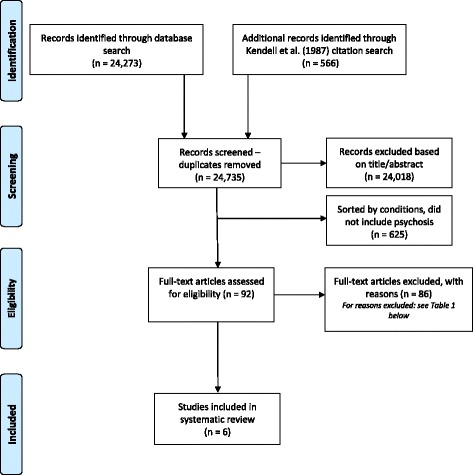
BACKGROUND: Mental health is a significant contributor to global burden of disease and the consequences of perinatal psychiatric morbidity can be substantial. We aimed to obtain global estimates of puerperal psychosis prevalence based on population-based samples and to understand how postpartum psychosis is assessed and captured among included studies. METHODS: In June 2014, we searched PubMed, CiNAHL, EMBASE, PsycINFO, Sociological Collections, and Global Index Medicus for publications since the year 1990. Criteria for inclusion in the systematic review were: use of primary data relevant to pre-defined mental health conditions, specified dates of data collection, limited to data from 1990 onwards, sample size >200 and a clear description of methodology. Data were extracted from published peer reviewed articles. RESULTS: The search yielded 24,273 publications, of which six studies met the criteria. Five studies reported incidence of puerperal psychosis (ranging from 0.89 to 2.6 in 1000 women) and one reported prevalence of psychosis (5 in 1000). Due to the heterogeneity of methodologies used across studies in definitions and assessments used to identify cases, data was not pooled to calculate a global estimate of risk. CONCLUSIONS: This review confirms the relatively low rate of puerperal psychosis; yet given the potential for serious consequences, this morbidity is significant from a global public health perspective. Further attention to consistent detection of puerperal psychosis can help provide appropriate treatment to prevent harmful consequences for both mother and baby.
Overview
CoChat Summary
TL;DR
This systematic review aimed to estimate the global prevalence/incidence of postpartum (puerperal) psychosis using population-based studies published from 1990 onward. It found only 6 eligible studies out of 24,273 records, with incidence ranging from 0.89 to 2.6 per 1,000 women and one prevalence estimate of 5 per 1,000, but it could not pool results because methods and definitions varied too much.
Key findings
- The search identified 24,273 publications, but only 6 studies met inclusion criteria.
- Among the 5 studies reporting incidence, estimates ranged from 0.89 to 2.6 per 1,000 women; 1 study reported prevalence of 5 per 1,000 women.
- The lowest incidence was 0.89 per 1,000 in Terp et al., based on a study with over 1.25 million women and assessment within 3 months postpartum.
- The highest incidence was 2.6 per 1,000 in Bang et al.; the paper notes this study had the smallest sample size (N = 772).
Methods
- Systematic review of published peer-reviewed studies, searched in June 2014 across PubMed, CiNAHL, EMBASE, PsycINFO, Sociological Collections, and Global Index Medicus, plus citation searching of a key article.
- Included studies had to use primary data, have specified data-collection dates, be from 1990 onward, have sample size >200, and provide a clear methodology; study designs could include cross-sectional, cohort/longitudinal, controlled trial, incidence/prevalence survey, or case-control studies with cases arm >200.
- Two reviewers independently screened, extracted data, and assessed study quality; because of heterogeneity in designs, measures, and definitions, no meta-analysis/pooling was performed.
Limitations
- The paper states that heterogeneity in definitions, instruments, and timeframes used to identify postpartum psychosis prevented pooling and a global summary estimate.
- The authors state they did not conduct a grey literature search, and they note possible publication bias despite the citation search.
- The text makes evident that the evidence base is very small (6 studies) and spans different countries, settings, and postpartum windows; the authors also state that some included studies assessed psychosis beyond the usual first month postpartum, which may mean some cases were not true postpartum psychosis.
Model-written summary. Check it against the paper before relying on it.
Integrity signals
Registry
Cites
Statistics
Figures
Verification
Claims the paper makes
13 Valid · 2 Not valid · 34 Not checked · 88 Own results and interpretations
The sources with a verdict support this claim; the rest weren’t checked yet, have no full text we could read, or their verdicts aren’t rated yet.
In the paper
“is a critical indicator of an underlying diagnosis of bipolar disorder [16, 19]”
§ The global prevalence of postpartum psychosis: a systematic review > Background
What the sources say
- Supportedcites [16] Sit D Rothschild AJ Wisner KL A Review of Postpartum Psychosis J Women's Health. 2006 15 352 68 10.1089/jwh.2006.15.352 PMC3109493 16724884 source
The Conclusions say that bipolar disorder is the primary psychiatric diagnosis to consider in early-onset postpartum psychosis. They also describe postpartum psychosis as most likely an overt presentation of bipolar illness, supporting the claim that it is an important indicator of underlying bipolar disorder. (LLM, conf=0.92)
- Not checked — no full text of the sourcecites [19] Reich T Winokur G Postpartum psychoses in patients with manic depressive disease J Nerv Ment Dis 1970 151 1 60 68 10.1097/00005053-197007000-00008 5426650 source
plainstates an association- Asserted: passes — The authors put it forward as true.
- Checkable: passes — It can be checked against evidence.
- Load-bearing: unclear — It is unclear whether the paper’s conclusions depend on it.
- Based: passes — The paper gives a reason why it holds.
- Supported
Every source the paper cites for this claim was checked and supports it.
In the paper
“As psychosis during the perinatal period typically occurs within the first 4 weeks of the postpartum period [16]”
§ The global prevalence of postpartum psychosis: a systematic review > Background
What the sources say
- Supportedcites [16] Sit D Rothschild AJ Wisner KL A Review of Postpartum Psychosis J Women's Health. 2006 15 352 68 10.1089/jwh.2006.15.352 PMC3109493 16724884 source
The Clinical Problem section states that postpartum psychosis occurs within the first 2–4 weeks after delivery. This supports the citing sentence’s timing claim. (LLM, conf=0.91)
plain- Asserted: passes — The authors put it forward as true.
- Checkable: passes — It can be checked against evidence.
- Load-bearing: passes — The paper’s conclusions depend on it.
- Based: passes — The paper gives a reason why it holds.
- Supported
The cited sources support only part of this claim — read each source’s verdict below.
In the paper
“While this review focused on estimates among a general population, prevalence among at-risk populations may be greater and also clinically meaningful.”
§ The global prevalence of postpartum psychosis: a systematic review > Discussion
What the sources say
- Not checked — no full text of the sourcecites [38] Mitsuhiro SS Chalem E Moraes Barros MC Guinsburg R Laranjeira R Brief report: prevalence of psychiatric disorders in pregnant teenagers J Adolesc 2009 32 3 747 752 10.1016/j.adolescence.2008.12.001 19349073 source
- Partly supportedcites [39] Di Florio A Jones L Forty L Gordon-Smith K Blackmore ER Heron J Craddock N Jones I Mood disorders and parity - a clue to the aetiology of the postpartum trigger J Affect Disord 2014 152-154 334 339 10.1016/j.jad.2013.09.034 24446553 PMC4025607 sourceExperimental — accuracy not yet measured
The Results (Sample characteristics; page unavailable) report substantial rates of perinatal mood episodes in women with mood disorders and say these rates exceeded those in a previous, less selectively recruited sample. The paper does not compare its at-risk sample with the general population, so it does not establish that specific comparison. (LLM, conf=0.82)
hedgedstates an association- Asserted: passes — The authors put it forward as true.
- Checkable: passes — It can be checked against evidence.
- Load-bearing: unclear — It is unclear whether the paper’s conclusions depend on it.
- Based: passes — The paper gives a reason why it holds.
The sources with a verdict support this claim; the rest weren’t checked yet, have no full text we could read, or their verdicts aren’t rated yet.
In the paper
“prevalence among at-risk populations may be greater and also clinically meaningful.”
§ The global prevalence of postpartum psychosis: a systematic review > Discussion
What the sources say
- Not checked — no full text of the sourcecites [38] Mitsuhiro SS Chalem E Moraes Barros MC Guinsburg R Laranjeira R Brief report: prevalence of psychiatric disorders in pregnant teenagers J Adolesc 2009 32 3 747 752 10.1016/j.adolescence.2008.12.001 19349073 source
- Supportedcites [39] Di Florio A Jones L Forty L Gordon-Smith K Blackmore ER Heron J Craddock N Jones I Mood disorders and parity - a clue to the aetiology of the postpartum trigger J Affect Disord 2014 152-154 334 339 10.1016/j.jad.2013.09.034 24446553 PMC4025607 source
The Results > Parity section reports higher rates of perinatal mood episodes after first pregnancies in women with bipolar I disorder. The Discussion > Implications for clinical practice section says this risk information can help guide decisions about pregnancy and childbirth, supporting its clinical relevance for this at-risk group. Page numbers are unavailable in our copy. (LLM, conf=0.86)
hedged- Asserted: passes — The authors put it forward as true.
- Checkable: passes — It can be checked against evidence.
- Load-bearing: unclear — It is unclear whether the paper’s conclusions depend on it.
- Based: passes — The paper gives a reason why it holds.
Every source the paper cites for this claim was checked and supports it.
In the paper
“Postpartum psychosis can also serve as a valuable first indicator of an underlying diagnosis of bipolar disorder [16]”
§ The global prevalence of postpartum psychosis: a systematic review > Discussion
What the sources say
- Supportedcites [16] Sit D Rothschild AJ Wisner KL A Review of Postpartum Psychosis J Women's Health. 2006 15 352 68 10.1089/jwh.2006.15.352 PMC3109493 16724884 source
The Conclusions say bipolar disorder is the primary diagnosis to consider in early-onset postpartum psychosis and report that half of the cases in a follow-up study were misdiagnosed at first presentation. The Prognosis passage also describes postpartum psychosis as most likely an overt presentation of bipolar illness. Page numbers were not provided. (LLM, conf=0.91)
plainstates an association- Asserted: passes — The authors put it forward as true.
- Checkable: passes — It can be checked against evidence.
- Load-bearing: unclear — It is unclear whether the paper’s conclusions depend on it.
- Based: passes — The paper gives a reason why it holds.
- Supported
58 more claims · 1 with their cited sources checked
Create a free account to see all 137 claims and every source verdict.
- Probably not a substantial claim. 68
- It may state two separate claims as one. 22
- The quote only partly states this claim. 1
Self-check
Percentages, sums and reported differences re-computed from the paper’s own numbers.
Each contradiction between two passages listed here was confirmed by an independent check.
Rated minor: it would not touch a result — a value no result rests on, a p-value that stays on the same side of the significance level, or a conflict that is clerical, resolved elsewhere in the paper, or outside its own findings.
In the paper
§ The global prevalence of postpartum psychosis: a systematic review > Abstract > Methods
“In June 2014, we searched PubMed, CiNAHL, EMBASE, PsycINFO, Sociological Collections, and Global Index Medicus for publications since the year 1990.”
§ The global prevalence of postpartum psychosis: a systematic review > Discussion
“First, we conducted a search of literature published within the past 15 years according to established WHO systematic review guidelines with the aim of including only the most recent studies.”
Citations
Cites
Preferred Reporting Items for Systematic Reviews and Meta-Analyses: the PRISMA statement
Moher, D., Liberati, A., Tetzlaff, J., Altman, D. G., & for the PRISMA Group (2009) · BMJ · doi:10.1136/bmj.b2535 · Cited by 83,823
Preferred Reporting Items for Systematic Reviews and Meta-Analyses: The PRISMA Statement
Moher, D., Liberati, A., Tetzlaff, J., Altman, D. G., & The PRISMA Group (2009) · PLoS Medicine · doi:10.1371/journal.pmed.1000097 · Cited by 64,042
Preferred reporting items for systematic reviews and meta-analyses: the PRISMA Statement.
(2009) · PubMed Central · Cited by 44,859
Kessler, R. C., Berglund, P., Demler, O., Jin, R., Merikangas, K. R., & Walters, E. E. (2005) · Archives of General Psychiatry · doi:10.1001/archpsyc.62.6.593 · Cited by 20,391 · cited 1×
“Across all regions, girls and women are disproportionately affected compared to boys or men; the prevalence of depression among women is approximately two times greater than among men [8].”
BackgroundWhiteford, H. A., Degenhardt, L., Rehm, J., Baxter, A. J., Ferrari, A. J., Erskine, H. E., Charlson, F. J., Norman, R. E., Flaxman, A. D., Johns, N., et al. (2013) · The Lancet · doi:10.1016/s0140-6736(13)61611-6 · Cited by 6,006
Diagnostic and Statistical Manual of Mental Disorders ( DSM ‐ IV ‐ TR )
Segal, D. L. (2010) · The Corsini Encyclopedia of Psychology · doi:10.1002/9780470479216.corpsy0271 · Cited by 4,666
Rates and risk of postpartum depression – a meta-analysis
O'hara, M. W., & Swain, A. M. (1996) · International Review of Psychiatry · doi:10.3109/09540269609037816 · Cited by 3,116
Fisher, J., Cabral de Mello, M., Patel, V., Rahman, A., Tran, T., Holton, S., & Holmes, W. (2012) · Bulletin of the World Health Organization · doi:10.2471/blt.11.091850 · Cited by 1,798
Treatment gap in mental health care.
Abramowitz, M. Z., Greenberg, D., & Levav, I. (2008) · PubMed · Cited by 1,484
The treatment gap in mental health care.
(2004) · Europe PMC (PubMed Central) · Cited by 1,419
Research works printed but not linked: 2
- United Nations Secretary-General The Global Strategy for Women’s, Children’s and Adolescents’ Health (2016-2030) 2015 New York United Nations
- Vanderkruik R, Tuncalp O, Chou D, Say L. Framing maternal morbidity: WHO scoping exercise. BMC Pregnancy Childbirth. 2013;13(213). PMC3840647 24252359 · DOI · Paper page
Cited by
Postpartum depression in India: a systematic review and meta-analysis
Upadhyay, R. P., Chowdhury, R., Salehi, A., Sarkar, K., Singh, S. K., Sinha, B., Pawar, A., Rajalakshmi, A. K., & Kumar, A. (2017) · Bulletin of the World Health Organization · doi:10.2471/blt.17.192237 · Cited by 363
Barba-Müller, E., Craddock, S., Carmona, S., & Hoekzema, E. (2019) · Archives of Women's Mental Health · doi:10.1007/s00737-018-0889-z · Cited by 235
Aktar, E., Qu, J., Lawrence, P. J., Tollenaar, M. S., Elzinga, B. M., & Bögels, S. M. (2019) · Frontiers in Psychiatry · doi:10.3389/fpsyt.2019.00391 · Cited by 140
Shorey, S., Chee, C. Y. I., Ng, E. D., Lau, Y., Dennis, C.-L., & Chan, Y. H. (2019) · Journal of Medical Internet Research · doi:10.2196/12410 · Cited by 125
“As one of the leading causes of maternal morbidity [2], postnatal depression (PND) has an approximate global prevalence of 10% to 15% [3], with less than 1% of this population diagnosed with postpartum psychosis [4].”
Gribble, K. D., Bewley, S., Bartick, M., Mathisen, R., Walker, S., Gamble, J. A., Bergman, N., Gupta, A. K., Hocking, J. J., & Dahlen, H. G. (2022) · Frontiers in Global Women s Health · doi:10.3389/fgwh.2022.818856 · Cited by 144
“Puerperal psychosis affects 1–2 in every 1,000 mothers often in the first few days after birth (19) and is a leading cause of maternal death through suicide, as well as infanticide (20).”
BackgroundVogel, J. P., Jung, J., Lavin, T., Simpson, G., Kluwgant, D., Abalos, E. J., Díaz, V., Downe, S. M., Filippi, V., Gallos, I. D., et al. (2023) · The Lancet Global Health · doi:10.1016/s2214-109x(23)00454-0 · Cited by 161
Dwyer, P., Scullion, L., Jones, K., McNeill, J., & Stewart, A. B. R. (2019) · Social Policy and Administration · doi:10.1111/spol.12560 · Cited by 177
Zhang, W., Liu, H., Silenzio, V., Qiu, P., & Gong, W. (2020) · JMIR Medical Informatics · doi:10.2196/15516 · Cited by 116
Clark, L. A., Nuzum, H., & Ro, E. (2017) · Current Opinion in Psychology · doi:10.1016/j.copsyc.2017.12.004 · Cited by 110
Asselmann, E., Kunas, S. L., Wïttchen, H., & Martini, J. (2020) · PLoS ONE · doi:10.1371/journal.pone.0237609 · Cited by 121
Phenomenology, Epidemiology and Aetiology of Postpartum Psychosis: A Review
Perry, A., Gordon‐Smith, K., Jones, L. A., & Jones, I. R. (2021) · Brain Sciences · doi:10.3390/brainsci11010047 · Cited by 172
“While the baby blues and postpartum depression are both common in the general population [4,5], postpartum psychoses are less common, occurring following one to two in every 1000 deliveries [6].”
BackgroundPatafio, B., Miller, P., Baldwin, R., Taylor, N., & Hyder, S. (2021) · Early Intervention in Psychiatry · doi:10.1111/eip.13109 · Cited by 84
Vigod, S. N., Frey, B. N., Clark, C. T., Grigoriadis, S., Barker, L. C., Brown, H. K., Charlebois, J., Dennis, C., Fairbrother, N., Green, S. M., et al. (2025) · The Canadian Journal of Psychiatry · doi:10.1177/07067437241303031 · Cited by 118
Rundgren, S., Brus, O., Båve, U., Landén, M., Lundberg, J., Nordanskog, P., & Nordenskjöld, A. (2018) · Journal of Affective Disorders · doi:10.1016/j.jad.2018.04.043 · Cited by 68
Nielsen, T. C., Bernson, D., Terplan, M., Wakeman, S. E., Yule, A. M., Mehta, P., Bharel, M., Diop, H., Taveras, E. M., Wilens, T. E., et al. (2019) · Addiction · doi:10.1111/add.14825 · Cited by 68
du Bois, N., Bigirimana, A. D., Korik, A., Kéthina, L. G., Rutembesa, E., Mutabaruka, J., Mutesa, L., Prasad, G., Jansen, S., & Coyle, D. (2021) · Journal of Affective Disorders · doi:10.1016/j.jad.2021.08.071 · Cited by 61
Forde, R., Peters, S., & Wittkowski, A. (2020) · Archives of Women s Mental Health · doi:10.1007/s00737-020-01025-z · Cited by 77
Culbert, K. M., Thakkar, K. N., & Klump, K. L. (2022) · Psychological Medicine · doi:10.1017/s0033291722001143 · Cited by 48
“…Hall, & Deakin, 1988; Jones et al., 2014; Kendell et al., 1987; Mahe & Dumaine, 2001; Mota et al., 2019; Perry, Gordon-Smith, Jones, & Jones, 2021; VanderKruik et al., 2017 been observed across the menstrual cycle in women with schizophrenia, even with the blunted hormone levels described above.”
Depression and associated factors among prisoners in Bahir Dar Prison, Ethiopia
Alemayehu, F., Ambaw, F., & Gutema, H. (2019) · BMC Psychiatry · doi:10.1186/s12888-019-2071-1 · Cited by 48
Genetic risk scores for major psychiatric disorders and the risk of postpartum psychiatric disorders
Bauer, A. E., Liu, X., Byrne, E. M., Sullivan, P. F., Wray, N. R., Agerbo, E., Nyegaard, M., Grove, J., Musliner, K. L., Ingstrup, K. G., et al. (2019) · Translational Psychiatry · doi:10.1038/s41398-019-0629-9 · Cited by 42
Second-generation antipsychotics and metabolic syndrome: a role for mitochondria
Mortimer, K. R. H., Katshu, M. Z. U. H., & Chakrabarti, L. (2023) · Frontiers in Psychiatry · doi:10.3389/fpsyt.2023.1257460 · Cited by 53
Postpartum psychosis: A proposed treatment algorithm
Jairaj, C., Seneviratne, G., Bergink, V., Sommer, I. E., & Dazzan, P. (2023) · Journal of Psychopharmacology · doi:10.1177/02698811231181573 · Cited by 53
“A recent systematic review found the global prevalence of PPP to be 0.89–2.6 per 1000 births, although the data largely represented women from high-income countries (VanderKruik et al., 2017).”
BackgroundInfluentialSharma, V., Sharma, P., & Sharma, S. (2020) · Expert Review of Neurotherapeutics · doi:10.1080/14737175.2020.1743684 · Cited by 33
“6 in 1000 women and a prevalence of 5 in 1000 women [72].”
BackgroundGuideline No. 454: Identification and Treatment of Perinatal Mood and Anxiety Disorders
Shea, A. K., Jumah, N. A., Forte, M., Cantin, C. M., Bayrampour, H., Butler, K., Francoeur, D., Green, C., & Cook, J. L. (2024) · Journal of Obstetrics and Gynaecology Canada · doi:10.1016/j.jogc.2024.102696 · Cited by 42
Perry, A., Gordon‐Smith, K., Florio, A. D., Craddock, N. J., Jones, L. A., & Jones, I. R. (2021) · Journal of Affective Disorders · doi:10.1016/j.jad.2021.07.067 · Cited by 39
“Risk of postpartum psychosis is strikingly elevated among women with BD, compared to the general population (1-2 in every 1000 deliveries) (VanderKruik et al., 2017) but also to other psychiatric disorders (Munk-Olsen et al., 2009).”
BackgroundForde, R., Peters, S., & Wittkowski, A. (2019) · BMC Psychiatry · doi:10.1186/s12888-019-2378-y · Cited by 42
Postpartum psychosis: a diagnosis for the DSMV
Spinelli, M. G. (2021) · Archives of Women s Mental Health · doi:10.1007/s00737-021-01175-8 · Cited by 39
Shinohara, K., Efthimiou, O., Ostinelli, E. G., Tomlinson, A., Geddes, J. R., Nierenberg, A. A., Ruhe, H. G., Furukawa, T. A., & Cipriani, A. (2019) · BMJ Open · doi:10.1136/bmjopen-2018-027574 · Cited by 27
Immune System Alterations and Postpartum Mental Illness: Evidence From Basic and Clinical Research
Dye, C. N., Lenz, K. M., & Leuner, B. (2022) · Frontiers in Global Women s Health · doi:10.3389/fgwh.2021.758748 · Cited by 42
Neurobiology of maternal mental illness
Maguire, J., McCormack, C., Mitchell, A., & Monk, C. E. (2020) · Handbook of clinical neurology · doi:10.1016/b978-0-444-64239-4.00005-9 · Cited by 33
Psychiatric manifestations of autoimmune encephalitis
Ford, H. J., Griffith, S. P., Warren, N., Swayne, A., Blum, S., Butzkueven, H., O'Brien, T. J., Velakoulis, D., Kulkarni, J., & Monif, M. (2022) · Autoimmunity Reviews · doi:10.1016/j.autrev.2022.103145 · Cited by 29
CE: Postpartum Depression: A Nurse's Guide
Alba, B. (2021) · AJN American Journal of Nursing · doi:10.1097/01.naj.0000756516.95992.8e · Cited by 39
“Approximately one to two women out of 1,000 experience this.(11) Onset is typically sudden, with symptoms arising within the first few hours to weeks after delivery, although this time frame lacks clear consensus.”
Kalra, H., Tran, T. D., Romero, L., Chandra, P. S., & Fisher, J. (2022) · Archives of Women s Mental Health · doi:10.1007/s00737-021-01201-9 · Cited by 31
Mothers with acute and chronic postpartum psychoses and impact on the mother-infant interaction
Ramsauer, B. S., & Achtergarde, S. (2018) · Schizophrenia Research · doi:10.1016/j.schres.2018.02.032 · Cited by 28
Barkin, J. L., Beals, L., Bridges, C. C., Ezeamama, A. E., Serati, M., Buoli, M., Erickson, A., Chapman, M., & Bloch, J. R. (2019) · Journal of the American Psychiatric Nurses Association · doi:10.1177/1078390319877444 · Cited by 26
Postpartum psychosis: Revisiting the phenomenology, nosology, and treatment
Sharma, V., Mazmanian, D. S., Palagini, L., & Bramante, A. (2022) · Journal of Affective Disorders Reports · doi:10.1016/j.jadr.2022.100378 · Cited by 35
Davies, W. (2018) · Journal of Molecular Endocrinology · doi:10.1530/jme-17-0219 · Cited by 21
Izvoranu, S., Banariu, G. M., Chirila, S. I., Nour, C., Niculescu, C., Rus, M., Badiu, D. L., Delcea, C., & Tica, V. (2024) · Archives of Pharmacy Practice · doi:10.51847/0omtmeujbe · Cited by 20
Michalczyk, J., Miłosz, A., & Soroka, E. (2023) · Medical Science Monitor · doi:10.12659/msm.942520 · Cited by 34
“Pregnant women with psychosis have an increased risk of obstetric and neonatal complications, and in extreme cases that disease can lead to suicide and/or infanticide [16,21,25].”
BackgroundInfluentialRoxburgh, E., Morant, N. J., Dolman, C., Johnson, S., & Taylor, B. L. (2022) · Community Mental Health Journal · doi:10.1007/s10597-022-01002-z · Cited by 36
“PP has been estimated to occur in 0.89 to 2.6 per 1000 women giving birth (VanderKruik et al., 2017).”
BackgroundInfluentialLevey, E. J., Zhong, Q., Rondón, M. B., Sánchez, S. E., Li, J., Williams, M. A., & Gelaye, B. (2018) · Archives of Women s Mental Health · doi:10.1007/s00737-018-0833-2 · Cited by 23
Koukopoulos, A. E., Mazza, C., Chiara, L. D., Sani, G., Simonetti, A., Kotzalidis, G. D., Armani, G., Callovini, G., Bonito, M., Parmigiani, G., et al. (2021) · Frontiers in Psychiatry · doi:10.3389/fpsyt.2021.684579 · Cited by 31
Maternal Infanticide and Filicide in a Psychiatric Custodial Institution in Hong Kong
Tang, D., & Siu, B. W. M. (2018) · East Asian Archives of Psychiatry · doi:10.12809/eaap1830 · Cited by 18
Saraswat, N., Wal, P., Pal, R. S., Wal, A., Pal, Y., & Roohi, T. F. (2021) · The Open Biology Journal · doi:10.2174/1874196702109010017 · Cited by 28
Perry, A., Gordon‐Smith, K., Lewis, K. S., Florio, A. D., Craddock, N. J., Jones, L. A., & Jones, I. R. (2023) · Journal of Affective Disorders · doi:10.1016/j.jad.2023.11.005 · Cited by 22
“…PP (Perry et al., 2021a; Wesseloo et al., 2016), placing these women at dramatically increased risk compared to women with other psychiatric disorders (Langan Martin et al., 2016) and also to the general population, in which PP occurs in 1 – 2 in every 1000 deliveries (VanderKruik et al., 2017).”
Adverse childhood experiences and postpartum depression in bipolar disorder
Perry, A., Gordon‐Smith, K., Florio, A. D., Fraser, C., Craddock, N. J., Jones, L. A., & Jones, I. R. (2019) · Journal of Affective Disorders · doi:10.1016/j.jad.2019.11.042 · Cited by 17
“While postpartum psychoses occur in 1-2 in every 1000 deliveries in the general population (VanderKruik et al., 2017), risk is dramatically elevated among women with BD, with almost one in five deliveries being affected (17%; Wesseloo et al., 2016).”
BackgroundWearing a happy mask: mother’s expressions of suicidality with postpartum depression
Praetorius, R., Maxwell, D., & Alam, K. (2020) · Social Work in Mental Health · doi:10.1080/15332985.2020.1769003 · Cited by 17
“…Gress-Smith et al., 2012; Gvion & Levi-Belz, 2018) Lasting influences of PPD are not limited to only the maternal-child interactions, but also have an impact on familial relations, societal relations, and economic outcomes for families (Beck, 1998; Reck et al., 2008; VanderKruik et al., 2017).”
BackgroundPostpartum psychosis during delivery hospitalizations and postpartum readmissions, 2016–2019
Albers, S. M., Wen, T., Monk, C. E., Logue, T. C., D’Alton, M. E., Booker, W. A., & Friedman, A. M. (2023) · American Journal of Obstetrics & Gynecology MFM · doi:10.1016/j.ajogmf.2023.100905 · Cited by 18
Harrison, S., Pilkington, V., Li, Y., QUIGLEY, M. A., & Alderdice, F. A. (2023) · BMC Pregnancy and Childbirth · doi:10.1186/s12884-023-05518-4 · Cited by 22
“Mental health problems during pregnancy and the postnatal period can include a wide range of disorders, from anxiety [2] and depression [3], which are commonly comorbid, to more severe problems including posttraumatic stress disorder [4] mania and psychosis [5].”
BackgroundPostpartum Depression Prevalence in a Tertiary Care Hospital in Mumbai, Maharashtra, India
Tambawala, Z. Y., & Rajput, N. (2018) · Journal of South Asian Federation of Obstetrics and Gynaecology · doi:10.5005/jp-journals-10006-1696 · Cited by 19
Pearce, G., Bell, L., Pezaro, S., & Reinhold, E. J. (2023) · International Journal of Environmental Research and Public Health · doi:10.3390/ijerph20206957 · Cited by 20
Thippeswamy, H., & Davies, W. (2020) · Archives of Women s Mental Health · doi:10.1007/s00737-020-01093-1 · Cited by 21
Serious mental illness in women
Almeida, M., & Fletcher, S. J. (2022) · Current Opinion in Psychiatry · doi:10.1097/yco.0000000000000786 · Cited by 18
Sleep and Postpartum Psychosis: A Narrative Review of the Existing Literature
Carr, C., Borges, D., Lewis, K. S., Heron, J., Wilson, S., Broome, M. R., Jones, I. R., Florio, A. D., & Morales‐Muñoz, I. (2023) · Journal of Clinical Medicine · doi:10.3390/jcm12247550 · Cited by 19
Fusar‐Poli, P., Estradé, A., Mathi, K., Mabia, C., Yanayirah, N., Floris, V., Figazzolo, E., Esposito, C. M., Mancini, M., Rosfort, R., et al. (2025) · World Psychiatry · doi:10.1002/wps.21264 · Cited by 30
“The prevalence is higher in women with a previous history of mood disorders 10 .”
The Rate and Risk Factors of Postpartum Depression in Vietnam From 2010 to 2020: A Literature Review
Nguyen, H. T. T., Hoang, A. P., Kim, L. T., Schiffer, S., & Nguyen, H. T. H. (2021) · Frontiers in Psychology · doi:10.3389/fpsyg.2021.731306 · Cited by 29
The river of postnatal psychosis: A qualitative study of women's experiences and meanings
Jefferies, D., Schmied, V. A., Sheehan, A., & Duff, M. (2021) · Midwifery · doi:10.1016/j.midw.2021.103165 · Cited by 25
One-Year Follow-Up of Women with Severe Acute Maternal Morbidity (SAMM): A Cohort Study
Alluvala, S. A., Aziz, N., Tumkur, A., et al. (2018) · The Journal of Obstetrics and Gynecology of India · doi:10.1007/s13224-018-1157-x · Cited by 13
Shorey, S., Chee, C. Y. I., Chong, Y. S., Ng, E. D., Lau, Y., & Dennis, C. (2018) · PubMed Central · doi:10.2196/resprot.9416 · Cited by 13
“The severity of these postnatal affective disorders can range from early maternity blues [3] to postpartum psychosis, which affects less than 1% of mothers [4,5].”
Birth experiences, trauma responses and self-concept in postpartum psychotic-like experiences
Holt, L., Sellwood, W., & Slade, P. (2018) · Schizophrenia Research · doi:10.1016/j.schres.2017.12.015 · Cited by 22
“One to two women per thousand is diagnosed with postpartum psychosis (Valdimarsdóttir et al., 2009; VanderKruik et al., 2017), with onset in the first postnatal month (Sit et al.”
BackgroundHeinisch, C., Galeris, M.-G., Gabler, S., Simen, S., Junge‐Hoffmeister, J., Fößel, J. M., & Spangler, G. (2019) · Frontiers in Psychiatry · doi:10.3389/fpsyt.2019.00471 · Cited by 23
Maxwell, D., Leat, S. R., Gallegos, T., & Praetorius, R. T. (2024) · BMC Pregnancy and Childbirth · doi:10.1186/s12884-024-06544-6 · Cited by 16
“Postpartum mental health disorders can also have lasting impacts on family outcomes [16, 17].”
BackgroundAutistic Women’s Experiences of the Perinatal Period: A Systematic Mixed Methods Review
Westgate, V., Sewell, O., Caramaschi, D., & O’Mahen, H. (2024) · Review Journal of Autism and Developmental Disorders · doi:10.1007/s40489-024-00461-2 · Cited by 19
“Around 12% experience perinatal depression (Woody et al., 2017), 10% experience perinatal anxiety (Dennis et al., 2017), and a small minority, up to 2.6 in 1000, experience postpartum psychosis (Vanderkruik et al., 2017).”
InfluentialPrioritizing the mental health needs of pregnant adolescents in sub-Saharan Africa
Eboreime, E., Ezeokoli, A., Adams, K., & Banke-Thomas, A. O. (2022) · Journal of Global Health Neurology and Psychiatry · doi:10.52872/001c.34646 · Cited by 19
Development and preliminary validation of the Postpartum Psychotic Experiences Scale (PPES)
Fekih‐Romdhane, F., Hadathy, D. E., González‐Nuevo, C., Malaeb, D. N., Barakat, H., & Hallit, S. R. (2023) · Psychiatry Research · doi:10.1016/j.psychres.2023.115543 · Cited by 14
Pentadic Cartography: Mapping Postpartum Psychosis Narratives
Beck, C. T. (2020) · Qualitative Health Research · doi:10.1177/1049732320938357 · Cited by 17
Kohlhoff, J. R., Cibralic, S., Tooke, S., Hickinbotham, R., Knox, C., Roach, V. J., & Barnett, B. E. W. (2021) · Australian and New Zealand Journal of Obstetrics and Gynaecology · doi:10.1111/ajo.13394 · Cited by 9
Problems Experienced by the Mothers in Post-Cesarean Period: A Narrative Review
Duran, S., & Vural, G. (2023) · Iranian Journal of Public Health · doi:10.18502/ijph.v52i10.13841 · Cited by 32
The lived experiences of individuals with postpartum psychosis: A qualitative analysis
Vanderkruik, R. C., Kobylski, L. A., Dunk, M. M., Arakelian, M. H., Gaw, M. L., Dineen, H., Kanamori, M., Freeman, M. P., & Cohen, L. S. (2023) · Journal of Affective Disorders · doi:10.1016/j.jad.2023.12.069 · Cited by 22
Self-citationCohen, L. S., Arakelian, M. H., Church, T. R., Dunk, M. M., Gaw, M. L., Yoon, H. E., Kobylski, L. A., Vanderkruik, R. C., & Freeman, M. P. (2024) · Molecular Psychiatry · doi:10.1038/s41380-024-02856-3 · Cited by 10
“Postpartum psychosis (PP) is a severe illness, occurring in 1 to 2 per 1000 people after delivery [1] with most individuals experiencing sudden onset and symptoms such as delusions, hallucinations, and paranoia, often occurring alongside symptoms of mania and/or depression [2 – 4].”
Self-citationPostpartum psychosis and SARS-CoV-2 infection: is there a correlation?
Bider, E. N., & Coker, J. L. (2021) · Archives of Women s Mental Health · doi:10.1007/s00737-021-01150-3 · Cited by 13
Warselius, P., Cnattingius, S., Li, J., Wei, D., Valdimarsdóttir, U. A., Kosidou, K., Reutfors, J., Olsen, J., Vestergaard, M., Obel, C., et al. (2019) · Clinical Epidemiology · doi:10.2147/clep.s195741 · Cited by 14
Familial Risk of Postpartum Psychosis
Kępińska, A. P., Robakis, T. K., Humphreys, K., Liu, X., Kahn, R. S., Munk‐Olsen, T., Bergink, V., & Mahjani, B. (2025) · American Journal of Psychiatry · doi:10.1176/appi.ajp.20230576 · Cited by 12
International best-practice models for perinatal and infant mental health care – a scoping review
Reinsperger, I., Paul, J. L., & Zechmeister‐Koss, I. (2025) · Frontiers in Psychiatry · doi:10.3389/fpsyt.2025.1536145 · Cited by 13
Barrow, K., McGreal, A., LiVecche, D., Cleve, S. N. V., Sikes, C., Buoli, M., Serati, M., Bridges, C. C., Ezeamama, A. E., & Barkin, J. L. (2020) · Journal of the American Psychiatric Nurses Association · doi:10.1177/1078390320971358 · Cited by 9
“Postpartum symptoms can range from postpartum “blues,” to depression, to psychosis, which is relatively rare (VanderKruik et al., 2017).”
BackgroundPostpartum psychosis: a public involvement perspective across three continents
Yang, J. M. K., Vaiphei, K., Siliya, M., Mkandawire, T., Dolman, C., Heron, J., Wilson, S., Yaresheemi, S., Kitney, D., Bailey, L., et al. (2023) · Archives of Women s Mental Health · doi:10.1007/s00737-023-01347-8 · Cited by 17
“For example, limited evidence suggests that the incidence of postpartum psychosis may be slightly higher in some LMICs such as Nigeria (2.5 in 1000) and India (2.6 in 1000) than the rates reported by studies conducted in high-income countries (VanderKruik et al. 2017).”
ResultInfluentialKumar, P. C. P., Hamza, A., Ragesh, G., Ganjekar, S., Thippeswamy, H., Chandra, P. S., & Desai, G. (2020) · Indian Journal of Psychological Medicine · doi:10.1177/0253717620958162 · Cited by 8
Depression Outcomes From a Fully Integrated Obstetric Mental Health Clinic: A 10-Year Examination
Goedde, D., Zidack, A. M., Li, Y.-H., Arkava, D., Mullette, E. J., Mullowney, Y., & Brant, J. M. (2020) · Journal of the American Psychiatric Nurses Association · doi:10.1177/1078390319897311 · Cited by 9
“…will experience a depressive disorder while pregnant (Ko et al., 2017), and a rare, postpartum psychosis, a more serious consequence of postpartum depression (PPD), increases the risk for suicide and death and has a global incidence range of 0.89 to 2.6 per 1,000 women (VanderKruik et al., 2017).”
BackgroundInfluentialReilly, T. J., Roberts, E., de la Bastida, V. C. S., McGuire, P. K., Dazzan, P., & Cullen, A. E. (2023) · Frontiers in Psychiatry · doi:10.3389/fpsyt.2023.1154557 · Cited by 14
“Variation in the definition of postpartum psychosis across studies has prevented a global estimate of prevalence and meaningful comparison across countries (2).”
BackgroundPerinatal Mood and Anxiety Disorders: Research and Implications for Nursing Care
Beck, C. T. (2021) · Journal of Obstetric, Gynecologic & Neonatal Nursing · doi:10.1016/j.jogn.2021.02.007 · Cited by 9
Establishment of the MGH Postpartum Psychosis Project: MGHP3
Cohen, L. S., Vanderkruik, R. C., Arakelian, M. H., Church, T. R., Dunk, M. M., & Freeman, M. P. (2023) · PLoS ONE · doi:10.1371/journal.pone.0281133 · Cited by 8
“Postpartum psychosis (PP) occurs in 1–2 per 1000 women after delivery [1].”
BackgroundSelf-citationNaito, T., Chin, J., Lin, J., Shah, P. J., & Lomiguen, C. M. (2019) · General Psychiatry · doi:10.1136/gpsych-2019-100077 · Cited by 8
Postpartum Mood Disorders: A Short Review
Andela, M., & Dewani, D. (2023) · Journal of South Asian Federation of Obstetrics and Gynaecology · doi:10.5005/jp-journals-10006-2170 · Cited by 8
Davies, W. (2019) · Frontiers in Psychiatry · doi:10.3389/fpsyt.2019.00876 · Cited by 7
Kroh, S. J., & Lim, G. (2021) · International Anesthesiology Clinics · doi:10.1097/aia.0000000000000325 · Cited by 14
Associations between lifetime reproductive events among postmenopausal women with bipolar disorder
Gordon‐Smith, K., Perry, A., Florio, A. D., Craddock, N. J., Jones, I. R., & Jones, L. A. (2024) · Archives of Women s Mental Health · doi:10.1007/s00737-024-01533-2 · Cited by 8
“(Perry et al. 2021 ) than the general population (0.89 to 2.6 in 1000 women) (VanderKruik et al. 2017).”
InfluentialPerinatal Mood and Anxiety Disorders
Bertozzi-Villa, C., Vaughn, R. L., Khan, S. A., & Mastrogiannis, D. S. (2024) · Obstetrics and Gynecology Clinics of North America · doi:10.1016/j.ogc.2024.10.001 · Cited by 8
Antipsychotics in Postpartum Psychosis
Teodorescu, A., Dima, L., Popa, M. A., Moga, M., Bîgiu, N. F., & Ifteni, P. I. (2020) · American Journal of Therapeutics · doi:10.1097/mjt.0000000000001218 · Cited by 9
Perinatal mental healthcare in Northern Ireland: challenges and opportunities
Mongan, D., Lynch, J., Anderson, J., Robinson, L., & Mulholland, C. C. (2021) · Irish Journal of Psychological Medicine · doi:10.1017/ipm.2021.71 · Cited by 7
“Postpartum psychosis is comparatively less common (arising in around 1 in 1000 births (VanderKruik et al. 2017)) but is a very serious psychiatric disorder that requires early detection and treatment to minimise risks of harm to the mother or her baby (Sit et al.”
BackgroundCortisol, Prolactin, and Breastmilk Volume; A Promising Pattern for Reducing Postpartum Depression
Syam, A., Qasim, M., Iskandar, I., & Kadir, A. (2022) · Open Access Macedonian Journal of Medical Sciences · doi:10.3889/oamjms.2022.9545 · Cited by 7
“6 in 1000 women had postnatal psychosis [8].”
BackgroundHormonal and immunological factors in postpartum psychosis
Maguire, J. L. (2019) · Elsevier eBooks · doi:10.1016/b978-0-12-815508-0.00012-6 · Cited by 9
Postpartum Psychosis: A Preventable Psychiatric Emergency
Toor, R., Wiese, M., Croicu, C., & Bhat, A. S. (2024) · FOCUS The Journal of Lifelong Learning in Psychiatry · doi:10.1176/appi.focus.20230025 · Cited by 16
Mitochondrial might: powering the peripartum for risk and resilience
Gorman‐Sandler, E., Wood, G., Cloude, N., Frambes, N. I., Brennen, H., Robertson, B., & Hollis, F. (2023) · Frontiers in Behavioral Neuroscience · doi:10.3389/fnbeh.2023.1286811 · Cited by 7
Koly, K. N., Baskin, C., Lata, I., Rao, M., Rasheed, S., Law, G. R., & Gnani, S. (2021) · BMJ Open · doi:10.1136/bmjopen-2020-045615 · Cited by 6
Psychiatric emergencies during pregnancy and puerperium in low - And middle-income countries
Thela, L. T., Paruk, S., Bhengu, B. R., & Chiliza, B. (2024) · Best Practice & Research Clinical Obstetrics & Gynaecology · doi:10.1016/j.bpobgyn.2024.102478 · Cited by 6
Stojanov, J., Stanković, M., Žikić, O., & Antonijević, J. (2018) · AFMN Biomedicine · doi:10.5937/afmnai1903167s · Cited by 7
“Significant risk factors for suicide or infanticide are: older age of the mother, better socio-economic status and previous history of mental disorders (37).”
BackgroundInfluentialKaralexi, M. A., Eberhard‐Gran, M., Valdimarsdóttir, U. A., Karlsson, H., Munk‐Olsen, T., & Skalkidou, A. (2022) · Nordic Journal of Psychiatry · doi:10.1080/08039488.2021.1998616 · Cited by 5
Choenni, V., Kok, R., Verhulst, F. C., van Lier, M. H. M., & den Berg, M. P. L. (2022) · International Journal of Methods in Psychiatric Research · doi:10.1002/mpr.1902 · Cited by 4
Yang, J. M. K., Jones, I. R., & Florio, A. D. (2022) · Springer eBooks · doi:10.1007/978-3-030-91832-3_9 · Cited by 7
Zala, S., Munshi, H., Mahajan, N. N., Surve, S. V., & Gajbhiye, R. (2023) · Journal of Reproductive Healthcare and Medicine · doi:10.25259/jrhm_11_2022 · Cited by 5
Metadata
- Authors
- on behalf of the Maternal Morbidity Working Group, VanderKruik, R., Barreix, M., Chou, D., Allen, T., Say, L., & Cohen, L. S.
- Affiliations
- University of Colorado Boulder (US)
- World Health Organization (CH)
- Massachusetts General Hospital (US)
- Corresponding author
- VanderKruik, Rachel
- Venue
- BMC Psychiatry
- Published
- 2017-07-28
- Volume
- 17
- Issue
- 1
- Pages
- 272-272
- ISSN
- 1471-244X (ISSN-L)
- PMC
- PMC5534064
- OpenAlex
- W2742151539
- Semantic Scholar
- 96e3b4b3feff1ab4a5bc20df7fd200c426ad3f13
- Cited by
- 238
- References
- 47
- Citations by year
- 2026: 23 · 2025: 29 · 2024: 34 · 2023: 31 · 2022: 31 · 2021: 27 · 2020: 19 · 2019: 30 · 2018: 12 · 2017: 2
- FWCI
- 2.80
- Type
- journal article
- Language
- en
- Open access
- gold
- doi.org
- Licence
- cc-by
- creativecommons.org/licenses/by/4.0/ (tdm)
- creativecommons.org/licenses/by/4.0/ (vor)
- Locations
- BMC Psychiatry (publishedVersion, cc-by)
- PubMed Central (publishedVersion, cc-by)
- PubMed (publishedVersion)
- DOAJ (DOAJ: Directory of Open Access Journals) (submittedVersion, cc-by-sa)
- Research Portal (King's College London) (submittedVersion, other-oa)
- UTS ePRESS (University of Technology Sydney) (submittedVersion)
- Funders
- Bill and Melinda Gates Foundation (OPP1033805)
- Topics
- Health Sciences › Medicine › Public Health, Environmental and Occupational Health › Maternal Mental Health During Pregnancy and Postpartum
- Social Sciences › Sociology and Political Science › Homicide, Infanticide, and Child Abuse
- Health Sciences › Medicine › Psychiatry and Mental health › Schizophrenia research and treatment
- Keywords
- postpartum psychosis, prevalence, incidence, perinatal mental health, global burden of disease, case finding
- MeSH terms
- Female, Humans, Pregnancy, Psychotic Disorders, Puerperal Disorders, Global Health, Incidence, Prevalence, Postpartum Period
About these checks
Registry, retraction, Cites and statistics results are computed, not judged, with one exception: a printed reference that no index lists is read once by a model before it counts as a citation error. Claims are extracted by a model and kept only when their quote appears verbatim in the text; each cited source is then checked, with a model’s help, for whether it says what the claim relies on. Those verdicts can be wrong — read the claim’s quote and the cited source before relying on one.
The claim verdicts this report counts are experimental: their accuracy is not yet measured.
A language model drew the claims from the paper on 2026-10-10, under version 3 of the claim definition (model deepseek-v4.1-flash, prompt extract-v3).
A second model labelled each claim on 2026-10-10 (model jev-1.13-20260917, definition revision gold-guideline-v0.2).
Cited sources are checked with a language model’s help (gpt-6-sol).
Statistics and arithmetic are recomputed, not judged.
Confidence bands are shown only for fields calibrated on our annotated test set. None is calibrated yet, so no band is shown.
What counts as a claim ›How we measure confidence ›How we check this ›
Are you an author, or do you see a problem with this page? Request a review
Data sources
Bibliographic data: Semantic Scholar, OpenAlex, Crossref.
Contains information from the Semantic Scholar Academic Graph Datasets, made available under the ODC Attribution License (ODC-BY 1.0).
Semantic Scholar’s data is described in: Kinney, R., et al. (2023). The Semantic Scholar Open Data Platform. arXiv:2301.10140.
