

The global prevalence of postpartum psychosis: a systematic review
Open accessThe DOI matches its Crossref record; 46 of the 48 references it cites were found in a registry or an index; 15 of the 57 sources its claims cite were checked for support.
Abstract
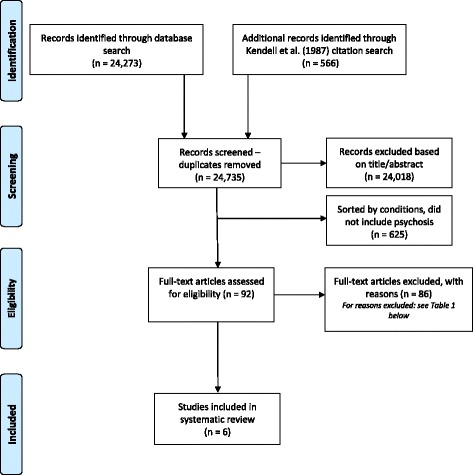
BACKGROUND: Mental health is a significant contributor to global burden of disease and the consequences of perinatal psychiatric morbidity can be substantial. We aimed to obtain global estimates of puerperal psychosis prevalence based on population-based samples and to understand how postpartum psychosis is assessed and captured among included studies. METHODS: In June 2014, we searched PubMed, CiNAHL, EMBASE, PsycINFO, Sociological Collections, and Global Index Medicus for publications since the year 1990. Criteria for inclusion in the systematic review were: use of primary data relevant to pre-defined mental health conditions, specified dates of data collection, limited to data from 1990 onwards, sample size >200 and a clear description of methodology. Data were extracted from published peer reviewed articles. RESULTS: The search yielded 24,273 publications, of which six studies met the criteria. Five studies reported incidence of puerperal psychosis (ranging from 0.89 to 2.6 in 1000 women) and one reported prevalence of psychosis (5 in 1000). Due to the heterogeneity of methodologies used across studies in definitions and assessments used to identify cases, data was not pooled to calculate a global estimate of risk. CONCLUSIONS: This review confirms the relatively low rate of puerperal psychosis; yet given the potential for serious consequences, this morbidity is significant from a global public health perspective. Further attention to consistent detection of puerperal psychosis can help provide appropriate treatment to prevent harmful consequences for both mother and baby.
Overview
CoChat Summary
TL;DR
This systematic review aimed to estimate the global prevalence/incidence of postpartum (puerperal) psychosis using population-based studies published from 1990 onward. It found only 6 eligible studies out of 24,273 records, with incidence ranging from 0.89 to 2.6 per 1,000 women and one prevalence estimate of 5 per 1,000, but it could not pool results because methods and definitions varied too much.
Key findings
- The search identified 24,273 publications, but only 6 studies met inclusion criteria.
- Among the 5 studies reporting incidence, estimates ranged from 0.89 to 2.6 per 1,000 women; 1 study reported prevalence of 5 per 1,000 women.
- The lowest incidence was 0.89 per 1,000 in Terp et al., based on a study with over 1.25 million women and assessment within 3 months postpartum.
- The highest incidence was 2.6 per 1,000 in Bang et al.; the paper notes this study had the smallest sample size (N = 772).
Methods
- Systematic review of published peer-reviewed studies, searched in June 2014 across PubMed, CiNAHL, EMBASE, PsycINFO, Sociological Collections, and Global Index Medicus, plus citation searching of a key article.
- Included studies had to use primary data, have specified data-collection dates, be from 1990 onward, have sample size >200, and provide a clear methodology; study designs could include cross-sectional, cohort/longitudinal, controlled trial, incidence/prevalence survey, or case-control studies with cases arm >200.
- Two reviewers independently screened, extracted data, and assessed study quality; because of heterogeneity in designs, measures, and definitions, no meta-analysis/pooling was performed.
Limitations
- The paper states that heterogeneity in definitions, instruments, and timeframes used to identify postpartum psychosis prevented pooling and a global summary estimate.
- The authors state they did not conduct a grey literature search, and they note possible publication bias despite the citation search.
- The text makes evident that the evidence base is very small (6 studies) and spans different countries, settings, and postpartum windows; the authors also state that some included studies assessed psychosis beyond the usual first month postpartum, which may mean some cases were not true postpartum psychosis.
Model-written summary. Check it against the paper before relying on it.
Integrity signals
Registry
Cites
Statistics
Figures
Verification
Claims the paper makes
13 Valid · 2 Not valid · 34 Not checked · 88 Own results and interpretations
The sources with a verdict support this claim; the rest weren’t checked yet, have no full text we could read, or their verdicts aren’t rated yet.
In the paper
“is a critical indicator of an underlying diagnosis of bipolar disorder [16, 19]”
§ The global prevalence of postpartum psychosis: a systematic review > Background
What the sources say
- Supportedcites [16] Sit D Rothschild AJ Wisner KL A Review of Postpartum Psychosis J Women's Health. 2006 15 352 68 10.1089/jwh.2006.15.352 PMC3109493 16724884 source
The Conclusions say that bipolar disorder is the primary psychiatric diagnosis to consider in early-onset postpartum psychosis. They also describe postpartum psychosis as most likely an overt presentation of bipolar illness, supporting the claim that it is an important indicator of underlying bipolar disorder. (LLM, conf=0.92)
- Not checked — no full text of the sourcecites [19] Reich T Winokur G Postpartum psychoses in patients with manic depressive disease J Nerv Ment Dis 1970 151 1 60 68 10.1097/00005053-197007000-00008 5426650 source
plainstates an association- Asserted: passes — The authors put it forward as true.
- Checkable: passes — It can be checked against evidence.
- Load-bearing: unclear — It is unclear whether the paper’s conclusions depend on it.
- Based: passes — The paper gives a reason why it holds.
- Supported
Every source the paper cites for this claim was checked and supports it.
In the paper
“As psychosis during the perinatal period typically occurs within the first 4 weeks of the postpartum period [16]”
§ The global prevalence of postpartum psychosis: a systematic review > Background
What the sources say
- Supportedcites [16] Sit D Rothschild AJ Wisner KL A Review of Postpartum Psychosis J Women's Health. 2006 15 352 68 10.1089/jwh.2006.15.352 PMC3109493 16724884 source
The Clinical Problem section states that postpartum psychosis occurs within the first 2–4 weeks after delivery. This supports the citing sentence’s timing claim. (LLM, conf=0.91)
plain- Asserted: passes — The authors put it forward as true.
- Checkable: passes — It can be checked against evidence.
- Load-bearing: passes — The paper’s conclusions depend on it.
- Based: passes — The paper gives a reason why it holds.
- Supported
The cited sources support only part of this claim — read each source’s verdict below.
In the paper
“While this review focused on estimates among a general population, prevalence among at-risk populations may be greater and also clinically meaningful.”
§ The global prevalence of postpartum psychosis: a systematic review > Discussion
What the sources say
- Not checked — no full text of the sourcecites [38] Mitsuhiro SS Chalem E Moraes Barros MC Guinsburg R Laranjeira R Brief report: prevalence of psychiatric disorders in pregnant teenagers J Adolesc 2009 32 3 747 752 10.1016/j.adolescence.2008.12.001 19349073 source
- Partly supportedcites [39] Di Florio A Jones L Forty L Gordon-Smith K Blackmore ER Heron J Craddock N Jones I Mood disorders and parity - a clue to the aetiology of the postpartum trigger J Affect Disord 2014 152-154 334 339 10.1016/j.jad.2013.09.034 24446553 PMC4025607 sourceExperimental — accuracy not yet measured
The Results (Sample characteristics; page unavailable) report substantial rates of perinatal mood episodes in women with mood disorders and say these rates exceeded those in a previous, less selectively recruited sample. The paper does not compare its at-risk sample with the general population, so it does not establish that specific comparison. (LLM, conf=0.82)
hedgedstates an association- Asserted: passes — The authors put it forward as true.
- Checkable: passes — It can be checked against evidence.
- Load-bearing: unclear — It is unclear whether the paper’s conclusions depend on it.
- Based: passes — The paper gives a reason why it holds.
The sources with a verdict support this claim; the rest weren’t checked yet, have no full text we could read, or their verdicts aren’t rated yet.
In the paper
“prevalence among at-risk populations may be greater and also clinically meaningful.”
§ The global prevalence of postpartum psychosis: a systematic review > Discussion
What the sources say
- Not checked — no full text of the sourcecites [38] Mitsuhiro SS Chalem E Moraes Barros MC Guinsburg R Laranjeira R Brief report: prevalence of psychiatric disorders in pregnant teenagers J Adolesc 2009 32 3 747 752 10.1016/j.adolescence.2008.12.001 19349073 source
- Supportedcites [39] Di Florio A Jones L Forty L Gordon-Smith K Blackmore ER Heron J Craddock N Jones I Mood disorders and parity - a clue to the aetiology of the postpartum trigger J Affect Disord 2014 152-154 334 339 10.1016/j.jad.2013.09.034 24446553 PMC4025607 source
The Results > Parity section reports higher rates of perinatal mood episodes after first pregnancies in women with bipolar I disorder. The Discussion > Implications for clinical practice section says this risk information can help guide decisions about pregnancy and childbirth, supporting its clinical relevance for this at-risk group. Page numbers are unavailable in our copy. (LLM, conf=0.86)
hedged- Asserted: passes — The authors put it forward as true.
- Checkable: passes — It can be checked against evidence.
- Load-bearing: unclear — It is unclear whether the paper’s conclusions depend on it.
- Based: passes — The paper gives a reason why it holds.
Every source the paper cites for this claim was checked and supports it.
In the paper
“Postpartum psychosis can also serve as a valuable first indicator of an underlying diagnosis of bipolar disorder [16]”
§ The global prevalence of postpartum psychosis: a systematic review > Discussion
What the sources say
- Supportedcites [16] Sit D Rothschild AJ Wisner KL A Review of Postpartum Psychosis J Women's Health. 2006 15 352 68 10.1089/jwh.2006.15.352 PMC3109493 16724884 source
The Conclusions say bipolar disorder is the primary diagnosis to consider in early-onset postpartum psychosis and report that half of the cases in a follow-up study were misdiagnosed at first presentation. The Prognosis passage also describes postpartum psychosis as most likely an overt presentation of bipolar illness. Page numbers were not provided. (LLM, conf=0.91)
plainstates an association- Asserted: passes — The authors put it forward as true.
- Checkable: passes — It can be checked against evidence.
- Load-bearing: unclear — It is unclear whether the paper’s conclusions depend on it.
- Based: passes — The paper gives a reason why it holds.
- Supported
58 more claims · 1 with their cited sources checked
Create a free account to see all 137 claims and every source verdict.
- Probably not a substantial claim. 68
- It may state two separate claims as one. 22
- The quote only partly states this claim. 1
Self-check
Percentages, sums and reported differences re-computed from the paper’s own numbers.
Each contradiction between two passages listed here was confirmed by an independent check.
Rated minor: it would not touch a result — a value no result rests on, a p-value that stays on the same side of the significance level, or a conflict that is clerical, resolved elsewhere in the paper, or outside its own findings.
In the paper
§ The global prevalence of postpartum psychosis: a systematic review > Abstract > Methods
“In June 2014, we searched PubMed, CiNAHL, EMBASE, PsycINFO, Sociological Collections, and Global Index Medicus for publications since the year 1990.”
§ The global prevalence of postpartum psychosis: a systematic review > Discussion
“First, we conducted a search of literature published within the past 15 years according to established WHO systematic review guidelines with the aim of including only the most recent studies.”
Citations
Cites
Preferred Reporting Items for Systematic Reviews and Meta-Analyses: the PRISMA statement
Moher, D., Liberati, A., Tetzlaff, J., Altman, D. G., & for the PRISMA Group (2009) · BMJ · doi:10.1136/bmj.b2535 · Cited by 83,823
Preferred Reporting Items for Systematic Reviews and Meta-Analyses: The PRISMA Statement
Moher, D., Liberati, A., Tetzlaff, J., Altman, D. G., & The PRISMA Group (2009) · PLoS Medicine · doi:10.1371/journal.pmed.1000097 · Cited by 64,042
Preferred reporting items for systematic reviews and meta-analyses: the PRISMA Statement.
(2009) · PubMed Central · Cited by 44,859
Kessler, R. C., Berglund, P., Demler, O., Jin, R., Merikangas, K. R., & Walters, E. E. (2005) · Archives of General Psychiatry · doi:10.1001/archpsyc.62.6.593 · Cited by 20,391 · cited 1×
“Across all regions, girls and women are disproportionately affected compared to boys or men; the prevalence of depression among women is approximately two times greater than among men [8].”
BackgroundWhiteford, H. A., Degenhardt, L., Rehm, J., Baxter, A. J., Ferrari, A. J., Erskine, H. E., Charlson, F. J., Norman, R. E., Flaxman, A. D., Johns, N., et al. (2013) · The Lancet · doi:10.1016/s0140-6736(13)61611-6 · Cited by 6,006
Diagnostic and Statistical Manual of Mental Disorders ( DSM ‐ IV ‐ TR )
Segal, D. L. (2010) · The Corsini Encyclopedia of Psychology · doi:10.1002/9780470479216.corpsy0271 · Cited by 4,666
Rates and risk of postpartum depression – a meta-analysis
O'hara, M. W., & Swain, A. M. (1996) · International Review of Psychiatry · doi:10.3109/09540269609037816 · Cited by 3,116
Fisher, J., Cabral de Mello, M., Patel, V., Rahman, A., Tran, T., Holton, S., & Holmes, W. (2012) · Bulletin of the World Health Organization · doi:10.2471/blt.11.091850 · Cited by 1,798
Treatment gap in mental health care.
Abramowitz, M. Z., Greenberg, D., & Levav, I. (2008) · PubMed · Cited by 1,484
The treatment gap in mental health care.
(2004) · Europe PMC (PubMed Central) · Cited by 1,419
Research works printed but not linked: 2
- United Nations Secretary-General The Global Strategy for Women’s, Children’s and Adolescents’ Health (2016-2030) 2015 New York United Nations
- Vanderkruik R, Tuncalp O, Chou D, Say L. Framing maternal morbidity: WHO scoping exercise. BMC Pregnancy Childbirth. 2013;13(213). PMC3840647 24252359 · DOI · Paper page
Cited by
Items 101–200 of 237
Postpartum psychosis and management: a case study
Mohamied, F. (2019) · British Journal of Midwifery · doi:10.12968/bjom.2019.27.2.77 · Cited by 9
Walczak‐Kozłowska, T., Wilczyńska, D. M., Santos‐Rocha, R., & Szumilewicz, A. (2025) · Applied Psychology Health and Well-Being · doi:10.1111/aphw.70043 · Cited by 5
Aspectos dos transtornos mentais comuns ao puerpério
Assef, M. R., Barina, A. C. M., Martins, A. P. P., Machado, J. G. D. O., Amado, L. O., de Toledo, L., Binkowski, L. L. T., Correia, M. C. Á., Fernandes, T. P., & Soares, G. F. G. (2021) · Revista Eletrônica Acervo Científico · doi:10.25248/reac.e7906.2021 · Cited by 31
Land allotment, transportation access, and indigenous maternal mental health
Maxwell, D., & Thomas, J. M. (2023) · Journal of Transport & Health · doi:10.1016/j.jth.2023.101721 · Cited by 4
Delusions in postpartum psychosis: Implications for cognitive theories
Connors, M. H., Gibbs, J., Large, M. M. B., & Halligan, P. W. (2024) · Cortex · doi:10.1016/j.cortex.2024.04.018 · Cited by 5
Perinatal Mood and Anxiety Disorders: Research and Implications for Nursing Care
Beck, C. T. (2021) · Nursing for Women s Health · doi:10.1016/j.nwh.2021.02.003 · Cited by 5
Ojomo, O. A., Atibioke, O. P., Alesinloye-King, O., Erlandsson, K., Ängeby, K., & Envall, N. (2025) · Discover Mental Health · doi:10.1007/s44192-025-00278-3 · Cited by 8
Barriers to care and treatment experiences among individuals with postpartum psychosis
Kobylski, L. A., Arakelian, M. H., Freeman, M. P., Gaw, M. L., Cohen, L. S., & Vanderkruik, R. C. (2024) · Archives of Women s Mental Health · doi:10.1007/s00737-024-01447-z · Cited by 6
“Postpartum psychosis (PP) is a relatively uncommon yet severe psychiatric disorder occurring in approximately one to two per 1,000 deliveries (VanderKruik et al. 2017).”
Self-citationMental Health Challenges in the Postpartum Period
Athanasiadi, A. (2025) · Obstetrics and gynecology. · doi:10.5772/intechopen.1008751 · Cited by 9
Functional MRI biomarkers of peripartum psychiatric disorders
Hare, M. M., Duan, C., & Deligiannidis, K. M. (2019) · Elsevier eBooks · doi:10.1016/b978-0-12-815508-0.00013-8 · Cited by 3
The effect of postpartum psychosis on partner’s and infant’s life
Arampatzi, C., Spyropoulou, A. C., Antoniou, E., EiriniOrovou, Michailidou, E. M., & Eskitzis, P. (2022) · World Journal of Advanced Research and Reviews · doi:10.30574/wjarr.2022.15.1.0676 · Cited by 4
“The incidence of PP ranges from 1–2 cases per 1,000 births [4] and is more common in women with a history of BD [5] or depression [6].”
InfluentialThe symptoms of postpartum depression observed by family members: A pilot study
Nguyen, H. T. T., Kim, L. T., Hương, P. T. T., Hoang, A. P., Truong, H. T., & Nguyen, T. H. H. (2022) · Frontiers in Psychiatry · doi:10.3389/fpsyt.2022.897175 · Cited by 5
“However, without early detection and/or proper treatment and care, psychoses occur in 1 to 2 per 1,000 postpartum women, and they may present as schizophrenic or affective disorders or as confused states (16).”
BackgroundDepressão pós-parto e psicose puerperal: uma revisão de literatura
Izoton, R. G., Cattaneo, A., Leite, V. T., Castro, M. G. D. O., Linheiro, C. V., de Albuquerque, S. R. C., de Souza, L. S. C., Rodrigues, B. C., & Lopes, B. A. (2022) · Revista Eletrônica Acervo Saúde · doi:10.25248/reas.e11409.2022 · Cited by 8
Postpartum Psychosis: The Role of Women’s Health Care Providers and the Health Care System
Stacy, M. A., & Schulkin, J. A. (2022) · Obstetrical & Gynecological Survey · doi:10.1097/ogx.0000000000001093 · Cited by 5
“6 per 1000 women and a prevalence of 5 in 1000 women.(13) However, studies estimating the incidence and prevalence rates of PPP are primarily carried out in Europe, particularly due to large population-based longitudinal data sets and register-based data.”
BackgroundSharma, S., & Mahajan, N. (2023) · Springer eBooks · doi:10.1007/978-981-19-6145-8_48 · Cited by 5
The criminalization of women with postpartum psychosis: “a call for action” for judicial change
Feingold, S. B., & Lewis, B. M. (2024) · Archives of Women s Mental Health · doi:10.1007/s00737-024-01461-1 · Cited by 10
Genetic architecture of postpartum psychosis: from common to rare genetic variation
Jung, S., Caballero, M., Kępińska, A. P., Smout, S., Munk‐Olsen, T., Robakis, T. K., Bergink, V., & Mahjani, B. (2026) · Molecular Psychiatry · doi:10.1038/s41380-026-03637-w · Cited by 4
Maimunah, S., & Masita, E. D. (2019) · Jurnal Ners dan Kebidanan (Journal of Ners and Midwifery) · doi:10.26699/jnk.v6i3.art.p320-325 · Cited by 3
POSTPARTUM DEPRESSION IN MOTHERS AND FATHERS – AN UNDERESTIMATED DIAGNOSIS
SIMIONESCU, A. A., Hetea, A., Ghita, M., Individual psychologist cabinet, B., Stănescu, A. M. A., Nastasia, S. I., & BOGHIȚOIU, D. A. (2021) · Romanian Medical Journal · doi:10.37897/rmj.2021.2.5 · Cited by 4
Okayasu, H., Yasui‐Furukori, N., & Shimoda, K. (2021) · Neuropsychopharmacology Reports · doi:10.1002/npr2.12206 · Cited by 2
“Background Perinatal psychiatric disorders, such as postpartum depression or puerperal psychosis, are well known [1, 2].”
BackgroundShifting the paradigm in how we assess and treat perinatal psychopathology
Sharma, V. (2024) · Archives of Women s Mental Health · doi:10.1007/s00737-024-01453-1 · Cited by 2
“Similarly, women are at an exceptionally high risk of first onset of (hypo) mania, or psychosis after delivery(VanderKruik et al. 2017; Sharma et al. 2022 ).”
Women's Experiences of Care and Support Following Postpartum Psychosis: A Meta‐Ethnography
Carr, V., Thomson, G., Morán, V. H., & Strachan, G. (2025) · Journal of Advanced Nursing · doi:10.1111/jan.70195 · Cited by 5
Psychotropic drugs in pregnancy and lactation
Marazziti, D., Crowther, L. F., Arone, A., Russomanno, G., Gurrieri, R., Weiss, F., & Perugi, G. (2025) · Expert Opinion on Drug Metabolism & Toxicology · doi:10.1080/17425255.2025.2593995 · Cited by 2
“The PP has a prevalence of 0.089 to 2.6 per 1000 births with relevant medical and social consequences [70].”
InfluentialInvestigation of hormone levels in postpartum psychosis
Işık, M. (2022) · Dusunen Adam The Journal of Psychiatry and Neurological Sciences · doi:10.14744/dajpns.2022.00171 · Cited by 4
“6 per 1000 women and a prevalence of 5 per 1000 women (8).”
BackgroundArifin, S. R. M., Daud, S. A., Ruslan, N. L. S., Abdullah, K. H. A., Abas, N. A. H., Husain, R., Aziz, K. H. A., Musa, R., Mohideen, F. B. S., Perveen, A., et al. (2022) · Malaysian Journal of Medicine and Health Sciences · doi:10.47836/mjmhs.18.s19.11 · Cited by 2
Puerperal psychosis: an update
Baldaçara, L., Leite, V. D. S., Teles, A. L. S., & da Silva, A. G. (2023) · Revista da Associação Médica Brasileira · doi:10.1590/1806-9282.2023s125 · Cited by 4
Postpartum Psychosis: A Proposed Treatment Algorithm
Jairaj, C., Seneviratne, G., Bergink, V., Sommer, I. E., & Dazzan, P. (2024) · FOCUS The Journal of Lifelong Learning in Psychiatry · doi:10.1176/appi.focus.23021033 · Cited by 5
“A recent systematic review found the global prevalence of PPP to be 0.89–2.6 per 1000 births, although the data largely represented women from high-income countries (VanderKruik et al., 2017).”
BackgroundInfluentialTurgoose, M., Sellwood, W., Chamberlain, E., & Murray, C. D. (2024) · Journal of Reproductive and Infant Psychology · doi:10.1080/02646838.2024.2405122 · Cited by 3
“Of every 1000 women 1 who give birth, approximately one to two experience postpartum, or puerperal, psychosis (PP) (Vanderkruik et al., 2017).”
Perinatal psychiatric emergencies in rural Australia: In urgent need of attention
Cribb, E., Spring, B., Galbally, M., Gardiner, F. W., & Coleman, M. (2024) · Australian & New Zealand Journal of Psychiatry · doi:10.1177/00048674241308689 · Cited by 4
“…definitions utilised (inclusion of mania, psychotic depression and mixed affective psychotic states), varying diagnostic classifications as well as inconsistencies in assessment and the manner in which data is captured and recorded regarding clinical episodes of care (VanderKruik et al., 2017).”
Perinatal mental health: an overview of pathology, services and the law
Medland, V., Nechowska, A., & Prevezanos, P. (2025) · The Obstetrician & Gynaecologist · doi:10.1111/tog.12963 · Cited by 3
“32 (cid:1) Treatment is similar to that of BPAD, and may involve sedation with benzodiazepines to promote sleep and antipsychotic medication.”
Affiliation of Postpartum Depression with Mode of Delivery; A Disregarded Domain
Jadoon, A. K., Jadoon, A., Jadoon, S. K., & Ishtiaq, S. (2020) · Pakistan Journal of Public Health · doi:10.32413/pjph.v10i1.551 · Cited by 3
Antidepressant use in breastfeeding women
Scrandis, D. A. (2018) · The Nurse Practitioner · doi:10.1097/01.npr.0000545001.45758.48 · Cited by 2
Women’s experiences of severe postnatal psychiatric illness: a systematic review protocol
Sihre, H. K., Simons, A.-M., Gill, P. S., Lindenmeyer, A., & Fazil, Q. (2019) · Systematic Reviews · doi:10.1186/s13643-019-1085-6 · Cited by 3
Grussu, P., Jorizzo, G. J., Alderdice, F. A., & Quatraro, R. M. (2023) · Behavioral Sciences · doi:10.3390/bs13050358 · Cited by 3
Lalo, R., Kamberi, F., & Ndreu, V. (2023) · OBM Neurobiology · doi:10.21926/obm.neurobiol.2302169 · Cited by 2
Organic vs Stimulant-Induced Psychosis in the Peripartum Period
Zaydlin, M., & Tamargo, C. L. (2020) · Cureus · doi:10.7759/cureus.10718 · Cited by 2
“5% with occurrence increased to 28% of women with a history of psychosis [6-8]; however, it is increasingly rare in women with no previous psychiatric history, such as this patient [5].”
BackgroundThe Relationship between Anxiety, Depression, and Vital Signs among Postpartum Mothers in Yogyakarta
Puspitasari, R., & Haryanti, P. (2021) · JURNAL PENDIDIKAN KEPERAWATAN INDONESIA · doi:10.17509/jpki.v7i1.31527 · Cited by 3
Voges, J., Berg, A., & Niehaus, D. J. H. (2019) · Research Square · doi:10.21203/rs.2.18975/v1 · Cited by 4
“In a systematic review, VanderKruik and colleagues (20) reported incidence rates ranging between 0.”
BackgroundBehavioral Health in Obstetrics and Gynecology
Shaffron, M., & Watkins, E. J. (2022) · Physician Assistant Clinics · doi:10.1016/j.cpha.2022.02.002 · Cited by 2
Posttraumatic Growth after Postpartum Psychosis
Beck, C. T., & Twomey, T. M. (2023) · MCN The American Journal of Maternal/Child Nursing · doi:10.1097/nmc.0000000000000954 · Cited by 5
Enhancing Mother-Child Bonding in the Context of Postpartum Mental Disorders
Weidner, K., Bergunde, L., Frohberg, J., Coenen, A., & Steudte‐Schmiedgen, S. (2023) · Springer eBooks · doi:10.1007/978-3-031-43748-9_6 · Cited by 2
Kobylski, L. A., Le, H., Freeman, M. P., Cohen, L. S., & Vanderkruik, R. C. (2024) · The Journal of Clinical Psychiatry · doi:10.4088/jcp.24com15305 · Cited by 2
Self-citationTowards a transdiagnostic approach to psychopathology in the postpartum period
Froelich, J. M., & Gerstein, E. D. (2025) · Clinical Psychology Review · doi:10.1016/j.cpr.2025.102646 · Cited by 1
Patterson, R., Krohn, H., Richardson, E., Pearson, C., Xia, K., Kimmel, M., & Meltzer-Brody, S. E. (2025) · General Hospital Psychiatry · doi:10.1016/j.genhosppsych.2025.10.017 · Cited by 1
Ahmed, M. K., Keefe, R. H., Kmush, B. L., Shuman, E., Walker, K., Rubinstein, R. A., Silverman, R. K., Shaw, A., & Lane, S. D. (2026) · Social Work in Public Health · doi:10.1080/19371918.2026.2618487 · Cited by 1
Holmes, D., Kilty, J. M., Domingue, J., Einboden, R., Chartrand, J., & Hammond, C. (2026) · Nursing Inquiry · doi:10.1111/nin.70135 · Cited by 1
“…theories of mental illness generated by childbirth and motherhood set the foundation for contemporary psychiatric diagnoses of postpartum depression, psychosis, and related mental disorders (Bell and Andersson 2016; Gilden et al. 2020; Landoni 2022; Slomian et al. 2019; VanderKruik et al. 2017).”
Szarpak, J., Bator, D., Wójcik, M., Nieścior, H., Dąbrowska, J., & Milanowska, J. (2020) · Journal of Education Health and Sport · doi:10.12775/jehs.2020.10.09.026 · Cited by 2
Nard, N., Moulier, V., Januel, D., Guillin, O., & Rothärmel, M. (2021) · L Encéphale · doi:10.1016/j.encep.2021.02.020 · Cited by 2
Thomson, M., & Sharma, V. (2019) · Springer eBooks · doi:10.1007/978-3-319-92919-4_14 · Cited by 2
Serrano, J. D. C. (2019) · Springer eBooks · doi:10.1007/978-3-030-15179-9_24 · Cited by 1
Pregnancy, peripartum, and COVID-19: An updated literature review
Hosseini, M., Jahanshahlou, F., Mahmoodpoor, A., Sanaie, S., Naseri, A., Rafsanjani, M. K., Sahebari, S. S., Vaez-Gharamaleki, Y., ZehiSaadat, M., & Rahmanpour, D. (2022) · Electronic Journal of General Medicine · doi:10.29333/ejgm/12227 · Cited by 2
Psicose puerperal na adolescência
Bezerra, K. J. D. S., Silva, L. A., Oliveira, L. A. D., Oliveira, L. G. D., Cavalcante, M. T. O., Maia, S. M. H., & Vieira, V. B. (2023) · Brazilian Journal of Health Review · doi:10.34119/bjhrv6n6-335 · Cited by 1
The problem of overestimating the value of self-report measures of psychotic experiences
Rimvall, M. K., & Jeppesen, P. (2024) · Psychiatry Research · doi:10.1016/j.psychres.2024.115769 · Cited by 1
Meurk, C., Roberts, S., Lam, M., et al. (2025) · Birth · doi:10.1111/birt.12917 · Cited by 1
Catatonía en psicosis puerperal. A propósito de un caso
Batalla-Monedero, M., Campos-Berga, L., & Torrens, A. P. (2019) · Psiquiatría Biológica · doi:10.1016/j.psiq.2018.11.005 · Cited by 1
Postpartale psychische Störungen und ihre Bedeutung für die Wochenbettbetreuung
Weigl, T. (2019) · Hebamme · doi:10.1055/a-0893-8540 · Cited by 1
“[22] VanderKruik R, Barreix M, Chou D et al.”
BackgroundGenetic basis for postpartum psychosis
Florio, A. D. (2019) · Elsevier eBooks · doi:10.1016/b978-0-12-815508-0.00011-4 · Cited by 1
Trastornos psiquiátricos frecuentes en el periodo postparto
Villavicencio, S. A., & Ortiz, I. B. (2020) · Revista Medica Sinergia · doi:10.31434/rms.v5i12.618 · Cited by 8
Bonifacino, N., & Martínez, C. P. (2021) · NACIENDO Revista Española de Psicología y Psicopatología Perinatal e Infantil · doi:10.52961/01.ofva1865 · Cited by 1
Homoeopathy in Mental Disorders in Postpartum Stage
Tripathy, T., Prusty, U., & Nayak, C. (2020) · Cross Current International Journal of Medical and Biosciences · doi:10.36344/ccijmb.2020.v02i07.001 · Cited by 1
Postpartum Psychosis or Something Else?
Madora, M. J., Knopf, H. S., Prakash, M., Kim, J., Medavaram, M. R., & Vaughn, R. L. (2022) · The Primary Care Companion For CNS Disorders · doi:10.4088/pcc.22nr03269 · Cited by 1
‘Phantom Kicks’: Women’s Subjective Experience of Foetal Kicks after the Postpartum PeriodPreprint
Sasan, D., Ward, P. G. D., Nash, M., Orchard, E. R., Farrell, M. J., Hohwy, J., & Jamadar, S. D. (2019) · PsyArXiv (OSF Preprints) · doi:10.31234/osf.io/6qad9 · Cited by 1
Addressing maternal mental health: A crucial imperative for Nepal's wellbeing
Dhungana, S. (2024) · Journal of Psychiatrists Association of Nepal · doi:10.3126/jpan.v13i1.68026 · Cited by 1
Clinical phenotypes of postpartum psychosis
McEvoy, K. (2019) · Elsevier eBooks · doi:10.1016/b978-0-12-815508-0.00010-2 · Cited by 2
Chwalko, J. (2026) · e-space (Manchester Metropolitan University) · doi:10.83056/mmu.32479797
Maimunah, S., & Masita, E. D. (2019)
Leppers, I., Veth, C. P. M., de Waardt, D. A., Migchels, H., & Traa, M. J. (2021) · BJPsych International · doi:10.1192/bji.2021.47 · Cited by 1
An Overview of Postpartum Psychosis
Fathia, S. A. N. (2021) · Scientia Psychiatrica · doi:10.37275/scipsy.v3i2.88
Postpartum Psychosis: Risk factors and Management
Bajinka, O. (2022) · Microbiological Research · doi:10.52803/23122iob · Cited by 1
Bernstein, L. B., Carson, M., Cruz, M., Harrison, R. K., Johnson, A., Kho, A., Lewis, B., & Tilstra, S. A. (2020) · Springer eBooks · doi:10.1007/978-3-030-50695-7_39
Universidad Nacional Mayor de San Marcos, L., Liñán-Bermúdez, A., Leon-Pastuso, P., et al. (2022) · Revista de Obstetricia y Ginecología de Venezuela · doi:10.51288/00820210
Research Topics in Perinatal Mental Health: The Current State of the Art
Cogoni, C., Brenna, V., Bramante, A., & Percudani, M. (2022) · Springer eBooks · doi:10.1007/978-3-030-91832-3_25
Complicaties in de kraamperiode
Prins, M., van Roosmalen, J., Smit, Y., Scherjon, S. A., & van Dillen, J. (2019) · Bohn Stafleu van Loghum eBooks · doi:10.1007/978-90-368-2279-4_12
Maunder, R., & Branney, P. (2021) · Thesis Commons (OSF Preprints) · doi:10.31237/osf.io/xb986
Frauenspezifische Aspekte psychischer Erkrankungen
Paulus, W. E., & Agyemang, A. (2019) · Elsevier eBooks · doi:10.1016/b978-3-437-22485-0.00037-3
Venkatesan, K., Chaudhary, M., Patel, S., & Chaudhry, F. (2021) · doi:10.2196/preprints.30213
Neurostimulation and Women’s Health
Zaveri, D., Rettenmier, M., & Carlson, P. (2022) · Advances in Psychiatry and Behavioral Health · doi:10.1016/j.ypsc.2022.03.006
Davenport, C. J. (2022) · Journal of Health Visiting · doi:10.12968/johv.2022.10.9.382
Studniczek, A., Łabęcka, M., & Kossakowska, K. (2022) · Kwartalnik Naukowy Fides et Ratio · doi:10.34766/fetr.v3i51.1119
Ademiliyu, H., Oyelade, O. O., Adebiyi, M. O., Adewole, O. G., Ayandiran, O., & Olufemi, O. O. (2022) · Bayero Journal of Nursing and Health Care · doi:10.4314/bjnhc.v4i1.5 · Cited by 1
“The consequences of postpartum mental illness, specifically, puerperal psychosis can be grievous as the mental disorder is associated with maternal complications and adverse risk of neonatal developmental effects (Vanderkruik et al., 2017).”
BackgroundInfluentialMobile phone-based postnatal follow up and maternal health outcomes for low risk mothers
Ghani, R. M. A., & Khalaf, A. (2022) · British Journal of Midwifery · doi:10.12968/bjom.2022.30.11.636
Mental Health Conditions in the Postpartum Period: A Scoping StudyPreprint
Ojomo, O. A., Alesinloye-King, O., Erlandsson, K., Ängeby, K., & Envall, N. (2023) · Research Square · doi:10.21203/rs.3.rs-2623747/v1 · Cited by 1
Maternal Medical Disorders of Fetal Significance
Ballas, J., & Kelly, T. F. (2023) · Elsevier eBooks · doi:10.1016/b978-0-323-82823-9.00009-x
Postpartum Mood Disorders: Sometimes More than "Baby Blues."
Zeba, D., Tanjim, T., & Biswas, R. (2023) · Bangabandhu Sheikh Mujib Medical College Journal · doi:10.3329/bsmmcj.v1i1.68454
Forray, A., & McMahon, J. (2023) · Elsevier eBooks · doi:10.1016/b978-0-323-95702-1.00040-3
Intervenções para tratamento da depressão perinatal
Charles, C. M. (2020) · doi:10.47749/t/unicamp.2020.1162228
Maxwell, D., Leat, S. R., Gallegos, T., et al. (2023) · Research Square · doi:10.21203/rs.3.rs-3570360/v1
Maternal Mental and Physical Problems During COVID-19 and Its Effects on NewbornsPreprint
Khalili, M., & Shayan, R. G. (2024) · Qeios · doi:10.32388/vitnli
Zechmeister‐Koss, I., Kern, J., Edlinger, M., Hörtnagl, C., Lampe, A., Buchheim, A., & Paul, J. L. (2024) · Research Square · doi:10.21203/rs.3.rs-3908813/v1 · Cited by 1
Walsh, A. (2024) · Journal of Psychiatric and Mental Health Nursing · doi:10.1111/jpm.13051
Cranshaw, J., Seneviratne, G., & Stein, G. S. (2024) · Cambridge University Press eBooks · doi:10.1017/9781911623861.028
Memchoubi, K., Bondre, S., Jain, A., et al. (2024) · doi:10.53555/kuey.v30i5.4426
Extreme Dysphoria of Pregnancy: A Distinct Syndrome Warranting Attention?
Freeman, M. P. (2024) · The Journal of Clinical Psychiatry · doi:10.4088/jcp.23com15238
Epidemiology of Mental Disorders in Adult Women
Carpenter, R., Carpenter, M., & Cuffe, S. P. (2024) · Springer eBooks · doi:10.1007/978-3-031-58293-6_3
Let us not forget postpartum manic or mixed episodes
Sharma, V. (2024) · Bipolar Disorders · doi:10.1111/bdi.13479
Postpartum Psychosis as a Precursor to Schizophrenia: A Comprehensive Review
Kotla, R., Patil, P. S., & Ahluwalia, I. (2024) · Cureus · doi:10.7759/cureus.68451
Post-partum psychosis: a case report
Deonarine, F. (2024) · UCC Student Medical Journal · doi:10.33178/smj.2024.1.10
Gask, L. (2024) · Cambridge University Press eBooks · doi:10.1017/9781009382441.016
Shea, A. K., Jumah, N. A., Forte, M., Cantin, C. M., Bayrampour, H., Butler, K., Francoeur, D., Green, C., & Cook, J. L. (2024) · Journal of Obstetrics and Gynaecology Canada · doi:10.1016/j.jogc.2024.102697
Grundlagen der Diagnostik und Therapie
(2024) · Elsevier eBooks · doi:10.1016/b978-3-437-22487-4.16001-0
Metadata
- Authors
- on behalf of the Maternal Morbidity Working Group, VanderKruik, R., Barreix, M., Chou, D., Allen, T., Say, L., & Cohen, L. S.
- Affiliations
- University of Colorado Boulder (US)
- World Health Organization (CH)
- Massachusetts General Hospital (US)
- Corresponding author
- VanderKruik, Rachel
- Venue
- BMC Psychiatry
- Published
- 2017-07-28
- Volume
- 17
- Issue
- 1
- Pages
- 272-272
- ISSN
- 1471-244X (ISSN-L)
- PMC
- PMC5534064
- OpenAlex
- W2742151539
- Cited by
- 238
- References
- 47
- Citations by year
- 2026: 23 · 2025: 29 · 2024: 34 · 2023: 31 · 2022: 31 · 2021: 27 · 2020: 19 · 2019: 30 · 2018: 12 · 2017: 2
- FWCI
- 2.80
- Type
- journal article
- Language
- en
- Open access
- gold
- doi.org
- Licence
- cc-by
- creativecommons.org/licenses/by/4.0/ (tdm)
- creativecommons.org/licenses/by/4.0/ (vor)
- Locations
- BMC Psychiatry (publishedVersion, cc-by)
- PubMed Central (publishedVersion, cc-by)
- PubMed (publishedVersion)
- DOAJ (DOAJ: Directory of Open Access Journals) (submittedVersion, cc-by-sa)
- Research Portal (King's College London) (submittedVersion, other-oa)
- UTS ePRESS (University of Technology Sydney) (submittedVersion)
- Funders
- Bill and Melinda Gates Foundation (OPP1033805)
- Topics
- Health Sciences › Medicine › Public Health, Environmental and Occupational Health › Maternal Mental Health During Pregnancy and Postpartum
- Social Sciences › Sociology and Political Science › Homicide, Infanticide, and Child Abuse
- Health Sciences › Medicine › Psychiatry and Mental health › Schizophrenia research and treatment
- Keywords
- postpartum psychosis, prevalence, incidence, perinatal mental health, global burden of disease, case finding
- MeSH terms
- Female, Humans, Pregnancy, Psychotic Disorders, Puerperal Disorders, Global Health, Incidence, Prevalence, Postpartum Period
About these checks
Registry, retraction, Cites and statistics results are computed, not judged, with one exception: a printed reference that no index lists is read once by a model before it counts as a citation error. Claims are extracted by a model and kept only when their quote appears verbatim in the text; each cited source is then checked, with a model’s help, for whether it says what the claim relies on. Those verdicts can be wrong — read the claim’s quote and the cited source before relying on one.
The claim verdicts this report counts are experimental: their accuracy is not yet measured.
A language model drew the claims from the paper on 2026-10-10, under version 3 of the claim definition (model deepseek-v4.1-flash, prompt extract-v3).
A second model labelled each claim on 2026-10-10 (model jev-1.13-20260917, definition revision gold-guideline-v0.2).
Cited sources are checked with a language model’s help (gpt-6-sol).
Statistics and arithmetic are recomputed, not judged.
Confidence bands are shown only for fields calibrated on our annotated test set. None is calibrated yet, so no band is shown.
What counts as a claim ›How we measure confidence ›How we check this ›
Are you an author, or do you see a problem with this page? Request a review
Data sources
Bibliographic data: Semantic Scholar, OpenAlex, Crossref.
Contains information from the Semantic Scholar Academic Graph Datasets, made available under the ODC Attribution License (ODC-BY 1.0).
Semantic Scholar’s data is described in: Kinney, R., et al. (2023). The Semantic Scholar Open Data Platform. arXiv:2301.10140.
